
The SciComm Collective
The SciComm Collective
0
The SciComm Collective explores how and why science stories are told, examining the social conversation around science through interviews and discussions with experts, students and alumni. Created and run by science communication students at The University of Western Australia, the show covers science communication skills, careers, and practices. It aims to bring fresh, diverse perspectives from student voices.
Epizode
-
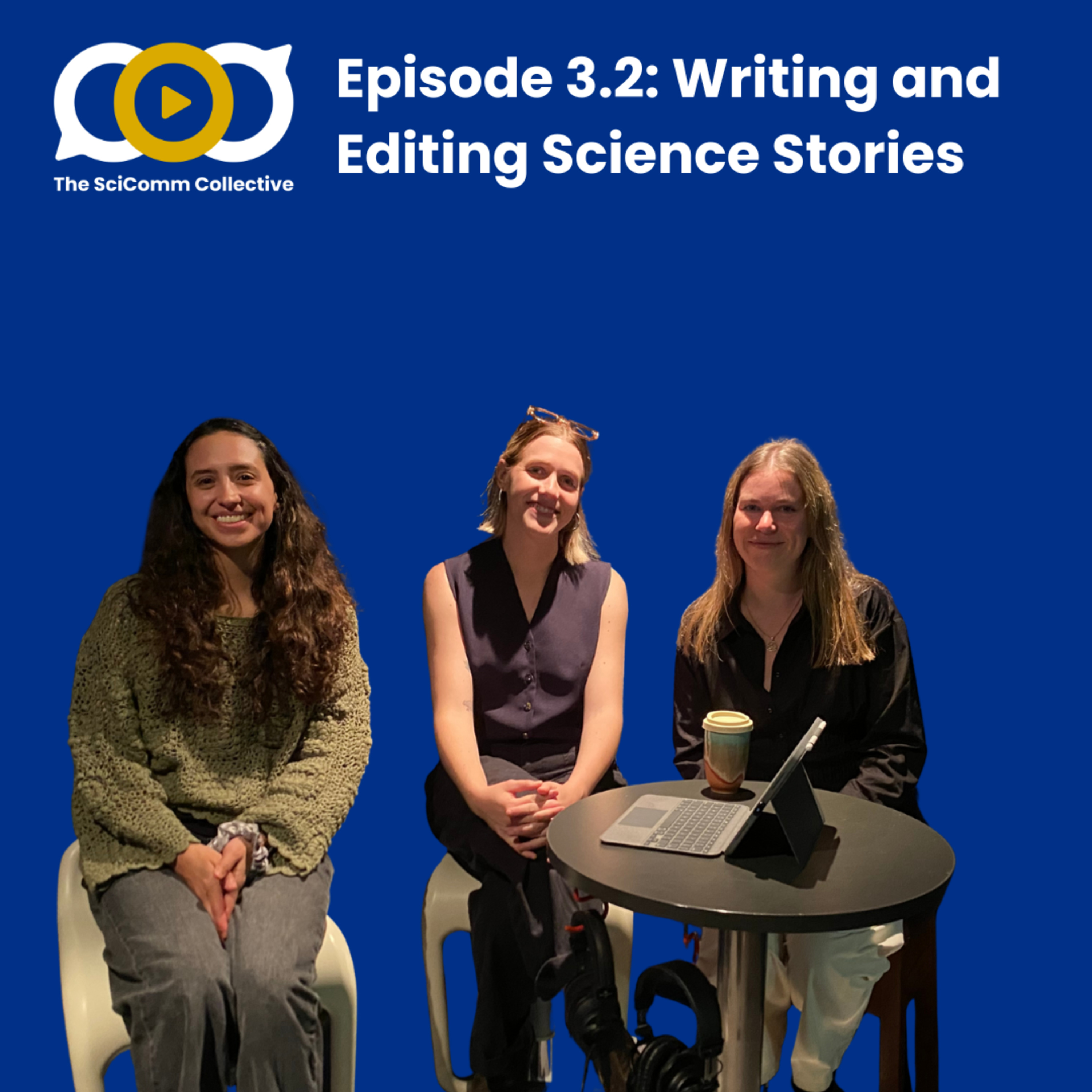 Writing and Editing Science Stories 14.09.2026 21min“There's a lot going on in the world, And I think that sometimes science gets dropped a little bit ... But in terms of media as a whole, it's there. And I think there's a lot more work to do, but I think it's clawing its way ... There is space for science in breaking news.” - Cat WilliamsWelcome back to Season 3 of The SciComm Collective! In this season we’re talking about how science stories get into public spaces like news, magazines, theatre, parks, museums, science centres, and youth groups. Today's episode features Cat Williams, Particle Magazine's Digital Content Editor and science journalist extraordinaire. Join Kelly and Camila as they discuss Cat's contributions to Australia's science media landscape as a science journalist and editor for one of Western Australia's most prominent digital science outlets. They talk about the joys and challenges of communicating science to different audiences, trying to keep up with their needs and what drew them all to the world of science writing and journalism. Cat shares some insights into what a science story is, what writing and editing for younger audiences entails, helping science writers find their voice and her vision for Australia's current science media ecosystem. Tune in now and click on the links below to find out more about Cat's work! “In terms of inclusive science communication, it's ensuring everyone has a voice and everyone has access to then read that science ... Anyone can speak to us about science, and anyone can read about that as well.” - Cat WilliamsEpisode Links: Read Particle Magazine here Visit Scitech’s website here Read more of Cat's work here Get your copy of The Best Australian Science Writing 2025 here Find out more about Cat’s nomination for the Kat Muscat Fellowship here This episode was brought to you by: Host: Camila Pardo Uribe, Kelly Hopkinson Guest: Cat Williams Producer: Camila Pardo Uribe Editor: Camila Pardo Uribe Audio engineering: Matt Gill Show notes: Camila Pardo Uribe
 -
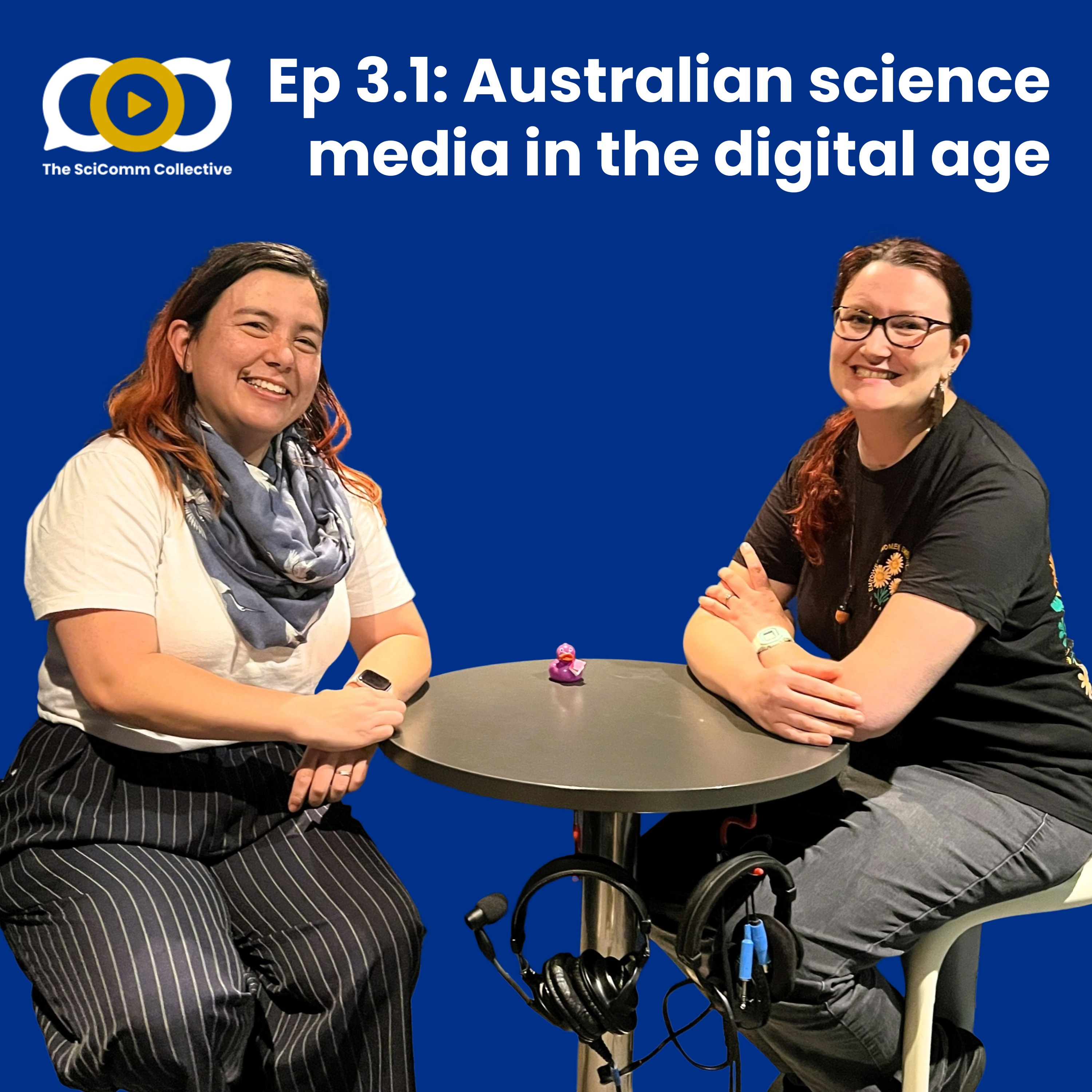 Australian science media in the digital age 07.09.2026 38minWelcome back to Season 3 of The SciComm Collective! In this season we’re talking about how science stories get into public spaces like news, magazines, theatre, parks, museums, science centres, and youth groups. In our first episode, UWA science communication PhD candidate Emma Gill chats with Jasmine Fellows, Managing Editor of Refraction Media, former editor of Cosmos and Double Helix magazines at CSIRO, and science communication PhD candidate at The Australian National University.Jasmine shares how she got into science writing and editing, what she’s currently working on, and how digital versus print isn’t the problem – it’s more about what we’re saying, why, who with, and how long it takes to get a story out. Emma and Jasmine talk about news habits of Gen Z, how funding makes a big difference, long form versus short form (like social) media, inclusion in science media, and the differences between science communication and science journalism. Tune in to learn more about the Australian science media landscape in 2026 and how you can get involved! Episode Links: Refraction Media – https://refractionmedia.com.au/ Double Helix (which did start in 1986 – great memory, Jasmine!) – https://blog.doublehelix.csiro.au/about/Cosmos Magazine (archive) –https://connectsci.au/news/pages/cosmos-archive Careers with STEM magazine –https://refractionmedia.com.au/careers-with-stem/Australian videogame magazine CONTINUE? – https://continuemagazine.com/ More about the ‘Deficit Model’ –https://thescicommcollective.com/podcast/episode-4-deficit-model/ The Digital News Report: Australia –https://www.canberra.edu.au/research/centres/nmrc/digital-news-report-australia Gender in Australian science news (open access paper) –https://jcom.sissa.it/article/pubid/JCOM_2503_2026_A03/Fast Food Versus Veggies: Jasmine’s blog post about news flavours – https://jasminefellows.substack.com/p/its-fast-food-news-with-a-pinataScience Journalist’s Association of Australia –https://sjaa.org.au/Episode Credits: Host: Emma Gill Guest: Jasmine Fellows Producers: Emma Gill, Camila Diaz Duran Editor: Matthew Gill Researchers: Holly Dear, Camila Pardo Uribe Shownotes: Emma Gill
 -
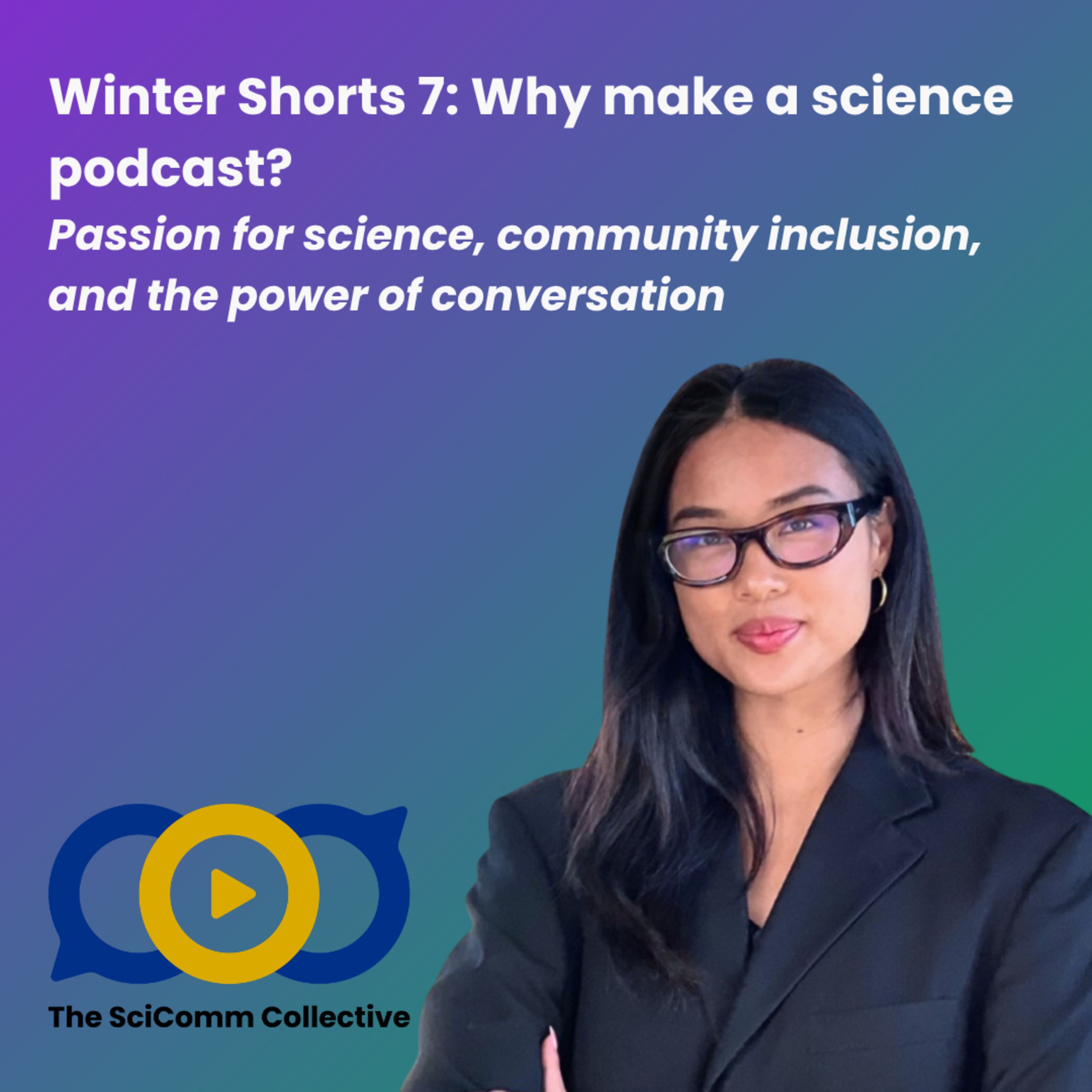 Why make a science podcast? 20.07.2026 27min“I was always interested in the storytelling element. I was really interested in how people create a place where people can just be themselves and talk.” – Crystal NgoWelcome to the final episode of our Winter Shorts series 2026! In this special wrap-up, Camila and Heather chat with UWA Master of Science Communication alumnus Crystal Ngo, whose journey has taken her from nutrition, public health, and being a model to science communication in the disability sector. She reflects on navigating career uncertainty, discovering science communication as a creative home for art and science, and conducting research on the motivations of Australian science podcasters as part of her Masters degree. She shares what she learned about the identity of science podcasters, the persisting deficit-model thinking, and the importance (and absence!) of strategic audience engagement.Crystal also shares how her current role at Kiind supporting families raising children with disabilities has deepened her passion for community, equity, and inclusion. Joined by Camila and Heather, together they break down what inclusive science communication looks like in practice and explore how individual positionality shapes the way we communicate. “I just really appreciate community and the strength and power of community, and how that makes such a big difference in people’s lives.” – Crystal Ngo Episode LinksUWA Master of Science CommunicationRead Crystal’s article (Open Access) here: “It's having conversations that I like with people I like": Exploring the motivations of Australian science podcastersLearn more about Kiind and their podcast, Kiind ConversationsFind out what motivates The SciComm Collective Catch our previous episode about how we approach podcastingListen to our student roundtable discussion about the deficit modelRevisit Camila’s reflection about positionality and communityRead Dr Ann Grand’s reflection about inclusive science communicationFurther Reading:Amarasekara & Grant, (2019). Exploring the YouTube science communication gender gap: A sentiment analysis.Marjadi et al., (2023). Twelve Tips for Inclusive Practice in Healthcare Settings. Episode CreditsEpisode Hosts: Camila Pardo Uribe, Dr Heather BraySpecial Guest: Crystal NgoProducers: Camila Pardo Uribe, Dr Heather BrayEditing: Ke YuanAudio Engineering: Matthew GillShow notes: Ke YuanAudiogram: Adobe Podcast
 -
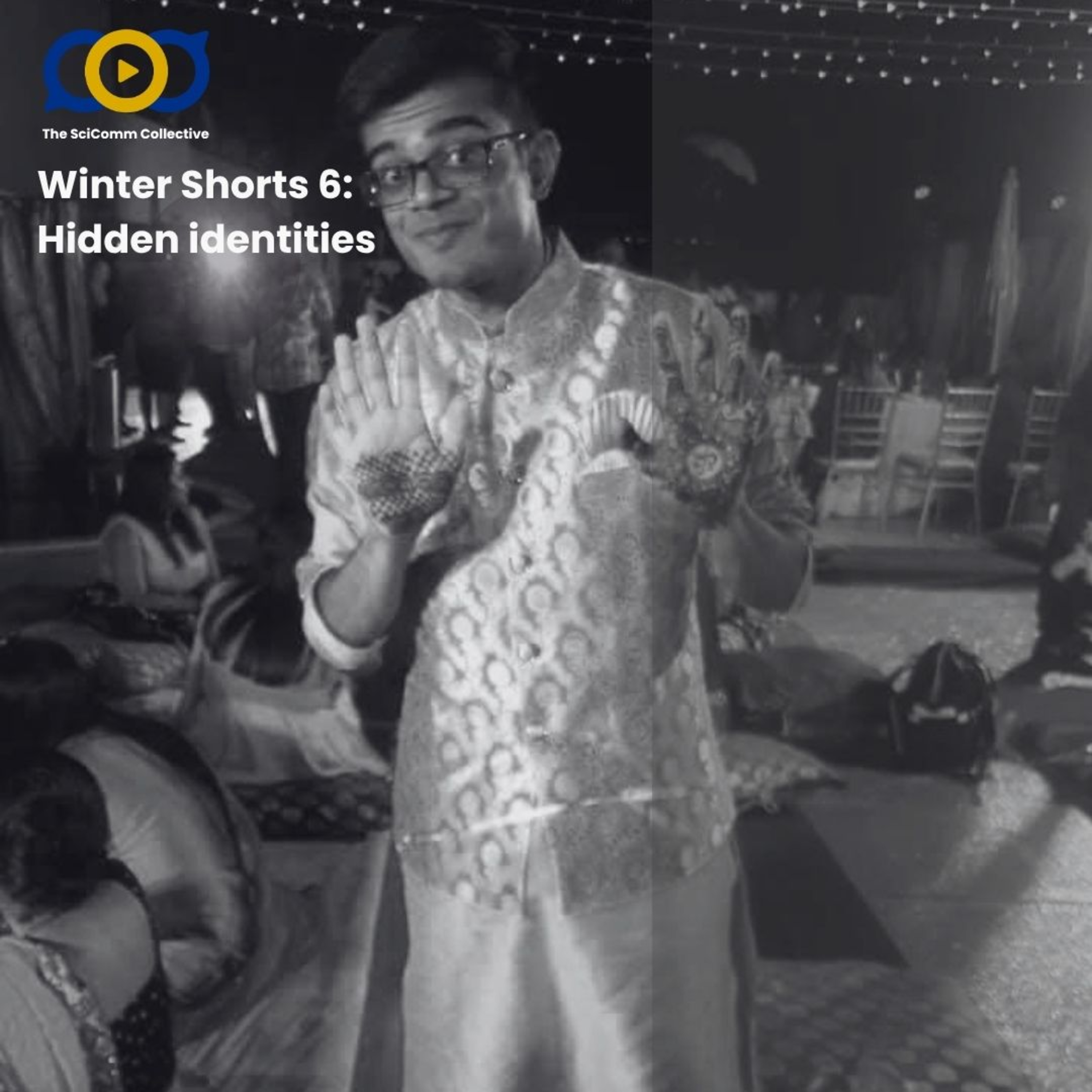 Hidden Identities 13.07.2026 21min"Kathakars were known as storytellers, and these are ways of telling mythological stories: they convey meanings through the form of dance, and you can think about it in sociological terms - the dancer is conveying a story." – Hari Krishna GamiIn this Winter Shorts episode, science communication student Hari Krishna Gami shares his short podcast about Kathak, a traditional North Indian dance form, with hosts Avantika and Emma – discussing how this connects to science communication, hybrid identities, and intersectionality. Drawing on their lived experiences, Krishna and Avantika muse about what it means to wear multiple hats in multicultural Australia and how culture, language and community shape the way we see ourselves and others. The conversation explores the challenges and strengths of holding multiple identities and the role of cultural practices in maintaining connections. They also reflect on the importance of listening across different perspectives and how embracing diverse experiences can help create more inclusive science communication."The conversation needs to be less around ‘do you belong to a certain community?’ and instead ‘do you belong to multiple communities of cultural identities?’" – Hari Krishna GamiEpisode linksMaster of Science Communication: The University of Western AustraliaLearn more about the art of Kathak dancing hereRead about the role of identity and culture in science communication hereRead about inclusion in science communication hereLearn about interculturalism and choreography here Episode CreditsHosts: Avantika Menon and Emma GillSpecial Guest: Hari Krishna GamiProduced and Edited by: Emma GillAudio Engineering: Matthew GillShow notes by: Avantika Menon and Camila Pardo Uribe
 -
 Voices in our heads: Explaining the science of self-handicapping 29.06.2026 20min“Next time you find yourself avoiding the work you should be doing, remember: your values hold the key to success.” – Tom CarberyAre you ever so worried about failing at something that you actively seek out other activities to do instead… and then ‘blame’ those as the reason you fail? You might be 'self-handicapping'.On this episode, UWA psychology student Tom Carbery shares his mini-podcast about self-handicapping with our host, Emma. They discuss how self-sabotaging behaviours can affect academic performance, the psychology behind maladaptive coping strategies, and the importance of self-affirmation. Tom also shares his creative process: why he chose the topic, how he aimed to reduce ATAR students’ anxiety about assessments, what’s good – and not so good – about recording inside a closet, AI tools for podcasting, and the importance of authority, evidence, and appropriate guests when sharing psychological science. “You need to show all parts of the spectrum… the empirical evidence, the case study, as well as the more personal feel. I think that creates the best balance. Self-help advice is great, but you need to have evidence for what you’re saying.” – Tom CarberyEpisode linksTom talks about this paper:Steven Berglas and Edward Jones (1978). Drug choice as a self-handicapping strategy in response to noncontingent success. Journal of Personality and Social Psychology, 36: 405–417. https://doi.org/10.1037/0022-3514.36.4.405For more information about the consequences of self-handicapping behaviour, check out the SAGE Encyclopedia of Social Psychology: https://sk.sagepub.com/ency/edvol/socialpsychology/chpt/selfhandicapping#_SciShow Psych cover self-handicapping in this YouTube video: https://youtu.be/d1YYgY0etrU If you or someone you know is living with anxiety or self-destructive behaviour, help is available. Connect with Beyond Blue or your local counselling services: https://www.beyondblue.org.au/Credits for this episode Episode Host: Emma GillSpecial Guest: Tom CarberyProduced & Edited by: Emma GillAudio Engineering: Matt GillShow notes by: Emma GillAudiogram by: Adobe Podcast
 -
 The Brownbeak Chronicles: SciComm x Bird Noir 22.06.2026 17min~ Note from Producers: Episode audio updated on 28/6/2026 ~"With science, we're trying to communicate with people, change behaviour, inspire people to think about things differently... Being able to pivot and adapt to what your audience needs is a really important part." - Sarah Brown In this episode, Camila sits down with Minor of Science Communication student Sarah Brown to discuss the process behind her "Brownbeak Chronicles" podcast episode. They talk about their mutual love for birds (in classic ageing millennial fashion), music, true crime, and Sarah's journey in STEM and science communication. Sarah shares how her interest in different artistic expressions - particularly music - has informed her practice of sharing science with different audiences. Stemming from their personal experiences, they discuss how science communication is an interdisciplinary practice in which multiple worldviews are welcome. "Before I started this degree, I had zero STEM background... So I had no idea what to do with science. So I felt like science communication, I could kind of bridge that gap a little bit where I didn't feel like I was completely floundering." - Sarah Brown Episode links: See Walyalup’s 2024 AFLW Indigenous jumper hereListen to Gisela Kaplan's insights on bird behaviour hereListen to Geraldine Hickey's Death by Birding episode hereRead more about inclusive science communication hereCheck out Sarah's birding and drawing account hereThis episode was brought to you by:Episode Host: Camila Pardo Uribe Special Guest: Sarah Brown Producers: Camila Pardo UribeAudio editor: Camila Pardo Uribe Show notes: Camila Pardo Uribe
 -
 Looking back, listening differently: Lessons from a misophonia podcast 15.06.2026 17min“It’s the question I keep coming back to – how inclusion, neurodiversity, and different ways of seeing and being in the world are part of science and science communication…” – Emma Gill Our Winter Shorts Series continues with Clare Boon sitting down with The SciComm Collective’s Emma Gill to chat about how far she’s come since recording her very first podcast - for an assignment at UWA. We share Emma’s episode on misophonia, a condition which triggers intense emotional or physical responses to certain sounds. Clare and Emma discuss how the episode was a chance to explore what mattered for Emma, and some lessons learned about editing and episode preparation over the years. Together they reflect on Emma’s path through science communication so far. “Doing a podcast is about having a go. We’re all on a journey.” – Emma GillEpisode links: Misophonia charity So QuietMisophonia expert Dr Jane GregorySentipensate author Laura RéndonFree audio editing software AudacityFoley sound effects on Freesound.orgThe University of Western Australia: Master of Science CommunicationEpisode credits: Episode Host: Clare Boon Special Guests: Emma GillProducer: Clare Boon Audio editor: Clare Boon Audio engineer: Matthew Gill Show notes: Clare Boon
 -
 The Art of Interviewing 08.06.2026 38min"Whatever you are interviewing about, be curious … Ask the questions with the full curiosity of: I don’t know this, can you teach me?" - Siobhon Eacott Welcome to Winter Shorts, a bonus series by The SciComm Collective that hopes to keep you entertained during the first weeks of winter. We will explore the art of podcasting with professionals and former students of UWA’s Science Presentations unit, so kick back, enjoy a hot beverage and listen in! Today, Ximena sits down with Dr Heather Bray and Siobhon Eacott to talk about their experiences preparing for and conducting interviews. Heather shares insights from her time working on live radio and Siobhon reflects on the process of recording podcasts in a discipline she was initially unfamiliar with. They discuss practical strategies for keeping conversations flowing smoothly, comparing a good interview to a tennis match where the dialogue is constantly moving back and forth. This episode originates from one of The SciComm Collective’s most recent workshops, designed to encourage students to step outside their comfort zones, try new things and explore the world of podcasting. "For practising [interviewing], there has to be something that makes it unfamiliar… your learning zone is out of your comfort zone… so you are practising to acquire that muscle memory." – Dr Heather Bray Episode links: Check out Heather’s lecture on interviewing skills Find out more resources on reporting science from the Australian Science Media Centre Discover more interviewing skills in BBC Academy This episode was brought to you by:Episode Host: Ximena Shaw Special Guests: Dr Heather Bray and Siobhon Eacott Producer: Ximena Shaw Audio editor: Matthew Gill Show notes by: Ximena Shaw
 -
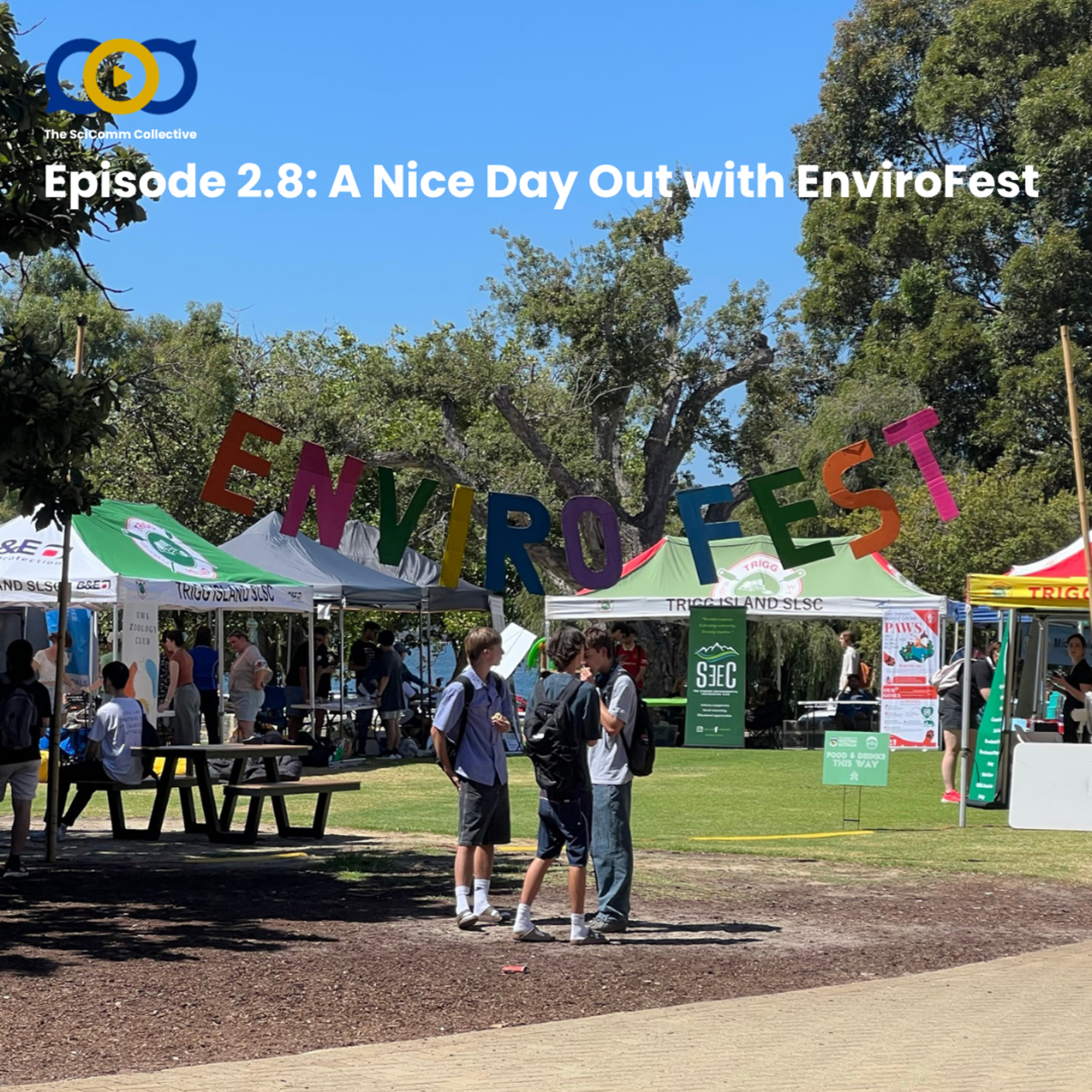 A Fun Day Out with EnviroFest 13.04.2026 35minAs The University of Western Australia gears up for the return of EnviroFest later in 2026, Ke chatted to the former guild environment officer Julia about the mission and logistical efforts required to bring a large-scale sustainability event to life in 2025. Emma and Rae then revisited their conversations last year at EnviroFest with a diverse range of community organisations to gather their insights of participating in event like this and how they take tangible actions on environmental issues. They then explored how organisations track behavioural change and use qualitative feedback to measure impact. By highlighting personal reflections from student volunteers and organisers alike, this episode demonstrates that the true value of such events lies in the power of collaboration and reflection. Episode links:For updates of EnviroFest 2026, visit UWA Guild Environment Department, or follow their Facebook and Instagram. Wanna volunteer with UWA? Sign up on their website. Learn more about Friends of Australian Rock Art here. Support Trillion Trees Australia’s restoration initiatives here. Discover Kanyana Wildlife’s rehabilitation works here. Visit Keep Australia Beautiful WA to see how you can help maintain our environment. Join the mission of SAVE African Rhino Foundation here. This episode was brought to you by: Episode Hosts: Ke Yuan, Emma Gill and Rae Kumar Special Guests: Julia Suffell (UWA Guild Environment Officer 2025), Douglas Laurie (Trillion Trees Australia), Danny Shelton (Kanyana Wildlife), Judith Hugo (Friends of Australian Rock Art), Catriona Drysdale (Keep Australia Beautiful Council), Linton Kirk (SAVE African Rhino Foundation), Xavier Caguiat (UWA PhD student volunteer) Produced: Emma Gill and Rae Kumar Audio edited: Ke Yuan Audio Engineering: Matthew Gill Show notes: Clare Boon Follow The SciComm Collective on Instagram and online at https://thescicommcollective.com/
 -
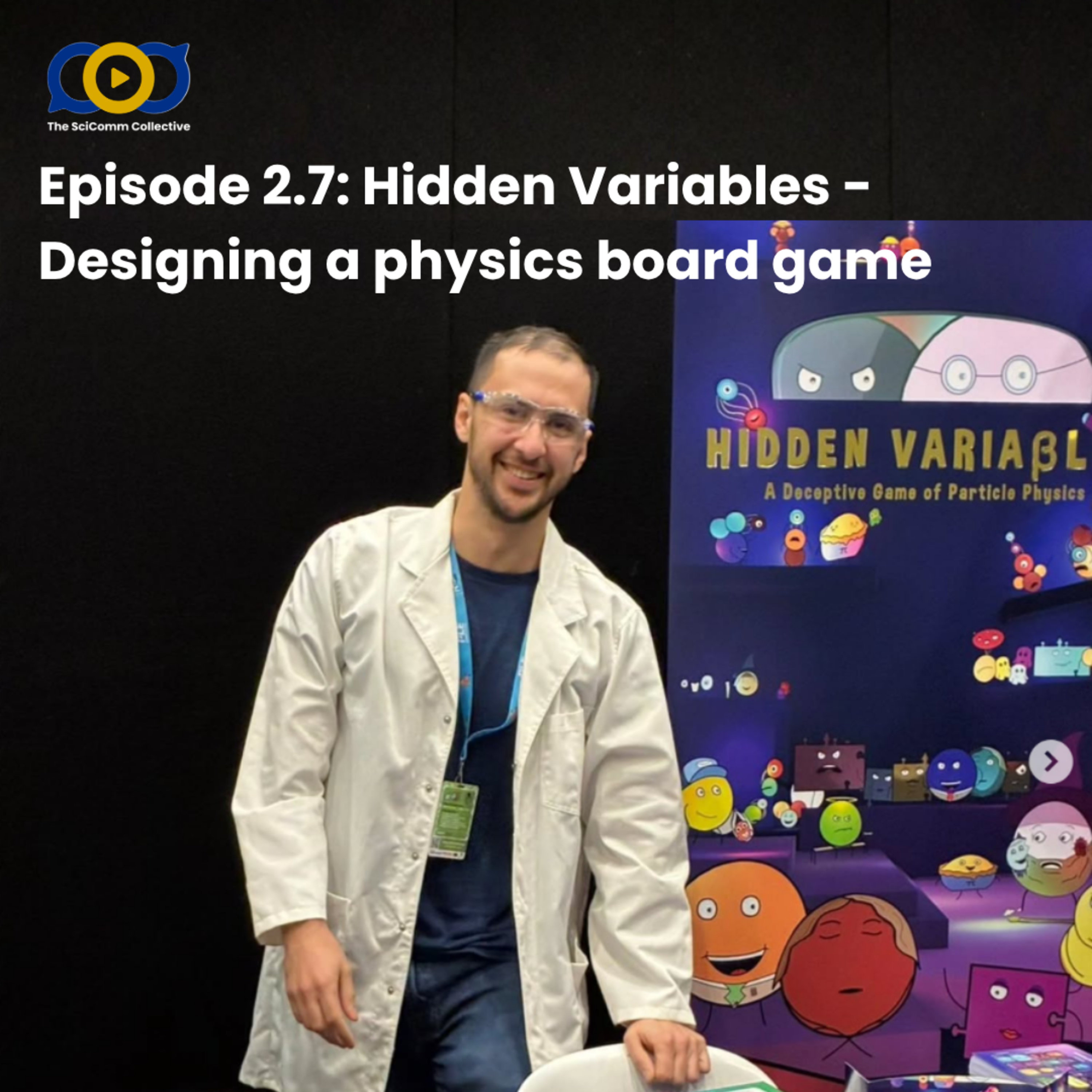 Hidden Variables - Designing a Physics Board Game 06.04.2026 27min“There should be no assumed knowledge in the rules” – Nick Godfrey Today, Rae sits down with Nick Godfrey to discuss his work developing a board game that teaches players about physics as covert education. They discuss how he brought together his background in physics and his love for board games to create something he’s passionate about. As every good science communicator considers, Nick reveals how he keeps the game adaptable for different audiences with different knowledge bases to keep the game fun for multiple audiences. Nick describes how he built an accessible game through trial and error, keeping fun at the forefront of his educational tactics. The discussion then turns to theplace of games in science communication and why fun is so important when learning. Finally, he gives some advice on how science communicators can use games in their work. Find Nick on LinkedIn here Hidden Variables will (hopefully) be available in 2026!Follow Hidden Variables on Instagram for updates hereSign up to Nick’s mailing list to be notified of thelaunch here This episode was brought to you by:Episode Host: Rae KumarSpecial Guests: Nick Godfrey Produced: Rae Kumar Audio edited: Emma Gill Show notes by: Clare Boon Follow The SciComm Collective on Instagram and online at https://thescicommcollective.com/
 -
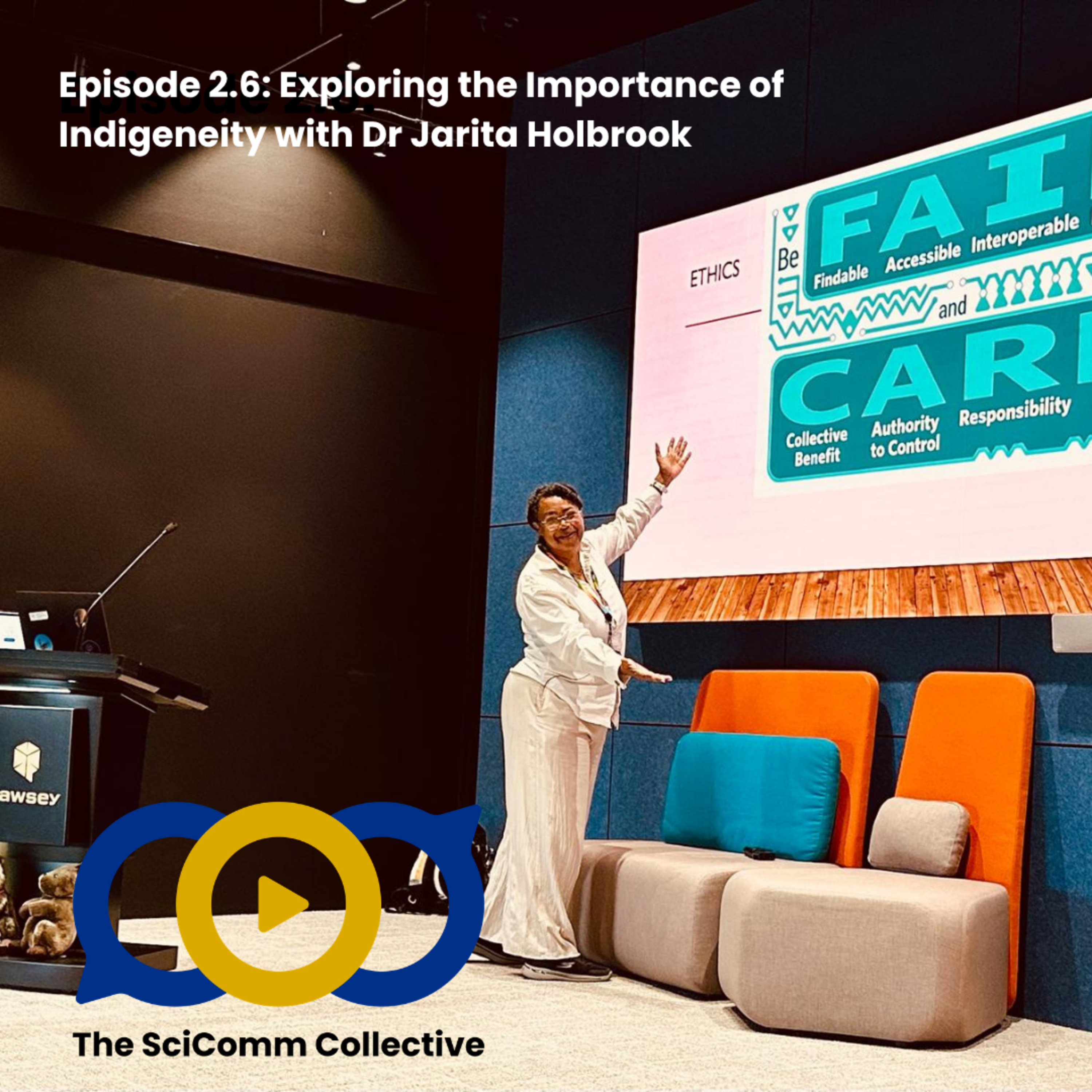 Exploring the Importance of Indigeneity with Dr Jarita Holbrook 30.03.2026 43min“When I go into those two different communities, I have to introduce myself differently” – Dr Jarita HolbrookToday, Kate, Rae and Felice sit down with Dr Jarita Holbrook to talk about their experience working with Indigenous communities. They discuss the ways in which researcherscan build connections with Indigenous communities and how communication is imperative in collaboration. They talk about the importance of identity when introducing yourself to different audiences and how holding multiple identitiescan be a strength. The discussion then turns to code switching and whiteness, andthe way privilege plays on conceptions of race. Jarita also shares their experiences in Perth and how they navigate issues around funding their research.Episode links:Check out Astrofest in 2026 hereRead about the FAIR and CARE principles forIndigenous Data Governance hereDelve deeper into code-switching here Find out more about Whiteness Theory hereWatch Jarita talk about inclusivity in quantum gravity and cosmology hereFind Jarita on Bluesky @astroholbrook.bsky.social This episode was brought to you by:Episode Host: Kate HolmesSpecial Guests: Dr Jarita Holbrook Produced: Rae Kumar and Felice NgAudio edited: Matthew GillShow notes by: Clare Boon and Camila Pardo
 -
 When Art Meets Science with Dr Phil Dooley 23.03.2026 12min“I think of the audience as a fried egg” – Phil Dooley Today, Clare sits down with Dr Phil Dooley (the current President of the Australian Science Communicators) to discuss art and audiences. Together they explore how science art reaches different audiences and how the ever-changing algorithm impacts who our content reaches. As performers, they discuss how theatre has can be used in science communication, especially when we can get scientists up on stage with us. Episode links:Catch up with Phil Dooley on social media hereFind Phil on Youtube here Watch Phil’s videos with Veritasium here If you want to catch Phil in person, try to get to his next Phil Up On Science event Interested in Australian Science Communicators? Check out their website Check out Clare's work here This episode was brought to you by:Episode Host: Clare Boon Special Guests: Dr Phil Dooley Socials: Follow The SciComm Collective on Instagram Produced: Clare Boon Audio edited: Holly Dear Show notes by: Clare Boon Follow The SciComm Collective on Instagram and online at https://thescicommcollective.com/
 -
 Student Roundtable - Consensus Reality 16.03.2026 53minKeelan investigates what consensus reality is with Holly and Camila and how this relates to our work as science communicators. They delve into the theory behind this concept and discuss the intricacies behind mimesis and fiction. This theoretical discussion touches on all kinds of important concepts such as positionality, the impact of lenses, and the importance of context. Episode links:If you want to see Keelan’s diagrams, click hereRead about the deficit model here and here and listen toour episode on it hereRead up on Haraway’s situated knowledges hereIf you’re interested in Bourdieu’s social capital, you canread his original work on it hereThis episode was brought to you by:Episode Host: Keelan PowellSpecial Guests: Holly Dear and Camila Pardo Uribe Socials: Follow The SciComm Collective on Instagram Produced: Keelan Powell, Holly Dear and Camila Pardo Uribe Audio edited: Keelan Powell Show notes: Clare Boon Follow The SciComm Collective on Instagram and online at https://thescicommcollective.com/
 -
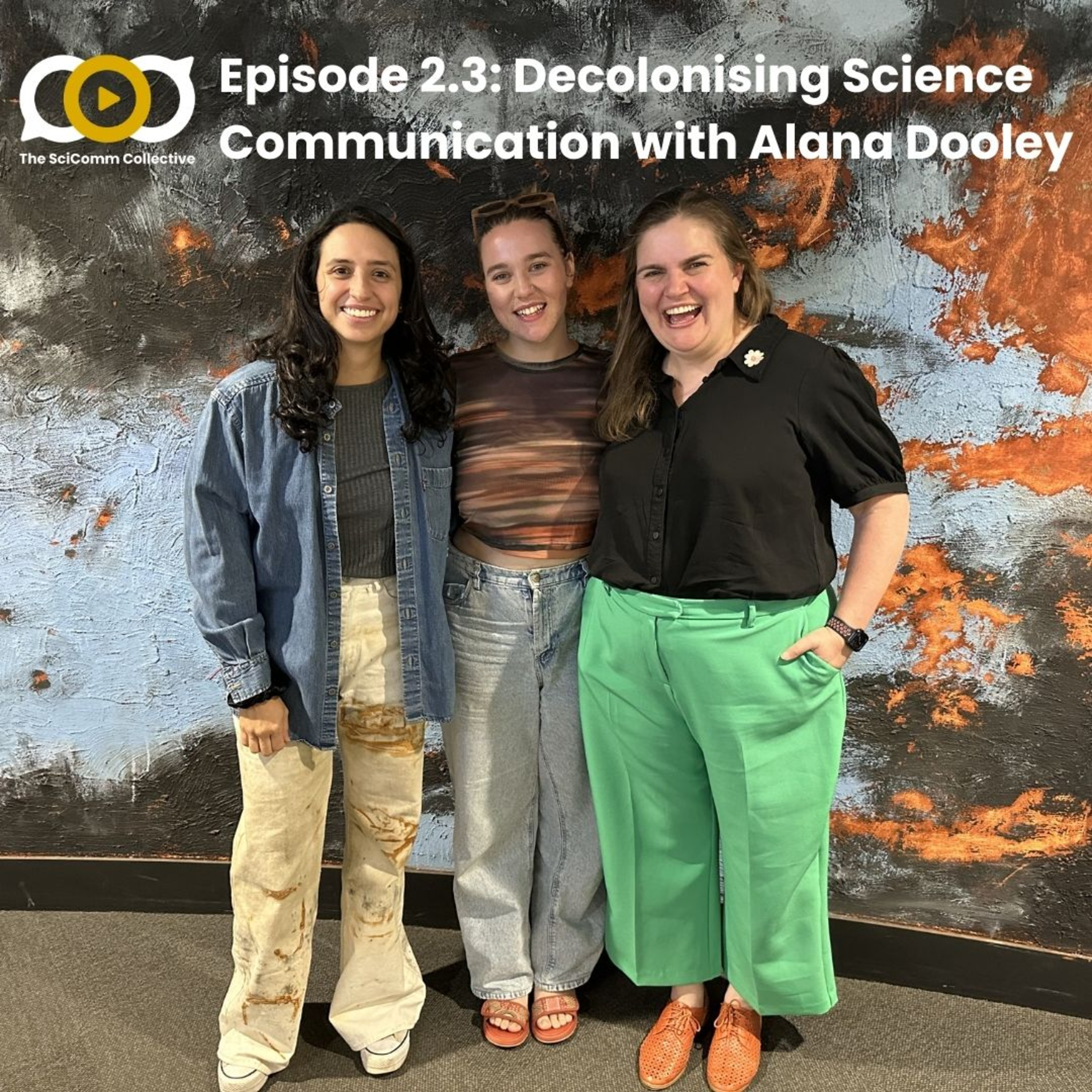 Decolonising Science Communication with Alana Dooley 09.03.2026 45minJoin Kate (Master of Science Communication student, the University of Western Australia) and Camila (PhD Candidate, the University of Western Australia) as they talk with Alana Dooley about her journey in science communication. They discuss their personal definitions of science communication and the importance of Alana’s Indigenous identity in how she approaches her science communication practice. They explore the weaponisation of science towards certain communities and the importance of acknowledging and addressing our colonial history in Australia. Alana tells us about the importance of Indigenous knowledge in understanding the night sky in her own life and the impact this has had on her understanding of how scientific knowledge is understood. *Disclaimer: This episode was recorded in November 2024. Since then, the JOIDES Resolution (JR) Academy has stopped operating. Episode links: Read about Alana’s experience aboard the JR vessel here Read about the deficit model here and here and listen to our episode on it here Find out more about science capital by reading up on Emily Dawson’s work Want to find out about most of sci comm being women? Read the paper here Heather’s raising the bar episode This episode was brought to you by:Episode Host: Kate Holmes and Camila Pardo Uribe Special Guests: Alana Dooley Socials: Follow The SciComm Collective on Instagram Produced: Kate Holmes and Camila Pardo Uribe Audio edited: Ximena Shaw and Camila Pardo Uribe Show notes: Clare Boon and Camila Pardo UribeFollow The SciComm Collective on Instagram and online at https://thescicommcollective.com/
 -
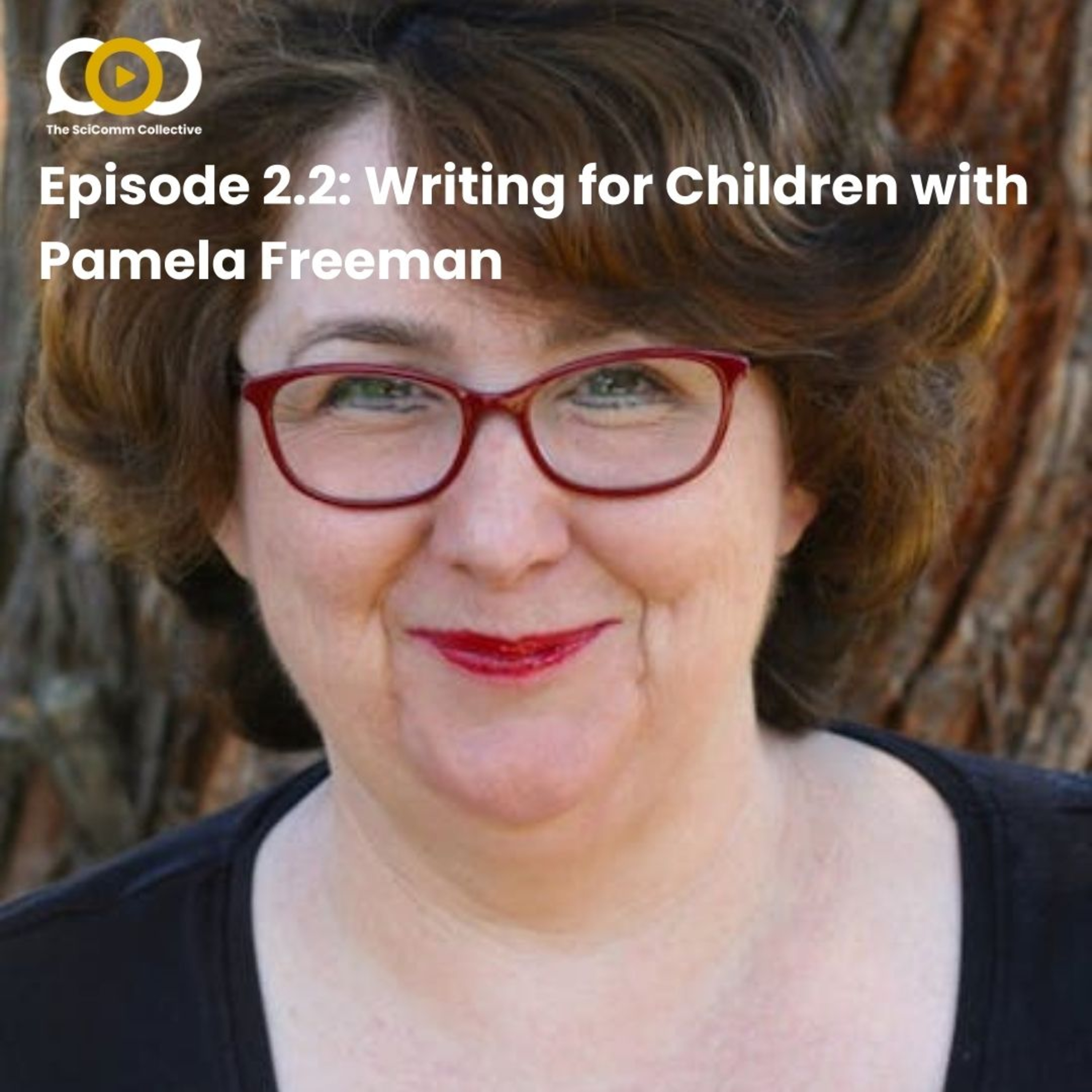 Writing for Children with Pamela Freeman 02.03.2026 34minJoin Emma (PhD Candidate, The University of Western Australia) today as she talks to children’s book author Pamela Freeman. They discuss how Pamela got into writing ecological picture books for children, where her ideas come from, and how they align with the national curriculum. Pamela explains how she best engages children with her books and how her unconventional relationship with her current illustrator is integral to the work she does. They discuss the process of getting a picture book published and how to evaluate if your work has had an impact.Episode Links:Pamela Freeman's website This episode was brought to you by:Episode Host: Emma Gill Special Guests: Pamela Freeman Socials: Follow The SciComm Collective on Instagram Produced: Emma Gill Audio edited: Matthew Gill Show notes: Clare Boon Follow The SciComm Collective on Instagram and online at https://thescicommcollective.com/
 -
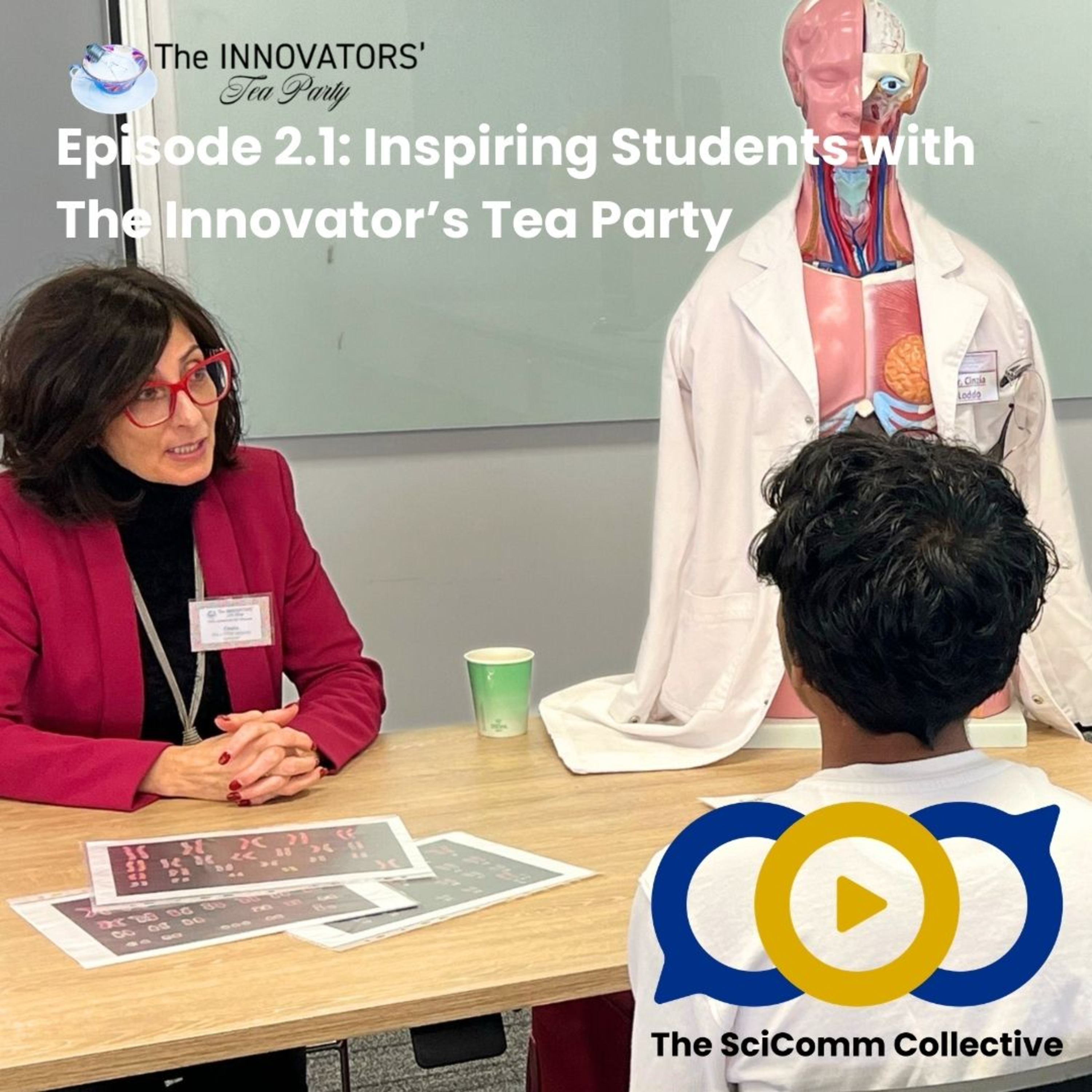 Inspiring Students with The Innovators' Tea Party 23.02.2026 23minLet’s get inspired! Ahead of the Innovators’ Tea Party’s ten-year anniversary celebration, join Holly (Master of Science Communication student, The University of Western Australia) as she talks with committee members and mentors about the impact of the Innovators’ Tea Party on Western Australian students interested in STEM and what it’s like being a woman in STEM. Hear right from the students’ mouths about their experience at one of the Innovator’s Tea Party’s events. Episode Links:The Innovator’s Tea Party This episode was brought to you by: -Episode Host: Holly Dear -Special Guests: Evelyn Chuck (ITP founder), Estela Hogarth (ITP STEM program coordinator), Sophie Smith (mentor), Rhianna Hepburn (ITP ordinary committee member), Dr Sabine Bellstedt (Mentor), India Cywinski-Jan (Mentor), Jawaria Mahmood (ITP ordinary committee member, mentor)-Produced: Holly Dear and Emma Gill-Audio edited: Holly Dear -Show notes by: Clare Boon Follow The SciComm Collective on Instagram and online at www.thescicommcollective.com
 -
 Revisiting 'Raising the Bar' with Dr Heather Bray 23.02.2025 40min"Science communication is not just about talking to the media; it's about this broader relationship. Food is social, not just scientific." - Dr Heather Bray.In our Summer Shorts bonus season finale, The SciComm Collective’s Kate is joined by guest Dr Heather Bray, Coordinator of UWA's Masters and Minor in Science Communication programs. Taking on the challenge she sets for students, Heather reflects on her performance at UWA's Raising the Bar 2024, where she presented on the future of food science. Kate and Heather discuss the importance of purpose, audience and message in science communication, how to plan for a presentation (and how not to!), and why reflective practice is vital for all science communication practitioners. Episode Links: Dr Heather Bray (Research Repository) UWA's Raising the Bar Podcast What is Raising the Bar?UWA Science Communication on FacebookUWA Science Communication Plus check out Season One's Episode 2 for more Heather, and Episode 4 for more on the Deficit Model.The SciComm Collective: InstagramFacebook Website Episode Details: Host: Kate HolmesGuest: Dr Heather BrayProduced by: Kate Holmes, Dr Heather BrayEdited by: Clare BoonShownotes by: Felice NgSponsored by: UWA Grand Challenges Make A Difference Impact Grant
 -
 Gossiping Geology with Owen Cumming 21.02.2025 10min“I liked the story of it and that's why I wanted to use that, to present [geology] in a way that was a bit more interesting, a bit more fun.” - Owen CummingOn this episode of Summer Shorts, join The SciComm Collective’s Clare as she interviews Owen Cumming, a graduate of UWA’s Master of Science Communication program. Owen talks about his journey from environmental science to science communication. Hear how Owen took his passion for making complex geological stories more accessible and engaging, to create his mini podcast episode, “Carved in Stone”, bringing the history and geology of continents to life through storytelling and sound. Content warning: Mild offensive language.Episode Links: Owen Cumming’s LinkedIn and website UWA Science Communication Check out Episode 4 for more on the Deficit Model The SciComm Collective: Instagram Facebook WebsiteEpisode Details: Host: Clare Boon Guest: Owen CummingProduced & Edited by: Clare Boon Shownotes by: Felice Ng & Emma GillSponsored by: UWA Grand Challenges Make A Difference Impact Grant
 -
 Taking a Break with Lotte George 20.02.2025 18min“Learning and practising science communication is core to so much” - Lotte GeorgeWelcome back to Summer Shorts, an exploration of podcasting by UWA science communication students. In this episode, The SciComm Collective’s Kate is joined by UWA Biomedical Sciences graduate Lotte George. Lotte shares how stumbling upon the UWA Tropical Grove during a study break inspired her to make a Shinrin-yoku (“forest bathing”) meditation podcast, and how her Science Presentations unit of study has benefited her even beyond the scientific landscape. Episode Links: Watch Lotte’s valedictory address Shinrin-Yoku UWA Science Communication Why a walk in the woods really does help your body and soul by Jeffery Craig and Susan L. Presscott The SciComm Collective: Instagram Facebook WebsiteEpisode Details: Host: Kate Holmes Guest: Lotte George Produced by: Kate Holmes Edited by: Holly Dear Show notes by: Felice Ng Sponsored by: UWA Grand Challenges Make A Difference Impact Grant
 -
 Wildflower Walking with Felice Ng 19.02.2025 8min“While I’ve always had this interest in science, I didn’t always feel like it was the most accessible or easily understandable, so I was really drawn to science communication.” - Felice NgJoin The SciComm Collective’s Clare as she interviews Felice Ng, a UWA student pursuing a Bachelor of Biomedical Science in Pharmacology and Genetics, along with a Science Communication minor. In this episode, Felice shares how Australia’s unique biodiversity inspired her to make a podcast about Triggerplants (Stylidium) as part of a bigger series called “Wildflower Walks.” Note: The Department of Biodiversity, Conservation, and Attractions is mentioned for student assignment purposes only.Episode Links: Felice Ng on LinkedIn FloraBase 'Very rare' trigger plants catapult pollen onto visiting insects in Western Australia, by Leah McLennan and Arthur Mull UWA Science Communication The SciComm Collective: Instagram Facebook Website Episode Host: Clare Boon Episode Guest: Felice NgProduced by: Clare Boon Edited by: Holly Dear & Emma GillShow notes by: Felice Ng Sponsored by: UWA Grand Challenges Make A Difference Impact Grant
Slični podcasti


Popularan u
Ovaj podcast pojavljuje se i na podcast ljestvicama ovih zemalja.
