
Talking Billions with Bogumil Baranowski
Bogumil Baranowski
0
Talking Billions with Bogumil Baranowski is a weekly podcast featuring intimate conversations about money, wealth, and living a rich and fulfilling life. Host Bogumil Baranowski, an author, TEDx speaker, investor, and investment advisor, explores topics around making, saving, and keeping money while asking what it means to live richly beyond money. New episodes are released every Monday. The show is not investment advice.
Epizode
-
 On Urgency, Consistency, and Sensible Investing: Unfiltered Coffee August & September 2026 01.10.2026 18minIn this Unfiltered Coffee episode, I share some thoughts that have stayed with me through recent conversations, listener emails, books, podcasts, and my own work with investors and families.I reflect on a different kind of urgency—not the manufactured urgency of expiring offers or opportunities that supposedly require an answer by Friday, but the urgency that comes from within. It’s the realization that something in your financial life may need attention today because being off by an inch now can mean being off by a mile five or ten years from now.I explore the difference between benign neglect and costly neglect, the extraordinary effects of compounding over time, and why what got us here may not always be the path forward.I also talk about consistency and what it means to be a constant in someone else’s life. Consistency isn’t perfection. It’s returning to a calm and thoughtful place after life tests us, showing up again, and remaining dependable through changing circumstances.Another recurring theme is family fortune and multigenerational wealth. I share why I increasingly think about family wealth through the lens of stewardship rather than ownership—and why what we inherit, care for, and pass along extends far beyond financial assets.Finally, I return to a deceptively simple question: what does it mean to invest sensibly? Capital can eventually begin doing some of the heavy lifting that once depended entirely on our own efforts. How we put that capital to work is deeply personal, but perhaps we make investing more complicated than it needs to be.Along the way, I revisit recent conversations with Paul Johnson, Lee Freeman-Shor, Alexander von der Vellen, Jan Petke, Jared Dillian, Peter Lazaroff, Ian Cassel, Owen Zidar, and Eric Zwick, and share a few things I’ve been reading and listening to lately.Some of the ideas in this episode:The difference between internal and manufactured urgencyBenign neglect versus neglect that quietly costs us moneyWhy small financial decisions can compound into enormous differencesLuck, risk, and revisiting assumptions that have worked in the pastConsistency as a practice in investing and in lifeWhat it means to be a constant for other peopleFamily fortunes, stewardship, and multigenerational thinkingThe transition from earning money to letting capital do more of the workWhy investing doesn’t have to be unnecessarily complicatedI always enjoy hearing from you, so if you have a question, thought, or story to share, write to me at [email protected] not com. Save it somewhere—I’ll only keep it here for a little while.Podcast Program – Disclosure StatementBlue Infinitas Capital, LLC is a registered investment adviser and the opinions expressed by the Firm’s employees and podcast guests on this show are their own and do not reflect the opinions of Blue Infinitas Capital, LLC. All statements and opinions expressed are based upon information considered reliable although it should not be relied upon as such. Any statements or opinions are subject to change without notice.Information presented is for educational purposes only and does not intend to make an offer or solicitation for the sale or purchase of any specific securities, investments, or investment strategies. Investments involve risk and unless otherwise stated, are not guaranteed.
 -
 Peter Lazaroff: The Perfect Portfolio: A Proven Guide to Smart Investing for Long-Term Success 28.09.2026 1h 6minFind me on Substack!My guest today is Peter Lazaroff, CFA, CFP®—the Chief Investment Officer of the $10-billion-plus RIA Plancorp, chair of its investment committee, host of The Long-Term Investor, and author of Making Money Simple, and a new book The Perfect Portfolio, whose central message is that the best portfolio is not the historical winner but the one tailored to an investor’s goals, capacity for risk, and ability to stay disciplined.Peter Lazaroff's first stock arrived on his twelfth birthday: a single share of Nike from his grandmother. He was disappointed until a one-dollar dividend check showed up in the mail. "I didn't even have to work for this," he recalls, and he was hooked. Today, as CIO overseeing more than $10 billion and author of The Perfect Portfolio, he argues that the best portfolio isn't the historical winner but the one built for your life.He opens his book with a steak dinner, burned on a cheap grill in the backyard of his first home, because the perfect portfolio, like the perfect meal, is personal. He tells the story of a client whose blue chip stocks and mutual funds were chosen to impress others rather than to fund his goals. A portfolio, Peter says, is "a piece of their identity," and it changes over a lifetime as your human capital, balance sheet, and heirs come into view.On market timing, he reminds us that "You do have to be right twice," and that taxes can turn a bad call into a "permanent bear market." Rather than predicting declines, plan on them. He explains exposure therapy for investors, why narratives scare us more than percentages, and why our instinct to run from the rustle in the bushes makes beating the market so hard.Peter reveals his own guardrail, "It's to not do it yourself," shares why bond indexes lend the most to the most indebted, and makes the case for goals-based benchmarks: "am I still on track?" He closes with a controversial plea to read twenty minutes a day, and with the idea at the heart of his book: the perfect portfolio is the one you can stick with.Podcast Program – Disclosure StatementBlue Infinitas Capital, LLC is a registered investment adviser and the opinions expressed by the Firm’s employees and podcast guests on this show are their own and do not reflect the opinions of Blue Infinitas Capital, LLC. All statements and opinions expressed are based upon information considered reliable although it should not be relied upon as such. Any statements or opinions are subject to change without notice.Information presented is for educational purposes only and does not intend to make an offer or solicitation for the sale or purchase of any specific securities, investments, or investment strategies. Investments involve risk and, unless otherwise stated, are not guaranteed.
 -
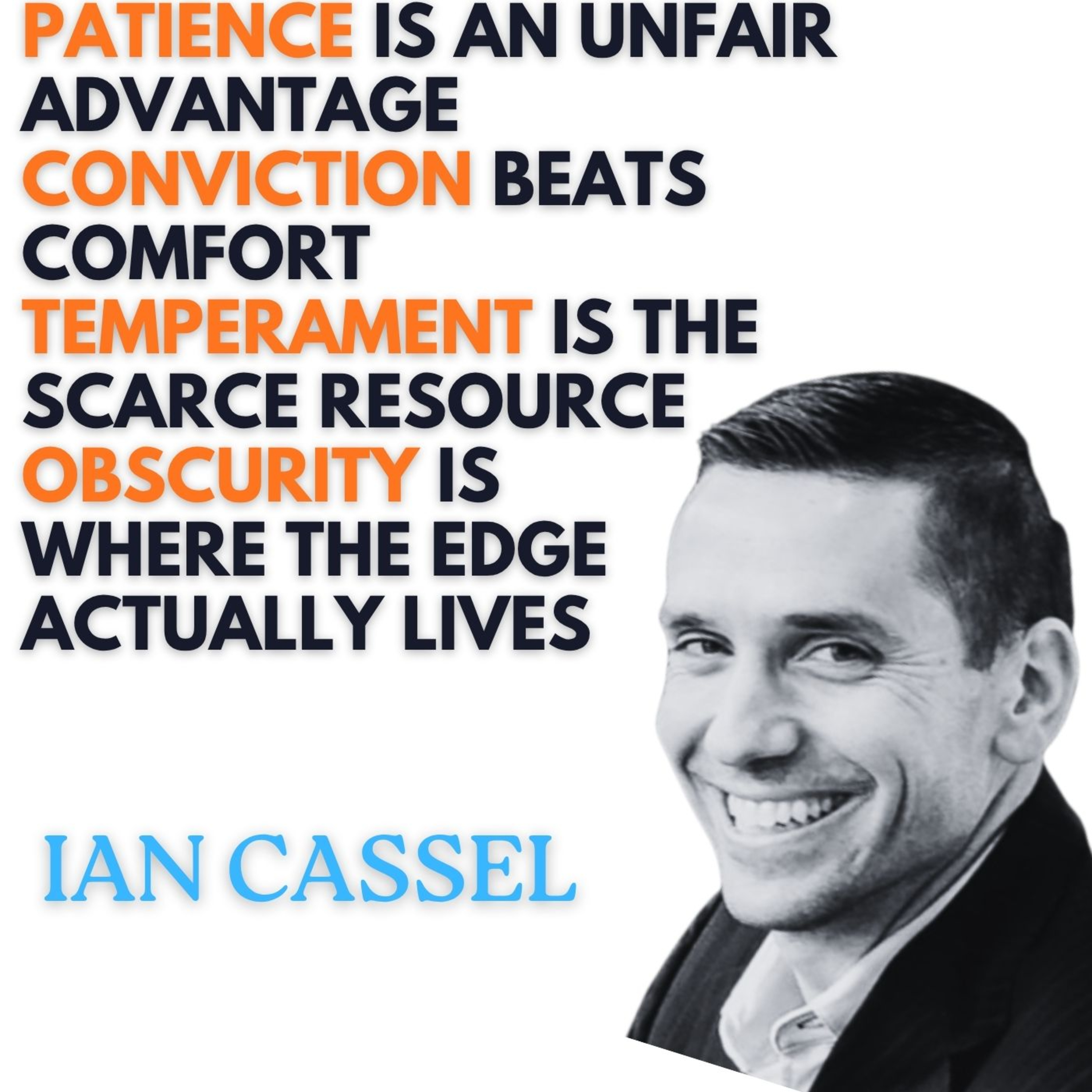 Ian Cassel: The Stock Picker: How to Develop the Mindset, Temperament, and Strategy to Outperform Wall Street 21.09.2026 1h 12minFind me on Substack!Ian Cassel is the founder of MicroCapClub and CIO of Intelligent Fanatics Capital Management, specializing in underfollowed public companies led by exceptional owner-operators — pairing rigorous, boots-on-the-ground research with the patience to hold rare compounding businesses through volatility. He became a full-time private investor at 28 and has spent his career hunting for undiscovered small public companies, and the founders who run them, before Wall Street ever notices. Today, we discuss his new book, The Stock Picker: How to Develop the Mindset, Temperament, and Strategy to Outperform Wall Street.Episode Sponsor: Fiscal AI is a modern data terminal that gives investors instant access to twenty years of financials, earnings transcripts, and extensive segment and KPI data—use my link for a two-week free trial plus 15% off: https://fiscal.ai/talkingbillions/Ian Cassel didn’t take the conventional path into investing — he skipped it entirely. Raised in Lancaster County, Pennsylvania’s blue-collar, Amish-adjacent farm country, Cassel became a full-time private investor at 28, guided for years by a single line he wrote on a napkin at 22: “10K and two ten baggers equal millionaire.” It took six years to make it true.That patience defines everything Cassel does now as founder of MicroCapClub and CIO of Intelligent Fanatics Capital Management. He makes the case for microcaps as one of the market’s last true structural edges — citing research showing 87% of stocks that returned 10x or more over the past decade started as microcaps, and 91% of those were already profitable businesses, not speculative stories. Institutions, he argues, are locked out not by risk but by illiquidity itself.Cassel also opens up about the mentors who shaped him, including a message-board trader named Skip who taught him that a stock is “a buy or a sell,” never a hold — and that if you’re not willing to put your money where your mouth is, you should keep quiet. He’s candid, too, about his own losing streaks, the temptation to double down on losing positions, and a Porsche-and-Rolex purchase he now looks back on with some embarrassment.The conversation closes on something bigger than markets: Cassel’s belief that “the secret to compounding” isn’t just financial — it’s showing up, present, for the people you love, today, rather than waiting for some future payoff.The book: The Stock Picker: How to Develop the Mindset, Temperament, and Strategy to Outperform Wall Street.Podcast Program – Disclosure StatementBlue Infinitas Capital, LLC is a registered investment adviser and the opinions expressed by the Firm’s employees and podcast guests on this show are their own and do not reflect the opinions of Blue Infinitas Capital, LLC. All statements and opinions expressed are based upon information considered reliable although it should not be relied upon as such. Any statements or opinions are subject to change without notice.Information presented is for educational purposes only and does not intend to make an offer or solicitation for the sale or purchase of any specific securities, investments, or investment strategies. Investments involve risk and, unless otherwise stated, are not guaranteed.
 -
 Owen Zidar and Eric Zwick: The Everywhere Millionaire: Who Is Really Rich in America and How They Got There 14.09.2026 1h 5minJoin me on Substack! Look up my name.Today I'm joined by two economists who spent a decade inside a room most of us will never see — the basement of the U.S. Treasury Department — building the first database that ever linked confidential tax records to the individual owners of America's private businesses.Episode Sponsor: Fiscal AI is a modern data terminal that gives investors instant access to twenty years of financials, earnings transcripts, and extensive segment and KPI data—use my link for a two-week free trial plus 15% off: https://fiscal.ai/talkingbillions/Owen Zidar teaches at Princeton, Eric Zwick teaches at the University of Chicago Booth School of Business, and together they've written a book that completely reframed how I think about wealth in this country: The Everywhere Millionaire.Their argument, backed by data nobody had ever assembled before, is that America's real fortune isn't sitting with the Forbes 400 on the coasts — it's sitting with three million "ordinary" business owners: car dealers, dental practices, gutter manufacturers, hiding in plain sight in nearly every town in the country. They define an "everywhere millionaire" as a private business owner worth $5 million or more, and collectively, these three million households hold thirteen times the wealth of the Forbes 400.We trace the hidden engine behind that wealth, and they share story after story of the individuals who built it. We go beyond the economic power of this group into the political influence it quietly carries too.Their book is eye-opening and genuinely inspiring. It makes the case that the American Dream is very much alive, and that there are far more paths to it than most of us realize. Some readers may even find themselves seeing, for the first time, that they're not alone — that they're part of a much larger, wealthier, more established group than the billionaires who steal all the spotlight. And maybe that's exactly where they want to be: financially successful, politically influential, yet comfortably out of sight, living among the rest of us.Podcast Program – Disclosure StatementBlue Infinitas Capital, LLC is a registered investment adviser and the opinions expressed by the Firm’s employees and podcast guests on this show are their own and do not reflect the opinions of Blue Infinitas Capital, LLC. All statements and opinions expressed are based upon information considered reliable although it should not be relied upon as such. Any statements or opinions are subject to change without notice.Information presented is for educational purposes only and does not intend to make an offer or solicitation for the sale or purchase of any specific securities, investments, or investment strategies. Investments involve risk and, unless otherwise stated, are not guaranteed.
 -
 Jared Dillian: The Awesome Portfolio: Why Smoother Returns Beat Bigger Ones 07.09.2026 53minMy guest today is Jared Dillian—former Lehman Brothers index-arbitrage and ETF trader, founder of the 18-year-old professional market letter The Daily Dirtnap, registered CTA, author of seven books, and an unusually multidimensional market thinker whose work joins macro trading, practical personal finance, risk control, writing, mental health, and electronic music.Today, are we talking about his new book The Awesome Portfolio, a simple, stress-free approach to investing.Episode Sponsor: Fiscal AI is a modern data terminal that gives investors instant access to twenty years of financials, earnings transcripts, and extensive segment and KPI data—use my link for a two-week free trial plus 15% off: https://fiscal.ai/talkingbillions/Jared unpacks the origin of The Awesome Portfolio — born from testing model portfolios with a subscriber-turned-advisor, later validated by Nick Maggiulli's own optimization research.Core thesis: "to make people make stupid decisions" is, in Jared's telling, the whole purpose of volatility — Vanguard's own data shows investors rarely capture the returns their funds actually post.Vanguard's "advisor alpha": simply having someone stop you from trading boosts returns by 3%. But Jared argues even a good advisor can't erase the stress of a 50% drawdown.The Awesome Portfolio's worst-ever year: down 12%, versus an 89% max drawdown for the S&P since 1929. "Drawdowns affect psychology."The "life hedge": your job and the market tend to move together, amplifying your life's volatility. The ideal hedge would move opposite — nothing fully does.Risk of ruin, via a $300M Powerball thought experiment: "wealthy people think about the risk of ruin and middle-class people don't."Reflexivity: the top 7 stocks make up 35% of the index, so buying the index means buying concentration.The five 20% slices — stocks, bonds, gold, cash, real estate — rebalanced once a year, deliberately simple.Why crypto got cut: even a small Bitcoin allocation would dominate investor attention and undercut the whole stress-free premise.Stress-tested against a literal nuclear war, Jared still can't find a scenario where all five assets fail together.Closing candor: "Books succeed when they tell people things they already believe" — which is why he expects pushback, not a bestseller.Podcast Program – Disclosure StatementBlue Infinitas Capital, LLC is a registered investment adviser and the opinions expressed by the Firm’s employees and podcast guests on this show are their own and do not reflect the opinions of Blue Infinitas Capital, LLC. All statements and opinions expressed are based upon information considered reliable although it should not be relied upon as such. Any statements or opinions are subject to change without notice.Information presented is for educational purposes only and does not intend to make an offer or solicitation for the sale or purchase of any specific securities, investments, or investment strategies. Investments involve risk and, unless otherwise stated, are not guaranteed.
 -
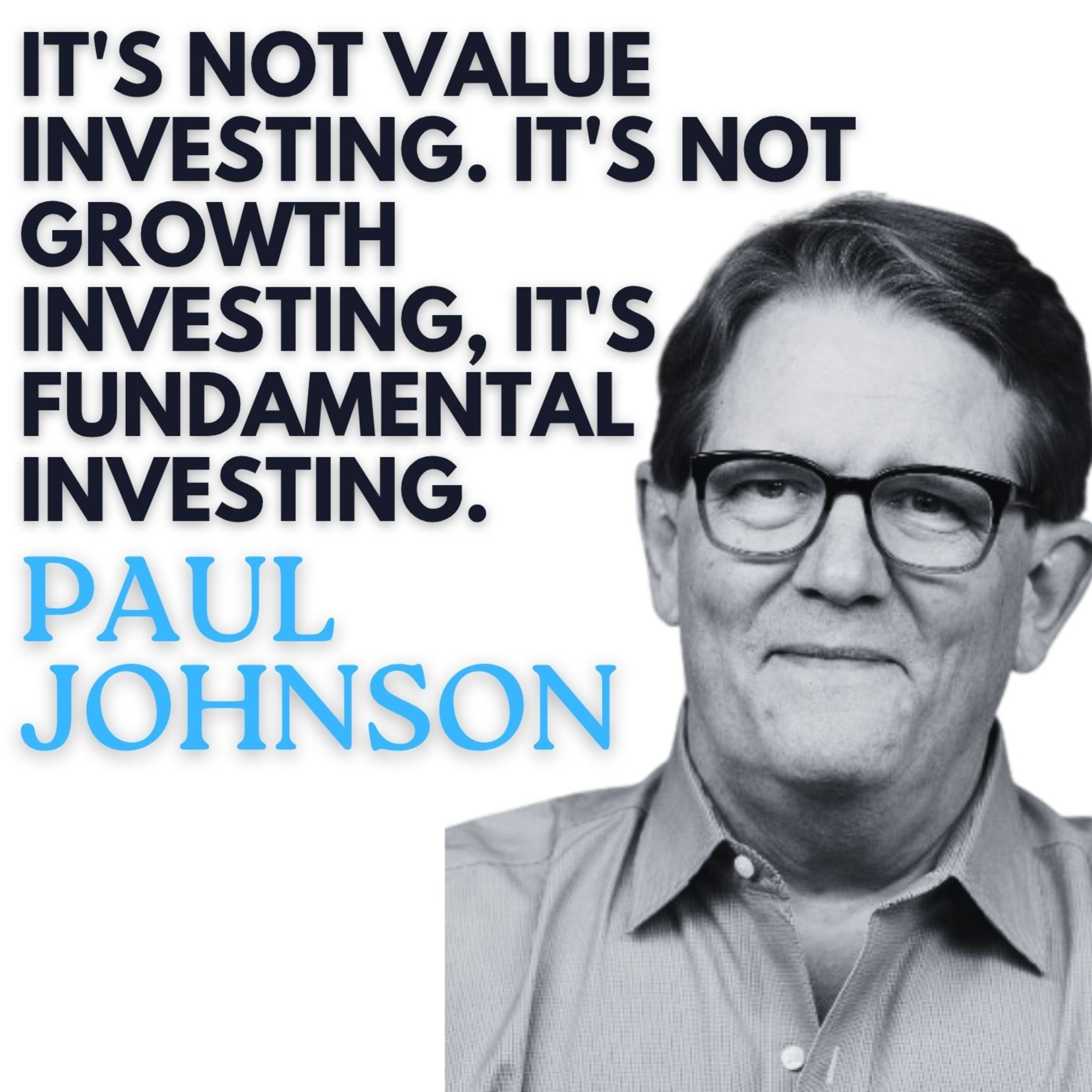 Paul Johnson: Why "Value Investing" Was Never the Right Name. Fundamental Investing — Not Value vs. Growth Is the Real Divide in Markets 31.08.2026 1h 26minMy guest today is Professor Paul Johnson, a veteran value investor, long-time Columbia and Fordham professor, and co-author of The Enduring Value of Roger Murray, Pitch the Perfect Investment, and The Gorilla Game. He's taught in the same value investing tradition that runs from Benjamin Graham through Roger Murray, and he brings both a practitioner's and a historian's eye to our conversation today.02:10 – Origin story: a teenage bet on a gold penny stock turned $250 into $2,500 and hooked Paul on markets with "no physical labor."08:46 – Debut theory: the '73–'74 crash plus the rise of relative performance permanently reshaped investing after Graham.10:54 – Buffett's 1991 letter: value and growth investing are "basically the same thing" — the label "value investing" is redundant.24:54 – Correction for the record: David Dodd, not Murray, taught Security Analysis until 1961.27:04 – Murray's core contribution: rigor and discipline — illustrated by the Leon Cooperman "400-number table" story.33:26 – The magnet metaphor: intrinsic value pulls price toward it over time, though price can overshoot or undershoot.42:28 – Paul pushes back on his own construct: ignoring the future still means betting value stays stable.47:39 – Bruce Greenwald's addition: sustainable competitive advantage, and the 1997 "Competitive Advantage Period" paper with Mauboussin.51:53 – Why growth concentrates in mega-caps: scale, internet infrastructure, and the "optionality" to acquire threats early.58:45 – Framing device: "What if AI is just a normal disruptive technology?" — like electricity or the internal combustion engine.01:16:14 – "I say the key to investment" — a superior value estimate plus the ability to hold through volatility.01:17:33 – A Buffett-adjacent friend rode $10K to $1B because he "didn't want to disappoint Warren."Podcast Program – Disclosure StatementBlue Infinitas Capital, LLC is a registered investment adviser and the opinions expressed by the Firm’s employees and podcast guests on this show are their own and do not reflect the opinions of Blue Infinitas Capital, LLC. All statements and opinions expressed are based upon information considered reliable although it should not be relied upon as such. Any statements or opinions are subject to change without notice.Information presented is for educational purposes only and does not intend to make an offer or solicitation for the sale or purchase of any specific securities, investments, or investment strategies. Investments involve risk and, unless otherwise stated, are not guaranteed.
 -
 Bob Robotti: We Asked a Value Legend Why the Real AI Trade Isn't AI — And Why Passive Helps Stock Pickers (Excess Returns Podcast) 26.08.2026 1h 7minBob Robotti, founder and CIO of Robotti & Company, joins Matt Zeigler and Bogumil Baranowski to explain why bottom-up value investing may be entering one of its best opportunity sets in decades. They discuss AI and reindustrialization, inflation and interest rates, passive investing, capital cycles, private equity, long-term ownership, and why today’s neglected industrial businesses may offer opportunities that the market is missing.I join Matt Zeigler for one more special episode of Excess Returns. I’m excited to share this episode with you—it’s reposted here with permission and blessing from both Matt and Jack. Don’t miss it! And follow their work; links below.Bob Robotti on Xhttps://x.com/BobRobottiRobotti & Companyhttps://www.robotti.comTopics coveredHow Bob finds misunderstood businesses with latent earnings powerWhy his “grassroots macro” process starts with company-level supply and demandHow AI spending is increasing demand for energy, copper, aluminum, cement and other physical assetsWhy North America’s natural gas advantage could support a long-term reindustrialization cycleWhy persistent inflation could force higher interest rates and lower valuation multiplesWhy no competitive moat is permanent, even for today’s dominant technology companiesHow passive investing and shorter time horizons can create opportunities for fundamental stock pickersWhy prolonged downturns can improve industry economics through consolidation and reduced capacityWhy Bob views himself as an active owner rather than an activist investorWhy he is skeptical of today’s private equity model and its expansion into retirement portfoliosThe NewMarket investment that taught him the cost of selling a great business too earlyWhy he thinks individual company research can outperform indexing over the next decadeLearn more about the Excess Returns podcast network:https://excessreturns.coNo information discussed in this podcast should be construed as investment advice. Securities discussed may be held by the hosts and guests, their firms or their clients.Podcast Program – Disclosure StatementBlue Infinitas Capital, LLC is a registered investment adviser and the opinions expressed by the Firm’s employees and podcast guests on this show are their own and do not reflect the opinions of Blue Infinitas Capital, LLC. All statements and opinions expressed are based upon information considered reliable although it should not be relied upon as such. Any statements or opinions are subject to change without notice.Information presented is for educational purposes only and does not intend to make an offer or solicitation for the sale or purchase of any specific securities, investments, or investment strategies. Investments involve risk and unless otherwise stated, are not guaranteed.Information expressed does not take into account your specific situation or objectives, and is not intended as recommendations appropriate for any individual. Listeners are encouraged to seek advice from a qualified tax, legal, or investment adviser to determine whether any information presented may be suitable for their specific situation. Past performance is not indicative of future performance.
 -
 Jan Petke: The Meteor Every Heir Sees Coming - On Inheritance, Integration, and Why Money is the Smallest Part of the Fortune 24.08.2026 1h 9minMy guest today is Jan Petke, a dynastic architect and strategic consigliere to sovereign and leading global entrepreneur families, who designs continuity architectures so that power, capital, and culture compound across generations — not just portfolios.3:00 — Jan traces his path from a McKinsey-spinoff consultancy through private equity (Commonwealth Bank of Australia’s First State Investments) to advising “centi-millionaires” — first-gen tech entrepreneurs with liquidity events over €100 million.5:25 — Jan rejects “advisor” and “wealth manager” as labels: “wealth has nothing to do with money” (6:14).7:35 — The shift from “next generation” to “rising generation,” and from financial capital to human and intellectual capital.11:04 — The “meteor” metaphor: inherited wealth arrives with a weight of responsibility most heirs are unprepared for (12:55).20:43 — On the shirtsleeves proverb: “This proverb is real and serious, because that is physics” — though every family has “free will” over whether it repeats (21:45).25:04 — Jan’s own 100 Year Family Project, built with his four children: “my mantra is I eat my own cooking.”32:25 — Declining birth rates and families transforming into institutions.38:53 — New “tribal” dynasties forming around purpose, not bloodline. 2,000–5,000 new dynasties expected within a decade — 40% female-led (41:19).43:51 — Women as an “underestimated” force in the wealth transfer.50:43 — Bringing elders into governance through an “elder council”: “you can’t Google wisdom” (54:12).54:51 — The 1,000-year vision — inspired by Hong Kong’s Lee Kum Kee family and echoed across scripture.58:42 — Why Jan avoids “legacy” in favor of “lineage impact.”1:03:20 — On success: “if I can inspire someone to do better.”Podcast Program – Disclosure StatementBlue Infinitas Capital, LLC is a registered investment adviser and the opinions expressed by the Firm’s employees and podcast guests on this show are their own and do not reflect the opinions of Blue Infinitas Capital, LLC. All statements and opinions expressed are based upon information considered reliable although it should not be relied upon as such. Any statements or opinions are subject to change without notice.Information presented is for educational purposes only and does not intend to make an offer or solicitation for the sale or purchase of any specific securities, investments, or investment strategies. Investments involve risk and, unless otherwise stated, are not guaranteed.
 -
 Thomas Chua: The Lunch Break Investor, How Busy People Can Build Wealth in One Hour a Day 17.08.2026 1h 4minThomas Chua is a friend, an investor, an investing educator, and the founder of Steady Compounding, where he shares lessons from great businesses and great investors with a global audience. He’s also the author of a brand-new book, The Lunch Break Investor, about how busy people can build wealth thoughtfully in roughly an hour a day.(03:00) Title story: his father pawned his mother’s wedding jewelry; Thomas vows “the lights will never go off again.”(06:00) Library autobiographies over role models; “failure in itself is nothing to be embarrassed about.”(08:00) Singapore’s 4-year bond funded university — career freedom traded for $30K to compound.(11:00) Trader-to-owner shift: prices checked every 15 min, until Buffett’s line on tickers landed.(15:00) “Forgotten money”: Guy Spier’s dislike of trading; Adam Mead forgetting his own login.(17:00) Core thesis: “invest to live and not the other way around” — one hour a day.(20:00) Lynch’s line: “nobody ever wished on their deathbed that they wish they spent more time in the office.”(24:00) Ronald Reid (janitor, $8M) and Anne Scheiber (IRS auditor, left $22M).(28:00) A moat as treasure inside a castle worth defending.(31:00) ROIC and Munger’s “gravity” — a moat’s trajectory beats its size.(33:00) AI capex wave: Meta’s ad growth vs. debt-heavy new cloud entrants.(38:00) Red flag: Peloton’s CFO denied a capital raise days before doing one.(41:00) The “wallet test” for management; Bezos’s “Ouch” letter.(43:00) Buying in three tranches, letting the business prove itself.(44:00) Selling as “an admission that I was wrong” — the Lululemon case.(48:00) One-hour checklist: “why does this business deserve to be bigger five years from now,” plus scanning your card statement for moat clues.(50:00) Writing Steady Compounding publicly sharpened his thinking, built his audience.(53:00) The Malacca trip with his grandmother that never happened; Munger’s tuna regret.(56:00) After 200+ episodes: permission to take the walk, take the trip — you’re safe now.Podcast Program – Disclosure StatementBlue Infinitas Capital, LLC is a registered investment adviser and the opinions expressed by the Firm’s employees and podcast guests on this show are their own and do not reflect the opinions of Blue Infinitas Capital, LLC. All statements and opinions expressed are based upon information considered reliable although it should not be relied upon as such. Any statements or opinions are subject to change without notice.Information presented is for educational purposes only and does not intend to make an offer or solicitation for the sale or purchase of any specific securities, investments, or investment strategies. Investments involve risk and, unless otherwise stated, are not guaranteed.
 -
 The Things We Have to Do: Bogumil on Just Press Record with Matt Zeigler 14.08.2026 39minI’m reposting today an interview that Matt Zeigler kindly conducted with me recently. It just so happens that today is my birthday, which makes it feel like the right moment to share this deeply personal conversation about a chapter in my life and career when uncertainty was at its peak and the road ahead felt anything but clear.In this impromptu conversation, recorded one summer morning, I reflect on what happened during that time, what I learned from it, and how those experiences continue to shape me today. Along the way, you’ll hear stories and moments I’ve never shared publicly before.I also encourage you to read the thoughtful profile Matt wrote about me on his wonderful Cultish Creative blog, linked here. While you’re there, take some time to explore—and follow—his beautifully written, thoughtfully curated work. I’m grateful for the care and generosity he brings to every conversation and every story he tells.Bogumil Baranowski joins Matt Zeigler to explore why failure is feedback and how persistence can turn rejection, uncertainty, and personal obstacles into life-changing opportunities. Bogumil shares his journey from Poland to a career in New York investing, the green card rejection that nearly ended it, and the unlikely path that eventually led him to ask Warren Buffett and Charlie Munger a question at the Berkshire Hathaway annual meeting.Topics covered:Why failure should be treated as feedback rather than defeatWhat Joseph Moore’s struggle to publish How to Get Rich in American History teaches about resilienceHow personal conviction helps people continue when success appears statistically unlikelyWhy creating a podcast can preserve valuable conversations and connect overlooked ideasHow podcast hosts cross-pollinate insights between investors, authors, and thinkersBogumil’s decision to leave Europe and build an investing career in New York CityThe visa challenges and green card rejection that almost forced him to leave AmericaHow hope and persistence helped him restart the immigration processThe unlikely story of asking Warren Buffett and Charlie Munger a question at Berkshire HathawayWhy obstacles can help people develop strengths that others do not possessHow an outsider’s perspective can create an advantage in investing and creative workWhy people should embrace the experiences that make them differentTimestamps:00:00 Why some goals become things you have to do03:00 Joseph Moore and the history of getting rich06:04 Why location matters when building and preserving wealth08:20 Failure is feedback09:30 Why important ideas often face rejection13:03 Turning private conversations into a public podcast16:40 Learning through other people’s experiences18:08 Cross-pollinating ideas between great investors20:24 Bogumil’s decision to pursue investing in New York21:42 Visa problems and a rejected green card application24:00 Starting the immigration process again26:14 Why persistence matters more than the size of the goal27:46 Asking Warren Buffett and Charlie Munger a question31:42 Why failing is part of trying33:53 The unexpected connection to The King’s Speech35:29 Turning perceived weaknesses into strengths37:29 Where to find Bogumil’s writing and podcastsPodcast Program – Disclosure StatementBlue Infinitas Capital, LLC is a registered investment adviser and the opinions expressed by the Firm’s employees and podcast guests on this show are their own and do not reflect the opinions of Blue Infinitas Capital, LLC. All statements and opinions expressed are based upon information considered reliable although it should not be relied upon as such. Any statements or opinions are subject to change without notice.Information presented is for educational purposes only and does not intend to make an offer or solicitation for the sale or purchase of any specific securities, investments, or investment strategies. Investments involve risk and unless otherwise stated, are not guaranteed.
 -
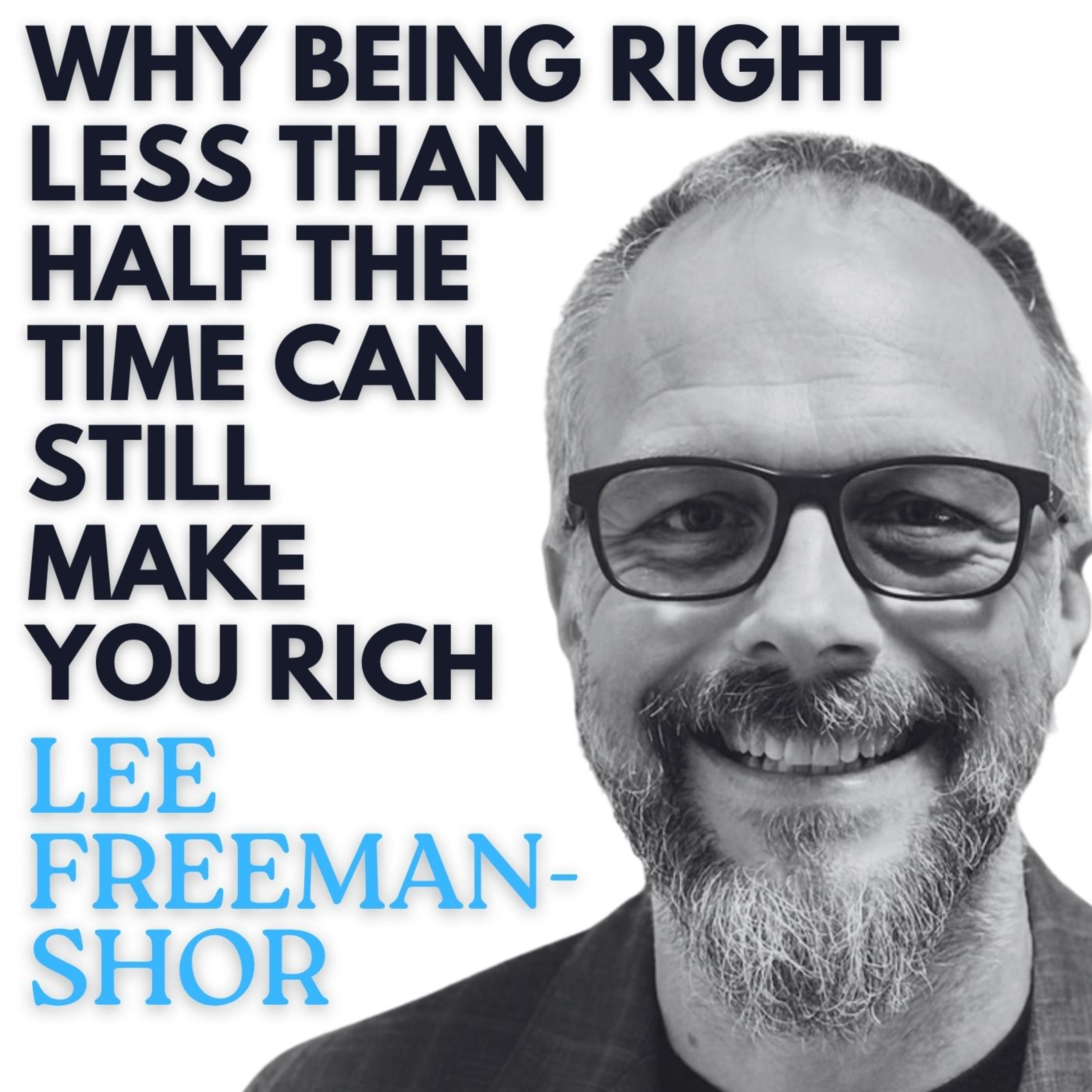 Lee Freeman-Shor: Why Being Right Less Than Half the Time Can Still Make You Rich, The Five Behavioral Tribes — and Why Stock Picking Matters Less Than What You Do Next 10.08.2026 1h 8minLee Freeman‑Shor is a former multi‑award‑winning fund manager turned bestselling author and researcher who has spent years inside the decision‑making of the world’s best investors to uncover how they get it wrong most of the time and still make millions in the markets. He gave 45 elite investors real money and studied 30,000 trades to decode execution. He shares what he learned in the process. Episode Sponsor: Fiscal AI is a modern data terminal that gives investors instant access to twenty years of financials, earnings transcripts, and extensive segment and KPI data—use my link for a two-week free trial plus 15% off: https://fiscal.ai/talkingbillions/Episode Notes03:00 — Lee's working-class Nottinghamshire upbringing; didn't know what a stock was until university.04:11 — Stumbled into fund management after a law degree, then built the "Best Ideas" fund range at Scander Investment Group.07:07 — The spark: a manager with a 30% hit rate who still made a fortune for the fund.09:51 — Analyzing 30,000 trades: hit rates cluster near 50% — "it's definitely not about the stock idea."19:30 — Lee unveils his five investor tribes: rabbits, assassins, hunters, raiders, connoisseurs.20:30 — Why investors freeze: "you don't want to be a rabbit."22:42 — The biases behind it: "endowment bias, sunk cost bias... regret aversion bias."24:15 — His gut-check question for holding a losing name: would you buy it today with fresh money?25:43 — Averaging down done right — hunters start small so they can "lean into the name."38:16 — Stock Market Maestros research: the "lumberjack" archetype (John Barr), tiny starting positions, decades-long 100-baggers.44:54 — "Incrementalists" like Andrew Hall and James Hambro trim and add in small steps instead of exiting outright.48:34 — Behavioral alpha score and payoff ratio — metrics that predict future manager skill.53:15 — Takeaway: "when you're losing, do something... try and be an assassin."58:43 — Lee's personal lesson: "expect to be wrong."1:00:41 — Closing reflection on what success really means after stepping back from money management in 2018.Podcast Program – Disclosure StatementBlue Infinitas Capital, LLC is a registered investment adviser and the opinions expressed by the Firm’s employees and podcast guests on this show are their own and do not reflect the opinions of Blue Infinitas Capital, LLC. All statements and opinions expressed are based upon information considered reliable although it should not be relied upon as such. Any statements or opinions are subject to change without notice.Information presented is for educational purposes only and does not intend to make an offer or solicitation for the sale or purchase of any specific securities, investments, or investment strategies. Investments involve risk and, unless otherwise stated, are not guaranteed.
 -
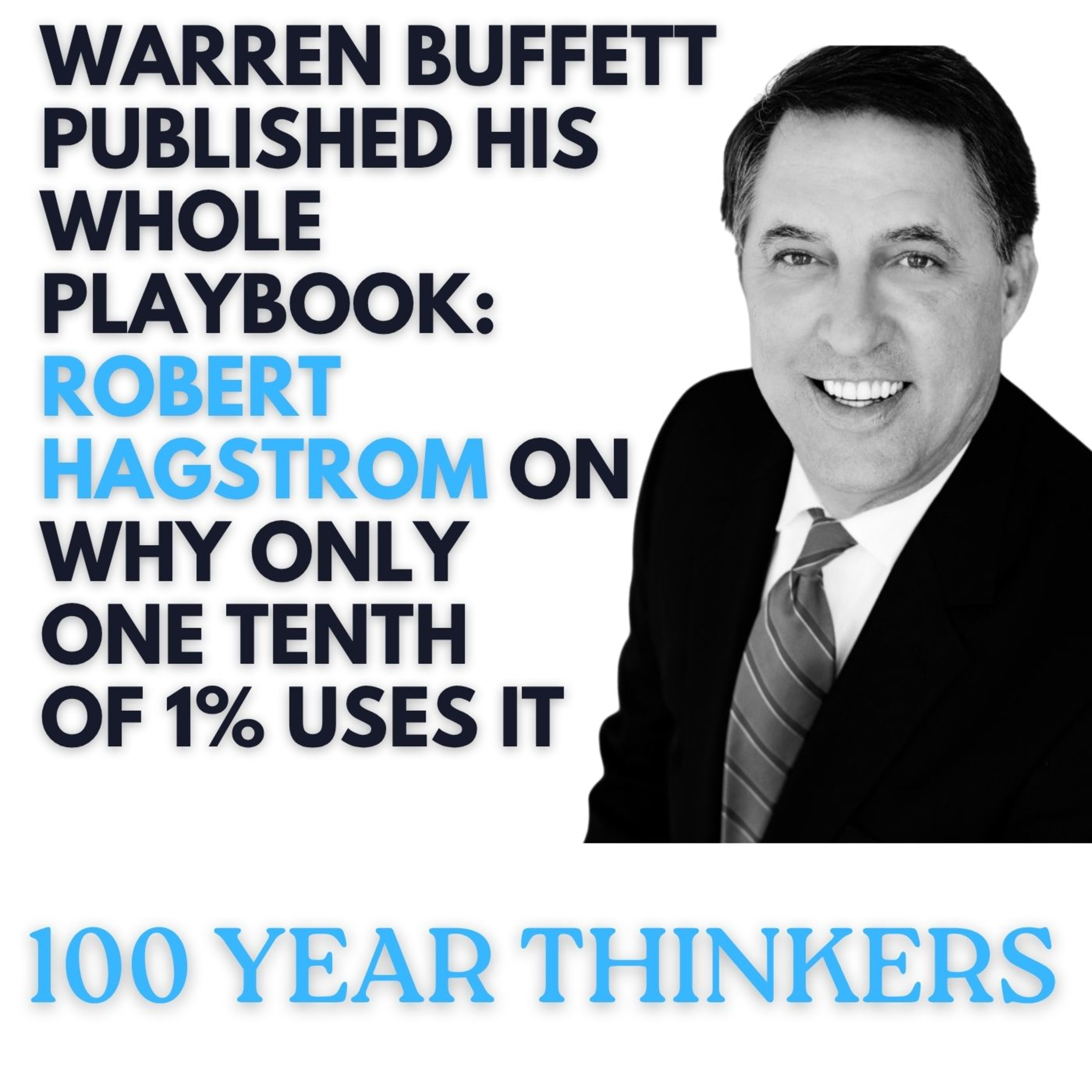 100 Year Thinkers: Warren Buffett Published His Whole Playbook | Robert Hagstrom on Why Only One Tenth of 1% Uses It 07.08.2026 1h 7minRobert Hagstrom joins Matt Zeigler and Bogumil Baranowski to revisit the 25th anniversary edition of The Warren Buffett Portfolio and explain why volatility is not the same as investment risk.They discuss concentrated portfolios, active share, business valuation, behavioral finance, complex adaptive systems, and Warren Buffett’s warning that the market’s casino can overwhelm its cathedral.Matt Zeigler and I had the privilege of hosting Robert Hagstrom for a special 100-Year Thinkers Edition of the Excess Returns Podcast.Available now on Excess Returns Podcast and Talking Billions. 🎧I’m excited to share this episode with you—it’s reposted here with permission and blessing from the Excess Returns team. Don’t miss it! And follow their work, links below.The Warren Buffett Portfolio - 25th Anniversary EditionRobert Hagstrom on XEquity CompassTopics coveredWhy Markowitz’s definition of risk as variance shaped modern portfolio theoryWhy Buffett views permanent capital loss, not volatility, as the real investing riskWhat Hagstrom’s study of 3,000 portfolios revealed about concentration and market outperformanceThe difference between know-something investors and investors better served by indexingHow benchmark awareness creates closet indexers and weakens active managementWhat loss aversion and prospect theory explain about investor behaviorWhy Darwin, William James, and complex adaptive systems offer better models for marketsBuffett’s cathedral and casino metaphor for business ownership versus speculationThe El Farol problem, Jim Simons, and why successful market models stop workingWhy options trading, leveraged ETFs, and record single-stock dispersion may be strengthening the casinoHow to evaluate portfolios using cash flow, return on invested capital, and look-through earningsWhy permanent capital and System 2 thinking are essential for focused investingTimestamps00:00 Intro04:00 Why Markowitz defined risk as variance11:47 What 3,000 portfolios revealed about concentration17:17 Know-something versus know-nothing investors22:23 Kahneman, loss aversion, and modern portfolio theory26:58 Darwin, pragmatism, and adaptive markets32:28 Buffett’s cathedral and casino metaphor37:37 The El Farol problem and why markets resist prediction42:08 Why investors crave market forecasts46:16 Why investing is most intelligent when businesslike51:38 Record stock dispersion, options, and leveraged ETFs56:00 Measuring portfolio progress through business economics01:00:43 Why permanent capital enables focused investing01:04:43 How markets survive widespread investor mistakesLearn more about the Excess Returns podcast network:https://www.excessreturns.co/Podcast Program – Disclosure StatementBlue Infinitas Capital, LLC is a registered investment adviser and the opinions expressed by the Firm’s employees and podcast guests on this show are their own and do not reflect the opinions of Blue Infinitas Capital, LLC. All statements and opinions expressed are based upon information considered reliable although it should not be relied upon as such. Any statements or opinions are subject to change without notice.Information presented is for educational purposes only and does not intend to make an offer or solicitation for the sale or purchase of any specific securities, investments, or investment strategies. Investments involve risk and unless otherwise stated, are not guaranteed.Information expressed does not take into account your specific situation or objectives, and is not intended as recommendations appropriate for any individual. Listeners are encouraged to seek advice from a qualified tax, legal, or investment adviser to determine whether any information presented may be suitable for their specific situation. Past performance is not indicative of future performance.
 -
 Alexander von der Vellen: Money Is Not Freedom — It's Pressure 03.08.2026 1h 12minAlexander von der Vellen is a Cambridge-educated former British Army officer who left private banking at Barings and JPMorgan Chase to become an independent fiduciary advising over 100 entrepreneurial families, and author of a trilogy on trusteeship and stewardship.Spend more time with Alexander here, his own recorded podcast series of lectures with some precious advice for inheritors and their families.Episode Sponsor: Fiscal AI is a modern data terminal that gives investors instant access to twenty years of financials, earnings transcripts, and extensive segment and KPI data—use my link for a two-week free trial plus 15% off: https://fiscal.ai/talkingbillions/3:00 — Alexander explains banking is the rare industry where age is a perceived advantage; he once asked his London barber to add gray hair for private banking credibility.8:52 — Childhood: born in Spain to an Austrian father and English mother, raised in the Canary Islands speaking four languages, boarding school at age 7.16:04 — The old Barings model: clients paid double the nearest competitor, and money itself was the one taboo topic at client events — “the money was the byproduct of the relationship.”20:11 — The Lord Darby anecdote: a JP Morgan banker meets Fleming’s Lord Darby, learns he rides alone with the Queen in her carriage, and asks, verbatim, “why is she not a client?” — Alexander’s illustration of the shift from relationship-driven to transactional banking.31:19 — Trusteeship as a human skill set: diligence, duty, loyalty, discretion — qualities that must be consciously developed, not assumed.43:16 — The JP Morgan $30 million marker: past that point wealth “will outlast you,” triggering a different family conversation entirely — stewardship, not spending.49:44 — Key quote: “money is not freedom, it’s pressure” — the more you buy, the more pressure it adds to your life.58:33 — A boy-band client years later: “you do realize this is all because of you... you saved me from myself.”1:01:02 — Quoting Patton: “good plan delivered with energy today is far better than an excellent plan delivered next week.”1:04:30 — Success, defined: “it’s about continuity with meaning every time.”Podcast Program – Disclosure StatementBlue Infinitas Capital, LLC is a registered investment adviser and the opinions expressed by the Firm’s employees and podcast guests on this show are their own and do not reflect the opinions of Blue Infinitas Capital, LLC. All statements and opinions expressed are based upon information considered reliable although it should not be relied upon as such. Any statements or opinions are subject to change without notice.Information presented is for educational purposes only and does not intend to make an offer or solicitation for the sale or purchase of any specific securities, investments, or investment strategies. Investments involve risk and, unless otherwise stated, are not guaranteed.
 -
 On Consistency, Ownership, and Unconditional Giving: Unfiltered Coffee Q&A, July 2026 27.07.2026 56minThis month on Unfiltered Coffee, I share more about the machinery behind both the podcast and the investing practice — the 200-some episodes, the 2 decades of client relationships, the daily habits, and the things that simply take time and can't be rebuilt in a day, even if you wanted to. I share the idea of decision and choice fatigue: how templating the small stuff (the shoes, the shirt, the quarterly letter format) frees up mental capacity for the decisions that actually matter, and how consistency is the quiet, unglamorous compounding force behind almost everything worth building. I also talk about cultivating an ownership mindset with clients — wanting them to see their portfolio not as a list of tickers, but as part ownership in a handful of businesses worth understanding and holding.I also revisit a few books with fresh eyes: Scott Stillman's I Don't Want to Grow Up on the nonlinear relationship between money and lifestyle, David Schwartz's Thinking Big on belief as the foundation of getting help from the world, and John Kay's Obliquity on why profit, happiness, and most worthwhile goals are only ever reached indirectly. A paper from Steve Shaw and Gideon Nave on AI and "cognitive surrender" gets me thinking about the difference between reciting knowledge and actually understanding it — a distinction I trace back to a classmate from high school who could quote a textbook verbatim but didn't understand it. On the market side, I push back gently on the all-time-high headlines — you'll see why.I close with a personal story about an early client, and a round-up of recent conversations worth revisiting: Paul Johnson on Roger Murray and fundamental investing, Marion Fogli on the triple taboo of money, Robert Miles on 25 years of Berkshire CEO character studies, and a rebroadcast recommendation of the Jay Hughes episode on courage over knowledge. I end on an open question I'm still sitting with: can a gift ever really be unconditional? Listen, why the answer matters.Tune in to hear more.Podcast Program – Disclosure StatementBlue Infinitas Capital, LLC is a registered investment adviser and the opinions expressed by the Firm’s employees and podcast guests on this show are their own and do not reflect the opinions of Blue Infinitas Capital, LLC. All statements and opinions expressed are based upon information considered reliable although it should not be relied upon as such. Any statements or opinions are subject to change without notice.Information presented is for educational purposes only and does not intend to make an offer or solicitation for the sale or purchase of any specific securities, investments, or investment strategies. Investments involve risk and unless otherwise stated, are not guaranteed.
 -
 James E. Hughes, Jr.: Great Advisors Offer Courage, Not Just Knowledge, The Five Capitals, 100-Year Thinking, and What It Takes to Help a Family Flourish 20.07.2026 56minFind me on Substack, search for my name.This is a summer classic — a re-release of an enhanced, longer audio episode that originally aired in late 2022, with my added intro and commentary. It’s among my most cherished Talking Billions episodes of all time. If you missed it, this is your moment. If you’ve heard it before, welcome back.It’s a heart-to-heart conversation with a dear friend, a mentor, who has shaped me and my career in so many wonderful ways.James E. “Jay” Hughes, Jr. is a widely respected voice in family wealth, governance, and legacy planning, known for helping families think beyond financial assets to the human and relational side of multigenerational success. He is the author and co-author of several influential books, including Family Wealth: Keeping It in the Family and Family: The Compact Among Generations, and his work has shaped how family offices and advisors approach long-term stewardship.Jay traces his own path to this work back to childhood: overhearing his parents argue about money, and learning that his mother’s family had lost everything overnight when her grandfather’s bank failed. That experience is the root of the proverb he’s spent his career trying to help families escape — “shirt sleeves to shirt sleeves in three generations.”Jay lays out the five capitals of family wealth — human, intellectual, social, spiritual, and financial — and argues the profession’s obsession with the last one, in isolation, is precisely what causes families to fall apart. He illustrates this with a simple hand gesture: thumb up alone is, in his words, “the death of a family.” Turn the hand over, and purpose, joint decision-making, lifelong learning, and thriving people all emerge, with financial capital finally in service of something.He explains why 70 to 85 percent of wealthy families lose their cohesion by the third generation — not usually from conflict, but from inertia, from never building a working system for making decisions together. That system, he says, is what separates families that endure from those that quietly disperse.Jay also unpacks what elders actually do in successful, long-lived tribes: they think in 100-year increments and mediate rather than decide, citing the Haudenosaunee’s tradition of honoring seven generations back and seven generations forward. He connects this to a piece of advice from his own father — that clients don’t come to an advisor seeking knowledge, since knowledge is fungible, but seeking courage to do something difficult.The conversation closes on money and parenting, with Jay offering a simple reframe for any parent standing in a toy store: never say “we can’t afford it” — say “we’re choosing not to have that today.” It’s a fitting note for an episode built around Jay’s foundation’s larger mission — helping families flourish so they can, in turn, build a flourishing society.Find out more about James E. Hughes here: The Foundation, Jay’s website.Podcast Program – Disclosure StatementBlue Infinitas Capital, LLC is a registered investment adviser and the opinions expressed by the Firm’s employees and podcast guests on this show are their own and do not reflect the opinions of Blue Infinitas Capital, LLC. All statements and opinions expressed are based upon information considered reliable although it should not be relied upon as such. Any statements or opinions are subject to change without notice.Information presented is for educational purposes only and does not intend to make an offer or solicitation for the sale or purchase of any specific securities, investments, or investment strategies. Investments involve risk and, unless otherwise stated, are not guaranteed.
 -
 Robert P. Miles: What 20 Berkshire CEOs Taught Him About Character, Inside the Temperament, the Moat, and the Culture that Keep Compounding 13.07.2026 1h 19minFind me on Substack, search for my name.Robert P. Miles is an author, educator, and the world's foremost authority on Berkshire Hathaway's management culture. Robert has written three bestselling books on Warren Buffett, created the only graduate MBA course dedicated to Buffett's philosophies, and founded the Value Investor Conference in Omaha. His journey from an entrepreneur to a globally recognized Buffett scholar began with a single Berkshire annual meeting in 1996 — and Warren Buffett himself has been paying attention ever since.Episode Sponsor: Fiscal AI is a modern data terminal that gives investors instant access to twenty years of financials, earnings transcripts, and extensive segment and KPI data—use my link for a two-week free trial plus 15% off: https://fiscal.ai/talkingbillions/Notes:3:00 – Bob Miles is introduced as the world's foremost Berkshire Hathaway culture scholar, author of three (now four) bestselling Buffett books and creator of the only graduate MBA course on Buffett's philosophies.5:30 – His path began with Napoleon Hill's Think and Grow Rich and a failed high school "movie day" venture. The lesson that stuck: "you got to understand what business you're in."7:23 – His first 1996 annual meeting: Buffett tells a small shareholder, "between you and I we own half the company," and calls Wall Street "the legal pickpocket of the average investor."14:24 – The Dairy Queen story: a self-published "101 Reasons to Own Berkshire Hathaway," a line around the block, and Buffett walking through the door — leading to a two-book deal with Wiley.31:18 – On concentration: Buffett put 65% of his $20,000 net worth into Geico at 19, tied to his "star player" basketball analogy for conviction investing.36:41 – The three unchanging lessons of The Intelligent Investor — stocks are businesses, your partner is a manic-depressive Mr. Market, and margin of safety — because "principles are principles because they don't change."42:59 – A contrarian aside: private equity "has done more harm than good," with the Berkshire system as its inversion.53:43 – On Berkshire's real edge: "I see the moat as cash," the roughly $400 billion war chest that lets Ajit Jain write insurance the day after disasters strike.1:08:58 – On character over credentials: concentrating on admirable traits "there's no cost," regardless of background.1:10:34 – Miles' definition of success: stay humble enough to be taught, and "go to bed a little bit smarter" every day.Podcast Program – Disclosure StatementBlue Infinitas Capital, LLC is a registered investment adviser and the opinions expressed by the Firm’s employees and podcast guests on this show are their own and do not reflect the opinions of Blue Infinitas Capital, LLC. All statements and opinions expressed are based upon information considered reliable although it should not be relied upon as such. Any statements or opinions are subject to change without notice.Information presented is for educational purposes only and does not intend to make an offer or solicitation for the sale or purchase of any specific securities, investments, or investment strategies. Investments involve risk and, unless otherwise stated, are not guaranteed.
 -
 Marion Fogli, Finance Made Human: Money a Triple Taboo, Three Money Questions, and Talking Early About Inheritance 06.07.2026 54minFind me on Substack, search for Bogumil Baranowski.Marion Fogli, a Swiss digital banking pioneer who co-founded Switzerland’s first digital private bank, now teaches what she calls Finance Made Human, translating money into a language that real people can actually understand, use, and feel at peace with.Episode Sponsor: Fiscal AI is a modern data terminal that gives investors instant access to twenty years of financials, earnings transcripts, and extensive segment and KPI data—use my link for a two-week free trial plus 15% off: https://fiscal.ai/talkingbillions/3:02 – Growing up “rich in love, not money” — Marion’s father’s story shapes her definition of wealth.5:29 – Building Switzerland’s first digital private bank taught her: “The math is visible, but the behavior is where everything actually happens.”8:07 – The human touch problem: digital banks see anxiety in login patterns hours before a client ever picks up the phone.13:03 – On AI and investing: technology can hand you 30 stock picks, but not the conviction to hold them.15:18 – Money scripts, explained: childhood beliefs about money live in the body, not the words — “a shallow breath, tight shoulders, a nervous laugh.”17:21 – Three questions to surface your own money script: your body’s reaction, the sentence you heard most as a child, and the gap between what you say and what you do about money.20:38 – The surgeon who earned over half a million and had no idea where it went: “You have income, and you have financial peace, and they’re not the same currency.”23:07 – The cash experiment: Marion paid her kids in physical cash for a month instead of transfers — they ended up saving more.27:48 – Why money is the last taboo: “It actually reveals your vulnerability.” It exposes worth, achievement, and security all at once.32:06 – Unequal help given quietly to one child can destroy a family once it surfaces after a parent’s death.36:16 – The three-bucket system: Oops Fund, Projects Fund, Freedom Fund — “I called it the Oops Fund.”39:41 – “It’s about giving each Franc a job so the person can finally rest.”45:41 – Financial education starts with one question: what do you want your money to do, short, medium, and long term?52:48 – Marion’s definition of success: “It’s not what you accumulate. It’s what you can give without losing yourself.”Podcast Program – Disclosure StatementBlue Infinitas Capital, LLC is a registered investment adviser and the opinions expressed by the Firm’s employees and podcast guests on this show are their own and do not reflect the opinions of Blue Infinitas Capital, LLC. All statements and opinions expressed are based upon information considered reliable although it should not be relied upon as such. Any statements or opinions are subject to change without notice.Information presented is for educational purposes only and does not intend to make an offer or solicitation for the sale or purchase of any specific securities, investments, or investment strategies. Investments involve risk and, unless otherwise stated, are not guaranteed.
 -
 Unfiltered Coffee Q&A, June 2026: On Trying, Waiting, and Learning to Receive 03.07.2026 45minFind me on Substack, search for Bogumil Baranowski. See you there!This month's Unfiltered Coffee finds me recording thoughts from the road after a few weeks of travel that pulled me away from daily news and toward ideas with a longer shelf life. I share reflections from Nir Eyal's book Belief, including the idea that successful people accumulate more losses simply because they try more things, and from Ray Madoff’s book Immortality and the Law, which traces how trusts extend the wishes of the dead into the lives of the living — a theme I see playing out more and more with clients and listeners alike.I also revisit familiar ideas from new angles: why rules matter more than exceptions (even when someone's great uncle smoked and lived to 102), why liquidity makes stock ownership fundamentally different from owning a car or a private business, and why AI hasn't sped up the one thing that still can't be rushed in investing — waiting for conviction to pay off. I reflect on value as something constantly exchanged in daily life, not just in markets, and on how removing time constraints and billing pressure can free both investors and professionals to do their best work.I close the episode with a round-up of recent standout conversations — Mike Nicoletti, Jack Schwager and George Coyle, Eric Pachman, and a rebroadcast of the Byron Tully episode on old money rules — plus a personal note on practicing receiving, not just giving, after a month of leaning on friends for help on a few occasions.Podcast Program – Disclosure StatementBlue Infinitas Capital, LLC is a registered investment adviser and the opinions expressed by the Firm’s employees and podcast guests on this show are their own and do not reflect the opinions of Blue Infinitas Capital, LLC. All statements and opinions expressed are based upon information considered reliable although it should not be relied upon as such. Any statements or opinions are subject to change without notice.Information presented is for educational purposes only and does not intend to make an offer or solicitation for the sale or purchase of any specific securities, investments, or investment strategies. Investments involve risk and unless otherwise stated, are not guaranteed.
 -
 Everybody Inherits Something: Bogumil Baranowski on Money, Mortality & Living a Rich Life (The Gravitas Podcast with Anna Fata Shemin) 26.06.2026 39minReposted here is my interview on Anna Fata Shemin's wonderful podcast, the Gravitas Podcast. Sign up, follow her incredibly thoughtful work: https://open.spotify.com/episode/432S3SNi56e0njlHgjAa1B?si=nT910BvxRO6Y267cdG-IuA---"Old money" is more than a TikTok aesthetic trend. There are real lessons to learn from the families who cultivate generational wealth, and they go far beyond the money.This week I sit down with Bogumil Baranowski, a Polish-born investor who came to New York to live the American dream and has spent two decades managing wealth for families. He's the author of four books, a TEDx speaker, and the host of the podcasts Talking Billions and co-host of 100 Year Thinkers.We talk about his childhood in communist Poland and how it influenced his career as an investor and Warren Buffett devotee. We discuss stewardship and how lasting family wealth has less to do with trust funds and more to do with family culture. He also discusses how money is not a prerequisite for living a truly rich life.Links from this episode:📚 Read Bogumil Baranowski's books and essays on managing money, wealth, and family legacy: 🎙️ Listen to Talking Billions, Bogumil Baranowski's podcast on investing, generational wealth, and living a rich life: 💼 Learn more about Blue Infinitas Capital, Bogumil's investment advisory firm: Connect with Bogumil Baranowski: Website: Connect with Gravitas: Instagram: @GravitasPodcast X: @annafatashemin Newsletter: http://annafatashemin.substack.com/Write to me: [email protected] Program – Disclosure StatementBlue Infinitas Capital, LLC is a registered investment adviser and the opinions expressed by the Firm’s employees and podcast guests on this show are their own and do not reflect the opinions of Blue Infinitas Capital, LLC. All statements and opinions expressed are based upon information considered reliable although it should not be relied upon as such. Any statements or opinions are subject to change without notice.Information presented is for educational purposes only and does not intend to make an offer or solicitation for the sale or purchase of any specific securities, investments, or investment strategies. Investments involve risk and unless otherwise stated, are not guaranteed.
 -
 Byron Tully: The Secret Life of Old Money: What Wealthy Families Know That They Don't Talk About 22.06.2026 1h 8minFind me on Substack!This is a summer classic — a re-release of an enhanced audio episode that originally aired in 2023, now among the most listened-to Talking Billions episodes of all time. If you missed it, this is your moment. If you've heard it before, welcome back.Over the years, I've had the pleasure of spending time with Byron Tully beyond this microphone — in person at a Parisian café, and on Zoom — and he joined the show a second time as well. His writing continues to find new readers around the world, and for good reason.Byron Tully is the author of The Old Money Book — with over 700 five-star reviews on Amazon — a grandson of a newspaper publisher, son of an oil industry executive, and a Paris-based writer who has spent a decade translating the time-tested values of America's wealth-preserving upper class into an accessible, practical guide for anyone willing to embrace them. https://theoldmoneybook.com/3:00 — Byron shares his upbringing outside Houston, TX: comfortable, only child, grandfather in newspapers, father in oil. Grandfather's early advice: "You're gonna have to learn how to manage your behavior."5:30 — Byron meets his wife from Boston; gets "neck deep" in old money culture — three-plus generations of wealth, manners, education, and core values.8:00 — The 2008 financial crisis revelation: L.A. friends who "looked rich" — Beamers, McMansions — lost everything. Boston friends? Unaffected. Flash vs. substance. His wife tells him to stop complaining and write the book.12:00 — Key insight: you don't need money to adopt old money values. The irony — follow the values and you'll start accumulating money because you stop chasing the next product. "The real awakening is to see money as an option-generating... freedom to choose."18:00 — On conspicuous consumption: old money views extravagance as "the fear of poverty." The question to ask — who are you dressing for? "Maybe nobody. Maybe I'll just dress discreetly and appropriately."24:00 — Sudden wealth and inheritance: Byron's personal experience with four inheritances. His advice: blow 1% first to purge the urge to consume, then ask how this windfall can change your life with purpose.34:00 — Old money values unpacked: health, education, politeness, modesty, financial independence, work ethic. "You can't borrow money and say I'll pay you back with time. You just can't."40:00 — Delayed gratification and long-term thinking: Amazon Prime erodes patience; the most precious things in life take time and "cannot be taken away from you."47:00 — Honoring inherited wealth: Byron reflects on his father working past 10pm. "It's the love that my parents had for me." Why can't he waste it?52:00 — On time: "Tomorrow is a promissory note, and yesterday's a canceled check." Social media is the enemy of time. Walking through Paris, looking at your phone — "What are you doing?"57:00 — Definition of success: being of service. Parents giving The Old Money Book to the groomsmen. "That's success to me."Podcast Program – Disclosure StatementBlue Infinitas Capital, LLC is a registered investment adviser and the opinions expressed by the Firm’s employees and podcast guests on this show are their own and do not reflect the opinions of Blue Infinitas Capital, LLC. All statements and opinions expressed are based upon information considered reliable although it should not be relied upon as such. Any statements or opinions are subject to change without notice.Information presented is for educational purposes only and does not intend to make an offer or solicitation for the sale or purchase of any specific securities, investments, or investment strategies. Investments involve risk and unless otherwise stated, are not guaranteed.
Slični podcasti


Popularan u
Ovaj podcast pojavljuje se i na podcast ljestvicama ovih zemalja.
