
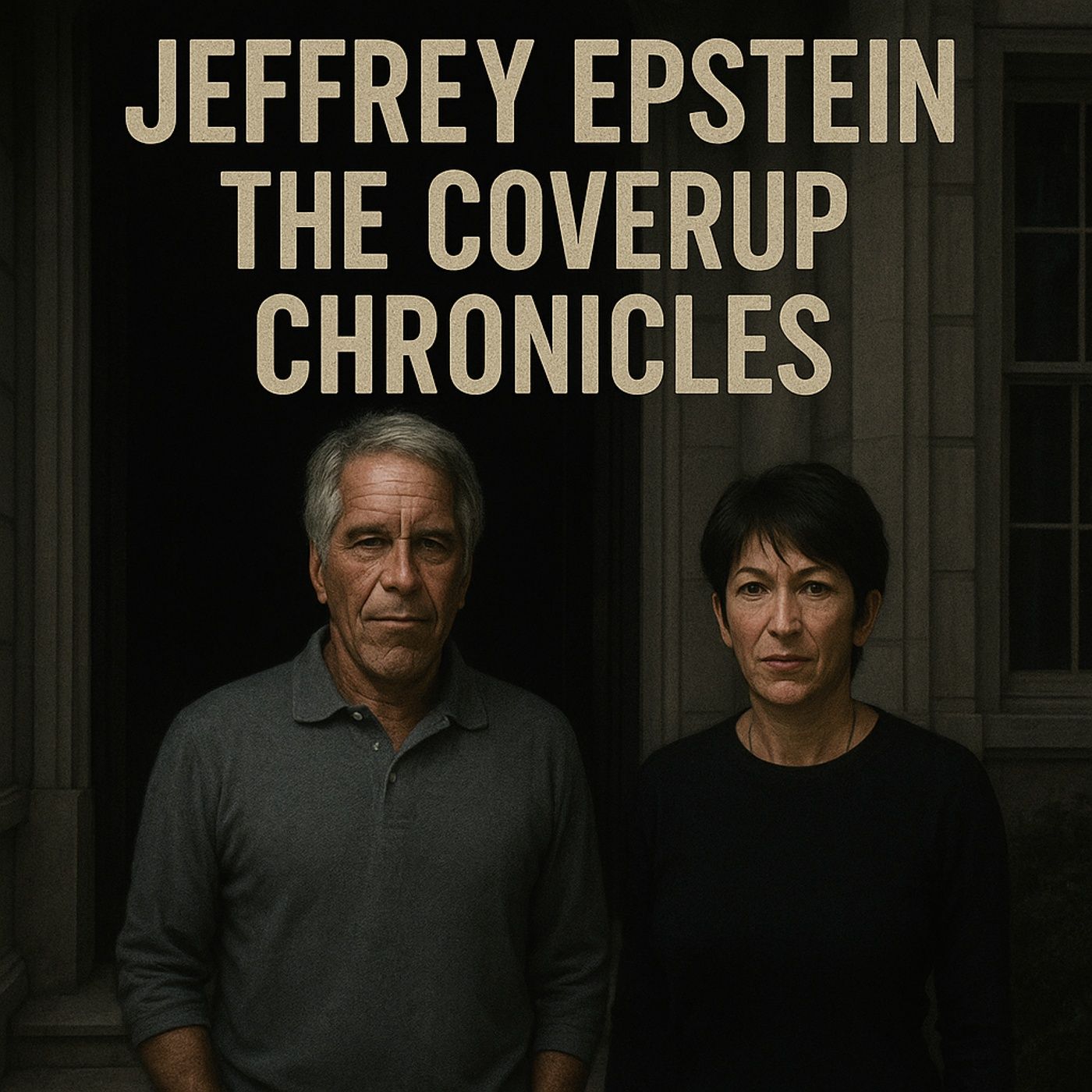
Jeffrey Epstein: The Coverup Chronicles
Jeffrey Epstein: The Coverup Chronicles is a podcast dedicated to examining not just who Epstein was and what he did, but how so many people and institutions worked—then and now—to keep it all hidden. This series cuts past the headlines and digs into the documentation: court filings, deposition transcripts, plea deals, sealed exhibits, and the bureaucratic paper trail that still tells the real story. Our focus isn’t on speculation or recycled outrage. It’s on facts—and the deliberate efforts to keep those facts out of public view. Each episode will feature in-depth analysis of newly surfaced records and underreported legal developments, alongside expert commentary that connects them to the broader machinery of power that shielded Epstein for decades.
Episode
-
 Ghislaine Maxwell And The Covid-19 Quarantine 18.09.2026 17mntWhile awaiting trial, Ghislaine Maxwell drew controversy for invoking COVID-19 quarantine protocols as a means of avoiding in-person legal proceedings. Her legal team argued that pandemic restrictions and her mandated quarantine in detention made it unsafe or impossible for her to participate fully in scheduled hearings and depositions. They maintained that the isolation, combined with already harsh conditions in jail, created unreasonable burdens on her ability to prepare her defense. However, prosecutors and critics alike viewed these claims with skepticism, suggesting that Maxwell was using the global health crisis as yet another stalling tactic to delay accountability.Observers noted that Maxwell’s reliance on COVID-19 restrictions fit a familiar pattern: leveraging circumstances outside her immediate control to limit exposure to questioning or postpone critical steps in her case. At a time when courts across the country were adapting through remote technology, many saw her arguments as less about health risks and more about strategic obstruction. This fueled the perception that Maxwell was hiding behind the pandemic to avoid the legal spotlight, reinforcing her reputation for evasiveness and manipulation while leaving survivors and the public frustrated with yet another delay in the pursuit of justice.To contact me:[email protected]:https://www.cnbc.com/2020/11/23/ghislaine-maxwell-quarantined-after-possible-coronavirus-exposure.html
 -
Prosecutors Ask Judge Nathan To Give Maxwell The Max Sentence 18.09.2026 17mntFederal prosecutors urged Judge Alison Nathan to impose the maximum sentence available under the applicable federal guidelines against Ghislaine Maxwell, arguing that a prison term of between 30 and 55 years was justified by the seriousness and duration of her crimes. They described Maxwell as an essential participant in Jeffrey Epstein’s abuse of underage girls, not a passive companion who was manipulated into helping him. Prosecutors said she identified vulnerable girls, gained their trust, normalized Epstein’s behavior and, in some cases, directly participated in the sexual abuse. They emphasized that the victims were as young as 14 and that Maxwell used her sophistication, privilege and access to help Epstein maintain a system of exploitation over many years.The government also argued that Maxwell had shown no genuine remorse and continued attempting to minimize her conduct by portraying herself as another victim of Epstein and blaming her upbringing, her father and the conditions of her confinement. Prosecutors rejected those explanations, maintaining that Maxwell was an educated, financially secure adult who repeatedly made deliberate choices to facilitate and participate in the abuse. They asked the court to deliver a sentence severe enough to reflect the lasting damage inflicted on the survivors, punish Maxwell for her central role and deter others from assisting powerful sexual predators. Judge Nathan ultimately sentenced Maxwell to 20 years in federal prison, less than the guideline sentence prosecutors sought but still one of the most substantial punishments imposed on a central figure in Epstein’s criminal operation.to contact me:[email protected]
-
Tyler Robinson Preliminary Hearing Transcripts (Day 1 Part 19) (9/17/26) 18.09.2026 16mntDay one of Tyler Robinson’s preliminary hearing on July 6, 2026, largely centered on prosecutors beginning to construct a timeline of Charlie Kirk’s killing at Utah Valley University and establishing the authenticity of the surveillance footage and investigative records they intended to use against Robinson. Former UVU police officer Chris Bagley described the moment the gunshot rang out during Kirk’s September 10, 2025 event and the chaos that followed, while Utah State Bureau of Investigation agent David Hull walked the court through the enormous video-review effort undertaken after the shooting. Hull testified that investigators examined hundreds of hours of surveillance footage and ultimately tracked a person they believed was Robinson moving around the UVU campus at several different points that day. Prosecutors introduced surveillance recordings from multiple locations as they attempted to connect the person seen approaching the campus, moving toward the area surrounding the Losee Center, and later leaving the area to Robinson. Three separate videos depicting Kirk being shot were admitted, although Judge Tony Graf determined that their graphic nature warranted restricting their display to the attorneys’ and judge’s monitors rather than broadcasting them throughout the courtroom. Kirk’s widow, Erika, and his parents left the courtroom while the videos were reviewed. Prosecutors also introduced Kirk’s autopsy report through Hull, which listed his cause of death as a gunshot wound to the neck and the manner of death as homicideThe defense spent much of the first day attacking the manner in which the prosecution was getting its evidence into the record rather than attempting to disprove the entire prosecution theory at that stage. Kathryn Nester and Robinson’s attorneys repeatedly raised hearsay, foundation and authentication objections, arguing that investigators were being permitted to introduce reports, statements and records created by other people without those individuals appearing personally to testify. Judge Graf overruled most of those objections, reflecting the substantially lower evidentiary threshold governing a Utah preliminary hearing, whose purpose was only to determine whether probable cause existed to send Robinson to trial rather than whether prosecutors could prove guilt beyond a reasonable doubt. One significant exception involved an edited compilation of surveillance footage, which Graf declined to admit in that form and required prosecutors to replace with the underlying unedited material. Hull’s testimony also revealed the scope of the prosecution’s surveillance theory: investigators claimed Robinson had appeared on or around the UVU campus multiple times on September 10 and that they were attempting to stitch those appearances together into a continuous identification of the alleged shooter. By the end of day one, prosecutors had established the killing itself, the medical cause of Kirk’s death, the existence and authenticity of substantial video evidence and the beginnings of their effort to identify Robinson as the person captured in that footage. They had not yet presented many of the pieces expected to become more consequential later in the hearing, including the rifle and DNA evidence, Robinson’s alleged communications and admissions, and testimony concerning his roommate Lance Twiggs.to contact me:[email protected]
-
Murder In Moscow: Bryan Kohberger’s Family Backs His Challenge to the Guilty Plea (9/17/26) 17.09.2026 16mntBryan Kohberger’s family publicly backed his effort to undo the guilty plea that resulted in four consecutive life sentences for the murders of Madison Mogen, Kaylee Goncalves, Xana Kernodle and Ethan Chapin. In a statement to ABC News, the family said its support did not come from disregard for the victims or their families, but from a desire to see what it called the “complete and unvarnished truth” emerge through a full trial rather than through the plea agreement. Kohberger, who pleaded guilty in July 2025, is now seeking post-conviction relief and claims he was pressured into admitting to crimes he says he did not commit. He has alleged that his former defense team misled him about the strength of his case, failed to properly review or disclose potentially exculpatory evidence and convinced him that entering a false guilty plea was legally acceptable.The effort has also brought renewed attention to arguments from forensic criminologist Brent Turvey, who had been retained by Kohberger’s defense before the plea. Turvey told ABC News that Kohberger and his family were not fully informed about evidence he believed supported the defense, including concerns about how the knife sheath was handled, FBI hair analysis that he said excluded Kohberger, and weaknesses he saw in the cellphone and vehicle-location evidence. Kohberger has separately asked for Judge Steven Hippler to be removed from the post-conviction proceedings, citing harsh comments Hippler made at sentencing, and has asked that the case be returned to Latah County. A hearing on the judge and venue requests is scheduled for October 15, 2026, while the evidentiary hearing on Kohberger’s post-conviction petition is set for June 17, 2027.to contact me:[email protected]:Bryan Kohberger's family says they support his attempt to challenge conviction - ABC News
-
Hillary Clinton And The Transcript From Her Epstein Related Talk With Congress (Part 11) (9/17/26) 17.09.2026 12mntHillary Clinton’s February 26, 2026 deposition before the House Oversight Committee centered on how much she knew about Jeffrey Epstein, Ghislaine Maxwell and Bill Clinton’s relationship with them. Clinton repeatedly testified that she had never met Epstein, never flew on his plane, never visited Little St. James and knew nothing about his crimes before they became public. She described Maxwell as no more than a “casual acquaintance,” said she did not consider her a friend and attributed Maxwell’s presence around the Clinton family largely to her relationship with longtime Clinton friend Ted Waitt. Clinton acknowledged that Maxwell attended Chelsea Clinton’s 2010 wedding, but said she had no specific recollection of speaking with her there and believed Maxwell attended as Waitt’s guest. She also said she did not remember Maxwell visiting the Clintons’ Chappaqua home, despite Maxwell later saying she had been there several times, and said she had no knowledge of Epstein having connections to American or foreign intelligence services.The questioning became much more contentious when lawmakers turned to Bill Clinton’s documented relationship with Epstein. Hillary characterized her husband’s relationship with Epstein as “limited” and primarily connected to his use of Epstein’s airplane, said she had no knowledge of Bill visiting Little St. James and maintained there was no evidence connecting him to Epstein’s crimes. When lawmakers pressed her about photographs showing Bill Clinton with Epstein, Maxwell and young women during trips, Clinton acknowledged seeing some of those photographs but said she had not become curious enough to investigate the circumstances herself, calling it simply “unfortunate” that her husband ever had dealings with Epstein. She also denied personally soliciting money from Epstein and said she was unaware of anyone doing so on her behalf, while acknowledging she knew little about whether Epstein played any role around Clinton Foundation or Clinton Global Initiative activities. The transcript therefore presented a consistent Clinton defense: she said she personally had essentially no relationship with Epstein and only a peripheral relationship with Maxwell, while repeatedly separating herself from questions about Bill Clinton by telling lawmakers that he would have to answer for his own conduct.to contact me:[email protected]
-
Hillary Clinton And The Transcript From Her Epstein Related Talk With Congress (Part 10) (9/17/26) 17.09.2026 16mntHillary Clinton’s February 26, 2026 deposition before the House Oversight Committee centered on how much she knew about Jeffrey Epstein, Ghislaine Maxwell and Bill Clinton’s relationship with them. Clinton repeatedly testified that she had never met Epstein, never flew on his plane, never visited Little St. James and knew nothing about his crimes before they became public. She described Maxwell as no more than a “casual acquaintance,” said she did not consider her a friend and attributed Maxwell’s presence around the Clinton family largely to her relationship with longtime Clinton friend Ted Waitt. Clinton acknowledged that Maxwell attended Chelsea Clinton’s 2010 wedding, but said she had no specific recollection of speaking with her there and believed Maxwell attended as Waitt’s guest. She also said she did not remember Maxwell visiting the Clintons’ Chappaqua home, despite Maxwell later saying she had been there several times, and said she had no knowledge of Epstein having connections to American or foreign intelligence services.The questioning became much more contentious when lawmakers turned to Bill Clinton’s documented relationship with Epstein. Hillary characterized her husband’s relationship with Epstein as “limited” and primarily connected to his use of Epstein’s airplane, said she had no knowledge of Bill visiting Little St. James and maintained there was no evidence connecting him to Epstein’s crimes. When lawmakers pressed her about photographs showing Bill Clinton with Epstein, Maxwell and young women during trips, Clinton acknowledged seeing some of those photographs but said she had not become curious enough to investigate the circumstances herself, calling it simply “unfortunate” that her husband ever had dealings with Epstein. She also denied personally soliciting money from Epstein and said she was unaware of anyone doing so on her behalf, while acknowledging she knew little about whether Epstein played any role around Clinton Foundation or Clinton Global Initiative activities. The transcript therefore presented a consistent Clinton defense: she said she personally had essentially no relationship with Epstein and only a peripheral relationship with Maxwell, while repeatedly separating herself from questions about Bill Clinton by telling lawmakers that he would have to answer for his own conduct.to contact me:[email protected]
-
New Lawsuit Targets Epstein Estate Over Photos of Underage Girls (9/17/26) 17.09.2026 13mntTwo women identified in court papers as Jane Doe and Amy filed a proposed federal class-action lawsuit against Jeffrey Epstein’s estate, alleging that their photographs were among a large collection of child sexual abuse material found in Epstein’s possession. The lawsuit claims Epstein and unnamed co-conspirators maintained a “modeling book” containing nude or partially nude sexualized images of children and that the collection formed part of a broader, decades-long pattern of possessing, transporting, producing and distributing illegal material. Jane Doe alleged that Epstein obtained partially nude photographs of her when she was about 12 years old, while Amy alleged that pornographic images of her, known as the “Misty” series, were also found among materials seized from Epstein’s properties. No CSAM charges were ever brought against Epstein, and the estate’s co-executors, Darren Indyke and Richard Kahn, were named as defendants in their roles administering the estate.The lawsuit also accused authorities and the estate of failing to identify and notify many of the women and girls whose images were found in Epstein’s files. The plaintiffs said “few if any” of the people depicted were told that federal investigators possessed their photographs and asked the court to establish a coordinated, supervised process to identify and notify other potential victims. Their attorneys argued that the issue represented a largely unresolved part of the Epstein scandal, separate from the trafficking charges that received most of the public attention. The suit sought class-action status, unspecified damages and a formal accounting and preservation of the materials, with lawyers saying survivors deserved to know whether their images were in Epstein’s collection and to have an opportunity to seek legal redress.to contact me:[email protected]:Women sue Epstein’s estate, saying their photos were found in his vast child porn collection
-
Congress Uses Unanimous Consent to Hold Leon Black in Contempt (9/17/26) 17.09.2026 11mntCongress escalated its confrontation with Leon Black on September 16, 2026, when the House voted by unanimous consent to hold the billionaire former Apollo CEO in criminal contempt of Congress for refusing to comply with subpoenas tied to the Jeffrey Epstein investigation. The House Oversight Committee had demanded that Black produce nondisclosure agreements in his possession, including any that referenced Epstein or Ghislaine Maxwell, and sit for a sworn deposition. Black had earlier walked out of a voluntary interview after refusing to answer questions about NDAs, then sued the committee rather than comply with the subpoenas. Black has said he knew nothing about Epstein’s sexual abuse and has argued that Congress is overreaching and lacks a valid legislative purpose for seeking such sweeping private records. His attorneys also contend the committee is demanding information that does not exist and is trying to pry into NDAs unrelated to Epstein.At the same time, Oversight Chairman James Comer introduced the Survivor’s Voice Protection Act, legislation aimed directly at the use of NDAs in sexual-abuse cases. The bill would void confidentiality provisions that prevent survivors from speaking about abuse and would also allow other people with relevant information to disclose facts about that abuse. The move came after reporting that some Epstein accusers had signed confidential settlements with associates of Epstein whom they had also accused of misconduct. Comer said the investigation had shown how powerful men could use NDAs to silence survivors, making Black’s refusal to produce his agreements part of a larger congressional fight over secrecy in the Epstein network. The contempt vote now allows House Speaker Mike Johnson to send a criminal referral to the Justice Department, while Black’s lawsuit against the committee continues separately in federal court.to contact me:[email protected]:Congress Battles Jeffrey Epstein Patron Leon Black Over NDAs - Business Insider
-
Police Expand Prince Andrew Investigation to His Security Detail (9/17/26) 17.09.2026 11mntBritish investigators were continuing to expand their examination of Andrew Mountbatten-Windsor’s relationship with Jeffrey Epstein by reaching out to current and former royal protection officers who may have witnessed relevant conduct while assigned to him. The Metropolitan Police said officers were being asked to consider whether anything they “saw or heard” during their service could assist ongoing reviews, while Thames Valley Police said it was working through a “significant amount of information” connected to its separate investigation. The renewed focus followed claims from former protection officer Paul Page, who alleged that Andrew repeatedly bypassed normal Buckingham Palace security procedures to bring women into the royal residence without properly recording their names. Page said he eventually sent a dossier to the FBI after becoming frustrated with what he viewed as a lack of attention from British authorities. His claims remained uncorroborated, and Andrew continued to deny wrongdoing.Investigators were expected to examine the credibility of Page’s account, compare it against other officers’ recollections and available security records, and determine whether the alleged visitor-log practices formed part of a wider pattern connected to Andrew’s association with Epstein and Ghislaine Maxwell. The scrutiny went beyond palace visitors: British police were also reviewing material concerning Andrew’s travel, his official role as a trade envoy, allegations that confidential government information may have been shared with Epstein, and whether UK airports or royal security arrangements intersected with Epstein-linked trafficking activity. Three forces were conducting live Epstein-related inquiries, while a national police review was assessing whether newly released U.S. files pointed to broader violence, exploitation or trafficking in Britain. The central question was therefore shifting from Andrew’s personal relationship with Epstein to what people around him, including sworn protection officers, may have witnessed and whether those observations were ever properly recorded or acted upon.to contact me:[email protected]:What Andrew-Epstein police will examine next as they appeal to protection officers
-
Mega Edition: The Ghislaine Maxwell Jury Zero's In On The Transcripts (9/17/26) 17.09.2026 46mntAs jurors deliberated Ghislaine Maxwell’s fate in December 2021, they repeatedly returned to the trial record and asked Judge Alison Nathan for transcripts of key testimony rather than relying solely on memory. Early in deliberations, they requested the testimony of several accusers, including Jane, Annie and Carolyn, and later asked for transcripts from witnesses who either corroborated parts of those accounts or helped establish the mechanics of Jeffrey Epstein’s world. Among those requests were testimony from Jane’s former boyfriend, former Palm Beach police officer Gregory Parkinson and Epstein pilot David Rodgers. The jurors also asked for a definition of “enticement” and posed specific legal questions about how Maxwell’s alleged conduct fit individual counts, showing that they were closely matching witness testimony against the elements prosecutors were required to prove. Their requests were detailed enough that they asked for some testimony to be assembled in binders, along with different colored Post-it notes, poster board and highlighters to help organize the evidence.The scrutiny intensified on December 29, the day the verdict was ultimately returned. Jurors requested transcripts from several additional witnesses, including testimony from the defense expert on memory, indicating that they were weighing not only the accusers’ accounts but also the defense argument that decades-old memories could be distorted or unreliable. They never sent Judge Nathan a note saying they were deadlocked; instead, their written messages said deliberations were progressing while they continued reviewing testimony witness by witness. After days of requesting and comparing transcripts, the jury went silent for several hours before announcing it had reached a verdict. Maxwell was convicted on five of the six counts submitted to the jury, making the transcript requests an unusually visible window into a deliberation process in which jurors appeared to be methodically testing the testimony against both the government’s allegations and the defense’s attacks on memory and credibility.to contact me:[email protected]
-
Mega Edition: Ghislaine Maxwell And Her Backyard Brawl With Prosecutors (9/17/26) 17.09.2026 1j 6mntGhislaine Maxwell’s legal team attacked the prosecution from nearly every available angle before and during her federal trial, trying to keep evidence out, restrict what witnesses could say, challenge expert testimony, undermine the accusers’ memories and credibility, and narrow the government’s theory of the case. Her attorneys argued that she was being used as a substitute for Jeffrey Epstein because he was dead, sought to exclude or limit testimony about grooming and trauma, challenged decades-old recollections with memory experts, fought over prior-act evidence and hearsay, and repeatedly argued that ordinary social behavior was being retrospectively transformed into proof of criminal intent. They also pressed procedural and legal arguments aimed at dismissing or weakening charges, including disputes over the statute of limitations, Epstein’s 2007 non-prosecution agreement and the scope of the alleged conspiracy. During trial, the defense cross-examined the accusers aggressively, highlighted inconsistencies between earlier and later accounts, questioned financial motives and argued that prosecutors had assembled a case around memories that had changed over time.None of those strategies ultimately overcame the evidence the jury heard. Prosecutors presented multiple women who described similar patterns of recruitment, grooming and sexual abuse, along with testimony from household employees, pilots and other witnesses who placed Maxwell squarely inside Epstein’s world and corroborated important parts of the survivors’ accounts. Documentary evidence, travel records, photographs and Maxwell’s longstanding proximity to Epstein reinforced the government’s contention that she was not simply an uninvolved girlfriend or social companion. After scrutinizing the testimony for days and repeatedly requesting transcripts during deliberations, the jury convicted Maxwell on five of the six counts submitted to it. The result showed that while her attorneys mounted an expansive and aggressive defense, the jurors ultimately credited enough of the government’s evidence to conclude beyond a reasonable doubt that Maxwell had helped Epstein recruit and groom underage girls for sexual abuse.to contact me:bobbycapucci
-
Mega Edition: Jennifer Araoz An Anya Talk About Their Epstein Nightmare (9/17/26) 17.09.2026 53mntA former Epstein assistant identified as “Anya” describes how she was drawn into his orbit through a modeling contact in Paris and promises that he could advance her career. Instead, she says Epstein gradually built what she calls an “ecosystem of abuse,” housing roughly a dozen female assistants, controlling their money, healthcare and employment, demanding constant availability and repeatedly sexually abusing them. He allegedly studied each woman’s vulnerabilities, isolated them from outside support, created rivalries within the group and used threats, financial dependency and powerful social connections to make resistance feel impossible. Anya says Epstein openly compared the operation to a cult with himself as its leader, maintaining control without physically imprisoning the women.Anya alleges that Epstein collected compromising photographs and videos, required women to write gratitude letters and pursued assistants who tried to leave, including one woman he claimed owed him $700,000. She also says he ordered her to undergo surgery to cut a small tattoo from her body rather than wait for laser removal, leaving permanent scars and forcing her to repeat the procedure when he disliked the result. The women were allegedly pressured to recruit others, trapping them in a cycle where victimization and coerced participation became intertwined. Anya says Epstein’s relationships with wealthy and prominent figures further legitimized him in the eyes of those he controlled, making them question their own instincts and fear that nobody would believe them.Jennifer Araoz alleged that Ghislaine Maxwell played a direct, hands-on role in grooming and sexually abusing her when she was a minor in the mid-1990s. According to Araoz, Maxwell befriended her while presenting herself as a sophisticated mentor and benefactor, drawing her into a world of wealth and exclusivity that lowered her defenses. Araoz alleged that Maxwell initiated sexual contact, normalized inappropriate behavior, and framed abuse as something expected and acceptable, using manipulation and authority to maintain control. These encounters, Araoz said, occurred before she was introduced into Jeffrey Epstein’s broader abuse network, establishing Maxwell not merely as a facilitator, but as an active participant in the abuse itself.Araoz further alleged that Maxwell functioned as an enforcer within Epstein’s operation, reinforcing silence, dependency, and fear. She described being pressured to comply, discouraged from speaking out, and made to feel that resistance would carry consequences. In her civil lawsuit and public statements, Araoz positioned Ghislaine Maxwell as a central architect of the grooming process—someone who identified targets, broke down boundaries, and ensured Epstein’s access to victims. These allegations became a critical part of the broader evidentiary picture that portrayed Maxwell not as a peripheral figure, but as an indispensable actor whose conduct helped sustain and conceal Epstein’s criminal enterprise for years.to contact me:[email protected]:Control, threats, disfiguring surgery: My life inside Jeffrey Epstein's 'cult'
-
Jeffrey Epstein And The Second House Near Palm Beach 17.09.2026 15mntJeffrey Epstein’s Palm Beach footprint went beyond the notorious mansion on El Brillo Way. As reported by the Daily Mail, he also owned a peculiar $1 million property nearby that baffled neighbors and investigators alike. Unlike a normal residence, this smaller house featured a swimming pool and several bathrooms but no bedrooms at all, raising questions about what it was actually used for. Its proximity to the main estate suggested it may have served as an auxiliary space—an extension of Epstein’s operations rather than a standalone home.What makes this “second house” striking is how little attention it received compared to the mansion that became the epicenter of police raids and court filings. While the El Brillo property was splashed across headlines, this odd structure lingered in the shadows, barely mentioned in official records or mainstream reporting. Its impractical design and obscurity only deepen the mystery, standing as another reminder of how Epstein’s wealth allowed him to accumulate and conceal unusual assets in plain sight, with few ever daring to ask why.To contact me:[email protected]:https://www.dailymail.co.uk/news/article-7349419/Jeffrey-Epstein-1-million-home-near-Palm-Beach-mansion-pool-bathrooms-no-bedrooms.html
-
One Year In, The Epstein Inquiry Still Has More Questions Than Answers 17.09.2026 15mntCongress’s Epstein inquiry has now been running for nearly a year, but the investigation has produced far more frustration than accountability. Lawmakers have interviewed major figures, pushed for file releases, questioned former officials, and leaned on the Justice Department for answers, yet they still have little to show when it comes to criminal culpability beyond Jeffrey Epstein and Ghislaine Maxwell. Survivors and members of Congress remain angry that the government has not clearly explained why more people in Epstein’s orbit have not faced investigation or prosecution, especially given the years of allegations, financial trails, and powerful associations surrounding him. The inquiry has also exposed continuing distrust of the DOJ, particularly over redactions, delayed releases, and the handling of sensitive records.The central problem is that the investigation has become a test of whether Congress can force real transparency from institutions that have spent years managing the Epstein fallout instead of fully resolving it. Survivors are still demanding recognition, accountability, and a clear accounting of how Epstein was allowed to operate for so long, while lawmakers are still chasing basic answers about government failures, possible financial crimes, and the people who enabled or benefited from his network. The inquiry has created headlines and political pressure, but not the kind of definitive reckoning many expected. One year in, the Epstein investigation remains stuck in the same familiar place: documents released in pieces, officials dodging hard questions, survivors left unsatisfied, and the public still wondering who was protected and why.to contact me:[email protected]:One year in, Epstein inquiry has found few answers | National Post
-
Wrongful-Death Claim Targets Utah Over Charlie Kirk Security Failures (9/16/26) 16.09.2026 10mntCharlie Kirk’s family took the first formal step toward a wrongful-death lawsuit against Utah officials, alleging that a series of security failures at Utah Valley University left him vulnerable to the rooftop gunman who killed him on September 10, 2025. The notice of claim, filed by Kirk’s widow Erika and his parents, accused UVU, its former president Astrid Tuminez, campus police chief Jeffrey Long and the state of Utah of making “reckless decisions” before the event. The family’s attorneys pointed to the lack of rooftop surveillance, bag checks, metal detectors and a secure perimeter, as well as what they described as inadequate police staffing and poor coordination with outside law enforcement. Only six campus officers were assigned to an event attended by roughly 3,000 people, and the family also alleged that officials failed to conduct an adequate risk assessment despite the obvious vulnerability created by surrounding buildings and rooftops.The claim also alleged that there were no first responders immediately positioned to treat Kirk after he was shot, forcing him to be taken to a hospital in a private vehicle rather than an ambulance. Kirk’s attorneys argued that the danger of a rooftop attack should have been especially apparent after the attempted assassination of Donald Trump by a rooftop gunman the previous year. UVU said it would respond through its established procedures and noted that it had since begun expanding its police force, while the Utah Attorney General’s Office declined to comment on potential litigation. The filing did not specify how much money the family might ultimately seek, but under Utah law the notice was a prerequisite to bringing a formal negligence or wrongful-death lawsuit. The criminal case against Tyler Robinson remained separate, with Robinson charged with aggravated murder and facing the possibility of the death penalty if convicted.to contact me:[email protected]:Charlie Kirk's family says security failures by Utah officials led to his assassination
-
Murder In Moscow: Idaho Officials Blast Planned Release of Victims’ Unredacted Images (9/16/26) 16.09.2026 15mntNorth Idaho investigators said they were “deeply troubled” after true-crime content creators claimed they had obtained unredacted crime-scene photographs showing the bodies and wounds of Madison Mogen, Kaylee Goncalves, Xana Kernodle and Ethan Chapin and were preparing to publish them online. A YouTube creator from the BronxTails True Crime channel said she had access to unredacted images and suggested more could soon be released. In response, the Latah County Prosecutor’s Office, Idaho State Police and Moscow Police Department issued a joint statement condemning any publication of the material, calling it an invasion of the victims’ privacy and saying whoever supplied the images had violated the trust and professional obligations that came with access to them. The agencies said the source of the photographs remained unknown and stressed that releasing graphic images of the victims served no legitimate purpose of transparency or accountability.The threatened release also reopened longstanding anger from the victims’ families over crime-scene imagery appearing online. Some redacted photographs had already been released through public-records requests in 2025, reportedly without the families being warned beforehand, and the controversy helped spur a new Idaho law exempting photographs of deceased victims from public disclosure. Ethan Chapin’s mother, Stacy Chapin, publicly pleaded for people to stop circulating the images, saying they had nothing to do with transparency and only inflicted more pain. Criminal-justice professor Danielle Slakoff said the episode illustrated the darker side of online true crime, where sensational material and unsupported speculation can generate clicks while retraumatizing families and shifting attention toward the killer rather than the victims.to contact me:[email protected]:North Idaho investigators 'deeply troubled' as content creators prepare to release unredacted photos of Moscow crime scene
-
Hillary Clinton And The Transcript From Her Epstein Related Talk With Congress (Part 9) (9/16/26) 16.09.2026 13mntHillary Clinton’s February 26, 2026 deposition before the House Oversight Committee centered on how much she knew about Jeffrey Epstein, Ghislaine Maxwell and Bill Clinton’s relationship with them. Clinton repeatedly testified that she had never met Epstein, never flew on his plane, never visited Little St. James and knew nothing about his crimes before they became public. She described Maxwell as no more than a “casual acquaintance,” said she did not consider her a friend and attributed Maxwell’s presence around the Clinton family largely to her relationship with longtime Clinton friend Ted Waitt. Clinton acknowledged that Maxwell attended Chelsea Clinton’s 2010 wedding, but said she had no specific recollection of speaking with her there and believed Maxwell attended as Waitt’s guest. She also said she did not remember Maxwell visiting the Clintons’ Chappaqua home, despite Maxwell later saying she had been there several times, and said she had no knowledge of Epstein having connections to American or foreign intelligence services.The questioning became much more contentious when lawmakers turned to Bill Clinton’s documented relationship with Epstein. Hillary characterized her husband’s relationship with Epstein as “limited” and primarily connected to his use of Epstein’s airplane, said she had no knowledge of Bill visiting Little St. James and maintained there was no evidence connecting him to Epstein’s crimes. When lawmakers pressed her about photographs showing Bill Clinton with Epstein, Maxwell and young women during trips, Clinton acknowledged seeing some of those photographs but said she had not become curious enough to investigate the circumstances herself, calling it simply “unfortunate” that her husband ever had dealings with Epstein. She also denied personally soliciting money from Epstein and said she was unaware of anyone doing so on her behalf, while acknowledging she knew little about whether Epstein played any role around Clinton Foundation or Clinton Global Initiative activities. The transcript therefore presented a consistent Clinton defense: she said she personally had essentially no relationship with Epstein and only a peripheral relationship with Maxwell, while repeatedly separating herself from questions about Bill Clinton by telling lawmakers that he would have to answer for his own conduct.to contact me:[email protected]
-
Hillary Clinton And The Transcript From Her Epstein Related Talk With Congress (Part 8) (9/16/26) 16.09.2026 13mntHillary Clinton’s February 26, 2026 deposition before the House Oversight Committee centered on how much she knew about Jeffrey Epstein, Ghislaine Maxwell and Bill Clinton’s relationship with them. Clinton repeatedly testified that she had never met Epstein, never flew on his plane, never visited Little St. James and knew nothing about his crimes before they became public. She described Maxwell as no more than a “casual acquaintance,” said she did not consider her a friend and attributed Maxwell’s presence around the Clinton family largely to her relationship with longtime Clinton friend Ted Waitt. Clinton acknowledged that Maxwell attended Chelsea Clinton’s 2010 wedding, but said she had no specific recollection of speaking with her there and believed Maxwell attended as Waitt’s guest. She also said she did not remember Maxwell visiting the Clintons’ Chappaqua home, despite Maxwell later saying she had been there several times, and said she had no knowledge of Epstein having connections to American or foreign intelligence services.The questioning became much more contentious when lawmakers turned to Bill Clinton’s documented relationship with Epstein. Hillary characterized her husband’s relationship with Epstein as “limited” and primarily connected to his use of Epstein’s airplane, said she had no knowledge of Bill visiting Little St. James and maintained there was no evidence connecting him to Epstein’s crimes. When lawmakers pressed her about photographs showing Bill Clinton with Epstein, Maxwell and young women during trips, Clinton acknowledged seeing some of those photographs but said she had not become curious enough to investigate the circumstances herself, calling it simply “unfortunate” that her husband ever had dealings with Epstein. She also denied personally soliciting money from Epstein and said she was unaware of anyone doing so on her behalf, while acknowledging she knew little about whether Epstein played any role around Clinton Foundation or Clinton Global Initiative activities. The transcript therefore presented a consistent Clinton defense: she said she personally had essentially no relationship with Epstein and only a peripheral relationship with Maxwell, while repeatedly separating herself from questions about Bill Clinton by telling lawmakers that he would have to answer for his own conduct.to contact me:[email protected]
-
House Panel Votes 41-0 to Hold Leon Black in Contempt (9/16/26) 16.09.2026 13mntThe House Oversight Committee voted unanimously, 41-0, to recommend that billionaire financier Leon Black be held in contempt of Congress for refusing to fully comply with subpoenas issued as part of its Jeffrey Epstein investigation. Chairman James Comer said Black’s testimony was important because of his long relationship with Epstein during the period when Epstein was engaged in sex trafficking. Black had previously appeared voluntarily for a transcribed interview, but that session ended after lawmakers said he refused to answer questions about nondisclosure agreements. The committee later subpoenaed him for both testimony and all NDAs to which he was a party. According to Comer, Black ultimately produced only one NDA and then failed to appear for a scheduled September 3 deposition. The contempt recommendation now moves to the full House, which would have to decide whether to formally hold him in contempt.Black has fought the subpoenas in federal court, arguing that they exceed the committee’s lawful authority and improperly seek private information unrelated to any legitimate legislative purpose. His lawyers also argued that producing the NDAs could expose women who had negotiated confidentiality and had no public connection to Epstein, while accusing Comer and ranking Democrat Robert Garcia of abusing congressional power. Black has denied wrongdoing, denied knowing about Epstein’s criminal conduct and said he regrets ever doing business with him. The committee, however, pointed to the roughly $170 million Black paid Epstein for tax and estate-planning services between 2013 and 2017 and to repeated appearances of Black’s name in Epstein-related records. More than a dozen Epstein survivors had also urged Black to comply, arguing that the NDAs could shed light on his relationship with Epstein and others in Epstein’s orbit.to contact me:[email protected]:House panel recommends Leon Black be held in contempt over Epstein inquiry subpoenas | House of Representatives | The Guardian
-
The Clinton Epstein Depositions and the Failure of Congressional Oversight (Part 2) (9/16/26) 16.09.2026 16mntThe congressional depositions of Bill and Hillary Clinton expose a broader problem with the House investigation into Jeffrey Epstein: lawmakers appear to apply different levels of scrutiny depending on the political identity of the witness. Democratic members repeatedly characterize the Clinton depositions as political theater and spend significant portions of their public messaging attacking Republican motives rather than aggressively testing the Clintons’ answers against the documentary record. Bill Clinton’s documented relationship with Epstein, including travel aboard Epstein’s aircraft and years of social contact, provides ample ground for detailed questioning, yet the deposition often lacks the kind of sustained follow-up that would normally accompany discrepancies, failures of memory, or assertions that conflict with other known evidence. Hillary Clinton’s testimony receives similar defensive treatment, with Democratic members appearing more interested in challenging the legitimacy of the proceeding than independently examining what she knew about Epstein and Ghislaine Maxwell. Republicans contribute to the dysfunction with irrelevant and theatrical questioning of their own, but that does not excuse Democratic members from their responsibility to conduct serious oversight. The result is an investigation that too often resembles competing political defense teams rather than a disciplined effort to establish facts.The Clinton depositions also highlight a larger credibility problem for Congress, which spends months demanding testimony and threatening contempt proceedings only to allow partisan loyalty to dominate the questioning once witnesses finally appear. The committee releases hours of Clinton deposition video while providing searchable written transcripts for numerous other Epstein-related witnesses, making independent examination of the Clinton testimony more difficult and leaving the public increasingly dependent on selectively edited clips and partisan summaries. Instead of methodically comparing testimony with flight records, photographs, calendars, communications, financial records, and other evidence, lawmakers repeatedly turn the investigation into another battle between Democrats and Republicans. That approach does little for survivors and even less to explain how Epstein maintained access to powerful people and institutions for so long. Bill and Hillary Clinton should not receive harsher treatment because of who they are, but neither should political allies shield them from the same level of scrutiny applied to other witnesses. Congress claims that nobody is above investigation, yet the Clinton depositions raise an uncomfortable question about whether lawmakers are willing to apply that principle when the witness belongs to their own political camp.to contact me:[email protected]
Podcast serupa


Populer di
Podcast ini juga muncul di daftar podcast negara-negara ini.

