
All Aboard ADHD
Claire Quigley Ward
0
All Aboard ADHD is a podcast designed to support parents and caregivers navigating the ADHD journey. It offers expert insights, inspiring stories from special guests, and real-life experiences from parents of children with ADHD. The podcast aims to help listeners feel informed, empowered, and less alone, whether they are just starting or further along the path. It also welcomes individuals with ADHD themselves or anyone wanting to understand the ADHD brain better.
Episode
-
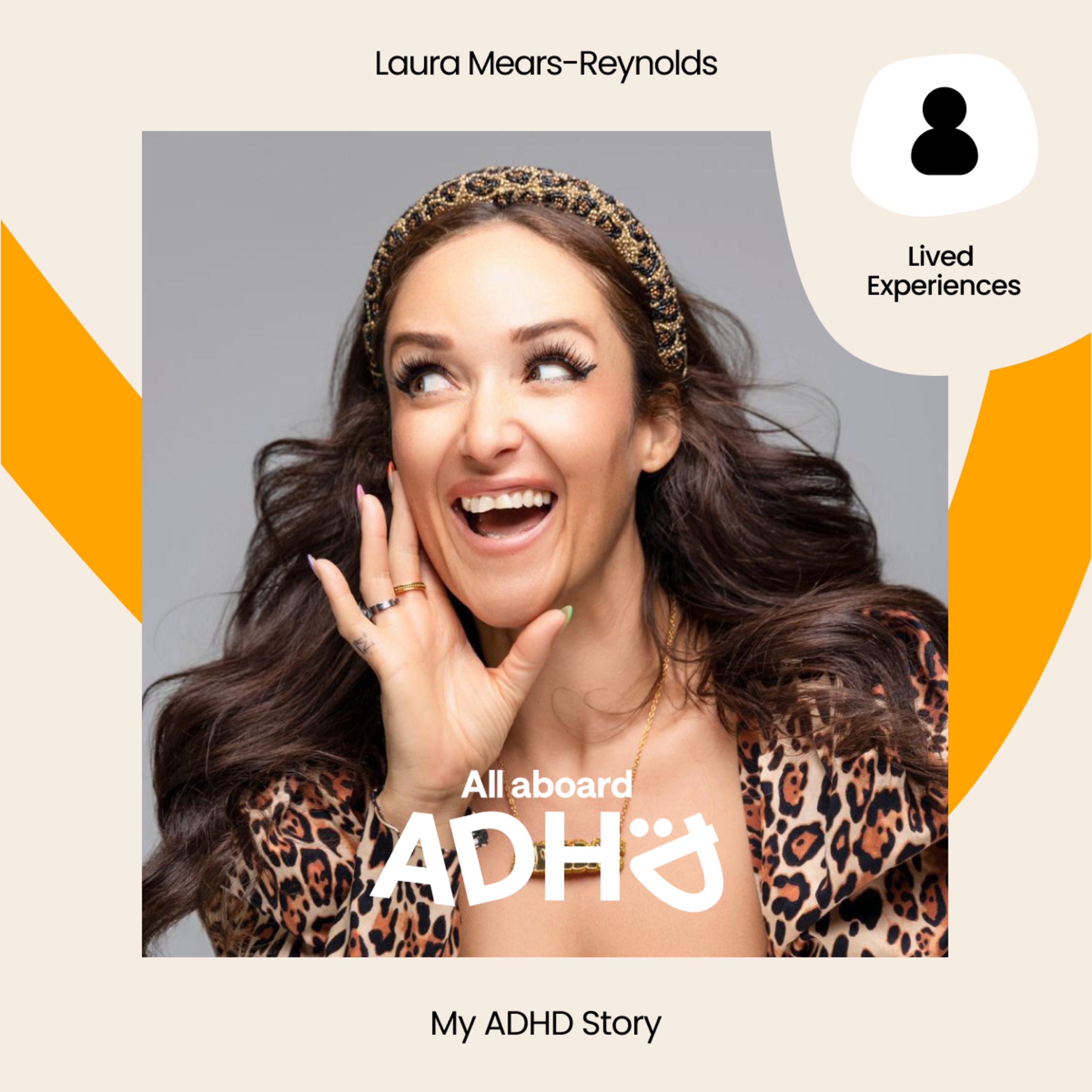 Laura Mears-Reynolds - My ADHD Story 02.10.2026 55mntHow does growing up with undiagnosed ADHD shape your life and what happens when you finally get answers?In this episode of All Aboard ADHD, Claire is joined by Laura Mears-Reynolds, diagnosed with ADHD at 38, host of the ADHD AF podcast and founder of the ADHD AF Plus charity.Laura tells her story of shame, burnout and survival, sharing how her fierce sense of justice led her to build a grassroots movement providing real-life peer support for adults with ADHD across the UK.🧶 The penny-drop moment: how a friend's diagnosis shattered the “naughty little boys” stereotype, prompting Laura to recognise her own ADHD traits and realise: “If you’ve got it, I’ve definitely got it”.🔥 From chaos to “dumpster fire”: perimenopause, three-year waiting lists, escalating crises and the devastating point where Laura felt “I was done”.💊 Diagnosis and the day after: being told she had “severe combined” ADHD and waking up the following morning with a glimmer of hope, realising, “I don’t have to hate myself today”.👧 Childhood through an ADHD lens: constant anxiety, rejection sensitivity (RSD), insomnia and being labelled “disrespectful” for leaving GCSE coursework until the last minute, despite agonising over it all night.🎭 Girls, masking and minimising: how gender expectations, people-pleasing and trying not to be “a nuisance” can contribute to ADHD going unrecognised in girls and women.⚖️ Justice sensitivity and ADHD: why Laura challenges the idea that ADHD is a “superpower”, exploring how her fierce need for justice has both challenged her, and fuelled her advocacy for others.🐆 Building ADHD AF and the Leopard Print Army: from responding to podcast DMs at 4am to creating a community through body doubling, national meet-ups and the ADHD AF Plus charity, which now provides over 17 free peer support groups across the UK. As Laura puts it, “It’s about us, by us, for us”.Laura's honesty about the challenges of living with undiagnosed ADHD, the impact of shame and the power of finding community, provides a conversation about reframing how we understand ourselves, finding hope and recognising that we don't have to navigate the ADHD journey alone.If you’ve ever felt “too much” or like you’re failing at “adulting”, this episode will help you see yourself, and your children, through a more compassionate lens.Further resources & links:ADHD AF Community Information: https://www.adhdafplus.org.uk/peersupportSponsor Laura’s Skydive on 3rd October 2026: https://givestar.io/gs/skydiving-13000-ft-for-adhdaf-adhdadultukADHD AF Plus Charity and Local Peer Support Groups: https://adhdafplus.org.ukADHD AF Day - paint the internet leopard print 🐆each year on 23 October for #ADHDAFDay: https://www.adhdafplus.org.uk/roarFollow Laura on Instagram: @lauraisadhdaf / @adhdafpodcast / @adhdafplusAll Aboard ADHD Coaching and Resources from Claire: https://allaboardadhd.comFollow Claire on Instagram & TikTok: @allaboardADHDThe views shared in this episode are those of the guest, based on their professional expertise and personal experience. This content is for informational purposes only and is not a substitute for professional medical, educational, or psychological advice. Please consult a qualified professional for personalised support relevant to your individual circumstances.
 -
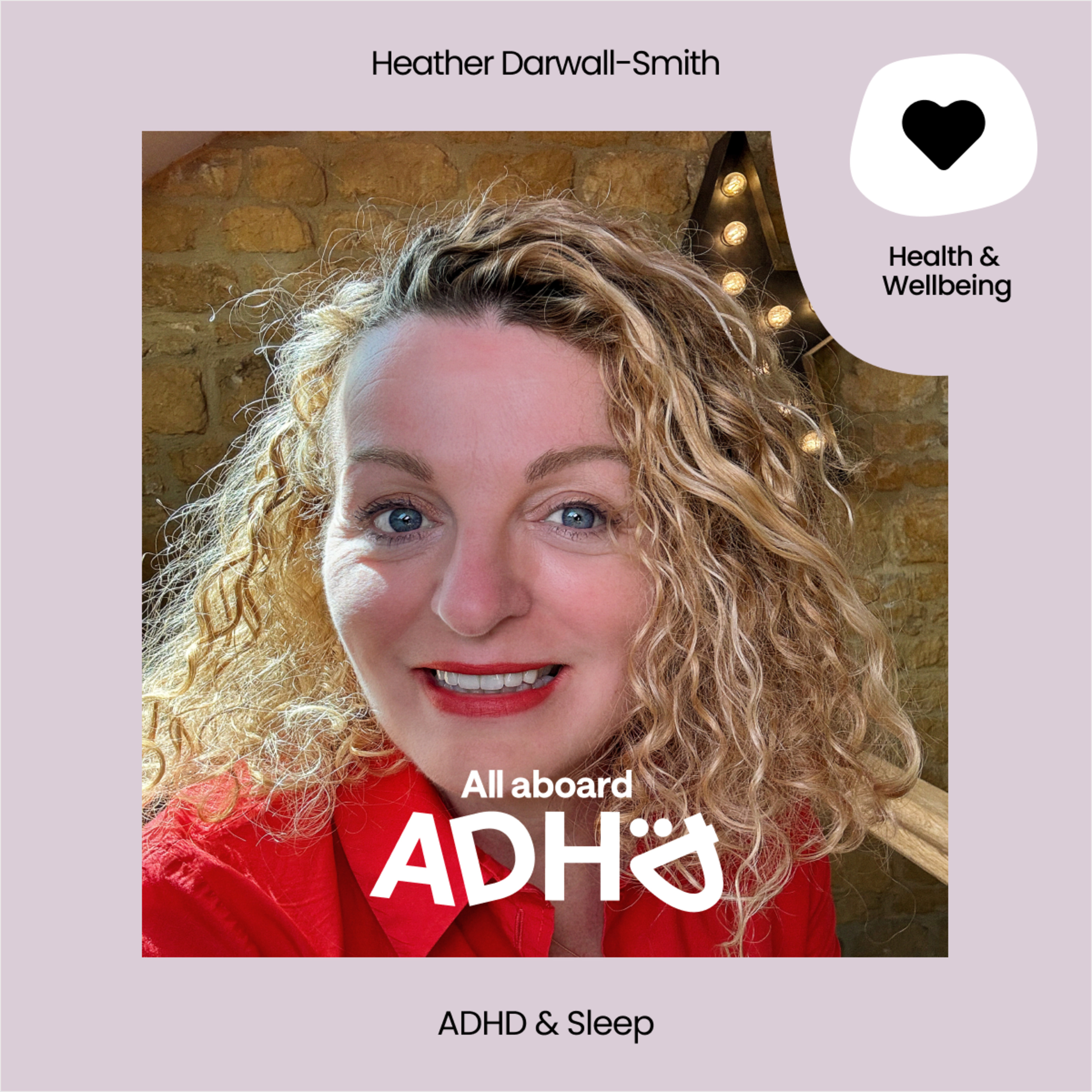 ADHD & Sleep 18.09.2026 58mntHow can parents and caregivers better understand and support the biological sleep needs of children and teens who have ADHD, without panic, shame, or setting impossible “perfect sleep” standards?In this episode of All Aboard ADHD, Claire is joined by UKCP-accredited psychotherapist Heather Darwall-Smith, an ADHD sleep specialist and author of The ADHD Sleep Book, to unpack why sleep is so hard for ADHD brains, what’s really going on with circadian rhythms, the role of melatonin, and how families can work with biology instead of fighting it. Together they discuss:🧬 Why ADHD sleep is different: biological vs behavioural, the impact of delayed body clocks, and why up to 75% of people with ADHD struggle when it comes to sleep.⏰ Circadian clocks, chronotypes and teens: understanding delayed sleep phase, why we're more likely to be night owls, how adolescence shifts sleep even later, and why it's so hard to get up🌞 Starting the day with light: the power of consistent wake-ups and morning light helps reset ADHD body clocks and becomes “free medicine” for ADHD sleep🥱 Understanding melatonin: our natural hormone production, what it really does, and why prescriptions matter for safe use when supplemented🧠 Why switching off is so hard: transitions, the fear of going to bed, racing brains at bedtime, and the value of externalised support💊 Stimulant medication and sleep: the importance of using timing, hydration, and food to benefit from symptom management ADHD medication brings without ruining your sleep😮💨 The impact on parents: chronic exhaustion, the power of family “summits”, plus why understanding ADHD sleep can help take the blame or shame out of bedtime and getting up in the morningIf bedtime is a battleground, mornings often bring meltdowns, and you’re wondering what’s as a result of having ADHD, versus a genuine sleep problem, this episode offers science-based reassurance, practical tools, and a deeply compassionate reframe to help the whole family.Further resources & linksThe ADHD Sleep Book by Heather Darwall-Smith: https://amzn.eu/d/09MQ6NFMHeather’s website and clinical resources: https://heatherdarwallsmith.com/ ADHD coaching and resources from Claire: https://allaboardadhd.comFollow Claire on Instagram & TikTok: @allaboardADHDFollow Heather Darwall-Smith on Instagram @thesleeppsychotherapistThe views shared in this episode are those of the guest, based on their professional expertise and personal experience. This content is for informational purposes only and is not a substitute for professional medical, educational, or psychological advice. Please consult a qualified professional for personalised support relevant to your individual circumstances.
 -
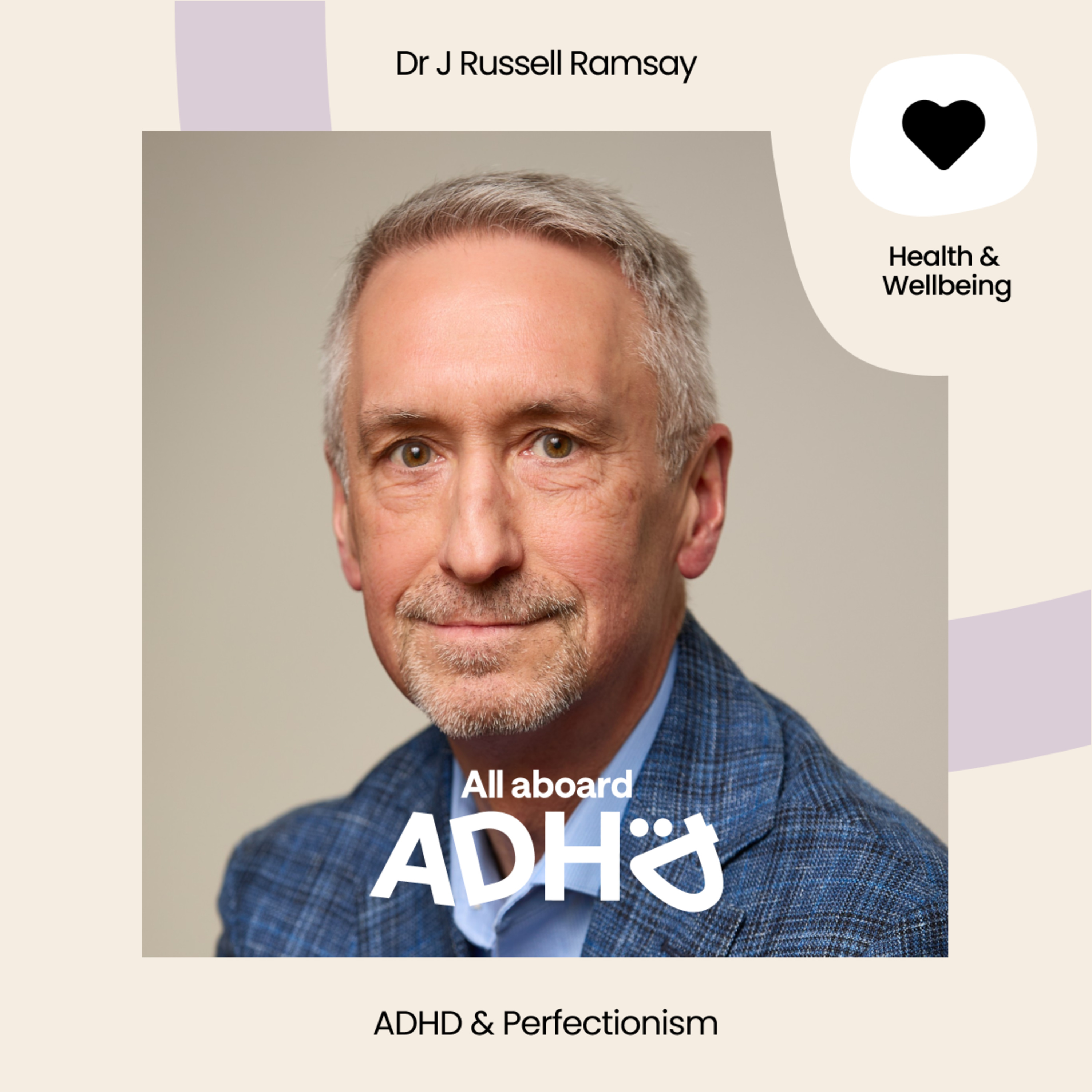 ADHD & Perfectionism 04.09.2026 1j 4mntHow does perfectionism show up across ADHD, from childhood to adulthood, and what impact can it have on self-worth, motivation and mental health?In this episode of All Aboard ADHD, Claire is joined by Dr. J. Russell Ramsay - a clinical psychologist, author of Once I Get Started, and co-founder of the Adult ADHD Treatment and Research Program at the University of Pennsylvania. Drawing on decades of clinical work and research, he explains why perfectionism is the dominant thinking pattern he sees in ADHD, how it drives challenges such as procrastination, avoidance, and emotional overwhelm - and crucially, what parents of ADHD kids can do to support them. They discuss:🔍 What Perfectionism Really Is: the different ways it shows up in ADHD such as having “unrelenting standards” and "all‑or‑nothing thinking"🧠 The Difference Between Front-End vs Back-End Perfectionism: needing to be “in the right mood” to start something vs not submitting work that’s “good enough”⏳ Procrastination, Emotions & Comparison: exploring the impact of the “Frankenstein” comparison where we build a fictional impossible standard from what we see of others👦How Perfectionism Develops in Children the impact of negative messaging, subtle criticisms like “see, you can do it!" on a “good day”, and the compounding effect of giving up quickly when things get hard🤝 Body Doubling & Practical Workarounds: the power of using another person’s presence to get started on a task and stay on track💪 Self-Worth, Self-Trust & Parenting Differently: the impact on children of separating their worth from performance or grades, plus the importance of noticing their effort, not just the outcomesThis episode is a must-listen for parents of ADHD children with perfectionist traits. You’ll walk away with a new lens on your child’s challenges, plus concrete scripts, mindsets, and strategies to reduce shame, ease homework battles, and help your child trust themselves again.Further resources & linksFind out more about Dr J Russell Ramsay: https://www.cbt4adhd.com/about/Other Books by Dr. J Russell Ramsay: https://www.cbt4adhd.com/work/ Once I Get Started book by Dr. J. Russell Ramsay: https://amzn.eu/d/0eKNiXCiResearch by Dr. Russell Barkley on ADHD and Self-Regulation: https://pubmed.ncbi.nlm.nih.gov/9276836/ Mindset Work by Dr. Carol Dweck: https://fs.blog/carol-dweck-mindset/ ADHD Coaching and Resources from Claire: https://allaboardadhd.comFollow Claire on Instagram & TikTok: @allaboardADHDThe views shared in this episode are those of the guest, based on their professional expertise and personal experience. This content is for informational purposes only and is not a substitute for professional medical, educational, or psychological advice. Please consult a qualified professional for personalised support relevant to your individual circumstances.
 -
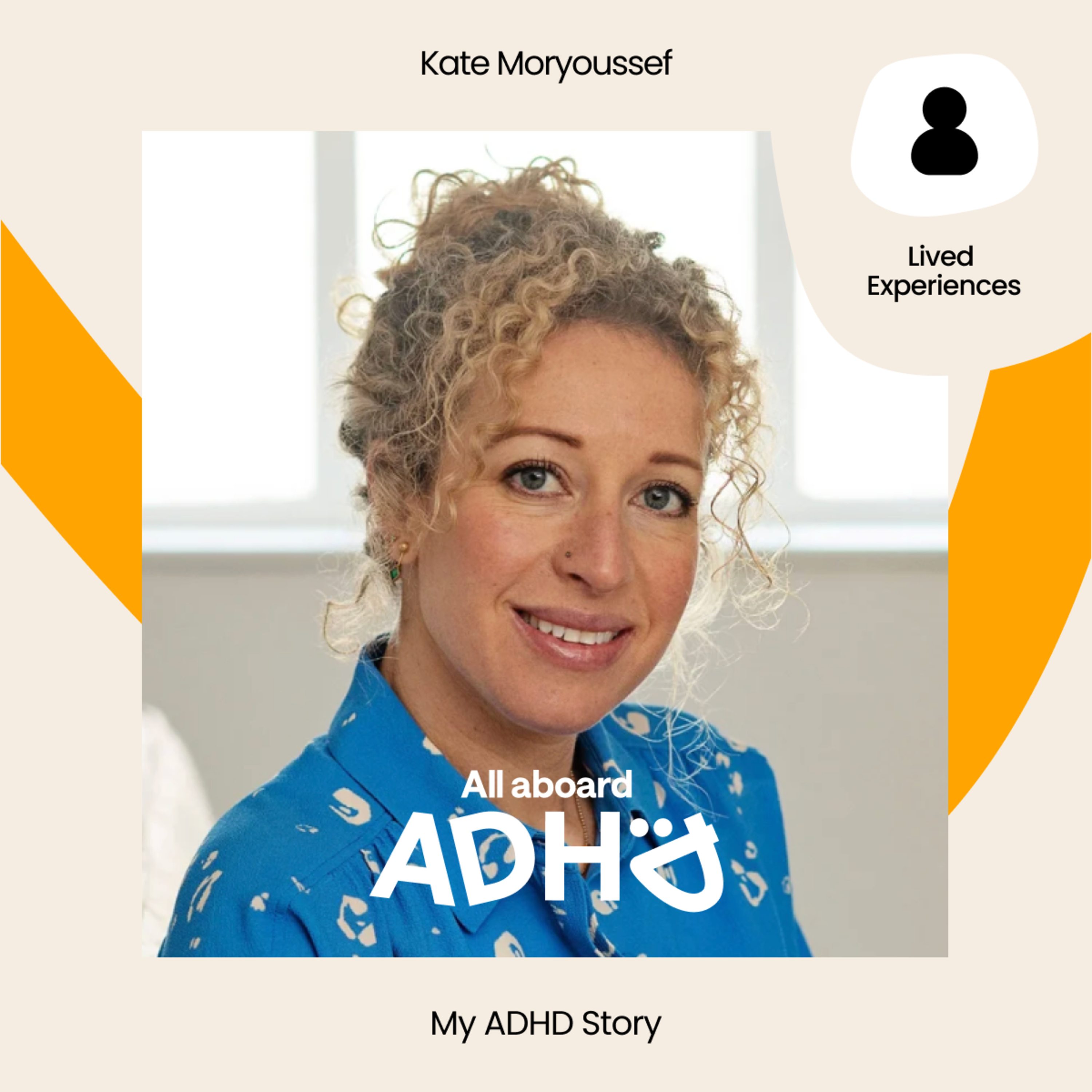 Kate Moryoussef - My ADHD Story 21.08.2026 52mntHow can understanding ADHD through a female lens, especially as a late‑diagnosed mum, change how we see ourselves and support our daughters?In this episode of the All Aboard ADHD podcast, Claire is joined by Kate Moryoussef, host of the ADHD Women’s Wellbeing Podcast, author of The ADHD Women’s Wellbeing Toolkit, and a Women’s ADHD Wellbeing Coach. Kate shares the story of her late diagnosis at 40 (alongside her then 9-year-old daughter), how ADHD showed up across her life, plus why sport, self-compassion, and the right environment can make all the difference for girls and women with ADHD. They discuss:💡 Kate’s lockdown diagnosis: spotting ADHD traits in her daughter whilst homeschooling, being dismissed with “anxiety” by her GP, and the huge relief of receiving a “very strong combined ADHD” diagnosis.📚 Viewing childhood through an ADHD lens: the school reports that “had it all written there”, being the “good, quiet” girl between two diagnosed ADHD brothers, the impact of masking, and how undiagnosed ADHD in girls is still missed today.🚺 Gender and the emotional cost for women: people‑pleasing, RSD, anxiety, hormones, PMDD/PMS, postnatal struggles, and perimenopause.🏃♀️ Sport, movement, and "energy in motion": why physical activity provides crucial regulation for ADHD brains, the important value for girls, plus the surprising link between ADHD and elite sport.🏡 The neurodivergent home: trying to support ND kids while managing your own ADHD, capacity, and boundaries; plus letting go of the “perfect mum” myth.🫶 Self‑compassion and small sustainable steps: how an ADHD diagnosis becomes an identity shift, how using this understanding can help us redesign life and model regulation for our children, plus the value of taking “little small steps each day”🎙️ Diagnosis, curiosity, and learning: how understanding herself led Kate to create a platform that supports thousands of other late-diagnosed, mid-life womenIf you're learning about your child's ADHD, while quietly wondering about your own, this conversation is for you. You'll come away with language to better understand yourself, practical ideas around movement, sport and regulation, and a little more compassion for yourself as a parent. Most importantly, you'll know you're not alone.Further resources & linksListen to Kate’s podcast: ADHD Women’s Wellbeing Podcast: https://www.adhdwomenswellbeing.co.uk/adhd-podcast Buy Kate’s book: The ADHD Women’s Wellbeing Toolkit: https://www.adhdwomenswellbeing.co.uk/adhd-womens-wellbeing-toolkit Join Kate’s ADHD Women’s Wellbeing Membership: https://adhd-womens-wellbeing.mykajabi.com/more-yourself-membership Follow Kate on Instagram @kate_moryoussef and @adhd_womenswellbeing_podListen to Dr. Josephine Perry’s All Aboard ADHD episode on “ADHD in Sport”: https://open.spotify.com/episode/0PqFulsF5M10Ue9bhwZtNv?si=BKzHYMz_RdivtLuugEb0vg&utm_source=copy-linkADHD Coaching and Resources from Claire: https://allaboardadhd.comFollow Claire on Instagram & TikTok: @allaboardADHDThe views shared in this episode are those of the guest, based on their professional expertise and personal experience. This content is for informational purposes only and is not a substitute for professional medical, educational, or psychological advice. Please consult a qualified professional for personalised support relevant to your individual circumstances.
 -
 SEND Whistleblower & SEN White Paper 07.08.2026 1j 1mntHow do you fight for the SEND support your child is legally entitled to, within a system that’s underfunded, obstructive, and about to be reformed?In this episode of the All Aboard ADHD podcast, Claire is joined by Douglas Hamer, a specialist SEND solicitor with expertise in special educational needs and disability law, alongside his owb lived experience of ADHD and autism. Douglas specialises in EHCPs, SEND tribunals, specialist placements, EOTAS, and judicial review. They explore the ITV SEND Whistleblower Investigation, the upcoming SEND White Paper reforms, and what all this actually means for families struggling to access the support their children so desperately need. Together they discuss:🎬 ITV Whistleblower: What Really Happened? Unpacking the allegations of Local Authority staff obstructing the EHCP process, avoiding paper trails, and “playing games” with families.🚫 The Reality of Systemic Failure: how squeezed budgets, high staff turnover, and a “dehumanising culture” create delays, frustration and complete denial of support for so many families.⚖️ Overwhelmed or Just Unlawful? When Local Authority behaviour crosses the legal line, and why accountability for their inaction is so weak.🧱 The “Brick Through the Window” Moment: the importance of fighting for minority rights, and why we need more supportive MPs raising SEND issues in Parliament.📜 Upcoming Reform: what the proposed White Paper could change in practice including EHCPs, ISPs, and Specialist Provision Packages; plus the potential impact on appeal rights and school choice.🧭 What Parents Can Do Right Now: strategies such as maintaining a paper trail, staying calm in written communications, and why independent EP reports are so powerful.🌱 Holding On to Hope: Douglas’s message to exhausted parents about persistence, pragmatism, and empowerment through knowledge.If you’re battling for an EHCP or school placement and feel like you’re meeting resistance getting the right support for your child, this episode will validate your experience, explain what is allegedly going on behind the scenes, and provide concrete practical steps you can use today to move the process forward for your child.Please note Douglas was in his office when this episode was recorded, so you will hear typing noises in the background.Glossary:ABAS-3 https://www.pearsonclinical.co.uk/en-gb/adaptive-behavior/Adaptive-Behaviour-Assessment-System-%7C-Third-Edition/p/P100009113 BAS3: https://www.gl-assessment.co.uk/products/bas3/ Further resources & linksDouglas Hamer’s contact details: https://www.geldards.com/our-people/douglas-hamer/Geldard’s SEN Talks Podcast: https://open.spotify.com/show/3aP6IMlKMWiaCce6bF2Uj5Listen to Douglas' previous All Aboard ADHD episode: EHCPs & SEND Law https://open.spotify.com/episode/7BrANDPqbNTgoskMjOhloo?si=8a9d803fb8d740eb ADHD Coaching and Resources from Claire: https://allaboardadhd.comFollow Claire on Instagram & TikTok: @allaboardADHDThe views shared in this episode are those of the guest, based on their professional expertise and personal experience. This content is for informational purposes only and is not a substitute for professional medical, educational, or psychological advice. Please consult a qualified professional for personalised support relevant to your individual circumstances.
 -
 Sensory Processing & ADHD 24.07.2026 51mntHow do sensory processing differences show up in children with ADHD, and how can parents offer better support?In this episode of the All Aboard ADHD podcast, Claire is joined by Professor Samuele Cortese, Professor of Child and Adolescent Psychiatry at the University of Southampton, Consultant Child and Adolescent Psychiatrist, and one of the world’s leading ADHD researchers, to understand sensory processing and ADHD. Drawing on a major meta-analysis of 30 studies with over 5000 participants, Professor Samuele explains why sensory processing is highly relevant in ADHD, how it links to emotions, behaviour, and learning, what this means for ADHD assessment, plus how understanding our children's sensory needs can help us better support them at home and at school.They discuss: ❓What sensory processing is: how our senses shape thinking, emotions, behaviour, and learning🧩 ADHD and Sensory Processing: why sensory differences are not unique to autism, why it’s highly relevant for children with ADHD, and how they can also appear in neurotypical children⚖️ Hypo vs Hyper: understanding sensory avoidance and seeking, plus how differences show up across tactile, visual, and auditory domains - not just touch or noise📋 Why clinicians must start asking about sensory issues: the gap between evidence and diagnostic guidelines mean that sensory processing is often missed 🧠 What’s happening in the brain: the structural differences in white matter, changes in dopamine signalling, and how these may affect the way ADHD brains process sensory information.💊 The effect of stimulant medications: why they might influence sensory processing, and why we need more research to understand the relationship in more detail🌋 Sensory overload and emotional dysregulation: how sensory load can drive meltdowns and why clinicians must look for underlying causes to behaviours🏫 Classrooms and school support: how the classroom environment can affect learning and regulation, plus the important role occupational therapists play🫶 What parents can do: encouraging careful observation, recording concrete examples to share with clinicians and schools, as well as involving children in conversations about their own lived experienceIf you’ve ever felt that professionals are missing something about your child’s overwhelm, meltdowns, or struggles, this episode gives you the language, the science, and practical next steps to join the dots between ADHD and Sensory Processing, to your child's emotions and behaviours, in order to advocate more effectively for the support your child needs.Please note Professor Samuele was in his office when this episode was recorded, so you will hear notifications buzzing in the background.Further resources and linksProfessor Samuele Cortese – University of Southampton profile: https://www.southampton.ac.uk/people/5xf5yj/professor-samuele-cortese Read the Sensory Processing in ADHD Meta-Analysis in full: https://www.jaacap.org/article/S0890-8567(25)00209-6/fulltextListen to Professor Samuele Cortese’s previous All Aboard ADHD episode: ADHD Medication 101: https://open.spotify.com/episode/4D24IDKpNUJXPrdnK0o7ux?si=1b7708600d2844bc&nd=1&dlsi=e13c3972df164781 ADHD coaching and resources from Claire: https://allaboardadhd.comFollow Claire on Instagram & TikTok: @allaboardADHDThe views shared in this episode are those of the guest, based on their professional expertise and personal experience. This content is for informational purposes only and is not a substitute for professional medical, educational, or psychological advice. Please consult a qualified professional for personalised support relevant to your individual circumstances.
 -
 Menopause & ADHD 10.07.2026 56mntHow do fluctuating female hormones interact with ADHD? And why can perimenopause make everything feel like it’s suddenly falling apart?In this episode of the All Aboard ADHD podcast, Claire is joined by Dr. Helen Wall - Senior NHS GP, British Menopause Society Specialist, and author of Menopause and ADHD. Together they unpack the science to help women better understand the powerful connection between hormones, the brain, and ADHD. They discuss:🧠 The Patient Who Changed Everything: how one “treatment‑resistant” patient, misdiagnosed for years with anxiety and depression, led Helen to realise “we were basically managing undiagnosed ADHD”. This, alongside her own perimenopause, sparked her mission to understand hormones and neurodivergence, reshaping her whole approach medically.🎢 Dopamine, Oestrogen and the “Double Whammy”: why ADHD brains rely so heavily on stable dopamine, how wildly fluctuating oestrogen in perimenopause disrupts that signalling, and why so many women describe midlife as feeling like “a bomb has gone off” when it comes to their ability to function.🎭 Masking, High Functioning, and the Hidden Cost: how girls learn to “fit in” using layers of scaffolding and people‑pleasing, until hormones shift, the mask slips, and the structure collapses: “what they were doing was never sustainable in the first place.”🔍 ADHD vs Perimenopause: the huge overlap in symptoms (brain fog, emotional swings, overwhelm), how to tell what’s lifelong ADHD traits versus newer hormone-driven changes, and understanding why ADHD doesn’t start at menopause.💊 HRT, Progesterone Sensitivity and Trial-and-Error: what we now know (and don’t yet know) about HRT in ADHD, body-identical vs synthetic progesterone, Mirena coils, and why some neurodivergent women respond very differently: “there’s no good and bad progesterone - every woman is very different.”🌿 Lifestyle, Nervous System Regulation and Externalising the Brain: practical ways to widen your bandwidth: everything from stress, cortisol, sleep, and gut health; to cutting back on alcohol / caffeine. Plus ADHD‑friendly strategies like “externalising the brain” with lists, structure and support.🎗️ Diagnosis, Support and Self-Advocacy: why you shouldn’t put your life on hold waiting years for an NHS assessment, the value of ADHD coaching and peer support, and Helen’s core message: “trust your gut… don’t diminish yourself.”This episode is a validating, science-rooted deep dive for any woman wondering why midlife suddenly feels unmanageable, or whether ADHD and hormones might be part of the story.Please note Helen was in her busy NHS GP office when this episode was recorded, so you will hear mic knocking, keyboard sounds, and background noise as a result.Further resources and links:Follow Helen on Instagram: @doctorhelenwallDr Helen Wall’s book Menopause and ADHD: https://www.amazon.co.uk/Menopause-ADHD-neurodivergence-Vermilion-Empowered-ebook/dp/B0FMHWD54RFind More about Helen’s Work: https://tvhealthdoctor.com/ADHD AF charity: https://adhdaf.orgADHD coaching and resources from Claire: https://allaboardadhd.comFollow Claire on Instagram & TikTok: @allaboardADHDThe views shared in this episode are those of the guest, based on their professional expertise and personal experience. This content is for informational purposes only and is not a substitute for professional medical, educational, or psychological advice. Please consult a qualified professional for personalised support relevant to your individual circumstances.
 -
 Dean Quinton - My ADHD Story 26.06.2026 39mntHow can a late ADHD diagnosis reshape your understanding of your childhood, identity, and future - especially when you’re also navigating queerness, creativity, and being “the hyper kid” who never quite fit the school system?In this episode of All Aboard ADHD, Claire talks to Dean Quinton - UK broadcaster, radio presenter, Big Brother 2024 housemate, and LGBTQ+ advocate. Newly diagnosed with ADHD at 37, Dean shares how “everything finally clicked into place,” from school struggles and sleepless nights to creative careers, queer identity, and a deep drive to help young people feel seen. Together they discuss:🧭How Dean first recognised his ADHD: working in a school with SEND students and being affectionately called “obviously ADHD” by both pupils and friends.🎭His school experience as an undiagnosed child: not sitting still, constant talking, being told “he’s intelligent, but he doesn’t listen”, yet thriving in art, drama and music.🏷️Internalised labels and adult self‑doubt: how years of being seen as disruptive or lazy turned into feeling “I’m not intelligent enough”, which held him back from jobs and opportunities.😴Sleep, sensory needs and the ADHD brain at night: lifelong insomnia, racing thoughts, and why background noise like a bedroom fan or ADHD sleep playlists can make all the difference.🎙️Creativity as a superpower from radio to barbering and beyond: hyperfocus, seeking perfection, being entertaining on air, and refusing to live “in a box” - “I can’t do numbers all day, but I can entertain the masses”.🏳️🌈Queer, neurodivergent and finding your chosen family: Pride, representation, and how being open and authentically you, creates visibility that helps others come out and seek support.❤️Parenting, education and what kids really need: why love, acceptance and flexible schooling matter more than grades - “You don’t realise how much just loving and accepting that child will change their entire life”.If you were ever “too much” as a kid, if your child is both neurodivergent and queer, or if you’ve wondered whether a late ADHD diagnosis will help explain your whole life story, Dean’s honest, colourful, and hopeful reflections will leave you feeling seen, and remind you there is nothing wrong with your brain.Further resources & linksFollow Dean on Instagram @deanquinton Youth Charity: It Gets Better UK - positive stories and support for LGBTQ+ young people: https://www.itgetsbetter.org.uk/ GlitterBeam Radio - Proud to be Different: https://www.glitterbeam.co.uk/ADHD coaching and resources from Claire: https://allaboardadhd.comFollow Claire on Instagram and TikTok: @allaboardADHDThe views shared in this episode are those of the guest, based on their professional expertise and personal experience. This content is for informational purposes only and is not a substitute for professional medical, educational, or psychological advice. Please consult a qualified professional for personalised support relevant to your individual circumstances.
 -
 ADHD & Hypermobility: The Body–Brain Link 12.06.2026 54mntHow are ADHD and hypermobility connected? And what does that mean for our kids’ bodies, brains and behaviour? In this episode, Claire is joined by Dr Jessica Eccles, Consultant Psychiatrist, Associate Professor in Brain–Body Medicine at Brighton and Sussex Medical School, and award‑winning researcher. Drawing on over 17 years of research, Jessica unpacks:🤸♀️What hypermobility really is: exploring hypermobility as a clue to connective tissue differences affecting joints, gut, blood vessels, lungs, skin & more. 👀Clues for parents to spot hypermobility early: such as sitting in “the W position”, sway‑back knees, frequent ankle sprains, “clicky hips” & long thin fingers or toes.😵💫Pain, dizziness, POTS & standing in queues: how loose connective tissue affects blood flow, and can cause light‑headedness or palpitations, causing struggles with things like school assemblies, queues & hot showers.🧬The prevalence of hypermobility in women with ADHD and autism (nearly 70%!) : the fascinating research linking hypermobility with many other conditions, including ADHD, autism and Tourette’s, dizziness, inflammation, chronic fatigue, fibromyalgia and long Covid.🌡️The surprising links between hypermobility, emotion regulation, interoception & alexithymia: exploring the connections between the nervous system, difficulty naming feelings (alexithymia), poor interoception (e.g. not noticing hunger) & how this relates to meltdowns & impulsivity.🏫School, support & reasonable adjustments: why school can be extra hard due to pain, fatigue and dizziness, plus practical ideas to support children.🌟From “falling apart” to pattern recognition & strengths: helping families see one connected picture instead of “15 separate problems”, and recognising the strengths it brings, such as creativity & unique ways of thinking.If your child has ADHD and also struggles with tummy troubles, joint pain, clumsiness, dizziness, fatigue, or “mystery” symptoms, this episode may completely reframe how you understand them. It offers a powerful, science‑backed lens on the brain–body connection that could change how you advocate for, and support your child.Resources & LinksDr Jesscia Eccles Linktree: https://linktr.ee/bendybrainBendy Brain YouTube: https://www.youtube.com/@BendyBrainDrJessicaEccles -Dr Jessica Eccles interview with her mum: https://www.youtube.com/watch?v=x3SCSdMMfIo -Anxiety and emotional regulation: https://www.youtube.com/watch?v=szH-jEr6SNA&list=PLYbWSKEtwW7cv-IH55EXbI8PtZJ5RlN3H&index=6 EDS GP Toolkit (for talking with your GP about hypermobility): https://gptoolkit.ehlers-danlos.org/ EDS School Toolkit (school‑based support ideas): https://theschooltoolkit.org/ SEDS Connective – charity on hypermobility & neurodivergence (Jane Green): https://www.sedsconnective.org/ Neurodivergent characteristics predicting emotional regulation problems linked to proprioception: https://pubmed.ncbi.nlm.nih.gov/39005028/ Chronic pain and fatigue paper: https://pubmed.ncbi.nlm.nih.gov/33479064/ BBC History of ADHD episode: https://www.bbc.co.uk/programmes/m0028997Jane Green - Alphabet Soup: https://www.instagram.com/p/C7kPEeuOMgB/ Ehlers-Danlos Syndromes (EDS): https://www.nhs.uk/conditions/ehlers-danlos-syndromes/ Types of EDS - EDS3 / EDHST / JHS / BJHS: https://www.ehlers-danlos.org/what-is-eds/information-on-eds/types-of-eds/ Postural Tachycardia Syndrome (PoTS): https://www.nhs.uk/conditions/postural-tachycardia-syndrome/ Myalgic encephalomyelitis/chronic fatigue syndrome (ME/CFS): https://www.nhs.uk/conditions/chronic-fatigue-syndrome-cfs/ The views shared in this episode are those of the guest, based on their professional expertise and personal experience. This content is for informational purposes only and is not a substitute for professional medical, educational, or psychological advice. Please consult a qualified professional for personalised support relevant to your individual circumstances.
 -
 Friendship Skills for Neurodivergent Adults 29.05.2026 59mntHow can neurodivergent adults, especially those with ADHD and/or autism, build trust and maintain authentic friendships, in a way that works with their brains instead of against them?In this episode of the All Aboard ADHD podcast, Claire is joined by Caroline Maguire, award‑winning author, ADHD coach, and neurodivergent adult herself. Building on her first book Why Will No One Play With Me?, Caroline’s new book Friendship Skills for Neurodivergent Adults, offers a practical playbook for adults who have always felt “bad at friendship” and are ready to try again on their own terms. Claire and Caroline discuss:🤔 Why adult friendship still feels hard - the impact of childhood social struggles, lack of practice, together with “a new day” of diagnosis and self-understanding.🧠 What’s actually going on in our brains - the layered challenge of executive function, developmental delay (“stage not age”), plus how this shapes confidence and connection.🧩 Past experiences, rejection, and self-worth - how old wounds, people pleasing, and low confidence can push friendship to the bottom of the list.🎭 Masking vs adapting - the difference between suppressing traits vs choosing temporary adjustments; plus the links to anxiety, depression, and people pleasing.🌡 Levels of friendship and rushing intimacy - exploring the idea of different friends for different things, the 60‑hour guideline, and why acquaintances aren’t necessarily friends🍦 Trust, oversharing, and the ice‑cream scoop model - building trust through track record, sharing information about ourselves in “scoops” rather than tubs, and how to spot both red and green flags.🧭 Caroline’s formula for friendship - shared experiences + nurturing + reciprocity + time; and how to troubleshoot when progress stalls.🔁 Maintaining friendships with ADHD brains - the challenge of "out of sight, out of mind", plus how to use systems, reminders, and honest communication about capacity.If you’ve ever thought, “I’m just not good at friendship,” this episode gives you the language, validation, and concrete tools (not vague advice) to gently rebuild your confidence and create lasting, fulfilling friendships.Further resources & linksFriendship Skills for Neurodivergent Adults by Caroline MaguireWhy Will No One Play With Me? by Caroline MaguireFollow Caroline on Instagram: @authorcarolinemLearn more about Caroline and Social Skills: https://carolinemaguireauthor.com/ADHD coaching and resources from Claire: https://allaboardadhd.comFollow Claire on Instagram & TikTok: @allaboardADHDThe views shared in this episode are those of the guest, based on their professional expertise and personal experience. This content is for informational purposes only and is not a substitute for professional medical, educational, or psychological advice. Please consult a qualified professional for personalised support relevant to your individual circumstances.
 -
 Susie Verrill - My Parenting Story 15.05.2026 41mntWhat does it feel like to raise and advocate for a child with ADHD and autism, in systems that weren’t designed for them?In this episode of the All Aboard ADHD podcast, Claire is joined by Susie Verrill, Parenting and Lifestyle Influencer, writer, and mum of three. Susie shares her experience of raising a son with an AuDHD profile: from the early signs she noticed in preschool and the school’s dismissive response, to navigating the long NHS diagnostic process, adapting family life, and parenting in a way that works for her child, even when it doesn’t match other people’s expectations.They discuss:🧩 Early Signs and Gut Instinct: emotional dysregulation in preschool, strong family “radar” for neurodiversity, and why the fact that “he has friends and makes eye contact” was enough for teachers to overlook him.🏫 School Resistance and SENCO Support: the disappointment of being shut down by teachers, the harmful “just boy behaviour” narratives, and the turning point when Susie pushed for proper SENCO involvement.🩺 Diagnosis Through the NHS: the long wait, “throwing everything at it” with practical supports, then how the diagnosis brought relief and validation, rather than shame.⚡ ADHD in Daily Life: craving novelty, extremes of focus and distractibility, sleep struggles, social energy, and the familiar “I’m bored” crash after big days out.🏡 Parenting Differently: using screens as regulation, having flexible expectations around clothes, manners and mealtimes, plus embracing a loud, chaotic, and loving home.💛 Strengths and Hope: Susie shares her love for her son’s clear boundaries, blunt politeness, humour, physical energy, curiosity, and her belief that “there is space in the world” for him exactly as he is.If you’re parenting a neurodivergent child and feeling dismissed, judged or unsure if you’re “doing it right,” this warm and honest conversation will leave you feeling less alone, more validated, and more confident to trust your instincts and build a life that fits your child’s brain.Further resources and links:Find Susie on Instagram @susiejverrillADHD coaching and resources from Claire: https://allaboardadhd.comFollow Claire on Instagram & TikTok: @allaboardADHDThe views shared in this episode are those of the guest, based on their professional expertise and personal experience. This content is for informational purposes only and is not a substitute for professional medical, educational, or psychological advice. Please consult a qualified professional for personalised support relevant to your individual circumstances.
 -
 My ADHD Story - Battling Menopause 01.05.2026 40mntIs it "just menopause", or has your ADHD brain reached a tipping point?In this episode of the All Aboard ADHD podcast, Claire is joined by Sharon Worth, Menopause and ADHD Coach, plus co-author of the book Meno-Wars: Battling the Menopause with ADHD. Sharon shares her own powerful journey of being diagnosed with ADHD at 49 and autism at 51, after the hormonal shifts of perimenopause made her lifelong "mask" finally slip.For many women, the transition into midlife isn’t just about hot flushes; it can also be the stage where ADHD symptoms, which may have been managed or masked for decades, suddenly feel far more overwhelming. Sharon and Claire explore why this happens, the role hormones play, and how women can navigate this complex “tipping point” with greater clarity, understanding and far less shame.They discuss:🧪 The Oestrogen-Dopamine Connection: the biological link between hormones and brain chemistry, where falling oestrogen levels can disrupt dopamine regulation, making ADHD symptoms more noticeable🎭 The Collapse of the Mask: why perimenopause often acts as a "tipping point" where the coping mechanisms women have used for years to mask their struggles, no longer work📉 The Diagnostic Challenge: navigating a medical system that often attributes ADHD symptoms to “just the menopause”💊 The Medication Puzzle: why ADHD medication and HRT may need re-evaluating in midlife, as symptoms change during perimenopause🏥 Self-Advocacy at GP Appointments: practical advice for women on how to prepare for doctor’s appointments, including using tracking tools and symptom lists🩷 Strategies for the ‘Meno Wars’: lifestyle, rest and exercise strategies to help manage midlife overwhelm, alongside adjusting expectations around productivity and capacity✨ Finding Self-Compassion: moving from feeling like you’re “falling apart” to understanding the changes in your brain and body, while learning how acceptance and support can ease this stage of lifeThis conversation is a vital roadmap for any woman feeling lost in the fog of midlife. It is a reminder that you aren't "broken", it’s a reminder that you are navigating a significant neurological and hormonal shift that requires a new set of tools, greater understanding and a lot of self-kindness.🎧 Listen to Sharon's “My ADHD Story - Battling Perimenopause" to understand why things feel harder, and how to find your way back to yourself.Further resources and links:Find out more about Sharon’s work here: https://sharonworthcoaching.com/Read Meno-Wars: https://www.amazon.co.uk/Meno-Wars-Battling-menopause-ADHD-comorbidities/dp/1919340602/Read The Menopause Brain https://www.amazon.co.uk/Menopause-Brain-Empowering-Knowledge-Confidence/dp/1838957499/ ADHD coaching and resources from Claire: https://allaboardadhd.comFollow Claire on Instagram & TikTok: @allaboardADHDThe views shared in this episode are those of the guest, based on their professional expertise and personal experience. This content is for informational purposes only and is not a substitute for professional medical, educational, or psychological advice. Please consult a qualified professional for personalised support relevant to your individual circumstances.
 -
 ADHD & OCD 17.04.2026 54mntWhat does OCD look like in children and how can we spot when it overlaps with ADHD?In this episode of the All Aboard ADHD podcast, Claire is joined by Professor Per Hove Thomsen, a child and adolescent psychiatrist and one of the world's leading experts on obsessive-compulsive disorder (OCD) in young people. Together, they explore what OCD actually is, how it affects family life, and why it sometimes occurs alongside ADHD. They discuss:💭 The 'Sticky Brain' of OCD, where distressing thoughts repeat uncontrollably despite an awareness they are absurd or irrational. 🧠 How the term “OCD” is often misused casually - moving beyond the casual use of the term to understand how true obsessions and compulsions work, and how they differ from normal childhood rituals.🙉 The “Pull-Yourself-Together” Myth: why people with OCD can't simply choose to stop listening to their thoughts. How the shameful, frightening, or taboo nature of these thoughts can make it hard for children to open up and can often cause families to keep the condition hidden.🔍︎How to spot early signs of OCD in children, for example behaviour changes such as taking longer the bathroom washing their hands, or experiencing difficulty joining family meals due to food-related fears.🤔Understanding OCD as “A Disorder of Doubt” - how a child’s inner experience of insecurity and fear drives their cycle of obsessions and compulsions.🤝 The Surprising Overlap: exploring how 20% to 25% of people with OCD also meet the criteria for ADHD. Professor Thomsen explains how exhausting it is for children caught between rigid OCD patterns and the impulsive chaos of ADHD.🌪️The Snowballing Brain: how the racing thoughts of an ADHD brain can interact with intrusive thoughts, causing fears to build up rapidly like a snowball getting bigger and bigger.💬 Parental Support: How parents can encourage their children to share, and how to accept their children’s thoughts as symptoms of OCD, rather than actual desires, in order to reduce the “drama” and provide a safe space for their child to share.This conversation is an educational and empathetic deep dive into a co-occurring condition that many parents have questions about, offering clarity and validation for families supporting complex minds.Further resources and links:Find out more about Prof Per Hove Thomsen’s work here: https://pure.au.dk/portal/en/persons/[email protected]/ Read Remission and Relapse Across Three Years in Pediatric Obsessive-Compulsive Disorder Following Evidence-Based Treatment: https://www.jaacap.org/article/S0890-8567(23)02238-4/fulltextRead Family Accommodation in Pediatric Obsessive–Compulsive Disorder: Investigating Prevalence and Clinical Correlates in the NordLOTS Study: https://link.springer.com/article/10.1007/s10578-023-01602-0Read Standard individual cognitive-behavioral therapy for children and adolescents with pediatric obsessive-compulsive disorder: https://www.researchgate.net/publication/368370693_Standard_individual_cognitive-behavioral_therapy_for_children_and_adolescents_with_pediatric_obsessive-compulsive_disorderRead the book: https://www.sciencedirect.com/book/edited-volume/9780323857574/handbook-of-lifespan-cognitive-behavioral-therapyRead the Chapter: https://www.sciencedirect.com/science/chapter/edited-volume/abs/pii/B9780323857574000237Visit the Elsevier Online Shop: https://shop.elsevier.com/books/handbook-of-lifespan-cognitive-behavioral-therapy/martin/978-0-323-85757-4ADHD coaching and resources from Claire: https://allaboardadhd.comFollow Claire on Instagram & TikTok: @allaboardADHDThe views shared in this episode are those of the guest, based on their professional expertise and personal experience. This content is for informational purposes only and is not a substitute for professional medical, educational, or psychological advice. Please consult a qualified professional for personalised support relevant to your individual circumstances.
 -
 Alyssa Kyria - My ADHD Story 03.04.2026 37mntWhat role do kindness and self-compassion play in navigating a late diagnosis?In this episode of the All Aboard ADHD podcast, Claire is joined by the wonderful Alyssa Kyria, better known to millions as The Funny Mummy @thefunnymummyuk. As an actress, comedian, and content creator, Alyssa has built a massive following through her hilarious and honest takes on motherhood, but behind the viral sketches was a lifetime of feeling "different."Diagnosed with ADHD at the age of 45, Alyssa opens up about the grief of a late diagnosis, and how she is now using her experience to shape a more positive path for her own child.They discuss:🕒 Diagnosis at 45: Alyssa’s introduction to ADHD was a friend suggesting she should look into it. She shares the complex mix of relief and grief that comes with a late diagnosis, and reflects on the decades spent "masking" and trying to be the person she thought she was supposed to be.🌪️ The Hormonal Shift: The "perfect storm" of perimenopause and ADHD. Alyssa shares how fluctuating hormones made her symptoms feel louder and harder to manage, eventually leading her to seek an official diagnosis🧒 Childhood experiences and bullying: Alyssa shares openly about her experiences of bullying and rejection sensitivity, and how they deeply affected her self-perception.♀️Gender and ADHD: Alyssa shares how societal expectations, and the pressure to put others' needs first, have impacted her experience with ADHD as a woman, only now “unravelling” a lifetime of people-pleasing tendencies.🤱 Parenting the Next Generation: The "lifelong project" of raising a child. Alyssa and Claire discuss the healing power of being able to tell our children "I understand" and helping them find the things they find easy and wonderful.🎭 Comedy as a Coping Mechanism: How Alyssa’s ADHD traits of quick wit and "too-muchness" became the foundation for a successful career in acting and comedy, turning what felt like a "weakness" into a massive strength.🌱 Self-Compassion: Moving away from the narrative of being "lazy" or "broken" and embracing the reality of a brain that simply processes the world with more intensity and creativity.This conversation is a warm, witty, and deeply validating look at the female ADHD experience. It’s for anyone who has ever felt like they were "too much" or wondered why life felt harder for them than everyone else.Further resources and links:Find Alyssa on Instagram @thefunnymummyuk ADHD coaching and resources from Claire: https://allaboardadhd.comFollow Claire on Instagram & TikTok: @allaboardADHDThe views shared in this episode are those of the guest, based on their professional expertise and personal experience. This content is for informational purposes only and is not a substitute for professional medical, educational, or psychological advice. Please consult a qualified professional for personalised support relevant to your individual circumstances.
 -
 ADHD Parental Burnout 20.03.2026 56mntWhat is parental burnout and how can we better manage our stress levels as parents of ADHD children?In this episode of the All Aboard ADHD podcast, Claire is joined by Dr. Claire Plumbly, a clinical psychologist and author of the bestselling book ‘Burnout’. Together, they tackle the subject that many parents of neurodivergent children feel but rarely have the words for: the bone-deep exhaustion of parental burnout.When you are raising a child with ADHD, you aren't just parenting; you are often acting as their external executive function, their sensory filter, and their emotional regulator. Dr. Claire explains why this constant "high-alert" state isn’t just tiring - it’s a biological process that can push your nervous system to its absolute limit.They discuss:🔥 What parental burnout is vs "normal" levels of tiredness and how it is characterised by a “triad” of symptoms: emotional and physical exhaustion, detachment from children, and reduced sense of accomplishment.🧠The unique challenges of parenting ADHD kids and how the unpredictability, sensory demands, and the constant need to "fix" situations can make parents of neurodivergent kids vulnerable to chronic stress.🪟 Understanding the science of your nervous system and your window of tolerance - how we move between "fight or flight" and "shutdown," and why we find it hard to parent effectively when we are outside our calm zone.🪧 The importance of learning to recognise the signs of burnout, such as operating on “auto-pilot” and how we can better manage our nervous system states: green (rest and digest), amber (urgency), and red (shutdown).♀️The potential impact of hormonal changes and aging on parental burnout, for example, how perimenopause can affect our nervous system and stress tolerance.🛑 Why traditional self-care (like a spa day) often feels like another chore, and how to use 30-second "nervous system snacks" to regulate yourself in the heat of the moment.🌱 Shifting the focus from trying to "solve" your child’s ADHD to managing your own internal state, and why a regulated parent is the best gift you can give a struggling child.This episode is a vital permission slip for any parent who feels they are running on empty. It’s an invitation to stop apologising for your exhaustion and start understanding the science of your nervous system.Further resources and links:Follow Dr Claire on Instagram: @drclaireplumblyDr. Claire Plumbly’s book: https://amzn.eu/d/0cfy1bvyTry the Parental Burnout Inventory: https://alexasaba.ca/wp-content/uploads/2022/11/THEPARENTALBURNOUTINVENTORY.pdfRead Dr. Claire Plumbly’s 5 Steps for Switching Off After Work: https://dashboard.mailerlite.com/forms/700252/156268792795628975/shareADHD coaching and resources from Claire: https://allaboardadhd.comFollow Claire on Instagram & TikTok: @allaboardADHDThe views shared in this episode are those of the guest, based on their professional expertise and personal experience. This content is for informational purposes only and is not a substitute for professional medical, educational, or psychological advice. Please consult a qualified professional for personalised support relevant to your individual circumstances.
 -
 ADHD Masking in Girls & Women 06.03.2026 1j 7mntWhat is the hidden cost for girls and women of masking their ADHD and appearing to be “fine”?In this episode of the All Aboard ADHD podcast, Claire is joined by Ana-Maria Butura, a research associate at King’s College London who has led the most comprehensive qualitative study on ADHD masking to date.For many girls and women, an ADHD diagnosis doesn't come until adulthood, not because the traits didn't exist, but because they were hidden behind a carefully constructed "mask." Together, Claire and Ana-Maria pull back the curtain on what’s really going on for women and girls who appear to be "coping" while struggling deeply beneath the surface.They discuss:⚡ What masking is and why we mask. Masking is not just something we do consciously, but can also develop as a complex survival strategy where we learn to suppress, or compensate for ADHD traits, to meet social expectations.🧠 Why girls can often present as calm, organised, or high-achieving on the outside, while experiencing a chaotic "volcano" of thoughts and sensory overload on the inside.🎭 The difference between masking in ADHD vs autism. Where autistic masking is driven more by camouflaging and trying to "blend in" socially, whilst ADHD masking is driven more by feeling the need to hide executive functioning gaps and hyperactivity.💥Why what we see as parents can differ from what teachers see at school, with girls learning to ‘perform’ carefully at school to avoid punishment, which can lead to emotional explosions at home.📉 How the ability to mask often leads to girls being overlooked by teachers and doctors, or being misdiagnosed with anxiety or depression because the "typical" ADHD hyperactivity traits aren’t as visible.🥀 The devastating cost of long-term masking, including chronic exhaustion, burnout, loss of identity, and the feeling that "if people liked the mask, they wouldn't like the real me."🗣️The action we can take to better support our ADHD girls, including listening to their self-reports, continuing to advocate for their needs in school, plus how to provide as many outlets as possible for their pent-up energy.🤝 How we can move towards authenticity creating "neuro-inclusive" safe spaces where women and girls feel safe to drop the mask, plus why communication and openness are the only ways to build a supportive "village".Whether you are a woman who has recently discovered your own ADHD, or a parent wondering why your daughter seems "fine" at school but collapses at home, this episode offers a profound and validating look at the hidden struggle of the female ADHD experience.Further resources and links:Follow Ana on Instagram: @unmaskingADHDADHD coaching and resources from Claire: https://allaboardadhd.comFollow Claire on Instagram & TikTok: @allaboardADHDThe views shared in this episode are those of the guest, based on their professional expertise and personal experience. This content is for informational purposes only and is not a substitute for professional medical, educational, or psychological advice. Please consult a qualified professional for personalised support relevant to your individual circumstances.
 -
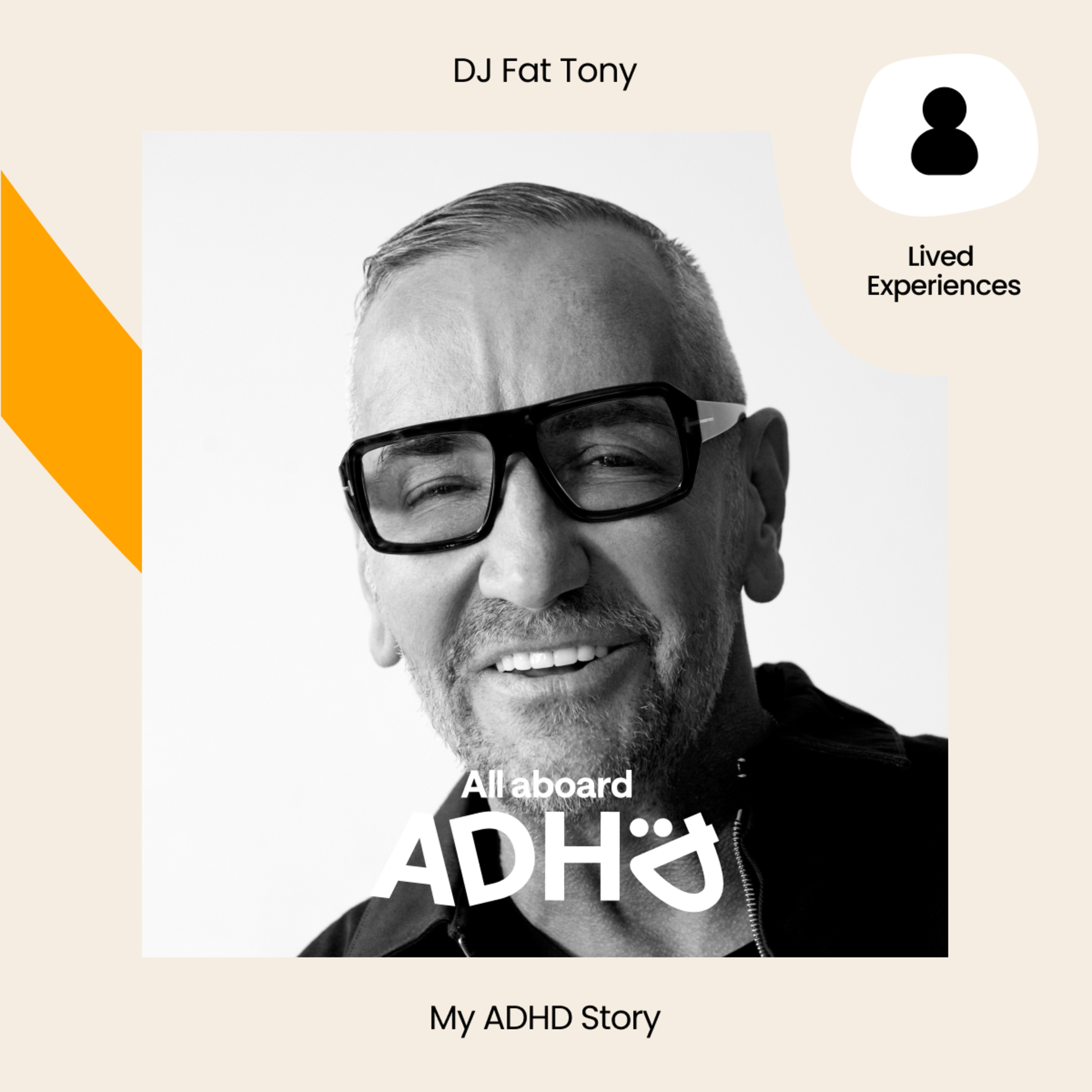 DJ Fat Tony - My ADHD Story 20.02.2026 49mntHow can understanding how our brain works help us break free of the cycles of the past and finally allow us to live life on our own terms?In this episode of All Aboard ADHD, Claire is joined by the legendary DJ Fat Tony, recovery advocate, and author of two books: 'I Don't Take Requests' and his upcoming ‘Recover Me’. Tony shares a raw and deeply insightful look at his journey through addiction, the clarity that came with understanding his ADHD, and how he has designed a life that respects his needs rather than fighting against them.Tony reflects on the "learned behaviors" we pick up in childhood and how, without self-awareness, we can carry these unhelpful coping mechanisms into adulthood. From navigating the high-intensity world of international DJing to the vital importance of learning to "switch off," this conversation is packed with radical honesty and self-acceptance.Claire and Tony discuss:Why recovery is about more than just overcoming an addiction, it’s about recovering your true self after years of trauma and learned self-serving behaviors.Working differently with an ADHD Brain, how Tony managed to record his audiobook by working in 20-minute bursts and being transparent with others about his "switch-off points."Sensory overstimulation and why a safe, quiet home environment is non-negotiable for Tony, even as someone whose career is built on loud music and crowded rooms.Why "finding your people" and realising you aren't the only one who behaves a certain way can be a game-changer for your mental health.Learning how you work best so that you can understand and let go of the urge to people-please and overcompensateThe creative "superpower" often seen in children with ADHD, and how recognising where they excel can help them channel their natural ability and energy into what they do bestSeeing your child for who they are, nurturing their strengths and the magic that happens when they feel understood and supported.Whether you are navigating your own path of recovery, supporting a neurodivergent child through their own struggles, or simply looking for the permission to be exactly who you are, Tony’s story offers hope, acceptance and inspiration.Further resources and links:Pre-order Tony’s new book: Recover MeBuy Tony’s book: I Don’t Take RequestsFollow Fat Tony on Instagram: https://www.instagram.com/dj_fattony_/ ADHD coaching and resources from Claire: https://allaboardadhd.comFollow Claire on Instagram & TikTok: @allaboardADHDThe views shared in this episode are those of the guest, based on their professional expertise and personal experience. This content is for informational purposes only and is not a substitute for professional medical, educational, or psychological advice. Please consult a qualified professional for personalised support relevant to your individual circumstances.
 -
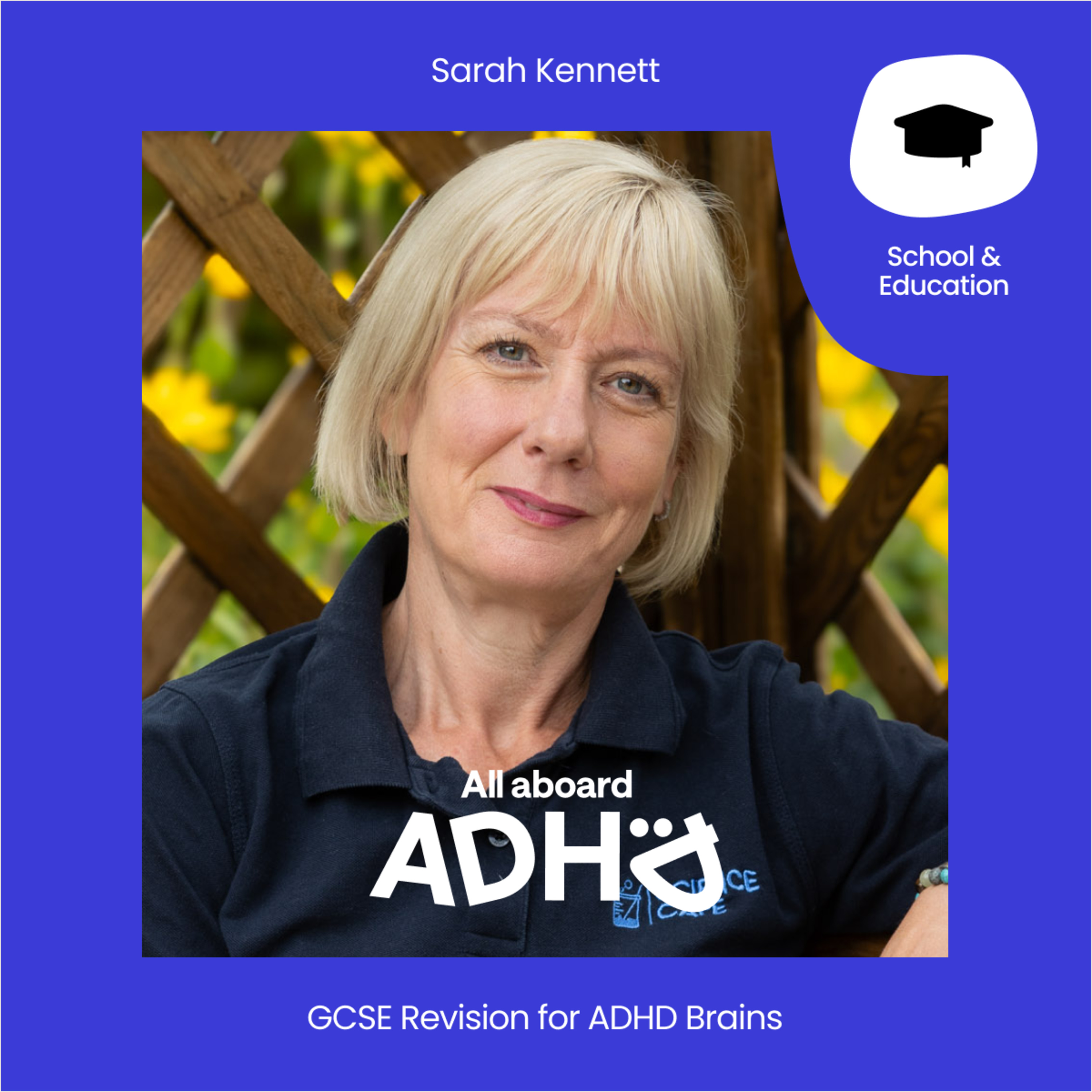 GCSE Revision for ADHD Brains 06.02.2026 54mntWhy does GCSE revision feel such a challenge for teenagers with ADHD, and how can parents support them without the process turning into a battle?In this episode of the All Aboard ADHD podcast, Claire is joined by Sarah Kennett, an ADHD coach, former head of science, and founder of Science Cafe. Sarah brings a unique dual perspective to this conversation: professional expertise as a long-term educator and lived experience of someone who was once the teen who couldn’t revise. Together, Sarah and Claire unpack what’s going on for ADHD brains during exam season and offer parents practical, neuro-affirming strategies that they can put into place with their teens.Claire and Sarah discuss the common pitfalls of traditional study methods and why "just sitting down and reading" is often a recipe for shutdown, rather than success. They discuss:Executive functioning overload and why revision can be a "perfect storm" for ADHD brains, requiring planning, prioritising, and memory all at onceThe ADHD "Sticky Note" Memory and how ADHD students often lose information "mid-process" during an exam due to working memory challengesThe difference between activation and motivation, understanding that struggling to start is rarely about not caring, but often a challenge with task initiationHow to use dopamine as a study tool, for example providing quick wins and interest-led learning, which can fuel the brain’s reward systemIncorporating movement and the power of "human photocopying," standing desks, and audio revision for kids who think better when they’re activeHow to create a retrieval practice by revisiting information "little and often" which helps teens build long-term confidence and resilienceUnderstanding the decompression gap - why jumping straight into revision after school can lead to burnout and how to prioritise nervous system regulation firstWhether your teenager is approaching their mocks, or you're planning ahead for GCSE season, this episode is packed with validation and creative tools to help your child show what they know without the mountain of stress.Further resources and links:Learn more about Sarah Kennett: https://www.science-cafe.co.uk/Download Sarah’s Free Revision Guide: https://www.freeguide.sciencecafe.co.uk/Follow Sarah on Instagram: @science_cafe_ukADHD coaching and Resources from Claire: https://allaboardadhd.comFollow Claire on Instagram & TikTok: @allaboardADHDThe views shared in this episode are those of the guest, based on their professional expertise and personal experience. This content is for informational purposes only and is not a substitute for professional medical, educational, or psychological advice. Please consult a qualified professional for personalised support relevant to your individual circumstances.
 -
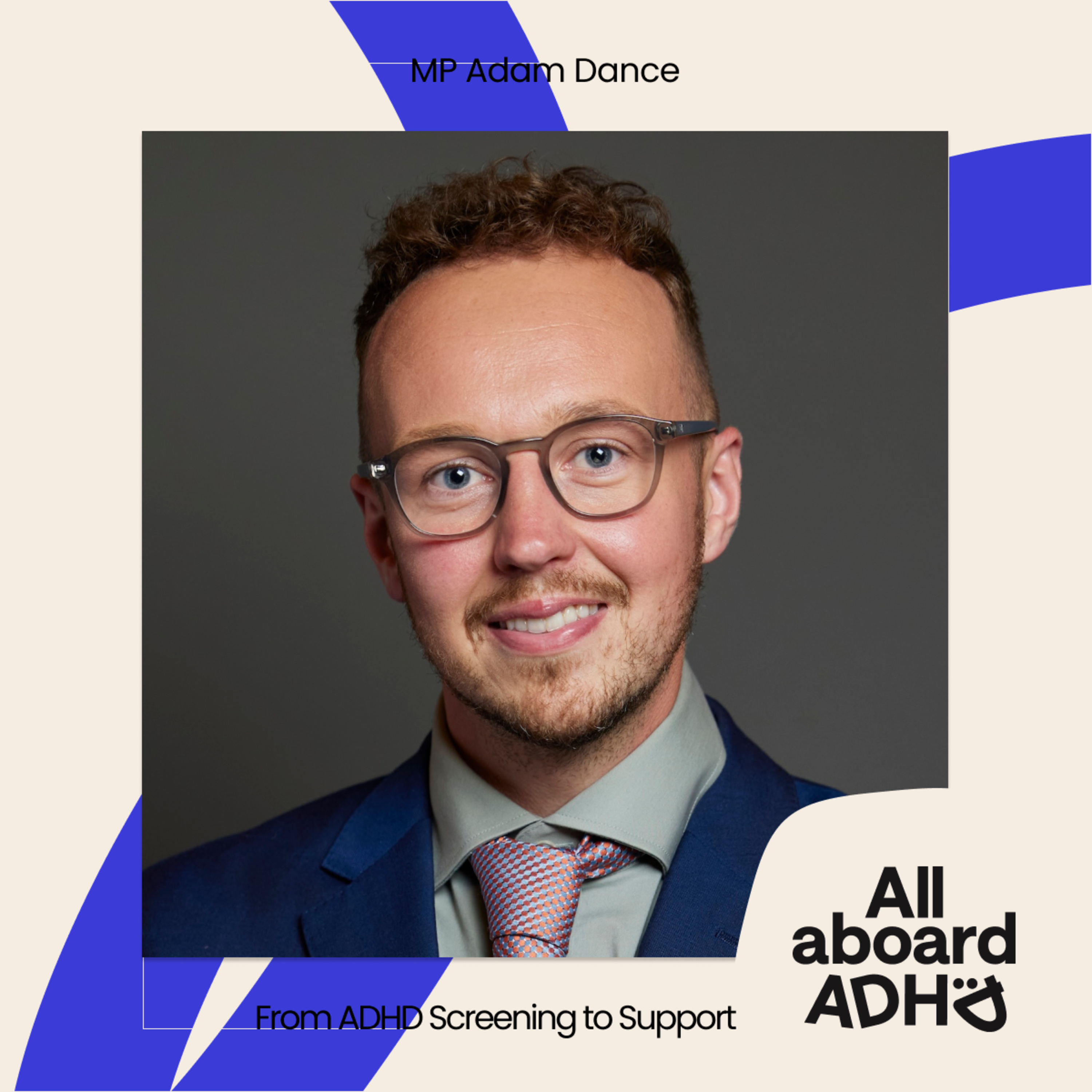 From ADHD Screening to Support 23.01.2026 43mntWhat is the Neurodivergence Bill and how could it help ensure practical, everyday adjustments that actually help children learn and thrive at school?In this episode of the All Aboard ADHD Podcast, Claire is joined by MP Adam Dance to discuss the Neurodivergence (Screening and Teacher Training) Bill, which attempts to bring earlier identification and better support for ADHD, dyslexia, autism and other neurodivergent conditions into primary schools. Adam is the Liberal Democrat MP for Yeovil. He has ADHD and dyslexia himself, and his personal story deeply informs his campaign. Claire and Adam discuss:How children continue to face stigma and bullying due to differences such as ADHD and why early universal screening will ensure they can access the right understanding and support at the right timeHow misunderstood children can internalise being “naughty” and disengage from learning, plus the potential impact of this on their longer-term life outcomesAdam’s personal experience being diagnosed with ADHD and why he’s so passionate about driving this bill forwardThe core elements of the Neurodivergence (Screening and Teacher Training) Bill including universal primary‑age screening, continuous SEN training for teachers, plus how classroom teaching can be adapted to better support children with additional needsThe stark wealth gap that exists in access to diagnosis and support, and how universal screening could act as as a way to level the playing fieldThe challenges of systemic underfunding, plus the need for a 10‑year SEND plan to address the current crisis which as Adam describes “shouldn't be political at all.”A message of hope and validation to parents supporting their neurodivergent children, reassuring them that their voices are being heardThis episode is a reassuring reminder to parents fighting for the right support for their children, that longer-term change is in motion and change is possible.Please note Adam was in his busy parliamentary office when this episode was recorded, so you may hear some background noise as a result.Further resources and linksLearn more about Adam and his work: https://www.libdems.org.uk/mps/yeovilTo read the Neurodivergence (Screening and Teacher Training) Bill: https://bills.parliament.uk/bills/4017 To order a copy of the book Unstoppable by Design which features chapters on both Adam and Claire’s ADHD stories: https://amzn.to/4qa0t2nADHD coaching and resources from Claire:https://allaboardadhd.comFollow Claire on Instagram & TikTok:@allaboardADHDThe views shared in this episode are those of the guest, based on their professional expertise and personal experience. This content is for informational purposes only and is not a substitute for professional medical, educational, or psychological advice. Please consult a qualified professional for personalised support relevant to your individual circumstances.
 -
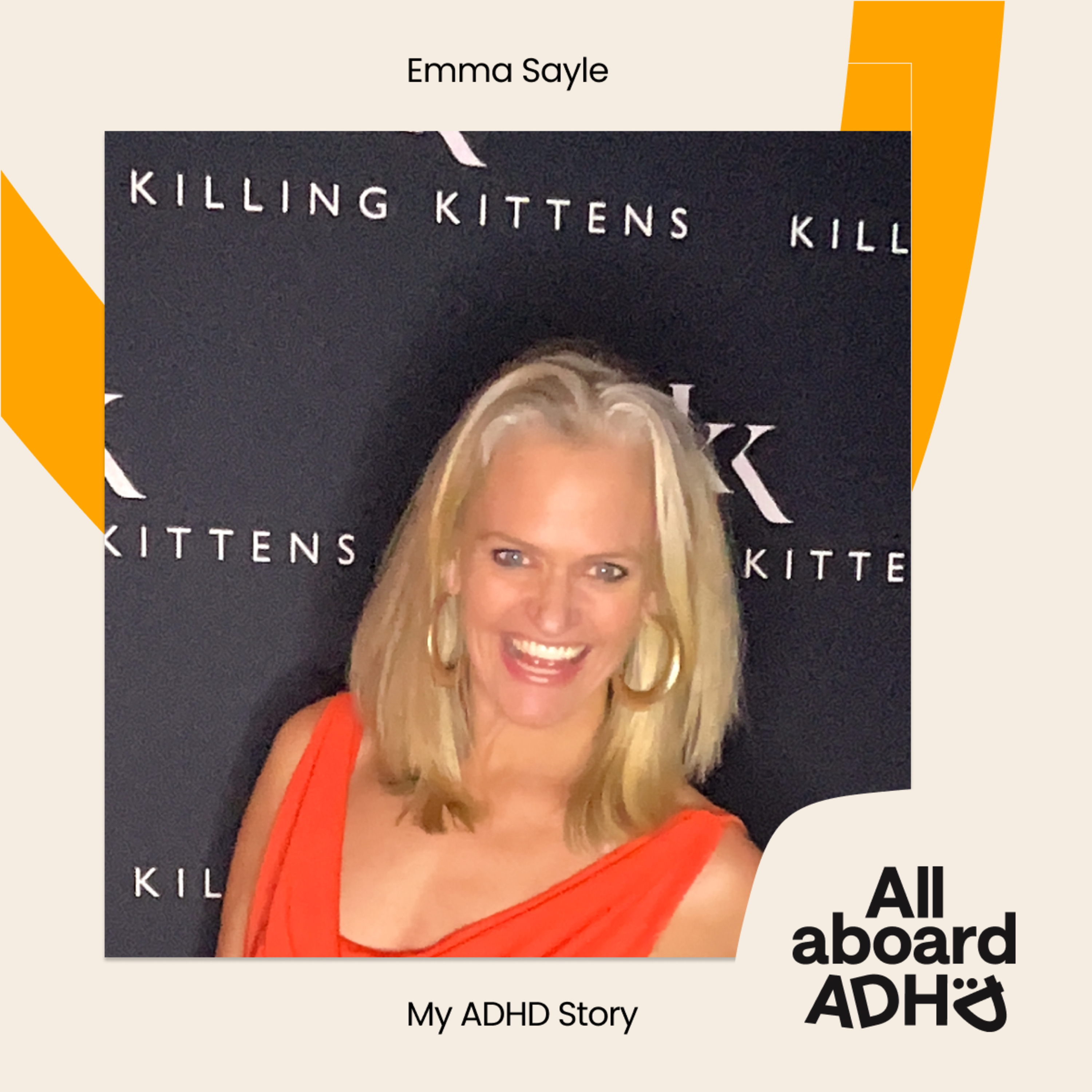 Emma Sayle - My ADHD Story 09.01.2026 51mntWhat happens when you finally understand your ADHD and how can that insight reshape how you see your past, your work, and your parenting?In this episode of All Aboard ADHD, Claire is joined by Emma Sayle, one of the UK’s leading female entrepreneurs and founder of the global female empowerment brand Killing Kittens, which now has over 200,000 members with events across the globe. Diagnosed with ADHD in her early 30s, Emma shares her personal story of growing up undiagnosed, building multiple businesses, and parenting three neurodivergent children, all while learning to understand her own ADHD brain.Emma reflects honestly on how receiving an ADHD diagnosis helped her reframe decades of lived experience, from school and relationships to risk-taking, ambition, and burnout. She explores the cost of masking, the pressure placed on high-achieving women, and how traits once labelled “too much” have become core strengths in her adult life.Together, Claire and Emma explore:What led to Emma’s ADHD diagnosis in adulthood, and how finally having an explanation reshaped her understanding of herselfHow reflecting on childhood and school experiences through an ADHD lens brought clarity, compassion, and perspectiveWhy ADHD in girls and women is so often missed, and how gendered expectations influenced how Emma was perceivedThe ADHD challenges Emma experienced growing up that later became strengths in leadership, creativity, and entrepreneurshipHow stimulation-seeking, future-focused thinking, and high energy shaped Emma’s career path and business successWhy environment plays a crucial role in focus, wellbeing, and balance, often more than motivation or disciplineHow understanding her own ADHD has transformed the way Emma parents her children, particularly around empathy and connectionA reassuring message for parents navigating the ADHD journey, especially those wishing they had answers soonerThis episode is candid, reflective, and deeply reassuring, offering hope to parents and adults who are still making sense of their own ADHD story, while navigating the responsibility of raising neurodivergent children.Learn more about Emma Sayle and her work:Killing Kittens: https://www.killingkittens.comThe Sisterhood: https://www.thesisterhood.co.ukTo order a copy of the book Unstoppable by Design which features chapters on both Emma and Claire’s ADHD stories: https://amzn.to/4qa0t2nADHD coaching and resources from Claire:https://allaboardadhd.comFollow Claire on Instagram & TikTok:@allaboardADHDThe views shared in this episode are those of the guest, based on their professional expertise and personal experience. This content is for informational purposes only and is not a substitute for professional medical, educational, or psychological advice. Please consult a qualified professional for personalised support relevant to your individual circumstances.
Podcast serupa


Populer di
Podcast ini juga muncul di daftar podcast negara-negara ini.
