
Credit Currents - Moody's Ratings
Giulia Calcabrini, Chandra Ghosal, Patrick Ronk
0
Join Moody’s Ratings’ analysts every other Thursday as they break down the biggest stories in credit and why they matter.
Episode
-
 Can the US power grid keep up with data center demand? 17.09.2026 12mntData center growth is accelerating, but access to electricity is becoming a critical constraint. This episode of Credit Currents examines how utilities, developers and policymakers are adapting to unprecedented power demand driven by AI and cloud computing.
 -
 AI, Jobs and Productivity: What the Data Is Really Showing 10.09.2026 14mntAI adoption is accelerating across businesses and workplaces, but its economic impact remains difficult to measure. In this episode of Credit Currents, we examine the disconnect between rising AI usage and labor market and productivity outcomes. What are the drivers behind the gap, lessons we can use from the dot-com era, and the key metrics investors should watch as AI investment continues to grow? Listen now to find out.
 -
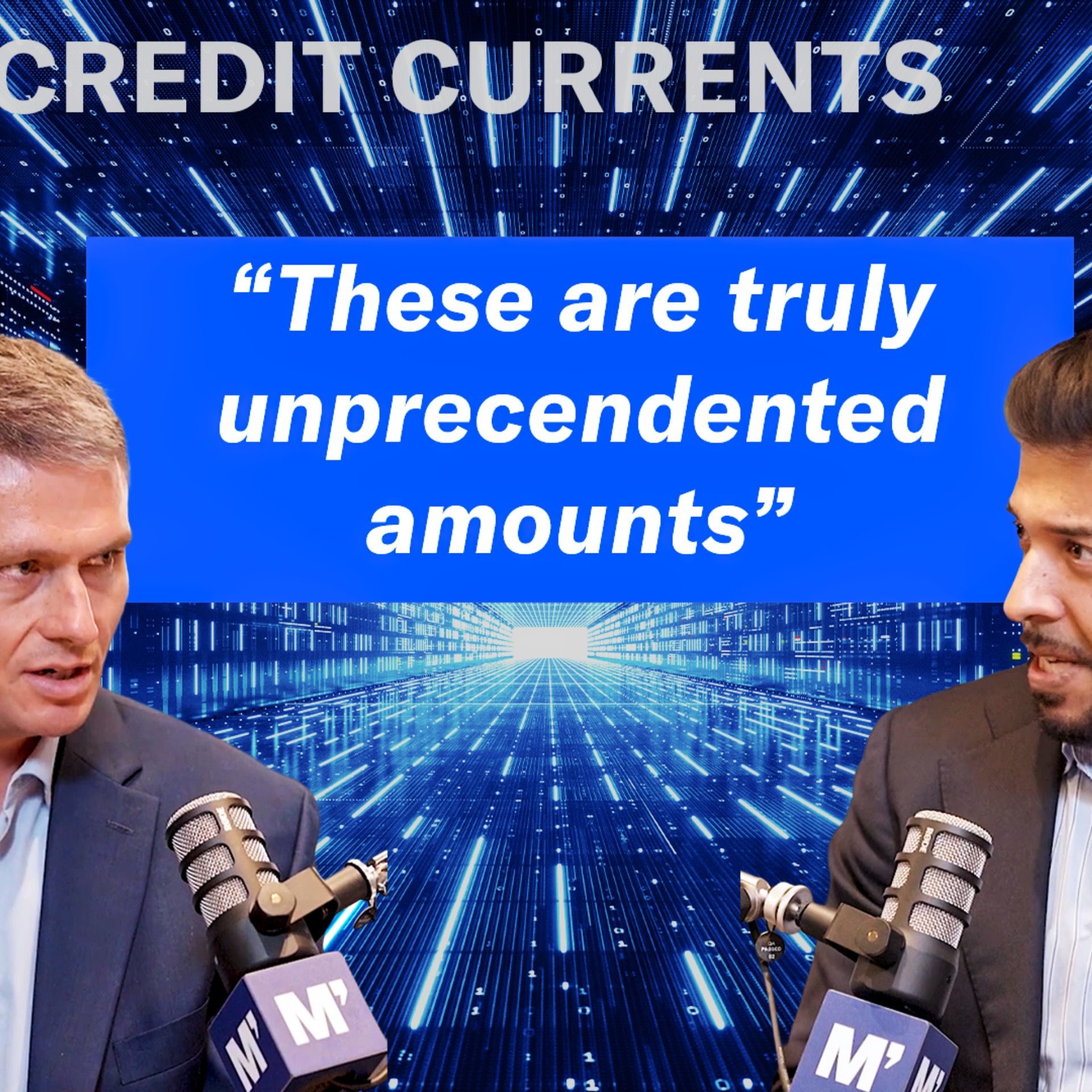 Big Tech’s AI Spending Surge: What It Means for Credit Risk 23.07.2026 14mntAI may have begun as a technology race, but it is increasingly becoming a race for capital and infrastructure. As hyperscalers invest at unprecedented levels, a SpaceX IPO and potential offerings from OpenAI and Anthropic, are offering new insights into the financing needs, transparency and credit dynamics shaping the industry's next phase.
 -
Next-Gen Payments and Digital Frontiers: Speed, Risk and Adoption 09.07.2026 10mntInstant, low-cost cross-border payments are moving closer to reality as blockchain, stablecoins and tokenization reshape financial infrastructure. This episode explores how distributed ledger technology can enable faster, more transparent transactions while improving liquidity management through automation and smart contracts. Adoption remains gradual, with regulatory uncertainty, interoperability challenges and the need for market confidence continuing to shape progress. The discussion also examines Moody’s stablecoin methodology, the role of AI in fraud detection and liquidity forecasting, and key risks across technology, cybersecurity and regulation. Featuring insights from Moody’s analysts Greg Sobel and Lucas Viegas.
-
Why the K-Shaped Economy Threatens US Growth 18.06.2026 19mntIs the US economy increasingly dependent on high-income consumers? In this episode of “Credit Currents,” Mark Zandi, Chief Economist at Moody’s Analytics, and Atsi Sheth, Chief Credit Officer at Moody’s Ratings, examine the reality of the K-shaped economy. They explore how the top 20% of earners now drive roughly 60% of spending, while lower-income households face mounting pressure from rising costs of essentials like food, fuel and housing. From premium airline demand to tightening credit conditions and weakening real income growth, this episode highlights why economic growth may appear stable, but is becoming increasingly fragile and concentrated.
-
Private Credit: “Bad Vibes” and the Changing Conversation 04.06.2026 14mntPrivate credit has hit a speed bump in the US, where the market is rapidly pivoting from growth to stricter risk discipline. At our flagship “Credit Frontiers” event, we sat down with Moody’s leaders to discuss what’s behind these “bad vibes” about private credit and what they’re hearing from market participants about the trajectory of the asset class.
-
An Era of Pragmatic Transition: What’s Next for Energy Markets 28.05.2026 11mntWhat comes next for sustainable finance debt markets? The energy transition’s momentum has shifted towards more pragmatic rationales, including energy security, sovereignty and critical supply-chain resilience. In this episode, we discuss why, despite headwinds arising from global trade tensions, Asia remains a contributing force for the “pragmatic transition”, the favorable conditions supporting renewable investment, as well as the opportunities for both the public and private sectors.
-
Stablecoins, Tokenization and the Future of Finance 14.05.2026 10mntAsset tokenization and digital money, including stablecoins, are moving from the margins of finance toward the core of market infrastructure, spurring banks and other market participants to adapt their approach to blockchain technology. In this episode of Credit Currents, we explore why trust and regulation are central to adoption of tokenized assets, and how a gradual move in this direction could reshape payments, settlement and credit markets. The conversation explores both the promise of faster, always‑on transactions and the practical challenges that will shape how quickly digital finance takes hold.
-
Banking Rules are Changing: Here’s Why it’s Net Negative for Credit 16.04.2026 12mntThere could be big changes coming to longstanding bank regulations. With earnings season heating up, the discussion over capital rules is back in focus. 'Credit Currents' is on the ground in Washington, D.C. as the world's top policymakers and regulators attend meetings with the World Bank, International Monetary Fund (IMF) and Institute of International Finance (IIF). We unpack what looser capital requirements could mean, the implications for credit, and how regulators and the US Federal Reserve are responding.
-
US-Iran Ceasefire: The Risks Affecting Credit Markets 09.04.2026 11mntA temporary truce between the US and Iran is contingent on the reopening of the Strait of Hormuz, but disruptions to global supply chains, energy markets, oil prices and various sectors are still risks to credit quality. In our latest episode of Credit Currents, taped hours before the news broke, we discuss the ways geopolitical shocks ripple through sectors, whether there could be an impact on issuer ratings or outlooks, and why some sectors like defense are less affected.
-
Why Netflix is Still a Winner After Bidding War with Paramount 02.04.2026 11mntStreaming giant Netflix withdrew its bid for Warner Brothers Discovery on the eve of this year’s Oscars, but it doesn’t mean Paramount has won the battle for dominance over the media landscape. Regulators still must approve the deal, and Paramount’s offer comes with huge debt. In this first episode of Credit Currents, a new video podcast series from Moody’s Ratings, we reveal the stakes at play for traditional film and TV studios, the exponential value of intellectual property (IP), and how massive acquisitions can create credit risk. We also consider the potentially significant impact of AI on viewing habits and customer preferences.
-
 Introducing: Credit Currents, a new Moody's Ratings video podcast 02.04.2026Streaming giant Netflix withdrew its bid for Warner Brothers Discovery on the eve of this year’s Oscars, but it doesn’t mean Paramount has won the battle for dominance over the media landscape. Regulators still must approve the deal, and Paramount’s offer comes with huge debt. In this first episode of Credit Currents, a new video podcast series from Moody’s Ratings launching on April 2, 2026, we reveal the stakes at play for traditional film and TV studios, the exponential value of intellectual property (IP), and how massive acquisitions can create credit risk. We also consider the potentially significant impact of AI on viewing habits and customer preferences. Host: Patrick Ronk, Vice President, Senior Analyst, Moody’s Ratings Guest: Emile El Nems, Vice President, Senior Credit Officer, Moody’s Ratings
 -
Emerging market credit conditions will continue gradual, fragile improvement in 2025 25.11.2024 20mntCorporate and sovereign default rates are decreasing as GDP growth, slowing inflation and monetary easing aid debt management. But EMs face a number of credit risks including potential US tariffs.
-
How the US election could shape global credit conditions 10.10.2024 19mntIn this joint Big Picture-Emerging Markets Decoded episode, our regional analysts highlight the key US policy areas to watch in Europe, Asia-Pacific and Latin America -- and discuss which economies and sectors could be at risk if policies were to dramatically change.
-
Positive credit stories emerging in a handful of Sub-Saharan African countries 02.10.2024 17mntInstitutional reforms, policy reversals, debt restructurings and the prospect of new hydrocarbon production are leading to gradual improvement in some sovereigns’ creditworthiness from weak levels.
-
Geopolitical risk shapes creditworthiness for host of APAC governments 16.09.2024 14mntRisk exposure is highest for those directly involved in the region’s three main hotspots. But the knock-on economic effects of the tensions have the potential to hurt, or help, other APAC governments.
-
Corporate credit quality in India, Indonesia remains robust despite sectoral differences 02.09.2024 14mntIndia's large domestic market shields its companies from external shocks, whereas Indonesia's export-dependent commodity sector prompts government efforts to diversify growth.
-
Latin American national oil companies face hurdles in reducing greenhouse gas emissions 19.08.2024 14mntChallenges include the region’s reliance on fossil fuels to meet energy demand amid population growth, the companies’ weak financials and governments’ reliance on revenue from oil and gas producers.
-
Central bank push to tame inflation boosts credit quality of Turkish sovereign, companies 05.08.2024 14mntRate hikes in Turkiye have slowed inflation, and confidence in the country’s currency is increasing. The sovereign’s creditworthiness is improving as a result, along with that of Turkish companies.
-
Kenya protests highlight transmission of social risk to sovereign creditworthiness 22.07.2024 13mntThe opposition to proposed tax hikes impedes the government’s ability to increase revenue and reduce debt. Similar risks exist for other emerging market sovereigns too.
Podcast serupa


Populer di
Podcast ini juga muncul di daftar podcast negara-negara ini.

