
The Principles of War - Lessons from Military History on Strategy, Tactics, Doctrine and Leadership.
James Eling
0
This podcast offers professional military education in 30-minute sessions, studying historic battles through current doctrine to extract lessons on strategy, tactics, combined arms, and military leadership. Designed for unit PME programs, it provides insights from great battles without the need for after-action reviews.
Episode
-
 152 - National Guard vs Imperial Japanese Army on Guardalcanal - Lessons Learnt for employing green troops at 5th Matanikau 19.07.2026 40mntThe US 182nd Infantry Regiment crossed the Matanikau on 18 November 1942 and within 48 hours all three companies of 1st Battalion had broken under Japanese mortar and flanking fire. This episode examines how green National Guard troops faltered in their combat debut, why a four-hour artillery delay negated the prep fires, and what the six-week Point Cruz stalemate reveals about the cost of transitioning from defence to offence. Key learnings: • Why the 182nd's thousand-yard overnight gap invited the Japanese counterattack that shattered 1st Battalion on 20 November • How pulling back 300 yards on 23 November allowed Japanese screening forces to reoccupy vacated positions before the 8th Marines could assault • What the 325 casualties and combat-ineffective rate of the 164th Infantry between 19–25 November cost the American offensive Dave Holland is an ex-Marine and was posted to Guadalcanal with the Australian Federal Police. He regularly leads battlefield study tours through the area. He is a world-leading expert on the battles of Guadalcanal and author of Guadalcanal's Longest Fight - The Pivotal Battles of the Matanikau Front. Full show notes and transcript: https://theprinciplesofwar.com/ Support the podcast: https://www.patreon.com/principlesofwar More episodes: https://theprinciplesofwar.com/ Follow on X: https://x.com/surprisepodcast Subscribe for more Professional Military Education content.
 -
 151 - How Sea Control doomed the 17th Army to Starvation on Guadalcanal: The failure of the Tokyo Express 19.06.2026 32mntThe Naval Battle of Guadalcanal cost the US Navy two rear admirals and six warships — yet it stopped 11 Japanese transports carrying 10,000 troops and the supplies needed to take Henderson Field. We discuss the critical 12–15 November 1942 engagements where Rear Admiral Daniel Callaghan's cruisers intercepted a battleship bombardment force, and Willis Lee's radar-directed gunnery from USS Washington sank the Kirishima in the war's only battleship-versus-battleship duel in the Pacific. Key learnings: • Why Henderson Field functioned as the decisive terrain controlling both sides' ability to resupply by day or by night • How only 2,000 Japanese troops landed from the convoy — most without weapons or ammunition • What the Fifth Battle of the Matanikau plan revealed about American intelligence failures on Japanese defensive positions Dave Holland is an ex-Marine and was posted to Guadalcanal with the Australian Federal Police. He regularly leads battlefield study tours through the area. He is a world-leading expert on the battles of Guadalcanal and author of Guadalcanal's Longest Fight - The Pivotal Battles of the Matanikau Front. Full show notes and transcript: https://theprinciplesofwar.com/ Support the podcast: https://www.patreon.com/principlesofwar More episodes: https://theprinciplesofwar.com/ Follow on X: https://x.com/surprisepodcast Subscribe for more Professional Military Education content.
 -
 150 - What new tactics did Carlson's Raiders use to hunt Shoji's Regiment during the Long Patrol on Guadalcanal? 24.05.2026 1jColonel Shoji landed 1,500 Japanese troops east of Henderson Field — and the Americans needed three battalions and a week of manoeuvre to trap just 450 of them at Gavaga Creek. This episode unpacks the Koli Point "Rat Race," the pursuit by Carlson's Raiders, and the fire team tactics that would reshape Marine infantry doctrine for decades. Dave Holland is an ex-Marine and was posted to Guadalcanal with the Australian Federal Police. He regularly leads battlefield study tours through the area. He is a world-leading expert on the battles of Guadalcanal and author of Guadalcanal's Longest Fight - The Pivotal Battles of the Matanikau Front. Key learnings: • How Carlson's Raiders used Chinese Communist guerrilla techniques to harass Shoji's withdrawing column across 30 days • Why the three-man fire team — each with a BAR, Thompson, and M1 Garand — gave squads independent manoeuvre elements • What institutional opposition to "an elite within the elite" meant for the Raider battalions' disbandment in 1944 Full show notes and transcript: https://theprinciplesofwar.com/category/guadalcanal/ Support the podcast: https://www.patreon.com/principlesofwar More episodes: https://theprinciplesofwar.com/ Follow on X: https://x.com/surprisepodcast Subscribe for more Professional Military Education content.
 -
 How do you defend an island nation when 40% of your trade flows through contested waters? 13.05.2026 1j 22mntForty percent of Australian trade flows through the South China Sea — and if conflict erupts near Taiwan, that route becomes uninsurable overnight. Maritime strategist Mark Bailey argues that Western continentalism has left island nations dangerously unprepared for the Indo-Pacific's return to its ancient strategic shape, where China and India once again compete for influence over Southeast Asia. This keynote address traces how Beijing treats the South China Sea as sovereign territory to be garrisoned, why Tokyo has quietly reorganised its navy for convoy escort, and what the Taiping Rebellion's 20–80 million dead reveal about Chinese internal fractures. This is a special seminar presentation in conjunction with the Royal Australian Artillery Historical Company's Firepower Seminar Series, "Firepower: Lessons from World War II" Our presenter is Dr Mark Bailey, presenting our keynote presentation. Key learnings: • Why Japan restructured its fleet into three convoy escort groups anticipating wartime shipping protection • How Chinese hybrid warfare operates through United Front university networks, cyber intrusions, and fentanyl exports killing 80,000 Americans yearly • What Australia's 2023 Defence Strategic Review shares with Corbett's maritime principles Full show notes and transcript: https://theprinciplesofwar.com/ Support the podcast: https://www.patreon.com/principlesofwar More episodes: https://theprinciplesofwar.com/ Follow on X: https://x.com/surprisepodcast Subscribe for more Professional Military Education content.
 -
 Strategic Context for Australia's WW2 mobilisation 10.05.2026 1j 22mntAustralia spent 20 years preparing for a war most politicians refused to discuss publicly — and that systematic industrial strategy may be the nation's greatest governance success story. Dr. Mark Bailey traces how bipartisan policy from 1919 built the secondary industry that would have annihilated Japanese forces had they landed at Port Stephens in 1942, while Major General Jason Blake connects those lessons to today's Army transformation through HIMARS, PrSM missiles, and the AS9 Huntsman. This is a special seminar presentation in conjunction with the Royal Australian Artillery Historical Company's Firepower Seminar Series, "Firepower: Lessons from World War II" Our presenter is Dr Mark Bailey and it is followed by our Panel Discussion with Major General Jason Blaine, DSC, AM, CSC and Dr Mark Bailey and Dr Peter Layton. Key learnings: • Why defence spending increased 20% in 1932-33 despite the Great Depression, following Japan's Manchurian invasion • How 730,000 soldiers mobilised from a population of 7 million through national census and preserved training infrastructure • What the shift from manoeuvre supporting fires to fires supported by manoeuvre means for modern Australian capability Full show notes and transcript: https://theprinciplesofwar.com/ Support the podcast: https://www.patreon.com/principlesofwar More episodes: https://theprinciplesofwar.com/ Follow on X: https://x.com/surprisepodcast Subscribe for more Professional Military Education content.
 -
 Australia's Road to War - 1936 to 1941 - Dr Peter Layton 27.04.2026 1j 25mntAustralia built a coherent defence industrial strategy in the 1920s and 30s that actually worked when tested by total war — yet we've forgotten most of what made it succeed. This seminar recording pairs Dr Peter Layton's analysis of the interwar Munitions Supply Board with Major General Jason Blake's discussion of current Army modernisation. This is a special seminar presentation in conjunction with the Royal Australian Artillery Historical Company's Firepower Seminar Series, "Firepower: Lessons from World War II" Our presenter is Dr Peter Layton and it is followed by our Panel Discussion with Major General Jason Blaine, DSC, AM, CSC and Dr Mark Bailey and Dr Peter Layton. Key learnings: • How the self-containment strategy and 243 shadow factories enabled Australia to achieve munitions self-sufficiency by 1943 • Why Essington Lewis had to bypass service bureaucracies that refused to place orders even after the Fall of France • What the five-to-six-year lead time for establishing missile production means for current capability timelines Full show notes and transcript: https://theprinciplesofwar.com/ Support the podcast: https://www.patreon.com/principlesofwar More episodes: https://theprinciplesofwar.com/ Follow on X: https://x.com/surprisepodcast Subscribe for more Professional Military Education content.
 -
 149 - Why did the Marines stop 1,000 yards short of victory at 4th Matanikau - Guadalcanal 26.04.2026 34mntAfter the defeat at Henderson Field, Japanese 17th Army headquarters remained confident — fresh divisions and hundreds of aircraft were promised within weeks. But Vandegrift had no intention of letting them regroup. This episode traces the Fourth Battle of the Matanikau and the emergency pivot to Koli Point, revealing how interior lines and improving logistics let the Marines mount the largest US Marine land attack in history to that date. Key learnings: • How Vandegrift assembled 12 battalions for an offensive while his perimeter forces were already exhausted after two and a half months • Why Japanese logistics could deliver only one-third of the 200 tons per day needed to sustain 30,000 troops on Guadalcanal • What Ultra intelligence revealed about Japanese landing plans and how it forced Vandegrift to split his forces Dave Holland is an ex-Marine and was posted to Guadalcanal with the Australian Federal Police. He regularly leads battlefield study tours through the area. He is a world-leading expert on the battles of Guadalcanal and author of Guadalcanal's Longest Fight - The Pivotal Battles of the Matanikau Fron Full show notes and transcript for the Guadalcanal series. Support the podcast: https://www.patreon.com/principlesofwar More episodes: https://theprinciplesofwar.com/ Follow on X: https://x.com/surprisepodcast View the videos on Youtube: https://www.youtube.com/@theprinciplesofwar Subscribe for more Professional Military Education content.
 -
 148 - The Battle of Henderson Field - Guadalcanal 1942 05.04.2026 55mntThis episode is the 14th episode in our Guadalcanal series. We look at the Battle of Henderson Field, which is the decisive terrain for the campaign. Had the airfield been lost, it is likely that the US would not have been able to hold Guadalcanal. We discuss: How do you defend critical terrain against a numerically superior force?How should defensive positions exploit terrain to maximize effectiveness? How do you integrate combined arms in the defense? How does poor communication affect tactical coordination? How do you integrate unfamiliar units into ongoing operations? The 164th got their introduction into combat at Henderson Field. They were a North Dakota National Guard unit and had only been on Guadalcanal for 10 days. They were bought up to bolster the heavily outnumbered defences. Rather than have the unit deploy into the line and take over a part of the line, Puller had small groups lead into their positions next to Marines. Piecemeal deployment, the last thing you want to happen to your Regiment, but it employed the green troops to fight next to seasoned Marines. At the end of the fight, Chesty Puller said, "These farm boys can fight!" Check out the show notes for the Guadalcanal series. https://www.patreon.com/cw/principlesofwar - if you've learnt something from this episode and you can afford it, please support the podcast at Patreon. Looking for YouTube PME videos? Check out the Principles of War YouTube Channel. Great Professional Military Education for your Unit. This episode covers static defence, combined arms, terrain and leadership.
 -
 147 - The Japanese tank attack in the Battle of Henderson Field - Guadalcanal 29.03.2026 41mntThis episode looks at the Sumiyoshi's tank attack across the Matanikau - an attempt to draw defenders away from the perimeter of Henderson Field. We also discuss why Muryama coundn;t synchronise his forces and the dysfunction within the Japanese Headquarters. We look at - What are the consequences of relieving a subordinate commander on the eve of battle? (And what role did Tsuji play in Kawaguchi's dismissal?) What happens when multiple attacking elements operate independently without coordination? How should armour, infantry, and artillery be coordinated in an assault? What is the value of pre-registered artillery fires in defense? How can the Japanese achieve tactical surprise despite proximity? What is the purpose and risk of outposts forward of the main defensive line? Dave Holland is an ex-Marine and was posted to Guadalcanal with the Australian Federal Police. He regularly leads battlefield study tours through the area. He is a world-leading expert on the battles of Guadalcanal and author of Guadalcanal's Longest Fight - The Pivotal Battles of the Matanikau Front. Check out the show notes for the Guadalcanal series. https://www.patreon.com/cw/principlesofwar - if you've learnt something from this episode and you can afford it, please support the podcast at Patreon. Looking for YouTube PME videos? Check out the Principles of War YouTube Channel. Great Professional Military Education for your Unit. This episode covers co-operation, the employment of armour and command dysfunction.
 -
 146 - Halsey's question for Vandegrift about Henderson Field's defence that influenced Pacific Strategy. 22.03.2026 41mntThis episode looks at the defensive and offensive planning undertaken by the IJA and the USMC. It also looks closely at Vandegrift's meeting with Halsey and the outcome of the meeting. This is a pivotal moment in the campaign. Halsey has taken over from Ghormley and he prepares to back Vandegrift with everything the Navy has to help defend Guadalcanal. How does intelligence fusion enable a commander to choose the time and place of battle? The combination of coast-watchers, aerial photography, signals intercepts, prisoner interrogation, and traffic analysis gives Vandegrift sufficient warning to disengage from the Matanikau and assume a prepared defensive posture before the Japanese assault begins. What are the compounding effects of logistics failure on combat power? Japanese soldiers carry only five days' rations for a march that takes far longer than planned. By the time the assault goes in, troops are hungry, exhausted, and degraded — before they have fired a shot. How does the defence leverage knowledge of terrain? The defenders have patrolled and observed their ground for months, have pre-registered every likely approach, and understand the avenues of attack in detail — advantages the attacking Japanese, navigating by inaccurate maps in pitch darkness, completely lack. What is the relationship between strategic commitment and tactical success? The Marines' ability to hold Henderson Field is directly tied to whether higher command is willing to accept naval losses to keep the sea lanes open. Halsey's personal commitment to "give you all I have" is the strategic enabler for everything that follows tactically. How does the defender's advantage of fighting on familiar ground translate into combat power? Vandegrift's troops are dug in, know their sectors, have rehearsed their fire plans, and can rotate reserves along interior lines — while the Japanese are exhausted, disoriented, under-supplied, and attacking in darkness across ground they have never seen. Dave Holland is an ex-Marine and was posted to Guadalcanal with the Australian Federal Police. He regularly leads battlefield study tours through the area. He is a world-leading expert on the battles of Guadalcanal and author of Guadalcanal's Longest Fight - The Pivotal Battles of the Matanikau Front. Check out the show notes for the Guadalcanal series. https://www.patreon.com/cw/principlesofwar - if you've learnt something from this episode and you can afford it, please support the podcast at Patreon. Great Professional Military Education for your Unit. This episode covers economy of effort, intelligence fusion, and defensive fires planning.
 -
 145 - 973 rounds in 83 minutes. The Battleship Bombardment of Henderson Field 15.03.2026 45mntThis episode looks at the IJN and IJA combined planning for the assault on Henderson's Field, including the naval gunfire from the Kongo and Haruna under Rear Admiral Kurita where 973 14-inch rounds were fired in 83 minutes. We also discuss the development of the Maruyama Trail for the approach march of the 2nd Sendai Division. This episode discusses: What happens when commanders visualise terrain from a distance rather than conduct ground reconnaissance? How does poor mapping degrade operational planning? How does confirmation bias infect intelligence assessment? What is the relationship between terrain and combat power? What munition selection tells us about the limits of naval gunfire support against land targets? How do you maximise the effect of a fire support mission through observation planning? What does the Henderson Field bombardment teach us about fire saturation and its psychological effects? How does loss of aviation fuel translate directly into loss of air superiority? What is the danger of planning based on the timeline you want rather than the timeline the terrain imposes? Dave Holland is an ex-Marine and was posted to Guadalcanal with the Australian Federal Police. He regularly leads battlefield study tours through the area. He is a world-leading expert on the battles of Guadalcanal and author of Guadalcanal's Longest Fight - The Pivotal Battles of the Matanikau Front. Check out the show notes for the Guadalcanal series. https://www.patreon.com/cw/principlesofwar - if you've learnt something from this episode and you can afford it, please support the podcast at Patreon. Great Professional Military Education for your Unit. This episode covers the Command and Control and generating combined arms.
 -
 144 - Situational Awareness and the fight for Guadalcanal's Key Terrain - 3rd Battle of the Matanikau 08.03.2026 33mntUSMC 1st Marine Division vs the IJA 2nd (Sendai) Division in the fight to control the Matanikau River. The 3rd Battle of the Matanikau Part II - This is the tenth episode of our Guadalcanal series with historian and author Dave Holland. This episode discusses: 1st Marine Division Combined Arms integration at the Third Battle of the Matanikau? How did the loss of the Matanikau River crossing have on planning for the assault on Henderson Field? How did Japanese command and control failures at the battalion and regimental level contribute to their defeat at the Third Matanikau? What are the tactical lessons from Marine Corps fire support coordination? How did weather and terrain shape manoeuvre and command and control? How did the Marines use reverse slope positions and indirect machine gun fire to defeat Japanese delaying forces? What were the contrasting night combat doctrines of the USMC and the Imperial Japanese Army? How did delayed battlefield reporting and communications breakdown affect IJA operational decision-making? What is the operational significance of denying an enemy its artillery firing platforms, as demonstrated at the Third Battle of the Matanikau? How did Lt Gen Hyakutake manage two simultaneous campaigns — Guadalcanal and the Kokoda withdrawal — from an austere forward headquarters in October 1942? How did American air superiority over Henderson Field shape Japanese logistics and sea control during the Guadalcanal campaign? What role did intelligence integration — coast watchers, signals intercepts, and radar — play in Allied air defence during the Guadalcanal campaign? Dave Holland is an ex-Marine and was posted to Guadalcanal with the Australian Federal Police. He regularly leads battlefield study tours through the area. He is a world-leading expert on the battles of Guadalcanal and author of Guadalcanal's Longest Fight - The Pivotal Battles of the Matanikau Front. Check out the show notes for the Guadalcanal series. https://www.patreon.com/cw/principlesofwar - if you've learnt something from this episode and you can afford it, please support the podcast at Patreon. Great Professional Military Education for your Unit. This episode covers the Command and Control and generating combined arms.
 -
 143 - Inside the Japanese OODA loop on Guadalcanal - Vandegrift and 3rd Matanikau 15.02.2026 41mntMaruyama vs Vandegrift in the fight to control the Matanikau River. The 3rd Battle of the Matanikau Part I - This is the ninth episode of our Guadalcanal series with historian and author Dave Holland. This episode discusses: How did the Japanese plan to exploit the Second Battle of the Matanikau to set up their October 1942 offensive to retake Guadalcanal? Why was the Matanikau River "key terrain" in the Guadalcanal Campaign for both the IJA and the US Marines defending Henderson Field? What was Japan's concept for suppressing Henderson Field before the main assault? What was Vandegrift's operational intent in launching the 7 October 1942 attack (Third Battle of the Matanikau), and why was it such a risk? What was the "One Log Bridge" on the Matanikau River, and why did it matter tactically? How did the weather have on the Matanikau operation? Dave Holland is an ex-Marine and was posted to Guadalcanal with the Australian Federal Police. He regularly leads battlefield study tours through the area. He is a world-leading expert on the battles of Guadalcanal and author of Guadalcanal's Longest Fight - The Pivotal Battles of the Matanikau Front. Check out the show notes for the Guadalcanal series. https://www.patreon.com/cw/principlesofwar - if you've learnt something from this episode and you can afford it, please support the podcast at Patreon. Great Professional Military Education for your Unit. This episode covers the operational art and importance of Offensive Action - seizing and retaining the initiative.
 -
 Puller, Munro, and Monssen - the daring resuce of 1/7 Marines - 2nd Battle of the Matanikau Part II 01.02.2026 28mnt2nd Matanikau - Guadalcanal and Pullers rescue of the 1/7th Marines. The 2nd Battle of the Matanikau Part II - This is the eighth episode of our Guadalcanal series with historian and author Dave Holland. This episode discusses: What was the plan for 27 September, and why was it inherently risky? How did a breakdown in command-and-control affect the Marines' river-crossing plan at the Matanikau River? How did the Japanese react so fast, and what trap did they set behind Chesty Puller? Why did the Raiders get stopped short of the One Log Bridge—and what happened to Ken Bailey? What role did comms failure play once the fight started to go wrong? How did the amphibious "end run" force end up trapped west of Point Cruz? What made the situation worse once they were cut off—equipment and radios? How did the "HELP" undershirt signal actually work, and what did the pilot do? How was the rescue executed—who coordinated it, and what enabled withdrawal under fire? What were the lessons learnt and why are they important today? Who was Samuel B. Griffith? Dave Holland is an ex-Marine and was posted to Guadalcanal with the Australian Federal Police. He regularly leads battlefield study tours through the area. He is a world-leading expert on the battles of Guadalcanal and author of Guadalcanal's Longest Fight - The Pivotal Battles of the Matanikau Front. Check out the show notes for this episode. https://www.patreon.com/cw/principlesofwar - if you've learnt something from this episode and you can afford it, please support the podcast at Patreon. Great Professional Military Education for your Unit. This episode covers C2, Littoral Manoeuvre and naval support to land operations.
 -
 141 - Chesty Puller, 1/7 Marines and 2nd Matanikau, Guadalcanal 28.11.2025 34mntThe 2nd Battle of the Matanikau - This is the seventh episode of our Guadalcanal series with historian and author Dave Holland. This episodes discusses: How did the arrival of the 7th Marines transform Vandegrift's Guadalcanal strategy from survival to aggressive "active defence"? What was Japan's Operation Ka, and how was it meant to crush the Marines and recapture Henderson Field in one decisive blow? How did the sinking of USS Wasp and the escorting convoy turn Guadalcanal logistics into a day-to-day survival crisis for the 1st Marine Division? In what ways did Vandegrift and Admiral Kelly Turner pioneer the modern CLF–CATF relationship during the Guadalcanal campaign? Why did the Marines abandon textbook 'defence in depth' and trial a all round defensive cordon with little depth around Henderson Field—and why did it work? How badly did Marine intelligence underestimate Japanese strength around the Matanikau, and how did it effect operational planning? Who was Lt Col "Chesty" Puller in 1942, and why was he Vandegrift's preferred commander for the first major offensive patrol west of Henderson Field? What really happened on Chesty Puller's reconnaissance-in-force over Mount Austin, and how close did his battalion come to disaster? Why does Dave Holland call the failed Matanikau crossing "Alligator Creek in reverse," and what brutal small-unit lessons come out of that sandbar assault? Why did more sailors than soldiers and Marines die in the Guadalcanal campaign, and what does that reveal about sea control and amphibious logistics? Dave is an ex-Marine and was posted to Guadalcananal with the Australian Federal Police. He regularly leads battlefield study tours through the area. He is a world-leading expert on the battles of Guadalcanal and author of Guadalcanal's Longest Fight - The Pivotal Battles of the Matanikau Front. Check out the show notes for this episode. https://www.patreon.com/cw/principlesofwar - if you've learnt something from this episode and you can afford it, please support the podcast at Patreon.
 -
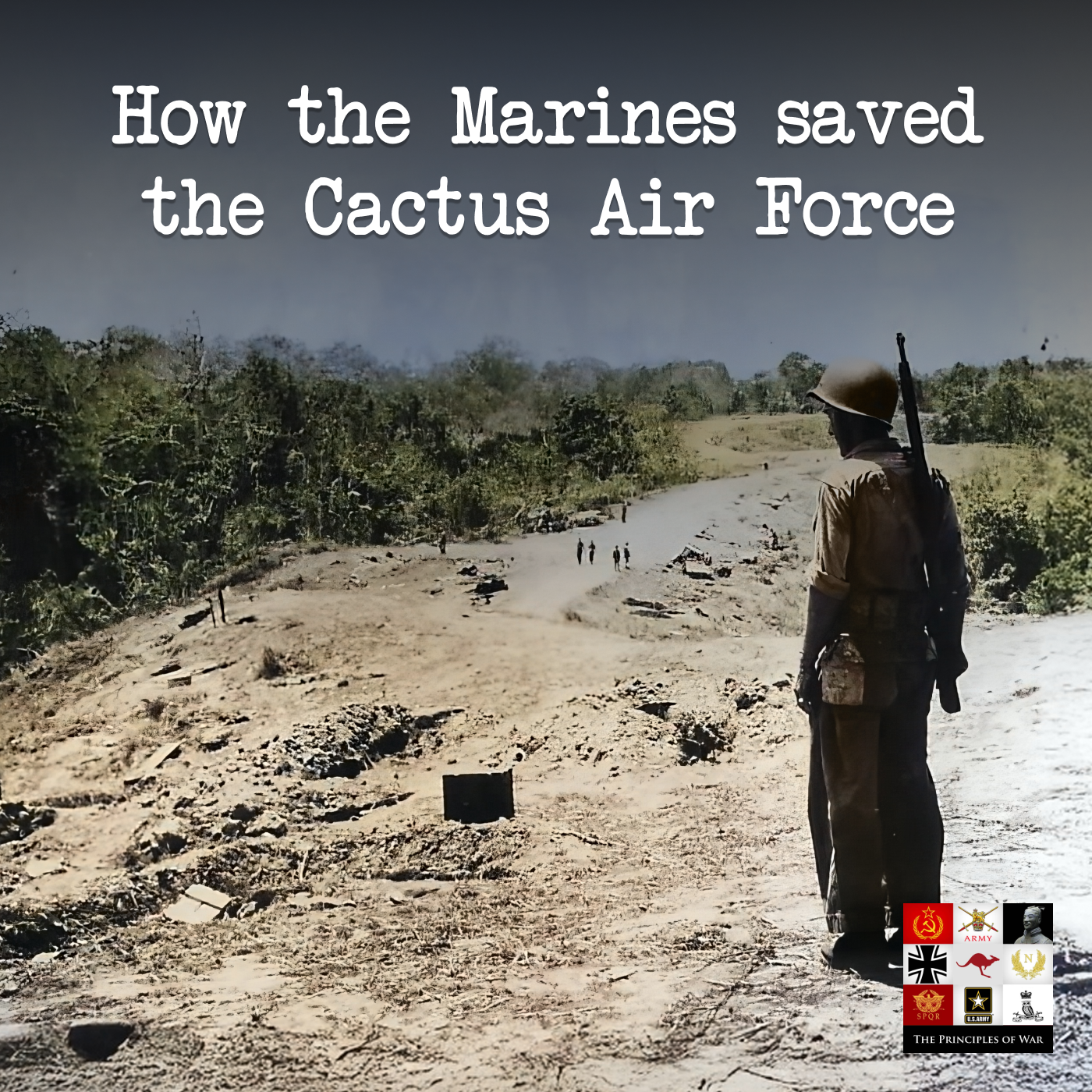 140 - Battle of Edson's Ridge: How the Marines saved the Cactus Air Force 13.11.2025 42mntThis is the sixth episode of our Guadalcanal series with historian and author Dave Holland. This episodes discusses: How close did Japanese forces come to capturing Henderson Field in September 1942? Why was Edson's Ridge the key terrain for defending Guadalcanal's airfield? How did pre-registered artillery fire shape the outcome on Edson's Ridge? What command decisions did Edson make when his defensive plan began to unravel? How did the Marines adapt to Japanese infiltration tactics during the night attacks? In what ways did Edson's Ridge save the Cactus Air Force? Why did Kawaguchi underestimate the Marines defending Henderson Field? What leadership failures forced the September purge of underperforming Marine officers? How did logistics and fatigue shape the Marines' combat effectiveness on the ridge? What lessons from Edson's Ridge matter for modern all-arms defensive planning? Dave is an ex-Marine and was posted to Guadalcananal with the Australian Federal Police. He regularly leads battlefield study tours through the area. He is a world-leading expert on the battles of Guadalcanal and author of Guadalcanal's Longest Fight - The Pivotal Battles of the Matanikau Front. Check out the show notes for this episode. https://www.patreon.com/cw/principlesofwar - if you've learnt something from this episode and you can afford it, please support the podcast at Patreon.
 -
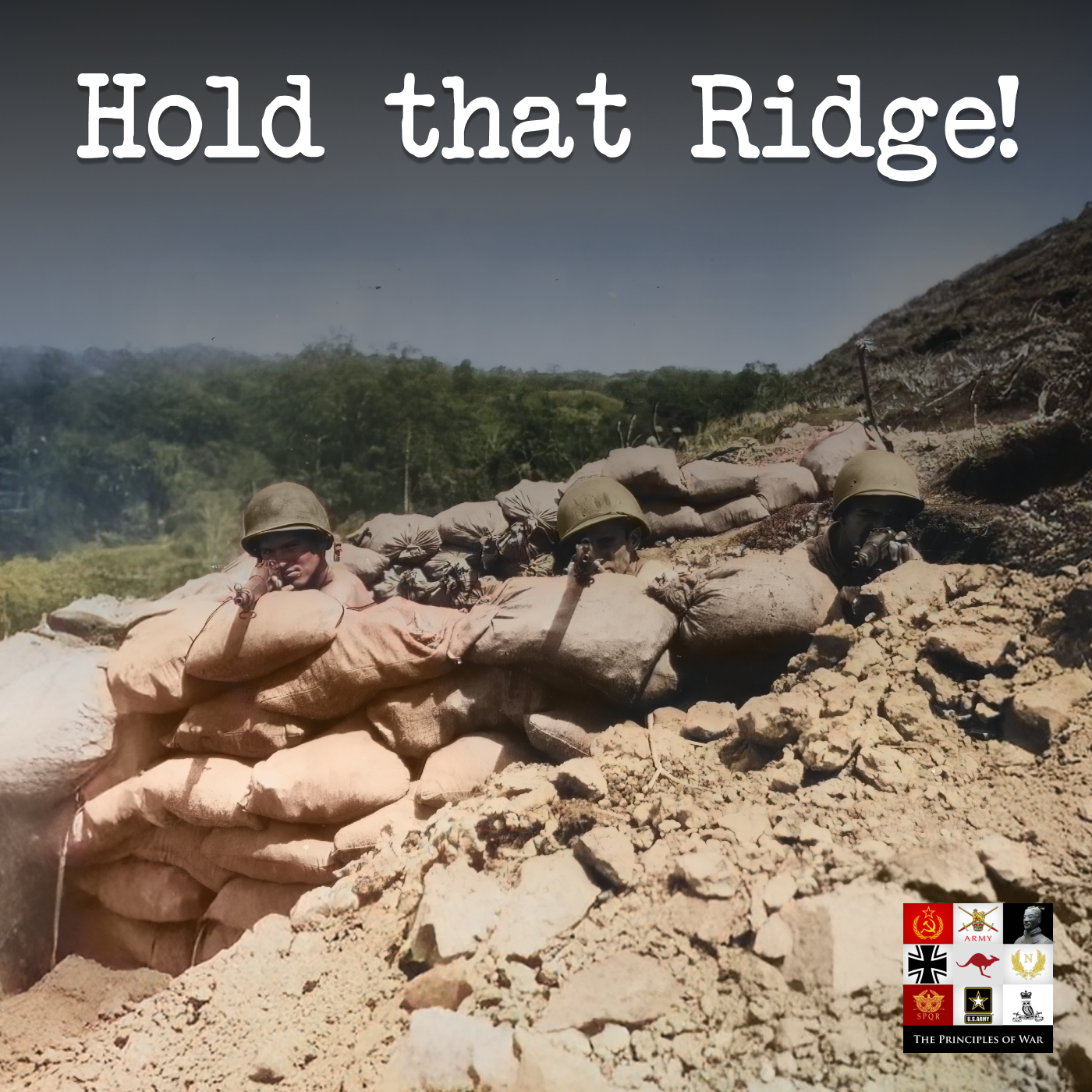 139 - Guadalcanal - Edson and the defence of Bloody Ridge 01.11.2025 46mntThis is the fifth episode of our Guadalcanal series with historian and author Dave Holland. This episodes discusses: Why was Henderson Field the single piece of decisive terrain on Guadalcanal? How did Edson know the main Japanese attack would come over the ridge, not the beach? What went wrong in Kawaguchi's three-pronged night attack on the Marine perimeter? How did fragile Guadalcanal logistics shape the tempo in September 1942? What made Edson's Ridge a natural avenue of approach to the airfield? How did the Tanambogo/Gavutu raider actions tip the Marines to Japanese intentions? What do Edson vs. Kawaguchi show about combat leadership in jungle/littoral fights? How did malaria, dysentery, and hunger blunt Marine combat power before the battle? Why did Vandegrift accept a thin, incomplete perimeter around Henderson Field? How did daily Japanese air raids limit Marine prep of the ridge before 12–14 Sept 1942? Dave is an ex-Marine and was posted to Guadalcananal with the Australian Federal Police. He regularly leads battlefield study tours through the area. He is a world-leading expert on the battles of Guadalcanal and author of Guadalcanal's Longest Fight - The Pivotal Battles of the Matanikau Front. Check out the show notes for this episode.
 -
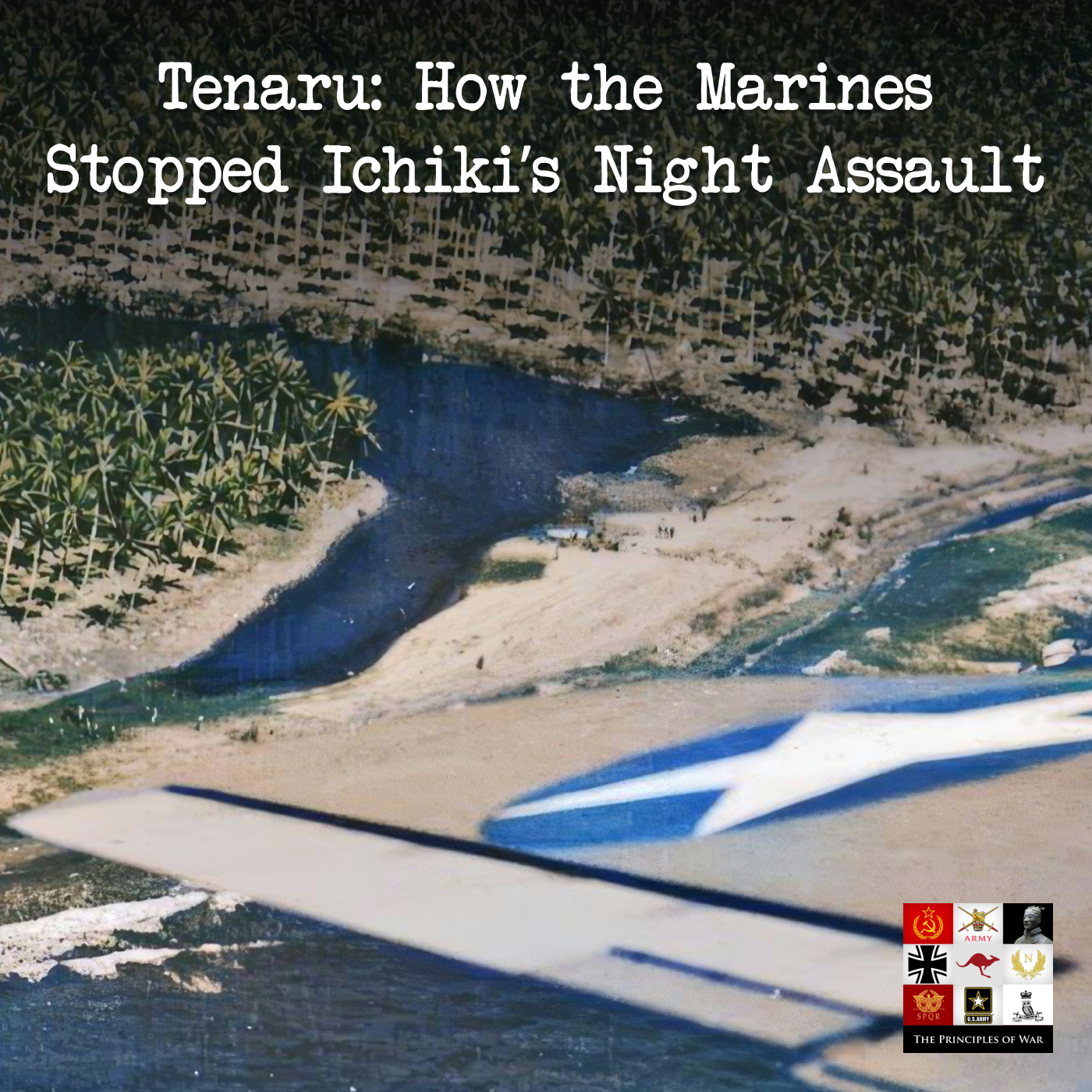 138 - Guadalcanal - Battle of the Tenaru: How the Marines stopped Ichiki's night assault on the Alligator Creek 09.10.2025 58mntThis is the fourth episode of our Guadalcanal series with historian and author Dave Holland. This episodes discusses: How did the Marines employ the 37 mm gun firing canister at Alligator Creek? Why did Colonel Ichiki attack without heavy weapons— trading firepower for speed and what was the cost? What are the myths about scout Jacob Vouza? How did barbed wire obstacles and coconut-log bunkers employed for to create an engagement zone? How did pre-registered fires shape the Battle of Tenaru? What early warnings did coastwatchers and patrols provide before the assault? How did Marine tanks at dawn finish the fight across the sandbar? What role did the Cactus Air Force play in the Battle of Tenaru? Was Ichiki killed in action or by seppuku—what's the best evidence? What operational lessons from Tenaru guided both sides at Henderson Field? Dave is an ex-Marine and was posted to Guadalcananal with the Australian Federal Police. He regularly leads battlefield study tours through the area. He is a world-leading expert on the battles of Guadalcanal and author of Guadalcanal's Longest Fight - The Pivotal Battles of the Matanikau Front. Check out the show notes for this episode.
 -
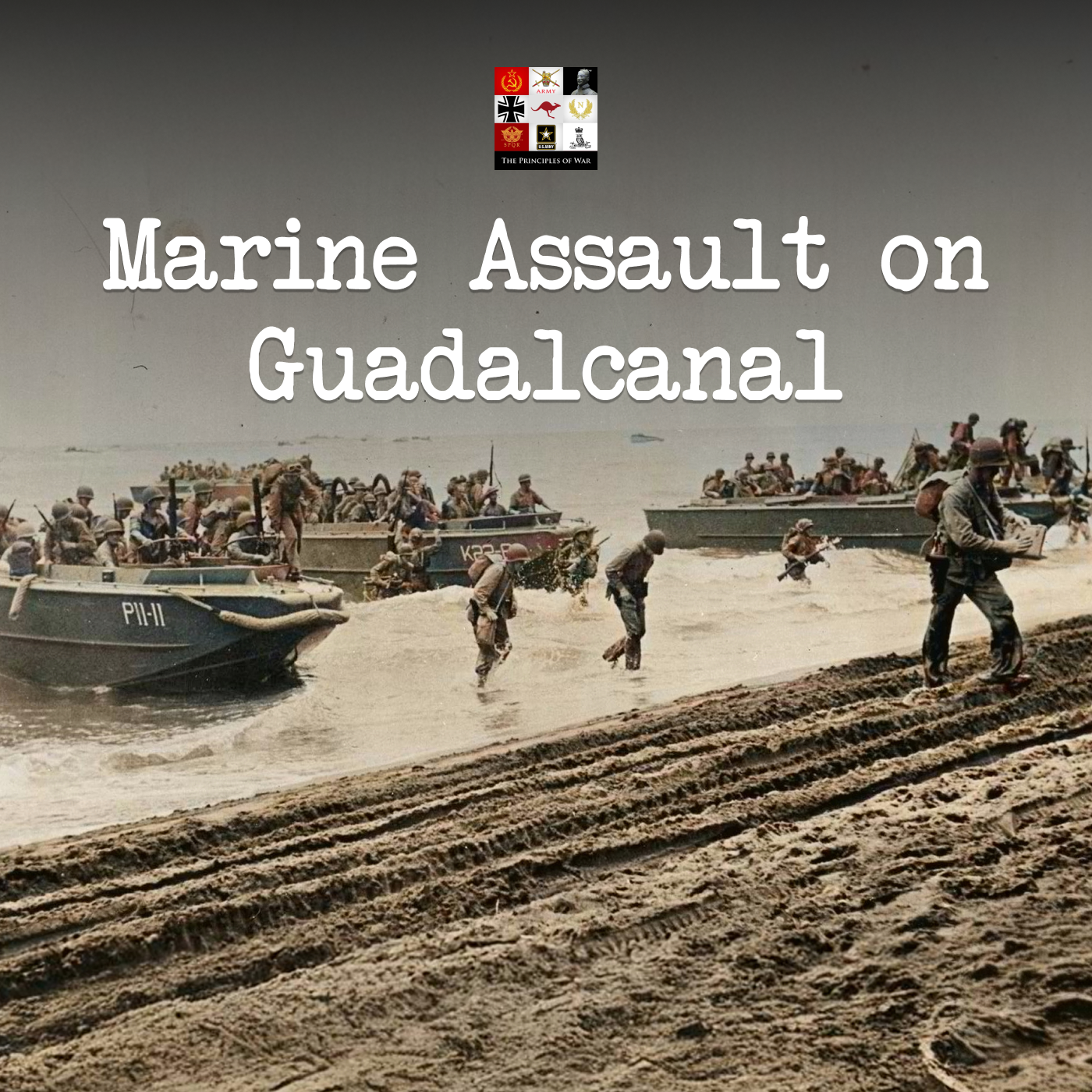 137 - The Marines' Assault on Guadalcanal 23.09.2025 47mntThis is the third episode of our Guadalcanal series with historian and author Dave Holland. This episodes discusses: How the Marines seized conducted the landing and seized Guadalcanal's decisive terrain. Red Beach landing bypasses IJA fortifications at Lunga Point. Vandegrift prioritizes tight perimeter, airfield defense. Carriers withdraw; logistics halved, myths debunked. Japanese forces surprised and how they reacted. Combined arms landings: infantry, artillery, engineers. What really happened with the Goettge Patrol? Logistics speed amphibious resupply. Amtracs and beachmasters enable rapid combat buildup. Modern littoral operations: enduring risk management lessons. Dave is an ex-Marine and was posted to Guadalcananal with the Australian Federal Police. He regularly leads battlefield study tours through the area. He is a world-leading expert on the battles of Guadalcanal and author of Guadalcanal's Longest Fight - The Pivotal Battles of the Matanikau Front. Check out the show notes for this episode.
 -
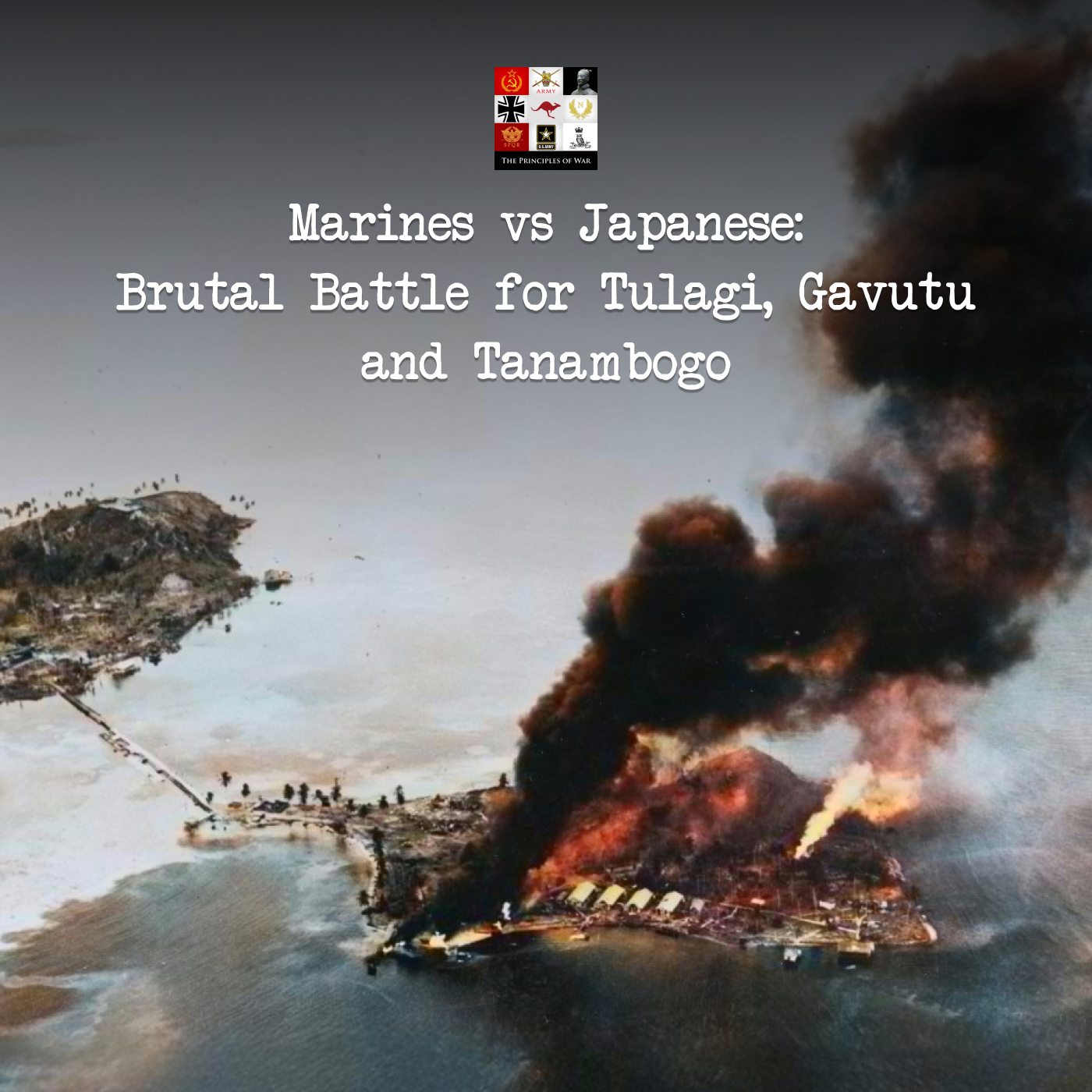 136 - Marines vs Japanese: Brutal Battles for Tulagi, Gavutu and Tanambogo 15.09.2025 50mntThis is the second episode of our Guadalcanal series with historian and author Dave Holland. Shoestring invasion planning Koro rehearsals fiasco Risking the aircraft carriers vs time to unload the convoy Crutchley's covering cruisers Rupertus leads Tulagi Blue Beach landing Fighting at "the Cut" Improvised cave tactics Gavutu–Tanambogo battles Tanks combat Dave is an ex-Marine and was posted to Guadalcananal with the Australian Federal Police. He regularly leads battlefield study tours through the area. He is a world-leading expert on the battles of Guadalcanal and author of Guadalcanal's Longest Fight - The Pivotal Battles of the Matanikau Front. Check out the show notes for this episode.
Podcast serupa


Populer di
Podcast ini juga muncul di daftar podcast negara-negara ini.


