
Cancer Stories: The Art of Oncology
American Society of Clinical Oncology (ASCO)
0
The award-winning podcast JCO Cancer Stories: The Art of Oncology invites you on an intimate journey with heartfelt narratives, poignant reflections, and thoughtful dialogues. Hosted by Dr. Mikkael Sekeres, the podcast explores the hidden emotions, intense experiences, and resilient strength of clinicians, caregivers, and those living with cancer. This podcast is essential for nourishing the "art" behind the science of oncology.
Episode
-
 Purple Blossoms: What Blooms When Treating Aggressive Cancer in an Underserved Area 08.09.2026 34mntListen to JCO's Art of Oncology article, "Purple Blossoms" by Dr. Ramesh Gopal, who is an Associate Professor of Radiation Oncology at The University of New Mexico Comprehensive Cancer Center. The article is followed by an interview with Gopal and host Dr. Mikkael Sekeres. Gopal explores the challenge of maintaining the positive attitude of a coach while treating an aggressive disease in an underserved area. LINK TO FULL TRANSCRIPT
 -
 The Patient Who Could Not Die: What AI Can (and Can't) Teach Oncologists About Connection 25.08.2026 33mntListen to JCO's art of Oncology article, "The Patient Who Could Not Die," by Dr. Erika Ramsdale, who is an Associate Professor of Medicine in the Division of Hematology/Oncology at the Wilmot Cancer Institute, University of Rochester Medical Center. The article is followed by an interview with Ramsdale and host Dr. Mikkael Sekeres. Dr. Ramsdale meets a patient who was never born and would never die and considers what AI can (and can't) teach about the art of connection. LINK TO FULL TRANSCRIPT
 -
 Forty: The Desert as a Metaphor for Living 11.08.2026 20mntListen to JCO's Art of Oncology poem, "Forty" by Frantz Berthaud, who is Senior Vice President of Oncology Services at University Medical Center of El Paso. The poem is followed by an interview with Berthaud and host Dr. Mikkael Sekeres. Berthaud discusses grief, survival, and mortality in his poem, which honors his sister's life and battle with cancer. LINK TO FULL TRANSCRIPT
 -
 He Was Always There: When a Brother Speaks Truth About His Sister's Cancer 28.07.2026 28mntListen to JCO's Art of Oncology article, "He Was Always There" by Dr. Vangipuram Sai Shreya, who is a postgraduate resident in General Medicine at Sri Ramachandra Institute of Higher Education and Research in Chennai, India. The article is followed by an interview with Vangipuram and host Dr. Mikkael Sekeres. Dr. Vangipuram reflects on how not every patient is on the chart. LINK TO FULL TRANSCRIPT
 -
 Taking Responsibility: How Caregiving Shaped an Oncologist's Approach to Her Work 14.07.2026 31mntListen to JCO's Art of Oncology article, "Taking Responsibility" by Dr. Katherine Hicks-Courant, who is a gynecologic oncologist at Penn Medicine Lancaster General Health. The article is followed by an interview with Hicks-Courant and host Dr. Mikkael Sekeres. Dr Hicks-Courant shares how caring for her father with ALS unexpectedly shaped how she approached her work as a gynecologic oncologist. LINK TO FULL TRANSCRIPT
 -
 The Small Cemetery Within: The Patients We Carry With Us Long After They're Gone 23.06.2026 25mntListen to JCO's Art of Oncology article, "The Small Cemetery Within" by Dr. Hakan Onder, who is a Medical Oncologist at University of Health Sciences Antalya Training and Research Hospital. The article is followed by an interview with Onder and host Dr. Mikkael Sekeres. Dr Onder reflects on the unseen emotional burden carried within oncology, where each clinical encounter leaves a lasting imprint beyond measurable outcomes. LINK TO FULL TRANSCRIPT
 -
 A Shopping List: When the Grocery Store Aisles Unite a Patient and Her Doctor 09.06.2026 31mntListen to JCO's Art of Oncology article, "A Shopping List" by Dr. Michael Krasovitsky, who is a medical oncologist at St. Vincent's Hospital in Sydney, Australia and senior lecturer at the University of New South Wales. The article is followed by an interview with Krasovitsky and host Dr. Mikkael Sekeres. Dr. Krasovitsky shares a story of nourishment, serendipity and the unexpected bonds that connect oncologists with patients. LINK TO FULL TRANSCRIPT
 -
 Indistinguishable from Magic: When Fantasy and Science Fiction Meet the Science of Medicine 26.05.2026 28mntListen to JCO's Art of Oncology article, "Indistinguishable from Magic" by Dr. Michael Slade, who is a medical oncologist at Washington University School of Medicine. The article is followed by an interview with Slade and host Dr. Mikkael Sekeres. Dr Slade shares the challenges of day-to-day clinical practice in oncology through the lens of speculative fiction and how we struggle, as physicians and as patients, to tell the difference between what we know and what we can only hope for. LINK TO FULL TRANSCRIPT
 -
 Room 402: Visiting the Same Hospital Room as a Family Member, and Then as a Doctor 12.05.2026 25mntListen to JCO's Art of Oncology article, "Room 402" by Dr. Jessica Moore, who is a resident physician in internal medicine at Boston Medical Center and BU school of Medicine. The article is followed by an interview with Moore and host Dr. Mikkael Sekeres. Dr Moore shares how a medical student transforms the grief of losing her aunt in Room 402 into a compassionate and humanistic approach to caring for patients facing the end of life. LINK TO FULL TRANSCRIPT
 -
 The Liver We Share: A Medical Student Becomes a Living Donor for His Wife 28.04.2026 27mntListen to JCO's Art of Oncology article, "The Liver We Share" by Ryan Wexler, who is a medical student at Boston University School of Medicine. The article is followed by an interview with Wexler and host Dr. Mikkael Sekeres. Wexler shares his first encounter with a hepatectomy, which comes full circle when he becomes a living liver donor for his wife with metastatic pancreatic cancer, reshaping his understanding of medicine as they navigate the uncertainty of her diagnosis together. LINK TO FULL TRANSCRIPT
 -
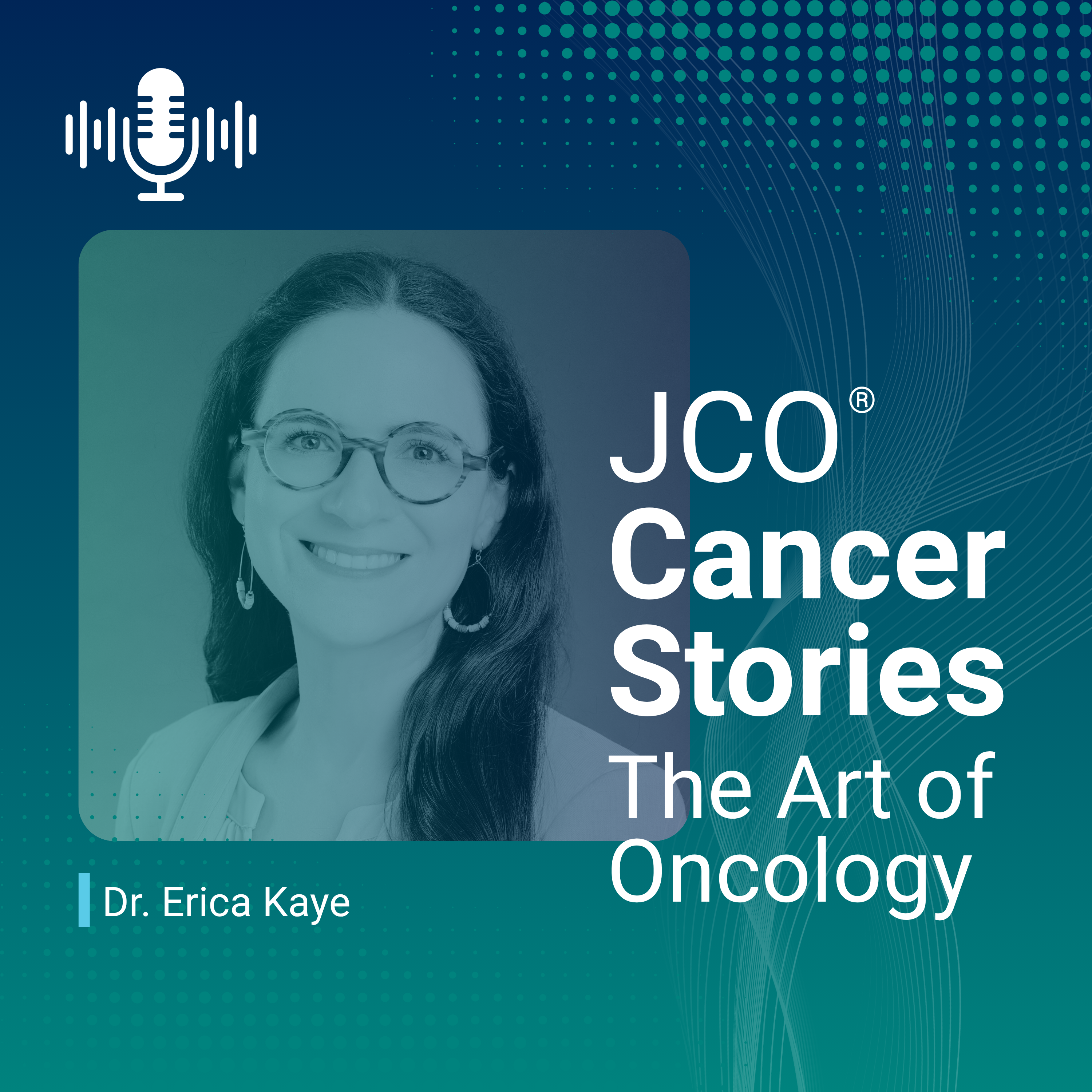 The Good Oncologist: Doctoring Lessons from the Art of Oncology 14.04.2026 36mntListen to JCO's Art of Oncology article, "The Good Oncologist: Doctoring Lessons from the Art of Oncology" by Zaltz, et al. The article is followed by an interview with Dr Erica Kaye and host Dr. Mikkael Sekeres. Kaye shares how their qualitative analysis of narrative essays authored by cancer care professionals offers insights into what it means to be a "good oncologist." LINK TO FULL TRANSCRIPT
 -
 The Power of "I Don't Know": Why Admitting Uncertainty is an Oncologist's Greatest Strength 24.03.2026 23mntListen to JCO's Art of Oncology article, "The Power of "I Don't Know" by Dr. Sondos Zayed, who is a radiation oncologist at The Ottawa Hospital and an assistant professor at the University of Ottawa, Canada. The article is followed by an interview with Zayed and host Dr. Mikkael Sekeres. Dr Zayed shares a reflection on the unexpected power of saying "I don't know," and how honest uncertainty can deepen trust, guide care and create space for what truly matters in oncology. TRANSCRIPT Narrator: The Power of "I Don't Know", Sondos, Zayed, MD, MPH, FRCPC Mikkael Sekeres: Welcome back to JCO's Cancer Stories: The Art of Oncology. This ASCO podcast features intimate narratives and perspectives from authors exploring their experiences in oncology. I'm your host, Mikkael Sekeres. I'm Professor of Medicine and Chief of the Division of Hematology at the Sylvester Comprehensive Cancer Center, University of Miami. Joining us today is Dr. Sondos Zayed, a radiation oncologist at the Ottawa Hospital and Assistant Professor at the University of Ottawa, Canada, to discuss her Journal of Clinical Oncology article, "The Power of I Don't Know." At the time of this recording, our guest has no disclosures. She and I have agreed to address each other by first names. Sondos, thank you for contributing to the Journal of Clinical Oncology, and what a pleasure it is to have you join us to discuss your article. Dr. Sondos Zayed: Thank you so much for having me. It's a privilege. Mikkael Sekeres: Can you tell us a little bit about yourself? Where are you from? And walk us through your career up to this point. Dr. Sondos Zayed: Yeah, oh my goodness. So it seems like such a long road and yet so many years left in my career, hopefully. You know, I'm Canadian, and I had the opportunity to grow up in Montreal, which was wonderful, and I went to McGill Medical School, and then after that pursued Radiation Oncology Residency at Western University. And following that I did a fellowship specializing in GI and CNS malignancies with MR-Linac technology in Toronto, and eventually landed in Ottawa, where right now I'm a radiation oncologist treating GI and CNS malignancies and an Assistant Professor at the University of Ottawa. Mikkael Sekeres: That's fantastic. How far are you out of training? Dr. Sondos Zayed: Well, this would be officially my second year essentially as an independent radiation oncologist. Mikkael Sekeres: Wonderful. And I'm curious, what drew you to radiation oncology? Dr. Sondos Zayed: I always say that it was meant to be. And the reason being, when I was in medical school at McGill, they parachuted us out into very niche specialties that we wouldn't otherwise have exposure to. And essentially the way that they would do that is they'd send us an email and say, you know, "Show up at this place, at this location. Here's attached a PowerPoint, just review it before you go." And I get this email and the PowerPoint is talking about, you know, photons and electrons, linear accelerators. And I'm like, "I have no idea what's going on. This is so confusing." I thought I was in medicine. And so I do follow the instructions and I was so lucky that I had such a wonderful supervisor, and he showed me the machines and I saw the coolest cases that day, and it was just such a wonderful experience and the most captivating. And so I just kept on wanting to go back. And the rest is literally history. The really, really fascinating thing about radiation oncology is that it's the mix of physics, it's a mix of like technology, and at the same time there's the medicine and the clinical aspect of it. And there's obviously the privilege to be able to support patients on their most vulnerable journeys with their cancer diagnosis and treatment, et cetera. And so it's a mix of the most interesting things all around and I felt like the best fit for me. Mikkael Sekeres: Well, your passion for it is absolutely palpable. It's really fun to hear the excitement in your voice. Isn't it interesting how one mentor can make the difference in the career path we choose? Dr. Sondos Zayed: Absolutely. Never underestimate the impact they can have on any single trainee at any point in time. It really does turn things around for many people, and it can inspire them to pursue something that they would have never thought of pursuing before. Mikkael Sekeres: I had a very similar experience. It was during fellowship that my very first month of fellowship I was placed on the leukemia service with Rich Stone at Dana-Farber, and I never turned back. He was such a fabulous mentor. I couldn't imagine doing anything else with my career. You write this piece. We loved this piece when you submitted it, myself and the editorial staff. And you write it from the perspective of someone who has recently finished fellowship, which you have. And you write in particular that- this one quote, "During my first year as an attending, I had braced for the steep learning curve, the finality of being the decision maker, the quiet hours at night when treatment decisions still played in my head. What I hadn't prepared for was the weight of uncertainty." It's a great line. So now that you're on the other side of training, what do you think could have prepared you better for the weight of uncertainty? Dr. Sondos Zayed: I had such wonderful mentors throughout my training, and so they were fantastic and I learned so much from them, but sometimes it just took having to be the final decision maker for me not to have to have the security of somebody to just turn back to immediately after a patient encounter, for example, and be like, "Oh, my supervisor can answer this question," or, "Here are my thoughts, but my attending can also join in the discussion," or give their thoughts as well. So that sort of cushion is no longer there. And so when I'm in the room by myself making those decisions with patients, nothing can really prepare you for that. You just have to go in and then do it yourself. Mikkael Sekeres: There is a safety net to training by design and thank God there is, right? Where we can always turn to somebody more experienced than us to answer those hard questions or to know what to do. And that's what's pulled out from under us when we become attendings, when we become the final pathway, when people suddenly turn to us and say, "Okay, what are we going to do here?" or, "What's the answer?" Did anybody during your training model "I don't know"? So did you see your own attendings say "I don't know" to patients and see how that played out? Dr. Sondos Zayed: Not as much, and I think there's a culture in medicine where when people walk into that room, they're hoping that you have all the answers, and you don't want to disappoint them. And so sometimes what we do is we rely on like the evidence and the data and the numbers that are in the literature to answer questions that the patient is asking in an absolute way but we answer it in a probability or a percentage or, "Most likely this will happen," or, "These are the potential, you know, this is the median overall survival," or, "Progression-free survival," or, "This percentage of people have this toxicity," for example. And so it's easy for us to fall back on that cushion of, "These are the numbers and the evidence." And that's what I saw modeled most frequently. But when I started practicing as an attending, what I realized is that when a patient comes in and they sit in front of you, they ask, "How long am I going to live?" What they're asking about is how long they specifically are going to live and not what the median survival in X study is telling us that that's how long they most likely would live, just as an example. And so what I had to do, when I'm speaking to patients, I kind of separate those two concepts where I start with, "I don't know, because I don't have a crystal ball, and your circumstances and how you respond to treatment is something that I can't predict before anything has started. And it's it's just I really don't know. But what I can say is on average in this study, this is what we see, and there's a 95% confidence interval, and most people fall within that." And so I separate their immediate outcome with the data that we have. So that- because sometimes when I say, "Oh, your median survival is one year," they hear, "I'm going to only live for one year." And then you always have these patients that come through and be like, "You know, they told me I only had six months to live, but here I am two years later." And really it is again, we live in a world of probabilities and confidence intervals, but for the patients themselves, this is their life. Mikkael Sekeres: Yeah. One of the aspects of your essay that I really liked is the title, "The Power of 'I Don't Know'" because saying, "I don't know," actually does have some power to it. And I've seen this demonstrated in a couple of different ways. I had a boss once who we'd all be in a meeting, and someone would ask a question, and the boss would say, "I don't know." And he said it in a way where one reaction from other people in the meeting could have been, "Oh, how could he be such an idiot and not know the answer to this?" But what wound up happening is people reacted to it by saying, "Gee, if he doesn't know, then it's okay that I don't know also. And maybe if he doesn't know, that means that maybe I thought I knew, but maybe I really don't know as well as I should." And it makes you kind of redouble your efforts to understand whatever's being communicated in the meeting. So I always thought that there was this power in saying, "I don't know," in meetings, but you bring up the power of "I don't know" in patient interactions. So tell me what is the power in saying, "I don't know," to a patient? What is it that that conveys to a patient and how does that affect the relationship that you have with your patients? Dr. Sondos Zayed: The way that I have learned to see it over the last year and a bit is that when I say, "I don't know," what they hear is honesty, and they hear that, you know, I'm not going to pretend to make up a number or make up an outcome when I'm not sure of it. And they hear that physicians are also very human. And it makes us seem much more approachable. And so what I noticed started happening when I admitted there were things that I don't know where sometimes there was no way of me knowing answers to some of their questions is they started seeing the human aspect of what we do every day. And then they started wanting to share more of their human experience and what really matters to them the most. So they started sharing, "Okay, well, if if the physician doesn't know, these are the things that are important to me. I want to be able to walk my daughter down the aisle in a few months. I want to be able to play with my grandchildren. I want to be able to be at home when the end comes." So it opened this discussion where my admitting that I don't know is a form of vulnerability, and I say that, and that allowed them to be a bit more vulnerable with what it is that they really wanted to achieve in the time that they had left. And it closed gaps where the physician is seen as not somebody who necessarily has all the answers, but somebody who when they don't know, they will tell us, and what they can tell us in terms of what they can offer for treatment, what possible outcomes are, what they can expect, all these things that they do know, they will tailor to what it is that is important to them. I felt like it was more of a bridge than it was scarier. It built bonds and it built bridges as opposed to them feeling that they're not being cared for. Mikkael Sekeres: Sounds like it establishes an environment of honesty and that leads to trust in the relationship between you and your patients. Dr. Sondos Zayed: Yeah, I would agree. Mikkael Sekeres: When people ask, "How long do I have to live?" it also, what I've learned from communications experts in oncology is that it gives us an opportunity to say, "Why do you ask?" And that can lead to a discussion of goals and what are we working toward here and make sure that we're on the same page with what our patients' expectations are as well. Dr. Sondos Zayed: Absolutely. Mikkael Sekeres: You talk about vulnerability with your patients. I wonder if you could talk a little bit about our roles as doctors and nurses and pharmacists, when is it expected that we provide a concrete answer and when is it okay to be vulnerable and say, "I don't know"? Dr. Sondos Zayed: That really depends on the situation. So I feel like when we should be able to provide concrete answers when we have the evidence and information to be able to answer them in a way that the patient requires. When we don't have that evidence and we don't have that clear picture of, "Oh, this is obviously the answer," based on our usually at least decade plus of training, then being able to admit, "I don't know," actually opens the doors for discussion, anchor that "I don't know" into something more concrete. So when you say, "I don't know," you don't kind of leave it in the air, that can certainly be cause for anxiety. But sort of taking that, "I don't know," and then framing the subsequent part of that conversation about what are the things that you do know about the question that they asked and how you can support them by giving them the information that you are confident about. Mikkael Sekeres: Has it ever backfired on you? Dr. Sondos Zayed: Not yet, but I've got many years of practice to come. Mikkael Sekeres: It has on me. I don't know that I would say maybe "backfired" is too strong, but there are times when I've said, "I don't know," and my patients have said, "But you're the doctor. You're supposed to know." Dr. Sondos Zayed: Mm-hm. Mikkael Sekeres: And I found that creates an opportunity to talk about expectations and where the limits of our knowledge are and where we can provide estimates and ranges, but can't give people a precise answer. Dr. Sondos Zayed: Mm-hm. Mikkael Sekeres: In your essay, you write, "When the reality doesn't match the implied promise, patients don't lose faith in the data, they lose faith in the person who gave it. That is how trust erodes." I thought that was just very elegantly phrased. Has that ever happened to you where you've provided an estimate maybe of a potential outcome and things didn't work out that way for the patient? Dr. Sondos Zayed: Yes, that has, and I think most physicians can sort of share that experience, to be honest, where it'll come back and say, "Well, actually I didn't I didn't have that side effect," or, "Actually I lived longer than you'd anticipated," for example, or like, "It didn't have that outcome." And I think that's where the idea of saying, "I don't know," actually came from, where I I realized that a lot of the times when we turn back to the data, patients hear it as like, "Oh, this is the concrete truth of what exactly is going to happen to me." But to sort of distinguish between, "Oh, this is what we see in the data versus what exactly is going to happen to you," making that distinction is what by saying, "I don't know," is what has helped me try to prevent these outcomes from happening, or prevent the erosion of of trust by sounding maybe overconfident with specific things that mean so much to them. So- and this is their life, right? They come in and they hear these things and they remember them forever. And we see so many people on a daily basis and sometimes we don't keep track of every single word we've ever said. And so- but these words have so much weight to them. And so distinguishing between what we see in and saying, "I don't know," and then, "Here's what I do know," and saying that for them specifically, it's almost impossible to predict, it really helps prevent, in my opinion, the erosion of of that trust so that you don't have somebody saying, "Oh, actually you were wrong afterwards," or misunderstanding or misinterpreting what is that we're trying to convey by giving that information. Mikkael Sekeres: And that's a great place to end a great discussion and a wonderful piece. It has been such a pleasure to have Dr. Sondos Zayed, who is a radiation oncologist at the Ottawa Hospital and Assistant Professor at the University of Ottawa, Canada, to discuss her essay, "The Power of 'I Don't Know.'" Sondos, thank you so very much for submitting your article and for joining us today. Dr. Sondos Zayed: Thank you so much. Mikkael Sekeres: If you've enjoyed this episode, consider sharing it with a friend or colleague, or leave us a review. Your feedback and support helps us continue to have these important conversations. If you're looking for more episodes, follow our show on Apple, Spotify, or wherever you listen, and explore more from ASCO at ASCO.org/podcasts. Until next time, this has been Mikkael Sekeres for JCO Cancer Stories: The Art of Oncology. The purpose of this podcast is to educate and to inform. This is not a substitute for professional medical care and is not intended for use in the diagnosis or treatment of individual conditions. Guests on this podcast express their own opinions, experience, and conclusions. Guest statements on the podcast do not express the opinions of ASCO. The mention of any product, service, organization, activity, or therapy should not be construed as an ASCO endorsement. Show notes:Like, share and subscribe so you never miss an episode and leave a rating or review. Guest Bio: Dr Sondos Zayed is a Radiation Oncologist at The Ottawa Hospital and Assistant Professor at the University of Ottawa, Canada.
 -
 When Cancer Becomes a Headline: Reflections from the Clinic 10.03.2026 24mntListen to JCO OP's Art of Oncology Practice article, "When Cancer Becomes a Headline: Reflections from the Clinic" by Dr. Carlos Stecca. The article is followed by an interview with Stecca and host Dr. Mikkael Sekeres. Dr Stecca reflects on the impact of the public illness and death of Brazilian singer and actress Preta Gil on his patients with colorectal cancer and on his own practice as a medical oncologist. TRANSCRIPT Narrator: When Cancer Becomes a Headline: Reflections from the Clinic, by Carlos Stecca, MD Dr. Mikkael Sekeres: Welcome back to JCO's Cancer Stories: The Art of Oncology. This ASCO podcast features intimate narratives and perspectives from authors exploring their experiences in oncology. I'm your host, Mikkael Sekeres. I'm Professor of Medicine and Chief of the Division of Hematology at the Sylvester Comprehensive Cancer Center, University of Miami. What a pleasure it is today to have Dr. Carlos Stecca, a medical oncologist at Evangelical Mackenzie University Hospital, to discuss his JCO Oncology Practice article, "When Cancer Becomes a Headline: Reflections From the Clinic". Dr. Stecca and I have agreed to call each other by first names. Carlos, thank you for contributing to JCO Oncology Practice and for joining us today to discuss your article. Dr. Carlos Stecca: So great to be here. Thank you so much for having me. Dr. Mikkael Sekeres: I wonder if we could start off by asking you to tell us about yourself. Where are you from and what led you to this point in your career? Dr. Carlos Stecca: So I am Brazilian. I was born in Brazil in a small town in the south of Brazil, and I did my medical training all in Brazil. So I did medical school here, internal medicine, and medical oncology. My residency period ended in early 2018. I did my residency at the AC Camargo Cancer Center, which is in Sao Paulo. And then right after that, I moved closer to my parents to start my journey as a medical oncologist. And I stayed here in the south for two more years. And then I was lucky enough to be accepted for a clinical research fellowship in genitourinary malignancies at the Princess Margaret Cancer Center. And I had the pleasure to work with Dr. Kala Sridhar for two years. So this was during the pandemic, so 2020, 2021. And then right after that, I moved back to Brazil. And I've been here for the past four years working as a medical oncologist specialized in genitourinary malignancies. But also, well, unfortunately here in Brazil most of us cannot do only one site, so we have to do a little bit more, so I'm doing gynae and GI as well. And in a few days, I'm moving back to Canada. I was lucky enough again to be accepted for a position at the University of British Columbia, so I'm moving in a few days. Dr. Mikkael Sekeres: Oh, my word. We caught you just in time then. Dr. Carlos Stecca: Yeah, yeah. I'm moving in four days now. Dr. Mikkael Sekeres: I can't imagine what it's like to be going between those extremes of weather from Canada down to Brazil. Did your teeth crack when you did that? Dr. Carlos Stecca: Something like that. Yeah, it was like, I moved in December. So in December we have summer here in Brazil, and it was like 35, 40 degrees Celsius when I left Brazil at the airport. And when I arrived, it was close to minus 20 when I went to Toronto. Yeah. Dr. Mikkael Sekeres: Oh, my word. Dr. Carlos Stecca: It was rough. Dr. Mikkael Sekeres: Well, those of us who live at or near the Southern Hemisphere, I will tell you, I've started to wear puffy jackets and snow caps when it drops into the 60s. Good luck with reacclimating to Canada. I wonder if we could talk a little bit about the story that sparked this terrific essay. It was so interesting. The Brazilian singer and actress Preta Gil died of rectal cancer in July of 2025 at the age of 50. And she went public with her diagnosis. What is it that she communicated to the public about colorectal cancer? Dr. Carlos Stecca: So she was very open about her diagnosis since the beginning. So this was very interesting. She is very famous here. She had tons of followers on Instagram and social media, and she was very outspoken about her diagnosis since the first beginning. So she was diagnosed with an early stage disease, and she did a great job raising awareness for this condition, for colorectal cancer. She had a beautiful journey discussing the specifics of her case. Dr. Mikkael Sekeres: So she talked both about her diagnosis and some of the treatments she was undergoing, but also about symptoms of cancer, right? Dr. Carlos Stecca: She really engaged in this discussion about her diagnosis and how she found out about her cancer. So rectal bleeding, this was disclosed in her stories on Instagram, and so she was very open about this. And it really helped people understand the condition, and it really increased the number of screening tests that Brazilians were doing. And of course, we saw this increasing uptake of the screening tests, which was amazing. Dr. Mikkael Sekeres: In a way, I think she did a real public service, I think, both for early detection of colorectal cancer with symptoms, also for screening, so asymptomatic people who would undergo colonoscopies, and also demystified a little bit the treatment of colorectal cancer. In the US, we saw a similar phenomenon when the actor Chad Boseman of Black Panther movie franchise fame died of colorectal cancer in 2020 at the age of 43. These deaths have also sparked an international conversation about cancer in younger adults. Are you seeing that in your clinic? Dr. Carlos Stecca: Yes, definitely. We're seeing many more cases of cancer diagnosed in the younger population, right? So yeah, this discussion was very important to have, not only because the screening tests increased in patients after the age of 50 years old without any symptoms, but also raised awareness for those symptoms that should trigger the proper investigation. Dr. Mikkael Sekeres: I wonder if you could speculate a little bit about why it is that we're seeing more cancer in younger adults. Do you think it has anything to do, for example, with diet and people eating more ultra-processed foods? Is it a phenomenon? I've even heard people talk about microplastics and whether that could be contributing. Also, recently, there was an article that came out that speculated that while we're seeing more cancers in younger adults, we're not seeing more deaths in younger adults, so we may just be picking these up earlier as more people are going to be screened or for additional testing at a younger age. Dr. Carlos Stecca: Yeah, I think so. I think this is definitely the case. I think younger adults are eating more processed foods, and we know that this is an obvious risk factor for colorectal cancer and other cancers as well. And maybe obesity as well, we are seeing this as a pandemic now in the world, right? So we are seeing this especially in developing countries. And here in Brazil, of course, we are seeing this as a phenomenon. Dr. Mikkael Sekeres: It's so fascinating. I feel like we won't really know the answer about the uptick in cancers in younger adults for years until some of the data settle out, including the data about people during the COVID pandemic not going for screening and testing as often and whether we're now starting to see the downstream effects of that. Dr. Carlos Stecca: For sure, I think this is- well, during the pandemic I was in Canada, but shortly after the pandemic was coming to an end, I came back to Brazil, and I saw that. I saw that a lot of patients came to the clinic with more advanced cancers because they missed those opportunities of being seen by a physician during the pandemic, because of course, for obvious reasons, people were not coming to the clinic. And we saw that, a huge number of patients being diagnosed with late-stage disease because of that. Dr. Mikkael Sekeres: It's fascinating. There's a named phenomenon called the Angelina Jolie effect. I don't know if you remember following the actress's 2013 opinion piece about genetic testing for hereditary cancers such as BRCA1 and following her prophylactic mastectomy. She is a carrier of a mutation. There was a wave of testing that occurred thereafter. So some good can come from celebrities going public with their cancer diagnosis. Dr. Carlos Stecca: Oh, definitely, definitely. I think that more good can come from their diagnosis and them being verbal about this than the downsides. Of course, the positive side of it is definitely outweighing the negative effect. Dr. Mikkael Sekeres: You write a really thoughtful essay. You mention downsides, and there can be some downsides. One of the things you wrote in your essay was, "Yet for others already living with colorectal cancer, the same story had the opposite effect. Instead of empowerment, it fueled anxiety, guilt, and resignation. Some patients grew silent, fearing their treatment was futile as they compared themselves to a celebrity who had access to the best hospitals, specialists, and resources, and still passed away. Others questioned why they had not caught their cancer earlier, internalizing blame." Can you talk a little bit more about some of the unintended consequences of a celebrity who goes public with his or her cancer diagnosis? Dr. Carlos Stecca: That was exactly it, right? I was witnessing this in my clinic. I work in a public hospital here, and I would see those patients coming to me and voicing their concerns about their diagnosis, colorectal cancer, that was now in the spotlight because of that famous person that battled with colorectal cancer and unfortunately passed away after two years of starting her journey. And that was something quite difficult for the patients because, as you mentioned, and as I wrote in the text, some of those patients were in the public system and they were comparing themselves, comparing their diagnosis with the diagnosis of someone who had endless resources. And in fact, she even went to the United States and took part in a clinical trial. She participated in a clinical trial. And yet she was not able to overcome this diagnosis, and sadly she passed away. So, most of our patients were coming to the clinic and voicing their fears, like, "If even she couldn't get through this, how can I? I'm a simple person and I'm here in this world of limited resources." And here in Brazil, we do have the public system and the private system, and there is a huge gap between what we can do in one system and another. That was a concern that they voiced. Dr. Mikkael Sekeres: I'm sorry she passed away. How did you deal with that? So how did you respond to patients who said, "Gee, if this famous actress with unlimited resources dies from her cancer, what hope do I have?" Dr. Carlos Stecca: Yeah, so I think this is very difficult, right? And this is something that I was learning to understand now. Because as you mentioned, Chadwick Boseman and Angelina Jolie, we heard of those stories, but I never felt that this would be impactful in my clinic, that there would be patients voicing their concerns about their diagnosis being in the spotlight. And this is something that happened to me now. I would often see those patients, and I started to think about the downsides of a cancer being on a headline for those already living with cancer, and already living with that cancer and having their cancer in the spotlight. And so that was something that I needed to hear and address their concerns more actively than before, right? So this is something that is really important. And sometimes it is as important as discussing toxicity related to chemotherapy or other things related to the treatment itself. But addressing their concerns, it would be a way to alleviate the burden that the patients are experiencing from that. Dr. Mikkael Sekeres: So what would you say to them? If somebody said to you, "How can I do well when this famous actress didn't do well?", what would you say? Dr. Carlos Stecca: The first thing is to talk to the patient that every diagnosis is different. So we do have differences in staging, we do have differences in biology of the tumor. And as we study more those diseases and every type of cancer, but here, especially colorectal cancer, we are seeing that those differences are very important in the treatment and they will be part of the prognosis as well. So no disease is the same as other disease. So your experience is unique. So your diagnosis is in a certain way unique. Your treatment might be different, right? Dr. Mikkael Sekeres: I like how you personalized that for each patient. I really love how you end this essay. You write, "In those quiet moments after a headline, when fear enters the exam room, my responsibility is clear. I must not only prescribe treatment, but also restore perspective, dignity, and courage. Sometimes that is the most difficult, yet most essential part of being an oncologist." I remember, Carlos, one of my patients once described what we do as being almost pastoral. He himself was a minister and said this. And an important part of our job is to provide that context, but also a space where people can feel forgiveness for what they perceive as their fault. I wonder if you could reflect on that a little bit. How is it that, it almost sounds like it's too extreme, but we provide a sanctuary where patients can forgive themselves for the guilt they've been carrying around. Dr. Carlos Stecca: Yeah. No, I think this is very important. As medical oncologists, we are more than just physicians. We become friends with the patients, right? So most of the time I do create this relationship, this strong bond with the patient, because I worked as a family doctor before, so I treated patients very intimately as well. But nothing compares to being an oncologist now, because I think that the emotional burden associated with the profession is extremely high. And it's very difficult for the patient, for the family. And so we become part of their families and part of their story and their journey throughout their whole journey with the cancer. So it can be very emotional. I think that it's much more than being a physician and treating patients and prescribing treatments and discussing the biology of the tumor. And it's much more than that. And I think that being an oncologist entails all that, entails being part of their story and engaging in an emotional journey that they are having with the cancer. Especially here in Brazil, I think that the diagnosis of cancer has always been challenging. And I think that a patient's experience is unique and addressing the emotional part of it is very important. Dr. Mikkael Sekeres: Well, what a beautiful way to sum up what we do. We become part of our patients' stories and journey, and they become part of ours, and I think that's why we write about it. It has been such a pleasure to have Dr. Carlos Stecca to discuss his essay, "When Cancer Becomes a Headline: Reflections From the Clinic". Carlos, thank you so much for submitting your article and for joining us today. Dr. Carlos Stecca: Thank you so much for having me. It was a pleasure. If you enjoyed this episode, consider sharing it with a friend or colleague or leave us a review. Your feedback and support helps us continue to have these important conversations. If you are looking for more episodes and context, follow our show on Apple, Spotify, or wherever you listen and explore more from ASCO at asco.org/podcasts. Until next time, this has been Mikkael Sekeres for JCO's Cancer Stories: The Art of Oncology. The purpose of this podcast is to educate and to inform. This is not a substitute for professional medical care and is not intended for use in the diagnosis or treatment of individual conditions. Guests on this podcast express their own opinions, experience, and conclusions. Guest statements on the podcast do not express the opinions of ASCO. The mention of any product, service, organization, activity, or therapy should not be construed as an ASCO endorsement. Show notes:Like, share and subscribe so you never miss an episode and leave a rating or review. Guest Bio: Dr Carlos Stecca is a medical oncologist at Evangelical Mackenzie University Hospital.
 -
 Mother's Grief: Loss Through the Lens of Motherhood 24.02.2026 30mntListen to JCO's Art of Oncology article, "Mother's Grief" by Dr. Margaret Cupit-Link, who is an assistant professor of pediatric hematology/oncology at Cardinal Glennon Children's Hospital of St. Louis University. The article is followed by an interview with Cupit-Link and host Dr. Mikkael Sekeres. Dr Cupit-Link shares a pediatric oncologist's experience of a patient's death through the new lens of motherhood. TRANSCRIPT AOO 26E03 Narrator: Mother's Grief, by Margaret Cupit-Link, MD, MSCI Mikkael Sekeres: Welcome back to JCO's Cancer Stories: The Art of Oncology. This ASCO podcast features intimate narratives and perspectives from authors exploring their experiences in oncology. I'm your host, Mikkael Sekeres. I'm professor of medicine and Chief of the Division of Hematology at the Sylvester Comprehensive Cancer Center, University of Miami. What a treat it is today to have joining us our third place Narrative Medicine Contest winner, Maggie Cupit-Link, an assistant professor of Pediatric Hematology Oncology at Cardinal Glennon Children's Hospital of St. Louis University to discuss her Journal of Clinical Oncology article, "Mother's Grief." Both Maggie and I have agreed to call each other by first names. Maggie, thank you for contributing to the Journal of Clinical Oncology and for joining us to discuss your winning article. Maggie Cupit-Link: Thank you so much for having me and for choosing my article. It's an honor to get to speak with this group. I know a lot of our listeners have a lot in common with us in our profession, so I'm excited to be here. Mikkael Sekeres: We're excited to have you. You are such a terrific writer. Tell us about yourself. Where are you from, and walk us through where you are at this stage of your career? Maggie Cupit-Link: I grew up in a small town in Mississippi called Brookhaven, and I ended up attending college in Memphis, Tennessee, which is important to note because I was a pre-med student when I got diagnosed with childhood cancer, Ewing sarcoma, at the age of 19. And so that really shaped my career goals. And I was treated at St. Jude Children's Research Hospital, which is very formative as well, given that I was surrounded by childhood cancer patients. I ended up doing my medical school at the Mayo Clinic Medical School in Minnesota, which was very cold for me but a wonderful experience. And then went to St. Louis to WashU, St. Louis Children's for my residency, and then back to Memphis for my fellowship at St. Jude. But now I'm back in St. Louis at the other hospital, Cardinal Glennon, which is affiliated with St. Louis University. And my husband's originally from St. Louis, so it was always a dream of his to be back here. And once I ended up here, I really have loved St. Louis as well. So this is home for us and our two babies who are ages one and two, and they are one year and one day apart exactly. Mikkael Sekeres: Oh my word. Well, you are definitely in the thick of it, aren't you? Maggie Cupit-Link: It's a very busy, chaotic life, but I'm very grateful. And so that makes it worth it. Mikkael Sekeres: That sounds fantastic. Well, I'm calling in from Miami today, so believe me, the thought of being in Rochester, Minnesota is not very appealing in mid-February. Maggie Cupit-Link: I believe that. I'm glad I'm not there right now. Mikkael Sekeres: Gee, I didn't know about your history of having cancer yourself. What was it like to return for fellowship at the place where you yourself were treated? Maggie Cupit-Link: That was an incredible experience for me. It was very emotional as well. I remember the first day of fellowship getting a tour and crying throughout the tour. More tears of joy, but it was, it was really surreal. It was really special. And I got to learn from some of the doctors who treated me, which made it really special as well. I'm really glad I got to train there and to be at a place with such a large volume of pediatric oncology patients was a really great learning experience. Mikkael Sekeres: I wonder, infrastructures, buildings change over a few years, particularly in medical centers. Was there ever a moment when you were talking to a patient who was sitting in the same chair where you were sitting when you were a patient? And was that something that you were open to sharing with people? Maggie Cupit-Link: All the time, on all accounts. Yes. The infrastructure has changed. It continues to grow significantly, but the clinic hadn't changed at that time. I think it will in the next couple of years. But the solid tumor clinic where I was treated was exactly the same. And there were many times where I took care of sarcoma patients and Ewing sarcoma patients who were teenagers as I had been in the very same rooms and times where I learned from my own oncologist as he was teaching me and training me. So it made it really special. It made empathy a big part of my experience. And I think it is for all of our experiences in oncology in particular, but I think that empathy has always been a huge part of my job and something that comes to me naturally, which is a gift. But as is sort of alluded to in my piece that we're discussing today, can be difficult at times. Empathy can also sometimes be a curse when it's hard to turn off, and that's been something as a mother now that I've really had to learn to cope with is like figuring out when my empathy might not serve me in moments and might not serve the patient in moments, and when it is an asset and a gift. Mikkael Sekeres: Empathy at the deepest possible level, having walked the same path your patients have walked as well. Really a remarkable story, Maggie. Maggie Cupit-Link: I'm very blessed to get to be alive and well, but especially to get to have a job that's so meaningful to me and hopefully can share my experience in a way that helps my patients. Mikkael Sekeres: And you share it through writing as well. When did you start writing narrative pieces? Maggie Cupit-Link: I started writing a lot when I was a cancer patient for more like a journal experience. And I had a CaringBridge page, which is one of these social media pages where families update their friends a lot on what's going on. And I started journaling daily, and then ended up publishing a book of my experience as a patient. I had also done a lot of writing of letters to my grandfather who's a retired professor of Christian philosophy because during my illness, I was really struggling with my faith and having a lot of questions as we all do when encountering children with cancer, "Why? Why God?" And so the book is actually called Why God? Suffering Through Cancer Into Faith, and it's a collection of narratives that I exchanged with my grandfather. And his part is more philosophical, and mine is more raw and emotional and expressive of the grief that I was feeling at the time as a patient. So that was the first big time I did narrative medicine, but I've found myself continuing to do so as a way to cope and process things that I go through. And the most recent one before the one we're discussing today was a piece about fertility that was published in JCO Cancer Stories and also I got to do the podcast for that piece. And that was about my experience losing fertility as a patient and how that has impacted what I tell patients about fertility and how I counsel them about possible fertility loss. And the plot twist there is that I actually have two miracle babies that I birthed for some reason after 13 years of menopause. So now I'm not infertile, but I'm very passionate about fertility as well. Mikkael Sekeres: Well, I remember that essay. I also remember how impactful that was to a lot of people who read it and how helpful it was. And gave a lot of people hope. Maggie Cupit-Link: I think hope is very, very important and necessary in the realm of cancer. Mikkael Sekeres: My word, you have so much that you could potentially share with your patients on their journey. Have you also been open to sharing your faith with them? Maggie Cupit-Link: Absolutely. I am. I think that it's something I'm really cautious not to push on anyone, but whenever patients bring up faith and want to talk about that or when they introduce that as a topic and make it clear that that's something that they are thinking about, then I'm definitely very open about that too. Mikkael Sekeres: Well, that must be a comfort to them. Maggie Cupit-Link: I hope so. It's a comfort to me as well. For me, I don't know how I would do this job and lose patients and children to death if I didn't believe in something more. Mikkael Sekeres: It's beautifully said. In this essay, you make a close connection to your patient and his mother when you write, "I imagined my own son contained in a hospital room, attached to an IV pole, vomiting from chemotherapy. I could feel the warmth of his skin against mine and the weight of his body on my chest. And as I looked back at Tristan's mother, I could only support her decision to hold her baby." What is the importance of this connection to patients, and are there any downsides? In other words, you know, in medical school, we're often taught to keep a distance, or there was an essay I wrote with Tim Gilligan, who's a GU oncologist and this incredible communicator, where we wonder if all the communication classes we're exposed to in medical school actually undo our natural communication and our natural connection because we figure, "Gee, if we have to take all these classes on communication, maybe we've got to communicate differently." What is the importance of this connection to patients, and are there any downsides? Like, should we keep a distance or not? Maggie Cupit-Link: I don't know if we should, but I know that I can't. This is my gift and my curse. I think that taking care of someone with a sick baby, especially as a parent, is so human and so full of emotion that it's not possible for me not to feel that connection. Now, I do think there's a point at which I have to be careful that what I'm doing and what I'm expressing doesn't make it harder for them. I think it's important for them to know that I feel for them and that I am having these feelings, but I don't want it to become about me when I'm trying to help them. So I once in one of these medical school situations was told that the moment the family begins to comfort me might be a moment that I've known I've gone too far. And so I think that's a rule of thumb I think about is like, if I'm crying in this moment with this family, does that make them feel loved, or does that make them feel like they need to worry about me? And I think most of the time it just makes them feel loved, but that's sort of the tension there. I think when it comes to me too, I've been unable so far to put up boundaries to protect myself emotionally. I don't know that I'm capable of that, but more importantly, I don't think that's authentic for me. And so I don't do that. I'm trying to process and grieve so that I can cope and continue to be the doctor and person that I am. But I refuse to put up emotional walls because I don't think that will serve the patient or be authentic to who I am as a person. Mikkael Sekeres: You bring up a couple of really important notions, and the first is authenticity, being true to ourselves. And if we're not true to ourselves, our patients will see through that and wonder if we're not being true to them. And also having our antennae up to get the pulse of the room, to see how people are reacting to what we're doing and making sure that we're serving our patient's needs more than we're serving our own needs when we're actually in the clinic room with our patients. Maggie Cupit-Link: Definitely, I agree. And and those scenarios in medical school, I remember just thinking to myself that it didn't make a lot of sense to me and that I was lucky that this class wasn't meant for me, that I'll just do what I feel is appropriate. And I always did really well in the simulations, but I had no way to articulate why I knew what to do. It just, for me, I was so lucky that part came naturally, and I think it does in many of us who find medicine as a calling. But I don't know how to teach or learn that. Mikkael Sekeres: Well, you've seen it from the other side as well. I mean, you strike me as being a naturally empathic person and someone who's tuned into other people's emotions. But you've also been there. You're more tuned in than I am, having been someone who's had cancer. I've certainly had close family members who've had cancer, my mom has lung cancer, for example. So I've been in the role of somebody in the room who's supporting somebody with cancer, but I haven't myself had cancer the way you have. Maggie Cupit-Link: It definitely impacts my empathy. And I think that I was surprised after becoming a mother how much that also changed things for me and impacted my empathy further. Until you're a parent, you really don't know the depth and intensity of your love for a child or a person. And it was only then that I realized how heartbreaking it might be to lose a child. It's very difficult to suppress that empathy. And that's when it might not be helpful sometimes is when I'm leaving work and thinking about someone who lost their baby and knowing that no matter how much I empathize with them, it's not going to fix it. It's been the first time in my career and maybe my life where I've had to tell myself that maybe it's okay not to have empathy in this moment. Like, maybe I should turn it off for a little bit so that I can relax and enjoy my baby. Mikkael Sekeres: My God, it's such an interesting perspective. I think as oncologists, we have this different perspective on illness and, and if we're smart about it, if we're really focused and in the moment, we appreciate the aspects of life and realize how precious they can be. And that can be a lovely thing and something we pass on to our kids. I will tell you, my own children have accused me of brushing off some of their maladies with the refrain, "Well, it may hurt you, but it's not leukemia." Maggie Cupit-Link: I've heard that's common with physician's children, but it takes a lot to get a rise out of the parent. Mikkael Sekeres: You write at one point in the essay, "At first, I believed that I had no right to grieve in this way, that it was his mother's grief, Tristan's mother, not mine. I reminded myself that I was not Tristan's mother. I did not give birth to him or name him." Now, we recently published an essay about grieving called "Are You Bereaved?" by Trisha Paul, where she also wonders whether we as oncologists have a right to grieve. What do you think? Do we? Maggie Cupit-Link: I have to note that Trisha and I were co-fellows together in our training, so I'm happy that you mentioned her. And I need to go read that essay. I haven't read that one, so I will. It's weird to wonder if we have the right to grieve. My grandmother is a psychologist, and I remember as a child saying like, "I know I shouldn't feel this way, but" about some random thing. And I remember her saying, "Feelings aren't 'should'. Feelings just 'are'." So like, maybe it doesn't matter if we should or shouldn't, but if we are grieving, we're grieving. I think in some ways it feels like I don't have the right to grieve because I have this wonderful, happy life. And this can be true of survivorship as well when I'm taking care of many children who won't get to be survivors, especially because I care for a lot of sarcoma patients. But I often wonder like, "Am I allowed to be this happy," or "am I allowed to not be happy because there's so much grief in their lives?" So it's hard. I feel this tension often like, I'm not allowed to grieve as much as this mom, but also I better be really, really happy because I'm okay and my baby's okay. It's hard when we compare our emotions to other people's who are going through different things. But it, but it's hard not to wonder, like, "Am I allowed to feel this way?" "Am I supposed to feel this way?" For me, that's when writing is helpful. Just writing down what I feel in great detail helps me move through the feelings, I guess. Mikkael Sekeres: Part of the processing of it. You described the code call for your patient vividly. You know, you draw us as readers into your essay and into that moment. We've all been in that moment. I remember when I was just talking to somebody about when I was in the intensive care unit, when I was a resident, and how at that time, a psychiatrist actually met with us every week to help us process what we were seeing in the intensive care unit, which was really remarkably forward thinking for how long ago I trained. Maggie Cupit-Link: That's really great. Mikkael Sekeres: How did you process it in real time and afterwards though? Maggie Cupit-Link: That day, even now, an aspect of me was dreading this conversation because I feel nauseated when I think back to that day, to that code, and I feel like I'm going to cry. And I don't feel like that in every code, but I think it was because of the parallels between the little boy and my baby. To note, my baby, Houston, he is a big, bald, fat faced baby with a binky in his mouth at all times, and Tristan was a fat, bald baby with a binky in his mouth at all times. And so even though there was a bit of an age difference, when I saw Tristan, I just thought of Houston, and I couldn't separate that. I feel often when I'm doing a lumbar puncture or running a code in real time on a patient, I can sort of dehumanize to the degree that's helpful where I just do what needs to be done and put aside the ick feelings. But with that child, in that code, I couldn't. And luckily I didn't have to do anything but stand there and tell them when to stop or just be supportive, but I felt sick. I felt like I couldn't do anything to help. I didn't feel like a doctor in that moment. I felt like a family member of that child. And that was really difficult. I was so lucky, and I don't know how much the piece reflects this, but the other doctor who was there, the other oncologist, is a mentor of mine who's older than me and wiser than me and very experienced. And I call her my 'work mom' lovingly. She was there, and she stepped in and helped me and checked on me and made me feel like I could handle things. It would have been much worse without her there. Mikkael Sekeres: We're fortunate when we do have our friends and colleagues to help process this because if you're not in this field, at that moment it's hard to understand just how deeply we can also feel the pain that our patients are going through. Maggie Cupit-Link: Absolutely. Mikkael Sekeres: And I do hope you'll retain that description of Houston for when you give the speech at his wedding because I'm sure he'd appreciate that. Maggie Cupit-Link: The big fat bald binky baby. Yes. Houston is now in his 'mama phase' where if I'm not holding him at all times, he fake cries, "Mama," until I do pick him up. So it's been exhausting physically, but I must pick him up. Mikkael Sekeres: I have to say it has been such a pleasure having you, Maggie Cupit-Link, join us to discuss your essay, "Mother's Grief." Thank you so much for submitting your article and for joining us today. Maggie Cupit-Link: Thank you so much for having me, and thank you for everyone for reading. Mikkael Sekeres: If you've enjoyed this episode, consider sharing it with a friend or colleague or leave us a review. Your feedback and support helps us continue to have these important conversations. If you're looking for more episodes and context, follow our show on Apple, Spotify, or wherever you listen and explore more from ASCO at asco.org/podcasts. Until next time, this has been Mikkael Sekeres for JCO's Cancer Stories: The Art of Oncology. The purpose of this podcast is to educate and to inform. This is not a substitute for professional medical care and is not intended for use in the diagnosis or treatment of individual conditions. Guests on this podcast express their own opinions, experience, and conclusions. Guest statements on the podcast do not express the opinions of ASCO. The mention of any product, service, organization, activity, or therapy should not be construed as an ASCO endorsement. Show Notes: Like, share and subscribe so you never miss an episode and leave a rating or review. Guest Bio: Dr Margaret Cupit-Link is an assistant professor of pediatric hematology/oncology at Cardinal Glennon Children's Hospital of St. Louis University. Additional Reading: It Mattered Later Why, God?: Suffering Through Cancer into Faith, by Margaret Carlisle Cupit, et al
 -
 North Star: The Importance of Presence in Pediatric Oncology 10.02.2026 24mntListen now to the latest episode of JCO Cancer Stories: The Art of Oncology, North Star, by Dr Manuela Spadea. As a pediatric oncologist, Spadea shares a luminous, gut-honest reflection that reminds us that beyond protocols and outcomes, the deepest medicine is presence. TRANSCRIPT Narrator: North Star, by Manuela Spadea, MD Mikkael Sekeres: Welcome back to JCO's Cancer Stories: The Art of Oncology. This ASCO podcast features intimate narratives and perspectives from authors exploring their experiences in oncology. I am your host, Mikkael Sekeres. I am professor of medicine and Chief of the Division of Hematology at the Sylvester Comprehensive Cancer Center, University of Miami. What a pleasure it is to have joining us today Manuela Spadea, an assistant professor of pediatrics at the University of Turin in Italy and consultant oncologist at the Regina Margherita Children's Hospital in Turin, Italy. We will discuss her Journal of Clinical Oncology article and second place winner in our Narrative Medicine Contest, "North Star." At the time of this recording, our guest has no disclosures. We have agreed to address each other by first names. Manuela, thank you for contributing to the Journal of Clinical Oncology and to our Narrative Medicine Contest, and especially for joining us to discuss your winning article today. Manuela Spadea: Hi Mikkael. Thank you for having me today. It is a pleasure and an honor being invited to speak with you. Mikkael Sekeres: No, the pleasure and honor is mine, I promise. You know, on these podcasts, I often like to ask our guests to tell us something about yourself. Where are you from, and walk us through your career and where you are right now. Manuela Spadea: Sure. I am from Italy. I work in Turin, where I work as a consultant pediatrician, a consultant oncologist, and also as an assistant professor of pediatrics. So my work is divided in these two duties: clinical duties on one hand and on the other hand, research and also teaching activities. I was drawn to choose pediatric oncology because this sits at the intersection of science and humanity, in my opinion, of course. I think that in pediatric oncology, we face different and several challenges, so we need to perform at our best in diagnosis, treatment, and whatever. But also, we are asked to not forget being human and to connect always with our children and their families. So it was basically this intersection, this connection between science, research on one hand, and humanity and heart on the other hand that led me to what I am today. Mikkael Sekeres: It is a fantastic explanation, and it is interesting how you have framed that, that there is an aspect of arts and humanities that you have found in focusing on pediatric hematology oncology. I do think that is more so than what we face in adult oncology. Manuela Spadea: I think that it is kind of different because if you think about our world and you think about a sentence, just putting the words 'child', 'cancer', and 'death' in the same sentence is very hard to think about. An adult is someone that has already had the chance and the gift to grow up. Mikkael Sekeres: Huh. It is an interesting perspective on it. Manuela Spadea: Yeah. A child is someone who is growing up and cancer stays in between his possibility to become an adult or not. Mikkael Sekeres: So the emotional burden right out of the gate of having a child with cancer and the possibility of death and the reaction to the compromise of a full life and the shortening of a full life automatically invokes that extra step of humanity and arts and how we have to approach a medical situation. I had not heard somebody put that into a concise phrase like that before, but you are absolutely right. When did you start writing narrative pieces? Manuela Spadea: I started writing when I was an adolescent, basically. And writing for me was a way to cope with whatever kind of feeling I felt during my life and during what I experienced as a human beforehand. But thereafter, when I became a clinician, writing was a way to cope with difficult shifts or hard nights in which you are asked to make very hard decisions as a clinician. Mikkael Sekeres: Often, either on this podcast or outside of it, doctors will approach me and want to get into writing and write a piece. And I think what many people do not realize is it is entirely possible later in life to start writing and to be very skilled at it. Many of our authors for JCO's Art of Oncology, though, have been writing their entire lives. It is not like they woke up one morning and decided, "Today I am going to write and I am going to write creatively." We have all been working on it for decades. Manuela Spadea: Sure. Mikkael Sekeres: I wonder who are some of your favorite authors or are there writers who have influenced your own writing? Manuela Spadea: I would go with Paulo Coelho and Alda Merini. The reasons are very different because from Paulo Coelho, I learned how to express life as a journey and how to use and exploit, of course, symbolic images to express what we want to tell to our readers. From Alda Merini, I learned that pain and suffering are worthy of being mentioned and they still deserve a place in our writings. And she taught me how to collocate, how to find the right place and the right words to express pain and suffering that are parts of our life, of course, in pediatric oncology, of course, and are worthy being expressed in a manner that can reach our readers and touch them. Mikkael Sekeres: Well, as you have beautifully in your essay, I wonder if you could give us an example of a symbolic image. Manuela Spadea: For example, referring to my essay, "North Star." I chose the North Star because it is a very important image because it recalls to us about being a fixed point in a collapsing world. Basically, it is the world of our children that is collapsing and you are the one who represents this fixed point, this anchor. Mikkael Sekeres: So in your essay, which our entire editorial staff just loved, you write about, and I am going to quote you to you, which is always a little bit awkward, but here I go. You write about "the unbearable beautiful vulnerability of being a North Star for a child with cancer." And you write, "We never call it that, of course, not in rounds, not in protocols, but that is what we become: a fixed point in a collapsing sky. When nothing else makes sense, when numbers fail and outcomes blur, they look to us, not because we promise survival, but because we promise we won't leave." Wow. I mean, that is an incredible collection of sentences. I wonder, in our relationships with our patients, when does that happen? When do we become a North Star? Manuela Spadea: I think that we become a North Star when our patients experience our humanity because they can trust us, not only for our degrees or our experience as clinicians, physicians, researcher, whatsoever. They trust us as a North Star when they feel that we are empathetic with them, when they know that we are feeling what they are experiencing. And so they leave their feelings to us, they share their feelings and they begin to connect with us. Mikkael Sekeres: When does that happen in the timeline of when we meet a patient? Is that something that can happen at our very first meeting where a patient may identify us or a member of our team as their North Star, or is that something that only happens over time as we build trust and build empathy? Manuela Spadea: It is definitely something that happens over time, day by day. Sometimes, but only occasionally, in my opinion, it can happen on the very first days, for example, the days in which we give them the diagnosis. But these are only small occasions because in the majority of cases, in my experience, the trust is built day by day. Mikkael Sekeres: There are also times that doesn't happen, though, right? What are those scenarios like when either patients do not need us to be a North Star or when that deep connection never happens? Manuela Spadea: I think that these are very challenging situations. It can happen when outcomes blur, of course, because sometimes patients are experiencing too much suffering and they cannot share with us because they are not able of sharing with us their feelings. Sometimes it is just because you are not their North Star. Sometimes it is inexplicable, basically. "I do not trust you, not because you are not what I am looking for, but because I do not feel I can trust you. And I do not know how to explain because I cannot trust you." Mikkael Sekeres: It is interesting. It is complicated to develop that relationship where you become a North Star. It sounds like what you are saying is it is a combination of trust, first and foremost, honesty, attentiveness to a patient's needs, and time. Manuela Spadea:Sure. Mikkael Sekeres: In your piece, you write about a couple of patients you have treated, Eva and Cecilia, and you write, "In both Eva's and Cecilia's journeys, I was not the most experienced doctor in the hospital. I wasn't the one who had written the protocol they were enrolled in or published the paper that dramatically shifted their chances. But I was the one who stayed, the one they chose. Incredibly, this is both a gift and a responsibility." There is a lot in those sentences, Manuela. You give patients the agency to identify us as a North Star, not us. Can you talk about that a little bit? Manuela Spadea: I think that there is a word in pediatric oncology that could be used as recurrent. And this word is 'impossible'. Why I chose this word? Because we live impossible diagnosis. Let's be honest. Impossible diagnosis, impossible suffering, impossible losses. When you face the impossible, being a North Star without being burned out by this, it is accepting that you are going to face uncertainty just being present. Because you are not the one that will change the outcome, or you can't be sure that that child will have the chance to survive. So if you give the possibility to face the uncertainty, being sure that whenever it goes, you can just be present for your patient and remember every day to your patient that you are there for them. So basically you win. And on the other hand, you also need to protect yourself because being a North Star is a responsibility, as I wrote. And a responsibility can be overwhelming for the one who is responsible for that child. So in that case, the only thing that can protect you is taking the part of being a North Star with boundaries. So you should also try to maintain your objectivity as a clinician and protect that objectivity that allows you to also serve as a good clinician. Mikkael Sekeres: So I wonder if I could follow up on that a little bit. It is a lot of work to be a North Star, isn't it? I mean, we have to choose our words and our actions so very carefully when we are in a room with a patient and that patient's family. Do you think serving as a North Star contributes to burnout or is it actually the opposite? It keeps our work vibrant and real? Manuela Spadea: Good question. I think that it is both, indeed. I think that burning out comes not by being a North Star, but by being a North Star in isolation, without caring about yourself, without finding a way to cope with your grief, with your sense of fear because we are human, so it is basically we experience these feelings. I mean, if we do not have a way to cope and to protect our feelings, we can absolutely go into burnout. On the other hand, it can be very important thing for our work because it can give our work the possibility to be vibrant and real because we are allowed to take the journey of our patient in a moment in which their journey is very unbearable. This is also not only a responsibility, but also a very important place that we have in their lives. This is very beautiful for me. This is astonishing because we are allowed to enter our patients' lives in a very difficult moment, and we can walk with them. Basically, being present and walking through what cancer journeys reserve for them. Mikkael Sekeres: Well, I think that is a lovely place to end our podcast. What a real pleasure it has been to have Manuela Spadea, who is an assistant professor of pediatrics at the University of Turin, Italy, and consultant oncologist at the Regina Margherita Children's Hospital in Turin, Italy, to discuss her essay, "North Star." Manuela, thank you so much for submitting your article both to JCO and to our contest, and for joining us today. Manuela Spadea: Thank you, Mikkael. It has been an honor to share these stories with you. Mikkael Sekeres: If you have enjoyed this episode, consider sharing it with a friend or colleague or leave us a review. Your feedback and support helps us continue to have these important conversations. If you are looking for more episodes and context, follow our show on Apple, Spotify, or wherever you listen, and explore more from ASCO at asco.org/podcasts. Until next time, this has been Mikkael Sekeres for JCO Cancer Stories: The Art of Oncology. The purpose of this podcast is to educate and to inform. This is not a substitute for professional medical care and is not intended for use in the diagnosis or treatment of individual conditions. Guests on this podcast express their own opinions, experience, and conclusions. Guest statements on the podcast do not express the opinions of ASCO. The mention of any product, service, organization, activity, or therapy should not be construed as an ASCO endorsement. Show Notes:Like, share and subscribe so you never miss an episode and leave a rating or review. Guest Bio: Dr Manuela Spadea is an Assistant Professor of Pediatrics at the University of Turin, Italy, and Consultant Oncologist at the Regina Margherita Children's Hospital, in Turin, Italy.
 -
 A Chance to Heal with Cold Hard Steel: The Fine Surgical Line Between Healing and Harming 27.01.2026 30mntListen to JCO's Art of Oncology article, "A Chance to Heal with Cold Hard Steel" by Dr. Taylor Goodstein, who is a fellow at Emory University. The article is followed by an interview with Goodstein and host Dr. Mikkael Sekeres. Dr. Goodstein shares a story about surgery, grief, and being courageous in the face of one's own fallibility. TRANSCRIPT Narrator: A Chance to Heal with Cold Hard Steel, Taylor Goodstein, MD Mikkael Sekeres: Welcome back to JCO's Cancer Stories: The Art of Oncology. This ASCO podcast features intimate narratives and perspectives from authors exploring their experiences in oncology. I am your host, Mikkael Sekeres. I am Professor of Medicine and Chief of the Division of Hematology at the Sylvester Comprehensive Cancer Center, University of Miami. Joining us today is Dr. Taylor Goodstein, urologic oncology fellow at Emory University and our first Narrative Medicine Contest winner, to discuss her Journal of Clinical Oncology article, "A Chance to Heal with Cold Hard Steel." Dr. Goodstein and I have agreed to address each other by first names. Taylor, thank you for contributing to the Journal of Clinical Oncology, to our contest, and for joining us to discuss your winning article. Taylor Goodstein: Thank you so much for having me. This is a great honor. Mikkael Sekeres: The honor was ours, actually. We had, if you haven't heard, a very competitive contest. We had a total of 159 entries. We went through a couple of iterations of evaluating every entry to make it to our top five, and then you were the winner. So thank you so much for contributing this outstanding essay both to our Art of Oncology Narrative Medicine Contest and also ultimately to JCO. Taylor Goodstein: Oh, thank you so much. Mikkael Sekeres: So, I was wondering if we could start by asking you to tell us something about yourself. Where are you from, and walk us through your career and how you made it to this point? Taylor Goodstein: Well, I grew up in a small town in Colorado - Glenwood Springs, Colorado. It is on the Western Slope, about 45 minutes north of Aspen. I went all the way to the east coast for college, where I ended up minoring in creative writing. So writing has been a part of my medical journey kind of throughout. I went to medical school back in Colorado at University of Colorado in Aurora, and then I did my residency training at he Ohio State University in Columbus, Ohio. And now I am at Emory University for fellowship. And I have been kind of writing all throughout, trying to make sense of the various journeys we go on throughout the experiences we have with going through our medical training. Mikkael Sekeres: That is amazing, and I noticed how you emphasized the "The" in Ohio State University. Taylor Goodstein: Yes, we fought hard for that "The." Mikkael Sekeres: Right, as do we at The University of Miami. Yes. What drew you to surgery, and specifically surgical oncology? Taylor Goodstein: My dad is a surgeon. My dad is an ear, nose, and throat doctor. And I am essentially him. We are the same person, and it made him very, very happy. So when I was looking at different medical specialties, I knew I was going to do a surgical subspecialty, and that is what I was drawn to. And then I was looking for the one that felt right, ended up finding urology, and then throughout my residency journey, I really gravitated towards cancer care. I really loved the patient population taking care of cancer patients, and surgically it felt like a way that I was going to be engaged and challenged throughout my career as there is so much that is always changing in oncology, almost too fast to keep up with all of it. But that is what really, ultimately, drew me to that career path. Mikkael Sekeres: It is great that you had a role model in your dad as well to bring you into this field. Taylor Goodstein: Well, he is very disappointed that I did urology rather than ENT, and he's in private and I am going into academics, so there is plenty of room for disappointment. Mikkael Sekeres: I am sure the last thing in the world he is is disappointed in you. And I will say, so I am able to see your background here, our listeners of course are listening to a podcast and they are not. You have a very impressive bookshelf with a lot of different types of books on it. Taylor Goodstein: This is your guys' background! This was the option of one of the backgrounds I could choose for coming onto this. I didn't want to do my real background because I have a cat who is wandering around and was going to be very distracting. Mikkael Sekeres: That's funny! Taylor Goodstein: But I did like the books. The books felt like a good option for me. I do have a big bookshelf; books are very important to me. I don't do anything on Kindle. I like the paper and stuff like that, so I do have a big bookshelf. Mikkael Sekeres: There is something rewarding in the tactile feel of actually turning a page of a book. You did writing from a very early stage as well. I was an English minor undergrad and then focused on creative writing as well and continued taking creative writing courses in medical school. Were you able to continue that during medical school and then in your training? Taylor Goodstein: Yeah, I thought that is what I was going to do when I first went to college. Like, I thought I was going to be a journalist or writer of some kind, and then I think maybe the crisis of job security hit me a little bit, and then also my desire to work with my hands and work with people. I wanted something to write about, something about my life that would be very interesting to write about, and that sort of led me initially to medicine. But then yes, to answer your question, I have been participating in a lot of writing competitions, like through the AUA, the American Urological Association, they do one every year that I have been doing in residency. And then in medical school we had some electives that involved writing and medical literature that we did. There was a collection of student writings, a book that got published during my last year of medical school that I had a couple of essays in. And the journey changes over time. When you are a medical student, you are on this grand journey and you are so excited to be there, but at the same time you feel so incredibly unprepared and useless in a lot of ways. You are just this medical student. The whole medical machinery is this well-oiled cog rotating together, and you are just this wild little- by yourself just trying to fit in. And that experience really resonated with me. And then residency has its own things that you are trying to make sense of. I think it all pales in comparison to what it is like to be a new surgeon for the first time, taking not necessarily your first big case but early in your career and having complications and making difficult decisions. I think is one of the hardest things that we probably have to deal with. Mikkael Sekeres: Well, you write about this in an absolutely riveting way. When you and your attending, you are a fellow on this case with your attending, realize that in the mess of this aggressive tumor that you are trying to resect, you have removed the patient's external iliac artery and vein, you write, and I am going to quote you now to you, which is always a little awkward, but I am going to do it anyway: "It is hard to explain what it feels like. Belly drops, hands shake, lungs slow down, and heart speeds up. It takes several seconds, marked out by the beeping metronome of the patient's own heartbeat, but eventually we return to our bodies, ready to face the error we cannot undo." As a reader, you are transported with you into that moment when, oh my God, you realize what did we do in this tremendous tumor resection you were undertaking? What was going through your mind at that moment? Taylor Goodstein: This is going to sound maybe a little bit funny, but I always think about this line from Frozen 2. I don't know if you have any kids or you have seen Frozen 2. Mikkael Sekeres: I have kids, and I have seen Frozen, but I have to admit I have not seen Frozen 2, and that is obviously lacking in my library of experiences. Taylor Goodstein: Frozen 2 is incredible, way better than Frozen 1. The adult themes in Frozen 2 go above and beyond anything in Frozen 1. But they are faced with some really big challenges and one of the themes that happens in that movie is all you can do is the next right thing. And it gets said several times. I remember connecting to that when I saw the movie, and I have said it to myself so many times in the OR since. You can't go backwards, you can't change what just happened. So all you can do is the next right thing. And so I think once the shock of what had happened kind of fades, all I am thinking in my head is like, "Okay, what is the next right thing to do here?" And obviously that was calling the vascular surgeon, and thankfully he was there and able to come in and do what needed to be done to restore flow to the patient's leg. Mikkael Sekeres: It is so interesting how we are able to compartmentalize in the moment our emotions. The way you write about this and the way you express yourself in this essay, you are horrified by what has happened. This is a terrible thing, yet you are able to separate yourself from that and move forward and just do the right thing for the patient at that time and get your patient out of this and yourself out of this situation. Taylor Goodstein: I think that is honestly, and maybe not for everybody, but for me that has been one of the challenges of becoming a surgeon is learning that level of emotional control, because all you want to do is cry and scream and pull your hair out and hit your fists against the table, but you can't do that. You have to remain in charge of that ship and keep things moving forward. And it is one of those hidden skills that you have to learn when you are going to be a surgeon that you don't get taught in medical school, and you kind of learn on the job in residency, but there is not as much explicit training that goes into that level of emotional control that you have to have. And I have kind of gone on my own self-journey to get there that has been very deliberate for me. Mikkael Sekeres: That is amazing. Do you think as we progress through our careers, and I don't want to use a term that is so dismissive, but maybe I will try it anyway, that we become more nonchalant about surgeries or writing for chemotherapy or radiation therapy to deal with cancer, or is that fear, that notion of "with great power comes great responsibility," to loosely quote Spider-Man, is that always there? Do we always pause before we start the surgery, write for the chemotherapy, or write for the radiation therapy and say, "Wait a second, what am I doing here?" Taylor Goodstein: I think it is always there, and I would argue that it even grows as you get farther along in your practice and you gain this collection of experiences that you have as a surgeon where you develop complications and from that you change your practice, you change the way you operate, the way you consider certain operative characteristics. I would argue that, as time goes on, you probably get more cautious approaching surgery for patients, more cautious considering the side effects of different treatment options that people have. Mikkael Sekeres: I think that is right. There is danger in reflecting on the anecdotes of your career experience to guide future treatments, but there is also some value to remembering those times when something went wrong or when it almost went wrong and why we have to check ourselves before doing what may become routine at one point in our careers, and that routineness may be doing a surgery or writing for chemotherapy, but always remembering that there is great danger in what we are about to embark on. Taylor Goodstein: Always, yeah. Mikkael Sekeres: Taylor, what makes this story really special and one of the reasons it won our Art of Oncology Narrative Medicine Contest is just how deep you plunged into reflecting on this surgery. And you write, I am going to quote you to you again, you reflect on how people may criticize you and your attending for embarking on this surgery, but you say: "They never met him, not like you did. They did not see him buckled over in pain, desperation in his eyes. They did not hand his wife tissues or look at photos of his pregnant daughter or hear about his dream of making it to Italy one day. They did not hug his family at the end of it all and cry together as he rattled out sharp breaths. And they certainly did not know how much it meant to get two months free of pain and just enough time to meet his granddaughter." There is a hard truth you write it just perfectly, there is a hard truth to why we don't always follow CMS guidelines for not offering treatment at the end of life, isn't there? Taylor Goodstein: Yeah, it is tough. And you know, I think a lot about this because I have heard a few times to be cautious of the armchair quarterbacks, specifically when you are talking about M&Ms. It is so easy to come in at the other side of a bad outcome and talk about how you shouldn't have done this, you shouldn't have done that. And to be fair, during the M&M in question, as I think back to it, the feedback for the most part was very constructive and ways to maybe be more prepared coming into a surgery like this. Like, there were questions about whether - here at Emory, we operate over various different hospitals - of whether the hospital, it should have been done at an even different hospital was like one of the questions, that maybe had more resources. So things like that, but it is hard I think when you get that question like, maybe you shouldn't have operated. And there is- I think one of the lessons I learned here is being unresectable doesn't mean you can't resect the tumor. We say the word 'unresectable', like we obviously we resected it, but what was the cost of that, obviously? Like we can resect a lot of things, but how much collateral gets damaged in the process of doing that? However, it is a very challenging question. I mean, this guy had one option really. I mean, chemo wasn't going to work, radiation wasn't going to work, and his goals were different than our goals are necessarily when we talk about cancer care. He wanted to be free of pain, he wanted to be able to go home. He was admitted to the hospital, he was on an IV, like Dilaudid, like he could not get off of a PCA because of how much pain he was in. And he just wanted to go home and be there for the birth of his granddaughter, and that is what we tried to do for him. In which case we were successful, but in everything else, we were not. Mikkael Sekeres: And you were successful. I could imagine that when people are in pain, their immediate goal of course is to get rid of the pain. Being in pain is an awful place to be. But with the impending birth of his granddaughter, I have to imagine you realign what your goals are, and that must have been primary for him, and you got him there. Taylor Goodstein: We did. I also talked a little bit about this later on, this idea of providing peace for families. I think that there is this sense of maybe peace and acceptance that comes from having tried to do the long shot surgery, that if you had never tried, if you come to them right away and you say, "Oh, this is- I can guarantee that this isn't ultimately going to end up well," there is still like that what's going to linger in the back of their mind if it never gets attempted versus, okay, we tried, it failed, and now we can come with this almost like satisfaction or comfort knowing that we did everything we could. So I guess I think a little bit about that as well. Mikkael Sekeres: Well, I think that is a beautiful place to end this as well. There are so many factors we have to consider when we embark on this cancer journey with our patients and when we make recommendations for treatment, and it sounds like, and it is so beautifully reflected in your essay that you thought extremely holistically about this patient and what his goals were and appreciated that those goals had to be severely modified once he had his cancer diagnosis. Taylor Goodstein: I think the most important sentence is, "I still don't know what the right answer is." And I think that is important for me to end on. Mikkael Sekeres: Well, and you are still in training. I think it is so important to acknowledge that. When you are training, it is important to acknowledge it when you are at my stage of my career as well. There are still encounters where I come out and I think to myself, I am just still not 100 percent sure what the right thing to do is. But often we let our patients guide us, and we let their goals guide us, and then we know that at least it is right for that person. Taylor Goodstein: Yeah, exactly. Mikkael Sekeres: Well, it has been such a pleasure to have Dr. Taylor Goodstein, who is a fellow at Emory University, to discuss her outstanding essay, "A Chance to Heal with Cold Hard Steel." Taylor, thank you so much for submitting your entry to our first Art of Oncology Narrative Medicine Contest, for winning it, and for joining us today. Taylor Goodstein: Thank you so much for having me. Mikkael Sekeres: If you have enjoyed this episode, consider sharing it with a friend or colleague, or leave us a review. Your feedback and support help us continue to have these important conversations. If you are looking for more episodes and context, follow our show on Apple, Spotify, or wherever you listen, and explore more from ASCO at asco.org/podcasts. Until next time, this has been Mikkael Sekeres for JCO Cancer Stories: The Art of Oncology. The purpose of this podcast is to educate and to inform. This is not a substitute for professional medical care and is not intended for use in the diagnosis or treatment of individual conditions. Guests on this podcast express their own opinions, experience, and conclusions. Guest statements on the podcast do not express the opinions of ASCO. The mention of any product, service, organization, activity, or therapy should not be construed as an ASCO endorsement. Show Notes: Like, share and subscribe so you never miss an episode and leave a rating or review. Guest Bio: Dr Taylor Goodstein is a Fellow at Emory University.
 -
 The Quiet Work of Clarity: Seeing Into the Future at the End of Life 13.01.2026 29mntListen to JCO's Art of Oncology article, "The Quiet Work of Clarity" by Dr. Henry Bair, who is an ophthalmology resident physician at Wills Eye Hospital. The article is followed by an interview with Bair and host Dr. Mikkael Sekeres. Dr. Bair explores how vision care can honor end-of-life goals and helps a patient with failing sight write to his children. TRANSCRIPT Narrator: The Quiet Work of Clarity, Henry, Bair, MD Mikkael Sekeres: Welcome back to JCO's Cancer Stories: The Art of Oncology. This ASCO podcast features intimate narratives and perspectives from authors exploring their experiences in oncology. I'm your host, Mikkael Sekeres. I'm professor of medicine and Chief of the Division of Hematology at the Sylvester Comprehensive Cancer Center, University of Miami. What a pleasure it is to have joining us today Dr. Henry Bair, an ophthalmology resident physician at Wills Eye Hospital, to discuss his Journal of Clinical Oncology Art of Oncology article, "Quiet Work of Clarity". At the time of this recording, our guest has no disclosures. Dr. Bair and I have agreed to call each other by first names. Henry, thank you for contributing to the Journal of Clinical Oncology and for joining us to discuss your article. Henry Bair: Thank you very much for having me. Mikkael Sekeres: I love starting off by getting a little bit of background about our guests. I know a little bit about you, but I'm not sure all of our listeners do. Can you tell us about yourself and how you reached this stage of your training? Henry Bair: Sure thing. Happy to start there. I was born and raised in Taiwan. I came to the United States when I was 18 for college. I was at Rice University. I was drawn to it because the Texas Medical Center was right over there, but the university had a small liberal arts feel and the university did not box me into any specific discipline. I went there and we didn't have to declare anything and we could take any class from any school over there. And I actually fell in love with medieval studies of all things. I just came upon it in one of the survey courses and I went deeper and deeper and deeper and eventually wrote my thesis on medieval Irish manuscripts. That was really interesting. At the same time I was doing some clinical work and I realized that medicine might be a way to combine my interest in storytelling and the humanities with making a tangible difference in people's lives. Then I was in medical school at Stanford University, which was, in a similar way, I found a place that really let me explore what it meant to be a physician because the medical school let me take classes from all across the university: so the law school, the school of humanities, school of engineering, the business school. I got a chance to do a little bit of a lot of different things to try to figure out what I actually wanted to do with life. And I spent a lot of time actually doing a little bit of palliative care, a little bit of oncology, some medical education, some medical humanities. I had a lot of time thinking about, "Okay, what kind of specialty do I want to do?" I found myself really enjoying procedural specialties, but also really liking the kinds of patient interactions and conversations I had in palliative care and oncology, and eventually found ophthalmology, interestingly. I often have to remind myself or explain myself how those two connect. And to me, the way they connect is that ophthalmology lets me do very fascinating, intellectually challenging things in terms of working with my hands, very rewarding surgical procedural work. But at the same time, the conversations that I get to have with patients about seeing well, I saw so many parallels between that and living well. To me it was so much about quality of life. And that's how I knew that ophthalmology was the right move for me. And so now I'm an ophthalmology resident. Mikkael Sekeres: Fascinating. When I was an undergrad, the person who had the most influence on me was an English professor who was also a medievalist. There must be something about the personality and pouring over these old texts and trying to read things in Middle English that appeals to some character trait in those of us who eventually become physicians. I also remember when I was in medical school, we could also take classes throughout the university. So I wound up taking some writing classes with undergrads and with graduate students. It adds to this holistic education that we bring to medicine because it's not all about the science, is it? Henry Bair: Yeah, it's also different ways of thinking and seeing the world and just hearing people's different stories. It's the people I've met in a lot of those different settings outside of medical school that I think really enhanced my formative years in medical education. Mikkael Sekeres: You certainly bring it all together in this essay, which was just lovely. And I wonder if we could dive into some of the aspects of this essay. I'm dying to know, when you went to see this man, the main character of your essay, did you have any idea what the consult would be about? Henry Bair: No. So when we're in the hospital and as the ophthalmology resident on consult, we get notifications. These pop up whenever a primary team puts in a consult and it's usually fairly vague. It's usually no more than "blurry vision, please evaluate," "eye pain, please evaluate." As an ophthalmologist, getting a consult for blurry vision is kind of like a cardiologist getting consulted for chest pain. You're like, "Okay, but it could be something, it could be nothing, it could be something terrifying, it could be dry eyes, or it could be end-stage glaucoma, or it could be, who knows?" You really genuinely never know what you're getting yourself into until you actually go in there and talk to the patient, which can be frustrating, but also kind of an interesting experience. Mikkael Sekeres: I worry I'm guilty of submitting some of those consults to ophthalmology. Henry Bair: I didn't realize this fully until I started working on the ophthalmology side. I think non-ophthalmologists get so little exposure and training in ophthalmology. Of course, when I think about it, I didn't get any ophthalmology in medical school. So it's understandable. Mikkael Sekeres: In your essay, you write, and I'm going to quote you to you, "I am still learning what we can treat and what we can only tend. My training has taught me well how to assess visual acuity, intraocular pressures, and retinal nerve fiber layer thickness, but standing at his bedside, the index that mattered was none of these, but whether we could help him read for one more day." "What we can treat and what we can only tend." That's such a beautiful line. Is that something that only comes with years of experience, determining what we can treat and what we can only tend, or is it a dawning sense as we get to know our patients when we are trying to stop the inevitable from happening? Henry Bair: That is an interesting question because I think of it more almost as a fundamental shift in mindset. And I'm coming from someone who I think had the benefit of having had mentors, having had clinical experiences in palliative care in medical school. As I mentioned earlier, I was drawn to a lot of those patient conversations. So I think in some ways, starting in residency, I had long been primed to think about tending to a patient's concerns. And yet, even having been primed, even having the benefit of all those experiences and those conversations with amazing clinicians and with patients, maybe it's subject matter specific. I mean, ophthalmology tends to be a specialty, in my experience, my limited experience, ophthalmology tends to be one of those specialties that focuses so much on fixing things and treating things and reversing things. And in fact, that's one of the beautiful things of ophthalmology: how often you can reverse things or completely stop the progression of disease. And so I think in some ways, I am having to relearn what it means to see something not always as, "Okay, what's a problem here? What is the fix? How do I reverse this?" and go back and reach back to those experiences, those conversations I had with patients about trying to figure out, "Okay, the things that we can't fix, what can we still do?" To most people who have come across palliative care, this sentiment is by no means novel, the sentiment that there is always something we can do. You often hear about people talking about, "Oh, there's nothing more we can do." And I sort of try to bring that approach into the clinical encounters that I have. It's very reflexive to think that, "Okay, a person has lost vision from end-stage glaucoma or they have a blind painful eye. Well, there's nothing more we can do. You know, we've done all the conventional surgeries, we've done all the therapies, the medications," but I always have to pull myself back and say, "But there's always something we can do here." Mikkael Sekeres: It's so interesting how you frame that. We're problem solvers. We're trained to solve problems. A patient presents with X, a problem, we have to be clever enough to figure out how to solve it. I wonder if what you're saying indirectly is sometimes we're identifying the wrong problem. Henry Bair: I think so, yeah. Mikkael Sekeres: There may be a problem that we can't solve. Someone is actively dying from cancer. We can't solve the problem of curing them of their cancer. But there are other problems that we can potentially solve, and maybe that's where we have to be clever in identifying the problem. Henry Bair: I think so. And it's also what's in our textbooks and what's not. So we spend hundreds of hours in lecture and we pour over so many textbooks, and I do question banks now for board exams preparation. It's all on the textbook presentations, the textbook solutions. The problems are, you know, the retinal artery occlusions, it's about the really bad diabetic retinopathy. And then the answers to those things would be a stroke workup, would be some kind of injection into the eye. But like the problem that I encountered in this story that I talked about was this patient trying to write letters to his kids. That's not going to show up on any exam. We don't have lectures about talking about those things. Mikkael Sekeres: So, as I think you know, I wrote an essay in 2010 for Art of Oncology and for a book that I wrote about a woman who inspired me to go into oncology. She was a woman in her 40s who was a pediatric attending who had advanced ovarian cancer. The story I wrote about her was how she spent her final night on this earth in the intensive care unit writing cards for her children, too. It's fascinating how history repeats itself in how we care for people who have cancer. You have a really a beautiful way of saying this. You talk about, "an ordinary father sharing ordinary advice for an ordinary day. Illness had made that ordinariness remarkable. Our work that day was to protect the ordinary." Can you talk a little bit, I mean given the woman I wrote about and the man you wrote about, about this need to communicate with your family after you're gone? Henry Bair: To me, one of the biggest lessons I've learned working in healthcare is that what defines most of our lives, what defines the most meaningful, the most purposeful, the most rewarding aspects of our lives is our relationships. You can explore this from myriad perspectives. You can explore this from like a psychosocial perspective and look at all those studies showing that people who have better social connections and better ties with their families live longer lives and actually healthier lives, have decreased rates of mental health problems. Or we can just approach this from like a more humanistic perspective and explore it and think and listen in on the conversations people have with people around them, that patients have, the conversations patients have during the most difficult times of their lives. They don't talk about their work, they don't talk about their accomplishments, they talk about their relationships with their kids, with their spouses, with their parents. In my experience when people are at critical junctures of big life changes, whether it's people about to go into major surgery, people grappling with the idea of losing their vision or losing their lives, any sort of big pivotal change, they want to talk to their families and explore gratitude and regret and all these things. These are the themes that come up over and over and over again. In some ways it does not surprise me at all, this need to communicate with the family at the end of life. In some ways that's how you live on, that's how we feel, that's how patients feel their lives are defined by is that lasting relationship, that lasting impact at the end, or even transcending the end. Mikkael Sekeres: This is going beyond the end, isn't it? Henry Bair: Yeah. Mikkael Sekeres: These are letters and notes being written to children to be handed to them after death. And I think one of the reasons, in my case, the woman I encountered when I was in training who inspired me to go into oncology, I've been thinking about her for 25 years off and on. Both the incredible spirit to be able to do that on your last night on this earth, but also the flip side to it: there are potential downsides to doing this, aren't there? That, you know, I think about it from the perspective of her kids who at the time were 8 and 10 years old in my case. And I wonder what it was like for them to open up that birthday card when they were 17 or 18. And I wonder if you've kind of wondered the same about your patient and his children. Henry Bair: Yeah, I think when we think about these letter-writing projects, legacy-type projects, I hear about in hospitals around the country, there are teams that try to implement legacy-type things: whether it's doing video messages, whether it's stitching together short documentary film for patients who are in hospice. I feel like I see these things popping up a lot. You raise a very important point, and I actually didn't think about this until I was writing the essay. It's not an unambiguous good because it's the impact is variable, and it's really hard to predict that. How did you grapple with that in your essay? How did you make sense of it all at the end? Mikkael Sekeres: I don't think I did. I don't think I still have, which is why I think I still reflect back 25 years later on this episode and thinking about her children and how they're now, maybe they're still continuing to receive these cards from her and whether that's something they really appreciate and are like, "Boy, this is great, I get a little piece of mom still even now," or do they look at her unsteady hand as she's writing these cards and say, "That's not the mom I want to remember." Henry Bair: Yeah, that's a really good point. In the essay, I talk about that moment when the patient recognizes these are very imperfect letters, imperfectly written. We talked a little bit about that. And the patient makes a point, very wisely. I had suggested, "Oh, what if you want me to correct things?" And he's like, "No, no, no, the mistakes are part of it. It's part of the message. The message is that this was me at a difficult time in my life. I cannot control my hands the way that I used to, but that's still part of me. That makes it more genuine and authentic, mistakes and all built in." He wanted his children to see him for who he fully was in that moment. Mikkael Sekeres: And that was such a poignant part of your essay and probably the one that jumped out at me the most. Like as a dad, you want your kids to see you for who you are, right? You're not a superhero. In this case, this is somebody who was going to succumb to his illness, who did, but he was their dad and wanted them to remember him for all of who he was at that moment. Before I let you go, Henry, because I feel like we could probably talk for hours about this, before we started this podcast, I noticed you had better podcast equipment than I do, and sure enough, you copped to the fact that you do host your own podcast. You want to tell us a little bit about that? Because it touches on so many themes we touched on here in Cancer Stories. Henry Bair: Yeah, well thanks for asking me about that. Yeah, don't mind if I plug a little bit. Yes, so in medical school, this was 2021, around 2022, we were emerging from the COVID pandemic, and one of the things I was seeing around me as a medical student were physicians and nurses leaving the profession in droves. Like, there were so many reports and surveys coming out of the AMA discussing how more than half of all physicians are burned out, a third of physicians can't find meaning in their work anymore. And that was really scary. As a clinical trainee, what was I getting myself into? These weren't just some clinicians somewhere. These were often times- I was hearing these kinds of conversations about losing sight of why they even come in in the first place to work. I was hearing these conversations from professors that I thought were well-accomplished. These were people who had gone to the right residencies, the right fellowships. They had the right publications. These are people who I aspired to be, I suppose, and they were talking about leaving clinical practice. A wonderful mentor of mine who is an oncologist, still an oncologist at Stanford, we started talking about these things. And I asked him, "You seem to love your job." He was a GI oncologist dealing with very, very sick patients day in and day out. I've seen him in clinic. And I asked him, "What's your secret? What keeps you coming back over and over and over again?" And so that led to a conversation. And then we realized, "Wait a second, there are people, a third of physicians losing meaning in their work meant that two thirds of physicians have meaning in their work. Okay, let's talk about that." So we started exploring, we started just asking clinicians who have found true purpose in their work. And then we asked them to share their stories. And that's how the podcast was born. It's called The Doctor's Art, and at this point, we've expanded and we interview nurses and patients and caregivers. We interview philosophers and filmmakers, journalists. We interview ethicists and religious leaders, really anyone who might have some insight about what living well means either from the clinician perspective or from the patient perspective. And guess what? Everyone is going to be either a caregiver or a care recipient at some point in their lives. It's still ongoing and it's ended up being something where we explore very universal themes. Mikkael Sekeres: Well, it sounds great, Henry, and it sounds like a perfect complement to what we're doing here in Cancer Stories. It has been such a pleasure to have Dr. Henry Bair, who is an ophthalmology resident at Wills Eye Hospital, to discuss his essay, "The Quiet Work of Clarity". Henry, thank you so much for submitting your article to the Journal of Clinical Oncology and for joining us today. Henry Bair: Thank you very much, Mikail, for letting me share my insights and my story. It was a wonderful opportunity. Mikkael Sekeres: If you've enjoyed this episode, consider sharing it with a friend or colleague, or leave us a review. Your feedback and support helps us continue to have these important conversations. If you're looking for more episodes and content, follow our show on Apple, Spotify, or wherever you listen, and explore more from ASCO at asco.org/podcasts. Until next time, this has been Mikkael Sekeres for Cancer Stories. The purpose of this podcast is to educate and to inform. This is not a substitute for professional medical care and is not intended for use in the diagnosis or treatment of individual conditions. Guests on this podcast express their own opinions, experience, and conclusions. Guest statements on the podcast do not express the opinions of ASCO. The mention of any product, service, organization, activity, or therapy should not be construed as an ASCO endorsement. Show notes:Like, share and subscribe so you never miss an episode and leave a rating or review. Guest Bio: Dr Henry Bair is a ophthalmology resident physician at Wills Eye Hospital and podcast host of The Doctor's Art.
 -
 Final Silence: The Weight of Unspoken Words 23.12.2025 26mntListen to JCO's Art of Oncology article, "Final Silence" by Dr. Ju Won Kim, who is an Assistant Professor at Korea University College of Medicine, Medical Oncology. The article is followed by an interview with Kim and host Dr. Mikkael Sekeres. Dr Kim explores the burden of silence when caring for dying patients. TRANSCRIPT Narrator: Final Silence, by Ju Won Kim Dr. Mikkael Sekeres: Welcome back to JCO's Cancer Stories: The Art of Oncology. This ASCO podcast features intimate narratives and perspectives from authors exploring their experiences in oncology. I'm your host, Mikkael Sekeres. I am a Professor of Medicine and Chief of the Division of Hematology at the Sylvester Comprehensive Cancer Center, University of Miami. We are so thrilled to have joining us today, Dr. Ju Won Kim. She is Assistant Professor at Korea University College of Medicine, and she is here to discuss her Journal of Clinical Oncology article, "Final Silence." Ju Won, thank you for contributing to the Journal of Clinical Oncology and for joining us today to discuss your article. Dr. Ju Won Kim: Hello, Mikkael. It's really nice to be here. Thanks so much for inviting me. Dr. Mikkael Sekeres: It's so nice to have you here today also. Thank you for also taking time so late in the evening because our time difference is so huge. Dr. Ju Won Kim: Yeah, it's not that late. It's 9 o'clock in Seoul. 9:00 PM. Dr. Mikkael Sekeres: I wonder if I could start by asking you if you can tell us about yourself. Could you walk us through your career so far? Dr. Ju Won Kim: Yes. I am Ju Won Kim from Korea University in Seoul. I was born and also raised here and never really left from Seoul. I did my residency in internal medicine and fellowship in oncology at the same hospital, and now I'm an assistant professor there. So you could say I've spent my whole life on the same campus, just moving from one side of the hallway to another. Dr. Mikkael Sekeres: That's a beautiful way of describing it. Is that common in Korea for somebody to remain at the same institution for training and then to continue through your career? Dr. Ju Won Kim: It used to be common about a decade ago, but nowadays it is not that common. Most of my colleagues are from another campus or another hospital. Dr. Mikkael Sekeres: Well, I'm so curious, what is a typical week like for you? How many days do you spend seeing patients and how much time do you spend doing research or writing or have other responsibilities? Dr. Ju Won Kim: Usually, I spend four times for my outpatient clinic, but in Korea, there are so many cancer patients and so little number of medical oncologists. I usually treat so many patients in one clinic, like maybe 20 to 30 in one time. Dr. Mikkael Sekeres: Wow. Dr. Ju Won Kim: Yeah, that's a burden. Most of the time I spend treating my patients, and rest of them I use to spend for my research with my lab students, and maybe with my colleagues, and I have to write something like documents or some kind of medical articles. That is about 10 or 20% of my working time, I think. Dr. Mikkael Sekeres: Okay, okay. That makes sense. So, and do you specialize within oncology, or do you see any person who has cancer? Dr. Ju Won Kim: I'm a medical oncologist, and I used to treat breast cancer or biliary pancreatic cancer or some kind of liver cancer or rare cancer, maybe, also. Dr. Mikkael Sekeres: Okay, okay. It's such a long trip. Are you able to make it to the ASCO Annual Meeting in Chicago? Dr. Ju Won Kim: Actually, I've been Chicago for ASCO meeting just one time in this year. Actually, I gave birth to my son in March, and I was in the long vacation for my birth, and the last part of my birth vacation, I went to Chicago to participate in ASCO. It was a really good time. Dr. Mikkael Sekeres: Oh, fantastic. That's great. How about your own story as a writer? How long have you been writing narrative pieces and when did you start? Dr. Ju Won Kim: Actually, I've always thought of myself more as a reader than a writer. Reading was my comfort zone from childhood. Then I started a small book club with friends about 10 years ago, and we began writing short reflections after each meeting. That's how writing slowly became part of my routine. When reading feels heavy, I write. When writing feels tiring, I read. It's a rhythm that keeps me balanced. At first, it was only academic writing like medical articles, but a few years ago, I challenged myself to post one short reflection a month on my Instagram, usually a quote from a book and a few sentences on why it mattered to me. It was my life about writing. Dr. Mikkael Sekeres: That is really remarkable. So, did you take any formal writing classes at university? Dr. Ju Won Kim: Not really. It was just a hobby of my own. Dr. Mikkael Sekeres: It always impresses me when people come into writing organically like this, where they just discover it and start and don't have formal teaching because your writing is very, very good. Dr. Ju Won Kim: Oh, thank you. Dr. Mikkael Sekeres: And how do you find the time to read and write when you have a busy career, academic career, and you have a child? Dr. Ju Won Kim: It was my old routine that I used to read it before going to bed, from my bedside with a small light, I used to read some novels and get to sleep easily. But after I started to work as a medical oncologist, it was a very busy job as you know. I used to sleep more and not have time for reading. I try to read more when I get some free time. Dr. Mikkael Sekeres: I love how you talk about alternating reading and writing and how when one gets too heavy, you go to the other, and then you switch back. One of the most common pieces of advice I've heard from writers is to read more. Dr. Ju Won Kim: Yeah. Dr. Mikkael Sekeres: You can see how other people put thoughts together and the cadence of their writing, and also it inspires your mind to develop new ideas for writing. Dr. Ju Won Kim: Actually, the new idea also comes from the book, I think, when I came into a new book and the idea bangs up with me, so I started to write and that's an easy way to have some idea about writing. Dr. Mikkael Sekeres: I'm always impressed by people who are facile with languages and bilingual or trilingual. I think I'm unfortunately a hopeless monoglot. Dr. Ju Won Kim: Maybe you can try Korean. Dr. Mikkael Sekeres: I'd be embarrassed to even attempt it. When you read, do you read in Korean or do you read in English or other languages? Dr. Ju Won Kim: Definitely in Korean. Dr. Mikkael Sekeres: Okay, okay. And when do you find the space to write? Do you need to be alone at home in a special room or at a special desk, or do you write at work, or do you just find any time to write? Dr. Ju Won Kim: I usually don't have much time on my own because I have my baby now and some family gathers frequently. So, I always write every free time I'm trying to, any short free time in my work maybe. Dr. Mikkael Sekeres: If you feel comfortable doing so - this is a very heavy piece, and a lot of us have dealt with deaths of our own patients, of course, we see this unfortunately commonly in oncology, but many of us, myself included, have also dealt with patients or their family members who've committed suicide - can you tell us what prompted you to write this piece? Dr. Ju Won Kim: As an oncologist treating biliary and pancreatic cancers, I've witnessed many deaths, as you know. Most fade with time because I treat so many patients, but just one family stayed with me, I think. It was early in my career, just months after I started this specialty, and even 5 years later, I still think about them, the family I wrote about in the "Final Silence." The story eventually became the piece I wrote. Dr. Mikkael Sekeres: And what is it about them that caused you to think about them so much even years later? Dr. Ju Won Kim: I'm not sure. That's the only experience I came into someone's suicide so closely in my life, I think, and also it happened in my very early career. That's the impact. Dr. Mikkael Sekeres: It is amazing how certain patients stick with us even years or decades later, particularly when they're tied to an emotional response to illness, and that can be our patients' emotional response or our own. Can you talk some about Korean culture and how cancer is viewed? Is it discussed openly? Dr. Ju Won Kim: In Korea, death is still a quiet topic. Cancer equals death in many people's minds, and death equals grief. Even today, some families ask doctors not to tell their patients about the diagnosis, but Korea is aging so fast, so I see more older patients now, but culturally, we are still learning how to talk about dying openly. That's the big problem as a medical oncologist, especially treating biliary and pancreatic cancers. Dr. Mikkael Sekeres: I can just imagine. When you first meet a patient and their family is in the room, do you tell them that they have cancer, or do you need to check in with the family and with the patient how much they know about their diagnosis first? Dr. Ju Won Kim: Actually, I usually try to tell them there is a cancer, which can never be treated perfectly, because I used to treat patients with stage four, which is incurable, but I'm not sure is it okay to tell them that your life is about 3 months or 6 months or 1 year. It is not that okay for the Korean patients, especially the first time when they meet me in the clinic. I try to tell them about the truth just a few times later. Dr. Mikkael Sekeres: I think that's common. I think we do that in the United States also. We may not mention a number to patients during that very first meeting because when you're talking to somebody and once you mention that number, often people will shut down. They won't hear anything else that you say. And you need to build up a relationship and some trust with somebody and also get the sense how much they want to know about their cancer and their prognosis before entering that conversation. I've certainly had instances when I'm in a room with a patient, and that patient's spouse or children, and someone else in the room will say, "How long does Dad have to live?" And I've turned to my patient, "Dad", and said, "Is this a number that you want to know?" And the patient has said, "No, I don't." Dr. Ju Won Kim: Yeah, that happens. Dr. Mikkael Sekeres: So sometimes we have to be careful and check in and remind ourselves in the high emotions around a cancer diagnosis that our first responsibility is always to our patient and what they want to know about their diagnosis and their prognosis. Dr. Ju Won Kim: Do you have any opposite cases where patients really want to know the numbers? Dr. Mikkael Sekeres: Yeah, I do. And, you know, you can almost predict who that's going to be depending on what they did during their lives. Dr. Ju Won Kim: Yes. Dr. Mikkael Sekeres: So I have patients who are engineers or who have a math-based career like they're accountants and they'll come in and they write every number down and they want to know the number about their prognosis. I have other patients who are English professors and they want descriptively to know what the prognosis is but maybe don't want a number. So... Dr. Ju Won Kim: I think most Koreans want the number, the specific number. Yeah. Dr. Mikkael Sekeres: I'm curious, is cancer in a father or a son dealt with differently than cancer in a mother or a daughter? Dr. Ju Won Kim: I don't think there's much difference between sons and daughters, or maybe moms and dad, because every child is very precious in Korea now, but between husband and wives, I think the dynamic stands out. People often say when a husband gets cancer, the wife becomes his main caregiver, but when the wife gets cancer, sometimes the husband disappears. I've heard that from my colleagues, though not often in my own clinic. Now, what I do see is many middle-aged women who have been diagnosed with breast cancer, women coming to treatment alone, strong and very independent. Dr. Mikkael Sekeres: Interesting. So I was going to follow up by asking if you've seen that in your own clinic. Have you seen- is it more likely that your female patients who have a cancer diagnosis come to clinic alone but the male patients come with their spouse and with family support? Dr. Ju Won Kim: Yeah, it is not just because of their sex, but most of the breast cancer patients who are female are in good condition, but biliary pancreatic cancer male patients have very poor condition, so... Dr. Mikkael Sekeres: Ah... Dr. Ju Won Kim: Maybe, I think that's the problem. Dr. Mikkael Sekeres: Interesting. The part of your essay in which you describe the attempted suicide of your patient's daughter is absolutely chilling. How did that affect you? Have you ever had a patient attempt suicide before? Dr. Ju Won Kim: Yes, the event I wrote in my essay was extremely shocking for me, but it's the only experience I have. It wasn't my patient, but I've heard a few cases where someone in the hospital tried to take their own life. I haven't had that happen directly, but I've seen patients fall into deep depression or break down in tears. In those moments, I always suggest psychiatry nowadays. That used to be taboo in here, but the stigma is fading, and many patients actually feel better afterwards. I also check in with close family members because their mental state affects the patients, too. It's something I hope never to experience again. Dr. Mikkael Sekeres: It's so unsettling when that happens, and as I mentioned, I've had a patient who took his own life, and you go back and back and back to it to wonder if there's something you could have done to intervene quicker or to get that psychosocial support in place to help that patient so that you avoid it in the future. And, you know, you protect your patients and yourself. Dr. Ju Won Kim: Yeah, I try to. Dr. Mikkael Sekeres: Speaking of protecting, you write, and I'm going to quote you to you, "I told myself I was protecting her, that to burden her in her final hours with such unthinkable news would be cruel. But a deeper truth is that I was protecting myself. I didn't know how to say it. I didn't know how to bear the weight of her devastation on top of my own shock and helplessness, so I avoided it." Do we owe it to ourselves sometimes to protect ourselves from the pain we sometimes impart to our patients? Dr. Ju Won Kim: That reflection came from realizing how doctors sometimes say we are protecting patients from pain, but really, we are protecting ourselves, I think. It's human. We can't hold every piece of suffering we see. Setting emotional boundaries isn't weakness. It's survival. What matters is recognizing when it's self-protection and being honest about it later. Dr. Mikkael Sekeres: Well, I think something that really helps with that is being able to talk to our colleagues about times when this happens and recognize we're in a shared experience and that we have the support of our colleagues, and they recognize how hard it is to be the bearer of bad news to other people and to bring pain to them sometimes. Dr. Ju Won Kim: That really works. Dr. Mikkael Sekeres: Dr. Ju Won Kim, it has been such a pleasure having you on this show. Dr. Kim has written just a fabulous essay called "Final Silence" for JCO Art of Oncology. Thank you so much for sharing your article with us and for joining us today. Dr. Ju Won Kim: Yeah, thank you so much for the conversation. It was a pleasure talking with you. Dr. Mikkael Sekeres: If you've enjoyed this episode, consider sharing it with a friend or a colleague or leave us a review. Your feedback and support helps us continue to have these important conversations. If you're looking for more episodes and context, follow our show on Apple, Spotify, or wherever you listen and explore more from ASCO at asco.org/podcasts. Until next time, this has been Mikkael Sekeres for Cancer Stories. The purpose of this podcast is to educate and to inform. This is not a substitute for professional medical care and is not intended for use in the diagnosis or treatment of individual conditions. Guests on this podcast express their own opinions, experience, and conclusions. Guest statements on the podcast do not express the opinions of ASCO. The mention of any product, service, organization, activity, or therapy should not be construed as an ASCO endorsement. Show Notes: Like, share and subscribe so you never miss an episode and leave a rating or review. Guest Bio:Dr Ju Won Kim is an Assistant Professor at Korea University College of Medicine, Medical Oncology.
 -
Smell: The Scent of Inevitability 09.12.2025 23mntListen to JCO's Art of Oncology article, "Smell," by Dr. Alice Cusick, who is a Hematology Section Chief at Veterans Affairs Ann Arbor Health System and Assistant Professor at the University of Michigan Division of Hematology and Oncology. The article is followed by an interview with Cusick and host Dr. Mikkael Sekeres. Dr Cusick shares a connection to a cancer patient manifested as a scent. TRANSCRIPT Narrator: Smell, by Alice Cusick, MD Dr. Mikkael Sekeres: Welcome back to JCO's Cancer Stories: The Art of Oncology. This ASCO podcast features intimate narratives and perspectives from authors exploring their experiences in oncology. I'm your host, Mikkael Sekeres. I'm Professor of Medicine and Chief of the Division of Hematology at the Sylvester Comprehensive Cancer Center, University of Miami. Joining us today is Alice Cusick, Hematology Section Chief at the Veterans Affairs Ann Arbor Healthcare System and Assistant Professor at the University of Michigan, Division of Hematology and Oncology, to discuss her Journal of Clinical Oncology article, "Smell." Alice, thank you for contributing to Journal of Clinical Oncology and for joining us to discuss your article. Dr. Alice Cusick: Thank you so much for having me, Mikkael. I appreciate it. Dr. Mikkael Sekeres: It's really a pleasure, and as usual, Alice and I discussed this beforehand and agreed to call each other by first names. I always love to hear your story first. Can you tell us about yourself? Where are you from, and walk us through your career, if you could. Dr. Alice Cusick: I'm a Midwesterner. I grew up in Iowa and Illinois and went to a small college in Illinois, played basketball, Division lll, and was an English Literature major. I took one science class and was going to be an English professor. And then my father's a physician. My senior year, I realized I don't think I could spend all my time in a library. I didn't feel like I was helping anyone. And so I talked to my dad, and he said, "Yeah, I think you could be a doctor." So I thought I would help people by being a physician. So I moved to Iowa City and spent two years working in a lab and doing science classes and took the MCAT, which was the first year they had the essay on there, and I rocked that. That was my highest score. I got into the University of Iowa and then went on to residency and fellowship at the University of Wisconsin, just in hematology. I didn't do solid tumors. And then went on, spent a couple years there, worked in Pennsylvania in more of a group practice, and then came back to academics at the University of Michigan about 10 years ago. And then five years ago, I became the Hematology Section Chief at the VA in Ann Arbor. So I work there full time now. Dr. Mikkael Sekeres: I love that story. I served on the admissions committee at Cleveland Clinic and Case Western when I was also a Midwesterner for 18 years. And I always wondered if instead of searching for science majors, we should be searching for English majors because I think there's a core element of medicine that is actually storytelling. Dr. Alice Cusick: Oh, very much so. My father was a country doctor for many, many years in rural Iowa in the fifties and sixties. So he did house calls, and he talked about how you really got to know people by going to their house. And I'll never forget the first time that I did a full history and physical, I think I was maybe a second-year medical student, and I was telling him, "Oh, I'm so excited. I'm going to do my first history and physical." And he said, "Alice, don't talk to them about medicine right away or about their problems right away. Talk to them about something else. Get to know them because you know about sports, talk about sports." I said, "Dad, that's called establishing rapport." You know, that's what they had taught us. But it was intuitive to him. I'll never forget that he just said their story is important and how they live and where they live and who they live with is so important. It really helps you figure out their medical issues as well. And I've always tried to carry that through. Dr. Mikkael Sekeres: It's funny what we glean from our parents. My dad was a journalist for the Providence Journal-Bulletin. He was a reporter for a couple of decades, and I almost feel like some of what I'm doing is acting as a reporter. It's my job to get the story and get the story right and solicit enough details from a patient that I really have a sense that I'm with them on the journey of their illness, so I can understand it completely. Dr. Alice Cusick: Oh, very much so. And that's one of the things I really harp about with the fellows because sometimes I remember more of the social history than I do sometimes the medical history when I'm seeing a patient. I remind them, you need to know who they live with and how they live. It helps you take care of them. Dr. Mikkael Sekeres: Well, and that must be particularly germane with your patient population. When I was a medical student, my first rotation on internal medicine was at the Philadelphia VA, and it's actually what convinced me to specialize within internal medicine. What is it like caring for veterans? Dr. Alice Cusick: This is the best job I've ever had in my life. And I think because it speaks to my sense of duty that I got from my parents, particularly from my father, and I really feel I got back to my original focus, which is helping people. So that sense of duty and serving those who served, which is our core mission, this job is the most rewarding I've ever had because you really feel like you're helping people. Dr. Mikkael Sekeres: How much do you learn about your patients' military history when you first interact with them? Dr. Alice Cusick: It can come up in conversation. It sort of depends on what the context is and how much you ask and how much of that is incorporated into what's going on with their medical history. It comes up a lot in terms of, particularly cancer, because a lot of cancers that veterans develop can be related to their military exposures. So it can come up certainly in that context. Dr. Mikkael Sekeres: You write about how your patient and his wife brought in photographs of his younger self. Can you describe some of those photos? Dr. Alice Cusick: So a lot of it was about the sports he was doing at the time. He was kind of almost like a bodybuilder and doing like martial arts. So there were some pictures of him in his shirt and shorts, showing how healthy he was. He was much younger, but it was such a contrast to how he was at that time as he was nearing death. But it really rounded out my understanding of him because, as we all know, when we meet people, we see them when they're at that particular age, and we may not have that context of what they were 20, 30 years ago. But that still informs how they think about themselves. I mean, I still think of myself as an athlete even though I'm much older. So that's important to understand how the patient thinks about himself or herself. Dr. Mikkael Sekeres: You know, it's funny you mentioned those two photographs. I- immediately flashed into my mind, I had a patient who also was a martial arts expert, and I remember he was in his early seventies and hospitalized, but he made sure to put up that photo of him when he was in his prime, in his martial arts outfit in a pose. And I've had another patient who was a boxer, and all he wanted to talk about whenever he saw me was his first experience boxing in Madison Square Garden and what that moment felt like of climbing into the ring, squeezing in between the ropes, and facing off in front of what must have been some massive crowd. Dr. Alice Cusick: Yeah. Dr. Mikkael Sekeres: Why do you think it was important to them to bring in those photos to show you? Dr. Alice Cusick: I think it was to help me understand what he had been. I think it was important for him, and because we had a relationship, it wasn't just transactional in terms of his medical problems. It was really conversations every day about what he was doing and how his life was going. And I think he really wanted me to understand what he had been. And so I felt really honored because I think that was important. It told me that his relationship with me was very important to him. I found that very, very humbling. Dr. Mikkael Sekeres: Yeah, I find it fascinating the details that patients offer to us about themselves as opposed to the ones that we solicit. I think it speaks to also the closeness of the relationship we have with patients when they want to share that aspect of them. They want to show you who they were before they were ill. And it's not a point of bragging. It's not flexing for them. I think it's really to remind themselves and us of the vitality of the person who's sitting in front of us or lying in front of us in the hospital johnny or sitting on an exam table. Dr. Alice Cusick: Oh, very much so. And I've experienced that even with my own parents as they got older and were in the medical system. I remember vividly, my father had had a stroke, and the people taking care of him didn't understand what he had been. They didn't understand that his voice was very different. We kept asking, you know, "His voice is different." They had no concept of him beforehand. So that also really hit home to me how important it is to understand patients in the whole context of their lives. Dr. Mikkael Sekeres: And as a family member, do you think it's equally important to share that story of who somebody was before they were ill as a reminder to yourself and to the people taking care of a relative? Dr. Alice Cusick: Oh, very much so. I think it's very helpful because it also makes you feel like you're supporting the loved one as well by, if they can't speak for themselves, particularly when they're very ill, to help people understand, it may help the physicians or any provider understand their illness better, especially if there's a diagnostic dilemma, thinking about going home, what are they going to need at home, those sorts of things. I think it's always important to try to provide that context. Dr. Mikkael Sekeres: Patients will often talk about their deaths or transitions to hospice as an abstract future. Do you think they rely on us to make the decision about a concrete transition to hospice, or do you think they know it's time and are looking for us to verbalize it for their family and friends? Dr. Alice Cusick: I think it depends on how much groundwork you've done beforehand. So when you talk about end of life with people well before that transition it's almost mandatory, I think it's very important. It makes the transition much smoother because then they understand what hospice is, and they can prepare themselves. When they're not prepared, I think it's much more of a very clear transition. So it's almost like you're shutting one door, disease treatment, and moving on to, "I'm just going home to die," versus when you're laying the groundwork and you make sure that it's about how you live. I always try to emphasize, it's how you want to spend your time. It's how you want to live. Hospice is helping people live the best they can for as long as they can. And if you haven't prepared people, I think then they think much more you're closing the door and you're just sending me home to die. Dr. Mikkael Sekeres: It's tricky though, isn't it? Because as an oncologist or hematologist-oncologist, in our case, people look to us for that hope that there's still something to do and there's still life ahead of them. But at a certain point, we all realize that we need to transition our focus. But once we say that out loud, do you ever feel like it almost shuts a door for our patients? Dr. Alice Cusick: Again, it depends on the situation, and it depends on the support they have. It's different when you're dealing with somebody who's out in an outpatient world who has good family support and you've developed a relationship versus the patient who's taken a very sudden turn for the worse, and maybe is in the hospital, and things are more chaotic, and maybe they've been on very active treatment beforehand, but suddenly things have changed. So in my mind, it depends on the context that you're dealing with and what the relationship you have prior to. Maybe you're covering for your colleague, and you don't have a relationship with that particular family or that particular patient, but yet you have to talk to them. Somebody gets transferred from another hospital and you have a very brief relationship. And so I think the relationship kind of dictates sometimes how patients feel. But as long as you can help people understand the process of end of life as best as you can, I think that sometimes helps the transition. Some people are going to be angry no matter what. And that's totally understandable, angry about their family member dying, angry about what's happening to them if they're the patient. I think that's always part of the process, but it's hard to make things smooth all of the time. We do the best we can. Dr. Mikkael Sekeres: I was going to ask, has anyone ever been shocked when you start to talk about palliative care or hospice and never really did see it coming? Dr. Alice Cusick: Oh, of course. I think, especially if you've been doing this for a while, you sometimes see the future. You know what's, well, I mean, not exactly, but you have a good sense of what's going to happen. And there can be times when you start talking about end of life and palliative care or hospice and people are shocked, particularly family members, family members who may not be there all the time, who may not have seen their loved one frequently and haven't just understood what the disease course has been. And that certainly can be shocking. And again, totally understandable, but it's my responsibility to try to smooth that over and help people understand what's going on and make it a conversation. Dr. Mikkael Sekeres: It's a nice description of what we do. We make it a conversation. When talking about what you smelled that day when you saw your patient, you write, "Did I suddenly have a gift? Could I float through the hospital wards and smell the future? Or maybe I could only smell inevitability." It's a beautiful sentence. "Could I only smell inevitability?" What do you think it was that led you to know that his time had come? And I wonder, was it a distinct odor or what I refer to as a Malcolm Gladwell "blink" moment, you know, in which your 25 years of experience allowed you to synthesize a hundred different sensory and cognitive inputs in a split second to realize this was the time? Dr. Alice Cusick: I think I knew it was time because I had been seeing him so frequently and I knew him very well. The smell was very real to me. My husband and I disagree because I've talked to my husband about this. He thinks it was a real smell and that I did smell something. I think it was more that amalgamation of my experience and, as I said in the piece, a scent took the place of a thought. Dr. Mikkael Sekeres: Huh. Dr. Alice Cusick: But it bothered me so much, and that's when I talk about, "Did I have a gift?" You know, there are people who can smell diseases. There's a report of a woman who could smell Parkinson's disease. I thought, "Have I suddenly developed some sort of gift?" But in my mind, I thought, "You know, it was inevitability." I mean, it was inevitable that this gentleman was going to die of this disease. So that was my thought. I don't think I had a gift. I think it was smelling the inevitability that I understood through experience and knowing this patient so well. Dr. Mikkael Sekeres: Why do you think that smell haunted you so much afterwards? I mean, you really think about it and really dwell on it. I think in a way that any one of us would. Dr. Alice Cusick: I think because I thought there was something wrong with me. As I said in the piece, I thought it made my experience of that patient, my memory of that visit in particular and the whole relationship with him, I was thinking more about myself instead of thinking about him and his experience and his family's experience. And you know, you always grieve for patients, and it was interfering with my normal process. And so it really bothered me. In the end, it was more, "What was wrong with me?" This was weird, and it just sort of played with my usual understanding of how these things were supposed to go. And that's what really bothered me. Dr. Mikkael Sekeres: It is true. We really feel acutely our patients' loss, and it's so much more, I don't know if "acute" is the right word, or so much more meaningful when it's someone we've gotten to know over years, isn't it? Dr. Alice Cusick: Oh, very much so. You grieve for them, you miss them. At the same time, you also, you know, especially with this patient, his death was how he wanted it. So helping someone with the, quote unquote, "good death", the death surrounded by family, the death where there is no suffering or as minimal suffering as possible, you do find that helps with the grief, I think, instead of thinking, "Oh, what did I do wrong? What did I miss?" You can make it somewhat helpful in processing the grief. Dr. Mikkael Sekeres: It's perhaps one of the more exquisite aspects of the art of medicine is helping people with that transition in their final days and sharing in the emotions of that. It has been such a pleasure to have Alice Cusick, who is Hematology Section Chief at Veterans Affairs Ann Arbor Health System and Assistant Professor at the University of Michigan, Division of Hematology and Oncology to discuss "Smell." Alice, thank you so much for submitting your article and for joining us today. Dr. Alice Cusick: Oh, thank you so much. I really appreciate it. Dr. Mikkael Sekeres: If you've enjoyed this episode, consider sharing it with a friend or colleague or leave us a review. Your feedback and support helps us continue to have these important conversations. If you're looking for more episodes and context, follow our show on Apple, Spotify, or wherever you listen and explore more from ASCO at asco.org/podcasts. Until next time, this has been Mikkael Sekeres for Cancer Stories. The purpose of this podcast is to educate and to inform. This is not a substitute for professional medical care and is not intended for use in the diagnosis or treatment of individual conditions. Guests on this podcast express their own opinions, experience, and conclusions. Guest statements on the podcast do not express the opinions of ASCO. The mention of any product, service, organization, activity, or therapy should not be construed as an ASCO endorsement. Show Notes: Like, share and subscribe so you never miss an episode and leave a rating or review. Guest Bio: Dr Alice Cusick is Hematology Section Chief at Veterans Affairs Ann Arbor Health System and Assistant Professor at the University of Michigan Division of Hematology and Oncology.
-
Are You Bereaved? Allowing Yourself to Grieve a Patient 25.11.2025 21mntListen to JCO's Art of Oncology article, "Are You Bereaved?" by Dr. Trisha Paul, who is an Assistant Professor in Pediatric Hematology/ Oncology and Palliative Care at University of Rochester Medical Center. The article is followed by an interview with Paul and host Dr. Mikkael Sekeres. Dr Paul reflects on a grieving father's question about her own bereavement. TRANSCRIPT Narrator: Are You Bereaved?, by Trisha Paul, MD, MFA Dr. Mikkael Sekeres: Welcome back to JCO's Cancer Stories: The Art of Oncology. This ASCO podcast features intimate narratives and perspectives from authors exploring their experience in oncology. I'm your host, Mikkael Sekeres. I'm Professor of Medicine and Chief of the Division of Hematology at the Sylvester Comprehensive Cancer Center, University of Miami. Joining us today is Trisha Paul, an Assistant Professor in Pediatric Hematology Oncology and Palliative Care at University of Rochester Medical Center to discuss her Journal of Clinical Oncology article, "Are You Bereaved?" At the time of this recording, our guest has no disclosures. Trisha, thank you so much for contributing this terrific essay to the Journal of Clinical Oncology and for joining us to discuss your article. Dr. Trisha Paul: Thank you so much for having me today, Dr. Sekeres. Dr. Mikkael Sekeres: So we agreed for everyone listening to call each other by first names, and then Dr. Paul just called me Dr. Sekeres. Dr. Trisha Paul: Still adjusting to being an attending. Dr. Mikkael Sekeres: That is fantastic. Dr. Trisha Paul: Thank you so much for having me, Mikkael. Dr. Mikkael Sekeres: That was great. Well, you already gave us a little bit of a hint. Can we start off by my asking you if you can tell us about yourself - where are you from - and walk us through your career thus far? Dr. Trisha Paul: Sure. I'm originally from Ann Arbor, Michigan, born and raised there, and I completed my undergraduate medical school education at the University of Michigan. I proceeded to do a general pediatrics residency at the University of Minnesota and then went to St. Jude Children's Research Hospital for a combined fellowship in pediatric hematology oncology and hospice and palliative medicine. What brought me into this area of medicine was early experiences as a high school student volunteering at a children's hospital in my hometown. And that's where I found myself in a playroom, spending time with children with cancer and their families. And these experiences of being with patients and families and getting to know them outside of their illnesses was really what brought me to wanting to be not only a pediatric oncologist, but also a palliative care physician who could care for patients holistically. Dr. Mikkael Sekeres: Wow. So you were introduced to this field at a preternaturally young age. Dr. Trisha Paul: Yes, it's been more than a decade that I've been aspiring to be a pediatric oncologist and a palliative care physician, and I feel fortunate to be there now. Dr. Mikkael Sekeres: That's fantastic. And I should say, given your University of Michigan pedigree, 'Go Blue'. Dr. Trisha Paul: Thank you. Go Blue! Dr. Mikkael Sekeres: Although, at the time of this recording, Miami is undefeated in football, so, you know, go us. In your essay, I really love how you draw us as readers into your story. You signed up to volunteer at a writing workshop for bereaved parents of children who died from cancer. Can you set the scene for us? Where did this take place? How many people attended? And why did you sign up for the workshop in the first place? I can imagine this would be an incredibly moving experience. Dr. Trisha Paul: Yes. Day of Remembrance is an annual event hosted at St. Jude Children's Research Hospital. Many hospitals have similar events where we honor patients who have passed away and we invite their families back to campus to honor these patients. And I started my fellowship in 2021, and so we were still coming out of the pandemic. This workshop that I attended was the first time that I was having an opportunity to attend the annual Day of Remembrance. And at the time, I had completed my palliative care training, and I was wrapping up my pediatric oncology fellowship. The annual Day of Remembrance this year was hosted at a convention center on the banks of the Mississippi River, nearby and next to St. Jude Children's Research Hospital. And it was a large convention center that kind of spans the horizon. And it's one of those spaces where you go for medical conferences typically, and it was interesting to walk into this convention center space and all these conference rooms and instead see poster boards that are sharing the stories and the lives of all these children and adolescents who had died over the past several years. One reason I think the timing of this event occurred for me was that I realized that I also knew several patients and families who might be in attendance at this event. I was several years into my fellowship at the time. And so I think the other reason I chose to volunteer at this event was I had spent a lot of time with patients and families whose child was approaching the end of their life, and I had kind of gotten to be with parents and siblings in that period of time. But what often happens for me as a palliative care physician and as an oncologist is the relationship is different after the child dies. And so for many of the patients I cared for as a palliative care physician, or as an oncologist, I wouldn't necessarily see these parents after the death of a child. There are some times where I've been able to see them at a memorial service, but otherwise we spend all this time with families leading up to a child's death. And often there's kind of this black box around them and their lives afterwards. And so I found myself really wanting to better understand the experiences of families after a child's death, which is what led me to participate and volunteer in the annual Day of Remembrance event. I did not want to just attend, I wanted to be able to do something concrete and actionable with these families to learn more about their grief. And for me, as a writer, volunteering at the writing workshop with bereaved parents seemed like a perfect way for me to be able to spend time with them. Dr. Mikkael Sekeres: Many of us as oncologists place boundaries between our interactions with patients, confining them to the workplace, but many do not. That you attended this workshop tells me that you may fall into the latter category. Was this a deliberate decision or something that evolved over time? And do you ever worry that erosion of such boundaries could contribute to burnout, or is it actually the opposite, that it reminds us of why we do what we do? Dr. Trisha Paul: Yeah, I think this is a great question that I have been asking myself for years and that I anticipate spending the rest of my career wondering about and rediscovering for myself each time I have a patient and a family before me that I am exploring what I want those boundaries to look like or what I want those relationships to look like. I think that for me, my thinking about this has evolved even throughout the course of my training. And I think I've better understood that these are decisions that are made on a very personal level as well as decisions that have to be reassessed with each patient and with each family that we get to care for during this time. And so I think I'm always asking myself about, beyond being an oncologist and beyond being a person's palliative care physician, how do I want to care for them as another person? Dr. Mikkael Sekeres: Really nicely said. Did you recognize any of the parents at the writing workshop you attended or at the larger conference when you were there? Dr. Trisha Paul: I did. Dr. Mikkael Sekeres: And what was that like, seeing them out of context? Dr. Trisha Paul: In this specific situation, I think it was a little bit jarring in the sense that it was kind of this surprise, that especially these are patients I had cared for in the past several years, and so there was a little bit of a moment to recognize and place them in where we had seen each other before. And then there was this fleeting wonder about whether they also recognized me. Some of these are patients that I might have met while on service as a palliative care physician for a brief visit or an initial consultation. And so for some of those families that I knew, there was less longevity to the ways in which I had known them. And it was curious to wonder if they remembered me and then to wonder about that memory. Dr. Mikkael Sekeres: Did any of them? Did any of them come up to you and say, "Oh, Dr. Paul, it's good to see you again," or, "Do you remember me?" Dr. Trisha Paul: No, I did not have that happen. Dr. Mikkael Sekeres: I think jarring is a really interesting word to use. A lot of our interactions are so contextual, and I find it difficult when I run into a patient or a family member and I'm outside of work and have to remind myself of, not so much who they are, but where they are in their treatment course. And sometimes you forget because it's out of the context of our clinic rooms. Dr. Trisha Paul: Mm hmm. I think that's exactly right. Dr. Mikkael Sekeres: The author and grieving father who led the workshop in your essay writes in your copy of his book that he thanks you for your work. The way you describe that and isolate that phrase in your essay is to the reader, I will use your word again, jarring. Why was that so jarring to you? Dr. Trisha Paul: It definitely felt jarring when I read those words in my book. There is something about the word work and kind of the connotations of work that separate it from a humanity of caring. It feels a little bit like an obligation or a task or a livelihood. Dr. Mikkael Sekeres: You think of what we do as a calling? Dr. Trisha Paul: I don't think the phrase of it being a calling resonates with me personally that much. But it is more than just a thing I do. I think that's the problem with work. I think it's undermining why a lot of us choose to do this. Which I think for many people, kind of this idea of a calling is how they think of it. I think the calling implies there's a lot more choice than I actually feel. Ever since some of the first patients and families that I met within this space, I understood that these are the people I wanted to spend the rest of my life caring for. And I guess that kind of sounds like a calling. But... Dr. Mikkael Sekeres: I was not going to say it, but it sounds like a calling. You know that word, and I love how you reflect on semantics in this essay. The notion of a calling sounds so highfalutin and almost religious and as if we're being spoken to. But I don't know. I think you could define it as something that just feels right to you and something that you should be doing and that you fall into and you do not have as much deliberate choice in going into this field, but everything just feels right about it. Dr. Trisha Paul: I think that's exactly it. So I think it's just that you do not really question- for people who choose to do this work and to be with these patients and families, a lot of us from the time we arrive at the realization that this is what we want to do, we don't find ourselves really questioning it in a concrete sense because we understand it. It makes sense to us. Dr. Mikkael Sekeres: I think that's a great summary of that. It just makes sense to us. Dr. Trisha Paul: I think it's a mysterious idea to so many other people who don't do this work. And that's part of why it's interesting to a lot of people who just respond and say, "Oh, I can't imagine how you do this." Dr. Mikkael Sekeres: Well, it just feels as if we're contributing something so substantive to humanity by focusing on hematology, oncology, and particularly palliative care. I don't know about you, I do not know if you have children. I have certainly tried to impart to my children to do something meaningful, to do something that makes other people's lives better with whatever career they choose, because it's so meaningful not just to ourselves, but to other people. Dr. Trisha Paul: Mm hmm. Dr. Mikkael Sekeres: We are talking about semantics. In your essay, you reflect on the notion of bereavement. Should we, as medical caregivers, cop to being bereaved, or are we misappropriating a word that really wholly belongs to close family members and friends of a person with cancer? Dr. Trisha Paul: Yes. And I think that this essay was me kind of struggling to wrap my mind around what this question means and kind of what my own reactions to this idea of what it would look like and feel like to call ourselves bereaved. And I don't have an answer to this question. I think it's a question that everyone in this work should consider and think about and what it means for them as an individual. Dr. Mikkael Sekeres: Are there patients you have lost whom you think about even one, two, three years later on a regular basis? Dr. Trisha Paul: Yes, I would definitely say so. I am early in my career, but I anticipate that that is kind of an essential way in which I do this work. It's part of my own practice, and it's dependent on each patient, but I find ways that I keep their legacy alive in my life. Dr. Mikkael Sekeres: Yeah. I thought a lot about your essay since I first read it, and I think it's okay to say that we grieve the loss of our patients. I think that is a form of bereavement. Dr. Trisha Paul: I think so too. I think that it was interesting to realize my own hesitation about specifically calling ourselves bereaved when we do, as clinicians, talk about grief and secondary grief and something about using the language of grief and grieving feels more appropriate and within our purview as clinicians. But something about specifically identifying as bereaved felt like a different step. Dr. Mikkael Sekeres: It's closer, isn't it? I don't know, it feels like more of a personal relationship rather than a professional relationship to be bereaved. Dr. Trisha Paul: And I think that that's simultaneously terrifying and empowering as a way of acknowledging what the loss of a patient can do to us and also honoring the affection we have for people we care for. Dr. Mikkael Sekeres: I hope it's okay that we end on that phrase that you just said: It's both terrifying and empowering to admit to being bereaved and to feel that closeness to one of our patients. It has been such a pleasure to have Trisha Paul, who is an Assistant Professor in Pediatric Hematology, Oncology, and Palliative Care at the University of Rochester Medical Center to discuss her essay, "Are You Bereaved?" Trisha, thank you so much for submitting your article and for joining us today for this enlightening conversation. Dr. Trisha Paul: Thank you so much. Dr. Mikkael Sekeres: If you have enjoyed this episode, consider sharing it with a friend or colleague or leave us a review. Your feedback and support helps us continue to have these important conversations. If you are looking for more episodes and context, follow our show on Apple, Spotify, or wherever you listen, and explore more from ASCO at asco.org/podcasts. Until next time, this has been Mikkael Sekeres for Cancer Stories. The purpose of this podcast is to educate and to inform. This is not a substitute for professional medical care and is not intended for use in the diagnosis or treatment of individual conditions. Guests on this podcast express their own opinions, experience, and conclusions. Guest statements on the podcast do not express the opinions of ASCO. The mention of any product, service, organization, activity, or therapy should not be construed as an ASCO endorsement. Show notes: Like, share and subscribe so you never miss an episode and leave a rating or review. Guest Bio: Dr Trisha Paul is an Assistant Professor in Pediatric Hematology/ Oncology and Palliative Care at University of Rochester Medical Center.
Podcast serupa


Populer di
Podcast ini juga muncul di daftar podcast negara-negara ini.
