
Catholic Saints & Feasts
Fr. Michael Black
0
This podcast offers a dramatic reflection on each saint and feast day of the General Calendar of the Catholic Church. The reflections are drawn from the four-volume book series 'Saints & Feasts of the Catholic Calendar' by Fr. Michael Black. Each episode profiles figures from the liturgical calendar, described vividly as theological bone breakers, verbal flame throwers, ocean crossers, heart-melters, and sweet-chanting virgin-martyrs. It presents the lives and significance of Catholic saints throughout the year.
Episode
-
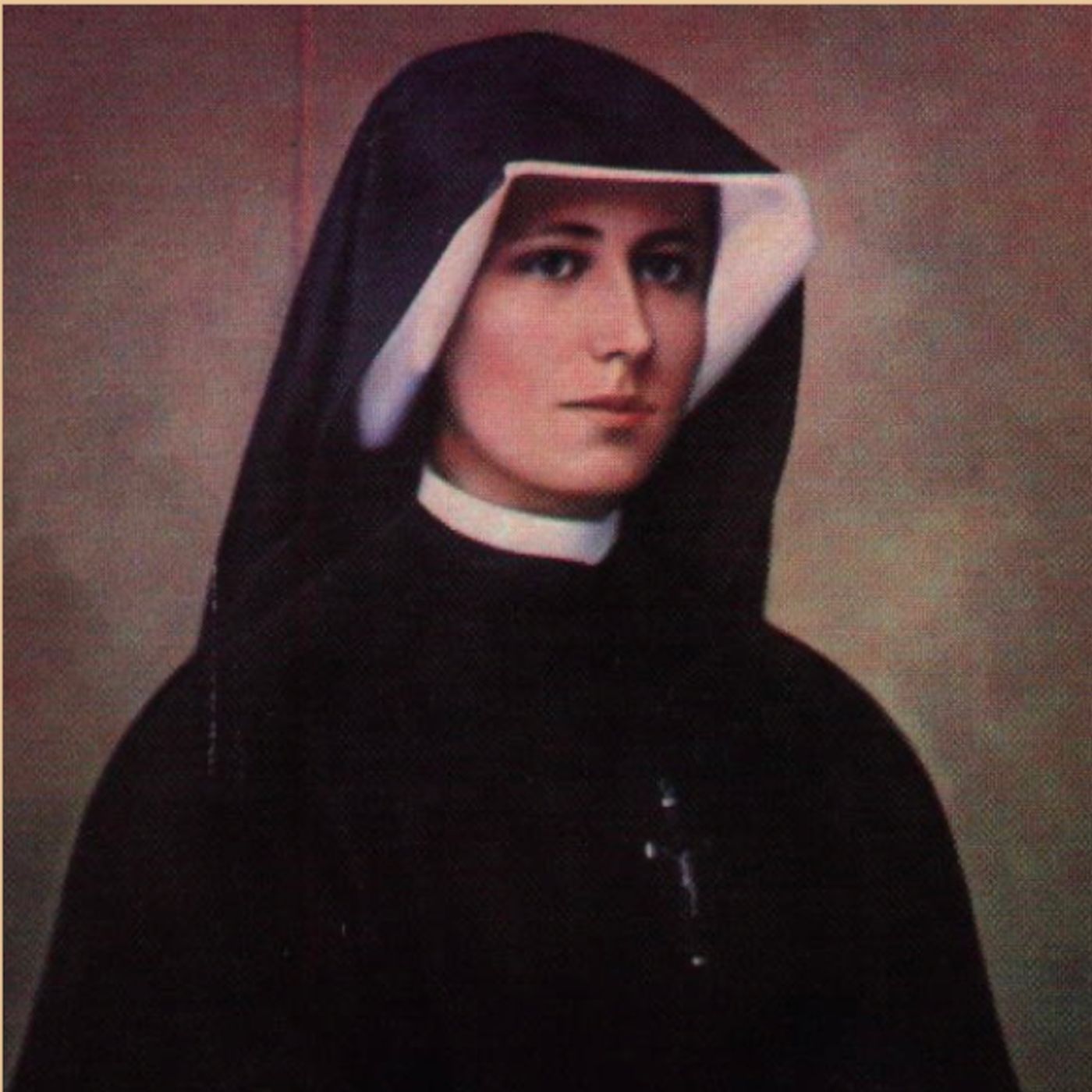 October 5: Saint Faustina Kowalska, Virgin 04.10.2026 7mntOctober 5: Saint Faustina Kowalska, Virgin1905-1938Optional Memorial: Liturgical Color: WhitePatron Saint of MercyHer humble sail caught a powerful theological windThe martyr Saint Faustino was killed in the second decade of the second century in northern Italy under the emperor Hadrian. Nothing else is known of him. Today’s saint was baptized Helen and, for unknown reasons, was given the martyr’s name when making her first religious vows. Saint Faustino must be honored, and grateful, to share his name with so holy and consequential a nun as Saint Maria Faustina Kowalska, who was canonized in 2000, and whose optional memorial was added to the Church’s universal calendar in 2020.Saint Faustina was a peasant in the best sense of the word. She could read and write but otherwise attended school for only a few years in her rural village in central Poland. Her large and pious family needed her hand on the plow, financially speaking, and so at the age of sixteen young Helen Kowalska obtained work as a housekeeper in nearby towns. She was expert in the domestic arts of sewing, cleaning, cooking, and the related skills which convert a house into a home. These skills served her well, but not long, in the convents where she resided throughout her short life.While she felt called to be a religious sister as a child, Helen’s parents were reluctant to let her enter a convent at too tender an age. But then, in her late teens, Christ appeared and spoke to Helen in mysterious and deeply personal encounters, demanding that she not keep Him waiting much longer. These visions propelled the pious teen to seek acceptance in a big-city convent. She moved to Warsaw at nineteen, received advice from a sympathetic priest, and knocked on the doors of various convents hoping that one of them, just one, would accept her. One finally did. After proving herself in its novitiate, she took solemn vows and spent the rest of her life as a faithful nun doing humble chores alongside her religious sisters in convents in Poland and present-day Lithuania.Like so many saints, the unseen vigils, prayers, mortifications, fasts, and sufferings were Faustina’s real life, while the visible realities seen by her fellow religious and the occasional visitor were of lesser importance. And what went unseen in Saint Faustina’s life was astounding! This humble nun experienced remarkably vivid, high-octane, technicolor, 3-D visions of Jesus Christ in the chapel, behind the door, in her cell, and around every corner for many years. Jesus’ strong voice spoke to her in a direct and unmistakably clear manner about His desires for her life. He commanded her, repeatedly, to spread the message of Divine Mercy. So Faustina had an artist paint a famous image of Christ with two rays emanating from his chest, promoted a liturgical feast day in honor of the Divine Mercy on the Sunday after Easter, and kept an exhaustive diary chronicling the content of her vivid spiritual experiences.Saint Faustina’s message is not really Saint Faustina’s message. It is God’s message. God wants mankind to know, and to feel, the Divine Mercy oozing out of the heart of Christ. This mercy, unlike human or judicial mercy, can wash away even the most wretched sins. God’s mercy is not in competition with his justice but is an over abundance of justice. God knows all things and forgives all things when His mercy is freely requested. The modern western world is very focused on questions of justice – racial justice, economic justice, environmental justice, etc… But it is, at the same time, opposed to judging. This dichotomy of favoring justice but abhorring judging is incongruous. The modern west suffers from similar tensions regarding the virtue of mercy.An American Cardinal noted years ago that modern secular culture permits, even promotes, practically everything. It seems that no moral aberration, sin, or...
 -
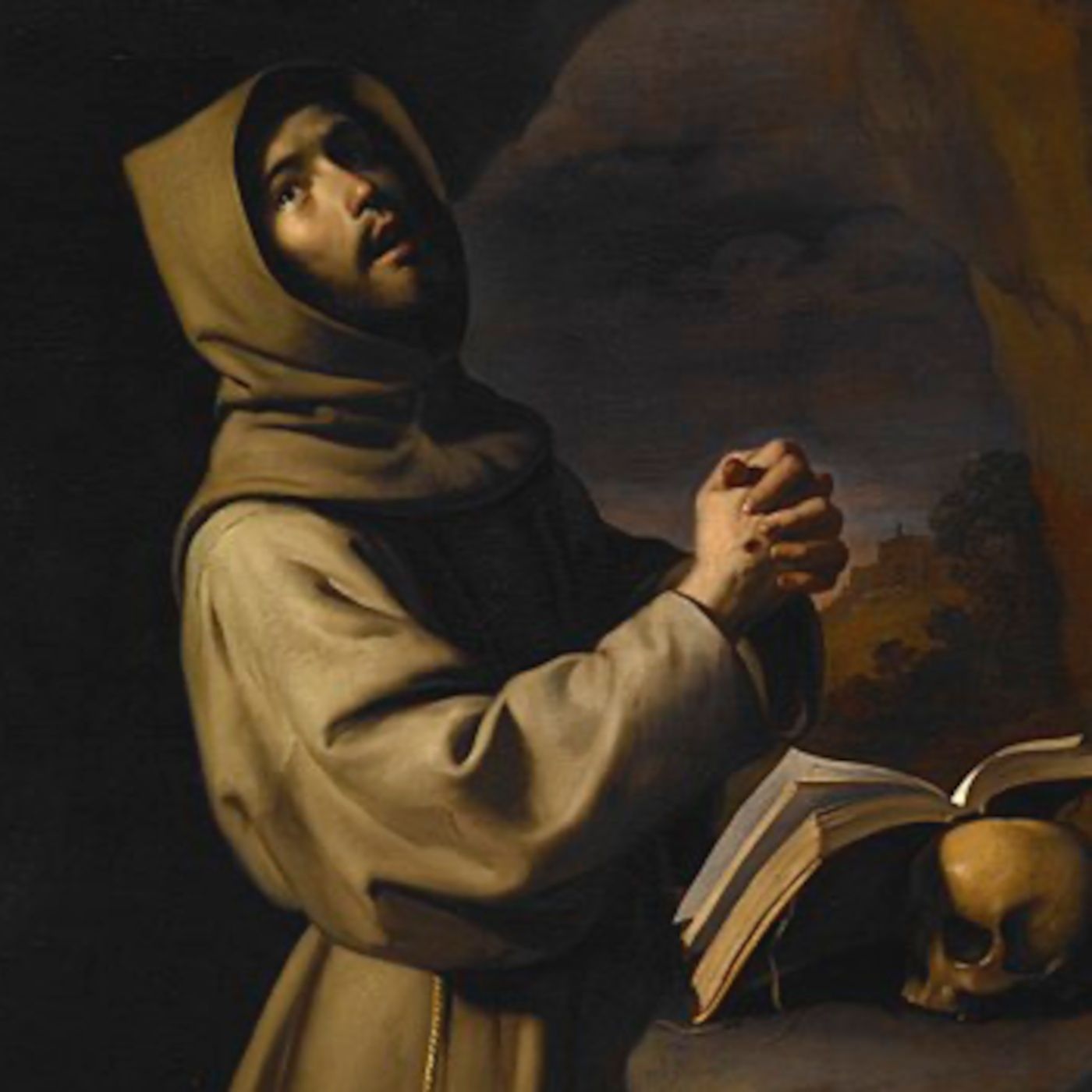 October 4: Saint Francis of Assisi 03.10.2026 5mntOctober 4: Saint Francis of Assisic. 1182–1226Memorial; Liturgical Color: WhitePatron Saint of animals, ecology, and merchants. Co-patron of ItalyA merchant’s son of eccentric sensibilities goes radicalThough originally baptized by his mother as Giovanni (John) in honor of Saint John the Baptist, today’s saint was renamed Francesco, or “Frenchy,” by his father Pietro de Bernardone after Pietro returned home from trading in France. Pietro loved France, and his son’s romantic, troubadour spirit likely flowed from that same cultural source.Francesco grew up in a middle-class home that engaged in the sale of fine cloth. Francis was a skilled merchant in the family business, but he enjoyed spending money more than earning it. He was a man about town, a leader among his friends, and well liked for his concern for others. He was also a failed knight. When he was twenty, Francis joined a civic-minded Assisi militia in a battle against a neighboring city. When the militia was routed, Francis was spared death and instead held for ransom due to his fine livery. He was held prisoner in a rank dungeon for a year before the ransom was paid. He returned to Assisi a more reflective man. Subsequent military service for the Papal States ended abruptly when Francis heard a voice tell him, “Follow the master rather than the man.” He sold his expensive armor and horse, returned home, and began to spend hours in prayer.Shortly after this turning point, Francis met a leper on the outskirts of Assisi. He initially recoiled, but then dismounted, gave the man some money, and kissed his putrid hand. This was the start of his frequent visits to leper houses and hospitals. When Francis heard a voice from the cross say to him, “Francis, go and repair my church, which as you can see is in ruins,” he sold a large amount of cloth and his father’s horse at a neighboring market town. Coming back to Assisi, he donated the proceeds to a priest at the church of San Damiano on the outskirts of Assisi. Francis’ father was irate. His son had sold cloth from the family store, and a horse, and had thengiven away money that was not his. This was stealing, and Francis was put in prison. A dramatic scene then unfolds between Francis and his father in a church square, in the presence of Bishop Guido of Assisi and his court. Pietro demands the return of his money. The Bishop supports him and says the Church cannot accept stolen money. Francis returns the coins. But then Francis goes further. Piece by piece, he removes his clothing until he is naked before everyone’s eyes. He then says, “From now on I will not say ‘My Father, Pietro Bernardone’ but ‘Our Father, who art in heaven.’” There is not a single reference in any contemporary Franciscan document to Pietro after this dramatic incident. Francis was now cut off, disinherited, and on his own.Francis eventually begins to wear a rough smock which he ties around his waist with a cord. He lives alone in absolute poverty, prays, helps the sick, rebuilds nearby run-down chapels, and preaches and begs in Assisi. Men begin to follow his lead, and the first fire of the worldwide Franciscan order ignites. The “Lesser Brothers of Assisi” is recognized by the Pope, Francis is ordained a deacon, and the Order’s explosive growth can only be called miraculous. Saint Francis is the first great founder of a religious order since Saint Benedict in the 500s. By sheer allure of personality, holiness, and vision, not intellect or organizational skill, he imparted a mysteriously powerful charism to his followers. He was ardent in his love for the Holy Eucharist and insisted that churches be well kept in honor of the Lord’s physical presence.Francis died in his forty-fourth year and was canonized just two years later, in 1228. Saint Francis may be the most well-known person of the second millennium. A measure of his massive impact can be...
 -
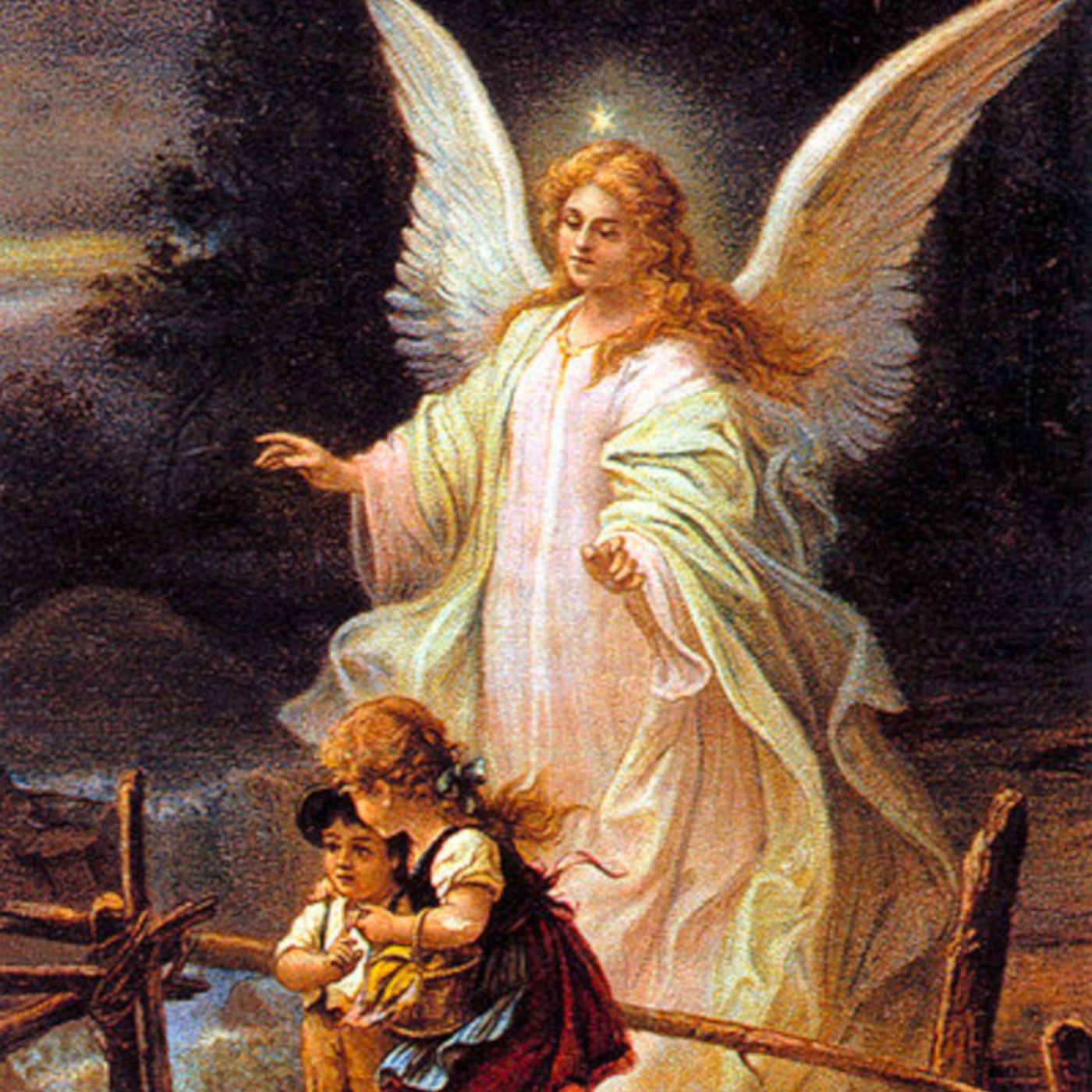 October 2: The Holy Guardian Angels 02.10.2026 6mntOctober 2: The Holy Guardian AngelsMemorial; Liturgical Color: WhiteA personal spiritual bodyguard watches your backIntuition is a fully formed way of thinking. It is more than just the occasional hunch or subtle perception. Native instinct, or “gut,” is used to calculate, discern, and decide on matters big and small throughout daily life. We think we are dryly logical about a decision to trust one accountant and not another, to frequent this store over that, or to confide in this new friend rather than that old one. But in reality it may just be a small mustard stain on the accountant’s shirt collar that convinces us that he is not the right man for the job. Squinty eyes, a weak handshake, a laugh, or just the way someone holds open the door or sips their coffee. We pay very close attention to the slightest nuances of facial gestures, body language, and tone of voice to draw immediate conclusions about people. We are not as coldly rational as we like to think.So when an atheist, for example, walks alone down a remote country road in the dark of night and hears a long lost voice in the whistling wind, or sees tree branches twist themselves into a bony finger, he grows frightened. If he were to feel the breathy presence of someone hovering just over his shoulder at that same moment, the atheist’s sober rationality would be worth nothing. His valves of feeling and intuition would be fully open, the pores of his mind would be absorbing every ounce of strange reality, and a shiver of fright would run up his spine like an electrical charge. He would be in full contact with a reality as elusive to describe, yet as normal to experience, as intuition itself.The holy guardian angels are created spirits, whereas God is an uncreated spirit. A man, however, is more than a spirit. He is an enfleshed soul procreated by parents who participate in God’s creative act. Though we are part spirit and part matter, we can nonetheless imagine what it would be like to be a pure spirit, like an angel. We close our eyes and imagine standing at the pinnacle of the Eiffel Tower in Paris and suddenly we are there, gazing over the City of Lights. The mind travels, the imagination soars, the soulreflects. It’s our body that keeps our feet planted in one place and time. But if mind, soul, and imagination were not so tethered, then we would zip around the universe like an angel, a spirit unleashed, held back by nothing. God created the angels like He created us, out of nothing. God’s will is creative in the strict sense of that word. “Let there be light,” He said, and there was light. His will brings worlds into creation and maintains them there. God willed the angels into creation to communicate His messages, to protect mankind, and to engage in spiritual battle with fallen demon angels.The age-old tradition of the Church is that every Christian, and perhaps every human being, has an angel guardian protecting him from physical and spiritual harm. Christ warned, “Take care that you do not despise one of these little ones; for, I tell you, in heaven their angels continually see the face of my Father in heaven” (Mt 18:10). An angel was at Christ’s side in the Garden of Gethsemane, and an angel delivered Saint Peter from prison. The Fathers of the early Church wrote prolifically about the dense realm of the spirit inhabited by angels. The Catechism of the Catholic Church notes that the angels belong to Christ. “They are his angels” (CCC #331). The Catechism also quotes Saint Basil, “Beside each believer stands an angel as protector and shepherd leading him to life” (CCC #336).We intuit that the world was made for more than just us, whether those “others” are lit with holiness or obscured by darkness. Some people scan the skies for alien ships in Low-Earth Orbit. Others listen for strange patterns of speech transmitted like radio signals through the cosmos. Is there life...
 -
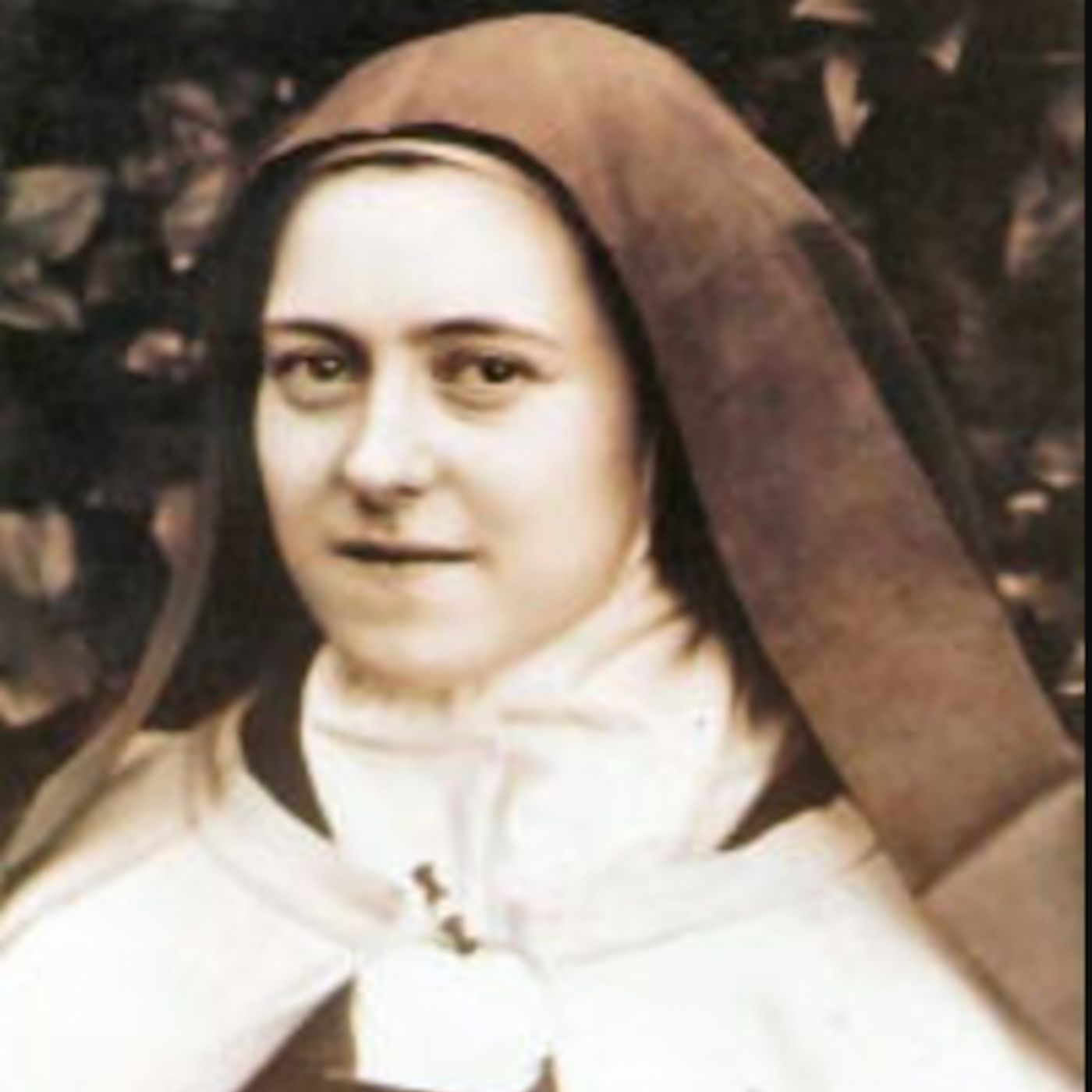 October 1: Saint Thérèse of the Child Jesus, Virgin and Doctor 01.10.2026 5mntOctober 1: Saint Thérèse of the Child Jesus, Virgin and Doctor1873–1897Memorial; Liturgical Color: WhitePatron Saint of florists, missions, and aviatorsA sensitive country girl wades into the deepThérèse Martin was a weepy child, as emotionally brittle as porcelain. She was easily offended and easily pleased. A furled brow or a sideways glance from her father would dissolve her into tears. A beautiful flower or a kind word and she would beam a smile. She grew up in a brotherless home. Her father, an uncle, and priests were the men in her life. Her parents were canonized in 2015, the only married couple ever raised to the altars. Thérèse and her four sisters all became nuns, with the cause for beatification and canonization of her sister Léonie being opened in 2015. The Martin home was totally absorbed in the mysteries of God, prayer, saints, the Sacraments, and the Church.Thérèse grew up in Normandy, a region of Northern France. She left only once, to go on a month-long pilgrimage to Italy, where she met Pope Leo XIII at a public audience and begged his special permission to enter the Carmelites before the required age. On this trip she was also the object of some tender male glances. Conscious of her delicate emotions and eager to flee the world’s “poisonous breath,” upon returning from Italy Thérèse pulled every lever to enter her local Carmel. She finally entered at the age of fifteen in 1888. She was given the religious name “of the Child Jesus” and received permission to adopt a second name too, “of the Holy Face.” Once the door of the convent shut behind her, it never reopened. Her short life ended there just nine years later. Thérèse was a dedicated nun who strictly followed the demanding Carmelite rule. She kept silence when required, avoided seeking out her blood sisters, fasted, ingratiated herself with nuns she did not naturally find sympathetic, and spent long hours in prayer and work.In the convent, Thérèse’s childish sweetness matured into a more durable spirituality. Her sensitivity mellowed. She was able to accept criticism. Her youthful presumption that all priests were as perfectas diamonds became more realistic, and she prayed and sacrificed ardently for priests. The hard realities of convent life narrowed Thérèse’s spiritual goals. She no longer desired to be a great soul like Saint Joan of Arc. But with this narrowing came a deepening, a concentrated focus. She decided she would be God’s heart, not His hands or feet or mind. She decided that the only way she could fly close to the blazing sun of the Holy Trinity would be to become small.Her petite voie (“little way” or “by small means”) was to spiritually reduce herself to a tiny creature carried in the claws of the divine eagle, Jesus Christ. As Christ soared in the heavens, she would be in His grasp, going only where He could go, until she was burned up in the Father-Son-Spirit love of the fireball of the Trinity. This was no broad path or wide way but a little way for a great soul. The goal was to reduce oneself to nothing so the Lord could transport you. The goal was to remove the “self” from “oneself.”When Thérèse’s sister Céline entered the convent in 1894, she was given permission to bring her camera. Céline's pictures of Thérèse would be among the first ever taken of a saint. They complimented Thérèse’s letters and spiritual writings perfectly, heightening interest in Thérèse after she died. The intriguing photos and profound writings hinted at the secret depths concealed behind a convent’s four walls. Saint Thérèse suffered intensely from tuberculosis and died at an age when many lives are just beginning to flower. She was canonized in 1925, declared co-patron of France in 1944, and named the thirty-third Doctor of the Church by Pope Saint John Paul II in 1997, the youngest Doctor to date and probably the youngest the Church will ever...
 -
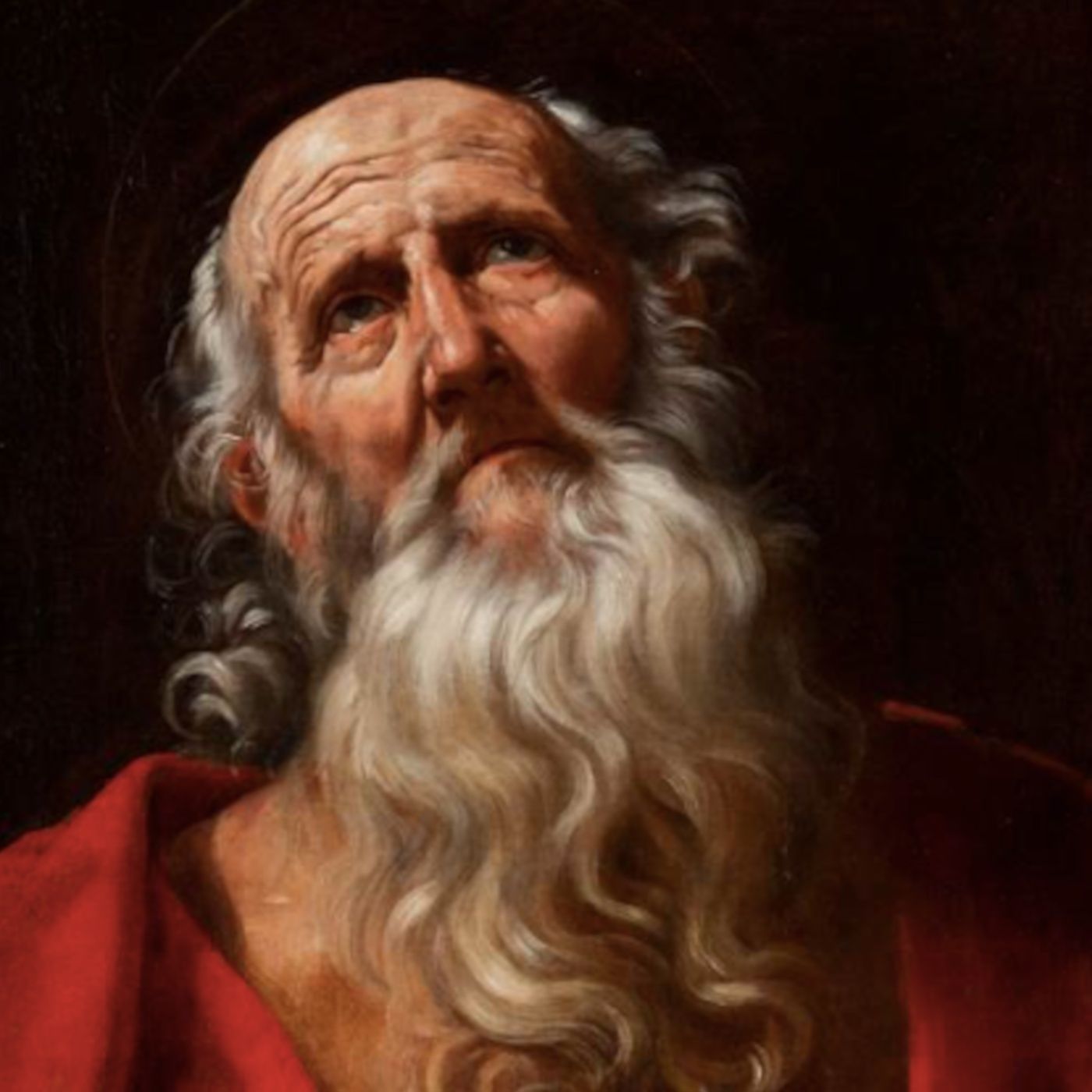 September 30: Saint Jerome, Priest and Doctor 30.09.2026 6mntSeptember 30: Saint Jerome, Priest and Doctorc. 345–420Memorial; Liturgical Color: WhitePatron Saint of archeologists, Biblical scholars, and librariansA prickly scholar translates the Bible into Latin forever and alwaysToday’s saint was living in Antioch in the 370s when he had a vision. Jerome was standing in the presence of the seated Christ, who asked him who he was. “I am a Christian,” Jerome responded. “LIAR!” Jesus yelled. “You are a Ciceronian, not a Christian, for where your treasure is, there also is your heart.” Jerome indeed loved Cicero and other Latin stylists. The fine prose in their works gave him the greatest pleasure. But Jerome had also been reared in a Christian home, been baptized as an adult in Rome, and had frequently descended into the darkened catacombs to pray at the tombs of the martyrs and saints. His double identity as a scholar of Latin and Greek rhetoric on the one hand, and as a committed Christian on the other hand, dueled within him. Jerome fervently loved God and the Catholic religion with all his soul, but it was a troubled soul. Jerome was full of spit and vinegar. He was a complex man and a complex saint.Saint Jerome was born in an unknown year in a region northeast of Venice, Italy. His father sent him as a young man to Rome to perfect his education under a famous tutor. Jerome was a superb student and mastered Latin and Greek. At about the age of thirty, he decided to become a monk and traveled to the desert of Syria. For four years he lived a life of austerity, penance, and isolation. He fasted from the classics he loved so much and instead studied Hebrew from a Jewish convert. When he finally came out of the desert, he was ordained a priest in Antioch but never truly exercised any priestly ministry. He studied under the great Saint Gregory Nazianzen in Constantinople and began to publish some translations and biblical commentaries. Around 382 Jerome went to Rome with his bishop to serve as an interpreter and aide. Jerome so impressed Pope Saint Damasus that the Pope then invited the young Jerome to be his secretary. At this point, in his forties and while living in Rome, Jerome began the monumental task of translating the entire Bible into Latin from original Greek and Hebrew texts. It would take him years. The existing Old Latin Bible was not cohesive but a jumble of texts stitched together under one cover. Various scholars had generated divergent translations for purely local use. So the Gospel of John in a Jerusalem-based manuscript differed from the same Gospel in a manuscript in Gaul. The one Church, spread throughout the known world, needed one Bible to match its broad scope and theological unity. Jerome was the man for the job. After just a few years in Rome, after the death of his patron Pope Damasus, and due to the enemies his blunt words and fiery temper always seemed to create, Saint Jerome left Rome for the Holy Land. He lived in a cave near Bethlehem and focused on translating. Some holy and pious women from Rome followed him there and formed a quasi-monastic community around him.Jerome’s translation, known as the Vulgate, became the standard Latin version of the Bible over time, pushing the Old Latin version into oblivion. The Council of Trent formally stated that the Vulgate was the official Bible of the Catholic Church. So Catholicism has a “The Bible,” a claim which no other church can make. No “The Bible” ever floated down from heaven on a golden pillow. Except for Jerome’s, a “The Bible” doesn’t exist. There are thousands of ancient scraps of Scripture from hundreds of ancient texts from scores of libraries and monasteries in dozens of countries, but a publisher and its consultants ultimately choose which texts to include in any published Bible and which to exclude. Catholicism has no such flimsy process. Its sacred word is not dependent on scholarly fashion and whim. It has a baseline....
 -
 September 29: Saints Michael, Gabriel, & Raphael, Archangels 29.09.2026 5mntSeptember 29: Saints Michael, Gabriel, & Raphael, ArchangelsFeast; Liturgical Color: WhitePatrons of soldiers (Michael); mailmen (Gabriel); travelers and the blind (Raphael)The air between God and man is thick with mystical beingsIt is a principle of Catholic theology that salvation is mediated, that individual man does not go to God alone, and that God does not come to man alone. This means that there are layers of words, symbols, art, priests, nuns, catechists, music, books, churches, shrines, and endless other things and places and people that channel God to us. Even using the name “God” or “Father” or “Jesus Christ” presupposes the mediation of language. So although someone may say they want to “cut out the middleman”of the Church and go directly to God, they can’t. At some point in their youth, they absorbed who God was from others, so even the most basic, apparently innate knowledge we have of God is mediated, if only by nature itself. Today’s feast is about the created spiritual beings known as angels who fill the space between God and man, communicating His message, protecting man from harm, and battling against the armies of Satan. The Archangels Michael, Gabriel, and Raphael transmit some of God’s most important messages.Michael leads the war cry in a mysterious, metaphysical battle against the Devil and his minions in the Book of Daniel. "There is no one with me who contends against these princes except Michael, your prince” (Dn 10:21), and "At that time Michael, the great prince, the protector of your people, shall arise” (Dn 12:1). Michael means “Who is like God.”Gabriel is an essential figure in the events surrounding the Incarnation. We first meet him in the Jerusalem Temple, announcing the birth of Saint John the Baptist to his father, Zachary: "I am Gabriel. I stand in the presence of God, and I have been sent to speak to you and to bring you this good news" (Lk 1:19). He later conveys the message of all messages to the Virgin Mary, eliciting her “Yes” to God’s sublime invitation. Gabriel means “the strength of God.”Raphael appears in the disguise of a man in the Book of Tobit, guiding the young Tobiah along his journey. "…God sent me to heal you and Sarah your daughter-in-law. I am Raphael, one of the seven angels who stand ready and enter before the glory of the Lord" (Tb 12:14–15). Raphael means “God heals.”The Old Testament description of the angels worshipping before the throne of God is one of fierce power: “...each had six wings: with two they covered their faces, and with two they covered their feet, and with two they flew. And one called to another and said: “Holy, holy, holy is the Lord of hosts; the whole earth is full of his glory.” (Is 6:2–3)These beings are far from the pudgy, pillow-soft, fat-cheeked baby angels so often depicted in art. Today’s feast is for the mighty six-winged angels, the deadly serious ministers of God’s messages. These Archangels engage in consequential spiritual battle, know that God and His Word are not frivolous, and carry out their missions as emissaries of the Most-High. We invoke them now just as Saint Patrick did in the fifth century: “I arise today through the strength of the love of cherubim, in the obedience of angels, in the service of archangels, in the hope of resurrection to meet with reward.” Amen.Archangels Michael, Gabriel, and Raphael, we invoke your powerful intercession before the throne of God in heaven. By your spiritual assistance, protect us from harm, heal us of our infirmities, and convey to us God’s will for our lives.
 -
 September 28: Saint Lawrence Ruiz & Companions, Martyrs 28.09.2026 6mntSeptember 28: Saint Lawrence Ruiz & Companions, Martyrsc. 1600–1637Optional Memorial; Liturgical Color: RedPatron Saints of the PhilippinesA married father remains unbroken under the cruelest tortureMany lesser-known faces in the deep audience of saints bask in the soft glow of sanctity emanating from the more prominent “marquee” saints standing on stage. In the Church’s calendar of saints, these more obscure observers of the principle action are often classified as “companions.” They can encompass dozens, or even hundreds, of men and women on a given feast day. Today’s saint, Lawrence Ruiz, is commemorated along with fifteen just such “companions,” in this case mostly missionary priests. Interestingly, Saint Lawrence is not the companion to the priests he died with. The priests, instead, are listed as Lawrence’s companions. The married Lawrence is on stage while his companion priest martyrs are in the audience.Saint Lawrence was born of a Chinese father and a Philipino mother, both of whom were Catholic. Growing up in the Philippines, he served as an altar boy, was educated by Dominican priests, and belonged to a fraternal society dedicated to the Holy Rosary. Because he was an educated and careful writer in a largely illiterate culture, he became a clerk and a calligrapher. He married a woman named Rosario, and they had three children. He and his family lived an ordinary, secure, peaceful life of faith. As 1636 dawned, there was no reason to guess that Lawrence would continue living anything other than a quiet life focused on home and work. But then everything suddenly and drastically changed.Lawrence was implicated, falsely, in the death of a Spaniard. It was a charge so serious he had to flee the Archipelago. Through his friendships with priests, he was invited to board a ship with three Dominicans, a Japanese priest, and a layman. In June of 1636, the small vessel sailed for Japan, a hornet’s nest buzzing with anti-Catholic persecution. The ship intended to land in a peaceful region devoid of persecution, but instead errantly docked in Okinawa at the worst possible moment. Feudal Japanese Shoguns were out for the blood of Catholics, and the missionaries walked right into their tight grip. They spent over a year in prison before, along with still more Catholic prisoners, they were marched to Nagasaki for the inevitable slur against their deepest beliefs.The Japanese had devised torture techniques carefully calibrated to elicit maximum agony and the renunciation of the faith. On September 27, 1637, the prisoners had huge amounts of water poured down their throats, were covered with boards, and then stepped on by guards, forcing the water to spurt out of their mouths, noses, and ears. Then they were tightly bound, with one hand free in case they wanted to signal renunciation of the faith, and hung upside down over a pit. Heavy stones were tied to their bodies to draw blood more quickly down into their torsos and skulls. As the red liquid painfully pressurized their cranial sacs, the torturers strategically cut the victim’s heads to release the collected blood. This prevented the loss of consciousness and prolonged the throbbing pain. Amidst this anguish, no one broke. No one renounced their faith. No one cried out for relief. Mental images of mother and father, of smiling wife and children, of home, the fireplace, and warm embraces, did not prevail. It was God or death. Lawrence’s reputed last words were “I am a Catholic and wholeheartedly accept death for God; Had I a thousand lives, all these I would offer to God.”As their chest cavities filled with blood, the victims hearts could pump no more. Lawrence suffocated to death within a day or two. Some of the priests did not succumb as quickly and were beheaded. Lawrence’s fifteen companions were Japanese, Spanish, French, and Italian priests; a few consecrated women; and laymen,...
 -
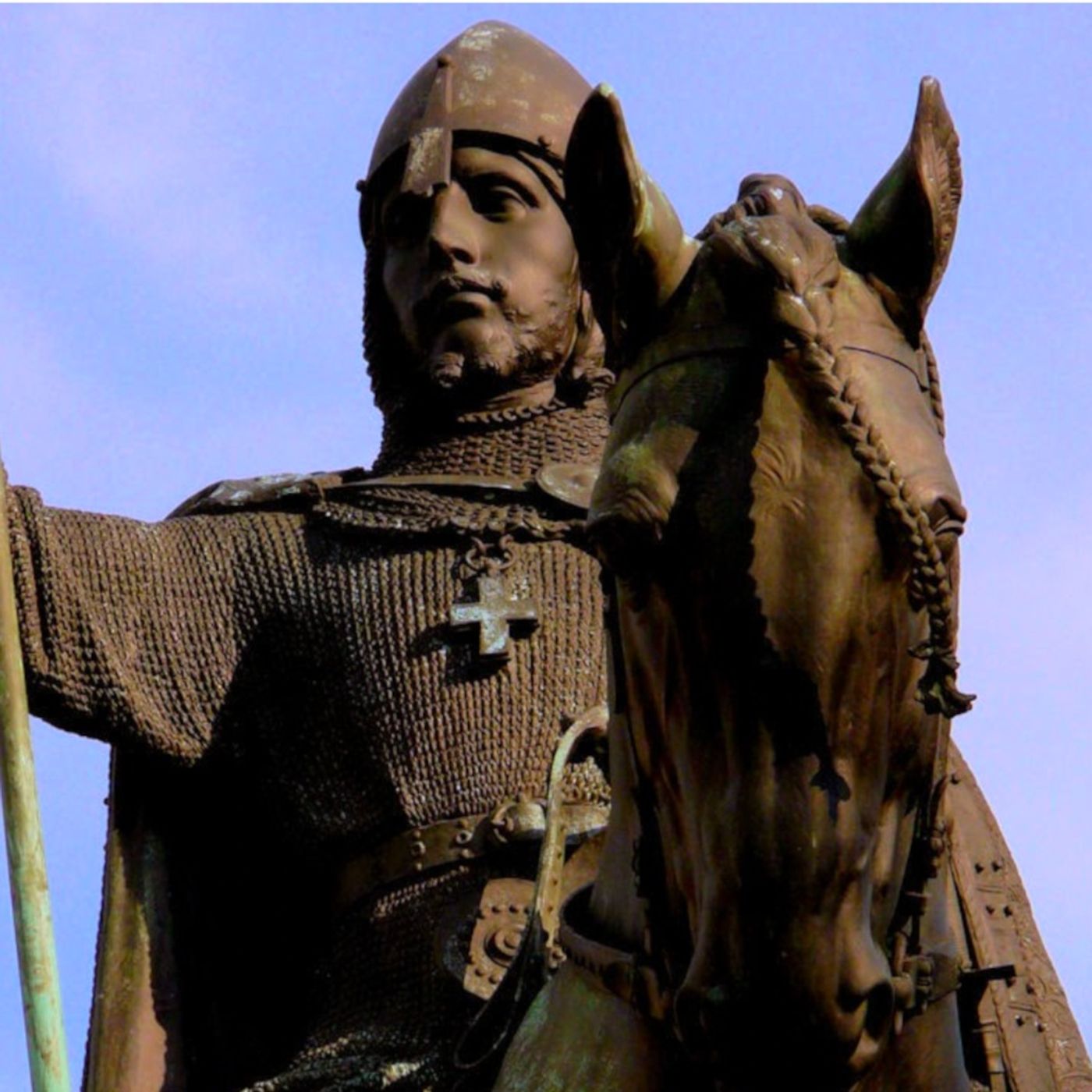 September 28: Saint Wenceslaus, Martyr 27.09.2026 5mntSeptember 28: Saint Wenceslaus, Martyrc. 907–929Optional Memorial; Liturgical Color: RedPatron Saint of the Czech Republic and SlovakiaA young duke is killed by a jealous brother and becomes a Czech iconWhen the famous die young, their unwrinkled faces, dark hair, and youthful vigor are frozen in time, forever vital, forever attractive, forever fresh. Time is not given its chance to run over their skin like water over rocks. No shaping, cracking, molding or shifting of the surfaces. Before the modern cult of celebrity held up athletes, movie stars, and musicians for supreme adulation, most cultures revered their royalty, soldiers, or holy men and women. Kings and princes, bishops and saints, chiefs and warriors served the common good by governing, praying for, and protecting the people. No class of entertainers distracted a populace from the leadership that mattered. Today’s saint, Wenceslaus, Duke of Bohemia, was felled in a fateful encounter with his brother Boleslaus the Cruel. Wenceslaus was already famous when he died young and dramatically. All the ingredients needed to guarantee a lasting legacy were present, and his memory endured. He was recognized by the Church as a martyr, posthumously given the title of King, and quickly became an iconic figure to the Bohemian people such that his Feast Day, September 28, is a national holiday in the modern Czech Republic.Wenceslaus lived as Christianity was still dawning in Central Europe. German missionaries had been laboring among pagan tribes for a few generations with success, but the visible layer of a Christian culture rested on a rock-hard pagan substrata. Central and Eastern Europe were passing through the normal stages of evangelization, as an age-old culture with all of its customs and traditions was slowly pushed back by a greater force moving across the landscape like a glacier. Catholicism had moved into Bohemia by the 900s, but the religious environment was not yet monolithic. As our martyr’s death attests, religious and political divisions still ran through the culture.The grandfather of Wenceslaus may have been converted by no less than Saints Cyril and Methodius themselves. His grandmother Ludmila was an ardent Catholic and oversaw Wenceslaus’ excellent education in which he learned to read and write both Slavonic and Latin. Wenceslaus’ mother, Drahomira, clung to the old ways, though she was nominally a Christian. When Drahomira thought Ludmila was encouraging Wenceslaus to assume power as a teen, Drahomira had her mother-in-law strangled to death with her own veil. Once he did take power, Wenceslaus banished his own mother, solidified control of Western Bohemia, and became an honorable ruler. He followed the law, favored education, and promoted the form of Christianity practiced in Germany, not in the East. This was a fateful decision. Poland, the Czech Republic, and Slovakia are Slavic peoples of the Latin Rite, unlike their Byzantine Rite Slavic cousins to the east of the Orthodox curtain. Wenceslaus was pro-Western theologically and liturgically, while retaining his Slavic identity and independence in other essential matters. This double allegiance endures and lends Slavic Catholicism its unique features.But for all of Wenceslaus’ brief successes, in the shadows lurked Boleslaus, creating a power center in Eastern Bohemia. When Wenceslaus’ wife gave birth to a son, Boleslaus knew he would not succeed his brother, so he plotted his murder. Boleslaus and his henchman struck down the young Duke Wenceslaus in 929 on the Feast of Saints Cosmas and Damian and on the Vigil of Saint Michael the Archangel. “Brother, may God forgive you” were our martyr’s last words.Saint Wenceslaus, you were the model of a just ruler in your brief reign. You saw it as your sacred duty to promote the true God and His religion. Help all rulers and leaders to see morality, liturgy, prayer, and...
 -
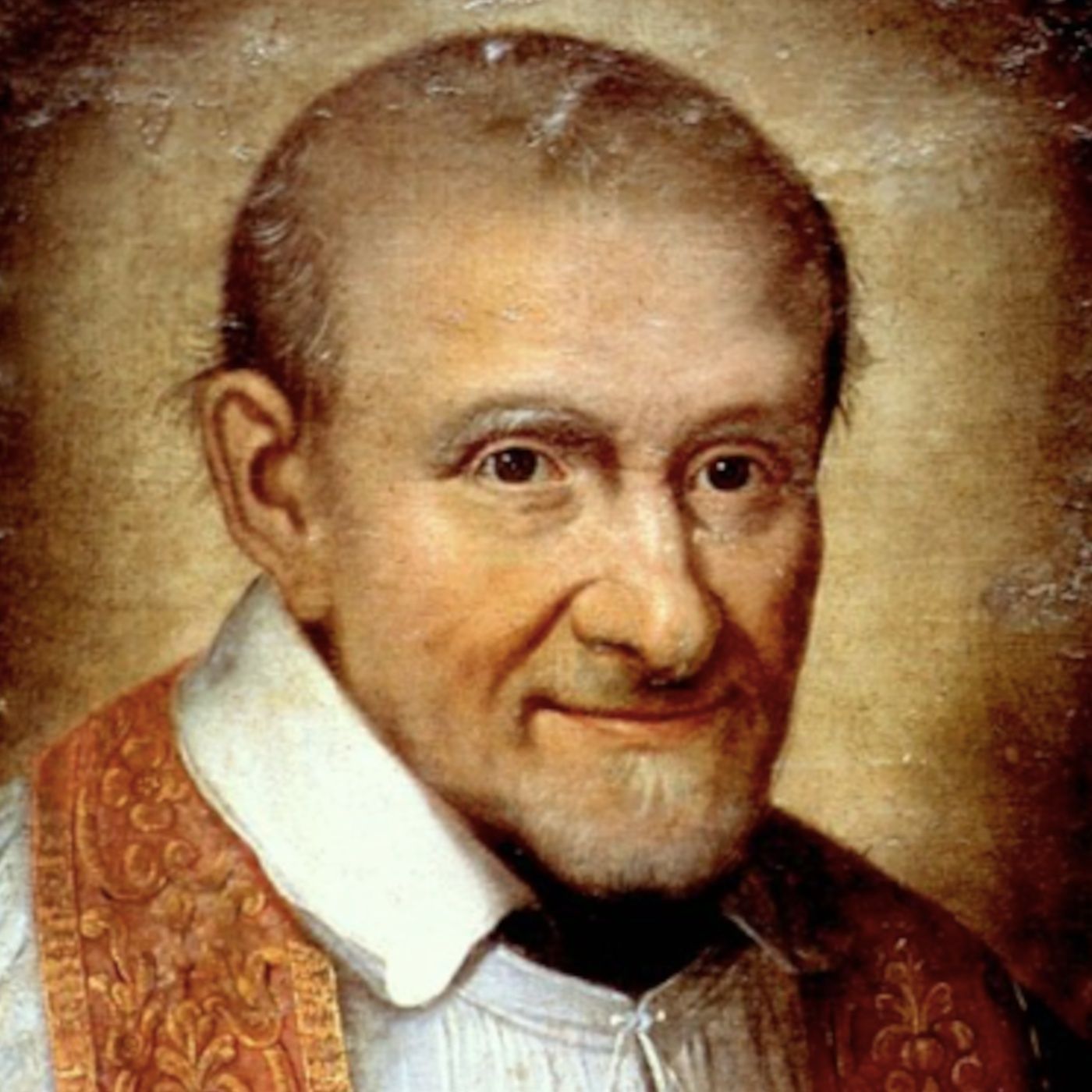 September 27: Saint Vincent de Paul, Priest 27.09.2026 5mntSeptember 27: Saint Vincent de Paul, Priest1581–1660Memorial; Liturgical Color: WhitePatron Saint of all charitable societies, hospitals, and leprosy victimsA powerhouse priest organizes multitudes for charity and renews priestly formationToday’s saint was one of the brightest stars in the galaxy of saintly men and women whose light rejuvenated Catholicism in seventeenth-century France. Saint Vincent de Paul established charitable societies that have endured to this day. He also founded male and female religious orders that still thrive in the twenty-first century. He was a trusted counselor to bishops, cardinals, and royalty. His ideas reformed how seminarians and priests were trained so fundamentally that this vision became normative for the world-wide Church. He was the hub of many spokes: a close friend of Saint Francis de Sales, his own co-founder Saint Louise de Marillac, and the almost-saint Pierre de Bérulle. Saint Vincent had a great influence over Jean-Jacques Olier, the founder of the Sulpician Order and a prime mover behind the group of French Catholics who risked everything to found Ville-Marie de Montreal, the explicitly Catholic settlement at the farthest edge of French Canada. Our saint also inspired Blessed Frédéric Ozanam, the lay intellectual who established the Saint Vincent de Paul Societies so commonly found in parishes throughout the world.Few saints achieved as much as Vincent de Paul. He stood at the core of an evolving group of similarly minded French saints who left an impact like a meteor on the face of the Church. So, although he cannot be understood apart from the charitable Society that bears his name, neither can his achievements be confined to that Society alone. Saint Vincent tried to use his education and personal charm to correct the errors of Jansenism, an overly rigorous spiritual and moral approach to the Christian life that infected wide swaths of the French faithful. When his personal efforts were unproductive, he became more polemical and was instrumental in procuring a papal denunciation of Jansenism.Our Saint’s contributions to the renewal of the life of the clergy were notable. He was a proponent and founder, along with de Bérulle, of the so-called French school of spirituality, which has been so universally adopted in priestly formation that there is, in reality, no other approach. This spirituality combines asceticism, practical and active concern for the poor, a missionary drive to the unconverted, a sophisticated theological education, simple and direct preaching, and a total reliance on the Virgin Mary and the Holy Trinity in seeking to do the will of God. These high ideals, this total approach, also inspired Vincent’s near contemporaries Saints John Eudes, Louis de Montfort, and Jean-Baptiste de La Salle to become who they were. To be a man of action and contemplation. To be educated but able to discourse with the simple. To focus on the salvation of souls but also on the material concerns of the needy. To be fully a priest but to have wide circles of lay friends and followers. This was the vision of Saint Vincent de Paul for all priests, and the vision he himself put into action in his own life. He was a force of nature who stormed through life for the glory of Christ alone. Devotion to Saint Vincent followed soon after his death. He was canonized in 1737. His remains are displayed for veneration in a glass coffin above the altar in the ornate chapel of the Vincentian Fathers in central Paris, not far from the chapel of the Miraculous Medal. A partially concealed staircase allows access for the faithful to see the great man up close.Saint Vincent de Paul, you worked tirelessly for the poor, orphans, and widows. You gathered around yourself numerous helpers. Your primary motivation was not social justice but the pure will of God. Inspire us to be so committed, so dedicated, and so...
 -
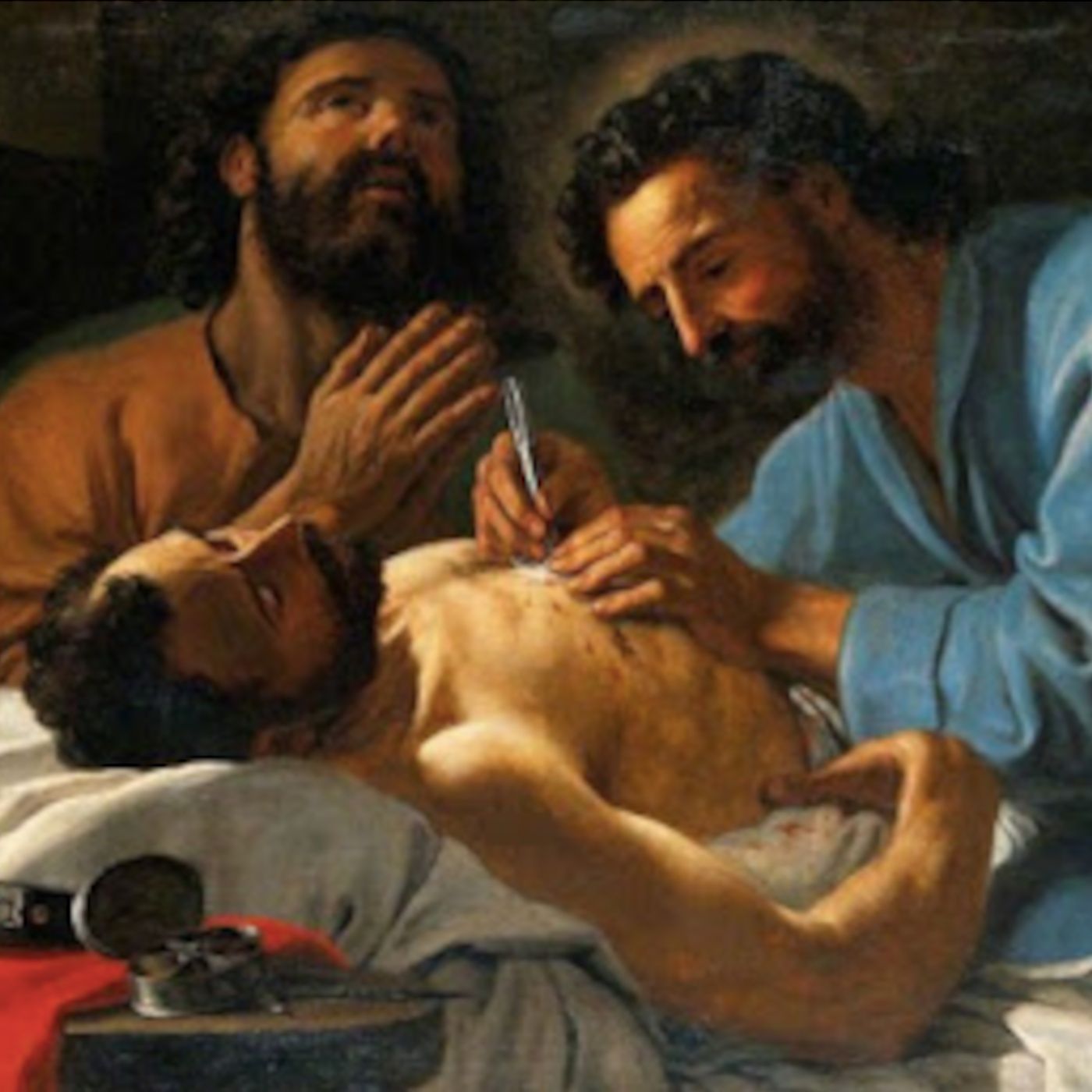 September 26: Saints Cosmas and Damian, Martyrs 25.09.2026 5mntSeptember 26: Saints Cosmas and Damian, Martyrsc. Late third–early fourth centuryOptional Memorial; Liturgical Color: RedPatron Saints of doctors, barbers, and pharmacistsHoly twins are honored for their healing, their poverty, and their deathsThe ancient walls of the Church of the Holy Sepulchre in Jerusalem enclose the sacred ground where the life of Jesus Christ culminated in His death, burial, and resurrection. Both the modest hill of Calvary and the rock-cut tomb in which His corpse was laid are found under the roof of this venerable church. Calvary and the tomb have long been protected from relic hunters by slabs of marble and stone cladding that conceal the rough, first-century substrata resting just below. There is a custom, still common today, of allowing the faithful to sleep overnight inside the Church of the Holy Sepulcher. From the time the heavy wooden doors close at dusk until they creek open again at sunrise, the pilgrim must remain in the church. This pious custom of resting and watching in the dark, all night long, near a holy site in order to soak up its latent power is called “incubation.” The custom originated in an ancient church in Constantinople housing the remains of today’s saints, Cosmas and Damian, where the faithful incubated themselves in the hope of a miraculous cure.Similar to Saint George, legends about Saints Cosmas and Damian far outrun any verifiable historical details about their lives. The devotion to today’s saints across epochs and cultures is as broad as an ocean but as shallow as a lake. Upon a slender bed of long-lost documents rests the narrative that Cosmas and Damian were twins and natives of Saudi Arabia who studied medicine in Syria. They became known as the “moneyless ones” for not accepting payment for their healing services. They were likely martyred north of Antioch in the early fourth century. The earliest historical anchor planting these holy brothers in the ground of history dates to around 400 A.D., when a pagan visitor recorded a visit to a shrine dedicated to Cosmas and Damian in Asia Minor. In the fifth century, a church was built to their memory in Constantinople and, in the sixth century, a pagan temple in the Roman Forum was rededicated as a Basilica in their honor. The bright apse mosaic of Rome’s Basilica of Saints Cosmas and Damian still shines and shows Saints Peter and Paul presenting the twins to the glorified Christ.Most of the wealth of miracles that have long been attributed to Saints Cosmas and Damian involve healing, in keeping with their medical profession. The fame of these miracles, together with their martyrdom, was so widespread in the early Church that they joined that elite class of martyrs, saints, virgins, and popes whose names were inserted into the Roman Canon, or Eucharistic Prayer I, where they are still read at Mass today. Their names also ring out in ancient litanies still sung at solemn Masses. Yet close familiarity with their names may dull our curiosity about their gory end.No details have been preserved, but it can be supposed that Cosmas and Damian died like so many other martyrs: by crucifixion, beheading, or drowning at sea; by the goring of beasts, or by their flesh being burned off in a roar of flames. The chilling sentence of death read by a Roman official sent a cold shiver up the spine. It was irrevocable. The martyr’s fate was often to be publicly shamed, tortured, and physically destroyed in a brutal fashion in keeping with a brutal world. No miracle saved Cosmas and Damian from their violent end. As physicians, they knew well the frailty of the human body. They understood their own bodies to be cracked vessels flooded temporarily with the Holy Spirit of God. And when the time came for that earthen vessel to return to the clay from whence it came, they bravely gave up what was never theirs. They offered a witness so shocking that it...
 -
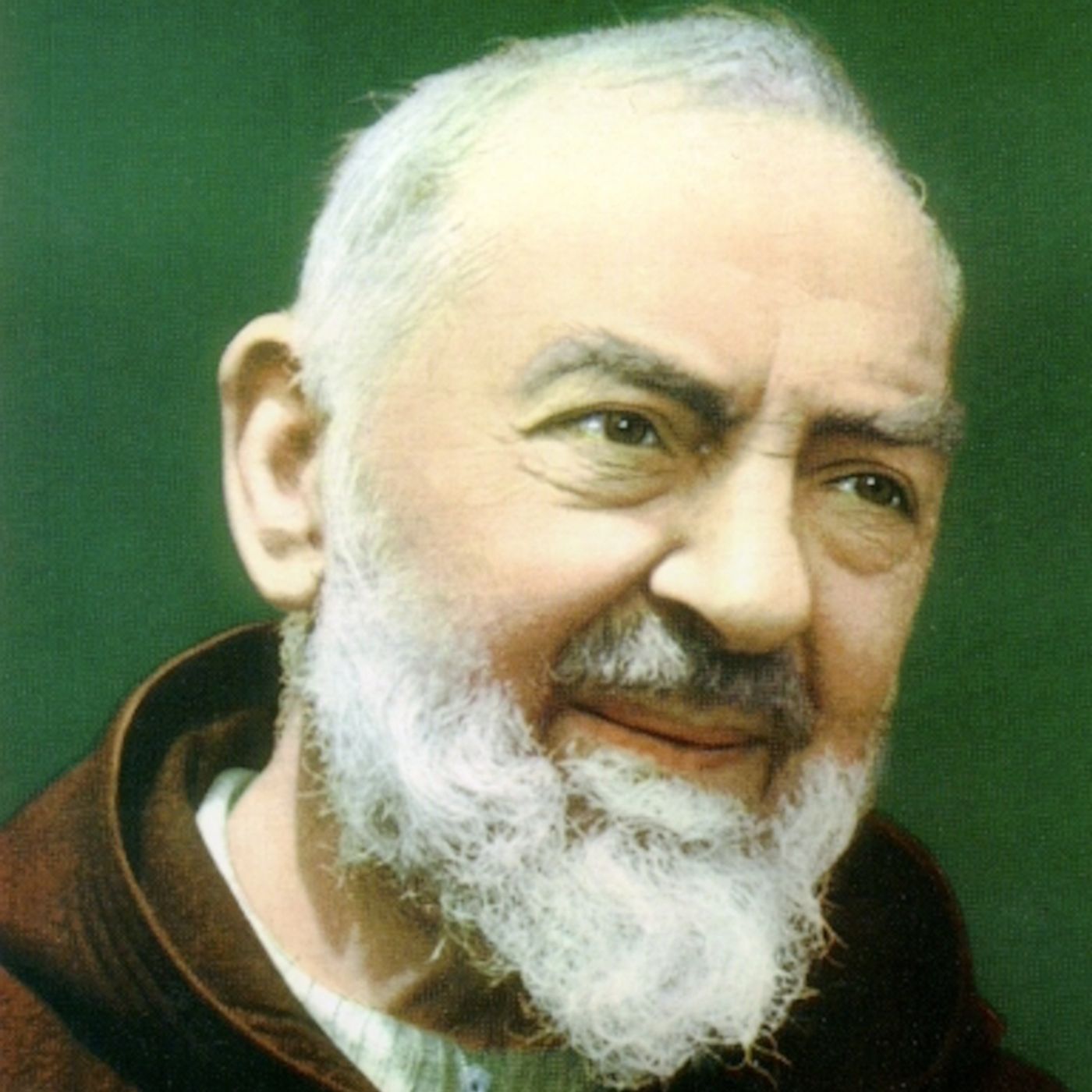 September 23: Saint Pio of Pietrelcina (Padre Pio), Priest 22.09.2026 5mntSeptember 23: Saint Pio of Pietrelcina (Padre Pio), Priest1887–1968Memorial; Liturgical Color: WhitePatron Saint of civil defense volunteers and adolescentsA humble friar’s love for Christ burns holes in his handsLong-married spouses often develop similar patterns of speech. A boy might learn to walk just like his father, and a girl might favor the same hairstyle as her mom. Teenagers in the same cliques dress alike and cut their hair in a similar fashion. It is natural to adopt the traits of the one you love, to mimic their behavior, dress, speech, and habits, consciously or unconsciously. Lover and beloved converge, master and disciple unite, leader and follower bond. Today’s saint did not have a reference group apart from Christ Himself. Jesus Christ inhabited every corner of the mind, soul, and imagination of Saint Pio of Pietrelcina. Pio’s life fused with Christ’s so totally that Pio’s very body bore the marks of his beloved. Not the same haircut, clothes, or gait, but the same nail marks and bloody wounds. Father Pio merged with Christ such that to look upon the friar’s hands was to see the crucified palms of the Son of God on Calvary.Padre Pio grew up dirt poor and uneducated in a village near Naples, Italy, in 1887. Neither his parents nor his grandparents could read or write. He was baptized as Francesco and helped on the family’s small plot of land as a boy. The family was deeply religious, in the good, medieval way that perdured in rural Southern Europe far longer than it did in Northern lands. Saints, feast days, devotions, processions, fasts, the Mass, angels, saints, the Virgin, and God were the stuff of life. They saturated the atmosphere of Pietrelcina. Little Francesco and his family breathed Catholic air. It entered their bloodstream, circulated in their veins, and oozed out of every corpuscle. When he was about ten years old, Francesco decided to dedicate his life to God as a Franciscan friar. After completing some schooling and being privately tutored, he entered a nearby Franciscan friary at age fifteen. He took the name Pio (Pius) after a saint honored in his hometown. He was ordained a priest in 1910.Padre Pio lived virtually his entire priestly life at a modest Franciscan friary in the rural town of San Giovanni Rotondo. Beginning in 1918, he began to experience the stigmata, or marks of the sufferings of Christ. He bled where Christ bled. Holes perforated his hands. He had sharp pains in his side. He also began to display supernatural gifts: bilocation, prophecy, miracles, and healings. His personal routine of prayer and mortification was also stupefying. He did not want his private passion play to go on tour, but it did. He became famous throughout Italy for being holy. Then he became widely known the world over. By the time of his death in 1968, Padre Pio was a bona fide Catholic superstar.Padre Pio had mystique. That mystique was not rooted in good looks, a chateau on the Côte d’Azur, or in movie stardom, but in how he said Mass. People flocked to witness Padre Pio say long, intense, devotional Masses. In the modern world, sin has mystique. It’s cool, retrograde, impulsive, and “edgy.” A life of sin and vice is seen as more authentic than a life of goodness and virtue, because the sinner supposedly does not hide his real self behind a social curtain. Padre Pio hid nothing. He was totally authentic, totally sincere, and totally holy. His life was a rebuke of sin. He did not pretend to “share” others’ burdens by joining them in sin. He entered into the real drama of life by embodying Christ. A true Christian is authentic when he separates himself and his friends from sin, when he creates the mystique of Christ around him, and when, like Christ, he draws all men to himself.Saint Pio, your intense love of God was communicated to the faithful in your celebration of Mass, your wise counsel in the confessional,...
 -
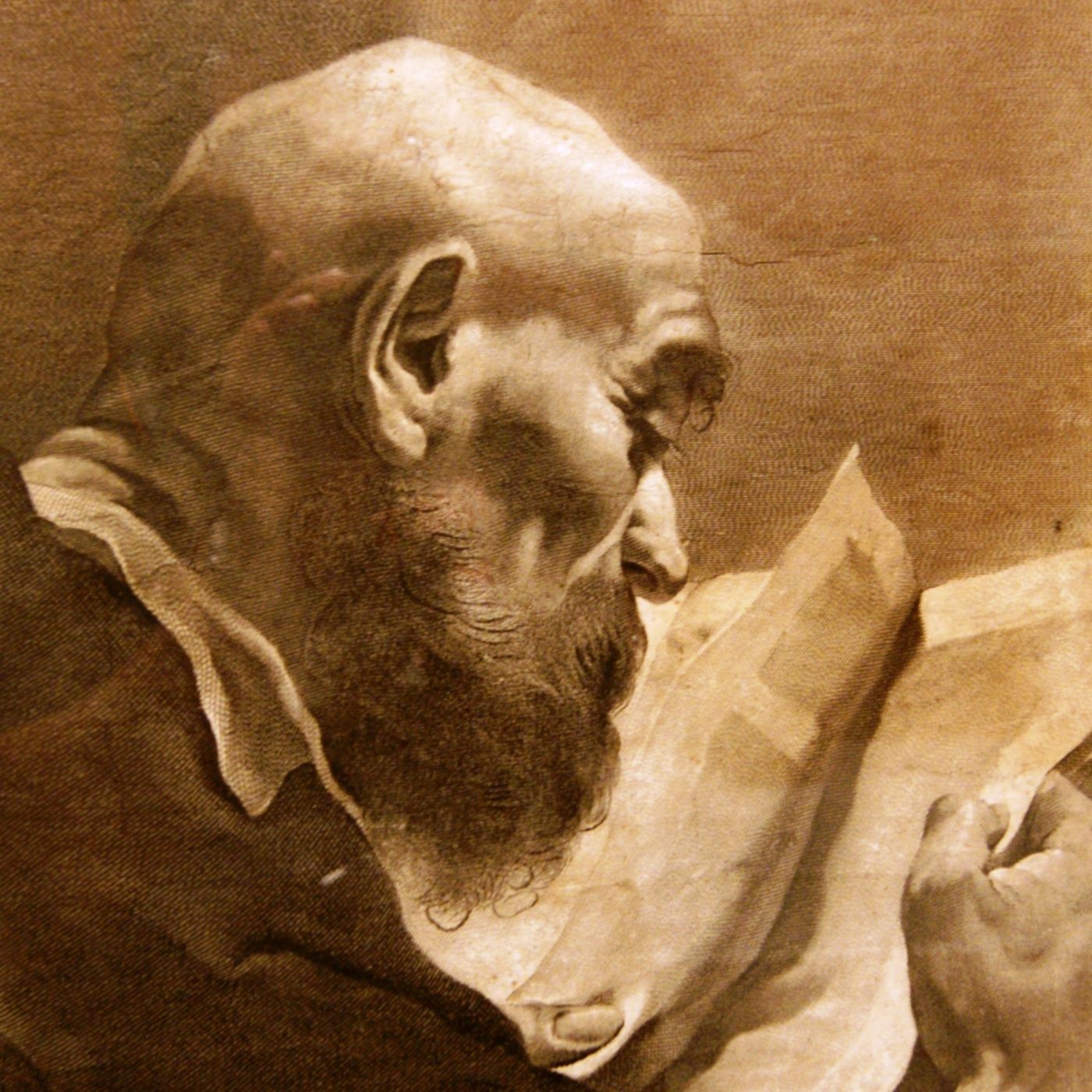 September 21: Saint Matthew, Apostle and Evangelist 20.09.2026 5mntSeptember 21: Saint Matthew, Apostle and EvangelistFirst CenturyFeast; Liturgical Color: RedPatron Saint of bankers, accountants, and money changersA lover of money becomes greedy for God People leave their jobs for all sorts of reasons: more pay, better opportunity, a shorter commute. Today’s saint left his job for a better boss. Matthew was at work in the city of Capernaum, a bustling town with a customs house. It was just another day, and Matthew was going about his job of collecting taxes. Nearby, Jesus was doing his job too, curing a paralyzed man. It was an ordinary day for both of them. But after performing His miracle, Jesus walked down the main street of Capernaum, saw Matthew outside of the customs house, and then...the normal day ended. Jesus said to Matthew, simply, directly, and with force, “Follow me.” And then something astonishing happened. Matthew followed Him. Fistfuls of Roman coins may have spilled from his hands, or he may have swallowed a gulp in his throat, quickly adjusted his tunic, and then scurried to walk in the small clouds of dust that puffed up behind Jesus as His sandals slapped the dry ground. In an instant, Matthew’s life changed forever and always. He had become a follower, a joiner, of the most important man in the history of the world.The Gospel of Matthew nowhere mentions that it is written by a man named Matthew. But it was attributed to him very early in the life of the Church. It was compiled by 80 A.D., at the latest. Matthew’s Gospel is clearly written by a Jew and for Jews. It references the Old Testament repeatedly and notes how Jesus fulfilled those ancient Scriptures. Matthew’s Gospel is the only one which identifies him as a tax collector. Mark and Luke refer to him as Levi, which may have been his birth name, while Matthew (“gift of Yahweh”) was his post-conversion name. Because it begins with a genealogy, Matthew’s Gospel, but not Matthew himself, is in art represented by a man or by a man’s face. After his big moment in Capernaum, Matthew’s name consistently appears in the Gospels’ lists of Apostles, but little more is said about him, apart from a feast he hosts in honor of Jesus. It is not known where he evangelized or where or how he died. Four churches in France alone claim to have Matthew’s head, implying that no one has his head.Christ passes by in every life. Everyone has their chance to say “Yes” or “No,” to stay or follow, to change or remain the same. That moment may come only once and never return. Sudden callings, and sudden conversions, are rare, but they do happen. A life is more likely to plot gradually up or down like a line on a graph than to take a sharp right angle in either direction. Matthew’s life angled sharply when his personal trajectory intersected with Christ’s. The moment is captured in all of its drama by the painter Caravaggio in his Calling of Saint Matthew. A broad shaft of light beams through the room from above Christ’s head. His bony finger points to a well-dressed man at a table with his hands over a pile of coins. The scene unfolds not in the street but in a darkened room. Light and darkness play. Sin and virtue tussle. Past, present, and future hang in the balance. Christ seems to say, “Will you take and eat, will you go and sell, will you come and follow me?” Difficult, challenging questions. But Matthew gave the difficult, generous answer in response, and we remember him today due to that one moment.Saint Matthew, you made the right decision at the right time and so changed your life and those of millions of others who know Christ because of you. Help us to recognize when a pivot point arrives in our own life, when we must change direction, and help us to choose that direction well.
 -
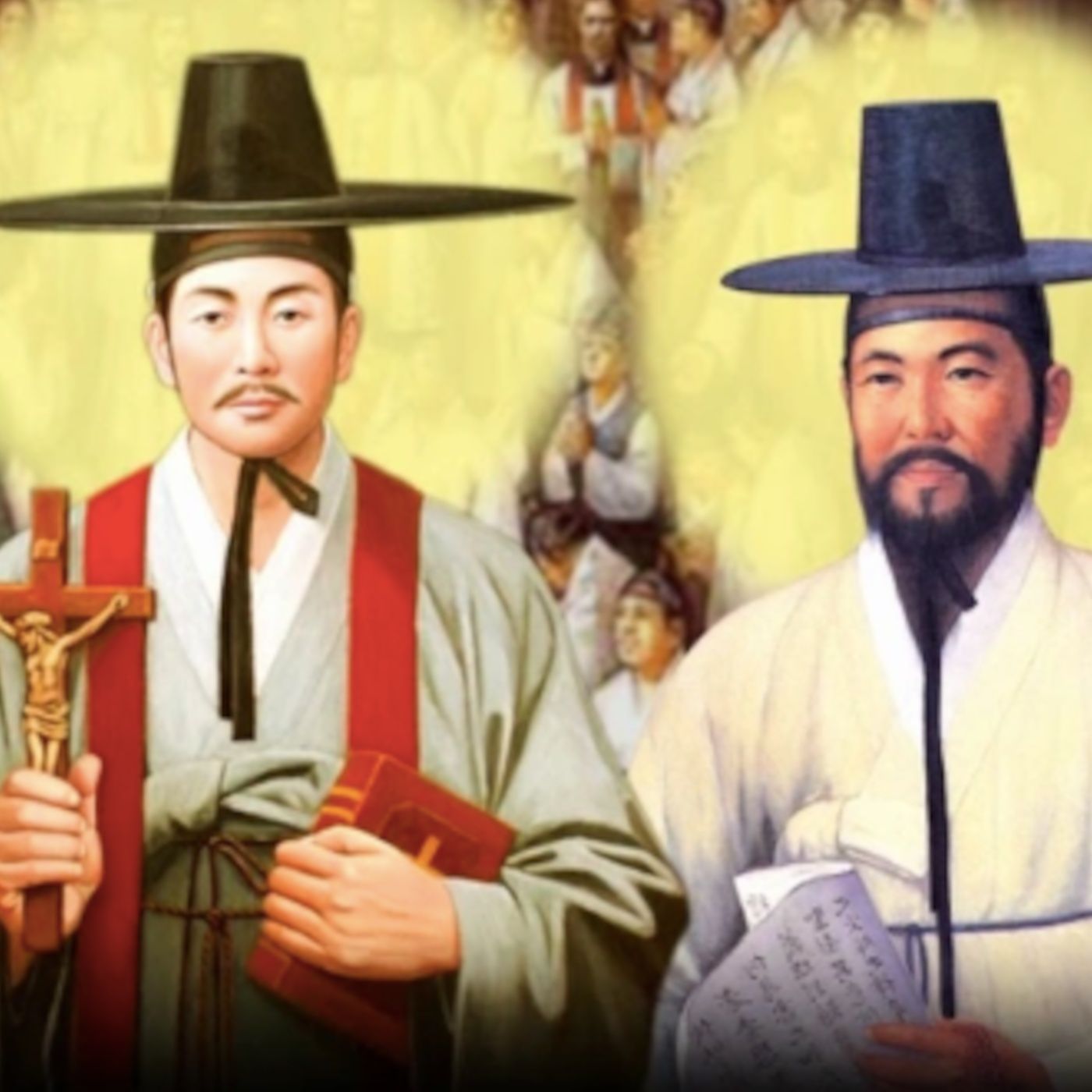 September 20: Andrew Kim Tae-gŏn, Priest, and Paul Chŏng Ha-sang, and Companions, Martyrs 20.09.2026 6mntSeptember 20: Andrew Kim Tae-gŏn, Priest, and Paul Chŏng Ha-sang, and Companions, MartyrsNineteenth centuryMemorial; Liturgical Color: RedPatron Saints of KoreaTheir martyrdom for a new faith caused the Christian sun to rise in KoreaCatholicism was not originally brought to the isolated Korean Peninsula by celibate missionaries who trekked over its remote borders or who landed on its far shores from the outside. Instead, native Korean intellectuals had heard interesting ideas and had read intriguing books imported from nearby China about a new faith. These diplomats, professors and poets went in search of the Church. They crossed their own borders to speak with Jesuit priests in Beijing. The Koreans dialogued with the Jesuits, read their works, witnessed the celebration of the sacraments, and saw the Chinese Church in action. One of these Korean scholars, a man named Yi-Sung-hun, was baptized as Peter in Beijing in 1784 by a French missionary. Newly minted in Christ, with a convert’s fervor, Peter filled his baggage with catechisms, crucifixes, statues, rosaries, and images of the Virgin Mary and headed back to Korea excited to unpack the new faith for all to see. Peter baptized some of his friends and together they formed the first community of Catholics in Korea. They met in a house where sits, today, the Cathedral of Myeongdong.The evangelization of Korea dawned as a thoroughly lay initiative. And once the Catholic seed was planted in Korean soil, it first grew slowly among scholars but then more steadily among the larger populace over time. Today’s feast commemorates the official persecution that burned hot, then cold, then hot, for decades as those first Christian seeds germinated. As the Church grew like a plant, it protruded too high over the land and was repeatedly cut down in the bloody harvest commemorated today. Hundreds of martyrs, mostly lay men and women, but some French missionary bishops and priests as well, were murdered by successive Korean governments throughout the last decade of the eighteenth century and throughout the nineteenth for the crime of being baptized Catholics. They posed no other threat.Paul Chŏng Ha-sang was a nobleman whose father and brother were martyred. Sacrifice was in his genes. Paul traveled to Beijing nine times, pleading for the Chinese Church to send priests to the lay-led Korean Church. Along with others, he sent a letter to Pope Pius VII describing the plight of the Korean faithful. Once clandestine priests began to arrive regularly in the 1830s, Paul would go to the Korean border to escort them to the communities of the faithful and lodge them in his own home. Paul was executed in 1839. His mother and sister were killed shortly after him.Father Andrew Kim Tae-gŏn was the very first native-born Korean priest. He departed Korea in 1837 for the Portuguese settlement of Macau to complete his seminary studies. He was ordained by a French missionary bishop in Shanghai in August 1845. He then guided back to Korea the same bishop and a French priest. His priestly ministry would be to die. He was arrested less than a year after his ordination. The authorities were so impressed with his personal bearing, education, and linguistic abilities that they agonized over whether he should be executed. They wrestled with their consciences, but their consciences, in the end, lost. Father Andrew was beheaded at the age of twenty-six in September 1846.The struggle to establish an organized Church structure in Korea was brutal. Today’s martyrs, whose names are all known and about whom basic facts are verified, stand in the fore. Yet behind them stand, faceless and nameless, thousands of other martyrs known to God alone. They perished by the sword, by crucifixion, in prison, or of starvation, rather than renounce their Christian faith when faced with certain torture and death. The Catholic Church in South...
 -
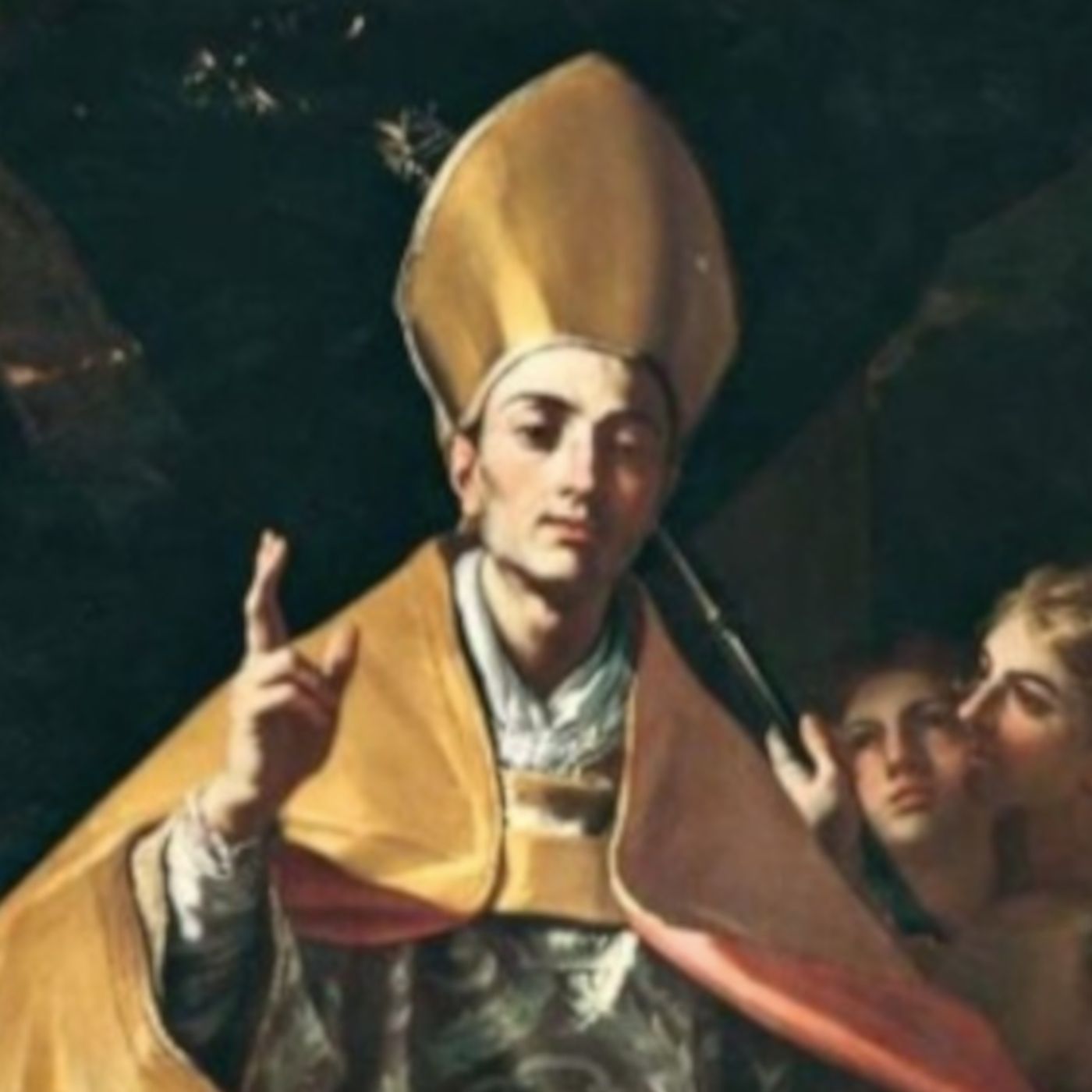 September 19: Saint Januarius, Bishop and Martyr 18.09.2026 5mntSeptember 19: Saint Januarius, Bishop and Martyrc. 300Optional Memorial; Liturgical Color: RedPatron Saint of NaplesAn early bishop martyr is honored due to an enduring miracle of bloodIn every lost corner and hidden valley of the Catholic world is a painting of the Virgin Mary that cries watery tears, a crucifix whose growing hair must be cut with scissors, a white host oozing drops of red blood, or a sacred pool whose baths make the blind see and the lame walk. Of all the miracles, wonders, and theological rarities that leave God’s family in awe, the miracle of today’s saint is one of the most astounding. Three times a year—on his day of martyrdom, September 19; on the day of his commemoration as Patron of Naples, December 16; and on the Saturday before the first Sunday of May, recalling the gathering together of his various relics—the blood of Saint Januarius liquefies.Since at least the 1300s, a small glass vial holding a deep-red, stable substance has been removed from a safe location and brought before the faithful in the Cathedral of Naples by a priest or bishop. The vial is placed near the other relics of Saint Januarius which rest under the altar. And then the drumbeat of prayers start. They sometimes continue for hours and sometimes for minutes. God is bidden, fuel is poured on the fire of faith, and the mysterious moment arrives. Spontaneously, the stable, solid, red substance is transformed into a liquid that splashes around the inside walls of the vial for all to see. The blood of Saint Januarius has come to life. The city of Naples fires a twenty-one-gun salute from a nearby castle to signal that the transformation has occurred.There is no explanation for how this happens. But it happens, happens often, and has happened consistently for many centuries. The proof is the outcome itself. That a solid substance liquifies cannot be debated. The liquified blood must be the starting point for speculation, not a presumption of magic or sleight of hand. That some things of God cannot be explained without the informed trust of faith is simply to state that believers did not make God up. He is not understandable. If He were, then He would fit conveniently into our tiny brains and thus not be God. But no faith is needed to accept this miracle. What happens is a fact.Little is known about the life of Saint Januarius. An extant letter from 432 mentions him as if he were already well known. It states that a nearby bishop, a friend of Saint Augustine named Saint Paulinus of Nola, had a vision of Januarius just before Paulinus died, and that Januarius was a bishop and martyr and a well-known member of the Church of Naples. It is believed that our saint was beheaded during a persecution under the reign of Diocletian, in the decade before Christianity was legalized in the early 300s. Perhaps the most interesting thing about the liquifying of Saint Januarius’ blood is that it occurs for no specific purpose. No sick person is healed, no sacrament is celebrated, no bishop is elected. It is a divine folly. It occurs to edify, to entertain, and to inspire, as if religion were a theological sport, with God simply putting His talents on display for all to behold the spectacle from the pews, to gaze, mouth agape, at a wonder that can neither be explained nor be resisted.Saint Januarius, you died for the faith of the Church just as the Christian era dawned. May we follow your example of generous witness and stand astonished at the mysterious miracle that puts your name on so many lips so many centuries after you perished for Christ.
 -
 September 17: Saint Robert Bellarmine, Bishop and Doctor 17.09.2026 5mntSeptember 17: Saint Robert Bellarmine, Bishop and Doctor1542–1621Optional Memorial; Liturgical Color: WhitePatron Saint of catechists and catechumensA learned scholar with a warm personality drives the Counter-Reformation forwardA massive, multi-volume work of Christian theology was published in the 1580s refuting Protestant errors. The volumes were of such encyclopedic and commanding erudition that readers assumed that the name on the books’ spines, “Bellarmine,” referred to an entire faculty of scholars. But the volumes were the work of just one incredible man, today’s saint, Robert Bellarmine. He was a one-man university. The Bellarmines had a pope in the family and gave their son a broad education from his youth. Young Robert mastered numerous subjects, including the art of playing the violin. He joined the Jesuits in 1560 and taught the classics while simultaneously studying theology on his path to the Priesthood. After his ordination in 1570, he became a professor at the University of Louvain, in modern-day Belgium, and then at the Jesuit College in Rome.During his long career as a professor, Father Bellarmine never stopped learning. He was rigorous in his intellectual approach, read everything, and was particularly focused on refuting, with nuance, Protestant errors. He even learned Hebrew and wrote a Hebrew grammar to counter the thesis of a then popular Protestant history book. The times demanded that Bellarmine develop an expertise in apologetics, to be totally engaged with the red-hot controversies of his day. This was not the age for theological speculation or philosophical rumination, as the medieval scholastics could indulge in. This was the age to master first principles, to delve into the ancient sources, to root out error, and to express the perennial truths of Catholicism with renewed vigor surrounded by new art, architecture, and sacred music. It was a total mind-body approach. It was the Baroque exploding before your eyes. It was the onslaught of the Counter-Reformation, and Robert Bellarmine was the tip of the spear.Bellarmine’s long list of accomplishments is astonishing. He helped produce a new edition of Saint Jerome’s Vulgate Bible, participated in the revision of the Julian calendar, and contributed to the authoritative Catechism which the Church published for over three hundred years. He served on a papal commission that arbitrated a major conflict over the Kingship of France, became a regional superior for the Jesuits, and was ordained a bishop and consecrated a Cardinal. He was a trusted adviser to successive popes, was tasked with resolving a bitter dispute over the theology of grace between Dominicans and Jesuits, and escaped being elected Pope himself by the narrowest of margins in 1605. After this near miss with destiny, he was appointed to serve on various Roman Congregations and as prefect of the Vatican library, so he resigned from his diocesan responsibilities and returned to Rome for the rest of his life, where he became the Holy See’s indispensable man. His long and faithful service at the highest levels of the Church culminated in his playing a role in the famous process against Galileo, who was Bellarmine’s personal friend. Our saint’s last years were spent writing devotional works on prayer and dying well.Robert Bellarmine accepted the trappings of his office—robes, servants, and a carriage—but he lived austerely and expected all priests to do the same. His virtues equaled his achievements. He had an attractive blend of warmth, intelligence, and big-heartedness that earned him a huge circle of friends. He knew the truth like few others but listened carefully and respectfully to all who challenged it. Robert Bellarmine was canonized in 1930 and declared a Doctor of the Church in 1931. He is buried in the Jesuit Church of Saint Ignatius in Rome.Saint Robert Bellarmine, we see in your life a...
 -
 September 17: Saint Hildegard of Bingen, Virgin and Doctor 17.09.2026 6mntSeptember 17: Saint Hildegard of Bingen, Virgin and Doctor1098-1179Optional Memorial; Liturgical Color: White Patroness of philologistsA one-woman magisterium orchestrates a life in tune with the CreatorIn the high Middle-Ages, she was New-Age. Before farm-to-table was a term, she lived organically. Before alternative medicine was de rigueur, she catalogued the medicinal benefits of herbs, plants, minerals, and potions. And before anyone ever “went green” to save planet earth, she talked about the “viriditas,” or greenness, of God, meaning how His graces watered a desiccated soul until it flowered with fresh, green, life. Hildegard of Bingen was far, far, ahead of her time even though, from an external perspective, she lived the austere, rigorous, cloistered life common to the female religious of her era.Hildegard was born in the Rhineland, the very western region of modern Germany, to a minor noble family. Her mother and father placed her in the care of a well-known local abbess for her education at the tender age of eight, where she learned Latin and the teachings of the Catholic religion. Her world deepened and broadened inside the four walls of her simple Benedictine convent. When her mentor died, Hildegard became the abbess and soon moved the convent, generating some tension in the process, to a new location where it could better flourish as her fame attracted more and more notice and vocations.Hildegard was unusual for her time. She was unusual, in fact, for any time. She was a polymath with eclectic interests in numerous fields of study. She was a sophisticated and prolific composer of sacred music whose voluminous works surpass the output of almost any other Mediaeval musician. She had an advanced understanding of medicine and the human body, including an almost complete knowledge of how blood circulated in the body - four centuries before such knowledge was verified through post-mortem studies. Hildegard also had detailed knowledge of animal and plant life, of rocks, reptiles, fish, and the natural sciences in general. Yet if she must be known for one thing above all, it must be for her pyrotechnic visions of God and the cosmos. Hildegard’s colorful visions are difficult to classify. She described them as a wide-awake spiritual awareness of the “reflection of the living light.” From childhood, she felt her entire body – bones, nerves, veins, senses – all rising ever higher into the vault of heaven where she experienced all of creation in its particularity and in its oneness. These were not ecstasies or physical transportations, but an eyes-wide-open, all-sensory experience of sermons, virtues, writings, and other human actions as if they were shimmering like the sun on the mirror-like surface of a lake. The over-arching theme of these visions was the mystical marriage between God and His creation through the incarnation of Jesus Christ, a union consummated on the cross, where Christ makes his Bride, the Church, fertile for humanity. As Hildegard’s writings became more well-known, the Pope was asked for his appreciation of their theological orthodoxy or heterodoxy. Pope Eugene III approved of Hildegarde’s description of her visions, with a prudent warning for Hildegard to avoid any pride in being so blessed. The great St. Bernard of Clairvaux, a famous contemporary of Hildegard, was also asked his opinions about her writings and the two exchanged letters. In fact, many people, both humble and exalted, corresponded with Hildegard, leaving behind one of the most massive caches of extant letters from mediaeval times.In the last years of her life, despite worsening health, Hildegarde’s prestige was such that she was given permission to leave her convent in order to preach in town squares and Churches, something almost unheard of for a woman of her era. She died in the odor of sanctity on September 17, 1179, the day on...
 -
 September 16: Saint Cyprian, Bishop, Martyr 15.09.2026 6mntSeptember 16: Saint Cyprian, Bishop, Martyrc.200–258Memorial; Liturgical Color: RedPatron Saint of Algeria and North AfricaThe faithful soak up the blood of their beheaded bishopThe elegantly named Thaschus Caecilius Cyprianus was born in an uncertain year in that buzzing beehive of early Christianity known as Roman North Africa. His biography epitomizes that of many greats of his era: a classically educated Roman citizen of renown finds Christ as an adult, leaves behind his exalted civic status, trades Empire for Church, and places his gifts and reputation at the service of the people as a bishop of consequence. But because he lived in times of hot persecution, Cyprian’s life did not come to a peaceful end like others with similar biographies, such as Saints Hilary, Ambrose, Augustine, or Paulinus of Nola. The mighty Bishop Cyprian was sentenced to death by a local bureaucrat. On the fateful day, he knelt in the burning sand and waited for the heavy Roman sword to lop off his head. Cyprian’s cult of martyrdom sprang up instantly, even as the faithful, carrying white cloths, soaked up the holy blood that dripped from his torso. His name was soon placed in the Roman Canon, where it remains today, spoken from the altar and heard by the faithful at Mass in Eucharistic Prayer I.Cyprian was a big-hearted, well-educated “man about town” when, in his mid-forties, he was converted by the example and words of an old priest. He redirected his life, made a vow of chastity that astonished his friends, and even abstained from his greatest pleasure—the works of pagan authors. In all of Cyprian’s Christian writings, there is not one single citation of these pagans whose style and thought Cyprian had so admired. Once converted, Cyprian’s mind focused on Scripture and the growing canon of Christian theology, mostly that of his fellow North African Tertullian. Soon after his baptism, Cyprian was ordained a priest, and in 248, after first resisting the appointment, he was made the bishop of his home city of Carthage. His impressive bearing and refined education earned him deep respect among the faithful. His biographer, a deacon named Pontus, wrote about Cyprian precisely so that the great man would be known for the example of his entire life, not just his last few heroic moments. Under the persecution of the Emperor Decius (249–252), which so marked the life of the third-century Church, many Christians lined up at the office of their local Roman official to offer token worship to pagan gods and to receive a libellus, or small sheet, documenting their apostasy. Cyprian lost all his possessions in this persecution but avoided capture by going into hiding. He governed his diocese remotely through letters. He was also compelled to defend his flight against criticism levelled by bishops in both Rome and North Africa that he was avoiding martyrdom. Once the tide of persecution subsided, Cyprian returned to Carthage and was lenient but clear, like his contemporary Pope Cornelius, in reintegrating the lapsi back into the Church once they had performed a suitable penance.The roiling debate over how to pastorally respond to the lapsi divided the Church in North Africa, with some priests arguing no forgiveness was possible for idolaters, and others demanding that the lapsi perform onerous penances before they were received again into the fold. Cyprian responded to these divisions by writing a treatise on Church unity, arguing that the Pope’s teaching on this matter must be obeyed: “There is one God, one Christ, and but one episcopal chair, originally founded on Peter, by the Lord’s authority. There cannot be set up another altar or another priesthood.” Cyprian later clashed with Pope Stephen I over the validity of the sacraments performed by priests who had apostatized, a matter resolved after both mens’ death in favor of the Roman position of leniency.Cyprian’s...
 -
 September 16: Saint Cornelius, Pope, Martyr 15.09.2026 5mntSeptember 16: Saint Cornelius, Pope, Martyrc. Late Second, or Early Third, Century–253Memorial; Liturgical Color: RedPatron Saint of cattle, domestic animals, and earache sufferersA Pope reigns for two years, excommunicates a schismatic, and dies in exileThe twenty-first pope of the Church, Saint Cornelius, succeeded no one. After the death of Pope Saint Fabian, martyred in January 250, persecutions prohibited the clergy of Rome from electing a successor, so the Chair of Saint Peter was vacant for over a year. Finally, when the cruel Emperor Decius departed Rome on military campaign, the clergy chose Cornelius as Bishop of Rome. Not everyone was happy with the choice, especially the former future pope Novatian, who had led the Roman clergy during the vacancy and had convinced himself that he was going to be elected. Novatian’s supporters consecrated him bishop and refused to acknowledge Cornelius. Sides were taken, letters were written, and tensions heightened. After consolidating support from the esteemed Saint Cyprian, Bishop of Carthage, and others, Cornelius resolved the dispute by convening a synod of bishops which excommunicated the schismatic Novatian and his followers.Pope Cornelius reigned for a little over two years, from March 251 to June 253. Even though his time in office was brief, he made some important decisions and left an interesting legacy. Decius’ persecution gave rise to the greatest pastoral dilemma of the third century—how, and whether, to reintegrate Christians who had offered pagan sacrifice, regretted it, and desired to enter again into the embrace of Mother Church. The related question of whether bishops, priests, and deacons who had apostosized could perform valid sacraments would vex Cornelius’s successors. There were two camps on this issue. Novatian held that lapsed Christians were idolaters, and idolatry was, in the Old Testament especially, unforgivable. The Church could not absolve such apostates. They were to be judged by God alone at death. Cornelius, Saint Cyprian, and other bishops occupied a more moderate position. They taught that the lapsi could be reintegrated into the Church through repentance and an appropriate penance. Cornelius’ position won the day, forever and always, establishing an important theological precedent: There is no sin that cannot be forgiven.Pope Cornelius also left, in his letters, an important record of the size, state, and organization of the Church of Rome, hard facts so obvious to those inside of a culture that they often go unreported in historical documents. Decius’ successor as Emperor was named Gallus, and he was no friend of Christians either. He banished Cornelius to a city not far from Rome where the Pope died of physical hardship. Saint Cornelius was buried near the papal crypt in the Catacombs of Saint Callixtus. One day in 1849, an amateur archeologist, a layman who worked in the Vatican library, found a small marble shard that read NELIUS MARTYR in a field on the outskirts of Rome. But there was no martyr named Nelius. He then found another shard that read COR. The inscription is still visible today in the Catacombs of Callixtus: Cornelius Martyr.The Romans unsheathed their long knives in the 250s. Pope after pope was martyred by various means. But the Church did not run and hide, it stayed and grew. The blood of Cornelius and other pope-martyrs wet the soil, and the seeds of faith moistened, grew, and sprouted into the vast garden of Catholicism that slowly, and imperceptibly, took deep root in the ground of Europe. Saint Cornelius’ name is read at Mass in Eucharistic Prayer I even today, next to Saint Cyprian’s. He was staunch in his defense of the Church, yet appropriately lenient to his fellow Christians who did not possess his same fortitude. In this respect, he was as wise a pastor as he was brave a martyr.Saint Cornelius, our Lord said that it profits...
 -
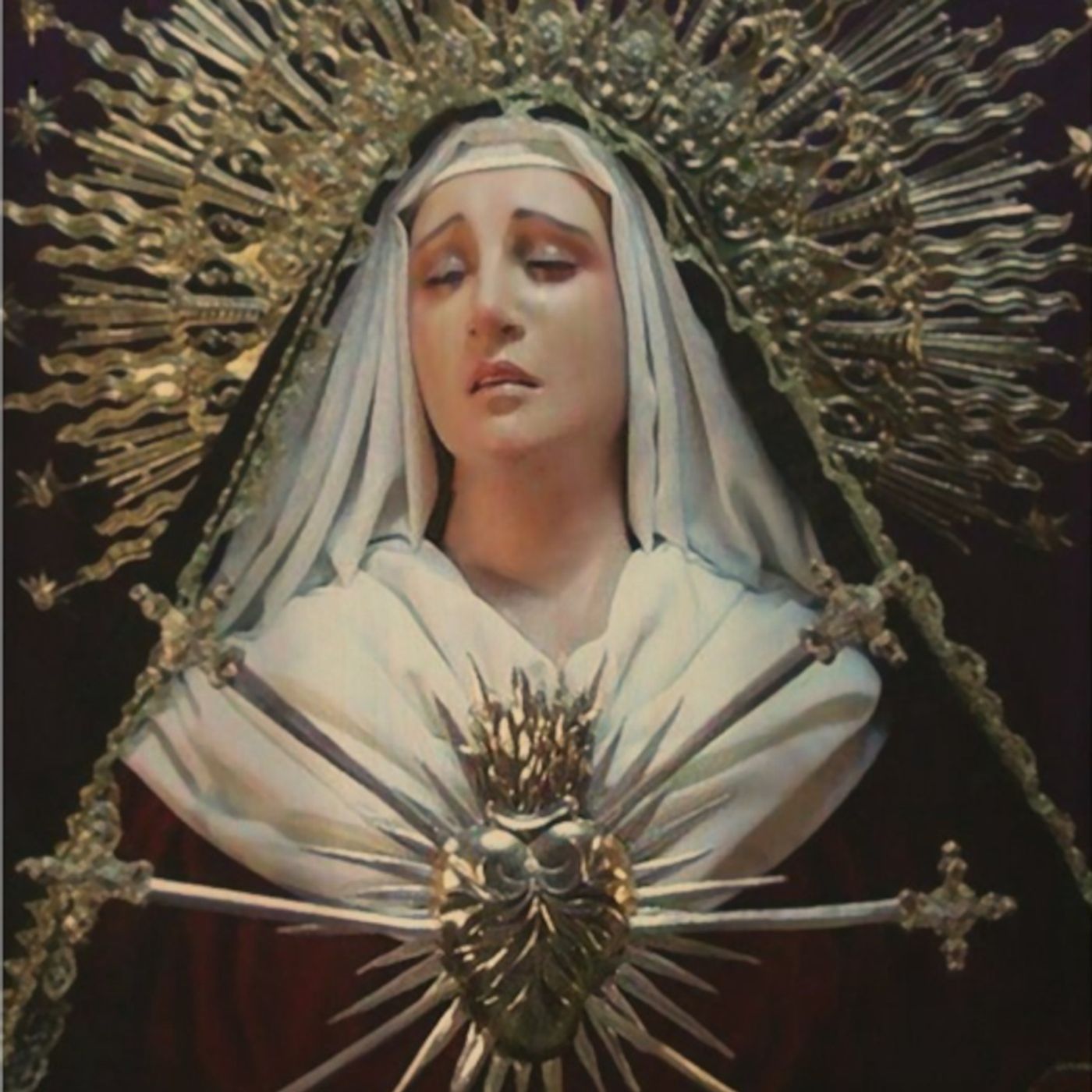 September 15: Our Lady of Sorrows 15.09.2026 5mntSeptember 15: Our Lady of SorrowsMemorial; Liturgical Color: WhitePatroness of SlovakiaA mother is only as happy as her saddest childEvery life climbs its Calvary. Every soul has its quiet sorrow which cannot be shared in full with any other soul. This concealed pain is the very real drama that plays out behind the curtain of the duties and distractions of everyday life. Jesus Christ, fully God and fully man, shared in all things human, save sin, including pain and sorrow. So He wept at the death of Lazarus, and He balanced the heavy cross on His sore bones and trudged up a hill to His own execution. Thoughts and ideas can be shared in their totality. Emotions and experiences only partially so. Suffering is intensely private in that it is a personal, lived experience. The intense sufferings of Jesus Christ were intensified by His perfection. It was more unjust, more cruel, that one so perfect should suffer at the hands of creatures of His own making. Only a perfect being similar to Jesus could enter into His sorrow, could experience it somewhat as He did. That person was Mary. She was not a Goddess, of course, but the New Eve, the perfect person God intended that every person should be from the start. Because she was perfect, she most understood, and felt, the pain of her perfect Son. Shared perfection led to shared sorrow.Today’s feast commemorates the sorrows of Mary, most especially those lived during Jesus’ passion and death. Devotional images of Mary show her heart pierced by seven swords, symbolic of seven sorrows: the prophecy of Simeon; the flight into Egypt; Jesus being lost in the temple; meeting Jesus on His way to Calvary; standing at the foot of the Cross; being present when Jesus was removed from the Cross; and her presence at His burial. Mary was perfect, but her life wasn’t perfect. She was squeezed by the same wine press of pain, humiliation, and sorrow that squeezes every life. She was unmarried and pregnant and must have heard the neighbors’ whispers as she walked the dusty streets of her town. She and her family had to flee to a far-off land to escape the murderous King Herod the Great. She lived a real life stuffed with real human drama. But her most intense sorrows were felt when she was in her late forties, when her one and only child died a public death, leaving her, already a widow, totally alone, her middle-aged face stretched with sorrow.When our fingers and thumb walk up and down the chain of God’s mercy, we ruminate over things glorious, joyful, luminous, and sorrowful. We recall historical events like Christ’s Baptism and the Last Supper, and theological events like the Assumption and the Coronation. The Sorrowful Mysteries are historical. Mary hovers just off center stage. She stands nearby, amidst the crowd on the path to Calvary, upright and brave at the foot of the Cross, weeping as her dead boy is wrapped in a sheet and delicately placed on a cold slab in a rock-cut tomb. She is Our Lady of Sorrows because she, and the Church, are mothers. They give and nurture life. They feel more than men. They respond to suffering with co-suffering, not so much through actions and solutions. On today’s feast, we recall Mary’s sorrow and share in it. But our sorrow is not that of a godless Viking, a pagan Roman, or a modern secularist. Christian grief is not godless grief. Our grief, like Mary’s grief, is ameliorated by the sure and certain hope that the last word in our book is not death and despair but hope and life. Mary’s sorrow is temporary, as all of our sorrows one day will be. There is nothing that does not have a context, except for God. And the context for Christian sorrow is the Resurrection.Mary of Sorrows, you shared the pain and sorrow of your perfect Son but were never forlorn. Help all who turn to you to unite our sorrows to yours and His so that we may co-suffer in His death and co-share in His Resurrection.
 -
 September 14: Exaltation of the Holy Cross 14.09.2026 6mntSeptember 14: Exaltation of the Holy CrossFeast; Liturgical Color: RedPatronal Feast of Cortona, ItalyA torture device is transformed into a universal symbol of hope and peaceIf the Romans had hung criminals from a gibbet, then Catholic churches would display a noose in their sanctuaries instead of a cross. Or a statue of Jesus’ lifeless body would be hanging in the sanctuary from a sturdy branch with a rope wrapped tightly around His neck. If the Romans had practiced stoning as their chosen form of capital punishment, then there would be a pile of rocks for the congregation to gaze at in hope, with Jesus’ body, bruised and broken, lying lifeless nearby. We are accustomed to the cross. We wear it around our necks, chisel it onto our tombstones, tattoo it onto our arms, and anchor it into rocky mountain peaks. We even top our steeples with the cross and illuminate it at night. The Church has been so spectacularly successful in communicating its truths about suffering and death, about resurrection and life, that we perhaps don’t notice that, over long centuries, a device of torture and death has been reinterpreted as the world’s greatest symbol of life and peace.This is the paradox of the cross. Today’s feast commemorates the Cross because in spiritual combat with life, the cross lost. A conqueror might plant the head of his decapitated opponent on a spike, a soldier might return from a far-away war with an enemies’ flag captured in the heat of battle, or an American Indian might tuck the scalps of his poor victims under his saddle. Trophies of war take many forms. The Cross is Christ’s war trophy. The Church exalts the Cross on this liturgical feast because this enemy of life was felled like timber by the Son of God. The Cross was brought low and humbled. It was mocked when Jesus rose from the dead. The Church holds up the Cross to say “Behold what the cross did not do. Behold that life conquers even a cruel and public death.”God’s self-emptying started at the incarnation. He humbled himself to walk among us when He restricted Himself to the limitations of His own creatures. God continued to pour Himself out until He climbed onto the wood of the Cross, completing the total self-gift that was His life. Our God is not like a general who sends a subordinate to carry out a dangerous mission, like an absent parent who pays someone else to raise his children, or like a physician who coldly touches his patient’s body and then washes in antiseptic. No, our God is like a surgeon who, before he cuts, points to his side and says to the patient with empathy, “I had the same—see my scars.” Our God points to the wound in His open side and says, “I too was the victim of evil and death.” God bore the Cross and its cruel death so that He could drink from the same bitter cup as man, so that He could enter more fully into the world’s sorrow.Death on the Cross was not preordained. God could have freely chosen other ways to redeem the human race—through intelligence, wisdom, charm, money, or education. But then, to participate in His redemption, we would have to study for a PhD, attend etiquette school, get a good job, earn an excellent wage, or receive good grades. Not everyone can do these things. But everyone can die. Death is egalitarian. Everyone does it, eventually. So God did it and “so made the grave a sign of hope that promises resurrection even as it claims our mortal bodies,” as the graveside prayer states. The Cross, then, is everyone’s trophy, raised high with one arm, head cocked to the side. It is in this sense that the Cross is a sign of hope. Because the Cross lost the fight with Christ, death is not the final answer. The Cross says that our God does not answer the question of suffering and death in a partial academic way. He responds in a total human way. He responds with His life. He doesn’t explain; He shares. He responds with empathy by taking up His...
Podcast serupa


Populer di
Podcast ini juga muncul di daftar podcast negara-negara ini.
