
The Colonial Department
Lio Mangubat
0
A narrative nonfiction podcast that unearths forgotten stories from Philippine history. Written, produced, and engineered by Lio Mangubat, the show presents compelling historical narratives in an audio format. A book version of the project has been published by Faction Press. Each episode delves into lesser-known events and figures, bringing lost chapters of the country's past to light.
Episode
-
 S8E12 Borderline Bureaucrats: An Early History of La Union 03.10.2026 17mntAs La Union historian Adriel Obar Meimban writes, La Union fits neatly into its geography: bound by rivers on the north and south, by the Cordillera mountain range on the east, and then, on its west side, the pounding surf that has made San Juan one of the country’s most popular tourist spots. But even in its earliest days, the borders of La Union were drawn and redrawn in bureaucratic squabbles. The newly minted province and its neighbors could not decide where one ends and another begins—and caught in the middle of these disputes were ordinary townsfolk whose lives and rhythms would not be dictated by any map.My book Silk, Silver, Spices, Slaves is now available on Shopee and Lazada for only P395.Support the podcast: patreon.com/thecolonialdeptFollow us on IG: @thecolonialdeptFollow us on TikTok: @thecolonialdeptEmail us: [email protected]:Meimban, Adriel Obar (1997). La Union: The Making of a Province, 1850-1921. Rex Printing Company.Newson, Linda A. (2009). Conquest & Pestilence in the Early Spanish Philippines. Ateneo de Manila University Press.See, Dexter A. (6 November 2015). “La Union, Ilocos Sur end century-old boundary dispute.” Baguio Herald Express. https://baguioheraldexpressonline.com/la-union-ilocos-sur-end-century-old-boundary-dispute/Fernando, Jeferson B. (17 March 2026). “Privilege Speech — 38th Regular Session of 24th Sangguniang Panlalawigan of La Union.” Facebook. https://www.facebook.com/reel/1605457753991907
 -
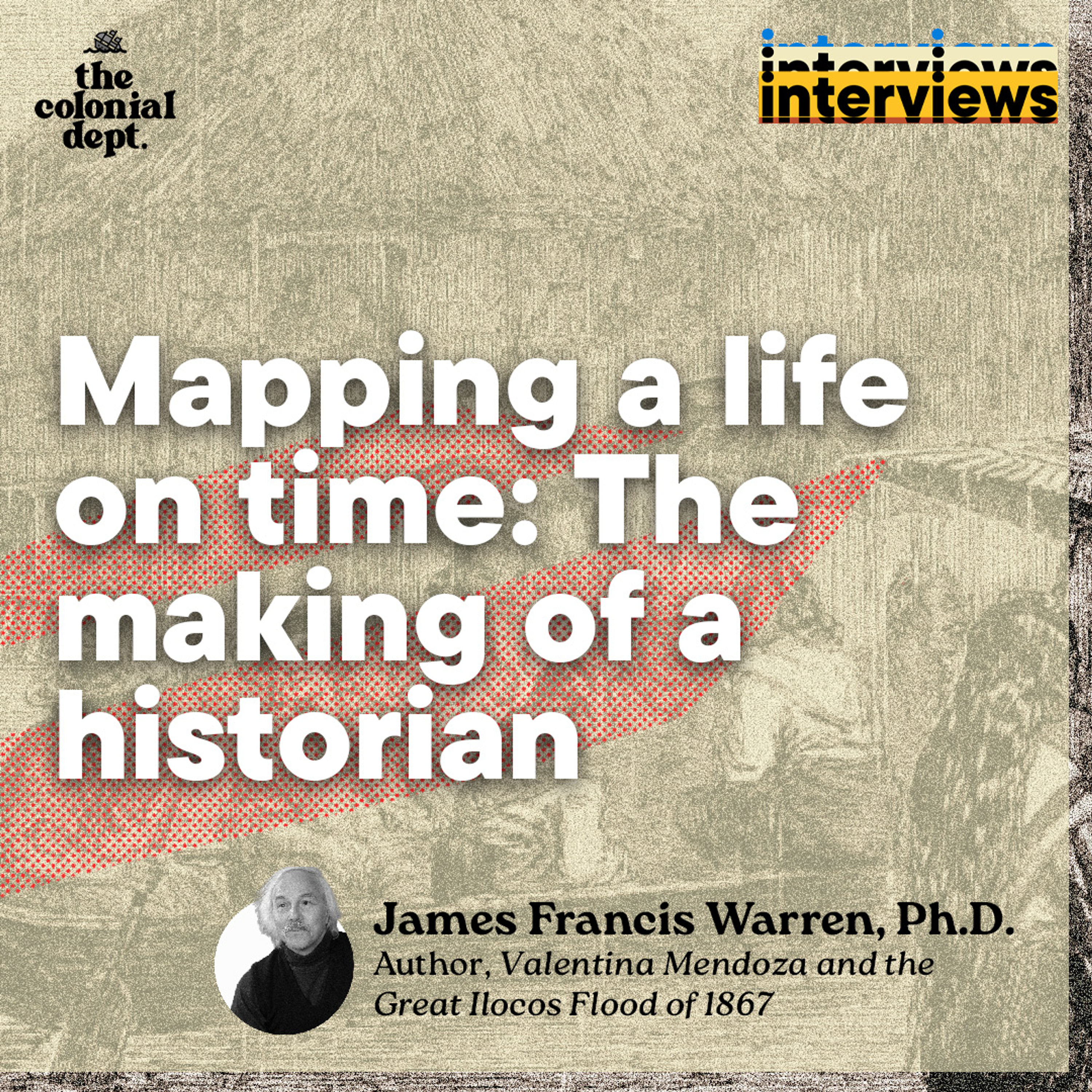 INTERVIEW: Mapping a life on time—the making of a historian 25.09.2026 59mntIn 2018, I first encountered The Sulu Zone and Iranun & Balangingi—two important books by James Francis Warren that opened my eyes to the rich, roiling history of the seafaring cultures of the Sulu Sea. His groundbreaking work laid out a way of looking at the past that was neither stoic nor static—a historiography that truly widened horizons.At the launch of his newest book, Valentina Mendoza and the Great Ilocos Flood of 1867, I spoke with Dr. Warren about his long and fruitful career as a scholar. In the thoughtful, hour-long conversation that followed, he dissected for me how the events of his own life shaped his work as a historian. He also went in-depth about his process and his way of thinking about research, whether it was about the polities of the Sulu Sea or the dire climate disasters that hit the Philippines over and over. Along the way, he also told me about many strange and wonderful encounters—among them, a Bajau spirit medium, a soccer-playing military operative, and a terrible flood that stranded him in Manila. Such is the colorful career of a man who made history his lifelong calling.Special thanks to the Ateneo de Manila University Press. My book Silk, Silver, Spices, Slaves is now available on Shopee and Lazada for only P395.Support the podcast: patreon.com/thecolonialdeptFollow us on IG: @thecolonialdeptFollow us on TikTok: @thecolonialdeptEmail us: [email protected] Colonial Dept. Interview is a series where I talk to researchers and authors shining a light on our past.
 -
 S8E11: We're Off to the 1924 Paris Olympics! 11.09.2026 16mntMore than a century ago, the Philippine flag was unfurled for the first time on the biggest sports stage in the world. It was—and is—a matter of great pride to our nation. But it was also an event that was bizarrely marked with mystery and controversy. From disappearing athletes to extra flags, let’s head to Paris in 1924, as we join two sports legends in their journey to the Olympics!The thumbnail image is from the book The First Filipino Olympians, written by Isidra Reyes, Gerard Lico, and Lorenzo Manguiat. Additional audio in this episode is from the Olympics YouTube page.My book Silk, Silver, Spices, Slaves is now available on Shopee and Lazada for only P395.Support the podcast: patreon.com/thecolonialdeptFollow us on IG: @thecolonialdeptFollow us on TikTok: @thecolonialdeptEmail us: [email protected]:Reyes, Isidra; Lico, Gerard; Manguiat, Lorenzo (2025). The First Filipino Olympians: The Untold Story of Dr. Regino Ylanan and David Nepomuceno. Archivo 1984.Gems, Gerald R. (2016). Sport and the American Occupation of the Philippines: Bats, Balls, and Bayonets. Lexington Books.Associated Press (3 July 2024). “American Runners at Olympics Will Not Have to Fight One Another—Paddock Meets Tough Competition.” Spokane Daily Chronicle. https://news.google.com/newspapers?nid=1338&dat=19240703&id=1cBXAAAAIBAJ&sjid=dfQDAAAAIBAJ&pg=5835,617567“Digitalisation.” (Undated) Olympics.com. https://www.olympics.com/ioc/olympic-agenda-reforms/digitalisation“How digital content will shape the Paris 2024 Olympic Games.” (Undated) Reuters Imagen. https://imagen.io/resources/blog/how-digital-content-will-shape-paris-2024-olympic-games“Factsheet: The Games of the II Olympiad, Paris 1900 and the Games of the VIII Olympiad, Paris 1924.” (May 2024) International Olympic CommitteeAnderson, Jess (2024). “How City of Light Changed the Olympics.” BBC. https://www.bbc.co.uk/sport/extra/fnyzo8vcuz/how-city-of-light-changed-the-olympics#group-section-Medal-haul-Iqe0fKkNCG“Catalon, Fortunato.” (Undated) Philippine Olympians Association. https://www.philippineolympians.org/oly/1956-olympics-melbourne-athletics-catalon-fortunato“Paris 1924 Athletics 200m men Results.” (Undated) Olympics.com. https://www.olympics.com/en/olympic-games/paris-1924/results/athletics/200m-men“Paris 1924 Athletics 100m men Results.” (Undated) Olympics.com. https://www.olympics.com/en/olympic-games/paris-1924/results/athletics/100m-menHousman, Patty (2 April 2021). “Jack Johnson, the Fight of the Century, and Race in America.” American University, Washington D.C. https://www.american.edu/cas/news/jack-johnson-the-fight-of-the-century-and-race-in-america.cfm
 -
 S8E10 In Paracale, the Faintest Gleam of Gold 27.08.2026 17mntAccording to historian Linda Newson, Bicol did not bow down easily to the Spanish occupation. For their resistance, they paid a dear price. Population showed Camarines lost almost half of its population from 1591 to 1649. With no major plagues or Moro raids recorded, Newson could only conclude that it must have been because of brutal conflict with the Spaniards. Either the Bicolanos were killed, or they fled so far inland that they escaped the census takers. One of the things the Spaniards were looking for in Camarines were the gold mines of Paracale. By the time of the occupation, this town was already known far and wide for its gold deposits. What riches would it yield in the centuries to come?My book Silk, Silver, Spices, Slaves is now available on Shopee and Lazada for only P395.Support the podcast: patreon.com/thecolonialdeptFollow us on IG: @thecolonialdeptFollow us on TikTok: @thecolonialdeptEmail us: [email protected] image is of Potosí, from Antonio de Herrera y Tordesillas, Historia general (Antwerp: Juan Bautista Verdussen, 1728). John Carter Brown Library at Brown UniversityReferences: Newson, Linda A. (2011). Conquest & Pestilence in the Early Spanish Philippines. Ateneo de Manila University Press.Soltes, Jonas Cabiles (11 July 2012). “Paracale mining: A way of life, death.” Inquirer Southern Luzon. https://newsinfo.inquirer.net/227467/paracale-mining-a-way-of-life-deathSantos, Paz Verdades M. (2024). “Maria Timbang Palo: Pabirik na Kuwento ng Camarines Norte.” Malay, 36(2), pp. 18-25Estrella, Victor (29 November 2016). “Ancient Tagalog Goldworking Technology from Fray San Buenaventura’s Vocabulario de Lengua Tagala: Integrating Archaeological, Linguistic, and Ethnohistoric Data.” Hukay, 20, p. 47-78.Bennett, Anna T. N. (2009). “Gold in early Southeast Asia.” ArcheoSciences, 33, pp. 99-107.Fox, Robert B. (1970). The Tabon Caves: Archaeological Explorations and Excavations on Palawan Island, Philippines. National Museum.Habana, Olivia M. (2000). “Gold Mining in Benguet to 1898.” Philippine Studies, 48(4), p. 455-487.Newson, Linda A. (2011). Conquest and Pestilence in the Early Spanish Philippines. Ateneo de Manila University Press.Lane, Kris (30 July 2019). “The first global city.” Aeon. https://aeon.co/essays/potosi-the-mountain-of-silver-that-was-the-first-global-cityCasa, Louis John (1966). Potosi, Its Mines and Its Indians [masteral thesis]. Loyola University Chicago. https://ecommons.luc.edu/luc_theses/2116Barr, H.L. (1937) “San Mauricio Mining Company.” The Marsman Magazine, 2(5), pp. 10, 14, 16.https://repository.mainlib.upd.edu.ph/omekas/s/rare-periodicals/media/22641“Gold Market.” (6 January 1937). The Tribune. https://trove.nla.gov.au/newspaper/article/249847758International Labour Organization (2020). Artisanal and small-scale gold mining baseline report: Camarines Norte and South Cotabato. https://www.ilo.org/publications/artisanal-and-small-scale-gold-mining-baseline-report-camarines-norte-and
 -
 S8E9 White-Hot Heat: Climate and Culture in the Late 1800s 08.08.2026 17mntWriting in June 1889, the Manila-based correspondent for La Solidaridad listed down the calamities afflicting the archipelago: cholera, fires, earthquakes, and economic ruin. In those days, even the sky seemed to be on fire. Our reporter told his ilustrado readers in faraway Europe that standing in the shade in Manila would give you no comfort, because the temperature was 39 degrees. 39 degrees! How did the way we talk about and think about heat change our culture and our history? For the 100th episode of The Colonial Dept., join us in a journey that takes us from a Roman poem to a Rizal essay, from economics to fashion to plain old discrimination. Bring along your pamaypay or your Jisu fan if you must; history is going to get a little hot!Support us on Patreon: patreon.com/thecolonialdeptFollow us on IG: @thecolonialdeptFollow us on TikTok: @thecolonialdeptEmail us: [email protected]:Strabo (1917). Geography, Volume I: Books 1-2 (Horace Leonard Jones, trans.). Harvard University Press.Ovid (1964). Metamorphoses (Rolfe Humphries, trans.) Indiana University Press.Belamide, Aidel Paul G. (2020). “Rise and Decline of the Coffee Industry in 19th-Century Batangas: Causes and Consequences.” Philippine Social Sciences Review, 72(2), pp. 1-42. Algue, Rev. Jose (1904). “Bulletin 2: The Climate of the Philippines.” In Census of the Philippine Islands (1903), Department of Commerce and Labor, Bureau of the Census.Lucero, Todd Sales (1 May 2024). “Heat in Pinoy history.” The Freeman. https://www.philstar.com/the-freeman/opinion/2024/05/01/2351767/heat-pinoy-historySingh, Deepti; Seager, Richard; Cook, Benjamin I.; Cane, Mark; Ting, Mingfang; Cook, Edward; Davis, Michael (2018). “Climate and the Global Famine of 1876–78.” Journal of Climate, 31(23), pp. 9445–9467.Santiago, Fernando A. Jr. (2015). “Manners of Resistance: Symbolic Defiance of Colonial Authority In Nineteenth Century Philippines.” Philippine Sociological Review, 63, pp. 137-168.Aguilar, Filomeno V. Jr. (2025). José Rizal, Nationhood, and the Anticolonial Imagination. Ateneo de Manila University Press.Coo, Stephanie (2019). Clothing the Colony: Nineteenth-Century Philippine Sartorial Culture, 1820-1896. Ateneo de Manila University Press.
 -
 INTERVIEW: What was it like to commute in Manila 100 years ago? 01.08.2026 44mntJust the thought of commuting around Manila is enough to set one’s teeth on edge. But do our current-day problems of congestion and overcrowding have their roots in decisions and policies made a century ago?There’s no one better to answer this question than our podcast guest today. For more than ten years, Michael Pante, Ph.D., an associate professor at the Ateneo de Manila University, has been researching the history of transportation, mobility, and urbanization in the capital city. He even has a forthcoming book on the topic entitled The Immobile Metropolis: A History of Motorized Transportation in Manila. In this Interview episode, Michael and I talk all about tranvias, bancas, accesorias, carromatas, and more… as well as answer a crucial question affecting the lives of millions: Can anything be done to improve how we get around?Support us: patreon.com/thecolonialdeptFollow us on IG: @thecolonialdeptFollow us on TikTok: @thecolonialdeptEmail us: [email protected] image from the Maryknoll Mission Archives, University of Southern California, via John Tewell.The Colonial Dept. Interview is a series where I talk to researchers and authors shining a light on our past.
 -
 S8E8 Pacific Sick Ships: Medicine Aboard the Galleons 18.07.2026 18mntIn the long journeys from Manila to Acapulco, disease was the clingy passenger no one wanted around. But it wandered around the decks, knocked on every cabin, stalked everyone on board—until one day, you woke up, and disease was just everywhere. How could it not be? There was food rotting inside the barrels, slick and moldy woodwork, crew and passengers and officers packed into tight spaces, pests crawling over the meals, the overpowering smell of human waste. And so they came, that grim parade: fever, chills, dysentery, infection, dermatitis, beriberi, the dread scurvy. How did the ships of the Galleon Trade and the trans-Pacific exchange keep up their good health in those arduous sea crossings? Let’s open the medicine chests and find out.Support us: patreon.com/thecolonialdeptFollow us on IG: @thecolonialdeptFollow us on TikTok: @thecolonialdeptEmail us: [email protected]: “Accessions to the Map-Room.” (1869) In the Journal of the Royal Geographical Society of London, 39.Arranz, Adolfo; Hernandez, Marco (6 May 2018). “Chapter 3: A journey of dread.” In Adolfo, Hernandez (2018),The China Ship, South China Morning Post. Luque-Talaván, Miguel (2014). “Oceanic deaths aboard the Manila galleons.” In Van Tilburg, H., Tripati, S., Walker Vadillo, V., Fahy, B., and Kimura, J. (eds.), Iberian Global Interactions: the Manila Galleon and the Roteiro, The Museum of Underwater Archaeology (MUA) Collection.Morris, David Z. (17 May 2016). “Cruel ships of prosperity.” Aeon. https://aeon.co/essays/the-manila-galleons-that-oceaneered-for-plague-and-profit“Unguentum Populeon.” The Poisoner’s Apothecary. https://www.thepoisonersapothecary.com/shop/p/unguentum-populeonMatera, Margherita (8 November 2022). “Old Italian Recipes of Medical Ointments in Psalter Manuscript Rahlfs 1759.” Göttinger Septuaginta. https://septuaginta.uni-goettingen.de/blog/old-italian-recipes-of-medical-ointments-in-psalte/Stuart, Godofredo U., Jr., (n.d.).“Sandalino/Connarus semidecandrus Jack.” Philippine Medicinal Plants. https://www.stuartxchange.org/SandalinoViena de Souza, Lais (2018). Missionários Do corpo à alma: Assistência, saberes e práticas de cura nas missões, colégios e hospitais da Companhia de Jesus (Goa e Bahia, 1542-1622) [doctoral dissertation]. Universidade de Évora.Klein, Wouter (16 June 2021). “Plant of the Month: Sarsaparilla.” JSTOR Daily. https://daily.jstor.org/plant-of-the-month-sarsaparilla/ Kroupa, Šebestián. Georg Joseph Kamel (1661–1706): A Jesuit Pharmacist at the Frontiers of Colonial Empires [doctoral dissertation]. Darwin College, University of Cambridge.Hajar, Rachel (2012). “The Air of History (Part II) Medicine in the Middle Ages.” Heart Views, 13(4), pp. 158–162. https://pmc.ncbi.nlm.nih.gov/articles/PMC3573364/Clarke, Laurie (17 September 2025). “The four 'humours': Our 2,500-year-old mania for personality types.” BBC. https://www.bbc.com/future/article/20250915-the-ancient-origins-of-todays-personality-typesDorner, Zachary (22 September 2020). “How Early Modern Empire Changed Medicine.” The Boston Review. https://www.bostonreview.net/articles/zachary-dorner-how-early-modern-empire-turned-people-patientsJoven, Arnel E. (2012). “Colonial adaptations in tropical Asia: Spanish medicine in the Philippines in the seventeenth and eighteenth centuries.” Asian Cultural Studies, 38, pp. 171–186.Eppenberger, Patrick; Galassi, Francesco; Rühli, Frank (2017). “A brief pictorial and historical introduction to guaiacum – from a putative cure for syphilis to an actual screening method for colorectal cancer.” British Journal of Clinical Pharmacology, 83(9), p. 2118-2119.Voeks, Robert & Greene, Charlotte (2019). “God’s Healing Leaves: The Colonial Quest for Medicinal Plants in the Torrid Zone.” Geographical Review, 108(4), pp. 545-465. https://pmc.ncbi.nlm.nih.gov/articles/PMC6208447/Wani-Obias, Rhodalyn C. (2025). “Health, History, and the High Seas.” In Wani-Obias (ed.), Galleons and Social Control in the Spanish Empire: Volume V, National Historical Commission of the Philippines.Najera, René F. (9 May 2025). “Isabel Zendal: The First Public Health Nurse.” History of Vaccines. Sales, Ostwald C. (2005). “Las Actividades Medicas en las filipinas durante la Primera Mitad del Siglo XVII.” Perspectivas LatinoAmericanas, 2(168). http://altmetrics.ceek.jp/article/publisher/Centro%20de%20Estudios%20Latinoamericanos%20Universidad%20Nanzan
 -
 S8E7 The Fractured Plateau: Bukidnon in World War II 04.07.2026 18mntThe word Bukidnon means “people of the mountains”, but historian Ronald K. Edgerton also gives another name for them: the people of the middle ground. As he writes in his book of the same name, “Many Bukidnons mastered the art of borrowing from the new without losing touch with the old. [...] And over time they developed a capacity to envision themselves [...] as negotiators between worlds, skilled at including both in a new, more accommodating world view.”This middle ground was pushed to the limit during World War II, when Japanese troops invaded the fastness of the mountains and Philippine soldiers splintered into guerrilla groups. Now, in the dark days of wartime, the Bukidnon found themselves caught in the middle of conquerors, resistance fighters, criminals, cults… and even cannibals!Support us on Patreon: patreon.com/thecolonialdeptFollow us on IG: @thecolonialdeptFollow us on TikTok: @thecolonialdeptEmail us: [email protected]:Edgerton, Ronald K. (2008). People of the Middle Ground: A Century of Conflict and Accommodation in Central Mindanao, 1880s-1980s. Ateneo de Manila University Press.Esteban, Rolando (2016). “Cannibalism among Japanese Soldiers in Bukidnon, Philippines, 1945–47.” Asian Studies: Journal of Critical Perspectives on Asia, 52(1).Shiraz, Josie (2025). “Echoes of Defeat: The Horrors of Japanese Stragglers in Post-WWII Bukidnon.” Pacific Atrocities Education. https://www.pacificatrocities.org/blog/echoes-of-defeat-the-horrors-of-japanese-stragglers-in-post-wwii-bukidnonKyoto National Museum (undated). “Tales of Hungry Ghosts (Gaki zōshi).” Google Arts and Culture. https://artsandculture.google.com/story/tales-of-hungry-ghosts-gaki-soshi-kyoto-national-museum/ZQVByl-_mamPJQ?hl=en“National Treasure: Tales of Hungry Ghosts (Gaki zōshi).” Kyoto National Museum. https://www.kyohaku.go.jp/eng/collection/meihin/emaki/item03/
 -
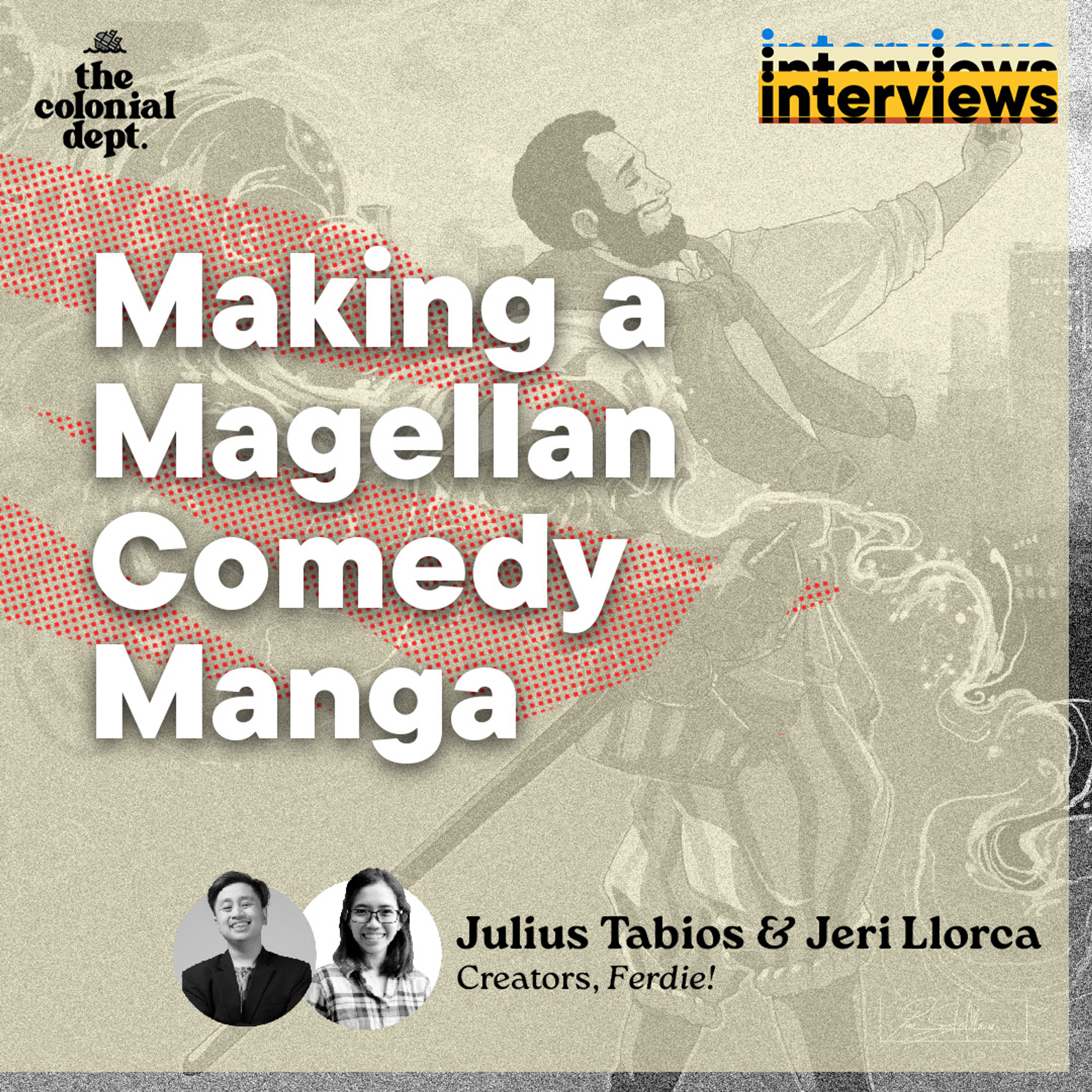 INTERVIEW: Making a Magellan Comedy Manga 27.06.2026 40mntIn the offbeat manga Ferdie!, Ferdinand Magellan and Antonio Pigafetta are caught up in a storm right before they arrive in the Philippines…and find themselves transported five hundred years into the future into a place that’s beyond anything they could have imagined. So what is an explorer and colonizer to do in 2020s Philippines? Why, become a content creator, of course!In this Interview episode, I talk to Ferdie! creators Julius Tabios and Jeri Llorca about their comic book. Where did this crazy idea come from? How did their understanding of the historical Magellan craft their own funny and fictional take on the famous explorer? And what does this manga have to say about social media and the modern world?Ferdie! (P450) is available at Lazada and Shopee.Disclosure: I am one of the editors of Ferdie!, and I worked closely with Julius and Jeri in developing the story for their comic. It was also published by the company I work for, Summit Books. Summit Books did not sponsor this episode.The Colonial Dept. Interview is a series where I talk to researchers and authors shining a light on our past.
 -
 S8E6: After the Black Ships Departed 13.06.2026 17mntThe island of Balangingi stands halfway between Borneo and Mindanao. Surrounding Balangingi were sharp reefs and surging cross-currents that would be lethal to any boatman… except for the Balangingi Samal, of course. Surrounding the main landmass were little islets that would wink in and out with the tides. On the coast were thick snarls of mangrove; in the parched interior were swaying groves of coconut. During the Spanish occupation, the Balangingi Samal—also known as the Banguingui Sama or the Sama Balangingi—visited the Philippines twice a year, raiding coastal villages across the Philippines and capturing many of their inhabitants as slaves. And then the Spanish struck back. This is the story of the rise and fall of a fierce seafaring people.Support us on Patreon: patreon.com/thecolonialdeptFollow us on IG: @thecolonialdeptFollow us on TikTok: @thecolonialdeptEmail us: [email protected]: Cojuangco, Tingting (1993). Kris of Valor: The Samal Balangingi’s Defiance and Diaspora. Manisan Research and Pub. Inc.Warren, James Francis (2020). “In Search of Julano Taupan: His Life and His Times.” Journal of Indian Ocean World Studies, 4, pp. 2-31.Warren, James Francis (2021). The Sulu Zone, 1768-1898: The Dynamics of External Trade, Slavery, and Ethnicity in the Transformation of a Southeast Asian Maritime State (40th Anniversary Ed.). Ateneo de Manila Press.Mastura, Datu Michael Ong (2023). The Rulers of Magindanao in Modern History, 1515–1903: Continuity and Change in a Traditional Realm in the Southern Philippines. Ateneo de Manila University Press.Nimmo, H. Arlo (1968). “Reflections on Bajau History.” Philippine Studies: Historical and Ethnographic Viewpoints, 16(1), pp. 32-58.Roxas-Lim, Aurora (2017). “Marine-Oriented Sama-Bajao People and Their Searchfor Human Rights.” Public Policy, 18, pp. 50-66.Cojuangco, Margarita delos Reyes (2003). “The Samal People in the Mindanao Sea, Pre-History to 1900s: A Historical Study in Ethnic Origination, Dispersion, and Migration” [doctoral dissertation]. Faculty of the Graduate School, University of Santo Tomas.Moreno, Frede (2023). “Stateless sea gypsies in Bangsamoro coastlines: Understanding the Sama Bajau ethnic tribe in the Philippines.” MPRA Paper No. 117900, pp. 1-17.Silvestre, Jojo G. (24 June 2023). “Tingting Cojuangco — Christian Espiritu’s ultimate muse.” Daily Tribune. https://tribune.net.ph/2023/06/23/tingting-cojuangco-christian-espiritus-ultimate-muse
 -
 S8E5: Rajio Taisō; Or, How to Get Fit in a Time of War 29.05.2026 15mntAt seven o’clock on the dot, a high-pitched Japanese voice blared out from speakers and switched-on radios all across the archipelago. The program came on like clockwork, chirping in immediately after every station signed on for the day—a cheery signal of a brand-new day under Imperial rule. In wartime Philippines, Rajio Taisō was everywhere—schools, private companies, government offices, military camps. If you browse through pictures from World War II, you can see many pictures of dozens or even hundreds of citizens stretching and twisting in unison. But how was this radio regimen baked into the lives of ordinary Filipinos from all walks of life?Support us on Patreon: patreon.com/thecolonialdeptFollow us on IG: @thecolonialdeptFollow us on TikTok: @thecolonialdeptEmail us: [email protected]: Jose, Ricardo Trota (1990). “The Tribune During the Japanese Occupation.” Philippine Studies, 38(1), pp. 45-64.Griggs, Alyson (2020). There Were Children on the Battleground: Japanese and Filipino Youth in the Second World War [masteral dissertation]. Utah State University.Yamashita, Samuel (2023). “Understanding Daily Life in Wartime Japan, 1937-1945.” Education About Asia, 28(2). https://www.asianstudies.org/publications/eaa/archives/understanding-daily-life-in-wartime-japan-1937-1945/Bigcas, Deana; Javate, Bianca (undated). "Radio Taiso: The Birth of Community Morning Exercises in the Philippines During the Height of the Japanese Occupation." Scribd. https://www.scribd.com/document/488287830/Radio-Callisthenics-in-the-PhilippinesFrühstück, Sabine (2014). “The spirit to take up a gun: militarising gender in the Imperial Army.” In Gender, Nation and State in Modern Japan (Germer, Andrea; Mackie, Vera; Wöhr, Ulrike, eds.), Routledge. Cabbell-Manners, Rupert (15 March 2026). “Why Tojo’s men loved him – and Japan’s far-Right still does.” The Telegraph.Tani, Fumi (20 December 2024). “The Political Rhythm of Rajio Taisō.” Ethnomusicology @ Harvey Mudd College. https://hmcethnomusicology.substack.com/p/the-political-rhythm-of-rajio-taisoNPO Japan Radio Calisthenics Federation NPO 法人全国ラジオ体操連盟. “History of Radio Calisthenics ラジオ体操の歴史.” https://www.radioexercises.org/taisou/historyChua, Karl Ian Cheng (2012). “The Stories They Tell: Komiks during the Japanese Occupation, 1942-1944.” Philippine Studies: Historical and Ethnographic Viewpoints, 53(1), pp. 59-90Semans, Himari Radio (3 July 2023). “Taisō: A Nuanced History of a Nearly 100-Year-Old Tradition.” Unseen Japan. https://unseen-japan.com/radio-taiso-japan-history/
 -
 INTERVIEW: Restoring historical markers with Project Panandito 23.05.2026 50mntYou pass by them every day: plaques of metal set onto walls and plinths, heavy with text and history. You may have wondered—how do you maintain these historical markers?A group of students in the University of the Philippines Diliman wondered the same thing. So, for their required NSTP initiative, they formed Project Panandito, a student-led project that, during the sweltering summer months of 2026, went around historical sites in Manila to clean and restore some of these markers. In this interview, I talk to them about the nuts and bolts of cleaning a plaque, what to expect in Manila when you show up to do conservation work on a hot day, how to highlight history in a time that seems determined to forget it… and why restoring a marker can actually be—therapeutic?The Colonial Dept. Interview is a series where I talk to researchers and authors shining a light on our past.Support the podcast: patreon.com/thecolonialdeptFollow us on IG: @thecolonialdeptFollow us on TikTok: @thecolonialdeptEmail us: [email protected] Colonial Dept. just celebrated its fifth birthday! To celebrate, I’m giving away discounts for new Patreon members. Subscribe now to any tier and get 50% off your first month. Just use the promo code 5YRS. To know more, go to patreon.com/thecolonialdept/membership.
 -
 S8E4: Edison’s Cameras, Manila’s Trenches 09.05.2026 15mntYes, Edison as in Thomas Edison, the light bulb guy. At the turn of his century, the tech wizard of Menlo Park produced thousands of movies as a showcase for his company’s vitascopes. Among those movies are five films about the Philippine-American War, produced in a flurry all throughout June of 1899. It turns out that the boom of cinema dovetailed neatly with America’s growing imperial ambitions. But what made this faraway war so compelling for wide-eyed audiences captured by the magic of the silver screen?Support us on Patreon: patreon.com/thecolonialdeptFollow us on IG: @thecolonialdeptFollow us on TikTok: @thecolonialdeptEmail us: [email protected]:Rafael, Vicente (2016). Motherless Tongues: The Insurgency of Language Amid Wars of Translation. Ateneo de Manila University Press.Palis, Joseph (2009). “The ethnographic spectacle of the ‘other’ Filipinos in early cinema.” GeoJournal, 74, pp. 227-234.Robbins, Dylon Lamar (13 July 2017). “War, Modernity, and Motion in the Edison Films of 1898.” Journal of Latin American Cultural Studies, 26(3). https://www.tandfonline.com/doi/full/10.1080/13569325.2017.1292222#d1e122Brewer, Susan A. (1 October 2013). “Selling Empire: American Propaganda and War in the Philippines.” Asian Pacific Journal, 11(40). https://apjjf.org/2013/11/40/susan-a-brewer/4002/articleWalker, Malea (6 February 2024). “The Spanish American War and the Yellow Press.” Library of Congress Blogs. https://blogs.loc.gov/headlinesandheroes/2024/02/the-spanish-american-war-and-the-yellow-press/“Advance of Kansas Volunteers at Caloocan.” Library of Congress“History of Edison Motion Pictures.” (undated) Library of Congress Blinkhorn, Martin (1980). “Spain: The ‘Spanish Problem’ and the Imperial Myth.” Journal of Contemporary History, 15(1), pp. 5-25.Paterson, Thomas G. (1996). “United States Intervention in Cuba, 1898: Interpretations of the Spanish-American-Cuban-Filipino War.” The History Teacher, 29(3), pp. 341-361.Ocampo, Ambeth (19 March 2013). “Treasure trove in thick books.” Philippine Daily Inquirer.Ocampo, Ambeth (21 March 2013). “An Igorot in the Philippine-American War.” Philippine Daily Inquirer.Legarda, Benito J., Jr. (2001). The Hills of Sampaloc: The Opening Actions of the Philippine-American War, February 4-5, 1899. The Bookmark, Inc.Angeles, Jose Amiel P. (2013). As Our Might Grows Less: The Philippine-American War in Context [Ph.D. dissertation]. Department of History, Graduate School of the History of Oregon.
 -
 S8E3: Nobody Expects the Philippine Inquisition! 25.04.2026 17mntWhen you pulled up to the dock, they were there waiting for you, those holy men of God.But beyond inspecting ships that docked in the ports of Manila and Cavite for blasphemers and banned items, the Inquisition in the Philippines also investigated Protestants. Jews. Masons. Muslims. Non-Catholic Christian sects, like Armenian Christians or Jansenists. Its investigators monitored cases of heresy, blasphemy, apostasy, bigamy, and contempt. They kept tabs on witches, sorcerers, palm readers, fortune tellers, astrologers, and peddlers of superstition. And they dutifully recorded all their investigations and sent them to their head office in Mexico.What tales can we uncover from these inquisitorial files? And what do they say about the practice of faith in our archipelago?Support the podcast: patreon.com/thecolonialdeptFollow us on IG: @thecolonialdeptFollow us on TikTok: @thecolonialdeptEmail us: [email protected]:Galleons and Social Control in the Spanish Empire: The Contrabandistas: Defenders of “Free Trade” on the Manila-Acapulco Galleons, Volume IV. (2025) National Historical Commission of the Philippines.Angeles, F. Delor (1980) "The Philippine Inquisition: A Survey." Philippine Studies: Historical and Ethnographic Viewpoints, (28)3, pp. 253-283.Cunningham, Charles H. (1918). “The Inquisition in the Philippines: The Salcedo Affair.” The Catholic Historical Review, 3(4), pp. 417-445.Bonilla & Santos Garcia (1583). “Instructions to the Commissary of the Inquisition.” In Blair, Emma Helen, and Robertson, James Alexander (eds.), The Philippine Islands, 1493-1898 (Vol. 40), Arthur H. Clark Company, 57.Mawson, Stephanie Joy (2023). “Folk magic in the Philippines, 1611-39.” Journal of Southeast Asian Studies, 54(2), pp. 1-25.
 -
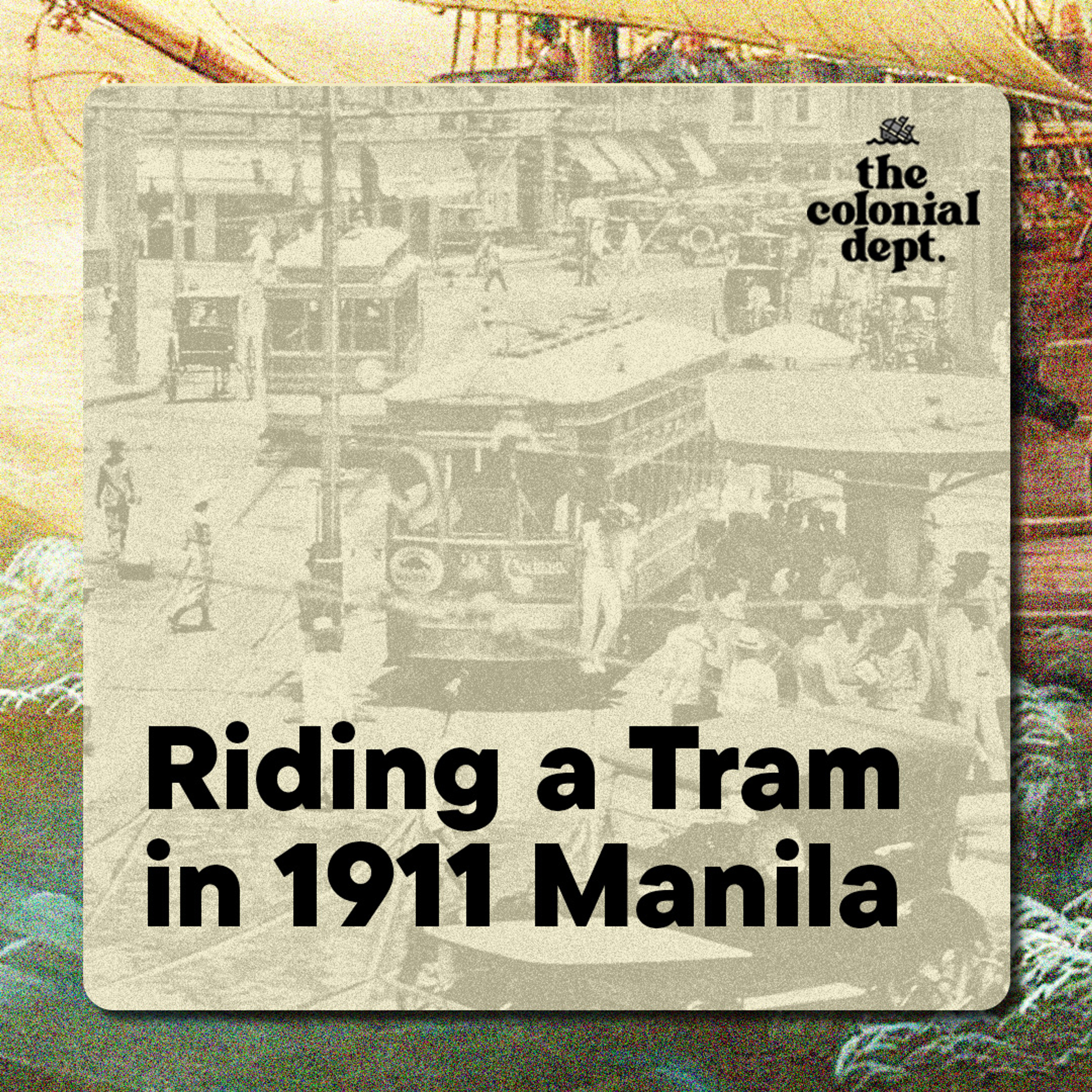 S8E2: Riding a Tram in 1911 Manila 10.04.2026 17mntWhat kind of city was waiting for Dutch scholar Gerret Pieter Rouffaer when he got to Manila?After more than a decade of occupation, the Americans had given the colonial capital some thorough nips and tucks. Aside from the glimmering roads and shady plazas, the Americans also laid down more tramways. Trams were already up and running during the latter part of the Spanish occupation, but in 1905, the US rehabilitated the old system. Unlike the old Spanish versions, these new streetcars barrelled along on double-wheeled trucks and could fit fifty people. They also ran on electricity. When Rouffaer arrived in the Philippines, he took the tranvia everywhere, and wrote down his snarky observations in a diary. Let’s see what he had to say.Support the podcast: patreon.com/thecolonialdeptFollow us on IG: @thecolonialdeptFollow us on TikTok: @thecolonialdeptEmail us: [email protected]:Muijzenberg, Otto Van Den (ed., trans.) (2016). Colonial Manila 1909-1912: Three Dutch Travel Accounts. Ateneo de Manila University Press.Rodell, Paul A. (1974). “Philippine ‘Seditious Plays.’” Asian Studies, 12(1), pp. 88-118.Pante, Michael D. (2016). “Urban Mobility and a Healthy City Intertwined Transport and Public Health Policies in American-Colonial Manila.” Philippine Studies: Historical & Ethnographic Viewpoints, 64(1), pp. 73-101.Morley, Ian (2016). “Modern Urban Designing in the Philippines, 1898–1916.” Philippine Studies: Historical & Ethnographic Viewpoints, 64(1), pp. 3-42.Gardini, Ashley (8 July 2025). “Daniel Burnham in the Philippines.” JSTOR Daily. Cubeiro, Didac (2017). “Modernizing the Colony: Ports in Colonial Philippines, 1880-1908.” World History Connected.RailwaysPh. “Tranvías de Manila y Corregidor: Notable Heritage Tram Systems” (15 November 2020). Renacimiento Manila.Sison, Norman (21 April 2015). “LRT expansions remind of tranvia days.” Vera Files. Scott, William Henry (1984). Prehispanic Source Materials for the Study of Philippine History (revised edition). New Day Publishers.
 -
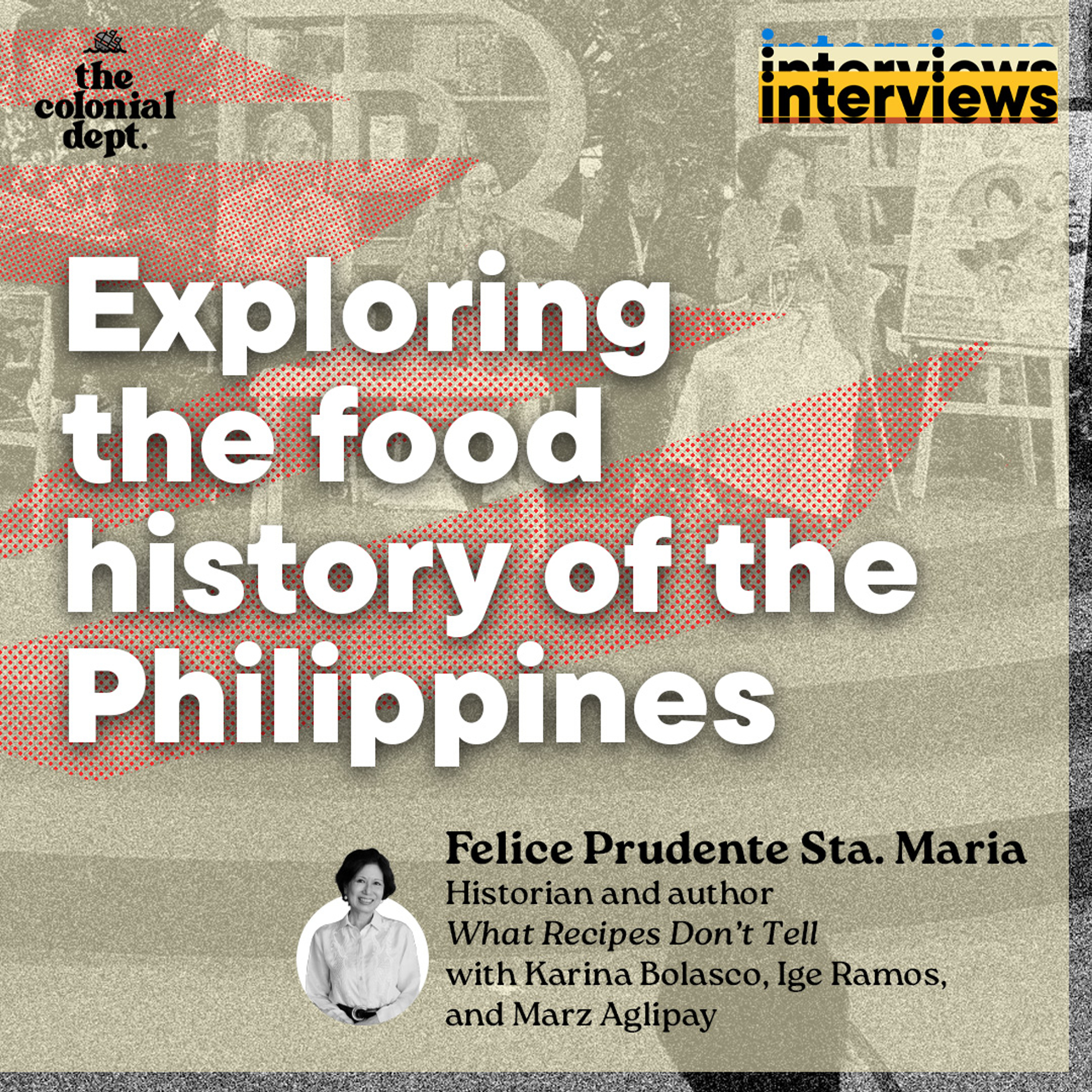 INTERVIEW: Exploring the food history of the Philippines 04.04.2026 37mnt“There’s a message to it: It’s our responsibility to keep Filipino food popular!”At the launch for her book What Recipes Don’t Tell: Philippine Food History in Fifty Words, author and historian Felice Prudente Sta. Maria talked to a rapt audience at the Philippine Book Festival about a long career of writing about food. What new things can food tell us about our own history? How did we adapt techniques and ingredients from abroad… while still preserving our own? And how should we nurture this knowledge for future generations?Joining her in this panel were publisher and editor Karina Bolasco, graphic designer and fellow food scholar Ige Ramos, and printmaker Marz Aglipay. Through their shared history with Felice, they deepened the conversation with their own perspectives on creativity, design, and the space for food in the publishing landscape. Special thanks to the Ateneo de Manila University Press for inviting me to moderate this panel, and for letting me record this conversation.Support the podcast: patreon.com/thecolonialdeptFollow us on IG: @thecolonialdeptFollow us on TikTok: @thecolonialdeptEmail us: [email protected] Colonial Dept. Interview is a series where I talk to researchers and authors shining a light on our past.
 -
 S8E1: The Philippine Sour-chipelago 21.03.2026 17mntSourness, according to Doreen Fernandez, “is a favored Philippine flavor.” Just how sour is sour? “Sour enough to savor, to make the lips pucker and the eyes squint slightly, and yet not too sour—just at the point of perfection.”In the spectrum of sensation, sourness can be both sharp and sudden, an acetic shudder down the spine. Asim, the Tagalogs call it. From the earliest written records about the Philippines, it is this taste that has come to define our cooking. “Spanish colonials from the 1500s through the 1800s described indio food as primarily salty and sour,” writes food historian Felice Prudente Sta. Maria. “Both tastes can induce sweat in hot climates and remind the body to keep hydrated and its electrolytes balanced.” Let us trace the pathways of this taste as it evolved in three key dishes: sinigang, kinilaw, and adobo.Follow us on IG: @thecolonialdeptFollow us on TikTok: @thecolonialdeptEmail us: [email protected]:Sta. Maria, Felice Prudente (2025). What Recipes Don't Tell: Philippine Food History in Fifty Words. Ateneo de Manila University Press.Fernandez, Doreen G. (1988). “Culture Ingested: Notes on the Indigenization of Philippine Food.” Philippine Studies, 36(2), pp. 219-232.Fernandez, Doreen G. (1994). Tikim: Essays on Philippine Food and Culture. Anvil Publishing.Frank, Hannah E. R.; Amato, Katie; Trautwein, Michelle; Maia, Paula; Liman, Emily R.; Nichols; Lauren M.; Schwenk, Kurt; Breslin, Paul A. S.; Dunn, Robert R. (2022) “The evolution of sour taste.” Proceedings of the Royal Society B: Biological Sciences, 289(1968). https://royalsocietypublishing.org/rspb/article/289/1968/20211918/79292/The-evolution-of-sour-tasteEvolution-of-Sour-TasteShaw, Sterling V. Herrera (30 August 2024). “Adobo is ‘paksiw,’ and other terms in Filipino food history.” Philippine Daily Inquirer. Ladrido, R.C. (1 July 2022). “Tapayan, Gusi, or Martaban: Tales of Stoneware Jars in the Philippines.” VERA Files.Newman, Yasmin (11 May 2023). “Kinilaw, the age-old dish of the Philippines (and why it's not ceviche).” SBS Food. https://www.sbs.com.au/food/article/kinilaw-the-age-old-dish-of-the-philippines-and-why-its-not-ceviche/4alb6pswaTrinidad, Bea. (16 August 2025). “Say ‘kilawin’ instead of ‘Filipino ceviche’, okay?” The Philippine Star. https://www.philstar.com/lifestyle/2025/08/16/2465728/say-kilawin-instead-filipino-ceviche-okayBanez, George (31 August 2025). “Sinigang Through Time: The Filipino Sour Soup with Many Faces, One Soul.” Pressenza PhilippinesPigafetta, Antonio (ca. 1525). “Primo viaggio intorno al mondo.” In Blair, Emma Helen, and Robertson, James Alexander (eds.), The Philippine Islands, 1493-1898 (Vol. 33), Arthur H. Clark Company.Wertz, S.K. (2013). “The Elements of Taste: How Many Are There?” The Journal of Aesthetic Education,47(1), pp. 46-57 https://www.jstor.org/stable/10.5406/jaesteduc.47.1.0046Ferguson, Priscilla Parkhurst (2011). “The Senses of Taste.” American Historical Review, 116(2), pp. 371-384. https://www.jstor.org/stable/23307701
 -
 An important announcement about the future of The Colonial Dept. 27.02.2026 6mntBefore we start Season 8, I have an important announcement about this little podcast. For more info, check out this Instagram post.
 -
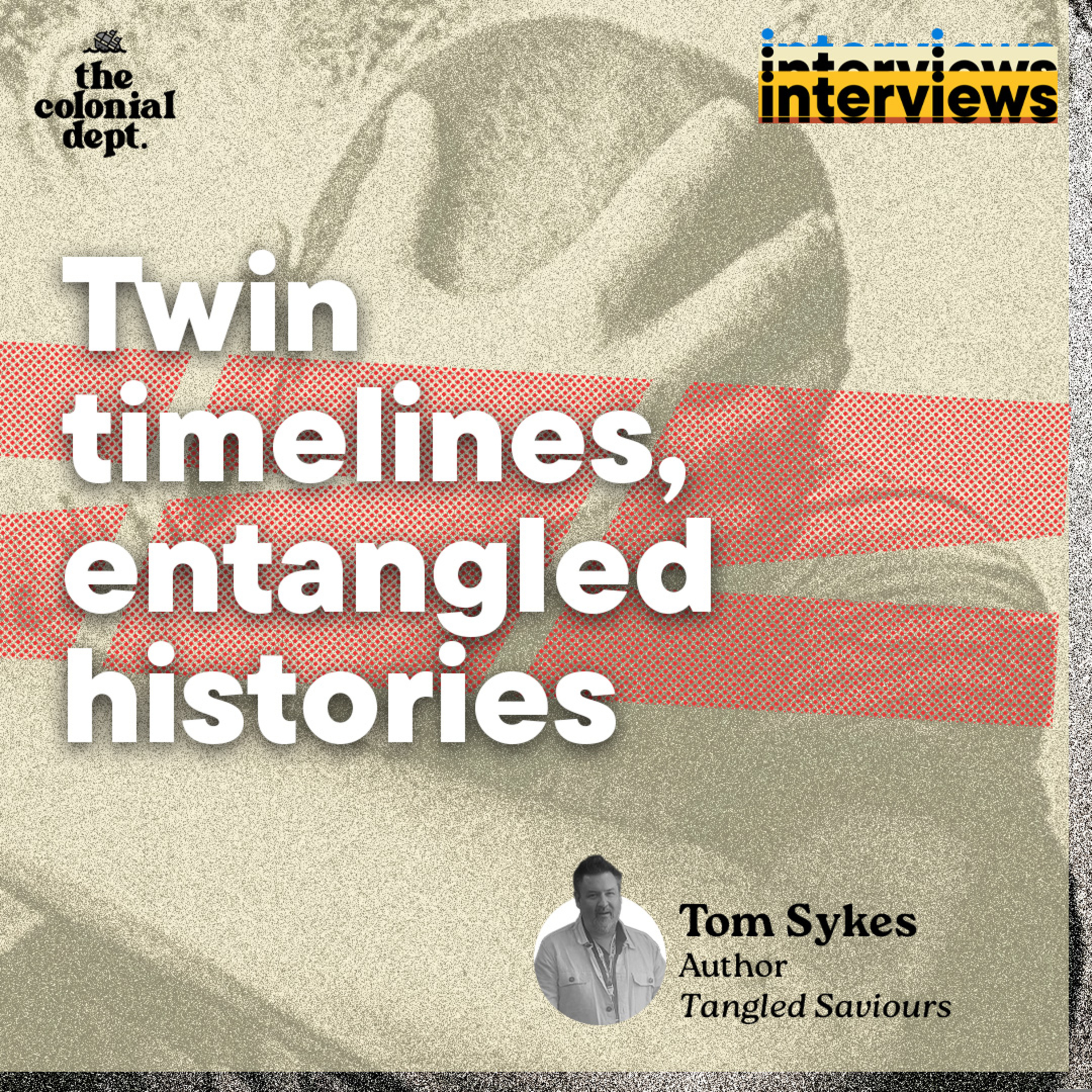 INTERVIEW: Twin timelines, entangled histories 07.02.2026 37mnt“What does it take for a culture that has caused a lot of pain and suffering to have any chance at redemption… or any sense of justice?”Tom Sykes’ riotous new book—a collision of a neon-powered 1980s Manila and a disaster-stricken barangay in the 1570s—attempts to answer the question… with many seedy side quests in between. How did he attempt to write his wild, genre-bending vision of the Philippines? And how does Back to the Future figure into it?The Colonial Dept. Interview is a bonus show where I talk to researchers and authors who are shining a light on our past.
 -
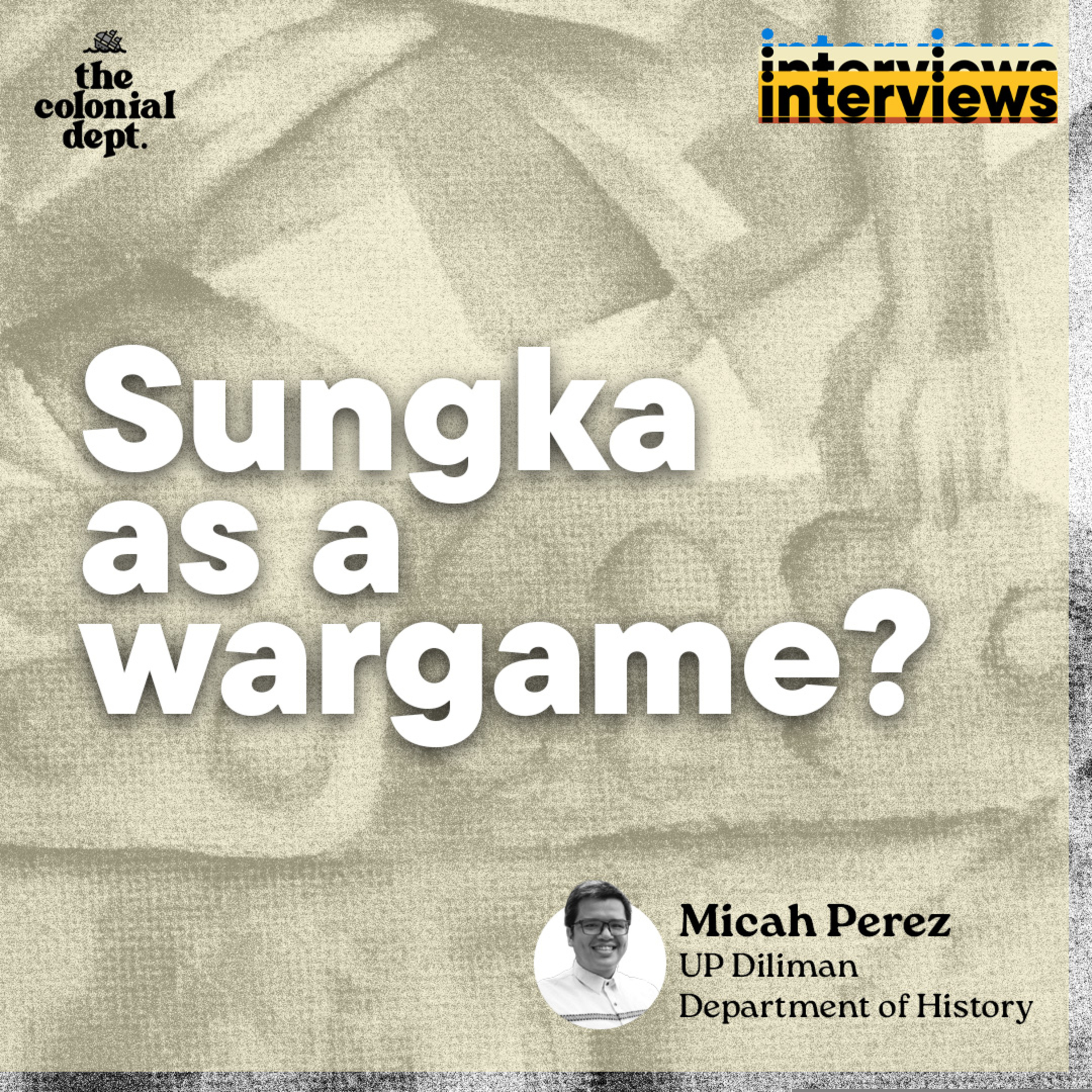 INTERVIEW: Sungka as a wargame? 28.01.2026 45mntWhat a folk game can tell us about how a datu waged war. An interview with Micah Perez of the UP Diliman Department of History. The Colonial Dept. Interview is a bonus show where I talk to researchers and authors shining a light on our past. Know a historian or author I should talk to? Email me at [email protected] image: Usernameko/Wikimedia Commons
Podcast serupa


Populer di
Podcast ini juga muncul di daftar podcast negara-negara ini.
