
Street Shots Photography Podcast
Antonio M Rosario
0
Join photographers Antonio M. Rosario and Ward Rosin for tips and insights that will take your photography to the next level. Topics range from candid street photography to nature and landscapes, as the hosts reflect on lessons learned and provide practical advice you can immediately apply to your own photography. The podcast also features interviews with working photographers.
Episode
-
 Tri-X. It's Easy! 30.09.2026 1j 9mnt“A camera didn’t make a great picture any more than a typewriter wrote a great novel.” — Peter Adams “It’s not when you press the shutter, but why you press the shutter.” — Mary Ellen Mark In this episode, Antonio and Ward dig into what makes a photograph worth stopping for in the first place. Antonio shares how teaching a small photography class pushed him to focus less on perfect images and more on attention, curiosity, and the little details people notice once they slow down. Ward brings in recent film work, including medium-format rodeo photos, and the two talk through the special “airiness” and physical feel that film and older cameras can bring to an image. They carry that idea into large-format cameras, field cameras, phone photography, Fuji film simulations, and the creative blocks that can come from too many self-imposed limits. Ward wrestles with a Fuji X-E3 setup that has him feeling stuck, while Antonio considers how newer iPhone camera tools and film-grain textures change the look and feel of everyday shooting. The episode wraps with a recommendation for Mary Ellen Mark’s Encounters, a celebration of her social documentary work, and a reminder that gear matters most when it changes how photographers see. Links & Resources Learning to Notice The Art of Noticing: Better Photographs Close to Home — Antonio’s photography class through Southeast Community College in Lincoln. The class focuses on slowing down, noticing overlooked details, and finding worthwhile photographs close to home. Antonio’s private photography lessons and workshops Walker Evans — Discussed in connection with photographs of churches, vernacular architecture, and the visual influences photographers carry with them. Ward’s Film and Rodeo Work Hand Hills Lake Stampede — The Alberta rodeo where Ward made the medium-format photographs discussed in the episode. Flic Film — The Alberta-based film company and lab that developed and scanned Ward’s 120 film. Between Dust and Sky — Ward Rosin and Mark Reierson’s book documenting the 100th Hand Hills Lake Stampede. Medium-Format Cameras and Lenses Twin-lens reflex cameras — The waist-level medium-format camera design Ward used to photograph rodeo action. Rolleicord — Ward’s Rolleicord, the simpler sibling of the Rolleiflex, dates from around 1959 and uses a Schneider Xenar lens. Minolta Autocord — Another twin-lens reflex camera in Ward’s collection. Fujifilm GFX system — Fujifilm’s digital medium-format system, discussed in comparison with the look of 120 film. Porch Art Palooza and Large Format Porch Art Palooza — Lincoln’s free, self-guided neighborhood art tour, featuring local artists and pop-up galleries on residential porches. Intrepid Camera — The Brighton, UK, company making lightweight modern large-format cameras. Antonio handled one of its portable 4×5 field cameras at Porch Art Palooza. Intrepid 4×5 Kickstarter — The original crowdfunding campaign for the Intrepid field camera. Chamonix View Camera — Maker of handcrafted large-format field cameras. Despite the French-sounding name, Chamonix cameras are made in Zhejiang, China. Chamonix 4×5 cameras — An example of the company’s portable 4×5 field-camera designs. Graflex Crown Graphic — The classic press and field camera Antonio has in storage and hopes to put back into use. Alfie [BOXX] Camera — The British wooden camera Antonio backed. It exposes directly onto 6×9 cm photographic paper and uses a film holder that doubles as a portable developing tank. More about the Alfie [BOXX] — Sample images, development news, and details from Alfie Cameras. Scheimpflug principle — The focusing principle Antonio and Ward were trying to name. Tilting the standards changes the orientation of the plane of focus. Ansel Adams: The Camera — Adams’s technical guide to 35mm, medium-format, and large-format cameras, including camera movements and extended depth of field. Creative Constraints a
 -
 Art of Darkness 15.09.2026 1j 10mnt"In order for the light to shine so brightly, the darkness must be present."- Francis Bacon "Character, like a photograph, develops in darkness."- Yousuf Karsh In this episode, Antonio and Ward welcome back Australian photographer Gavin Libotte for a wide-ranging conversation about street photography, travel, sequencing, and the pull of printed work. Gavin talks about photographing Japan with his family, moving between color and black-and-white approaches, and how Tokyo, Osaka, Kyoto, Mount Fuji, rainy streets, cherry blossoms, and strong light each shaped the work he brought home. He also shares plans for two Japan zines: one gritty, black-and-white, flash-driven project, and one color zine built around light, contrast, and the visual beauty of the trip. The conversation turns to Gavin’s zine Passenger, a dark, contemplative body of work made on Sydney’s ferry system. Antonio and Ward dig into the mood, sequencing, negative space, and emotional quiet of the images, while Gavin reflects on public transport as both a literal journey and a metaphor for the human condition. They also discuss influences including Ray K. Metzker, Trent Parke, Alex Webb, and the physical experience of photography in print: zines, books, gallery walls, paper, ink, pacing, and why printed work still matters in a social-media world. Links Gavin Libotte: Website | Instagram Gavin’s Passenger: Street Attitude feature | Paris International Street Photo Awards listing Gavin at Head On Photo Festival: Wanderland | 42 Days Mentioned: Trent Parke | Ray K. Metzker | Alex Webb Subscribe to our Substack Newsletter Help out the show by buying us a coffee! Support the show by purchasing Antonio’s Zines or buying a print. Support the show by purchasing Ward's Zine, Book and Prints Send us a voice message, comment or question. Antonio M. Rosario's Website, Vero, Instagram, Bluesky, and Facebook page Ward Rosin’s Website, Vero, Bluesky, Instagram and Facebook page. Subscribe to us on: Apple Podcasts Spotify Amazon Music iHeart Radio Deezer Podcast Addict
 -
 This Year's Model 31.08.2026 1j 21mnt"You are responsible for every part of your image, even the parts you’re not interested in." "Take a look at what you’re looking at." -- Jay Maisel In this episode, Ward steps into unfamiliar territory at a fashion photography event sponsored by Sony and The Camera Store. Instead of simply making the same model pictures as everyone else, he falls back on what he knows: treating the whole thing like street photography. He moves between sets, waits for gestures and expressions, and eventually turns his camera toward the photographers crowding around the models. The experience gives him a taste of the collaboration that happens between a photographer and a willing subject—and makes the idea of organizing his own outdoor fashion shoot feel a lot less like a daydream. Antonio and Ward then remember legendary New York photographer Jay Maisel, who recently died at 95. Antonio shares his own encounters with Maisel, stories from the photographer’s famously blunt workshops, and the quiet influence Maisel’s work has had on the way he photographs color, light, and ordinary surroundings. Maisel claimed that when he went out with a camera, he looked for “absolutely nothing”—meaning he left his expectations behind and allowed the world to show him what was there. His photographs are a reminder that seeing is a skill, style can become a trap, and even the most everyday scene can become remarkable when someone is paying close enough attention. Mentioned in this episode That ’70s Shootout at Off Set Studios — The Camera Store’s recap of the event Ward attended The Camera Store — Calgary’s independent camera shop Peter Lindbergh — the fashion photographer Ward hopes to channel in his own way Jay Maisel — explore Maisel’s extensive photographic archive Jay Maisel’s favorites — photographs accompanied by Maisel’s own stories and observations About Jay Maisel — biography, interviews, books, and other resources Joe McNally — photographer and former Maisel student whose remembrance Antonio reads during the episode Light, Gesture, and Color — Maisel’s book about training the eye to recognize what makes a photograph work Jay Myself — a documentary about Maisel and his legendary home and studio at 190 Bowery Also mentioned Lauritzen Gardens — the Omaha botanical garden Antonio visits Adobe Project Indigo — the experimental iPhone camera app Antonio uses for extra reach and RAW capture Trent Parke’s Monument — the photobook Antonio shares with his class Subscribe to our Substack Newsletter Help out the show by buying us a coffee! Support the show by purchasing Antonio’s Zines or buying a print. Support the show by purchasing Ward's Zine, Book and Prints Send us a voice message, comment or question. Show Links: Antonio M. Rosario's Website, Vero, Instagram, Bluesky, and Facebook page Ward Rosin’s Website, Vero, Bluesky, Instagram and Facebook page. Subscribe to us on: Apple Podcasts Spotify Amazon Music iHeart Radio Deezer Podcast Addict
 -
 The Middle of Somewhere 14.08.2026 1j 16mnt"I can’t seem to get enough of the ‘highway stuff,’ and the fascination of what may be around the next corner makes the whole trip worthwhile."-- Edgar Praus "Travel becomes a strategy for accumulating photographs."-- Susan Sontag In this episode, Antonio and Ward talk about how photographs begin to change when they’re placed next to one another. A quick exercise from Antonio’s class, using the still-unpublished zine they made together, leads into a conversation about sequencing, photo books, chapbooks, PDFs, and the simple pleasure of getting pictures off a screen. Not every image needs to be the big standalone “banger.” Sometimes a quieter photograph finds its purpose when it lands beside the right companion and becomes part of a larger story. From there, they head out of town. Ward takes a long, unhurried drive through small prairie communities, photographing weathered buildings and enjoying the rare freedom of not having to be anywhere at a particular time. Antonio returns to the Cass County Fair, where the smoke, noise, and motion of a tractor pull give him a chance to borrow a little inspiration from Ward’s rodeo and motorsport work. Going back for a second year lets him see what has stayed the same—and how much his own eye has changed. Together, they find that photography doesn’t require an exotic destination or a crowded city street. Sometimes the good stuff comes from revisiting familiar ground, wandering without too many expectations, and paying attention to what a place has been quietly trying to show you. Mentioned in this episode Miro — the collaborative board Antonio and Ward used to sequence their zine remotely Apple Freeform — an Apple-based alternative for arranging pictures and collaborating on visual boards Gavin Libotte Photography — Gavin’s photography and projects, including Wanderland Walker Evans at The Met — an influence on Ward’s direct photographs of prairie buildings Michael Kenna — the inspiration behind Antonio’s “diesel Michael Kenna” tractor-pull photographs Cass County Fair — home of the truck and tractor pull Antonio photographed Outlaw Truck and Tractor Pulling Association — more about the machines, events, and gloriously excessive noise Wilber Czech Festival — the festival and parade Antonio visited in Wilber, Nebraska Nebraska State Fair — Antonio’s next larger fairground photography opportunity Subscribe to our Substack Newsletter Help out the show by buying us a coffee! Support the show by purchasing Antonio’s Zines or buying a print. Support the show by purchasing Ward's Zine, Book and Prints Send us a voice message, comment or question. Show Links: Antonio M. Rosario's Website, Vero, Instagram, Bluesky, and Facebook page Ward Rosin’s Website, Vero, Bluesky, Instagram and Facebook page. Subscribe to us on: Apple Podcasts Spotify Amazon Music iHeart Radio Deezer Podcast Addict
 -
 Strangers on a Frame 31.07.2026 1j 15mntIn this episode, Antonio introduces the work of Latvian photographer Inta Ruka, whose quiet, direct portraits have completely pulled him in. Her photographs may appear simple at first, but the longer Antonio and Ward sit with them, the more stories and visual relationships begin to emerge. What matters most is the connection behind the pictures: Ruka uses the camera as a passport into people’s lives, spending time with them and allowing each photograph to grow out of trust. Her Rolleiflex stays out of the way, leaving her free to maintain eye contact and treat the person as more important than the equipment. Ward then reviews The Art of Street Photography by Sean Tucker and Joshua K. Jackson, a book concerned less with camera settings than with learning how to think and see as a photographer. Tucker explores creative dry spells, fear, ethics, motivation, and the experience of being fully present with a camera, while Jackson’s rich, layered photographs demonstrate just how open street photography can be. Together, the words and pictures offer something Antonio and Ward keep returning to: permission. Permission to stop being rigid, photograph whatever genuinely catches the eye, and recognize that becoming tired of old habits may simply mean it is time to grow. The Art of Street Photography by Sean Tucker & Joshua K. Jackson Subscribe to our Substack Newsletter Help out the show by buying us a coffee! Support the show by purchasing Antonio’s Zines or buying a print. Support the show by purchasing Ward's Zine, Book and Prints Send us a voice message, comment or question. Show Links: Antonio M. Rosario's Website, Vero, Instagram, Bluesky, and Facebook page Ward Rosin’s Website, Vero, Bluesky, Instagram and Facebook page. Subscribe to us on: Apple Podcasts Spotify Amazon Music iHeart Radio Deezer Podcast Addict
 -
 Star Spangled Stampede 15.07.2026 1j 24mnt"I take photographs in my neighborhood. I think that mysterious things happen in familiar places. We don’t always need to run to the other end of the world."-- Saul Leiter "There is one thing the photograph must contain, the humanity of the moment."-- Robert Frank In this midsummer episode, Antonio talks about returning to Seward, Nebraska, for the Fourth of July and giving himself one simple assignment: photograph people wearing the stars and stripes. By narrowing his attention, he actually becomes more present and comes home with a stronger, more connected group of pictures—a good reminder that creative limits can open things up instead of closing them down. As he prepares to teach his first six-week photography class, he also wrestles with how to give beginners enough technical knowledge without losing the bigger picture. Ward has just finished nine evenings at the Calgary Stampede, an event he has attended for more than forty years and photographed seriously for the last decade. This time, he finds himself looking beyond the strong, formal compositions he knows how to make and toward quieter pictures that say something about who people are. That shift brings more color, more interaction, and a little more humanity into the work. It also raises questions about responsibility: having the right to take and share a photograph does not always mean keeping it online is the most decent choice. Together, Ward and Antonio come around to the value of returning to the same places year after year. Familiar events can become long-term projects, giving photographers a chance to notice what interests them now, see how they are changing, and gradually find something deeper than the pictures they made the year before. Antonio's Seward July 4th Pix: https://adobe.ly/4hdxxVA Subscribe to our Substack Newsletter Help out the show by buying us a coffee! Support the show by purchasing Antonio’s Zines or buying a print. Support the show by purchasing Ward's Zine, Book and Prints Send us a voice message, comment or question. Show Links: Antonio M. Rosario's Website, Vero, Instagram, Bluesky, and Facebook page Ward Rosin’s Website, Vero, Bluesky, Instagram and Facebook page. Subscribe to us on: Apple Podcasts Spotify Amazon Music iHeart Radio Deezer Podcast Addict
 -
 The Thing Itself 30.06.2026 1j 18mnt"Anything that excites me for any reason, I will photograph; not searching for unusual subject matter, but making the commonplace unusual."-- Edward Weston "I see no reason for recording the obvious."-- Edward Weston In this episode, Antonio and Ward talk about Fujifilm cameras, autofocus, and film simulations. Antonio shares his frustration after missing bird photographs because the autofocus refused to lock onto obvious subjects, while Ward compares his own experiences photographing action with Fujifilm gear. They discuss firmware updates, the expectations photographers have for modern autofocus systems, and how working with film simulations can encourage a slower, more intentional approach to photography. Antonio and Ward spend the second half of the episode talking about Edward Weston’s Daybooks and the ideas that shaped his photography. They discuss Weston’s famous pepper photographs, his search for what he called “the thing itself,” and his belief that photography should reveal the true character of a subject rather than imitate painting. They talk about the relentless self-criticism found throughout his journals, the years he spent refining both his craft and his artistic philosophy, and the challenge photographers faced in convincing the art world that photography belonged alongside painting and sculpture. Along the way, they reflect on how Weston’s writing still offers practical lessons for photographers today and why his way of seeing continues to inspire nearly a century later. Links: Edward Weston – The Flame of Recognition Edward Weston’s Daybooks Pepper No. 30 Fujifilm film recipe iPhone app X Sim Lab - Fujifilm RAW processing iPad app Watch the YouTube video of this podcast here. Subscribe to our Substack Newsletter Help out the show by buying us a coffee! Support the show by purchasing Antonio’s Zines or buying a print. Support the show by purchasing Ward's Zine, Book and Prints Send us a voice message, comment or question. Show Links: Antonio M. Rosario's Website, Vero, Instagram, Bluesky, and Facebook page Ward Rosin’s Website, Vero, Bluesky, Instagram and Facebook page. Subscribe to us on: Apple Podcasts Spotify Amazon Music iHeart Radio Deezer Podcast Addict
 -
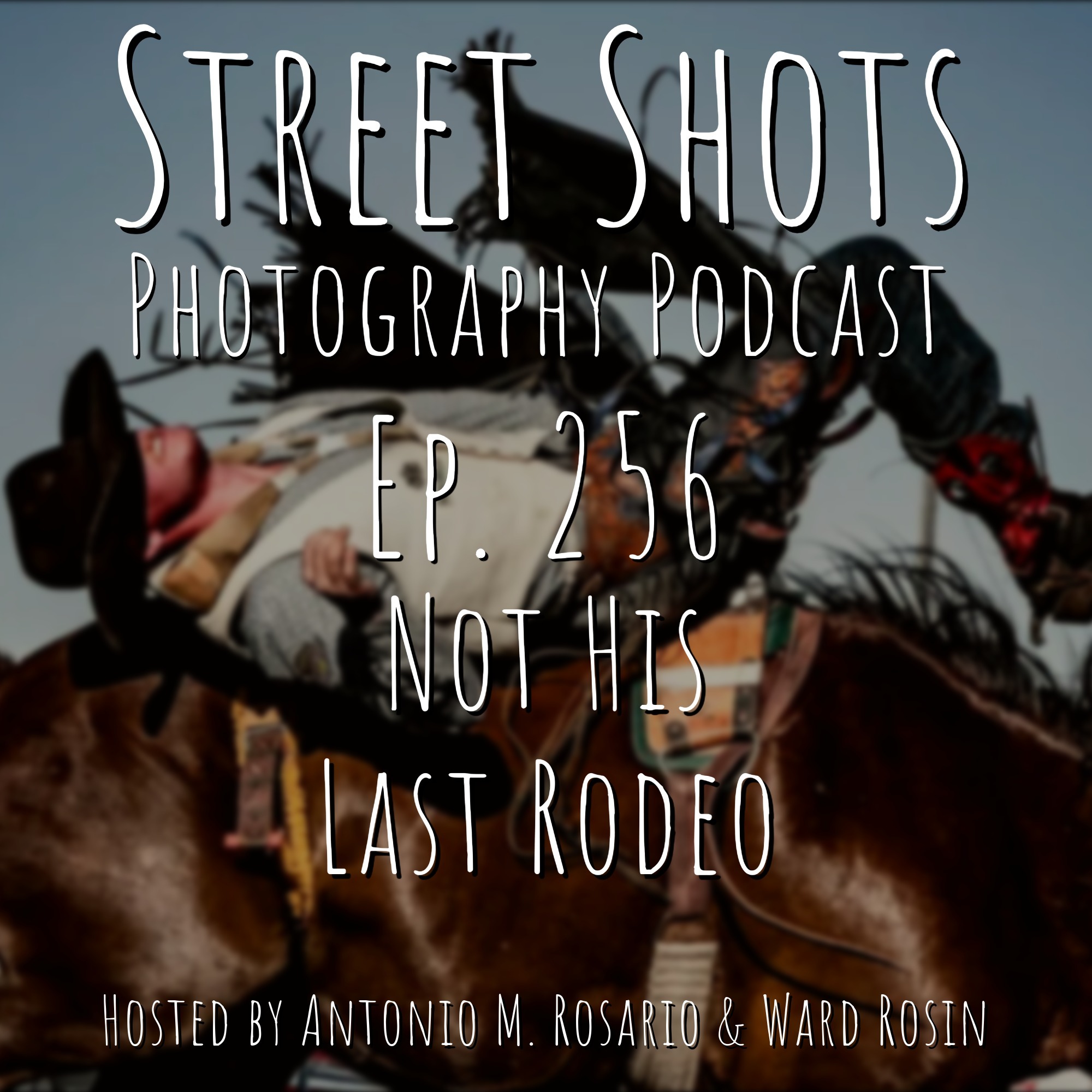 Not His Last Rodeo 12.06.2026 1j 27mnt"Sometimes the simplest pictures are the hardest to get." – Neil Leifer “I never have taken a picture I’ve intended. They’re always better or worse.” – Diane Arbus In this episode, Antonio talks about getting ready for his upcoming six-week class, The Narrative Lens, at Southeast Community College. That leads to a discussion about teaching photography, helping new photographers build confidence, and why so many photographers feel pressure to chase “hero photographs” instead of paying attention to the ordinary subjects that are already around them. Antonio and Ward also discuss the value of constraints, personal projects, and finding meaningful photographs close to home. The conversation moves to gear, including some new USB-C rechargeable batteries Antonio has been using with his Fujifilm cameras. They also talk about collecting photographic prints after Antonio finally opens a signed Gregory Crewdson print that had been sitting unopened in its box for far too long. That leads to a discussion about living with photographs, hanging prints on the wall, and the different ways photographers connect with the work of artists they admire. The second half of the show focuses on Ward’s recent trip to the Hand Hills Lake Stampede rodeo. Returning to an event he photographed ten years ago, Ward set out to make something different from the traditional rodeo photographs he had made in the past. Instead of concentrating on the obvious action, he focused on color, movement, gesture, and smaller details within the scene. The result was a series of photographs that received a strong reaction from other photographers and online audiences. Antonio and Ward spend some time discussing one particular image and why it works. The conversation looks at shape, color, rhythm, timing, and composition, along with some of the practical challenges of photographing fast-moving events. Ward shares his approach to photographing the rodeo, while Antonio breaks down some of the visual elements that make the photograph successful. The Narrative Lens — Antonio’s six-week photography course at Southeast Community College Ward’s Rodeo Print — Featured image from this episode (link when available) Big Boy Locomotive Photograph — Antonio’s train image discussed during the show Edward Weston (60th Anniversary Edition) — The book Antonio has been reading and plans to discuss in a future episode SMALLRIG Fujifilm NP-W126S USB-C Battery SMALLRIG Fujifilm NP-W235 USB-C Battery Subscribe to our Substack Newsletter Help out the show by buying us a coffee! Support the show by purchasing Antonio’s Zines or buying a print. Support the show by purchasing Ward's Zine, Book and Prints Send us a voice message, comment or question. Show Links: Antonio M. Rosario's Website, Vero, Instagram, Bluesky, and Facebook page Ward Rosin’s Website, Vero, Bluesky, Instagram and Facebook page. Subscribe to us on: Apple Podcasts Spotify Amazon Music iHeart Radio Deezer Podcast Addict
 -
 Remaining Mind 30.05.2026 1j 20mnt"Stare. It is the way to educate your eye, and more." -- Walker Evans "I am at war with the obvious."-- William Eggleston In this episode, Antonio and Ward talk about how photography often grows out of ordinary days, familiar routines, and the small things that catch our attention when we are willing to stay open to them. The conversation moves through weather, travel, flea markets, rodeos, old cameras, and personal projects, but the larger theme is about remaining photographically awake even when there is no grand subject in front of you. Whether it is storm clouds over Nebraska, a county fair, a vintage Kodak Brownie, or a quiet experiment with color, the episode is about trusting the small sparks that keep a photographer engaged. The discussion also turns toward presence and patience, especially through the Japanese idea of Zanshin, or “remaining mind.” Antonio and Ward connect that idea to photography as a kind of follow-through: staying with the moment after pressing the shutter, rather than rushing away from it or judging the image too quickly. Alongside references to William Eggleston, simple cameras, and ongoing personal projects, the episode becomes a reflection on attention itself: how photographers keep seeing, how they work through quiet periods, and how the ordinary can become meaningful when we give it enough time. William Eggleston Fixed Digital Photography’s Biggest Flaw - The Photographic Eye Alfie [BOXX] Camera on Kickstarter Watch this podcast on YouTube. Subscribe to our Substack Newsletter Help out the show by buying us a coffee! Support the show by purchasing Antonio’s Zines or buying a print. Support the show by purchasing Ward's Zine, Book and Prints Send us a voice message, comment or question. Show Links: Antonio M. Rosario's Website, Vero, Instagram, Bluesky, and Facebook page Ward Rosin’s Website, Vero, Bluesky, Instagram and Facebook page. Subscribe to us on: Apple Podcasts Spotify Amazon Music iHeart Radio Deezer Podcast Addict
 -
 Where The Mild Things Are 15.05.2026 1j 7mnt"All the technique in the world doesn’t compensate for the inability to notice."-- Elliott Erwitt "Beauty is in the commonplace."-- Cig Harvey In this episode of Street Shots, Antonio and Ward talk through the strange little photographic droughts that happen when life gets busy, energy runs low, and the camera starts to feel less like a calling and more like one more thing to carry. Ward returns from his mother’s birthday gathering with a camera full of near-misses and puppy pictures, while Antonio talks about photographing at a family wedding, experimenting with off-camera flash, and trying to make pictures close to home while recovering from allergies and general springtime sluggishness. The conversation settles into the idea of “low-energy photography” — not as a failure, but as a way back in. Antonio talks about photographing birds from the deck, making pictures in the backyard, and using a new Fuji film simulation to see familiar spaces differently. That leads into a larger discussion of Walker Evans, ordinary subjects, and the pressure photographers feel to make every image a polished “hero photograph.” Rather than chasing spectacle, Antonio and Ward make a case for the plain, nearby, and easily overlooked: the kind of photography that may not shout right away, but often stays with you longer. Watch this show on video! Subscribe to our Substack Newsletter Help out the show by buying us a coffee! Support the show by purchasing Antonio’s Zines or buying a print. Support the show by purchasing Ward's Zine, Book and Prints Send us a voice message, comment or question. Show Links: Antonio M. Rosario's Website, Vero, Instagram, Bluesky, and Facebook page Ward Rosin’s Website, Vero, Bluesky, Instagram and Facebook page. Subscribe to us on: Apple Podcasts Spotify Amazon Music iHeart Radio Deezer Podcast Addict
 -
 Something Ordinary This Way Comes 30.04.2026 1j 10mnt"To me, photography is an art of observation. It's about finding something interesting in an ordinary place."- Elliott Erwitt "There's nothing more extraordinary than reality."- Mary Ellen Mark In this episode, Antonio and Ward talk about photographing ordinary things: streets, buildings, objects, empty places, and quiet scenes that may not seem important at first glance but begin to carry meaning when a photographer pays attention. Using Stephen Shore as a jumping-off point, they explore the difference between an ordinary subject and an ordinary photograph, and why an image does not always need a clear “hero” object to be worth making. Antonio connects the idea to his recent photographs of Ashland, Nebraska, while Ward reflects on his own habit of returning to familiar objects and places. Together, they consider how photography can give us permission to notice what is usually overlooked, and how the quietest pictures can sometimes say the most. The Photographic Eye - What Stephen Shore Knew About Shooting Boring PlacesThe Photographic Eye - How Joel Meyerowitz Shoots The Hardest Subject In Photography Subscribe to our Substack Newsletter Help out the show by buying us a coffee! Support the show by purchasing Antonio’s Zines or buying a print. Support the show by purchasing Ward's Zine, Book and Prints Send us a voice message, comment or question. Show Links: Antonio M. Rosario's Website, Vero, Instagram, Bluesky, and Facebook page Ward Rosin’s Website, Vero, Bluesky, Instagram and Facebook page. Subscribe to us on: Apple Podcasts Spotify Amazon Music iHeart Radio Deezer Podcast Addict
 -
 Fly Me To The Moon 15.04.2026 1j 23mnt"...photography is made essentially of time. I often think that what we show is a point in time, more than a window onto space."-- Frank Horvat "The camera can’t see space. It sees surfaces. People see space, which is much more interesting."-- David Hockney In this episode, Antonio and Ward begin with a tactile return to photography’s older rhythms as Antonio talks about rediscovering and shooting with a pair of film cameras, including an Olympus Stylus and a Nikon 28Ti. What starts as a story about loading film and checking batteries turns into a broader reflection on the pleasures of using older gear, the quirks of expired Ektachrome, and the appeal of getting back to black-and-white processing by hand. There is also some thoughtful camera talk along the way, not for its own sake, but as part of a larger conversation about the physical experience of making photographs and why that still matters. From there, the conversation opens out into the latest Artemis moon mission photographs, which become the real heart of the episode. Rather than treating them as mere space documentation, Antonio and Ward look at them as photographs and ask why some hit harder than others. They talk about the emotional pull of images that include the astronauts, the wonder carried in views of crescents, eclipses, and Earth seen from deep space, and how these pictures connect to memories of growing up during the moon missions. The discussion also touches on how differently such images reach us now, arriving instantly in a time when photographs are everywhere and trust in them is no longer automatic. It is a thoughtful episode about wonder, memory, and the human side of seeing. NASA Images can be found here. Photo of Neil Armstrong Subscribe to our Substack Newsletter Help out the show by buying us a coffee! Support the show by purchasing Antonio’s Zines or buying a print. Send us a voice message, comment or question. Show Links: Antonio M. Rosario's Website, Vero, Instagram, Bluesky, and Facebook page Ward Rosin’s Website, Vero, Bluesky, Instagram and Facebook page. Subscribe to us on: Apple Podcasts Spotify Amazon Music iHeart Radio Deezer Podcast Addict
 -
 Prints Charming 30.03.2026 1j 14mnt"When you make a print, you are making an art object. You can’t hang a scan on the wall."- George Tice "One of these days, I'm going to publish a book of all the pictures I did not take. It is going to be a huge hit."- René Burri In this episode, Antonio and Ward focus on printing as a way of bringing photographs off the screen and into physical form. Using their recent conversation with Gavin as a starting point, they talk about books, zines, print exchanges, and the appeal of making photographic work tangible. They also discuss paper choice, including the look and feel of thicker fine art papers, and how printing decisions affect the final presentation of an image. The conversation moves into the practical side of selling prints. Antonio and Ward talk about questions around print fulfillment, whether to handle printing personally or use a service such as SmugMug, how much control a photographer should keep over size and presentation, and how to decide which images are right for sale. The episode centers on the process of moving from digital files to finished prints, and on the choices photographers face when they want to share or sell their work in physical form. Subscribe to our Substack Newsletter Help out the show by buying us a coffee! Support the show by purchasing Antonio’s Zines. Send us a voice message, comment or question. Show Links: Antonio M. Rosario's Website, Vero, Instagram, Bluesky, and Facebook page Antonio's Print Store. Ward Rosin’s Website, Vero, Bluesky, Instagram and Facebook page. Subscribe to us on: Apple Podcasts Spotify Amazon Music iHeart Radio Deezer Podcast Addict
 -
 The Future Is Bright: A Conversation with Gavin Libotte 14.03.2026 1j 28mnt"When I play music, I see images. When I make images, I often hear music." "Wonder is not a property of childhood but a function of attention.” -- Gavin Libotte In this episode, Antonio and Ward mark their 250th show by talking with Australian photographer Gavin Libotte, whose path back into photography took a long detour through graphic design, music, teaching, and family life before street photography pulled him in for good. Gavin talks about losing his camera gear when he was young, rediscovering image-making through the iPhone and Hipstamatic, and then finding a deeper creative groove through daily shooting, books, zines, and long-term projects. What comes through most is how photography, for him, is tied to rhythm, intuition, and being fully present in the moment, with music and visual composition feeding each other in a very personal way. The conversation also gets into the way Gavin works: his graphic sense of color and design, his experiments with off-camera flash, his water photography, and the making of his book Symphony Number Five. Along the way, Antonio and Ward respond to the emotional pull of Gavin’s pictures, especially one Sydney Opera House image that sends the discussion into ideas about wonder, timing, and why certain photographs hit so deeply. It ends up being one of those episodes that is partly about technique, partly about books and process, and partly about what photography can do for a person when it becomes a way of staying awake to the world. Note: Gavin mentioned Melissa "O'Doherty" by mistake but actually meant Melissa O'Shaughnessy. Gavin Libotte - Website, Instagram. Purchase his book "Symphony No 5" here. Gavin's Spotify Subscribe to our Substack Newsletter Help out the show by buying us a coffee! Support the show by purchasing Antonio’s Zines. Send us a voice message, comment or question. Show Links: Antonio M. Rosario's Website, Vero, Instagram, Bluesky, and Facebook page Ward Rosin’s Website, Vero, Bluesky, Instagram and Facebook page. Subscribe to us on: Apple Podcasts Spotify Amazon Music iHeart Radio Deezer Podcast Addict
 -
 The Puck Stops Here 27.02.2026 1j 13mnt"The more pictures you see, the better you are as a photographer”.- Robert Mapplethorpe "It’s a weird combination that makes a great picture. It’s a complete mystery to me."- Alec Soth In this episode, Antonio and Ward talk about recent exhibitions, photobooks, and the ongoing evolution of their work. Ward shares his experience seeing large Fred Herzog prints in person and describes the impact of standing in front of that rich, immersive color. The conversation also turns to Tetsuo Suzuki’s latest book and the emotional intensity that can come from sequencing images into a cohesive, almost psychological body of work. Antonio reflects on presenting “The Fourth Epoch” to the Park West Camera Club, discussing what it means to publicly trace the arc of his creative life and speak openly about transition and change. Along the way, they briefly touch on the visual possibilities of photographing hockey, but the heart of the episode centers on seeing, sequencing, and how photographers make sense of where they’ve been—and where they’re headed. Subscribe to our Substack Newsletter Help out the show by buying us a coffee! Support the show by purchasing Antonio’s Zines. Send us a voice message, comment or question. Show Links: Antonio M. Rosario's Website, Vero, Instagram, Bluesky, and Facebook page Ward Rosin’s Website, Vero, Bluesky, Instagram and Facebook page. Subscribe to us on: Apple Podcasts Spotify Amazon Music iHeart Radio Deezer Podcast Addict
 -
 In Mood We Trust 14.02.2026 1j 21mnt“Your photography is a record of your living, for anyone who really sees.”– Paul Strand "We are judged, not by the photographs we take, but by the photographs we show."– Ted Grant In this episode, Antonio and Ward move from recent shoots into a thoughtful conversation about what photographers are really responding to when they raise the camera. Antonio shares his growing excitement around astrophotography, from capturing Jupiter’s moons to photographing the Orion Nebula for the first time, and how even familiar subjects feel personal when you experience them firsthand. He also talks about a recent portrait session that reminded him how much intuition, pacing, and human connection still matter in photography, no matter how advanced the tools become. The heart of the episode revolves around a simple but powerful idea: photographers often end up photographing their own temperament. Ward reflects on how darker, moodier work in Japan drew him in based on what he was feeling and noticing in the streets, while Antonio connects his quieter Brooklyn images to the grief and inward focus he was living through at the time. Together, they explore how environment, emotion, curiosity, anxiety, and even life transitions subtly shape what each photographer sees and chooses to frame. Rather than chasing trends or external goals, the conversation lands on the idea that our photographs often mirror where we are mentally and emotionally — whether we realize it or not. Addendum: Yes, Antonio is fully aware that there are words ending in double “ff.” His brief confusion is being attributed to something like lack of sleep, brain fog, or possibly too much Banff-adjacent riff-raff talk. It happens. Forgive and move on. Subscribe to our Substack Newsletter Help out the show by buying us a coffee! Support the show by purchasing Antonio’s Zines. Send us a voice message, comment or question. Show Links: Antonio M. Rosario's Website, Vero, Instagram, Bluesky, and Facebook page Ward Rosin’s Website, Vero, Bluesky, Instagram and Facebook page. Subscribe to us on: Apple Podcasts Spotify Amazon Music iHeart Radio Deezer Podcast Addict
 -
 The Boredom Identity 31.01.2026 1j 12mnt"The Chinese have a theory that you pass through boredom into fascination and I think it's true."― Diane Arbus “If only we could pull out our brain and use only our eyes.”― Pablo Picasso In this episode, Antonio and Ward talk about what happens when your photography starts to feel flat, and why boredom isn’t always a bad thing. They kick around the idea that boredom can be a signal to slow down, stop forcing work, and let your eye reset on its own. The conversation also touches on how the camera can act as a kind of shield, especially when photographing difficult or emotionally loaded situations, and how that distance affects both the photographer and the images being made. The second half of the episode turns to color, specifically dye transfer printing and why it still holds so much weight in the history of photography. Using photographers like William Eggleston, Irving Penn, Joel Sternfeld, and Ernst Haas as touchstones, they talk about how dye transfer created a physical, almost unreal richness that modern processes struggle to match. From there, the discussion opens up into a broader reflection on growing as photographers—what you stop chasing over time, how your instincts change, and why learning to sit with uncertainty can quietly push the work forward. Video of dye transfer process. Subscribe to our Substack Newsletter Help out the show by buying us a coffee! Support the show by purchasing Antonio’s Zines. Send us a voice message, comment or question. Show Links: Antonio M. Rosario's Website, Vero, Instagram, Bluesky, and Facebook page Ward Rosin’s Website, Vero, Bluesky, Instagram and Facebook page. Subscribe to us on: Apple Podcasts Spotify Amazon Music iHeart Radio Deezer Podcast Addict
 -
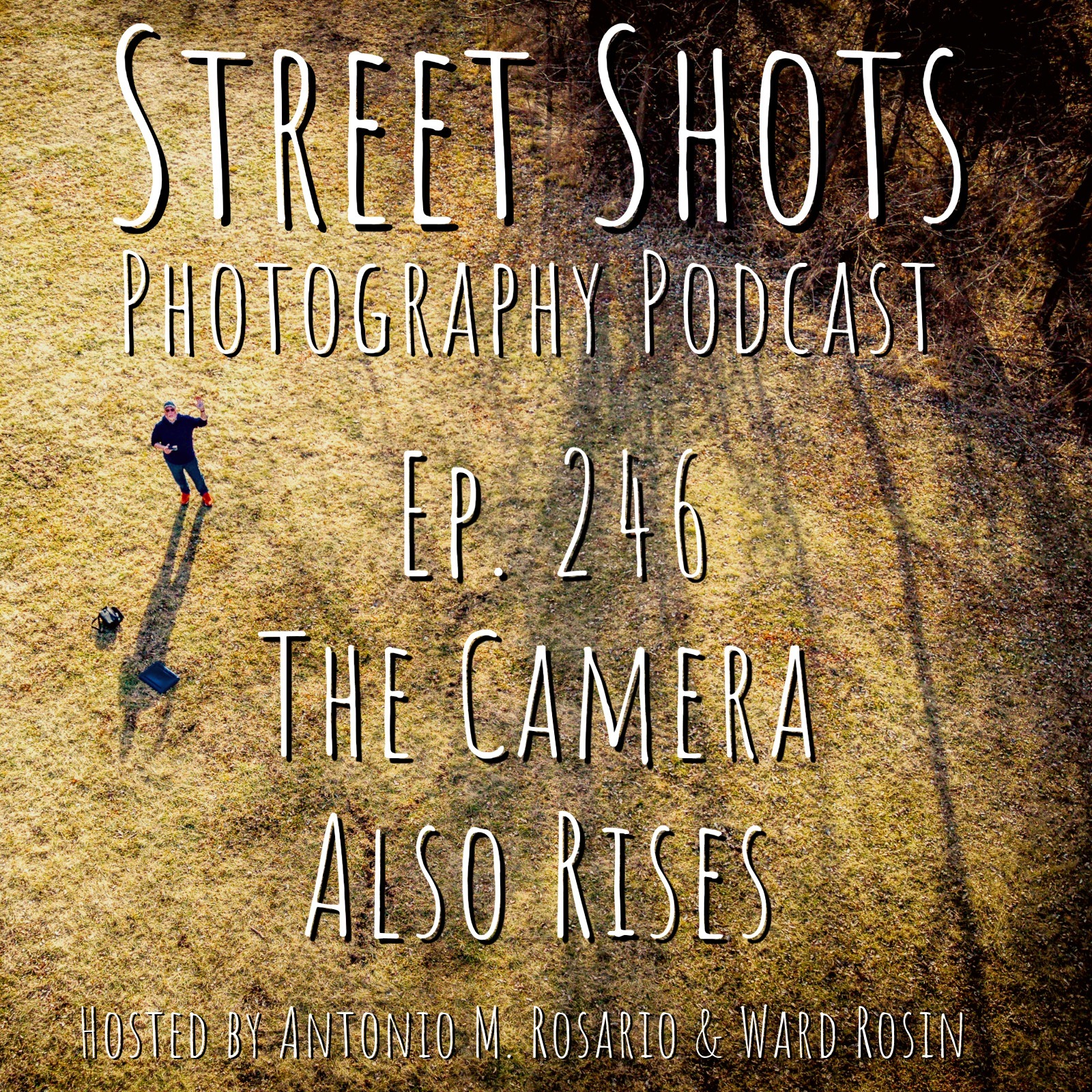 The Camera Also Rises 15.01.2026 1j 24mnt"Passion is in all great searches and is necessary to all creative endeavors."― W. Eugene Smith “Creativity is allowing yourself to make mistakes. Art is knowing which ones to keep.”― Scott Adams In this first episode of 2026, Antonio and Ward ease into the new year by talking about making physical photo objects and what it feels like to see work finally leave the screen. Ward shares the experience of producing a small, full-bleed black-and-white zine from his recent time in Japan, focusing less on explanation and more on mood, sequencing, and how images start to speak to each other once they’re paired on the page. They talk about living with images, resisting the urge to over-edit, and trusting instinct over feedback loops or social media response. The idea of the zine as a tactile object keeps coming up—not just as a container for photos, but as something meant to be held, revisited, and experienced slowly. Antonio then shifts to a different kind of learning curve, talking about taking a drone pilot course and what it’s been like to approach photography from the air for the first time. He describes the mix of technical study, regulations, and hands-on flying, along with how that knowledge changed his confidence and mindset. What stands out most isn’t the gear or the video potential, but the photographic possibilities—new patterns, unfamiliar perspectives, and the quiet strangeness of seeing familiar landscapes from directly above. The episode closes with Antonio reflecting on photographing protests in his new community and what it means to document events you’re personally part of. He talks about choosing to show up with a camera, navigating trust and visibility, and how being present as both participant and photographer changes the way images are made. The discussion touches on empathy, history, and the tension between observing and taking a stand. Subscribe to our Substack Newsletter Help out the show by buying us a coffee! Support the show by purchasing Antonio’s Zines. Send us a voice message, comment or question. Show Links: Antonio M. Rosario's Website, Vero, Instagram, Bluesky, and Facebook page Ward Rosin’s Website, Vero, Bluesky, Instagram and Facebook page. Ornis Photo Website The Unusual Collective Street Shots Facebook Page Street Shots Instagram Subscribe to us on: Apple Podcasts Spotify Amazon Music iHeart Radio Deezer Podcast Addict
 -
 The Slow and The Serious 30.12.2025 1j 22mnt"Don't shoot what it looks like. Shoot what it feels like." – Unknown/Commonly Attributed “I am not interested in shooting new things – I am interested to see things new.” – Ernst Haas In this year-end episode of Street Shots, Antonio and Ward take some time to reflect on the past year and how their photography has been shaped by it. They talk about recent projects, photo books that left an impression, and how changes in place, access, and pace have influenced the way they see and make pictures. Rather than chasing trends or noise, the conversation leans toward slowing down and paying attention to what feels honest and sustainable. They also discuss using newer tools, including AI-based image critique, as a way to better understand their own work — not for answers, but for reflection. The episode settles into a thoughtful conversation about distance, presence, and the quiet shifts that happen when photographers trust their instincts and give themselves permission to evolve. Subscribe to our Substack Newsletter Help out the show by buying us a coffee! Support the show by purchasing Antonio’s Zines. Send us a voice message, comment or question. Show Links: Antonio M. Rosario's Website, Vero, Instagram, Bluesky, and Facebook page Ward Rosin’s Website, Vero, Bluesky, Instagram and Facebook page. Ornis Photo Website The Unusual Collective Street Shots Facebook Page Street Shots Instagram Subscribe to us on: Apple Podcasts Spotify Amazon Music iHeart Radio Deezer Podcast Addict
 -
 Much Ado About Motion 13.12.2025 1j 6mnt"It’s a weird combination that makes a great picture. It’s a complete mystery to me."-- Alec Soth "A portrait isn’t a fact but an opinion—an occasion rather than a truth."-- Richard Avedon In this episode, Antonio and Ward reflect on the recent passing of Martin Parr, talking through what they’ve long admired about his work, his move from black-and-white to color, his time at Magnum, and the way he photographed everyday life without smoothing out its edges. The conversation also drifts into a new idea Antonio picked up by accident at a Christmas market in Nebraska, where he connected with a nonprofit that helps formerly incarcerated people train for work in professional kitchens. He talks about why that idea stuck with him and how he’s imagining photographing the space—both behind the scenes and through more formal portraits made in the kitchen itself. Speed skating becomes another thread, with Ward unpacking his weekend shooting a World Cup event in Calgary. Autofocus frustrations, missed shots, and the value of reviewing a rough first day all lead to a shift toward slower shutter speeds and motion-based images that felt more honest than frozen action frames. The episode also circles back to their previous conversation with motorsports photographer Jamey Price, offering a clearer recap of some of the racing terms and technical references that came up, grounding the discussion for listeners who may not live in that world. Subscribe to our Substack Newsletter Help out the show by buying us a coffee! Support the show by purchasing Antonio’s Zines. Send us a voice message, comment or question. Show Links: Antonio M. Rosario's Website, Vero, Instagram, Bluesky, and Facebook page Ward Rosin’s Website, Vero, Bluesky, Instagram and Facebook page. Ornis Photo Website The Unusual Collective Street Shots Facebook Page Street Shots Instagram Subscribe to us on: Apple Podcasts Spotify Amazon Music iHeart Radio Deezer Podcast Addict
Podcast serupa


Populer di
Podcast ini juga muncul di daftar podcast negara-negara ini.

