
Policy Chats
UCR School of Public Policy
0
Policy Chats features conversations with a variety of voices in the public policy world, tackling today's most pressing societal issues. Each episode offers insights from experts and practitioners, providing perspectives on current policy challenges. The podcast is produced by the School of Public Policy at the University of California, Riverside, bringing an academic lens to real-world problems.
Episode
-
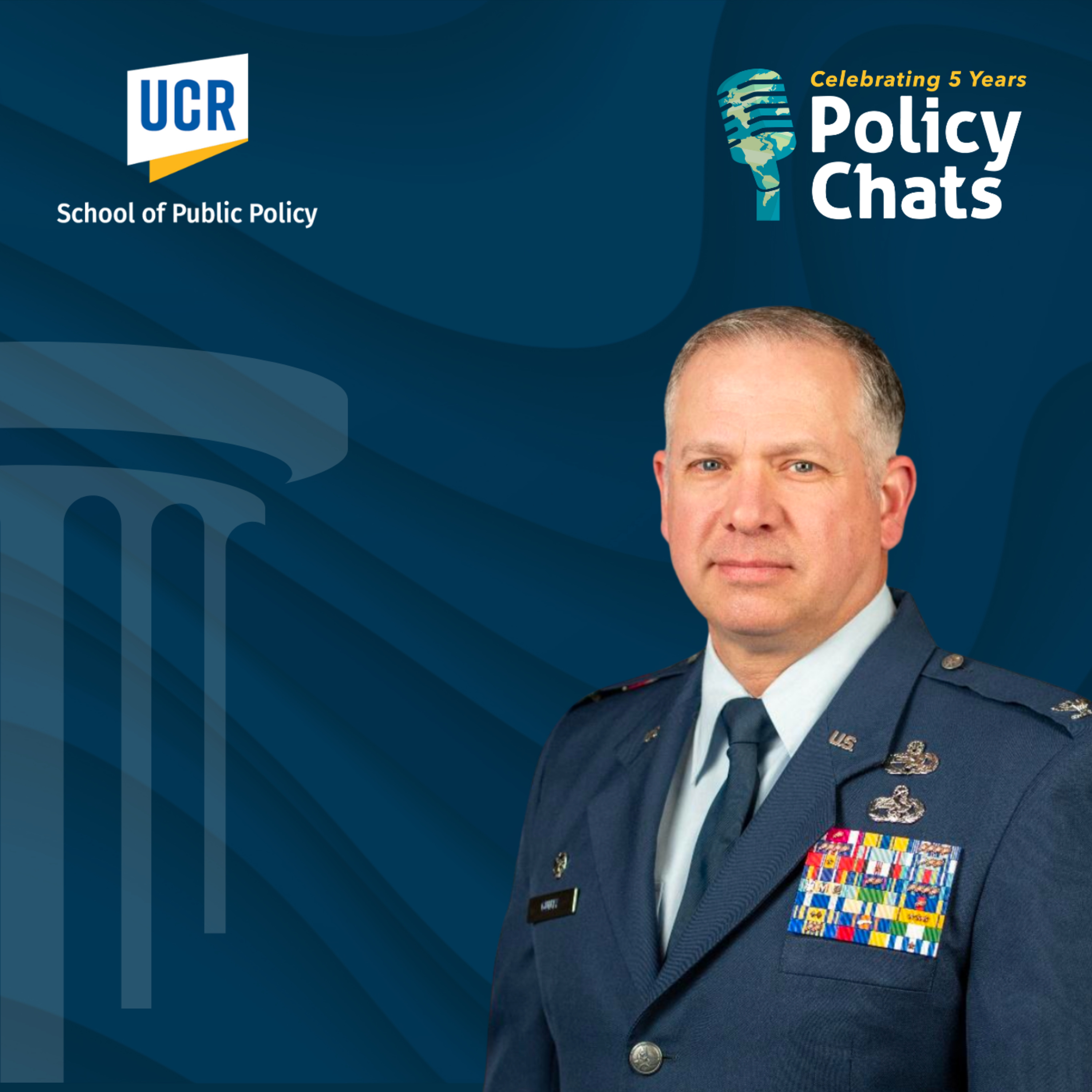 Inside the MQ-9A: The Role of Remotely Piloted Aircraft & the Future of Technology in the 163d Attack Wing 04.08.2026 36mntIn this episode of Policy Chats, Colonel David M. Gunty joins hosts Dori Pham and Ari Chung to discuss the intersection of U.S. foreign policy, military operations, and emerging technology. The discussion introduces the mission of one of the nation's few Air Reserve Bases, examines how the 163rd Attack Wing supports both domestic readiness and overseas operations, and highlights the growing importance of remotely piloted aircraft in modern national security strategy.The conversation examines the mission of the 163rd Attack Wing and its role in supporting U.S. foreign policy through intelligence, surveillance, and global operations. It also explores how evolving national security priorities influence training and readiness, the challenges of maintaining and modernizing unmanned aircraft systems, and the growing impact of artificial intelligence on the future of military aviation and drone operations.The episode concludes with reflections on how innovation, strategic planning, and adaptable leadership are shaping the future of U.S. airpowerTopics CoveredThe responsibilities of March Air Reserve Base and the operational role of the 163d Attack Wing in supporting reserve training and global missions.How the 163d Attack Wing contributes to U.S. foreign policy through intelligence, surveillance, reconnaissance, and support for operations such as Iraqi Freedom and Enduring Freedom.The strategic growth of drone operations and the logistical, maintenance, and policy challenges involved in sustaining global surveillance capabilities in an evolving international environment.The influence of current U.S. foreign policy priorities, including competition with China, instability in the Middle East, and alliance-building, on training, readiness, and day-to-day missions within the Wing.The Air Force's planned transition from the MQ-9A Reaper to future unmanned aircraft, including its implications for maintenance organizations, workforce development, and training policies.The expanding role of artificial intelligence in unmanned aviation, the future integration of AI into military operations, and how advancing technology may reshape the relationship between autonomous systems and human operators.📍 This episode is produced by the UC Riverside School of Public Policy and reflects our mission of creating solutions for the region solutions for the world.Disclaimer: The views and opinions expressed in this podcast are those of the interviewers and guests alone and do not reflect the official positions of the UC Riverside School of Public Policy or the University of California, Riverside.🎧 Guest Speaker: Colonel David M. Gunty🎙️ Interviewed by: Dori Pham, Host of Policy Chats & Ari Chung🎵 Music by: Vir Sinha🔗 Learn more: spp.ucr.edu/podcast📱 Follow us on Instagram: @ucr_spp👉 Be sure to subscribe so you never miss an episode exploring how policy shapes our future.
 -
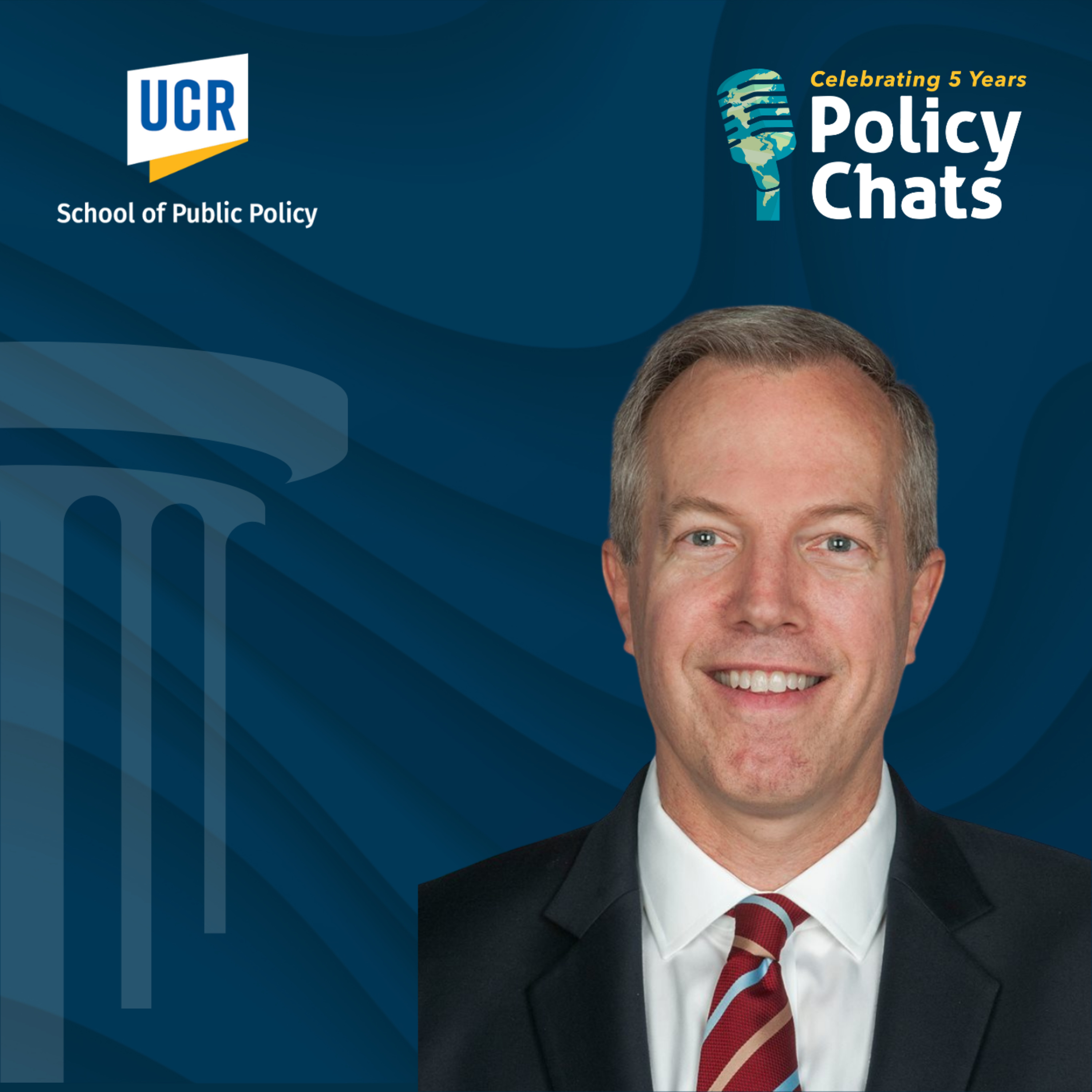 A Strong, Prosperous, and Independent Vietnam: Diplomacy with Ambassador Ted Osius 22.06.2026 1j 3mntIn this episode of Policy Chats, Former U.S. Ambassador Ted Osius joins host Dori Pham to discuss the evolution of U.S.–Vietnam relations, the enduring process of reconciliation, and the opportunities and challenges shaping the bilateral partnership in the twenty-first century.The conversation covers how decades of reconciliation efforts have transformed former adversaries into strategic partners, examining the role of trust-building, diplomacy, security cooperation, and economic engagement in strengthening U.S.–Vietnam relations. Ambassador Osius also shares insights on Vietnam’s foreign policy strategy, the significance of key diplomatic milestones, emerging areas of cooperation in technology and innovation, and the responsibilities of public servants in navigating complex moral and policy challenges.Topics CoveredThe role of trust and reconciliation in strengthening U.S.–Vietnam relations decades after the warVietnam’s “bamboo diplomacy” and its approach to balancing relations with major powers while preserving national independenceThe growth of U.S.–Vietnam security cooperation, including defense training, military assistance, and strategic partnershipsVietnam’s emergence as a technology, semiconductor, clean energy, and innovation hubOpportunities for deeper collaboration under the U.S.–Vietnam Comprehensive Strategic PartnershipAdvice for students and young professionals interested in diplomacy, public service, and U.S.–Vietnam relationsThe episode concludes with Ambassador Osius reflecting on the future of the U.S.–Vietnam partnership and the importance of principled leadership, mutual respect, and people-to-people connections in advancing international cooperation.📍 This episode is produced by the UC Riverside School of Public Policy and reflects our mission of creating solutions for the region solutions for the world.Disclaimer: The views and opinions expressed in this podcast are those of the interviewers and guests alone and do not reflect the official positions of the UC Riverside School of Public Policy or the University of California, Riverside.🎧 Guest Speaker: Former US Ambassador Ted Osius🎙️ Interviewed by: Dori Pham, Host of Policy Chats🎵 Music by: Vir Sinha🔗 Learn more: spp.ucr.edu/podcast📱 Follow us on Instagram: @ucr_spp👉 Be sure to subscribe so you never miss an episode exploring how policy shapes our future.
 -
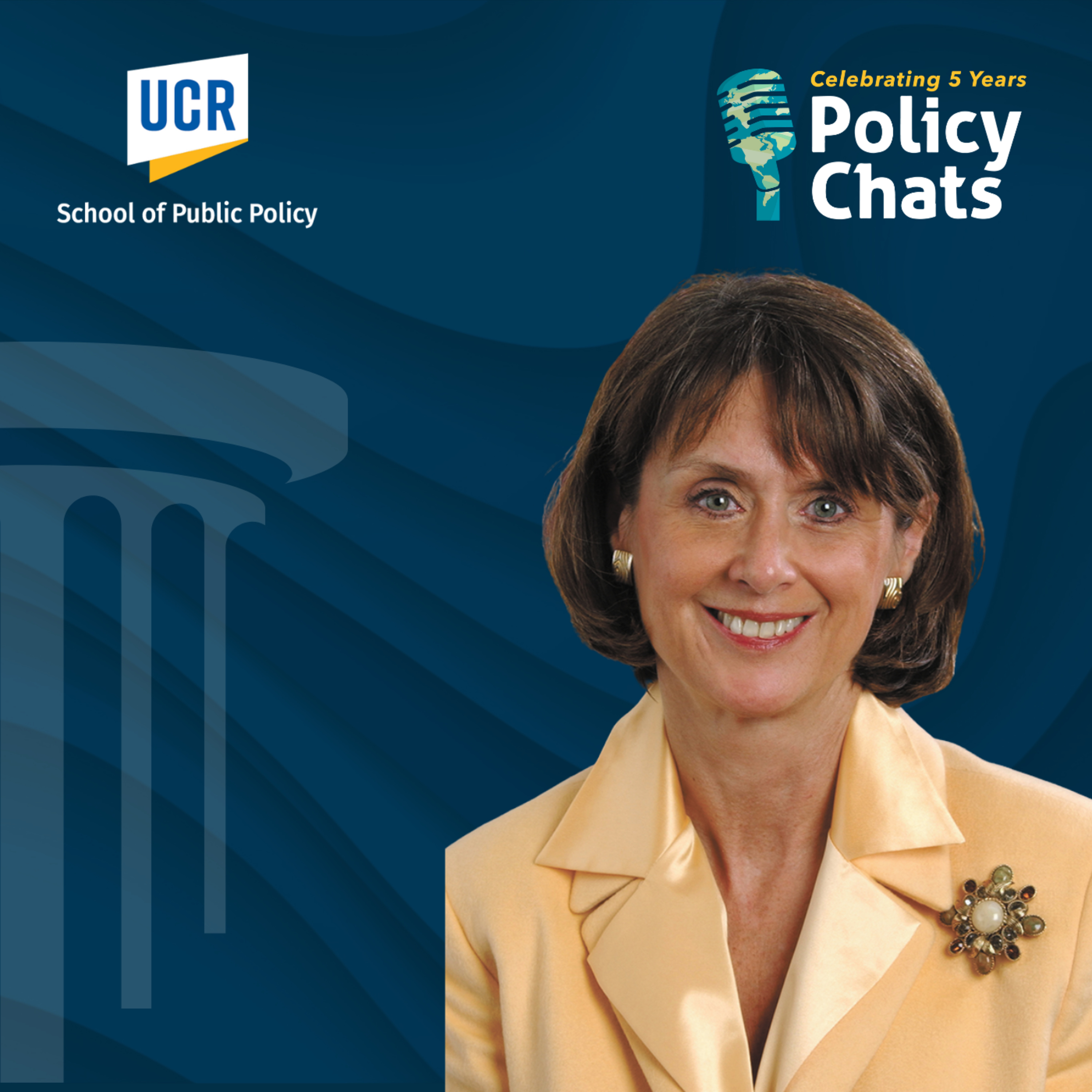 The Art of Diplomacy: Balancing Crisis and Long-Term Partnership 05.06.2026 54mntIn this episode of Policy Chats, Former US Ambassador Barbara K. Bodine joins hosts Dori Pham and Ari Chung to discuss the inner workings of U.S. foreign policymaking, the value of diplomacy and local expertise, crisis management, counterterrorism, post-conflict governance, and the challenges of translating strategic goals into effective action. Through her experiences in the Middle East, she provides insight into how foreign policy decisions are made, how they unfold in practice, and why diplomacy remains a critical tool for advancing U.S. interests abroad.The conversation covers common challenges diplomats face, including uncertainty, incomplete information, cultural differences, and local resistance. Ambassador Bodine also discusses lessons learned from the USS Cole bombing and how foreign policy processes change during crises.The episode concludes reflecting on the practical realities of diplomacy and the lessons she hopes future policymakers and diplomats will carry forward.Topics CoveredHow foreign policy is formulated within the U.S. government and the key actors and influences involved in the decision-making process.The role of diplomats, embassy reporting, and regional expertiseThe importance of local political, social, and cultural knowledge when designing foreign policy.Foreign policy lessons from the Iraqi invasion of Kuwait and post-conflict reconstruction in Iraq.The relationship between military operations, political planning, governance, and diplomacy.The importance of relationship-building and preventive diplomacy before crises occur.Preparing and mentoring the next generation of diplomats and foreign policy professionals.📍 This episode is produced by the UC Riverside School of Public Policy and reflects our mission of creating solutions for the region solutions for the world.Disclaimer: The views and opinions expressed in this podcast are those of the interviewers and guests alone and do not reflect the official positions of the UC Riverside School of Public Policy or the University of California, Riverside.🎧 Guest Speaker: Former US Ambassador Barbara K. Bodine🎙️ Interviewed by: Dori Pham, Host of Policy Chats & Ari Chung🎵 Music by: Vir Sinha🔗 Learn more: spp.ucr.edu/podcast📱 Follow us on Instagram: @ucr_spp👉 Be sure to subscribe so you never miss an episode exploring how policy shapes our future.
 -
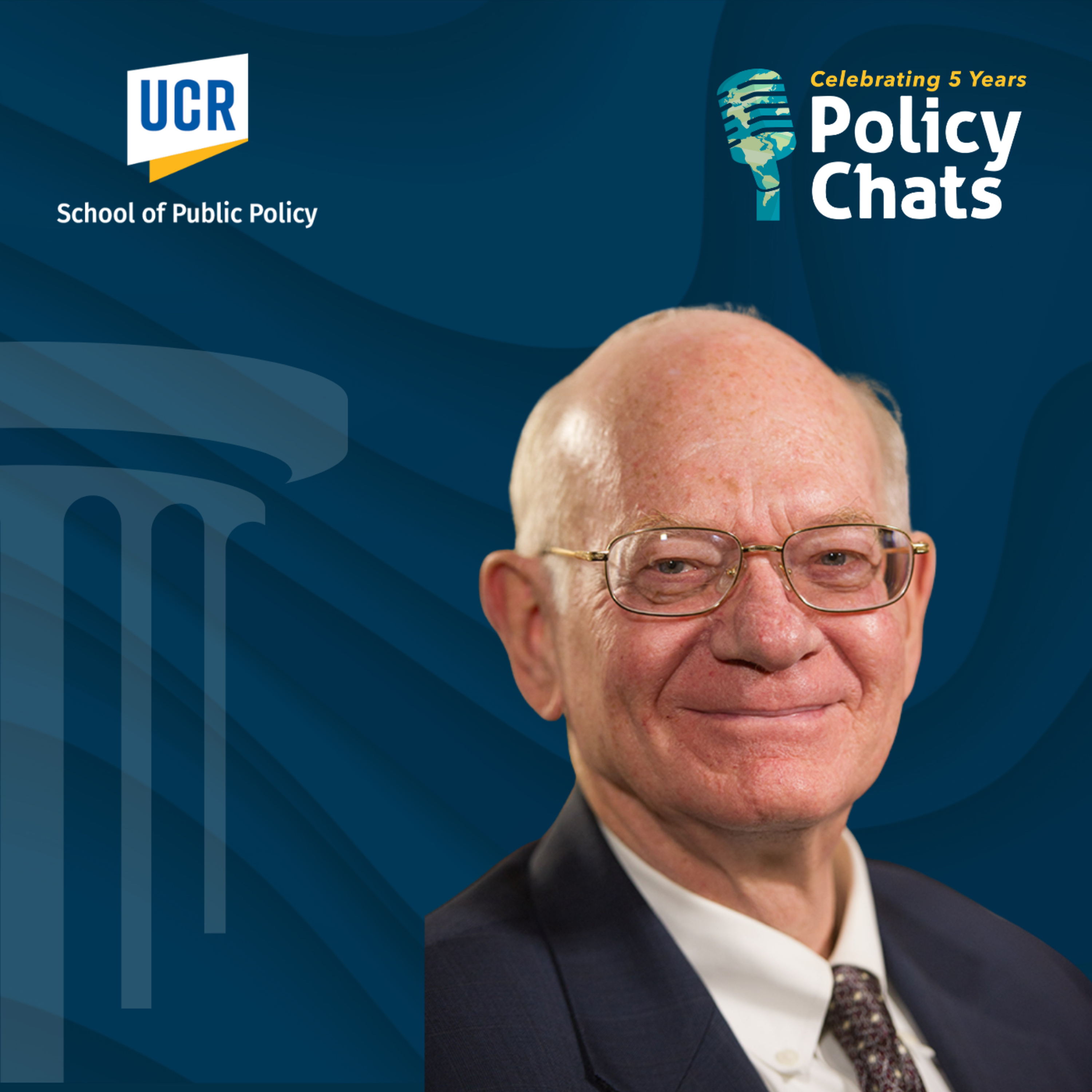 Diplomacy Beyond the Headlines: Ambassador Ronald Neumann on Conflict, Trust, & U.S. Foreign Policy 11.05.2026 34mntIn this episode of Policy Chats, Ambassador Ronald Neumann joins host Dori Pham and Liam Burley to discuss diplomacy in conflict environments. Drawing on his experience as U.S. Ambassador to Algeria, Bahrain, and Afghanistan, he explains how effective diplomacy relies on trust, patience, local knowledge, and credibility.The conversation covers diplomatic leadership in unstable regions, the relationship between military action and political strategy, and current U.S. foreign policy challenges involving Iran, Gulf security, and regional alliances.The episode concludes with reflections on post-escalation diplomacy, trust-building, and how foreign policy is shaped in Washington.Topics Covered- Diplomacy in conflict environments and regions shaped by instability- The importance of trust, credibility, and personal relationships in diplomacy- Why diplomats must understand local politics, factions, and networks- The limits of conducting diplomacy through email, phone calls, or virtual meetings- Lessons from Afghanistan on the relationship between military action and political strategy- The risks of using force without a clear political framework- U.S.-Iran tensions, negotiation challenges, and defining realistic political goals- The role of Gulf States and shifting regional security concernsConcerns about U.S. credibility and the rise of alternative partnerships with countries like China📍 This episode is produced by the UC Riverside School of Public Policy and reflects our mission of creating solutions for the region solutions for the world.Disclaimer: The views and opinions expressed in this podcast are those of the interviewers and guests alone and do not reflect the official positions of the UC Riverside School of Public Policy or the University of California, Riverside.🎧 Guest Speaker: Ambassador Ronald Neumann🎙️ Interviewed by: Dori Pham, Host of Policy Chats & Vir Sinha🎵 Music by: Vir Sinha🔗 Learn more: spp.ucr.edu/podcast📱 Follow us on Instagram: @ucr_spp👉 Be sure to subscribe so you never miss an episode exploring how policy shapes our future.
 -
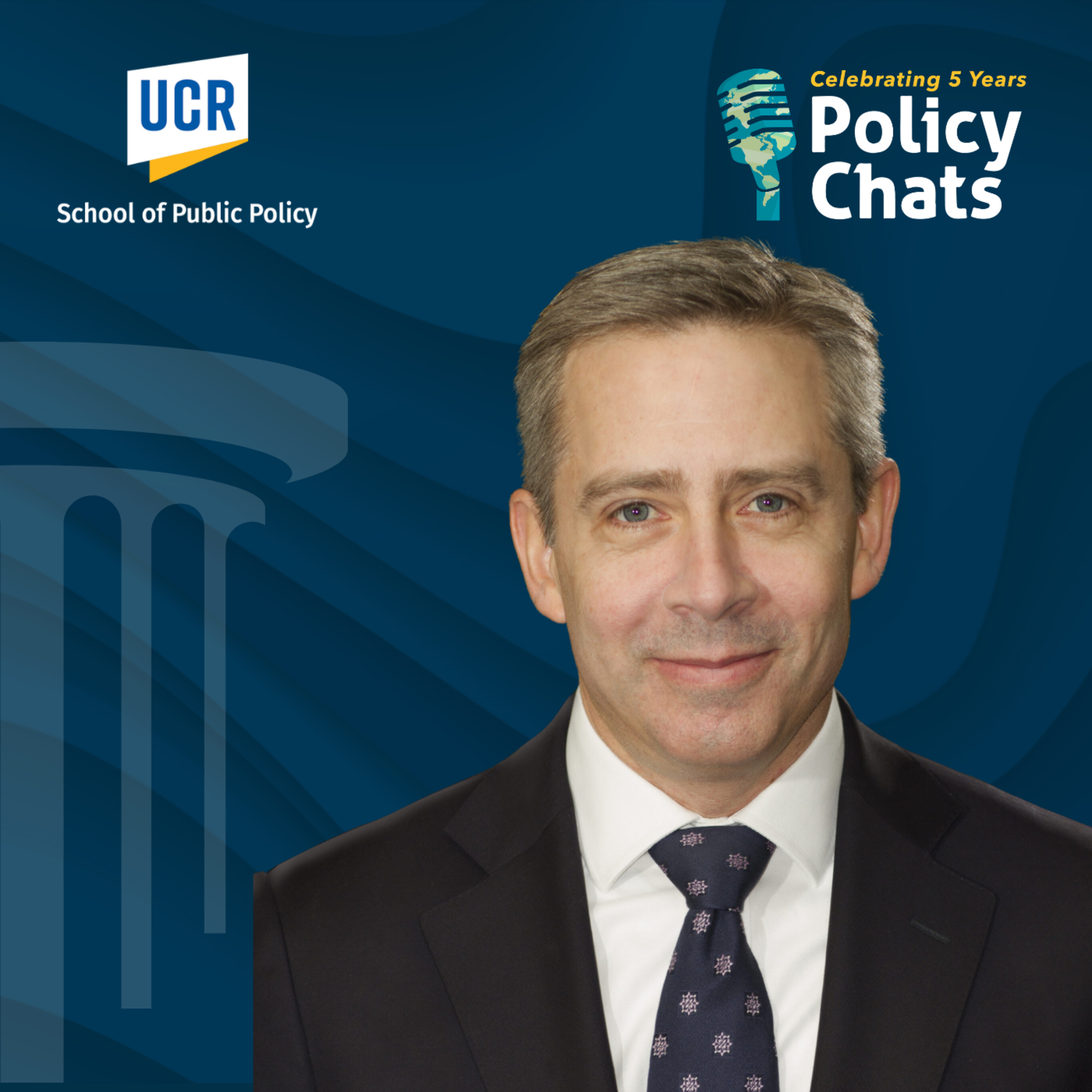 Old Systems, New Demands: The Future of Government 04.05.2026 51mntIn this episode of Policy Chats, Nick Maduros joins host Dori Pham to discuss how California is modernizing state government and improving public service delivery. Drawing on his leadership experience, he highlights the challenges of reforming legacy systems, streamlining operations, and building a more efficient and responsive government.The conversation explores key barriers to reform, including outdated procurement, complex hiring processes, and a culture focused on compliance over outcomes. Secretary Maduros also discusses the role of artificial intelligence in expanding access to government jobs while maintaining accountability.The episode concludes with reflections on public service careers, the importance of effective policy implementation, and the need to rebuild public trust in government.🔍 Topics Covered:- Reforming outdated government systems and addressing legacy bureaucratic structures- The shift from compliance-driven processes to results-oriented governance- Streamlining hiring and improving access to public sector careers- The role of artificial intelligence in modernizing government services- Workforce development and building pipelines from universities to public service- Challenges in competing with the private sector on pay and talent recruitment- The importance of implementation in policymaking, not just legislation- Public trust, efficiency, and the future of democratic governance- Why purpose and impact remain central to careers in government📍 This episode is produced by the UCR School of Public Policy and features insights that align with our motto: “Solutions for the Region, Solutions for the World.”Disclaimer: The views and opinions expressed in this podcast are those of the interviewers and guests alone and do not reflect the official positions of the UC Riverside School of Public Policy or the University of California, Riverside.🎧 Guest Speaker: Nick Maduros🎙️ Interviewed by: Dori Pham, Host of Policy Chats & Liam Burley🎵 Music by: Vir Sinha🔗 Learn more: spp.ucr.edu/podcast📱 Follow us on Instagram: @ucr_spp👉 Be sure to subscribe so you never miss an episode exploring how policy shapes our future.🔑 Key Topics Covered
 -
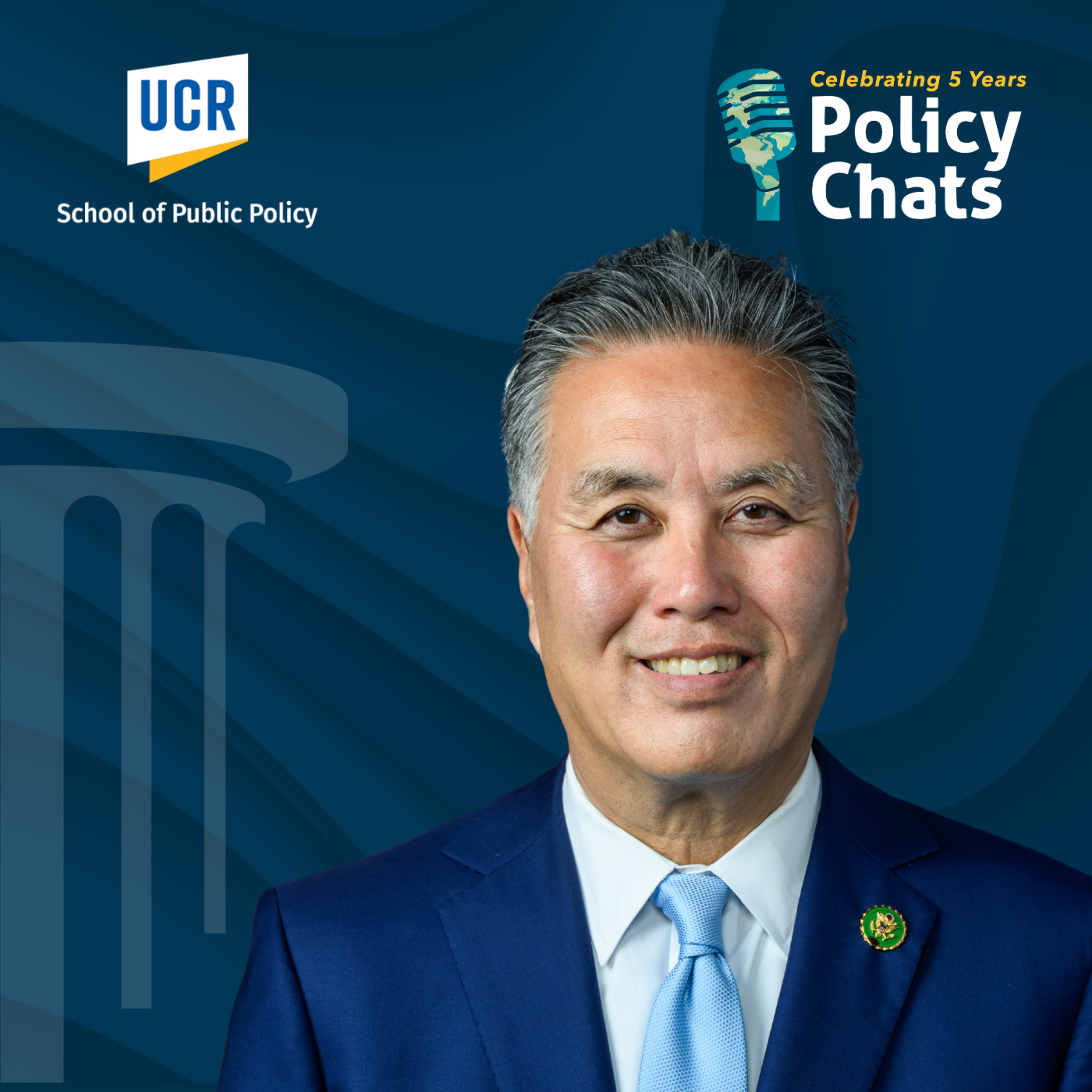 From Teacher to Lawmaker: How Education Drives Policy Change 28.04.2026 44mntIn this episode of Policy Chats, Mark Takano joins host Dori Pham to discuss his journey from educator to policymaker and how his background shapes his approach to public service. Drawing on over two decades as a public school teacher and his leadership in Congress, he shares insights on education reform, veterans’ policy, and the realities of navigating complex legislation. The conversation highlights how lived experience informs policymaking and why long-term structural change is essential in addressing inequality.The episode explores Takano’s work on education and workforce development, including the importance of college readiness, equitable access, and supporting multilingual students. It also examines his leadership on veterans’ issues, particularly the passage of the Honoring Our PACT Act, and the challenges of recognizing and addressing long-term health impacts from military service. The discussion concludes with reflections on policymaking as a gradual, collaborative process and the importance of persistence in achieving meaningful reform.🔍 Topics Covered:- How teaching experience shapes leadership, communication, and policymaking- Education inequality and the need for systemic reform from K–12 to higher education- College readiness, early college programs, and reducing remediation barriers- Supporting multilingual and first-generation students in the education system- Advocacy for veterans and addressing exploitation by for-profit colleges- The development and impact of the Honoring Our PACT Act- Why policymaking takes time: negotiation, cost, and political coordination- The importance of recognizing long-term and “invisible” effects of military service- The role of persistence and collaboration in driving policy change📍 This episode is produced by the UCR School of Public Policy and features insights that align with our motto: “Solutions for the Region, Solutions for the World.”Disclaimer: The views and opinions expressed in this podcast are those of the interviewers and guests alone and do not reflect the official positions of the UC Riverside School of Public Policy or the University of California, Riverside.🎧 Guest Speaker: Mark Takano, U.S. Congressman representing California’s 39th District🎙️ Interviewed by: Dori Pham, Host of Policy Chats & Urban Cross, Dean's Ambassador 🎵 Music by Vir Sinha🔗 Learn more: spp.ucr.edu/podcast📱 Follow us on Instagram: @ucr_spp👉 Be sure to subscribe so you never miss an episode exploring how policy shapes our future.
 -
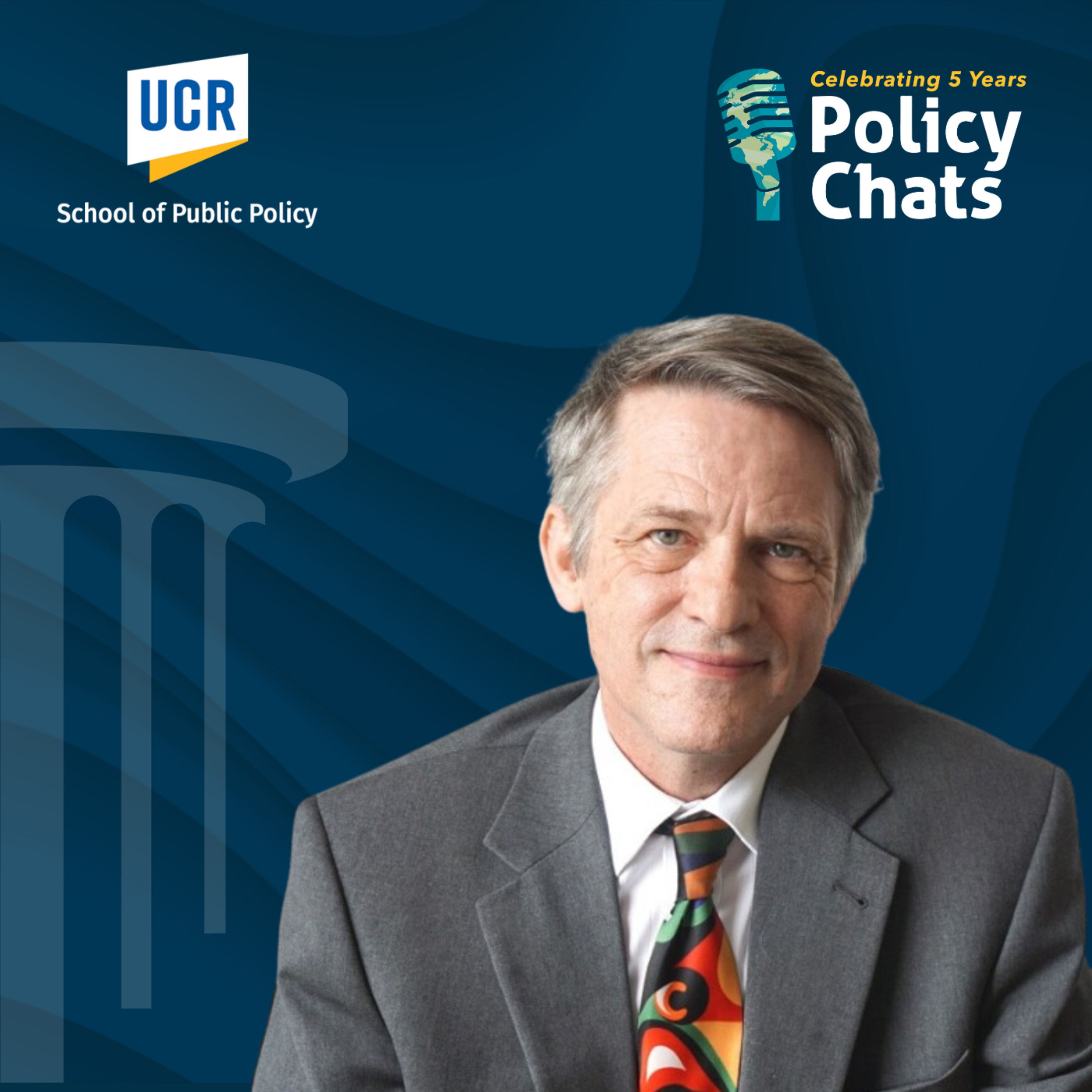 Diplomacy Under Pressure: Iran, Nuclear Risk, and U.S. Strategy 20.04.2026 47mntIn this episode of Policy Chats, Thomas Countryman joins host Dori Pham to discuss his career in diplomacy and the realities of nuclear arms control policymaking. Drawing on his experience as Assistant Secretary of State for International Security and Nonproliferation, he explains how negotiations actually work inside government and why consistency is critical in preventing nuclear proliferation. The conversation explores the 2015 Iran nuclear deal, current U.S.–Iran tensions, and the challenges of balancing ideal goals with practical outcomes in diplomacy. The episode concludes with insights on the future of global arms control and why sustained dialogue remains essential in reducing nuclear risk.🔍 Topics Covered:- Thomas Countryman’s path to becoming a career diplomat- The role of the State Department in arms control and nonproliferation- How diplomacy works behind the scenes vs. public perception- The importance of consistency in nuclear nonproliferation policy- The 2015 Iran nuclear deal and lessons from its negotiation- Current U.S.–Iran tensions and challenges in modern diplomacy- The role of NGOs like the Arms Control Association in shaping policy- The future of global arms control and nuclear risk reduction📍 This episode is produced by the UCR School of Public Policy and features insights that align with our motto: “Solutions for the Region, Solutions for the World.”Disclaimer: The views and opinions expressed in this podcast are those of the interviewers and guests alone and do not reflect the official positions of the UC Riverside School of Public Policy or the University of California, Riverside.🎧 Guest Speaker: Thomas Countryman, former Assistant Secretary of State for International Security and Nonproliferation and Chair of the Board of the Arms Control Association🎙️ Interviewed by: Dori Pham, Host of Policy Chats 🎵 Music by Vir Sinha🔗 Learn more: spp.ucr.edu/podcast📱 Follow us on Instagram: @ucr_spp👉 Be sure to subscribe so you never miss an episode exploring how policy shapes our future.
 -
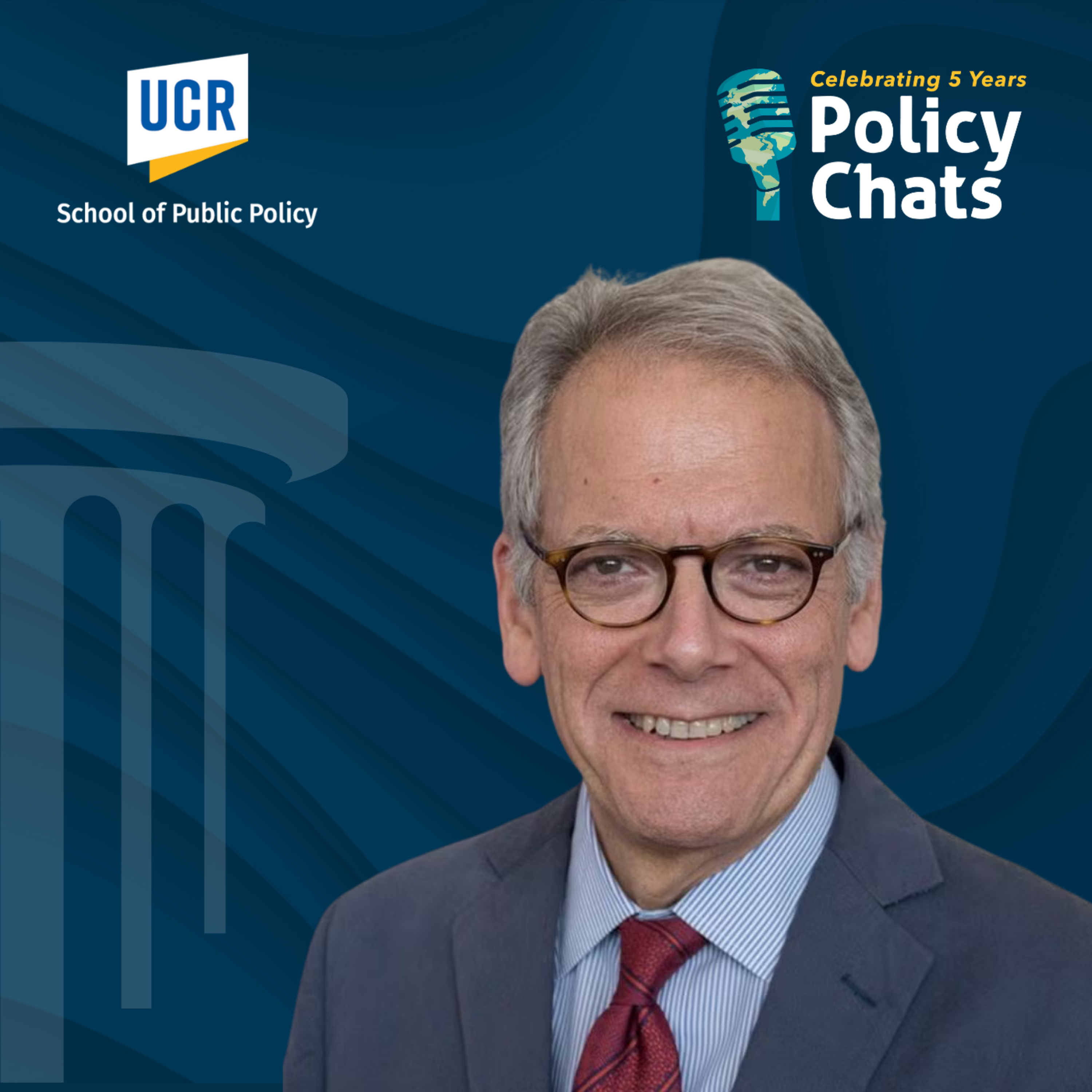 The Craft of Diplomacy: Trust, Negotiation, and U.S. Foreign Policy 13.04.2026 33mntIn this episode of Policy Chats, Ambassador Jeffrey DeLaurentis joins host Dori Pham to discuss his career in diplomacy and key moments in U.S. foreign policy. Drawing on his experience in Cuba and at the United Nations, he explains how trust, emotional intelligence, and negotiation shape diplomatic outcomes. The conversation explores the 2015 U.S.–Cuba normalization, challenges in global conflict such as U.S.–Iran tensions, and why diplomacy remains essential in preventing escalation. The episode concludes with practical advice for students interested in pursuing a career in the foreign service.🔍 Topics Covered:- Ambassador DeLaurentis’s path to becoming a career diplomat- How Georgetown SFS and Columbia SIPA shape diplomatic training- U.S.–Cuba relations and the 2015 normalization process- Comparing bilateral vs. multilateral negotiations- Diplomacy in times of conflict, including U.S.–Iran tensions- Lessons from the Cuban Missile Crisis and nuclear negotiations- Career advice for students interested in the foreign service📍 This episode is produced by the UCR School of Public Policy and features insights that align with our motto: “Solutions for the Region, Solutions for the World.”Disclaimer: The views and opinions expressed in this podcast are those of the interviewers and guests alone and do not reflect the official positions of the UC Riverside School of Public Policy or the University of California, Riverside.🎧 Guest Speaker: Ambassador Jeffrey DeLaurentis, former U.S. Ambassador for Special Political Affairs at the United Nations and former Chargé d’Affaires in Cuba🎙️ Interviewed by: Dori Pham, Host of Policy Chats 🎵 Music by Vir Sinha🔗 Learn more: spp.ucr.edu/podcast📱 Follow us on Instagram: @ucr_spp👉 Be sure to subscribe so you never miss an episode exploring how policy shapes our future.
 -
 Designing Healthier Cities: Inside the Blue Zones Project Riverside 03.04.2026 47mntIn this episode of Policy Chats, Erin Edwards, Executive Director of Blue Zones Project Riverside, joins Dean Mark Long, host Dori Pham and Shivani Narang to discuss how place based policy and community design shape public health and longevity. Drawing on her background in local government and nonprofit leadership, Edwards explains how the Blue Zones model turns global research into practical strategies for local communities.The conversation examines key challenges in implementing health focused policy, including community engagement, barriers in the built environment, and the limits of long term public health evidence. Edwards highlights the need for cities to act on best practices and adapt policies to local needs.The episode also explores how the Blue Zones Project drives change through its focus on people, places, and policy. From walkability and food access to tobacco regulation and workplace wellbeing, Edwards shows how local actions can build healthier and more connected communities.The episode concludes by reflecting on sustainability and how Riverside’s efforts contribute to broader public health change over time.🔍 Topics Covered:- The Blue Zones framework and the “Power Nine” principles of longevity- The role of community engagement in local policymaking- Structural barriers to building healthier urban environments- Challenges of evidence-based policymaking in public health- Place-based policies: walkability, food systems, and tobacco regulation- The three pillars of Blue Zones: people, places, and policy- Public-private partnerships and community-based implementation- Measuring success through wellbeing data and long-term indicators- Sustainability and scaling local health initiatives nationally📍 This episode is produced by the UCR School of Public Policy and features insights that align with our motto: “Solutions for the Region, Solutions for the World.”Disclaimer: The views and opinions expressed in this podcast are those of the interviewers and guests alone and do not reflect the official positions of the UC Riverside School of Public Policy or the University of California, Riverside.🎧 Guest Speaker: Erin Edwards, Executive Director, Blue Zones Project Riverside🎙️ Hosted by: Dori Pham, Host of Policy Chats & Shivani Narang🎵 Music by: Vir Sinha🔗 Learn more: spp.ucr.edu/podcast📱 Follow us on Instagram: @ucr_spp👉 Be sure to subscribe so you never miss an episode exploring how policy shapes our future.
 -
 Education Freedom vs. Public Systems: Can We Do Both? 09.03.2026 54mntIn this episode of Policy Chats, Shaka Mitchell, Senior Fellow at the American Federation for Children, sits down with host Dori Pham to discuss education policy and the role of school choice in expanding opportunity for students. Drawing on his experience in education reform, Mitchell explains how policies such as charter schools, education savings accounts, and voucher programs aim to give families more options and improve educational outcomes.The conversation explores key debates surrounding school choice, including accountability, funding structures, and equity. Mitchell also discusses how competition and innovation can influence school quality and how policymakers attempt to balance parental choice with oversight.The episode concludes with a reflection on how education policy shapes economic mobility and why future policymakers must carefully consider incentives, institutional design, and long-term investment in education.🔍 Topics Covered:-The foundations and goals of modern school choice policy-Charter schools, vouchers, and education savings accounts-Expanding educational opportunity for underserved communities-The relationship between competition, innovation, and school quality-Policy debates around accountability and public funding-Balancing parental choice with oversight and equity-Education policy as a pathway to economic mobility📍 This episode is produced by the UCR School of Public Policy and features insights that align with our motto: “Solutions for the Region, Solutions for the World.”Disclaimer: The views and opinions expressed in this podcast are those of the interviewers and guests alone and do not reflect the official positions of the UC Riverside School of Public Policy or the University of California, Riverside.🎧 Guest Speaker: Shaka Mitchell, Senior Fellow, American Federation for ChildrenInterviewed by: Dori Pham, Host of Policy Chats & Andrew Shannon, Dean's Brand Ambassador🎵 Music by Vir Sinha🔗 Learn more: spp.ucr.edu/podcast📱 Follow us on Instagram: @ucr_spp👉 Be sure to subscribe so you never miss an episode exploring how policy shapes our future.
 -
 From Liberalism to State Capitalism: Markets, Power, and the Future of Policy 02.03.2026 46mntIn this episode of Policy Chats, host Dori Pham sits down with Professor Babcock, Associate Dean and Professor at the UC Riverside School of Public Policy, to discuss liberalism, economic reasoning, and the changing role of government in today’s policy environment.Professor Babcock argues that recent policy decisions reflect a shift away from evidence-based, deliberative policymaking toward a more centralized, personality-driven approach. He explains how tariffs, industrial policy, and regulation can reshape incentives and create uncertainty for businesses, producers, and global partners, and he contrasts market-based decision-making with state-directed capitalism.Using California as a case study, the conversation explores trade-offs between equity, efficiency, and long-term investment, including how legal and regulatory veto points can slow housing, infrastructure, and climate progress. The episode closes with how UCR’s School of Public Policy is strengthening training in data, economics, and political science as part of its 10-year anniversary theme of abundance—building the skills students need to analyze policy in a rapidly changing world.🔍 Topics Covered:-Liberalism, markets, and the foundations of U.S. policymaking-State capitalism, tariffs, and industrial policy under the current administration-Economic uncertainty and its effects on business investment-Trade-offs between equity, efficiency, and long-term growth-Environmental policy, fossil fuels, and green energy transitions-International alliances, global trust, and U.S. foreign policy risks-How UCR’s School of Public Policy is preparing future policymakers📍 This episode is produced by the UCR School of Public Policy and features insights that align with our motto: “Solutions for the Region, Solutions for the World.”Disclaimer: The views and opinions expressed in this podcast are those of the interviewers and guests alone and do not reflect the official positions of the UC Riverside School of Public Policy or the University of California, Riverside.🎧 Guest Speaker: Professor Bruce Babcock, Associate Dean and Professor, UC Riverside School of Public PolicyInterviewed by: Dori Pham, Host of Policy Chats & Ari Chung, Dean's Brand Ambassador 🎵 Music by Vir Sinha🔗 Learn more: spp.ucr.edu/podcast📱 Follow us on Instagram: @ucr_spp👉 Be sure to subscribe so you never miss an episode exploring how policy shapes our future.
 -
 Disaster Dollars: How Climate Shocks Reshape Local Budgets 23.02.2026 49mntIn this episode of Policy Chats, host Dori Pham sits down with Professor Wei Guo, Associate Professor at the UCR School of Public Policy, to discuss how climate related disasters strain state and local public finances and what that means for equity and long term resilience.Professor Guo explains why disaster recovery spending often remains elevated for years, while revenue effects especially property tax revenue vary depending on institutional structures. Using California as a case study, she highlights how Proposition 13 can produce unexpected fiscal outcomes after wildfires through property reassessments tied to housing turnover.The conversation also examines how reimbursement based disaster aid can unintentionally discourage climate adaptation, reinforce rebuilding in high risk areas, and deepen inequalities for marginalized communities with limited upfront fiscal capacity. The episode concludes with a call to move from reactive recovery toward proactive climate adaptation, with stronger leadership and investment from state and federal governments.🔍 Topics Covered:-How climate disasters affect state and local government budgets-Why disaster-related spending remains high years after recovery-Property tax revenue, disasters, and California’s Proposition 13-Equity challenges in disaster relief and reimbursement systems-Climate resilience, managed retreat, and wildfire policy-The limits of local government finance in climate adaptation-Why state and federal governments play a critical role in resilience planning📍 This episode is produced by the UCR School of Public Policy and features insights that align with our motto: “Solutions for the Region, Solutions for the World.”Disclaimer: The views and opinions expressed in this podcast are those of the interviewers and guests alone and do not reflect the official positions of the UC Riverside School of Public Policy or the University of California, Riverside.🎧 Guest Speaker: Wei Guo, Associate Professor at the UCR School of Public PolicyInterviewed by: Dori Pham, Host of Policy Chats & Jaz Williams🎵 Music by Vir Sinha🔗 Learn more: spp.ucr.edu/podcast📱 Follow us on Instagram: @ucr_spp👉 Be sure to subscribe so you never miss an episode exploring how policy shapes our future.
 -
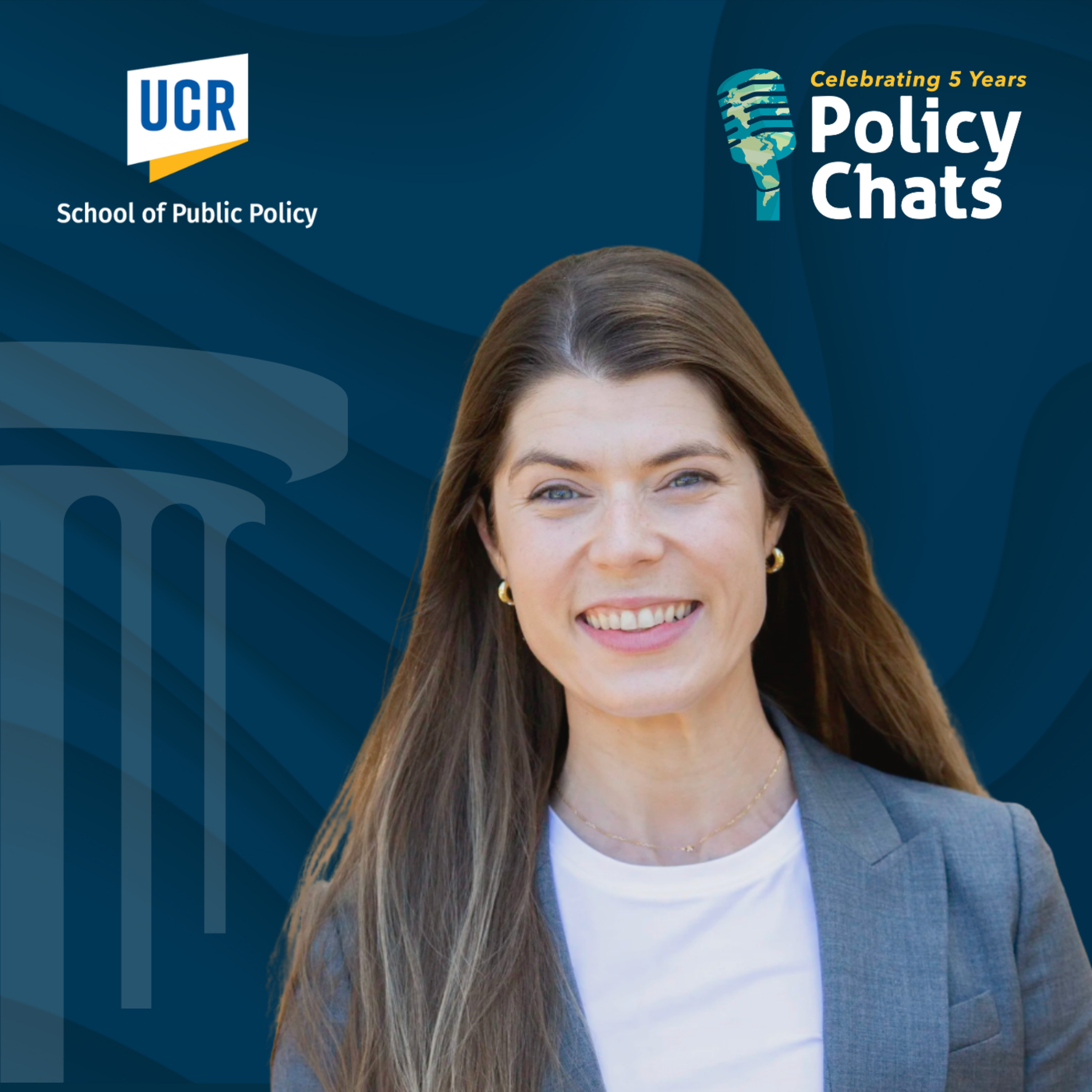 When “Nonpartisan” Isn’t Neutral: Police Union Endorsements and City Polarization 14.02.2026 48mntIn this episode of Policy Chats, Professor Jennifer Gaudette joins host Dori Pham to discuss polarization in local politics and how voters make decisions in nonpartisan elections with limited information. She explains how the absence of party labels and the decline of local news push voters to rely on shortcuts like endorsements.Professor Gaudette shares her research showing that police union endorsements are increasingly read as a conservative signal in mayoral and city council races, while teachers union endorsements often signal a more liberal candidate. The conversation also highlights why firefighters unions do not create the same polarized reactions, and what that reveals about endorsements tied to expertise versus ideology.The episode closes with reflections on campaign strategy, the future of nonpartisan local democracy, and how local journalism and short-form social media shape political trust and misinformation.🔍 Topics Covered:- How voters decide in nonpartisan local elections with limited information- Why police union endorsements have become more polarized over time- Endorsements as “information shortcuts” when party labels are absent- How local candidates strategically pursue targeted endorsements- The case for (and controversy around) partisan versus nonpartisan elections📍 This episode is produced by the UCR School of Public Policy and features insights that align with our motto: “Solutions for the Region, Solutions for the World.”Disclaimer: The views and opinions expressed in this podcast are those of the interviewers and guests alone and do not reflect the official positions of the UC Riverside School of Public Policy or the University of California, Riverside.🎧 Guest Speaker: Jennifer Gaudette, Assistant Professor at the UCR School of Public PolicyInterviewed by: Dori Pham, Host of Policy Chats & Vir Sinha🎵 Music by Vir Sinha🔗 Learn more: spp.ucr.edu/podcast📱 Follow us on Instagram: @ucr_spp👉 Be sure to subscribe so you never miss an episode exploring how policy shapes our future.
 -
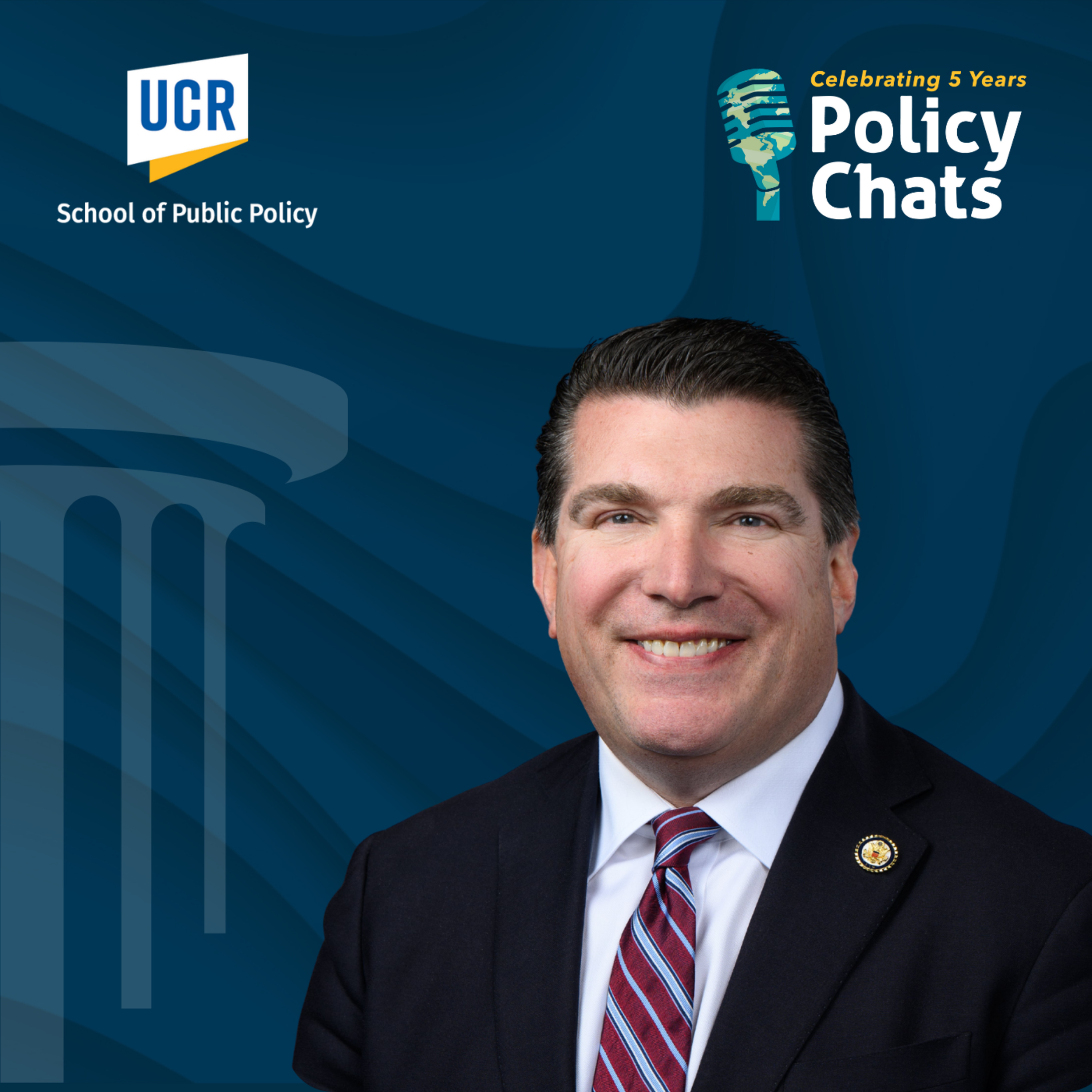 Bridging Silicon Valley and Washington: AI, Entrepreneurship, and Public Service 05.01.2026 56mntIn this episode of Policy Chats, Congressman Jay Obernolte joins host Dori Pham and guest co host Lloyd Levine for an in depth conversation on artificial intelligence policy, innovation, and democratic governance. Drawing on his background as a computer engineer, entrepreneur, former mayor, and state legislator, Congressman Obernolte explains how his technical training shapes his approach to federal policymaking on emerging technologies.As Chair of the House Subcommittee on Research and Technology, Congressman Obernolte walks listeners through how Congress is thinking about AI beyond headlines and hype. He breaks down key distinctions between generative and non generative AI, deterministic and non deterministic systems, and why focusing on outcomes rather than tools is central to effective regulation. Using real world examples from healthcare, transportation, and consumer protection, he explains how sector specific oversight can better manage risk while still supporting innovation.The discussion also explores the national and global dimensions of AI policy. Congressman Obernolte compares the United States approach with the European Union model, outlines the task force report he led on a federal AI framework, and explains the proposed hub and spoke system that coordinates sector regulators with shared technical standards. He addresses tensions between federal and state authority, arguing for clear national guardrails that preserve interstate commerce while allowing states to regulate AI use within sectors they already oversee.From a student perspective, Dori Pham raises questions about AI in education, productivity, and the future of work. The conversation turns to how lawmakers can set guardrails that protect the public from misuse without slowing innovation that could expand opportunity and economic growth for younger generations. The episode closes with reflections on bipartisan cooperation, public trust, and the challenge of misinformation in an AI driven world.🔍 Topics Covered:- Congressman Obernolte’s path from AI researcher to entrepreneur to federal policymaker- What artificial intelligence means beyond generative models- Deterministic versus non deterministic AI explained in plain language- Sector specific regulation versus one size fits all approaches- The House AI Task Force report and proposed federal framework- Balancing innovation with accountability and public safety- Federal and state roles in AI policy and interstate commerce- AI and global competition with China and other nations📍 This episode is produced by the UCR School of Public Policy and features insights that align with our motto: “Solutions for the Region, Solutions for the World.”Disclaimer: The views and opinions expressed in this podcast are those of the interviewers and guests alone and do not reflect the official positions of the UC Riverside School of Public Policy or the University of California, Riverside.🎧 Guest Speaker: Jay Obernolte, Member of Congress for California’s 23rd District and Chair of the House Subcommittee on Research and Technology and Lloyd Levine, National Senior Executive, State Government Strategy at T-Mobile Interviewed by: Dori Pham, Host of Policy Chats 🎵 Music by Vir Sinha🔗 Learn more: spp.ucr.edu/podcast📱 Follow us on Instagram: @ucr_spp👉 Be sure to subscribe so you never miss an episode exploring how policy shapes our future.
 -
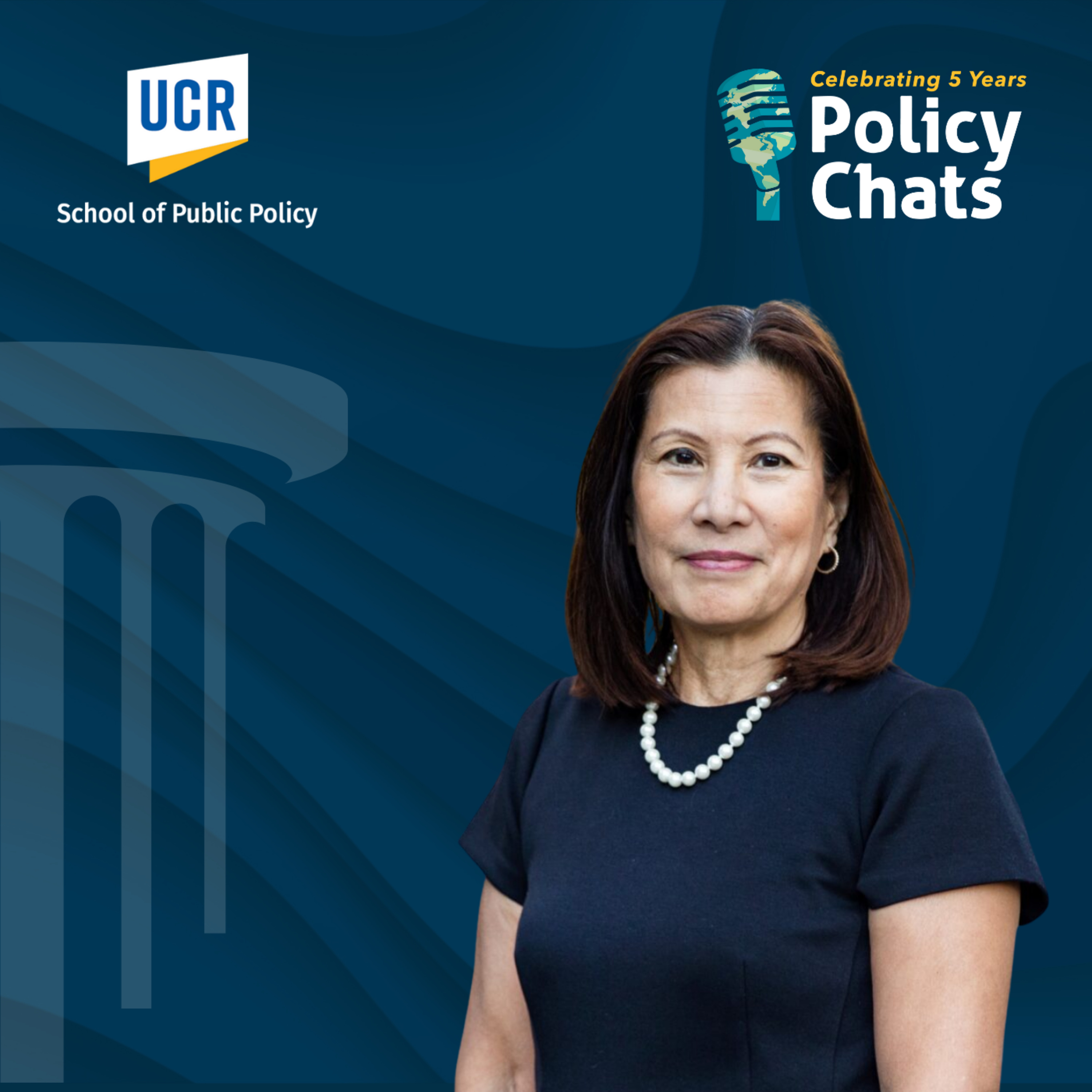 Building a Fair and Abundant Justice System How Courts Shape Opportunity and Public Confidence 31.12.2025 59mntIn this episode of Policy Chats, former Chief Justice of California Tani Cantil Sakauye joins hosts Dori Pham and Jaz Williams for a wide ranging conversation on how courts can strengthen a thriving, prosperous, and abundant society.Chief Justice Cantil Sakauye breaks down how California’s judiciary is structured across 58 counties, explaining the distinct roles of the trial courts, Courts of Appeal, and the California Supreme Court. She also demystifies the Judicial Council, the constitutional policymaking body that sets statewide rules and guidance that shape everything from jury service to courtroom procedure.A major focus of the discussion is access to justice. She reflects on key initiatives from her tenure, including expanding language access across California courts, increasing interpreter services, and strengthening self help resources so that individuals without attorneys can navigate court processes more safely and effectively. She also discusses efforts to address the burden of fines and fees, including ability to pay approaches and traffic ticket relief programs.The conversation then turns to governance under constraint. She shares how judicial leaders approached statewide budget cuts by using shared frameworks and collective decision making across counties to protect core services and maintain public trust, while allowing local courts flexibility in implementation.Finally, she offers an inside look at the judiciary’s response to the COVID 19 pandemic. With no playbook available, she describes how emergency orders, remote proceedings, and public health safeguards were developed under intense pressure, and how constitutional rights remained the guiding framework. She closes with lessons on crisis leadership, emphasizing the importance of listening, bringing down the temperature in conflict, and engaging broad perspectives, plus advice for students interested in law, public service, and community leadership.🔍 Topics Covered:- How California’s court system is structured across trial courts, Courts of Appeal, and the Supreme Court- What the Chief Justice does and how the Judicial Council makes statewide court policy- Expanding access to justice through language services and self help support- Addressing fines and fees and improving court affordability- How statewide budgeting decisions are made across 58 counties- Leading through COVID 19 with emergency orders, remote hearings, and public health safeguards- Lessons on listening, de escalation, and leadership in conflict- Career paths in law, public policy, and public service, including the continued need for the human element in justice📍 This episode is produced by the UCR School of Public Policy and features insights that align with our motto: “Solutions for the Region, Solutions for the World.”Disclaimer: The views and opinions expressed in this podcast are those of the interviewers and guests alone and do not reflect the official positions of the UC Riverside School of Public Policy or the University of California, Riverside.🎧 Guest Speaker: Tani Cantil Sakauye, Chief Justice of California Interviewed by: Dori Pham, host of Policy Chats and Jaz Williams🎵 Music by Vir Sinha🔗 Learn more: spp.ucr.edu/podcast📱 Follow us on Instagram: @ucr_spp👉 Be sure to subscribe so you never miss an episode exploring how policy shapes our future.
 -
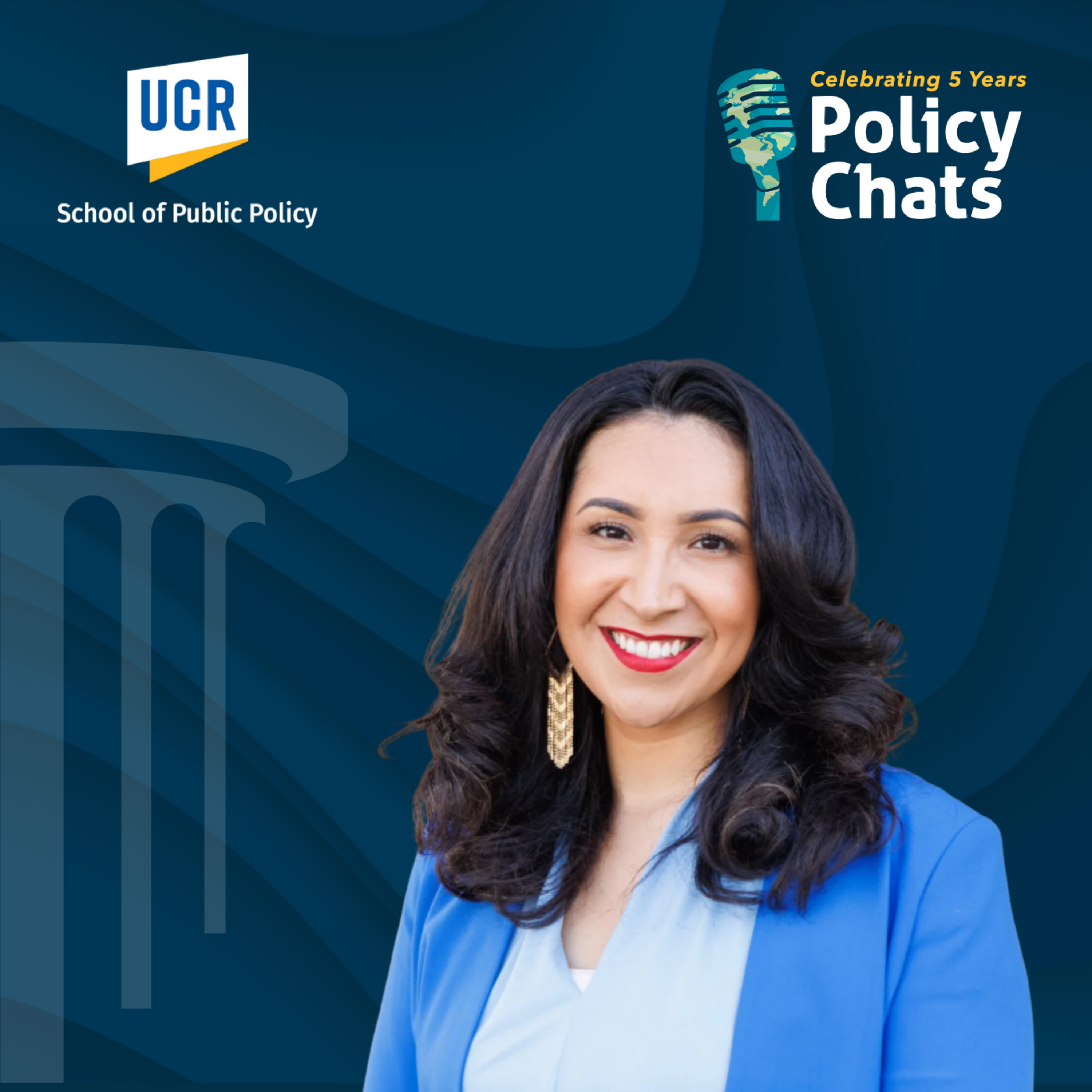 The Power of Local Government: Turning Policy into Homes, Safety, and Hope 22.12.2025 46mntIn this episode of Policy Chats, host Dori Pham sits down with Riverside City Councilmember Clarissa Cervantes for a conversation about what it takes to build abundant, welcoming communities at the local level. From immigration enforcement protocols to housing policy and public art, Councilmember Cervantes explains how city decisions shape daily life for families, students, and workers across Riverside.Throughout the episode, she breaks down her recent resolution on federal immigration enforcement, which strengthens identification standards, reinforces state law, and creates new tools for civil rights documentation and community education. She shares how collaboration with community groups, legal partners, and the Riverside Police Department helped craft one of the strongest resolutions of its kind in California, and why it matters for immigrant families and public safety.The discussion then turns to housing and homelessness, where Councilmember Cervantes serves as chair of the city’s Housing and Homelessness Committee. She talks about motel conversions into permanent supportive housing, safe parking pilots for families living in their cars, and the importance of prevention as well as shelter. She also reflects on how budgets, staffing, and creative partnerships can move resources toward the neighborhoods with the greatest need.Finally, Councilmember Cervantes shares her planner’s view of transportation, walkability, and public art. She describes Riverside’s investments in bus service, bike and walking connections, and mural programs that build pride, safety, and economic opportunity. Her vision of abundance centers on dignity, imagination, and the power of art and policy together to transform a city street by street.🔍 Topics Covered:- How Councilmember Cervantes stays connected with residents and neighborhood groups- The development and impact of Riverside’s immigration enforcement resolution- Community partnerships in advancing immigrant rights and public safety- Housing and homelessness strategies, including motel conversions and safe parking pilots-How murals, public art, and artist residencies can foster safety, pride, and economic activity📍 This episode is produced by the UCR School of Public Policy and features insights that align with our motto: “Solutions for the Region, Solutions for the World.”.Disclaimer: The views and opinions expressed in this podcast are those of the interviewers and guests alone and do not reflect the official positions of the UC Riverside School of Public Policy or the University of California, Riverside.🎧 Guest Speaker: Clarissa Cervantes, Riverside City CouncilmemberInterviewed by: Dori Pham host of Policy Chats and Sammie Burgess 🎵 Music by Vir Sinha🔗 Learn more: spp.ucr.edu/podcast📱 Follow us on Instagram: @ucr_spp👉 Be sure to subscribe so you never miss an episode exploring how policy shapes our future.
 -
 The Miner of Last Resort: Cryptocurrency, Shadow Money, and the Role of the Central Bank 18.11.2025 1j 8mntIn this episode, Graham Steele, former Assistant Secretary for Financial Institutions at the U.S. Treasury and current academic fellow at Stanford Law School, discusses the implications of cryptocurrency and blockchain on the central banking functions of government. This is the eighth episode in our 11-part series, Technology vs. Government, featuring former California State Assemblymember Lloyd Levine.About Graham Steele:Graham Steele is an Academic Fellow at Stanford Law School’s Rock Center for Corporate Governance. He has extensive experience at the highest levels of financial policy, having served as the Assistant Secretary for Financial Institutions at the U.S. Department of the Treasury, where he was responsible for policy on banks, credit unions, insurance, fintech, and financial cybersecurity. Prior to his role at Treasury, he directed the Corporations and Society Initiative at Stanford Graduate School of Business. His formative policy experience was on Capitol Hill, where he served for nearly eight years on the U.S. Senate Committee on Banking, Housing, and Urban Affairs, including as Chief Counsel for the Democratic Staff, working on the Dodd-Frank Act in response to the 2008 financial crisis.Interviewer:Lloyd Levine (Former California State Assemblymember, UCR School of Public Policy Senior Policy Fellow)Key Discussion Points:History Repeats Itself: Exploring how cryptocurrency echoes past eras of private money creation like the "Free Banking" and "shadow banking" eras, which often led to financial instability and government intervention.Crypto vs. Blockchain: A simple breakdown: cryptocurrency is the digital asset (like Bitcoin), while blockchain is the underlying technology that records the transactions.Public vs. Private Money: Why government-backed money (like the U.S. dollar) has inherent stability and consumer protections that private cryptocurrencies lack.Solving a Real Problem? Analyzing crypto's promise of faster, cheaper payments and greater financial inclusion against its current realities, such as high volatility and reliance on the traditional banking system.A Regulatory Wild West: The challenges of regulating a borderless, often anonymous system, including fraud, "rug pulls," and market manipulation.The Future of Crypto: Will it become a responsible financial tool, remain a niche investment, or continue to pose systemic risks?Disclaimer: The views and opinions expressed in this podcast are those of the interviewers and guests alone and do not reflect the official positions of the UC Riverside School of Public Policy or the University of California, Riverside.🎵 Music by: Vir Sinha🔗 More on the UCR School of Public Policy: https://spp.ucr.edu/podcast📱 Follow us on Instagram: @ucr_spp👉 Subscribe so you don’t miss an episode and stay tuned for more conversations on the policies shaping our future!
 -
 Financing the Future of Higher Education with CA State Treasurer Fiona Ma 26.10.2025 40mntIn this episode of Policy Chats, Host Dori Pham and Paula Omokhomion joins California State Treasurer Fiona Ma for a thoughtful conversation about how the state’s financial decisions shape the future of public higher education and economic opportunity. Throughout this episode, Treasurer Ma explains how financial planning during economic downturns can protect students and families from rising tuition costs. She also shares how universities can partner with private companies to expand student housing, create internship pipelines, and provide students with more stable pathways to employment. With California currently facing a budget deficit, this conversation offers insight into how the state can continue to invest in students while staying financially resilient.Treasurer Ma also reflects on the importance of keeping high quality jobs in California and ensuring that future state revenue is strong enough to support public institutions like the University of California and California State University systems. Her message underscores the role of strategic planning, savings, and innovation in creating long term prosperity for all Californians.This episode highlights how financial policy is not just about numbers, but about people, opportunity, and the future of education. Tune in to hear how Treasurer Ma is working to create lasting change in California and beyond.🔍 Topics Covered:- What the California State Treasurer’s Office does and why it matters- How state funding supports UC and CSU campuses- The impact of budget deficits on higher education and strategies to manage them- Student housing challenges and how public private partnerships can help- Ways to reduce student debt through savings programs and smarter investments- How to retain high paying industries and jobs in California- Inflation, tariffs, and the role of the federal government in stabilizationThe importance of economic planning for long term prosperity and equity📍 This episode is produced by the UCR School of Public Policy and features insights that align with our motto: “Solutions for the Region, Solutions for the World.”Disclaimer: The views and opinions expressed in this podcast are those of the interviewers and guests alone and do not reflect the official positions of the UC Riverside School of Public Policy or the University of California, Riverside.🎧 Guest Speaker: Fiona Ma, California State Treasurer Interviewed by: Dori Pham, Host of Policy Chats and Paula Omokhomion🎵 Music by Vir Sinha🔗 Learn more: spp.ucr.edu/podcast📱 Follow us on Instagram: @ucr_spp👉 Be sure to subscribe so you never miss an episode exploring how policy shapes our future.
 -
 21st Century Democracy: Using Collaboration Tech to Increase Civic Participation 12.10.2025 56mntIn this episode, Dr. Kevin Esterling, Professor of Political Science and Public Policy at UC Riverside, talks with the UC Riverside School of Public Policy about using technology to make public meetings more inclusive and effective. This is the seventh episode in our 11-part series, Technology vs. Government, featuring former California State Assemblymember Lloyd Levine.About Dr. Kevin Esterling:Kevin Esterling is Professor of Public Policy and Political Science, chair of political science, and the Director of the Laboratory for Technology, Communication and Democracy (TeCD-Lab) at the University of California, Riverside, and affiliate of the UC Institute on Global Conflict and Cooperation (IGCC). He is the past interim dean and associate dean of the UCR Graduate Division. His research focuses on technology for communication in democratic politics, and in particular the use of artificial intelligence and large language models for understanding and improving the quality of democratic communication in online spaces. His methodological interests are in artificial intelligence, large language models, Bayesian statistics, machine learning, experimental design, and science ethics and validity. His books have been published on Cambridge University Press and the University of Michigan Press, and his journal articles have appeared in such journals as Science, Nature, the Proceedings of the National Academy of Sciences, Nature Human Behavior, the American Political Science Review, Political Analysis, the Journal of Educational and Behavioral Statistics, and the Journal of Politics. His work has been funded by the National Science Foundation, The Democracy Fund, the MacArthur Foundation, and the Institute of Education Sciences. Esterling was previously a Robert Wood Johnson Scholar in Health Policy Research at the University of California, Berkeley and a postdoctoral research fellow at the A. Alfred Taubman Center for Public Policy and American Institutions at Brown University. He received his Ph.D. in Political Science from the University of Chicago in 1999.Interviewer:Lloyd Levine (Former California State Assemblymember, UCR School of Public Policy Senior Policy Fellow)Disclaimer: The views and opinions expressed in this podcast are those of the interviewers and guests alone and do not reflect the official positions of the UC Riverside School of Public Policy or the University of California, Riverside.Music by: Vir SinhaCommercial Links:https://spp.ucr.edu/ba-mpphttps://spp.ucr.edu/mppThis is a production of the UCR School of Public Policy: https://spp.ucr.eduSubscribe to this podcast so you do not miss an episode. Learn more about the series and other episodes at https://spp.ucr.edu/podcast.
 -
 Breaking the School-to-Prison Pipeline and Building Resilient Communities with Assemblymember Corey Jackson 20.09.2025 24mntIn this episode of Policy Chats, Assemblymember Dr. Corey Jackson of California's 60th Assembly District sit down with hosts Dori Pham and Rachel Strausman. Together, they explore his journey from founding SBX Youth and Family Services to serving in the legislature, and how his lifelong commitment to uplifting vulnerable communities has shaped his approach to policymaking.From tackling the school to prison pipeline to championing affordable housing and advancing juvenile justice reform, this episode highlights the ways Assemblymember Jackson has worked to dismantle systemic inequities. He also reflects on the importance of building resilient communities through government and nonprofit collaboration, and why long term investment in people is key to breaking cycles of poverty and instability.This episode is not just a conversation, it is a call to reimagine how policy can better serve those most impacted by inequities. Tune in to hear how Assemblymember Jackson is working to create lasting change in California and beyond.🔍 Topics Covered:- Assemblymember Jackson’s journey from student leader to legislator- Founding and growth of SBX Youth and Family Services- The school-to-prison pipeline and juvenile justice reform- The importance of sealing juvenile records for a fresh start- California’s affordable housing crisis and social safety net programs- How government and nonprofits can build resilient communities📍 This episode is produced by the UCR School of Public Policy and features insights that align with our motto: “Solutions for the Region, Solutions for the World.”Disclaimer: The views and opinions expressed in this podcast are those of the interviewers and guests alone and do not reflect the official positions of the UC Riverside School of Public Policy or the University of California, Riverside.🎧 Guest Speaker:Assemblymember Corey Jackson, California State Assembly, District 60Interviewed by Rachel Strausman and Dori Pham. 🎵 Music by: Vir Sinha🔗 More on the UCR School of Public Policy: spp.ucr.edu/podcast 📱 Follow us on Instagram: @ucr_spp👉 Subscribe so you don’t miss an episode and stay tuned for more conversations on the policies shaping our future!
Podcast serupa


Populer di
Podcast ini juga muncul di daftar podcast negara-negara ini.
