
Origin Story
Podmasters
0
Origin Story is a podcast that explores the real stories behind the most misunderstood and abused ideas in politics. Hosts Ian Dunt and Dorian Lynskey delve into the secret histories of concepts like conspiracy theory, woke, and centrism. The show is produced by Podmasters, the makers of Oh God, What Now?, American Friction, and The Bunker.
Episode
-
 Origin Story Live at Union Chapel 08.09.2026 2j 7mntHello listeners. This week’s episode is an audio recording of our live show at the Union Chapel in London on 1 September 2026. This time we did something different and made a live show out of a classic Origin Story narrative. It’s the story of how the Daily Telegraph’s deterioration from grey citadel of High Toryism to feral troll farm mirrors the cognitive decline of conservatism in Britain. In part one we tell the story of the Telegraph. Founded in 1855 by a crank army colonel to pursue an obscure vendetta, it was soon bought by the Levy-Lawson family, who turned into Britain’s liveliest newspaper and the world’s largest. During the 20th century, it became the heart of British conservatism: solidly — sometimes alarmingly — right-wing yet respectable and conscientious. It was proud to be boring: a safe harbour in a changing world. “Was, is, and will be,” its masthead boasted. The Telegraph took a strange turn after 2004, with its acquisition by the Barclay brothers and the rise of online journalism. Drawing more of its editors and energy from the Daily Mail, it began platforming more extreme voices in the hunt for clicks. By the time of Brexit in 2016, the viciousness and paranoia that characterised its online output had colonised the newspaper itself. Could its recent purchase by Germany’s Axel Springer trigger a return to normality? In part two we play headline tennis with some of the Telegraph’s barmiest articles, dig into the feverish, apocalyptic world view of columnist-editor Allister Heath, and explore what the paper’s decline says about the crumbling of the Tory mind. Then we take questions from the audience. Hope you enjoy listening to it as much as we enjoyed doing the show. Reading list Books Lord Burnham – Peterborough Court: The Story of The Daily Telegraph (1955) Colin Coote – Editorial: The Memoirs of Colin R. Coote (1965) W. F. Deedes – Dear Bill: A Memoir (2005) Duff Hart-Davis – The House The Berrys Built: Inside The Telegraph (1990) Max Hastings – Editor: A Memoir (2002) Jane Martinson – You May Never See Us Again: The Barclay Dynasty: A Story of Survival, Secrecy and Succession (2023) Peregrine Worsthorne – Tricks of Memory: An Autobiography (1993) Articles Stephen Bates – ‘Sir Peregrine Worsthorne obituary’, Guardian (5 October 2020) Jason Cowley – ‘The lost magic of England’, New Statesman (11 February 2016) Bryan Curtis – ‘Paper Tiger’, Slate (25 October 2006) Allister Heath – ‘Vast forces are mobilising to stop Britain’s only real chance of survival’, Telegraph (18 February 2026) Allister Heath – ‘The Fall of Britain: A tragedy in three horrifying acts’, Telegraph (19 April 2026) Liz Truss – ‘Trump has been proven right about pretty much everything’, Telegraph (14 April 2025) Jim Waterson – ‘“Toxic” Telegraph made me feel nauseous, says Graham Norton’, Guardian (7 October 2019) Peregrine Worsthorne – ‘The “Daily Telegraph”: No other British institution has been so badly degraded’, Independent (21 November 2005) Written and presented by Ian Dunt and Dorian Lynskey. Producer: Simon Williams. Music by Jade Bailey. Art by Jim Parrett. Logo by Mischa Welsh. Group Editor: Andrew Harrison. Origin Story is a Podmasters production www.podmasters.co.uk Learn more about your ad choices. Visit podcastchoices.com/adchoices
 -
 Section 28 – Anatomy of a Moral Panic 26.08.2026 1j 22mntHello and welcome to a bonus episode of Origin Story. This time we tell the story of Section 28 of the Local Government Act 1988, the legislation that prohibited local councils from funding the “promotion” of homosexuality and cast a chilling shadow over the lives of gay men and lesbians in the UK for the next 15 years. How did it come about, what were the consequences, and is something similar happening to trans people today? The 1980s were a decade of rampant homophobia, fed by conservative anxieties about progressive education, “loony left” councils and the emergence of HIV/AIDS. One book (Jenny Lives with Eric and Martin) and one London council (Haringey) became the focus of a moral panic that spread like wildfire through the right-wing press and Margaret Thatcher’s Conservative government, with all the hysteria, bigotry and misinformation you would expect. Opposition to children learning about homosexuality in any way featured in the 1987 election campaign and led to the amendment that became Section 28: local authorities were forbidden to “intentionally promote homosexuality,” whatever that meant. While nobody was ever prosecuted under Section 28, these few vague and provocative lines created a climate of fear and self-censorship, from schools to broadcasters, and effectively legitimised homophobia. But the campaign against it mobilised gay men and lesbians like never before. Figures such as Ian McKellen, Michael Cashman and Peter Tatchell initiated a new era of activism, including the foundation of Stonewall, to ensure that something like this never happened again. Tony Blair’s Labour government finally repealed Section 28 in 2003, amid a slew of progressive reforms, and multiple Tory leaders apologised for ever supporting it. Now, though, government guidelines on the teaching of gender identity are echoing the intolerant logic of Section 28 and the media’s moral panic around trans people feels grimly familiar. How did a single copy of a Danish picture book lead to the most homophobic legislation in a century? Was the newspapers’ vicious campaign against the “loony left” Britain’s first experience of an “anti-woke” culture war? Who were the politicians, many of them still around today, who supported and opposed Section 28? How did the battle over it give birth to modern LGBTQ activism? How did Section 28 damage ordinary lives and why did it take so long to repeal? And why are some of the people who fought so hard against Section 28 now supporting its transphobic equivalent? • Find out if you’re owed on car finance at refundclub.co.uk/originstory • Refund Club is a trading style of Sandsford Law Limited, authorised and regulated by the Solicitors Regulation Authority (SRA no. 8008114). Checking is free. A fee is payable only if your claim is successful. Eligibility: car finance taken out in the UK between 2007 and 2021. The average claim is around £829 per agreement; this is an average and not a guarantee of the amount you will receive. You can also claim yourself for free by contacting your lender or the Financial Ombudsman Service. refundclub.co.uk/originstory • See Origin Story live at the Union Chapel, London on September the 1st • Support Origin Story on Patreon Written and presented by Ian Dunt and Dorian Lynskey. Producer: Chris Jones. Music by Jade Bailey. Art by Jim Parrett. Logo by Mischa Welsh. Group Editor: Andrew Harrison. Origin Story is a Podmasters production www.podmasters.co.uk Books and articles Paul Baker – Outrageous! The Story of Section 28 and Britain’s Battle for LGBT Education (2022) Susanne Bosche – ‘Jenny, Eric, Martin… and Me’, Guardian (31 January 2000) Faye Brown – ‘Claims of oral sex and choking lessons prompt government review into sex education critic says is “politically motivated”’, Sky News (8 March 2023) Michael Cashman – One of Them: From Albert Square to Parliament Square (2020) Colin Clews – Gay in the 80s: From Fighting for Our Rights to Fighting for Our Lives (2017) James Curran, Ivor Gaber and Julian Petley – Culture Wars: The Media & the British Left (2005) Ryan Gilbey – It Used to Be Witches: Under the Spell of Queer Cinema (Faber, 2025) Audrey Gillan – ‘Section 28 gone… but not forgotten’, Guardian (17 November 2003) Chris Godfrey – Section 28 protesters 30 years on: ‘We were arrested and put in a cell up by Big Ben’, Guardian (27 May 2018) Ian Lucas – OutRage! An Oral History (1998) Kelly Ann Cecilia McGhee – ‘The Destruction Caused by Clause 28’, Glasgow Women’s Library Adam Mars-Jones – ‘The book that launched Clause 28’, Index on Censorship, Vol. 17, Issue 8 (September 1988) Michelle O’Toole – ‘I’m a trans woman who grew up under section 28 — I worry it could make a comeback’, the i Paper (11 May 2020) Ruth Pearce – ‘Labour’s Section 28 is here — act now’, ruthpearce.net (14 February 2026) ‘Relationships Education, Relationships and Sex education (RSE)’ Peter Tatchell – The Battle for Bermondsey (1983) Jamie Wareham – ‘“Section 28 2.0”: New “transphobic” curriculum restricts teachers from teaching Trans+ pupils to understand their identity’, QueerAF (19 July 2025) Nicholas Watt – ‘David Cameron apologises to gay people for section 28’, Guardian (2 July 2009) Ian Youngs – ‘Blue Jean: the lesbian teachers who inspired film about Section 28’, BBC (10 February 2023) Radio and film Archive on 4: Section 28: Right to Be Gay, Radio 4 (22 March 2025) Blue Jean, written and directed by Georgia Oakley (2022) The Reunion: Stonewall, Radio 4 (20 September 2009) Parliamentary debates Schools: Investment in Education and Science, Hansard (7 May 1986) Education Bill HL, Hansard (20 May 1986) Local Government Act 1986 (Amendment) Bill HL, Hansard (18 December 1986) Amendment of Local Government Act 1986, Hansard (8 May 1987) Prohibition on Promoting Homosexuality by Teaching or by Publishing Material, Hansard (15 December 1987) Local Government Bill, Hansard (1 February 1988) Local Government Bill, Hansard (16 February 1988) Clause 28, Hansard (9 March 1988) Repeal of Section 2A of Local Government Act 1986 (10 March 2003) Engagements, Hansard (18 March 2023) Learn more about your ad choices. Visit podcastchoices.com/adchoices
 -
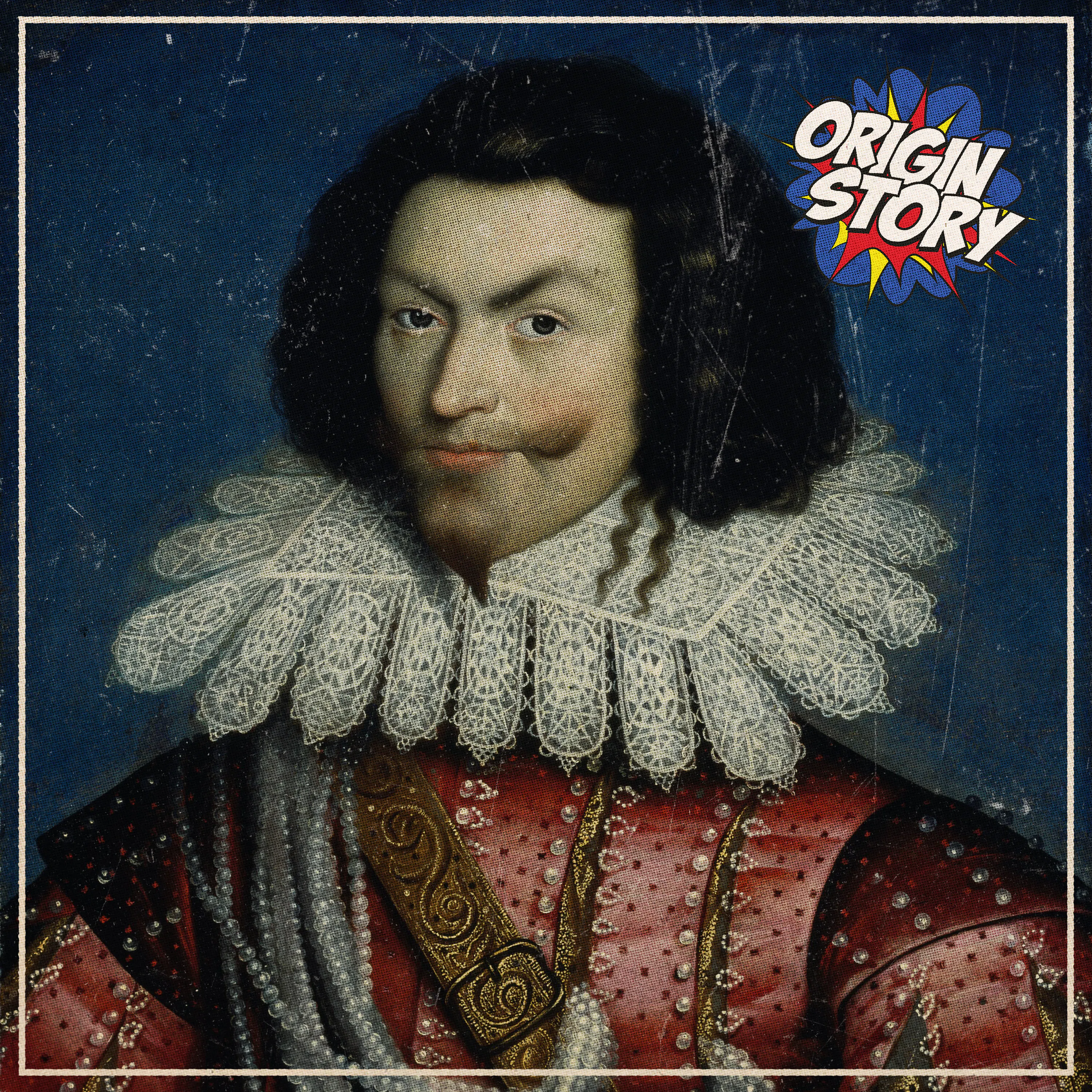 The Duke of Buckingham – How a queer love story predicted modern politics 12.08.2026 1j 17mntWelcome to another bonus episode of Origin Story, where we look at the short and extraordinary life of the Duke of Buckingham (1592–1628). It's a bizarre, tragic tale which weaves together queer history, courtly romance, unending war and the early resistance of parliament against royal power. More than anything, it is the story of the Favourite, that strange underdiscussed role of the leader's key ally. In our modern era, we've seen figures like Dominic Cummings and Morgan McSweeney take this position – operating as the prime minister's chief loyalist and then being used as a sacrificial pawn to placate their critics. We see a very similar arrangement in the 17th Century, albeit in a significantly more sexy way. As Sir Francis Bacon said: The favourite is a "shadow" who can be "offered as a sacrifice to appease the multitude". Come with us back to an era where the modern world is slowly being formed, and see how exuberant, unpredictable, emotional and dramatic the early days of the English parliament truly were. Books Lucy Hughes-Hallett – The Scapegoat: The Brilliant Brief Life of the Duke of Buckingham (4th Estate, 2024) Roger Lockyer - Buckingham: The Life and Political Career of George Villiers, First Duke of Buckingham 1592-1628 (Routledge, 1981) • Find out if you’re owed on car finance at refundclub.co.uk/originstory • Refund Club is a trading style of Sandsford Law Limited, authorised and regulated by the Solicitors Regulation Authority (SRA no. 8008114). Checking is free. A fee is payable only if your claim is successful. Eligibility: car finance taken out in the UK between 2007 and 2021. The average claim is around £829 per agreement; this is an average and not a guarantee of the amount you will receive. You can also claim yourself for free by contacting your lender or the Financial Ombudsman Service. refundclub.co.uk/originstory • See Origin Story live at the Union Chapel, London on September the 1st • Support Origin Story on Patreon Written and presented by Ian Dunt and Dorian Lynskey. Producer: Chris Jones. Music by Jade Bailey. Art by Jim Parrett. Logo by Mischa Welsh. Group Editor: Andrew Harrison. Origin Story is a Podmasters production www.podmasters.co.uk Learn more about your ad choices. Visit podcastchoices.com/adchoices
 -
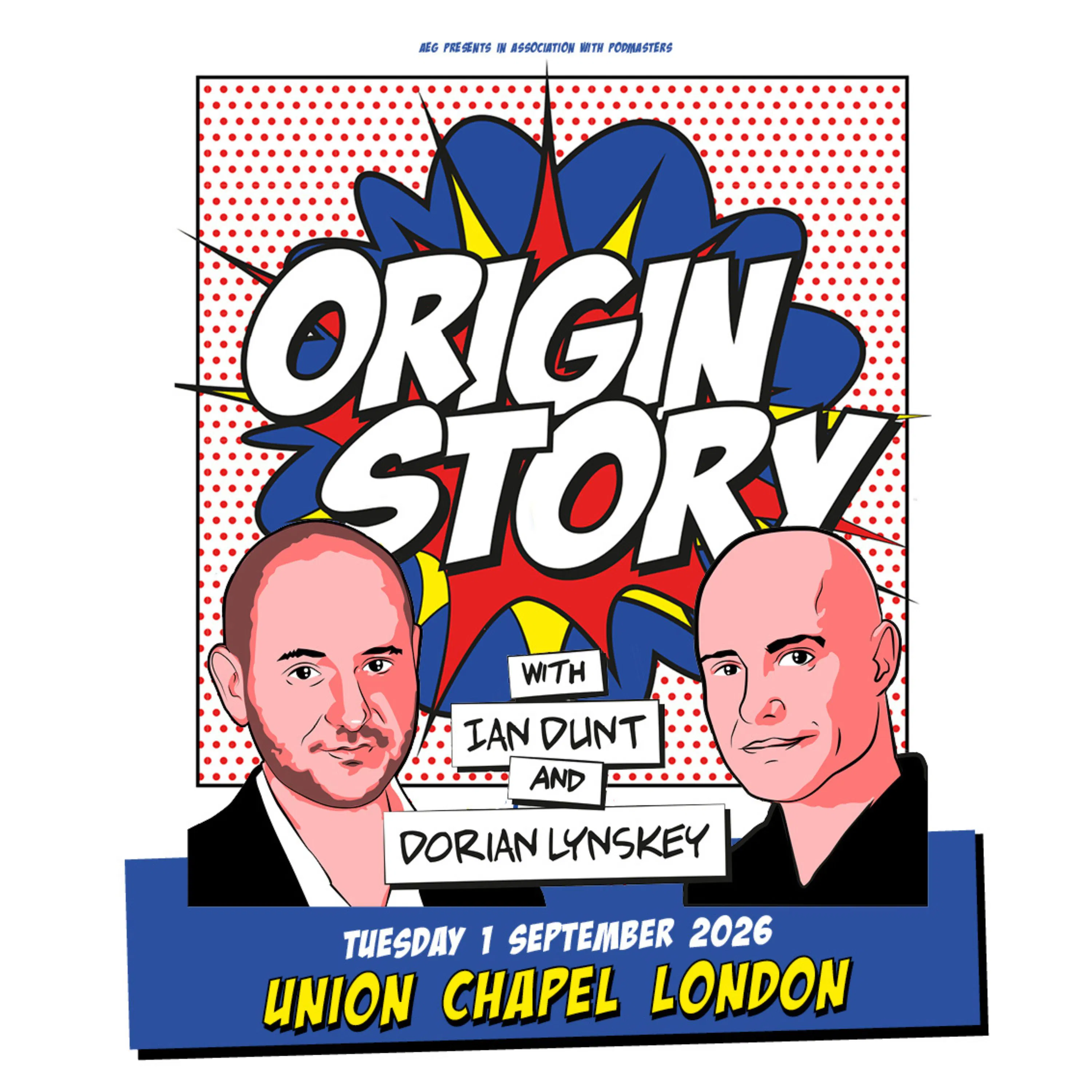 Origin Story live show announcement! 22.07.2026 3mntTickets are flying out of the door for Ian and Dorian’s biggest live show yet at the stunning Union Chapel in London’s sophisticated Islington on Tue 1 Sept. A spectacular Gothic Revival church on Upper Street, the Union Chapel is a breathtaking venue just a few moments’ stroll from Highbury & Islington Tube – and therefore close to Euston and King’s Cross for the Not-London crowd. As well as the Victoria Line, it’s on the Mildmay Overground so whether you’re in leafy West London or sourdough-and-cold-drip-coffee East London you can be there and home with ease.You can buy tickets here, or Patreon supporters get exclusive discount, so now is as good a time as any to sign up: https://www.patreon.com/c/originstorypod Learn more about your ad choices. Visit podcastchoices.com/adchoices
 -
 Starmer Revisited – Where Did It All Go Wrong? 17.07.2026 1j 27mntWelcome to a bonus episode of Origin Story. For the first time, we’re revisiting an earlier episode to ask what we got right and what we got wrong about the subject. Just before the July 2024 election we profiled Labour’s PM-in-waiting Keir Starmer and made some cautiously optimistic guesses as to what his government might look like — the promise and the pitfalls. Well, it turned out to be mostly pitfalls. As Starmer steps down and Andy Burnham steps up, we perform the autopsy. Did Starmer have fundamental personal weaknesses that doomed him to failure? What happened to the moral principles and managerial competence that defined his career before he became Labour leader? What mistakes did he make and what opportunities did he miss? Has Starmer killed the theory that a boring technocrat is the antidote to right-wing populism? How did he become so hated? What legacy has he bequeathed to Burnham (it wasn’t all bad news)? How much of this can we blame on Morgan McSweeney? And is it fair to call Keir Starmer the worst Labour prime minister ever? The ghost of Ramsay MacDonald certainly hopes so. Join us for an in-depth reflection on what went wrong for Starmer and the lessons we can learn about what it takes to be a successful prime minister in the 2020s. • See Origin Story live at the Union Chapel, London on September the 1st • Support Origin Story on Patreon Written and presented by Ian Dunt and Dorian Lynskey. Producer: Simon Williams. Music by Jade Bailey. Art by Jim Parrett. Logo by Mischa Welsh. Group Editor: Andrew Harrison. Origin Story is a Podmasters production www.podmasters.co.uk Learn more about your ad choices. Visit podcastchoices.com/adchoices
 -
 The Luddites – Rage Against the Machine 08.07.2026 1j 43mntWelcome to the finale of season nine of Origin Story. We’re wrapping up the season by telling the thrilling, misunderstood story of the Luddites and how their name became an insult synonymous with ignorance, reaction and fear of progress. You can’t get much more Origin Story than that. It was November 1811 when textile workers in Nottinghamshire first began breaking machinery in the name of a mysterious figure called Ned Ludd. The movement spread through neighbouring counties and reached its dramatic peak in Yorkshire, as these secretive activists waged guerrilla warfare against the factory owners who were destroying their livelihoods. Soon, England was in a frenzy over the Luddite threat. Led by Tory prime minister Spencer Perceval and the decadent Prince Regent, the ruling classes feared a French-style revolution. As Luddite violence escalated from machine-breaking to arson, food riots and assassination attempts, the state responded with spies, torture and show trials. Swathes of industrial England fell under military occupation. In the midst of all this, Perceval himself was shot dead in the House of Commons. Yet by February 1813 the Luddite fire had burned out and the bosses appeared to have won. It was only in the 1950s that “Luddite” was turned into a general insult, even as revisionist historians of the English working classes started to tell a different story about the motives of the machine-breakers. Amid rising hostility towards Big Tech and AI, the legacy of the Luddite rebellion feels surprisingly relevant more than 200 years later. Who were the Luddites? What was going wrong in England in 1811 to inspire such a viral rebellion? Were the Luddites targeting the machines, or the industrialists, or the state itself? Was their uprising really a failure or did it pave the way for fairer industrial relations? What does it mean to be a neo-Luddite today? And can the true history of the Luddites ever prevail over the crude stereotype created by their enemies? • Special offer! Get 20% off any vehicle history check at carVertical.com/OriginStory • See Origin Story live at the Union Chapel, London on September the 1st • Support Origin Story on Patreon Reading list Books • Kyle Chayka – ‘Rethinking the Luddites in the Age of A.I.’, New Yorker (26 September 2023) • Kyle Chayka – ‘The Age-Old Urge to Destroy Technology’, New Yorker (8 April 2026) • F.O. Darvall – Popular Disturbances and Public Order in Regency England (1934) • Carl J. Griffin – ‘Luddism, Machine-Breaking and the Swing Riots’, Revue Française de Civilisation Britannique (2025) • J.L. Hammond and Barbara Hammond – The Skilled Labourer, 1760-1832 (1919) • Eric Hobsbawm – ‘The Machine Breakers’, Past & Present (February 1952) • Brian Merchant – Blood in the Machine: The Origins of the Rebellion Against Big Tech (2023) • Kirkpatrick Sale – Rebels Against the Future: The Luddites and Their War Against the Industrial Revolution: Lessons for the Computer Age (1995) • Tech Won’t Save Us: The Real History of the Luddites, presented by Paris Marx (28 September, 2023) • Malcolm I. Thomis – The Luddites: Machine-Breaking in Regency England (1970) • E.P. Thompson – The Making of the English Working Class (1963) Written and presented by Ian Dunt and Dorian Lynskey. Producer: Simon Williams. Music by Jade Bailey. Art by Jim Parrett. Logo by Mischa Welsh. Group Editor: Andrew Harrison. Origin Story is a Podmasters production www.podmasters.co.uk Learn more about your ad choices. Visit podcastchoices.com/adchoices
 -
 Paranormal Investigations – Is There Anybody Out There? 01.07.2026 1j 43mntWelcome to Origin Story. This week we’re doing something different: the history of paranormal investigations and what it says about the relationship between evidence and belief. In 1848, two sisters in Hydesville, New York claimed to be contacting the spirit world. Within a couple of years spiritualism was a popular craze on both sides of the Atlantic, with seances attracting luminaries from Queen Victoria to Charles Darwin. But could it be proven beyond doubt? In 1883, a group of scientists and intellectuals launched the Society for Psychical Research to find out, but from its inception there was tension between the genuine sceptics and the instinctive believers. However many hoaxers they debunked, even the sceptics encountered things they could not rationally explain. The mass grief of the First World War created a new appetite for spiritualism, spearheaded by the world-famous author Arthur Conan Doyle. Meanwhile in North Carolina, J.B. and Louisa Rhine proposed that these uncanny goings on were not evidence of ghosts but of untapped powers in the human brain: Extra-Sensory Perception. Concepts like telepathy and telekinesis swept through popular culture while scientists explored their potential as weapons in the Cold War. In the 1970s, Connecticut couple Ed and Lorraine Warren became the world’s star investigators. In the era of Carrie, The Exorcist and spoon-bending celebrity Uri Geller, there was a huge audience for this kind of thing, bringing money and fame to the most prominent spook-hunters. Events such as the Amityville Horror and the Enfield Poltergeist still inspire fascination today, despite the investigators’ extremely dubious methods. Was the truth-seeking mission of the Society for Psychical Research destined to end up as a license for grifters? How did spiritualism bewitch the Victorian era, including some of its most eminent scientists? Are psychic powers any more credible than ghosts? Why was the creator of the ultra-rational Sherlock Holmes so boundlessly credulous about the spirit world? What can the field of the unexplained teach us about cognitive biases and conspiracy theories? Is it really possible to apply scientific rigour to paranormal phenomena? And why, when almost 150 years of investigations have produced no solid evidence or theoretical basis for them, do so many people still want to believe? This is a thrilling story of faith, doubt and fraud, featuring Harry Houdini, George Eliot, Marie Curie, Carl Jung, Helena Blavatsky, W.B. Yeats, Winston Churchill and (possibly) the Devil himself. Don’t have nightmares. • Special offer! Get 20% off any vehicle history check at carVertical.com/OriginStory • See Origin Story live at the Union Chapel, London on September the 1st. • Support Origin Story on Patreon Reading list Books • Edward T. Bennett — The Society for Psychical Research: Its Rise and Progress and a Sketch of Its Work (1903) • Ruth Brandon – The Spiritualists: The Passion for the Occult in the Nineteenth and Twentieth Centuries (1983) • Edmund Gurney, Frederic W.H. Myers and Frank Podmore – Phantasms of the Living (1886) • Renée Haynes – The Society for Psychical Research 1882-1982: A History (1982) • Oliver Lodge – Raymond; or, Life and Death (1916) • Roger Luckhurst – The Invention of Telepathy 1870-1901 (2002) • Ben Machell – Chasing the Dark: Encounters with the Supernatural (2025) • Janet Oppenheim – The Other World: Spiritualism and Psychical Research in England, 1850-1914 (1985) • Guy Lyon Playfair – This House Is Haunted: The Amazing Inside Story of the Enfield Poltergeist (1980) • Harry Price – The Most Haunted House in England: Ten Years’ Investigation of Borley Rectory (1940) • J.B. Rhine – Extra-Sensory Perception (1934) • Michael Shermer – The Believing Brain: From Ghosts and Gods to Politics and Conspiracies: How We Construct Beliefs and Reinforce Them as Truths (2011) • Upton Sinclair – Mental Radio (1930) Articles • A.P. – ‘“Amityville Horror” amplified over bottles of wine, — lawyer’, Lakeland Ledger (27 July 1979) • Angie Barry – ‘The Warren Case Files: Fact or Fiction?’, Criminal Element (31 October 2017) • Stefan Beck – ‘A Night with The Conjuring’s Ed & Lorraine Warren’, Daily Beast (18 August 2013) • Paul Byrnes – ‘The Devil Among Us’, Sydney Morning Herald (12 July 2013) • Casey Cep – ‘Why Did So Many Victorians Try to Speak with the Dead?’, New Yorker (24 May 2021) • Kevin Dolak – ‘The Slippery Truth About “The Conjuring: Last Rites” and Ed and Lorraine Warren’, Hollywood Reporter (10 September 2025) • Neil Genzlinger – ‘Lorraine Warren, Paranormal Investigator Portrayed in ‘The Conjuring’, Dies at 92, New York Times (19 April 2019) • Kim Masters and Ashley Cullins – ‘War Over ‘The Conjuring’: The Disturbing Claims Behind a Billion-Dollar Franchise’, Hollywood Reporter (13 December 2017) • Sean Thomas – ‘What’s Happened to Weird?’, Guardian (14 June 2004) • Neda Ulaby – ‘The demons in “The Conjuring” movies may not be real — but the family tragedies are, NPR (5 September 2025) • Neda Ulaby – ‘Who Were the Real Ed and Lorraine Warren of “The Copnjuring” Franchise?’, NPR (9 September 2025) • Laura Zornosa, ‘The True Story Behind the Netflix Documentary The Devil on Trial’, Time (18 October, 2023) Films • Carrie, written by Lawrence D. Cohen and directed by Brian Da Palma (1976) • The Conjuring: Last Rites, written by Ian Goldberg et al and directed by Michael Chaves (2025) • The Devil on Trial, written by Chris Holt and directed by Charvi Bajaj (2023) • The Exorcist, written by William Peter Blatty and directed by William Friedkin (1973) • Ghostbusters, written by Dan Ackroyd and Harold Ramis and directed by Ivan Reitman (1984) • Late Night with the Devil, written and directed by Colin and Cameron Cairnes (2023) • Panorama: The Enfield Poltergeist, BBC (13 November 1977) Written and presented by Ian Dunt and Dorian Lynskey. Producer: Simon Williams. Music by Jade Bailey. Art by Jim Parrett. Logo by Mischa Welsh. Group Editor: Andrew Harrison. Origin Story is a Podmasters production www.podmasters.co.uk Learn more about your ad choices. Visit podcastchoices.com/adchoices
 -
 Think Tanks – Part Two – The Room Where It Happens 24.06.2026 1j 21mntWelcome to Origin Story and part two of the story of think tanks. Last time we traced the history of two very different varieties: the non-partisan centre for research and policy development and the handsomely-funded vehicle for a political ideology. Now we explain how they shape politics today. In the first half of the show we follow the partisan think tanks into the 21st century with the Koch network’s war on Obama, the Heritage Foundation’s MAGA makeover, the IEA’s role in the Liz Truss catastrophe and the depressing devolution of centre-right think tanks. At the centre of the British story is 55 Tufton Street, the notorious building where climate change deniers cross paths with Eurosceptics and the distinction between think tanks and lobby groups all but collapses. Nice work if you can get it. Then we explain how the more independent-minded think tanks make an essential contribution to developing and analysing policies, keeping alive the original ideal of politically neutral expertise. So what do we talk about when we talk about think tanks? What’s the deal with Tufton Street and why are its denizens always on TV? Where is the money coming from? How has Trump transformed the balance of power among US think tanks? What role have these groups played in the radicalisation of conservatism over the past decade? How do the independent think tanks — more important but far less discussed — try to make politicians better informed and more effective? Ultimately, how influential are think tanks really? • Special offer! Get 20% off any vehicle history check at carVertical.com/OriginStory • See Origin Story live at the Union Chapel, London on September the 1st • Support Origin Story on Patreon Reading list Books • Richard Cockett – Thinking the Unthinkable: Think-Tanks and the Economic Counter- Revolution 1931-1983 (1994) • Paul Dickson – Think Tanks (1972) • Sharon Ghamari-Tabrizi – The Worlds of Herman Kahn: The Intuitive Science of Thermonuclear War (2005) • F.A. Hayek – The Road to Serfdom (Reader’s Digest abridged version) (1945) • Jane Mayer – Dark Money: How a Secretive Group of Billionaires Is Trying to Buy Political Control in the US (2016) • Thomas Medvetz – Think Tanks in America (2014) • Madsen Pirie – Think Tank: The Story of the Adam Smith Institute (2012) • James A. Smith – The Idea Brokers: Think Tanks and the Rise of the New Policy Elite (1991) Articles • Dr James Barham – ‘Top Influential Think Tanks Ranked for 2024’, Academic Influence (16 October 2023) • Tom Bawden – ‘The address where Eurosceptics and climate change sceptics rub shoulders’, Independent (10 February 2016) • Chloe Farand – ‘Mapped: Whistleblower Accuses Nine Organisations of Colluding Over Hard Brexit’, DeSmog (23 July 2018) • Richard Fink – ‘Structure of Social Change’, Philanthropy Magazine (Winter 1996) • F. A. Hayek – ‘The Intellectuals and Socialism’, University of Chicago Law Review (Spring 1949) • Richard Kostelanetz – ‘One-Man Think Tank’, New York Times (1 December 1968) • Jane Mayer – ‘Covert Operations’, New Yorker (23 August 2010) • Jane Mayer – ‘Is IKEA the New Model for the Conservative Movement?’, New Yorker (15 November 2013) • James G. McGann, ‘2020 Global Go To Think Tank Index Report’, University of Pennsylvania, Think Tanks and Civil Societies Program (28 January 2021) • Louis Menand – ‘Fat Man’, New Yorker (20 June 2005) • George Monbiot – ‘Number 10 and the secretly funded lobby groups intent on undermining democracy’, Guardian (1 September 2020) • New York Times staff – ‘49 Scholars Hold Man Up to Mirror’, New York Times (21 September 1958) • David Perlman – ‘Man’s Actions Challenge a Braintrust’, San Francisco Chronicle (23 March 1958) Written and presented by Ian Dunt and Dorian Lynskey. Producer: Simon Williams. Music by Jade Bailey. Art by Jim Parrett. Logo by Mischa Welsh. Group Editor: Andrew Harrison. Origin Story is a Podmasters production www.podmasters.co.uk Learn more about your ad choices. Visit podcastchoices.com/adchoices
 -
 Think Tanks – Part One – What’s the Big Idea? 17.06.2026 1j 19mntWelcome to Origin Story. This week we explore the world of think tanks, a term that has developed two very different meanings. To many people, it suggests deceptively named and opaquely funded vehicles for the political agendas of right-wing billionaires — think Tufton Street. Yet most of the world’s leading think tanks still cleave to the original intention of producing conscientious research and bold new ideas, independent of political parties. How and when did these paths diverge? The first think tank, the Carnegie Endowment for International Peace, was born in 1910 during a period when governments were increasingly interested in using data and expertise to generate more rational policy-making. Accelerated by the calamitous irrationality of the First World War, this mission produced such influential bodies as Chatham House and the Brookings Institution. The so-called eggheads proved their worth in a crisis, from the New Deal to the Second World War. As the Cold War began, the quintessential think tank (a term coined in 1958) was the RAND Corporation and the industry’s first celebrity was nuclear strategist Herman Kahn, a charismatic provocateur who boasted about “thinking about the unthinkable”. In the UK, however, a new kind of think tank was being born. In 1955, chicken farmer Antony Fisher founded the Institute of Economic Affairs as a power base from which the pioneers of neoliberalism could wage their long war against the Keynesian consensus, following Friedrich Hayek’s theory of political change. Their patience paid off. Along with the Centre for Policy Studies and the Adam Smith Institute, the IEA built the framework for Thatcherism in the 1970s. Likewise in the US, the Heritage Foundation and the American Enterprise Institute furnished Ronald Reagan with an armada of policies and advisers. The neoliberal revolution was incubated in these new-model think tanks. The centre-left was losing this war of ideas. By the 1980s, then, think tanks had acquired a more controversial reputation, using their charitable tax status to funnel money from billionaires like Richard Mellon Scaife and the Koch brothers into a vast network of organisations, books, journals, university programs and media operators, serving not just their ideological agendas but their financial interests. It was very far from the original notion of think tanks as a non-partisan “bridge between knowledge and power”. What do the first think tanks tell us about the dream of government based on facts and expertise? Who were the tycoons and intellectuals who joined forces to launch a new wave of think tanks? How did Hayek’s followers build from scratch an infrastructure that made Thatcherism and Reaganism possible? How is that nakedly ideological projects can present themselves as philanthropy and anonymous, tax-free donations can shape our politics so profoundly? And why are the names of think tanks so interchangeably boring? • See Origin Story live at the Union Chapel, London on 1st Sept 2026. Tickets selling fast! • Support Origin Story on Patreon • Buy the Origin Stories books on Centrism, Fascism and Conspiracy Theory • Subscribe to Origin Story on YouTube Reading list Books • Richard Cockett – Thinking the Unthinkable: Think-Tanks and the Economic Counter- Revolution 1931-1983 (1994) • Paul Dickson – Think Tanks (1972) • Sharon Ghamari-Tabrizi – The Worlds of Herman Kahn: The Intuitive Science of Thermonuclear War (2005) • F.A. Hayek – The Road to Serfdom (Reader’s Digest abridged version) (1945) • Jane Mayer – Dark Money: How a Secretive Group of Billionaires Is Trying to Buy Political Control in the US (2016) • Thomas Medvetz – Think Tanks in America (2014) • Madsen Pirie – Think Tank: The Story of the Adam Smith Institute (2012) • James A. Smith – The Idea Brokers: Think Tanks and the Rise of the New Policy Elite (1991) Articles • Dr James Barham – ‘Top Influential Think Tanks Ranked for 2024’, Academic Influence (16 October 2023) • Tom Bawden – ‘The address where Eurosceptics and climate change sceptics rub shoulders’, Independent (10 February 2016) • Chloe Farand – ‘Mapped: Whistleblower Accuses Nine Organisations of Colluding Over Hard Brexit’, DeSmog (23 July 2018) • Richard Fink – ‘Structure of Social Change’, Philanthropy Magazine (Winter 1996) • F. A. Hayek – ‘The Intellectuals and Socialism’, University of Chicago Law Review (Spring 1949) • Richard Kostelanetz – ‘One-Man Think Tank’, New York Times (1 December 1968) • Jane Mayer – ‘Covert Operations’, New Yorker (23 August 2010) • Jane Mayer – ‘Is IKEA the New Model for the Conservative Movement?’, New Yorker (15 November 2013) • James G. McGann, ‘2020 Global Go To Think Tank Index Report’, University of Pennsylvania, Think Tanks and Civil Societies Program (28 January 2021) • Louis Menand – ‘Fat Man’, New Yorker (20 June 2005) • George Monbiot – ‘Number 10 and the secretly funded lobby groups intent on undermining democracy’, Guardian (1 September 2020) • New York Times staff – ‘49 Scholars Hold Man Up to Mirror’, New York Times (21 September 1958) • David Perlman – ‘Man’s Actions Challenge a Braintrust’, San Francisco Chronicle (23 March 1958) Written and presented by Ian Dunt and Dorian Lynskey. Producer: Simon Williams. Music by Jade Bailey. Art by Jim Parrett. Logo by Mischa Welsh. Group Editor: Andrew Harrison. Origin Story is a Podmasters production www.podmasters.co.uk Learn more about your ad choices. Visit podcastchoices.com/adchoices
 -
 Evangelicals – Part Two – Good News, Bad News 09.06.2026 1j 24mntEver since the birth of evangelical Christianity in the 1730s, believers have disagreed over whether to dedicate themselves to changing society as well as converting individuals. For most of that time, the most activist American Protestants were politically progressive but that all changed in the 1970s thanks to two activist entrepreneurs: Jerry Falwell and Pat Robertson. Falwell and Robertson turned televangelism, or the “electric church”, into a lucrative industry, producing celebrity preachers like Jim and Tammy Faye Bakker. They also had unprecedented political ambitions. Beginning with Falwell’s Moral Majority in 1979 and expanding with Robertson’s Christian Coalition in the 1990s, their crusade sought to put social conservatism at the heart of the Republican Party and wage a culture war against so-called “secular humanism”. What Darwinism was to the original fundamentalists of the 1920s, abortion and homosexuality were to the new religious right. Evangelicals gave Republicans their votes in return for policies but this quid pro quo was complicated by broken promises, overreach and scandal. The movement and the party developed a symbiotic relationship that proved mutually corrupting. Once evangelicals threw themselves behind the strikingly ungodly Donald Trump, conservatism seemed to overtake Christianity. Even as evangelical churches boom in Asia, Africa and Latin America, the American movement is losing support and influence, turning off young people with its intolerant dogma. Perhaps evangelicals were right to keep politics at arm’s length. How responsible are Falwell and Robertson for our present era of conspiracy theories and culture wars? Did the fundamentalist tradition ultimately prevail or is this something else? What place is there now for liberal evangelicals? What happened to the big-tent message of Billy Graham and has evangelicalism today betrayed its roots in its quest for political power? And what influence is it having on politics in the UK? • See Origin Story live at the Union Chapel, London on 1st Sept 2026. Tickets selling fast! • Support Origin Story on Patreon • Buy the Origin Stories books on Centrism, Fascism and Conspiracy Theory • Subscribe to Origin Story on YouTube Reading list • Robert Ajemian – ‘Jerry Falwell Spreads the Word’, Time (2 September 1985) • Anonymous – ‘Billy Graham: A New Kind of Evangelist’, Time (25 October 1954) • D.W. Bebbington – Evangelicalism in Modern Britain: A History from the 1730s to the 1980s (1989) • Paul S. Boyer – When Time Shall Be No More: Prophecy Belief in Modern American Culture (1992) • Peter J. Boyer – ‘The Big Tent’, New Yorker (15 August 2005) • Isaac Chotiner – ‘How Donald Trump Is Teaching Christians to Abandon Empathy’, New Yorker (1 April 2025) • Whitney Cross – The Burned-Over District: The Social and Intellectual History of Enthusiastic Religion in Western New York 1800-1850 (1950) • Jerry Falwell – Listen, America!: The Conservative Blueprint for America’s Moral Rebirth (1980) • ‘The Gospel According to Ralph Reed’, Time (15 May 1995) • Frances Fitzgerald – The Evangelicals: The Struggle to Shape America (2017) • Harry Emerson Fosdick – ‘Shall the Fundamentalists Win?’ (21 May 1922) • Richard Hofstadter – Anti-Intellectualism in American Life (1963) • Hal Lindsey – The Late Great Planet Earth (1970) • Michael Luo – ‘How Billy Graham’s Movement Lost Its Way’, New Yorker (21 February 2018) • Michael Luo – ‘The Wasting of the Evangelical Mind’, New Yorker (4 March 2021) • Michael Luo – ‘How Christian Fundamentalism Was Born Again’, New Yorker (29 July 2024) • Dorian Lynskey – Everything Must Go: The Stories We Tell About the End of the World (2024) • George M. Marsden – Fundamentalism and American Culture: Second Edition (2006) • Pat Robertson – The New World Order (1991) • Damian Thompson – The End of Time: Faith and Fear in the Shadow of the Millennium (1996) • Kenneth L. Woodward, John Barnes and Laurie Lisle – ‘Born Again: The Year of the Evangelicals’, Newsweek (25 October 1976) Films and podcasts • The Eyes of Tammy Faye, directed by Fenton Bailey and Randy Barbato (2000) • The Eyes of Tammy Faye, written by Abe Sylvia and directed by Michael Showalter (2021) • Inherit the Wind, written by Nedrick Young and Harold Jacob Smith and directed by Stanley Kramer (1960) • The Testament of Ann Lee, written by Mona Fastvold and Brady Corbet and directed by Mona Fastvold (2025) • Things Fell Apart: 1000 Dolls, presented by Jon Ronson, Radio 4 (9 November 2021) • Things Fell Apart: Dirty Books, presented by Jon Ronson, Radio 4 (16 November 2021) • Things Fell Apart: A Miracle, presented by Jon Ronson, Radio 4 (23 November 2021) Written and presented by Ian Dunt and Dorian Lynskey. Producer: Simon Williams. Videographer: Connor Newson. Music by Jade Bailey. Art by Jim Parrett. Logo by Mischa Welsh. Group Editor: Andrew Harrison. Origin Story is a Podmasters production www.podmasters.co.uk Learn more about your ad choices. Visit podcastchoices.com/adchoices
 -
 Evangelicals – Part One – Altared States 03.06.2026 1j 33mntWelcome to Origin Story, the show about why we are where we are. This week we begin the story of evangelical Christianity and its influence on politics. Starting in the 1730s, Protestants in colonial America replaced the dour strictures of the Puritans with an ecstatic, empowering new creed that promised salvation through conversion: the word evangelical means spreading the good news. Over the next 150 years it swept the country through waves of revivalism, as star preachers like Charles Finney and Dwight Moody professionalised the business of soul-saving. The movement changed Britain, too. Evangelicalism cut across all the major Protestant denominations but believers disagreed over the timing of the prophesied Millennium and therefore whether they should focus on converting individuals or reforming society. Activist followers of the Social Gospel were at the forefront of the fight to end evils like slavery and child labour. It was slavery that caused the formation of a more conservative Southern church. By the early twentieth century, factional conflicts were piling up: over social reform, Biblical scholarship, the theory of evolution. Some evangelicals felt that there were effectively two religions, with liberals (or modernists) pitted against conservatives (or fundamentalists). The fundamentalists were gathering force until 1925, when Tennessee prosecuted a teacher named John Scopes for teaching Darwinism. A national media event, the trial made fundamentalism appear intolerant, ignorant and absurd, leading to decades of retreat and quiet rebuilding. America’s post-war evangelical megastar was Billy Graham, whose canny big-tent messaging and horror of controversy chimed with President Eisenhower’s tolerant civic religion. But through radio, television and bestselling books, the new fundamentalists were laying the ground for a culture war. A string of controversies in the 1970s revealed a much more militant and aggressive form of Christianity that was determined to transform not just evangelicalism but all of America. Why did evangelicalism become the dominant American religion and what part did British thinkers play? Who were the charismatic men and women who spread the word? Why did the battle between modernists and fundamentalists become so bitter, and how did the fundamentalists recover from the humiliation of the Scopes trial? How does the ambition to reform society complicate the task of conversion? And how did Martin Luther King inadvertently inspire the fundamentalists to finally become a political force? • See Origin Story live at the Union Chapel, London on 1st Sept 2026. Tickets selling fast! • Support Origin Story on Patreon • Buy the Origin Stories books on Centrism, Fascism and Conspiracy Theory • Subscribe to Origin Story on YouTube Reading list • Robert Ajemian – ‘Jerry Falwell Spreads the Word’, Time (2 September 1985) • Anonymous – ‘Billy Graham: A New Kind of Evangelist’, Time (25 October 1954) • D.W. Bebbington – Evangelicalism in Modern Britain: A History from the 1730s to the 1980s (1989) • Paul S. Boyer – When Time Shall Be No More: Prophecy Belief in Modern American Culture (1992) • Peter J. Boyer – ‘The Big Tent’, New Yorker (15 August 2005) • Isaac Chotiner – ‘How Donald Trump Is Teaching Christians to Abandon Empathy’, New Yorker (1 April 2025) • Whitney Cross – The Burned-Over District: The Social and Intellectual History of Enthusiastic Religion in Western New York 1800-1850 (1950) • Jerry Falwell – Listen, America!: The Conservative Blueprint for America’s Moral Rebirth (1980) • ‘The Gospel According to Ralph Reed’, Time (15 May 1995) • Frances Fitzgerald – The Evangelicals: The Struggle to Shape America (2017) • Harry Emerson Fosdick – ‘Shall the Fundamentalists Win?’ (21 May 1922) • Richard Hofstadter – Anti-Intellectualism in American Life (1963) • Hal Lindsey – The Late Great Planet Earth (1970) • Michael Luo – ‘How Billy Graham’s Movement Lost Its Way’, New Yorker (21 February 2018) • Michael Luo – ‘The Wasting of the Evangelical Mind’, New Yorker (4 March 2021) • Michael Luo – ‘How Christian Fundamentalism Was Born Again’, New Yorker (29 July 2024) • Dorian Lynskey – Everything Must Go: The Stories We Tell About the End of the World (2024) • George M. Marsden – Fundamentalism and American Culture: Second Edition (2006) • Pat Robertson – The New World Order (1991) • Damian Thompson – The End of Time: Faith and Fear in the Shadow of the Millennium (1996) • Kenneth L. Woodward, John Barnes and Laurie Lisle – ‘Born Again: The Year of the Evangelicals’, Newsweek (25 October 1976) Films and podcasts • The Eyes of Tammy Faye, directed by Fenton Bailey and Randy Barbato (2000) ... Reading list continues on Patreon Written and presented by Ian Dunt and Dorian Lynskey. Producer: Simon Williams. Videographer: Connor Newson. Music by Jade Bailey. Art by Jim Parrett. Logo by Mischa Welsh. Group Editor: Andrew Harrison. Origin Story is a Podmasters production www.podmasters.co.uk Learn more about your ad choices. Visit podcastchoices.com/adchoices
 -
 J.K. Rowling – Part Two – Transparent 27.05.2026 1j 27mntWelcome back to Origin Story and part two of the story of J.K. Rowling. In this episode we turn away from her life story towards her public statements and the information she is consuming. In 2020, Rowling publishes her first full-length statement about her gender-critical beliefs and it becomes her defining issue. We unpack some of the phrases she uses and the books she is reading and we explore what the science says about key issues: safety in trans-inclusive spaces, trans women (and women with Differences in Sex Development) in sports, and healthcare provision for gender-questioning youth. Since 2018 trans people in the UK have faced an enormous backlash: rising prejudice, restricted healthcare, political abandonment and obsessive media hostility. And Rowling has put herself in the forefront. Her tone has become more aggressive and her activism more overt, accelerated by Scotland’s Gender Recognition Reform Bill. So when HBO announced its ambitious new Harry Potter TV series last year, in the midst of the Trump administration’s war on trans Americans and the UK Supreme Court’s explosive ruling on gender identity, it became a battleground. It’s hard to separate the art from the artist when supporting the art means funding the artist’s activism. How did Rowling move from the appearance of moderation to explicit militancy and how does that align with her professed values? Are her arguments supported by the research? How did anti-trans sentiment go mainstream so quickly? What are the ethics of continuing to consume Rowling’s work? And is the viciousness of right-wing transphobia causing some people to think twice about the consequences of their beliefs? • See Origin Story live at the Union Chapel, London on 1st Sept 2026. Tickets selling fast! • Support Origin Story on Patreon • Buy the Origin Stories books on Centrism, Fascism and Conspiracy Theory • Subscribe to Origin Story on YouTube Reading list Articles • O. Rose Broderick – ‘Evidence Undermines “Rapid Onset Gender Dysphoria” Claims’, Scientific American (24 August 2023) • Cass Review: Final Report (2024)• Christina Cauterucci – ‘Impeccable Timing, Pamela Paul!’, Slate (16 February 2023) • Theara Coleman – ‘A timeline of JK Rowling’s anti-trans shift’, The Week US (April 2026) • Matt Craig – ‘J.K. Rowling is a Billionaire — Again’, Forbes (30 May 2025) • Laura Dattaro – ‘Largest study to date confirms overlap between autism and gender diversity’, The Transmitter (14 September 2020) • Caroline Davies – ‘JK Rowling’s journey from Harry Potter creator to gender-critical campaigner’, Guardian (18 April 2025) • Sarah Ditum et al. – ‘An Oral History of the Gender War’, The Radical Notion (Autumn/Winter 2024) • Alona Ferber – ‘Judith Butler on the culture wars, JK Rowling and living in “anti-intellectual times”’, New Statesman (22 September 2020) • Molly Fischer – ‘Who Did J.K. Rowling Become?’, The Cut (22 December 2020) • Amelia Hansford – ‘JK Rowling sets up “women’s fund” to support gender-critical legal cases’, Pink News (26 May 2025) • Nick Hilton – ‘JK Rowling, Britain’s gloriously nasty novelist’, New Statesman (15 January 2024) • Katherine J. Igoe – ‘JK Rowling’s Under-the-Radar Book Series Gives a Clear Picture of Her Beliefs’, Marie Claire (5 August 2020) • Jessica Kant – ‘Anatomy of a Moral Panic’, jessk.org (3 February 2024) • Jessica Kant – ‘Welcome to the anti-trans outrage factory’, jessk.org (8 February 2026) • Alice McCool – ‘How the US Christian Right and Anti-Abortion Lobbyists are Reshaping NHS Policy’, Byline Times (2 April 2026) • Parker Molloy – ‘The IOC’s New Policy Isn’t Really a Trans Story’, The Present Age (26 March 2026) ... Reading list continues on Patreon Written and presented by Ian Dunt and Dorian Lynskey. Producer: Simon Williams. Videographer: Connor Newson. Music by Jade Bailey. Art by Jim Parrett. Logo by Mischa Welsh. Group Editor: Andrew Harrison. Origin Story is a Podmasters production www.podmasters.co.uk Learn more about your ad choices. Visit podcastchoices.com/adchoices
 -
 J.K. Rowling – Part One – Transformation 20.05.2026 1j 9mntHello and welcome to Origin Story. This week we begin the story of J.K. Rowling and how the world’s most beloved author became its most divisive. How did she become obsessed with trans rights and how did her colossal wealth and celebrity shape the backlash? We’re telling two parallel stories. One is how Joanne Rowling transformed into J.K. Rowling. The first Harry Potter book comes out of dark times: a shattering bereavement, a terrible marriage, relative poverty and a crushing sense of failure. When it is published in 1997, it changes Rowling’s life beyond recognition: the publishing industry’s equivalent of Beatlemania. By 2000, the attention is overwhelming and the religious right is denouncing her for endorsing witchcraft. By the time she moves into fiction for adults in 2012, her life seems guarded but stable. But then she joins Twitter and becomes very interested in online discourse at the birth of “cancel culture”. The second story is about feminism’s fraught relationship with trans inclusion and the concept of gender identity. This has divided feminists since the second wave in the 1970s but it came to the fore in 2010s as trans visibility reached an all-time high and so-called “gender critical” feminists rallied to oppose the introduction of self-ID legislation. Disparate issues such as prisons, sports and youth healthcare were pulled into a movement that fundamentally denied gender identity. In the US, anti-trans activism was another wedge issue for social conservatives but in the UK it emerged from the centre left — and that’s where Rowling came in. This is also a story about social media and what happens when a disagreement about civil rights plays out on Twitter. That’s where, in 2017, Rowling begins quietly expressing interest in anti-trans voices. After some initial denials, she breaks cover in 2019 by supporting Maya Forstater, a tax specialist who claims to have lost her job due to her gender critical views. Overnight, this one tweet transforms Rowling’s reputation, mainstreaming the movement while dismaying many Harry Potter fans and horrifying trans people. This is the rupture. There is no turning back. What can Rowling’s early life tell us about the path she has taken over the last decade? What is her relationship to fame and fandom? Why did the question of trans rights become all-consuming? What do gender critical feminists believe? And why can people not even agree on what words to use? It’s a story of obsession, polarisation, celebrity, Twitter and how people can radically change. • See Origin Story live at the Union Chapel, London on 1st Sept 2026 • Support Origin Story on Patreon • Buy the Origin Stories books on Centrism, Fascism and Conspiracy Theory • Subscribe to Origin Story on YouTube Reading list Articles • Decca Aitkenhead – ‘JK Rowling: ‘The worst that can happen is that everyone says,‘That’s shockingly bad”’, The Guardian (22 September 2012) • Julie Bindel – ‘Gender benders beware’, The Guardian (31 January 2004) • Jackson Bird – ‘“Harry Potter” Helped Me Come Out as Trans, But J.K. Rowling Disappointed Me’, New York Times (21 December 2019) • Theara Coleman – ‘A timeline of JK Rowling’s anti-trans shift’, The Week US (April 2026) • Caroline Davies – ‘JK Rowling’s journey from Harry Potter creator to gender-critical campaigner’, Guardian (18 April 2025) • Sarah Ditum et al. – ‘An Oral History of the Gender War’, The Radical Notion (Autumn/Winter 2024) • Alona Ferber – ‘Judith Butler on the culture wars, JK Rowling and living in “anti-intellectual times”’, New Statesman (22 September 2020) • Molly Fischer – ‘Who Did J.K. Rowling Become?’, The Cut (22 December 2020) • Simon Hattenstone – ‘Harry, Jessie and Me’, The Guardian (8 July 2000) • Paris Lees – ‘On Germaine Greer and the Hypocrisy of the “Left”’, Vice (20 November 2015) • Eve Livingston – ‘How an Online Forum for Moms Became a Toxic Hotbed of Transphobia’, Vice (6 December 2018) • Dorian Lynskey – ‘The Burchill Ultimatum’, 33 Revolutions Per Minute blog (14 January 2013) • Ian Parker – ‘Mugglemarch’, New Yorker (24 September 2012) • Aja Romano – ‘Is J.K. Rowling transphobic? Let’s let her speak for herself.’, Vox (30 May 2025) • J.K. Rowling – ‘Text of J.K. Rowling’s Speech’, Harvard Gazette (5 June 2008) • Amia Srinivasan – ‘Who Lost the Sex Wars’, New Yorker (6 September 2021) Books • Hannah Barnes – Time to Think: The Inside Story of the Collapse of the Tavistock’s Gender Service for Children (2023) • Judith Butler – Gender Trouble: Feminism and the Subversion of Identity (1990) • Shon Faye – The Transgender Issue: An Argument for Justice (2021) • Helen Joyce – Trans: Where Ideology Meets Reality (2021) • Sean Smith – J.K. Rowling: A Biography (2001) ... reading list continues on Patreon Written and presented by Ian Dunt and Dorian Lynskey. Producer: Simon Williams. Videographer: Connor Newson. Music by Jade Bailey. Art by Jim Parrett. Logo by Mischa Welsh. Group Editor: Andrew Harrison. Origin Story is a Podmasters production www.podmasters.co.uk Learn more about your ad choices. Visit podcastchoices.com/adchoices
 -
 European Union – Part Three – The Expanse 13.05.2026 1j 23mntHello and welcome to the final part of the story of European union, in which we finally see the European Union come to pass — and run into trouble. The transition begins with Jacques Delors, a pragmatic idealist in the mould of Jean Monnet, orchestrating Europe’s great leap forward. As the Berlin Wall comes down (and so does Margaret Thatcher), the balance of power shifts from France to a reunited Germany. In 1992, the 12 member states sign the Maastricht Treaty, which turns the EEC into the EU and sets a timetable for a common currency, the euro. This is the peak of European confidence and ambition. As the EU takes on the challenges of assimilating Eastern Europe and achieving monetary union, inertia sets in and Euroscepticism emerges as a political force. The failure to agree a constitution is nothing compared to the eurozone crisis beginning in 2009. The crisis is ethical as well as financial, pitting German bankers against the Greek people and making the EU seem, for the first time, cruelly doctrinaire. Delors wails that it is “killing Europe”. Eurozone drama and anti-immigrant populism make 2016 an ominous year for the UK to vote on whether to remain in the EU. The “Yes!” of 1975 becomes an angry “No!” And yet the chaos of Brexit shows other restive nations what there is to lose. Perhaps it is existential danger, from Trump and Putin’s anti-European nationalism to populism and the pandemic, that makes the project feel essential despite everything. Perhaps the EU is remembering what it stands against, and therefore what it is for. Did the end of the Cold War actually make life harder for the European project? Why, after 1992, did the EU add members but lose momentum? What weaknesses were exposed by the eurozone crisis? How did the question of membership come to consume and derange British politics? Did it take the shock of Brexit to finally inspire mass Europhilia in Britain? Is Europe rediscovering its purpose in hard times? And why is the remarkable, hard-won achievement of European unity so easy to take for granted? • Support Origin Story on Patreon • Buy the Origin Stories books on Centrism, Fascism and Conspiracy Theory • Subscribe to Origin Story on YouTube Reading list • Anonymous – ‘Europe: Then It Will Live...’, Time (6 October 1961) • Roderick Beaton – Europe: A New History (2026) • Richard von Coudenhove-Kalergi – Crusade of Pan-Europe: Autobiography of a Man and a Movement (1943) • W.B. Curry – The Case for Federal Union (1939) • House of Commons – Schuman Plan debate (27 June 1950) • Roy Jenkins – A Life at the Centre (1991) • Morgan Jones – No Second Chances: The Inside Story of the Campaign for a Second EU Referendum (2026) • Tony Judt – A Grand Illusion? An Essay on Europe (1996) • Tony Judt – Postwar: A History of Europe Since 1945 (2005) • Tom McTague – Between the Waves: The Hidden History of a Very British Revolution 1945-2016 (2025) • Jean Monnet – Memoirs (1978) • George Orwell – ‘Toward European Unity’ (1947) • Fintan O’Toole – Heroic Failure: Brexit and the Politics of Pain (2018) • Ernesto Rossi and Altiero Spinelli – The Ventotene Manifesto (1941) • Robert Saunders – Yes to Europe!: The 1975 Referendum and Seventies Britain (2018) • Martin Sustrik – ‘Jean Monnet: The Guerilla Bureaucrat’, LessWrong (20 March 2021) • Simon Usherwood and John Pinder – The European Union: A Very Short Introduction: Fourth Edition (2018) Written and presented by Ian Dunt and Dorian Lynskey. Producer: Simon Williams. Videographer: Connor Newson. Music by Jade Bailey. Art by Jim Parrett. Logo by Mischa Welsh. Group Editor: Andrew Harrison. Origin Story is a Podmasters production www.podmasters.co.uk Learn more about your ad choices. Visit podcastchoices.com/adchoices
 -
 European Union – Part Two – Reality Bites 06.05.2026 1j 9mntWelcome back to Origin Story and part two of the story of European union. Last time we left Europe in 1955, with Jean Monnet’s European Coal and Steel Community bringing European nations together without military force for the first time. We pick up the story with another game-changing Europhile, the Belgian politician Paul-Henri Spaak. He convenes the Messina Conference on the “common market”, which leads in 1957 to the Treaty of Rome and the birth of the European Economic Community. Six nations come together “to lay the foundations of an ever-closer union among the peoples of Europe”. This is a period of both unprecedented economic prosperity and maddening political inertia, as France’s nationalist president Charles de Gaulle slams on the brakes, drives everyone to distraction, and says a furious “Non!” to UK membership. Although Britain has realised at last that it belongs in Europe, it takes a decade of frustration before prime minister Edward Heath can seal the deal. A whopping victory for “Yes” in the 1975 referendum seems like the last word on the matter, but there’s trouble ahead — and not just in Britain. By 1980, the EEC has added only three new member states and made its first tentative steps towards monetary union. The great visionaries Kalergi and Monnet have passed away. The UK’s new prime minister Margaret Thatcher looks set to become the next De Gaulle. And the EEC is wrestling with huge challenges like decision-making, agriculture, regional inequality and the accession of poorer nations emerging from authoritarianism. We end with the arrival of Jacques Delors and the next great leap forwards: at last, a true European Union is on the cards. How did Spaak convince European leaders to turn a coal-and-steel arrangement into a proper economic community? Why was Charles de Gaulle so determined to sabotage the alliance he sought to lead? Why did Britain finally decide to come off the sidelines of Europe and how did it become a politically explosive issue? What did Europe learn about the perils of stagnation? And what faultlines in the project are we still dealing with today? • Support Origin Story on Patreon • Buy the Origin Stories books on Centrism, Fascism and Conspiracy Theory • Subscribe to Origin Story on YouTube Reading list • Anonymous – ‘Europe: Then It Will Live...’, Time (6 October 1961) • Roderick Beaton – Europe: A New History (2026) • Richard von Coudenhove-Kalergi – Crusade of Pan-Europe: Autobiography of a Man and a Movement (1943) • W.B. Curry – The Case for Federal Union (1939) • House of Commons – Schuman Plan debate (27 June 1950) • Roy Jenkins – A Life at the Centre (1991) • Tony Judt – A Grand Illusion? An Essay on Europe (1996) • Tony Judt – Postwar: A History of Europe Since 1945 (2005) • Tom McTague – Between the Waves: The Hidden History of a Very British Revolution 1945-2016 (2025) • Jean Monnet – Memoirs (1978) • George Orwell – ‘Toward European Unity’ (1947) • Fintan O’Toole – Heroic Failure: Brexit and the Politics of Pain (2018) • Ernesto Rossi and Altiero Spinelli – The Ventotene Manifesto (1941) • Robert Saunders – Yes to Europe!: The 1975 Referendum and Seventies Britain (2018) • Martin Sustrik – ‘Jean Monnet: The Guerilla Bureaucrat’, LessWrong (20 March 2021) • Simon Usherwood and John Pinder – The European Union: A Very Short Introduction: Fourth Edition (2018) Written and presented by Ian Dunt and Dorian Lynskey. Producer: Simon Williams. Videographer: Connor Newson. Music by Jade Bailey. Art by Jim Parrett. Logo by Mischa Welsh. Group Editor: Andrew Harrison. Origin Story is a Podmasters production www.podmasters.co.uk Learn more about your ad choices. Visit podcastchoices.com/adchoices
 -
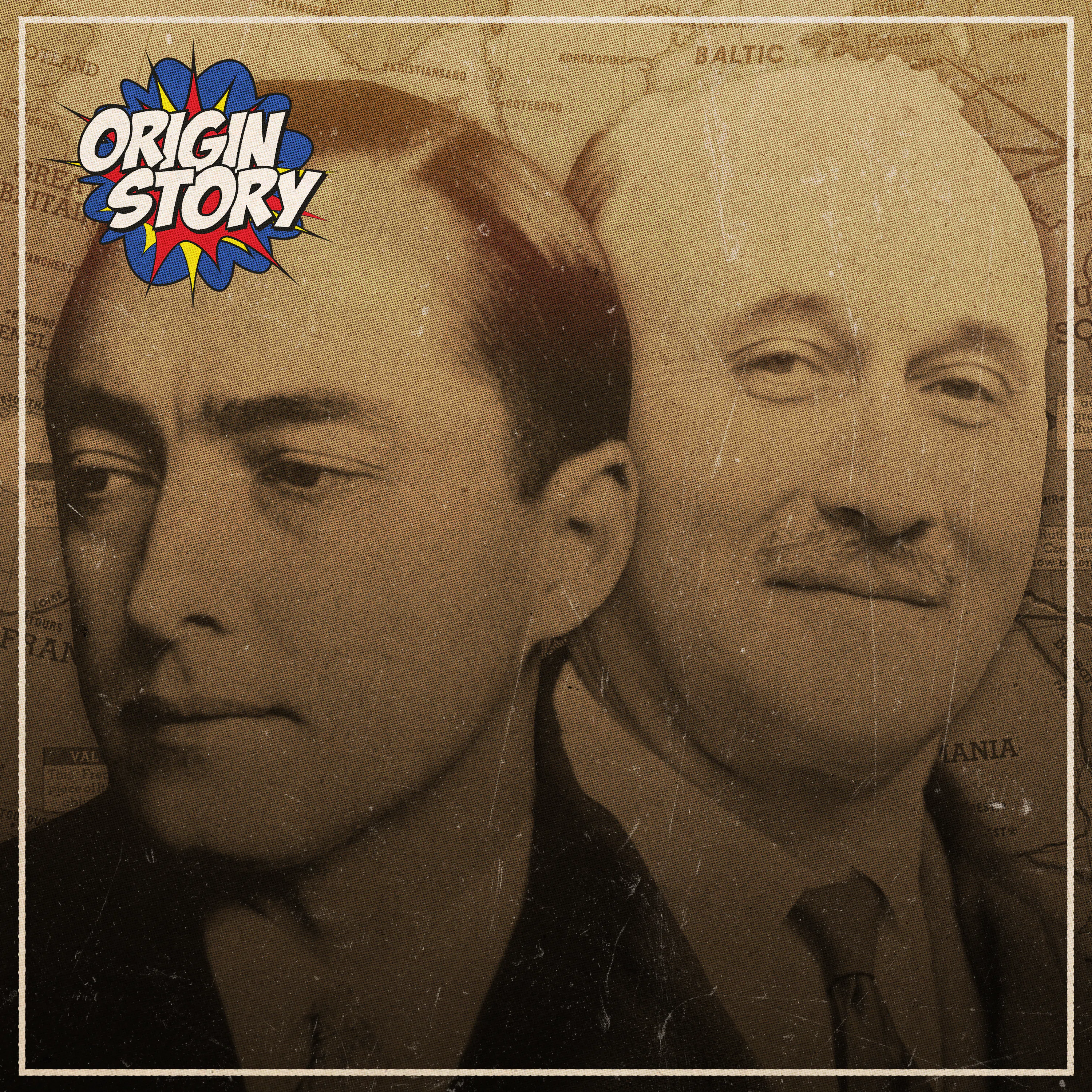 European Union – Part One – Come Together 29.04.2026 1j 23mntHello and welcome to season nine of Origin Story. After last season’s history of socialism, we’re returning to our usual format of taking on a completely different topic each time, and we’re starting with a big one. As we approach the 10th anniversary of the UK voting to leave the EU, we’re telling the three-part story of European union itself: not just the 33-year-old organisation — an incredible achievement that is too easily taken for granted — but the much older concept. We begin by explaining how Europe came to think of itself as an identity as well as a continent. For centuries, Europe was synonymous with something else, whether it be the Roman Empire, the Catholic Church or the values of the Enlightenment. The only efforts to unify its peoples were through imperial domination, from the Pax Romana to Charlemagne to Napoleon. It was the desire to avoid war between nation states that inspired the dream of the United States of Europe, and the cataclysm of the First World War that gave that dream real urgency. We meet two extraordinary and visionary men who dedicated their lives to bringing Europe together. Count Richard von Coudenhove-Kalergi, the so-called grandfather of the European Union, was an Austrian-Japanese aristocrat and ardent internationalist whose Pan-European Movement kept the dream alive between the wars, inspiring the likes of Einstein, Freud and Churchill. Jean Monnet was the brandy merchant, diplomat and wartime fixer who came out of the Second World War with a serious plan to realise it: the European Coal and Steel Community. Churchill, who co-founded the Council of Europe, famously said that Britain should be “with Europe but not of it”. This ambivalence kept Britain outside the European project for more than 20 years but the real story of this period is the psychodrama between France and Germany: eternal enemies who became tense allies. We close part one in 1955, when the political aftermath of the war is finally resolved but the trauma still shapes Europe’s fears and desires. What did it mean to be European before the twentieth century? Did it always take a war to force nations to consider cooperation? Why was Kalergi such an influential figure and why does he still inspire far-right conspiracy theories? How did Monnet use the shock of the Second World War, and the seemingly mundane issue of coal and steel production, to set Europe on the road to union? And was Britain right to be sceptical or simply deluded? It’s an epic story of how war and peace turned utopian dreams into political reality. • Support Origin Story on Patreon • Buy the Origin Stories books on Centrism, Fascism and Conspiracy Theory • Subscribe to Origin Story on YouTube Reading list • Anonymous – ‘Europe: Then It Will Live...’, Time (6 October 1961) • Roderick Beaton – Europe: A New History (2026) • Richard von Coudenhove-Kalergi – Crusade of Pan-Europe: Autobiography of a Man and a Movement (1943) • W.B. Curry – The Case for Federal Union (1939) • House of Commons – Schuman Plan debate (27 June 1950) • Roy Jenkins – A Life at the Centre (1991) • Tony Judt – A Grand Illusion? An Essay on Europe (1996) • Tony Judt – Postwar: A History of Europe Since 1945 (2005) • Tom McTague – Between the Waves: The Hidden History of a Very British Revolution 1945-2016 (2025) • Jean Monnet – Memoirs (1978) • George Orwell – ‘Toward European Unity’ (1947) • Fintan O’Toole – Heroic Failure: Brexit and the Politics of Pain (2018) • Ernesto Rossi and Altiero Spinelli – The Ventotene Manifesto (1941) • Robert Saunders – Yes to Europe!: The 1975 Referendum and Seventies Britain (2018) • Martin Sustrik – ‘Jean Monnet: The Guerilla Bureaucrat’, LessWrong (20 March 2021) • Simon Usherwood and John Pinder – The European Union: A Very Short Introduction: Fourth Edition (2018) Written and presented by Ian Dunt and Dorian Lynskey. Producer: Simon Williams. Videographer: Connor Newson. Music by Jade Bailey. Art by Jim Parrett. Logo by Mischa Welsh. Group Editor: Andrew Harrison. Origin Story is a Podmasters production www.podmasters.co.uk Learn more about your ad choices. Visit podcastchoices.com/adchoices
 -
 Origin Story – Live at Bloomsbury Theatre, 15th April 2026 22.04.2026 1j 46mntThis week’s episode is an edited version of Origin Story Live at London’s Bloomsbury Theatre on Wednesday 15 April 2026. It was a thrill to take the stage in the former terrain of Origin Story regulars such as Jeremy Bentham and John Maynard Keynes. Thanks to everyone who came along or watched the live stream, and to the people who helped make it happen. In part one, Ian unravels Matt Goodwin’s strange journey from ambitious young academic to GB News host, Reform UK candidate and fellow traveller of Viktor Orbán. Was he radicalised by his professional immersion in the far right, did he just follow the prevailing winds to money and influence, or was he always like this? Then Dorian breaks down Goodwin’s book Suicide of a Nation: Immigration, Islam, Identity, in which Enoch Powell meets ChatGPT, London has fallen and good old Britain is being betrayed by something called “suicidal empathy”. As sloppy as it is unpleasant, it positions Goodwin as the UK’s cut-price answer to Stephen Miller but will his unique charmlessness scupper his political aspirations? Goodwin predicted that the “elites” (ie, anyone who disagrees with him) would hate his book and who are we to disappoint him? In part two, we take a much-needed mind bath and each select five films that we think illuminate the recurring themes we discuss in Origin Story, from Batman Begins to All the President’s Men. Finally, we take some questions, both political and personal, from our wonderful audience. • Support Origin Story on Patreon • Buy the Origin Stories books on Centrism, Fascism and Conspiracy Theory • Subscribe to Origin Story on YouTube Reading list • James Bloodworth – ‘Matthew Goodwin, Reform and the politics of resentment’, Prospect (16 July 2025) • Daniel Boffey – ‘“It’s about ego’: Matt Goodwin’s journey from far-right expert to firebrand Reform candidate’, Guardian (30 January 2026) • Josh Glancy – ‘The reinvention of Matt Goodwin, from professor to Reform radical’, The Times (31 January 2026) • Matt Goodwin – Suicide of a Nation: Immigration, Islam, Identity (2026) • Sam Leith – ‘The Illusion and Delusion of Matt Goodwin’, Spectator (30 March 2026) • John Merrick – ‘Matt Goodwin’s intellectual suicide’, New Statesman (24 March 2026) • Joe Mulhall – ‘The Opportunist Extremist: The Strange Radicalisation of Matt Goodwin’, Hope Not Hate (2025) • Mark Sellman – ‘Matt Goodwin accused of AI blunders in new book on migration’, The Times (26 March 2026) • Andy Twelves – ‘Did Matthew Goodwin use AI to write his book?, Spectator (24 March 2026) • Andy Twelves debates Matt Goodwin, GB News (27 March 2026) • Julia Carrie Wong – ‘Loathe thy neighbor: Elon Musk and the Christian right are waging war on empathy’, Guardian (8 April 2025) • Cathy Young – ‘The Bizarre Right-Wing War on... Empathy?’, The Bulwark (21 April 2025) Written and presented by Ian Dunt and Dorian Lynskey. Producer: Simon Williams. Videographer: Connor Newson. Music by Jade Bailey. Art by Jim Parrett. Logo by Mischa Welsh. Group Editor: Andrew Harrison. Origin Story is a Podmasters production Learn more about your ad choices. Visit podcastchoices.com/adchoices
 -
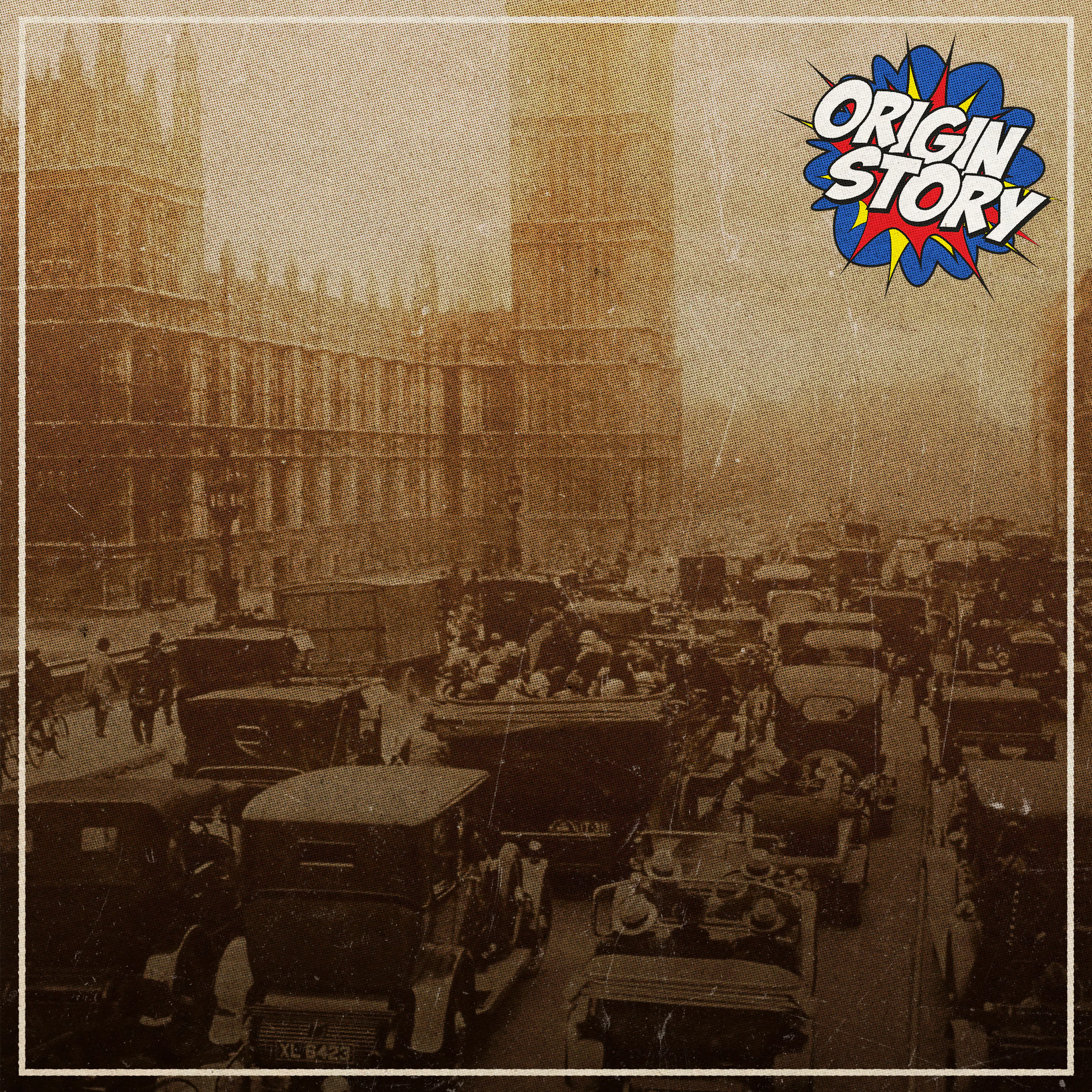 The General Strike – The Revolution That Wasn’t 08.04.2026 1j 25mntHello and welcome to another bonus episode. It’s the centenary of the General Strike of May 1926, the most important industrial dispute in British history, but what really happened and did it really change Britain? One strange thing about the General Strike is that it happened when industrial relations, which had reached their fiery nadir before and after the First World War, seemed to be cooling down. But tensions between coal miners and mine owners got so bad that the Trades Union Congress had no choice but to join the fight, even though its leaders did not expect to win. It was a showdown that very few people wanted. The strike began at one minute to midnight on 3 May. The following nine days were intense, exciting and unprecedented. Future Labour leader Hugh Gaitskell and future fascist Oswald Mosley backed the workers, Evelyn Waugh and the Mitford sisters joined the army of volunteers trying to keep Britain moving, and Virginia Woolf just complained. In some places, the strike became a proxy war between communists and fascists. Meanwhile, the BBC faced the first existential crisis of its short life, struggling to maintain impartiality while under the threat of a government takeover. The cast of characters is a kind of Origin Story all-stars, including prime minister Stanley Baldwin, chancellor and propagandist Winston Churchill, Labour leader Ramsay MacDonald, trade union heavyweight Ernest Bevin, BBC chief John Reith and Liberal peace-maker Herbert Samuel. The strike ended on 12 May because the TUC surrendered, to the dismay of many workers. At the time, it seemed like an unmitigated defeat for the unions, a humiliation for the Labour Party and a vindication for Baldwin’s Tories. But the long-term consequences were unpredictable and the strike’s legacy is still up for debate. How did the General Strike become inevitable when almost everybody was desperate to avoid it? What were those nine days like for people on both sides of the barricades? How did the BBC survive? Could the unions have won with different leaders or was it an impossible battle from the start? Why did a Tory victory lead so quickly to a Labour government and a stronger TUC? And why was Churchill such a dick about it? • Support Origin Story on Patreon • Buy the Origin Stories books on Centrism, Fascism and Conspiracy Theory • Subscribe to Origin Story on YouTube Reading list • Stanley Baldwin – Prime Minister’s Statement, Hansard (3 May 1926) • David Brandon – The General Strike 1926: A New History (2023) • A. J. Cook – The Nine Days: The Story of the General Strike Told by the Miners’ Secretary (1927) • David Hendy – The BBC: A People’s History (2022) • Roy Jenkins – Churchill (2001) • Keith Laybourn – The General Strike of 1926 (1993) • Martin Pugh – ‘Hurrah for the Blackshirts!’: Fascists and Fascism in Britain Between the Wars (2005) • Martin Pugh – Speak for Britain! A New History of the Labour Party (2010) • Julian Symons – The General Strike (1957) • David Torrance – The Edge of Revolution: The General Strike That Shook Britain (2026) Written and presented by Ian Dunt and Dorian Lynskey. Producer: Simon Williams. Music by Jade Bailey. Art by Jim Parrett. Logo by Mischa Welsh. Group Editor: Andrew Harrison. Origin Story is a Podmasters production Learn more about your ad choices. Visit podcastchoices.com/adchoices
 -
 Introvert / Extrovert – In Two Minds 25.03.2026 58mntThe terms introvert and extrovert have never been more popular. People seem to increasingly latch onto them as a core element of their personality, clinging to the personal definition they offer with ever-greater enthusiasm. Humans love to categorise things and there is nothing they like categorising more than themselves. We trace the weird story of these terms back to Vienna, on March 3rd 1907, when the Swiss psychiatrist and psychotherapist Carl Jung first met the Austrian neurologist Sigmund Freud. What follows is a hysterical, combative and sexually charged relationship which left both men in a state of social disarray. But in his efforts to later work out what happened, Jung settled on a personality binary which proved extremely intuitive to the public at large. Are these terms meaningful? Do they have scientific validity? And what are the dangers and advantages of defining ourselves in this way? Let's find out, as we delve into the world of personality types, psychoanalysis and what might genuinely be the single most preposterous intellectual dispute in the history of ideas. • Support Origin Story on Patreon • Buy the Origin Stories books on Centrism, Fascism and Conspiracy Theory • Subscribe to Origin Story on YouTube Reading list • Peter Geyer – Extraversion – Introversion: what C.G. Jung meant and how contemporaries responded, AusAPT Biennial Conference Melbourne, Australia – October 25–27, 2012 • Carl Gustav Jung – "The Association Method", The American Journal of Psychology 1910-04: Vol 21 Iss 2 • Carl Gustav Jung – Psychological Types, Princeton University Press, 1971 • D. L. Johnson, J. S. Wiebe, S. M. Gold, N. C. Andreasen – Cerebral blood flow and personality: A positron emission tomography study, American Journal of Psychiatry, 156, 252–257 (1999). • Florencio (Jun) Kabigting, Jr - The Discovery and Evolution of the Big Five of Personality, GNOSI: An Interdisciplinary Journal of Human Theory and Praxis, Volume 4, Issue 3, June 2021 • Frank McLynn – Carl Gustav Jung: A Biography, St Martin's Press 1996. • The Invention of 'Introvert', Words Matter podcast, episode 51 Written and presented by Ian Dunt and Dorian Lynskey. Producer: Simon Williams. Music by Jade Bailey. Art by Jim Parrett. Logo by Mischa Welsh. Group Editor: Andrew Harrison. Origin Story is a Podmasters production Learn more about your ad choices. Visit podcastchoices.com/adchoices
 -
 Stephen Miller – American Fascist 11.03.2026 1j 18mntWelcome to a bonus episode of Origin Story. Sometimes we profile people who are psychologically complex, who have undertaken fascinating intellectual journeys, whose sins and achievements are intertwined in ways that defy simplistic judgements. President Trump’s fiendish chief advisor Stephen Miller is not one of those people. We regret to inform you that it’s Miller Time. Currently the deputy White House chief of staff, Miller has been Trump’s most influential aide for the past decade, steering him towards ever greater extremes of nativism and authoritarianism. He’s been described as Trump’s prime minister, the shadow president, the intellectual engine behind MAGA fascism, and a real-world version of Tolkien’s Grima Wormtongue. To understand the Trump administration, you need to understand Stephen Miller. But where did he come from and why is he still here? In this episode, we explain how Miller emerged from the toxic politics of 1990s California to became an abrasive right-wing troll before he’d even graduated from middle school. At high school in Santa Monica and college in North Carolina, it was the same story: no friends but plenty of attention. On the one hand, Miller revelled in provoking the hatred of his peers. On the other, he sincerely believed that immigration was a mortal threat to America, despite being the descendant of Jewish refugees who owed their lives to American hospitality. After graduation, Miller headed to Washington, winding up as an attack dog for elf-faced xenophobe Senator Jeff Sessions and a conduit between the far right and mainstream conservatism. When Trump entered the political scene in 2015, Miller saw the ideal vehicle for his white nationalist monomania. While most Republicans opposed illegal immigration, Miller demonised legal immigration, too. The most inhumane of Trump’s policies — child separation, the Muslim ban, ICE’s reign of terror — have his fingerprints all over them. Learning from the setbacks of Trump’s first term, Miller has evolved into Washington’s most ruthless operator and arguably the most powerful unelected official in the world. Look into almost any corner of Trumpland, from January 6 to Project 2025, or Elon Musk’s political donations to Nicolas Maduro’s removal, and you’ll find Stephen Miller. How did Miller become such an enduringly powerful influence on such a fickle president? Is he, in fact, the real force behind the Trump administration’s fascist impulses? What do his obsessions owe to the long history of American nativism? Could he outlast Trump and expand his mission to transform America or has he already overreached? And does he have any redeeming features whatsoever? • See Origin Story live at the Bloomsbury Theatre on 15th April 2026: https://www.ucl.ac.uk/bloomsbury-theatre/events/2026/apr/origin-story-live • Support Origin Story on Patreon • Buy the Origin Stories books on Centrism, Fascism and Conspiracy Theory • Subscribe to Origin Story on YouTube Reading list Books and articles • Eitan Arom – ‘From Hebrew school to halls of power: Stephen Miller’s unlikely journey’, Jewish Journal (15 March 2017) • Jonathan Blitzer – ‘How Stephen Miller Single-Handedly Got the U.S. to Accept Fewer Refugees’, The New Yorker (13 October 2017) • Jonathan Blitzer – ‘How Stephen Miller Manipulates Donald Trump to Further His Immigration Obsession’, The New Yorker (21 February 2020) • Sarah Churchwell – Behold America: A History of America First and the American Dream (2018) • Nancy Cook – ‘Trump’s immigration push is Stephen Miller’s dream come true’, Politico, 31 October 2018 • McKay Coppins – ‘Trump’s Right-Hand Troll’, The Atlantic (28 May 2018) ... reading list continues on Patreon Written and presented by Ian Dunt and Dorian Lynskey. Producer: Simon Williams. Music by Jade Bailey. Art by Jim Parrett. Logo by Mischa Welsh. Group Editor: Andrew Harrison. Origin Story is a Podmasters production Learn more about your ad choices. Visit podcastchoices.com/adchoices
Podcast serupa


Populer di
Podcast ini juga muncul di daftar podcast negara-negara ini.
-
 Namibia
-
 Bolivia
-
 Bulgaria
-
 Rumania
-
 Nepal
Nepal
-
 Niger
Niger
-
 Pakistan
-
 Tanzania
-
 Kepulauan Cayman
-
 Serbia
-
 Azerbaijan
-
 Albania
-
 Mauritius
-
 Makedonia Utara
-
 Uzbekistan
-
 Armenia
-
 Yunani
-
 Islandia
-
 Chad
Chad
-
 Siprus
-
 Lituania
-
 Sri Lanka
-
 Britania Raya
-
 Kamerun
-
 Hungaria
-
 Benin
Benin
-
 Liberia
-
 Afganistan
-
 Antigua dan Barbuda
-
 Malawi
-
 Republik Demokratik Kongo
-
 Mongolia
-
 Guinea-Bissau
-
 Madagaskar
-
 Sierra Leone
-
 Ukraina