
The Samuele Tini Show - where business, innovation, and sustainability converge
Samuele Tini
0
The Samuele Tini Show explores how business, innovation, and sustainability converge to shape the future. Host Samuele Tini talks with global changemakers about bold ideas, inspiring stories, and practical solutions. Episodes dig into the challenges and opportunities of building a more sustainable economy and society. Listeners are invited to join the quest for progress through actionable insights and real-world examples.
Episode
-
 Inside M-Pesa: The Story Before the Success | Catherine Karimi Gichunge 09.09.2026 45mntBefore M-Pesa was M-Pesa, it was a pilot in Thika with a handful of women's groups and a piece of code written to disburse microfinance loans. Catherine Karimi Gichunge was pulled out of the Safaricom call centre in 2005 to sit next to Vodafone's project manager, and she has never told this part of the story on the show before. There was no API: electronic value was created by carrying cash to a single bank branch and uploading a CSV file. The first big agent was a chain of petrol stations. Launch day meant sacks of pens and T-shirts in Nakuru, ten minutes per customer. Catherine, now CEO of Redant International, explains why this groundwork is the reason M-Pesa succeeded where Airtel Money and M-Pesa South Africa failed, and why Kenya still has no alternative. Listen and share with anyone building payments in Africa.
 -
 A Post-Growth World Is Coming, by Disaster or by Design | Matt Orsagh 29.07.2026 50mntMatt Orsagh spent 25 years inside mainstream finance, including as Senior Director of Capital Markets at the CFA Institute. Then he concluded that ESG was painting the house while it was on fire. Now, as co-founder of the Arketa Institute for Post-Growth Finance, he makes the case that a post-growth world is coming, by disaster or by design. We discuss why degrowth is a diet, not austerity; why green growth collides with physics and the Jevons paradox; and his answer to the Global South objection: Africa should be allowed to grow, it is the Global North that needs the diet. Plus a radical rethink of pensions, a third of the world's assets, built on natural and social capital, not just piles of gold. Listen, then share it with someone who still believes efficiency will save us.
 -
 Stop Selling to Africa. Start Building With It | Robert Bach Casanovas 16.07.2026 32mntA European trade director who sends his own clients back home. Robert Bach Casanovas has run the Nairobi office of Catalonia Trade & Investment (ACCIÓ) since 2017, and he is blunt: the traditional model of European companies exporting one-size-fits-all solutions to Africa is languishing. What works now is demand-driven partnership, co-manufacturing and localizing solutions for the mass market, not the niche. We discuss why Barcelona's fintech ecosystem realized it must learn from Kenya, how frugal innovation could rescue Europe's aging public health systems, and the three frictions that kill European business in East Africa: the information gap, financing, and lack of presence. Plus the talent bridges being built between Barcelona and Nairobi business schools. If you work in trade, investment or EU cooperation, this one is required listening. Share it with a colleague still selling the old way.
 -
 Winning at All Costs Is How You Lose Everything | Reina 09.07.2026 34mntReina-Flor Okori competed in four Olympic Games. Three for France, then one final Games for Equatorial Guinea, where she carried the flag her parents fled under. In this episode, the hurdler turned leadership coach explains why the "win at all costs" mindset that took her to the top nearly destroyed her, and what she built instead. We explore her three levels of leadership: survival mode, the hyper-competitive shark that burns out, and the rare transcendent state where performance and wellbeing coexist. She shares her comeback nine months after giving birth, her Sankofa journey back to her ancestry, and why talent development, not hard skills, is the only edge that survives AI. A conversation about sovereignty, dignity and what you are really running for. Listen, and share it with someone chasing the wrong finish line.
 -
 Does Africa Need to Industrialise Before It Decarbonises? | Soha Benchekroun 29.06.2026 40mntWhat if Africa's biggest climate problem is the climate agenda itself? Soha Benchekroun argues that for Africa, sustainability and industrialisation are the same project, and that thirty years of climate negotiations have delivered almost nothing for the continent. A climate and development policy researcher, she builds the case from inside the rooms she critiques. We get into why adaptation keeps losing to mitigation, why Africa should industrialise with every resource it has, the real cost of exporting raw materials and importing finished goods, and what real economic sovereignty would take. A sharp, contrarian conversation on industrial development, climate finance, and self-reliance.
 -
 The B Corp Movement at 20: Reinvention or Retreat? | Christopher Marquis 19.06.2026 34mntSix years ago, Christopher Marquis wrote that the B Corp movement was remaking capitalism. Today the movement is twenty years old, ten thousand companies strong, and in the middle of a reckoning. Marquis, Sinyi Professor at Cambridge Judge Business School and author of Better Business, Mao and Markets and The Profiteers, joins the show to talk straight. Why the Dr. Bronner's exit and the Nespresso certification forced B Lab to tighten its standards. Why a company's positives can no longer outweigh its negatives. Why regulation catching up is not a threat to B Corp but the highest form of success. We also go where few sustainability conversations dare: China's dominance in clean energy despite its authoritarianism, the risk of a K-shaped world that leaves the Global South behind, and where Africa really stands.
 -
 Merchants of Peace: Can Trade Still Prevent War? | Sebastian Ferrari 09.06.2026 25mntIn 1919, a group of business people gave themselves a strange name: the Merchants of Peace. Their bet was that trading nations fight less. They had just watched Central Europe destroy itself, and they believed commerce could be a brake on war. A century later, with the Strait of Hormuz blocked and tariffs rising, that idea is being tested in real time. Sebastian Ferrari leads strategic initiatives at the International Chamber of Commerce, the world business organization representing an estimated 45 million companies across 170 countries. He argues the answer to fragile supply chains is not less trade but less concentration: more regional integration, especially across Africa and Latin America. We cover EUDR, TradeRoots Africa and AfCFTA, food as social stability, and whether trade can still keep the peace. Listen and share at samueletini.com.
 -
 Stop Calling It Charity. Kenyan Coffee Is an Economy | Henry Kinyua 29.05.2026 34mntFor years, men gathered in Kenyan trading centres, read the Nairobi Coffee Exchange price in the newspaper, did some quick math, and concluded their cooperative leaders had stolen their money. Most of the time, nobody had stolen anything. They were using the wrong number. Henry Kinyua, the Coffee Man of Kenya, is a trained agronomist and value chain specialist who has worked the Kenyan coffee sector from the smallholder farm to the auction floor. In this episode he explains why information asymmetry, not corruption, broke trust in cooperatives, why capturing value means controlling every step of the chain, and why the spread of coffee into new counties like Narok, Baringo and Uasin Gishu is as much a political shift as an agronomic one. He is blunt on the EUDR: Kenya was rated low risk because its farmers already reforest with macadamia and avocado shade crops, so the same goals could have been reached without the extra cost. He closes with the line that frames the whole conversation: buying Kenyan coffee is not charity. It rewards 800,000 households directly. A masterclass on coffee, value chains, and economic agency. Listen and share.
 -
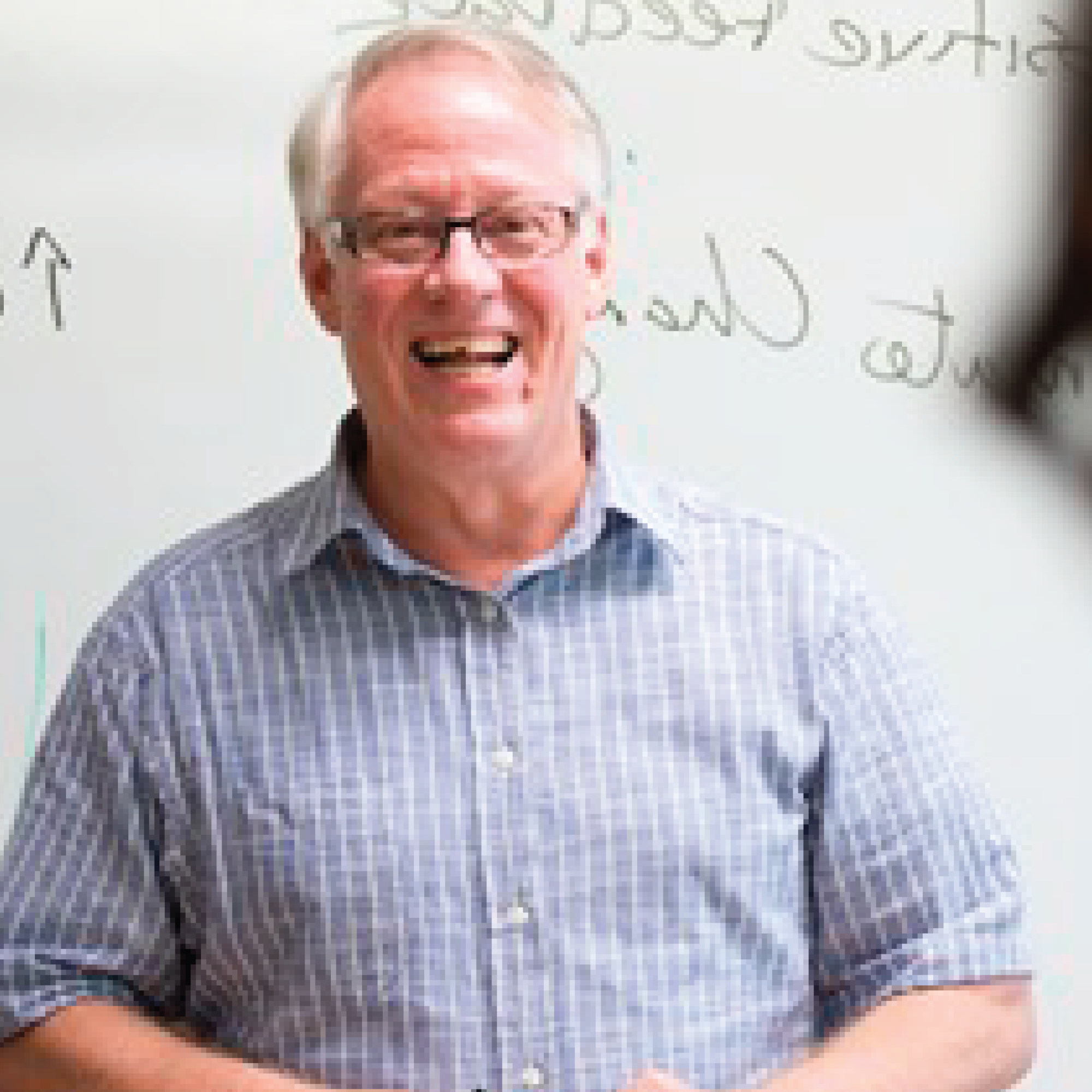 The Maze, Not the Mouse: A Smarter Theory of Change 19.05.2026 45mntWhat if everything you do to "live green" makes almost no difference, and quietly makes things worse? Michael Maniates, author of The Living Green Myth and co-author of Confronting Consumption and Consumption Corridors, argues that buying eco products and living lean is a comforting story that commodifies our anxieties and parks conscientious people in dead ends of despair. He explains why technological efficiency only buys time, why the real lever is changing the structures of everyday life rather than nagging individuals, and why it takes only 10 to 15 percent of people to drive change. He reframes the Global South debate around consumption classes instead of geography, noting that the elite in Nairobi and London now consume in the same way. A former Yale-NUS academic Maniates closes with Buckminster Fuller's trim tab idea: find the small leverage points, work with others, move mountains. Listen and rethink where your agency really lies.
 -
 Stop Funding Apps. Fund Warehouses. | Claire van Enk 09.05.2026 35mntUp to 50% of Kenya's fruits and vegetables never reach a plate. Not because farmers can't grow. Because nobody can reliably move, sort, price and pay. Claire van Enk is the founder and CEO of Farm to Feed, a Nairobi-based agritech platform that today connects 6,000 smallholder farmers with hotels, restaurants, schools and food processors across Kenya through bespoke logistics, traceability and a 200-SKU catalogue that includes "grade rescue" produce too imperfect for conventional buyers. The business started as a COVID-era GoFundMe in 2020. Five years and one commercial pivot later, it is one of the most ambitious operational businesses in East African food. In this episode of The Samuele Tini Show, Claire makes a case that cuts against most of the African startup conversation: the continent does not need more cloud-based platforms. It needs warehouses, trucks, cold rooms and the unglamorous logistics that physically move food from a farm to a kitchen. Investors prefer asset-light businesses. The real bottleneck is physical. We talk about the fragmented food system, the multiplier effect on rural employment, the limits of traceability in a country with weak pesticide regulation, and the "Africa discount" that keeps Kenyan products underpriced on global markets. Claire also shares the hardest founder lesson of her journey: realising she had to stop being an entrepreneur and start being a CEO, and that the two are not the same job. A direct, honest conversation about food systems, climate-resilient supply chains, and what it really takes to build operational businesses in Africa.
 -
 GDP Became Our God: The Religion of Economic Growth | Tim Jackson 29.04.2026 41mntWhat if the obsession driving the global economy is not a strategy, but a religion? In this episode, Professor Tim Jackson (University of Surrey, author of Prosperity Without Growth, Post Growth, and The Care Economy) argues that GDP has filled "the God-shaped hole" left in the 20th century, becoming a creed we recite without questioning. Sam and Tim explore where this obsession came from, why technology alone cannot decouple growth from environmental damage, and how a different organising principle, care, could replace growth as the engine of the economy. Tim makes the case that prosperity was never about income. It was about health, balance, and the ability to thrive within limits. Drawing on Wangari Maathai, Ubuntu, and the autonomic nervous system as a metaphor for governance, he reframes the role of rich countries: not to help the Global South, but to take their foot off the accelerator. A conversation about economics, philosophy, indigenous wisdom, and the kind of business worth building.
 -
 There Is No Funding Gap in Africa. Here's What's Actually Missing 20.04.2026 28mnt"There is no funding gap in Africa." That is the provocation from Burak Buyuksaraç, CEO of Afri Capital and a 16-year business veteran in Tanzania. He arrived in Dar es Salaam in 2010 as a mining executive, stayed to build a diversified portfolio across tourism, security, insurance, consultancy and trading, and now runs one of East Africa's newer investment firms. In this episode we unpack why the real bottleneck in African SME finance is not capital but pipeline. Why smaller tickets are harder to raise than larger ones. Why Tanzanian banks demand 125% collateral for a loan. And why Burak sees Africa and Latin America as the only two regions left on the planet with genuine room to grow. Burak shares two recent Afri Capital deals: a $15M refinancing for an Arusha agro-processor and a $3.5M facility for a Tanzanian bank servicing the education ecosystem. Essential listening for founders, impact investors, DFI teams and anyone working on SME finance in emerging markets.
 -
 Space-Based Solar: The $10 Megawatt Hour That Can Save Us | Martin Soltau 09.04.2026 29mntOil above 100 USD. The Strait of Hormuz under pressure.The world scambling for energy. Again. and Again... Every energy crisis sends us looking for the same answers: another pipeline, another terminal, another sanctions package. But what if the real way out is not on Earth at all? Martin Soltau, Co-CEO of Space Solar, returns to the show with a roadmap that has hardened into something impossible to ignore. His UK startup, nine people and £10 million in funding, is building Cassiopeia: a modular solar power satellite designed to harvest energy in geosynchronous orbit and beam it down to receivers on Earth, 24/7, all weather, gigawatt scale. Independent analysts price it at around $10 per megawatt hour, roughly ten times cheaper than today's wholesale energy. A solar panel in orbit produces 13 times more energy than the same panel on the ground. In this conversation we get into the part most people miss. This is not a physics problem, it is engineering the economics, and the milestones are real. First in-orbit demonstration in two years. Minimum viable product by 2030. First commercial 600 MW satellite in geosynchronous orbit by 2033. Martin makes a sharp case for why wind and solar alone cannot scale fast enough, why the UK is now paying the highest energy prices in the developed world despite one of the world's most ambitious clean energy programmes, why orbital data centres are the wrong answer to AI's energy hunger, and why a technology that uses 1000 times less critical minerals than ground-based renewables could finally break the link between energy and geopolitics. If you care about energy security, decarbonisation, or where the next decade of clean power is actually coming from, this is the conversation worth your time.
 -
 Fish Don't Vote: Why the Ocean Crisis Keeps Getting Ignored | Antoinette Vermilye 29.03.2026 45mnt73,000 sharks are killed every day. 16,000 chemicals are added to plastics, and only 1% are regulated globally. The ocean is in crisis, but almost nobody sees it. Antoinette Vermilye (Co-Founder, Gallifrey Foundation & SHE Changes Climate) has spent over a decade connecting the dots between ocean destruction, human health, climate finance, and gender in global negotiations. In this episode, she walks us through how her team convinced 60 airlines to stop carrying shark fins, why the plastics treaty negotiations keep stalling, what "carbon cowboys" are doing to blue carbon projects, and why biodiversity of perspectives matters as much as biodiversity in nature. What you'll learn: How systems change actually works in ocean conservation. Why regulation, accountability, and penalties are the missing link. How blue carbon credits can work fairly. And what you can do right now with your voice, your vote, and your pocket. A conversation that will change how you see the ocean and everything connected to it.
 -
 AI and Ubuntu: Can Ancient African Wisdom Fix Modern Technology? with Wakanyi Macharia-Hoffman 19.03.2026 32mntWhat if the ethical framework AI needs was coined thousands of years ago in Africa? Wakanyi Macharia-Hoffman is co-director of the Inclusive AI Lab at Utrecht University and founder of the African Folktales Project. She grew up near Ngong Forest in Kenya, where her primary school was literally inside the forest. Today she's on a mission to recover African indigenous knowledge and bring it into the spaces where it matters most: classrooms and technology labs. In this episode we explore: Ubuntu as relational intelligence: from self, to community, to planet The ulimi sana algorithm, designed at the University of Johannesburg, that optimizes AI for cooperation instead of competition How 17 African folktales mapped to the 17 SDGs are reshaping education for 21,000+ teachers worldwide Why AI is a mirror of humanity, and why the real question isn't what AI will become, but who we are becoming Whether you work in tech, education, sustainability or development, this conversation will change how you think about innovation, indigenous knowledge, and what it truly means to be human.
 -
 Own the Road: Lessons for African Entrepreneurs 09.03.2026 28mntWhen Tonderai Njowera's father came home and asked, "Did you know you can own a highway?" it changed everything. That one question sent a young boy in Zimbabwe on a journey from civil engineering to investment management to venture building in Cape Town. In this episode, Tonderai breaks down why Africa's biggest challenge isn't lack of capital or resources but a leadership gap. He argues that protectionism is the wrong response to global competition: African entrepreneurs need to think globally, not retreat locally. Using a powerful Formula One analogy, he explains how underdogs win by reading the conditions and capitalizing on disruption. Key insights from the conversation: Infrastructure is more than roads and bridges. It includes cultural and educational foundations that shape innovation capacity. The current global economic reset is an equalizer. Smart entrepreneurs can use it as a launchpad. Long-term thinking must coexist with short-term execution. The challenge is mixing the dose right. Family offices, DFIs, venture capital and grants each play a distinct role in the long-term investment picture. Tonderai Njowera is an entrepreneur, systems architect, and investor based in Cape Town, with roots in Zimbabwe's engineering and infrastructure sectors. Listen now and rethink what "competitive advantage" means for African founders.
 -
 Stop Disrupting, Start Building with Costas Papaikonomou 28.02.2026 38mntWhat if the most profitable climate investments aren't sexy at all? Costas Papayconomou, co-founder of Una Terra, spent a career in innovation consulting (including building and selling an agency to Accenture) before turning to circular economy investing. His thesis is simple and counterintuitive: don't disrupt old industries, clean them up. In this episode, Costas walks us through investments that sound boring but are brilliant: a cellulose-based white colorant replacing toxic titanium dioxide (with IKEA as lead investor), smarter food packaging that cuts energy use while making meals taste better, and paper pulp innovations. He shares why founding teams should be obsessed with customers, not investors. Why they literally added "does this violate the laws of physics?" to their deal screening. And why the talent war, not regulation, will ultimately force every industry to go green. His closing advice: look for the smallest problem that affects the most people.
 -
 Africa Doesn't Need the West. The West Needs Africa 19.02.2026 29mntWhat if the most powerful innovations don't come from billion-dollar labs, but from people who have almost nothing? Navi Radjou left Silicon Valley after 13 years because he realized most innovation there serves the top 1%. Now based in Bangalore, he's spent two decades proving that resource scarcity breeds the most radical creativity. In this episode, Navi breaks down why Africa is set to become the world's innovation lab, not its charity case. He introduces the "frugal economy" model built on three pillars: cooperation over competition, decentralized production over mega-factories, and regeneration over extraction. From Hello Tractor (the Uber for small farmers) to Levi's sharing proprietary tech with rivals, Navi delivers a blueprint for a post-capitalist economy rooted in Ubuntu philosophy. His parting shot: the world's biggest crisis is a crisis of imagination, and Africa holds the answer. Listen now on samueletini.com
 -
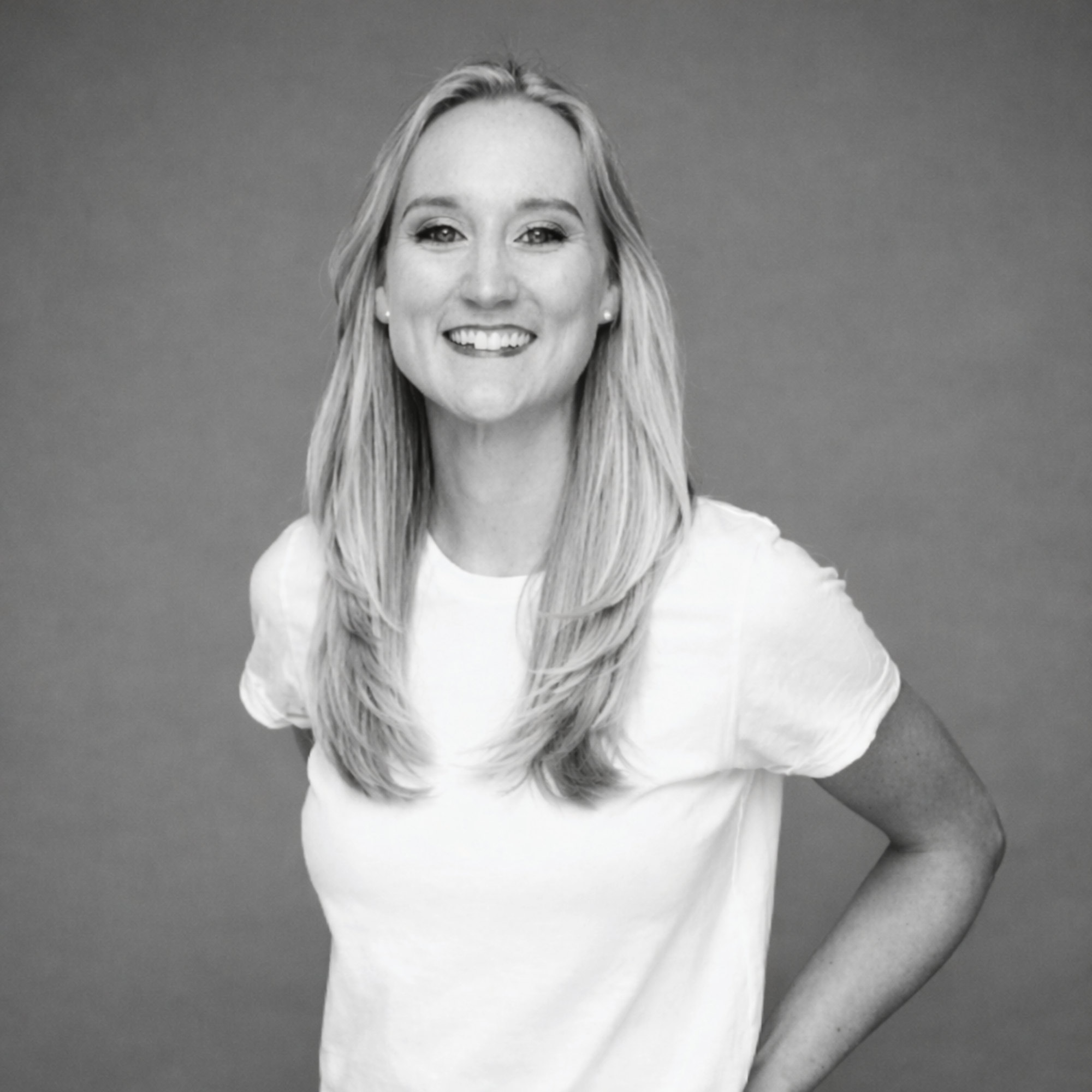 Women Don’t Own Their Time: The Hidden Constraint on Entrepreneurship 09.02.2026 38mntIn this episode, I’m joined by Alisa Sydow (Professor of Entrepreneurship at ESCP Business School) to unpack what women founders are really navigating in Africa’s entrepreneurship ecosystem beyond the usual “barriers list.” We discuss: Why purpose is powerful—but can also limit growth if it makes founders neglect commercial fundamentals. The overlooked role of founder identity (and why some women subconsciously place business last). The gap between policy and lived reality in finance access (including stories shared by founders in 2025). A practical, grounded view of product uniqueness, market fit, and why the local market is often underestimated. Why “trendy” international calls for proposals can distort markets and push founders toward the wrong models. If you mentor founders, invest, design entrepreneurship programs—or you are building yourself this is an episode to bookmark.
 -
 The Business Case for Syntropic Farming: 2.5 Hectares, 115k in Revenue (Forest Foods Kenya) 29.01.2026 37mntSyntropy isn’t about the tropics—it’s about the physics of life. In this episode, Samuele sits down with Sven Verwiel, CEO & Co‑Founder of Forest Foods (Kenya), to unpack syntropic agroforestry: a regenerative farming approach designed to compound productivity over time through stratification (vertical layers) and succession (time). We go from field reality to unit economics: what it takes to regenerate degraded soils, why syntropic systems can reach ~200–230% land‑use efficiency, and how Forest Foods is proving a commercial model with outdoor production, zero chemicals, and strong market demand for premium quality. We also discuss livestock integration (pasture‑raised chickens), the hardest founder challenges (land access, capital, logistics, cold chain), and why regenerative agriculture must become a career path that attracts the next generation. Key topics: syntropy vs entropy, soil regeneration, agroforestry design, profitability, go‑to‑market, scaling regenerative food systems in Africa
Podcast serupa


Populer di
Podcast ini juga muncul di daftar podcast negara-negara ini.
