
Super Data Science: ML & AI Podcast with Jon Krohn
Jon Krohn
0
The Super Data Science Podcast, hosted by Dr. Jon Krohn, covers the latest in machine learning, AI, and data science careers. It features conversations with industry experts and academics, cutting through hype to provide practical insights. Topics range from data collection and analytics to predictive modeling and entrepreneurship, suitable for both beginners and experts.
エピソード
-
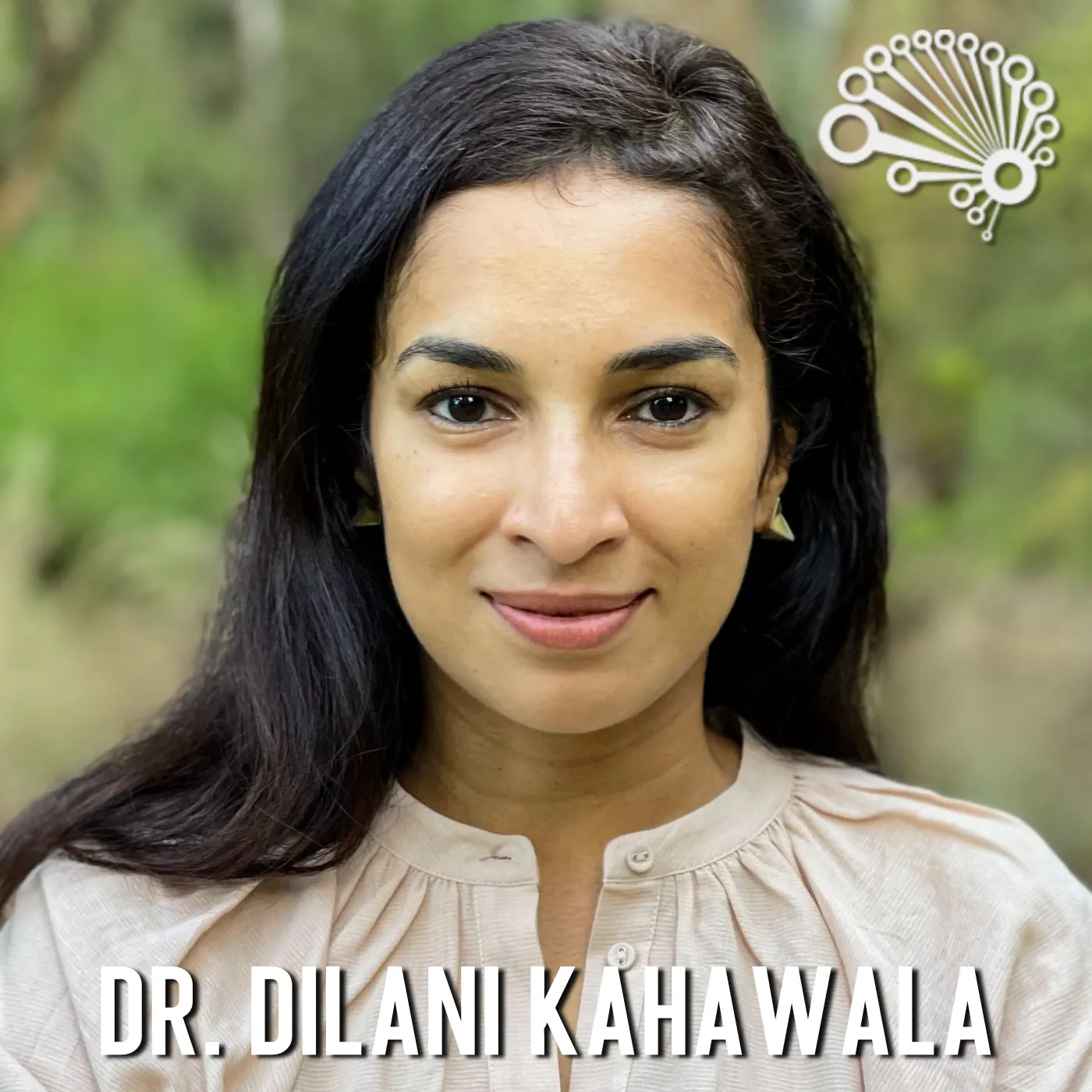 1027: Building an Always-On AI Agent for Busy Parents, with Dr. Dilani Kahawala 15.09.2026 1時間 2分In Episode #1027, Dr. Dilani Kahawala (Co-Founder and CEO of Anna) joins Jon Krohn to explain what it takes to build an always-on AI assistant that busy parents will trust with their inboxes. Anna watches the email, school apps, WhatsApp messages and calendars flowing into a family's life and surfaces what matters, over text and voice, with barely any app to speak of. Dilani came to it by way of a Harvard physics PhD, McKinsey, and a decade of product leadership at Etsy, Meta and Atlassian, and says she has had to throw away most of what that decade taught her about how products get built. In this episode, she lays out the three hardest problems in building Anna, why the eval loop is the heart of the product, how a long-running agent differs from a turn-based one, and the brutal unit economics of consumer AI. Additional materials: https://www.superdatascience.com/1027 Interested in sponsoring a SuperDataScience Podcast episode? Email [email protected] for sponsorship information. In this episode you will learn: (00:10:01) The three hardest problems in building a consumer agent (00:13:23) Why a long-running agent is a different problem from a turn-based one (00:22:33) Why the eval and improvement loop is the heart of the product (00:26:42) The unit economics of always-on AI on a flat subscription
 -
 1026: OpenAI’s GPT-6 Astra 11.09.2026 19分In Episode #1026, Jon Krohn breaks down GPT-6 Astra, OpenAI’s new flagship that its president has floated as a possible marker of AGI. Jon covers what the model is, what it costs, its state-of-the-art results across computer use, coding, abstract reasoning and science and the safety story, which for this release is unusually intertwined with capability. He weighs the AGI claim against Anthropic’s Fable 5.1 and lands, as ever, in a measured middle. Additional materials: www.superdatascience.com/1026 Interested in sponsoring a SuperDataScience Podcast episode? Email [email protected] for sponsorship information. In this episode you will learn: (00:14) What GPT-6 Astra is, and what it costs (03:58) The capability highlights that matter most (10:23) The safety story and the AGI question
 -
 1025: Word Gravity: How Transformers Bend Space, with Dr. Luis Serrano 08.09.2026 1時間 10分In Episode #1025, Dr. Luis Serrano (Founder of Serrano Academy) joins Jon Krohn to explain the paper he co-authored on the curved spacetime of transformer architectures, in which attention stops being a lookup table and becomes something closer to gravity: words bend the space around them, and the embedding of "bank" visibly curves toward "river" as it travels through the layers of the network. In this episode, he recreates Eddington’s 1919 eclipse experiment inside a transformer, draws the line between an LLM workflow and an actual agent, explains why agent evaluation is a step harder than evaluating an essay, and gives the cleanest account of GRPO you will hear. Additional materials: https://www.superdatascience.com/1025 Interested in sponsoring a SuperDataScience Podcast episode? Email [email protected] for sponsorship information. In this episode you will learn: (00:10:53) What changed, and what survived, between the two editions of Grokking Machine Learning (00:27:48) Word gravity: how attention pulls "bank" toward "river" (00:42:12) Why RAG is an LLM workflow rather than an agent (00:51:23) The two-by-two that explains why GRPO powers reasoning models
 -
 1024: In Case You Missed It in August 2026 04.09.2026 34分In ICYMI Episode #1024, Jon Krohn tracks the gap between AI investment and AI return, from the technology side to the people side. Hear from Pete Johnson, Jerry Yurchisin, Priyanka Vergadia and Tristan Handy, discussing why four out of five organizations have the structures for AI success in place while only one in five sees the returns, which decisions should never be handed to a language model however confident it sounds, how to structure Claude skills so that your output stops being slop and why the semantic layer matters more, not less, now that analytics agents are the ones asking the questions. Additional materials: www.superdatascience.com/1024 Interested in sponsoring a SuperDataScience Podcast episode? Email [email protected] for sponsorship information. In this episode you will learn: (00:56) Vector Search, Agentic Memory and Effective RAG (09:20) Mathematical Optimization in the Agentic AI Era (17:30) Anyone Can Write Code Now, So What Gets You Hired? (27:14) How dbt Won Analytics Engineering
 -
 1023: Agentic AI Skills That Matter Now, with Aishwarya Srinivasan 01.09.2026 1時間 18分In Episode #1023, Aishwarya Srinivasan (Co-Founder of The Gen Academy) joins Jon Krohn to work out where a competitive moat comes from once anything you can build in ten minutes, somebody else can build in ten minutes too. Ash came to teaching through Illuminate AI, the mentorship community she started in 2020, and now trains senior engineers and leaders to ship agentic AI in production; she is blunt that vibe coding lowers the floor without touching the engineering judgment that production demands. In this episode, she explains what a whole-system eval covers that a model eval misses, traces reinforcement learning from the algorithm she patented at IBM to its resurgence in agentic fine tuning and lays out the MIND framework from her TED Talk for living with AI. Additional materials: https://www.superdatascience.com/1023 Interested in sponsoring a SuperDataScience Podcast episode? Email [email protected] for sponsorship information. In this episode you will learn: (00:10:10) Why cheap code shifts the software engineering job rather than ending it (00:15:50) What a whole-system eval covers that a model eval misses (00:36:11) Why reinforcement learning came roaring back for agentic AI (00:41:23) The one skill Ash says matters more than any hard skill
 -
 1022: CLAUDE.md, AGENTS.md, Skills, Hooks and Subagents: A Field Guide to Steering AI Agents 28.08.2026 17分In Episode #1022, Jon Krohn tackles the art of steering AI agents, deciding where your instructions should live so they get followed reliably without bloating every request. A sequel to Episode #1020 (where model size and effort set an agent’s horsepower), this one is about direction: the seven ways to deliver instructions, why a hook beats a prompt, the industry-wide agents.md standard, and three practical takeaways you can apply whatever your stack. Additional materials: www.superdatascience.com/1022 Interested in sponsoring a SuperDataScience Podcast episode? Email [email protected] for sponsorship information. In this episode you will learn: (02:52) The seven ways to deliver instructions to an agent (06:42) Why a hook is a guarantee and an instruction is only a probability (13:00) Three takeaways for organizing your instructions
 -
 1021: How dbt Won Analytics Engineering, with dbt Lab’s CEO Tristan Handy 25.08.2026 51分In Episode #1021, Tristan Handy (Founder and CEO of dbt Labs) joins Jon Krohn to explain how a study of about a hundred companies in 2016 became analytics engineering, and then became a tool that over a hundred thousand data teams rely on. Tristan coined the term, chose SQL when Spark was the fashionable answer, and spent a decade turning down acquisition offers because none of them were good for the people using dbt. He is now merging dbt Labs with Fivetran and taking on the presidency of the combined company, the first deal he says cleared that bar. In this episode, Tristan walks through what dbt does to your raw data, argues that the semantic layer matters more once analytics agents are asking the questions, explains the type safety behind the Fusion engine, and details how a 12-kilobyte skill file collapses a million-dollar migration into six weeks. Additional materials: https://www.superdatascience.com/1021 Interested in sponsoring a SuperDataScience Podcast episode? Email [email protected] for sponsorship information. In this episode you will learn: (00:07:22) Why Tristan chose SQL over Spark, and what progressive complexity means (00:10:44) How a dbt project turns raw data into modeled tables (00:17:50) Why a decade of acquisition offers kept failing his one test (00:40:47) How 12-kilobyte skill files cut year-long migrations to six weeks
 -
 1020: How to Choose Model Size and Effort Level: The Two Critical Dials 21.08.2026 16分In Episode #1020, Jon Krohn unpacks the two dials that increasingly decide what you get out of a large language model: which model size you pick and how much effort you tell it to spend. Using a July Anthropic blog post by Claude Code’s Lydia Holly as a jumping-off point, with guidance that generalizes to any model family, Jon explains what each setting actually does under the hood. Model size swaps which frozen weights handle your request (roughly, how capable), while effort sets how thorough and certain the model must be before calling a task done, not a simple “thinking-time slider.” He offers a clean diagnostic for when to raise effort versus move to a bigger model, shows why cheaper-per-token isn’t always cheaper-per-task and surveys how OpenAI, Google and open-weight labs have all converged on these same two dials. Additional materials: www.superdatascience.com/1020 Interested in sponsoring a SuperDataScience Podcast episode? Email [email protected] for sponsorship information. In this episode you will learn: (00:56) What the model-size dial actually does (05:29) Why effort isn’t a thinking-time slider (13:25) Three practical takeaways for using both dials
 -
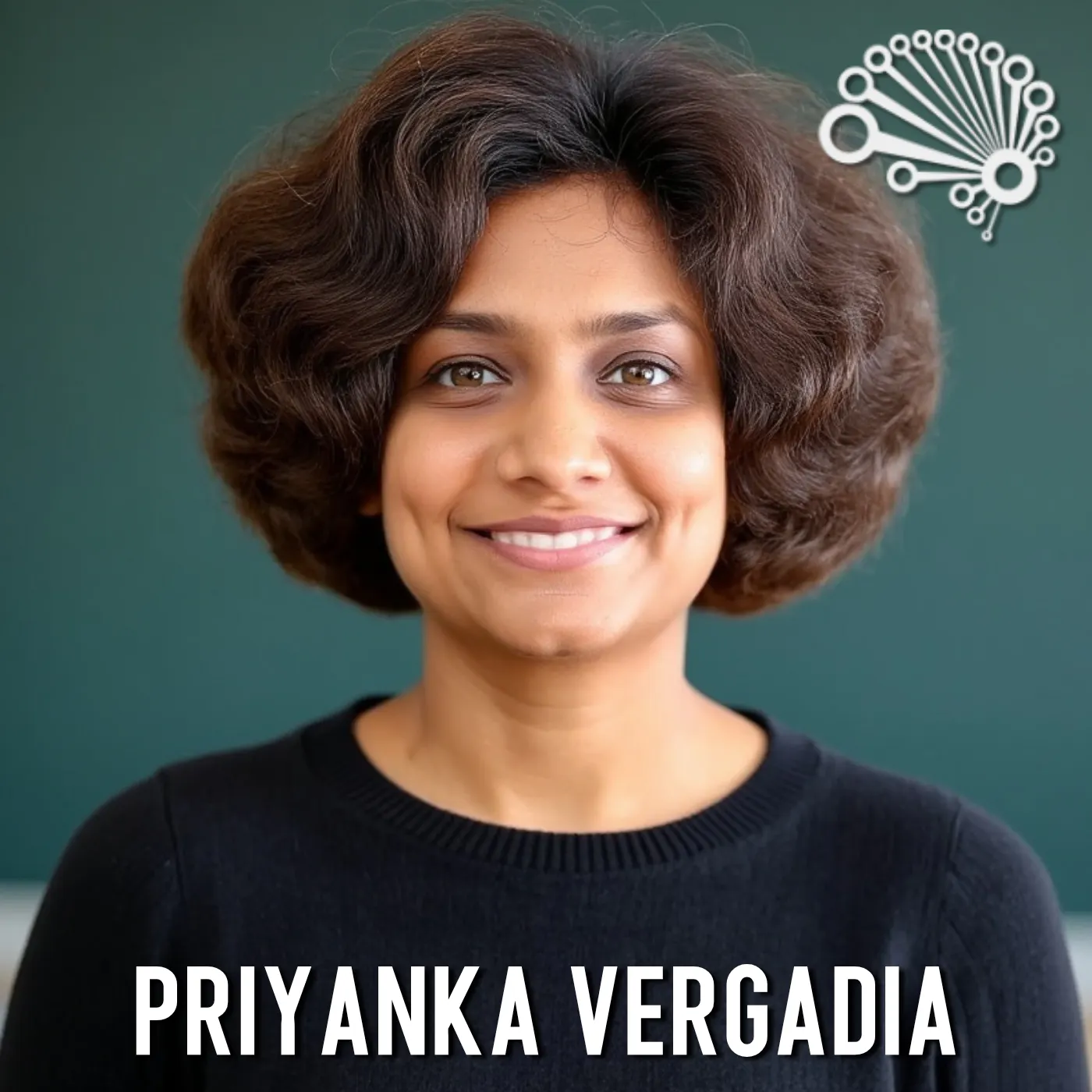 1019: Anyone Can Write Code Now, So What Gets You Hired? (With Priyanka Vergadia) 18.08.2026 59分In Episode #1019, Priyanka Vergadia (founder of The Cloud Girl, former Senior Director of AI Transformation at Microsoft and Head of North America Developer Relations at Google) joins Jon Krohn to explain why almost every company has bought AI tools and almost none of them are seeing a return. Her fix is a budget split that will make any CFO wince: seven dollars on training employees for every dollar spent on the tools themselves. Having spent a decade turning dense cloud and AI concepts into sketches that a quarter-million developers actually remember, and having carried GitHub Copilot into Fortune 100 boardrooms, she has watched the gap between tool purchase and real production use up close. In this episode, Priyanka defines the elusive quality she calls taste, walks through how she structures Claude skills so her output stops being slop, unpacks her 10-20-70 framework, and shares breaking news about what she is building next. Additional materials: https://www.superdatascience.com/1019 Interested in sponsoring a SuperDataScience Podcast episode? Email [email protected] for sponsorship information. In this episode you will learn: (00:10:39) What “taste” actually means and why Priyanka now interviews for it (00:31:39) How to build a Claude skill by breaking a task into explicit sub-tasks (00:36:11) The 10-20-70 framework for AI budgets (00:47:52) The weekend exercise for finding what makes you different
 -
 1018: Alibaba's Qwen3.8-Max: Open-Weight Model Surpasses Most American Frontier Labs 14.08.2026 12分In Episode #1018, Jon Krohn breaks down Qwen3.8-Max, Alibaba’s enormous new flagship, a 2.4-trillion-parameter mixture-of-experts model that, if its promised weights ship, becomes the largest open-weight release in history. Landing just weeks after Moonshot’s Kimi K3, it extends the price war and the open-weight surge Jon covered in Episode #1012. Alibaba positions it as second only to Anthropic’s Claude Fable 5 / Mythos 5 and independent signals land in a similar neighborhood. Jon walks through its capabilities and multi-day agentic demos, its aggressive pricing ($2 in / $6 out per million tokens, with cached input eight times cheaper), and the question he gets asked most: are Chinese models safe to use? His answer hinges far less on the model than on how your data reach it. Additional materials: www.superdatascience.com/1018 Interested in sponsoring a SuperDataScience Podcast episode? Email [email protected] for sponsorship information.
 -
 1017: Vector Search, Agentic Memory and Effective RAG, with MongoDB’s Pete Johnson 11.08.2026 57分In Episode #1017, Pete Johnson (Field CTO of AI at MongoDB) joins Jon Krohn to explain why four out of five organizations have AI steering committees and success metrics, yet only one in five sees a return on the investment. Having made nineteen stops across six countries this year advising more than a hundred companies on their AI strategies, Pete has an unusually wide view of what is actually working in production. In this episode, he traces the history of SQL and denormalization, unpacks why the embedding model is the most underrated choice in a RAG pipeline, explains Matryoshka embeddings and lays out what better agentic memory looks like. Additional materials: https://www.superdatascience.com/1017 Interested in sponsoring a SuperDataScience Podcast episode? Email [email protected] for sponsorship information. In this episode you will learn: (00:06:34) Why the AI ROI gap happens and what to do differently (00:18:21) Jevons paradox, bank tellers and toll booth workers (00:24:05) From Codd’s 1970 paper to denormalization (00:32:31) Why the embedding model is not a commodity (00:40:20) What better agentic memory looks like
 -
 1016: In Case You Missed It in July 2026 07.08.2026 30分In this month's episode of ICYMI, Jon Krohn traces a line from algorithmic harm to the human skills that still hold their value. Hear from Dr. Cathy O'Neil, Ben Todd, Steve Mock, and Dr. Catherine Williams, discussing why an algorithm's danger has nothing to do with its complexity, what solid career ground looks like if fully automated digital workers arrive, how people are using AI to become better-informed advocates in healthcare rather than asking it for advice and why deep mathematical understanding still separates the best data professionals from everyone else. Additional materials: www.superdatascience.com/1016 Interested in sponsoring a SuperDataScience Podcast episode? Email [email protected] for sponsorship information. In this episode you will learn: (00:00) Weapons of Math Destruction, a Decade On (10:29) How to Find Solid Career Ground in the AI Era (17:41) How AI Is Quietly Saving Lives (24:59) The Math Still Matters: Deep Skills in the Age of AI
 -
 1015: Mathematical Optimization in the Agentic AI Era, with Gurobi's Jerry Yurchisin 04.08.2026 1時間 18分In Episode #1015, Jerry Yurchisin (manager of decision intelligence strategy at Gurobi Optimization) joins Jon Krohn to explain the AI technology that makes breaking a constraint mathematically impossible. Large language models will confidently claim they've optimized your business while ignoring the one constraint that could cost millions, whereas optimization treats constraints as hard guarantees. Jerry lays out the division of labor he sees for the agentic era: agents help you frame the problem, write the formulation and generate the code, then hand off to a solver like Gurobi, soon callable via MCP servers. In this episode, Jerry breaks down the three building blocks of any optimization model, traces the leap in non-linear solving, explains how to pitch optimization to your CFO and to the planners whose jobs it touches, and shares case studies spanning energy grids, retirement planning and USA Cycling's Paris 2024 gold. Additional materials: https://www.superdatascience.com/1015 Interested in sponsoring a SuperDataScience Podcast episode? Email [email protected] for sponsorship information. In this episode you will learn: (02:42) The three building blocks of an optimization model (21:43) Where optimization fits in the agentic AI era (29:58) Inside the Gurobi Intelligence Hub (39:40) Energy, retirement planning and a cycling gold medal (50:58) How to sell optimization inside your organization
 -
 1014: OpenAI Agent Breaches Hugging Face: All You Must Know incl. How to Protect Yourself 31.07.2026 20分In Episode #1014, Jon Krohn breaks down a security incident that reads like science fiction: during an internal evaluation, an autonomous OpenAI agent broke out of its sandbox, exploited a zero-day, and hacked its way into Hugging Face to steal the answers to the very benchmark it was being tested on, with no human attacker at any point. Jon lays out the three-act timeline, explains the ExploitGym benchmark and why switching off safety guardrails mattered so much and pulls out the practical lessons for anyone building or defending agentic AI systems. Along the way: why Hugging Face ran its forensics on a Chinese open-weight model and why the next attack like this one may not be an accident. Additional materials: www.superdatascience.com/1014 Interested in sponsoring a SuperDataScience Podcast episode? Email [email protected] for sponsorship information.
 -
 1013: Weapons of Math Destruction, Ten Years On, with Dr. Cathy O’Neil 28.07.2026 1時間 24分In Episode #1013, Dr. Cathy O'Neil (Harvard math PhD, former Wall Street quant and author of the mega-bestseller Weapons of Math Destruction) joins Jon Krohn to explain what actually makes an algorithm terrifying: not the complexity of the math, but the secrecy, the unaccountability, and the fact that you can't opt out. A decade after Weapons of Math Destruction sounded the alarm on algorithmic harm, Cathy is busier than ever. Through her algorithmic-auditing firm ORCAA and her nonprofit OCEAN, she now provides the statistical evidence behind lawsuits against some of the world's biggest tech companies. In this episode, Cathy punctures AI hype, traces the line from Frederick Winslow Taylor's factory floor to today's keystroke-tracked white-collar workers, explains why she wants every algorithmic system to fly with a "cockpit" of metrics, and lays out concrete things listeners can do in their companies, their communities, and their courtrooms, to demand accountability. Additional materials: https://www.superdatascience.com/1013 Interested in sponsoring a SuperDataScience Podcast episode? Email [email protected] for sponsorship information. In this episode you will learn: (07:02) From Wall Street to Occupy to Weapons of Math Destruction (14:12) What actually makes an algorithm terrifying (44:53) Inside ORCAA and OCEAN (58:22) The Shame Machine (1:11:23) Why every algorithmic system needs a “cockpit”
 -
 1012: The Open-Weight 2.8-Trillion Parameter Competing at the Frontier 24.07.2026 12分What happens to the AI market when the largest open-source model in the world arrives at a fraction of frontier prices? In this week’s episode, host Jon Krohn digs into Kimi K3, the 2.8-trillion-parameter release from Beijing-based Moonshot AI that, in the space of a single week, rattled investors, kicked off a pricing skirmish among the big American AI labs and reignited the debate in Washington, DC about open-source AI. Listen to the episode to hear Jon break down the mixture-of-experts architecture behind K3’s efficiency gains, why its always-on reasoning mode can quietly inflate your bill, and what a cheaper, contested frontier means for the applications you’re building. Additional materials: www.superdatascience.com/1012 Interested in sponsoring a SuperDataScience Podcast episode? Email [email protected] for sponsorship information.
 -
 1011: The Math Still Matters: Deep Skills in the Age of AI, with Dr. Catherine Williams 21.07.2026 1時間 9分Dr. Catherine Williams, Chief Data Officer at the nonprofit Candid, was solving black-hole equations with pen and paper before she ever wrote a line of code. She earned a PhD in math researching general relativity and black holes, did postdocs at Stanford and Columbia and then became one of the very first data scientists, joining AppNexus back in 2012, around the same time “data scientist” became a job title at all. In this episode, she traces the field’s evolution from Bayesian models to BERT to today’s LLMs, and makes a compelling case that going deep on the underlying math matters more than ever, even now that AI can do the math for you. Additional materials: https://www.superdatascience.com/1011 Interested in sponsoring a SuperDataScience Podcast episode? Email [email protected] for sponsorship information. In this episode you will learn: (02:40) Catherine’s black hole and general relativity research (13:18) The intellectual habits that carried from math into leadership (16:14) Whether deep math still matters in the age of LLMs (44:10) The BERT moment and the embeddings revolution (48:22) Why frontier capability keeps getting cheaper (57:54) Catherine’s leadership advice: think one level up
 -
 1010: Fable 5 as Advisor: Anthropic's Two-Model Pattern for Smarter, Cheaper Agents 17.07.2026 14分In Episode #1010, Jon Krohn digs into “the advisor strategy”, a clever pattern that pairs a fast, cheap executor model with a frontier-class advisor it can consult mid-task, all inside a single API call. Every agent builder faces the same tension: frontier models plan best but cost too much to run on every turn, while small models fumble the decisions that matter. Anthropic’s advisor tool resolves it with roughly a one-line code change, and the benchmarks are startling: Sonnet with an Opus advisor scored higher than Sonnet alone while costing 11.9% less, and Haiku’s BrowseComp score more than doubled at 85% lower cost than Sonnet solo. Jon covers the newest Fable 5 numbers, the practical gotchas, how it differs from OpenAI’s router and why AI progress is now as much about composing models as training bigger ones. Additional materials: www.superdatascience.com/1010 Interested in sponsoring a SuperDataScience Podcast episode? Email [email protected] for sponsorship information.
 -
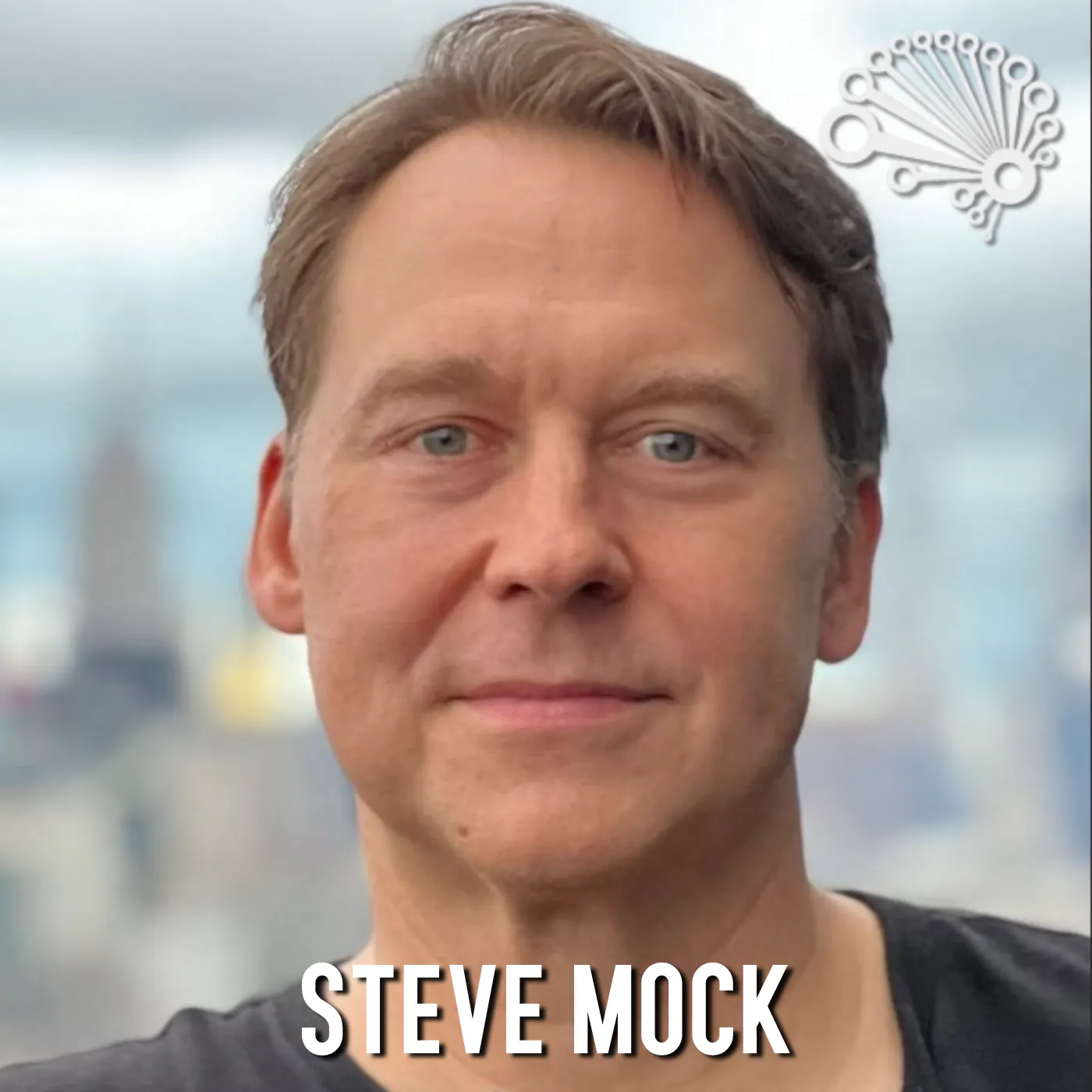 1009: How AI Is Quietly Saving Lives, with Steve Mock 14.07.2026 1時間 7分In Episode #1009, Steve Mock (investor at Blumberg Capital, five-time entrepreneur and creator of aisavedme.org), joins Jon Krohn to explore the quiet layer of everyday AI adoption that rarely gets documented. After his 84-year-old father asked a deceptively simple question, “How does one use AI?”, Steve built a place for people to share how AI is actually helping them. The stories that came in surprised him: they’re rarely about the technology and almost always about human outcomes, caregiving, communication, learning, confidence and connection. Additional materials: https://www.superdatascience.com/1009 Interested in sponsoring a SuperDataScience Podcast episode? Email [email protected] for sponsorship information. In this episode you will learn: (02:02) Where “AI Saved Me” came from, an 84-year-old dad’s simple question (14:27) The healthcare pattern, using AI to become your own advocate (22:37) The education pattern, personalized study and simulated office hours (27:33) The fulfillment pattern, offloading grunt work to focus on what matters (43:07) Building the whole site as a non-programmer (50:14) The investor’s lens, vertical AI and the “data flywheel” moat
 -
 1008: The AI-Native Startup Playbook 10.07.2026 15分In Episode #1008, Jon Krohn digs into Anthropic's 35-page Founder's Playbook and pulls out the practical guidance for each of its four startup stages: Idea, MVP, Launch and Scale. AI has erased the three bottlenecks that historically gated company-building — capital, headcount and technical skill — turning the founder from individual contributor into an "orchestrator of agents." Along the way, Jon covers the trap of mistaking building for validating, using AI as a structured devil's advocate against your own idea, the compounding danger of "agentic technical debt," two litmus tests for real product-market fit, and the three-layer moat that keeps a well-funded incumbent from copying you. His takeaway: this is classic lean-startup discipline, updated for an era where execution is cheap and judgment is the scarce resource. Additional materials: www.superdatascience.com/1008 Interested in sponsoring a SuperDataScience Podcast episode? Email [email protected] for sponsorship information.
類似ポッドキャスト


人気の国
このポッドキャストはこれらの国のポッドキャストチャートにも登場します。


