
Public Lectures from the Faculty of Law, University of Cambridge
Faculty of Law, University of Cambridge
0
The Faculty of Law at the University of Cambridge hosts a wide range of lectures and seminars covering legal, political, and philosophical topics. These events are organized by various research centers within the faculty and feature leading experts in their fields. Audio recordings of these lectures are published in podcast collections, while video recordings are available on YouTube.
エピソード
-
 Conversations with Professor Philippe Sands: Conversation #2 10.09.2026 1時間 51分This is the second interview with Professor Philippe Sands. Professor Sands was interviewed for the second time on 25th June 2026 At his home in Hampstead.For more information, see the Squire Law Library website at:http://www.squire.law.cam.ac.uk/eminent-scholars-archive
 -
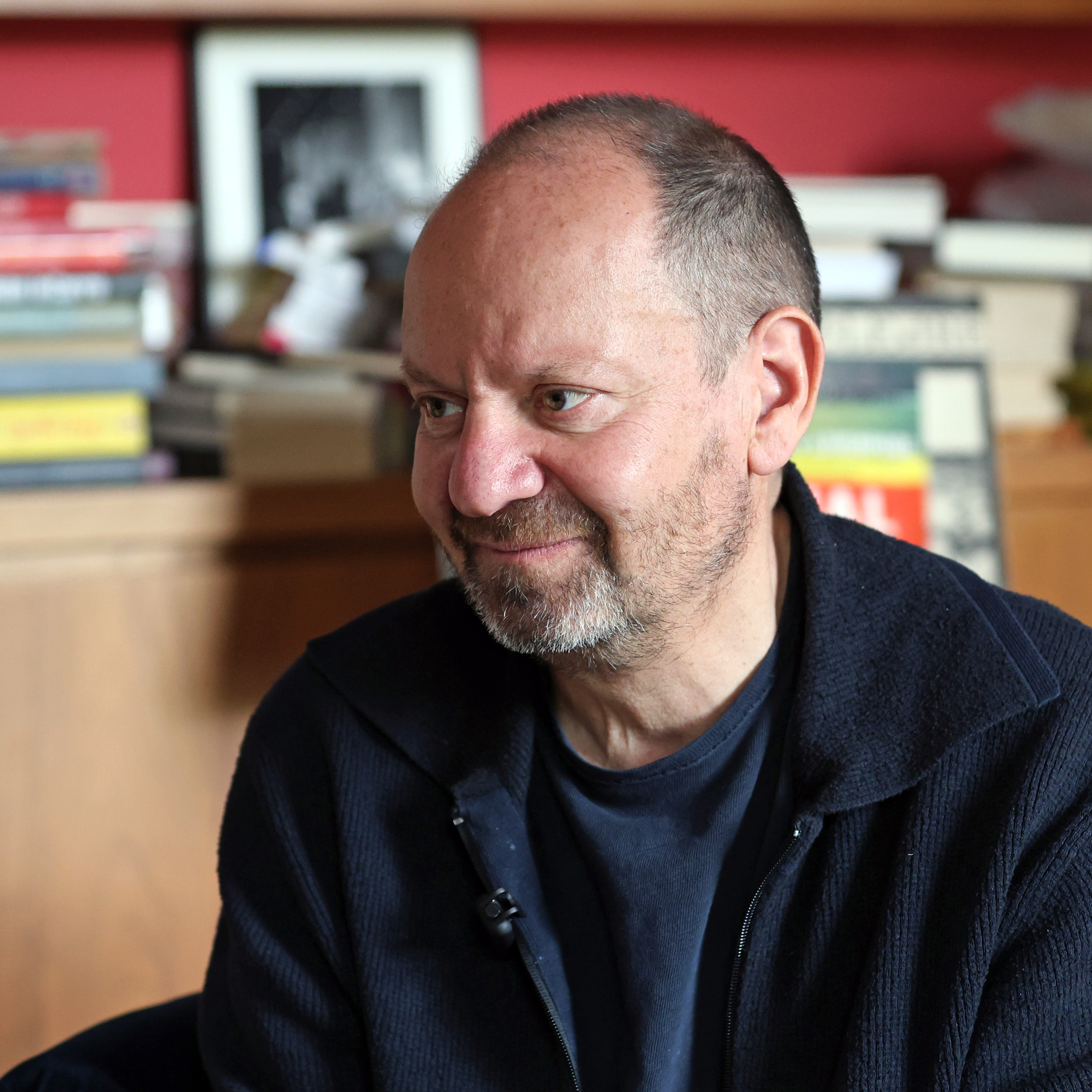 Conversations with Professor Philippe Sands: Conversation #1 10.09.2026 2時間 5分This is the first interview with Professor Philippe Sands. Professor Sands was interviewed for the first time on 18th May 2026 At his home in Hampstead.For more information, see the Squire Law Library website at:http://www.squire.law.cam.ac.uk/eminent-scholars-archive
 -
 The UK-EU Agreement in respect of Gibraltar: CELS Seminar 31.07.2026 2時間 35分When the UK and the EU concluded the Trade and Cooperation Agreement at the end of 2020, Gibraltar was deliberately left outside its scope. After more than four years of negotiation between the UK, the EU and Spain, with the Government of Gibraltar advising the UK team, to agree the yet closest relationship of UK related territory with the EU. The negotiations benefited from a political agreement in June 2025, a finalised legal text in December 2025, and the draft Treaty jointly published by the UK and the EU on 26 February 2026. The Committee of Permanent Representatives unanimously greenlit the texts on 1 April 2026, and the Agreement is now expected to enter provisional application on 15 July 2026, with formal ratification under the UK Constitutional Reform and Governance Act 2010 and the parallel EU procedures to follow.The Treaty is genuinely novel in EU external relations practice. It will remove routine physical checks at the land frontier with Spain, with full Schengen border controls relocated to Gibraltar's airport and port and operated under a tailored, dual-control architecture. Gibraltar, a British Overseas Territory that remains outside both the EU and Schengen, will simultaneously join the EU customs union and dynamically align with substantial parts of the EU acquis, including in goods, environment, energy, social and labour standards, transport and indirect taxation.The CELS seminar examines the draft Treaty across three panels chaired by Professor Catherine Barnard with experts from both the University of Cambridge and beyond:Panel I – Foundation: UK–EU Agreement in respect of Gibraltar“'The Constitutional Position of Gibraltar'”: Dr Jamie Trinidad, KC, Fellow, Lauterpacht Centre and Wolfson College, University of Cambridge“The Legal Debate in Spain about the Treaty”: Professor Alejandro del Valle Gálvez, Professor of International Law, University of Cadiz. Visiting Researcher - University of Manchester (13:05)“Free Movement of Person”: Professor Steve Peers, Professor of Law, Goldsmith University of London (25:13)“Dynamic Alignment in the EU-UK Gibraltar Agreement”: Professor Catherine Barnard, Director of CELS and Trinity College, University of Cambridge (45:45)Panel II – General Regulation: UK–EU Gibraltar Agreement“Customs Union, Institutions and Comparisons with the EEA”: Professor Halvard Haukeland Fredriksen, Professor of Law, University of Bergen (1:11:52)“Human Rights”: Nabil Khabirpour, Member, CELS and Fellow, Lucy Cavendish College, University of Cambridge (1:27:16)Panel III – Specific Regulation: UK–EU Gibraltar Agreement“Financial Services”: Professor Eilís Ferran, Professor of Company & Securities Law at the University of Cambridge, Fellow of the European Corporate Governance Institute (ECGI), Emeritus Fellow of St Catharine’s College & Provost of the Gates-Cambridge Trust (1:48:41)“Gambling”: Peter Montegriffo KC, Team Leader, Consultant, Hassans International Law Firm, Gibraltar (1:59:18)“Energy and Sustainable Development”: Professor Markus W. Gehring, Member, CELS & Fellow, Lauterpacht Centre and Hughes Hall, University of Cambridge (2:12:55)For more information see: https://www.cels.law.cam.ac.uk/press/events/2026/05/cels-seminar-uk-eu-agreement-respect-gibraltar
 -
The Third Year Episode and Part II Papers | CULSCAST Conversations Episode 6 30.06.2026 1時間 18分In this episode, we explore the third year of the Cambridge Law Tripos.We discuss the full papers in Competition Law, Conflict of Laws, Intellectual Property Law, Labour Law, Company Law, and Commercial Law, as well as a range of half papers, including Animal Rights Law, Landlord and Tenant Law, and Succession. Along the way, we share general advice on choosing papers, balancing workloads, and making the most of your final year at Cambridge.Whether you're deciding which options to take or preparing for the year ahead, this episode offers an overview of the academic opportunities available in third year and practical insights to help you navigate them.Many thanks to Jaysol Doy, Brandon Lim, Vladimir Genkovski, and Lottie Chambers for sharing their insights and experiences, and to Daniel Bates for his continued support.Follow us on our socials to stay up to date with all things CULS:📸 Instagram: @cambridgelawsoc📘 Facebook: https://www.facebook.com/camlawsoc/?locale=en_GBTo find out more about CULS or to become a member, visit our website.
-
The Second Year Episode and Part IB Papers | CULSCAST Conversations Episode 5 25.06.2026 1時間 16分In this episode, we take a closer look at the Part IB year of the Cambridge Law Tripos.We explore the compulsory papers, Contract Law and Land Law, as well as the optional papers of Administrative Law, Human Rights, and International Law. We also discuss the Year Abroad, examining the opportunities it offers for academic development, cultural immersion, and broadening legal perspectives.The episode provides an overview of the content, structure, and challenges of each paper, offering insights into what students can expect from one of the most significant years of the Cambridge Law degree.Many thanks to Jack Gower, Lizzie Mann, and Corey Tatum for their insights and friendship, and to Daniel Bates for the coffees that fuelled yours truly, as well as his support and encouragement along the way.Follow us on our socials to stay up to date with all things CULS: 📸 Instagram: @cambridgelawsoc📘 Facebook: https://www.facebook.com/camlawsoc/?locale=en_GBTo find out more about CULS or to become a member, visit our website.
-
To Diss or Not To Diss | CULSCAST Conversations | Episode 4 22.06.2026 49分In this episode, we explore the challenges, expectations, and strategies involved in writing a third-year law dissertation. From choosing a research topic and developing a strong argument to managing sources, this episode looks into what it takes to do a dissertation and whether that might be right for you! A special thank you to Jaysol Doy, Brandon Lim, for their valuable contributions, insights, and to Daniel Bates for his support in making this happen.Whether you are just beginning your dissertation journey or putting the finishing touches on your final draft, this episode offers useful guidance to help you approach the process with confidence.
-
Hersch Lauterpacht Memorial Lectures 2026: Lecture 3: 'Immunities of State Officials and Prosecutions for International Crimes - Where does the Law Stand?' - Prof Dapo Akande, University of Oxford 11.06.2026 1時間 1分The Hersch Lauterpacht Memorial Lecture is an annual three-part lecture series given in Cambridge to commemorate the unique contribution to the development of international law of Sir Hersch Lauterpacht. These lectures are given annually by a person of eminence in the field of international law. This year's lecture will be given by Professor Dapo Akande, Chichele Professor of Public International Law at the University of Oxford.A sandwich lunch for lecture attendees will be held from 12.30 pm in the Old Library on all days.Lecture 1: 1 pm Monday 8 June - 'International Law Immunities - Do we need them?'Lecture 2: 1 pm Tuesday 9 June - 'Immunities and Prosecutions for International Crimes in Foreign Domestic Courts'Lecture 3: 1 pm Wednesday 10 June - 'Immunities and International Criminal Tribunals'
-
Hersch Lauterpacht Memorial Lectures 2026: Lecture 2: 'Immunities of State Officials and Prosecutions for International Crimes - Where does the Law Stand?' - Prof Dapo Akande, University of Oxford 09.06.2026 59分The Hersch Lauterpacht Memorial Lecture is an annual three-part lecture series given in Cambridge to commemorate the unique contribution to the development of international law of Sir Hersch Lauterpacht. These lectures are given annually by a person of eminence in the field of international law. This year's lecture will be given by Professor Dapo Akande, Chichele Professor of Public International Law at the University of Oxford.A sandwich lunch for lecture attendees will be held from 12.30 pm in the Old Library on all days.Lecture 1: 1 pm Monday 8 June - 'International Law Immunities - Do we need them?'Lecture 2: 1 pm Tuesday 9 June - 'Immunities and Prosecutions for International Crimes in Foreign Domestic Courts'Lecture 3: 1 pm Wednesday 10 June - 'Immunities and International Criminal Tribunals'
-
Hersch Lauterpacht Memorial Lectures 2026: Lecture 1: 'Immunities of State Officials and Prosecutions for International Crimes - Where does the Law Stand?' - Prof Dapo Akande, University of Oxford 09.06.2026 1時間 1分The Hersch Lauterpacht Memorial Lecture is an annual three-part lecture series given in Cambridge to commemorate the unique contribution to the development of international law of Sir Hersch Lauterpacht. These lectures are given annually by a person of eminence in the field of international law. This year's lecture will be given by Professor Dapo Akande, Chichele Professor of Public International Law at the University of Oxford.A sandwich lunch for lecture attendees will be held from 12.30 pm in the Old Library on all days.Lecture 1: 1 pm Monday 8 June - 'International Law Immunities - Do we need them?'Lecture 2: 1 pm Tuesday 9 June - 'Immunities and Prosecutions for International Crimes in Foreign Domestic Courts'Lecture 3: 1 pm Wednesday 10 June - 'Immunities and International Criminal Tribunals'
-
The Global Housing Crisis and International Law: A Critical Assessment 26.05.2026 40分In this talk, I’ll focus on multiple dimension of the global housing crisis - affordability, homelessness, loss of homes due to climate crisis, mass destruction of homes or domicide during conflict, migration and the idea of a home, the contestation over land, and the persistence of forced evictions, discrimination and increasing segregation - from an international legal perspective. Drawing on my work as UN Special Rapporteur on the Right to adequate housing, the key focus will be to ask how much international law matters to bring solutions to these aspects of the global housing crisis and how much international law itself is part of the root causes of these dimension of the housing crisis.Speaker: Balakrishnan Rajagopal is Associate Professor of Law and Development at the Department of Urban Studies and Planning and the UN Special Rapporteur on the Right to Adequate Housing. He founded the Program on Human Rights and Justice at MIT (Massachusetts Institute of Technology) and the Displacement Research and Action Network. He is recognized as a leading participant in the Third World Approaches to International Law (TWAIL) Network of scholars and is one of its founders, and is recognized as a leading global commentator on issues concerning the global South.Prof Rajagopal is visiting the University of Cambridge this term as the Leverhulme Professor.Chair: Dr Joanna GomulaThis lecture was delivered on 22 May 2026 as part of the Centre's Friday Lunchtime Lecture series.
-
Trademarks and Free Speech: Conflicts and Resolutions: CIPIL Evening Seminar 15.05.2026 53分Speaker: Lisa P. Ramsey, Professor of Law, University of San Diego School of LawProfessor Lisa P. Ramsey, Professor of Law at the University of San Diego School of Law and an expert on trademark law, will be speaking on her new book, Trademarks and Free Speech: Conflicts and Resolutions (CUP: 2026). This book explores how trademark laws can conflict with the right to freedom of expression and proposes a framework for evaluating free speech challenges to trademark registration and enforcement laws. It also explains why granting trademark rights in informational terms, political messages, widely used phrases, decorative product features, and other language and designs with substantial pre-existing communicative value can harm free expression and fair competition. Lisa Ramsey encourages governments to not register or protect broad trademark rights in these types of inherently valuable expression. She also recommends that trademark statutes explicitly allow certain informational, expressive, and decorative fair uses of another’s trademark, and proposes other speech-protective and pro-competitive reforms of trademark law for consideration by legislatures, courts, and trademark offices in the United States, Europe, and other countries.You can order a copy of the book from CUP’s website here, using the code RAMSEY25 at checkout for a 20% discount.Biography: Lisa P. Ramsey is a Professor of Law at the University of San Diego School of Law, where she teaches and writes in the intellectual property law area. She is an expert on trademark law and has given presentations on this topic to attorneys, professors, and students throughout the United States and around the world. Professor Ramsey’s scholarship focuses on potential conflicts between trademark laws and free speech rights, and explains how trademark protection of certain inherently valuable words, symbols, and product features can harm fair competition and freedom of expression. In 2024, she testified at a hearing held by the U.S. Senate Judiciary Committee's Intellectual Property Subcommittee about the First Amendment implications of a proposed anti-impersonation law targeted at unauthorized digital replicas called the No FAKES Act. She has also talked about free speech limits on trademark rights on panels at San Diego Comic-Con in 2023 and 2024. Professor Ramsey is an active member of the American Intellectual Property Law Association and worked on the subcommittee that updated the International Trademark Association’s Model Trademark Law Guidelines in 2019. Before joining the USD law faculty in 2004, she was an intellectual property litigator at Gray Cary Ware & Freidenrich and a judicial law clerk for the Honorable Rebecca Beach Smith in the United States District Court for the Eastern District of Virginia. In July 2025, she was named a Women of Influence in Law 2025 Honoree by the San Diego Business Journal. Information about her publications is available on her website at www.lisapramsey.com.For more information see:https://www.cipil.law.cam.ac.uk/seminars-and-events/cipil-seminars
-
Federal Impartiality: Navigating Divisive Rights in the EU and the US: CELS and CPL Book launch 14.05.2026 1時間 2分The Centre for European Legal Studies and the Centre for Public Law held a book launch and panel discussion on Dr Mohamed Moussa's recent monograph: Federal Impartiality: Navigating Divisive Rights in the EU and the US (Hart, 2026)Panel MembersChairProfessor Catherine Barnard (Cambridge), Chair of European LawDiscussantProfessor Mark Tushnet (Harvard), William Nelson Cromwell Professor of Law, Emeritus
-
The Death Penalty in the Commonwealth - A Complex Landscape: Cambridge Pro Bono Project Annual Lecture 2026 08.05.2026 44分The Cambridge Pro Bono Project (CPP) hosted the annual lecture featuring Saul Lehrfreund MBE on Thursday 7th May 2026. Saul is Co-Founder and Co-Executive Director of The Death Penalty Project, an international legal action charity based at Simons Muirhead & Burton LLP in London.The Cambridge Pro Bono Project is a research centre that draws on the subject-matter expertise of graduate researchers and Faculty experts to produce reports on a wide range of public interest matters. Every year, we invite distinguished speakers to address our researchers, staff, and students at the University of Cambridge. For more information about the Cambridge Pro Bono Project, see https://www.cpp.law.cam.ac.uk/ Twitter (https://twitter.com/Cam_ProBono) or Facebook (https://www.facebook.com/CamProBono).
-
'Implications of U.S. Foreign Aid Cuts and Reciprocal Tariffs for African Countries - A View from the Global South' - Prof Olabisi D Akinkugbe, University of Dalhousie 01.05.2026 38分Lecture summary: President Trump’s decisive attack on foreign aid and USAID, leading to the restructuring of the latter and the closure of ongoing and future development aid work across the world, has left many vulnerable regions of the world in potential crisis. With some of the funds hitherto allocated to development aid in vulnerable Global South countries reallocated to national economic projects or redirected to support programs that deepen U.S. foreign policy objectives of America First abroad, one thing is clear: economic nationalism, power-based relations, and opposition to the rules-based order is back.Calculated, unfair, and transactional politics is the name of the game for President Trump’s return to office so far. Whether it is in relation to a developed, developing, or least-developed country, the Trump administration has unapologetically proven that it does not care whose ox is gored. Despite the US Supreme Court ruling, the “Reciprocal Tariff Policy” has disrupted and entrenched the uncertainty in the multilateral trading system that was already confronted with crisis about its own existence, especially the World Trade Organization, and the resulting fragmentation in international trade has further exacerbated the socio-economic and fragile status of developing countries.Olabisi Delebayo Akinkugbe is the Purdy Crawford Chair in Business Law and Associate Professor at the Schulich School of Law, Dalhousie University. Prof Akinkugbe obtained a Ph.D. in law from the University of Ottawa, an LL.M. from the University of Toronto, and an LL.B. from the University of Lagos, Nigeria. He previously served as the Viscount Bennett Professor of Law at the Schulich School of Law and was convenor of the annual Viscount Bennett Roundtable on International Economic Law.In 2024, he was the recipient of the Hannah and Harold Barnett Excellence in Teaching Award.In this paper, I analyse the multiple implications for developing countries in the African continent.Chair: Prof Lorand BartelsThis lecture was delivered on 1 May 2026 and is part of the Friday Lunchtime Lecture series.
-
Child Contact Arrangements in the Context of Gender-Based Violence. A look at the Spanish no-contact rule: Family Law Seminar 30.04.2026 28分Speaker: Dr Maitena Arakistain Arriola (Assistant Professor in Civil Law, University of the Basque Country; Visiting Fellow CFL; Bye Fellow, Robinson College)Can the pro-contact culture that prevails in the justice system in child arrangement cases be changed through legislative reform? This is exactly what the Spanish legislator tried to do in 2021 when he amended the Civil Code to introduce a no-contact rule in cases of gendered-based violence. Now the presumption is that there will be no contact unless proven to be in the child’s best interests. Has it worked? The number of cases where unsafe contact is still awarded by the courts suggests that it has not, or, at least, not yet. In this seminar we will look at the position under Spanish Law and we will examine some of the arguments used to avoid the new no-contact rule.For more information about the Faculty Family Law Centre (CFL), see:https://www.family.law.cam.ac.uk/
-
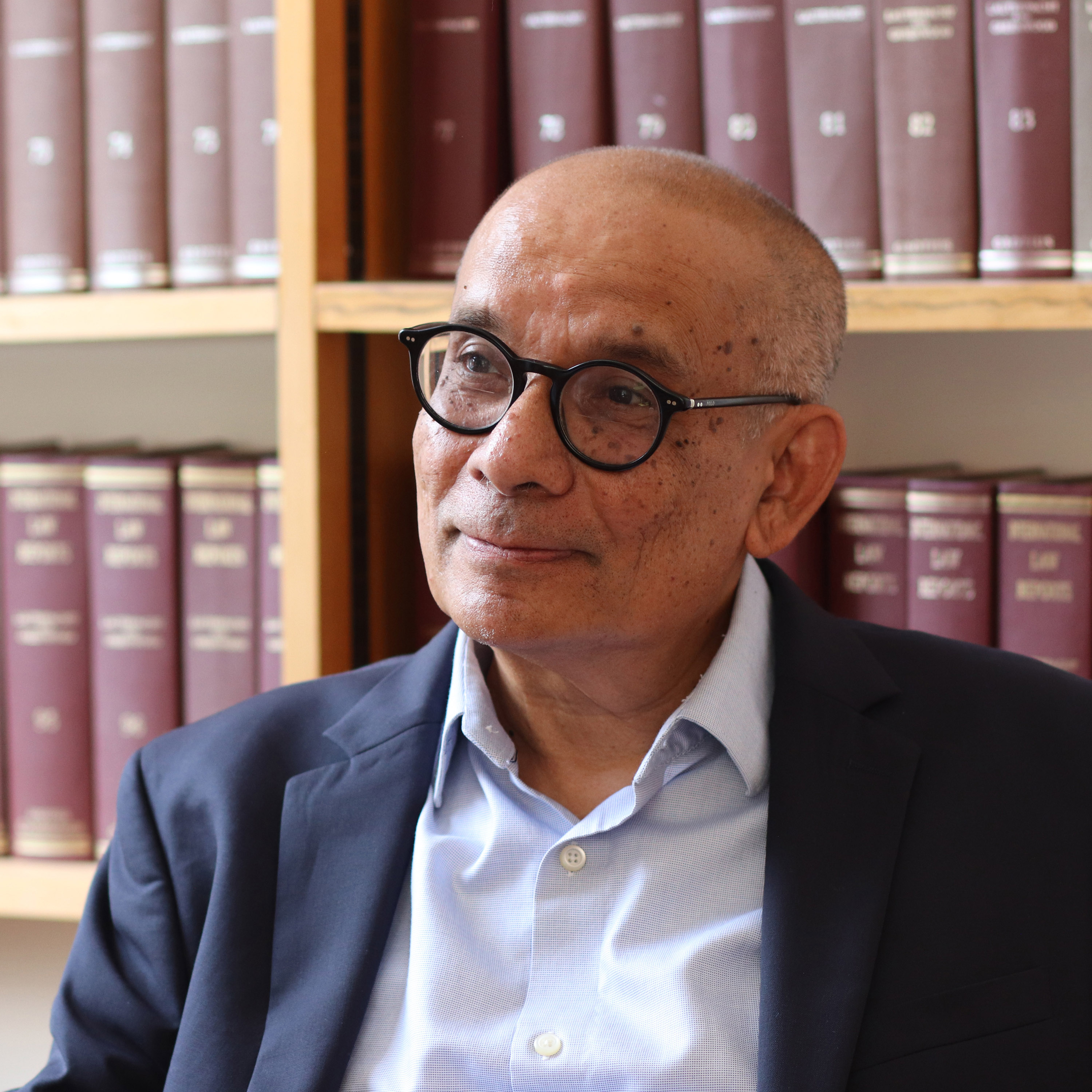 Conversation with Professor Anthony Anghie 23.04.2026 54分Professor Anthony Anghie was the Arthur Goodhart Visiting Professor of Legal Science for the academic years 2024-25. He was interviewed at the Lauterpacht Centre for International Law in Cambridge on 16 June 2025.For more information, see the Squire website at:http://www.squire.law.cam.ac.uk/eminent_scholars/
 -
Panel 2: Is the Architecture of International Justice under threat? 14.04.2026 37分The Sixth Annual Wolfson Sir David Williams Law Society Event was held on 7 March 2026.This Wolfson College Cambridge event featured two insightful panel discussions with distinguished law professionals; an afternoon tea and a formal dinner to conclude the day.The event was primarily aimed at Wolfson Law and Criminology alumni, current students, and individuals working in the legal field.Panel One: Environmental Regulation in the Era of Climate Change Chair: Tugba Basaran (Wolfson College)Speakers: Prof Surabhi Ranganathan (Lauterpacht Centre for International Law), Prof Avidan Kent (University of East Anglia), Róisín Finnegan (Barrister, Six Pump Court)Panel Two: Is the Architecture of International Justice under threat? Chair: Thomas Grant (Wolfson College)Speakers: Prof Nicola Padfield (Emeritus Professor of Criminal and Penal Justice; Former Director, Cambridge Centre for Criminal Justice), Isuru Devendra (Barrister, 36 Stone), Marie-Anne Coninsx (first EU Ambassador to the Arctic 2017-2019)For more information see: https://www.wolfson.cam.ac.uk/about/events/sixth-annual-wolfson-sir-david-williams-law-society-event
-
Panel 1: Environmental Regulation in the Era of Climate Change 14.04.2026 1時間 1分The Sixth Annual Wolfson Sir David Williams Law Society Event was held on 7 March 2026. This Wolfson College Cambridge event featured two insightful panel discussions with distinguished law professionals; an afternoon tea and a formal dinner to conclude the day. The event was primarily aimed at Wolfson Law and Criminology alumni, current students, and individuals working in the legal field. Panel One: Environmental Regulation in the Era of Climate Change Chair: Tugba Basaran (Wolfson College) Speakers: Prof Surabhi Ranganathan (Lauterpacht Centre for International Law), Prof Avidan Kent (University of East Anglia), Róisín Finnegan (Barrister, Six Pump Court) Panel Two: Is the Architecture of International Justice under threat? Chair: Thomas Grant (Wolfson College) Speakers: Prof Nicola Padfield (Emeritus Professor of Criminal and Penal Justice; Former Director, Cambridge Centre for Criminal Justice), Isuru Devendra (Barrister, 36 Stone), Marie-Anne Coninsx (first EU Ambassador to the Arctic 2017-2019) For more information see: https://www.wolfson.cam.ac.uk/about/events/sixth-annual-wolfson-sir-david-williams-law-society-event
-
The Rt. Hon. Lord Lloyd-Jones addresses the Exploring Law Conference 01.04.2026 44分In this lecture, delivered at the 51st iteration of the Exploring Law Conference (ELC) at Cambridge, Lord Lloyd-Jones provides an expert overview of the United Kingdom's highest appellate bodies: the Supreme Court of the United Kingdom and the Judicial Committee of the Privy Council.Key themes from the address include:Constitutional Evolution: The 2005 transition from the "Law Lords" in the House of Lords to an independent Supreme Court, emphasising the separation of powers and increased transparency.The Supreme Court's Mandate: The court acts as a final arbiter for "points of law of general public importance," deciding cases that shape the development of the law across the UK.The Value of Dissent: A rigorous defence of the right to issue dissenting judgments, which Lord Lloyd-Jones argues enhances intellectual rigour and signals that the law is a living debate.The Global Reach of the Privy Council: An exploration of its role as the final court of appeal for 29 overseas jurisdictions, highlighting its unique ability to apply local laws - from common law to the Napoleonic Code.Constitutional Boundaries: A comparison between the UK’s principle of parliamentary sovereignty - where courts cannot strike down primary legislation - and other jurisdictions where the Privy Council may invalidate unconstitutional laws.Lord Lloyd-Jones concludes by encouraging the next generation of "high fliers" to pursue careers in the law, promising a rewarding and intellectually stimulating path.For more information about the Conference, see:https://www.law.cam.ac.uk/access-outreach/exploring-law-conference
-
The Judiciary and the Rule of Law in Europe: Lord Justice Baker 30.03.2026 33分On 28 March 2026 CELS held a seminar event on 'The Rule of Law as a (dis)unifying Value in the European Legal Order?'.Among the rule of law's many virtues is its capacity to provide a framework for deliberating competing ideas of justice, fairness and equality. Yet a value once widely shared is now increasingly contested in both status and meaning. The Centre held this event to explore these and related questions.The seminar was structured around four core sub-themes. Each of these will begin with a 20-minute presentation followed by a facilitated discussion:I:The Nature of Values in Supranational Legal Orders - Nabil H. Khabirpour (Video (YouTube) / Audio)II: The Judiciary and the Rule of Law in Europe - Lord Justice Baker (Video (YouTube) / Audio)III: The Rule of Law, the Market, and European Identity - Professor Catherine Barnard (Video (YouTube) / Audio)IV: Enforcing the Rule of Law as a Value under EU Law - Professor Albertina Albors-Llorens (Video (YouTube) / Audio)For more information see:https://www.cels.law.cam.ac.uk/activities-archive
類似ポッドキャスト


人気の国
このポッドキャストはこれらの国のポッドキャストチャートにも登場します。


