
The How To Podcast Series - Podcast Co-Hosts, Practical Podcasting Tips, and Podcast Community
Dave Campbell - Podcast Coach, Cheerleader and Podcast Community Advocate
0
The How To Podcast Series is a guide to podcasting success hosted by Dave Campbell with rotating guest co-hosts. It offers practical tips on podcasting SEO, audience growth, guest booking, audio setup, social media marketing, and hosting platform suggestions. The podcast provides real-world advice, creative inspiration, and confidence to build a podcast community. Listeners are invited to join a free Podcast Community on Meetup.
エピソード
-
 E812 - The One Question Every Podcaster Needs To Answer - No, Not How To Grow Your Show or How To Make Money As A Podcaster 17.09.2026 20分Episode 812 - The One Question Every Podcaster Needs To Answer - No, Not How To Grow Your Show or How To Make Money As A PodcasterThe One Question Every Podcaster Needs To AnswerBefore choosing a podcast name, buying a microphone, or planning your first episode, answer one question: Is this podcast for you or for an audience?That decision shapes almost everything that follows. It affects how you define success, create content, promote the show, measure growth, choose guests, and decide how long you want to keep podcasting.A Podcast Can Be For YouA podcast can serve as a creative outlet, a place to think out loud, a personal journal, or a way to document a journey. You might create it for yourself, your family, or your community.If you are the audience, downloads become far less important. You can experiment with the format, talk about whatever feels meaningful, and skip the marketing. If you enjoy making the show, you have already achieved your goal.The trap comes when you create a podcast for yourself and then judge it using audience or business metrics. An audience of one can represent success when you intentionally built the show for yourself.A Podcast Can Serve An AudienceWhen your podcast exists to serve listeners, the strategy changes. You need to understand who those listeners are and what they need from your content.Specific audiences create clarity. A podcast for new dads, first-time authors, or Canadian podcasters gives you a much clearer direction than a show designed for everyone.From there, your topics, format, promotion, and calls to action can serve that audience. You can measure engagement, listener feedback, action, and growth because those measurements connect directly to your purpose.You Can Blend BothSome podcasts serve the host and an audience. That can work when you approach each purpose deliberately.Ask yourself: If only fifty people ever listened, would I still make this podcast?Your answer can reveal what you are really building. You might create a personal show alongside an audience-focused show, or bring some personal reflection into an audience-focused podcast.Before you worry about microphones, downloads, podcast promotion, or monetization, decide who your podcast serves. If the answer is you, give yourself permission to create for yourself. If the answer is an audience, get specific about who they are and what your show helps them accomplish. Once you know the purpose, the rest of your podcast strategy becomes much clearer._____Helping Podcasters Everyday! https://howtopodcast.ca/We would love to hear from you - here is our listener survey!https://forms.gle/GbrFv9DGszV8N4PW6
 -
E811 - Be Patient with your podcast and understand Consistency vs. frequency - How to Launch a Podcast with No Following Mini Series 16.09.2026 19分Episode 811 - Be Patient with your podcast and understand Consistency vs. frequency - How to Launch a Podcast with No Following Mini SeriesBe Patient With Your PodcastEvery podcast starts at zero. Even a well-known creator can publish episode one and see zero downloads. Podcast growth takes time, and consistency matters more than chasing an aggressive publishing schedule that you cannot sustain.Dave explores the difference between podcast consistency and frequency, and how a realistic plan can help you keep creating without overwhelming yourself.Choose a Podcast Cadence You Can SustainDecide how long your podcast will run and how often you can realistically publish. A short podcast series can have a defined beginning and ending. An ongoing show can continue as long as the host has something meaningful to say.The key comes from having a plan. A calendar gives your podcast direction and helps prevent you from reaching episode two and wondering what comes next.Publish on a Reliable ScheduleA consistent publishing day gives you a deadline. Creative people can easily keep working on something without finishing it, so a fixed release date creates accountability.Your audience also benefits from a predictable schedule. They can learn when to expect your show and gradually fit it into their own routines.Dave also recommends batch recording. Having several episodes ready gives you breathing room when life interrupts your plans. His own experience with major disruptions at home reinforced the value of recording ahead whenever possible.Take a Break When You Need OneYou can pause your podcast whenever life requires it. You do not need to create seasons simply because you want time away from the microphone.Dave explains that seasons organize episodes into a specific listening order. They do not exist solely to give podcasters permission to take breaks.If you need time away, communicate with your audience. You do not owe listeners your private details, but letting them know you are okay and when you expect to return can maintain the relationship you have built.Keep Showing UpLong gaps can interrupt momentum. Regular publishing helps you remain visible and gives listeners more opportunities to connect with your work.Forget the promise of millions of listeners overnight. Build your audience one listener at a time. Keep creating, keep learning, and give yourself enough structure to keep showing up.Podcast growth takes patience. Choose a cadence you can sustain, create a publishing plan, record ahead when possible, and communicate when you need a break. Your audience grows through the relationship you build every time you show up.____Helping Podcasters Everyday! https://howtopodcast.ca/We would love to hear from you - here is our listener survey!https://forms.gle/GbrFv9DGszV8N4PW6
-
E810 - LinkedIn, Podcasting, and the Relentless Sales Pitch - No, I Don’t Need 10,000 Downloads by Friday 15.09.2026 17分Episode 810 - LinkedIn, Podcasting, and the Relentless Sales Pitch - No, I Don’t Need 10,000 Downloads by FridayLinkedIn, Podcasting, and the Relentless Sales PitchPodcast promotion can attract a steady stream of unsolicited offers promising more downloads, better rankings, new guests, greater visibility, and rapid growth. For podcasters, especially those new to the space, those promises can sound appealing. They can also create a lot of noise.Dave shares his experience with the growing number of LinkedIn connection requests and emails from people he does not know who want to sell podcast-related services. Some make impressive claims, including promises of reaching number one on Apple Podcasts. Others use generic praise that suggests they have listened to the show when they may have relied on AI instead.Pause Before You RespondA connection request does not create an obligation to respond. Before engaging, consider whether you recognize the person, whether they mention a specific episode, why they contacted you, and whether their service fits your current podcast goals.Dave recommends using the four P approach: pause, probe, protect, and proceed.Probe Before You BuyAsk specific questions. Which episode have they listened to? What problem do they think they can solve? What exactly does the service include? What methods do they use? What results should you realistically expect, and over what period?Ask for verifiable client references. Understand whether they use paid advertising, outreach, guest booking, playlist placement, or automated engagement. Find out who owns the accounts and data, and what happens if you cancel.Vague or defensive answers should raise concerns.Protect Your PodcastNever hand unsolicited contacts your passwords, two-factor authentication codes, email access, social media credentials, payment information, or remote access to your computer. Verify who contacted you before giving anyone access to the systems behind your podcast.Dave also shares an example of a promoter who damaged a podcast after the relationship ended, showing how much trust a podcaster can place at risk.Proceed With CareIf the answers make sense and you have completed your homework, proceed with a written agreement. Define the services, cost, timeframe, expected results, and what happens if either side decides to walk away.Dave also encourages podcasters to remember that they do not have to be available to everyone who wants access to their audience, inbox, or money.Your podcast is your responsibility. Be selective about who you let into your business, verify the promises you receive, protect your accounts, and make decisions based on your goals rather than somebody else's sales pitch.____Helping Podcasters Everyday! https://howtopodcast.ca/We would love to hear from you - here is our listener survey!https://forms.gle/GbrFv9DGszV8N4PW6
-
E809 - 3 Overlooked Podcast Tools That Podcasters Should Adopt - A Hammer Doesn't Do It All 14.09.2026 13分Episode 809 - 3 Overlooked Podcast Tools That Podcasters Should Adopt - A Hammer Doesn't Do It AllPodcast Tools That Build Better ShowsRecording from the backyard while basement renovation fills the house with saws and drills, this episode explores a simple truth. Podcasters need the right tools for the right job. A hammer drives nails. It does not tighten bolts. Using one tool for every task creates frustration. The same principle applies to podcasting.Building a PodcastThink of your podcast like constructing a wall. Microphones, software, and hosting platforms form the basics. Strong shows require more. Three overlooked tools separate amateur efforts from professional results.Content Stud FinderA stud finder locates metal behind drywall. It finds the solid structure holding everything together. Your podcast needs the same capability. A content stud finder helps you locate the strongest ideas inside each episode.Use transcripts to mine gold from your words. Collect listener questions. Draw from accumulated ideas. AI can help generate angles. Repurpose your best episodes for LinkedIn and Substack.Torque Wrench Quality ControlA torque wrench applies exact pressure. Too little and bolts loosen. Too much strips threads. Podcasting needs this precision. Build a repeatable quality control checklist.Check your show title and episode title. Review intros and outros. Listen to audio quality. Verify names, facts, and links. Confirm your calls to action guide listeners. Inspect artwork and episode descriptions. Examine the final file before publishing.Fix small errors. Prevent rushed releases. Stop over editing. Many podcasters trap themselves in endless tweaking. Release your work.Level AlignmentYour eyes lie to you. A wall can look straight while leaning off true. A level reveals the truth. Podcasters need their own level to maintain alignment between the show and its audience.Ask two questions before every release. Who is this episode for? What value does it provide? Professional sounding podcasts feel unfocused when episodes drift from the core promise.Your Podcast ToolboxThe best podcast tools are not equipment. They are systems that help you discover ideas, improve quality, repurpose content, and deliver value consistently.Strong podcasts come from strong systems, not just strong microphones. Build your content stud finder to locate your best ideas. Create a torque wrench checklist to maintain consistent quality. Use your level to keep every episode aligned with your audience and your show's purpose.____Helping Podcasters Everyday! https://howtopodcast.ca/We would love to hear from you - here is our listener survey!https://forms.gle/GbrFv9DGszV8N4PW6
-
E808 - How To Be A More Confident Podcaster - 3 Things that Can Build Your Confidence Not Your Ego 13.09.2026 12分Episode 808 - How To Be A More Confident Podcaster - 3 Things that Can Build Your Confidence Not Your Ego3 ways to build confidence as a podcasterHere are three high‑impact ways to build confidence as a podcaster, drawn from what experienced hosts and coaches recommend.1) Serve one specific listener (not “everyone”)Confidence rises when you know exactly who you’re talking to and why it matters. Instead of imagining a huge, faceless audience, picture one real person who needs your message—give them a name, a situation, and a goal—and speak directly to them in every episode. This narrows your focus, reduces performance pressure, and makes your tone more conversational and assuredPractical moves:- Write a one‑sentence listener avatar and keep it visible while you record.- Start episodes with “If you’re a [type of listener] who wants [outcome], this is for you.”- Rehearse key lines out loud as if you’re explaining them to that one person2) Build a simple, repeatable episode structure—and get reps inStructure lowers cognitive load so you can relax into your delivery, and repetition turns “new and scary” into “familiar and doable.” Confidence grows from clarity (a defined beginning–middle–end), a consistent publishing cadence, and enough recording reps that you stop overthinking each takePractical moves:- Use bullet points instead of full scripts; know your episode’s purpose before hitting record.- Warm up your voice for 5–10 minutes and run through your outline once before recording.- Commit to “progress over perfection”: if an episode is ~80% solid, publish it and improve on the next one.3) Keep a “kudos collection/happy folder” and reframe your inner criticImposter syndrome shrinks when you collect evidence that your work helps people—and when you challenge negative self‑talk with facts. Create a living document of testimonials, thank‑you messages, five‑star reviews, and moments you’re proud of; read it before recording to prime a confident statePractical moves:- When a thought like “This isn’t good enough” appears, counter it with specific evidence (e.g., “Three listeners said episode X helped them do Y”).- Celebrate small wins loudly (first review, tenth episode, a clean edit) to build resilience over time.- Connect with other podcasters; hearing that even pros have doubts normalizes the journey and boosts confidence____Helping Podcasters Everyday! https://howtopodcast.ca/We would love to hear from you - here is our listener survey!https://forms.gle/GbrFv9DGszV8N4PW6
-
E807 - What To Do When Someone Tries to Steal Your Identity and Your Podcast - How To Protect Your Podcast 12.09.2026 20分Episode 807 - What To Do When Someone Tries to Steal Your Identity and Your Podcast - How To Protect Your PodcastProtecting Your Podcast IdentityWhen someone pretends to be a podcaster, steals a show’s identity, and asks potential guests for money, the damage reaches far beyond one fraudulent email. The scam can exploit unsuspecting guests, weaken audience trust, and take advantage of years of work spent building a podcast brand.A potential guest for Living The Next Chapter contacted Dave after receiving a suspicious message from someone using his name, the podcast name, and a Gmail address. The impersonator appeared to charge authors for guest appearances. Dave has never charged guests to appear on his shows, including after producing more than 2,500 episodes.Recognizing the Warning SignsPodcast guests should pause when an email feels unusual, especially when someone requests payment, sends unfamiliar documents, or communicates through an address that does not match the host’s official contact details. Visitors should verify the information through the podcast website and use a trusted contact method before responding or sending money.Podcast hosts can reduce confusion by clearly explaining their guest policies. If appearances cost money, hosts should disclose that arrangement openly. If guests appear free of charge, the host should state that on the website, in show notes, and occasionally on the podcast.Paid placements may also create disclosure responsibilities. Dave encourages creators to seek qualified legal advice instead of assuming that silence protects them.Build Trust Through VisibilityA visible online presence helps audiences identify the real host. A current photograph, video content, an official website, one clearly identified contact address, and consistent social profiles give guests practical ways to verify someone’s identity. Creators should make impersonation harder by directing all communication through reliable channels.Suspicious activity deserves a prompt response. Dave contacted the impersonator, warned them to stop, and informed the affected potential guest. He also plans to alert his audience so others can recognize the scam.Podcast creators must protect the identity behind their shows. Make your contact process obvious, state your guest policies clearly, encourage verification, and respond quickly when someone misuses your name or brand. Guests should trust their instincts and confirm every request through an official source before sharing information or paying anyone.For podcast related legal advice:https://firemark.com/_____Helping Podcasters Everyday! https://howtopodcast.ca/We would love to hear from you - here is our listener survey!https://forms.gle/GbrFv9DGszV8N4PW6
-
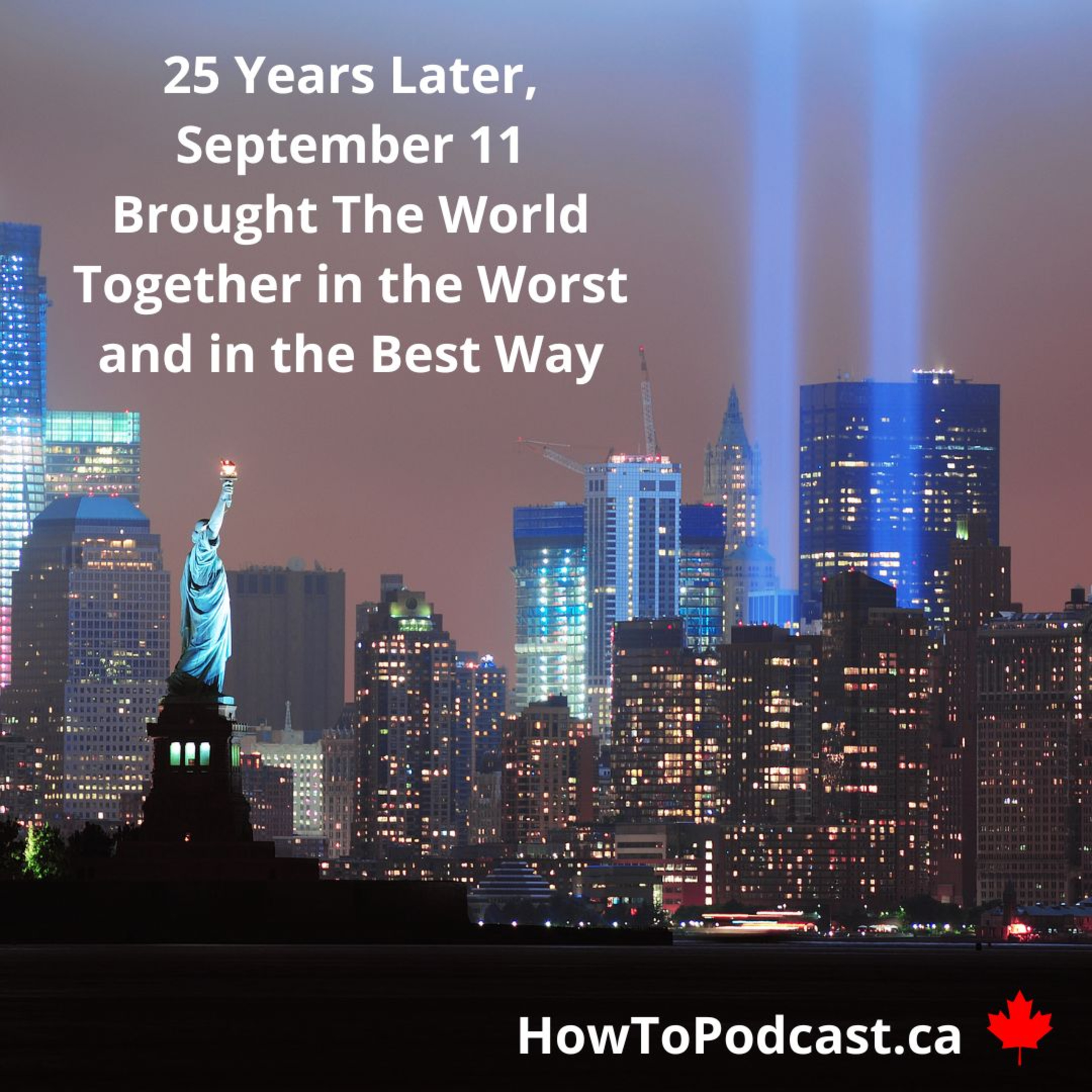 BONUS - 25 Years Later, September 11 Brought The World Together in the Worst and in the Best Way 11.09.2026 22分BONUS - 25 Years Later, September 11 Brought The World Together in the Worst and in the Best WayRemembering September 11Twenty-five years after September 11, Dave reflects on the morning that changed the world and the feeling of helplessness that followed. He remembers driving to work when reports began coming through about New York, the World Trade Center, and the unfolding attacks. Work suddenly felt meaningless as the scale of what had happened became clear.The day brought unimaginable loss. It also revealed extraordinary courage.Humanity Without BordersDave remembers how Gander, Newfoundland, welcomed passengers whose planes had been forced to land in Canada. Local people opened their homes, shared what they had, and cared for strangers regardless of where they came from.That same human connection appeared at Ground Zero, where people rushed toward danger to help others. Firefighters, police officers, first responders, workers, passengers, and ordinary people made choices that put someone else's life ahead of their own.Twenty-five years later, families still carry the loss. Some continue to receive fragments of remains. Children grew up asking where a parent had gone. A lawn could become a painful reminder of someone who never came home.The Responsibility of PodcastersDave uses the memories of Howard Stern's live broadcast from September 11 as an example of how a familiar voice can help people process a traumatic moment. Stern did not plan to become a voice for people experiencing the attacks. He stayed on the air because he felt that was where he could help.Podcasting gives creators a similar platform. People listen because they trust the person behind the microphone. Words carry influence, especially when listeners face uncertainty or difficult moments.Dave asks listeners to pause on September 11 and remember. Those who lived through the day can reflect on where they were. Those born afterward can take time to understand what happened and why people still carry its impact.September 11 remains a day of profound loss, courage, sacrifice, and human connection. Dave encourages podcasters and listeners to acknowledge the day, remember those who died, recognize those who continue to serve, and find a way to care for someone around them.Morning Timeline of Events (September 11, 2001)8:14 AM: American Airlines Flight 11 is hijacked.8:46 AM: American Airlines Flight 11 strikes the North Tower of the World Trade Center in New York City.8:51 AM: United Airlines Flight 175 is hijacked.9:03 AM: United Airlines Flight 175 strikes the South Tower of the World Trade Center.9:28 AM: United Airlines Flight 93 is hijacked.9:37 AM: American Airlines Flight 77 strikes the Pentagon outside Washington, D.C.9:45 AM: The Federal Aviation Administration (FAA) orders a nationwide ground stop, grounding all civilian flights in U.S. airspace.9:59 AM: The heavily damaged South Tower of the World Trade Center collapses.10:03 AM: United Airlines Flight 93 crashes in a field near Shanksville, Pennsylvania, after passengers and crew revolt against the hijackers.10:28 AM: The North Tower of the World Trade Center collapses____Helping Podcasters Everyday! https://howtopodcast.ca/We would love to hear from you - here is our listener survey!https://forms.gle/GbrFv9DGszV8N4PW6
 -
E806 - Promote Your Podcast on Purpose and Without Burning Out - How to Launch a Podcast with No Following Mini Series 11.09.2026 22分Episode 806 - Promote Your Podcast on Purpose and Without Burning Out - How to Launch a Podcast with No Following Mini SeriesPromote Your Podcast Without Burning OutLaunching a podcast with no existing audience demands intentional promotion, yet many creators stall after publishing because they fear making noise or lack a clear plan. This episode tackles podcast promotion, podcast launch strategy, and audience growth without burnout. You will learn a soft launch approach that protects your reputation, practical ways to share your show with purpose, and how to pick one platform where your listeners already spend time.Why a Soft Launch Beats a Big SplashA soft launch opens your show to a small inner circle before you tell the world. You get to test audio quality, artwork, titles, descriptions, and distribution across apps. You catch spelling errors, fix broken links, and confirm your feed shows up on Pod.link and major directories. This prevents the embarrassment of announcing a show that is not ready. It also gives early listeners a chance to leave reviews and offer feedback while you still control the narrative.Big launch events create excitement, but they do not guarantee success. A flashy launch without consistent follow-through often leads to pod fade, where creators stop after a few episodes and never tell anyone. A soft launch reduces pressure and sets you up for steady growth.Do What You Can, With What You Have, Where You ArePromotion is not optional when you start from zero. You must tell people your show exists. That does not mean posting constantly on every platform or following rigid guru rules. One successful show grows with only a website, YouTube audio uploads, and intentional thumbnails. No Instagram, no newsletter, no paid ads. The key is consistency and clarity, not volume.Practical Ways to Share Your ShowShort clips work well on TikTok and YouTube. You can record a quick phone video summarizing an episode, or layer audio over B-roll footage in Canva. Quote graphics extend reach on visual platforms. Repurpose strong episodes into articles for Substack and LinkedIn to reach new audiences with the same core message.The most powerful tactic is appearing as a guest on other podcasts. Podcast listeners discover shows through other shows. You meet your ideal audience where they already listen. You build relationships, earn trust, and create bridges that drive organic discovery.Share With Value, Not NoiseFrame every post around listener benefit. Explain why this episode matters to them. Highlight a specific takeaway, not your ego. People respond to value, not hype. Avoid the bullhorn approach of constant self-promotion.Pick One Platform and Own ItChoose the single platform your audience uses most. Business podcasts thrive on LinkedIn or Substack. Entertainment shows benefit from YouTube. Visual content fits Pinterest. Ask listeners how they found you, then double down on that channel. Do not waste time or money promoting where your audience does not exist.Start with a soft launch to ensure quality, then promote with purpose on one platform where your listeners already spend time. Share value, not noise, and appear as a guest on other shows to grow without burning out.____Helping Podcasters Everyday! https://howtopodcast.ca/We would love to hear from you - here is our listener survey!https://forms.gle/GbrFv9DGszV8N4PW6
-
E805 - Submit Your Podcast to Every Directory, and Verify - How to Launch a Podcast with No Following Mini Series 10.09.2026 20分Episode 805 - Submit Your Podcast to Every Directory, and Verify - How to Launch a Podcast with No Following Mini SeriesSubmit Your Podcast to Every DirectoryLaunching a podcast with no following starts with one critical step. Your show must live on a proper podcast hosting platform that distributes via RSS feed to every major directory. Without this foundation, even great content stays invisible. This episode walks through why directory submission matters and how to verify your podcast appears everywhere listeners might search.Why RSS Feed Distribution MattersPodcast hosting platforms like Buzzsprout, Captivate, Spotify for Creators, and Libsyn handle the heavy lifting. You upload once. They push your episode to Apple Podcasts, Spotify, iHeartRadio, Audible, Amazon Music, and dozens more. These directories then report listening data back to your host so you can track growth. YouTube does not function this way. It keeps content inside its own ecosystem. If you publish only to YouTube, Android users on Spotify cannot find you. Apple users cannot subscribe. You limit your reach before you even begin.Verify Your Podcast on Pod.linkPod.link acts as a free verification tool. Search your exact show title. If nothing appears, your RSS feed likely does not exist or has not propagated. If multiple listings appear, your show may have migrated between hosts without proper redirection. This splits your stats and confuses listeners. Fix duplicates through your hosting provider. One clean listing ensures all downloads count toward one growing audience.Claim Every Available DirectoryThink of directories like Halloween houses. Visit all fifty. Do not skip forty-eight because two feel easier. Regional apps like JioSaavn and Gaana serve massive English-speaking audiences in India. Arteropods reaches listeners in Japan. These platforms welcome global content. Compare your directory list against established shows. Missing fifteen apps means missing fifteen potential discovery channels. Submit manually where auto-distribution fails.Share Episode-Specific LinksWhen promoting guest episodes, share the pod.link episode page, not just your show page. This gives listeners direct access to that specific conversation and lets them choose their preferred app. Android users get Android links. Apple users get Apple links. You remove friction and increase completion rates.Your podcast cannot grow if it lives in only one place. Distribute widely through a legitimate host. Verify visibility on pod.link. Submit to every directory that accepts your content. One upload, many destinations. That is how zero becomes something.Tools to help you with your podcast delivery - It’s more than just Apple Podcasts. Similar to how your website needs to be browser compatible, your podcast feed needs to be compatible with services (platforms) that read podcast RSS feeds. If your feed can’t be read, it will most likely be skipped and not be included in other podcast apps and sites.https://www.castfeedvalidator.com/https://podnews.net/https://pod.link/_____Helping Podcasters Everyday! https://howtopodcast.ca/We would love to hear from you - here is our listener survey!https://forms.gle/GbrFv9DGszV8N4PW6
-
E804 - Make Your Show Discoverable (Podcast SEO) - How to Launch a Podcast with No Following Mini Series 09.09.2026 16分Episode 804 - Make Your Show Discoverable (Podcast SEO) - How to Launch a Podcast with No Following Mini SeriesMake Your Podcast Discoverable With Podcast SEOPodcast SEO starts with a clear content strategy. When you launch a podcast with zero followers, you need to give potential listeners a reason to find and choose your show. Dave recommends selecting one main keyword or central idea for each episode, then building supporting terms around that focus. Use those terms naturally in the episode title and show notes to reinforce what the episode covers.Build Useful Show NotesShow notes should help listeners quickly understand the episode and find resources mentioned during the conversation. Keep them focused. Include relevant links, calls to action, guest information, and connections to related episodes.Transcripts provide another useful resource. They support accessibility and can also give podcasters source material for creating additional content.Own Your Podcast WebsiteA podcast needs a home that you control. Dave compares a personal website domain to owning internet real estate. Hosting platforms and third-party profile pages can change, while your domain can remain your consistent destination.A dedicated page for each episode can provide room for an embedded player, transcripts, and expanded information. Dave chooses a simpler approach for his own podcast because maintaining hundreds of individual episode pages would require more time than he wants to spend.Your domain can also point wherever you choose. The key lies in owning the address and directing your audience through it.Build Your Discovery StrategyPodcast SEO starts before listeners discover the show. Plan your content around clear subjects, make your show notes useful, and establish a website domain that gives your podcast a permanent online home.Give your podcast a clear path to discovery from the beginning. A focused keyword strategy, useful show notes, accessible transcripts, and a website domain you control can strengthen your podcast SEO foundation._____Helping Podcasters Everyday! https://howtopodcast.ca/We would love to hear from you - here is our listener survey!https://forms.gle/GbrFv9DGszV8N4PW6
-
E803 - Select Your Podcast Concept Before You Record - How to Launch a Podcast with No Following Mini Series 08.09.2026 13分Episode 803 - Select Your Podcast Concept Before You Record - How to Launch a Podcast with No Following Mini SeriesSelect Your Podcast Concept Before You RecordA strong podcast starts with a clear concept. Before you turn on the microphone, define who the show serves, what it covers, and why someone would choose it. A specific niche gives potential listeners a clear reason to pay attention and helps them recognize that your podcast belongs in their world.Validate the DemandA podcast can cover almost anything, but an idea needs an audience if you want to grow. Look at other podcasts covering your topic. Competition can show that people already care about the subject. Your perspective, experience, and personality create the distinction that makes your show yours.Ask whether people search for the subject and whether they want more content around it. Research the audience before you invest time recording episodes.Build a Strong LaunchYou only need one episode to technically launch a podcast. Releasing several episodes gives new listeners more opportunities to connect with the show and gives you breathing room to create what comes next. Record ahead when you can, then release episodes according to a schedule that works for you.Your concept also needs a format. Decide whether you will host solo, work with a co-host, interview guests, or use another structure. Understand your audience alongside those decisions.Create for Yourself and Your AudienceYour interests should have a place in your podcast. Your audience also deserves consideration. Balance the subjects that excite you with topics people actively search for around your niche. That approach can keep you engaged while giving listeners useful reasons to return.Nail your podcast concept before you hit record. Choose a specific niche, validate that people want the content, define your format, and prepare several episodes for launch. Your unique perspective gives the show its identity.____Helping Podcasters Everyday! https://howtopodcast.ca/We would love to hear from you - here is our listener survey!https://forms.gle/GbrFv9DGszV8N4PW6
-
E802 - Bleep Happens - Should You Swear on Your Podcast, What Could Happen if You Let It Rip on Your Next Episode 07.09.2026 36分Episode 802 - Bleep Happens - Should You Swear on Your Podcast, What Could Happen if You Let It Rip on Your Next EpisodeYou make a choice every time you hit publish. That choice shapes who listens, where they listen, and whether your show reaches the audience you want to serve. Language sits at the heart of that decision.Your Audience Sets the ToneThink about the people who press play on your episodes. They might listen while driving kids to school. They might listen at work with colleagues nearby. They might listen in countries with strict cultural norms around language. Your words create an experience for them.Some listeners expect a clean, professional, educational show. Others want something edgy, humorous, and unfiltered. Both audiences exist. Both deserve podcasts made for them.A listener once shared she played this show while driving her kids to school every day. She loved that she could listen without worrying about awkward moments. One episode carried a content warning at the start about mature themes. She paused immediately and switched to something else. She appreciated the warning. Without it, she might have stopped listening altogether.Platform Rules MatterApple Podcasts requires you to mark episodes or entire shows as explicit when they contain profanity or material unsuitable for children. Listeners can use content restrictions that block explicit episodes from playing. YouTube evaluates language across the full package, including video, title, thumbnail, description, and opening. Profanity at the beginning or throughout most of the content may make a video unsuitable for advertising. Occasional profanity does not necessarily prevent monetization.Advertisers use brand safety tools to avoid content that does not fit their values. Spotify provides advertisers with filters to avoid topics and language they do not want associated with their brand.Your podcast might disappear from certain countries entirely if it violates local language laws. Some nations forbid certain words completely. One infraction can remove your entire catalog from their libraries. This podcast reaches listeners in countries with very strict language standards. That reach depends on maintaining clean content across every episode.Make Your Choice With IntegrityIntegrity means being the same all the way through. A solid wood table stays solid from top to bottom. A table made of sawdust and glue with a fake veneer looks good on the surface but collapses under pressure. Your podcast needs that solid wood quality.Some hosts talk about their faith or values while using language that contradicts those beliefs. Listeners notice that disconnect. They sense the lack of integrity. Say what you believe. Live it in your content. Match your outside to your inside.Handle Guests and Difficult Topics CarefullyGuests may not share your language standards. Tell them during pre-interviews how your show handles profanity. Clarify whether you edit, bleep, or leave words in. Do not let a guest ask on air whether they can swear. That signals you did not prepare them.Practical Strategies for Your ShowYou have options. Keep episodes completely clean by editing or recording carefully from the start. Leave language in deliberately when it serves the conversation and fits your show identity. Bleep or mute selected words to preserve energy while increasing accessibility. Create separate clean and explicit versions if your audience demands both, understanding this doubles your workload and may create duplicate feed issues.____Helping Podcasters Everyday! https://howtopodcast.ca/We would love to hear from you - here is our listener survey!https://forms.gle/GbrFv9DGszV8N4PW6
-
E801 - PodMatch's Report on The Health of Podcasting for September -Time to Fall in Love With Podcasting Again 06.09.2026 30分Episode 801 - PodMatch's Report on The Health of Podcasting for September -Time to Fall in Love With Podcasting AgainFall in Love With Podcasting AgainPodcasting remains full of opportunity, even as the industry changes. PodMatch's September 2026 report focuses on independent, interview-based podcasters and removes the celebrity and network shows that can distort the numbers for smaller creators. The report offers a useful reality check for anyone wondering where their show fits within the larger podcasting landscape.The Numbers Tell a Different StoryThe report identifies more than 37,000 actively podcasting creators within its specific dataset. Podcast listenership shows strong growth while the number of active podcasts remains relatively stable. That creates room for new and existing podcasters.Consistency matters. The report shows that most podcasters quit before reaching 100 episodes. Reaching 50 episodes already places a show among a much smaller group, while the percentage drops sharply as creators reach 100, 200, and 300 episodes.Those numbers can encourage creators who feel insignificant because their audience seems small. Twenty-seven downloads within seven days puts a podcast in the top 50 percent according to the report's Buzzsprout data. Four hundred and seven reaches the top 10 percent. The numbers provide useful perspective when compared with inflated claims about podcast rankings.Think Beyond AdvertisingTraditional podcast advertising can generate surprisingly little income for smaller shows. The report puts average monthly advertising income at around $5.51 for podcasters at the relevant level. That raises a practical question about whether advertising makes sense when the revenue remains tiny and the audience experience suffers.Podcast creators can build value around their expertise, relationships, services, and communities instead.Make Your Podcast Easy to FindPodMatch also examined how podcasters share their shows. A significant portion provided no link or supplied a broken link. A podcast website gives listeners a reliable home base and makes sharing easier across different platforms and devices.The same principle applies when pitching yourself as a guest. One unanswered email rarely tells you anything about the host's opinion of you. Hosts have jobs, families, responsibilities, and unexpected challenges. Follow up with a genuine message that demonstrates you actually know the show. Reference specific episodes. Show real interest. Avoid pitches that sound like AI generated templates.Build the relationship.Podcasting rewards persistence. The data shows how few creators continue long enough to reach significant episode milestones. Keep creating, make your show easy to discover and share, build genuine relationships, and use meaningful industry data to measure your progress.https://podmatch.com/reportJoin PodMatch with our link!https://www.joinpodmatch.com/truemedia_____Helping Podcasters Everyday! https://howtopodcast.ca/We would love to hear from you - here is our listener survey!https://forms.gle/GbrFv9DGszV8N4PW6
-
E800 - Behind 800 Episodes - The Systems, Habits, and Mindset That Kept The How To Podcast Series Going 05.09.2026 57分Episode 800 - Behind 800 Episodes - The Systems, Habits, and Mindset That Kept The How To Podcast Series GoingBehind 800 EpisodesEight hundred episodes takes commitment. Since the first episode of The How To Podcast Series launched on April 1, 2022, Dave has built a podcast library that continues to attract listeners across its back catalog. Episode 800 arrives after more than four years, with 365 consecutive daily episodes also adding to the workload. The milestone offers a chance to look at what keeps a podcast going when the initial excitement wears off.Longevity Creates a LibraryPodcasting rewards creators who keep showing up. Dave points out that many podcasts stop after only a handful of episodes, while reaching 100 episodes already puts a show well ahead of the typical podcast lifespan. His growing catalog continues to bring listeners to older episodes, showing how podcast content can keep working long after its original release.The number 800 matters to Dave because it represents persistence. He encourages podcasters to choose milestones that fit their own goals rather than chase someone else's numbers.Community Keeps Podcasting InterestingThe biggest surprise from 800 episodes has involved the people Dave has met along the way. Guests, co-hosts, meetup participants, listeners, and fellow podcasters have expanded his understanding of podcasting and introduced perspectives he could never have covered alone.He also values disagreement. Different approaches create better conversations and challenge assumptions.What Comes After 800?Dave does not see episode 800 as a finish line. He plans to complete his daily publishing commitment through the end of 2026 while considering what the show should look like in 2027. He expects co-hosted episodes to remain part of the podcast and welcomes suggestions from listeners about its future.The bigger message reaches beyond any particular episode count. Keep creating. Keep connecting. Give yourself a milestone that matters to you, then keep moving once you reach it.Podcast longevity comes from continuing to create, learning from others, and building relationships along the way. Your milestone can become a marker of what you have accomplished and a starting point for whatever comes next.____ Helping Podcasters Everyday! https://howtopodcast.ca/We would love to hear from you - here is our listener survey!https://forms.gle/GbrFv9DGszV8N4PW6
-
E799 - The One Step Most Podcasters Skip, But This Step Might Be The One Step Could Make Your Podcast Better 04.09.2026 28分Episdoe 799 - The One Step Most Podcasters Skip, But This Step Might Be The One Step Could Make Your Podcast BetterListen to Your Own PodcastPublishing an episode does not end the work. Listening to your own podcast after it goes live gives you a chance to experience the show from the listener's seat. That shift in perspective can reveal problems you missed while recording and editing.Podcasters often avoid hearing themselves. Dave challenges that habit by comparing podcasting with music, where musicians constantly listen to their recordings, evaluate their performances, and respond to what audiences hear.Find What You MissedListening from beginning to end can uncover technical mistakes, awkward edits, unwanted silence, repeated music, sound effects that overlap your voice, or interview sections that fall out of sync. You can then replace the audio file on your hosting platform and correct the episode without creating a second version.Your voice can also reveal habits you never notice while speaking. Repeated filler words, interruptions, awkward phrasing, and rushed responses become much easier to recognize when you hear yourself as a listener.That awareness can improve more than your podcast. It can change how you communicate with people away from the microphone.Put Yourself in the Listener's SeatRecording requires a different kind of attention. You think about the next question, the guest, the technology, and keeping the conversation moving. Listening removes those responsibilities.Now you can judge the experience your audience receives.Listen for opportunities to tighten the content. Check the audio quality. Pay attention to the flow. Make sure the episode sounds the way you intended when it reaches another podcast app or device.Listen Before You PublishDave also recommends scheduling episodes ahead of their release date. A future-dated episode creates a valuable window for quality control.Listen before the episode reaches the public. If you catch a mistake, replace the audio while you still have time. Once someone downloads the original file, you cannot remove that version from their device.Publishing should never become the final interaction you have with an episode. Listen to your podcast from start to finish, preferably before it goes live. That simple habit can help you catch mistakes, improve your communication, understand the listener experience, and make each episode stronger.____Helping Podcasters Everyday! https://howtopodcast.ca/We would love to hear from you - here is our listener survey!https://forms.gle/GbrFv9DGszV8N4PW6
-
E798 - Spotify Subscriptions - Make Money From Your Content As A Spotify Creator 03.09.2026 26分Episode 798 - Spotify Subscriptions - Make Money From Your Content As A Spotify CreatorSpotify Subscriptions and Podcast MonetizationSpotify subscriptions give podcast creators another way to earn money from their content. Dave explores Spotify subscriptions, paid podcast content, and the challenge of deciding what listeners should receive when they support a show financially.Dave has experimented with subscriber content before. One listener paid $3 per month for extra episodes, which created an unexpected problem. Dave felt responsible for producing additional content for one person, even when that content took more time than the subscription justified. That experience changed how he thinks about paid content.Turn Old Episodes Into ValueDave currently has hundreds of published episodes, including older material that rarely receives new listens. He considers placing those older episodes behind a paywall while keeping recent episodes freely available.That approach could give existing content a second life without forcing him to produce another episode every day. It could also create a revenue stream from work he has already completed.Early access offers another possibility. Creators who record episodes ahead of schedule could give subscribers access before the general audience receives them.What Should Subscribers Receive?Dave questions the value of bonus material that requires significant extra production. He sees more potential in simple, personal content that creates a closer connection with supporters.A short walk-and-talk recording could work. No elaborate production. No complicated editing. Just a few minutes of direct conversation about whatever happens to be on Dave's mind.The subscriber gets access to something personal and different. The creator keeps the workload manageable.Spotify's RequirementsSpotify requires creators to publish at least two episodes and have at least 100 Spotify users interact with the show during the previous 30 days before they can set up subscriptions. Dave has more than enough published episodes and hundreds of Spotify followers, yet he needs more recent activity to qualify.Spotify also provides options such as subscriber-only episodes, extended episodes, early access, and fewer ads.Dave points out one significant tradeoff. Paid content sits behind a paywall, which limits its public visibility and its ability to attract search traffic.A subscription only works when the audience sees enough value to pay for it. Before creating a paid podcast tier, decide what you can deliver consistently and what your listeners will genuinely value. Old content, early access, or simple personal recordings could create that value without turning your podcast into a second full-time job.The episode also includes Dave's approach to choosing podcast guesting opportunities and evaluating shows before accepting an invitation.Spotify Subscription Information in more detail:https://support.spotify.com/ca-en/creators/article/setting-up-subscriptions/My PodMatch Affiliate Link:https://www.joinpodmatch.com/truemedia____Helping Podcasters Everyday! https://howtopodcast.ca/We would love to hear from you - here is our listener survey!https://forms.gle/GbrFv9DGszV8N4PW6
-
E797 - Spotify's New Skip Feature - Not Such A Big Deal For Podcasters Without Ads and Boring, Predictable and Skippable Content 02.09.2026 28分Episode 797 - Spotify's New Skip Feature - Not Such A Big Deal For Podcasters Without Ads and Boring, Predictable and Skippable ContentSpotify's Skip Feature Changes the Listening ExperienceSpotify has introduced a skip option that can help listeners move past ads, promotional segments, intros, and other parts of podcasts that listeners frequently skip. Dave sees the feature from a listener's perspective and argues that podcasters should pay attention to what listener behaviour can reveal about their content.The feature may have limited impact on podcasts without advertising. Dave sees a bigger question for every podcaster, though. Why does a listener want to skip part of your show?Predictability Makes Podcasts SkippableListeners learn patterns quickly. If every episode follows exactly the same structure, they can predict when the intro ends, when an ad appears, and when the actual content starts.Spotify can also recognize those patterns through listener behaviour. When many listeners skip the same section, the platform can use that behaviour to offer other listeners a shortcut.Dave suggests a simple response. Change things.Move your ad placement. Vary your introductions. Try different approaches to your episode structure. Give listeners something unexpected. When you keep every episode identical, you make your content easier to predict and easier to skip.Make Your Podcast Worth Staying ForDave sees the listener gaining more control through the skip feature. He also challenges podcasters who dislike the feature to examine their own content before blaming the technology.If your show contains long predictable sections, listeners have a reason to move past them. Give them something that keeps their attention instead.Creative podcasting requires movement. Experiment with your format. Break your routines. Keep your audience curious about what comes next.If you hate the skip button, stop giving listeners predictable reasons to use it. Create episodes that surprise your audience and make the content worth staying for. Dave's advice comes down to a simple challenge: be unskippable.The episode also includes advice for podcast guests. Keep answers concise, answer the question the host actually asked, complete your thought, and give the host room to continue the conversation.____Helping Podcasters Everyday! https://howtopodcast.ca/We would love to hear from you - here is our listener survey!https://forms.gle/GbrFv9DGszV8N4PW6
-
E796 - How To Fall in Love With Podcasting This Fall Season - Podcasting is For Everyone 01.09.2026 31分Episode 796 - How To Fall in Love With Podcasting This Fall Season - Podcasting is For EveryoneFall in Love With Podcasting AgainPodcasting can become a chore when the work starts feeling heavier than the joy that brought you to the microphone. This fall, Dave encourages podcasters to reconnect with their why, simplify their workflow, and create some room for fun again.Start with your purpose. Ask yourself, "I podcast because..." Then identify the listener you serve and the change you want to create. Write those answers down and keep them somewhere you can see while you record. Your why should stay visible when motivation fades.Make Podcasting Feel LighterA complicated workflow can drain your enthusiasm. Dave recommends batching episodes whenever possible so one recording session can create breathing room in your schedule. Templates can also reduce the effort required to start each episode.Give yourself permission to change things. Shorten your episodes. Try a different format. Record somewhere new. Create a cozy pre-recording ritual that helps you enjoy the process again.Small changes can make podcasting feel fresh.Bring New Energy Into Your ShowStep outside your podcasting bubble. Listen to shows completely unrelated to your subject and study how those podcasters structure their episodes, use their voices, and connect with listeners. Look at podcast artwork from outside your niche too. You can discover ideas that your usual listening habits would never expose you to.Community matters as well. Dave encourages podcasters to connect with people who understand the work and genuinely care about their journey.Treat Podcasting as a Season of ChangeA 14-day fall reset can provide a simple way to rebuild momentum. Take one small podcasting action each day and share the journey with your audience. Your progress can become content that invites listeners into the process.Dave also encourages every podcast host to become a podcast guest. Sitting in the guest seat forces you to react, experience another host's approach, and understand the listener experience from a different perspective.Reconnect with why you started. Make the work lighter. Try something different and spend time with other podcasters. Podcasting can bring frustration, but it can also bring connection, creativity, and genuine joy. Give yourself permission to fall in love with it again._____Helping Podcasters Everyday! https://howtopodcast.ca/We would love to hear from you - here is our listener survey!https://forms.gle/GbrFv9DGszV8N4PW6
-
E795 - The Podcaster That I Couldn't Help - What Blocked Our Path and Lessons Learned 31.08.2026 36分Episode 795 - The Podcaster That I Couldn't Help - What Blocked Our Path and Lessons LearnedWhen Podcasting StallsSome podcasting dreams never get off the ground because the creator cannot get past the barriers standing between an idea and a published episode. Dave reflects on four podcasters he tried to help and the obstacles that stopped each of them from moving forward.The first struggled with production overwhelm. They saw podcasting as recording and publishing, then discovered the many small steps that connect those two points. Without a realistic workflow, the process became too much. Dave offered support and guidance, but the podcaster eventually stopped responding and abandoned the project.Perfection Can Stop a PodcastAnother podcaster had a detailed plan and strong organizational skills, yet perfectionism kept them from publishing. They wanted every element to feel flawless and feared judgment from others.Dave uses the example of Saturday Night Live to illustrate the value of working toward a deadline. The show goes on because Saturday night arrives. Podcasters can adopt a similar approach by setting a firm publishing deadline and accepting that future episodes will provide opportunities to improve.Know Who You ServeA third podcaster had plenty of ideas but lacked a clear audience and purpose. Each new idea pulled the show in another direction.Dave argues that podcasters need to know who they want to reach and why their show matters to that person. A clear audience creates a destination. Without one, content decisions become difficult and the podcast can lose its direction.Build AccountabilityThe fourth example involves a lack of sustainable accountability. Motivation fades when creators work alone and see slow results. A repeatable production system and connections with other podcasters can help keep a show moving.Dave encourages podcasters to define their own minimum viable podcast. For him, one listener counts. One person who hears an episode and takes action can make the effort worthwhile.Podcasting requires commitment to the process. Define a realistic workflow, publish before perfection takes over, understand who you serve, and create accountability around your work. Then decide what minimum result makes your podcast worthwhile. Build from there.____Helping Podcasters Everyday! https://howtopodcast.ca/We would love to hear from you - here is our listener survey!https://forms.gle/GbrFv9DGszV8N4PW6
-
E794 - The Small Talk Skills Every Podcaster Should Develop - Better Podcast Conversations Start With Small Talk 30.08.2026 19分Episode 794 - The Small Talk Skills Every Podcaster Should Develop - Better Podcast Conversations Start With Small TalkBuild Better Podcast Interviews Through Small TalkSmall talk can create a stronger connection between podcasters and their guests. Dave explains how finding common ground can turn an awkward first interaction into a conversation that feels natural and comfortable.Research helps. Before recording, learn about your guest and look for genuine connections. Shared interests can give you an easy opening and help your guest feel that you actually care about the person behind the interview.Keep the Conversation MovingA conversation can stall quickly when someone asks a question that produces a simple no. Dave suggests looking for a related topic that keeps the door open.If someone asks whether you play golf and you do not, you can connect the question to another outdoor activity you enjoy. That small shift keeps the conversation alive and gives both people another opportunity to find common ground.The same approach works during virtual events, networking, and everyday conversations. Think beyond the immediate question.Do Your HomeworkDave uses pre-interviews to break the ice and develop potential talking points. He then spends time learning more about his guests through their websites, videos, and social media.Those details can create unexpected connections. When a guest discovers that you know something about their interests, the conversation can change immediately. Preparation helps guests feel welcomed and gives the interview a more genuine feel.Keep the conversational door open. Find common ground, ask better questions, and look for ways to continue a conversation when a topic does not immediately connect with you. Good small talk can create the trust that leads to a much deeper podcast interview._____Helping Podcasters Everyday! https://howtopodcast.ca/We would love to hear from you - here is our listener survey!https://forms.gle/GbrFv9DGszV8N4PW6
類似ポッドキャスト


人気の国
このポッドキャストはこれらの国のポッドキャストチャートにも登場します。
