
Notes from the Edge
Lisa Lacy
0
Notes From the Edge is a globally ranked podcast hosted by writer, trauma educator, and author Lisa Lacy. It features raw, unscripted conversations exploring survival, identity, trauma, addiction, recovery, leadership, relationships, and reinvention. The show focuses on the hidden stories and performed roles that people use to survive, aiming to uncover the truths that set them free.
エピソード
-
 Edge Note: Why does chaos feel like home? 20.09.2026 13分Why can peace feel more uncomfortable than the crisis you spent years trying to escape?Lisa Lacy, trauma educator and host of Notes From the Edge, explores one of trauma’s strangest contradictions: the nervous system can mistake what is familiar for what is safe.In this solo episode, Lisa gets personal about becoming extraordinarily good at functioning inside chaos, from building a high-pressure career around competence and crisis management to constantly monitoring the emotional weather around her. She explores what happens when the emergency finally ends, but your body is still waiting for the next one, and why ordinary moments of safety can become part of retraining the nervous system.In this episode:Trauma, hypervigilance and the nervous systemWhy peace can feel boring, suspicious or unsafeWhen competence and productivity become survival strategiesOverfunctioning, caretaking and monitoring other people’s emotionsThe difference between connection and intensityWhy stable relationships can initially feel unfamiliarLearning to tolerate other people’s disappointmentResting without feeling like you have to earn itTeaching the nervous system that calm is safeHow ordinary can eventually begin to feel like freedomConnect with Lisa:www.lisalacy.comWhat did you perform in order to survive? Welcome to the Edge. See Privacy Policy at https://art19.com/privacy and California Privacy Notice at https://art19.com/privacy#do-not-sell-my-info.
 -
 Edge Note: What Did We Forget After Kindergarten? 19.09.2026 33分What did we know at five years old that we somehow forgot along the way?Tiffany Dennison is a kindergarten and first-grade educator with 22 years of experience whose work centers on play, belonging and social-emotional development. Her classroom offers a fascinating reminder that children may understand some of the fundamentals of being human long before adults complicate them.In this conversation, Tiffany and I talk about what happens when children are given enough time to actually play, why belonging and emotional safety have to come before learning, and what five-year-olds can teach adults about repairing conflict without dragging yesterday’s resentment into today. We also get into screen time, storytelling, nervous-system regulation and Tiffany’s own journey of recognizing and releasing people-pleasing.In this episode:Play-based learning and why unstructured play mattersSocial-emotional learning and childhood developmentBelonging, emotional safety and nervous-system regulationHow children repair conflict differently than adultsThe effects of screens on connection, creativity and attentionStorytelling as a tool for learning and human connectionWhat adults model for children without realizing itPeople-pleasing, identity and learning to listen to your bodyWhy slowing down may be one of the most important things children can teach usConnect with Lisa Lacyhttps://www.lisalacy.comWhat did you perform in order to survive?Welcome to the Edge. See Privacy Policy at https://art19.com/privacy and California Privacy Notice at https://art19.com/privacy#do-not-sell-my-info.
 -
 What Happens When Success Stops Working? Male Isolation, Emotional Healing & Personal Accountability with Daniel Sterling 18.09.2026 37分Writer and memoirist Daniel Sterling spent much of his life chasing achievement, recognition, and the next version of success until he discovered that some of the hardest work a man can do happens in the few inches between his head and his heart.Daniel and Lisa talk about the childhood hunger to be seen that fueled his drive, from becoming a top U.S. alpine ski racer to television, filmmaking, and screenwriting, and what happened when that identity finally stopped sustaining him. They dig into male emotional isolation, the mentor who helped Daniel rebuild his life through self-study and accountability, and why raising emotionally whole boys requires adults willing to examine their own patterns first.In this episode:Male isolation and why emotional connection can be so difficult for menAchievement, validation, and using success as a substitute for feeling seenMidlife emotional collapse and rebuilding identity beyond performancePersonal accountability, self-awareness, and dropping defensivenessCommunication and healthier relationshipsRaising boys into emotionally whole menWhy a meaningful apology requires changed behaviorLetting go of ego and discovering who you are beyond accomplishmentsConnect with Daniel Sterling:https://daniel-sterling.comConnect with Lisa Lacy:https://www.lisalacy.comWhat did you perform in order to survive? Welcome to the Edge. See Privacy Policy at https://art19.com/privacy and California Privacy Notice at https://art19.com/privacy#do-not-sell-my-info.
 -
 What If Your Identity Was Built on a Secret? Late-Discovery Adoption, Family Secrets & Reclaiming Identity with Al Isaacs 18.09.2026 1時間What happens when everyone in your family knows the truth about your life except you?Al Isaacs, author of Finding Mary Smith and longtime comedian and improv teacher, joins Lisa Lacy to talk about discovering at 52 that he had been adopted and what happens to identity when the foundation of your own story suddenly shifts.Al takes us inside the ordinary phone call from his mother’s oncologist that accidentally exposed a secret his family had kept for more than five decades, and the search that followed through DNA, genealogy, Search Angels and the trail of a folk singer named Mary Smith. The conversation also moves into imposter syndrome, forgiveness, the power of improv’s “yes, and,” and the painful cost of family secrets, including the conversations we may lose when truth is withheld.In this episode:Late-discovery adoption and identityFamily secrets, truth and belongingGray-market adoption in the late 1960sDNA testing, genealogy and Search AngelsSearching for a biological mother decades laterImposter syndrome and reclaiming identityForgiveness without erasing what happenedHow “yes, and” helped Al keep moving when he wanted to give upThe memories and relationships family secrecy can cost usConnect with Al: AlIsaacs.comFinding Mary Smith is available in paperback, eBook and audiobook.Connect with Lisa: LisaLacy.comWhat did you perform in order to survive?Welcome to the Edge. See Privacy Policy at https://art19.com/privacy and California Privacy Notice at https://art19.com/privacy#do-not-sell-my-info.
 -
 Are you performing your worth? Trauma, Treatment-Resistant Depression & ECT with Simone Bowyer 17.09.2026 45分What if the traits you think are your personality are actually things you learned to do to survive?Simone Bowyer is a writer and founder of The Light Within Collective, whose work explores what she calls the “language of survival,” the patterns we develop to feel safe, loved, worthy, and less likely to be abandoned.In this conversation, Simone and I talk about perfectionism, hyper-independence, control, and overachievement as survival adaptations rather than simply personality traits. She shares her experience with severe treatment-resistant depression, years of psychiatric treatment, and ultimately electroconvulsive therapy, or ECT, which she describes not as a cure, but as something that finally created enough space for her to consider life beyond the darkness.We also take the conversation into the workplace, exploring why we cannot simply leave our wounds at home, what human-centered leadership can look like, and why psychological safety matters when the person who appears to be your highest performer may actually have a nervous system that never learned it was safe to stop.In this episode:• How childhood trauma can become perfectionism, people-pleasing, control, and hyper-independence• Treatment-resistant depression and Simone’s experience with ECT• Why recovery does not erase survival patterns overnight• Performing worth in order to feel lovable and avoid abandonment• Trauma, the nervous system, and high achievement• Psychological safety and human-centered leadership in the workplace• Why healing is not linear and does not have a timeline• Simone’s book, Chasing Light, and finding color again after years of depression• Moving from asking “What is wrong with me?” to asking “What did I learn to do to survive?”Connect with Simone Bowyer:The Light Within Collectivehttps://lightwithincollective.co.zaConnect with Lisa Lacy:https://lisalacy.comWhat did you perform in order to survive?Welcome to the Edge. See Privacy Policy at https://art19.com/privacy and California Privacy Notice at https://art19.com/privacy#do-not-sell-my-info.
 -
 Would You Look Away? A Family’s Attempt to Escape Nazi Germany & the Cost of Being a Bystander with Ruth Stitt 16.09.2026 55分Would you look away?Ruth E. Stitt is an author and licensed counselor whose family’s preserved letters from Nazi Germany reveal how persecution can unfold gradually, how difficult escape can become, and what happens when ordinary people decide whether to remain bystanders or stand up.In 1938, Ruth’s grandmother in Bridgeport, Connecticut received a letter from relatives in Berlin desperately searching for a way out of Nazi Germany. What followed was five years of correspondence filled with hope, fear, bureaucracy, attempted immigration, love and devastating loss.In this conversation, Ruth and Lisa go beyond the question, “Why didn’t they just leave?” They explore the financial, legal, political and emotional barriers Jewish families faced while trying to escape, the psychology of denial as danger slowly becomes normalized, and what fear and grief do to human beings under extraordinary pressure. They also talk about the choice that can remain when nearly everything else has been taken away: how we respond, who we love and whether we are willing to speak when someone else is being dehumanized.In this episode:• Holocaust history and life inside Nazi Germany• Jewish refugee immigration and the barriers to escape• Family letters documenting persecution as it unfolded• Denial, fear, grief and psychological survival• Why “Why didn’t they just leave?” misses the complexity of displacement• Choosing love when control has been stripped away• Turning documented family history into historical fiction• The difference between a bystander and an upstander• Moral courage, dehumanization and the responsibility to speak• Letting go of perfection, overachievement and the need to always have the answerContent note: This conversation includes discussion of the Holocaust, persecution, forced displacement, psychological trauma and profound loss.Connect with Ruth E. Stitt:https://scripturecomesto.lifeFind Ruth’s books on Amazon by searching Ruth E. Stitt.Connect with Lisa Lacy:https://lisalacy.comWhat did you perform in order to survive?Welcome to the Edge. See Privacy Policy at https://art19.com/privacy and California Privacy Notice at https://art19.com/privacy#do-not-sell-my-info.
 -
 Are old patterns running your life? Self-Awareness & Personality with Arky Jones 15.09.2026 57分What if the patterns you keep repeating are not who you are, but behaviors you learned long ago and never stopped to question?Arky Jones, creator of Personality Peek, joins Notes From the Edge to explore how self-awareness can help us recognize the patterns quietly shaping our choices, relationships, work, and identity without turning personality into another label or box. This conversation gets practical fast. Lisa and Arky talk about what happens when we realize we have been living according to other people’s expectations, how toxic workplace dynamics can make us feel powerless, and why taking ownership sometimes starts with something as small as documenting your work, protecting your attention, or changing one percent of a pattern instead of trying to reinvent your entire life overnight.In this episode:Personality as a mirror instead of a labelSelf-awareness and recognizing unconscious patternsPeople-pleasing and living without full authorship of your lifeStoicism and focusing on what you can actually controlToxic workplace dynamics and protecting your workBoundaries, attention, and deciding what you are willing to giveWhy honesty with yourself matters more than the personality resultArky’s “one percent” approach to practical personal growthMoney, debt, freedom, and intentional decision-makingHow small conscious choices can change the direction of your lifePersonality Peek is designed to help people identify strengths, blind spots, and behavioral patterns without treating personality as something fixed or diagnostic. Connect with Arky Jones:https://personalitypeek.comConnect with Lisa Lacy:https://LisaLacy.comWhat did you perform in order to survive?Welcome to the Edge. See Privacy Policy at https://art19.com/privacy and California Privacy Notice at https://art19.com/privacy#do-not-sell-my-info.
 -
 What if the traits that make you successful stop working? Complex Trauma, High Achievement, Attachment & Nervous System Survival with Dr. Christopher Barker 12.09.2026 40分Dr. Christopher Barker is a clinical psychologist and author whose work explores complex trauma, attachment, and one powerful idea: high functioning and psychological health are not always the same thing.In this conversation, we dig into what happens when competence, independence, perfectionism, and overachievement become survival adaptations. We talk about why you can intellectually know a relationship is unhealthy and still feel pulled toward it, why “energizing” can sometimes be mistaken for love, and how the nervous system can keep anticipating danger long after the original threat is gone.In this episode:• Complex trauma and high achievement• Attachment injuries in childhood and adulthood• Perfectionism vs. healthy ambition• Hypervigilance and waiting for the other shoe to drop• Why “activated” may be more useful than “triggered”• Trauma-informed relationships and finding safe support• Why healing may be better understood as repair• Rebuilding choice, trust, and freedom through repeated experiencesMaybe the goal isn’t to get rid of every survival strategy that got you here. Maybe it’s simply to stop letting it run the company.Connect with Dr. Christopher: https://drchristopherbarker.comConnect with Lisa: https://www.lisalacy.comWhat did you perform in order to survive?Welcome to the Edge. See Privacy Policy at https://art19.com/privacy and California Privacy Notice at https://art19.com/privacy#do-not-sell-my-info.
 -
 Why is it so hard to leave when they hurt you? Trauma Bonding, Coercive Control & Abusive Relationships | Solo Episode with Lisa Lacy 10.09.2026 13分Why can leaving someone who hurts you feel almost impossible?Lisa Lacy, trauma educator and relationship advisor, explores trauma bonding and why intelligence alone cannot protect us from relationships that reshape our attachment, reward, and stress systems.At 40, while in inpatient rehab, Lisa was told she was trauma bonded to her husband. Her response was, “I’m too smart for that.” It would take three more years to go fully no contact, and another three to work through the anger and resentment left behind. In this solo episode, she explains the biology of intermittent reinforcement, why separation can feel unbearable, and why shame rarely helps someone leave sooner.In this episode:Trauma bonding and intermittent reinforcementCoercive control in abusive relationshipsDopamine, oxytocin, cortisol and the stress responseWhy people leave and return repeatedlyNo contact and breaking the cycleMoving from survival to self-trustConnect with Lisa:www.Lisa Lacy.comWhat did you perform in order to survive? Welcome to the Edge. See Privacy Policy at https://art19.com/privacy and California Privacy Notice at https://art19.com/privacy#do-not-sell-my-info.
 -
 How do you break free without labels? Faith, Neuroscience & Recovery with Rose Ann Forte 10.09.2026 37分What happens when the life that looks successful from the outside is quietly falling apart underneath?Rose Ann Forte is an international bestselling author and creator of the Choose Freedom® Program, and her work explores how lasting change can happen without building an identity around shame.In this conversation, Lisa and Rose Ann talk about Rose Ann’s years as a successful executive and church leader while privately struggling with alcohol, toxic relationships, and the pressure to keep everyone else happy. They explore why traditional recovery language did not resonate with her, how neuroscience helped her understand deeply rooted behaviors, and how her Christian faith became part of rebuilding her identity.In this episode:• Alcohol use and behavioral habits• Recovery without shame-based labels• Faith and the renewing of the mind• Neuroscience and habit formation• Toxic relationships and people-pleasing• Self-condemnation versus lasting change• Identity after addiction• Learning to choose freedomLearn more about Rose Ann Forte:https://choosefreedom.todayLearn more about Lisa Lacy:https://www.lisalacy.comWhat did you perform in order to survive?Welcome to the Edge. See Privacy Policy at https://art19.com/privacy and California Privacy Notice at https://art19.com/privacy#do-not-sell-my-info.
 -
 What Happens After You Survive Yourself? Suicide Prevention, Lived Experience & Finding Meaning-Solo Episode with Lisa Lacy 09.09.2026 11分What if suicide prevention is about more than keeping someone alive for the next 72 hours?In this special September Suicide Prevention Month solo episode of Notes From the Edge, Lisa Lacy speaks from lived experience about her first suicide attempt at 15, later attempts, psychiatric hospitalization, and the complicated work of finding reasons to remain when life has become unbearable.Lisa remembers arriving at the hospital still wearing her cheerleader jacket, being met with shame instead of understanding, and later experiencing psychiatric interventions that contained a crisis without necessarily addressing the pain underneath it. She also explores what decades of survival have taught her about meaning, spirituality, mortality, human connection, and making life small enough to survive one hour, one breath, or one tomorrow at a time.In this episode:Suicide prevention through the lens of lived experienceSurviving a suicide attempt as a teenagerWhy shame can deepen an already unbearable crisisPsychiatric hospitalization and the limits of crisis containmentTrauma, suicidal thoughts, and emotional painWhy asking directly and listening without judgment mattersFinding meaning when purpose feels impossibleSpirituality, ancestors, and feeling connected when physically aloneSurviving one hour instead of trying to solve an entire lifeWhy a temporary state of consciousness should not make a permanent decisionWhat Lisa wishes the 15-year-old version of herself could have knownThis is not a clinical guide to suicide prevention. It is one survivor’s perspective on what helped her continue, what did not, and why sometimes staying alive begins with making the horizon small enough to reach.If you are in immediate danger or believe you may act on suicidal thoughts, call or text 988 in the United States, contact emergency services, or go to the nearest emergency department.Connect with Lisa Lacy:https://LisaLacy.comWhat did you perform in order to survive?Welcome to the Edge. See Privacy Policy at https://art19.com/privacy and California Privacy Notice at https://art19.com/privacy#do-not-sell-my-info.
 -
 Complex Trauma, Survival Identity & Disability Advocacy with Ashley Townsend 09.09.2026 1時間 2分What if the thing you call your personality is actually something you learned to perform in order to survive?Ashley Townsend is a transformational and integration coach and complex trauma recovery specialist who spent 15 years working inside the mental health system before deciding that traditional labels and approaches were no longer enough.In this conversation, Ashley and I go straight into what made her become a self-described “former LCSW gone rogue.” We talk about what she witnessed working across domestic violence, addiction, foster care and trauma treatment, and how being blind shaped her own experience of trying to belong inside systems that often failed to see the whole person. Ashley also challenges the idea that personality is fixed, arguing that some of what we call personality may actually be protection we practiced until it became familiar.Then the conversation gets even deeper. Ashley shares how she performed being the “nice girl,” performed being sighted as she progressively lost her vision, and eventually performed the role of rescuer, believing she could carry systems and other people on her back. We explore why those protections were once brilliant, why they eventually become heavy, and what happens when we stop building our lives from fear and begin creating from love.In this episode:Complex trauma and the protective patterns underneath behaviorWhy Ashley chose to leave the traditional therapy modelDisability advocacy and the experience of performing being sightedMental health diagnoses, labels and the limitations of treating personality as fixedWhy “just do it” can completely miss the context of traumaThe difference between an explanation and an excuseRecovery as an ongoing process rather than a finish linePsychedelic preparation and integration, and why Ashley does not view psychedelics as a magic fixThe “nice girl,” the rescuer and other identities we perform to belongSelf-trust, play, the inner child and why healing does not always have to hurtWhat becomes possible when we stop fighting everything and start creating from loveConnect with Ashley:http://www.findingyourphoenixcoaching.com/Connect with Lisa:www.lisalacy.comWhat did you perform in order to survive?Welcome to the edge See Privacy Policy at https://art19.com/privacy and California Privacy Notice at https://art19.com/privacy#do-not-sell-my-info.
 -
 What Do We Reach for When Purpose Is Gone? PTSD, Gambling Addiction & Life After War with Sean Carberry 08.09.2026 59分What do we reach for when the thing that gave us purpose, identity, adrenaline, and belonging is suddenly gone?Sean Carberry is an award-winning journalist and former NPR Kabul correspondent whose experience raises a difficult question: what happens when you come home from years of danger, but your mind and body are still wired to look for it?In this episode of Notes From the Edge, Sean and Lisa Lacy talk about what happened after Afghanistan, when Sean returned to civilian life carrying undiagnosed PTSD, without the structure, intensity, or sense of purpose that had defined his years overseas. He describes walking into a Maryland casino about six weeks after coming home, initially gambling a few hundred dollars, and how the risk, rewards, recognition, casino perks, and escalating bets gradually began filling something that was missing outside those walls.The conversation goes far beyond gambling. Sean talks candidly about identity loss, loneliness, relationships, the psychological impact of years spent witnessing human suffering, and eventually recognizing patterns he could not see while he was living inside them. He also discusses how writing became part of processing his experiences and why we need to take much more seriously what happens when veterans, journalists, humanitarian workers, and others who have spent years operating in dangerous environments are expected to simply come home and resume ordinary life.In this episode:• PTSD after war and conflict reporting• Gambling addiction and compulsive gambling• Adrenaline seeking, risk, and the nervous system• Identity loss after leaving high-intensity environments• Returning home and adjusting to civilian life• Why danger can begin to feel familiar• Casino rewards, validation, and escalating gambling behavior• Loneliness, relationships, and destructive coping patterns• Mental health among journalists and war correspondents• Supporting veterans, reporters, humanitarian workers, and civilians after high-risk assignments• Why being functional does not necessarily mean someone is okay• Writing, memoir, and processing trauma• Learning to recognize patterns before they become destructive• Why coming home deserves as much attention as going into dangerSean’s work and books:passport-stamps.comLisa Lacy and Notes From the Edge:lisalacy.comWhat did you perform in order to survive?Welcome to the Edge. See Privacy Policy at https://art19.com/privacy and California Privacy Notice at https://art19.com/privacy#do-not-sell-my-info.
 -
 Why Do We Self-Sabotage? EFT, Nervous System Safety & Trauma Responses with Carol Look 05.09.2026 30分What if the behavior you’re trying hardest to get rid of was once the very thing that helped you survive?Carol Look is a psychotherapist and founding EFT Master who has spent decades helping people understand the emotional patterns underneath self-sabotage, and why lasting change often begins with asking what the behavior is protecting us from.In this episode of Notes From the Edge, Carol and Lisa Lacy explore the idea that the problem was once the solution. Addiction, procrastination, people pleasing, overworking, staying invisible, and even creating chaos can serve a purpose when the nervous system believes they are keeping us safe.Carol explains why we are wired for safety before success, and why someone can consciously want more visibility, healthier relationships, greater success, or a completely different life while unconsciously pulling themselves backward when the next level doesn’t feel safe.Lisa shares her own experience of appearing highly successful while privately unraveling, using alcohol to avoid painful emotions, and later discovering how uncomfortable peace and stillness could feel after years of chaos. They also talk about functional freeze, grief, hypervigilance, the importance of mentorship, learning to regulate reactivity, and what becomes possible when we stop asking, “What is wrong with me?” and start asking, “Why am I doing this, and what is it protecting me from?”Carol also shares how growing up in an alcoholic family shaped her tendency to take care of everyone around her, how that survival skill eventually became an asset in her work, and why learning to extend that same care toward herself changed everything.In this episode:Why self-sabotage may actually be a protective responseNervous system regulation and why safety comes before successFear of success, visibility, and “up-leveling”Why procrastination can have an emotional payoffAddiction as a way of anesthetizing difficult emotionsEFT tapping and Emotional Freedom TechniquesTrauma responses, hypervigilance, and emotional patternsWhy peace and stillness can initially feel uncomfortableFunctional freeze and appearing capable while internally checked outGrief, emotional avoidance, and learning to feel againPeople pleasing and taking care of others as survival strategiesWhy changing your own reactivity can change your relationshipsGratitude, emotional well-being, and Carol’s Yes workThe value of mentorship and support in personal growthWhy healing doesn’t mean life stops being difficultThe power of stillness, space, and finally hearing yourselfLearn more about Carol Look and her work:www.carollook.comLearn more about Lisa Lacy and Notes From the Edge:www.lisalacy.comWhat did you perform in order to survive?Welcome to the Edge. See Privacy Policy at https://art19.com/privacy and California Privacy Notice at https://art19.com/privacy#do-not-sell-my-info.
 -
 Closure, Betrayal Trauma & Rebuilding Self-Trust | Solo Episode with Lisa Lacy 04.09.2026 9分How much longer are you willing to wait for someone else to validate what you already know happened?Lisa Lacy is a trauma educator and relationship advisor exploring one powerful idea: sometimes closure is not something another person gives you, it is something you create by trusting your own experience.In this short solo episode, Lisa shares what she learned from waiting for accountability, explanations, and validation that never came, and why healing began when she stopped requiring someone else’s version of the story to confirm her own.In this episode:Closure after betrayalRebuilding self-trustLetting go of the need for an apologyBoundaries without agreementWhy unanswered questions keep us attachedMoving forward without validationConnect with Lisa:https://www.lisalacy.comWhat did you perform in order to survive? Welcome to the Edge. See Privacy Policy at https://art19.com/privacy and California Privacy Notice at https://art19.com/privacy#do-not-sell-my-info.
 -
 When You Can’t Afford to Fall Apart: Grief, Fatherhood & Starting Over with Lee Ehlers 03.09.2026 33分What happens when everyone needs you to be okay, but you’re barely surviving yourself?Hollywood screenwriter and producer Lee Ehlers spent years learning how to survive rejection, but nothing prepared him for the loss of his wife, Erin, or for discovering that sometimes the strongest thing you can do is stop pretending you’re okay.Lee’s professional breakthrough and personal devastation collided when his feature film EXES was finally being made as his high school sweetheart and wife of twenty years was dying from breast cancer. Suddenly widowed with children who were just 10, 7, and 5, Lee found himself trying to grieve while becoming the person they still needed every day. We talk about the private cost of performing the “strong dad,” the period when alcohol became the only way he could sleep through overwhelming grief, and the moment he finally admitted, “I’m not okay. I’m struggling.”In this episode:Grief after the death of a spouseWidowed fatherhood and raising children through lossPerforming strength when you’re falling apartDepression, isolation, and asking for helpSelf-medication and coping with acute griefWhy grief doesn’t follow a predictable processSupporting someone who is grieving without prescribing how they should healThe strange collision of happy memories and devastating lossStarting over after losing the person you built your life withIdentity after lossPersistence through rejection and uncertaintyNearly two decades of pursuing a Hollywood careerScreenwriting, creativity, and finding your own writing processWhat repeated rejection can teach us about survivalThe making of EXESWhy saying “I’m not okay” can be the beginning of getting helpWatch Lee Ehlers’ film EXES on Amazon:EXES on AmazonLisa Lacy | Notes From the Edge:https://www.lisalacy.comWhat did you perform in order to survive?Welcome to the Edge. See Privacy Policy at https://art19.com/privacy and California Privacy Notice at https://art19.com/privacy#do-not-sell-my-info.
 -
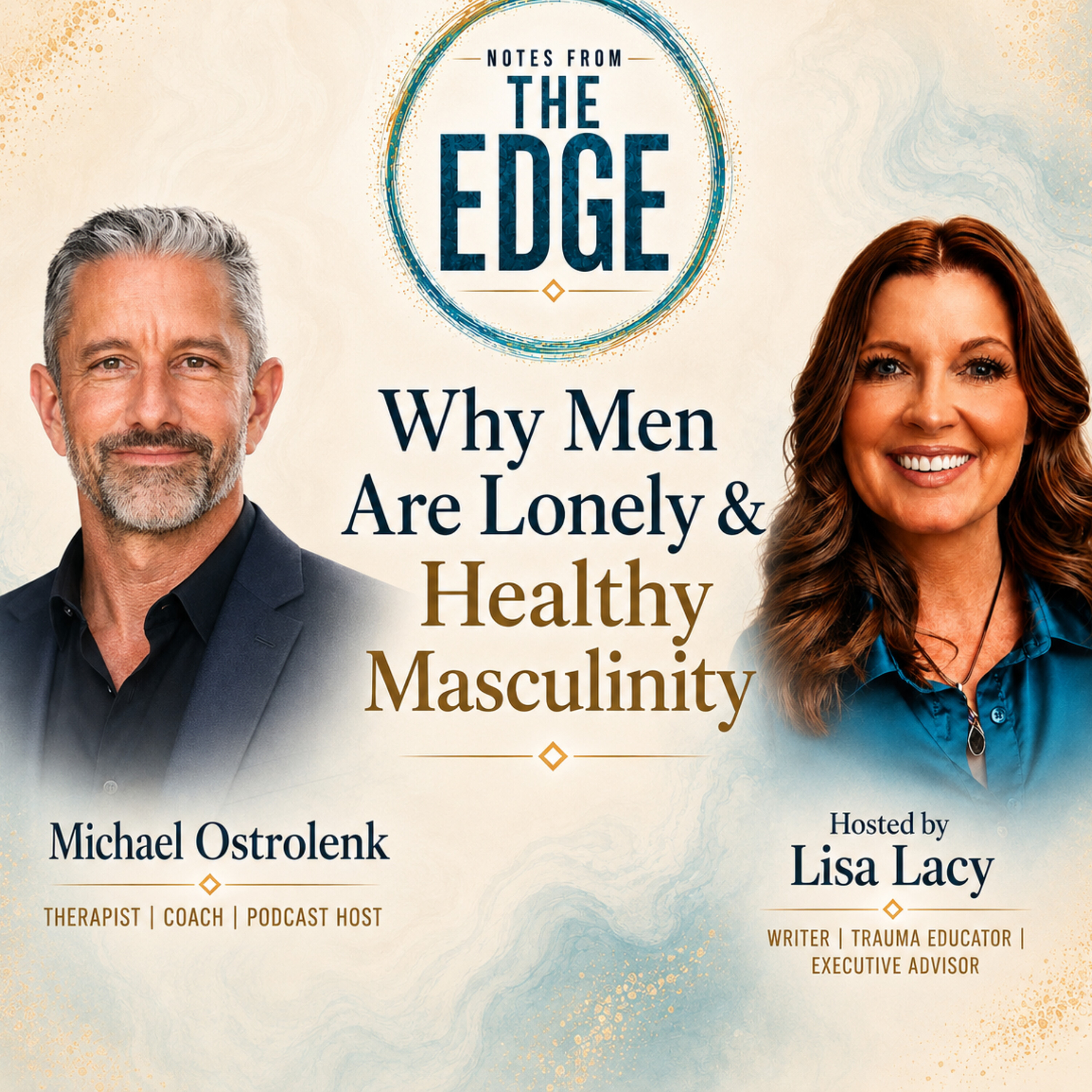 Why men are lonely and healthy masculinity with Michael Ostrolenk 02.09.2026 46分What if real masculine strength has less to do with pushing harder and more to do with learning how to regulate yourself, feel deeply, and stay present under pressure?Michael Ostrolenk, licensed marriage and family therapist and master coach, joins Lisa Lacy to explore one central idea: mature masculinity is not domination, suppression, or performance. It is self-governance.Michael introduces his concept of “Negative 20X,” challenging high performers to consider whether slowing down may require more courage than pushing harder. Lisa and Michael also unpack his Sovereign Gentleman framework, including how unconscious conditioning shapes identity, why men need spaces to experience and express emotion, and what disciplined presence actually looks like inside a relationship.In this episode:Healthy masculinity and masculine maturityNervous system regulation under pressureThe Sovereign Gentleman and psychological sovereigntyMale loneliness, mentorship, friendship, and the need for tribeWhy high performers struggle with rest and recovery“Negative 20X” and the drive to constantly prove yourselfEmotional intelligence, anger, sadness, shame, and healthy expressionMasculinity versus dominationDisciplined presence during relationship conflictHow childhood and cultural conditioning shape adult identityMartial arts, self-defense, capability, and personal responsibility Why kindness can be an expression of strengthConnect with Michael Ostrolenk:Website: www.michaeldostrolenk.comSubstack: Michael D. Ostrolenk / @michaeldostrolenkLinkedIn: Michael Ostrolenk, MA, MFTYouTube: @michaeldostrolenkPodcast: Resilience Redefined with Michael D. OstrolenkTeam Fudoshin: teamfudoshin.comConnect with Lisa Lacy:What did you perform in order to survive? Welcome to the Edge. See Privacy Policy at https://art19.com/privacy and California Privacy Notice at https://art19.com/privacy#do-not-sell-my-info.
 -
 Emotional Sobriety, Addiction Recovery & Healing What Still Hurts with Dr. Dean & HollyKem Sunseri 01.09.2026 44分What happens when you stop the addiction, but the pain underneath it is still running your life?Dr. Dean Sunseri, licensed professional counselor, and HollyKem Sunseri, certified life coach with more than four decades in recovery, explore the work they call emotional sobriety: healing the emotional wounds and protective patterns that can remain long after the substance or destructive behavior is gone.In this conversation, we go beyond abstinence and into what Dean and HollyKem call Stage Two recovery. We talk about why unresolved pain can “seep out” through substitute addictions, anger, isolation, control, relationship conflict, or other coping behaviors, and why simply stopping a behavior doesn’t necessarily heal what created it. They walk us through their framework of the Protector, Wounded Child, and True Self, including how learning to recognize which part of us is speaking can restore choice instead of leaving us controlled by old survival responses. We also explore relationships, why one person changing can change the entire “dance,” and why reconnecting may need to happen before a couple can actually solve the problem they’re fighting about.In this episode:Emotional sobriety and Stage Two addiction recoveryWhy abstinence may be only the beginning of healingSubstance addiction, behavioral addiction, and substitute addictionsThe emotional pain underneath compulsive and self-destructive behaviorThe Protector, Wounded Child, and True SelfTrauma, triggers, and protective survival responsesWhy healing doesn’t mean never being triggered againLearning to love the parts of yourself you once tried to escapeSelf-compassion versus shame in addiction recoveryMoving from survival mode into choice, purpose, and emotional freedomRelationships, resentment, defensiveness, and emotional disconnectionWhy one partner’s growth can change the relationship dynamicReconnecting before trying to resolve conflictBoundaries, responsibility, forgiveness, and healthy communicationFinding purpose after addiction and survivalDr. Dean & HollyKem Sunseri:1. Take the free Emotional Sobriety Assessment: https://dean-jsegmrly.scoreapp.com2. Get the Book A Roadmap to the Soul Today! https://amzn.to/478rNG83. Learn more about Dean & HollyKem Sunseri: https://www.ihaveavoice.com4. Watch Free Videos on Emotional Sobriety: https://youtube.com/playlist?list=PLsbxvHYHG8El81rdV6eQ7gM7S55jXPm49&si=FOa14n7V-5OLJOQJLisa Lacy | Notes From the Edge:https://www.lisalacy.comWhat did you perform in order to survive?Welcome to the Edge. See Privacy Policy at https://art19.com/privacy and California Privacy Notice at https://art19.com/privacy#do-not-sell-my-info.
 -
 Who Told You That? | Solo Episode with Lisa Lacy 29.08.2026 13分Who told you that you were too sensitive, too difficult, selfish, dramatic, unstable, or simply too much? And when did someone else’s opinion become part of your identity?In this solo episode of Notes From the Edge, trauma educator Lisa Lacy explores how labels, family roles, survival adaptations, and other people’s perceptions can quietly become the stories we tell ourselves about who we are, and what can happen when we finally question who handed us those stories in the first place.Lisa examines the difference between personality and adaptation, why competence can become armor, and how a label can stop an investigation before it ever begins. She also shares how this question has surfaced while writing Notes From a Certified Madwoman, now autofiction, and why sometimes finding yourself is less about becoming someone new and more about subtracting everybody else.In this episode:How childhood and relationship labels can become identity“Too sensitive,” “difficult,” “selfish,” and the power of labelingCompetence as strength versus competence as survival armorWhy boundaries can feel threatening to people who benefited from your complianceFamily roles, scapegoating, and resistance when one person changesThe difference between accountability and self-erasureSurvival adaptations that become adult personality traitsWhy proving a label wrong can still allow it to control your lifeWhat happens when you enter an environment where you are no longer “too much”The question that can interrupt an old identity: Who told you that?Connect with Lisa Lacy:https://lisalacy.comWhat did you perform in order to survive?Welcome to the Edge. See Privacy Policy at https://art19.com/privacy and California Privacy Notice at https://art19.com/privacy#do-not-sell-my-info.
 -
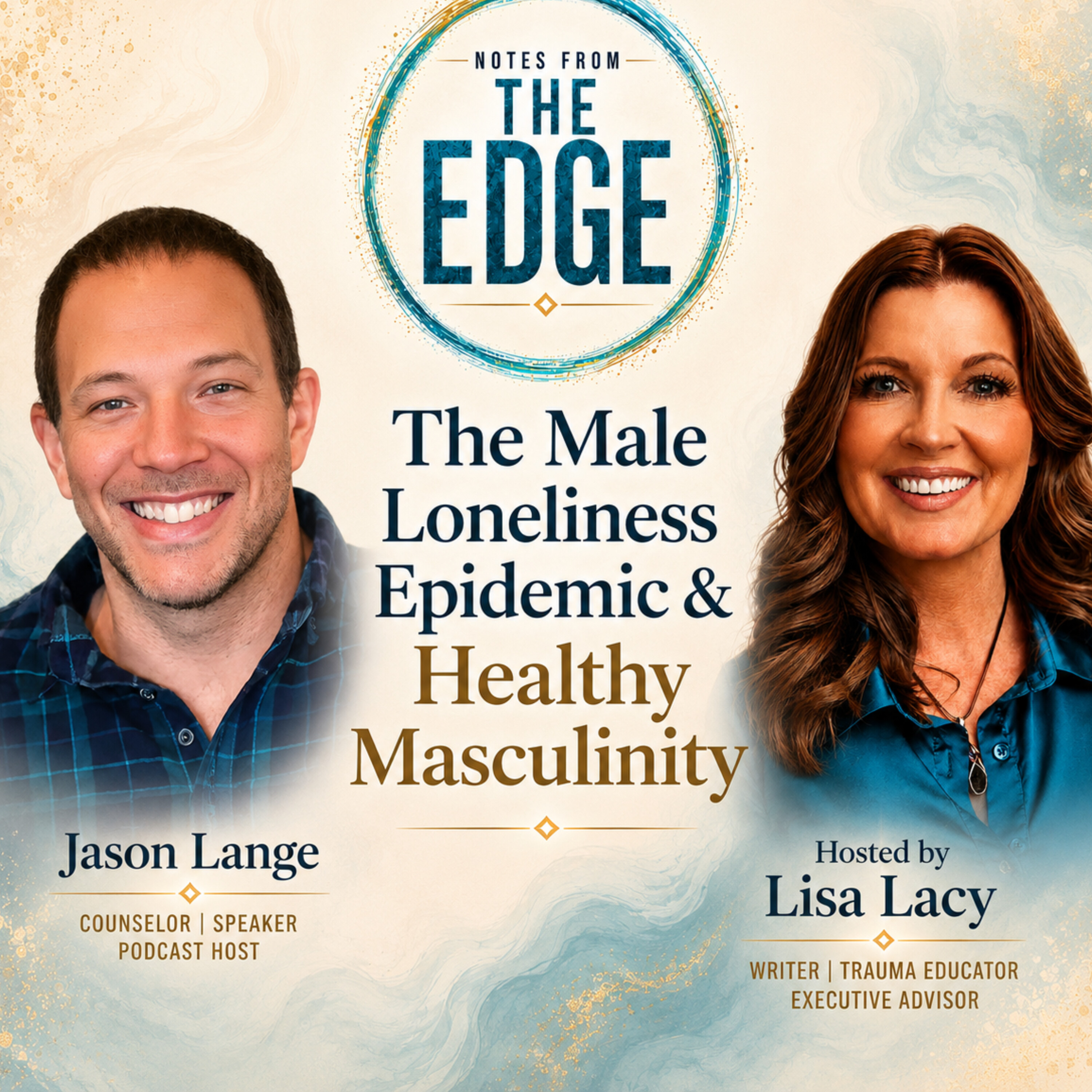 Men’s Mental Health, Loneliness & Healthy Masculinity with Jason Lange 28.08.2026 48分What happens when men are taught that vulnerability is weakness, but connection is exactly what they need most?Jason Lange is a men’s embodiment coach and group facilitator who believes men don’t need to become tougher. They need the language, relationships, and spaces that allow them to become more fully human.In this conversation, Jason shares how growing up without emotional or physical connection left him unable to understand what was happening inside his own body, eventually leading to shame, isolation, and unhealthy ways of coping. He takes us inside the somatic breakthrough that changed everything and explains why men’s groups became one of the most powerful forces in his own healing, relationships, and life.In this episode:Men’s mental health and the male loneliness epidemicHealthy masculinity and breaking out of the “man box”Why vulnerability can feel dangerous for menEmotional neglect, shame, and disconnectionSomatic therapy and nervous system healingMen’s groups, brotherhood, and co-regulationPorn, alcohol, overworking, and other forms of emotional numbingBuilding emotional intimacy in relationshipsLearning to identify wants, needs, feelings, and boundariesMoving beyond the isolated “lone wolf” model of masculinityAuthenticity instead of performing that everything is fineConnect with Jason Lange:LinkedIn: https://www.linkedin.com/in/jasonmlange/Evolutionary Men: https://evolutionary.menEvolutionary Edge Quiz: https://evolutionary.men/quizConnect with Lisa Lacy:https://www.lisalacy.comWhat did you perform in order to survive?Welcome to the Edge. See Privacy Policy at https://art19.com/privacy and California Privacy Notice at https://art19.com/privacy#do-not-sell-my-info.
類似ポッドキャスト


人気の国
このポッドキャストはこれらの国のポッドキャストチャートにも登場します。

