
The Catherine Plano Podcast
Catherine Plano
0
The Catherine Plano Podcast is a self-development and personal growth show hosted by Catherine Plano. Each weekly episode offers self-coaching strategies for building confidence, making better decisions, forming new habits and staying motivated. The aim is to help listeners expand their thinking, unlock more of their potential and create lasting, meaningful change. Expect practical insights, fresh ideas and regular 'aha' moments designed to shift how you learn and grow. The tone is inspirational and action-oriented, focused on living an extraordinary life.
エピソード
-
 EP 483: You Are Not What You Produce 29.09.2026 17分Have you ever apologised to furniture? Do you reread a message you sent four hours ago, checking the tone? When someone praises your work, do you find the floor for them before they can get to it? Did you feel guilty resting the last time you were unwell? If more than two of those landed, this one is about you. In this Moment of Awe, we explore the AstroPsychology of self-worth: why the second house is not the money house, what Carl Rogers, Jennifer Crocker, Francis Flynn and Vanessa Bohns can tell us about proving and receiving and three ways to stop answering a question that was never yours. The Second House Is the Room Behind the Door The second house is the house of Taurus, and it is ruled by Venus. On the surface, it looks like the money house: wealth, finance, possessions. It is not. It asks one of the most uncomfortable questions in the entire chart: what do you believe you are worth? Not financially, not professionally, not socially, but at your core. If the first house is the door, this is the room immediately behind it, and it is the harder one. There was a year when I was still at the kitchen bench at eleven o’clock at night, eating something over the sink, answering emails that could comfortably have waited until Tuesday. I told myself this was simply what building something looked like. It was not. It was proof of purchase. Venus Is the Principle of Value Venus is not about what you own. It is about what you value, what you find beautiful and what you allow yourself to take in. Which is exactly why worth and possessions ended up sharing a room. Human beings have always confused what they have with what they are. Carl Rogers called this conditions of worth. As children, we receive love that arrives with terms attached. Be quiet, be good, achieve, do not need too much, do not be difficult. And a child who cannot survive without that love does the only sensible thing available: they work out which parts of themselves are acceptable and quietly exile the rest. So here is the distinction I want you to hold. Your values are what is genuinely important to you. Your usefulness is what you produce. Most people have not looked at the first in about twenty years, and keep an extremely detailed spreadsheet on the second. Proving Is an Unpaid Invoice In shadow, the second house looks like overworking, undervaluing yourself and feeling that you must prove your worth. Sit with that word, prove. You only prove something that is in doubt. Nobody wakes up and proves the sun came up. If you are still proving, at some point you agreed the question was worth asking, and nobody makes that agreement on their own. Somebody asked you first. Jennifer Crocker at the University of Michigan identified seven domains in which people stake their sense of worth: academics, appearance, approval from others, competition, family support, virtue and God’s love. Following students across their first year at university, she found that those who had staked their worth on the external ones were more likely to develop depressive symptoms. The problem was not how much self-esteem they had. It was what they had to keep doing to hold on to it. Proving is not a character strength. It is an unpaid invoice you inherited. Receiving Is a Skill In light, the second house looks like receiving, honouring your value, creating abundance from wholeness and knowing you are enough. Look at that first word: not earning, not achieving, receiving. Across their work, Francis Flynn and Vanessa Bohns have had participants approach more than 14,000 strangers with direct requests. On average, people underestimate the likelihood that somebody will say yes by roughly half. We are so focused on what it will cost the other person to say yes that we never consider how uncomfortable it would be for them to say no. Most of us are walking around with a wildly inaccurate estimate of how welcome we are. For most of my life, I carried the private sense that I was too much. Too
 -
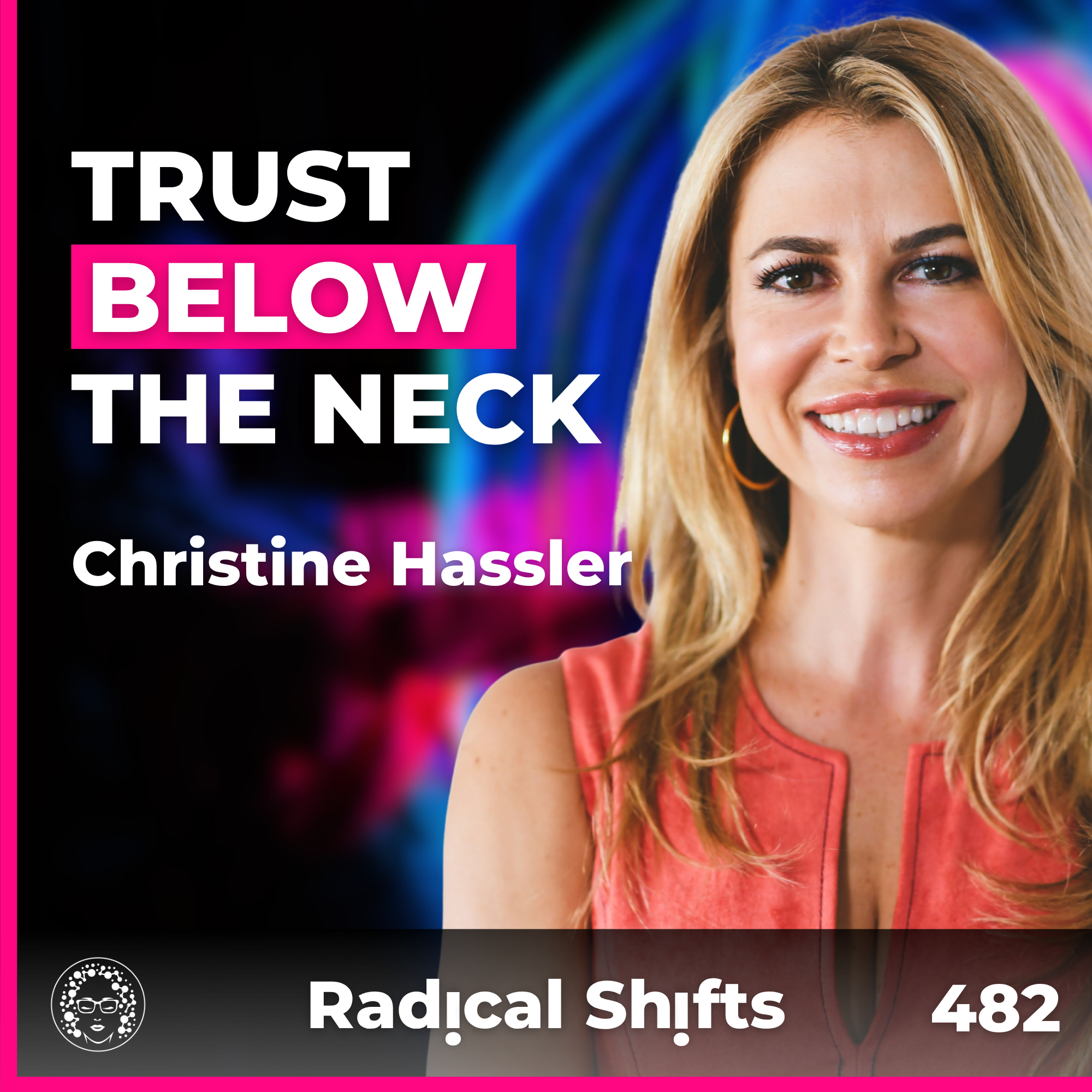 EP 482: Women Have Bought Into a Very Old Programme About Being Chosen with Christine Hassler 22.09.2026 54分Ready to turn your gift for helping people into a real coaching career? Visit: https://riseandthriveglobal.com/positive-psychology-coaching/ Christine Hassler sees so many high-achieving, emotionally intelligent, spiritually focused women going from shaman to astrologer to course, trying to work out what they need to do to find love. She advises against it, because the searching itself reinforces the belief that something is wrong with you. A master coach, spiritual psychologist and best-selling author of three books, including Expectation Hangover, Christine knows the territory personally. In her early twenties, she was a successful agent in the entertainment industry, and the money, the job and the guy all arrived. She still was not happy. Then her health, her engagement, her job and her family relationships fell apart at once, and she came face to face with how little self-worth she had. It was all outsourced. She had been seeing psychiatrists and psychologists since she was 11, but the question that changed things was a new one: what is this here to teach me? The old programme of being chosen Christine believes many women have bought into a very old programme about being chosen. When partnership does not arrive, the belief, conscious or not, becomes there must be something wrong with me, and every new course or healer reinforces it. The better question, she says, is what is my partnership to myself? She finds the women who struggle most to draw in a partner have often had to become hyper-independent, whether through being hurt or parentified too early. They long for love, but a protector part steps in front of the part that wants it and says we are safer on our own. The work is not fixing something broken. It is remembering who you really are. A guard, not a wall Catherine admitted that even when she practises love, a wall goes up. Christine offered a different image. There is no wall around the heart. There is a guard who believes it is her job to keep you from getting hurt. Christine calls discernment one of the feminine superpowers that is not talked about enough, a clear bodily yes or no that is different from intuition. Once you have done the work, that wisdom is embodied, and the guard can take a break. Override it, and you simply get a do over, the chance to learn the same lesson again. You can trust below the neck over between the ears, she says, most of the time. Finding the rage At her Women’s Retreat, Christine leads a grief release and then an anger burn, in that order, because women will give themselves permission to feel sadness but rarely go for their rage. She is clear this is intentional, trauma-informed work, not reactivity and not just catharsis. She thinks something that kills women, both literally and metaphorically, is holding rage inside until it becomes resentment, depression and disease. Our anger, she says, is our power and our passion. Of course I did that Asked whether we should aim to live in our hearts all the time, Christine pushed back on the pressure. When a nationwide shortage of estrogen patches in America had her calling ten pharmacies, she was not in her heart, and she did not judge herself for it. Of course she was fired up. She forgave herself and moved on with her day. The pressure she sees women put on themselves never to be triggered is, in her words, ridiculous. Brains get hijacked. What matters is having tools to come back. Not fixing, but giving Christine was engaged three times, married twice and divorced once before meeting her husband Steph at around 40. Looking back, each relationship reflected something she was learning. She is firm that inner child work is not fixing. It is giving yourself the childhood you never had and becoming your own advocate. Her advice on where to start is to dig where you are. Find your biggest expectation hangover and ask, what does this remind me of? Christine left us with three shiny golden nuggets. When you notice yourself reacting, put
 -
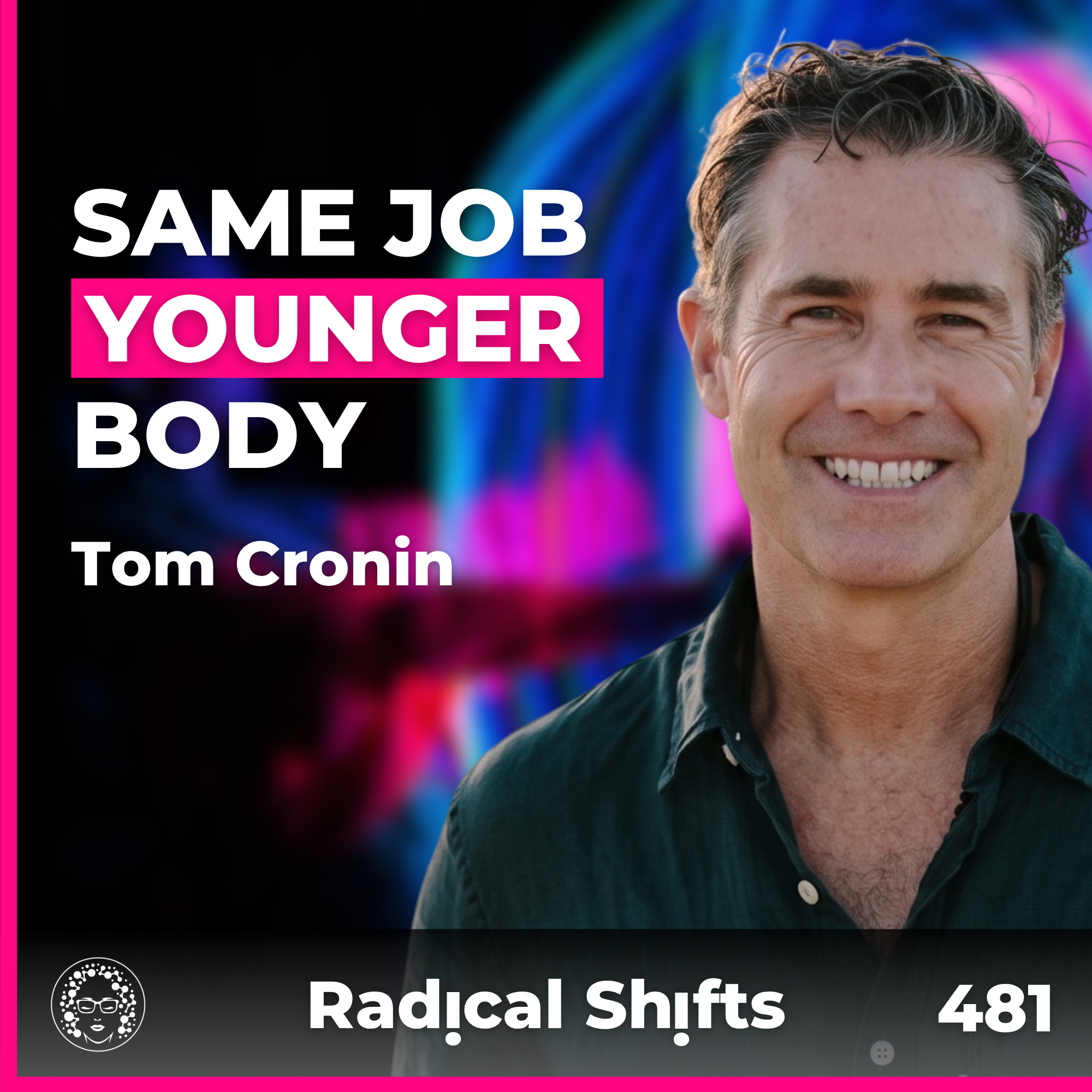 EP 481: At 29 My Biological Age Was 37. Meditation Reversed It with Tom Cronin 15.09.2026 59分Ready to turn your gift for helping people into a real coaching career? Visit: https://riseandthriveglobal.com/positive-psychology-coaching/ Tom Cronin will tell you that thinking is very overrated, and he has 26 years on a trading floor to explain why. He is an international keynote speaker, author of six books, leadership trainer and the producer of the feature-length documentary The Portal, and he has taught meditation to everyone from six-year-olds in classrooms to senior executives at Amazon, Oracle, Qantas and Coca-Cola. None of that was the plan. He spent a decade as one of Australia’s leading bond and swap brokers, starting in the late 80s in a world he describes as very Wolf of Wall Street, and by his late 20s it had cost him chronic panic attacks, anxiety, depression, addictions, insomnia and eventually agoraphobia. He was diagnosed as having a nervous breakdown. Psychiatrists, doctors and medication followed, and none of it felt quite right. Not a spiritual practice What changed things was a style of meditation known as Vedic or Transcendental Meditation, in which a qualified teacher allocates you a mantra, a resonance you repeat silently that shifts your brain out of its busy waking frequency and moves the body from the sympathetic nervous system, where we fight or flee, into the parasympathetic, where we rest and repair. Most people assume meditation is spiritual. Tom sees it as physiological. Most of our challenges, he argues, are not psychological at all. They are stresses held in the body, what the Vedic tradition calls samskara, and deep rest is what lets the body release them. Uncomfortable is not the same as worse Catherine asked the obvious question: does it get worse before it gets better? Tom reframed it. Stress releasing is not the same as stress inputting. Think of the twitch you feel falling asleep after a frantic day, he says. That is the same process, and it is not a crisis, it is a healthy expenditure of energy. On retreats, where the work goes deeper, tears and frustration do surface, but they are held in a safe space and understood as a good sign rather than a bad one. What the body does when you leave it alone His favourite illustration is a broken bone. No doctor, no medicine and no therapist can mend it. All the cast does is create stillness, and the body’s own intelligence does the rest. Cut your arm on a rose bush and the bandage keeps your clothes clean while your body coagulates the blood, grows scab cells and then skin cells, with no instruction from anyone. Meditation, in his view, is simply the same principle applied to the nervous system. He is careful about what he claims. He will not say meditation cures disease. What he will say is that his own biological age was measured at 37 when he was 29, that stress is one of the biggest factors in ageing, and that he stayed in the same high-pressure job for another 13 years and the number went the other way. The story is not happening now This is where Tom departs most sharply from conventional therapy. We do not need to regurgitate the story, he says, because the story is not happening right now. What keeps the mind replaying it is the energy of it still sitting in the body. Clear that, and the memory loses its charge. He can retell his own history on a stage, in a book or on a podcast without being triggered by it, not because he has analysed it enough, but because the stress behind it has gone. The sky behind the clouds If you have ever said you cannot meditate because your mind will not stop, Tom has an analogy for that too. A fidgety four-year-old will not sit still if you tell him to, but give him something charming to hold and he will. The mantra charms the mind. And beyond the thinking there is a state he calls Samadhi, where the mind trades the charm of thought for the bliss of being. Imagine a lifetime of cloudy days, he says. You would assume the sky is grey. Then one day the clouds part and you realise the grey was nev
 -
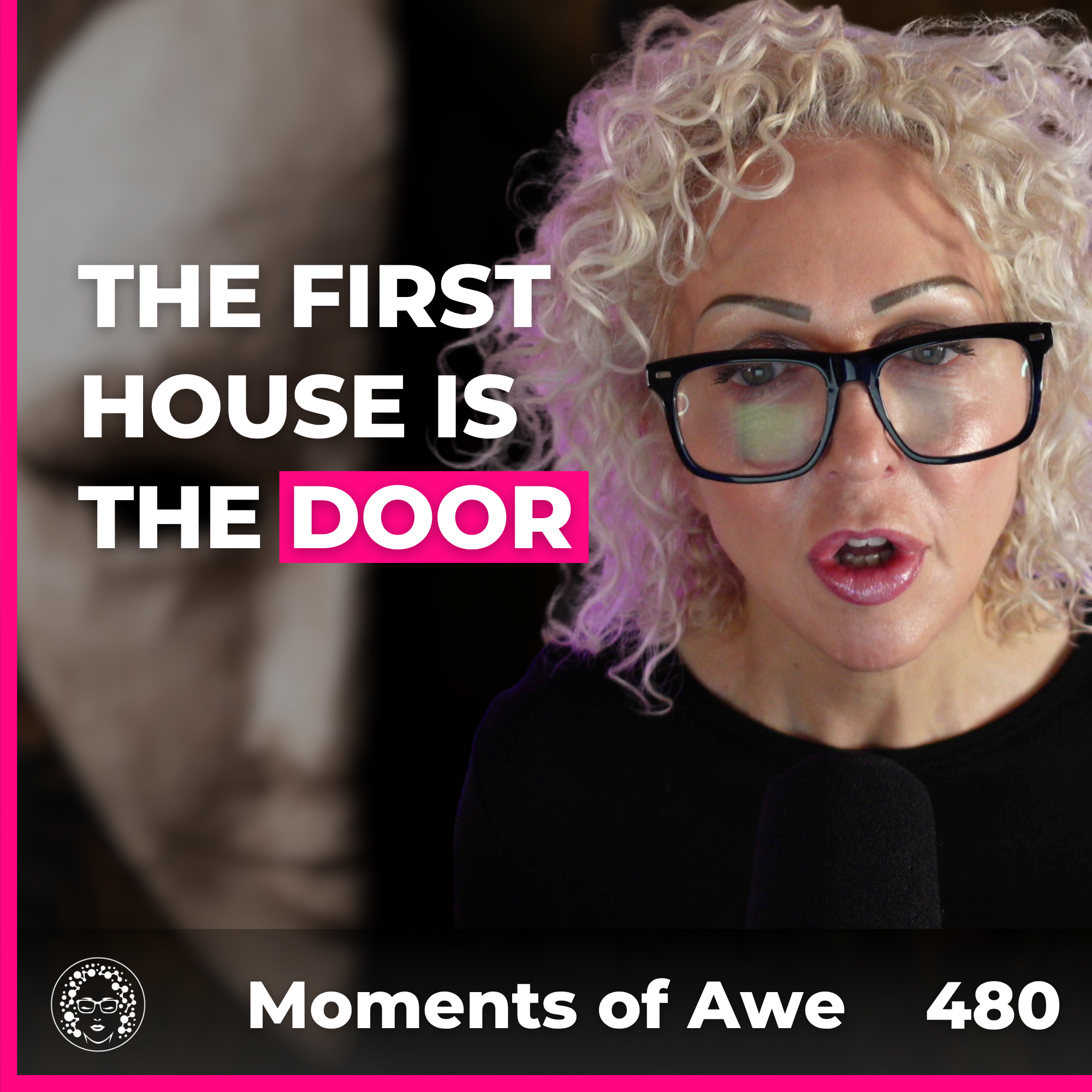 EP 480: You Are Not the Mask You Wear 09.09.2026 17分Have you ever been called the strong one so often that being tired now feels like a betrayal? Do you use a slightly different voice for your mother than you do for everyone else? Is there a version of you that only exists in the car, in the ninety seconds before you walk into a room? If any of that landed, I was not reading your mind. I was reading a door. In this Moment of Awe, we explore the AstroPsychology of identity, why the first house is not who you are, what Jung, Winnicott and Higgins can tell us about the mask, and three ways to begin widening the entrance. The First House Is the Door In AstroPsychology, the first house is the point of contact. It is the version of you the world meets first, before anybody has had time to look further in. Your rising sign, your ascendant, is the shape of that entrance. And here is the line I most want you to carry: the first house is not who you are. It is the door you come through. Most of us confuse the two. We spend years polishing the entrance and then wonder why nobody seems to know us. The Mask Is Not the Problem Carl Jung called this door the persona, after the mask a Roman actor held in front of his face so the audience would know which character was speaking. Notice what the mask is for. It is not deception. It is contact. It lets the play happen. The persona is not a lie or a flaw, and the danger was never in having one. The danger is identifying with it. It is the moment you forget you are holding the mask and start to believe the mask is holding you. Donald Winnicott went further back, into the nursery. When a child learns that their real needs are inconvenient or unwelcome, they build a compliant self to protect the true self from harm. He called it the false self, and I want to be careful with that word. The false self is not your enemy. It was competent. It worked. Somewhere along the way it stopped being a strategy and became the whole house, and the true self is still in there, waiting to see if it is safe to come out. Two Kinds of Identity Pain In 1987, Tory Higgins mapped the three selves we carry: the actual self, the ideal self we aspire to be, and the ought self we feel obliged to be. The gap between actual and ideal gives you disappointment and deflation, the quiet sense of having missed something. The gap between actual and ought gives you anxiety and guilt, the sense of having failed someone. The texture of your discomfort tells you which gap you are standing in, and once you can name the gap, you are no longer inside it. Laid over the chart, it looks like this. The rising sign is the door. The sun is what you are here to become. The moon is what you actually need in order to feel safe. Most of the tiredness I encounter in people’s lives lives in the gap between the door and the moon. Three Ways to Widen the Entrance Map the three. Write down who the world meets first, who you are here to become, and what you actually need to feel safe. Do not edit. Just look at the three lines together and notice where the contradiction sits. Name the quality of the ache. Is it deflation, or is it anxiety? Is it disappointment, or is it guilt? That answer alone tells you which gap you are standing in, and which one to close. Bring one exiled part through the door. Pick something that never makes it into the room and let it in once, somewhere safe. Then watch what happens. Identity Is Not Discovered, It Is Authored You will not find yourself, and that is not pessimism. You cannot find a thing that was never an object. Jennifer Campbell’s research on self-concept clarity shows that people do not become well when they uncover the truth of who they are. They become well when they build a self that is clear, coherent, and stable enough to stand on. So you are not the mask, and you are not hiding behind it either. You are the one who chose it, in a room where it was the most sensible thing to wear. The first house is not a verdict on who you are. It is a description o
 -
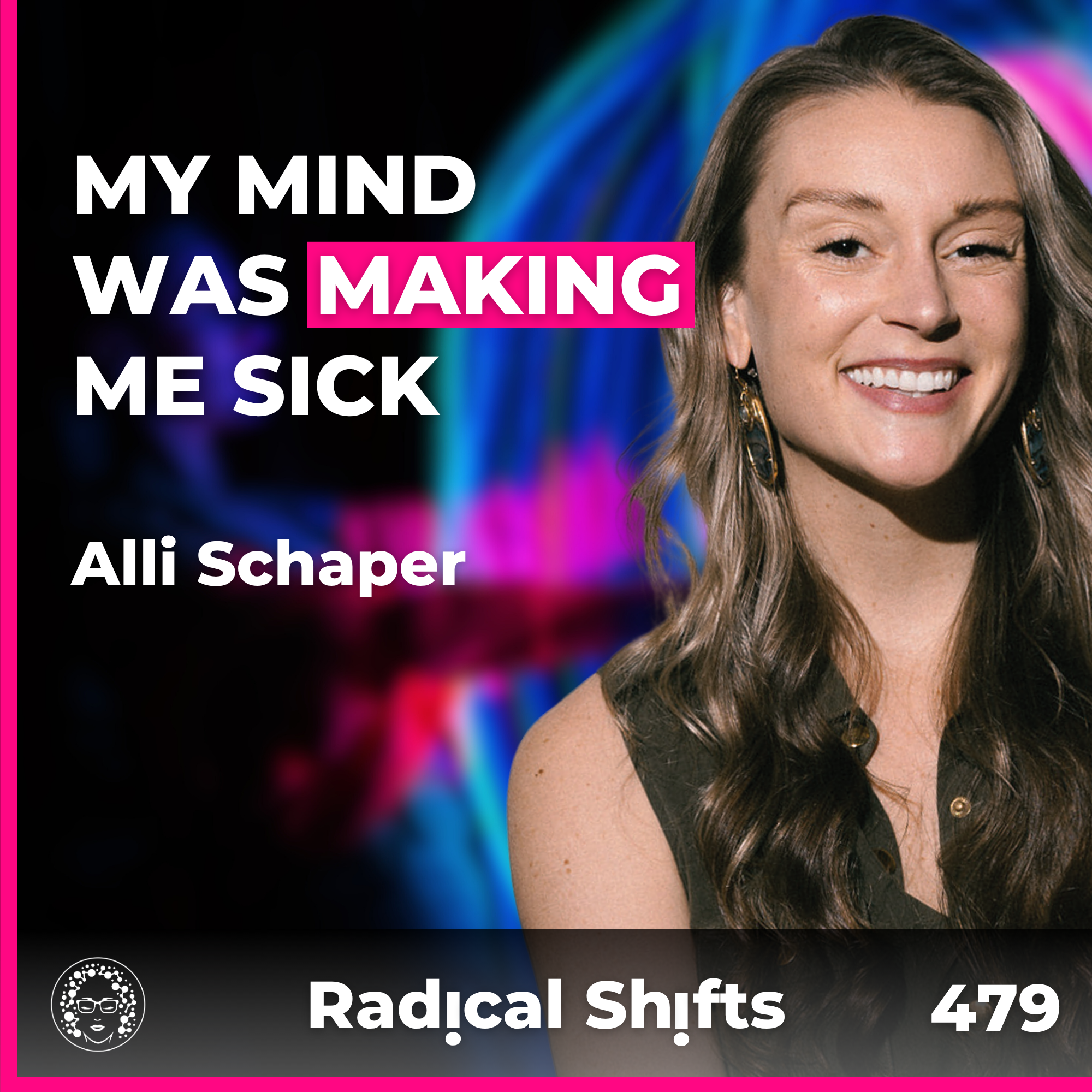 EP 479: Mushrooms Have Taught Me So Much About Death and Dying with Alli Schaper 02.09.2026 52分Ready to turn your gift for helping people into a real coaching career? Visit: https://riseandthriveglobal.com/positive-psychology-coaching/ Alli Schaper will tell you that the most important things she knows about living, she learned from mushrooms, including how to die. She is the CEO and cofounder of SuperMush, a functional mushroom brand backed by globally recognised artists, athletes and founders, a co-founder of Microdosing Collective, the first US nonprofit dedicated to legal microdosing advocacy, and the host of Into The Multiverse, a podcast exploring consciousness and psychedelics. Her path there did not begin on a stage. By the time she was 21, she had been prescribed around twelve different pharmaceutical medications for chronic gut issues she had carried since childhood. The tuning fork Alli’s way out was not a magic pill, and that, she says, was the whole lesson. Functional mushrooms, lion’s mane instead of high doses of caffeine, chaga for immune function, reishi to wind down for sleep, acted as what she calls a tuning fork for her nervous system. They slowed her down enough for her body to follow its natural rhythm, and for her gut, our second brain, to function well again. She is quick to add that not all mushrooms are made equal. The gold standard is the fruiting body of the fungus, double extracted through hot water and alcohol, and she is passionate about people learning to read the label of what they put in their body. The lie of the quick fix Society, Alli argues, has sold us a massive lie: that everything we take should fix us immediately. An Advil numbs the pain, a Xanax puts you to sleep. Adaptogens are different. They work to bring the body into homeostasis, and sometimes the first week feels worse, not better, as the body works through what it has been holding, the way a sauna stirs up what it is helping you release. Stay the course, she says, and the discomfort is the detox. What fungi know about death Then the conversation goes somewhere most wellness interviews never do. Humans share almost 50 per cent of our DNA with fungi, and Alli believes we have barely begun to learn from them. Beneath every step we take runs the mycelium network, and when something dies on the forest floor, the fungi decompose it and return its nutrients to the soil as new life. Mushrooms, she says, are great alchemisers of death and dying. That teaching became personal when her father passed away unexpectedly, five days before he was due to retire. Her whole family had experienced mushrooms together before he died, and it gave her mother, married to him for 36 years, a profoundly different relationship with grief. His passing also left Alli with a warning she now carries everywhere: beware destination happiness, the habit of parking your joy at some future date you may never reach. A breath between trigger and response Microdosing, Alli explains, is a sub-perceptual dose of a psychedelic taken like a supplement, no visuals, no hallucinations, on a protocol of a few days a week over about three months. By quieting the default mode network, where our habit loops live, it opens a window of neuroplasticity. Her favourite example is disarmingly ordinary: her mum calls, says something triggering, and where the old programme would answer like a six-year-old, microdosing gives her a breath to choose her response. Those subtle shifts, she believes, could change the world. It is not a panacea, she is careful to say, and used unconsciously psychedelics can cause real trouble. Used consciously, with reverence, they helped her look at herself honestly. Not a magic pill For 15 to 20 years, Alli sat on the crinkly paper of doctors’ offices waiting to be told what was wrong with her. The turning point was deciding her health was her own responsibility, and seeing clearly, in her words, how much of her life her mind was making her sick. What the mushrooms unlayered was something she believes we all carry underneath: your
 -
 EP 478: Dr Bruce Lipton: Your Genes Don’t Control You, Your Mind Does 25.08.2026 1時間 17分Dr Bruce Lipton will tell you that the most dangerous idea in modern health is also the most widely believed one. That your genes control your life. He is a world-renowned stem cell biologist, former medical school professor, bestselling author of The Biology of Belief and now Beyond Darwin, and one of the pioneering voices of the science of epigenetics. His fascination began in second grade, the first time he looked through a microscope and watched amoebas moving with what he swears was intention. Years later, growing cells in a petri dish as a research scientist, those cells taught him something that contradicted the very curriculum he was teaching. Genes do not control life. So when Catherine opened the conversation, Bruce did not ease into it. There is no gene, he says, that causes cancer. The victim programme Bruce’s argument starts with what the standard story does to us. If genes turn themselves on and off, and you did not choose your genes, then your health is out of your hands. That belief, he says, programmes people into victimhood, and victims hand their power to someone else. He points to the research he finds most telling: children adopted into families where cancer runs through the generations go on to develop the same family cancer, despite carrying completely different genetics. What travels down a family line, Bruce argues, is not a faulty gene. It is programming, beliefs, identity and ways of living passed from parent to child. What stress actually does to your body The mechanism at the centre of it all is stress. Bruce walks through it with the relish of a man who has explained it a thousand times and still finds it astonishing. Stress hormones squeeze shut the blood vessels of the gut, halting the maintenance and repair of the body. They shut down the immune system to conserve energy. And they push blood from the conscious forebrain to the reactive hindbrain, so we literally become less intelligent under pressure. That response was designed for fifteen minutes of running from a sabre-toothed tiger. Today it runs 24 hours a day, and Bruce’s number is stark: over 90 per cent of illness on this planet traces back to stress, while less than 1 per cent of disease is meaningfully connected to genes. The architect above the blueprint This is where epigenetics comes in, and Bruce’s metaphor makes it land. Genes are blueprints, and blueprints cannot build anything on their own. They need an architect. The architect, he says, is the mind. Epi means above, so epigenetics literally means control above the genes. If your consciousness is in harmony with the world, your biology follows. If your consciousness is in conflict, your biology becomes the battlefield, which is why so much modern illness is autoimmune, the body quite literally attacking itself. You are not the TV, you are the broadcast The most memorable stretch of the conversation is Bruce’s answer to the question of who we actually are. Every cell in your body carries a unique set of self-receptors, antennas found on no other human being alive. What are they receiving? An energy field. In physics, an invisible moving force that influences the physical world. In every spiritual tradition, that same definition has a shorter name: spirit. Your body, Bruce says, is a television set playing your broadcast. When the TV breaks, the broadcast does not disappear. It is the TVs that come and go. The programmes running your life Bruce’s most practical point is also his most confronting. In the first seven years of life, a child’s brain downloads its environment without filtering it, and criticism heard in those years becomes programming: not good enough, not lovable, not safe. Two beliefs, he says, fail in 80 to 90 per cent of people when tested: I love myself, and I am safe. And because 95 per cent of daily life runs from subconscious programmes rather than conscious wishes, learning new facts changes nothing on its own. You have to
 -
 EP 477: The Grief That Has No Name Is Often the Heaviest Kind 18.08.2026 7分Have you ever grieved something that no one else could see? A friendship that quietly dissolved. A version of yourself you left behind. A relationship that is still technically intact but has become unrecognisable. And wondered why it hurt so much when, on paper, nothing had actually ended? There is a kind of grief that has no funeral. No flowers. No one checking in to ask how you are holding up. Because nothing has technically ended. No one has died. And yet something in you is grieving, quietly, persistently, and completely alone. In this Moment of Awe, we explore what ambiguous grief actually is, why it is one of the most isolating forms of human suffering, and three ways to begin honouring it. The Grief That Has No Name Maybe it is a friendship that slowly dissolved without a single defining moment. A version of yourself you left behind when life took a different turn. A relationship that is still technically intact but has become unrecognisable. A dream you set down so long ago you barely remember putting it there. This is ambiguous grief. And it is one of the most common, most isolating, and least validated forms of human suffering I encounter in my work. The reason it is so hard to carry is that the world only makes room for grief it can see. But the grief that has no name is often the heaviest kind. What Ambiguous Grief Actually Is Psychologist Pauline Boss first coined the term ambiguous loss in the 1970s to describe grief that occurs without closure, without the social permission to mourn, and without a clear ending. She identified two types. The first is when someone is physically absent but psychologically present. A parent with dementia who is still alive but no longer quite there. An estranged child. Someone you lost to addiction or mental illness who is still breathing but unreachable. The second is when someone is physically present but psychologically absent. A partner you have slowly grown away from. A friendship that became surface-level without either of you noticing. A version of yourself that showed up before the grief, before the loss, before life reshaped you. But ambiguous grief extends further than Boss originally mapped. It lives in identity loss, the grief of who you were before burnout, before motherhood, before the career change, before the diagnosis. It lives in life chapters closing without ceremony. In the slow fade of a relationship that was never officially over. What makes it so destabilising is that without a clear ending, there is no clear permission to grieve. And grief without permission goes underground, where it quietly shapes everything. Three Ways to Begin Honouring It Name it. Say it out loud, or write it down. I am grieving this friendship. I am grieving the version of myself I was before this happened. I am grieving the life I thought I was going to have. Naming it does not fix it, but it brings it out of the shadows and into the light where you can actually work with it. Grief that is named is grief that can move. Create your own ritual of acknowledgement. Ambiguous grief struggles because it has no funeral, no marker, no moment of collective recognition. So create one privately. Write a letter you never send. Light a candle. Take yourself somewhere meaningful and simply sit with what you are carrying. Ritual tells your nervous system that something real happened here, and that it is worth acknowledging. Resist the pressure to resolve it. Ambiguous grief does not always have a tidy ending. Sometimes the most psychologically healthy thing you can do is learn to hold the uncertainty without needing it to close. Not toxic positivity. Not forced forgiveness. Just the gentle, courageous act of saying: this is real, it matters, and I do not have to be over it yet. The Sadness You Have Been Trying to Outrun So here is the invitation. What if the sadness you have been trying to outrun is not a sign that something is wrong with you, but a sign that something mattered deeply to you? Wha
 -
 EP 476: You Never Get to Choose Your Trauma Response with Annalie Howling 11.08.2026 1時間 1分Annalie Howling will tell you that shame is the hardest emotion in the room to name, and that this is precisely why it runs so much of our lives. Ask a group who is feeling anxious, and every hand goes up, and each person can list what they are anxious about. Ask about shame, and you get silence. She is an elite performance coach, a trauma specialist and certified EMDR practitioner, and the author of the bestselling Unapologetic: Unshackle Your Shame, Reclaim Your Power. In 2026 Spear’s Magazine ranked her among the world’s best life and performance coaches. Over twenty years, she has worked with Hollywood actors, PGA Tour golfers, self-made billionaires, corporate executives and members of the UK Special Forces. So when Catherine asked her to unpack what shame actually is, Annalie did not reach for a definition. She reached for a distinction. Guilt is something you did. Shame is something you believe yourself to be. A weed, not a feeling The model Annalie offers reframes almost everything sitting on top of it, and it asks nobody to become a therapist. Picture a weed in the garden. The leaves are guilt and anxiety, the emotions we can name and discuss. Guilt is coulda, woulda, shoulda, and it lives in the past. Anxiety lives in the future, trying to control the uncontrollable by rehearsing every possible scenario before it happens. Beneath the leaves is the stem, which is the inner critic, or what many of us call imposter syndrome. Its only job is to make sure we are never rejected, and the only method it knows is to keep us inside the comfort zone it patrols. So it makes us perfect, people-pleasing, hyper-vigilant, chameleon-like. Should, in Annalie’s view, should be a swear word. Should is the fuel of the inner critic. And beneath all of it, always, is the root. Shame. You can trim the leaves with an intervention. You can even get partway down the stem with something you read online. But if you never reach the root, it grows back, in a different form, at a different time. Shame always begins with “I am” That is how you recognise it. I am broken. I am unworthy. I am unlovable. I am not enough. Guilt says I did something bad. Shame says I am bad, and it is believed at the core rather than felt on a difficult day. Annalie is candid that this is not theory for her. She grew up in a violent household where her parents told her she made her father beat her, and her mother colluded and told her it was her fault. She believed it. She internalised it. What followed was decades of people pleasing and performing, accepting scraps in relationships, overworking into burnout, and years of self-harm, all built on the belief that she was bad and therefore deserved none of what she had built. Nobody is born with shame. It arrives through a significant emotional event, and that event can be far smaller than you would expect. Annalie describes a client whose entire path of self-belief shifted because a head teacher pulled them aside at eight years old and told them they would probably not achieve very much. The line that releases people The most freeing moment in the conversation is a piece of science. In a traumatic event, the prefrontal cortex goes offline, and so does Broca’s area, which holds language. The limbic system takes over. Fight, flight, freeze, and the two we rarely discuss: flop and fawn. Crucially, you never get to choose your trauma response. It is selected for you, far faster than cognitive thought can arrive. Meanwhile, the body is tagging everything: colours, smells, people, storing what it might need later. It is why someone can be floored in a supermarket years afterwards, or why a person who sat with a loved one in a hospice suddenly cannot fly, because airports use the same cleaning products. Annalie leaves the audience with three golden nuggets: If self-compassion feels impossible, place someone you love into the memory and watch the scene through them. Treat a compliment like a gif
 -
 EP 475: Oxford Neuroscientist: Your Brain Is Not Shrinking with Dr Sarah McKay 04.08.2026 1時間Dr Sarah McKay will tell you that the most common question she hears from women is also the least useful one. What is wrong with my brain? She is an Oxford-educated neuroscientist, founder of Think Brain and The Neuroscience Academy, presenter on ABC Catalyst and the author of The Women’s Brain Book, Baby Brain and Brain Health For Dummies. She has been a neuroscientist since 1993, when she fell in love with the subject in a first year undergraduate lecture, and she has spent the years since translating brain research into something people can actually use. So when Catherine raised the widely repeated idea that the ageing brain shrinks, Sarah did not soften her answer. No, your brain is not shrinking. Some menopause research actually shows grey matter volume increasing across the transition. Other research shows very little change beyond what ageing alone would explain. The volume loss we do see, through adolescence and first pregnancy, is a streamlining and refinement of connections rather than a decline. Sarah is careful to point out that a big part of what she tries to do is counter the assumption that the brain is inherently broken, or inevitably will be. She would rather learn something new about it than berate herself for not knowing it sooner. A map, not a diagnosis What Sarah offers instead is the most useful thing in the conversation, and it asks nobody to become a neuroscientist. Picture your brain inside your body, inside your world, and ask what information it is receiving and making meaning of. That information arrives from three directions. Bottom up is the body talking to the brain: sleep, hormones, stress physiology, inflammation, movement, nutrition, pain and energy. Outside in is the world shaping the brain: relationships, caregiving, work, culture, safety, expectations, social connection and cognitive load. Top down is the mind shaping experience: attention, beliefs, predictions, identity, self-talk and what we think our symptoms mean. Across puberty, cycles, pregnancy, postpartum, perimenopause, menopause and ageing, all three are always at work. Which is why Sarah swaps the question. Not what is wrong with my brain, but what is my brain responding to, and which system needs support first? Brain fog is a systems puzzle Applied to brain fog, the map changes everything. Oestrogen helps set the thermostat in your brain, and as it shifts the thermoregulatory zone narrows, so a small rise in body temperature gets read as an emergency. If that happens overnight, sleep architecture fractures. Waking once at 3am is not great. Waking for weeks or months on end is different. As Sarah puts it, it does not take long until you are lying there thinking, I am always awake, and then you will find something to worry about. Tired but wired slides into hypervigilance, and hypervigilance slides into anxiousness, which disrupts sleep further. Alongside that, oestrogen is one regulator of how neurons take up glucose to make energy, so thinking can feel slower and more effortful. Brain networks also become less specialised with age, so reaching a solution takes a little more mental labour. None of it is decline. All of it is a system under load. The input almost nobody counts Then there is the piece that surprised Catherine most. Research shows that a phone face down on the table still drains you, because the effort of not looking at it consumes working memory. Sarah’s own view is that mobile phones have reached a level of salience close to that of a newborn baby. Her solution is refreshingly physical: a small device on her fridge that blocks apps until she walks over and taps her phone against it. Friction, deliberately restored. Why you cannot think your way out Sarah’s most contrarian point is worth sitting with. Knowing how the brain changes does not mean you can think your way into changing it. Using your thoughts to change your thoughts, she says, is the hard way around, and often the road to rumination.
 -
 EP 474: You Were Not Made to Fit In, You Were Made to Belong 28.07.2026 7分Have you ever made a decision that, on reflection, made no sense? Stayed in a job you hated, a relationship that was wrong, a group that did not value you? And wondered why you could not just leave? The answer is not weakness. The answer is biology. We are wired to belong. Not as a preference, not as a personality trait, but as a survival imperative. And when that wiring is running quietly in the background, it shapes far more of our lives than we realise. In this Moment of Awe, we explore what the science reveals about belonging, why the pull to fit in is so powerful, and three ways to begin cultivating the kind of belonging that fills you rather than depletes you. The Hunger You Did Not Choose For most of human history, being cast out of your group meant death. Your nervous system has not forgotten that. It still treats rejection and exclusion as a physical threat, and it responds accordingly. This is not poetic language. Neuroscientist Matthew Lieberman, in his research at UCLA, found that the brain processes social rejection in the same region it processes physical pain. Being left out hurts, literally, in the same way a broken bone does. Psychologist Roy Baumeister found something similar from a different angle: the need to belong is one of the most fundamental human motivations, operating across cultures, ages and contexts. When that need goes unmet, people will go to extraordinary lengths to satisfy it, often at significant cost to themselves. I call this belonging hunger. It is the background drive that makes you shrink yourself to fit in. It keeps you in rooms that diminish you, because being in the room feels safer than being outside it. It makes you agree when you disagree, perform when you are exhausted, and betray your own values to avoid the terror of exclusion. And most people have no idea it is happening. That is what makes it so powerful. Belonging hunger does not announce itself. It simply distorts everything quietly: your choices, your relationships, the way you see yourself. Counterfeit Belonging and the Real Thing Here is the distinction that changes everything. Counterfeit belonging requires you to hide parts of yourself in order to be accepted. It feels like belonging from the outside. It looks like belonging on paper. But there is always a cost, and you pay it in the quiet exhaustion of maintaining a version of yourself that is not quite true. Genuine belonging is what happens when you are accepted because of who you actually are, not in spite of it. Brené Brown puts it perfectly: fitting in is the opposite of belonging. Fitting in requires you to change yourself. Belonging requires you to be yourself. Three Ways to Cultivate Genuine Belonging This is not a single dramatic act. It happens in small, honest moments. Here is where to begin: Audit where you currently belong. Look at the groups, relationships and environments in your life and ask honestly: do I feel safe to be myself here? If the answer is no, that is not belonging. That is performance. And performance is exhausting. Risk being seen in one relationship. Genuine belonging begins with one moment of authentic self-disclosure. Not a dramatic revelation, simply a real opinion, a real feeling, a real admission. Then notice what happens. The people who respond with warmth to your authenticity are the ones worth investing in. Build your belonging from the inside out. The most durable sense of belonging comes not from finding the right group, but from belonging to yourself first. When you are deeply connected to your own values, your own truth, your own sense of who you are, you carry belonging with you. No one can grant it, and no one can take it away. The Distance You Have Been Feeling So here is the invitation. What if the loneliness you have been feeling is not about the people around you, but about the distance between who you are with them and who you actually are? What if genuine belonging, the kind that actually fills you rather than deplete
 -
 EP 473: Fearless Isn’t the Game, Brave Is (How to Fear Your Fear Less) with Judi Holler 21.07.2026 1時間 1分Judi Holler will happily tell you she is one of the biggest fraidy cats you will ever meet. She is afraid of all the things. She is also a keynote speaker, USA TODAY bestselling author of Fear Is My Homeboy and a self-described professional experimenter who has spent nearly twenty years treating fear as her most important advisor. That contradiction is precisely the point of this conversation, because as Judi sees it, the goal was never fearless. The goal is brave. Her courage was built in unlikely places. Working in corporate America by day, Judi spent her nights in the dark, dingy little theatres of Chicago’s improv scene, eventually training at the legendary Second City. She calls improv her fear yoga. With no script and no safety net, those basement stages taught her how to make mistakes, recover, listen and act before she felt ready. Then she started smuggling those lessons into the office: speaking up first in meetings, sitting in the front row, going for the promotion, asking for the raise. Small brave moves that walked new people and opportunities into her life, until the morning her boss sat her down over breakfast and told her to choose between her corporate career and her growing speaking work. She set down her fork and knife, looked at him and said, I don’t choose you. I’m going to choose me on this one. I quit. A decade later, she has never looked back. Fearless is for five-year-olds and sociopaths Judi takes issue with the word fearless, plastered as it is across t-shirts, bumper stickers and tattoos. If you were truly fearless, she points out, you would never see a doctor, you would eat poisonous food on purpose, you would punch a shark in the face. Borrowing a line from Elizabeth Gilbert, she reminds us that the only genuinely fearless people are five-year-olds and sociopaths. Fear is wisdom. The work is not to eliminate it but to fear your fear less, and bravery, like confidence and creativity, is a muscle built through daily experimentation. Your brain versus your soul At the heart of Judi’s methodology sits a tension we all live with: our brains are louder, faster and more practised than our souls. The brain has one job, safety, and it can only reference past data, endlessly auditing your life and pulling you back towards the familiar. But life does not follow old data. Life is improv. There is no script. The soul is your capacity to trust yourself and make decisions inside uncertainty, and Judi is quick to note this is no longer woo. She points to the World Economic Forum’s Future of Work research, where skills like resilience, creative thinking, motivation and self-awareness now top the list of what the world needs, and every one of them lives in the soul. Reclaim, don’t reinvent When Judi felt creatively caged five years ago, she resisted the urge to tear it all down. Reinvention, she says, whispers that what you have built is not good enough. Reclamation says the opposite: I love what you have made here, and I want to see more. Through a confrontational journey of self-discovery, she realised nothing was ever wrong with her. She had simply been painting the canvas of her life with everybody else’s brush. Out of that season came the HOLLER Method, a personal operating system for courage built letter by letter from her own surname, along with nightly rituals like her 9.30pm glitch list, where she captures the ideas her brain would rather she forgot. Judi leaves the audience with three golden nuggets: Trust it all. Every twist, delay and detour is preparing you for what comes next. Experiment with your fear. Every day. On purpose. Small brave moves compound into a courageous life. Honour the graveyard rule. As Les Brown says, the graveyard is the richest place on earth, full of dreams that were never acted on. Do not let yours be buried there. It is a funny, honest and deeply practical conversation about courage, self-trust and the experiments that bring us back
 -
 EP 472: This Generation Does Not Have a Short Attention Span with Heather Parady 14.07.2026 1時間 3分Heather Parady never set out to build a brand. Growing up in the Southern Christian Bible Belt of the USA, she wanted one thing from the time she was a little girl: full-time ministry. That was what you did if you loved the Lord. But a series of events left her in an empty, dark place, and it was there, through podcasts and YouTube channels she never knew existed, that she stumbled into the world of mindset and personal development. The idea that changed everything was simple: the cards you were given are not the cards you have to end up with. What began as a sense of indebtedness, a need to pass on what she was learning, has evolved into a body of work helping unconventional leaders build an online presence that reaches hearts and souls. A former therapist, Heather now builds narrative strategies for people who want their message to genuinely connect. Her philosophy is refreshingly countercultural: real impact goes deep before it ever goes wide, and when your message truly resonates, you don’t have to worry about reach. It follows naturally. Tools are not fuel Much of the conversation centres on the trap most creators fall into. We’re taught the formula: open with a hook, deliver three points, close the loop. Heather doesn’t dismiss any of it. They’re tools in your tool belt. But tools are not fuel. We’ve all watched a video that was formatted beautifully and still felt like ninety wasted seconds, because there was no soul or heart in it. The fuel, she explains, is being sold on your message with deep conviction, and that’s the harder work, because conviction drags every insecurity to the surface. Who am I to say this? Without that foundation, no hook on earth will make your message land. She also offers a distinction every creator needs to sit with: are you sharing to serve your audience, or are you using your audience to feel validated? One is service. The other is an unhealed wound wearing the costume of authenticity. Vulnerability is not weakness Heather is quick to dismantle what online culture has done to the word vulnerable. It doesn’t mean airing your dirty laundry or crying on Instagram every afternoon. It isn’t handing strangers what belongs to your therapist, your spouse, your journal and the Lord. Vulnerability is speaking into the wound and sharing the strength that came from it, showing the parts of your story you have overcome and the resolve it took. That requires doing your inner work first, and Heather is open about the fact that it never ends. She was in therapy the day before this recording and will be there again next week. It’s a continuum, not a destination. That inner work is also the answer to the fear of visibility. We say we want to be seen, yet at our core many of us are terrified of it. When the identity-level work has been done, when you know who you are and what you were put on this earth to do, criticism from a stranger online can be met with empathy without shaking you in your bones. Heather knows this personally. The story that took her years to tell publicly, her break from organised religion, cost her relationships with family and people she grew up with. It still stings. It no longer shakes her. Heather leaves the audience with three golden nuggets: This generation does not have a short attention span. We binge entire series in a weekend. What’s missing is depth, so build your message on resonance and conviction, not hooks and formulas. The more robotic and manufactured the digital world becomes, the more light will shine on people pointing to truth and wholeness. Your humanity is your advantage. The thing we think is the thing is not the thing. The real work behind an elevated message is your own deep internal work, so prioritise your soul over the internet. It is an honest, fiery conversation about conviction, identity and why your message matters more than your metrics. Watch the full conversation on YouTube. Find Out More Abo
 -
 EP 471: The Identity Gap: The Quiet Anxiety of Not Being Who You Really Are 07.07.2026Have you ever felt a quiet unease you couldn’t quite name? Your life looks fine, maybe even good. Nothing is technically wrong. And yet something follows you, a sense that the person you present to the world and the person you actually are, are not quite the same. That distance has a name. I call it the identity gap. And it is one of the most common, least talked about sources of suffering I see in the work that I do. In this Moment of Awe, we explore where this gap comes from, why it was never a character flaw, and three practical ways to begin closing it. The Space Between Two Selves Most of us were shaped by other people’s ideas of who we should be. Our parents, our culture, religion, school, the version of success handed to us before we were old enough to choose our own. For a long time, we live inside that shape. We perform it so well that we forget it is a performance. Until we don’t. Until something shifts, and the quiet anxiety becomes impossible to ignore. The identity gap is the distance between who you were conditioned to be and who you actually are. It is the space between the self you show the world and the self that surfaces when you are completely alone. Psychologist Carl Rogers called this the gap between the real self and the ideal self, and when that gap is wide, anxiety lives right in between. Not loud, dramatic anxiety. Quiet anxiety. The kind that shows up as a low hum of dissatisfaction. Decisions that look good on paper but feel wrong in the body. Relationships where you feel unseen, not because the other person is failing, but because you have never shown them who you actually are. A career that made sense at 25 and feels like a cage at 40. It Was Never a Flaw. It Was Survival. Here is what is important to understand. The gap is not a character flaw. It is the result of adaptation. You became who you needed to become in order to survive in your environment, to be loved, to belong. That was intelligent. That was necessary. But you are no longer that child, and the shape you adapted into may no longer fit the person you are growing into. When you can see the gap this way, something softens. You stop blaming yourself for the distance and start getting curious about crossing it. Three Ways to Begin Closing the Gap Closing the identity gap is not a single dramatic act. It happens in small, honest moments. Here is where to begin: Get curious about where you feel most like yourself. Not where you perform best, not where you are most productive or most admired. Where do you feel most at ease in your own skin? That feeling is data. Follow it. Notice the moments of resentment. Resentment is almost always a signal that something you are doing is out of alignment with who you actually are. It is not a flaw, it is a compass. Ask yourself: what am I doing that does not feel like mine? Practise small acts of authentic expression. You do not close the identity gap in a single conversation. You close it in tiny daily choices. Sharing a real opinion. Saying no to something that is not yours. Letting someone see you, even slightly, as you actually are. A Signal, Not a Problem So here is the invitation. What if the anxiety you have been trying to manage is not a problem to solve, but a signal to follow? What if the version of you that feels most real, most alive, most like home is not something you have to build from scratch, but something you have to return to? The gap is not the truth of who you are. It is simply the distance between where you are and where you belong. And every step towards your truth closes it a little more. Because the more human we are with each other, the more we all rise. You can watch the video of this episode on YouTube. Newsletter: https://catherineplano.com for transformation. Instagram: @catherineplano for inspiration.
 -
 EP 470: The Day She Tore Up Her Scripts And Chose To Live with Dana Grant 30.06.2026 59分Dana Grant has built her work around helping people align with universal principles, but she is the first to tell you she did not start there. She was the woman setting unbreakable corporate sales records while, behind the curtain, she was quietly dying. Saturated with enough medication to, in her words, kill an elephant, living with irretractable migraines and a body breaking down, she reached a moment in her kitchen where she tore up her prescriptions with no solution and no idea what came next. Weeks later, she learned she had seventeen forms of staph on her leg and might lose her legs. She kept them. Last September she walked the Camino. That decision, made before any answer arrived, became Dana’s living definition of what she calls first cause. You must choose change first, she explains, and only then does the universe begin to respond. The synchronicities that followed, including her uncanny alignment with the late Louise Hay, convinced her there are no coincidences, only signs for those willing to wake up and pay attention. It was this turn, not inspiration but a refusal to keep living as she was, that led her into the work she does today. Stop handing out the golden tickets For years, Dana worked as an intuitive, handing people the answers, the direction, the way forward. Her business exploded, with a waiting list of a year or two and clients willing to pay almost anything for certainty. But she noticed it was not empowering anyone. It was creating dependency. So she stopped, closed her readings podcast, and chose a harder path: teaching people to sit in the uncomfortable zone and make their own decisions. The lesson behind her now reads simply, trust the process. Much of the conversation centres on the stories we tell ourselves. Roughly ninety-five per cent of how we navigate life runs below our awareness, Dana explains, and most of those repetitive thoughts are negative, which is why so many people feel trapped in their own Groundhog Day. Her antidote is the one degree, the single different action each day that, like a plane shifting course on the way to Hawaii, eventually lands you somewhere entirely new. Standards, not perfection Dana draws a clear line between self-protection and self-sabotage. What holds people back, she argues, is rarely a lack of effort. It is worthiness. When you do not believe you are worthy, you sabotage, no matter how much you achieve. What people truly fear is not scarcity but stepping over what she calls the terror barrier into everything new, where the ego can no longer protect them. She speaks candidly about her own addiction to perfectionism, the difference between attracting and chasing, and the courage of being seen. We attract in this life, she says, we do not chase. Some of the most moving moments come when Dana refuses to shame the past versions of herself who created the stories she needed to survive, and when she describes the ongoing work of being present for her three grown daughters, choosing consistency and accountability over defensiveness, and holding space for what cannot be fixed, only honoured. Dana leaves the audience with three golden nuggets: The Truth vs Story reset. When something triggers you, pause and separate the facts from the story you are telling yourself. Ask what else could be true, and you interrupt the spiral. The 10-minute self-trust builder. Each day make one small promise you can keep in ten minutes or less, then keep it. Confidence is built in small, reliable ways, not big leaps. The Does It Feel Like Love check-in. Before any decision, ask whether your choice is rooted in love or fear, so you act from self-respect. It is a generous, grounded conversation about choosing yourself, releasing the stories that keep you small, and remembering that the power to choose always lives in the present moment. Watch the full conversation on YouTube. Find Out More About Dana Grant Website: danagrant.com Instagram: @therealdanagrant Facebook: Dana Gran
 -
 EP 469: You Were Never Protecting Your Peace with Tania Khazaal 23.06.2026 54分Tania Khazaal has built her work around healing families, but she is the first to tell you she did not start there. She was the child who cut off her own mother and went no contact, certain she was protecting herself. She grew up in community housing, later lost her job and her home and lived out of her car, and moved through toxic relationships, heartbreak and health struggles. The turn back was not a single lightning bolt. It came through faith, neuroscience and a slow, deliberate rebuilding of who she believed she was. Her path into this work began with her own mother, who was on her deathbed from years of pharmaceutical dependency. Tania went looking for something natural that might help, and her mother became, in her words, her guinea pig. She came off her narcotics; the doctors could not believe it, and she is still alive today. That experience pulled Tania deep into the mind-body connection, and what she noticed there became the heart of her message. So many people ate well, exercised and did everything right on paper, yet stayed unwell. Again and again the missing piece was emotional: an unspoken resentment, a parent they had not spoken to in years, a wound they did not know how to release. Stop making your parents the villain Much of the conversation centres on what Tania calls Cutoff Culture, which she describes as the new rules of family repair. Language once confined to therapy rooms, words like narcissistic, triggering, trauma and boundaries, has spilled into everyday life, and parents often have no idea what these terms mean. Setting aside genuine abuse, she poses an uncomfortable question: at what point do you stop making your parents the villain and become the victor of your story rather than its permanent victim? Her framework moves through three stages of healing. Stage one is therapy, where wounds are uncovered and named. It is valuable, but many people get stuck there, endlessly rehearsing what happened to them. Stage two is the overlooked step of rewriting the other person’s story. When Tania wrote her mother’s history, one of sixteen children, the second youngest, fatherless at three, emotionally neglected, her resentment turned to compassion. Only then could she reach stage three and rewrite her own story with new meaning. She applied the same process to a former partner who had been violently abusive, not to excuse him, but to release herself from the resentment she had carried. As she puts it, hurt people hurt people, and most of the time they are simply a wounded child deflecting their own pain. Standards, not walls Tania draws a sharp line between protecting yourself and quietly abandoning people you still love. She challenges what she calls fake healing, where protecting your peace becomes an excuse to cut off anyone who activates an unhealed wound. Real peace, she says, is not the absence of chaos but an internal steadiness that outside chaos cannot shake. Boundaries, in her framing, were never about building walls. They are standards, a way of governing your own behaviour rather than controlling someone else. The repair itself happens in conversation. Somatic work, tapping and breathing calm the nervous system, she explains, but they rarely reach the root, which is why the same feelings keep resurfacing. The deeper release comes from leading with curiosity, letting the other person feel heard before explaining your own intention, and refusing to walk in defended and determined to be right. When someone is hurting, she says, your excuse can feel bigger than their pain. Tania leaves the audience with three golden nuggets: When someone tells you they have been hurt, do not defend yourself. Ask questions so they feel heard first, then share your side. Commit to learning one new thing for your own growth, because progress itself makes us happier. Make space for something bigger than yourself through prayer and praise, then do the work to meet it halfway. It is a generous, grounded conver
 -
 EP 468: What Burnout is Actually Telling You 16.06.2026 7分Have you ever looked completely fine on the outside while feeling completely hollow on the inside? High functioning, high achieving, praised for holding it all together, and yet quietly evaporating within. What if that exhaustion you keep pushing through isn’t a sign that you need to try harder, but a message asking to be heard? In this Moment of Awe, we step into the quiet truth beneath the grind. We live in a culture that glorifies busyness, where somewhere along the way we were taught that exhaustion is proof of importance. So we keep going, past every signal our body sends us, because stopping feels like failure. But your burnout isn’t a flaw in your character. It’s a conversation your body has been trying to have with you for a very long time. If burnout were simply a rest problem, the solution would be easy. You sleep, you recover, you go again. Yet if you have ever climbed out of burnout only to find yourself right back in it six months later, you already know it is not that simple. Burnout is not the problem. Burnout is the message. And in this episode, we learn how to read it. After working with hundreds of high achievers, one truth keeps surfacing: burnout does not come from overwork. It comes from one of five hidden psychological drivers that sit quietly underneath it. And once you see yours, you cannot unsee it. The Five Hidden Drivers Beneath Burnout Burnout rarely begins with your calendar. It begins with a story you have been carrying, often since long before your current role. See if you recognise yours: Perfectionism, the belief that you must be flawless to be safe. Not high standards, but the quiet terror of being seen as not enough. People pleasing, the compulsion to earn love through self-sacrifice, and the fear that if you stop being everything for everyone, you will lose them. Over-identification with work, when your identity and your productivity become the same thing, so that without being useful you feel lost. Hyper-responsibility, the belief that everything will collapse if you step back even slightly. This runs deep in leaders, in caregivers, and in those who learnt to hold things together very early in life. Suppressed emotion, the part of you that learnt your feelings were inconvenient, that you should perform through grief and smile through pain. One of these is yours, and you likely already know which one. Three Things You Can Do Right Now Awareness is the beginning, but it isn’t the whole journey. Here are three gentle, practical steps you can take today. First, name the driver. Go back to those five and ask yourself honestly which one has been running the show, then write it down. Research from UCLA shows that simply naming an emotion reduces activity in the fear centre of the brain. Language, it turns out, is medicine. Second, integrate the story underneath it. Ask yourself: who told me I had to be this way? When did I start confusing exhaustion with importance? And what am I afraid will happen if I stop? You do not need the answers today. You just need to start asking the questions. Third, change one thing, not everything. Identify the smallest possible step, one honest conversation, one boundary you have been avoiding, one commitment to yourself you have been postponing, and do it this week. Not because it fixes everything, but because it signals to your nervous system that things are beginning to shift. This isn’t just an episode. It’s an invitation to stop treating your exhaustion as a personal failing and start listening to what it has been trying to show you. What if burnout is not a breakdown, but your body’s sacred refusal to keep living a life that no longer fits? On the other side of decoding this message is a version of you who does not have to earn rest, who does not have to perform to be loved, who does not have to burn in order to shine. You were never the fire. You were always the light. You can watch the video of this episode on YouT
 -
 EP 467: Your Story Is Creating the Life You Keep Trying to Fix with Steffani LeFevour 10.06.2026 50分It Has Been Decided: How Steffani LeFevour Rewrote Her Story and Manifested a Dream Book Deal Steffani LeFevour has built a life and a career around happiness, but she is the first to tell you she did not start there. She grew up without her father, an alcoholic who left the family, and she was only eleven when her eighteen-year-old sister died in a car accident. For years she assumed everyone carried that kind of weight, and for a long stretch she handled it the only way she had ever seen modelled: drinking, partying, and quietly sabotaging her own life. What makes her story land is her honesty about how slow the turn really was. There was no single lightning bolt. There was Oprah on the television every day, a Wayne Dyer book, and Marianne Williamson’s A Return to Love, which introduced her to a word nobody had ever taught her: forgiveness. As a young woman she carried a rock from a wild party down to a river, poured all her fear and trauma into it, read a Maya Angelou poem, and threw it into the water. She is quick to puncture the fantasy that this fixed everything. It did not. She sabotaged her life for another decade, because the old path, as she puts it, is so worn and so comfortable that we keep returning to it. The shift came from a question she kept asking. The beliefs she had carried since childhood sounded like this: I’m broken, I’m unlovable, nothing good can happen for me. Then a door opened. What if all of it was happening for her? What if there were gifts in it, and she could consciously create from there? Human eyes versus soul eyes Steffani, now the founder of the Soul Happy Movement, teaches her clients to ask two questions of any situation: what do my human eyes see, and what does my soul see. Her human eyes might see a struggling child or a difficult marriage. Her soul sees something whole, chosen, and exactly where it is meant to be. She is careful, though, not to let this slide into spiritual bypassing. Radical acceptance has to sit alongside real boundaries, and she reframes boundaries beautifully. They are not about controlling someone else. They are about governing your own behaviour. The episode’s most memorable test case is wonderfully ordinary. At her daughter’s fifteenth birthday party, older boys turned up and threw eggs into the back garden. Steffani chose to love every second of it. Her line lands like a thesis for the whole conversation: it is not the world’s job not to trigger her, it is her job not to be triggered. Nothing, she says, has meaning until we give it meaning. The practical architecture From there she lays out the tools. There is the STAR formula, where State, Thoughts and Actions create your Reality, with the crucial twist that most of us try to change our actions while ignoring the state we prime ourselves into each morning. There is her debt to Byron Katie’s questioning of limiting beliefs, which she still practises thirty years in and describes as weeding the garden and watering the seeds of worthiness. And there is the achievement list she gives the teen athletes she coaches, a file of evidence to return to after a bad game. It all builds towards the story that gives the episode its emotional peak. After a decision statement in late 2025, an early call with Hay House, and an eight-week wait that ended in a no, Steffani felt relief rather than disappointment, trusting something more aligned was coming. She kept identifying as the author she wanted to be, declined contracts that felt close but not quite right, and through a chance lunch was reconnected to a new Hay House editor. By then her platform had exploded, and within a week the contract was hers. She calls it identity-first manifesting, framed around focusing on the end result, asking for guidance rather than the thing itself, taking inspired action, and being genuinely okay no matter what. She closes with three golden nuggets: you get to decide how your life will be and then mak
 -
 EP 466: The NFL Star Who Walked Away and Became an Astrologer (What Your Chart Reveals) with Ricky Williams 02.06.2026 48分What happens when you reach the summit of everything you were told to want, only to find the view strangely empty? For Ricky Williams, that moment arrived in an NFL locker room, at the height of a career most people spend their lives chasing. He had the fame, the success, the money. And sitting there one ordinary day, a single question surfaced that he could not shake: is this really it? In this thoughtful and disarmingly honest conversation, Heisman Trophy winner and former professional footballer Ricky Williams joins Catherine to trace the journey that began the moment he walked away from the game. Two months after that question landed, he retired and started travelling the world, with no plan beyond a quiet certainty that there had to be more. What he found was not another title, but a calling. Today he is a professional astrologer, teacher and healer, and co-founder of Lila Labs. This episode is for anyone who has ever achieved what they were sure would make them happy and felt something still missing. For anyone who has run faster, worked harder and climbed higher, only to sense a gap between how their life looks on the outside and how it feels on the inside. A Map, Not a Prophecy Ricky is quick to dismantle the idea that astrology is about predicting the future. For him it is something far more practical: a GPS, a navigation system for the moments when we feel lost and cannot work out where we are going. A birth chart, he explains, is not a script that dictates what will happen on a given date. It is closer to epigenetics, a map of potentials that lie dormant until our environment brings them to life. His approach is refreshingly human. He does not call what he does readings; he calls them conversations. He begins not with the chart but with what the person in front of him is actually saying, then holds up a mirror so they can see themselves a little more clearly. The chart, in his words, is a growth document. We never outgrow it, because it describes a trajectory rather than a fixed identity. Made Of, Made For Much of the conversation explores the quiet ache so many high achievers know well: looking successful while feeling disconnected within. Ricky suggests the first step to closing that gap is simple honesty, admitting that something feels off. From there, the chart can reveal which parts of us are struggling to find expression. His most useful idea may be the strongest planet. Rather than fixating on sun signs, he looks first at the planet carrying the most weight in a chart, because it points to what we have to offer the world. For Ricky, that planet is the moon. Once he recognised that his gift was his sensitivity, his caring and his nurturing, he says his life became immeasurably easier. As he puts it, what we are made of has a great deal to do with what we are made for. The Questions That Open Doors Ricky shares two deceptively simple questions he returns to as daily tools. The first is, what else is possible that I have not yet considered? The second is, how does it get any better than this? Both work the same way, by quietening the part of us that braces for the worst and activating curiosity instead. Curiosity, he notes, tunes us into possibilities we would otherwise walk straight past, whether life is going well or falling apart. Key Takeaway Ricky does not believe people are broken. He believes we are all in a developmental process, which means there is always a developmental way forward. Self-knowledge, in his view, is the foundation of that growth. The more clearly we can see what we are made of, the easier it becomes to find ourselves, and once we find ourselves, it becomes far easier to be ourselves. Watch the full conversation on YouTube. Find Out More About Ricky Williams Website: https://www.lilaverse.app Lila app: available on the App Store and Google Play Instagram: @williams YouTube: @lilaastrology
 -
 EP 465: The Manifestation Block Nobody Talks About (And Why Doing More Won’t Fix It) with Emma Mumford 26.05.2026 55分What if doing more is the very thing that has been holding you back? What if the desires you have been chasing for years are not waiting on the universe but on you? What if true manifestation is not about attracting something new, but about becoming safe enough to receive what your heart already knows is yours? In this deeply honest conversation, the UK’s leading manifestation expert, four-time bestselling author, and host of the number one spirituality podcast on iTunes, Emma Mumford, sits down with Catherine to unpack what manifestation actually is once you strip away the vision boards, the affirmations, and the relentless inner pressure to manifest harder. Ten years ago, Emma was navigating PTSD, depression, debt, and a relationship breakdown that left her at rock bottom. The pivotal moment came at her flat window, where she whispered three words, “God help me,” and the next day a video she stumbled upon opened a path that has since helped hundreds of thousands of people transform their lives. This episode is for anyone who has done the reading, made the vision board, journaled the affirmations, and still feels stuck. For anyone whose nervous system flinches at the very thing they say they want. For anyone exhausted by the spiritual hustle of trying to vibrate their way into a life that already belongs to them. Practices Are Not the Point Emma names something most manifestation teachers will not. There are two groups of people who never get what they say they want. The first group dabbles. They make one vision board, watch The Secret once, then wonder six months later where their dream life is. The second group, the one Emma calls the ninety per cent manifesters, are doing everything. Reading every book, doing every meditation, building every vision board, and still wondering where their life is. The problem, she explains, is not that they are not doing enough. Practices alone do not make your desires inevitable. They are supporters. They help tune your frequency. But they are not the engine. The engine is you. Your identity, your beliefs, your embodiment, your sense of what is safe to receive. The Mantra in the Anxiety Spiral Three years ago, Emma was sitting in a two-week mortgage waiting game, needing to manifest an additional eighty thousand pounds of borrowing approval to buy her first home. The bank had said one wrong move and the house was gone. Every morning she woke into the same anxious spiral. Then a mantra arrived without warning. The money always comes. The money is always met. If this house is meant to be ours, it will be. Her whole body relaxed. Two weeks later her mortgage advisor called and said in ten years she had never seen an approval come through without a single question asked. Emma did not get the house by chasing. She got it by trusting that the money always finds its way. The Magnet Lives in the Body This is where Emma’s teaching breaks from the manifestation mainstream. Your nervous system, she says, is your inner magnet. Not your thoughts. Not your affirmations. Your body. The same primal system that once kept your ancestors safe from predators now reads your dream life as a threat. If your nervous system has stored love as unsafe, money as unsafe, visibility as unsafe, it will keep your desires at a survivable distance no matter how many vision boards you make. Emma’s deepest unlock came not from doing more but from regulating her body until it could hold what she had been asking for. The magnet has always lived in the body. We just keep trying to manifest from the mind. Key Takeaway Your desires are not random. They are planted in your heart for a reason. The version of you that already has the relationship, the home, the abundance is not stressing, not fixating, not forcing. She is relaxed. She trusts. She has already received. The path to her does not run through more practices. It runs through softer permission, deeper trust, and a nervous system that finally b
 -
 EP 464: The Hardest Thing Isn’t Chasing the Fire. It’s Sitting Inside It with Mariana Atencio 12.05.2026 48分What if confidence has been the wrong goal all along? What if the armour you have spent years building to survive the world is the very thing standing between you and the life you were meant to live? What if the most radical act available to you right now is simply giving yourself permission to be? In this deeply honest and wide-ranging conversation, award-winning journalist, author, and global speaker Mariana Atencio opens up about the inner work behind the public courage. Having spent fifteen years parachuting into some of the world’s most high-stakes environments, covering earthquakes in Haiti, student protests in Hong Kong, and interviewing world leaders including Pope Francis and the King of Spain, Mariana built a career most people only dream of. And yet the thing she found hardest of all was learning to sit still. This episode is for anyone who has ever felt exhausted by the weight of proving themselves, worn different personas for different rooms, or quietly wondered why no amount of external achievement ever quite feels like enough. The Currency That Is Really Real When Catherine asks Mariana about the common advice that women simply need more confidence, her answer is immediate and disarming. Confidence, she says, is not the goal. In a world that is increasingly manufactured, fake, and unreal because of AI, social media algorithms, and the relentless pressure to compare, the only currency that remains genuinely real is self-trust. Not the performative kind. The quiet, instinctive kind that allows you to know who you are, why you do what you do, and when something simply does not feel right. Mariana believes that developing and deepening this trust will become one of the most critical skills any woman can build as we move further into the AI age. The 15-Year-Old Letter One of the most moving moments in this conversation centres on a letter. Written in Caracas at the age of fifteen as part of a time capsule exercise, the letter eventually found its way back to Mariana during the pandemic. Reading her own words after so many years stopped her in her tracks. The girl in that letter already knew what mattered. She wanted people to feel something from the work she did. Not the network, not the title, not the following. Just the feeling. In reconnecting with that fifteen-year-old, Mariana found not a regression but a homecoming. The journey, she believes, is always toward our authentic self and who we were born to be. It is simply a process of shedding the layers we accumulated along the way for survival, for validation, for protection. The Hardest Thing Isn’t Chasing the Fire Here is the paradox at the heart of this episode. The woman who covered category five hurricanes, chased cartels across Mexico, and reported from war zones says the hardest thing she has ever faced is sitting still with herself. Harder than chasing the storms. Harder than jumping off planes. The real work, she says, is inner work. It is sitting with yourself, looking in the mirror, questioning the stories you tell yourself, and asking whether there is any possibility at all that those stories are not true. She offers a practical framework drawn from her TEDx talk: identify your non-negotiable pillars. For Mariana, they are passion, potential, connection, and freedom. Every new relationship, project, or opportunity must pass through that filter. When it does not, the answer is no. Not from arrogance, but from alignment. Key Takeaway The only person who can give you permission to be yourself is you. Not the conference emcee, not the approval of people who contribute nothing to your life, not the external validation of titles and platforms that could vanish tomorrow. As Mariana puts it, we are the ones holding ourselves back from our highest potential. The more we shed what was never truly ours to carry, the easier it becomes to do the extraordinary things we were actually meant to do. Watch the full conversation on YouTube. Find Out More Ab
類似ポッドキャスト


人気の国
このポッドキャストはこれらの国のポッドキャストチャートにも登場します。
