
The Heart of Healthcare | A Digital Health Podcast
Massively Better Healthcare
0
The Heart of Healthcare is a weekly podcast featuring conversations with prominent figures in the healthcare industry. Hosted by health tech veterans Halle Tecco, Michael Esquivel, and Steve Kraus, the show covers topics related to digital health, innovation, and the future of healthcare. It won a 2026 Webby Award.
Epizodai
-
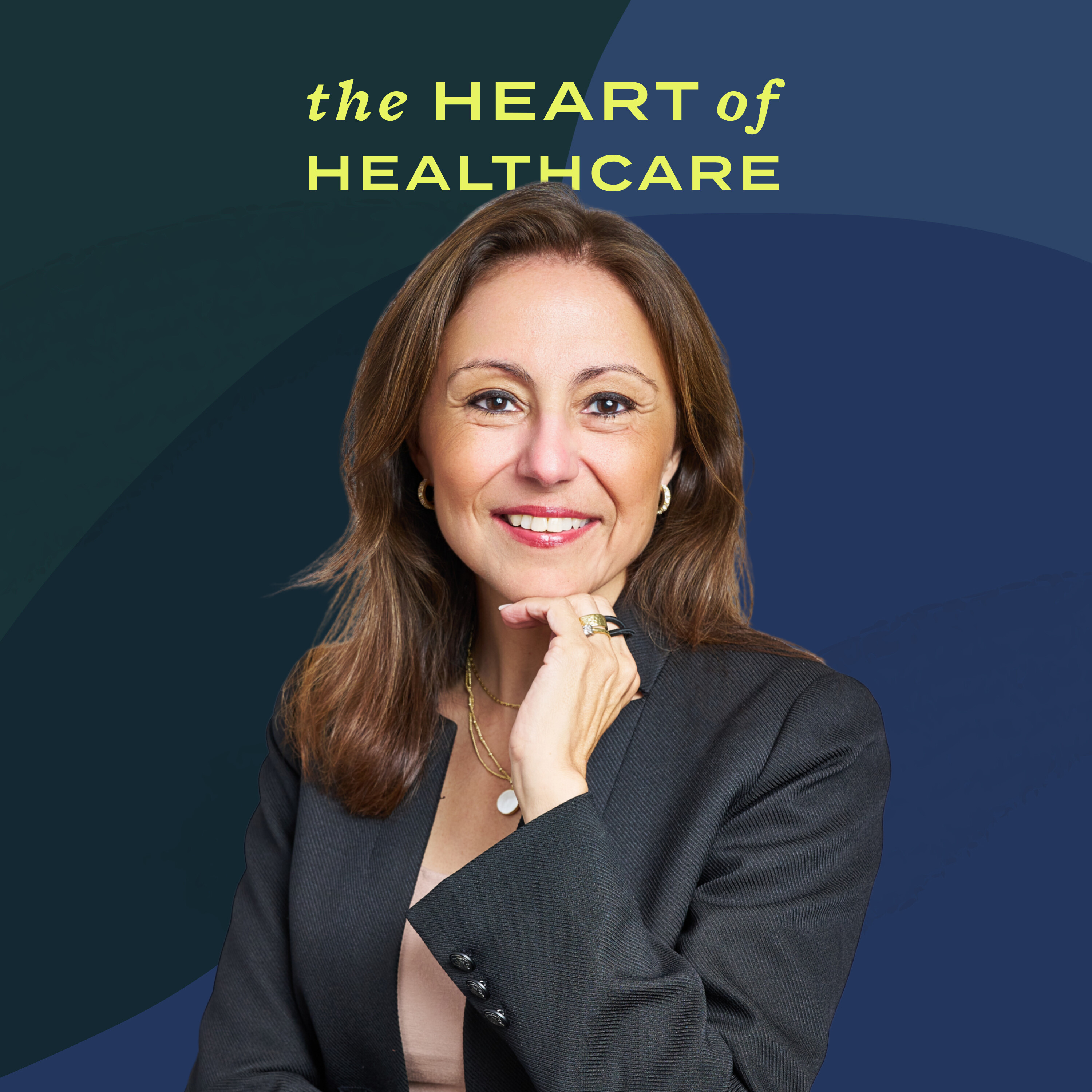 Can AI Finish What The Quality Revolution Started? | Bunkerhill Health CCO Dr. Azita Hamedani 21.09.2026 37minFor decades, healthcare's quality movement gave us checklists, forcing functions, and protocols to catch human error before it reached a patient. It worked, to a point. But as medical knowledge and patient complexity keep outpacing what any human system can track, a new question is emerging: can AI pick up where that movement left off?In this episode, in her first interview since stepping into the role, we talk with Dr. Azita Hamedani, the newly appointed Chief Clinical Officer at Bunkerhill Health, an AI company backed by Sequoia and Khosla Ventures. After nearly her entire career in academic medicine, Azita made the leap to a startup chasing a promise she's been thinking about since medical school.We cover:The medical school moment that first pulled her toward patient safety over bench scienceWhy she believes healthcare has hit the ceiling of what checklists and protocols alone can doThe three different types of health system leaders who all understand a different piece of the AI puzzle, and why that's a problemWhat actually happened behind the scenes on one real patient's chart, without a single human triggering itHer take on the Khosla and AMA debate over whether doctors should stay in the loopA personal story from her own cancer diagnosis, and the one question she asked her surgeon that no AI could ever answerAbout our guest:Azita G. Hamedani, MD, MPH, MBA, is the Chief Clinical Officer at Bunkerhill Health. She joined the company based on the belief that its long-horizon AI agent is the first technology capable of ensuring every patient receives optimal care. She spent 25 years in various leadership roles within large-scale academic health systems. Most recently, she served as President and CEO of UNC Faculty Physicians and Vice Dean for Clinical Affairs at the University of North Carolina School of Medicine. Dr. Hamedani also spent nearly two decades at the University of Wisconsin School of Medicine and Public Health and UW Health, where she founded the Department of Emergency Medicine and chaired it for over a decade, while also leading system initiatives related to quality and innovation. She completed her emergency medicine training at Mass General Brigham, and completed a fellowship in hospital administration at Massachusetts General Hospital. She holds degrees from Yale University and Northwestern’s Kellogg School of Management. —📍 Connect with us:Heart of Healthcare websiteLinkedInYouTube See Privacy Policy at https://art19.com/privacy and California Privacy Notice at https://art19.com/privacy#do-not-sell-my-info.
 -
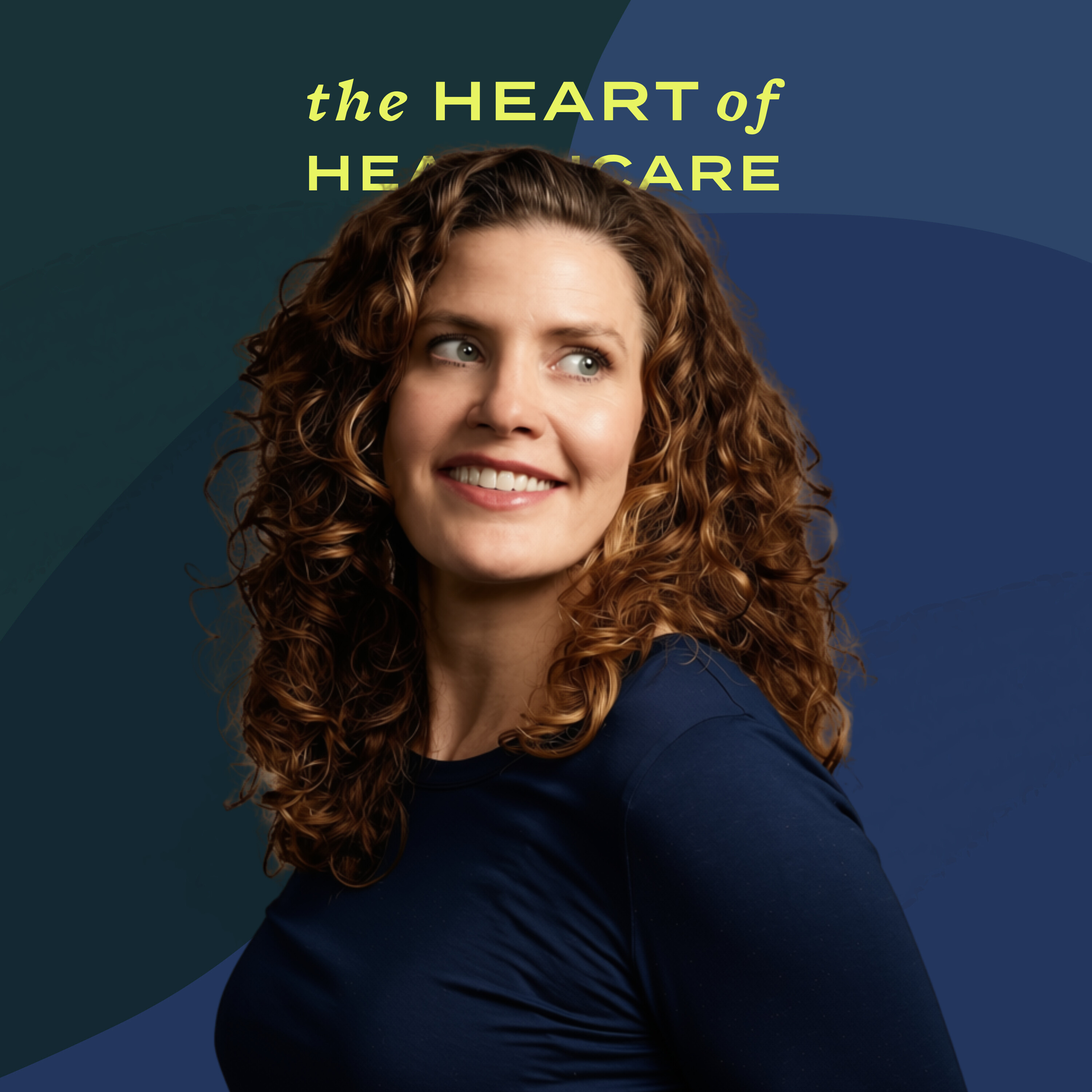 Anthropic’s Bet on the Future of Healthcare | Healthcare and Life Sciences Lead, Sarah Russell 14.09.2026 33minSarah Russell picked up a phrase at her new job at Anthropic: a "non-regrettable primitive." It's how she describes the kind of infrastructure she thinks Anthropic should be building in healthcare, and it says a lot about how one of the most closely watched companies in health AI is positioning itself. In this episode, Steve talks with Sarah Russell, MD healthcare and life sciences lead at Anthropic. This conversation comes as Anthropic heads toward what's shaping up to be one of the most anticipated IPOs in years.We cover:What Anthropic is doing in healthcareWhy HIPAA is struggling to keep up with AI agents Where she thinks AI will change care first (it’s not where you'd expect!)The two very different bars regulators are weighing AI against, and why the choice matters more than most people realizeThe one piece of advice from her father that still shapes how she builds teams, and what she tells doctors nervous about a career in medicine nowAbout our guest:Sarah currently works on healthcare and life sciences projects at Anthropic. She is particularly passionate about research that explores how to make Claude safer and less confidently wrong. Prior to Anthropic, she was at Google X, an innovation hub at Alphabet, where she learned to lead teams of smart engineers building ML- and LLM-based products. Seeing the earliest version of Google’s Med-PaLM summarize a patient chart made her excited about healthcare technology all over again. Prior to Google, she was a CMIO in the VA system and a start-up founder. A graduate of Harvard College and Harvard Medical School, Sarah did her internal medicine residency at MGH and completed an MBA at Wharton. She still practices part-time in Urgent Care at Stanford, where she is an Assistant Professor.⸺📍 Connect with us:Heart of Healthcare websiteLinkedInYouTubeIf you're enjoying the show, please subscribe and leave us a review! See Privacy Policy at https://art19.com/privacy and California Privacy Notice at https://art19.com/privacy#do-not-sell-my-info.
 -
 Why American Workers Pay So Much for Healthcare | Health Rosetta CEO Dave Chase 07.09.2026 41minHealthcare costs are taking an ever-larger bite out of American workers’ compensation. This Labor Day, we’re revisiting a conversation with Health Rosetta CEO Dave Chase about why healthcare has become so expensive and what employers can do about it.Dave argues that healthcare itself isn’t the problem: clinicians receive only a fraction of every dollar spent, while price gouging, administrative bloat, and middlemen consume much of the rest. He explains how community-owned health plans are rebuilding employer healthcare around primary care, transparency, and better incentives—and how the savings can flow back to workers and their communities.We cover:Why rising healthcare costs ultimately come out of workers’ payHow community-owned health plans cut out costly middlemenWhy better primary care can lower costs while improving outcomesHow employers can rebuild health benefits from the ground upWhy Dave believes open-source healthcare could challenge entrenched incumbents ⸺📍 Connect with us:Heart of Healthcare websiteLinkedInYouTube⸺About our guest:Dave Chase is the founder of Health Rosetta and creator of the community-owned health plan (COHP) model, a movement that has helped thousands of employers covering more than 5 million Americans build health plans that deliver better care at 20 to 50% lower cost. In 2024 he launched Nautilus Health Institute, seeded with $4 million in Health Rosetta intellectual property, to publish open-source standards and contracting templates that reset market norms for employers, clinicians, and communities. Dave’s work has reached over 1 million people through bestselling books, including “CEO’s Guide to Restoring the American Dream” and his newest, “Relocalizing Health: Taking Back Healthcare. Rebuilding Communities,” along with TED talks and TV and film appearances. He received the World Health Care Congress’ Lifetime Achievement Award for Health Benefits Innovation. Before Health Rosetta, Dave led Microsoft’s $30 billion healthcare ecosystem and co-founded Avado, later acquired by WebMD/Medscape. See Privacy Policy at https://art19.com/privacy and California Privacy Notice at https://art19.com/privacy#do-not-sell-my-info.
 -
 📣 Digital Health Download: September 2026 31.08.2026 22minIt's our monthly Digital Health Download, and September's stories all circle the same tension: technology keeps promising to fix healthcare's problems, but just as often it moves them somewhere else, or creates new ones entirely. This week, Halle unpacks a news-heavy month, weighing who actually benefits as markets, algorithms, and AI get closer to our health decisions.We cover:Americans can now bet on clinical trials and FDA regulatory reviews - but do we want that?Meta's massive settlement over harming childrenThe surprising reason AI might be making healthcare more expensive instead of lessA new study on the biggest lever we're not pulling to bend the healthcare cost curveTwo lawsuits rattling a popular wearable and a celebrity-backed mental health startupWhat a widely used drug class reveals about bias in hiring, and the uncomfortable questions that raises⸺📍 Connect with us:Heart of Healthcare websiteLinkedInYouTube See Privacy Policy at https://art19.com/privacy and California Privacy Notice at https://art19.com/privacy#do-not-sell-my-info.
 -
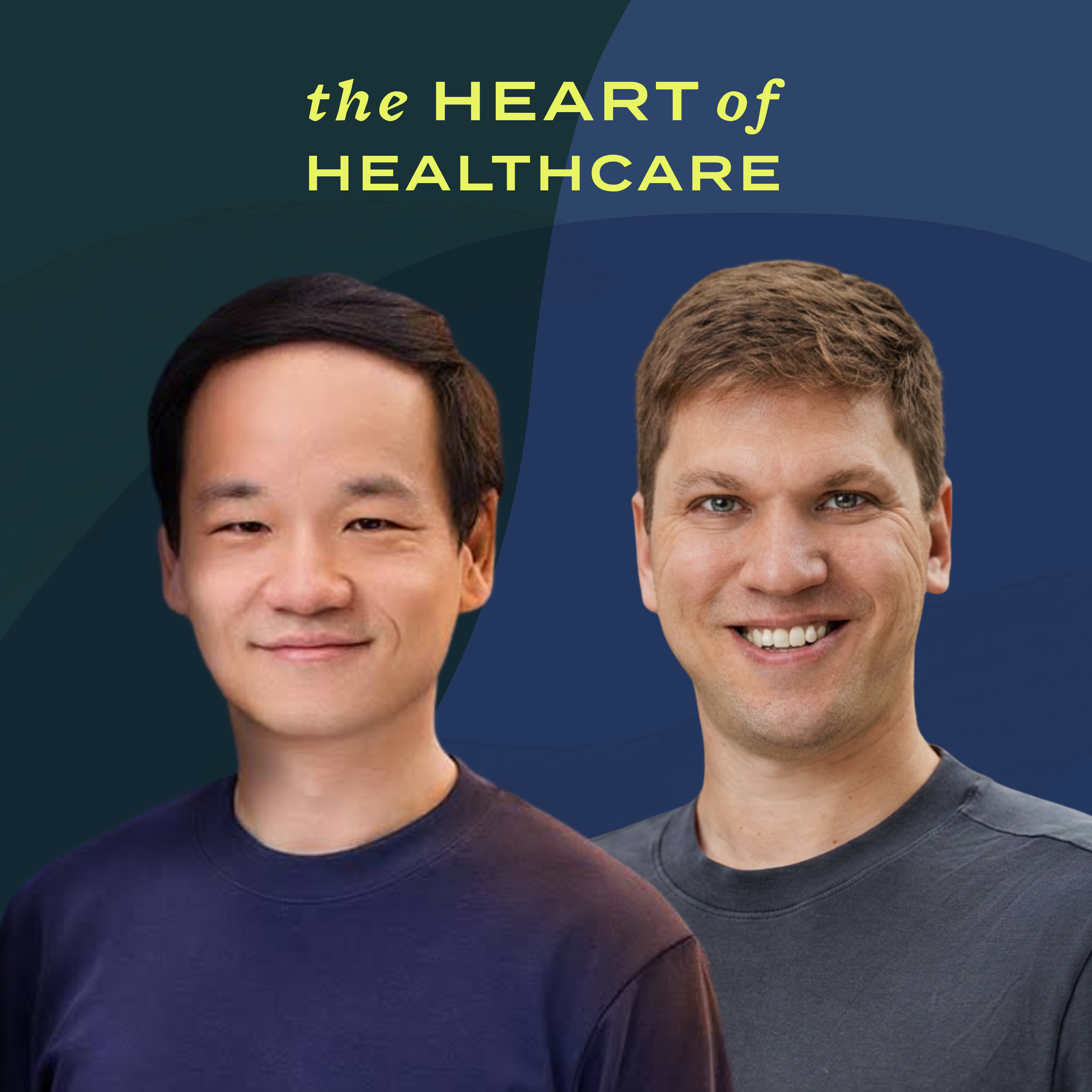 From Early Struggles to Billion+ Exit | SmarterDx Founders Michael Gao & Joshua Geleris 24.08.2026 35minWe don't talk enough about how hard it actually is to build a healthcare startup. Behind SmarterDx's story, now one of the biggest health AI exits to date, were 18 months without a single customer, a pivot that seemed to make no product sense, and two co-founders who went back to working as hospitalists just to get by.In this episode, Steve gets the real story from Dr. Michael Gao and Dr. Joshua Geleris about the challenges they faced and what ultimately unlocked real growth and led to their billion+ acquisition by New Mountain Capital.We cover:Why their first product idea failed and what customer objections actually taught them to build insteadThe counterintuitive workflow that made contingency pricing possibleHow AI translation of clinical notes into billing codes now outperforms the average human, and what that means for coders and nursesWhy "moat" is the wrong metaphor and what a flywheel looks like insteadWhat they'd do differently in the acquisition processAbout our guests:Michael Gao, MD, the CEO and co-founder of SmarterDx. Prior to founding SmarterDx, Dr. Gao was the Medical Director for Transformation at NewYork-Presbyterian, where he led applied AI development, implementation, and strategy for the health system. Dr. Gao holds faculty positions at the Icahn School of Medicine at Mount Sinai and Weill Cornell Medicine. Dr. Gao completed his internship and residency in Internal Medicine at NewYork-Presbyterian.. He received his M.D. from the University of Michigan and a B.S from the University of California Los Angeles.Josh Geleris, MD, is the Head of Product and co-founder of SmarterDx. Prior to SmarterDx, he was Assistant Professor of Medicine at Columbia University, where he was funded by the National Institutes of Health and the Department of Defense for clinical informatics and data science, and led implementation of Epic for providers. Dr. Geleris completed his MD at the Technion-Israeli Institute of Technology and his Internal Medicine internship and residency at NewYork-Presbyterian. ⸺📍 Connect with us:Heart of Healthcare websiteLinkedInYouTube See Privacy Policy at https://art19.com/privacy and California Privacy Notice at https://art19.com/privacy#do-not-sell-my-info.
 -
 Training Doctors for the Next 40 Years | Stanford Medical School Dean Dr. Lloyd Minor 17.08.2026 39minIt's back-to-school szn, and while some kids are stressing over earlier wake-ups, this year's incoming medical students have a bigger question to answer: how do you train for a career that could still have you practicing medicine in the 2070s, when the tools of medicine are changing so rapidly?For our back-to-school episode, we sat down with Stanford University School of Medicine Dean Dr. Lloyd Minor to talk about how AI is already reshaping what future doctors learn and how they're taught, as well as what's still not working in American healthcare.We cover:What medical students are actually being taught about AI, and where Stanford still draws the lineWhy Stanford's tumor boards no longer start with humansThe surprising way Dr. Minor thinks AI could level the playing field in healthcare accessWhy the same AI tools helping patients feel more informed are also making them more anxiousThe counterintuitive reason new medical technology gets more expensive before it gets cheaperWhat's still standing in the way of a vision for precision medicine that's been decades in the makingAbout our guest:Lloyd B. Minor, MD, is a scientist, surgeon, and academic leader. He is the Carl and Elizabeth Naumann Dean of the Stanford University School of Medicine and Vice President for Medical Affairs at Stanford University. Dr. Minor also is a professor of Otolaryngology–Head and Neck Surgery and a professor of Bioengineering and of Neurobiology, by courtesy, at Stanford University.As dean, Dr. Minor has had an integral role in setting strategy for the clinical enterprise of Stanford Medicine, an academic medical center that includes the Stanford University School of Medicine, Stanford Health Care, and Stanford Medicine Children’s Health. With his leadership, Stanford Medicine leads the biomedical revolution in Precision Health. His book, “Discovering Precision Health,” describes this shift to more preventive, personalized health care and highlights how biomedical advances are dramatically improving our ability to treat and cure complex diseases. In 2021, Dr. Minor articulated and began realizing a bold vision to transform the future of life sciences at Stanford University and beyond – a multi-decade journey enabled by Precision Health.In August 2023, Dr. Minor was appointed Vice President for Medical Affairs to lead all matters related to health and medicine at Stanford University.Before Stanford, Dr. Minor was provost and senior vice president for academic affairs of Johns Hopkins University. Prior to this appointment in 2009, Dr. Minor served as the Andelot Professor and director (chair) of the Department of Otolaryngology–Head and Neck Surgery in the Johns Hopkins University School of Medicine and otolaryngologist-in-chief of The Johns Hopkins Hospital.With more than 160 published articles and chapters, Dr. Minor is an expert in balance and inner ear disorders perhaps best known for discovering superior canal dehiscence syndrome, a debilitating disorder characterized by sound- or pressure-induced dizziness. He subsequently developed a surgical procedure that corrects the problem and alleviates symptoms.In 2012, Dr. Minor was elected to the National Academy of Medicine.—📍 Connect with us:Heart of Healthcare websiteLinkedInYouTube See Privacy Policy at https://art19.com/privacy and California Privacy Notice at https://art19.com/privacy#do-not-sell-my-info.
 -
 Can Oura Become the Doctor in Your Pocket? | Oura CEO Tom Hale 10.08.2026 43minWe're on summer break and replaying one of our favorite episodes. This episode originally aired on September 22, 2025.A wearable can collect endless data, but it only matters if people trust it enough to change their behavior.In this replay, Oura CEO Tom Hale joins Steve and Michael to explain how the company combines clinical-grade accuracy with a consumer-friendly product. They discuss why the ring’s form factor makes overnight tracking so powerful, how Oura turns physiological signals into useful guidance, and why the company is being pulled faster than expected into traditional healthcare.We cover:Why sleep data can reveal changes in the body before symptoms appearHow Oura designed a health product that supports users without judging or nagging themWhy accuracy is the foundation for trust, predictions, and behavior changeHow Oura navigates the boundary between wellness products and regulated medical devicesThe company’s expansion into Medicare Advantage, women’s health, metabolic health, and clinical care—About our guest:Tom Hale is the Chief Executive Officer at ŌURA and a member of its board. As the CEO he sets the company’s business strategy and vision to make health a daily practice for members all over the world. He has over 30 years of experience across the technology and consumer product industry.Before joining ŌURA, Hale was president of Momentive where he drove B2B strategy and led product growth. During his time there he was instrumental in taking the company public in 2018, leading the team in key acquisitions, and driving the evolution and rebranding of the company into a multiple SAAS business. Previously, he held leadership roles at HomeAway and Linden Lab as the Chief Operating Officer and Chief Product Officer, respectively, and held executive roles at Macromedia and Adobe.Hale has a Bachelor of Arts from Harvard University and sits on the boards of Cars.com, RocketReach, and NoiseAware.—If you're enjoying the show, we would so appreciate it if you left us a review!—📍 Connect with us:Heart of Healthcare websiteLinkedInInstagramYouTubeTikTok See Privacy Policy at https://art19.com/privacy and California Privacy Notice at https://art19.com/privacy#do-not-sell-my-info.
 -
 📣 Digital Health Download: August 2026 03.08.2026 34minThis month is about the gap between what a system offers and what people actually get from it: drugs that work better with support nobody's paying for, AI that's already answering more medical questions than most doctors ever will, and a labor market where staying healthy can mean staying stuck. Halle and Michael break down the stories reshaping digital health in August.We cover:Why GLP-1 funding is shifting from prescribing platforms into "companion" ecosystemsThe FDA panel vote that opens a legal pathway for six unapproved peptides, and what this could meanOur thoughts on OpenAI's new ChatGPT Health product, now available to every US adultThe Florida pastor's lawsuit against OpenAIWhy nearly one in four US workers are staying in jobs they'd rather leave, just to keep their health insuranceThe healthcare argument buried inside the bill to make daylight saving time permanentLinks:Rock Health, H1 2026 digital health funding recapHalle's research piece, Virtual GLP-1 startups: Pill mills or the future of obesity care?RAPS, FDA advisory committee backs six peptides for compounding listTechCrunch, OpenAI makes ChatGPT Health available to all US usersCBS News, ChatGPT's medical advice nearly killed a Florida man, lawsuit claimsGallup, One in four US employees locked in jobs for health insuranceThe Hill, House passes Sunshine Protection Act— 📍 Connect with us:Heart of Healthcare websiteLinkedInYouTube See Privacy Policy at https://art19.com/privacy and California Privacy Notice at https://art19.com/privacy#do-not-sell-my-info.
 -
 Why We Demand Perfect Machines Yet Tolerate Human Carnage | Dr. Jonathan Slotkin 27.07.2026 27minEvery day, roughly 100 Americans die in crashes caused by human drivers. Yet when a self-driving car hesitates at an intersection or makes the news for an unusual mistake, public trust can evaporate.In this special episode, Dr. Jonathan Slotkin reads his latest Noema essay exploring why we demand perfection from machines while accepting human error as inevitable. Drawing on lessons from medicine, psychology, and autonomous vehicles, he argues that the biggest barrier to safer technology is trust.You'll learn:Why humans judge machine mistakes differently than human mistakesWhat healthcare learned about the difference between being safe and feeling safeWhy autonomous vehicles may already be far safer than human driversHow public perception can slow the adoption of life-saving technologyWhat every AI company should learn about transparency and trust —About our guest:Dr. Jonathan Slotkin is Chief Medical Officer for Strategy & Growth at Geisinger, where he drives growth at the intersection of care delivery, insurance, and digital transformation. A practicing neurosurgeon, he previously served as Geisinger's associate chief medical informatics officer.Jon's current research and writing examine safety, trust, and adoption of autonomous systems in public life. His New York Times guest essay on self-driving car safety was entered into the Congressional Record. His writing regularly appears in Harvard Business Review, STAT, and Noema Magazine. He has authored more than 70 peer-reviewed scientific publications.Previously, as co-founder and chief medical officer of Contigo Health, he partnered with the nation's largest employers to reimagine care for their associates. He co-founded Scrub Capital, a clinician-powered venture capital firm, where he serves as a Partner. He completed neurosurgery residency at The Brigham and Women's Hospital, Harvard Medical School, where he served as chief resident.—This piece was commissioned, edited, and published by Noema Magazine. Noema publishes longform journalism exploring fresh ideas. To read this piece and others, head to noemamag.com.—📍 Connect with us:Heart of Healthcare websiteLinkedInYouTube See Privacy Policy at https://art19.com/privacy and California Privacy Notice at https://art19.com/privacy#do-not-sell-my-info.
 -
 Shareholder Primacy Is Breaking Healthcare | Eric Ries 20.07.2026 41minHealthcare companies are built to improve patients' lives. So why do so many prioritize shareholders over the people they're meant to serve?This week, Halle sits down with Eric Ries, author of Incorruptible, to unpack the rise of shareholder primacy, what it is, and why he believes it's at the root of many of society’s biggest challenges. They discuss the surprising history of corporate governance, the lessons behind Novo Nordisk's century-long success, and what founders can do today to keep their companies aligned with their mission as they grow.We cover:Why shareholder primacy reshaped corporate America (and where we go from here)How Novo Nordisk's unusual ownership structure may have saved GLP-1 researchThe simple governance change that could preserve your company's mission for decadesHow boards, investors, and acquisitions can slowly pull companies away from their original purposeThe founder mistakes that make mission drift almost inevitableAbout our guest:Over the last two decades, Eric Ries’s ideas about continuous innovation, long-term thinking, governance, and market reform have reshaped company building and management practices. He is the creator of the Lean Startup method, and the author of two New York Times bestsellers The Lean Startup and Incorruptible; The Leader’s Guide; and The Startup Way. As a founder, he has put his own ideas into practice with The Long-Term Stock Exchange (LTSE); Answer.AI, an AI R&D lab; Virgil, a legal services startup; and IMVU. On The Eric Ries Show, he talks with world-class technologists, thought leaders, and executives building for the long-term. Check out his book, Incorruptible: Why Good Companies Go Bad…and How Great Companies Stay Great—🙏 Do you like this podcast? An easy and free way to help keep the show going is to leave us a review on Apple, Spotify, or wherever you're listening.—📍 Connect with us:Heart of Healthcare websiteLinkedInYouTube See Privacy Policy at https://art19.com/privacy and California Privacy Notice at https://art19.com/privacy#do-not-sell-my-info.
 -
 Can AI Build the First New Pharma Giant in Decades? | Formation Bio CEO Ben Liu 13.07.2026 43minOver the last decade, the number of drug candidates entering development has doubled, yet the number of successful drug approvals remains flat at ~50 per year.This week, we sit down with Formation Bio founder and CEO Ben Liu. His company has raised more than $600 million to build what he hopes will become the first new enduring pharmaceutical company in decades, powered by AI. Ben explains why he believes clinical development, not drug discovery, is becoming the industry's biggest bottleneck, and how AI could fundamentally change the economics of bringing new medicines to patients.We cover:Why there hasn't there been a big pharma company created since the 1980sWhich drug categories Ben believes could become the next GLP-1s and reshape healthcareWhy Formation Bio chose to become a pharmaceutical company instead of selling softwareThe real bottleneck in bringing medicines to patientsBen's roadmap for how AI will transform drug development over the next 10 to 20 yearsAbout our guest:Ben Liu is the co-founder and CEO of Formation Bio. He received his DPhil at Oxford as a Rhodes Scholar, leveraging machine-learning, AI, and big-data to develop diagnostics and therapeutics for Parkinson’s and Alzheimer’s disease. During his graduate work, he observed the way clinical trials bottlenecked the development of new treatments for patients, compelling him to start Formation Bio.Before Formation Bio, Ben graduated from Yale where he was awarded the college’s highest honor at graduation and received his MPhil with distinction in Computational Biology from the Department of Applied Mathematics and Theoretical Physics at Cambridge as a Paul Mellon Fellow. Ben also serves as an Advisor to Harvard Business School’s MS/MBA Program in Biotechnology.— 🙏 Do you like this podcast? An easy and free way to help keep the show going is to leave us a review on Apple, Spotify, or wherever you're listening.— 📍 Connect with us:Heart of Healthcare websiteLinkedInYouTube See Privacy Policy at https://art19.com/privacy and California Privacy Notice at https://art19.com/privacy#do-not-sell-my-info.
 -
 Building A Healthcare Unicorn In Three Years | Assort Health Founders Jeff Liu and Jon Wang 06.07.2026 41minThey built a $1.2 billion healthcare AI company in under three years, but they say the hardest part of healthcare AI isn't the AI.This week, Halle sits down with Assort Health co-founders and co-CEOs Jeffery Liu and Jon Wang, whose company reached a $1.2 billion valuation in under three years. They discuss why building great healthcare AI takes far more than good models, how they scaled from 15 employees to nearly 250 in a year, and what they've learned from more than 190 million patient interactions. They also share why voice AI is harder than it looks, how they're thinking about building durable moats in the age of foundation models, and why helping patients navigate the healthcare system may be one of AI's biggest opportunities.We cover:The AI role suddenly showing up at every healthcare startupThe surprising demographic that gives AI voice agents the highest satisfaction scoresHow healthcare AI is shifting from single-purpose tools to platforms that remember patients across every interactionWhy the biggest moat in healthcare AI may not be the model itselfThe biggest misconception investors have about moats in healthcare AIHow to triple your team without losing the culture that made the company successful— 🙏 Do you like this podcast? An easy and free way to help keep the show going is to leave us a review on Apple, Spotify, or wherever you're listening.— 📍 Connect with us:Heart of Healthcare websiteLinkedInYouTube See Privacy Policy at https://art19.com/privacy and California Privacy Notice at https://art19.com/privacy#do-not-sell-my-info.
 -
 📣 Digital Health Download: July 2026 29.06.2026 34minJuly marks five years of The Heart of Healthcare, and we're grateful for every listener who's tuned in. If you've enjoyed the show, please show your love by leaving us a review!This month, Steve and Halle take stock of an industry where capital is concentrating, incumbents are making big bets, AI is moving from promise to early proof points, and a public health crisis is quietly building in the background.We cover:The digital health funding numbers that just dropped, and what they reveal about where the money is really goingA $12 billion deal that has the RCM world buzzingThe Nature study that has clinical AI companies on edgeA new entrant into medical imaging that nobody saw comingThe public health crisis that sports betting built, and why healthcare isn't talking about it enoughEarly data out of Utah that could change how we think about AI in clinical settingsLinks:IPO Watch List: https://halletecco.substack.com/p/the-digital-health-ipo-watchlistEnsemble Health / Thoreau deal: https://hitconsultant.net/2026/06/18/thoreau-makes-strategic-investment-in-ensemble-health/Nature Medicine AI study: https://www.nature.com/articles/s41591-026-04431-5Midjourney Medical: https://www.theverge.com/ai-artificial-intelligence/952011/midjourney-medical-ai-ultrasound-scanDoctronic pilot outcomes: https://commerce.utah.gov/wp-content/uploads/2026/05/Doctronic-Outcomes-May-2026.pdf— 📍 Connect with us:Heart of Healthcare websiteLinkedInYouTube See Privacy Policy at https://art19.com/privacy and California Privacy Notice at https://art19.com/privacy#do-not-sell-my-info.
 -
 Healthcare’s Oppenheimer Moment | Listener Q&A 22.06.2026 46minBack by popular demand, 3x Heart of Healthcare guest Eric Larsen joins Steve to answer listener questions on healthcare's AI revolution. Drawing on the ideas behind his latest essay, Healthcare's Oppenheimer Moment, Eric argues that healthcare may be approaching a once-in-a-generation inflection point, and discusses what leaders need to understand before it's too late.We cover:Whether foundation models will eventually outperform healthcare-specific AI companiesWhy healthcare remains stuck in AI pilot projects while the technology races aheadThe biggest obstacle to clinical AI adoptionWhy liability may be the most important (and least discussed) issue in healthcare AIEric's controversial take on how AI will reshape the healthcare workforce—Links:Eric's essay is available here — 🙏 Do you like this podcast? An easy and free way to help keep the show going is to leave us a review on Apple, Spotify, or wherever you're listening.— 📍 Connect with us:Heart of Healthcare websiteLinkedInYouTube See Privacy Policy at https://art19.com/privacy and California Privacy Notice at https://art19.com/privacy#do-not-sell-my-info.
 -
 How AI Changed Healthcare Fundraising and Venture Capital 15.06.2026 30minHealthcare AI funding is booming, but the money is flowing to fewer companies than ever before. As investors pour capital into a small group of breakout winners, founders are navigating a fundraising environment where expectations seem to change every quarter. Based on interviews with 24 healthcare founders and a dozen healthcare investors, Halle breaks down what is actually happening in the market today, from pitch meetings and diligence processes to the growing debate over whether AI has fundamentally changed venture capital itself. Why healthcare AI fundraising has become a tale of two marketsThe two questions dominating investor meetings in 2026The metrics VCs are looking for todayThe debate over whether investors should abandon traditional ownership targetsWhy high valuations can be both a gift and a trap for founders —Show notes:Submit questions for our Eric Larsen healthcare AI Q&A here Part I: AI ate digital health (and what that means for fundraising)Part II: Convicted or disciplined: How healthcare VCs are split on investing— 🙏 Do you like this podcast? An easy and free way to help keep the show going is to leave us a review on Apple, Spotify, or wherever you're listening.— 📍 Connect with us:Heart of Healthcare websiteLinkedInYouTube See Privacy Policy at https://art19.com/privacy and California Privacy Notice at https://art19.com/privacy#do-not-sell-my-info.
 -
 What Healthcare Can Learn From Waymo | Qualified Health Founder and CEO Justin Norden 08.06.2026 34minAutonomous vehicles may be the closest real-world example of AI operating in life-and-death situations at scale. Justin Norden believes healthcare has a lot to learn from how that industry approached safety, testing, adoption, and trust. This week, Michael and Halle sit down with the founder and CEO of Qualified Health, fresh off the company’s $125 million Series B, to discuss why healthcare organizations need to think differently about deploying AI. Justin shares how his experience at Stanford, Apple, Waymo, and in healthcare investing shaped his view that health systems need AI infrastructure, governance, and workforce buy-in, not just another point solution.We cover:What healthcare can learn from Waymo’s approach to safe AI deploymentWhat founders need to understand about building around EpicWhy health systems need to treat AI as a CEO-level priority, not an innovation projectHow Qualified Health is helping systems deploy, monitor, and measure AI workflowsWhy governance, safety, and ROI matter as much as model performanceWhy clinicians are right to be skeptical about AI liabilityAbout our guest:Justin Norden, MD is Co-Founder and CEO of Qualified Health building the trusted platform for health system AI. Additionally, he has been an Adjunct Professor at Stanford Medicine in the Department of Biomedical Informatics Research where his research and teaching focused on AI in medicine and digital health where he founded and still teaches courses on digital health and generative AI in medicine. Previously, Dr. Norden was Co-Founder and CEO of Trustworthy AI, a company focused on algorithm safety and trust, which was acquired by Waymo (Google Self-Driving). He was a Partner at GSR Ventures leading investments in healthcare and AI, worked on the healthcare team at Apple, and helped start the Stanford Center for Digital Health. Dr. Justin Norden received an MD and MBA from Stanford University, an MPhil in Computational Biology from the University of Cambridge, and a BA in Computer Science from Carleton College.— 🙏 Do you like this podcast? An easy and free way to help keep the show going is to leave us a review on Apple, Spotify, or wherever you're listening.—Show notes:The Data on Self-Driving Cars Is Clear. We Have to Change Course. Dr. Jonathan Slotkin op-ed in the NYT— 📍 Connect with us:Heart of Healthcare websiteLinkedInYouTube See Privacy Policy at https://art19.com/privacy and California Privacy Notice at https://art19.com/privacy#do-not-sell-my-info.
 -
 📣 Digital Health Download: June 2026 01.06.2026 42minHealthcare is simultaneously propping up the US economy and facing one of its most uncertain moments in years.This month, Halle and Steve unpack the growing contradictions shaping digital health right now: healthcare jobs are driving nearly half of US job growth while provider bankruptcies surge, AI is flooding into healthcare faster than regulators can keep up, and Washington continues to send mixed signals on the future of healthcare policy and innovation.We cover:Why healthcare jobs are now carrying the US labor market and what Medicaid cuts could mean for the economyThe surprising comeback of wearables and how companies like Whoop, Oura, and Google are building massive subscription businessesCMS’s new ACCESS model and the debate over whether AI-driven care can actually lower costs without sacrificing qualityThe lawsuit against Character.AI and what it reveals about the growing demand for AI mental health toolsWhy investors are pouring billions into AI drug discovery despite huge unanswered questions about clinical developmentMarty Makary’s resignation from the FDA and what ongoing instability means for biotech, pharma, and healthcare innovation—Show notes:Forget Tech and Hollywood. California Is Powered by Healthcare Jobs. (WSJ)Oura Debuts Ring 5, Ahead of Potential IPO (WWD)Whoop Raises $575 Million at $10.1 Billion Valuation (Whoop)Fitbit Ditches the Screen With Its New $99 Whoop Rival (PC Mag)Why big digital health players are missing from Medicare’s chronic care experiment (STAT)Character.AI Lawsuit (PA.gov) Marty Makary out as FDA chief (Axios)— 🙏 Do you like this podcast? An easy and free way to help keep the show going is to leave us a review on Apple, Spotify, or wherever you're listening.— 📍 Connect with us:Heart of Healthcare websiteLinkedInYouTube See Privacy Policy at https://art19.com/privacy and California Privacy Notice at https://art19.com/privacy#do-not-sell-my-info.
 -
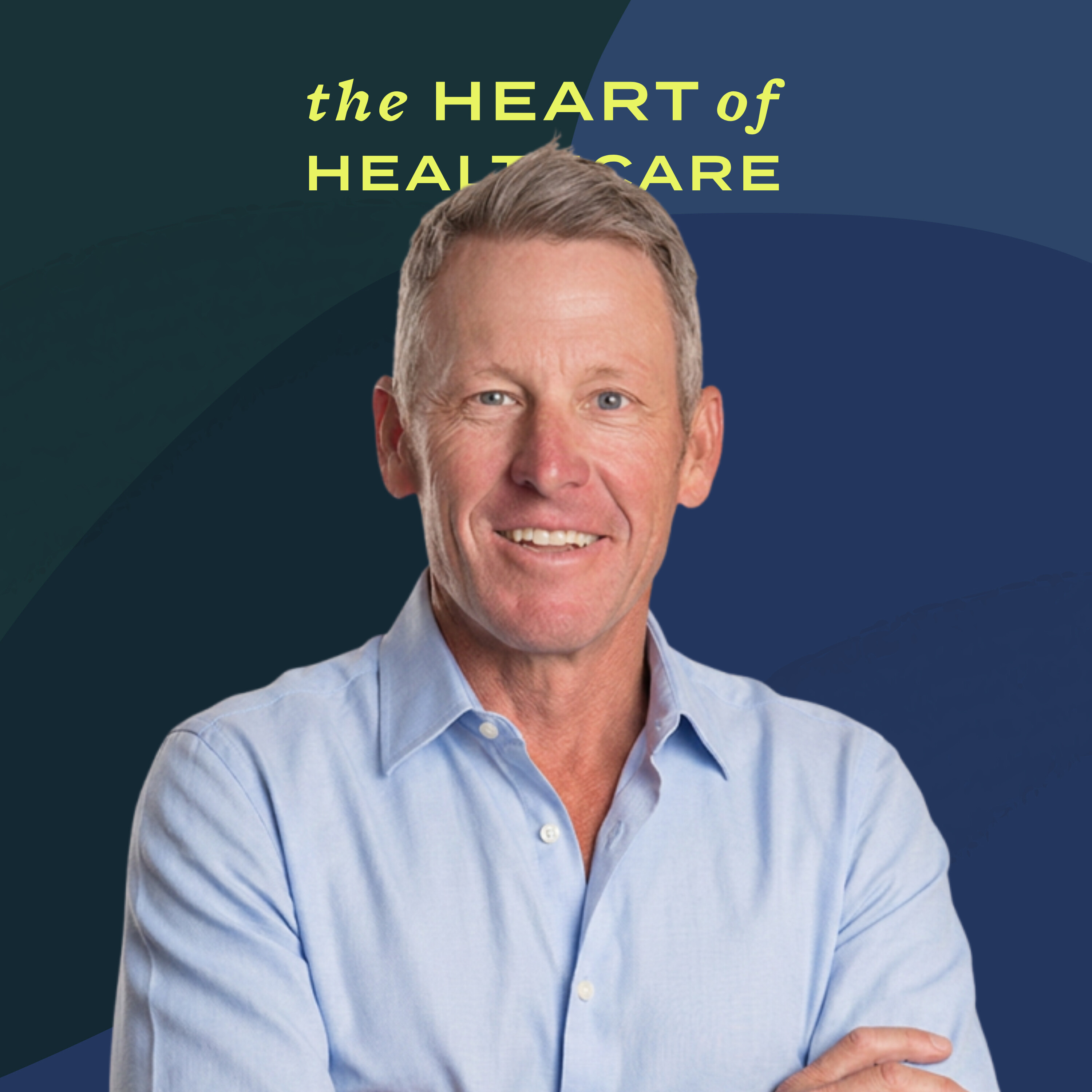 Investing in “Whole Person Care” | Lance Armstrong 25.05.2026 34minMost careers don’t follow a straight line. But few require starting over in full view of the public.This week, Halle sits down with Lance Armstrong to discuss how he rebuilt his life and career after multiple turning points, including surviving advanced cancer, and how those experiences shaped his perspective on health, performance, and reinvention. Now, through his venture firm Next Ventures, he backs companies focused on what they call “whole person health” — spanning prevention, wellness, diagnostics, longevity, and healthcare outside the traditional system.We cover:Why he chose to become a VC, and what he likes (and dislikes) about the jobHow his experience as a patient shapes how he evaluates companiesWhy preventive care is growing outside the traditional healthcare systemWhat he looks for in founders building across the care continuumWhat it takes to rebuild trust and start overAbout our guest:Lance Armstrong is a former professional cyclist, entrepreneur, and investor. After surviving advanced testicular cancer, he founded Livestrong, helping raise more than $500 million to support cancer patients and survivors worldwide. In 2019, he co-founded Next Ventures, a venture capital firm focused on health, wellness, and consumer brands, with investments including Oura, Cofertility, Pair Team, and SteadyMD. Prior to Next Ventures, he was an active angel investor in companies such as Uber, DocuSign, and Athletic Brewing.— 🙏 Do you like this podcast? An easy and free way to help keep the show going is to leave us a review on Apple, Spotify, or wherever you're listening.— 📍 Connect with us:Heart of Healthcare websiteLinkedInYouTube See Privacy Policy at https://art19.com/privacy and California Privacy Notice at https://art19.com/privacy#do-not-sell-my-info.
 -
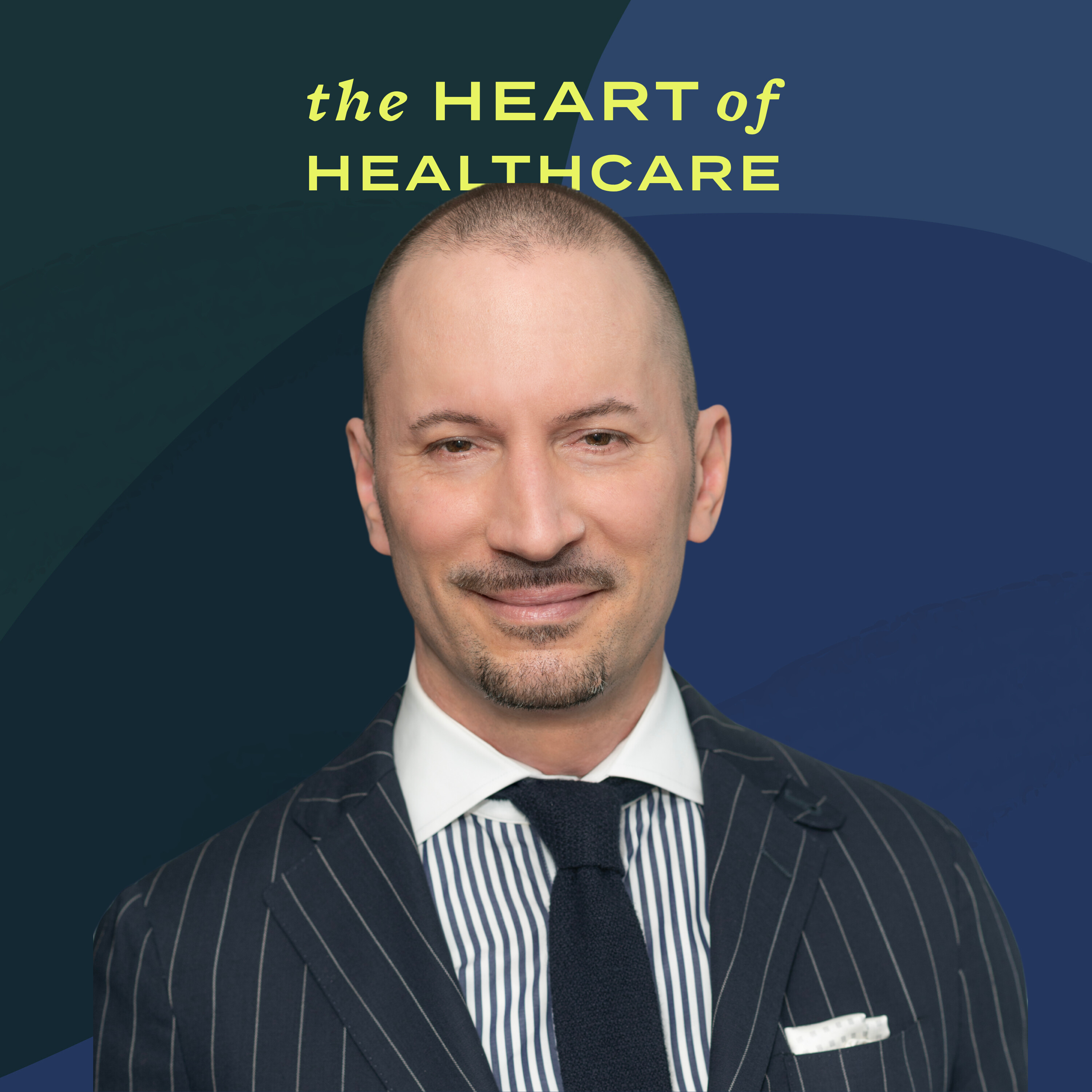 How AI Will Finally Make Healthcare Deflationary | Eric Larsen 18.05.2026 59minAI in healthcare may be entering a new chapter, one where the biggest question is no longer whether the technology works, but who is willing to deploy it, measure it, and take responsibility for the risk.This week, Steve sits down again with Eric Larsen to revisit his predictions from last year’s Webby-winning episode on generative AI in healthcare. Eric argues that the first wave of AI has been inflationary, reinforcing the old payer-provider payment model, but that the next wave could be deflationary as automation moves into revenue cycle, administrative work, clinical reasoning, and drug development. They discuss why incumbents still have a narrow window to co-develop the future, why clinical AI may move faster outside the US, and why liability may become the deciding factor in who wins.We cover:Why healthcare is still the sector most exposed to AI-driven changeHow AI has reinforced fee-for-service dynamics so far, and why that may soon reverseWhat makes some healthcare work more automatable than othersWhy liability may determine how fast clinical AI gets adoptedWhich health systems, payers, and life sciences companies are moving fastestWhat will change across providers, payers, and pharma over the next year— 👉Submit your questions!We’re doing a followup episode with Eric. Submit your listener questions here: https://forms.gle/Bu335DkpHAUvygiBA— About our guest:Eric Jon Larsen is President of TowerBrook Advisors and a member of the healthcare leadership team at TowerBrook Capital Partners, a $30 billion AUM investment firm based in New York and London. TowerBrook invests across private equity, structured minority, and growth opportunities, with a strong focus on healthcare, partnering with health systems, payers, and other strategics. Notably, TowerBrook is the first mainstream private equity firm to achieve B Corp certification, reflecting its commitment to responsible business practices.Eric is a nationally recognized healthcare strategist with a global advisory portfolio spanning CEOs and boards of leading healthcare organizations. He spent 25 years at The Advisory Board Company—five of those as President—advancing best practices in healthcare delivery worldwide. Following the firm's 2017 acquisition by Optum (UnitedHealth Group), Eric co-led strategic partnerships and market development efforts at UnitedHealth. He is also a Venture Partner at Thrive Capital and SignalFire, and serves on several digital health boards, including Somatus and Contessa Health.— 🙏 Do you like this podcast? An easy and free way to help keep the show going is to leave us a review on Apple, Spotify, or wherever you're listening.— 📍 Connect with us:Heart of Healthcare websiteLinkedInYouTube See Privacy Policy at https://art19.com/privacy and California Privacy Notice at https://art19.com/privacy#do-not-sell-my-info.
 -
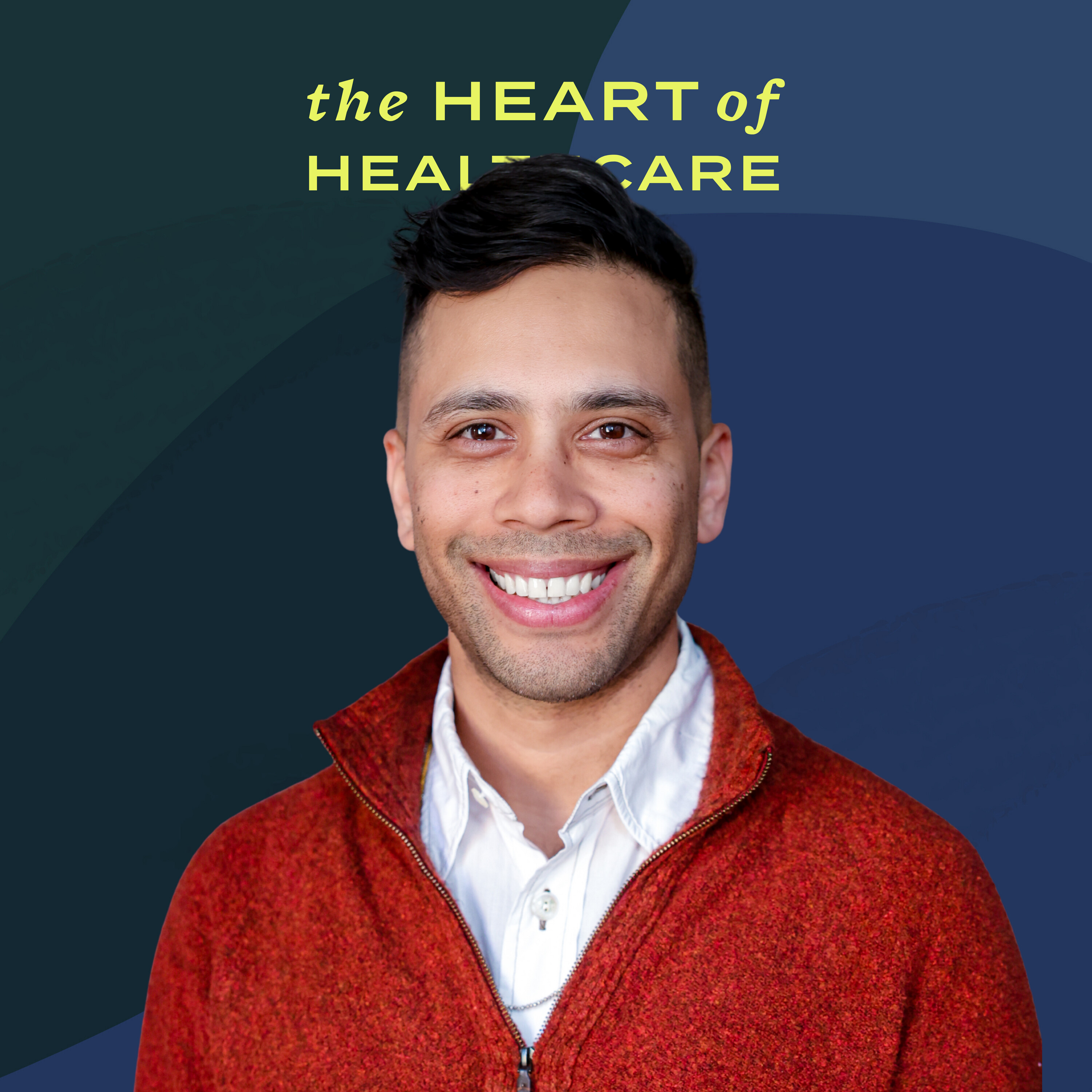 What It Takes To Scale Care With AI | Akido Labs CEO Prashant Samant 11.05.2026 39minMedicaid reimbursements are shrinking, providers are pulling back, and vulnerable populations are losing access to care. Akido Labs is betting that AI can expand care capacity fast enough to reverse that trend.This week, Halle sits down with Prashant Samant, co-founder and CEO of Akido Labs, to discuss what it actually takes to scale care with AI. They explore why Akido built a full-stack healthcare company, how its AI operates inside real clinical workflows, and why the hardest patients are the best place to test whether this model works.We cover:Why he chose to build a full-stack care modelHow AI changes who can deliver care, and whereWhy most healthcare AI tools fail once they hit real clinical workflowsWhy the doctor shortage cannot be solved by training more doctorsHow the bottleneck in healthcare AI is absorption, not innovationAbout our guest:Prashant S. Samant is CEO and co-founder of Akido, a healthcare technology company that builds clinical AI and operates a multi-state medical network serving hundreds of thousands of patients. He co-founded Akido in 2015 through USC’s Digital Health Lab. In 2023, he and his co-founders received the EY Entrepreneur of the Year–Greater Los Angeles Award. Samant is also a co-founder and board member of Grid110, a nonprofit accelerator supporting early-stage entrepreneurs. He holds a bachelor’s degree in economics from Washington University in St. Louis.— Show Notes:Akido’s recently-published white paper on street medicine— 🙏 Do you like this podcast? An easy and free way to help keep the show going is to leave us a review on Apple, Spotify, or wherever you're listening.— 📍 Connect with us:Heart of Healthcare websiteLinkedInYouTube See Privacy Policy at https://art19.com/privacy and California Privacy Notice at https://art19.com/privacy#do-not-sell-my-info.
Panašios tinklalaidės


Populiari šalyje
Ši tinklalaidė taip pat patenka į šių šalių tinklalaidžių topus.


