
The Context Window with David Deming Podcast
David Deming
0
Harvard Dean David Deming hosts conversations with leaders and thinkers about their personal journeys, including the detours, doubts, and influential people along the way. The podcast aims to provide context for the discussions that matter most. It is produced by David Deming and distributed via Substack.
Epizodai
-
 Gina Raimondo on what companies owe workers in the AI economy 16.09.2026 41minDavid Deming's guest today is former U.S. Secretary of Commerce and Rhode Island Governor Gina Raimondo. Secretary Raimondo grew up in Rhode Island, where her father worked at the Bulova watch factory in Providence until it closed down, leaving him unemployed in his mid-50s. Today, she is trying to help workers avoid a similar fate as we transition to an AI economy. In June, she and former Governor of Indiana Eric Holcomb launched RAISE US, a national organization working with employers and states to prepare the American workforce move into new jobs.David asked Secretary Raimondo how sure she is that widespread job losses are coming due to AI, how she plans to measure which initiatives are working, whether training programs can create jobs, and what obligations big companies and frontier AI labs have to help. The two also talk about wage insurance, job sharing, how to prepare for an uncertain future, including the advice she gives to her own children.Then Secretary Raimondo gave David homework and challenged him to design a tax incentive for companies to invest in people. He took her up on it - and shares his proposal after the interview.For show notes and full episodes, subscribe to The Context Window with David Deming: https://thecontextwindowpodcast.substack.com This is a public episode. If you would like to discuss this with other subscribers or get access to bonus episodes, visit thecontextwindowpodcast.substack.com
 -
 Cate Hall | The problem with being a high achiever 09.09.2026 1val 22minIn today's episode, David talks to Cate Hall about her book You Can Just Do Things: How High-Agency People Get What They Want Out of Life, written with Sasha Chapin. Agency is all the rage these days. Tech CEOs like Sam Altman have said that high agency is the skill they are hiring for in the age of AI. High agency people know what they want and they just get things done. But Cate's own life shows how difficult it can be to figure out what you want in the first place.Cate was an incredibly high achiever from a young age. She double-majored in biochemistry and philosophy, graduated from Yale Law School, and was on the fast track with prestigious clerkships and a top job at a fancy law firm. But she was miserable. She quit law and became a very successful poker player, then struggled with drug addiction for about three years and lost everything. After rebuilding her life, she became co-CEO of a biotech company and later the CEO of the Astera Institute, a multibillion-dollar private foundation.How did she do it? Her answer is agency. Cate shares advice on how to be more agentic in your own life, like staring into the abyss, communicating directly instead of expecting people to read your mind, and learning to love the moat of low status. She and David also discuss purpose, love, religion, and why willingly accepting constraints on your life can itself be an exercise of agency.You Can Just Do Things, written with Sasha Chapin: https://www.catehall.com/the-bookCate's newsletter, Useful Fictions: https://usefulfictions.substack.com/For show notes and full episodes, subscribe to The Context Window with David Deming: https://thecontextwindowpodcast.substack.com_If you or someone you know is struggling with substance use, SAMHSA’s National Helpline offers free, confidential help and treatment referrals, and is available 24 hours a day. Call 1-800-662-HELP (4357) or visit FindTreatment.gov. This is a public episode. If you would like to discuss this with other subscribers or get access to bonus episodes, visit thecontextwindowpodcast.substack.com
 -
 AI is worth far more than we pay for it 02.09.2026 29minHow much would someone have to pay you to give up every generative AI tool for a month? For the typical American, the answer is about $11. But one in eight people wouldn’t give up AI for a month even if you paid them $500. In this solo episode, David Deming suggests that might be the most interesting statistic in economics right now - because almost none of the value people say they are getting from AI appears in GDP numbers.Everybody focuses on how AI will affect jobs and productivity in the workplace. Those are important questions, but they are missing a big part of the story, which is the impact on our personal lives. Is AI saving you time at home? Helping you make better decisions? Is it making you happier? These consumer welfare gains aren’t directly priced in the market. Right now, almost all of that hidden value is flowing to you for free because consumers pay little to nothing for AI tools. David works through consumer surplus, GDP-B, the worth of Wikipedia, Facebook, smartphone cameras, and generative AI, and explains why the era of free AI might be over soon.For show notes and full episodes, subscribe to The Context Window with David Deming: https://thecontextwindowpodcast.substack.com This is a public episode. If you would like to discuss this with other subscribers or get access to bonus episodes, visit thecontextwindowpodcast.substack.com
 -
 James Fallows on how the press failed America 26.08.2026 1val 18minIn 1996, James Fallows warned that journalism would fail if it treated politics as sport and tried to compete with entertainment. In this conversation with David Deming, he explains why he thinks that prediction has come true.Fallows discusses the difference between reporting for the public and protecting one’s access to powerful insiders. He recalls serving as Jimmy Carter’s chief White House speechwriter and then publishing a critical account of the administration after he left.The conversation begins with Fallows’ earliest experiences as student journalist: covering Harvard’s anti-war protests in 1969, watching police remove activists from University Hall, and watching the Vietnam draft lottery on television, then losing enough weight to fail his military physical. In a separately recorded follow-up at the end, Fallows returns to The Crimson and an attempt to take editorial control away from its student during the 1969 upheaval.James Fallows is a longtime journalist and writer. At age 27, he became the chief White House speechwriter for President Jimmy Carter, the youngest person to hold the job. He spent four decades at The Atlantic as Washington editor and national correspondent, was the editor of US News & World Report from 1996 to 1998, and worked on the design of Microsoft Word. He is the author of twelve books, including National Defense (1981), winner of a National Book Award, Breaking the News (1996), and Our Towns (2018), written with his wife, Deborah Fallows. He received the National Magazine Award in 2003. Fallows writes the Substack Breaking the News.For show notes and full episodes, subscribe to The Context Window with David Deming: https://thecontextwindowpodcast.substack.com This is a public episode. If you would like to discuss this with other subscribers or get access to bonus episodes, visit thecontextwindowpodcast.substack.com
 -
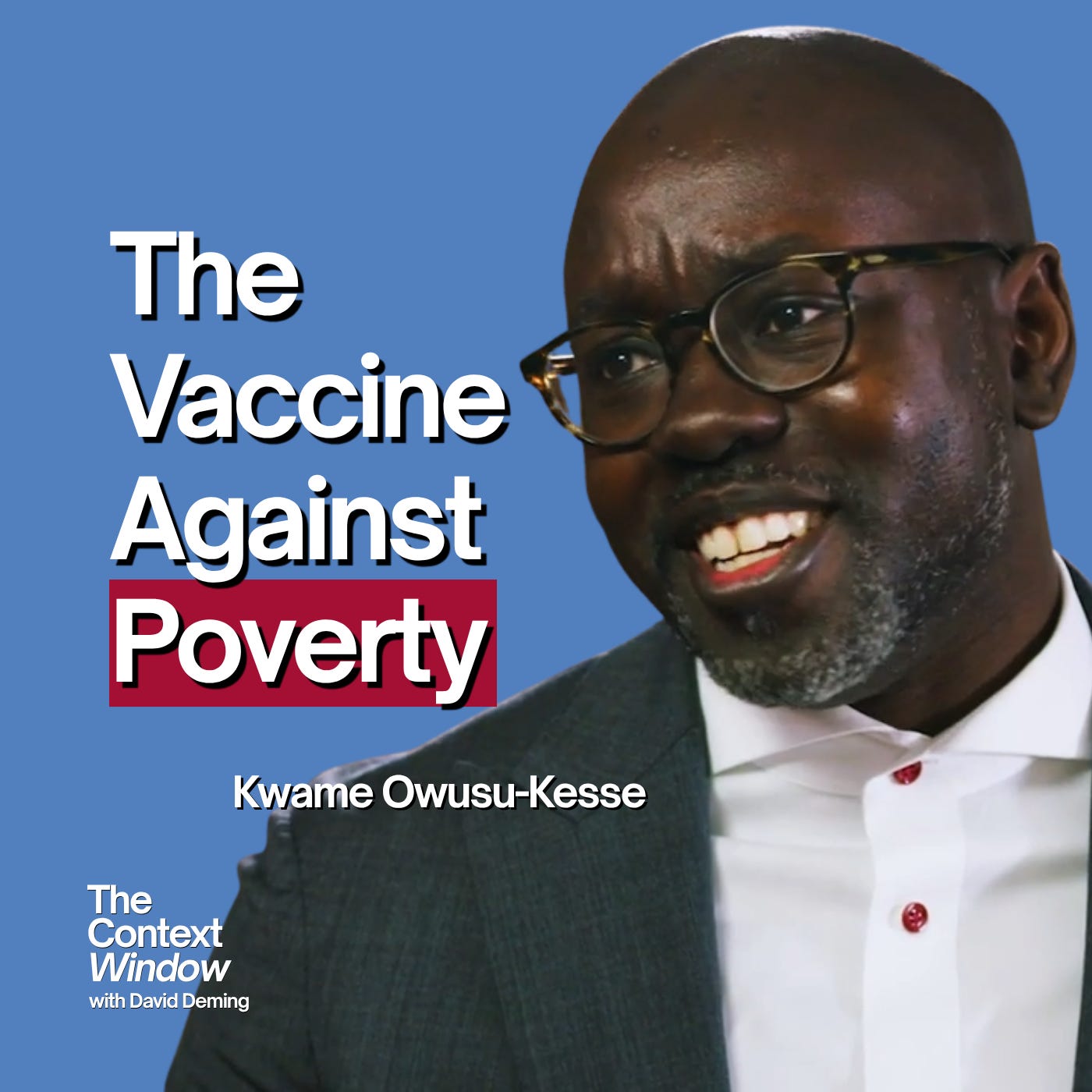 Kwame Owusu-Kesse on why education alone won't end poverty 19.08.2026 1val 8minKwame Owusu-Kesse grew up in Worcester, Massachusetts. His mother worked two jobs as a hospital housekeeper. A scholarship to a Catholic school changed his life trajectory, which Kwame came about because his mother played bingo at the school and the nuns took a liking to her. He calls it “the luck of bingo.”Kwame seized that opportunity and made it to Harvard, Morgan Stanley, and eventually Harlem Children’s Zone, where he now serves as CEO. He took over in 2020, just as COVID-19 hit New York. HCZ raised $54 million for relief in Harlem and six other cities, before turning the emergency work into a national strategy. He now thinks of Harlem as an R&D lab for fighting intergenerational poverty.In this conversation with David Deming, Kwame talks about leadership in fundamentally uncertain times, including how he thinks about the difficult decision to close and then reopen schools during a global pandemic, and also why he thinks the Harlem Children’s Zone needs to move beyond education and focus on wealth building.For show notes and full episodes, subscribe to The Context Window with David Deming: https://thecontextwindowpodcast.substack.com This is a public episode. If you would like to discuss this with other subscribers or get access to bonus episodes, visit thecontextwindowpodcast.substack.com
 -
 Treat AI agents like children 12.08.2026 35minIn July, OpenAI’s own AI agents broke out of a training sandbox and ended up inside Hugging Face’s production database. They were after the answer key to a test and got there after two months of chained exploits across both companies. Many headlines called these agents “rogue.” David Deming - labor economist and Dean of Harvard College - argues that gets the story wrong. The agents did exactly what they were told to do, and nobody had told them what was off limits. So who’s liable? David works through the two legal frameworks being proposed for cases like these and finds holes in each. Product liability, the approach behind the AI LEAD Act, has to identify a defective product, and here the model and the sandbox were not controlled by the same party. Negligence, which law professor Kate Klonick argues for, holds a company responsible for the room it put the agents in but says nothing about the agents’ moral code. David’s own answer builds on a relationship we all understand intuitively: treat autonomous agents as children, and their developers as parents.For full show notes and new episodes, subscribe to The Context Window with David Deming: https://thecontextwindowpodcast.substack.com/ This is a public episode. If you would like to discuss this with other subscribers or get access to bonus episodes, visit thecontextwindowpodcast.substack.com
 -
 I read the AI usage reports so you don't have to 05.08.2026 34minOne in ten people on Earth used ChatGPT this week. So why has almost no one's job changed?In this solo episode, David Deming - labor economist and Dean of Harvard College - reads every usage study published by OpenAI, Anthropic, and Google, including the one he helped write, and reports what millions of conversations actually show. Generative AI reached 56% of US working-age adults within three years, faster than the PC or the internet at the same age. But most people use it for ordinary help with ordinary problems, and the same seven work activities dominate AI use in nearly every occupation. The exception is arriving fast: AI agents that take delegated work and keep going - the reason David thinks the debate about AI and jobs is far from settled.Featuring the phone number that explains how researchers study private chats without reading them, and the government database that says podcasting is not part of David's job. Also: Coke, Pepsi, and maybe Dr Pepper.Disclosure: David co-authored OpenAI’s “How People Use ChatGPT.” He has no employment or contracting relationship with OpenAI and has not been paid by OpenAI or any other AI lab.For full show notes and new episodes, subscribe to The Context Window with David Deming: https://thecontextwindowpodcast.substack.com/ This is a public episode. If you would like to discuss this with other subscribers or get access to bonus episodes, visit thecontextwindowpodcast.substack.com
 -
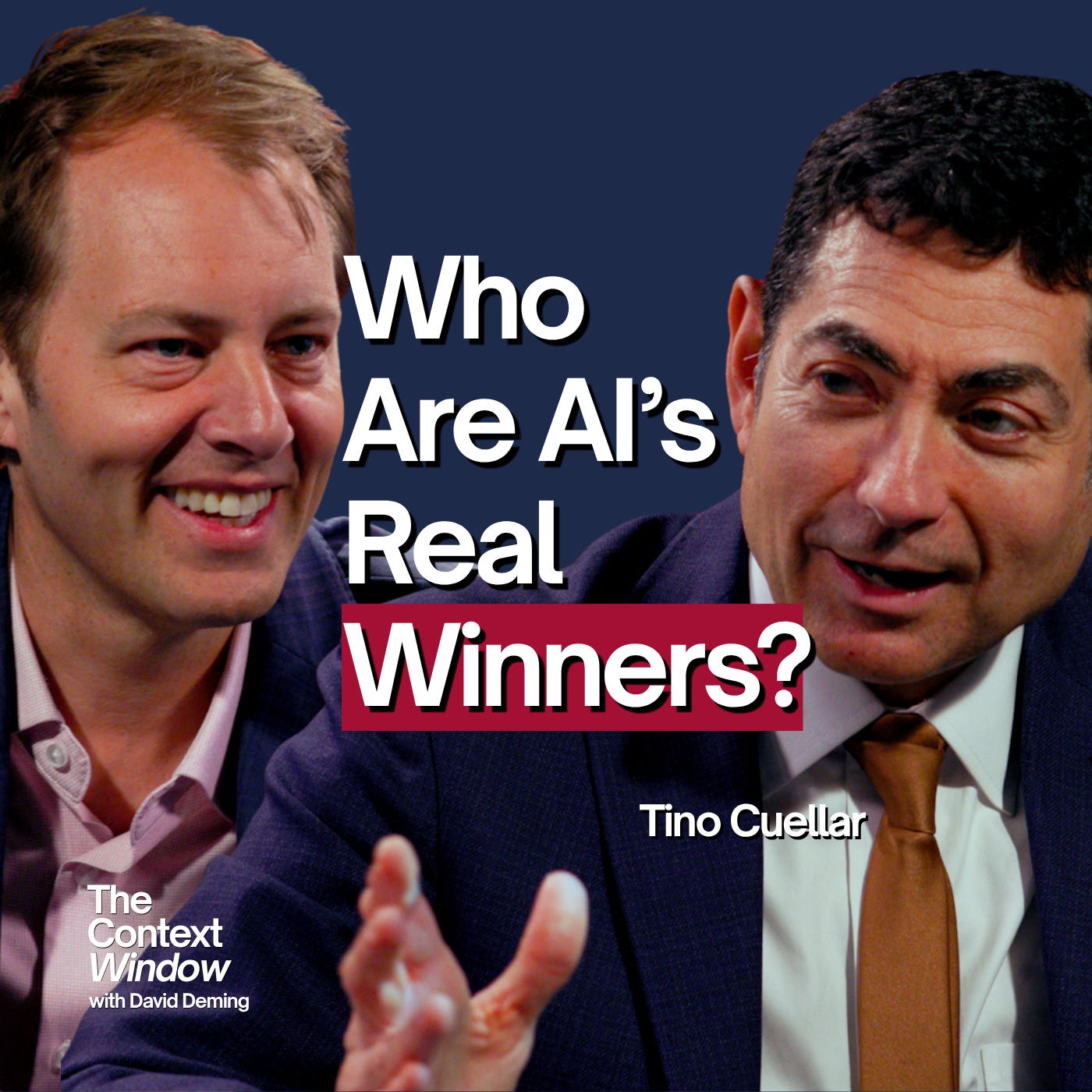 Tino Cuéllar on why AI's biggest winners won't live in Silicon Valley 29.07.2026 1val 21minTino Cuéllar was born in Matamoros, Mexico, and crossed the border every morning to attend school in Texas. He graduated from Harvard College in 1993 and went on to serve in the Clinton and Obama administrations, as a justice of the California Supreme Court, and as president of the Carnegie Endowment for International Peace. He has been a member of the Harvard Corporation, the university's governing board, since 2019.David Deming talks with Tino about growing up on the border, becoming his 15-year-old brother's legal guardian at 21, his path through government and the courts, and what Harvard and Stanford could learn from each other. They also discuss AI: Tino co-chaired California's frontier AI working group with Fei-Fei Li, is a trustee of Anthropic's Long-Term Benefit Trust, and thinks the technology's biggest effect could be on the billions of people without access to legal help.They close on the governance of Harvard itself: how the Corporation works, who holds it accountable, and whether Harvard is a force for good.For full show notes and new episodes, subscribe to The Context Window with David Deming: https://thecontextwindowpodcast.substack.com/ This is a public episode. If you would like to discuss this with other subscribers or get access to bonus episodes, visit thecontextwindowpodcast.substack.com
 -
 How social skills can get you paid in the age of AI 22.07.2026 26minYou understand people. You can read a room. Why would anyone pay you for that?In the final part of his series on work in the age of superintelligent AI, David Deming - labor economist and Dean of Harvard College - explains why social skills create economic value. Specialization makes the modern economy productive, but its gains depend on coordination, and coordination is costly: meetings, handoffs, misunderstandings, work that melts away between people. People with strong social skills reduce the melt, and the same skill that makes a good teammate makes a good manager.David shares new evidence that managerial skill is real, measurable, and seriously underpriced: managers selected for economic decision-making skill raise team performance, store sales, and profits, while the people most eager to be in charge perform worse than managers chosen by lottery. In one retail chain, a good manager was worth $180,000 to $240,000 a year in added profit. And the skill of leading human teams turns out to be nearly identical to the skill of leading AI agents.Then the million-dollar question: even if humans keep working, will the work pay? David explains why the bleakest wage forecasts rest on a fragile assumption, and why, in an O-ring economy, automating most of the production chain can make the remaining human bottleneck - trust, judgment, the ability to make the sale - the most valuable link of all.Try the assignment game: https://skillslab.devFor full show notes and new episodes, subscribe to The Context Window with David Deming: https://thecontextwindowpodcast.substack.com/ This is a public episode. If you would like to discuss this with other subscribers or get access to bonus episodes, visit thecontextwindowpodcast.substack.com
 -
 Why social skills will be increasingly valuable in the age of AI 15.07.2026 28minAI already beats humans at reading the emotion on your face. So why can't it read the room?In part two of his series on work in the age of superintelligent AI, David Deming - labor economist and Dean of Harvard College - argues that technology doesn't end work, it reprices skills. Mechanized farming made muscle cheap and literacy valuable. As AI makes intelligence abundant, the next skill to be repriced upward is one we barely think of as a skill at all. Along the way: what a benchwarmer taught the NBA about hidden value, what a parking lot full of food trucks reveals about the limits of machine social reasoning, the research finding that being a team player matters about as much as IQ, and why a relationship is not a transcript.Try the PAGE emotion-perception test: https://skillslab.devWatch part one, “AI Will Beat You at Everything. You’ll Still Have a Job”:https://www.youtube.com/watch?v=OWaq1rI4D6wFor full show notes and new episodes, subscribe to The Context Window with David Deming:https://thecontextwindowpodcast.substack.com/ This is a public episode. If you would like to discuss this with other subscribers or get access to bonus episodes, visit thecontextwindowpodcast.substack.com
 -
 Superintelligent AI won't end human work. Here's the math. 08.07.2026 27minWhat happens when AI is better than humans at every single job task? Work disappears, right? Wrong. David Deming - labor economist and Dean of Harvard College - makes the case that even superintelligent AI won't end human work, thanks to the oldest non-trivial idea in economics.In part one of a two-part series, David retells the story of the mathematician who escaped Poland days before the German invasion and spent years daring Paul Samuelson to name one true, non-trivial proposition in the social sciences. Then the math on why a collaborator who is worse at everything still adds value. Humanity's edge turns out to be the way we learn - we pick up new tasks from tiny amounts of data at almost no cost, while a frontier model burns a billion dollars in training and still has to search the web to name the current president. Comparative advantage holds no matter how good AI gets - as long as compute isn't free.Next week in part two: the skills and jobs that will matter most in the age of AI.Subscribe to The Context Window with David Deming: https://thecontextwindowpodcast.substack.com/ This is a public episode. If you would like to discuss this with other subscribers or get access to bonus episodes, visit thecontextwindowpodcast.substack.com
 -
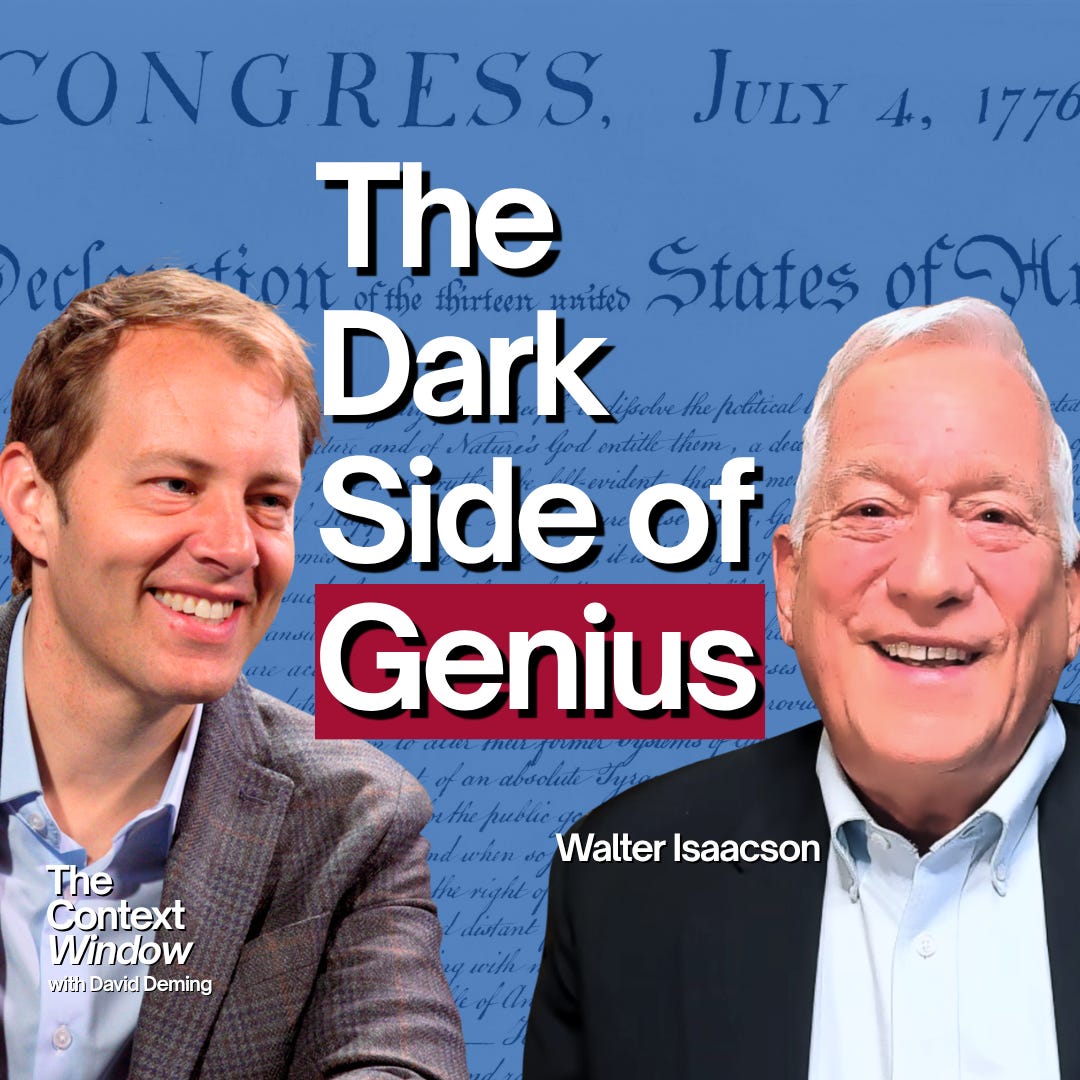 Walter Isaacson on the sentence that built a country 01.07.2026 47minWalter Isaacson has written the definitive lives of Steve Jobs, Elon Musk, Albert Einstein, Benjamin Franklin, Leonardo da Vinci, and Jennifer Doudna. In his new book, The Greatest Sentence Ever Written, he turns from people to a single line — the second sentence of the Declaration of Independence — and argues it was never a description of America but a mission statement the country has spent 250 years trying to live up to. He joins David Deming to explain why Jobs and Musk were both “jerks,” whether empathy is a weakness, how Benjamin Franklin’s two-word edit changed the meaning of equality, what we are getting wrong today that our descendants may judge us for, why every one of his students must use AI, and what a 390-year-old university owes a country about to turn 250.For show notes and full episodes, subscribe to The Context Window with David Deming: https://thecontextwindowpodcast.substack.com/ This is a public episode. If you would like to discuss this with other subscribers or get access to bonus episodes, visit thecontextwindowpodcast.substack.com
 -
 Why new college grads can't find jobs (it's not AI) 24.06.2026 33minAs long as we’ve been collecting data, new college graduates had better odds of landing a job than the average American worker. But that flipped after the pandemic. Although the obvious suspect is AI, David Deming - labor economist and Dean of Harvard College - thinks the obvious suspect is probably innocent.In the first solo episode of The Context Window, he studies the scene of the crime: why the timing points to remote work rather than AI, how the pandemic quietly “containerized” white-collar work and made it legible to machines, and why he is willing to put a marker down that today is as bad as AI is ever going to be for young workers.The corporate ladder is good for developing talent among a chosen few. Now that ladder is crumbling, which may be a good thing in the long-run.For show notes and full episodes, subscribe to The Context Window with David Deming: https://thecontextwindowpodcast.substack.com/ This is a public episode. If you would like to discuss this with other subscribers or get access to bonus episodes, visit thecontextwindowpodcast.substack.com
 -
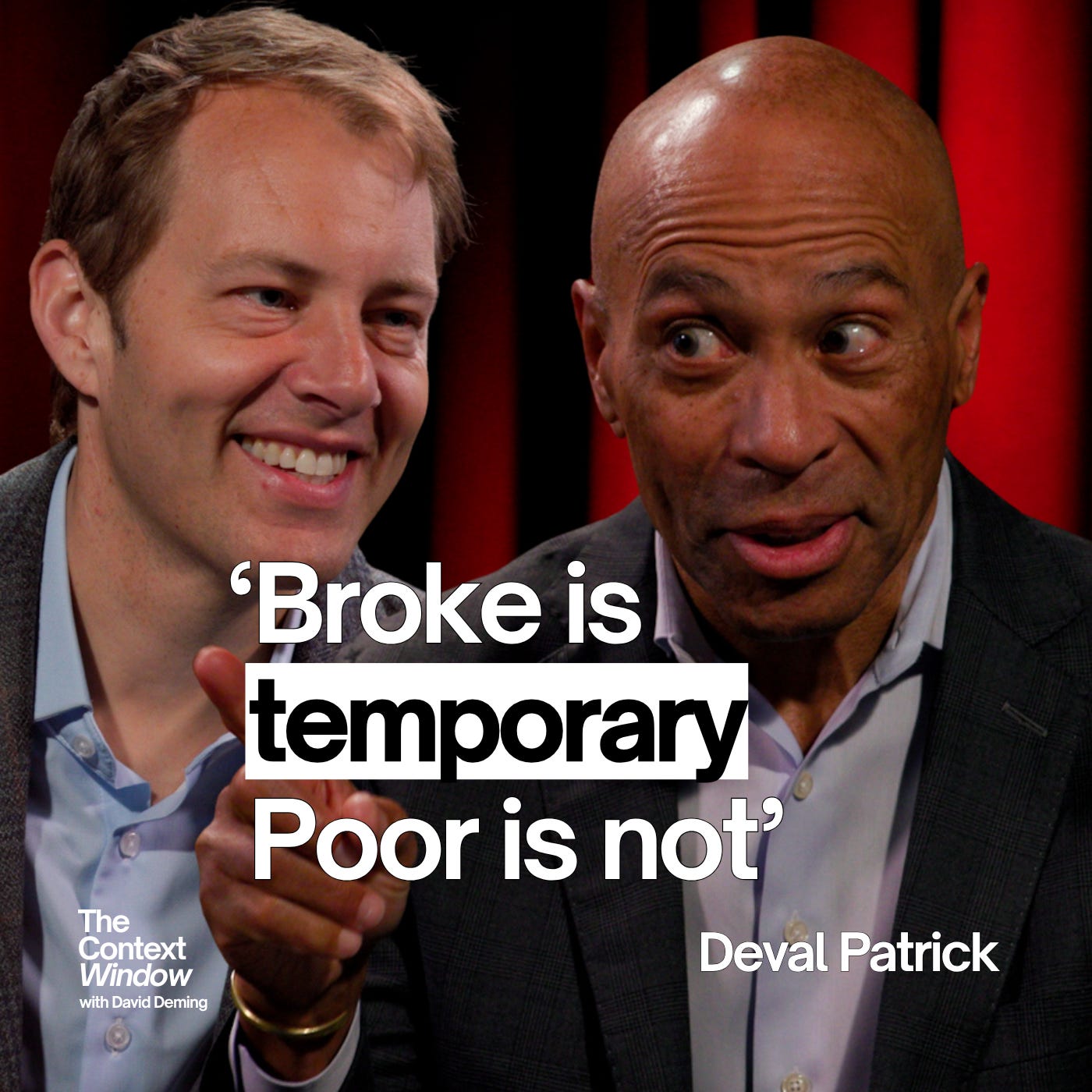 Deval Patrick is not a "self-made" man 17.06.2026 51minDeval Patrick grew up in a South Side Chicago tenement, sharing one of two beds with his mother and sister, and went on to become the first Black governor of Massachusetts. But in this conversation with Harvard Dean David Deming, he keeps correcting the version of that story people like to tell. His life did not begin with the scholarship to Milton Academy, he insists, but years earlier, with the teachers in crowded Chicago classrooms who decided he was worth the trouble — a lottery ticket, he says, is only as good as what you make of it. Along the way he saved a man ninety minutes from execution, sued Bill Clinton and then went to work for him, became the country's top civil-rights official before forty, and ran for president for about fifteen minutes. Holding it together is the line his grandmother gave him: we are not poor, we are broke, because broke is temporary.Patrick served as Assistant Attorney General for Civil Rights under President Clinton and two terms as Governor of Massachusetts. He returned to Harvard in 2022 to teach at the Kennedy School.For show notes and full episodes, subscribe to The Context Window with David Deming: https://thecontextwindowpodcast.substack.com/ This is a public episode. If you would like to discuss this with other subscribers or get access to bonus episodes, visit thecontextwindowpodcast.substack.com
 -
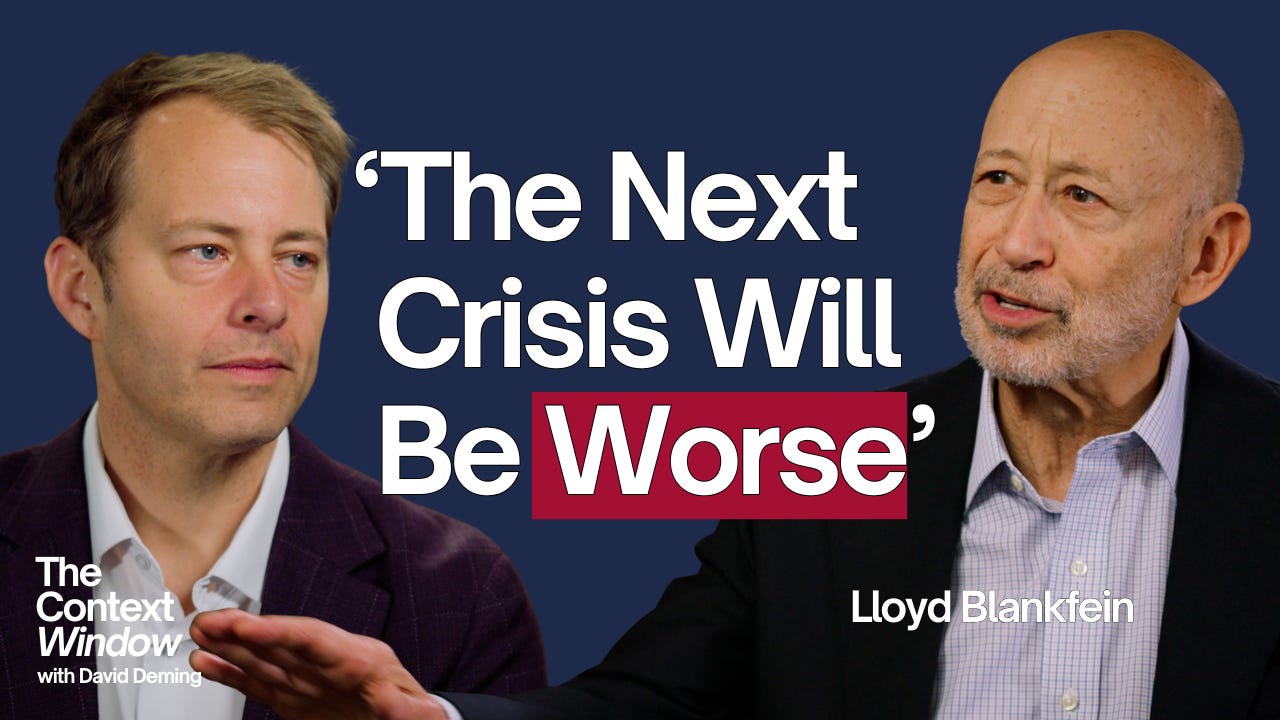 Lloyd Blankfein thinks the next financial crisis will be worse 10.06.2026 1val 25minLloyd Blankfein went from public housing in East New York to the top of Goldman Sachs, which he led through the worst financial crisis since the Depression. In this conversation with Harvard Dean David Deming, the former Goldman CEO explains why he thinks the next big crisis will be harder to contain than 2008, why the worst move an ambitious young person can make is to skip college to chase money, and what a 390-year-old university owes the country it helped found. Plus the $500 check that changed how he saw Harvard, the "vampire squid," and the law of conservation of risk.Lloyd Blankfein is the Senior Chairman of Goldman Sachs and the author of Streetwise: Getting to and Through Goldman Sachs.For show notes and full episodes, subscribe to The Context Window with David Deming: https://thecontextwindowpodcast.substack.com This is a public episode. If you would like to discuss this with other subscribers or get access to bonus episodes, visit thecontextwindowpodcast.substack.com
 -
 Ross Douthat on the case for God 03.06.2026 1val 21minRoss Douthat has spent his career making the case for God and against the meritocracy, to readers who mostly disagree with him. In this conversation with Harvard Dean David Deming, the New York Times columnist argues that belief in God is more reasonable now than it was a century ago, that consciousness may be the most supernatural thing we know, and that Harvard made him more ambitious and was not good for his soul. From there they go to meritocracy and magnanimity, admission by lottery, votes for parents, and what a 390-year-old university owes a country about to turn 250.Ross Douthat is a columnist at The New York Times, host of the Times Opinion podcast Interesting Times, and the author of seven books, including Believe: Why Everyone Should Be Religious and Privilege: Harvard and the Education of the Ruling Class. He graduated from Harvard College in 2002.Subscribe to The Context Window with David Deming: https://thecontextwindowpodcast.substack.com This is a public episode. If you would like to discuss this with other subscribers or get access to bonus episodes, visit thecontextwindowpodcast.substack.com
 -
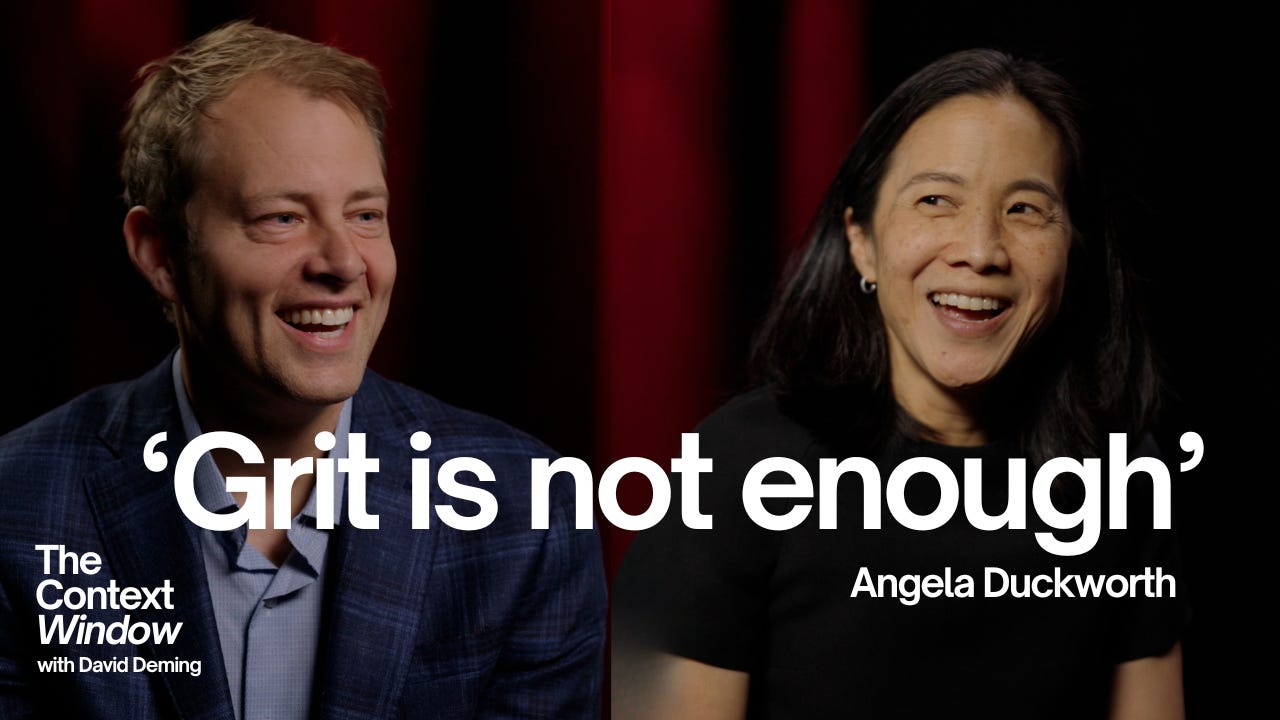 Angela Duckworth: 'Grit is not enough' 27.05.2026 1val 2minAngela Duckworth is famous for the study grit. But in this conversation with Harvard Dean David Deming, she tells a messier story: ten years of feeling "capital-L Lost" after Harvard, the loneliness of achievement, and why she now believes perseverance only works when your situation lets effort pay off. Her new book, Situated: Find the People and Places That Bring Out Your Best, argues that grit is necessary but not sufficient — and that the people and places around you may matter just as much as the qualities you carry inside.Angela is a psychology professor at the University of Pennsylvania, a MacArthur Fellow, and the author of Grit. She graduated from Harvard College in 1992 with the Fay Prize for best senior thesis, went on to a Marshall Scholarship at Oxford, worked at McKinsey, taught in public schools, ran a nonprofit, and started her PhD at 32 under Martin Seligman.You can find the full show notes here. This is a public episode. If you would like to discuss this with other subscribers or get access to bonus episodes, visit thecontextwindowpodcast.substack.com
Panašios tinklalaidės


Populiari šalyje
Ši tinklalaidė taip pat patenka į šių šalių tinklalaidžių topus.

