
Thoughts on Illustration
Tom Froese
0
Thoughts on Illustration is a bi-weekly podcast about showing up and growing up as a commercial artist. Host Tom Froese, an award-winning illustrator and top teacher, shares valuable tips, insights, and reflections from his own experience. He aims to encourage fellow creatives and help them progress by sharing in a transparent and accessible way. The podcast is for those passionate about unlocking professional and personal creative fulfillment.
Epizodai
-
 7 Timeless Tips for Illustrators | The Final Episode 23.06.2026 39minAfter four years, this is it — my final episode of Thoughts on Illustration. Instead of going out with a single deep dive, I wanted to leave you with a roundup: the seven tips I find myself circling back to most often, whether I'm recording an episode, teaching a class, or sitting across from someone in a one-on-one coaching session. And then I close with one last piece of advice that I think ties everything else together — especially relevant right now, with AI reshaping how we think about creativity and originality.Thank you for four years of listening, sharing, and supporting this show. It's meant more to me than you know.Have a Daily Drawing Practice: Why drawing regularly — especially slow, observational drawing from life — is the foundational skill every illustrator needs before taking on real client work.Know What and Who Inspires You: Why your heroes and mentors (most of whom you'll never meet, and many of whom are long gone) are essential teachers, and how to study them like a student.Share Your Work: Why sharing isn't optional self-promotion but a core part of the creative process — it builds accountability, audience, and feedback you can't get any other way.Take Technique Seriously: Moving past "just drawing with color" toward real artistic technique, and how working within a "media paradigm" (drawing, painting, collage, or printmaking) sharpens your style.Lean Into Constraints: Why creative freedom isn't the absence of limits — it's working skillfully within them — and why illustration is always applied art with a purpose.Have a Well-Defined Creative Process: Breaking down the path from brief, to research, to sketches, to finished art — and why a repeatable process beats waiting for inspiration.Illustration Isn't Art, It's Problem Solving: Why thinking of illustration as a form of design — not just self-expression — actually frees you to do better creative work.Final Advice: Why the act of making art changes the artist, and why no AI tool can replace that deeply human, embodied experience of thinking and working through your hands.Drawing Is Important — The Book and Class: If you want to go deeper on tip #1, check out the book and the companion class on Skillshare.https://www.tomfroese.com/bookStyle Class, Composition for Illustrators, and The Six Stages of Illustration: Referenced throughout this episode — all available on Skillshare for anyone who wants to dig further into style, constraints, and process.https://www.tomfroese.com/teachingPast Episodes Mentioned: Episode 62 (How do you make an illustration cohesive?) and Episode 13 (Why constraints make you more creative) — both dig deeper into the constraints conversation from tip #5.One-on-One Coaching: If you want personal guidance on your portfolio or a specific project, book a session.https://www.tomfroese.com/coachingThank you to everyone who has listened, shared, and supported this podcast over the past four years — especially those of you who've supported here on Patreon. The show is ending, but I'm still here on Patreon for the Draw With Me's until further notice. If you'd want to sign up to be notified on my next adventure, stick around here, or find me/subscribe on Substack —> https://mrtomfroese.substack.comWork: tomfroese.comClasses: tomfroese.com/teachingCoaching: tomfroese.com/coachingInstagram: https://www.instagram.com/mrtomfroeseIn this EpisodeLinks and ResourcesWhat's Next?Find Me Elsewhere
 -
 How to Go Deeper in Your Work | Free Preview 03.06.2026 11minWhat's the difference between images that move people and those that are just pretty pictures? In this episode, I dig into what it means to bring substance to your work — it's one of the hardest qualities to describe but perhaps the one that might matter most. This isn't something you can manufacture or build up through practice alone. It already exists in you. The question is where you can find it, and whether you're trying to tap more deeply into it.I also share an important announcement about the future of this podcast — if you're a paid supporter on Patreon or Spotify, please listen up.In this EpisodeAn Important Announcement: The future of Thoughts on Illustration after this summer — and what comes next for me and my work.What Is Substance? Why substance is the sense of personal meaning that runs through your body of work as a whole — the feeling that someone is behind the work, working something out.Substance vs. Point of View: How these two qualities relate to each other, and why you can have a strong, original visual voice and still have work that doesn't go very deep.Range and Versatility: Why having both light and serious work in your portfolio makes you more versatile — with a nod to Paul Rand's ability to do this.Striking Oil: Why substance isn't something you build — it already exists in you. How to notice where your wells are and what you're actually drawing from.My Own Wells: What a collection of plastic bread clips, a 1970s merchandise catalog, and a Saskatchewan hotel bottle opener have to do with my illustration work.Today's Action Exercise: The one question that starts the journey toward more substantial work — and why writing it down honestly might change everything.Today's Action on Illustration Why Does Illustration Really Really Matter to You? Write down — in your journal or sketchbook, as though nobody's reading — why becoming an illustrator really, really matters to you. As few or as many words as you need. This is where substance begins.(Become a paid supporter on Patreon or Spotify to access today's full "Action on Illustration" prompt.)Tag me on Instagram @mrtomfroese or email me your results!Show LinksKnow Your Art — Cohort Course Mailing List: https://docs.google.com/forms/d/e/1FAIpQLSdSNaT1XNb6jXS5qjW0ybiryBH70MC1ycGhHj-yDEuQKXdszQ/viewform?usp=headerDrawing Is Important — The Book: https://www.tomfroese.com/bookSupport on Patreon: patreon.com/tomfroeseFind Me ElsewhereWork and Classes — tomfroese.comInstagram — instagram.com/mrtomfroeseDaily Drawings — instagram.com/drawingisimportant
 -
 Heather Pollington (Part 2) | Episode 76 21.05.2026 56minThis is Part 2 of my conversation with Heather Pollington — ex-Hollywood artist, iconographer, and illustrator for Symbolic World Press. If you haven't listened to Episode 75 yet, start there first.In this second half, Heather and I go deeper into her world as an icon painter — her illustration influences, the iconographic concept of simultaneous narrative, what it felt like to first encounter Orthodox art, and the bigger question of what a living iconographic tradition looks like for Western audiences today. We close with something I found genuinely moving: Heather's candid account of leaving Hollywood behind, and what she's learned about following work you can do with love.Illustration Influences: From the Palekh lacquer-box tradition of Russia to British illustrator Errol Le Cain and Scandinavian master Kay Nielsen — the visual DNA behind Heather's fairy tale work.The Memory Box: Why Heather's illustrations use framed vignettes instead of full-bleed spreads — and how her doll's-house fascination connects to a centuries-old iconographic principle called simultaneous narrative.The Primacy of Meaning: How iconography taught Heather to colour by emotion rather than observation — and why the best icons hold a permanent tension between the knowable and the unknowable.The Pivot Point: How researching medieval art for Maleficent 2 in 2017 became the unlikely doorway into both iconography and a return to meaning.Old World, New World: A rich exchange on the difference between encountering Christian art in historic England versus new and cosmopolitan Canada — and why North America's "blank slate" might actually be an advantage for building a new vernacular tradition.Reading the Room: Heather's approach to making iconography relevant for modern Western audiences — not by inventing, but by selecting from history what already resonates, the same way she once designed for "Michigan Joe" on a Hollywood set.Doing the Work with Love: Heather's honest account of leaving the film industry — not with a plan, but by moving toward the thing she loved. And finding that the world realigned around her when she did.Heather Pollington: Check out Heather's website and Instagram to see her illustration, iconography, and production design work.https://www.heatherpollington.com/https://www.instagram.com/heatherpollingtonSymbolic World Press: The fairy tale books Heather has illustrated for Jonathan Pageau, including The Tale of Snow White and the Widow Queen and The Tale of Rapunzel and the Evil Witch.https://www.symbolicworld.org/Errol Le Cain: British illustrator and one of Heather's key influences — look for his versions of Aladdin and The Magician's Daughter.Kay Nielsen: Scandinavian Golden Age illustrator; his book East of the Sun and West of the Moon is a must-see.Aidan Hart: Icon painter and Heather's teacher in the Orthodox iconographic tradition.https://www.aidanharticons.com/Creative Mornings Vancouver — June 5th: Tom will be speaking at Creative Mornings Vancouver around the theme of "Curate."https://creativemornings.com/talks/tom-froeseICON13 — Baltimore, July 16th Workshop: Tom's workshop at the illustration conference is now sold out, but come say hi if you're there.https://icon13.theillustrationconference.org/scheduleKnow Your Art — Cohort Class Mailing List: Interested in future offerings of Tom's six-week illustration course? Add yourself to the list.https://forms.gle/NiRwyLkvCbA24Zn19Drawing Is Important — The Book: Now available for purchase wherever books are sold!https://www.tomfroese.com/bookWork: tomfroese.comClasses: tomfroese.com/teachingInstagram: https://www.instagram.com/mrtomfroeseDaily Drawings: https://www.instagram.com/drawingisimportantIn this EpisodeLinks and ResourcesTom's Links
 -
 “Ex-Hollywood Artist, Now Painting Icons” with Heather Pollington (Part 1) 05.05.2026 1val 3minWhat happens when a designer working in movies like Disney's Maleficent, Mary Poppins Returns, and Skyfall walks away from Hollywood to paint icons and illustrate fairy tales? In this episode, I sit down with Heather Pollington — ex-Hollywood artist, iconographer, and illustrator for Symbolic World Press — for Part One of a wide-ranging conversation about limits, identity, story, and what it really means to find your artistic home.In this EpisodeComing Home to Painting: How Heather's journey from fine arts school in northeast England, through 20 years of working as a designer for Hollywood films, led her full circle back to painting — and why iconography felt like "the coming together of everything."Designer vs. Artist Type: The tension between being a versatile, problem-solving artist and having a singular, recognizable voice — and why both have real advantages and real costs.Meaning Over Accuracy: Why Heather's film work taught her that emotion and meaning always win over historical accuracy — and how that mindset now shapes her illustration.The Power of Limits: Why constraints are where beauty lives — from a limited palette of natural dyes in medieval tapestries to five pigments in iconography."Just Do the Rubbish Version": Heather's practical antidote to creative paralysis: start with the loosest, worst version possible, and let the problems reveal themselves.Story as the Master: How focusing on the text and the story — rather than style — frees Heather from intimidation and imitation, and lets her personal voice emerge without forcing it.Physical Reference Boards: Why Heather prints her references and pins them to the wall instead of collecting them on Pinterest — and what gets lost when inspiration stays on a screen.Links and ResourcesHeather Pollington: Check out Heather's website to see her illustration, iconography, and design work for the film industry.https://www.heatherpollington.com/Symbolic World Press: The fairy tale books Heather has illustrated for Jonathan Pageau, including The Tale of Snow White and the Widow Queen and The Tale of Rapunzel and the Evil Witch.https://www.symbolicworld.org/Creative Mornings Vancouver — June 5th: Tom will be speaking at Creative Mornings Vancouver around the theme of "Curate."https://creativemornings.com/talks/tom-froeseICON13 — Baltimore, July 16th Workshop: Tom will be hosting a workshop at the illustration conference. 🥺 Note: workshop tickets are now sold out. https://icon13.theillustrationconference.org/scheduleKnow Your Art — Cohort Class Mailing List: Interested in future offerings of Tom's six-week illustration course? Add yourself to the list.https://forms.gle/NiRwyLkvCbA24Zn19Drawing Is Important — Book Launch Replay: Patreon supporters can watch the replay of the April 7th online book launch.https://www.patreon.com/tomfroeseDrawing Is Important — The Book:https://www.tomfroese.com/bookTom's LinksWork: tomfroese.comClasses: tomfroese.com/teachingInstagram: https://www.instagram.com/mrtomfroese
 -
 Stop Trying to Find Your Style. Do This Instead. | FREE PREVIEW 21.04.2026 9min📗 Drawing Is Important — Now Available: tomfroese.com/bookEvery illustrator wants a recognizable style — but what if chasing style is actually the thing getting in your way? In this episode, I reframe the whole idea of style as something you work out, not something you find. The real source of a compelling, consistent style isn't a look you copy or discover — it's your attractions: the things you love, the things you keep returning to, and the choices you've already been making all along. If you've been frustrated by not having a clear style yet, this episode will redirect that energy somewhere much more useful.In this EpisodeChasing the Scent vs. Baking the Cookies: Why trying to have a style is like trying to replicate a smell — and what to focus on instead.Your Attractions as Raw Material: How the things you love, notice, and keep returning to are already the seeds of your style.Style is Hindsight: Why style is a pattern you see looking back at your work — not a destination you arrive at.Style is Selection: How artist Heather Hollington's insight reframes the whole creative process as a series of choices that add up over time.The Creative Self Inventory: A practical exercise for reflecting on your best work to discover what makes it distinctly yours — and how to do more of it intentionally.Links and ResourcesThe Style Class on Skillshare: Go deeper on working out your style — and get 30 days of free Skillshare membership through this link.https://skl.sh/4cFnIejDrawing Is Important: My new book is out now! Your guide to making drawing a meaningful daily habit.https://www.tomfroese.com/bookToday's Action Exercise: The Creative Self Inventory Ready to reflect on your work and discover what makes it uniquely yours? (Become a paid listener on Patreon to access today's "Action on Illustration" prompt.)https://www.patreon.com/tomfroeseTag me on Instagram @mrtomfroese or email me your results!Tom's LinksWork: tomfroese.comClasses: tomfroese.com/teachingInstagram: https://www.instagram.com/mrtomfroese
 -
 Taking Big Risks in Your Creativity and Life 06.04.2026 28min📗 Order Drawing Is Important: tomfroese.com/book ✨ Register for the Online Launch/DWM on April 7 at Luma: luma.com/67uhuhmrA recent portfolio critique turned into a deeper conversation about creative risk — and how to know when it's time to stop dreaming and do something about it. I share the personal story behind my own decision to quit my job and go to art school, and the question that helped me know that risk was worth it. Whether you're facing a big shift in your career (or even your life) or deciding whether to publish your portfolio or not, this one's for you.IN THIS EPISODE • Can a Portfolio be Too Niche? How a coaching conversation about purpose, niche, and commercial appeal set the stage for a much bigger question about creative direction. • Can We Sell Ourselves Without Selling Out? Why early-career illustrators with a strong subcultural niche may need to broaden their commercial appeal before they can narrow back in. • Fear of Failure vs. Fear of Regret: Why asking "how would I feel if I never tried?" can be more clarifying than asking "what if I fail?" • The $50,000 Decision: How I left a stable career to pursue illustration, and the moment of clarity that made the risk feel worth taking. • Are You Addicted to Education? How accumulating degrees, certificates, and online courses can become a way of avoiding the real risk — actually doing the thing. • The Bird Who Won't Leave the Nest: Why creative careers require putting yourself out there, and the importance of failure and rejection as teachers.LINKS & RESOURCESDrawing Is Important — Now Available: My book is officially out! Order it wherever books are sold, or start at the link below. • tomfroese.com/bookBook Launch Event: April 7 — check the link to register. • luma.com/67uhuhmr • Catch the replay later at tomfroese.com/patreon (membership required).Local Book Launch Events: I'll be hosting events in Chilliwack/Fraser Valley and Vancouver. Follow along to stay in the loop. • Instagram: instagram.com/mrtomfroese • Patreon: patreon.com/tomfroese • Substack: mrtomfroese.substack.comOne-on-One Coaching: Want to work through your own portfolio or career decisions with me? • tomfroese.com/coachingPrevious Episode — 4 Portfolio Mistakes: I reference the four blind spots of early-career illustrators: purpose, point of view, substance, and craft. • Episode 72: https://www.patreon.com/posts/153866247Today's Action on Illustration: What do you really want? Sit with that question. Pay attention to the moments — a story, a song, someone's work — that spark something deeper than "I like that." Write them down. Collect them. Those are the clues to the bigger decisions you'll face in your creative life. And if you're sitting on a risk you've been too afraid to take, ask yourself: • In 5/10/50 years, what would you regret more: risking and failing, or never even trying? • If now's not the right time, when will be?Just a word of caution: Please take into account timing! You can say yes to that big risky decision (if you really want it), but you can also say not yet. Sometimes we have to let one chapter end cleanly before moving onto the next one. Other times, we have bigger priorities than our dreams to take care of. Tag me on Instagram @mrtomfroese or email me your reflections at [email protected]!TOM'S LINKS • Work: tomfroese.com • Classes: tomfroese.com/teaching • Instagram: instagram.com/mrtomfroeseJOIN THE LIVE LAUNCHDrawing is Important Launch Day: April 7, 2026In case you missed it, I'm hosting a live book launch event on April 7th to celebrate the release of Drawing Is Important! Register at the link below to join us — I'd love to see you there. Register — luma.com/67uhuhmr
 -
 The 4 Biggest Portfolio Mistakes of Struggling Illustrators | FREE PREVIEW 24.03.2026 12min📗 Pre-order Drawing Is Important: tomfroese.com/bookAre you on the cusp of a breakthrough but feeling stuck in creating a stand-out portfolio? In this episode, I break down four mistakes I see struggling artists make when sharing their body of work. This is not about quick “hacks” but a deep dive into the four pillars of illustration excellence: purpose, point of view, substance, and craft. Whether you’re struggling to make work that looks professional, or trying let your humanity shine through, these four focus areas are the tools that will make the biggest difference in your career.IN THIS EPISODELow Purpose vs. Clear Function: Why every project you share on your homepage needs to signal its functional role at a single glance.The "Operating System" of Style: How to treat your personal values as the underlying system that informs every project, no matter what the subject.Building Substance without Complexity: Why you should push to make some of your illustrations more complex, but also why even the simplest of illustrations can show a depth of character.Achieving Media Transcendence: The secret to professional craft where the viewer sees the image before they see the "Procreate brushes" or the software used to make it.Physical Media Paradigms: Why choosing a physical constraint—like letterpress or collage—is the best way to limit the overwhelming options of digital tools.EPISODE LINKSPortfolio References: Check out the work of Klas Fahlen and Olympia Zagnoli to see mastery of craft and media paradigms in action.https://www.klasfahlen.se/https://www.olimpiazagnoli.comPre-order Bonuses: Pre-order Drawing Is Important to help boost the Amazon rankings and secure a commemorative poster (first 50) or a signed bookplate (first 500).https://www.tomfroese.com/bookOne-on-One Coaching: If you want to pick my brain on these four pillars, book a session.https://www.tomfroese.com/coachingThe Illustration Department: Mentioning Giuseppe Castellano’s insights on being headed in the right direction.https://podcasts.apple.com/ca/podcast/the-illustration-department-podcast/id1467711251?i=1000755695311https://podcasts.apple.com/ca/podcast/the-illustration-department-podcast/id1467711251?i=1000754396715Today's Action Exercise: The Operating System Paradox Ready to test your point of view? (Become a paid listener on Spotify or Patreon to access today’s “Action on Illustration” prompt).Tag me on Instagram @mrtomfroese or email me your results!TOM'S LINKSWork: tomfroese.comClasses: tomfroese.com/teachingInstagram: https://www.instagram.com/mrtomfroese
 -
 Just Add Line with Brandon Campbell 10.03.2026 1val 27min📗 Pre-order Drawing Is Important: tomfroese.com/bookBrandon Campbell (known online as @brandcamp) is a professional illustrator and former designer for Comedy Central and CNN. Brandon joins me to talk about his transition from digital motion graphics back to traditional media, his family legacy in the arts, and his unique "reverse colouring book" concept in his new book, Just Add Line.In this EpisodeThe Thrill of the Hunt: We start off discussing our love of thrifting and what we consider the "holy grails" of vintage finds.A Family Tradition: What it was like growing up with an illustrator dad who drew for Time magazine and Star Wars.Reversing the Creative Process: The ideas behind Brandon’s new book, Just Add Line, which flips the traditional coloring book on its head.The Impact of AI: Brandon’s candid non-sugar-coated take on how AI and the current economy are shifting the landscape for professional illustrators.Mindset Hacks for Better Work: How to trick your brain into having more fun by treating client assignments like personal projects.Links and ResourcesBrandon Campbell’s Website: https://www.brandoncampbell.tv/Instagram: https://www.instagram.com/brandcamp/TikTok: https://www.tiktok.com/@brandcampPatreon: https://www.patreon.com/brandcampWork MentionedJust Add Line (Rizzoli) - https://www.brandoncampbell.tv/Birds Eat and Eat and Eat by Ed EmberleyEvelyn Ness (Illustrator) B. Dylan Hollis (Illustrations by Brandon) - https://www.penguinrandomhouse.ca/books/742467/baking-across-america-by-b-dylan-hollis/9780744097603 Help Shape my Future Signature Course!My big goal this year is to create my first self-hosted course for illustrators. But I can't do it without your help! Please take my 5-minute survey at the following link. As a thank-you, you'll get 20% off the full price of the course when it launches.Signature Course Survey — Google Form Linkhttps://docs.google.com/forms/d/e/1FAIpQLScHIixGnxIA9gLl4WLXtxb4JsTfj5FjU6l1T9Sm0Cv2DjnDWQ/viewform?usp=headerTom’s LinksWork: tomfroese.comClasses: tomfroese.com/teachingInstagram: https://www.instagram.com/mrtomfroese
 -
 Why Making Your Work Look Easy is So Hard | FREE PREVIEW 02.03.2026 14minPre-order Drawing is Important — http://tomfroese.com/bookIn this episode, I take on the "myth of artistic looseness." We often envy the "spontaneous" energy of artists like Quentin Blake, but the truth is that looking effortless requires a tone of effort. I dive into why your final illustrations feel "stiff" compared to your sketches and how to bridge that gap through what I call supervised spontaneity and confidence from competence. IN THIS EPISODE • Three observations about artistic looseness • How to build "chaos" into a repeatable process. • The Take-Two-ness of Glenn Gould: Why the best work happens in the studio, not live. • Why even pros like Sir Quentin Blake struggle with achieving looseness. • The Exercise: A three-stage drawing challenge to help you unlock creative freedom in your drawings.EPISODE LINKS • Quentin Blake shares about his artistic neurosis in "How I draw" — https://quentinblake.com/about-drawing/how-i-draw • Glenn Gould Poster (Tom Froese, for Polaris Prize) — https://www.tomfroese.com/work/polaris-music-prize-glenn-gould • Glenn Gould's "Take-Two-Ness" — https://en.wikipedia.org/wiki/BachTheGoldberg_Variations_(Glenn_Gould_album)HOW TO SUPPORTYou can support Thoughts on Illustration by: • Sharing this episode with a friend • Leaving a comment • Leaving a rating or review on Apple Podcasts • Following the show / subscribing to this channel • Becoming a paid supporter here or on Patreon — https://patreon.com/tomfroeseFIND ME ELSEWHERE • Website — https://www.tomfroese.com • Instagram — https://www.instagram.com/mrtomfroese • Daily Drawings — https://www.instagram.com/drawingisimportantCREDITSMusic and cues by Mark Allan Falk — https://linktr.ee/semiathleticDRAWING IS IMPORTANT — NOW AVAILABLE FOR PRE-ORDERMy new book, Drawing Is Important, is your guide to making drawing a meaningful daily habit. Through stories, insights, and exercises, it helps you draw more often—with less pressure and more joy. Available 7 April 2026 — Pre-order now! The first 500 orders get a free hand-signed book plate! Look for "get pre-order prizes" after clicking the link.Pre-order Drawing is Important — http://tomfroese.com/book
 -
 Getting Paid to Draw with Mike Lowery 10.02.2026 1val 6minPre-order Drawing is Important: https://geni.us/DrawingisImportantMike Lowery is an internationally recognized picture book illustrator and author, as well as fellow teacher and daily drawer. Mike joins me to talk about the business of illustration, finding his style, the impact of AI on the illustration industry, keeping a sketchbook habit, and using social media for illustrators.In this EpisodeThe business of illustration: The difference between making art for its own sake and making art that actually does something.Finding Mike’s style: How an art director’s preference for Mike’s sketches over his “final art” style redefined his whole approach.AI and the industry: Mike’s hesitantly-offered but well-considered assessment on AI’s impact on illustration today.Daily Drawing Practice: Mike’s advice for keeping a sketchbook, whether on the daily or on the road.This conversation covers some of the big shifts of 2025-2026 in the illustration industry, but also goes into super-practical, hands-on tips that will make a difference in your illustration practice today.Links and ResourcesMike Lowry’s Website: https://www.mikelowery.com/Instagram: https://www.instagram.com/mikelowrystudio Free E-book: Instagram for Illustrators (Scroll all the way down) — https://www.mikelowery.com/classes Work Mentioned: Random Illustrated Facts- https://www.mikelowery.com/random-illustrated-factsNo Sam series - https://www.mikelowery.com/portfolio/nosamHelp Shape my Future Signature Course!My big goal this year is to create my first self-hosted course for illustrators. But I can't do it without your help! Please take my 5-minute survey at the following link. As a thank-you, you'll get 20% off the full price of the course when it launches.Signature Course Survey — Google Form Link https://docs.google.com/forms/d/e/1FAIpQLScHIixGnxIA9gLl4WLXtxb4JsTfj5FjU6l1T9Sm0Cv2DjnDWQ/viewform?usp=headerTom’s LinksWork: tomfroese.comClasses: tomfroese.com/teachingInstagram: https://www.instagram.com/mrtomfroese
 -
 Are Your Side Projects Sabotaging Your Goals? 30.01.2026 45minGet your FREE Illustration Training Plan Worksheet (PDF) — https://www.tomfroese.com/freetrainingplan"It’s a marathon, not a sprint"—but what does that actually mean for your creative career? In this episode, Tom looks back at his biggest insights from 2025 and explains why trying to "do it all" is the fastest way to stall your progress.Using his experience as an ultramarathoner, Tom shares how to apply a training framework to your illustration practice to ensure you're building "functional strength" rather than just busy work.The Danger of Dabbling: Why multiple professional roles create competing interests.Training Blocks: How standard timelines help you build progressive fitness in your art.Functional Strength: Identifying which habits support your main goal and which ones undermine it.The Power of One: Why 2026 is the year of doing one thing exceptionally well.[Download] FREE Illustration Training Plan Worksheet[Read] 2025: The Year in Review (Substack)[Listen] The One Big Shift for Social Media in 2026I’m building a new signature course for illustrators and I need your input. Take this 5-minute survey to help me build it, and get 20% off at launch!👉 Take the Survey Here
 -
 Standing Out and Surviving as an Illustrator Today with Tom Froese | Guest Episode 13.01.2026 56minPre-order Drawing is Important: https://geni.us/DrawingisImportantWhat does it actually take to build a sustainable life in illustration—without burning out or chasing every new platform?In this episode, I’m sharing a conversation where I was the guest on Design Icons, produced by Noun Project. Nick Power’s questions gave me a chance to step back and reflect on my career honestly—what’s worked, what hasn’t, and what I’m still figuring out.We talk about:Lessons learned from a decade+ as an illustratorCreative plateaus and my worst year for client workWhy style is about reliability, not aestheticsHow constraints shape better workVisibility, sustainability, and what actually moves the needleThis one covers all the classic interview questions, but it gave me a chance to reflect on the basics in a real, honest way.→ Support the podcast on Patreon: patreon.com/tomfroese→ Explore Noun Project: thenounproject.com
 -
 The One Big Shift I'm Making with Social Media in 2026 | FREE PREVIEW 30.12.2025 11minBecome a paid supporter on Patreon— https://patreon.com/tomfroeseWhat if social media isn’t actually social anymore—and what if that changes how creatives should use it?In this monologue episode, I reflect on a growing realization I’ve been wrestling with for years: social media has quietly shifted from a space for sharing and connection into something much closer to corporate media. And many independent creatives have been doing a lot of unpaid work for big tech without fully realizing it.I talk candidly about my own experience building audiences on Instagram, YouTube, and this podcast—and why the familiar promise of “just keep sharing and it will pay off” no longer feels like a fair trade. I unpack the gambling-like dynamics of algorithms, attention, and hope, and explain the one big mindset shift I’m making as I head into 2026.This episode isn’t about quitting social media. It’s about rethinking our relationship to it, getting clearer about what we’re actually selling, and using these platforms more intentionally—as business tools, not creative homes.🙏 A huge thank-you to all paid supporters on Patreon and on Spotify. Your support makes these thoughtful, independent episodes possible.IN THIS EPISODEWhy social media now functions more like corporate media than a social spaceHow algorithms turned “sharing” into a gambleWhy the old promise of free publicity no longer works for most creativesMy own experience building large followings—and what I’ve actually gotten backThe shift from thinking like a content creator to thinking like a business ownerWhy “look what I made” isn’t enough anymoreHow clarifying your product and your customer changes everythingWhat this mindset shift means for creatives heading into 2026LINKS🎨 Inky.af — My class on creating expressive, inky illustrations using analogue techniques in Affinity (now free forever)http://tomfroese.com/teaching/inkyaf📗 Drawing Is Important — Book preorder available nowhttp://geni.us/DrawingisImportantHOW TO SUPPORTYou can support Thoughts on Illustration by:Sharing this episode with a friendLeaving a commentLeaving a rating or review on Apple PodcastsFollowing the show / subscribing to this channelBecoming a paid supporter here or on Patreon — https://patreon.com/tomfroeseFIND ME ELSEWHEREWebsite — https://www.tomfroese.comInstagram — https://www.instagram.com/mrtomfroeseDaily Drawings — https://www.instagram.com/drawingisimportantCREDITSMusic and cues by Mark Allan Falk:https://linktr.ee/semiathletic
 -
 The State of Illustration Report with Darren Di Lieto 16.12.2025 1val 29minThe State of Illustration Report with Darren Di Lieto | Episode 65What does the illustration industry really look like right now — beyond highlight reels, social media, and shiny success stories?In this episode, I talk with Darren Di Lietto, founder of Hireillo and the author of the State of Illustration report. For more than a decade, Darren has been surveying illustrators around the world to better understand how we work, how we get paid, and how sustainable illustration actually is as a career.We have an honest conversation about confidence, pricing, late payments, mental health, and the quiet pressures shaping illustrators’ lives today. We talk about who’s best positioned to thrive, where illustrators are struggling most, and why so many are being squeezed out early on in their careers.I was surprised, and honestly a little bit depressed by the numbers in the report—but Darren helps me see some of the positive takeaways as well.🙏 A huge thank-you to all paid supporters on Patreon — your support makes conversations like this possible.IN THIS EPISODEWhat the State of Illustration report reveals about the current health of the industryWhy confidence in pricing and negotiation remains such a challengeWho seems best positioned to last — and who is most at riskHow late payments and income instability continue to affect illustratorsThe impact of the cost-of-living crisis on creative careersMental health, anxiety, and confidence among working illustratorsWhat hope and resilience Darren sees in the dataWhere the State of Illustration report might go nextSHOW LINKSFrom DarrenState of Illustration report ($18USD — PDF download) — https://www.stateofillustration.comHireillo — https://www.hireillo.comDarren's website — http://darrendilieto.comFrom Tom🎨 Inky.af — My new class on creating expressive, inky illustrations using analogue techniques in Affinity (now free forever) — http://tomfroese.com/teaching/inkyaf📗 Drawing Is Important — Book preorder available now — http://geni.us/DrawingisImportantSUPPORT THE PODCASTYou can support Thoughts on Illustration by:Sharing this episode with a friendLeaving a commentLeaving a rating or review on Apple PodcastsFollowing the show / Subscribing to this channelBecoming a paid supporter on Patreon — https://patreon.com/tomfroeseFIND ME ELSEWHEREWebsite — https://www.tomfroese.comInstagram — https://www.instagram.com/mrtomfroeseDaily Drawings — https://www.instagram.com/drawingisimportantCREDITSMusic and cues by Mark Allan Falk — https://linktr.ee/semiathletic
 -
 Should You Be Embarrassed About Using AI? | FREE PREVIEW 02.12.2025 12minIn this episode, I get honest about the tension so many of us feel around AI: the uneasiness of using it while also distrusting it. I talk about why that discomfort might actually be meaningful—and how embarrassment or shame can act as a compass for finding the line between assistance and authorship.I share a real story about how AI helps me not over-think a purchase decision with my daughter. I also share about my feelings about receiving AI-written emails. You'll learn how I think about using AI to help me without letting it replace the parts of my job that actually matter. We talk about the long game: creative confidence, limits, process, and what it really means to maintain authorship as an illustrator.IN THIS EPISODE:Why discomfort around AI is healthyThe difference between assistance and authorshipHow AI can quietly shift from convenience to dependencyWhy the process—not just the product—is central to illustrationWhy “drawing the line” is literally part of our jobTwo reflection questions to check your relationship to AISHOW LINKSPaul Kingsnorth's Substack — https://paulkingsnorth.substack.comIn the podcast I mistakenly said his Substack was called Pilgrims in the Machine. It's actually called the Abbey of Misrule, which is way more badass.Paul Kingsnorth's website — https://www.paulkingsnorth.netRethinking Creativity in the Age of AI — A more pro-AI conversation on The Future with Chris Do and Jodie Cook — https://podcasts.apple.com/ca/podcast/the-futur-with-chris-do/id1209219220?i=1000737893787THANK YOU FOR YOUR SUPPORT!Thanks as always for supporting the podcast. Patreon and Paid Spotify Supporters make it possible for me keep doing this!FIND ME ELSEWHEREMy New Book! Drawing is Important! — tomfroese.com/links — look for the green book coverWork and Classes — tomfroese.comInstagram — instagram.com/mrtomfroeseDaily Drawings — instagram.com/drawingisimportantCREDITSMusic and Cues by Mark Allan Falk — semiathletic on LinktreeDRAWING IS IMPORTANT — NOW AVAILABLE FOR PRE-ORDERMy new book, Drawing Is Important, is your guide to making drawing a meaningful daily habit. Through stories, insights, and exercises, it helps you draw more often—with less pressure and more joy. Available Spring 2026 — Pre-order now! The first 500 orders get a free hand-signed book plate! Look for "get pre-order prizes" after clicking the link.
 -
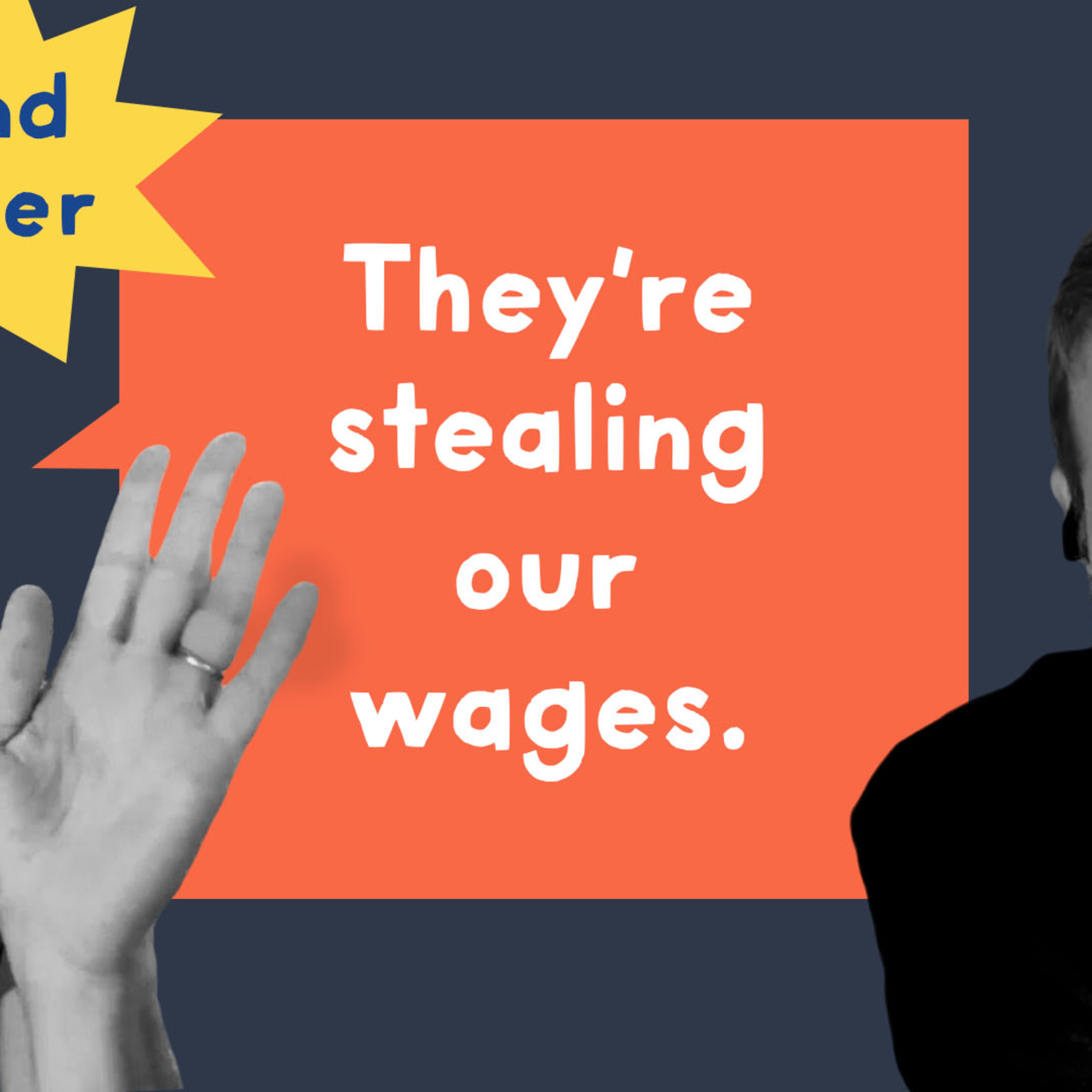 How You Can Protect Yourself From Being Ripped Off | Interview with Raymond Biesinger 18.11.2025 1val 21minInterview with Raymond BiesingerHow do you defend your creative work when clients underpay, misuse your images, or ignore copyright entirely?In this episode, I talk with Montréal-based illustrator, artist, and author Raymond Biesinger, whose new book 9 Times My Work Has Been Ripped Off (Drawn + Quarterly, 2025) is part memoir, part self-defence guide for independent creatives.Raymond pulls back the curtain on wage theft, unauthorized usage, blurred legal lines, and the everyday realities illustrators face when protecting their work — and their livelihood.This is a wide-ranging, candid conversation about money, boundaries, professionalism, and what it really takes to survive as an illustrator today.🙏 A huge thank-you to all paid supporters on Patreon — without you, this show wouldn’t exist.IN THIS EPISODE• What “being ripped off” really means (hint: it’s not just stylistic copying)• Why wage theft is rampant in the creative industries• The blurry, case-by-case nature of copyright enforcement• How creatives can strategically bluff to protect their work• Why talking openly about money is essential for healthier creative careers• The role of mood, timing, and resources in deciding whether to pursue a dispute• How Raymond developed his signature collage-driven style• The surprising story of a fan who copied his style — and how it turned into something positive• What Raymond hopes independent creatives will take away from the bookSHOW LINKSRaymond BiesingerWebsite — https://fifteen.caInstagram — https://www.instagram.com/raymondbiesinger📕 9 Times My Work Has Been Ripped Off (Drawn + Quarterly, 2025) — https://drawnandquarterly.com/books/9-times-my-work-has-been-ripped-off/📘 305 Lost Buildings of Canada — Goose Lane Editions — https://gooselane.com/products/305-lost-buildings-of-canada?_pos=1&_psq=305+lost&_ss=e&_v=1.0From Tom🎨 SLO-FI Illustrations (new Skillshare class) — 30 days free: https://skl.sh/4nbo3KT📗 Drawing is Important — now available for preorder: https://geni.us/DrawingisImportantSUPPORT THE PODCASTYou can help Thoughts on Illustration grow by:• Sharing the episode with a friend• Leaving a rating or review• Following the show• Becoming a paid supporter on Spotify or on Patreon — https://patreon.com/tomfroeseFIND ME ELSEWHEREWebsite — https://www.tomfroese.comInstagram — https://www.instagram.com/mrtomfroeseDaily Drawings — https://www.instagram.com/drawingisimportantCREDITSMusic and cues by Mark Allan Falk — https://linktr.ee/semiathletic
 -
 How Do You Make an Illustration Cohesive? | FREE PREVIEW 04.11.2025 18minWhat is the secret to making cohesive illustrations? Also known as unity and harmony, this is the elusive quality that makes your illustration feel "whole". In this episode, I look at why that sense of unity is harder to achieve in digital work, and how thinking in terms of physical media and physical reproduction methods can bring your images together. I introduce what I call The Five Stars of Cohesiveness—Purpose, Drawing Style, Medium, Reproduction Method, and Application—and show how, when these align, your work gains that solid, self-contained presence we all chase. Using Ben Shahn’s The Shape of Content as a case study (read on for visual examples), I unpack how medium and black-only printing worked hand-in-hand to create unusually cohesive results—and how we can borrow that logic in our digital workflows. If you’ve struggled to make your digital illustrations feel unified—and want a concrete framework to diagnose why—this episode is for you.IN THIS EPISODE“Truth to materials” — keyword materialsThe Five Stars of CohesivenessHow physical constraints shape shape your style—and why limitless tools can derail itCase study: Ben Shahn’s expressive linework printed black-only in The Shape of ContentWhy your chosen medium is the central star, influencing both idea and outcomeIllustrating for print (even when your art never gets printed)Try This: would your piece hold up in black-only? as a 2–3 colour Riso print?Classes and resource recommendationsSHOW LINKSBen Shahn — The Shape of Content (book) — https://www.hup.harvard.edu/books/9780674302426“Illustration” (definition/context) — general reference — https://en.wikipedia.org/wiki/IllustrationMy Skillshare: Illustrating for Letterpress (technical limits → clearer decisions) — https://www.tomfroese.com/teaching/impress-meSlo-Fi Illustrations (analogue paradigms in a digital flow) — https://www.tomfroese.com/teaching/slofiillustrationsDi Ujdi — Introduction to Risograph Printing (layered colour thinking) — https://skl.sh/47BXNm5HOW TO SUPPORT / LISTEN If you’d like to support this podcast and hear the full version of monologue episodes like this one:Join on Patreon for as low as $3/monthBecome a paid subscriber on Spotify ($2.99/month)I also post monologues as full articles on Medium.FIND ME ELSEWHEREMy New Book! Drawing is Important! — tomfroese.com/links — look for the green book coverWork and Classes — tomfroese.comInstagram — instagram.com/mrtomfroeseDaily Drawings — instagram.com/drawingisimportantCREDITSMusic and Cues by Mark Allan Falk — semiathletic on Linktree——————DRAWING IS IMPORTANT — NOW AVAILABLE FOR PRE-ORDERMy new book, Drawing Is Important, is your guide to making drawing a meaningful daily habit. Through stories, insights, and exercises, it helps you draw more often—with less pressure and more joy. Available Spring 2026 — Pre-order now! The first 500 orders get a free hand-signed book plate! Look for "get pre-order prizes" after clicking the lin
 -
 Being a Cartoonist for the New Yorker | Interview with Tom Toro 21.10.2025 1val 2minHow does one become a professional cartoonist? In this episode, I talk with New Yorker cartoonist Tom Toro, whose sharp wit clever drawings have kept readers laughing (and thinking) for more than fifteen years.Toro’s debut book, And to Think We Started as a Book Club (out now from Simon & Schuster), gathers the best of his cartoons from over a decade and a half at The New Yorker. In our conversation, we dig into the realities of professional cartooning — from the weekly grind of submissions and rejection, to the balance between writing and drawing, and the creative fire that keeps artists like Tom doing it anyway.🙏 Thank you to all paid supporters on Patreon — without your support, this would be an expensive hobby. Thank you!🟢 Listen on Spotify | 🟣 Listen on Apple Podcasts | 🔴 Listen/Watch on YouTubeCover of And to Think We Started as a Book Club …IN THIS EPISODEWhat it’s really like to be a New Yorker cartoonist — and why rejection is part of the jobHow the relationship between writing and drawing defines the cartoon formThe secret to making a success New Yorker-worthy cartoonWhy embracing imperfection keeps art aliveHow Tom feels about his body of work from the past 15 yearsSHOW LINKSTom Toro’s Website — https://www.tomtoro.comTom Toro on Instagram — www.instagram.com/tbtoro📕 And to Think We Started as a Book Club (Simon & Schuster, Oct 7 2025) — https://publishing.andrewsmcmeel.com/book/and-to-think-we-started-as-a-book-club/SLO-FI Illustrations (my new Skillshare class) — GET 30 DAYS FREE WHEN USING THIS LINK — https://skl.sh/4nbo3KT📗 Drawing is Important — https://geni.us/DrawingisImportantTHANK YOU FOR YOUR SUPPORT!You can show your appreciation for the Thoughts on Illustration podcast by:Sharing with your friends on social mediaLiking / Following / SubscribingLeaving a review on Apple PodcastsBecoming a paid supporter on Patreon — patreon.com/tomfroeseFIND ME ELSEWHEREWork and Classes — http://www.tomfroese.comInstagram — http://www.instagram.com/mrtomfroeseDaily Drawings — http://www.instagram.com/drawingisimportantCREDITSMusic and cues by Mark Allan Falk — http://linktr.ee/semiathleticThanks for reading Thoughts on Illustration with Mr. Tom Froese! Subscribe for free to receive new posts and support my work.
 -
 The Illustrator’s (Smarter) Starter Pack | FREE PREVIEW 07.10.2025 12minLooking to Get Into Illustration? Here’s How to Begin.NEW—I am now offering free previews of Monologue episodes. This will help you decide if subscribing on Patreon / Spotify is right for you. Wouldn’t it be nice if there was an Illustrator’s Starter Pack that could get you up and running as an illustrator ASAP? The reality is that any attempts to find a fast track into illustration could actually slow you down. In this episode, I share my SMART System: five paradigms (Styles, Markets, Applications, Reasons, Techniques) that help you get specific about what you want to make and where it belongs. Instead of hunting for the perfect gear or foolproof course list, SMART gives you a clear way to map your starting point.If you’ve been overwhelmed by tools, apps, or conflicting advice—and you just want a concrete way to begin—this episode is for you.IN THIS EPISODEWhy gear and classes alone won’t make you an illustratorThe SMART System overviewStyles vs. Techniques: how they relate and why they’re not the same thingMarkets vs. Applications: who buys the work vs. where the work livesReasons (purpose): the “why” that sharpens every briefThe closest thing to a starter pack? — (iPad + Apple Pencil + Procreate)How to use SMART to choose your next practice project and reduce decision paralysisTwo starter-pack parables: first-aid kits and flimsy badminton setsAs always (from now on), a reflection prompt to help you turn my thoughts into your actions!SHOW LINKSMalika Favre (style reference) — malikafavre.comHervé Tullet (style reference) — herve-tullet.comJohn Roman, 45 Markets of Illustration (markets overview)What is Risograph Printing? (technique primer) — risottostudio.comProcreate (iPad app) — procreate.artMy New Skillshare Class — SLO-FI IllustrationsHOW TO LISTEN/READIf you’d like to hear the full version of monologue episodes like this one:Join on Patreon for as low as $3/monthBecome a paid subscriber on Spotif ($2.99/month)This is also available as a story on Medium for paid members on that platform.FIND ME ELSEWHEREWork and Classes — tomfroese.comInstagram — instagram.com/mrtomfroeseDaily Drawings — instagram.com/drawingisimportantCREDITSMusic and Cues by Mark Allan Falk — Semiathletic on Linktree
 -
 Focusing on the Kids Market | Interview with Suzy Ultman 23.09.2025 1valWhat happens when you bravely create from what matters most to you—even when you’re not sure others will understand? In this episode, I talk with artist and author Suzy Ultman, whose work blends joy, vulnerability, and cultural identity in a way that’s both incredibly specific and widely relatable.Suzy is the creator of a series of Jewish-themed board books for Penguin Workshop — I Like Your Chutzpah, Shabbat Shalom, and It’s a Mitzvah! — and in our conversation, we explore the story behind these books: the experiences that shaped them, the fears Suzy had about putting herself out there, and what it means to lead with joy even when it’s rooted in something much deeper.IN THIS EPISODEHow Suzy went from client-based work to building a licensing brand around her own voiceWhy she was initially afraid to make books that reflected something deeply meaningful to herWhy she sees herself as a bridge (middle child, anyone!?)What it looks like to make joyful work rooted in meaning, emotionally layered, and honestSuzy’s advice for artists who want to create from a deeper place but aren’t sure where to startREFLECTION PROMPTWhat’s something you’ve been afraid to share in your creative work — and what might change if you let it in?SHOW LINKSSuzy Ultman’s Website — https://www.suzyultman.com/It’s a Mitzvah! (Penguin Workshop, Sept 2, 2025) https://www.suzyultman.com/shop/p/mitzvahbookSuzy on Instagram — https://www.instagram.com/suzyultmanPaper Doll Parade – Chronicle Books — https://www.suzyultman.com/paper-doll-paradeFriendship Carousel – Chronicle Books — https://www.suzyultman.com/friendship-carousel-btsTHANK YOU FOR YOUR SUPPORT!You can show your appreciation for the Thoughts on Illustration podcast by:Sharing with your friends on social mediaLiking/Following/SubscribingLeaving a review on Apple PodcastsBecoming a paid supporter on Patreon — patreon.com/tomfroeseFIND ME ELSEWHEREWork and Classes — http://www.tomfroese.comInstagram — http://www.instagram.com/mrtomfroeseDaily Drawings — http://www.instagram.com/drawingisimportantCREDITSMusic and cues by Mark Allan Falk — http://linktr.ee/semiathletic
Panašios tinklalaidės


Populiari šalyje
Ši tinklalaidė taip pat patenka į šių šalių tinklalaidžių topus.

