
The Thing About Witch Hunts
Josh Hutchinson and Sarah Jack
0
Witch trials have shaped communities, claimed lives, and defined entire eras of history. The Thing About Witch Hunts investigates the real history behind witch hunts and modern witchcraft persecution worldwide, from the Salem witch trials of 1692 to the deadly witchcraft accusations devastating communities today. Hosted by Josh Hutchinson and Sarah Jack, each episode delivers essential context for history lovers, true crime fans, and human rights advocates.
Epizodai
-
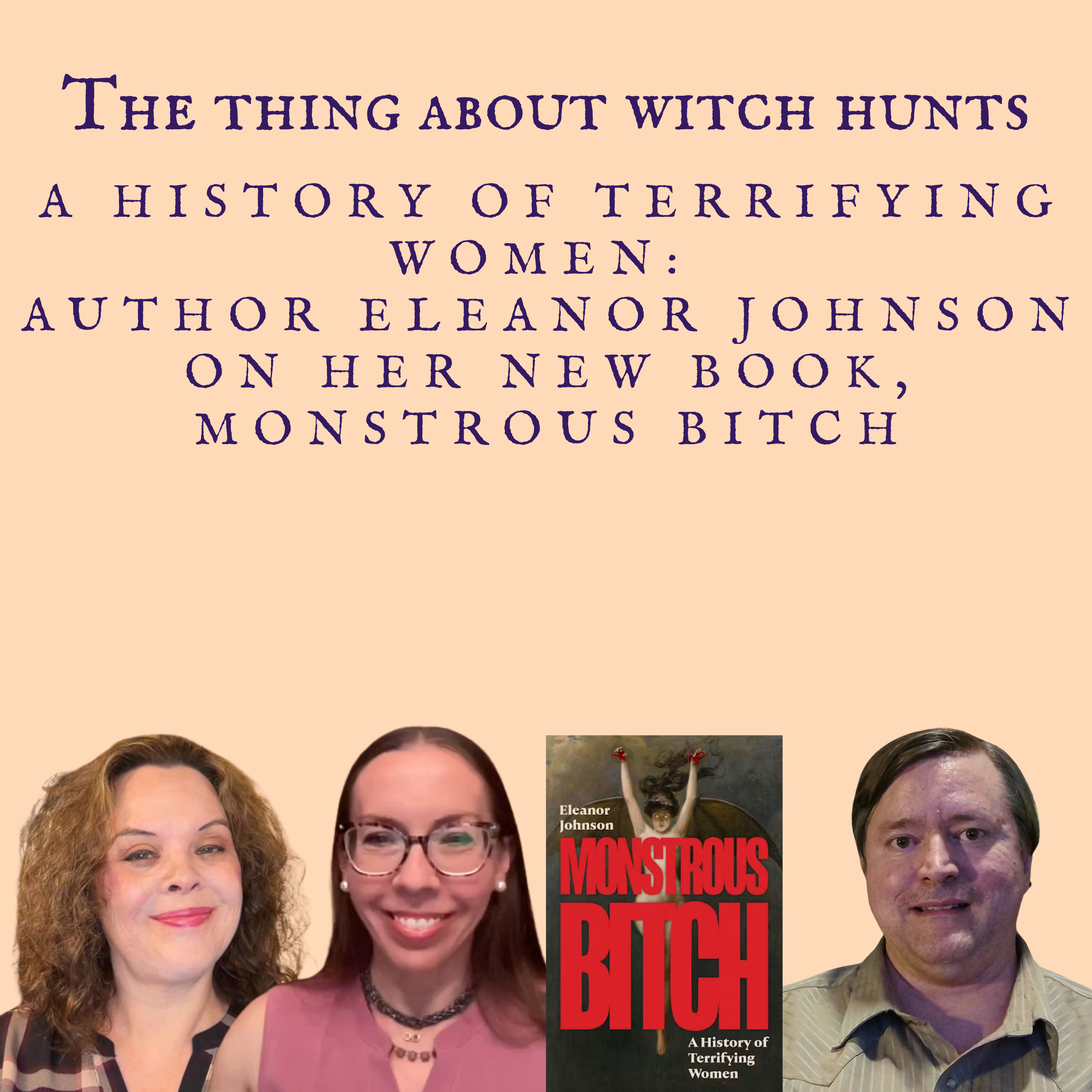 A History of Terrifying Women: Author Eleanor Johnson on Her New Book, Monstrous B*tch 21.09.2026 56minMonstrous Bitch: 4,000 Years of Demonizing Women, From Lamashtu to Modern HorrorMedievalist and Columbia professor Dr. Eleanor Johnson joins us to trace the 4,000-year lineage behind her new book, Monstrous Bitch, connecting ancient Mesopotamian demon Lamashtu to Greek and Roman lamiae, medieval and early modern witch persecutions, and modern horror cinema. We follow how patriarchal cultures repeatedly weaponized a recurring “triptych” of accusations—women’s voices, sexuality or predation, and reproductive autonomy—turning mythic monstrosity into the idea that any woman could be a witch, and later reshaping the figure into the vampire. We also confront the terror of heritable witchcraft accusations, including Salem’s Sarah Good and Dorothy Good, and discuss the devil-contract conspiracy framework in Christian witch ideology, alongside historical opponents who challenged it. Johnson highlights recent films that reinterpret the “monstrous bitch” as feminist resistance, and shares release details for Monstrous Bitch (Oct. 6) and her Eleanor’s Horrors Substack.Chapters00:00 Welcome and Guest Intro01:27 Dr Johnson Background02:53 Why Monstrous Bitch03:59 Lamashtu Origins08:56 From Lamia to Witches12:54 Witch Hunts Fallout14:40 Vampiress Turn16:22 Feminist Horror Reclaim20:44 Devil Pact Conspiracy27:10 Pushback and Salem Link30:40 Salem Cases Setup32:00 Daughters Forced to Disavow33:10 Hereditary Horror on Film35:23 Witchcraft Accusations Today36:58 Exonerating Ancestors in Connecticut38:42 Honor, Memory, and History41:13 Pop Culture Witch Lineages42:52 The Past Never Ends46:51 Fear of Women Gathering51:05 Study History Without Fear54:19 Book Release and FarewellLinksEleanor’s Horrors: https://eleanorshorrors.substack.comBuy Monstrous Bitch: https://bookshop.org/a/90227/9780691291666Salem Witch Trials History YouTube channel: https://www.youtube.com/channel/UCliis4vjMIUgg3wcA0pXeYQThe Thing About Witch Hunts: https://aboutwitchhunts.comThe Thing About the Salem Witch Trials: https://aboutsalem.comSalem Witch Trials Daily: https://aboutsalem.com/salem-witch-trials-daily/Connecticut Witch Trial History Trail: https://connecticutwitchtrials.org/trail/Massachusetts Witch Trial History: https://massachusettswitchtrials.orgEnd Witch Hunts nonprofit: https://endwitchhunts.org
 -
 The Craft at 30 with Abby Brenker of the Lunatics Project 04.09.2026 55minThe Craft at 30: Witchcraft, Teen Horror, and the Satanic Panic with Abby Brenker (Lunatics Project)We welcome Abby Brenker of The Lunatics Project to dig into The Craft on its 30th anniversary, tracing why this 1996 teen witchcraft horror classic became a sleepover staple despite mixed reviews and an R rating. We explore how the film centers female friendship, anger, and power outside of romance, while portraying boys as secondary villainous caricatures, and we unpack gendered conflicts around beauty, identity, mentorship, and isolation—especially for Bonnie, Sarah, Nancy, and Rochelle. We connect the movie’s rituals, Wiccan and occult-inspired magic system, and iconic lines (“We’re the weirdos, mister”) to broader 1990s witch media, from Sabrina to Buffy, and to real-world fears: self-harm, rape, bullying, and primal horror imagery like mirrors, snakes, and spiders. We also touch on The Believers, Blair Witch, and the Satanic Panic, and Abby shares where to find Lunatics Radio Hour and her feature film Voices Carry on Tubi.Chapters00:00 Meet The Guest00:28 Lunatics Project Origins03:02 Why The Craft Matters03:58 Film Setup And Legacy07:49 Women Center Stage11:18 Boys And Beauty Standards15:21 Rituals And Power18:02 Fear And Dark Themes23:32 Iconic Lines And Scenes25:36 Witch Shop Mentor27:45 Rochelle Lacks Support29:14 Racism Then and Now30:40 Hair as Social Power35:05 Nineties Witch Boom40:02 Satanic Panic Memories43:38 Ritual Games and Mirrors45:45 Iconic Final Confrontation48:26 Violence and R Rating51:08 Blair Witch and Viral Hype53:58 Closing and Projects LinksThe Lunatics ProjectLunatics Radio HourVoices Carry on TubiSalem Witch Trials History YouTube channelThe Thing About Witch HuntsThe Thing About the Salem Witch TrialsSalem Witch Trials DailyConnecticut Witch Trial History TrailMassachusetts Witch Trial HistoryEnd Witch Hunts nonprofit
 -
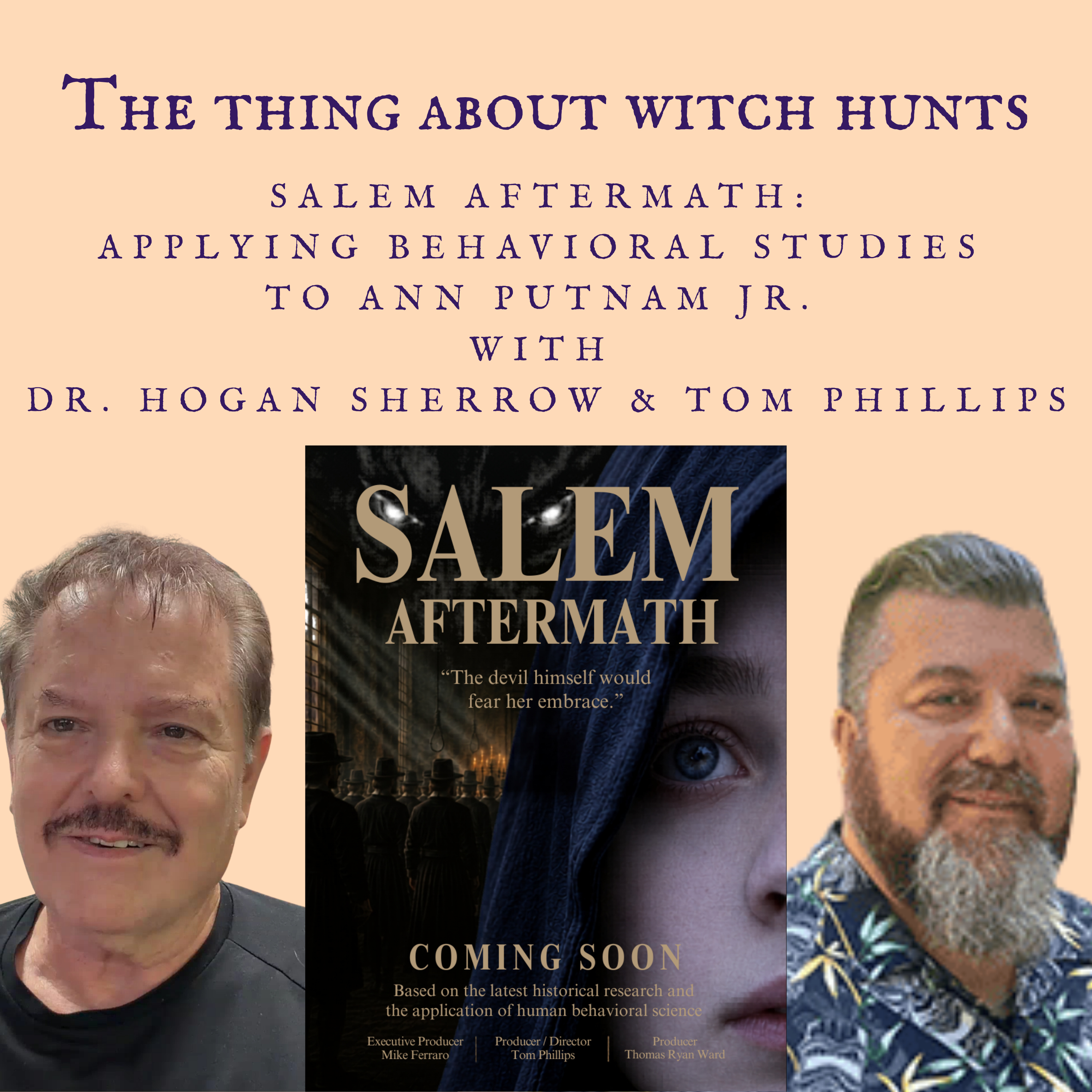 Salem Aftermath: Applying Behavioral Studies to Ann Putnam Jr. with Dr. Hogan Sherrow & Tom Phillips 26.08.2026 1val 12minWhy Did Ann Putnam Jr. Accuse? Reconstructing the Salem Witch Trials Through Behavioral ScienceWe welcome back producer-director-writer Tom Phillips with evolutionary anthropologist Dr. Hogan Sherrow to examine why 12-year-old Ann Putnam Jr. became the central accuser in the Salem witch trials and later the only known accuser to publicly apologize. Using Sherrow’s “evolutionary behavioral reconstruction,” they combine life history, Puritan cultural context, and household pressures to consider non-sensational explanations, including mental illness (psychosis-like symptoms), imitation and reinforcement, and the community’s readiness to interpret aberrant behavior as the devil. They discuss how Ann’s charisma could sway authorities, including the reversal of Rebecca Nurse’s initial acquittal, and how parents, magistrates, and church could benefit once accusations escalated. They analyze Ann’s 1706 apology language and signature, the trauma of witnessing executions, and preview test footage from Phillips’ stage-bound project Salem Aftermath.00:00 Why Ann Putnam Matters01:39 Meet Tom and Hogan04:30 Salem Aftermath Project05:56 Behavioral Reconstruction09:11 Puritans Not Hysterical10:58 Profiling Ann Putnam14:39 Psychosis or Copycat18:25 Lying and Boogeymen24:29 Family Trauma and Motives31:43 Rebecca Nurse Courtroom36:11 Who Benefits and Why37:05 Short Term Rewards40:07 Early Death Stressors44:05 Scapegoats And Witch Hunts48:27 Possible Diagnoses51:00 Teen Desire And Guilt53:46 Outcast And Marriage Prospects56:07 Apology Under Scrutiny59:42 Hangings And Lasting Trauma01:02:01 Signature And Authorship Doubts01:06:31 Humanizing Ann And Closing Links:The Thing About Witch HuntsSalem Witch Trials History YouTubeThe Thing About the Salem Witch TrialsSalem Witch Trials Daily
 -
 World Day Against Witch Hunts: Missio in Papua New Guinea with Sister Lorena Jenal and Jörg Nowak 07.08.2026 54minWorld Day Against Witch Hunts: Sister Lorena Jenal and Jörg Nowak on Rescuing Survivors in Papua New GuineaHosts Josh Hutchinson and Sarah Jack mark August 10, World Day Against Witch Hunts, with its creators, Sister Lorena Jenal and journalist Jörg Nowak of the German Catholic aid organization Missio. Sr. Lorena, a Swiss Franciscan who has served 47 years in Papua New Guinea, has rescued more than 420 women accused of sorcery since 2012 and shelters survivors at the House of Hope, built using her International Weimar Award for Human Rights. Nowak describes how Missio recognized sorcery accusation-related violence as a current human rights violation, expanded support to projects in countries including Liberia, Tanzania, Ghana, Benin, and documented abuses through reporting and museum exhibitions. They discuss the scale in PNG (109 cases last year), an estimate of 3,000 killings over 20 years, patterns of scapegoating and misogyny, severe sexual violence and public humiliation, police corruption and inaction, and advocacy efforts to elevate August 10 to a United Nations-recognized day.00:00 World Day Against Witch Hunts01:37 Meet Lorena and Jörg03:10 Missio Campaign Origins05:38 Papua New Guinea Crisis11:40 Who Gets Accused20:21 Sexual Violence Research29:06 Police Corruption and Justice35:15 Creating August 1043:48 House of Hope Sanctuary46:20 UN Recognition Push52:20 How You Can Help53:57 Final Thanks and Share LinksHexenverfolgung heute | missio: https://www.missio-hilft.de/informieren/wofuer-wir-uns-einsetzen/gegen-hexenverfolgung/ World Day Against Witch Hunts: https://endwitchhunts.org/day The Thing About Witch Hunts: https://aboutwitchhunts.comSalem Witch Trials History YouTube: https://youtube.com/@aboutwitchhuntsThe Thing About the Salem Witch Trials: https://aboutsalem.comSalem Witch Trials Daily: https://aboutsalem.com/salem-witch-trials-daily/
 -
 Healing the Past: The Reclamation Project with Claire Standen 05.08.2026 48minReclamation: Restorative Justice and a Church Returned for Scotland’s Accused WitchesWe follow the question history books can’t answer: once the harm of witch hunting is acknowledged, what does repair look like? Trauma resolution practitioner Claire Standen, founder of Reclamation, is building a Scottish community interest organization seeking reparations for the thousands prosecuted under Scotland’s Witchcraft Act (1500s–1700s), arguing apology without action isn’t meaningful. Her central demand is radical and concrete: the Church of Scotland—already apologetic—should gift an unused church building (not sold or grant-funded) to be stewarded as a community headquarters and a Center for Female Authority, reclaiming sacred space once tied to persecution. Drawing on trauma work and epigenetic inheritance, she connects historic terror to today’s inherited silence and societal patterns, and outlines a restorative justice approach where those harmed define what healing requires. Reclamation is seeking social media support and seed funding via ourreclamation.org.00:00 Show Intro and Big Question01:38 Meet Claire Standen03:18 What Reclamation Aims For05:26 Trauma Work Meets History09:02 The Synchronicity Road Trip15:40 Reclaiming Witch Legacy20:26 Apologies vs Reparations24:21 Inherited Silence and Epigenetics27:03 What Makes Apology Meaningful31:32 Why a Gifted Church Matters40:12 Center for Female Authority Vision45:32 How to Help and Connect48:18 Closing ReflectionsLinks:Reclamation ProjectThe Thing About the Salem Witch TrialsSalem Witch Trials DailySalem Witch Trial History YouTube Channel
 -
 Witchland: Inside the Book with Professor Marion Gibson 29.07.2026 51minWitchland with Professor Marion Gibson: The Witchfinder General, Civil War Chaos, and Recovering the AccusedWe sit down with Professor Marion Gibson (emeritus, Exeter University) to explore her new book, “Witchland: A Tale of Witch Hunting and War in 17th Century Britain,” a gripping, archive-driven look at the 1640s British Civil Wars and the Matthew Hopkins–John Stearne witch hunts that pursued roughly 200–300 people. Marion explains her mission to remedy a “triple injustice” by restoring the accused to history—their names, neighbors, and ordinary lives—rather than centering persecutors. We dig into how war, religious conflict, migration, and the 1604 Witchcraft Act helped fuel mass prosecutions; how “watchers,” clergy, and communities escalated sleep-deprivation interrogations; and how templates of questions produced patterned confessions about familiars, spirits, and the devil. Stories range from the nameless “Witch of Newbury” to Scotland’s pricking practices, Great Yarmouth’s transatlantic links to New England, Cornwall’s Ann Jeffries and Moses Pitt, and growing efforts to memorialize victims.00:00 Meet Marion Gibson02:49 Why Write Witchland04:43 Triple Injustice06:48 Civil War Panic09:17 Witch of Newbury11:16 Law That Enabled Hunts14:01 Familiars And Confessions17:18 Religion And Reformers20:48 Building A National Story25:00 Accusations And Watchers30:39 Templates And Scotland40:54 Cornwall Fairies Tale44:30 Memorials And Memory47:18 Buy The Book Next50:31 Final Thanks And OutroBuy Witchland by Marion GibsonBuy Books on English and European Witch TrialsCT Witch and Culture FestHistory Camp BostonEnd Witch HuntsThe Thing About Witch Hunts: https://aboutwitchhunts.comThe Thing About the Salem Witch Trials: https://aboutsalem.comSalem Witch Trials History Youtube
 -
 The Witch Trial History of Exeter, England with Professor Mark Stoyle 22.07.2026 53minWe head inside Roman-walled Exeter, Devon, with University of Southampton historian Mark Stoyle, author of Witchcraft in Exeter, to trace a century of quarter sessions and church-court records showing a steady trickle of cases rather than explosive mass witch hunts. Stoyle explains how Henry VIII made Exeter a county with its own justices, prison, and gallows just before Elizabeth I’s 1563 Witchcraft Act, yet local magistrates often resisted executions, sometimes banishing the accused, and most defendants were acquitted; about 30 people were formally tried, with only four executed. Stories include toad and animal familiars, harmed livestock and failed butter or beer, William Harvey dissecting a “familiar” to amuse Charles I, a boy haunted by a pig in a hat in the last Exeter case, and the Bideford witches (1682) alongside the mystery of “Alice” vs “Avis” Molland in 1685. The hosts also announce August 2026 appearances at History Camp Boston and Connecticut Witch and Culture Fest.LinksBuy The Western Rising of 1549 by Mark Stoyle: https://bookshop.org/a/90227/9780300276886Buy Books on English and European Witch Trials: https://bookshop.org/lists/european-witch-huntsCT Witch and Culture Fest: https://ctwitchfest.com/History Camp Boston: https://historycamp.org/events/history-camp-boston/hcb-2026/End Witch Hunts: https://www.endwitchhunts.orgThe Thing About Witch Hunts: https://aboutwitchhunts.comThe Thing About the Salem Witch Trials: https://aboutsalem.comSalem Witch Trials History Youtube: https://youtube.com/@aboutwitchhunts
 -
 American Revolution: The Treaty of Watertown, 1776 with Marilynne K. Roach 15.07.2026 29minThe Treaty of Watertown: Independence, Alliance, and the Fowle House Council ChamberWe step into an upstairs council chamber above a shoemaker’s house in Watertown, Massachusetts—where, on July 18, 1776, the Declaration of Independence was read aloud to a crowd that included Mi’kmaq and Maliseet representatives, and where the next day the Treaty of Watertown was signed as the first international treaty negotiated by the new United States. With historian Marilynne Roach of the Historical Society of Watertown, we trace how the Edmund Fowle House became Massachusetts’ wartime seat of government, what restoration work revealed about the L-shaped chamber and its preserved details, and how archival minutes illuminate daily Revolutionary governance. We also follow the treaty’s 1980s revival by Mi’kmaq veterans, the renewed collaboration with the Grand Council of the Mi’kmaq and Maliseet representatives, and plans for Watertown’s July 18 celebration marking the 250th anniversary.00:00 Watertown Treaty Preview01:52 Fowle House Restored05:43 Council Work In Wartime07:50 Who Led The Council09:43 Edmund Fowle Home Life13:09 Declaration Read Aloud15:51 Treaty Negotiations18:40 Forgotten Then Remembered21:12 Planning The 250th23:42 Friendship Still Binding25:00 Symbols Of Liberty26:18 Witch Trials Echoes27:13 Hidden Shoe Magic28:17 Visit And Support29:26 Closing Thanks And EventLinksThe Thing About Salem websiteEnd Witch HuntsThe Thing About Witch HuntsSalem Witch Trials History YouTube
 -
 200 Episodes About Witch Hunts: Celebrating a Milestone with a Lesson in Witch Trial History 02.07.2026 1val 6minEpisode 200: The Long Arc of Witch Hunts—From Connecticut to a Global CrisisThe Thing About Witch Hunts: We mark episode 200 by tracing the full arc of witch hunts from ancient prosecutions to early modern demonology, colonial New England, and today’s escalating global violence. We begin with Connecticut’s executions—starting with Alice Young in 1647—and the 2023 resolution absolving the indicted victims, then widen out through England, Scotland, Wales, Ireland, the Basque country, Sweden, and Salem, emphasizing how courts, texts, and laws shaped prosecutions and how “hysteria” does not accurately describe these bureaucratic trials. We connect historic concepts like the diabolical pact, the sabbath, and “crimen exceptum” to modern accusations, banishment, torture, and killings across at least sixty nations, citing UN-documented violence, Ghana’s Akua Denteh, and contradictory legal responses. We center survivors and the accused as people, invite action, and point listeners to endwitchhunts.org and World Day Against Witch Hunts (August 10).Thank you to the 175 guests who have appeared on the podcast and to all who have viewed or listened to The Thing About Witch Hunts. And we aren't stopping with 200 episodes. Subscribe today and watch the amazing episodes coming up.End Witch Hunts endwitchhunts.orgAbout Witch Hunts aboutwitchhunts.comSalem Witch Trials History YouTube: https://youtube.com/@aboutwitchhunts00:00 Episode 200 Mission02:53 Ancient Roots05:14 Church Turns to Heresy09:58 Malleus and Sexism11:36 England Goes Secular12:23 Pamphlets and Skeptics18:12 Laws Across Colonies25:02 Europe Scale and Stress27:17 England Local Panics31:02 Scotland Burning Regime34:50 Wales and Healing Magic37:25 Ireland Rare Trials40:11 Basque Hunt Split Courts43:16 Sweden Blockula to Salem44:40 Connecticut Before Salem46:20 Massachusetts and Salem51:22 After Trials Vigilantes53:45 Modern Global Crisis58:59 Law Patchwork Today01:01:07 Memorials and World Day01:03:20 What You Can Do01:05:22 Final Call to Action
 -
 Witches and Familiars with Dr. Holly Bamford 17.06.2026 50minWhat was a witch's familiar, and why did these animal spirits sit at the heart of English witch trials? Returning guest Dr. Holly Bamford joins hosts Josh Hutchinson and Sarah Jack to explain the witch's familiar, the witch's mark, and the overlooked history of male witches in early modern England. Learn what the familiar meant, how the witch's mark was used as evidence, why the witch-familiar bond mirrored motherhood, and why men accused of witchcraft were not simply feminized. Featuring Agnes Waterhouse and her cat Satan, John Bysack and his six snails, and John Palmer's familiar named Jezebel.What a witch's familiar was in English witchcraftWhy the familiar mattered so much in witch trialsHow the witch's mark was used as evidenceWho was accused of being a male witchWhy men accused of witchcraft were not feminizedHow the witch-familiar bond mirrored motherhoodWhy Agnes Waterhouse and her cat Satan became a foundational caseWhat John Palmer's familiar Jezebel reveals about marriage00:00 Familiars in Trials01:01 Meet Dr Bamford02:08 Conference Paper Idea04:14 What Is a Familiar07:51 Pamphlets and Audiences11:47 Counting Trials Limits15:03 Agnes Waterhouse Case19:21 Marks and Teats22:56 Motherhood and Familiars31:52 Male Witches and Snails41:49 Humanoid Familiar Jezebel46:27 Further Reading Wrap48:53 Modern Meaning Outro#WitchTrials #Witchcraft #WitchsFamiliar #WitchesMark #MaleWitches #WitchcraftHistory #EarlyModernEngland #Familiars #Folklore #AgnesWaterhouse #HistoryPodcast #WitchHunts #EndWitchHuntsBuy: Witchcraft, the Devil, and Emotions in Early Modern England by Charlotte-Rose Millar https://bookshop.org/a/90227/9780367204549Buy the book Cunning-Folk and Familiar Spirits by Emma Wilby https://bookshop.org/a/90227/9781845190798Register for the Magic and Witchcraft Conference June 24-25 Online & In Personhttps://www.eventbrite.com/e/magic-and-witchcraft-conference-2026-nature-and-the-supernatural-tickets-1989231567166End Witch Hunts: https://www.endwitchhunts.orgThe Thing About Witch Hunts: https://aboutwitchhunts.com
 -
 Metacom's Resistance: Perspectives on King Philip's War with Sarah Stewart 10.06.2026 53minMetacom’s Resistance, Puritan Mythology, and King Philip’s War with Sarah Stewart (Partnership of Historic Bostons)We speak with Sarah Stewart, president of the Partnership of Historic Bostons, a public history organization focused on 17th-century New England, to confront Puritan mythology and widen the lens beyond Salem to Indigenous history, enslaved Africans, and displaced peoples. We dig into why King Philip’s War, which is often skipped in schools and told through colonial monuments, Increase Mather, and captivity narratives, was a turning point that devastated Native sovereignty, reshaped New England, and fed the fear that later influenced the Salem witch trials. Sarah breaks down PHB’s “Metacom’s Resistance” series, the need for reframing the war through Indigenous voices, and the realities of enslavement, land commodification, and legal encroachment on sovereignty. 00:00 Meet Sarah Stewart00:50 Origins of the Partnership01:51 Broadening the 17th Century Lens03:21 Programs and Events04:58 Puritans Beyond the Myths06:51 Building Community Feedback08:06 Why King Philip's War Matters10:53 How the Story Got Distorted13:22 Metacom's Resistance Series17:49 Indigenous Voices Center Stage20:50 Violence and Witch Trial Fear23:59 Captivity and Enslavement25:53 Land Commodification Clash28:50 Land And Equality29:31 Amplifying Indigenous Voices33:08 Powerful Panels And Future Events37:08 Puritans Fear And Ongoing Wars39:11 Courts Sovereignty And Punishment42:23 Thomas Morton And Other Paths45:29 War Choices And Modern Parallels46:55 Audience Reflections And Truth52:01 Keep Learning Stay ConnectedPartnership of Historic Bostons“The Unknown War: King Philip's War, 1675-1678” (video)“The Past is Now: An Inter-Tribal Panel Discussion of King Philp's War” (video)“Surviving Slavery: Indigenous Enslavement in King Philip's War” (video)“Erasure: History, Memory and King Philip's War” (video)“What Really Happened at Turners Falls?” (video)“The Long Legacy: The Cost and Consequences of King Philip's War” (video)“The Slews and Hoars of Beverly: From Witchcraft to Slavery” (video): https://www.youtube.com/watch?v=2GEspMnY9-o“The Other: Understanding Witch Hunts, Part I, with Emerson Baker, Sarah Jack, and Josh Hutchinson” (video)“Resistance: Stopping Witch Hunts, Part II” (video)Jenny Hale Pulsipher, Subjects unto the Same King: Indians, English, and the Contest for Authority in Colonial New EnglandJill Lepore, The Name of War: King Philip's War and the Origins of American IdentityPeter C. Mancall, The Trials of Thomas Morton
 -
 Open Mic Night with Guests Josh Hutchinson and Sarah Jack 03.06.2026 52minWe turn the mic on each other for a fast, personal Q&A spanning Salem and global witch hunts, from the infamous Salem witch cake to pop-culture “broom” upgrades and the accused people we can’t stop thinking about, including Samuel Wardwell, Katherine Harrison, Mary Esty, and Rebecca Nurse. We dig into why confessions didn’t always save lives, how spectral evidence shaped cases, and how banishment could be a brutal alternative to execution. We break down our three podcast formats—Salem Witch Trials Daily, The Thing About the Salem Witch Trials, and The Thing About Witch Hunts—and share what listeners most ask about innocence, “real” witchcraft, and the reality that accusations still occur in at least 60 countries. We close with how End Witch Hunts grows through volunteering, donations, subscriptions, and petitions for exonerations.00:00 Welcome And Guests01:18 Witch Cake Debate02:23 Flying On Appliances03:52 Accused Who Haunt Us08:17 Banishment And Survival09:20 Three Podcasts Explained10:57 Questions We Get Asked13:32 Research Methods Shift15:21 Growing Reach Staying Grounded19:10 What Makes Our Show Different24:15 Devil Nicknames And Laughs26:58 Witch Trials Ice Cream29:38 Descendant Emotions And Ancestors35:31 Understanding Accusers And Fear43:43 Why The Accused Were Innocent45:31 June Trials And Daily Plug46:24 How To Support End Witch Hunts51:36 Final Thanks And Call To Action LinksSupport The Thing About Witch Hunts: https://endwitchhunts.org/donateThe Thing About Witch Hunts Website: https://aboutwitchhunts.comThe Thing About the Salem Witch Trials: https://aboutsalem.comSalem Witch Trials Daily: https://aboutsalem.com/salem-witch-trials-daily/YouTube: https://youtube.com/@aboutwitchhuntsSalem Witch Hunt Facebook Page: https://facebook.com/salemwitchhunt
 -
 The Art and Folklore of Divination with Icy Sedgwick, author of Fate or Fortune 27.05.2026 50minDivination folklore, folk magic history, and the practice of reading omens, cards, and natural signs are at the heart of this conversation with Icy Sedgwick, author of Fate or Fortune: The Art and Folklore of Divination, folklorist, and host of the Fabulous Folklore Podcast. From ancient liver divination in Mesopotamia to love divination games played by young women in early modern England, this episode traces the deep folk roots of divinatory practice across centuries and cultures.Icy Sedgwick is a writer, researcher, and diviner specializing in folklore, plant lore, and folk magic. Her book Fate or Fortune: The Art of Divination explores the history, folklore, and practice of divination from a folklore studies perspective. She is the creator and host of the Fabulous Folklore Podcast, based in Newcastle, England.Divination is one of the oldest and most universal human impulses, and its fingerprints are all over witch trial history. In this episode, Josh Hutchinson and Sarah Jack sit down with Icy Sedgwick to explore what folk magic tradition tells us about the people who practiced divination, why they sought answers through omens and tools and rituals, and what those practices reveal about the communities that preserved them. The conversation is wide-ranging, deeply grounded in folklore scholarship, and endlessly surprising.IN THIS EPISODE YOU WILL LEARN:What separates divination from fortune telling, and why has that distinction mattered throughout history?How did cunning women turn ordinary household objects into powerful folk magic tools?What do love divination rituals reveal about the real lives of women in early modern communities?Why did playing cards become so deeply entangled with the devil in folk tradition?What ancient civilizations left behind physical records of their divination practices, and what did those records reveal?How has dowsing been used for purposes far stranger than finding water?What does folklore say about omens you never asked for but receive anyway?Which forms of divination are experiencing a genuine resurgence right now, and which trend is Icy warning practitioners to avoid?Pick up Icy Sedgwick's book Fate or Fortune: The Art and Folklore of Divination through our affiliate bookshop at bookshop.org/shop/endwitchhuntsicysedgwick.com#divination #folklore #folkmagic #witchtrials #salemwitchtrials #fortunetelling #cunningfolk #omens #tarot #cartomancy #dowsing #folklorePodcast #witchhunts #occulthistory #historicalpodcast #folklorestudies #divinationhistory #witchcraft #palmistry #scapulamancy
 -
 Connecticut Witch Trials Before Salem: The Play Windsor's Daughter Restores Alice Young's Legacy 20.05.2026 51minAlice Young was the first person executed for witchcraft in the American colonies, in Windsor, Connecticut, in 1647, before the Salem witch trials. Award-winning author Beth Caruso and playwright Lauren Cavanaugh join Josh Hutchinson and Sarah Jack to explore her story and the new play Windsor's Daughter that is bringing her life back into the light.This conversation moves between historical research and present-day resonance, asking what it means to memorialize people whose graves were never marked, whose names faded from community memory, and whose persecution mirrors patterns still unfolding today.WHAT YOU WILL LEARNWhy Alice Young's 1647 execution changed American historyWhy her name nearly vanished from historyWhat made Windsor, Connecticut, a powder kegHow a play brings her execution to the stage without showing itWhy there is no grave to visitWhat the 2023 exoneration meant for her descendantsHow her story connects to persecution happening todayWhere to follow Windsor's Daughter as it finds its stageLinksAuthor Beth Caruso at OneofWindsor.com https://www.oneofwindsor.com/Playwright Lauren Cavanaugh https://hartford.culturalyst.com/CavanaughLMCConnecticutwitchtrials.org https://connecticutwitchtrials.org/Listen to more CT Witch Trials Podcast Episodes https://connecticutwitchtrials.org/witch-hunt-podcast/Support the Podcast Buy a Witch Trial History Book! https://bookshop.org/lists/connecticut-witch-trials
 -
 Blood Countess: The Lies that Made Elizabeth Bathory a Serial Killer with Shelley Puhak 13.05.2026 52minElizabeth Bathory is one of pop culture's favorite monsters. Accused of torturing and killing hundreds of young women, she's inspired everything from Snow White's evil stepmother to Lady Gaga. But the actual historical record shows almost none of it happened.Josh Hutchinson and Sarah Jack sit down with Shelley Puhak, author of The Blood Countess: Murder, Betrayal, and the Making of a Monster, to trace the documented history behind one of history's most sensationalized witch trial-adjacent cases. From the fractured Kingdom of Hungary to a Lutheran minister's invisible demonic cat army, this episode connects the Bathory case to the broader European witch trials and the religious and political warfare driving them.What You'll LearnWhat the preserved record actually showsThe witchcraft and magic accusations woven into the caseThe political war that made Bathory a targetWhat the Palatine of Hungary stood to gain from her downfallThe one minister behind the witchcraft accusationsWhy no bodies were ever foundWhat her own letters reveal about who she really wasThe role of ointments, alchemy, and antimonyWhy widowed noblewomen were especially vulnerable to accusationThe tension between a pop culture monster and a real historical victimWhat justice could look like About Shelley PuhakShelley Puhak is a poet, essayist, and historian from Maryland. Her previous nonfiction book, The Dark Queens (Bloomsbury, 2022), was a national bestseller and Goodreads Choice Awards finalist. Her essays have appeared in The Atlantic, the Wall Street Journal, and Virginia Quarterly Review.LinksBuy the book: Blood Countess by Shelley Puhak https://bookshop.org/a/90227/9781639732159Learn about the Author on ShelleyPuhak.com https://shelleypuhak.com/End Witch Hunts endwitchhunts.orgAbout Witch Hunts aboutwitchhunts.comSalem Witch Trials History YouTube: https://youtube.com/@aboutwitchhunts
 -
 The American Revolution and Salem Witch Trials Families with Dan Gagnon 06.05.2026 46minWhat does 1692 have to do with 1775? More than you might think.The families of 1692 did not vanish from history. One to two generations after the Salem witch trials, descendants of both the accused and the accusers were drilling on village training fields, defying British soldiers, and dying on the same battlefields. Israel Putnam, one of the Revolution's boldest generals, was born in Salem Village, raised in a family at the center of 1692, and though he moved to Connecticut, he answered the call when Massachusetts needed him most.From Leslie's Retreat in Salem to the Battle of Menotomy, Bunker Hill, the siege of Boston, Long Island, and Saratoga, the men of Essex County were present from the first confrontation to the wider war. And Benjamin Franklin's tie to the Salem witch trials runs closer than most people know.This episode connects two of American history's most significant chapters and asks: what did the witch trial era leave behind, and how did it shape the people who built this country?Danvers and Salem historian Dan Gagnon, author of A Salem Witch: A Biography of Rebecca Nurse, returns to The Thing About Witch Hunts to tell stories of the North Shore's role in the American Revolution as part of America 250. From a standoff at a toll bridge to the bloodiest stretch of road on Patriots Day 1775, the story of Essex County and the Lexington Alarm is one most Americans were never taught.Hosts Josh Hutchinson and Sarah Jack trace the thread from the Salem witch trials through Lexington and Concord, from the Rebecca Nurse Homestead to the halls of the Continental Congress, and from the accused of 1692 to the soldiers of 1775.What You Will Learn:The through-line between 1692 and 1775 that changes how you understand bothWhy Leslie's Retreat in Salem months before Lexington and Concord matters more than you have been toldWhat happened when Salem witch trial family names started showing up on revolutionary muster rollsIsrael Putnam: the founding-era general with Salem Village roots whose story was nearly erased from history, and whyA founding father with a direct family tie to the Salem witch trials, and what that connection revealsWhat one brutal day at the Battle of Menotomy cost a single Massachusetts town, and why they brought their dead homeWhat you can see at the Rebecca Nurse Homestead today that quietly holds the story of two centuriesDan Gagnon leads walking tours in Danvers and the Rebecca Nurse Homestead is open seasonally. #AmericanRevolution #America250 #IsraelPutnam #LesliesRetreat #BattleOfMemotomy #BattleOfBunkerHill #SiegeOfBoston #LexingtonAndConcord #LexingtonAlarm #PatriotsDay1775 #BattleOfLongIsland #FrenchAndIndianWar #BostonTeaParty #GeneralGage #GeorgeWashington #BenjaminFranklin #RebeccaNurse #RebeccaNurseHomestead #DanversAlarmList #Minutemen #ContinentalCongress #CoerciveActs #Marblehead #Menotomy #Arlington #EssexCounty #NorthShore #ColonialHistory #AmericanHistory #FoundingFathers #RevolutionaryWarLinks Rebecca Nurse Homestead: rebeccanurse.orgA Salem Witch: A Biography of Rebecca Nurse by Dan Gagnon: www.bookshop.org/Shop/endwitchhuntsEnd Witch Hunts endwitchhunts.orgAbout Witch Hunts aboutwitchhunts.comSalem Witch Trials History YouTube: https://youtube.com/@aboutwitchhunts
 -
 Fairy History, Folklore, and Belief with Dr. Francis Young 29.04.2026 53minFairy history, folklore, and belief across two thousand years of European culture: that is what we are diving into today with historian of religion and belief Dr. Francis Young, author of the new book Fairies: A HistoryDr. Young holds a doctorate in History from Cambridge University, is a Fellow of the Royal Historical Society, a folklorist, a Balticist, a lay canon of St Edmundsbury Cathedral, and a series editor for Cambridge University Press. He teaches for Oxford University's Department for Continuing Education and broadcasts regularly for BBC Radio on history, religion, and folklore. He is the author, editor, or co-author of over two dozen books.Fairies: A History is a complete survey of fairy belief from prehistoric animism through the Middle Ages, the Reformation, the Enlightenment, and into the present day. In this episode, Josh Hutchinson and Sarah Jack ask Dr. Young the big questions: What are fairies? Where do they come from? How do fairy beliefs vary across Europe? What is the relationship between fairy folklore and witch trial testimony? And why is fairy belief still very much alive today?In this episode you will learn:In this episode you will learn:What exactly is a fairy?What do fairies want from humans?How is a fairy different from a ghost, a witch, or an angel?Why should you never eat food in fairy land?Where did the fairy godmother really come from?Have fairies always had wings?Why do children seem more attuned to fairy belief than adults?Could fairies be a feature of human consciousness itself?Are people still seeing fairies today?Links:drfrancisyoung.comFairies: A History is available for pre-order in our online bookstoreLearn more about witchcraft accusations past and present at endwitchhunts.org and aboutwitchhunts.comThe Thing About Witch Hunts is hosted by Josh Hutchinson and Sarah Jack.#fairyhistory #fairyfolklore #fairybelief #witchtrials #folklore #folklorehistory #witchcraft #fairies #changeling #fairytales #historypodcast #folklorepodcast
 -
 Devil, Witchcraft and English Demonology with Prof. Darren Oldridge 22.04.2026 51minWhat did the scholars who studied witchcraft most seriously actually believe? And why did their conclusions so often cut against prosecution?Professor Darren Oldridge of the University of Worcester joins Josh Hutchinson and Sarah Jack to examine the intellectual world that produced English demonology and shaped witch trials on both sides of the Atlantic.In this episode:Why the devil mattered far more than witches to learned English ProtestantsThe demonological writers whose work traveled directly to colonial New EnglandWhat Reginald Scott and George Gifford argued, and why it surprised their contemporariesThe specific figure whose writing brought popular and learned ideas into dangerous alignmentWhy the demonic pact was central to prosecution and nearly impossible to proveWhat the Massachusetts law code of the 1640s reveals about biblical influence on colonial legal thinkingHow Increase Mather's skepticism at Salem connected to a century of English Protestant thoughtWhy the "good witch" was considered more dangerous than the harmful oneLearn more at endwitchhunts.org and aboutwitchhunts.com.#WitchTrials #SalemWitchTrials #Demonology #WitchHunts #DevilHistory #WitchcraftHistory #EnglishHistory #HistoryPodcast #EarlyModernHistory #WitchcraftPodcast #EndWitchHunts #ProtestantHistory #ColonialHistory #SalemHistoryLinksProfessor Darren Oldridge https://www.worcester.ac.uk/about/profiles/professor-darren-oldridgeBuy Books by Darren Oldridge https://bookshop.org/lists/guests-of-the-thing-about-witch-hunts-podcastLearn more at endwitchhunts.org and aboutwitchhunts.comSign the Boston Exoneration Petition change.org/witchtrialsWe're on Youtube too! www.youtube.com/@aboutwitchhunts
 -
 The Conjuring Explained: The Real Bathsheba Sherman and Salem Witch Trials Victim Mary Esty 15.04.2026 44minThe Conjuring franchise named a real Salem witch trial victim as the origin of a Satanic lineage. Mary Towne Easty was executed in 1692. She did not curse anyone. She did not sacrifice a baby. And she has millions of living descendants, including your hosts.Josh Hutchinson and Sarah Jack are direct descendants of Mary Towne Easty. In this episode they break down exactly what The Conjuring, Annabelle, and the Conjuring Universe get wrong about real history, real people, and real court records, and what those people actually did and said.The Warrens built a career on these stories. James Wan built a franchise. But behind Bathsheba Sherman, behind the hanging scene, behind the demonic lineage that launched nine films and over two billion dollars in box office, are three real women whose names deserve to be known for who they actually were.Who was Bathsheba Sherman? Her grave has been vandalized because of this film.Who was Susan Richardson Arnold? The real documented death behind the hanging scene. Who was Mary Towne Easty? A grandmother and the author of one of the most powerful legal petitions in American history. Written from prison. Written for others. Not for herself.Also in this episode: the Annabelle doll is headed to Salem. A comedian now manages the Warren artifacts. The Conjuring is a great horror film. These are the real people underneath it.Josh Hutchinson and Sarah Jack host The Thing About Witch Hunts, a podcast from End Witch Hunts nonprofit. New episodes every week.See the real Mary Easty Petition Learn more at endwitchhunts.org and aboutwitchhunts.comSign the Boston Exoneration Petition#TheConjuring #Annabelle #EdAndLorraineWarren #SalemWitchTrials #MaryEasty #BathshebaSherman #ConjuringUniverse #horrorpodcast #paranormal #truestory #1692 #witchhunts #historypodcast #haunted
 -
 Cunning Folk at Stanford's Cantor Arts Center: Witchcraft and Occult Knowledge 08.04.2026 45minWhat can a five-foot-long magic scroll tell us about early modern fears, beliefs, and the people who sought protection through cunning folk? Sara Lent Frier, Assistant Curator of Prints and Drawings at the Cantor Arts Center at Stanford University, joins Josh Hutchinson and Sarah Jack to explore her exhibition "Cunning Folk: Witchcraft, Magic, and Occult Knowledge."Sara walks us through this collection show, which draws from both the Cantor Arts Center and Stanford's Green Library to present rare artifacts from the early modern period, roughly 1500 to 1750. The exhibit also features contemporary California artists whose work responds directly to that history, creating a conversation across centuries.In this episode:What cunning folk were and the roles they played in early modern communities How the Cantor Arts Center brought together artifacts and contemporary art in a single exhibition The stories behind objects including magic scrolls and a miniature bureau connected to the Salem witch trials What Stanford's collections reveal about the intersection of magic, medicine, and knowledge in early modern Europe How contemporary artists are engaging with this history todayWhether you are a historian, an art lover, or someone drawn to the deeper history of witchcraft accusations and occult belief, this conversation offers a rare look at objects that survived centuries and the scholars keeping their stories alive.The Thing About Witch Hunts is hosted by Josh Hutchinson and Sarah Jack.Learn more at endwitchhunts.org and aboutwitchhunts.com.LinksView Cunning Folk Exhibit Cantor Arts Center🎥 Watch more on YouTube: youtube.com/@aboutwitchhunts🌐 Learn more about our work on historical and contemporary witchcraft accusations at endwitchhunts.org
Panašios tinklalaidės


Populiari šalyje
Ši tinklalaidė taip pat patenka į šių šalių tinklalaidžių topus.
