
PRISM Rounds: Pulmonary Critical Care & Sleep Podcast
@bronchoscope
0
PRISM Rounds is a clinical review series by the PRISM research team. Every other week, it breaks down a high-impact Pulmonary, Critical Care, or Sleep article into three segments: The Blueprint (study design and methodology), The Math (demystifying statistics), and The "So What?" (real-world bedside implications). The podcast bridges the gap between the journal and the clinic/ICU, helping listeners interpret trials quickly and skip the noise.
Epizodai
-
 S01E58: SCCM Heat Stroke Guidelines - Cool Fast, Treat Smart 17.09.2026 38minIn Season 1, Episode 58 of PRISM Rounds, we review the 2025 Society of Critical Care Medicine guideline for the treatment of heat stroke and translate its recommendations into practical bedside decisions for emergency and critical care clinicians. We discuss why active cooling should begin immediately, why cold- or ice-water immersion is preferred when feasible, and why the guideline emphasizes both the speed of cooling and the goal of reaching a core temperature below about 39°C within 30 minutes. We also review what to do when immersion is not practical and how the guideline approaches classic versus exertional heat stroke.The episode also covers therapies that should generally be avoided. Routine acetaminophen, NSAIDs, salicylates, and dantrolene are not recommended for temperature reduction, and prophylactic antibiotics or antiseizure medications should be limited to research settings.An important theme is the strength of the recommendations versus the strength of the evidence. Several recommendations are strong despite very low-certainty evidence, reflecting the practical and ethical difficulty of conducting randomized trials that delay effective cooling in patients with true heat stroke.The bedside message is simple: recognize heat stroke early, start the fastest feasible active cooling strategy, continue simultaneous resuscitation and organ support, and avoid medications that do not address the underlying problem.Read the guideline:https://doi.org/10.1097/CCM.0000000000006551More PRISM Rounds:https://www.prismrounds.comAvailable on Apple Podcasts, Spotify, YouTube, and other major podcast platforms.Tags:PRISM Rounds, S01E58, critical care, ICU, heat stroke, heatstroke, hyperthermia, SCCM, Society of Critical Care Medicine, emergency medicine, cooling, cold water immersion, ice water immersion, exertional heat stroke, classic heat stroke, temperature management, dantrolene, antipyretics, heat illness, resuscitation, evidence based medicine, clinical guidelines, guideline review, medical education, FOAMed, pulmonary critical care
 -
 S01E57 | PRAGUE-26: Early Catheter-Directed Thrombolysis for Intermediate-High-Risk Pulmonary Embolism 09.09.2026 45minShould we wait for a patient with intermediate-high-risk pulmonary embolism to deteriorate before pursuing reperfusion—or intervene before the right ventricle fails?In this episode of PRISM Rounds, we examine PRAGUE-26, a multicenter randomized trial published in the New England Journal of Medicine comparing conventional catheter-directed thrombolysis with low-dose alteplase plus anticoagulation against anticoagulation alone in patients with intermediate-high-risk acute pulmonary embolism.The headline result is striking: the 7-day composite of death, recurrent pulmonary embolism, or cardiorespiratory decompensation or collapse occurred in 0.7% with catheter-directed thrombolysis versus 6.8% with standard care. But the interpretation requires nuance. The benefit was driven primarily by fewer episodes of cardiorespiratory deterioration, not a demonstrated mortality reduction. Overall major bleeding was not clearly increased, yet two intracranial hemorrhages occurred in the thrombolysis group and none with anticoagulation alone. We break down patient selection, the low-dose alteplase strategy, the composite endpoint, rescue reperfusion, early RV recovery, bleeding risk, and the limitations of an open-label trial conducted in experienced tertiary cardiovascular centers. Most importantly, we ask what prague-26 should change at the bedside: Does this trial support routine early catheter-directed thrombolysis, or does it help us identify the selected patient who should undergo reperfusion before overt hemodynamic collapse?The article was published online in the New England Journal of Medicine on August 31, 2026, DOI 10.1056/NEJMoa2608012. PRISM Trials / PRISM Rounds:Visit PRISM TrialsJournal article:Read “Catheter-Directed Thrombolysis in Intermediate-High-Risk Pulmonary Embolism” in NEJMTags:#PRISMRounds #PRISMTrials #CriticalCare #CriticalCareMedicine #ICU #PulmonaryCriticalCare #PulmonaryMedicine #Pulmonology #PulmonaryEmbolism #PE #IntermediateHighRiskPE #SubmassivePE #CatheterDirectedThrombolysis #CDT #Thrombolysis #Alteplase #Anticoagulation #Reperfusion #PERT #PulmonaryEmbolismResponseTeam #RightVentricle #RVFailure #RightHeartStrain #HemodynamicCollapse #CardiorespiratoryDecompensation #Shock #VTE #VenousThromboembolism #EmergencyMedicine #Cardiology #InterventionalCardiology #IntensiveCare #ClinicalTrials #RandomizedTrial #RCT #EvidenceBasedMedicine #MedicalEducation #JournalClub #NEJM #FOAMed #FOAMcc #MedEd #EvidenceBasedCriticalCare
 -
 S01E56 SAVE-O2 AI: Can Oxygen Titrate Itself Better Than We Can? 04.09.2026 32minIn this episode of PRISM Rounds, we discuss the SAVE-O2 AI randomized clinical trial, which tested autonomous closed-loop oxygen titration versus usual manual oxygen adjustment in 300 hospitalized adults receiving supplemental oxygen.The autonomous system kept patients in the target SpO2 range much more often, 85% vs 63%, while also reducing time spent in hypoxemia and, even more strikingly, hyperoxemia. We break down what the trial shows, what it does not show, the importance of pulse oximetry accuracy and skin pigmentation, and whether improved oxygen control is enough to justify broader implementation. We also discuss the accompanying editorial by Weingart and Matthay, which explores the potential impact on clinician workload, oxygen stewardship, resource-limited settings, and the next generation of implementation and outcomes studies. SAVE-O2 AI trial, JAMA Internal Medicinehttps://jamanetwork.com/journals/jamainternalmedicine/fullarticle/10.1001/jamainternmed.2026.4023DOI: https://doi.org/10.1001/jamainternmed.2026.4023Invited Commentary: Potential Transformative Impact of Autonomous Oxygen Delivery in Hospitalized Patientshttps://jamanetwork.com/journals/jamainternalmedicine/fullarticle/10.1001/jamainternmed.2026.4038DOI: https://doi.org/10.1001/jamainternmed.2026.4038Find more episodes at www.prismrounds.com and subscribe on Apple Podcasts or Spotify.Tags#PRISMRounds #SAVE02AI #CriticalCare #ICU #PulmonaryCriticalCare #OxygenTherapy #Hypoxemia #Hyperoxemia #PulseOximetry #ClosedLoopControl #ArtificialIntelligence #DigitalHealth #ClinicalTrials #RandomizedTrial #JAMAInternalMedicine #RespiratoryCare #FOAMcc #MedEd
 -
 S01E55 | Video Laryngoscopy in the OR: The COVALENT Trial 28.08.2026 41minDoes video laryngoscopy improve first pass success for routine tracheal intubation, and does blade geometry matter?In this episode of PRISM Rounds, we discuss the COVALENT randomized clinical trial, which compared direct laryngoscopy, Macintosh style video laryngoscopy, and hyperangulated video laryngoscopy in more than 2,400 perioperative intubations.We review the higher first pass success with video laryngoscopy, why the hyperangulated strategy performed best, the important role of stylet use, and what the accompanying editorial adds to the interpretation.We also discuss how COVALENT builds on the DEVICE trial in critically ill adults and why the airway conversation may now be shifting from simply video versus direct toward which video strategy, blade, and adjunct work best in different clinical settings.Find PRISM Rounds on Apple Podcasts, Spotify, and https://prismrounds.comTags:Critical Care, ICU, Airway Management, Video Laryngoscopy, Direct Laryngoscopy, COVALENT Trial, DEVICE Trial, Tracheal Intubation, First Pass Success, Emergency Airway, Anesthesiology, Pulmonary Critical Care, Evidence Based Medicine, Journal Club, PRISM Rounds, FOAMcc, FOAMed
 -
 S01E54: Rocuronium Dose and First-Pass Success: Are We Giving Enough? 24.08.2026 45minDescriptionWe obsess over the paralytic, but are we giving enough of it?In this episode of PRISM Rounds, we review a new AJRCCM secondary analysis of 1,822 critically ill adults from the DEVICE and PREOXI trials examining whether rocuronium dose is associated with first-attempt intubation success.Patients receiving more than 1.2 mg/kg had higher first-attempt success overall, with the strongest signal in ICU patients. But rocuronium dose was chosen by clinicians rather than randomized, so residual confounding matters.We break down the study, the accompanying editorial, the pharmacologic rationale for higher dosing, the ICU versus ED findings, and the key bedside question: Should this change how we dose rocuronium during emergency intubation?Original article:https://academic.oup.com/ajrccm/article/212/8/1740/8679093Accompanying editorial:https://academic.oup.com/ajrccm/article/212/8/1680/8706698Educational use only. This is not medical advice.TagsCritical Care, ICU, Airway Management, Tracheal Intubation, Emergency Intubation, Rocuronium, Neuromuscular Blockade, Rapid Sequence Intubation, RSI, First Pass Success, First Attempt Success, Video Laryngoscopy, DEVICE Trial, PREOXI Trial, AJRCCM, Pulmonary Critical Care, Emergency Medicine, Anesthesiology, Evidence Based Medicine, Journal Club, Medical Education, PRISM Rounds
 -
 S1E53 | SynAIRgy: The First Pill for Sleep Apnea? A Phase 3 Trial of AD109 16.08.2026 46minCould a bedtime pill become a meaningful treatment for obstructive sleep apnea?In PRISM Rounds Season 1, Episode 53, we examine “Aroxybutynin and atomoxetine (AD109) for obstructive sleep apnea: a randomized phase 3 trial (SynAIRgy).”This randomized, double-blind, placebo-controlled trial evaluated AD109, an investigational combination of aroxybutynin and atomoxetine, in adults with obstructive sleep apnea who could not or would not use positive airway pressure therapy.AD109 improved the apnea-hypopnea index and measures of oxygenation over 26 weeks. However, the average placebo-adjusted reduction was four respiratory events per hour, fatigue did not significantly improve compared with placebo, and approximately one in five participants discontinued treatment because of adverse effects.We discuss:• How AD109 is intended to improve upper-airway muscle function• The trial design and primary findings• Relative versus absolute reductions in the apnea-hypopnea index• Intention-to-treat versus on-treatment results• Hypoxic burden and changes in sleep architecture• Insomnia, dry mouth, tachycardia, and treatment discontinuation• Which patients might benefit if AD109 is approved• Why CPAP remains the most effective and best-established treatment for most patientsDoes SynAIRgy represent the beginning of oral precision therapy for sleep apnea, and can better phenotyping identify patients whose benefits outweigh the adverse effects?Primary article: https://doi.org/10.1093/ajrccm/aamag215Accompanying editorial: https://doi.org/10.1093/ajrccm/aamag243PRISM Rounds is intended for education and discussion and does not provide medical advice.Tags: PRISM Rounds, SynAIRgy, AD109, aroxybutynin, atomoxetine, obstructive sleep apnea, OSA, sleep apnea treatment, sleep medicine, CPAP, positive airway pressure, apnea-hypopnea index, AHI, hypoxic burden, randomized clinical trial, phase 3 trial, AJRCCM, pulmonary medicine, clinical research, medical education, FOAMed#PRISMRounds #SynAIRgy #AD109 #SleepApnea #OSA #SleepMedicine #CPAP #ClinicalTrials #PulmonaryMedicine #MedicalEducation #FOAMed
 -
 S01E52: The LOGICAL Trial | Conservative Oxygen After Cardiac Arrest 06.08.2026 36minShould oxygen be aggressively limited after cardiac arrest to reduce reperfusion injury?The LOGICAL trial randomized 1,840 unresponsive, mechanically ventilated adults after cardiac arrest to conservative or liberal oxygen therapy. Favorable functional outcomes at 180 days occurred in 38.2% versus 39.7%, with no significant difference between strategies.In this episode, we examine the trial design, oxygen targets, treatment separation, protocol deviations, key results, limitations, and practical implications for post-cardiac arrest care.Read the article in the New England Journal of Medicine:https://doi.org/10.1056/NEJMoa2513814Educational use only. This is not medical advice.Tags:LOGICAL trial, cardiac arrest, post cardiac arrest care, oxygen therapy, conservative oxygen, hyperoxemia, hypoxemia, reperfusion injury, critical care, intensive care, ICU, mechanical ventilation, resuscitation, neurocritical care, NEJM, Mega-ROX, evidence based medicine, journal club, pulmonary critical care, PRISM Rounds
 -
 S01E51: The NEXIS Trial, Cycling, Amino Acids, and ICU Recovery 30.07.2026 41minCan early in-bed cycling plus intravenous amino acids improve recovery after critical illness?The NEXIS trial randomized 115 adults with acute respiratory failure to protocolized cycling plus higher amino acid delivery or usual care. The intervention substantially increased rehabilitation time and protein intake, but did not improve six-minute walk distance at hospital discharge, strength, duration of ventilation, length of stay, mortality, or six-month recovery.This episode examines the trial design, intervention delivery, safety findings, limitations, and bedside implications. The discussion also addresses why a biologically plausible intervention may fail to produce better patient-centered outcomes, and why the results should not be interpreted as an argument against individualized ICU rehabilitation.TagsPRISM Rounds, NEXIS trial, critical care, intensive care, ICU rehabilitation, ICU acquired weakness, early mobility, in-bed cycling, cycle ergometry, amino acids, protein supplementation, acute respiratory failure, mechanical ventilation, six-minute walk distance, physical function, critical illness recovery, post-intensive care syndrome, nutrition in critical illness, AJRCCM, randomized clinical trial, pulmonary critical care, evidence-based medicine, journal club, medical education
 -
 S01E50: The MARCH Trial, When ICU Mucoactives Cause Harm Without Benefit 23.07.2026 53minShould mechanically ventilated patients with difficult-to-clear secretions routinely receive carbocisteine or nebulized hypertonic saline?In this episode of PRISM Rounds, we examine the MARCH randomized trial, which enrolled 1,956 patients across 71 UK intensive care units. Neither intervention shortened mechanical ventilation or improved major clinical outcomes. However, carbocisteine increased clinically important gastrointestinal bleeding, while hypertonic saline increased bronchoconstriction and hypoxemia during nebulization.We discuss the trial’s factorial design, the absence of a number needed to treat, and the approximate numbers needed to harm: 88 for gastrointestinal bleeding with carbocisteine, 51 for bronchoconstriction with hypertonic saline, and 26 for hypoxemia during nebulization. We then translate these findings into practical de-implementation strategies for airway care in the ICU.Article:https://www.nejm.org/doi/10.1056/NEJMoa2603406 Educational use only. This podcast is not medical advice.TagsMARCH trial, carbocisteine, hypertonic saline, mucoactive agents, mechanical ventilation, acute respiratory failure, airway secretions, mucus clearance, hypoxemia, bronchoconstriction, gastrointestinal bleeding, critical care, intensive care, ICU, respiratory therapy, pulmonary medicine, evidence-based medicine, randomized clinical trial, de-implementation, NEJM, PRISM Rounds
 -
 S01E49: VICTORY Trial, High-Dose Vitamin C in Severe Burns 17.07.2026 41minIn this episode of PRISM Rounds, we review the VICTORY randomized clinical trial, published in JAMA on June 10, 2026, testing high-dose intravenous vitamin C in patients with severe burn injury.The trial randomized adults with deep second- or third-degree burns involving at least 20% total body surface area to high-dose IV vitamin C or placebo. VICTORY was stopped early for futility and harm. Vitamin C did not improve death or persistent organ dysfunction and raised concerning mortality signals.We discuss how the trial was conducted, why vitamin C was biologically appealing, what the results showed, and what this means for medical ICU patients with shock, sepsis, ARDS, and inflammatory critical illness.Article: https://doi.org/10.1001/jama.2026.10616 Educational content only; not medical advice.Critical Care, ICU, Medical ICU, Burn ICU, Severe Burns, Vitamin C, High-Dose Vitamin C, Ascorbic Acid, VICTORY Trial, JAMA, Randomized Clinical Trial, Organ Dysfunction, Shock, Sepsis, ARDS, Mortality, Evidence Based Medicine, Pulmonary Critical Care, Emergency Medicine, Pharmacy, Nursing, Respiratory Therapy, PRISM RoundsTags
 -
 S01E48 | Bicarbonate During In-Hospital Cardiac Arrest : The BIHCA Trial 10.07.2026 45minIn this episode of PRISM Rounds, we discuss the JAMA randomized clinical trial BIHCA, which tested whether routine sodium bicarbonate improves outcomes during adult in-hospital cardiac arrest.Granfeldt and colleagues randomized adults with in-hospital cardiac arrest who had received epinephrine to sodium bicarbonate or placebo. Sustained return of spontaneous circulation occurred in 39% with bicarbonate vs 37% with placebo, with no significant difference. Survival and favorable neurologic outcome were also not clearly improved, while alkalosis and hypernatremia were more common with bicarbonate. We also discuss the accompanying editorial by Clifton Callaway, which asks whether this high-quality trial will change practice, given how deeply bicarbonate remains embedded in code culture despite guideline recommendations against routine use. Bottom line: bicarbonate changed the blood gas, but it did not change the patient-centered trajectory. Routine sodium bicarbonate should not be reflexive during in-hospital cardiac arrest, but targeted use remains appropriate for specific indications such as hyperkalemia or toxicologic sodium-channel blockade.Source article: https://doi.org/10.1001/jama.2026.10628Editorial: https://doi.org/10.1001/jama.2026.10508Tagscritical care, ICU, cardiac arrest, in-hospital cardiac arrest, sodium bicarbonate, bicarbonate, BIHCA, resuscitation, ACLS, code blue, epinephrine, return of spontaneous circulation, ROSC, neurologic outcome, JAMA, clinical trials, randomized trial, evidence-based medicine, emergency medicine, hospital medicine, pulmonary critical care, PRISM Rounds, FOAMed, medical education, CriticalCare, ICU, CardiacArrest, Resuscitation,
 -
 S01E47 | SODa-BIC: Sodium Bicarbonate for Metabolic Acidosis and Shock 03.07.2026 50minIn this episode of PRISM Rounds, we discuss the NEJM SODa-BIC trial, a pragmatic, double-blind randomized trial of sodium bicarbonate versus placebo in critically ill adults with metabolic acidosis receiving vasopressors.The trial asked a common ICU question: when a patient in shock has a low pH, does bicarbonate improve outcomes or mainly improve the blood gas?SODa-BIC found that sodium bicarbonate improved acid-base parameters and reduced recurrent acidosis, but did not reduce major adverse kidney events at 30 days, mortality, renal replacement therapy dependence, or organ-support–free days.For bedside clinicians, the message is practical: bicarbonate may still have a role in selected scenarios, but routine use for moderate metabolic acidosis in vasopressor-dependent shock should not be expected to improve patient-centered outcomes.Article: https://doi.org/10.1056/NEJMoa2600526This episode is for educational purposes only and is not medical advice.TagsCritical Care, ICU, Shock, Metabolic Acidosis, Sodium Bicarbonate, SODa-BIC, NEJM, Renal Replacement Therapy, Acute Kidney Injury, Vasopressors, Sepsis, Acid Base, Nephrology, Emergency Medicine, Hospital Medicine, Pulmonary Critical Care, PRISM Rounds, FOAMed, Medical Podcast
 -
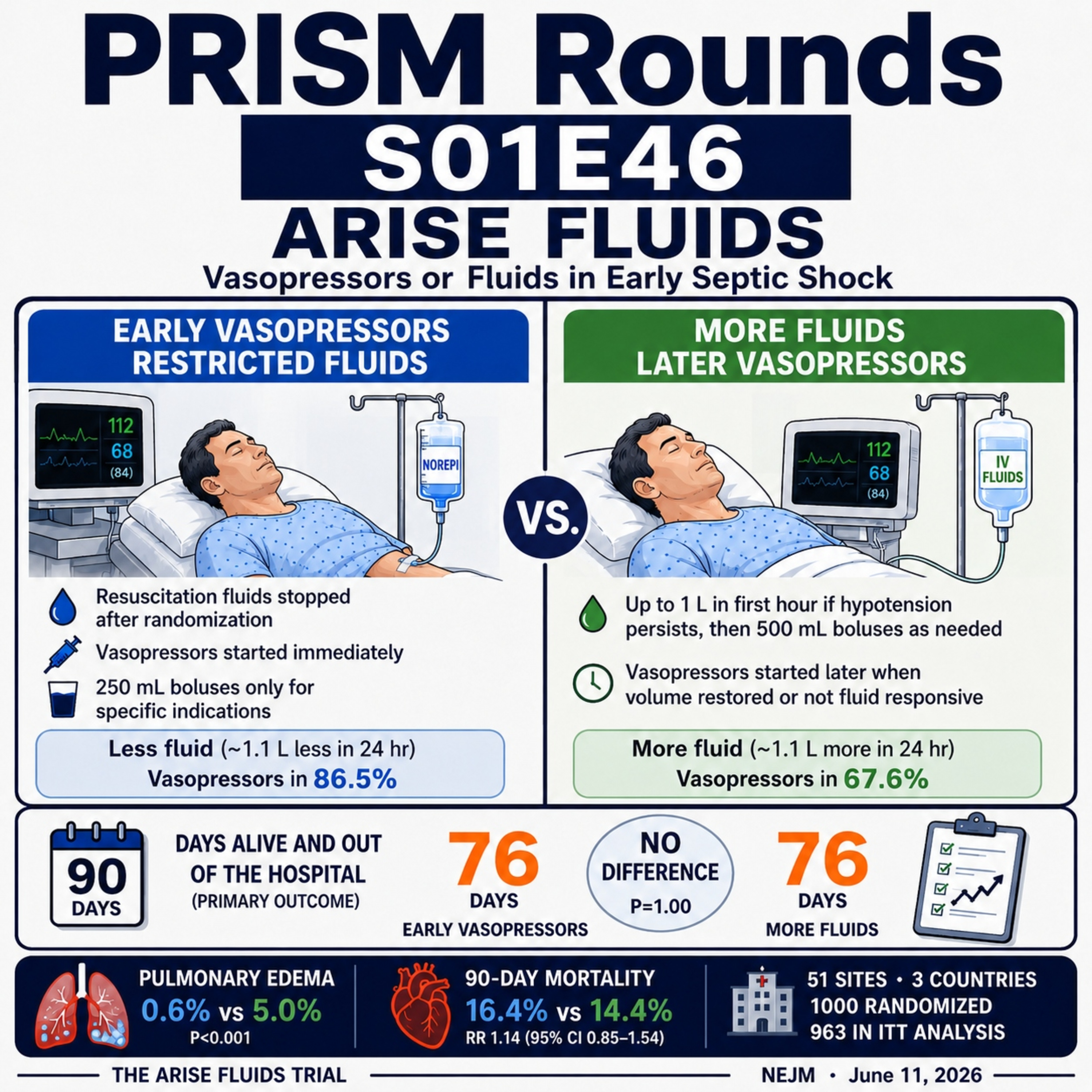 S01E46 | ARISE FLUIDS: Early Vasopressors or More Fluids in Septic Shock? 26.06.2026 48minThis week on PRISM Rounds, we discuss ARISE FLUIDS, a pragmatic NEJM trial asking a question every ICU and emergency department team faces: after initial fluid resuscitation in septic shock, should we give more crystalloid or move earlier to vasopressors?In adults with early septic shock, restricted fluids with early vasopressors changed the process of care and was associated with less pulmonary edema, but did not improve days alive and out of the hospital at 90 days compared with a more fluid-forward strategy.We place the trial in context with prior sepsis resuscitation evidence and discuss what it means at the bedside: not reflexive liters, not reflexive pressors, but thoughtful reassessment of perfusion, fluid responsiveness, pulmonary edema risk, and shock physiology.Listeners may also want to revisit PRISM Rounds Episode 35 on choosing fluids in sepsis and Episode 40 on the PRoMPT BOLUS study for related discussions.Article: Vasopressors or Fluids in Early Septic Shock. New England Journal of Medicine. Published June 11, 2026. https://doi.org/10.1056/NEJMoa2516225Tags:Critical Care, ICU, Sepsis, Septic Shock, ARISE FLUIDS, Vasopressors, Norepinephrine, IV Fluids, Fluid Resuscitation, Emergency Medicine, Pulmonary Critical Care, NEJM, Evidence Based Medicine, PRISM Rounds, Medical Podcast, FOAMed, Clinical Trials, Shock, Pulmonary Edema
 -
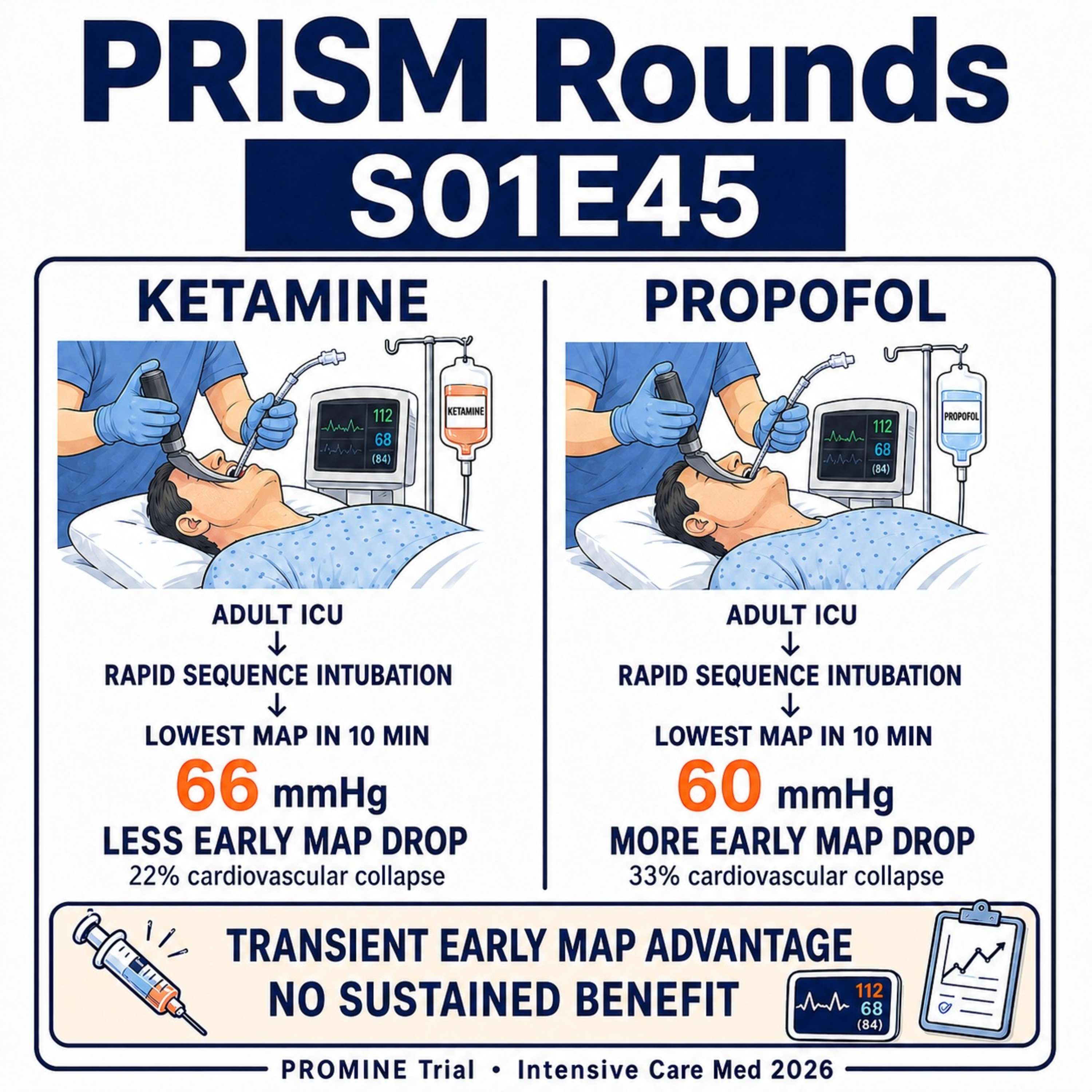 S01E45: PROMINE Trial: Ketamine vs Propofol for ICU Intubation 21.06.2026 36minIn this episode of PRISM Rounds, we discuss the PROMINE trial, a randomized trial comparing ketamine versus propofol for rapid sequence intubation in critically ill adults.Ketamine produced a modestly higher early mean arterial pressure in the first 10 minutes after induction, but the effect was transient and did not translate into a sustained hemodynamic advantage or clear improvement in patient-centered outcomes. We unpack what this means at the bedside, why sedative “reputation” can oversimplify ICU physiology, and why airway safety depends on the whole peri-intubation bundle—not just the induction agent.Article discussed: “Propofol versus ketamine in rapid sequence intubation in critically ill patients: a prospective, randomized, controlled trial.” Intensive Care Medicine, 2026.https://doi.org/10.1007/s00134-026-08351-3Educational only; not medical advice.TagsCritical Care, ICU, Pulmonary Critical Care, Emergency Intubation, Rapid Sequence Intubation, RSI, Airway Management, Ketamine, Propofol, PROMINE Trial, Intensive Care Medicine, Hemodynamics, Hypotension, Vasopressors, Mechanical Ventilation, Emergency Medicine, Anesthesia, FOAMed, MedEd, Journal Club
 -
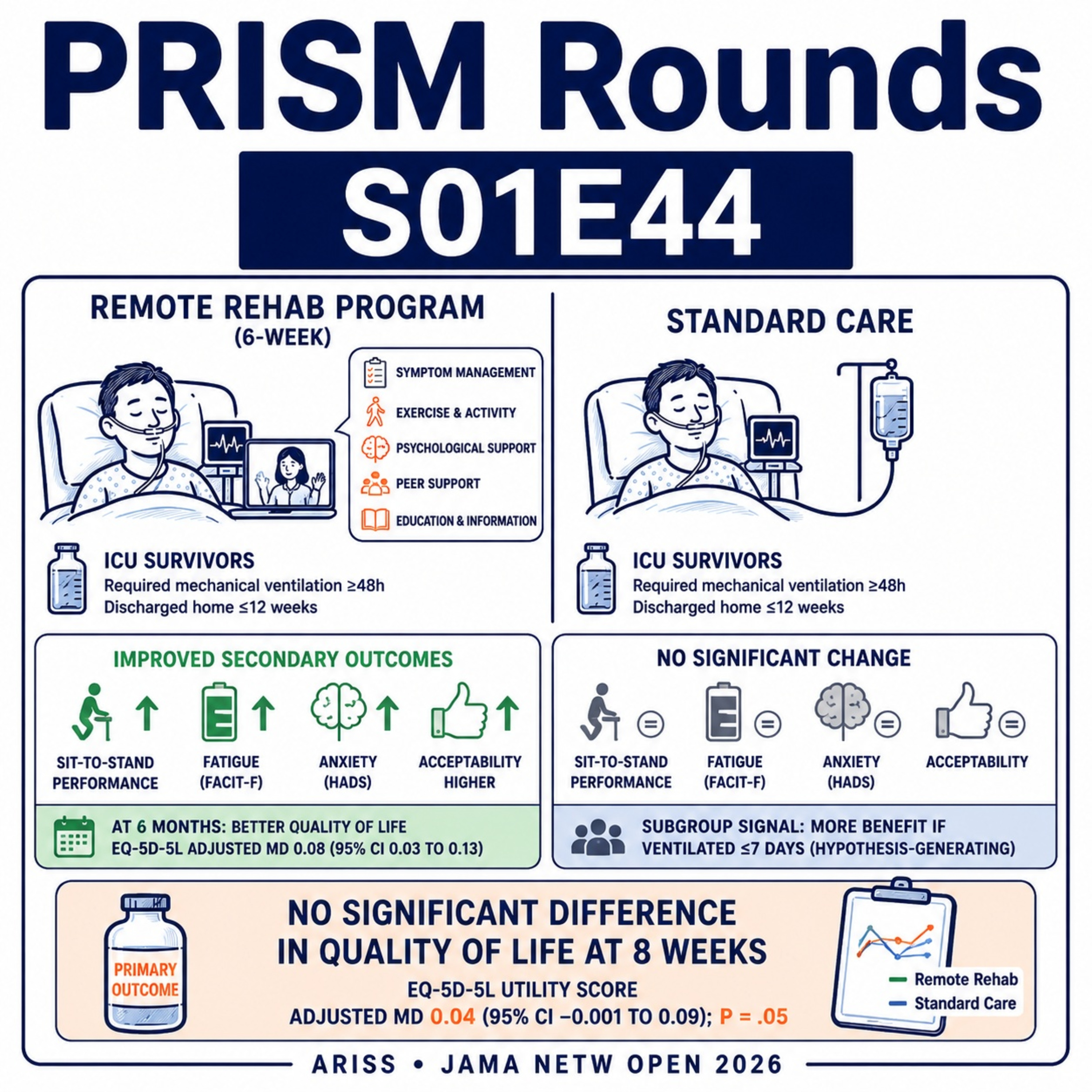 S01E44: Remote Rehab After the ICU — The iRehab Trial 12.06.2026 21minSurviving the ICU is not the same as recovering from critical illness. In this episode of PRISM Rounds, we discuss the JAMA iRehab randomized clinical trial, which tested whether a 6-week remote, multicomponent rehabilitation program could improve recovery for ICU survivors after hospital discharge.The primary 8-week quality-of-life endpoint was neutral, but the study showed important signals in secondary outcomes, including sit-to-stand performance, fatigue, anxiety, intervention acceptability, and 6-month quality of life. We also discuss the accompanying editorial and what this trial teaches us about post-ICU recovery, telerehabilitation, patient heterogeneity, and why ICU survivorship care cannot be one-size-fits-all.Article: https://doi.org/10.1001/jama.2026.7401Editorial: https://doi.org/10.1001/jama.2026.5761Educational content only; not medical advice.TagsCritical Care, ICU, ICU Survivorship, Post-Intensive Care Syndrome, PICS, Rehabilitation, Telerehabilitation, Remote Rehab, iRehab Trial, Mechanical Ventilation, JAMA, Pulmonary Critical Care, Physical Recovery, Quality of Life, Fatigue, Anxiety, Evidence-Based Medicine, PRISM Rounds
 -
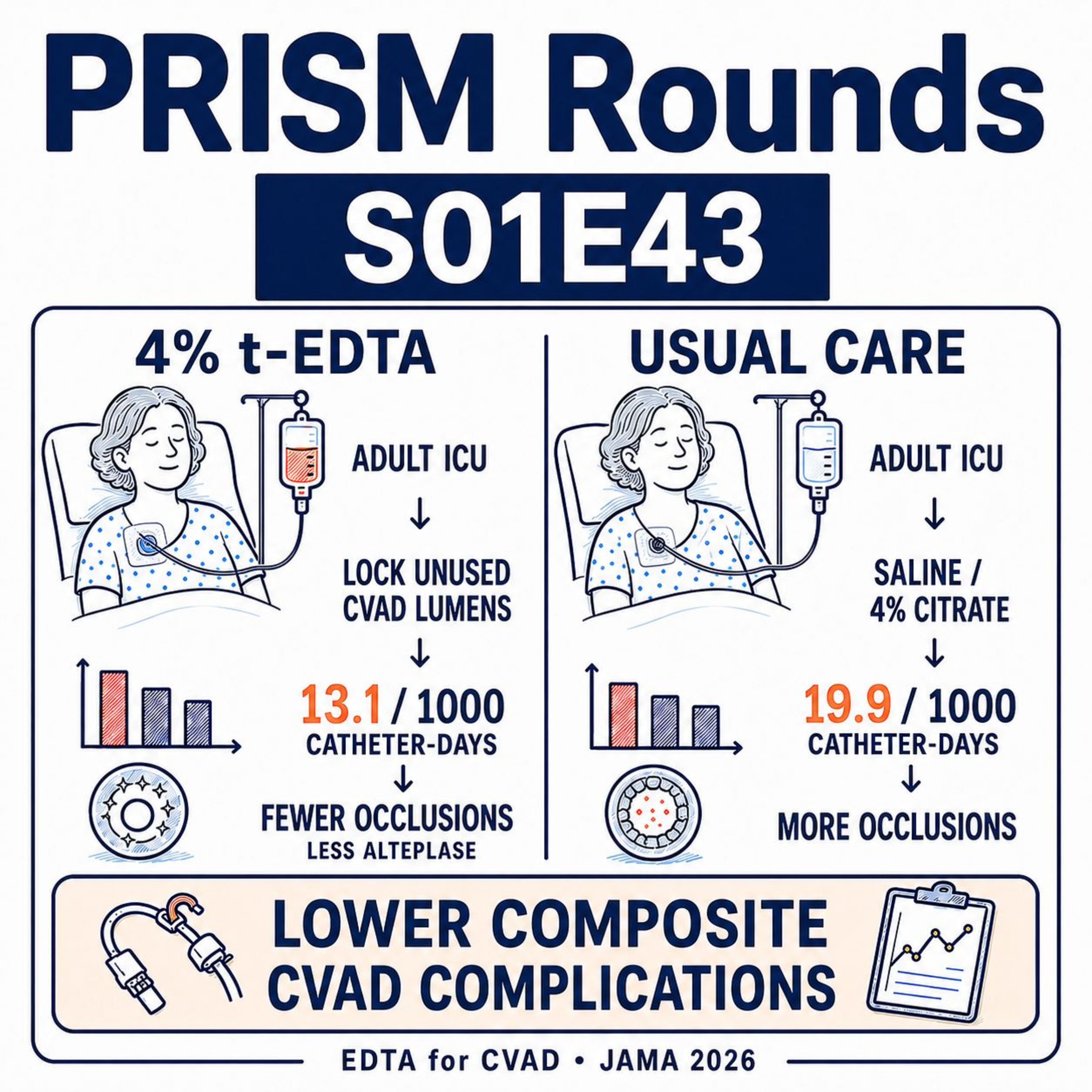 S01E43 | EDTA for CVADs: Can a Line Lock Reduce ICU Catheter Complications? 04.06.2026 23minIn this episode of PRISM Rounds, we discuss the JAMA 2026 randomized clinical trial by Ornowska and colleagues testing whether 4% tetrasodium EDTA, or t-EDTA, used as a locking fluid for inactive central venous access device lumens, can reduce CVAD-associated complications in adult ICU patients.This pragmatic, triple-blind, multicenter, cluster-randomized crossover trial included 1468 ICU patients across 6 Canadian hospitals. The primary composite outcome—CVAD-associated bloodstream infection, catheter occlusion requiring alteplase, or catheter removal due to occlusion—occurred at 13.1 vs 19.9 events per 1000 catheter-days with t-EDTA versus control. The main signal was fewer catheter occlusions requiring alteplase; infection and thrombosis events were uncommon and should not be overinterpreted.Article link:https://jamanetwork.com/journals/jama/fullarticle/10.1001/jama.2026.6025TagsCritical Care, ICU, Central Line, CVAD, EDTA, t-EDTA, CLABSI, Catheter Occlusion, Alteplase, Venous Thrombosis, Infection Prevention, Vascular Access, JAMA, Randomized Trial, Pulmonary Critical Care, FOAMed, PRISMRounds
 -
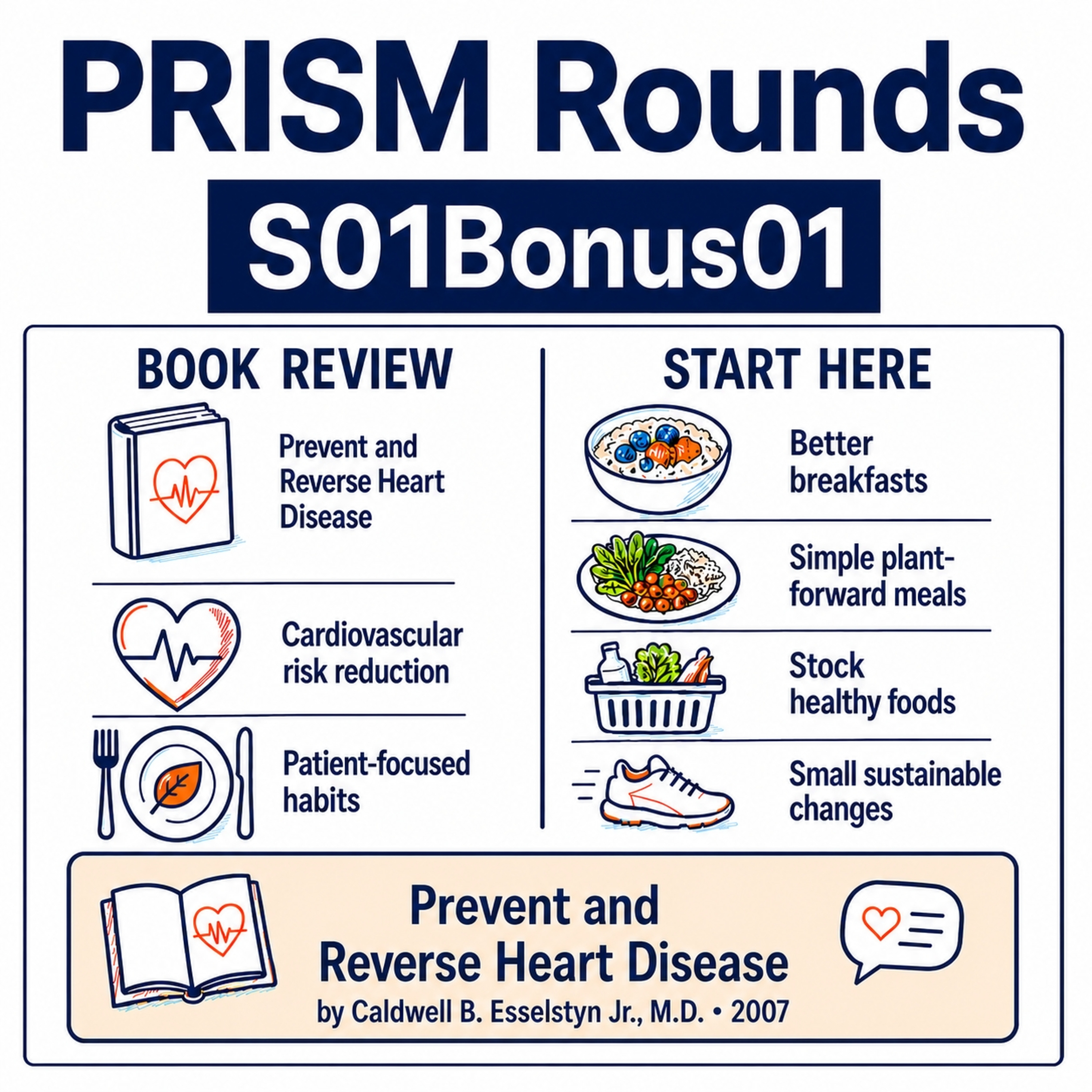 S01 Bonus Episode01: Prevent and Reverse Heart Disease — A Patient-Friendly Book Review 03.06.2026 1val 11minIn this PRISM Rounds bonus episode, we step away from our usual journal-club format for a patient-facing book review of Prevent and Reverse Heart Disease by Caldwell B. Esselstyn Jr., M.D.This book was published in 2007, and cardiovascular prevention guidelines have evolved since then. But its central message remains practical and motivating: patients are not powerless, and daily food choices can be an important part of reducing cardiovascular risk.This episode is designed especially for physicians and clinicians who want a simple, shareable way to start a food-focused heart-health conversation with patients. We focus on practical steps individuals can take: improving breakfast, building plant-forward meals, stocking healthier foods at home, and making small sustainable changes.Educational only. Not medical advice. Patients should discuss major diet or medication changes with their healthcare team.TagsCardiovascular prevention, Heart disease, Plant-based diet, Lifestyle medicine, Patient education, Prevent and Reverse Heart Disease, Caldwell Esselstyn, Nutrition, Primary prevention, Secondary prevention, Cholesterol, Coronary artery disease, Food as medicine, PRISM Rounds, Bonus episode
 -
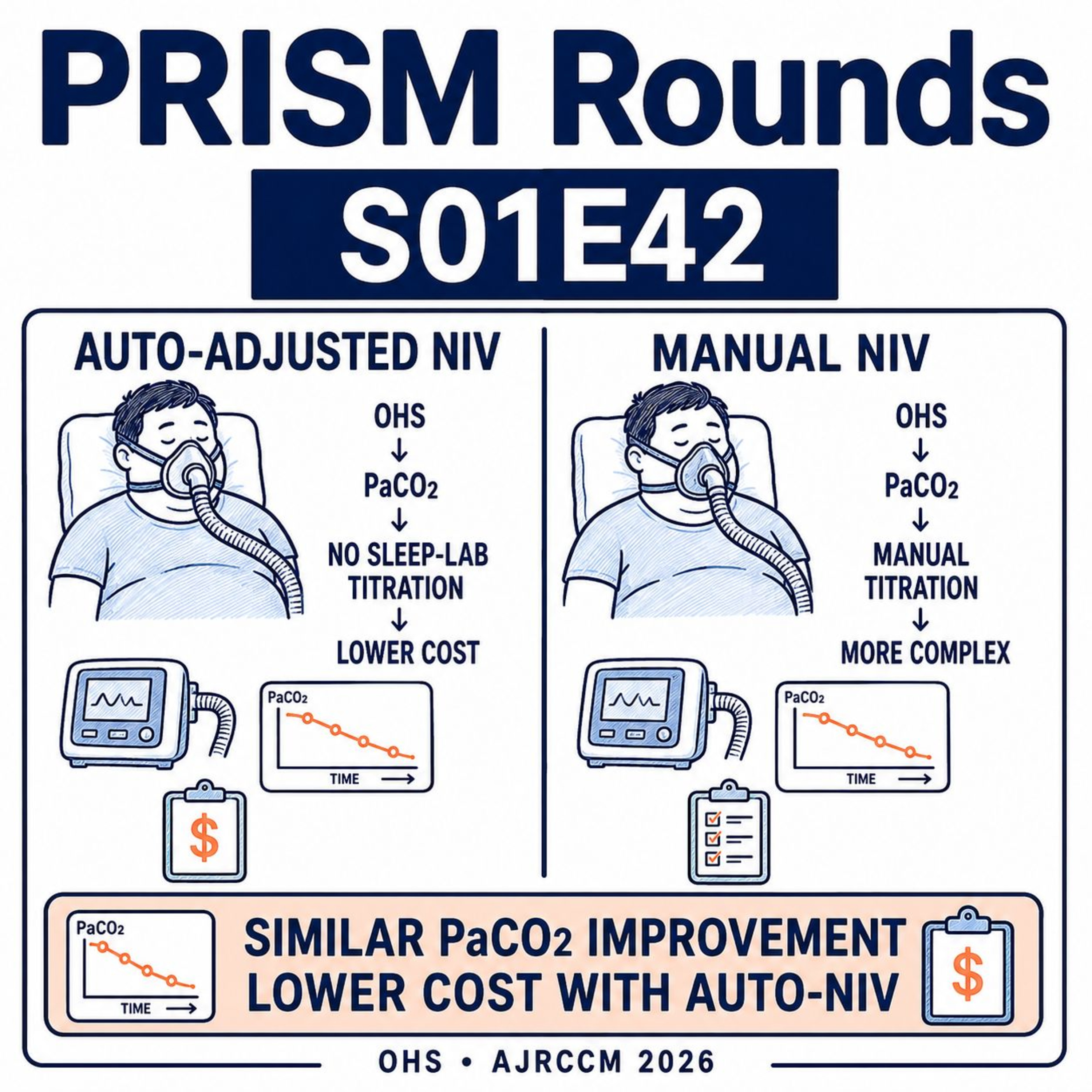 S01E42: Auto-Adjusted NIV in OHS - The Pickwick Titration Trial 29.05.2026 24minIn this episode of PRISM Rounds, we discuss the AJRCCM 2026 Pickwick Titration Trial, which asked whether automatically adjusted noninvasive ventilation can match manually adjusted NIV titrated in the sleep lab for ambulatory patients with obesity hypoventilation syndrome.The trial found that auto-adjusted NIV produced similar 12-month improvement in daytime PaCO₂ compared with manually adjusted NIV, while reducing cost and potentially decreasing sleep-lab burden. The accompanying editorial highlights the real-world nuance: CPAP remains first-line for many stable OHS patients with severe OSA, but auto-adjusted NIV may be especially useful when NIV is indicated and access to in-lab titration is limited.Article: https://doi.org/10.1093/ajrccm/aamag018Editorial: https://doi.org/10.1093/ajrccm/aamag112This episode is for educational purposes only and is not medical advice. TagsCritical Care, Pulmonary Medicine, Sleep Medicine, Obesity Hypoventilation Syndrome, OHS, Noninvasive Ventilation, NIV, Auto NIV, Auto EPAP, AVAPS, CPAP, PaCO2, Hypercapnia, Sleep Lab, Polysomnography, AJRCCM, Pickwick Titration Trial, PRISM Rounds, Medical Education, Free Open Access Medical Education, FOAMed, AI Generated Medical Education, Research Summary, Journal Club, ICU, Respiratory Therapy, Pulmonary Critical Care
 -
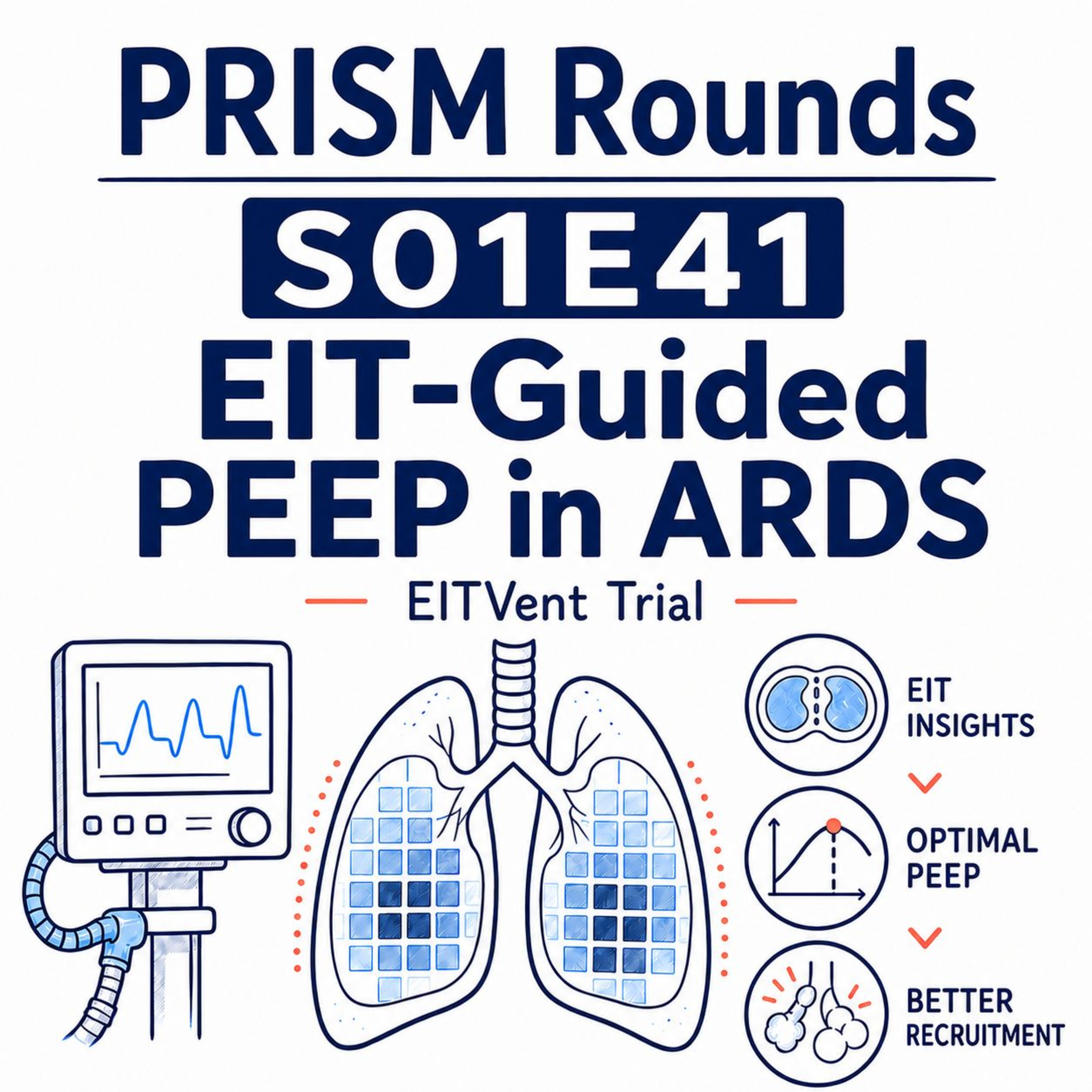 S01E41: EIT-Guided PEEP in ARDS — Precision Ventilation or Too Much Titration? 22.05.2026 22minIn this episode of PRISM Rounds, we discuss the 2026 AJRCCM EITVent randomized clinical trial and its accompanying editorial. The study asked whether electrical impedance tomography, or EIT, could help clinicians individualize PEEP in adults with moderate to severe ARDS compared with the traditional lower PEEP/FIO2 table.The overall trial was neutral: EIT-guided PEEP did not reduce 28-day mortality, ventilator-free days, length of stay, or major safety outcomes. But an important subgroup signal emerged in patients with higher lung recruitability, raising a practical bedside question: should EIT be used selectively to guide precision ventilation rather than as routine daily exhaustive PEEP titration?We discuss the trial design, the “collapse-overdistension crossing point,” the editorial’s caution about repeated recruitment maneuvers and decremental PEEP trials, and how this should influence bedside ventilator thinking in ARDS.Educational only. Not medical advice. AI-generated voices are used and may occasionally mispronounce terms.Trial DOI: https://doi.org/10.1093/ajrccm/aamaf125Editorial DOI: https://doi.org/10.1093/ajrccm/aamag012#PRISMRounds#CriticalCare#PulmonaryCriticalCare#ICU#ARDS#MechanicalVentilation#PEEP#EIT#ElectricalImpedanceTomography#VentilatorManagement#LungProtectiveVentilation#PrecisionVentilation#Recruitability#DrivingPressure#MechanicalPower#PronePositioning#RespiratoryFailure#AJRCCM#EITVent#ClinicalTrials#JournalClub#EvidenceBasedMedicine#FOAMed#MedEd#ICUEducation#AIgeneratedPodcast#FreeOpenAccessMedEdTags
 -
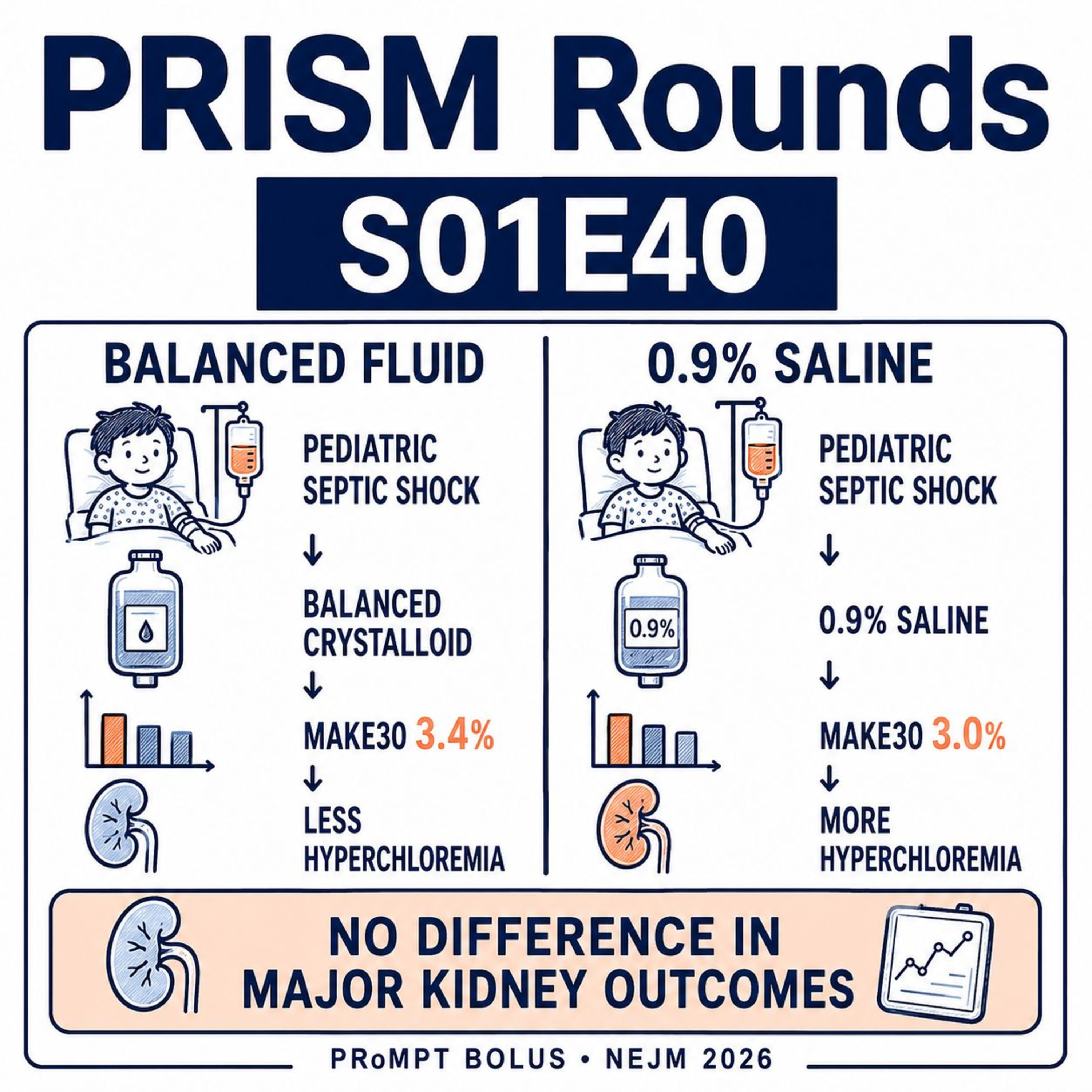 S01E40 | Balanced Fluids vs Saline in Pediatric Septic Shock: Why Adult ICUs Should Care 16.05.2026 47minThis week on PRISM Rounds, we discuss the April 2026 New England Journal of Medicine PRoMPT BOLUS trial comparing balanced crystalloids with 0.9% saline in children treated for suspected septic shock.The trial enrolled more than 9,000 children across 47 emergency departments and found no significant difference in major adverse kidney events between balanced fluid and saline. Balanced fluids reduced hyperchloremia and hypernatremia, but those biochemical advantages did not translate into better kidney outcomes, mortality, or hospital-free days.Although this is a pediatric trial, it is relevant for adult ICU and ED clinicians because it speaks to a familiar bedside question: when we reach for crystalloid early in sepsis, does fluid type meaningfully change patient-centered outcomes?We connect this trial to adult sepsis resuscitation, prior fluid-choice studies, and the broader lesson that “more physiologic” does not always mean “better outcomes.”Article: Balanced Fluid or 0.9% Saline in Children Treated for Septic ShockDOI: https://doi.org/10.1056/NEJMoa2601969Educational only; not medical advice. This episode uses AI-generated voices. #PRISMRounds#CriticalCare#ICU#EmergencyMedicine#Sepsis#SepticShock#PediatricSepsis#BalancedCrystalloids#NormalSaline#FluidResuscitation#Resuscitation#KidneyOutcomes#MAKE30#NEJM#EvidenceBasedMedicine#MedicalEducation#FOAMed#FOAMcc#PulmonaryCriticalCare#AIgenerated#AIResearchSummary#FreeMedicalEducation#JournalClub#BedsideMedicineTags / Hashtags
Panašios tinklalaidės


Populiari šalyje
Ši tinklalaidė taip pat patenka į šių šalių tinklalaidžių topus.

