
Short Stories by Arthur C. Rauscher
Arthur C. Rauscher
0
Arthur C. Rauscher’s short fiction is rooted in psychological realism and focuses on the lives of ordinary people and their internal struggles as they search for what it means to be human. His stories move across different settings and eras, examining place, class, and the quiet contradictions that define life. Each story in this collection stands on its own, but together they form a mosaic of the human experience.
Epizodai
-
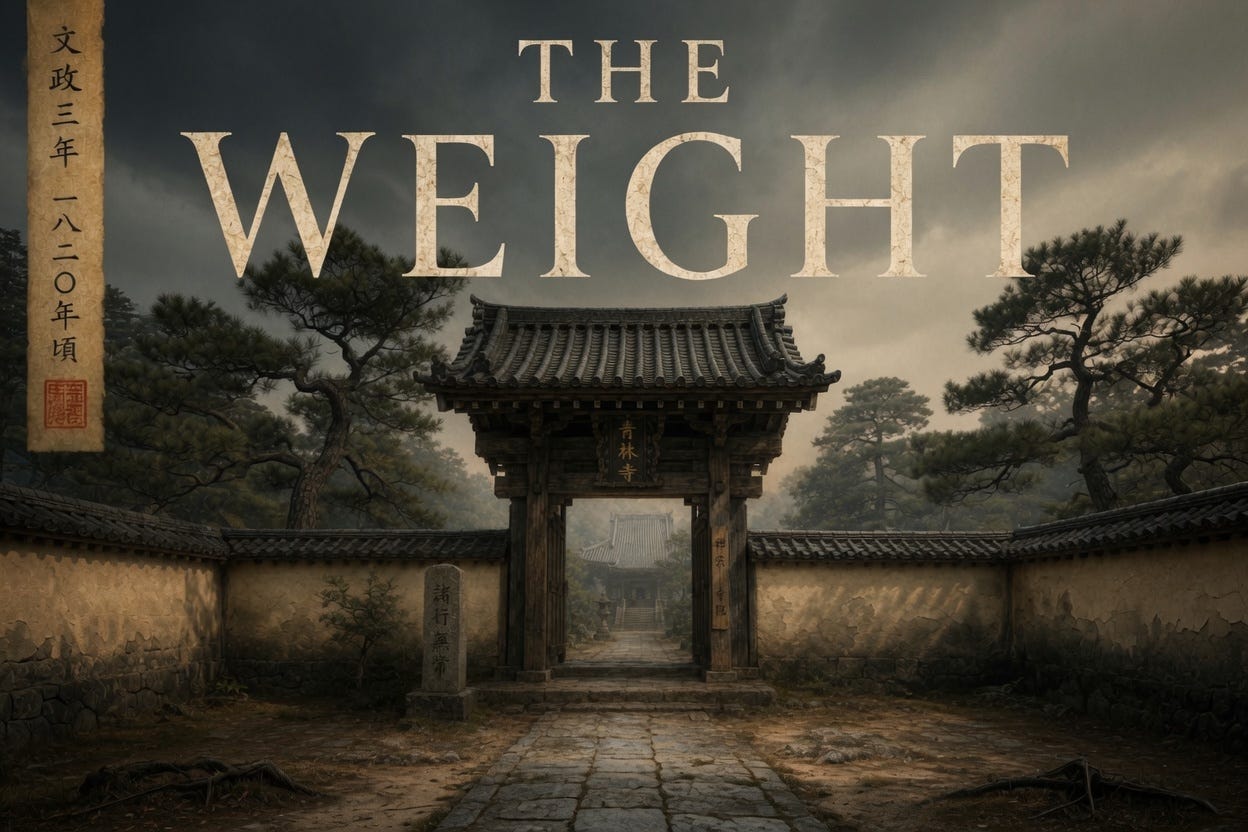 The Weight: A Zen Short Story 24.07.2026 43minDescription:In the autumn of 1820, in the mountains of northern Japan, a young monk at a small Sōtō Zen temple is chosen to accompany an elder on a journey to the coast. Jikai is rigid, judgmental, and quietly certain of his own correctness, so when the aging monk Sōgen requests him over more agreeable companions, Jikai is confused, but accepts it as an honor.The road north takes ten days on foot, through barrier checkpoints, flooded crossings, and washed-out mountain passes, with nights in cheap inns and farmhouses. Sōgen teaches as they travel, in an unhurried, sideways manner of Buddhist instruction. By the end, Jikai learns that blind devotion to rules is not the same as wisdom.The Weight is a quiet story about grief, patience, and the burdens we choose to carry. For readers new to Zen Buddhism, it offers an accessible introduction, with its koans, teachings, and practices. Woven into the narrative are two threads of old Japan: the Zen Buddhism of a training monk’s daily life, and the older ancestor traditions that shaped how people mourned their dead.Print version: Below is the full text of the story. If you'd like to purchase a print or eBook version, it's available on Amazon.A note before you begin: This is a work of historical fiction set in Japan in 1820. If at any point you'd like a deeper explanation of a term, place, or custom, I've included a comprehensive collection of endnotes arranged in the order things appear in the story. Chapter 1: Wet StrawThe Sixteenth YearIn my sixteenth year, I was sent on a journey with my teacher, and I’ve been on it ever since.This was in the eighth month of the third year of Bunsei, at Seirin-ji, a small Zen temple of the Sōtō school in the hills of northern Shinano. I was an unsui then, a training monk. The word means cloud and water. A young monk is meant to be like both, drifting where the teaching sends him, clinging to nothing. I clung to everything. I gripped the precepts of the temple the way a drowning man grips a plank, and if you had asked me, I would have told you that this was the way of any good student, to rigidly conform to every rule.I can still see the boy I was, bent over my writing desk, brush and inkstone before me. My characters stood in their columns like planted rice, no one taller than its neighbor. Near the foot of a finished page, a single stroke sat thicker than the others, where my hand had pressed too long. No one would ever have noticed the flaw in the sutra. But I would have known, and so I set the page aside and began again from the first column.During meals, I noticed when a single bowl sat a finger’s width out of line with the others. I noticed which of the older monks rushed through the dawn sutras. I kept a mental ledger, always open, noting every transgression I observed.Where these habits came from was no mystery, not even to a boy of sixteen who understood little else about himself. My father was a brewer in a shukuba two valleys south, who supplied the inns and the travelers along the highway with sake. Most nights he drank from his own inventory, and I would lie in fear in my room above the shop, walking my fingers along the floorboards while his voice grew increasingly irate through the walls. I can still recall the count of every board along the floor and wall.I had longed for peace and calm, but most of all structure. I had found it in the temple, where daily life was regimented and predictable. I knew what was expected of me and how others would act in any given circumstance. But most importantly, no one yelled or struck one another.Over the years, as my confidence and sense of safety grew, I began to speak up when I saw that order was being disrupted. This caused the other monks to think of me as difficult, and they said so, sometimes gently and sometimes not. I corrected their sutras. I noticed the rips in their robes. I kept every rule and expected the same of others.The ChosenMy hand was the best in the temple at copying sutras. I’d compared, so I knew. That’s how it fell to me to carry a finished copy to the master’s quarters for his seal.Oshō-sama, we called him, as one calls the master of any temple. There was a rule for approaching his rooms. You announced yourself in the outer corridor and waited to be told to come in. I had my mouth open to announce myself when I heard my own name through the paper of the door, and my mouth closed, and I stood there holding the sutra in both hands.“Jikai’s tiresome as wet straw,” the oshō-sama said. “Ten days on the road with him and it’ll feel like a full winter. Take Ryōnen. At least he can talk to an innkeeper without lecturing the man.”I stood in the corridor and listened as tea was poured.“He’s the one I want,” Sōgen said.“Why him?”The man who was not yet my teacher did not respond. I kept waiting for him to say I wasn’t tiresome, that my discipline reflected well on the temple, that the oshō-sama had gotten it wrong. But the silence dragged on long enough for the tea to be lifted and set down again. I knew the oshō-sama’s habits well enough to picture him shaking his head.“Well, if you insist,” the oshō-sama said finally, dropping into that patient voice he used when he disagreed, but was willing to let you make your own errors. “As to the other matter, then.”I waited for the conversation to circle back to me, to hear what I’d done to earn being called “tiresome” by my oshō-sama, but their conversation did not return to me. I couldn’t stand in the corridor holding a finished sutra like a fool forever, so I cleared my throat and spoke to the paper door.“Jikai, with the copied sutra for your seal, Oshō-sama.”“You may enter.”I slid the door open and knelt at the threshold, the sutra held out before me on both palms the way I’d been taught, spine straight, knees together. The oshō-sama took the scroll without looking at it and set it aside on the low table.“You’ll be traveling with Sōgen-san,” the oshō-sama said. “Ten days on the road to Takada, and as many home.”He set two fingers on the sutra I had just carried in.“A wife and two children died during a famine, after the mountain burned the sky. This autumn marks the thirty-third year. It is the final rite that will be said for them by name, after which their spirits become one with the ancestors. The husband has asked for a new copy of the sutra to be prepared.” He turned the scroll, so that its bindings faced him rather than me. “You have already done him a great service by preparing this. Sōgen-san will read the sutra at the graveside. You will carry it and keep it dry.” He paused. “Start your arrangements today. Traveling papers, provisions, whatever needs mending before you go.”I bowed until my forehead nearly touched the tatami. “It is a great honor to accompany a monk as esteemed as Sōgen-sama.”I straightened enough to catch Sōgen’s face, which was warm with satisfaction. The oshō-sama appeared doubtful.“I’ll begin at once,” I said, and bowed myself out before either of them could take the honor back.The DepartureThe oshō-sama met us at the gate himself, which he did not do for every departure. He carried the sutra box in both hands, lacquer black, the cord knotted and sealed with a paper band bearing his vermilion stamp. He held it out to me the way I imagine a father hands a son his first real blade, and for a moment neither of us moved.“Keep it dry,” he said, which he had already told me once, in his quarters, and which he seemed to feel needed saying again now that the thing was in my hands and the sky above the gate looked threatening.I knelt on the stone and wrapped the box in oiled paper, tying the cord twice the way I’d been taught. If I was to be trusted with something this important, I intended to do it correctly.We made a poor match. My own robe was black and neatly kept, the hem even, brushed clean for the road before we had set foot on it. I had shaved my head that morning, as I did every third day. Sōgen’s robe was the same black, gone light gray at the shoulders where the sun had been on it for years, patched once at the elbow in thread that did not quite match. His head he kept shaved as we all did, though a day or two of white stubble showed on it. He did not seem to know or mind. I did not yet understand that a robe kept too well says as much about a man as one let go.My pack was full. Sōgen’s pack, by contrast, looked to be almost empty. I would later find that it contained nothing more than a change of underclothes, a bowl, and a second robe. Before he shouldered the pack, he reached into it and withdrew a small bundle wrapped in cloth, worn soft at the folds, and tucked it into his sleeve.I noted this action in my mental ledger. The oshō-sama’s eyes found Sōgen’s over my head. I thought the look was for me, or else for the road, which would be long for a man of his years.We went out through the gate, and the road took us down through the cedars, trunks black from the morning mist. I counted ri-mounds because they offered themselves to be counted, the way most things did if I let them. The mounds came every hour or so, paired earthworks on either side of the road, each crowned with a hackberry or a wind-bent pine. The shogunate had placed them at set distances along the great roads two hundred years before, so that a traveler could know how far he had come without asking anyone. Porters priced their fees by them.At the first teahouse, a woman brought Sōgen a sweet he hadn’t asked for and had no money for, charmed by nothing I could see except maybe his weathered face. He ate it with the pleasure of a boy, licking a fleck of bean paste from his thumb. She offered me one as well, but I declined with a small shake of my head.She told us a joke about her neighbor’s ox that I did not find funny. Sōgen laughed loudly. I did not. He then dozed sitting upright against the sun-warmed post while his tea went cold. I sat with the sutra box on my knees and waited.When we returned to the road, I walked one step behind Sōgen’s unhurried stride.“You didn’t take her sweet,” he said.“I had no money for it.”“She did not expect payment.”“I don’t accept charity for indulgences. Only for what is needed.”He nodded slowly, as though weighing what I had said. “Perhaps you took something from her, then. The chance to do a small kindness.”“I’ve rarely known people to be kind without wanting something in return.”“That’s true more often than one would like,” he said. “But some give simply to give. To turn that away robs them of a small happiness.”“That wasn’t my intent.”He looked over at me, the corners of his eyes creasing, and for a moment I thought he might laugh at me the way he’d laughed at the ox joke.“I know it wasn’t,” he said, and left it there, walking on into the cedar shade as though the matter were settled and forgotten, though I turned it over in my mind for the better part of the day.Where the houses thinned into fields there stood a roadside Jizō, one of the child-sized stone figures you find at verges all over the country, its red bib gone the color of old ash, dressed by villagers, given offerings of pebbles and wildflowers. Ask a farmer’s wife and she will tell you Jizō watches over travelers, and over children, and over whatever else worries her. Sōgen bowed to it and walked on without breaking stride. I did not bow. Superstition, I told myself, beneath a monk who kept the real precepts.I opened a new column in my ledger. One.Red dragonflies hung over the stubble fields, and the first real cold of the day waited in the cedar shade ahead. I pulled my hat brim down and walked behind him.Chapter 2: Cloud and WaterThe InnBy the second day, the road to Zenkōji ran thick with pilgrims. Farmers and merchants and old women in traveling straw hats, all funneled toward the temple’s dark gate like water finding a single channel down a hillside. Inside the compound, a great bronze incense burner stood taller than a man, smoke rising off it in a column that pilgrims waved over their heads and shoulders, believing it would settle in their joints and ease whatever ached there. I watched an old woman press her palms through the smoke to her knees three times and thought it foolishness, though I said nothing.The Buddha inside, they told me, no living eye had seen in centuries. Not the pilgrims who came from three provinces to bow before it. Not the monks who tended its altar. Not even the temple’s own master, who kept the key and had never once turned it. I admired a rule kept that absolutely, a secret held shut against everyone, including the ones sworn to guard it. Sōgen bought a paper twist of candy from a stall by the gate and ate it walking, offering me none, which was correct, since I would have declined it anyway.My first pair of waraji gave out on the third day, the straw worn through at the ball of the foot so that gravel scraped my skin. We bought new ones at a teahouse where the proprietress kept a basket of them by the door. I left the old pair at a wayside shrine we passed an hour later, adding them to a pile of a dozen other abandoned sandals left there by travelers over many seasons, straw grayed and curled at the edges. A porter carrying two baskets slung from a pole across his shoulders walked with us for the better part of an afternoon and called Sōgen “oshō-sama” twice, bowing his head each time. Sōgen waved a hand at him both times. “I am nobody’s oshō,” he said, laughing as though the man had made a joke rather than an honest mistake. I noted the porter’s error in my ledger, precise and unkind, and did not notice for many years that my teacher had not been correcting the man’s grammar. He had been refusing the mistaken honor.By the fourth day, I had counted eleven Jizō along the roadside and bowed to none of them.That evening we took a room at a hatago in a post town along the Kaidō. The maid brought supper on two trays, and when she had gone the inn settled around us, the voices of other travelers going quiet one by one, until there was only the lamp burning low between us. I had been turning our errand over in my mind, the sutra, the husband of the family it was meant for, and it seemed the diligent thing to ask.“The famine the oshō-sama mentioned before,” I said. “You would have been alive then. Do you remember it?”“I remember it,” he said, not looking up from his bowl. “The mountain exploded with fire, and then the earth shook. Ash covered the leaves. The sun came up red each morning. The rice never headed that year, stayed green and empty in the husk till the frost took it. People ate what they could find, even bark and the roots of things not meant to be eaten.” He set his bowl down. “It was even worse in the north.”“And sickness followed?” I asked.“Sickness and death came after the hunger.” His voice held flat, no rise, no fall. He grew quiet after that, and I did not push.I offered my own story instead.“My mother died when I was eight,” I said. “A fever that came in the night and took her before the physician from the next village could arrive. My father drank before that. After, he drank more.” I kept my eyes on the lamp flame rather than his face. “He said I ate too much and worked too little. Within a year, he’d given me to Seirin-ji as a surplus son. I doubt he’s thought of me since.”“Your father is a man in pain, then,” Sōgen said, turning his bowl a quarter turn on the mat, as if the alignment mattered. “Eight is too young to lose a mother.”“But it’s natural to lose a parent,” I went on. “Children grow up and bury them, that’s the order of things, the way winter follows autumn. But to lose your wife and children, the way this man we’re bringing the sutra to...” I shook my head. “That must be unbearable.”He did not agree with this. He did not disagree with it either.The lamp’s wick hissed, and a moth batted once against the paper screen before falling still.He did not answer me, and I understood the conversation was finished for the night. We sat then in zazen, as we had every morning and evening on this journey, facing the wall with the lamp turned low, our legs folded and our eyes open on the boards. I counted my breaths. Sōgen sat the way he always did, asking nothing of the silence. How long we stayed there I could not say. It was he who spoke first.“Do you know the story of Kisa Gotami?” he said.I did not.“Her only child died,” he said, “still an infant. She would not accept it. She carried the body from house to house through her village, asking at each door for medicine to bring him back. At last, someone sent her to the Buddha, and he told her he could cure the child, but he required one thing first: a mustard seed, from any house where death had never entered. Once more, she went from door to door. Every house had a seed to give her, but every house had also seen death. Somewhere in all that walking, she understood, and she buried her child.” He said nothing more. Sōgen looked at me for a moment, then took up his bowl from the tray and finished his rice.The RiverRain was falling when I woke, steady against the roof boards, and a thin stream came through a gap above to puddle on the floor. Around me the other guests were rising now, pulling on damp clothes, muttering about the weather. Sōgen was already up, and standing in the doorway with the innkeeper.“You’ll want to stay another night,” the innkeeper warned. “I’ve seen the waters of the Sekigawa rise like this before. By evening, the gorge road will be gone, washed clean off the mountain. No sensible man should travel into that country in this weather.”Six or seven travelers weighed his words. One of them, a cloth merchant, said another night’s lodging would cost him less than a load of ruined goods.The others murmured agreement, satisfied with their own caution.Another man waved a hand. “Innkeepers always want you to stay another night. I’ve traveled this road for forty years. It’s perfectly safe.”Sōgen returned from the doorway and reached for his sandals.“You mean to go,” the innkeeper said, not quite a question.“I mean to go,” Sōgen said, hoisting his pack over his shoulders.I approved of this. We had a rite to perform. A dead woman and her two children had been waiting thirty-three years on a hillside to be joined at last to the ancestors. They should not have to wait any longer on account of rain.At the Sekigawa barrier, the line was short; few were foolish enough to be walking that morning besides us. An official examined our papers under a dripping eave without much interest, his fingers stained black with ink gone thin in the damp. He matched the oshō-sama’s vermilion seal against his ledger and waved us through.A guard leaning against the barrier post looked at the sky, then at us. “You’ll have the road to yourselves,” he said.I took this as a fact and was glad of it. It did not occur to me it was meant as a warning.The road beyond the barrier was deserted. A teahouse we passed had shuttered its front and turned its bench up against the wall. Far ahead, a packhorse driver turned his animal around and started back the way he’d come. He was the last person we saw that day.The road dropped along the river, following the hillside above water running brown and fast, louder than it had been the day before. My straw raincoat had soaked through by midday, my hat sagging low enough to drip off its own brim, and the roadbed under us had gone from mud to something closer to paste. Plank bridges crossed the side streams with water a hand’s width below the boards. At midday, we took shelter under a wayside shrine’s eave, barely wide enough for the two of us. I checked the oiled paper on the box, the cords, and the seal. We ate cold rice balls from the inn and watched the river without saying a word.With the sutra box slung over my shoulder, I kept to the inside of the road, against the bank, where the ground was firmest. That put Sōgen on the river’s side.I heard it before I comprehended what was happening, a wet tearing sound, and then the earth under Sōgen’s feet was moving. A slab of it, a man’s length, gave way and slid toward the water. My hands found his robe and his arm before I could think, both fists gripping tight. The sutra box swung from my shoulder, skidding away across the mud. We were both sliding behind it, my sandals cutting furrows that did nothing to slow our descent. I felt it plainly, the ground continuing to tilt. We were rapidly approaching the rushing water and would soon be swept away. I held his robe with one hand and reached out with the other. As his feet touched the water, my free hand found an exposed root. I took hold, and we stopped. I felt Sōgen embrace my legs and say, “Let go of me and hold onto the root with both hands.” I did as he said, and with his arms locked around my legs, I dragged us both back onto the roadbed.We lay on our backs on what remained of the road, the rain coming down on us, and my arms burning.Then a cold fear arrived: the box. We scrambled around on our hands and knees looking for it. Sōgen found it near the broken lip of the road and took it up, turning it over once. The wrapping had held. He handed it back to me without a word.“I apologize for dropping the box,” I said.He looked at me as if I were speaking another language. “You apologize for the wrong things,” he said.At the next shrine, I kneeled and re-wrapped the box. I tied it three times with unsteady hands, knots tighter than before. Sōgen waited in the rain without hurrying me.The washout closed the low road, and we climbed a woodcutters’ track instead, adding hours we did not have. Dusk found us far from any village, both of us covered in mud. In the distance, we saw smoke rising into the air. The Eighty-Fourth ProblemThe smoke rose from a farmhouse set low against the hillside, its thatch roof black with age, one paper window glowing faint orange. We came up the muddy path, calling out, the way travelers do to avoid startling a household. A dog behind the house started barking halfheartedly, before losing interest.The farmer opened the door before we reached it, a stocky man with a face like a dried persimmon, creased and brown. He watched us approach before stepping back to welcome us in.“You’ll catch your death out there,” he said.A short while later we sat wrapped in horse blankets at the edge of the sunken hearth while the farmer’s wife, a compact woman with sleeves tied back and forearms the size of her husband’s, wrung our robes over a basin and hung them from a beam above us. “Rain,” she muttered, “coming down like it’s got a grudge. Like it wasn’t wet enough already. Unrelenting, is what it is.” She scolded the weather the way I imagined she scolded a goat that had gotten into her vegetables, without any real anger, only the habit of complaint.The house was one room, swept clean. A single lamp in the middle of the room threw shadows against the walls. They fed us barley-rice and pickled radish, apologizing for both, though there was plenty of each. The farmer’s wife kept refilling my bowl before I had finished thanking her for the last serving.Warmed by the wine his wife poured him, the farmer set down his bowl and attempted a line from the Heart Sutra, the one every villager hears chanted at funerals. He got the words backward and dropped a whole clause, turning “form is emptiness, emptiness is form” into “form is anything, anything is form.”I corrected him. Gently, I told myself, though gentleness had never been a quality anyone praised me for. I explained the line to him and the particular rhythm in which it was to be spoken. I waited for the offended face that often followed my corrections, the insult created by a mere boy correcting a grown man.Instead, he lit up like I’d handed him a coin.“Say it again. Slower. I want to get it right.”He repeated it after me, got it wrong again, and laughed at his own tongue. He asked if either of us was familiar with a half-remembered sutra his own grandmother used to mutter over the hearth.Sōgen knew it, which pleased the old farmer.“If these men know so much,” his wife said, ladling more rice into Sōgen’s bowl without being asked, “maybe they can help you with some of your other problems.”The farmer laughed at this and spent the next hour laying every problem a farmer could have at our feet, as if we had magical powers to fix all that troubled him. His roof leaked directly over his bed. His ox had taken to kicking him while sparing his wife and son. Rats had gotten into the millet despite three kinds of traps. Twenty years back, the farmer next to him had planted crops across the boundary line. His son would not marry. He thought the levy from the headman was too high. As he grew older, his knees ached when the weather grew bad.His wife amended the list as he went, adding what he’d let slip.“Could you two,” the farmer finally said, leaning toward Sōgen with real hope on his face, “chant these problems away? Or teach me how to?”I found the request nearly obscene, given that we had nearly gone into a river that same morning carrying a sutra to people already dead, and here sat a perfectly healthy man asking us to chant away a leaky roof. But Sōgen leaned in as if the farmer had asked something of genuine importance.“First, we should count them,” he said. “So that we know the full weight of what we are dealing with.”So they counted, like men totaling a debt, the wife again supplying what her husband forgot. They reached eighty-three. Normally, I would take any opportunity to count, but I did not wish to participate in such a farce.“I’m sorry to say,” Sōgen said, with a serious face, “no one can solve these problems for you. You see, all men have exactly eighty-three problems. If you fix one, another will simply rise up to take its place.”The farmer’s face fell.“But what truly concerns me is your eighty-fourth problem.”He leaned closer. “What’s my final problem?”“That you believe you should have none.”The room went still. Then the farmer laughed, a sound that started somewhere below his ribs and erupted through his entire body. His wife sat unamused, before giving in and laughing at him rather than the joke. I sat with my bowl in my lap, trying to understand why the man was so pleased. I would not understand that laugh for many years.In the morning, the farmer refused payment, and Sōgen offered to bless his home and fields without a trace of irony. His wife pressed rice balls upon us, wrapped in a bamboo sheath. I accepted with no argument, not because I had learned anything, but because she was not the type of woman one refused.The WalkThe road out of the farmer’s village ran along the shoulder of a hill, the ground still soft from the rain. Where a side stream crossed the path, the storm had taken half the plank bridge; three boards remained, greasy with wet moss, and below the water rushed around stones. I set each foot down carefully, deciding where it should go, my weight low, with one hand out over the rail. Sōgen crossed it, without appearing to look at his feet, and stood waiting on the far side while I finished, not trusting the last board.Morning wore into afternoon, and neither of us had spoken since the farmer’s gate.We had not sat zazen that morning. We had simply risen, eaten, and made our farewells. I marked the lapse, the way I marked everything, and Sōgen must have sensed my displeasure.“You are troubled that we did not sit,” he said, once the house was far behind us and the path had begun to climb.“It is the first morning we have gone without,” I said, which was true.“I’ve not gone without.” He walked a few steps before he went on. “I have been at it since we left the farmer’s gate. So might you, had your mind been on the road instead of elsewhere.” There was no reproach in it. “Whether we sit facing a wall or walk a road or bow to a stone, it is the same.”He nodded at the wet green closing over the path ahead.“A cloud crosses the mountain and keeps nothing of it. Water meets stone and does not argue. It goes around, and in a hundred years it has worn the stone to sand, and all that time it asked the stone for nothing.”I walked behind him and tried to do as he said, to let the morning pass through me without seizing on any part of it. I lasted the length of a breath, before I was counting the axe-scars on a felled trunk beside the path, and the paces between one fallen pine and the next. I did not tell him how quickly I had failed because I was certain he already knew.Where the path met the main gorge road again, we discovered the true scale of the damage. Fallen pines lay across the way like the limbs of drowned giants. Other travelers made their way with us, merchants with their trouser-hems tied above the knee, a cart with its wheels buried deep in the mud, its owners trying to pull it free. Sōgen studied the wreckage with the mild interest of a man reading a letter that did not concern him.“There is a small road ahead,” he said. “I traveled it once, long ago. If the rains have spared it, we will save half a day.”We found the turnoff past a shrine, so weathered that its Jizō had lost its nose to the centuries. The inland road proved gentler on the eye if not the feet. Cedar gave way to broadleaf, oak, and chestnut, heavy with the season’s green, their canopies knit so close that the rain could not penetrate. We passed that night in the loft of an empty charcoal-burner’s hut Sōgen seemed to know. The Young WomanOn the second day of the inland road, the broadleaf canopy began to open. Where it thinned, the sun and rain came through, and water had collected into wide, brown pools across the road. We waded through them with our sandals sinking deep into the mud below, the cold water rising past our knees.A young woman stood at the edge of one such pool. She wore a silk kimono with a sash dyed deep red. I caught her scent as we approached. She smelled of camellia oil, and I was ashamed of my noticing. She was young and entirely alone, with no servant or palanquin. She paced along the edge as if willing the waters to part and let her pass.Sōgen did not slow to consider the matter. He walked to her with no hesitation.“Let me assist you,” he said, and opened his arms as a man might for a child.She wavered only a moment before gathering the hem of her kimono in both hands, the silk pulling tight over her knees, and allowing him to lift her. He carried her the width of the pool with no more strain than if she had been a sack of the farmer’s millet. His sandals sank deep into the mud, and he set her down dry on the other side. She smoothed her sash, murmured her thanks, bowed, and continued on down the branch of road that led toward a small village in the distance, and was gone.I did not speak to Sōgen for the rest of the day. Instead, I did what I have always done when the world disappoints me. I counted. Six ri-mounds. Two more Jizō, and each time he bowed, and I did not. I walked behind him and watched the mud dry pale on the hem of his robe.That night’s hatago was a poor one, worn mats and a single lamp. We sat over bowls of millet gruel thin enough to drink, and I could not hold my tongue any longer.“Was that conduct fitting for a monk of our temple?” I asked. He looked up from his gruel. “What are you going on about?”“The precepts on physical contact with women are not vague. How could you carry a woman like that?”Sōgen closed his eyes. He drew one long breath, and when he let it go, his voice was as unhurried as if I had asked him about the weather.“I set her down at the edge of the mud,” he said. “Why are you still carrying her?”I pushed my bowl away, the millet unfinished, and retreated to my mat. Sōgen put out the lamp, and soon after, his breathing lengthened into sleep. I lay there with his question. I noticed my fingers moving, walking the boards the way they had when I was small, and I made them stop. If the rules could be bent so easily, I did not understand what they were for at all.Chapter 3: The SeaArrivalThe land began to change on the ninth day, though I could not have said exactly where. The mountains behind us folded into hills, and the hills gave way to a flatness I had never walked across. Rice stood in the paddies nearly ready for harvest, heavy-headed and green-gold, untouched by the storm that had chased us off the gorge road. The Takada plain, Sōgen called it, and said nothing more.The wind shifted, bringing with it a salty scent. I stopped walking without meaning to.“The sea,” Sōgen said, not looking back. “You’ve never smelled it before. Have you?”I had not. I stood there like a fool in my muddy sandals in the middle of the road, breathing it in. For a moment, I did not wish to count anything. Sōgen did not rush me. He simply walked on. I followed, the smell growing stronger with every ri-mound. At the top of a hill I saw the water for the first time, blue all the way to a thin gray line where it met the sky, no land between them.The village temple sat at the top of that hill, small and gray-timbered, older by the look of its beams than Seirin-ji. Its pines bent sideways by years of the wind coming off the water. We had not reached the gate before a monk came out to meet us, an old man with a face weathered like the temple’s own boards.He did not bow to Sōgen. He gripped his arm above the elbow, the way a farmer grips a brother’s arm, and said a name I did not recognize, a name that was not Sōgen at all.I told myself I had misheard the greeting.Inside, over tea poured into cups chipped at the rim, they spoke of the morning’s arrangements. I waited for the husband to arrive, the man who had commissioned the sutra and dedication. I rehearsed in my head the words of condolence I had prepared on the road: a sober phrase about impermanence, another about the mercy of ritual completion. No one came. I decided he would meet us at the graves instead.We sat in zazen in the guest room the old monk gave us, the sea wind finding every gap in the shutters and setting the lamp flame to shiver. When the incense stick burned to ash, Sōgen rose from his cushion with a grunt, joints complaining, and dug through his pack, producing a second robe.It was finer cloth than the one on his back, unstained by ten days on the road, meant for the memorial itself. But the pack had torn during the landslide at the river, and the robe’s side seam had split.“Give it here,” I said.I threaded my needle by the lamp and worked the tear closed the only way I knew how, each stitch measured against the one before it, the line straight as a plumb cord. Sōgen watched me for a while, then lay down and slept, snoring softly, while I finished alone by the failing light.In the morning I presented the robe to him. He held it up, admired it, then pulled it over his shoulders. As he raised his arms, the topmost stitch pulled loose no wider than a hair.“I’ll fix it,” I said, already reaching for my needle.“Leave it,” he said, looking at the small flaw in the seam as if it pleased him. “It’s better this way. Nothing is perfect.”This went against my very nature. But I had learned enough during our journey not to argue, so I only tucked my needle back into its case and said nothing.The GravesWe climbed the hill behind the temple at first light, through wind-flattened grass and salt-burned scrub, to a small family plot fenced with gray stone. Three markers stood there, the moss recently cleaned from their faces, and beside them a new sotoba, its ink still dark, three posthumous names brushed down its length.I recognized the names. They matched my commission. I felt nothing beyond the small satisfaction of a task nearing completion.The village monk ladled water over each stone in turn. Incense smoke rose thin and sideways in the wind, refusing to go straight up as it should. I watched the path below for a figure climbing toward us. None came.Sōgen knelt before the center stone. From his sleeve, he drew the small cloth bundle he had carried the whole ten days, and unwrapped it there on the wet grass: a woman’s lacquered comb, its teeth still whole, and a child’s wooden top, the paint on it long faded. He set them at the base of the stone with the same two hands that had carried the stranger over the pool of water.I do not remember when it came to me. Only that the hillside went very quiet and I could hear my own pulse. The husband I had watched for on the road below had been walking beside me for ten days. The condolences I had built so carefully now seemed inadequate.The box came open. The cords I had tied myself, the seal I had kept dry through the washout, all of it undone now on the small stone altar, and my own hand looked up at me from the unrolled paper, the dedication I had brushed on some ordinary evening at Seirin-ji, three names copied correctly by a boy who had no idea what he was making.Sōgen read the sutra in the voice he used for everything, unhurried, a working voice, and that was somehow the worst part, that it did not break. I found the chant escaping my own mouth without having decided to join it, and only then did I understand the weight of the names I was speaking.When it ended, the village monk touched Sōgen’s shoulder once, said nothing, and went down the hill alone, leaving the two of us there with the wind and the three stones and the sea below making no sound at all.A Weight of My OwnWe did not speak on the walk back down. We joined the afternoon meditation and stayed for dinner. After the bowls were cleared, Sōgen went out to the veranda that faced the sea, and I followed him because I did not know what else to do with myself. We sat in silence while the light went from gray to the deep blue that comes before dark.I opened my mouth once and closed it. The waves came in below the hill, folding over themselves.I tried again some while later, and again there was nothing, only the shape of an accusation. Sōgen did not look at me. He sat with his hands on his knees, the posture he used for zazen, though his eyes stayed open on the darkening water.“Our way teaches us to set things down,” I said finally. “You told me you had set that woman down, and that I was still carrying her. And all the while you were carrying a comb and a wooden top in your sleeve. For nearly thirty-three years, you have been carrying your family.”I heard how it sounded, a novice lecturing an older monk. I did not care. I wanted him to explain.Sōgen was quiet long enough that I thought he might not answer at all. “I am not perfect,” he said. “I have never told you I was. No one wearing these robes is ever finished. Somewhere tonight, an oshō-sama of some great temple lies awake contemplating his burdens.”He turned to face me.“I was a paper merchant’s son near Takada. I had a young wife, a daughter, and a baby boy. When the sickness came through after the famine, I was away buying stock. I came home to three graves. The village had buried them for me. The robes came a year later, in a temple that did not know me.”He was quiet for a moment.“I came here to set this burden down. Thirty-three years is long enough to carry anything, even something so small as a comb and a toy.”He looked back at the water.“Have you no weight of your own to set down?” he asked.“No,” I said, too quickly.“Your father,” he said. “Have you forgiven him for abandoning you to the temple?”“There is nothing to forgive. He did what a poor household does with a surplus son.”“But you were not surplus. You had no brothers or sisters, and he could have used you in his business.”I did not want to hear this. I had always told myself I was glad to go.“And your mother. Have you forgiven her for dying?”I opened my mouth to say that there was nothing to forgive, that fever takes who it takes. It does not ask anyone’s permission, but the words did not come.“You spend so much of yourself counting other people’s faults,” Sōgen said. “The farmer’s mangled sutra. The woman’s kindness at the teahouse. My bowing to every stone Jizō on the road and carrying that woman across the water. We cannot govern the houses of others. We can only govern our own, and you have not yet set foot in yours.”“Is that why the oshō-sama called me tiresome?” I asked. “Because I judge others too harshly.”Sōgen laughed. “It might be. People do not like being judged, even if the verdict is correct.”“Why choose me for this trip?” I asked. “If you think so little of me.”“I did not say I think little of you. I think you have a great deal to offer, but also a great deal to learn. And one does not rule out the other. You needed to leave the temple walls. You needed to sit in a poor man’s house and hear him list his eighty-three problems, and to watch me carry a woman across the water. The world outside the gates of a temple is not so orderly as the sutra hall. It is complicated in ways the precepts alone do not prepare you for.”He looked back out at the water.“You are sixteen, and your mind is sharp, but closed,” he said, no unkindness in his voice, which made it harder to hear. “A full cup takes nothing more, however good what is poured into it. Ten days on this road beside me, Jikai, and you have asked me two questions in all that time. Two questions in ten days. At your age, your cup should have very little in it, and you should be thirsty.”“Teacher,” I said. It was the first time I had called him that. “I want to learn. I am thirsty.”I do not remember deciding to weep. I remember only that my fists were closed on my knees and would not open, that I could not draw a full breath without my chest shaking against my will, and that I was ashamed of the sound coming out of me and could not make it stop. Sōgen did not reach for me. He did not speak. He only sat, letting me be as loud and as broken as I needed to be, asking nothing of me in return.The ReclaimingThe next morning, the sky over the sea was the color of the inside of an oyster shell, no sun in it yet, just gray going to more gray. Sōgen rose before the temple bell and walked up the hill alone. He had not told me to come. I followed anyway, staying back far enough not to be noticed.The comb and the top were where he had set them the day before. He knelt without ceremony and gathered them up the way a man gathers tools he means to use again. He unfolded the square of cloth, laid the comb and the top inside it, folded the oiled paper over that, and slid the whole bundle into his sleeve once more. I made no entry in my ledger. I was back at the temple before him.The village monk walked us to the road. At the parting, he pressed his palms together and used Sōgen’s lay name again, the merchant’s name, the one that belonged to his younger self. Sōgen only bowed.The first Jizō we passed wore a bib gone pink with weather, half its red rinsed out by seasons of rain. I stopped and bowed, without counting. My teacher was ahead of me on the road and did not turn around. He said nothing, then or ever.We walked on, south now instead of north, the mountains ahead of us instead of behind. Chapter 4: EpilogueThe Wind in the PinesMy teacher died fifteen years after that journey, in the winter of the sixth year of Tenpō. It is now the thirty-third year of his death, the sanjūsankaiki. I am the last who carries him, and after today, no one will speak his name.I became the oshō-sama of Seirin-ji eleven years ago. The hill behind the temple holds the graves, now mine to keep, mine to visit.The boy beside me is precise in the way I once was, proud of the precepts the way I once was. Some even tell me that he is tiresome. I only smile at this. He must have noticed the small bundle in my sleeve, because he notices everything.I ladled water over the stone. I set the incense in the holder, and the smoke rose straight into the air. I chanted his name, and my voice did not shake.Then I took the bundle from my sleeve, the one I took up after my teacher’s death. The cloth had frayed from the years of handling since that first journey. I unwrapped it. The comb. The top. I set them on the stone.We stayed while the incense burned to ash. No sea could be heard on this hill, only the wind moving through the pines.I did not take them back up. I slid the cloth, empty now, into my sleeve.It would be the first time in almost eighty years that they would not be taken up again.The boy’s eyes went from my empty sleeve to the stone, where the comb and the top now sat, and he said nothing.I rose and bowed to the stone.“Come,” I said.I started down the hill. Behind me, I heard his sandals find the path, matching his stride to mine, and we returned to the temple together.The EndPaperback: If you’d like to purchase a print or eBook version, it’s available on Amazon.Endnotes: If you'd like a deeper explanation of any term, place, or custom, I've included a comprehensive collection of endnotes arranged in the order things appear in the story. Get full access to ACR: Historical, Contemporary, & Romantic Fiction at arthurrauscher.substack.com/subscribe


![THE DOUBLE[S]](https://cdn.radoxo.com/images/podcasts/68745-the-doubles.avif?v=1789516945)
