
Philosophy Overdose
Philosophy Overdose
0
Philosophy Overdose is a collection of public and academic philosophy lectures and interviews, focusing mainly on analytic philosophy with occasional continental philosophy. The channel seeks out thought-provoking material that is often rare and features famous philosophers, sometimes offering translations from German and French. It is entirely non-commercial and intended for educational purposes, aiming to spread good philosophy content. Topics span epistemology, ethics, metaphysics, philosophy of mind, and many other branches of philosophy.
Epizodai
-
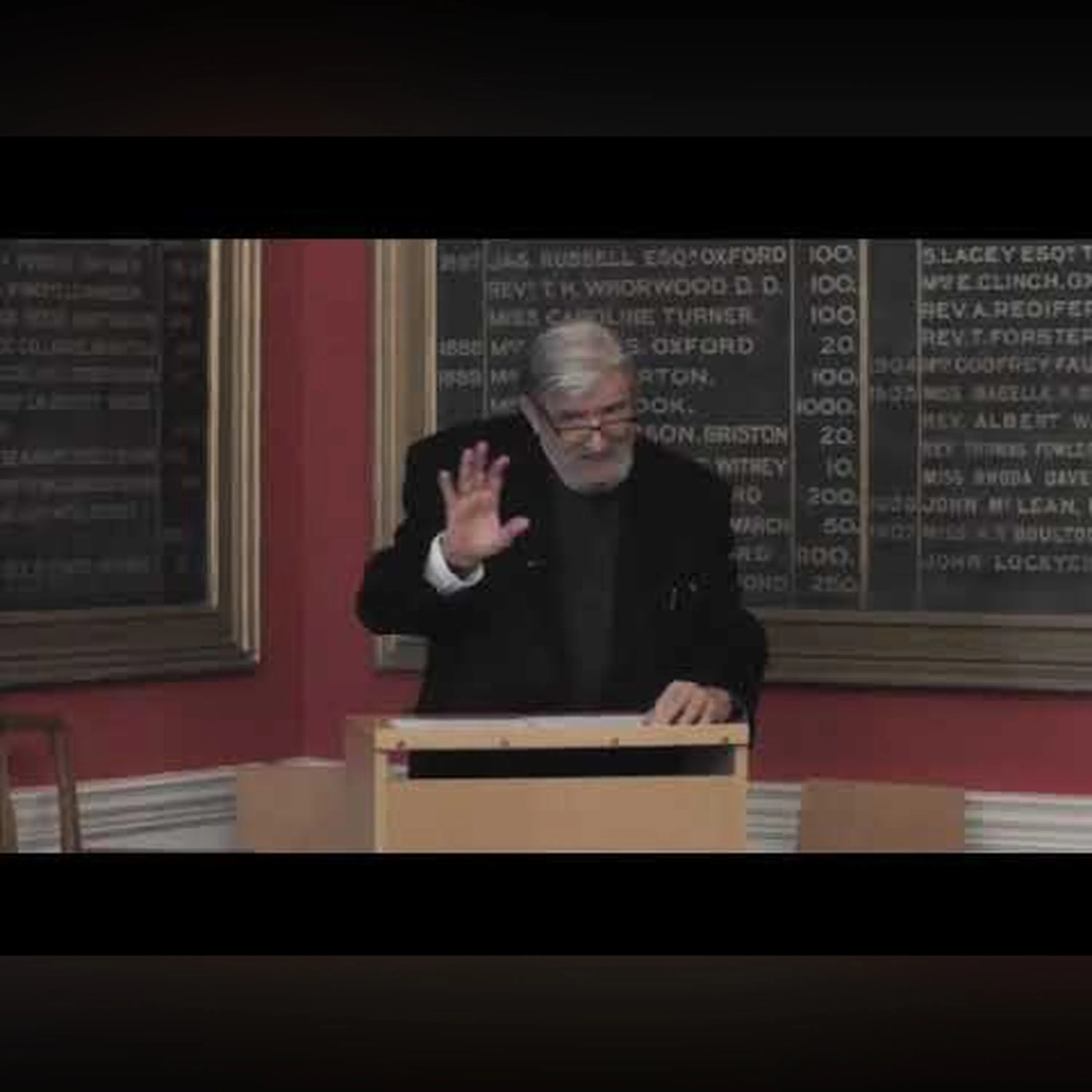 2 Reid and Common Sense Realism - Reid's Critique of Hume (Dan Robinson) 21.09.2026 59minProfessor Dan Robinson gives the second in a series of 8 lectures on Thomas Reid's critique of David Hume at Oxford in 2014. Is it the case that every simple idea is a “copy” of a simple impression? Hume is but the latest to deny that we have direct access to the external world. The “ideal” theory, relegating ideas to a mental realm whose occupants are but “copies” of some indefinite thing, is the sure path to skepticism and is at variance with the proper methods of science.Under “David Hume”, the Stanford Encyclopedia of Philosophy begins with, “The most important philosopher ever to write in English”. His most formidable contemporary critic was the fellow Scot, Thomas Reid, the major architect of so-called Scottish Common Sense Philosophy. The most significant features of Hume’s work, as understood by Reid, are the representive theory of perception, the nature of causation and causal concepts, the nature of personal identity and the foundations of morality. Each of these topics is presented in a pair of lectures, the first summarizing Hume’s position and the second Reid’s critique of that position.All Lectures: https://www.youtube.com/playlist?list=PLhP9EhPApKE9nki7CXFPi7PMOi5W2g2-q#philosophy #davidhume #epistemology #skepticism #perception #philosophyofmind #historyofphilosophy Learn more about your ad choices. Visit megaphone.fm/adchoices
 -
 Justice for Hedgehogs - Ronald Dworkin (2011) 21.09.2026 37minAudio recording of a lecture by Ronald M. Dworkin on his book "Justice for Hedgehogs" at the Carnegie Council in 2011. The title is a reference to the Ancient Greek poet Archilochus who wrote that "the fox knows many things, but the hedgehog knows one big thing." Ronald Dworkin argues for one big thing: the unity of value. #philosophy #politicalphilosophy #ethics #moralphilosophy #jurisprudence Learn more about your ad choices. Visit megaphone.fm/adchoices
 -
 Can Machines Become Conscious? (2025) 20.09.2026 1val 32minDavid Chalmers and Michael Graziano discuss consciousness and AI with moderator Anil Ananthaswamy at Princeton University in 2025 as part of the Large AI Model Lecture Series. 00:00 Introduction 08:31 Discussion #philosophy #artificialintelligence #consciousness #psychology #davidchalmers #philosophyofmind #debate Learn more about your ad choices. Visit megaphone.fm/adchoices
 -
 Nietzsche on Nihilism and the Death of God - Ken Gemes 20.09.2026 1val 7minAudio recording of the first of two lectures by Ken Gemes on Nietzsche. In this first talk, Ken Gemes introduces Nietzsche as the philosopher of the death of God. Nietzsche claims that we have not yet fully understood the ramifications of the modern rejection of belief in God. Giving up the belief in God undermines all our values, though many cling to those values in the absence of God or of any other justificatory basis for those values. When we truly appreciate the meaning of the death of God, we will, says Nietzsche, lapse into nihilism; the inability to find any foundation for values and meaning in the world. This Nietzsche presciently predicts as the future of Europe for the next two hundred years. Nietzsche does not endorse nihilism but seeks to move beyond it to a new affirmation of this world, the one and only world. But what does Nietzsche mean exactly by nihilism? This is discussed in the talk. The next lecture by Ken Gemes on Nietzsche: https://www.youtube.com/watch?v=7ejV1cHZL58Note, this is a re-upload. 00:00 Talk 31:42 Q&A #philosophy #nietzsche #nihilism #atheism #historyofphilosophy Learn more about your ad choices. Visit megaphone.fm/adchoices
 -
 The Eclipse of Reason - Sidney Morgenbesser (1967) 20.09.2026 1val 9minAudio recording of a 1967 lecture given by Sidney Morgenbesser on reason and its eclipse at the Cooper Union Forum in New York. Sidney Morgenbesser was a professor of philosophy at Columbia University. #philosophy #epistemology #science Learn more about your ad choices. Visit megaphone.fm/adchoices
 -
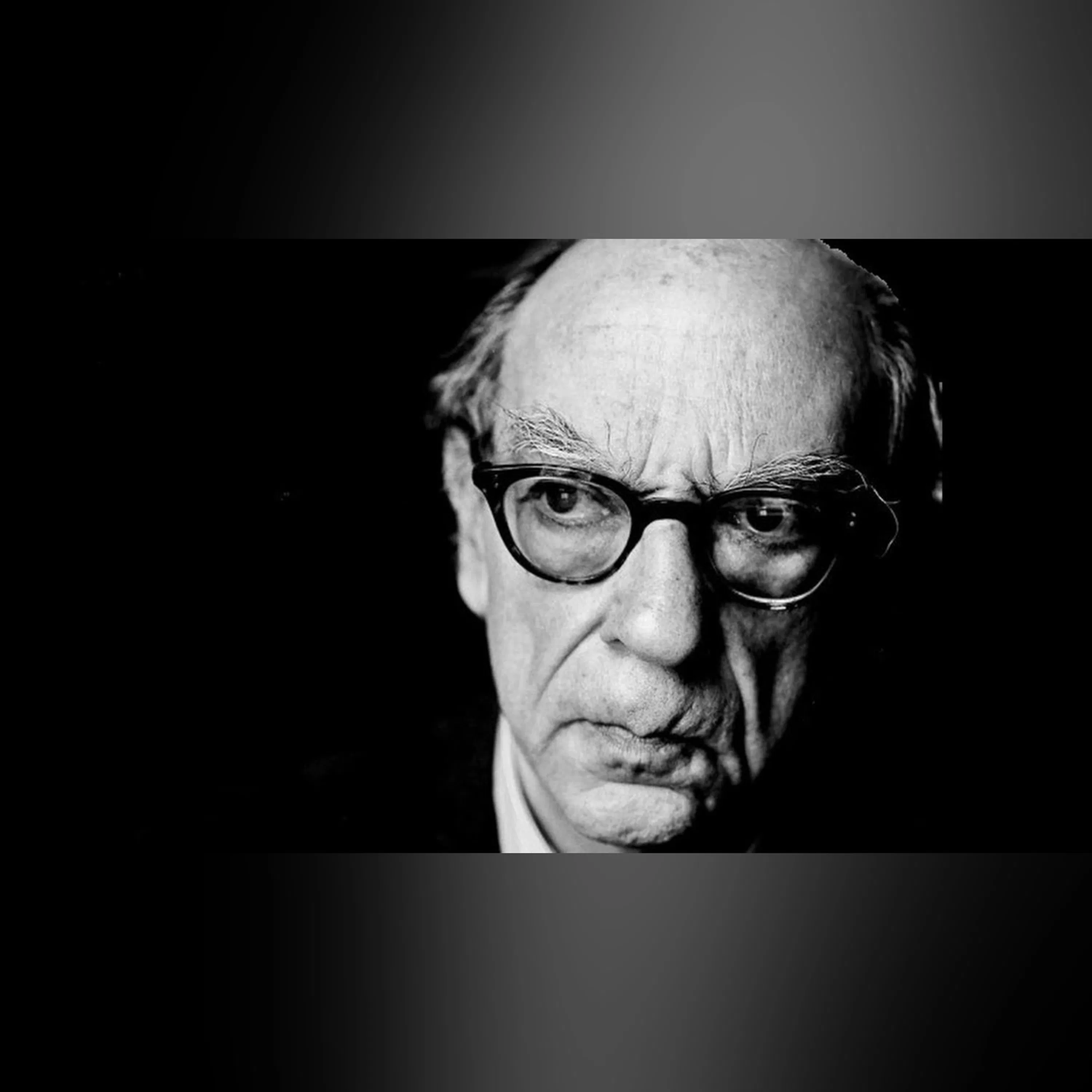 5 Unbridled Romanticism - Fichte, Schelling, and Symbols (Isaiah Berlin 1965) 20.09.2026 1val 4minIsaiah Berlin gives the 5th lecture in a series of 6 on Romanticism and its roots.All 6 lectures: https://www.youtube.com/playlist?list=PLhP9EhPApKE_9uxkmfSIt2JJK6oKbXmd-For Berlin, the Romantics set in motion a vast, unparalleled revolution in humanity’s view of itself. They destroyed the traditional notions of objective truth and validity in ethics with incalculable, all-pervasive results. As he said of the Romantics elsewhere: “The world has never been the same since, and our politics and morals have been deeply transformed by them. Certainly this has been the most radical, and indeed dramatic, not to say terrifying, change in men’s outlook in modern times.”In these brilliant lectures Berlin surveys the myriad attempts to define Romanticism, distills its essence, traces its developments from its first stirrings to its apotheosis, and shows how its lasting legacy permeates our own outlook. Combining the freshness and immediacy of the spoken word with Berlin’s inimitable eloquence and wit, the lectures range over a cast of the greatest thinkers and artists of the eighteenth and nineteenth centuries, including Kant, Rousseau, Diderot, Schiller, Schlegel, Novalis, Goethe, Blake, Byron, and Beethoven. Berlin argues that the ideas and attitudes held by these and other figures helped to shape twentieth-century nationalism, existentialism, democracy, totalitarianism, and our ideas about heroic individuals, individual self-fulfillment, and the exalted place of art. This is the record of an intellectual bravura performance–of one of the century’s most influential philosophers dissecting and assessing a movement that changed the course of history. These Mellon lectures were delivered in Washington in 1965.00:00 Three Great Trends00:50 Fichte09:58 Schelling16:02 Symbolism21:44 Depth26:33 Nostalgia31:07 Paranoia37:13 French Revolution#Romanticism #IsaiahBerlin #Fichte Learn more about your ad choices. Visit megaphone.fm/adchoices
 -
 Daniel Dennett Interview on Mind, Matter and Meaning 20.09.2026 1val 10minAn interesting interview with Daniel Dennett from a few years back that I quite like. He discusses various philosophical issues regarding mind and meaning. Some of the topics discussed include consciousness, science, materialism, computation, meaning/purpose in biology, emergence & reductionism, the intentional stance, evolution, philosophical zombies, the self, and free will. This comes from an interview with Robert Pollie a few years back from a podcast called the 7th Avenue Project. For more information, go to www.7thavenueproject.com. #philosophy #dennett #consciousness #philosophyofmind #materialism #personalidentity #perception #mind Learn more about your ad choices. Visit megaphone.fm/adchoices
 -
 Is there Purpose in the Cosmos? (The Philosopher's Zone) 20.09.2026 42minTo many people, the notion that the universe has consciousness and purpose belongs back in the pre-scientific era. In this program, Philip Goff (Professor of Philosophy at Durham University) explores the possibility that cosmic purpose is defensible not only philosophically, but also scientifically. This comes from a 2023 episode of the ABC Radio National show, the Philosopher Zone, with David Rutledge. #philosophy #consciousness #philosophyofmind #panpsychism #metaphysics #mind Learn more about your ad choices. Visit megaphone.fm/adchoices
 -
 Rawls vs Nozick (Ronald Dworkin) 20.09.2026 26minRonald Dworkin gives a very brief, introductory overview of John Rawls' "A Theory of Justice" and Robert Nozick's "Anarchy, State, and Utopia" in an interview with Bryan Magee from 1977. Although both wrote very influential works of political philosophy, they came to quite different conclusions. Rawls famously put forward a novel argument for his position which made use of a thought experiment involving a hypothetical contract. Unlike other social contract theories though, Rawls added the further twist that the bargainers must be ignorant about certain facts about themselves which could bias them in their own favor (e.g. their race, gender, class, age, talents, etc.). In this way, ignorance is used as a device to guarantee impartiality in deciding how societies should be structured. After all, one cannot rig things to benefit oneself at the expense of others if one doesn't know what one's personal interests are or what one's position in society will be. Rawls argued that behind this so-called "veil of ignorance" people would agree to two principles, the most interesting being the difference principle, which states that economic inequalities can only be justified if they are to the benefit of the worst off in society. However, such a view was rejected by Nozick, who argued from a starting point of absolute rights of property which cannot be violated without one's consent. Despite such a strong principle, Nozick argued that there can still be a kind of minimal state, what he called a "night-watchman state", which protects property and person. One way to think of the difference in views between Rawls and Nozick (albeit this may be overly simplistic and even misleading in certain respects) is that while Nozick privileges liberty and rights over equality and fairness, Rawls instead privileges that of equality and fairness. (My Summary)This clip is of Ronald Dworkin discussing the political thought of John Rawls and Robert Nozick in a 1977 interview with Bryan Magee. It is an upload from the previous channel.The full interview can be found here: https://www.youtube.com/watch?v=gySLm3Z1OvA 00:00 John Rawls12:13 Robert Nozick#philosophy #politicalphilosophy #politicaltheory #rawls #bryanmagee #historyofphilosophy Learn more about your ad choices. Visit megaphone.fm/adchoices
 -
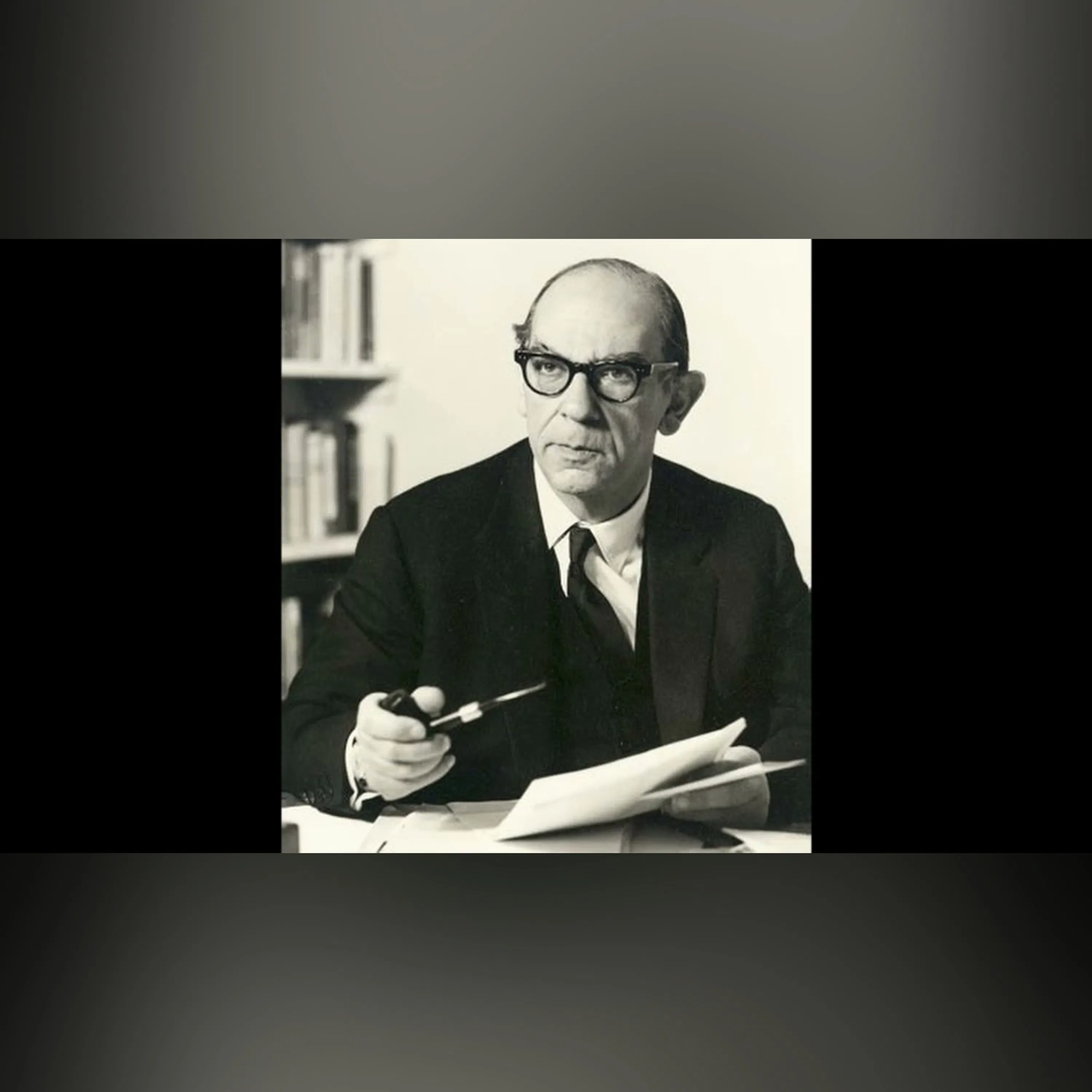 Isaiah Berlin Interview on Freedom (1974) 20.09.2026 31minThis is from an episode of the podcast Philosopher's Zone from a few years back. For more about the Philosopher's Zone: https://www.abc.net.au/radionational/programs/philosopherszone/ #philosophy #isaiahberlin #freedom #kant #determinism #causality #freewill #historyofphilosophy Learn more about your ad choices. Visit megaphone.fm/adchoices
 -
 Sidney Morgenbesser on Naturalism (1966) 20.09.2026 1val 1minAudio recording of a 1966 lecture given by Sidney Morgenbesser on philosophical naturalism at the Cooper Union Forum as part of a series on Philosophy for Modern Man. #philosophy #determinism #atheism #freewill #causality #epistemology #science Learn more about your ad choices. Visit megaphone.fm/adchoices
 -
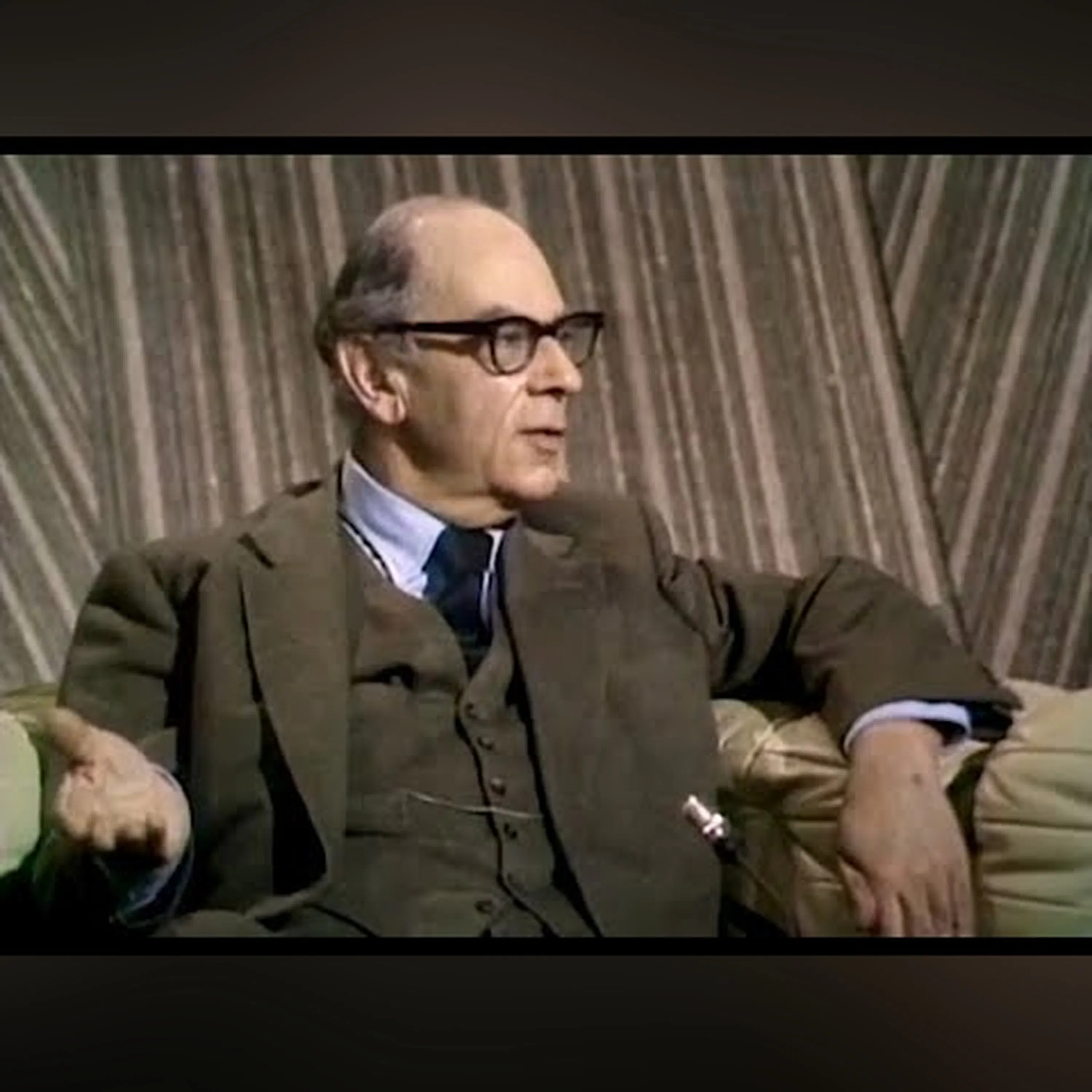 The Hallmark of a Philosophical Question (Isaiah Berlin and Bryan Magee) 20.09.2026 9minA very short clip of Isaiah Berlin in conversation with Bryan Magee. This is from a 1977 program on philosophy. The full interview can be found here: https://youtu.be/RDgw6ydB6lU#philosophy #isaiahberlin #bryanmagee #historyofphilosophy Learn more about your ad choices. Visit megaphone.fm/adchoices
 -
 Derek Parfit on Personal Identity (1996) 20.09.2026 10minThis comes from a 1996 program called Brainspotting. Read more on personal identity: https://plato.stanford.edu/entries/identity-personal/#philosophy #parfit #personalidentity #metaphysics Learn more about your ad choices. Visit megaphone.fm/adchoices
 -
 Resurrection of the Body? Physicalism and the Possibility of Life After Death 20.09.2026 1val 10minCan a Christian be a physicalist? And is there a coherent story to tell about how a physical entity can survive bodily death? In this talk, Rebekah Rice evaluates proposals by Christian philosophers who have answered "yes" to both questions and have gone on to propose theories about the possibility of resurrection given physicalism. Rebekah Rice, Assistant Professor of Philosophy at Seattle Pacific University, gave this lecture back in 2012. 00:00 Lecture 49:45 Q&A #philosophy #metaphysics #philosophyofmind #philosophyofreligion #personalidentity #materialism Learn more about your ad choices. Visit megaphone.fm/adchoices
 -
 Iris Murdoch on the Sublime and the Beautiful Revisited (1959) 20.09.2026 1val 15minAudio recording of a 1959 lecture by Iris Murdoch at Yale as part of the Bergen lecture series. #philosophy #aesthetics #literature Learn more about your ad choices. Visit megaphone.fm/adchoices
 -
 Personal Identity and the Self 20.09.2026 1valThis is a pretty good introductory talk on personal identity and some of the philosophical issues that arise surrounding it. The lecturer is Patrick Stokes of Deakin University and was given at the Ethics Centre. This comes from an episode of the podcast The Philosopher's Zone from a few years back titled "Personal identity: a primer".The lecturer Patrick Stokes: http://www.patrickstokes.comThe Philosopher's Zone: https://www.abc.net.au/radionational/programs/philosopherszoneThe Ethics Centre: http://www.ethics.org.au/home#philosophy #personalidentity #philosophyofmind #metaphysics #mind Learn more about your ad choices. Visit megaphone.fm/adchoices
 -
 Hannah Arendt on Ideology (1968) 20.09.2026 5minA short clip of Hannah Arendt discussing ideology and the role it played in the totalitarian regimes of the 20th century. This comes from the Q&A section of a lecture on power and violence given at Bard College in 1968. #philosophy #hannaharendt #politicalphilosophy #totalitarianism #politicaltheory #ideology Learn more about your ad choices. Visit megaphone.fm/adchoices
 -
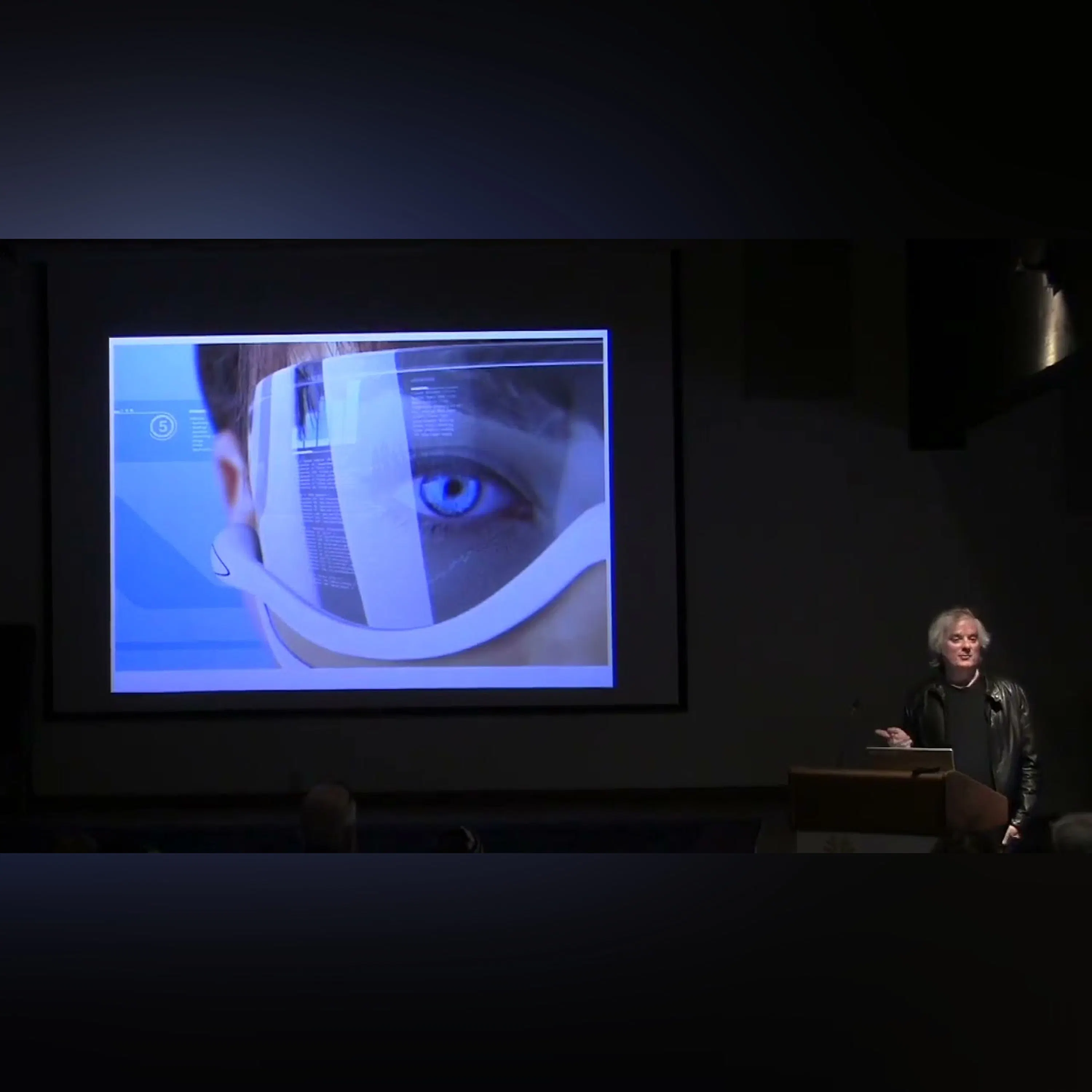 The Virtual and The Real (David Chalmers) 20.09.2026 59minDistinguished philosopher Dr. David Chalmers discusses some of the philosophical issues that arise regarding virtual reality technology in a lecture back in 2017 at the Community Library in Idaho. #philosophy #epistemology #davidchalmers #metaphysics #virtualreality Learn more about your ad choices. Visit megaphone.fm/adchoices
 -
 5 David Hume on Personal Identity - Reid's Critique of Hume (Dan Robinson) 20.09.2026 48minProfessor Dan Robinson gives the fifth in a series of 8 lectures on Thomas Reid's critique of David Hume at Oxford in 2014. “There are some philosophers who imagine we are every moment intimately conscious of what we call our self; that we feel its existence and its continuance in existence; and are certain, beyond the evidence of a demonstration, both of its perfect identity and simplicity…For my part, when I enter most intimately into what I call myself, I always stumble on some particular perception or other, of heat or cold, light or shade, love or hatred, pain or pleasure. I never can catch myself at any time without a perception, and never can observe any thing but the perception. When my perceptions are removed for any time, as by sound sleep, so long am I insensible of myself, and may truly be said not to exist. And were all my perceptions removed by death, and could I neither think, nor feel, nor see, nor love, nor hate, after the dissolution of my body, I should be entirely annihilated...”Under “David Hume”, the Stanford Encyclopedia of Philosophy begins with, “The most important philosopher ever to write in English”. His most formidable contemporary critic was the fellow Scot, Thomas Reid, the major architect of so-called Scottish Common Sense Philosophy. The most significant features of Hume’s work, as understood by Reid, are the representive theory of perception, the nature of causation and causal concepts, the nature of personal identity and the foundations of morality. Each of these topics is presented in a pair of lectures, the first summarizing Hume’s position and the second Reid’s critique of that position.All Lectures: https://www.youtube.com/playlist?list=PLhP9EhPApKE9nki7CXFPi7PMOi5W2g2-q#philosophy #davidhume #epistemology #personalidentity #empiricism #skepticism #historyofphilosophy Learn more about your ad choices. Visit megaphone.fm/adchoices
 -
 6 Concepts, Judgment and Deduction of the Categories - Kant's Critique of Pure Reason (Dan Robinson) 20.09.2026 47minDan Robinson gives the 6th lecture in a series of 8 on Immanuel Kant's Critique of Pure Reason. Empiricists have no explanation for how we move from "mere forms of thought" to objective concepts. The conditions necessary for the knowledge of an object require a priori categories as the enabling conditions of all human understanding.This series looks at German Philosopher Immanuel Kant's seminal philosophical work 'The Critique of Pure Reason'. The lectures aim to outline and discuss some of the key philosophical issues raised in the book and to offer students and individuals thought provoking Kantian ideas surrounding metaphysics. Each lecture looks at particular questions raised in the work such as how do we know what we know and how do we find out about the world, dissects these questions with reference to Kant's work and discusses the broader philosophical implications. Anyone with an interest in Kant and philosophy will find these lectures thought provoking but accessible.This is series of lectures was given in 2011 at Oxford. Note, the audio has been improved. All 8 lectures: https://www.youtube.com/playlist?list=PLhP9EhPApKE_OdgqNgL0AJX9-gwr4tmLw#philosophy #kant #epistemology #metaphysics #empiricism #skepticism #historyofphilosophy Learn more about your ad choices. Visit megaphone.fm/adchoices
Panašios tinklalaidės


Populiari šalyje
Ši tinklalaidė taip pat patenka į šių šalių tinklalaidžių topus.
