
The Primary Maths Podcast
Jon Cripwell
0
The Primary Maths Podcast is a year-round maths podcast for teachers, leaders and anyone interested in how children learn mathematics. Every Tuesday, host Jon Cripwell interviews an expert voice from across education, exploring topics like maths anxiety, fluency, task design, curriculum, reasoning and problem solving. On Fridays, Becky Brown and Jon return for Aftermaths, a shorter, light-hearted debrief with practical takeaways for the classroom. The podcast also features The Maths of Life segments and a weekly resource spotlight.
Epizodes
-
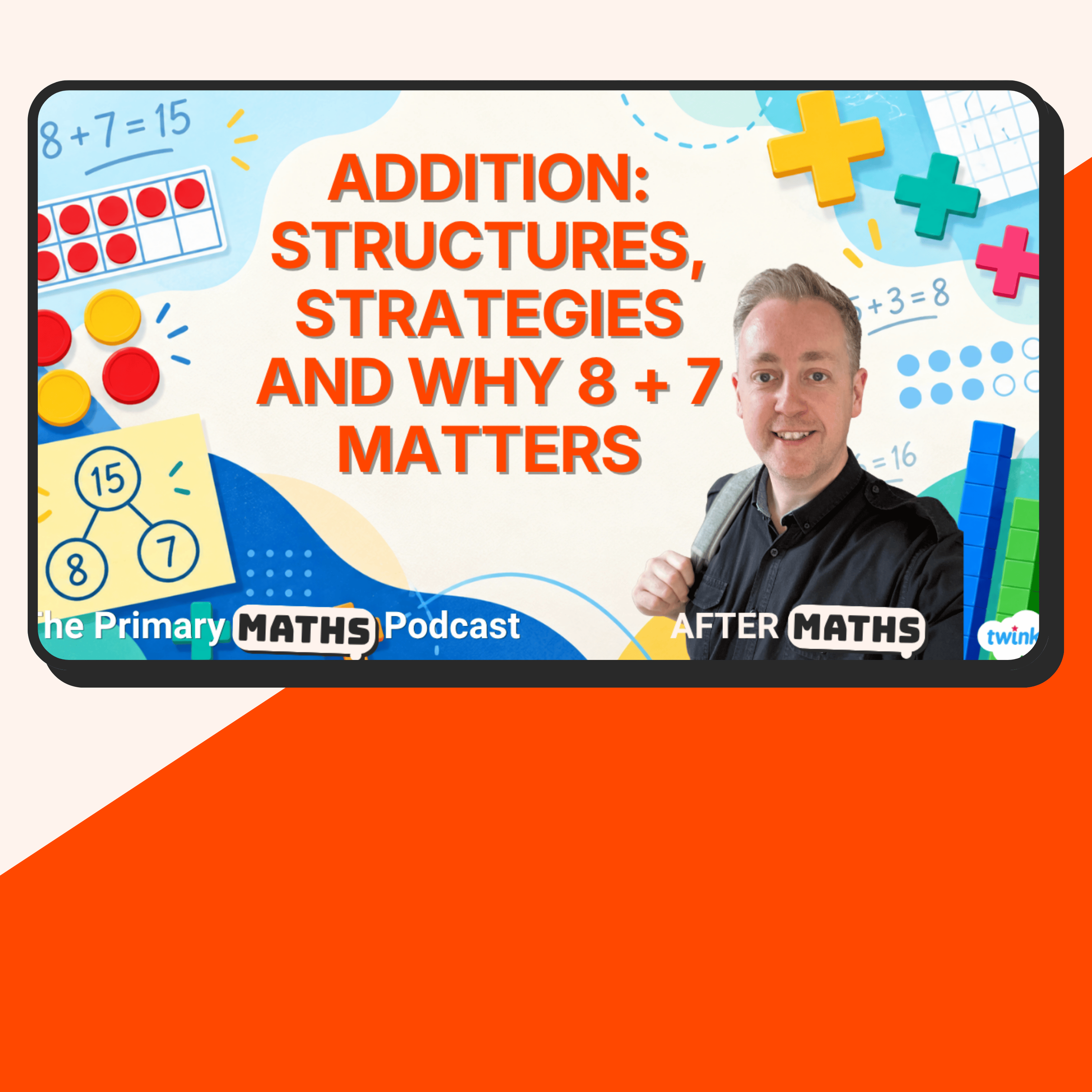 Addition: structures, strategies and why 8 + 7 matters 02.10.2026 37minAddition is one of the first mathematical operations children meet, but that doesn’t mean it’s simple.In this episode of AfterMaths, Jon and Becky take a closer look at what it really means to understand addition. They explore why knowing lots of different strategies matters, why column addition should be a tool rather than the destination, and why Jon has, somewhat inexplicably, developed a favourite addition calculation.There’s also some Wordle mathematics, new research into the importance of spatial reasoning and partitioning, and a trip through the surprisingly long history of the humble + symbol.In this episode01:16 – Can mathematics help you beat Wordle?Researchers at Binghamton University have used Shannon entropy and information theory to develop a Wordle strategy that solved more than 99% of puzzles in simulations.05:50 – What’s your favourite addition?Jon nominates 8 + 7, and uses it to explore number bonds, partitioning, near doubles, compensation and the different ways children might see the same calculation.10:58 – The structures of additionWhat is the difference between aggregation and augmentation, and do children actually need to know those words?15:00 – Column addition: servant or master?Written algorithms are incredibly useful, but they aren’t automatically the most efficient or sophisticated strategy. Jon and Becky discuss why children need a repertoire of approaches and the freedom to choose between them.20:54 – Research: partitioning is spatial as well as numericalNew research from Chelsea Cutting explores how spatial visualisation, spatial structuring and proportional reasoning can support young children’s understanding of partitioning and fractions.26:33 – Where did the + symbol come from?Becky heads down a mathematical-history rabbit hole, from ancient Egyptian walking legs to medieval shorthand and the emergence of the modern plus sign.34:30 – Free primary maths CPDJon and Becky look ahead to Twinkl’s programme of free live primary maths sessions, including subtraction, problem solving, cognitive load and mathematical talk.And next week: subtraction.Links and further readingWordle and information theoryBinghamton University: researchers use maths to crack WordleResearch paper: Solving Wordle Using Information TheoryPlay WordlePlay NerdlePartitioning and spatial reasoningChelsea Cutting: Exploring the critical role spatial reasoning plays in young children’s early partitioning developmentFurther reading:Wilson, Myers, Edgington & Confrey: Fair Shares, Matey, or Walk the PlankThe history of mathematical symbolsMacTutor: Earliest Uses of Symbols of OperationFree primary maths CPDExplore Twinkl’s upcoming TeachMeet eventsTwinkl Primary Maths CPD collectionQuote from the episodeJohn Dewey, Logic: The Theory of Inquiry (1938):“It is a familiar and significant saying that a problem well put is half-solved.”The Primary Maths Podcast: AfterMathsWith Jon Cripwell and Becky Brown.New episodes exploring the ideas, research and slightly unexpected tangents behind primary mathematics.
 -
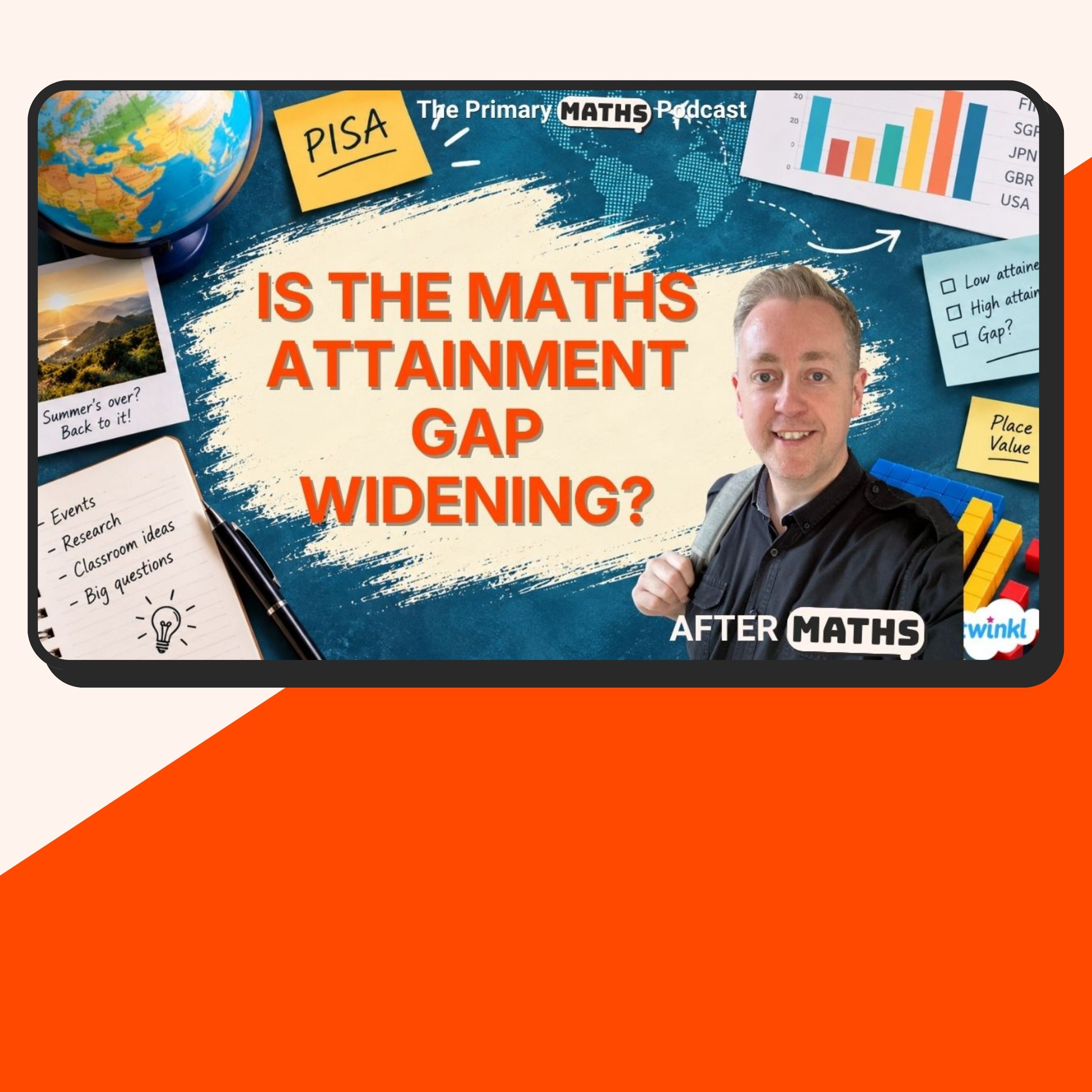 Is the maths attainment gap getting wider? 18.09.2026 38minWhy do some pupils seem to thrive in maths while others struggle to access the same lesson?Jon and Becky discuss the latest PISA findings and the widening gap between higher and lower attainers, before exploring what that looks like in real primary classrooms. They talk about teaching for mastery, adaptive teaching, pre-teaching, the pressures of a packed timetable and why taking time to simply observe pupils can be so valuable.With place value being taught in classrooms everywhere at this point in the year, they also look at why it can reveal so much about what children genuinely understand, rather than what they’ve simply memorised.Plus, there’s maths in the wild involving an ultra-running teacher, a critically endangered parrot and around 70,000 pints of stolen Guinness.
 -
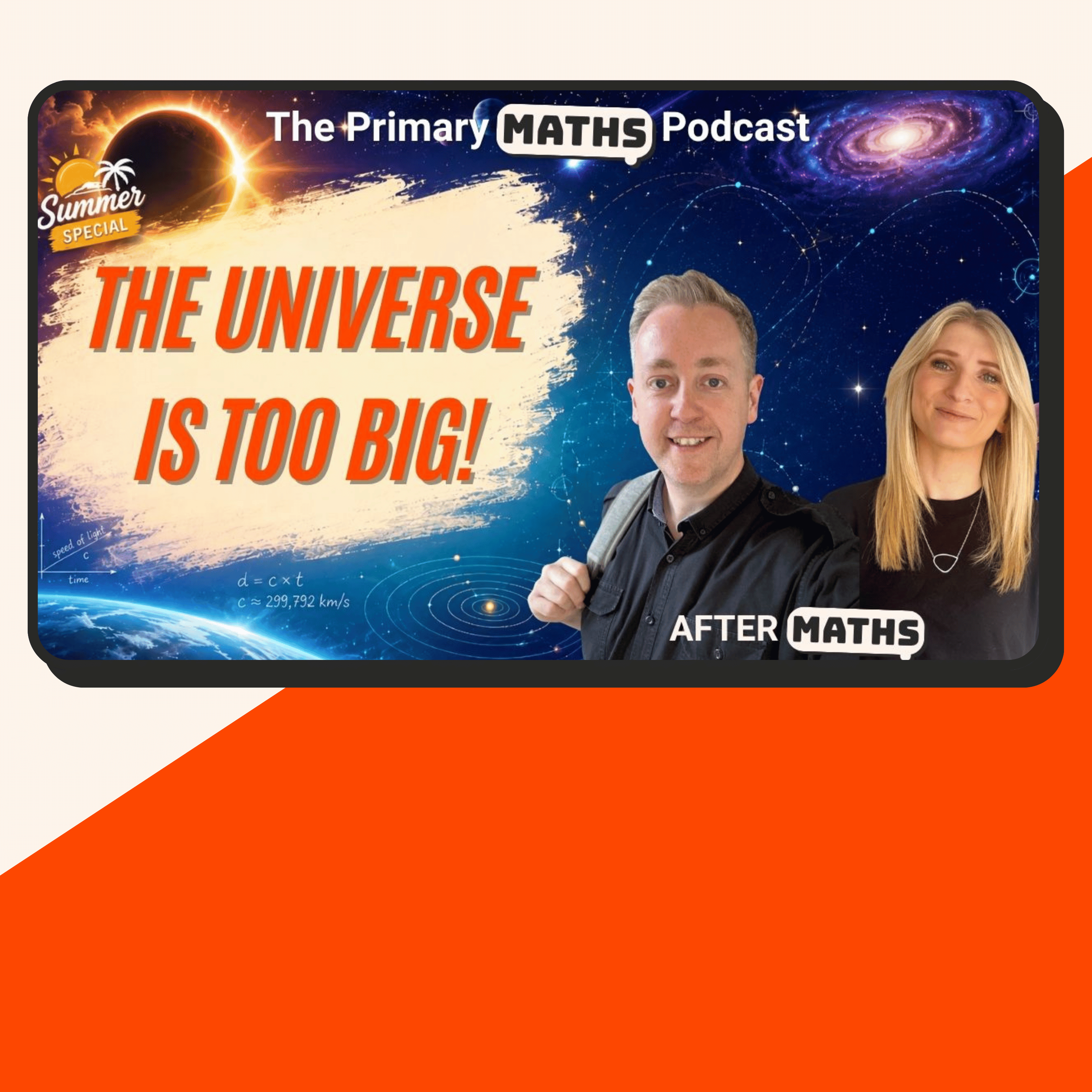 How Big Is the Universe? | AfterMaths Summer Special 04.09.2026 42minHow can the universe be 13.8 billion years old but the observable universe be around 93 billion light years across?In this AfterMaths Summer Special, Jon is joined by primary science specialist Sarah Hutson to tackle some of the wonderfully ridiculous numbers involved in trying to understand the universe.They talk solar eclipses, meteor showers, shooting stars, the speed of light, the size of the Sun and Moon, and why looking into space is really looking back in time.There is also Sarah's highly scientific game What on Earth Have I Drawn?, a surprising rise in colander sales, the reason total solar eclipses are possible, and an attempt to explain the expansion of the universe using an ant on an elastic band.By the end, Jon needs a lie down.Which is probably the correct response to cosmology.
 -
 Can Maths Help You Win at Games? 28.08.2026 25minCan maths help you win at games?In this AfterMaths Summer Special, Jon and Becky explore the line between luck and strategy — and whether understanding the maths behind a game can actually give you an advantage.They take in Rock Paper Scissors, Noughts & Crosses, chess, a deceptively simple counting game, the chessboard-and-rice problem, expected value, roulette and the mathematics hiding inside Monopoly.Along the way: why some apparently random games aren’t quite random, why exponential growth gets ridiculous remarkably quickly, why the house tends to win at casinos, and how a little probability might improve your chances during family game night.Maths can’t guarantee that you’ll win every game.But it might make people considerably less keen to play Monopoly with you.
 -
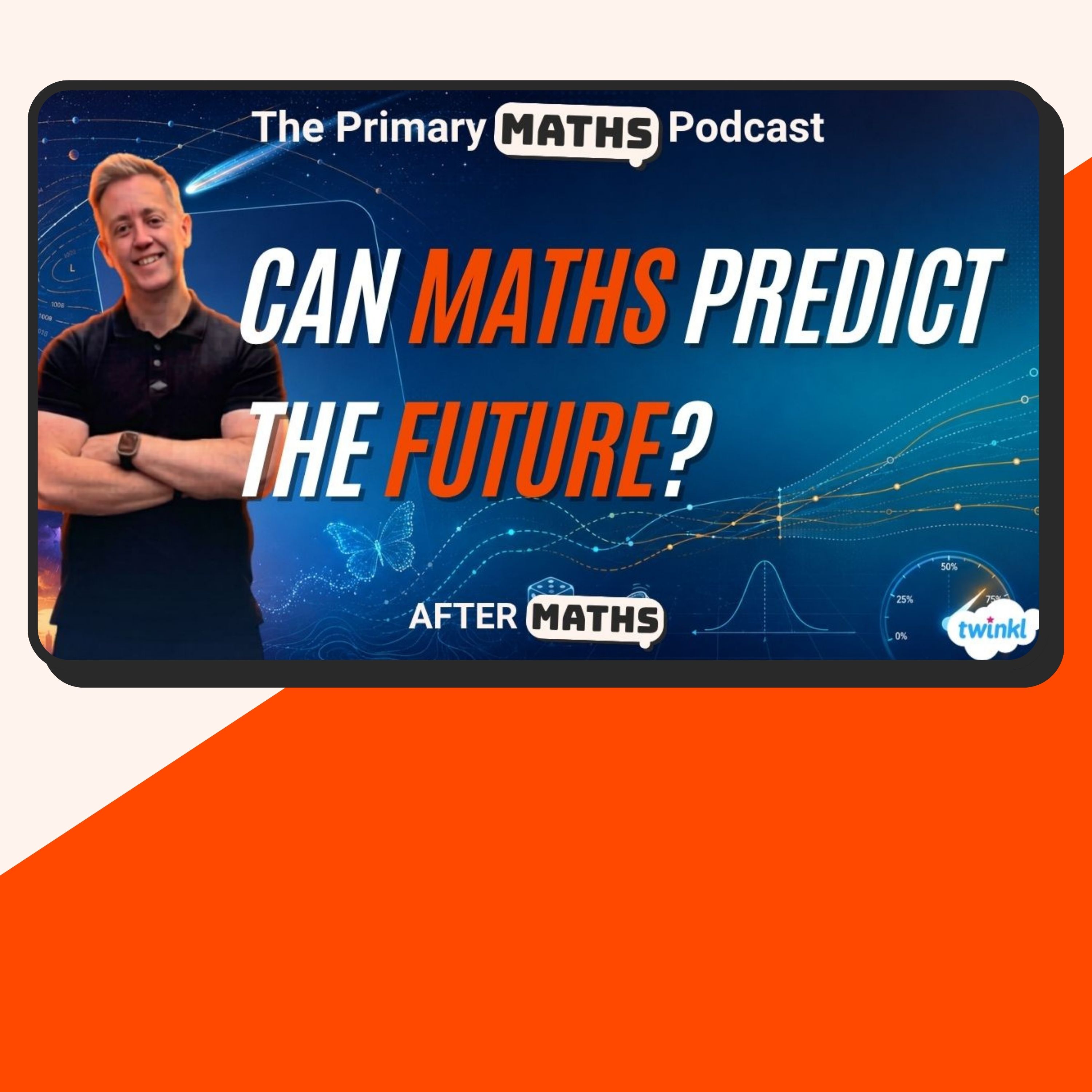 Can Maths Predict the Future? 24.08.2026 26minCan maths really predict the future?We can predict the return of a comet decades in advance, but tomorrow's weather can still catch us completely by surprise. In this AfterMaths Summer Special, Jon and Becky explore why some futures are easier to calculate than others.From probability, forecasts and projections to Halley’s Comet, the phantom planet Vulcan and Edward Lorenz's discovery of chaos theory, they ask how much mathematics can genuinely tell us about what happens next.There's also the butterfly effect, an unexpectedly important rounding error, the difference between chaos and randomness — and the small problem that human beings refuse to behave like nice, predictable mathematical models.Especially children.So, can maths predict the future?Sort of. Which is perhaps the most mathematically appropriate answer possible.
 -
 The Maths of Getting Away: Routes, Queues & Google Maps 21.08.2026 31minPodcast Show NotesWhat makes a route the best route? The shortest distance? The quickest journey? The cheapest option? Or simply whichever one Google tells you to take?In this AfterMaths Summer Special, Jon and Becky explore the maths of getting away — from Google Maps and traffic predictions to queues, theme parks and an 18th-century puzzle that helped create an entirely new area of mathematics.Along the way, they discuss the Seven Bridges of Königsberg, Euler's ingenious solution and what it can teach us about problem solving: representing problems, working systematically, spotting patterns, simplifying and knowing when there might not actually be a solution at all.Plus: why the other supermarket queue is always faster, whether you should ever switch queues, 99 smartphones causing a fake traffic jam in Berlin, and the deeply troubling emergence of people forming orderly queues at pub bars.It's maths. It's holidays. It's considerably more Euler than your average trip to Orlando.
 -
 Who Decided How Long a Metre Is? AfterMaths Summer Special 3 07.08.2026 22minWho decided how long a metre should be? Why is a mile 1,760 yards? And what connects the French Revolution, an expedition from Dunkirk to Barcelona and the speed of light?In this AfterMaths Summer Special, Jon and Becky explore the messy, surprising and occasionally bewildering history of measurement.They begin in a world before standard units, when lengths were measured using hands, feet, cubits, spans and paces. These methods were convenient and widely understood, but rather less useful when accuracy mattered and everybody’s body produced a different answer.From there, they investigate the historical accumulation that gave us imperial units, including the supposed connections between inches and barleycorns, feet and actual human feet, and miles and Roman paces.The story then moves to revolutionary France, where mathematicians and astronomers attempted to create a universal decimal system based on the dimensions of the Earth. Their effort to establish the metre involved years of surveying, triangulation, political upheaval, arrests and the inconvenient discovery that neither the Earth nor their measurements were quite as perfect as hoped.The metre was later represented by a platinum-iridium bar, then by a wavelength of light and, finally, by the distance light travels through a vacuum in a precisely defined fraction of a second.It is a journey from body parts to universal constants, with plenty of mathematical history, questionable conversions and the inevitable disagreement about whether a pace and a “dolly step” are the same thing.Explore The Primary Maths Podcast and more from Twinkl:https://www.twinkl.co.uk/resources/twinkl-podcasts/primary-maths-education-podcast-twinkl-podcastsWe always love hearing from listeners. Send your questions, episode ideas and examples of maths hiding in everyday life to:[email protected] to the podcast newsletter on Substack:https://primarymathspodcast.substack.com/Connect with Jon on LinkedIn:https://www.linkedin.com/in/joncripwell/If you enjoyed the episode, please follow the podcast, leave a rating or review, or share it with a colleague. It really helps more teachers discover the show.Thanks for listening, and as ever, keep doing the maths.
 -
 The Probability Problems That Make Your Brain Hurt - AfterMaths Summer Special 2 2026 31.07.2026 30minProbability often feels as though it should be intuitive, right up until the mathematics tells us that our instincts are completely wrong.In this AfterMaths Summer Special, Jon and Becky explore the strange mathematics of chance. From rainy-day board games and rolling two dice to coin-toss streaks, lottery numbers and casino myths, they investigate why humans are so determined to find patterns in genuinely random events.Why is seven the most likely total when rolling two dice? How can just 23 people produce a better-than-even chance of two sharing a birthday? Are 1, 2, 3, 4, 5 and 6 genuinely bad lottery numbers? And after choosing between three mysterious doors, why should you abandon your original choice?The episode concludes with the famously counterintuitive Monty Hall problem: three doors, two goats, one car and a very good mathematical reason to switch.Expect hidden maths, questionable gambling strategies and several probability problems capable of making your brain hurt.Explore The Primary Maths Podcast and more from Twinkl:https://www.twinkl.co.uk/resources/twinkl-podcasts/primary-maths-education-podcast-twinkl-podcastsWe always love hearing from listeners. Send your questions, episode ideas and examples of maths hiding in everyday life to:[email protected] to the podcast newsletter on Substack:https://primarymathspodcast.substack.com/Connect with Jon on LinkedIn:https://www.linkedin.com/in/joncripwell/If you enjoyed the episode, please follow the podcast, leave a rating or review, or share it with a colleague. It really helps more teachers discover the show.Thanks for listening, and as ever, keep doing the maths.
 -
 Why Do Summer Holidays Feel Shorter As We Get Older? Summer Special 1 2026 28.07.2026 29minWhy did the six-week summer holiday feel endless when we were children, yet now seems to disappear almost as soon as it begins?In the first of the 2026 Aftermaths Summer Specials, Jon and Becky explore the strange relationship between time, age and memory. They consider the popular proportional theory of time, the role of novelty in creating richer memories and the “return-trip effect”, which can make the journey home feel shorter even when the distance is the same.The conversation also takes in unusually long post-GCSE summers, children’s television, World Cup statistics and the role of the railways in creating standardised time across Britain.Before that, Jon and Becky discuss Andy Burnham’s arrival in Downing Street and Lucy Powell’s appointment as education secretary. What might the change mean for schools—and can the sector retain some much-needed continuity around SEND, curriculum reform, funding, recruitment and retention?Why Teaching Time Is So Hard and What We Can Do About It:https://www.twinkl.co.uk/l/1abmzuExplore PlanIt Maths Year 2 time resources:https://www.twinkl.co.uk/l/t9r41Listen to our earlier Summer Special, Making Sense of Time:https://www.twinkl.co.uk/l/1n860nRead the return-trip effect research:https://pubmed.ncbi.nlm.nih.gov/21861201/Subscribe to The Primary Maths Podcast Substack:https://theprimarymathspodcast.substack.com/Get in touch with Jon and Becky at [email protected] to The Primary Maths Podcast so you don’t miss the next Summer Special: What Are the Chances of That?
 -
 KS2 SATs Results, AI and Outsourcing Mathematical Thinking 17.07.2026 37minWhat do this year’s KS2 SATs results really tell us about primary maths—and what might they be hiding?Jon and Becky examine the newly released national data, including the rise in maths attainment, the return of greater-depth results to pre-pandemic levels and the growing number of pupils working below the level of the tests. They discuss why a single score can never tell the whole story, why missing the expected standard does not mean a child “can’t do maths”, and whether the improving headline figures may be masking a widening gap between different groups of pupils.They also explore new research into pupils’ use of AI for mathematical word problems. Homework accuracy increased and answers were completed in seconds—but performance fell when pupils had to work independently under supervision. Are pupils using AI as a helpful learning tool, or simply outsourcing the thinking that helps learning happen?Read Jon’s blog on using AI tools to support maths learning:https://www.twinkl.co.uk/l/ecwcwExplore the newly updated PlanIt Maths scheme:https://www.twinkl.co.uk/l/ndlp8
 -
 Teaching in a Heatwave and is there a Place for Maths Hacks? 10.07.2026 30minIn this episode of the Primary Maths Podcast, Jon and Becky ask whether we need to change the way we teach maths during a heatwave.With classrooms getting hotter and the end of term in sight, they explore what heat can do to attention, working memory, processing speed and classroom engagement. Is it just children being tired and sticky, or is there a genuine cognitive load issue at play?They also tackle one of the classic primary maths debates: when multiplying by 10, is it ever OK to say you “put a zero on the end”? Jon and Becky discuss place value, mathematical shortcuts, misconceptions, decimals, fluency, relational understanding and why seeing the structure matters more than simply getting the answer quickly.Plus, there’s ice cream ratios, hydration breaks, the Fosbury Flop, Richard Skemp, Jerome Bruner and a reminder that the brand-new PlanIt Maths Place Value resources are now available.Explore the new PlanIt Maths Place Value resources here: https://www.twinkl.co.uk/l/ndlp8
 -
 World Cup Maths, Equity and Oracy in the Primary Classroom 03.07.2026 33minWorld Cup Maths, Equity and Oracy in the Primary ClassroomIn this episode of the Primary Maths Podcast, Jon and Becky talk end-of-year school chaos, transition days, classroom moves, and the strange joy of finding a trolley when you really need one.The main discussion begins with reflections from the East Midlands West Maths Hub summer conference, where the focus was on equity in maths. Jon shares the powerful question at the heart of the day: who gets to participate in mathematical thinking, and what do we need to do differently in our lesson design so that all pupils can take part?Jon and Becky explore the difference between equality and equity, and consider how barriers in maths lessons are not always about individual pupils, but about the structures, routines and expectations around them. They discuss how silent classrooms, prior attainment labels, narrow learning objectives and the rush to find the correct answer can sometimes limit opportunities for mathematical thinking.There is also a focus on oracy in maths: why talk matters, how pupils benefit from explaining, reasoning and justifying, and why an incorrect answer can be just as valuable as a correct one when we take time to explore the thinking behind it.Later in the episode, attention turns to the World Cup and the many ways teachers can use it as a rich context for maths. Jon shares some World Cup facts and figures, including the first men’s World Cup in Uruguay in 1930, goal totals from past tournaments, stadium capacities, group tables, averages and goal difference.Jon and Becky suggest practical classroom ideas across the primary phase, including:counting, sorting, comparing and creating simple pictograms in EYFS and Year 1;using tables, match results and points totals in Years 2 and 3;exploring goal difference, averages, stadium capacities, fairness and predictions in Years 4, 5 and 6;asking open-ended questions such as “What maths can you see?” while watching or looking at images from a match.There is plenty here for teachers looking for meaningful end-of-year maths activities, especially when half the class is at transition day, sports day practice, or mysteriously missing because of something involving a clipboard.Whether you love football, tolerate football, or only notice it when it interrupts your usual television schedule, this episode is full of ideas for using real-world numbers, live data and sporting excitement to get children talking, thinking and reasoning mathematically.
 -
 Escape Rooms and Problem Solving (AfterMaths) 26.06.2026 37minIn this episode of The Primary Maths Podcast, Jon and Becky reflect on the realities of summer term: heatwaves, report writing, and the heroic act of trying to teach when everyone is melting.They then turn to problem solving in primary maths, asking whether it should really be saved for the end of the year, or whether pupils need regular, explicit teaching of the skills that help them tackle unfamiliar problems with confidence.Jon and Becky discuss six key problem-solving strategies:Spotting patterns Working systematically Using models Trialling and improving Changing the process Making connectionsThey also answer a listener question from Priya, a maths lead in Coventry, about what to do when colleagues feel pupils are not fluent enough to access problem solving.Finally, in Maths of Life, Jon shares a short history of escape rooms and makes the case that they are a brilliant real-world example of problem solving in action.Useful linksTwinkl Problem Solving Resources: https://www.twinkl.co.uk/r/8arfiPlanIt Maths: https://www.twinkl.co.uk/r/wke0fGet in touchWe’d love to hear your thoughts, questions and ideas for future episodes. You can email the show at:[email protected]
 -
 What We Can Learn from This Year’s Maths SATs? 18.06.2026 33minIn this aftermaths episode of The Primary Maths Podcast, Jon and Becky take a look back at this year’s KS2 maths SATs papers and ask what teachers and maths leads might learn from them.They discuss why the tests should be seen as end-of-key-stage assessments rather than simply Year 6 tests, explore the balance of content across the papers, and reflect on the importance of flexible mathematical thinking. From percentage questions that can be solved in several ways to the role of conceptual understanding in arithmetic, they consider how we can help children move beyond simply following procedures.There is also time for Becky’s Maths of Life, where family rounders, mini golf and sporting fairness lead to a chat about the maths hidden in everyday games. Finally, Jon shares a recent meta-analysis on collaborative learning and mathematical creative reasoning, exploring why high-quality tasks, structured discussion and non-routine problem solving can make such a difference.A lively episode covering SATs, shape, strategy, sport, collaboration and, naturally, the enduring power of a hash brown.
 -
 Florence Nightingale: The Lady with the Graph 05.06.2026 22minIn this lighter half-term Aftermaths episode, Jon and Becky take a wander through some of the unexpected maths hiding in everyday life.First up: Samba the escaped capybara, who, at the time of recording, was still causing confusion somewhere near Hampshire. Is it a capybara? Is it a muntjac deer? Has someone accidentally taken in the world’s largest “stray cat”? Hard to say.Becky then takes us into the very British world of weather watching, comparing forecasts, choosing the one we like best, and wondering what a “40% chance of rain” actually means. Along the way, there’s discussion of probability, percentages, wind speed, temperature, 24-hour time, tide times, and the slightly chaotic business of trying to predict British weather.Jon then shares the story of Florence Nightingale, not just as “the Lady with the Lamp”, but as something else entirely: the Lady with the Graph. Through her use of statistics, record keeping and visual data, Nightingale helped show that far more soldiers were dying from disease and poor hospital conditions than from battle wounds. Her famous polar area diagram became a powerful argument for reform, showing how maths can be used not just to describe the world, but to change it. The Science Museum describes her diagram as showing causes of soldiers’ deaths across two years in Crimea, while the National Army Museum notes the dire conditions at Scutari, where the hospital was dirty, vermin-ridden and lacking basic equipment. There’s also a Derbyshire connection, as Jon explains Florence Nightingale’s links to Lea Hurst near Matlock, the Nightingale family’s Derbyshire home. In this episodeThe ongoing mystery of Samba the capybaraWhy weather apps are full of mathsWhat “chance of rain” really meansBritish weather, rounding, chaos theory and hedging your betsFlorence Nightingale’s Derbyshire connectionsHow Nightingale used data visualisation to argue for hospital reformWhy graphs can sometimes tell a story more powerfully than tables of numbers
 -
 Why Problem Solving Needs to be Taught - AfterMaths 22.05.2026 33minIn this Aftermaths episode of The Primary Maths Podcast, Jon and Becky chat about the strange, busy, slightly chaotic stretch of the school year just before half term, from transition days and sports events to staffing conversations and year group changes.They reflect on how different primary teaching can feel from one year group to another, and why every phase, from EYFS and Key Stage 1 through to Year 6, needs strong subject knowledge and careful teaching.The main discussion focuses on working systematically as a key problem solving strategy in primary maths.Jon and Becky explore why pupils are often told to “work systematically” without necessarily being taught what that actually means. They discuss how the skill develops from early sorting and ordering in Key Stage 1, through to recording possibilities, finding combinations, identifying factor pairs, proving that all solutions have been found, and eventually supporting algebraic thinking.They also consider why working systematically is not just a SATs strategy, but an important part of pupils’ wider mathematical toolkit.Topics include:why summer term can feel particularly busy in primary schoolsthe challenge of year group moves and staffing decisionswhy early maths teaching matters so muchhow gaps in Key Stage 1 can affect later success in Key Stage 2what working systematically looks like in primary mathswhy problem solving strategies need to be explicitly taughtusing sorting, ordering and recording to support systematic thinkingfactor pairs, common multiples and combinationshelping pupils prove they have found all possible solutionsthe role of manipulatives, representations and talkTwinkl’s new problem solving collectionupcoming TeachMeet CPD on working systematically and using models
 -
 Building Maths Confidence with National Numeracy 19.05.2026 44minIn this episode of The Primary Maths Podcast, Jon is joined by Paul Milner and Julie Pompa from National Numeracy to talk about number confidence, family engagement and the role schools can play in helping children and adults feel more positive about maths.Paul and Julie share the story behind National Numeracy’s work, including why adult numeracy matters and how confidence can be just as important as skill. They discuss the idea that many adults carry negative experiences of maths with them, and how those messages can shape the way children see themselves as mathematicians.The conversation explores National Numeracy’s model of value, belief and persistence, and why adults need to see a reason to improve, believe that improvement is possible, and understand that mistakes and discomfort are part of learning.Jon, Paul and Julie also discuss the Schools and Families Programme, which supports primary schools to work with families so that pupils feel more positive about maths and understand the value of numeracy beyond the classroom. There is also a focus on National Numeracy Day 2026, which takes place on Wednesday 20 May 2026. This year’s theme is Count on Your Community, encouraging schools, workplaces, organisations and community groups to help children and adults feel more confident with numbers at work, at home and at school. In this episode, we discuss:why confidence is such an important part of numeracyhow adults’ experiences of maths can affect childrenthe difference between maths as a school subject and numeracy in daily lifewhy parents and carers do not need to be “maths people” to support their childrenthe role of mistakes, persistence and positive talk in maths learninghow schools can engage families without adding unnecessary workloadwhat National Numeracy Day offers to schools and communitiesUseful linksNational Numeracy National Numeracy Day 2026 National Numeracy Day 2026 schools sign-up Schools and Families ProgrammeTo get in touch with the podcast, email [email protected]. Becky and Jon will be back on Friday with another Aftermaths episode.
 -
 Why Doodling Belongs in Maths Lessons - AfterMaths 15.05.2026 37minIn this Aftermaths episode of The Primary Maths Podcast, Jon and Becky reflect on a very maths-filled week, from Key Stage 2 SATs to International Women in Mathematics Day, with a little bit of football stadium chat thrown in for good measure.Jon and Becky begin by talking about SATs week and the difficult balance teachers face in preparing children well without making the tests feel bigger than they are. They consider the early reactions to this year’s papers, the pressure pupils can feel, and why the final memories of primary maths really matter.They also look ahead to the Year 4 Multiplication Tables Check. Jon discusses why fluency with multiplication facts matters, but also why recall alone is not the whole story. Knowing a fact is useful, but pupils also need to understand how to use it.Jon then shares reflections from an early maths conference at the King Power Stadium in Leicester, including sessions on maths at home, oracy, bilingual learners and mathematical language. There is plenty to think about here for teachers and maths leads, especially around the role of families in noticing and talking about numbers in the world around them.Becky’s Maths of Life segment marks International Women in Mathematics Day by looking at the work of Maryam Mirzakhani, the first woman to win the Fields Medal. This leads to a lovely discussion about doodling, jotting, visualising and why mathematical thinking does not always need to be neat, polished or trapped inside the squares of a maths book.As ever, there are practical reflections for teachers, school leaders and anyone interested in how children come to see themselves as mathematical thinkers.Listen, subscribe and get in touch:Email: [email protected] Jon on LinkedIn: https://www.linkedin.com/in/joncripwell/ Primary Maths Podcast Substack: https://primarymathspodcast.substack.com/
 -
 Time Zones, Test Week and Teaching with Representations - AfterMaths 08.05.2026 41minBecky is back from America, which means Aftermaths is back to its usual rhythm of maths chat, gentle chaos and slightly overconfident linking between topics.In this episode, Jon and Becky begin by looking ahead to Key Stage 2 SATs week, reflecting on the pressure pupils, parents and schools can feel, while also remembering some of the stranger moments from past SATs papers, including giraffes, warthogs and the famous “bewilderment” question.Jon then shares a staff meeting idea about representations in maths, using improper fractions, mixed numbers and counters to explore when manipulatives help children see the structure of the mathematics, and when they can become an inefficient crutch. It leads into a wider discussion about fluency, efficiency, conceptual understanding and the importance of moving pupils intentionally from representation towards more efficient methods.For this week’s Maths of Life, Becky brings back some travel-inspired mathematics from her trip to Washington State. A flight from London to Seattle leads to a conversation about time zones, longitude, negative numbers, the international date line, China’s single time zone, and why France technically has more time zones than Russia.Finally, Jon and Becky return to the recent EEF and UCL research on mixed attainment grouping and setting. They discuss why the headline findings need careful interpretation, the importance of what actually happens in the classroom, and why access to high-quality teaching matters for all pupils, particularly those with gaps to close.You can find the updated Twinkl PlanIt Maths time units here: https://www.twinkl.co.uk/l/dltpvYou can connect with Jon on LinkedIn here: https://www.linkedin.com/in/joncripwell/You can subscribe to the Primary Maths Podcast Substack here: https://primarymathspodcast.substack.com/And you can get in touch with the show by emailing: [email protected]
 -
 Why Active Primary Maths Lessons Work 05.05.2026 38minIn this episode of The Primary Maths Podcast, Jon is joined by Bryn Llewellyn from Move and Learn, Paula Manser, headteacher at Birkby Infant and Nursery School, and Danielle Laramie, maths lead and assistant headteacher at Birkby.Together, they explore what active learning really means in primary maths and, just as importantly, what it does not mean. This is not about children running around the classroom for the sake of it. It is about purposeful movement that supports attention, participation, memory, oracy and mathematical thinking.Paula and Danielle share how active learning has become part of the everyday culture at Birkby Infant and Nursery School, a large, diverse school with high levels of EAL, SEND and pupil mobility. They explain how carefully chosen games and routines help children engage with mathematical ideas, demonstrate understanding, talk in full sentences and take part without always relying on spoken answers.Bryn explains the thinking behind Move and Learn, including how movement can support retrieval, modelling, connection and creation. He also discusses the importance of simple routines, low-cost resources and building a classroom culture where children understand why movement is being used to support learning.The conversation includes practical examples such as cone games, tick and cross activities, yoga poses for multiple choice answers, partner talk and sentence stems. It also explores how active learning can fit naturally within a mastery approach, supporting small steps, rehearsal, reasoning and whole-class participation.This episode is especially useful for primary teachers, maths leads, senior leaders and anyone interested in making maths lessons more active, inclusive and engaging without losing sight of the learning intention.You can find out more about Move and Learn here:https://moveandlearn.co.uk/Bryn also mentions the book How to Move and Learn, written by Ian Holmes, Bryn Llewellyn and Rich Allman, published by Crown House. https://www.crownhouse.co.uk/how-to-move-learnTEDx Talk with Prof Andy Daly-Smith - https://youtu.be/tARSCzHLF5g?si=4tH_WZEYtkgLgzEoBirkby Infant & Nursery School (Centre of Excellence video) - https://moveandlearn.co.uk/case-studiesYou can get in touch with the podcast by emailing:[email protected] can connect with Jon on LinkedIn here:https://www.linkedin.com/in/joncripwell/And you can subscribe to the Primary Maths Podcast Substack here:https://primarymathspodcast.substack.com/If you enjoyed this episode, please subscribe or follow the podcast wherever you listen, leave a rating or review, and share it with a colleague who might be interested in making maths lessons more active, purposeful and engaging.
Līdzīgi podkasti


Populārs valstī
Šis podkasts parādās arī šo valstu podkastu topos.

