
Financial Thought Exchange Podcast
CFA Institute Research Foundation
0
The Financial Thought Exchange Podcast features interviews with top financial thought leaders, offering insights for analysts, investors, and finance enthusiasts. Produced by the CFA Institute Research Foundation, it covers pressing industry topics and provides expert analyses. Listeners can access actionable insights and stay informed about the finance world.
Epizodes
-
 Exponential Wealth: Centuries of Stock and Bond Returns with Ibbotson and Siegel (Part 2) 10.09.2026 34minRoger G. Ibbotson, PhD, and Laurence B. Siegel join Lotta Moberg, PhD, CFA, to continue their discussion of Exponential Wealth: Centuries of Stock and Bond Returns, a forthcoming CFA Institute Research Foundation book. This conversation focuses on the construction of long-run stock and bond market indices and the challenges of measuring returns across centuries of financial history. Ibbotson and Siegel examine index methodologies, including market capitalization weighting, equal weighting, and free-float adjustments, and discuss what investors can learn from historical data about concentration, volatility, survivorship bias, and the small-cap premium. The conversation also explores the book's international perspective, drawing on centuries of market data from around the world to provide context for capital market forecasts and long-term investment decisions. Exponential Wealth is a 21-chapter compendium of data, insights, and essays by 24 distinguished authors on stock and bond markets. . The book is organized into four sections covering stock and bond return history, the past 100 years in US markets, centuries of US and global returns, and forecasts for the future. Topics include index construction, equity risk premiums, bubbles and crashes, commodities, global market history, and forecasting. Contributing authors include David Chambers, Peng Chen, Thomas Coleman, Fernando de la Luz Reyes, Elroy Dimson, William N. Goetzmann, James Harrington, Thomas Idzorek, Antti Ilmanen, Rajkumar Janardanan, Paul Kaplan, Tadaaki Komatsubara, Otto Manninen, Paul Marsh, Edward McQuarrie, Carla Nunes, Xiao Qiao, Paul Rintamäki, Geert Rouwenhorst, Mike Staunton, Bryan Taylor, and James Tyler. Related content and publications: Exponential Wealth: Centuries of Stock and Bond Returns with Ibbotson and Siegel (Part 1)https://youtu.be/wyVlpZQ6qc4 The Long-Run Drivers of Stock Returns: Total Payouts and the Real Economyhttps://rpc.cfainstitute.org/research/financial-analysts-journal/2017/the-long-run-drivers-of-stock… Financial Thought Exchange with Rob Arnott, Part 1https://www.youtube.com/watch?v=ox7-y7PZ_ek Financial Thought Exchange with Rob Arnott, Part 2https://www.youtube.com/watch?v=ShaI1N1BrEM Stocks, Bonds, Bills, and Inflation® (SBBI®): 2020 Summary Editionhttps://rpc.cfainstitute.org/research/foundation/2020/sbbi-2020-summary-edition Stocks, Bonds, Bills, and Inflation: Historical Returns (1926–1987)https://rpc.cfainstitute.org/research/foundation/1989/rf-v1989-n3-sbbi-historical-returns Stocks, Bonds, Bills, and Inflation: The Past and the Future, 1982 Edition
 -
 Exponential Wealth: Centuries of Stock and Bond Returns with Ibbotson and Siegel (Part 1) 01.09.2026 33minRoger G. Ibbotson, PhD, and Laurence B. Siegel join Lotta Moberg, PhD, CFA, to discuss Exponential Wealth: Centuries of Stock and Bond Returns, a forthcoming CFA Institute Research Foundation book. Marking the 50th anniversary of Ibbotson’s landmark research on stocks, bonds, bills, and inflation, the conversation examines what more than 100 years of market data reveal about long-term wealth creation. Ibbotson and Siegel explore the power of compounding, the importance of total returns and dividend reinvestment, the relationship between market returns and economic growth, and how investors should interpret a century of evidence on stocks, bonds, and inflation.Exponential Wealth is a 21-chapter compendium of data, essays, and insights on stock and bond markets. The book is organized into four sections covering stock and bond return history, the past 100 years in US markets, centuries of US and global returns, and forecasts for the future. Topics include index construction, equity risk premiums, bubbles and crashes, commodities, global market history, and forecasting.Contributing authors include David Chambers, Peng Chen, Thomas Coleman, Fernando de la Luz Reyes, Elroy Dimson, William N. Goetzmann, James Harrington, Thomas Idzorek, Antti Ilmanen, Rajkumar Janardanan, Paul Kaplan, Tadaaki Komatsubara, Otto Manninen, Paul Marsh, Edward McQuarrie, Carla Nunes, Xiao Qiao, Paul Rintamäki, Geert Rouwenhorst, Mike Staunton, Bryan Taylor, and James Tyler.Related content and publications:The Long-Run Drivers of Stock Returns: Total Payouts and the Real Economyhttps://rpc.cfainstitute.org/research/financial-analysts-journal/2017/the-long-run-drivers-of-stock…Financial Thought Exchange with Rob Arnott, Part 1https://www.youtube.com/watch?v=ox7-y7PZ_ekFinancial Thought Exchange with Rob Arnott, Part 2https://www.youtube.com/watch?v=ShaI1N1BrEMStocks, Bonds, Bills, and Inflation® (SBBI®): 2020 Summary EditionSBBI 2020 Summary Edition |Stocks, Bonds, Bills, and InflationStocks, Bonds, Bills, and Inflation: Historical Returns (1926–1987)https://rpc.cfainstitute.org/sites/default/files/-/media/documents/book/rf-publication/1989/rf-v198…Stocks, Bonds, Bills, and Inflation: The Past and the Future, 1982 EditionStocks, Bonds, Bills,& Inflation: 1982 Edition | RPC
 -
 Index Construction and Fundamental Indexing with Rob Arnott 16.07.2026 45minRob Arnott joins Lotta Moberg, PhD, CFA, to continue their conversation on indexing, focusing on how index construction decisions shape outcomes for investors. Arnott examines the hidden effects of index membership, including how inclusion can influence valuations and create structural buying pressure, and why traditional market‑cap approaches may embed unintended biases. He introduces alternative approaches such as fundamental indexing, explaining how weighting by economic size rather than price can change portfolio behavior and return profiles. The discussion also explores turnover, momentum, IPO dynamics, and practical ways to think differently about benchmarks and passive investing. Arnott offers a perspective that challenges conventional definitions of "passive," encouraging a more critical view of how indices are built and used.
 -
 The Active Side of Indexing with Rob Arnott 09.07.2026 45minRob Arnott joins Lotta Moberg, PhD, CFA, to discuss the ideas behind The Active Side of Indexing and challenge common assumptions about passive investing. Arnott explains why traditional market‑cap indices are not as passive as they appear, highlighting how index construction and rebalancing can lead to systematically buying high and selling low. The conversation examines the impact of index inclusion and deletion, turnover dynamics, and overlooked trading costs, as well as the implications for long‑term performance. Arnott also explores momentum, mean reversion, and the growing influence of index funds on market structure, offering a fresh perspective on how investors should think about benchmarks, efficiency, and the relationship between active and passive strategies.
 -
 Quantitative Investing with Petter Kolm, PhD, and Gordon Ritter, PhD 25.06.2026 40minPetter Kolm, PhD, and Gordon Ritter, PhD, join Lotta Moberg, PhD, CFA, to continue their discussion on quantitative investing, focusing on model design, implementation, and real‑world application. The conversation explores how quantitative strategies are refined in practice, the challenges of working with financial data, and the balance between theoretical rigor and practical constraints. Kolm and Ritter also discuss evolving market conditions, sources of edge, and how practitioners can think critically about models, performance, and risk. The discussion highlights the importance of adaptability and disciplined decision‑making when applying quantitative approaches in dynamic markets.
 -
 Risk, Models, and Financial Decision‑Making with Petter Kolm, PhD and Gordon Ritter, PhD 11.06.2026 42minPetter Kolm, PhD and Gordon Ritter, PhD, join Lotta Moberg, PhD, for a conversation on quantitative models, risk, and financial decision‑making. The discussion examines how models are constructed and evaluated, the assumptions that underpin them, and the trade‑offs involved when applying theory to real‑world financial problems. Kolm and Ritter share perspectives on model risk, uncertainty, and the role of judgment alongside data, offering insights relevant to both researchers and practitioners working at the intersection of finance and analytics.
 -
 Infrastructure Debt with Clements, Ricciardelli, Beckman and Le Bret 21.05.2026 47minPhilip Clements, CFA, Alfonso Ricciardelli, CFA, Matthieu LeBret and Simon Beckman join Will Goodhart (CFA Institute Research Foundation Board of Trustees), to discuss their recent brief on infrastructure debt and its growing role in institutional portfolios. The conversation explores how infrastructure debt has evolved from a niche allocation into a core component of alternative credit, shaped by the energy transition, government funding needs, and limits on bank balance sheets. The guests examine risk characteristics across the asset class, including construction risk, technology change, political uncertainty, and interest‑rate regimes, as well as how infrastructure debt fits alongside equity, private credit, and real assets. The discussion also covers renewable energy, data centers, and why infrastructure is increasingly central to long‑term investment strategy.
 -
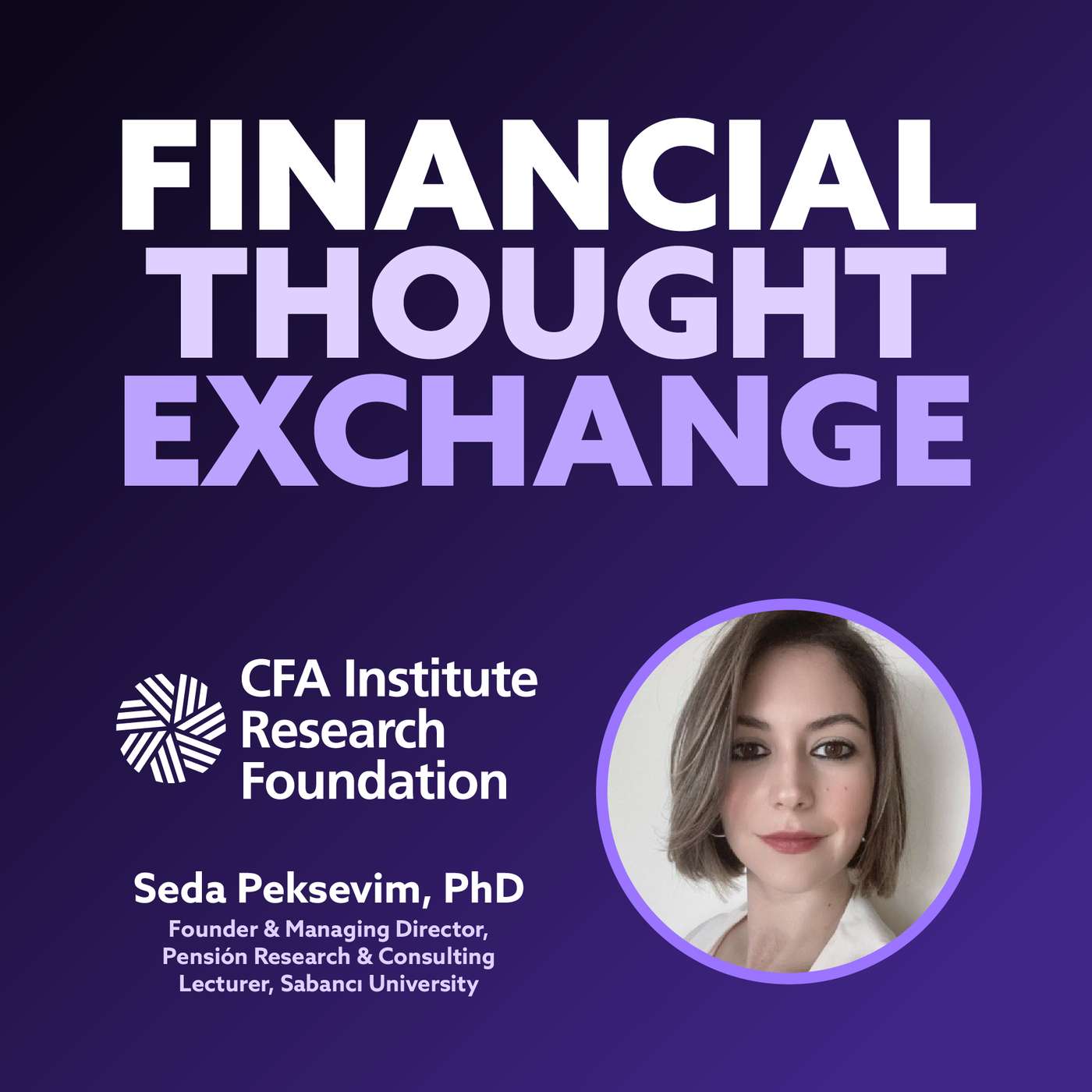 Designing Pension Systems for Emerging Markets with Seda Peksevim, PhD 30.04.2026 36minLaurence B. Siegel hosts a conversation with Seda Peksevim, PhD, Founder & Managing Director of Pensión Research & Consulting and Lecturer at Sabancı University, on how pension systems must be designed differently in emerging market economies. Dr. Peksevim explains why retirement outcomes are shaped by three interconnected challenges: behavioral biases that limit saving, unstable and risky labor income, and heightened financial market volatility. She discusses the critical role of automatic enrollment, default options, and lifecycle fund design—and why importing pension models from developed markets without adjustment can produce poor results. The discussion also explores multipillar pension systems, behavioral and technological tools to improve participation, micro‑pension innovations, and the complexities of both accumulation and decumulation under uncertainty. The central takeaway: effective pension systems must be context‑specific, behaviorally informed, and aligned with local economic realities.
 -
 Hedge Funds Explained: Risk, Returns & Due Diligence with Stephen J. Brown, PhD 02.04.2026 40minIn this episode of the Financial Thought Exchange, Lotta Moberg, CFA, PhD, speaks with Stephen J. Brown, PhD, Emeritus Professor of Finance at Monash University in Australia and at the Stern School of Business at New York University, and winner of the CFA Institute Research Foundation 2025 James R. Vertin Research Award. Brown discusses the origins of hedge funds, their role as liquidity providers, and why their performance often disappoints relative to public markets. He explains how hedge fund risk differs from traditional market risk, the limits of diversification, and why rigorous due diligence is essential. The conversation also explores his research on sensation‑seeking behavior among hedge fund managers and its implications for risk‑adjusted returns. Related research by Stephen J. Brown: • Why Hedge Funds https://www.tandfonline.com/doi/full/10.2469/faj.v72.n6.6 • Sensation Seeking and Hedge Funds https://www.jstor.org/stable/26656034
 -
 How LLMs Transform Investment Workflows: Fine-Tuning, RAG & Agents with Francesco Fabozzi 12.03.2026 42minIn Part 2, Francesco Fabozzi, PhD—Managing Editor of the Journal of Financial Data Science—joins host Lotta Moberg, CFA, PhD, to explore how modern NLP and large language models are reshaping investment management. Building on the technical foundations from Part 1, this episode turns to real-world applications: when to fine‑tune models versus rely on prompt engineering, how retrieval‑augmented generation (RAG) keeps models current with fast‑changing financial information, and why agentic systems are emerging as powerful tools for research automation. Fabozzi explains practical use cases ranging from sentiment‑driven return prediction to efficient knowledge‑distillation workflows, research assistants that read earnings reports, and coding agents that help back‑test investment ideas. The discussion closes with a look at where innovation is headed, including the potential of "general price transformers" for market forecasting. This episode is essential for anyone applying AI within investment processes.
 -
 How NLP Evolved: From Word Counts to Transformers with Francesco Fabozzi, PhD 05.03.2026 30minFrancesco Fabozzi, PhD, Managing Editor of the Journal of Financial Data Science, joins Lotta Moberg, CFA, PhD to unpack how natural language processing matured into the powerful tool it is today. The discussion traces early finance‑focused techniques—dictionary counts, sentiment word lists, and sparse document‑term matrices, along with their limits around context and negation. Fabozzi then explains how neural networks introduced embeddings and contextual meaning, paving the way for recurrent models and eventually transformer architectures. He breaks down how self‑attention, encoder–decoder designs, and decoder‑only LLMs transformed language understanding and made large‑scale modeling feasible. This episode lays the groundwork for understanding how modern NLP models interpret financial text. Look for Part 2, where the conversation turns to practical applications in investment management.
 -
 Future Quantum Finance Applications & Risks with Oswaldo Zapata, PhD 10.02.2026 28minIn the concluding episode, Lotta Moberg, CFA, PhD and Oswaldo Zapata, PhD look toward the future of quantum computing in finance. They discuss potential high‑value applications such as optimization, option pricing, machine learning, and large‑scale simulations. Zapata also highlights the cyber‑security implications of quantum technologies, including the threat of breaking RSA encryption and the urgency of adopting quantum‑safe protocols. The conversation covers industry readiness, from hedge fund research to major institutions investing in quantum capabilities, as well as the emerging need for "quantum‑quants." This episode provides a forward‑looking view of how quantum computing may reshape financial services, risk management, and professional skill sets in the decade ahead. To read Oswaldo Zapata, PhD's chapter in AI in Asset Management, follow this link: https://rpc.cfainstitute.org/research/foundation/2025/chapter-9-quantum-computing-for-finance
 -
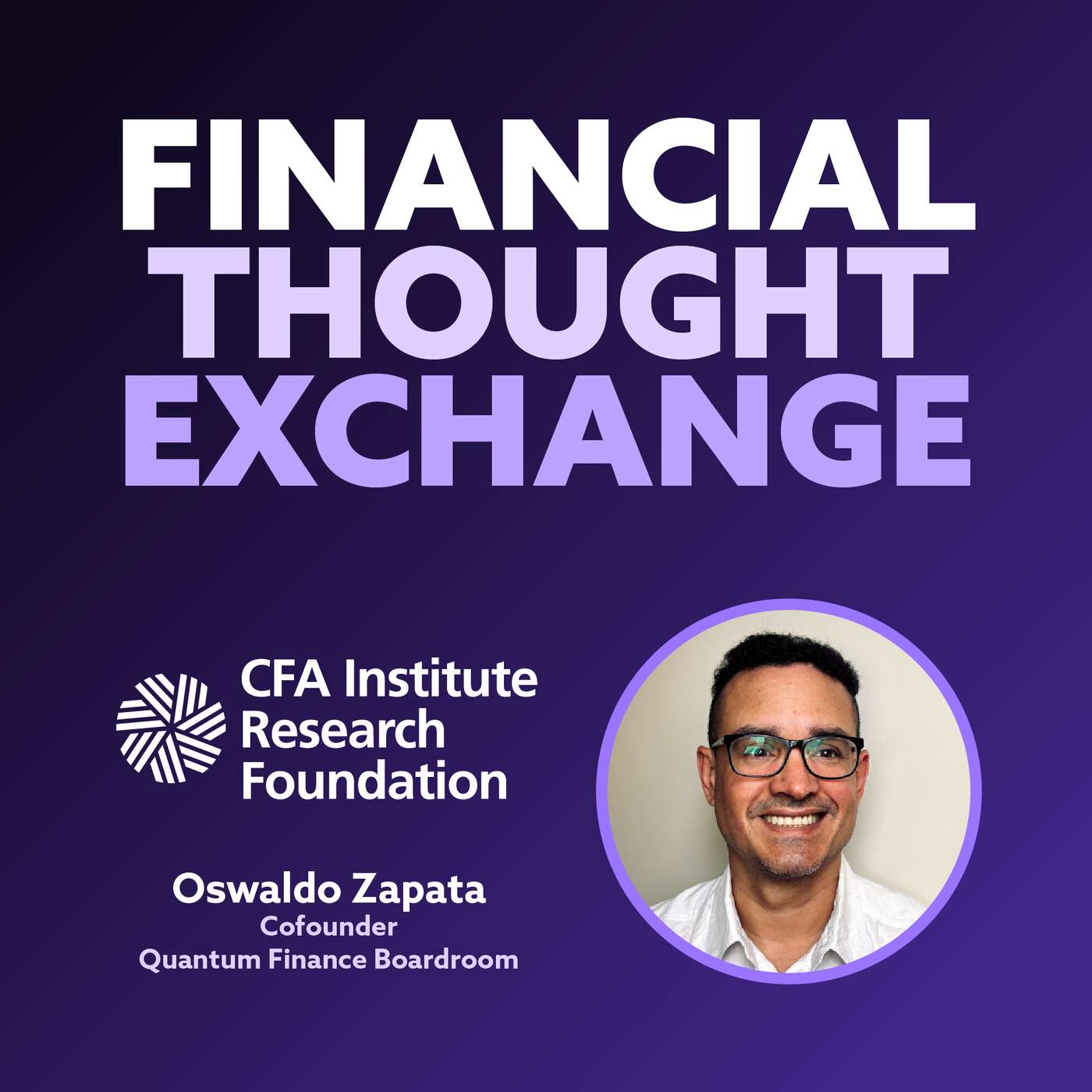 Quantum Computing Challenges in Finance with Oswaldo Zapata, PhD 03.02.2026 28minPart 2 explores the technical hurdles shaping quantum computing's readiness for financial applications. Oswaldo Zapata, PhD and host Lotta Moberg, CFA, PhD discuss qubit quality, error rates, and why today's devices remain in the "noisy intermediate‑scale quantum" (NISQ) era. The episode breaks down hybrid classical‑quantum approaches, quantum‑inspired algorithms, and the complex process of encoding classical data into quantum states. Zapata explains why portfolio optimization is a promising—but still aspirational—area for quantum speedups, and how current hardware limitations constrain real‑world deployment. This conversation offers an honest assessment of where the technology stands today and what breakthroughs are still needed before quantum tools can meaningfully impact finance. To read Oswaldo Zapata, PhD's chapter in AI in Asset Management, follow this link: https://rpc.cfainstitute.org/research/foundation/2025/chapter-9-quantum-computing-for-finance
 -
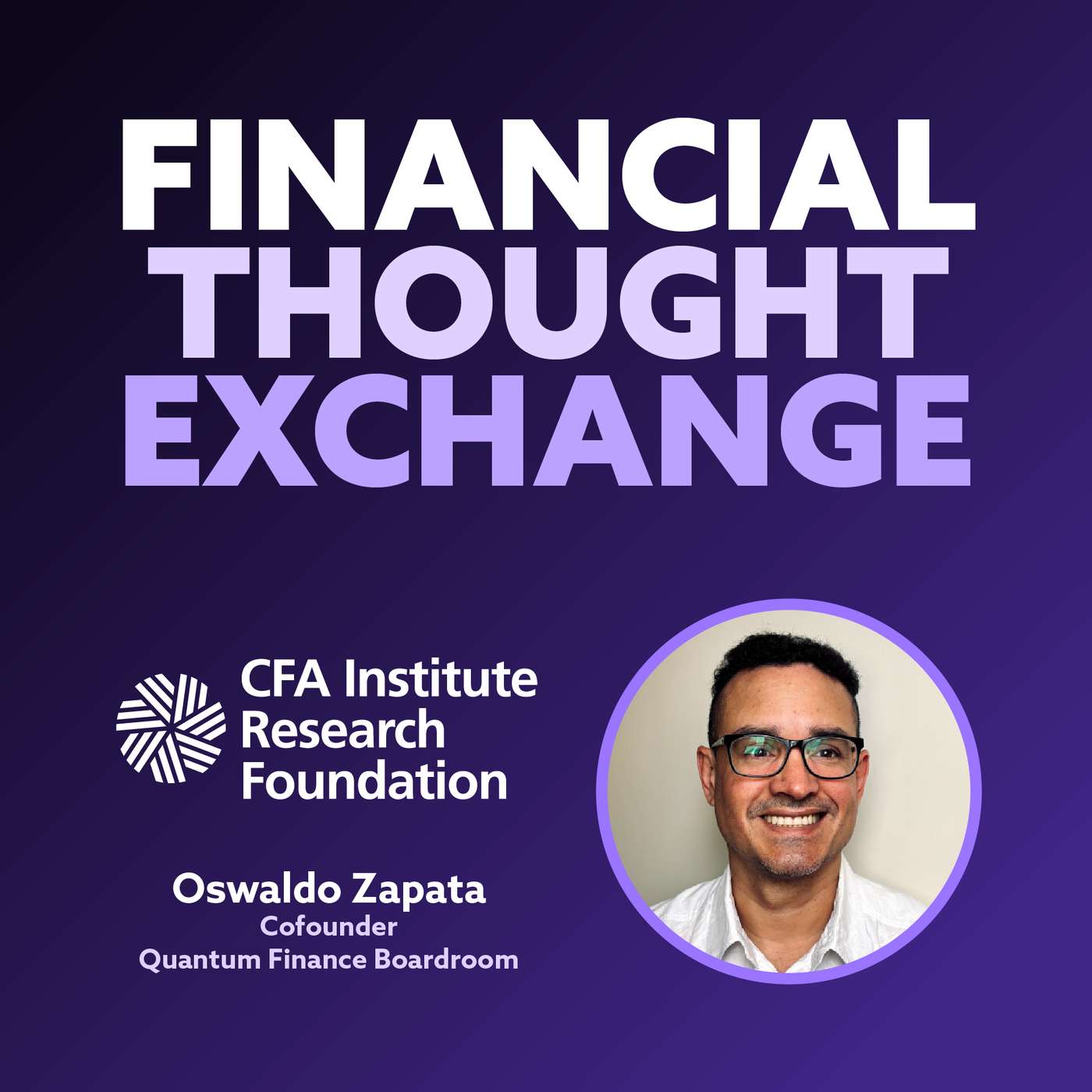 Quantum Computing Basics for Finance with Oswaldo Zapata, PhD 30.01.2026 35minIn Part 1 of this three-part interview, host Lotta Moberg, CFA, PhD, speaks with Oswaldo Zapata, PhD, co‑founder of the Quantum Finance Boardroom and contributor to the CFA Institute Research Foundation monograph AI in Asset Management. This episode introduces the fundamentals of quantum computation, outlining how qubits, superposition, and quantum gates differ from classical computing. Zapata explains why quantum systems can process information in exponentially richer ways and discusses the challenges of building reliable qubits in real‑world laboratory environments. The conversation sets the groundwork for understanding how quantum computers may eventually tackle computational problems that classical machines cannot. This episode is ideal for finance professionals seeking a clear, accessible foundation in quantum technologies before diving into applications. To read Oswaldo Zapata, PhD's chapter in AI in Asset Management, follow this link: https://rpc.cfainstitute.org/research/foundation/2025/chapter-9-quantum-computing-for-finance
 -
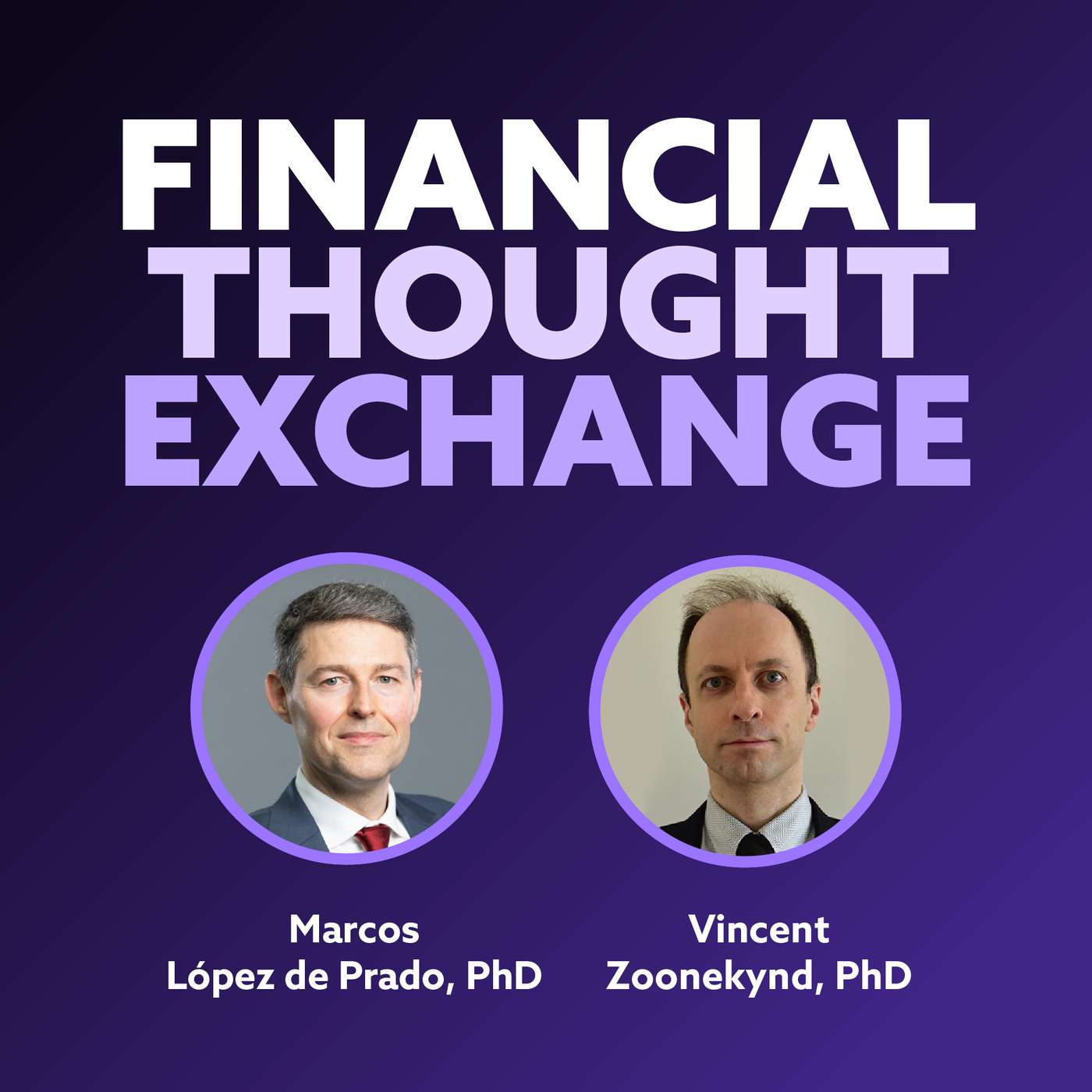 Causality in Factor Investing: Marcos López de Prado, PhD & Vincent Zoonekynd, PhD 20.01.2026 35minMarcos López de Prado, PhD and Vincent Zoonekynd, PhD, of Abu Dhabi Investment Authority discuss their Research Foundation brief, Causality and Factor Investing: A Primer. They explore why many factor models fail, the risks of confounder and collider bias, and why factor investing requires a causal—not purely statistical—approach. Learn how causal graphs and theory-driven methods can improve attribution and model design. A must-watch for quantitative researchers and finance professionals seeking deeper insights into risk premia and robust factor modeling.
 -
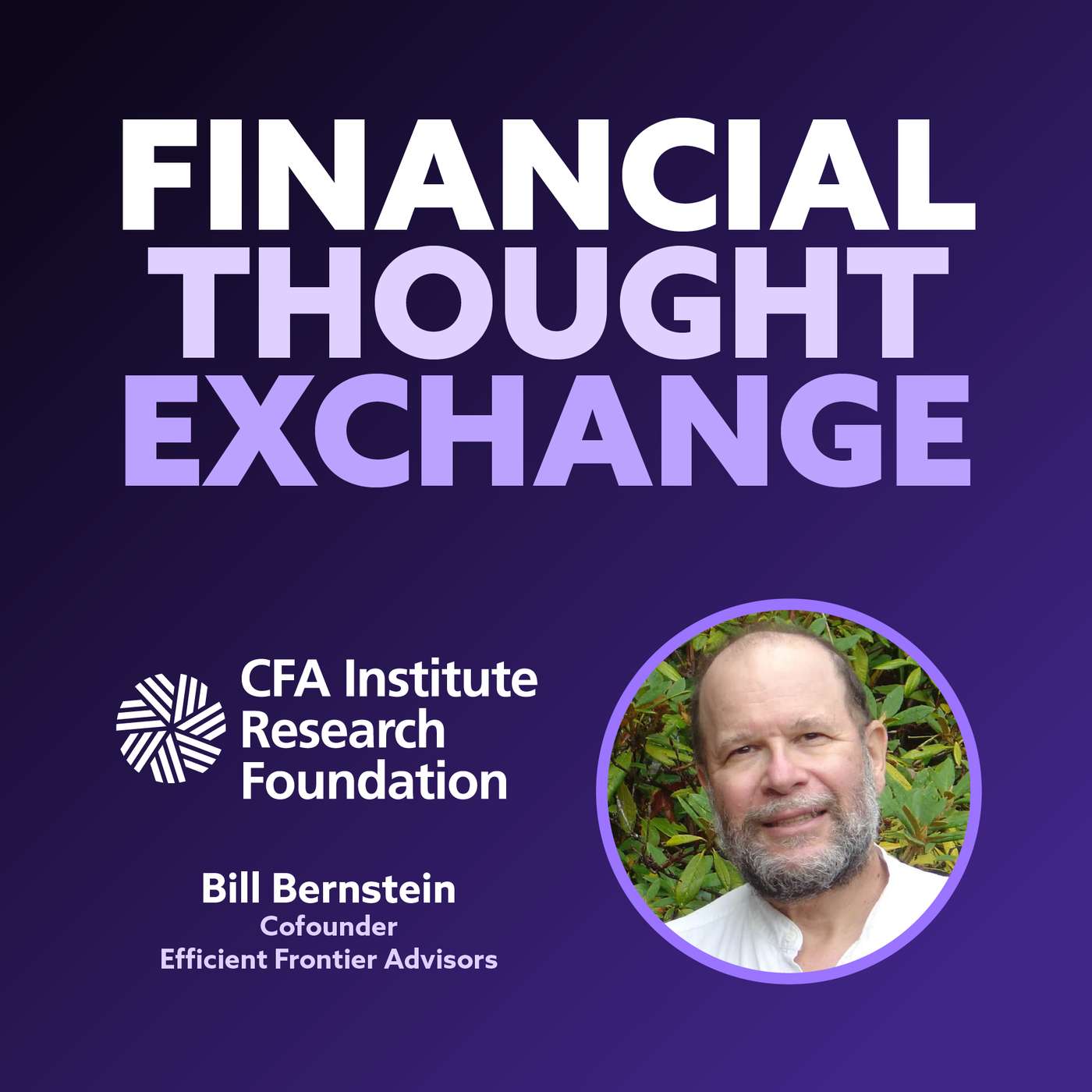 Dr. William J. Bernstein on Economic Growth, Passive Investing & Retirement Realities 11.12.2025 50minLarry Siegel speaks with Dr. William J. Bernstein—author, neurologist, and investment thinker—about the pillars of prosperity: property rights, scientific rationalism, capital markets, and infrastructure. They examine cultural influences on economic growth, the Henrich hypothesis on trust, and the future of globalization. Bernstein shares his philosophy on passive investing, liability-matching portfolios, and why TIPS matter for retirees. He also previews a new book with Ed McQuarrie that challenges assumptions about long-term stock returns. A deep dive into history, markets, and strategies for financial security.
 -
 De-risking Global Pension Systems with David Knox, PhD 13.11.2025 26minIn this episode of the Financial Thought Exchange podcast, host Lotta Moberg, CFA, PhD, speaks with David Knox, PhD, former senior partner at Mercer and author of the Research Foundation brief De-risking Global Pension Systems. Knox explores the complexities of global pension structures, the shift from defined benefit to defined contribution plans, and the growing reliance on private pensions. He discusses demographic pressures, funding challenges, and the importance of governance, regulation, and communication in securing retirement outcomes. A timely conversation for professionals navigating the future of pension policy and retirement planning.
 -
 Leadership, Storytelling & Investing: Insights from Sébastien Page, CFA 09.10.2025 30minSébastien Page, CFA, Head of Global Multi-Asset and CIO at T. Rowe Price, joins the FTE Podcast to explore the intersection of leadership psychology and investment strategy. Drawing from his books Beyond Diversification and The Psychology of Leadership, Page shares how storytelling enhances financial education, the importance of resilience in investing, and how personality traits like openness and agreeableness shape portfolio management. He also reflects on goal-induced blindness, the underrated skill of quitting, and the deeper meaning behind active management. A must-listen for finance professionals and aspiring leaders.
 -
 Custom Indexing, Tax Efficiency & Factor Investing with Ehren Stanhope, CFA 02.10.2025 25minEhren Stanhope, CFA of O'Shaughnessy Asset Management explains how custom indexing builds on direct indexing by integrating tax loss harvesting, ESG preferences, and quantitative equity factors. He discusses how platforms like Canvas enable personalized portfolio construction while maintaining benchmark alignment. Stanhope also shares insights on the implications of rising interest rates, inflation, and changing asset correlations for long-term investment strategy and risk management.
 -
 Marlena Lee on Factor Investing, Market Insights, and Smarter Diversification 18.09.2025 28minMarlena Lee, Global Head of Investment Solutions at Dimensional Fund Advisors, explains how her team bridges investment research with client needs through systematic, evidence-based approaches. Rather than chasing short-term market moves or stock-picking, Dimensional builds portfolios grounded in decades of academic research and practical data analysis. Lee highlights how the firm evaluates traditional factors—such as size, value, and profitability—while carefully testing new ideas to avoid data-mined results. She underscores the importance of looking beyond simple measures like correlations or Sharpe ratios, encouraging investors to dig deeper into underlying holdings, factor overlaps, and global perspectives. From the challenges of timing premiums to the distortions caused by mega-cap stocks, Lee emphasizes the value of strategic, long-term allocations over tactical shifts. Her remarks offer clarity on what true diversification means and how investors can navigate trade-offs between tracking error and long-term outperformance.
Līdzīgi podkasti


Populārs valstī
Šis podkasts parādās arī šo valstu podkastu topos.


