
Multi-messenger astrophysics
Astro-COLIBRI
0
Discussions around tools and discoveries in the novel domain of multi-messenger and time domain astrophysics. We'll highlight recent publications, discuss tools to facilitate observations and generally talk about the cool science behind the most violent explosions in the universe.
Epizodes
-
 Chasing Kilonovae: How LIGO-India Multiplies Multimessenger Discoveries 18.09.2026 21minIn this episode, we explore the future of multimessenger astronomy as neutron star–black hole (NSBH) mergers take center stage. While binary neutron star collisions have delivered iconic multimessenger detections, finding the faint optical kilonova counterparts of NSBH mergers remains one of astrophysics' biggest challenges. We dive into how adding LIGO-India (Aundha) to the global gravitational-wave network will transform our ability to catch these elusive optical transients using the Vera C. Rubin Observatory.Key Topics Covered:The LIGO-India Boost: How expanding from the three-detector LHV network (Livingston, Hanford, Virgo) to the four-detector LHVA network roughly doubles gravitational-wave detection rates and boosts joint optical counterpart discoveries by a factor of 2 to 5.Shrinking the Sky Maps: How LIGO-India’s long geographical baseline shrinks median 90% sky-localization areas dramatically—from ~130.7 deg² down to ~23.7 deg² for standard populations—making target search areas manageable for deep-imaging surveys.The Depth vs. Sky Coverage Dilemma: Why fixed telescope exposure times hit diminishing returns after a few hundred seconds, as longer exposures waste precious observing time on depth at the expense of sky coverage.Event-by-Event Exposure Optimization: How tailored exposure times—calculated directly from expected kilonova brightness (derived from remnant mass and distance) and sky-localization area—maximize total counterpart discoveries while keeping total time within Rubin’s 50–60 hours/year Target-of-Opportunity (ToO) budget.Operational Implementation: How observation planning toolkits (such as `GWEMOPT` and the `tilepy` platform accessible within Astro-COLIBRI) tessellate sky maps into tiles and schedule real-time follow-ups.---### Referenced Article Title: Prospects of electromagnetic follow-up of neutron star-black hole mergers in the LIGO-India era Authors: Yogita Kumari, Kanchan Soni, and Sanjit Mitra Identifier / Reference: arXiv:2609.09926v1 [astro-ph.HE]---Acknowledements: Podcast prepared with Google/Gemini Notebook. Illustration credits: LIGO India
 -
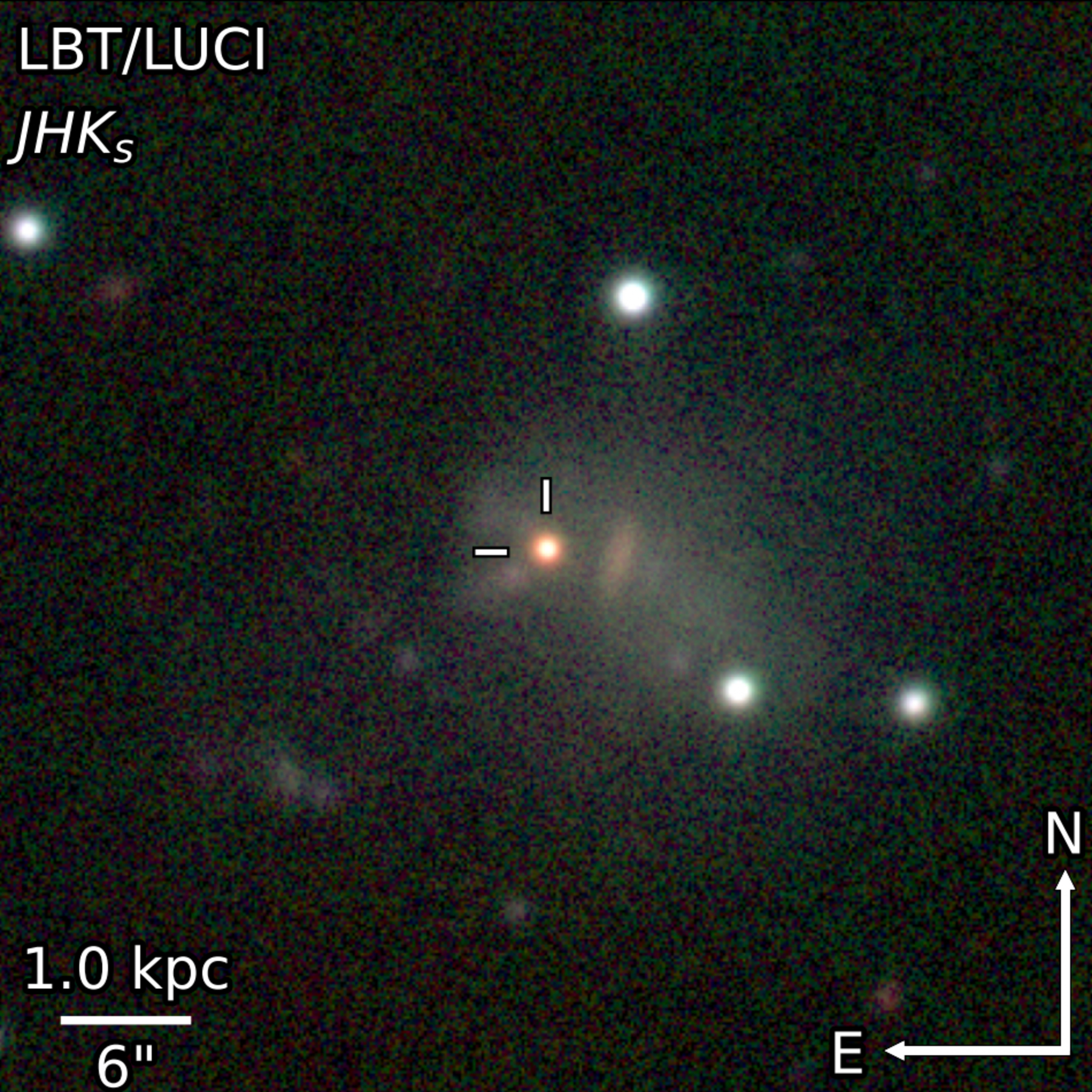 The Antimatter Explosion: Unraveling Supernova 2024afyu 14.09.2026 22minEpisode OverviewIn this episode, we explore the extraordinary discovery of SN 2024afyu, a nearby supernova located at redshift (z = 0.0085) (approx. 37.7 Mpc). Featuring an unusually slow 85-day rise to peak brightness and a peak magnitude of (M_r = -18.9 mag), this supernova challenges standard core-collapse models. We discuss how its massive synthesized Nickel and Sulfur components make SN 2024afyu one of the strongest candidates ever observed for a Pair-Instability Supernova (PISN)—a catastrophic thermonuclear explosion triggered by electron–positron pair creation in massive stellar cores.Key Topics CoveredA Slow Cosmic Burn: Why SN 2024afyu's broad light curve and 85-day rise time set it apart from typical Type II and Type IIb supernovae.Chemical Anomalies: The early emergence of forbidden calcium ([Ca II]) lines without typical oxygen emission, alongside unique optical and near-infrared sulfur emission features ([S I], [S II], and [S III]).Evaluating the Explosion Engine: How the heavy yields of intermediate-mass elements rule out standard core-collapse mechanisms, magnetar spin-down, and black hole fallback accretion.Comparing with Theoretical PISN Models: How spectral and photometric observations compare against low-redshift pair-instability models.The Host Galaxy: Insights into 2MFGC 13744, a star-forming dwarf galaxy providing the low-metallicity environment expected for massive PISN progenitors.### Article Reference Title: SN 2024afyu interpreted as a Pair Instability Supernova (arXiv preprint: SN 2024afyu: A Candidate Pair-Instability Supernova with Peculiar Evolution) Authors: P. J. Pessi, S. Barmentloo, Ł. Wyrzykowski, S. Schulze, J. Sollerman, A. Gangopadhyay, P. J. Mikołajczyk, S. Rose, K. Kotysz, C. Fremling, et al. Identifier / Publication: arXiv:2609.07931v1 / Astronomy & Astrophysics manuscript no. 24afyu---Acknowledements: Podcast prepared with Google/Gemini Notebook. Illustration credits: Pessi et al. (LBT)
 -
 NMMA + Astro-COLIBRI: Unmasking Star Explosions in Real Time 31.08.2026 20minWith modern wide-field telescopes, astronomers are facing an unprecedented deluge of data—soon peaking at up to 10 million transient alerts every single night. Among this cosmic noise, finding a rare binary neutron star merger (a kilonova) is like searching for a needle in a haystack of exploding stars. In this episode, we explore NMMA-Astro-COLIBRI, an on-demand Bayesian classification service that bridges the gap between advanced nuclear-physics modeling and real-time observer platforms. We discuss how this tool can unmask "cosmic impostors"—ordinary supernovae masquerading as rare kilonovae—in just a matter of minutes, delivering results directly to astronomers' mobile and web clients worldwide.Key Discussion PointsThe Big Data Crisis in Astronomy: How wide-field surveys like ZTF, ATLAS, and the upcoming Vera C. Rubin Observatory (LSST) are redefining optical astronomy but necessitating automated, real-time triage systems.The Threat of Cosmic Impostors: Why the rapid, early-time "shock-cooling" phase of Type IIb supernovae can easily trick traditional automated pipelines into flagging them as kilonova candidates.The Power of Bayesian Evidence: Why a simple "goodness-of-fit" (chi-squared) metric can be highly misleading, and how calculating marginal Bayesian evidences (and the Occam factor) prevents us from choosing overly complex models.Democratizing Astrophysics: How NMMA-Astro-COLIBRI runs complex nested-sampling algorithms asynchronously on servers and displays best-fit light curves instantly to both professional and amateur stargazers alike.Featured Case Study: SN 2021uglWe dive deep into the ultimate stress-test for the pipeline: SN 2021ugl, a Type IIb supernova that was initially mistaken for a kilonova. By analyzing only the first 6 days of photometry data, NMMA-Astro-COLIBRI successfully and decisively classified the event as a supernova—providing a highly accurate classification 10 days before spectroscopic confirmation was even possible. Reference ArticlePaper: "NMMA–Astro-COLIBRI: An Automated Light-Curve Supernovae Classification Service in the Multi-Survey Era", arXiv:2608.17568Astro-COLIBRI Web App: [astro-colibri.science](https://astro-colibri.science)Documentation: [nmma.live](https://nmma.live)Reproducibility Code: [github.com/astro-transients/nmma-astrocolibri-sn2021ugl](https://github.com/astro-transients/nmma-astrocolibri-sn2021ugl)Acknowledements: Podcast prepared with Google/Gemini Notebook. Illustration credits: NMMA/Astro-COLIBRI
 -
 Structuring the Transient Universe: Astro-COLIBRI’s New AI Pipeline 26.08.2026 23minIn this episode, we dive into how astronomers are leveraging state-of-the-art AI to tame the flood of unstructured data in time-domain and multi-messenger astrophysics. When cosmic transients like gamma-ray bursts or gravitational waves occur, the global science community coordinates rapid follow-up observations. Historically, these updates have been shared via GCN (Gamma-ray Coordinates Network) Circulars: free-text, human-written emails that are highly flexible but incredibly difficult to parse quickly or systematically. We explore a groundbreaking new component integrated into the Astro-COLIBRI platform. Using a hybrid NLP pipeline, the system combines deterministic regular expressions with schema-constrained Large Language Models (LLMs) to automatically convert these messy, free-text emails into structured, real-time database records. This allows observers to immediately see who has observed a target, what they measured, and how to contact them, saving critical minutes when chasing rapidly fading cosmic afterglows.Key Takeaways & HighlightsThe Parsing Problem: GCN Circulars are scientifically invaluable but are written in natural, unstructured language, reporting absolute/relative times, various optical filters, upper limits, and table layouts that traditional systems cannot parse automatically.The Hybrid Solution: The Astro-COLIBRI team settled on a unique hybrid approach—using fast, deterministic regex to generate advisory hints, and passing those hints alongside the text into a schema-constrained LLM to output clean, structured JSON.Incredible Precision: In an operational evaluation of 1,775 GCN Circulars from 2026, the pipeline completed the workflow with zero failures. A manual human audit of 210 Circulars confirmed 99.80% correctness on definite field-level decisions.Unlocking the Archive: The team ran the pipeline over the entire GCN history since 2016, turning unstructured prose into a structured, searchable database of 68,393 individual observations across 5,787 transient events.Real-World Utility: The extracted data directly drives real-time optical-afterglow context figures, automated light-curve fitting tools, and instant observer-coordination email lists on Astro-COLIBRI’s web and mobile apps.Featured Article ReferencePaper: "AI-Assisted Extraction of Follow-up Observations from GCN Circulars in Astro-COLIBRI", arXiv:2608.23270Open-Source Parser: The reusable pipeline is publicly available as the open-source Python package `astro-colibri-circular-parser`.Acknowledements: Podcast prepared with Google/Gemini Notebook. Illustration credits: Astro-COLIBRI
 -
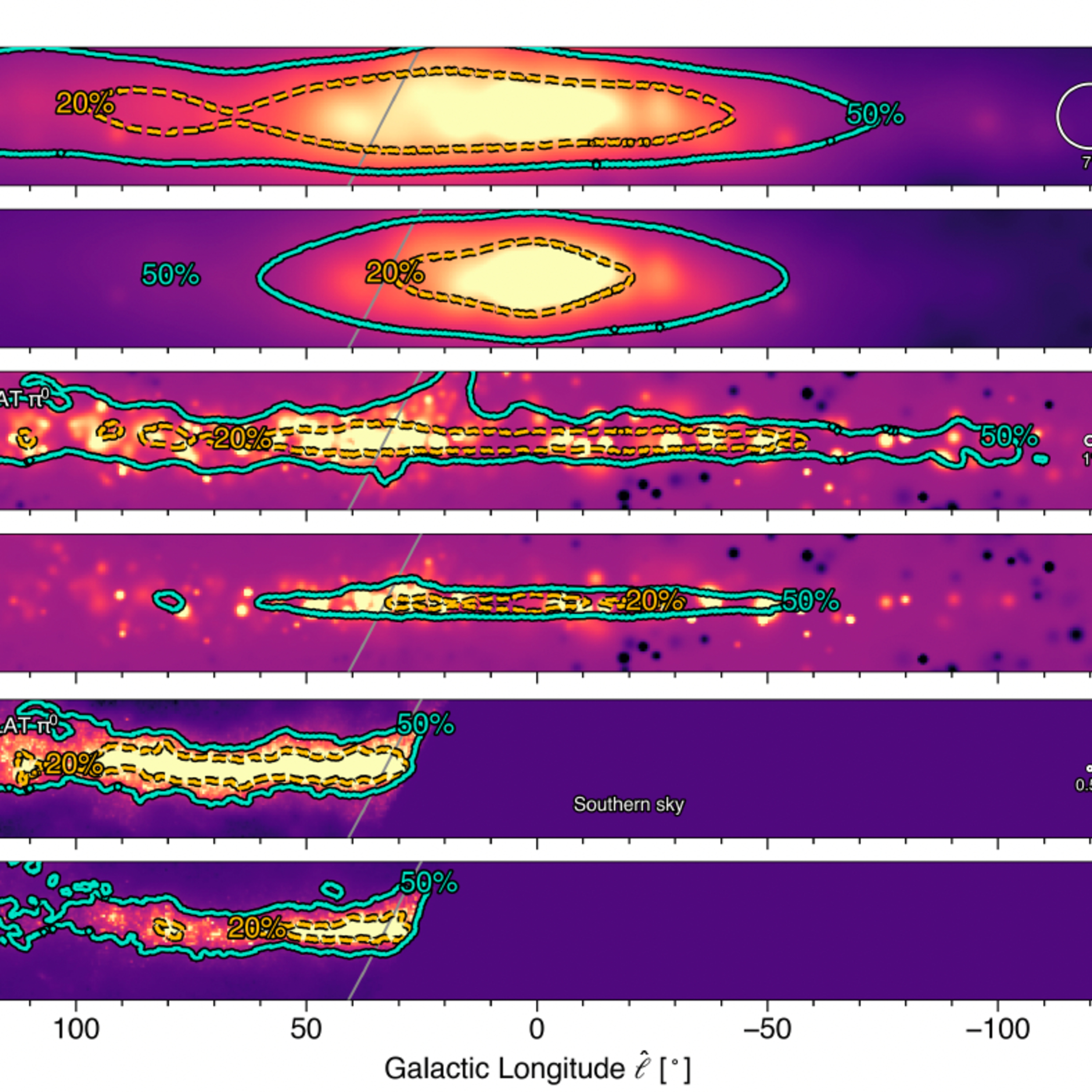 Peering Through the Ice: The Milky Way’s High-Energy Neutrino Signal 31.07.2026 20minPeering Through the Ice: The Milky Way’s High-Energy Neutrino Signal Episode Summary: In this episode, we explore a major breakthrough in astrophysics: the IceCube Neutrino Observatory has established high-energy neutrino emission from the Galactic plane of the Milky Way at a 5.7σ statistical significance.The Cosmic Ghost Particle: Neutrinos trace where cosmic rays interact with interstellar gas, preserving crucial clues about Galactic engines that accelerate particles to extreme energies.12 Years of South Pole Ice Data: Researchers analyzed 12 years of data from 5,160 optical sensors frozen a kilometer beneath the Antarctic ice.Multi-Flavour Strategy: By combining three distinct detection topologies—shower-like events, starting tracks, and through-going tracks—scientists detected a clear excess of high-energy neutrinos concentrated toward the inner region of our Galaxy.Tech Breakthrough: Key upgrades in modeling the microscopic birefringence and layer undulations of South Pole ice boosted shower directional resolution by 1.5–2 times, allowing researchers to resolve the Galactic signal with unprecedented clarity.Why It Matters: This discovery opens a new era in Galactic multi-messenger astronomy, opening new pathways to study cosmic-ray propagation and test fundamental neutrino physics across kiloparsec distances.---### Article ReferenceIceCube Collaboration, "High-energy neutrino emission from the Milky Way". Acknowledements: Podcast prepared with Google/Gemini Notebook. Illustration credits: IceCube collaboration
 -
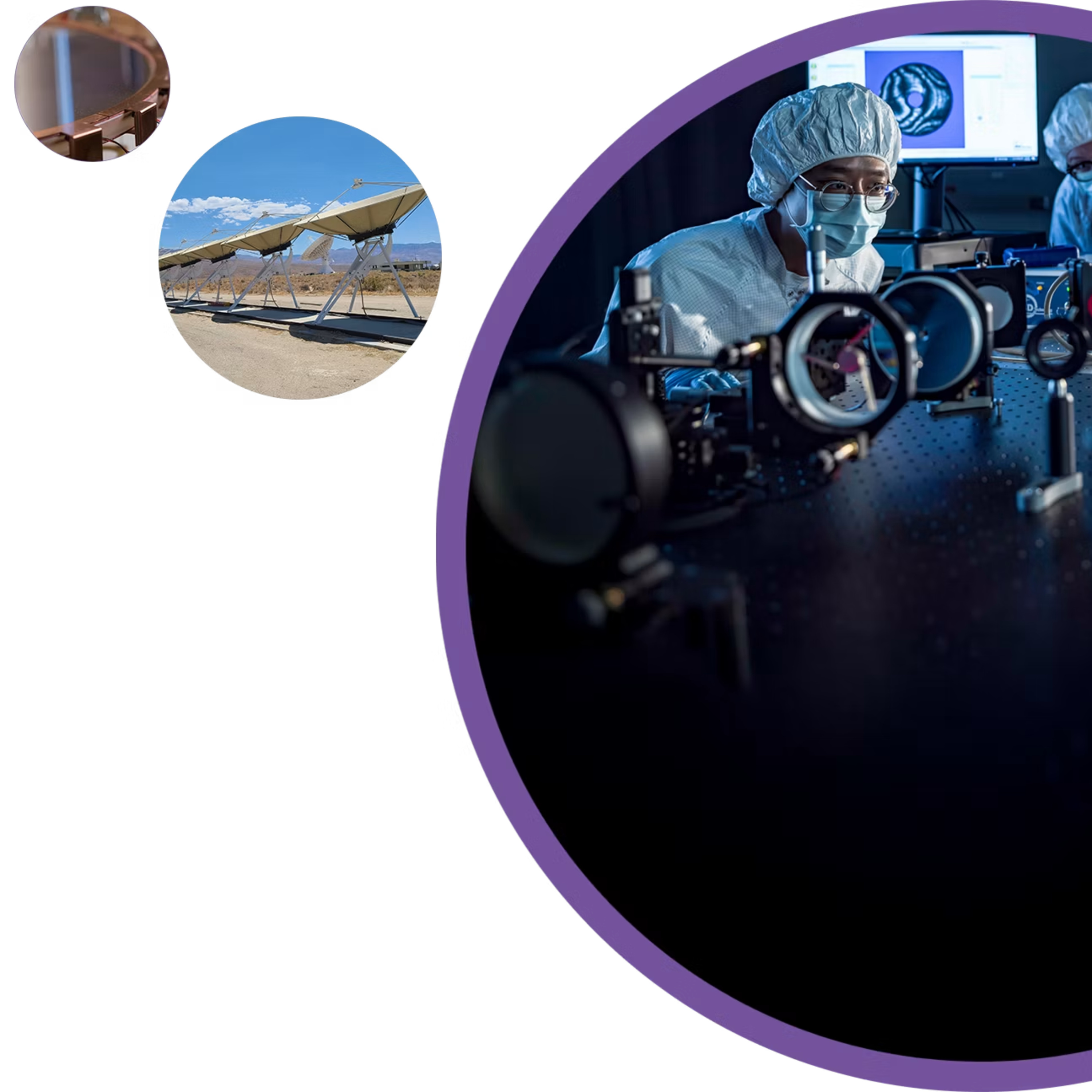 The Schmidt Observatory System unlocking the Transient Universe 27.07.2026 21minIn this episode, we dive into the Eric and Wendy Schmidt Observatory System, a groundbreaking initiative designed to pioneer a new paradigm for astronomical research through rapid development, modular designs, and a commitment to open data. We explore the system's four major next-generation facilities: the Argus Array, the Deep Synoptic Array (DSA), the Large Fiber Array Spectroscopic Telescope (LFAST), and the Lazuli Space Observatory.Our discussion highlights how these facilities act as a comprehensive end-to-end system capable of discovering and rapidly characterizing transient events. We focus on two thrilling examples of what this network will achieve: Gamma-Ray Burst (GRB) Prospects: The Argus Array (optical) and the DSA (radio) will serve as ultimate discovery engines, serendipitously detecting hundreds of GRB afterglows per year. This completely bypasses the limitations of targeted follow-up observations, finally providing scientists with an unbiased sample of these massive cosmic explosions across their entire lifecycle. Multi-Messenger Astronomy: We examine how the system will hunt for the electromagnetic counterparts to gravitational wave events, such as neutron star mergers (kilonovae). The Lazuli Space Observatory's rapid-response architecture will allow it to slew and capture its first photons in under four hours (with best-case scenarios under 90 minutes), providing critical early-time optical and near-infrared spectroscopy before these fast-fading transients disappear. Tune in to learn how this interconnected network of observatories is closing the gap between discovery and follow-up, ensuring we never miss the universe's most fleeting and energetic events!References Discussed in this Episode:Freeburn, J., et al. (2026). "Prospects for GRB Afterglow Discovery with the Eric and Wendy Schmidt Observatory System".Wevers, T., et al. (2026). "The Lazuli Space Observatory: Opportunities for time-domain and multi-messenger astronomy". Acknowledements: Podcast prepared with Google/Gemini Notebook. Illustration credits: Schmidt Sciences
 -
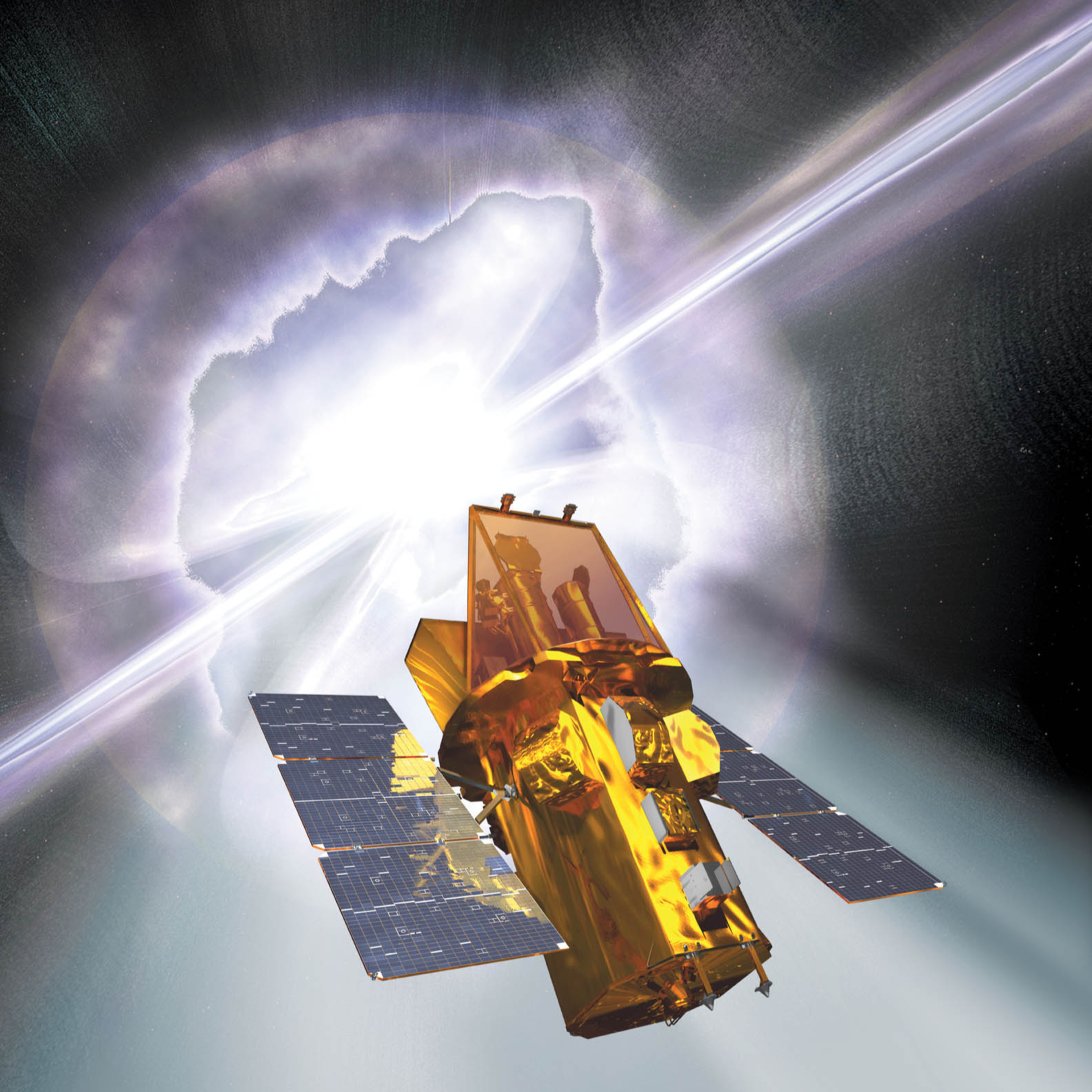 GUANO, NITRATES, and GLIMPSE: The Pipelines Powering Multi-Messenger Astronomy 20.07.2026 20minIn this episode, we dive into the cutting-edge of time-domain and multi-messenger astrophysics with a deep look at BAT-GLIMPSE, a revolutionary new open-source pipeline developed for the Neil Gehrels Swift Observatory. Historically, Swift's Burst Alert Telescope (BAT) suffered from a critical blind spot: its onboard triggering capability is intentionally disabled whenever the spacecraft is slewing (moving between targets) to prevent false alarms. With the observatory taking on more Target of Opportunity observations, the spacecraft spends more time slewing, reducing its chance to serendipitously catch Gamma-Ray Bursts (GRBs). Enter BAT-GLIMPSE (Gamma-ray Localization using Imaging and Mosaic techniques for Pointing and Slew Epochs).We explore how this fully autonomous system uses advanced coded-mask imaging and mosaic techniques to recover arcminute positions of high-energy transients even while the telescope is in motion. We also break down how GLIMPSE works in perfect synergy with two other powerful ground-based systems:GUANO (Gamma-Ray Urgent Archiver for Novel Opportunities): An automated infrastructure that commands on-demand downlinks of time-tagged event (TTE) data around external triggers.NITRATES (Non-Imaging Transient Reconstruction and Temporal Search): A highly sensitive, likelihood-based pipeline that hunts for faint, sub-threshold GRBs. While extremely powerful, NITRATES is limited to periods when the spacecraft is in a stable, stationary pointing mode.By seamlessly filling the gap left by slew intervals, BAT-GLIMPSE and NITRATES together are estimated to double the onboard arcminute-localization rate of Swift-BAT. We'll also discuss the real-world impact of GLIMPSE during the fourth LIGO-Virgo-KAGRA (LVK) observing run, where it operated in extreme low-latency to hunt for gamma-ray counterparts to gravitational waves—specifically in response to pre-merger alerts through the ULTRA-Swift project.Reference Article:Ronchini, S., Parsotan, T., DeLaunay, J., & Kennea, J. A. (2026). Swift gives a new BAT-GLIMPSE: Gamma-ray Localization using Imaging and Mosaic techniques for Pointing and Slew Epochs.Acknowledements: Podcast prepared with Google/NotebookLM. Illustration credits: Spectrum Astro
 -
 The Dynamic Radio Sky: Unveiling Transients with the SKAO 13.07.2026 19minWelcome to a deep dive into the fast-paced, explosive universe of time-domain astronomy! In this episode, we explore how the upcoming Square Kilometre Array Observatory (SKAO) will revolutionize our understanding of astrophysical transients. Operating across a massive discovery space—from coherent radio bursts lasting just microseconds to the decades-long afterglows of cosmic collisions—radio transients serve as natural laboratories for fundamental physics. We discuss the diverse menagerie of extreme events SKAO will uncover and how new automated technologies will capture the universe in action.Key Topics Discussed:Fast Radio Bursts (FRBs) & Long-Period Transients (LPTs): We explore the extremes of coherent radio emission. Discover how SKAO will track millisecond-duration extragalactic FRBs across broad frequency ranges and unveil the nature of a newly discovered class of sources—Long-Period Transients (LPTs)—which emit periodic radio bursts lasting minutes to hours and may be powered by highly-magnetized white dwarf binaries or magnetars. The Multi-Messenger Era: We unpack the synergies between SKAO and next-generation multi-messenger observatories. Learn how SKAO will hunt for the radio afterglows of binary neutron star mergers detected by 3G gravitational wave detectors, and how it will survey the localization fields of high-energy neutrinos detected by IceCube and KM3NeT to find their elusive point sources.Gamma-Ray Synergies with CTAO: A look at how SKAO will collaborate with the upcoming Cherenkov Telescope Array Observatory (CTAO). By combining radio and very-high-energy gamma-ray data, astronomers will probe particle acceleration and shocks in extreme environments, including supernovae, X-ray binaries, novae, and tidal disruption events (TDEs).Rapid-Response Triggering & Commensal Surveys: How do you catch a flash you didn't know was coming? We delve into the cutting-edge operational modes of the SKAO, including "rapid-response" systems that will automatically repoint the telescope in seconds based on automated alerts (like VOEvents). We also cover "commensal" transient pipelines, which hitch a ride on other dedicated observations to continuously search for unexpected transients in the image plane without requiring extra telescope time. References (Chapters in Advancing Astrophysics with the SKA – II):Anderson, G. E., et al. Rapid Response Triggering for Radio Transients with the SKA Observatory.Andersson, A., et al. Commensal image plane transient search methods with the SKAO.Caleb, M., Qiu, H., et al. Long-Period Transients as a new frontier in time-domain astronomy.Castignani, G., Rowell, G., et al. SKAO and Gamma-Ray Synergies.Colombo, A., et al. Gamma-ray Bursts and Kilonovae from Gravitational Wave Events.Curtin, A. P., et al. The Astrophysics of Fast Radio Bursts.Miller-Jones, J. C. A., et al. Unveiling Radio Transients with SKAO Telescopes.Rösch, F., et al. A Census of Variable and Transient Radio Sources Within High-Energy Neutrino Fields.Acknowledements: Podcast prepared with Google/NotebookLM. Illustration credits: SKAO
 -
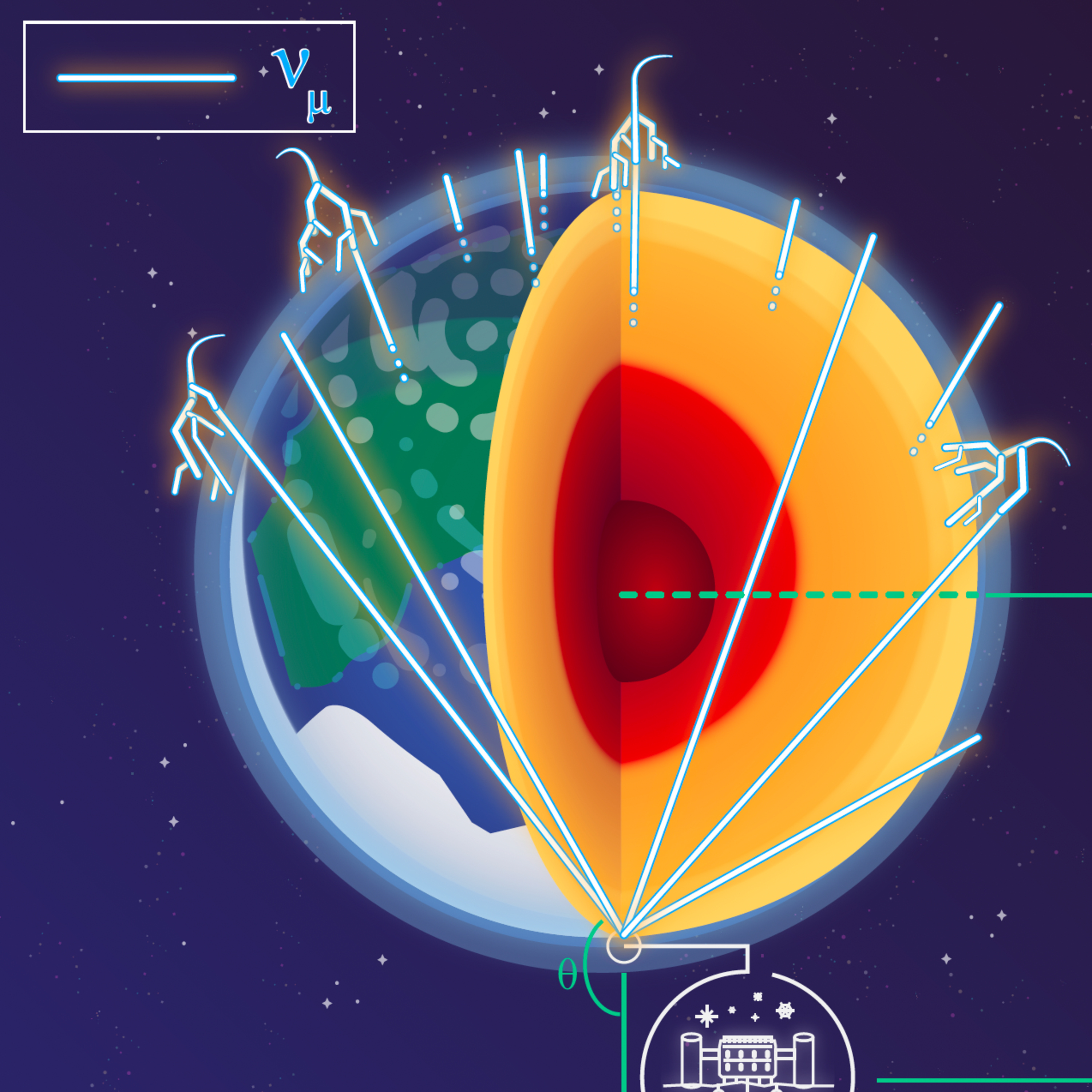 X-Raying the Earth: Neutrino Tomography at the South Pole 08.07.2026 23minWelcome back to the podcast! Today, we are exploring a groundbreaking new way scientists are looking deep inside our planet. For a century, our understanding of the Earth's interior has relied almost entirely on seismic waves and gravity. But what if we could use cosmic "ghost particles" to scan the Earth instead? In this episode, we dive into a fascinating new study from the IceCube Neutrino Observatory located deep in the glacial ice at the South Pole. Using 10.7 years of data, scientists have successfully mapped the Earth's radial density profile using high-energy muon neutrinos. We discuss how these neutrinos, which usually pass right through matter undetected, become partially blocked by the Earth at extremely high energies (above ~10 TeV). By measuring how these particles are absorbed as they travel through different layers of the planet at different angles, researchers can essentially take a tomographic scan of the Earth's interior using the weak nuclear force. Tune in to hear how this cutting-edge method has been used to independently calculate the Earth's mass and polar moment of inertia, yielding results that are completely consistent with traditional seismology and the Preliminary Reference Earth Model (PREM). We also discuss what this means for the future of planetary science and how next-generation neutrino telescopes will bring even sharper resolution to the hidden layers beneath our feet.Reference mentioned in this episode: Abbasi, R., et al. (IceCube Collaboration). "High-Energy Neutrino Tomography of the Earth’s Interior with IceCube." arXiv:2607.02644v1 (July 2026).Acknowledements: Podcast prepared with Google/NotebookLM. Illustration credits: IceCube Collaboration
 -
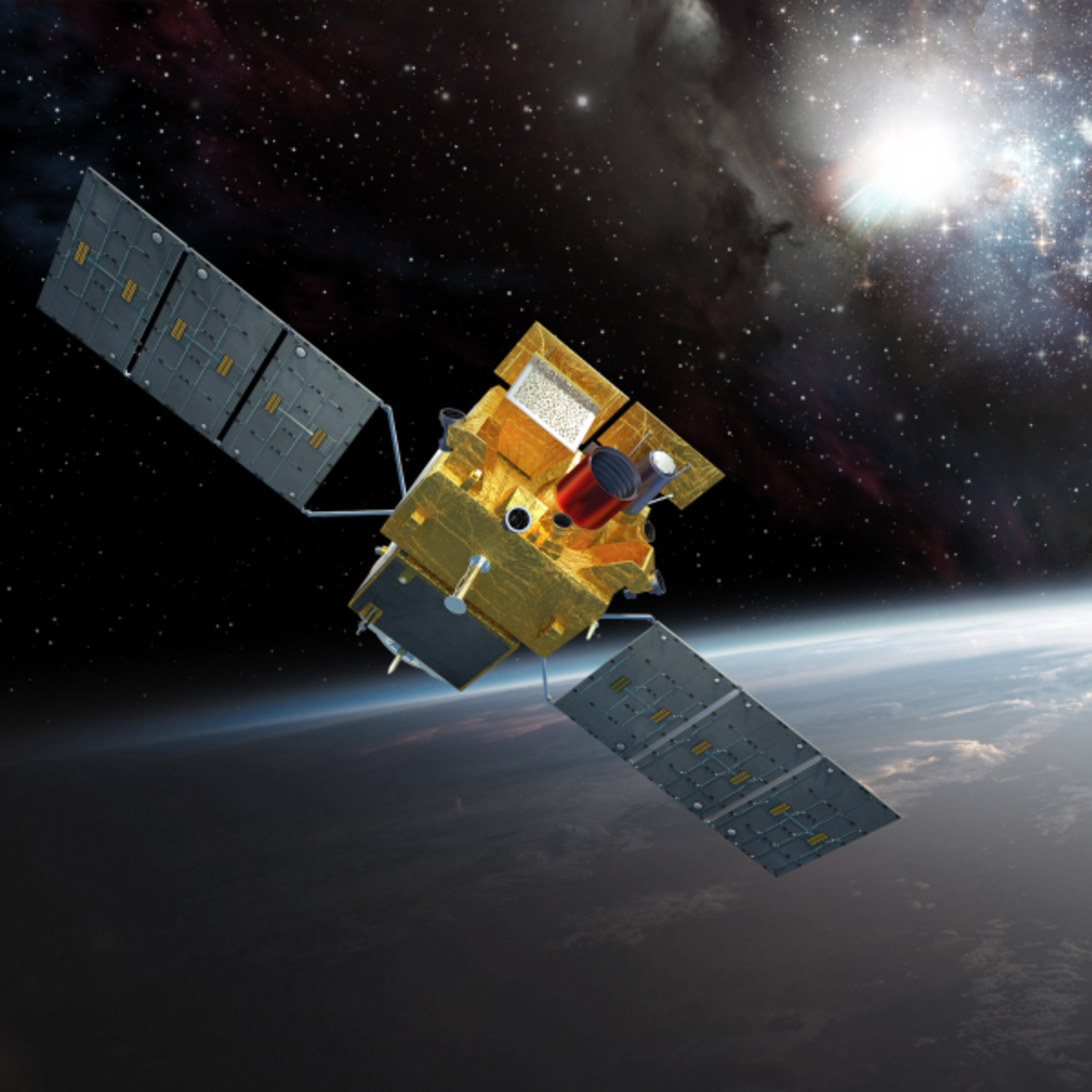 SVOM's First Year: From Gamma-Ray Bursts to Blazars 06.07.2026 20minIn this episode, we dive into the exciting early results from the SVOM (Space-based multi-band astronomical Variable Objects Monitor) mission, which launched in June 2024. Originally designed to hunt for Gamma-Ray Bursts (GRBs), SVOM has proven to be a highly versatile powerhouse for all kinds of high-energy transient phenomena. We discuss its first batch of discoveries, from ancient stellar explosions at the edge of the universe to the serendipitous detections of black holes, flaring stars, and active galaxies!Key Topics Discussed:The Hunt for GRBs: We look at how SVOM successfully detected 86 GRBs in its first 9.3 months. We explore how its ECLAIRs and Gamma-Ray Monitor (GRM) instruments work together to capture everything from classical long GRBs to soft X-ray flashes and short GRBs tied to neutron star mergers. Probing the Distant Universe: A special spotlight on GRB250314A, a massive star explosion detected at a redshift of roughly 7.3. This incredible detection allows astronomers to peer back into the universe's epoch of reionization.The Observatory Science Program: We explore SVOM's secondary objective, which focuses on tracking non-GRB events. This program has already yielded hundreds of detections, primarily consisting of low-mass and high-mass X-ray binaries.Serendipitous Discoveries: Hear about SVOM's fascinating unexpected catches, like an X-ray outburst from the blazar 1ES 1959+650, burst oscillations from the neutron star binary 4U 0614+091, and even hard X-ray stellar flares from the binary star system HD 22468.Multi-Wavelength Synergy: We discuss how SVOM's onboard suite of instruments—which include wide-field coded-mask imagers and narrow-field X-ray and visible telescopes—work together. We also touch on how SVOM collaborates with other observatories like Swift and Einstein Probe to provide a rapid, comprehensive view of the high-energy sky.References / Mentioned Articles:Daigne, F., et al. (2026). First Gamma-Ray Burst Observations with SVOM. Research in Astronomy and Astrophysics. Coleiro, A., et al. (2026). Early results from the SVOM Observatory Science program. Research in Astronomy and Astrophysics.Acknowledements: Podcast prepared with Google/NotebookLM. Illustration credits: CNES
 -
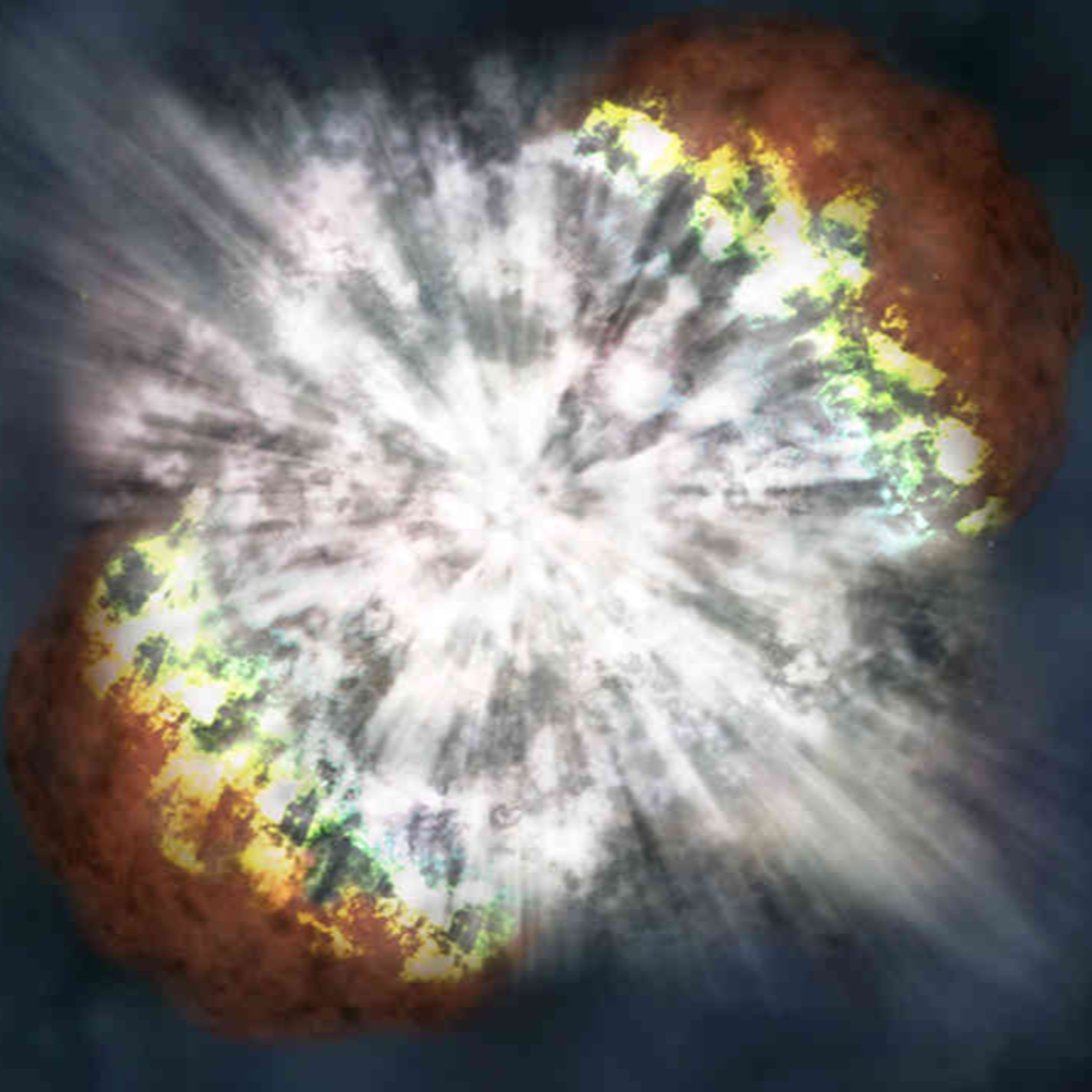 SN 2024jlc: Bridging the Gap Between Supernova Classes 03.07.2026 20minIn this episode, we dive into the fascinating discovery of SN 2024jlc, one of the closest and least luminous super-luminous supernovae (SLSNe) ever found. We explore how this extraordinary event is challenging our understanding of stellar explosions by serving as a "bridge" between classic stripped-envelope supernovae (SE-SNe) and their super-luminous cousins. We unpack the massive multi-wavelength campaign used to study it—spanning from ultraviolet and optical light to X-rays and even high-energy gamma-rays. Key Topics Covered:Defying Classification: Why SN 2024jlc's exceptionally low peak luminosity and rare helium signatures make it a unique SLSN-Ib, defying standard stellar explosion models.The Powering Engine Debate: What is driving this massive explosion? We discuss the two leading theories: the radioactive decay and interaction with a circumstellar medium (CSM) versus the spin-down of a rapidly rotating young magnetar. Whispers of Gamma-Rays: We look at the intriguing, tentative hint of a gamma-ray signal picked up by the Fermi-LAT space telescope, and what it might mean for the hidden central engine powering the supernova.The Future of Supernova Hunting: How upcoming surveys like the Vera C. Rubin Observatory's LSST will help uncover more of these "missing link" transitional objects in the cosmos. Article Reference Discussed in this Episode:Simongini, A., et al. (2026). Bridging the gap between SLSNe and SE-SNe: Multi-wavelength analysis of the SLSN-Ib SN 2024jlc. Astronomy & Astrophysics.Acknowledements: Podcast prepared with Google/NotebookLM. Illustration credits: NASA
 -
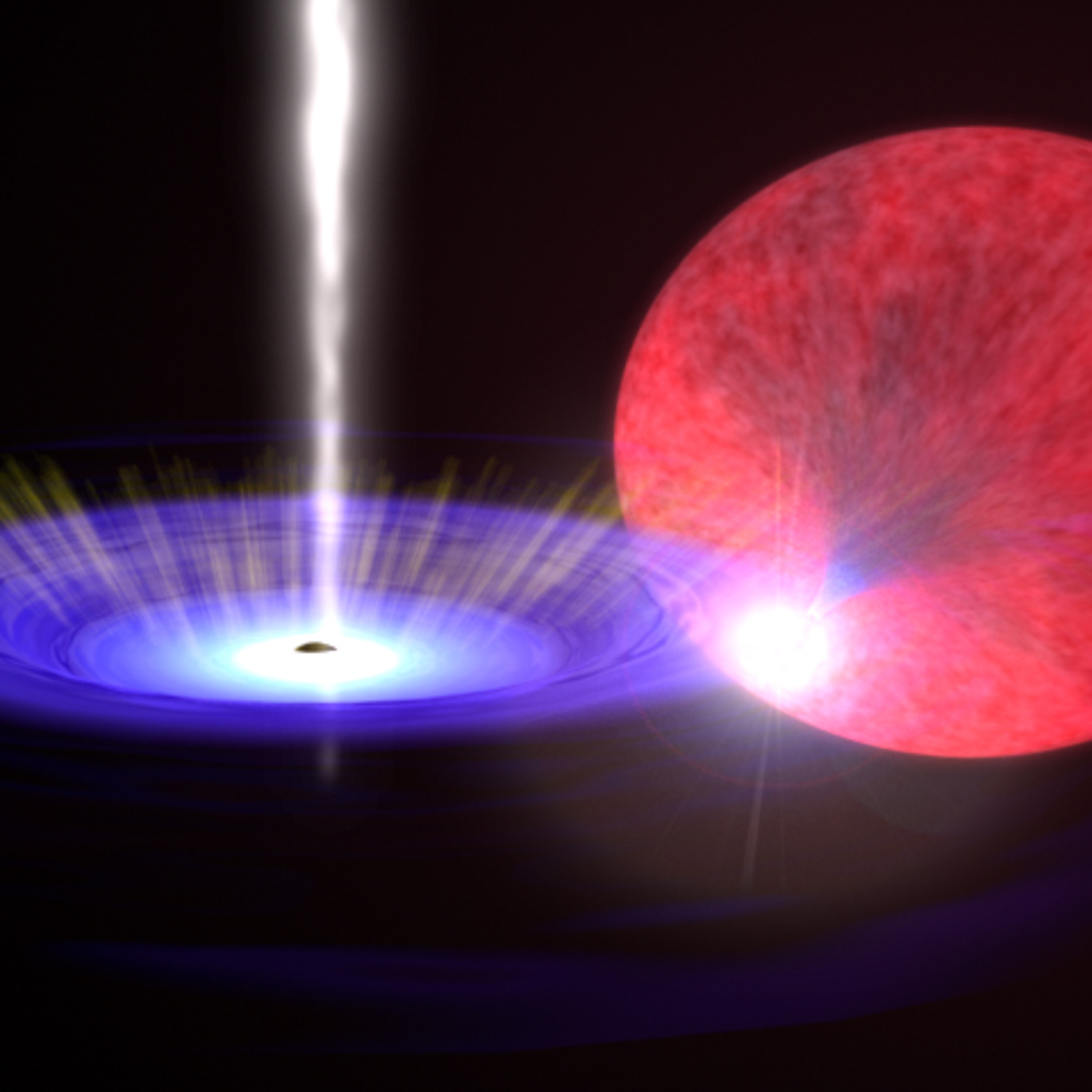 Cosmic Accelerators: Unlocking the Secrets of Microquasar GRS 1915+105 26.06.2026 20minIn this episode, we dive into the extreme and fascinating world of microquasars—binary systems where a compact object, like a black hole, feeds off a companion star and launches powerful, relativistic jets. Our spotlight is on GRS 1915+105, one of the most dynamic and powerful microquasars known in the Milky Way. Recent groundbreaking observations from the LHAASO and Fermi-LAT observatories have mapped broadband gamma-ray emissions from this system, revealing that it operates as an extreme "PeVatron"—an accelerator capable of pushing particles to multi-PeV (peta-electron volt) energies. We break down the evidence pointing to a "hadronic scenario," which suggests that these mind-boggling energies are produced when highly accelerated protons from the jet smash into the dense ambient gas surrounding the system. Join us as we discuss how this discovery proves that microquasars are exceptionally efficient particle accelerators and how they might be the missing link to understanding the origins of the most energetic cosmic rays in our galaxy.Key Takeaways:What is a Microquasar? A look at the anatomy of GRS 1915+105, a system featuring a black hole pulling material from a small K-type star and firing off jets at 80% the speed of light.The Power of LHAASO & Fermi-LAT: How a joint analysis of 4 years of LHAASO data and 17 years of Fermi-LAT data finally detected persistent gamma-ray emissions from this source.The Hadronic Accelerator: Why the shifted centroid of the gamma-ray emission suggests that protons (rather than electrons) are being accelerated by the jet's mechanical power and colliding with surrounding interstellar gas. Solving a Galactic Mystery: How just a handful of microquasars like GRS 1915+105 could be responsible for supplying the entire Milky Way with PeV-level cosmic rays.Reference:Cao, Z., Aharonian, F., Bai, Y.X., et al. (The LHAASO Collaboration). "Extreme PeV accelerator associated with GRS 1915+105." (Preprint: 2606.25054v1).Acknowledements: Podcast prepared with Google/NotebookLM. Illustration credits: NASA/CXC/A.Hobart
 -
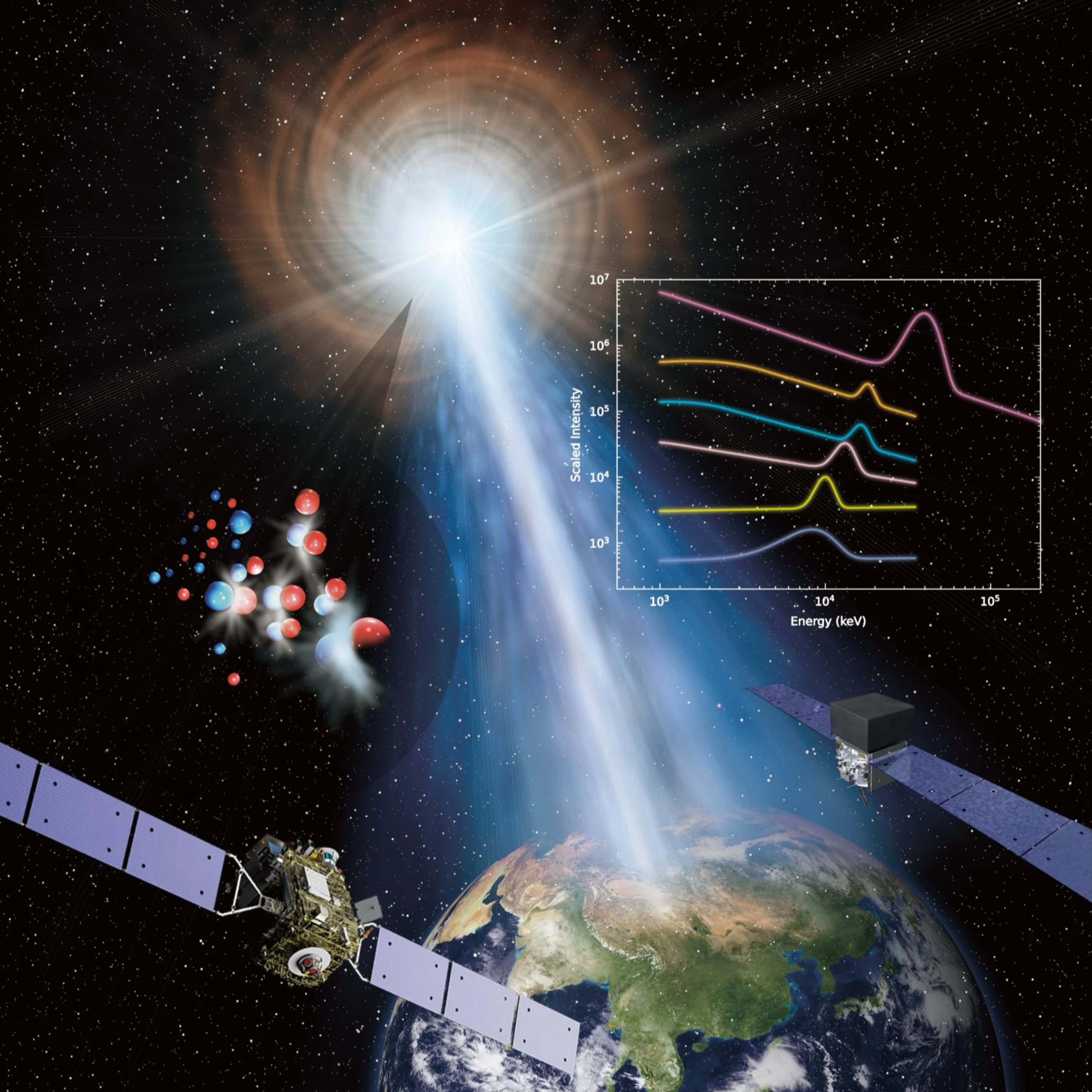 Echoes of Annihilation: Solving the 10 MeV Mystery of GRB 221009A 22.06.2026 22minIn this episode, we dive into the fascinating astrophysics surrounding GRB 221009A, the brightest gamma-ray burst observed to date. While its sheer energy is staggering, we focus on an even more intriguing puzzle: an unprecedented, narrow emission line at around 10 MeV discovered shortly after the burst's brightest peak. We explore a groundbreaking new study that explains this 10 MeV line as the result of a massive annihilation of electron-positron pairs. We break down the proposed scenario in which the GRB's precursor blastwave was illuminated by the burst's main event, triggering copious pair creation that resulted in a "pair bubble bursting". Because this annihilation happened so quickly as the shell expanded relativistically, the resulting line evolution is dominated by what astrophysicists call the high-latitude emission (HLE) effect.Furthermore, we examine what this means for the actual star that caused the burst. To make this model work, the progenitor star must have been surrounded by an incredibly dense circum-stellar medium (CSM) extending out to a few $10^{15}$ cm, reminiscent of the dense environments found around Type IIn supernovae. Finally, we'll connect these findings to the sharp rise in the TeV afterglow observed by the LHAASO observatory, which the researchers attribute to the main ejecta colliding with this pair-enriched blastwave.Key Takeaways: The 10 MeV Emission Line: How high-latitude emission from a geometrically thin, relativistically expanding shell explains this rare spectral feature.Pair Production and Annihilation: The mechanism where gamma-rays from the main event interact with a precursor blastwave to create extreme numbers of electron-positron pairs.Clues About the Progenitor Star: Why the presence of a dense circum-stellar medium suggests the dying star underwent an intense mass-loss phase in the years just prior to its explosion.Solving the LHAASO Afterglow Mystery: How the collision between the main event ejecta and the pair-loaded blastwave perfectly accounts for the sudden, sharp rise in the TeV afterglow.Episode Reference: Salafia, O. S., Celotti, A., Sobacchi, E., Nava, L., Oganesyan, G., Ghirlanda, G., Boula, S., Ravasio, M. E., & Ghisellini, G. (2026). A self-consistent explanation of the MeV line in GRB 221009A unveils a dense circum-stellar medium. Astronomy & Astrophysics.Acknowledements: Podcast prepared with Google/NotebookLM. Illustration credits: Jingchuan Yu
 -
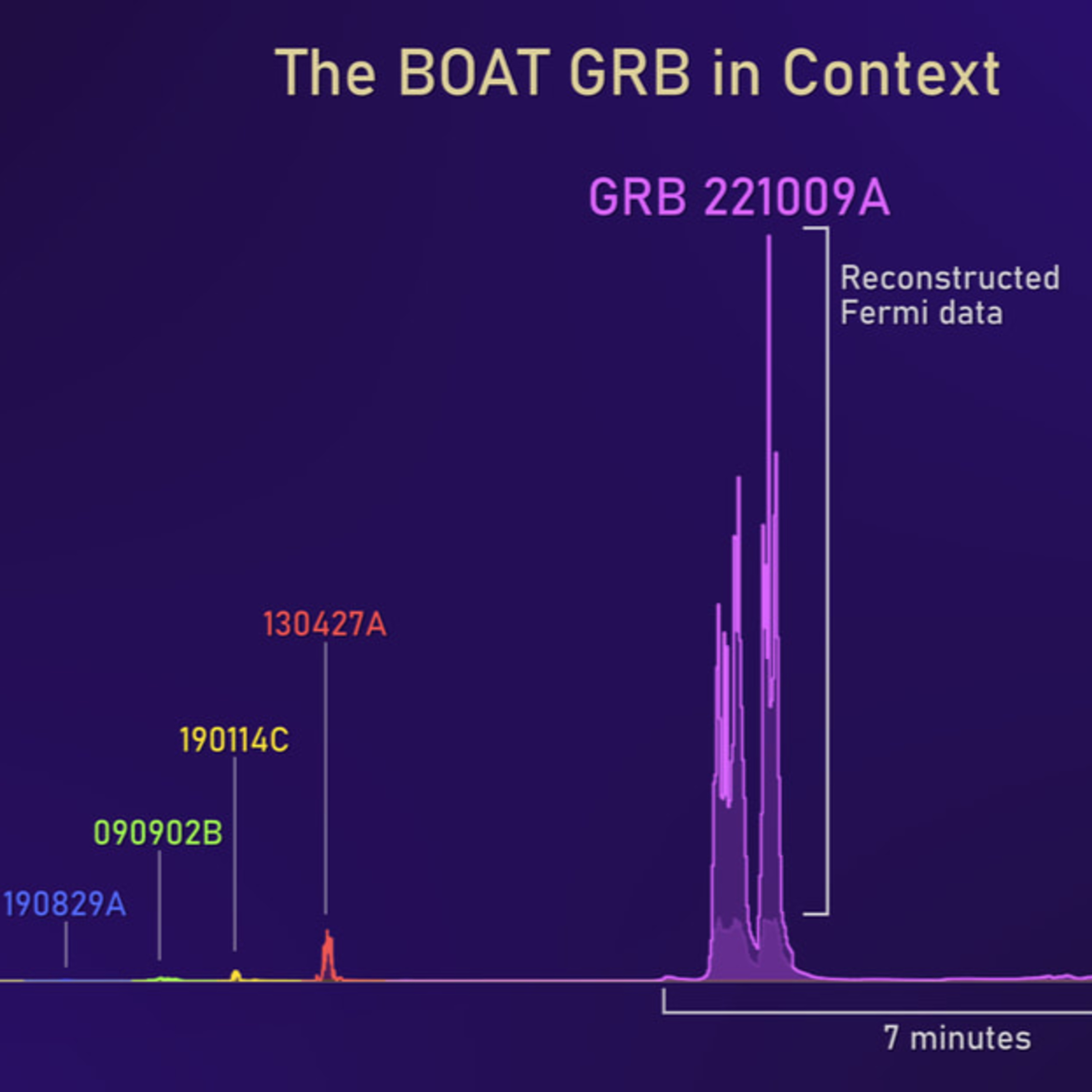 Decoding the BOAT: GRB 221009A and the Hunt for High-Energy Neutrinos 16.06.2026 20minIn this episode, we dive into the astrophysics behind GRB 221009A, an event widely known as the Brightest-Of-All-Time (BOAT) gamma-ray burst. Detected in October 2022, this extraordinary explosion shattered records by producing ultra-high-energy photons exceeding 10 TeV. We discuss a recent multi-messenger study that models the burst's very-high-energy (VHE) afterglow using a Gaussian structured jet expanding into an interstellar medium. We explore how this smooth, angular jet structure explains the extreme TeV output observed at a mildly off-axis viewing angle, cleanly resolving the "energy crisis" that standard uniform (top-hat) jet models face. Finally, we tackle the mystery of the missing neutrinos. Despite the immense energy of the BOAT, observatories like IceCube have not detected any coincident neutrinos. We break down the calculations for photo-hadronic ($p\gamma$) neutrino production and explain why the expected flux still falls below the sensitivity limits of even the next generation of detectors, like IceCube Gen2 and GRAND200k. Key Takeaways:The BOAT GRB: GRB 221009A was a remarkably luminous and relatively nearby event, offering an unprecedented opportunity to test emission models and ultra-high-energy cosmic ray acceleration.The Power of a Gaussian Jet: By using a Gaussian structured jet model, scientists can accurately reproduce the burst's gradual light curve steepening and immense brightness without requiring physically unrealistic energy budgets. A Mildly Off-Axis View: The study reveals that the optimal way to interpret the data is a mildly off-axis viewing geometry, which allows the observer to receive intense early-time emission from the jet's core.Neutrino Non-Detection Explained: Mathematical models of the photo-pion decay channel show that even under highly optimistic microphysical parameters, the predicted muon neutrino events remain below current and future detection limits, confirming that the null results from IceCube are consistent with the physics.Reference to the Article Discussed:Mondal, T., Razzaque, S., Joshi, J. C., Majumder, S., & Bose, D. (2026). Multi messenger study of GRB 221009A with VHE gamma-ray and neutrino Afterglow from a Gaussian structured jet. Journal of High Energy Astrophysics, 53, 100636.Acknowledements: Podcast prepared with Google/NotebookLM. Illustration credits: NASA's Goddard Space Flight Center and Adam Goldstein (USRA)
 -
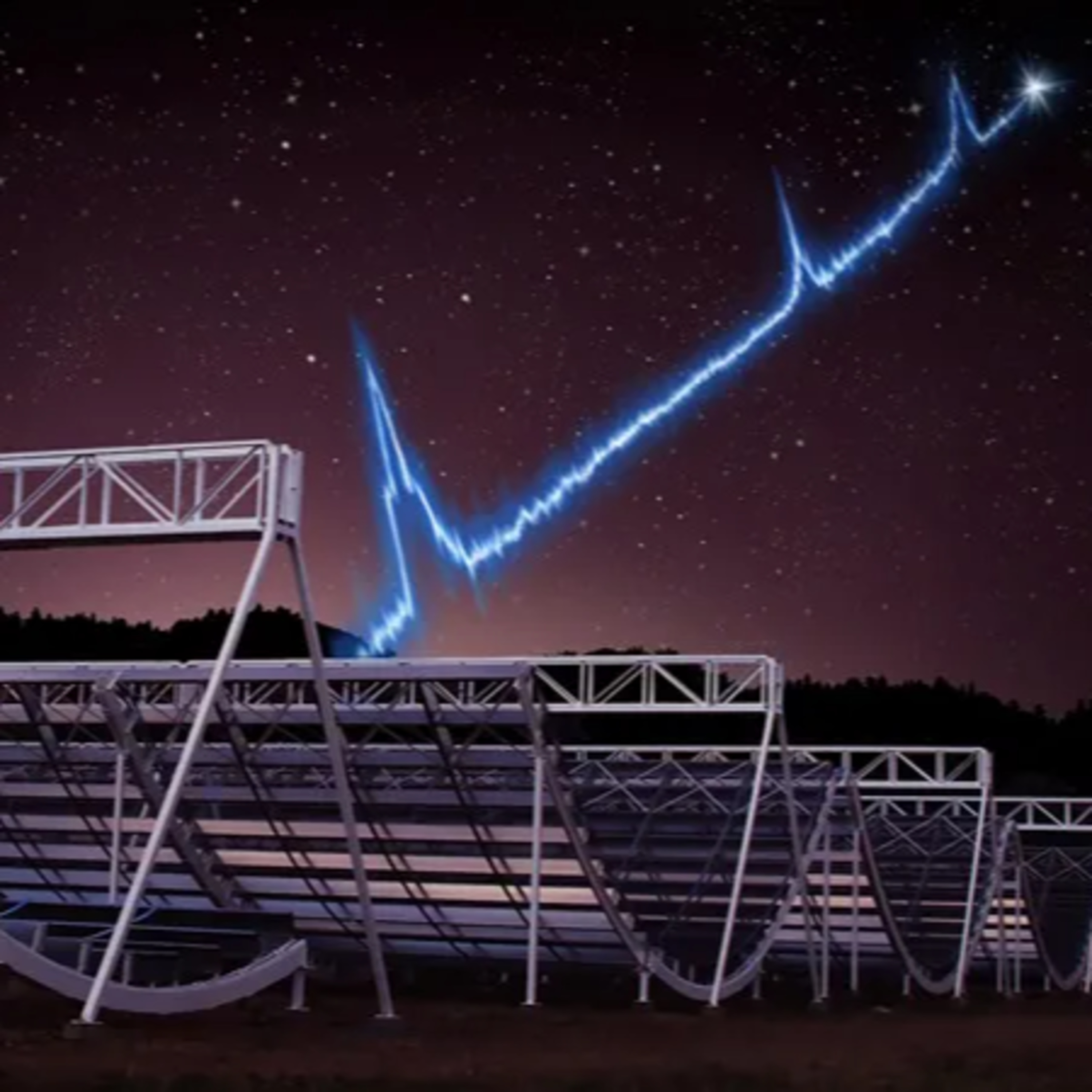 FRB 20191221A or "the telescope that hallucinated in the rain" 10.06.2026 20minIn 2022, the astronomy community was buzzing about FRB 20191221A, an unusual Fast Radio Burst that made headlines for exhibiting a highly significant 217-millisecond periodicity. But what if this groundbreaking extragalactic signal actually originated from our own cosmic backyard? In today's episode, we dive into a fascinating course-correction by the CHIME/FRB Collaboration. We explore how a "series of unfortunate events" led the team to misclassify what turned out to be a known Galactic pulsar, PSR J0248+6021. The true culprit behind the mix-up was the weather: heavy rain on December 21, 2019, caused water to pool in the telescope's electronics, which corrupted the calibration data. This error generated a massive 20-degree pointing offset in the declination. Because the telescope assigned the bursts to the wrong location, the pulsar's high Dispersion Measure (DM) made it artificially appear as though it was an extragalactic FRB. Join us as we discuss how the team unraveled the mystery after discovering "twin bursts" at different coordinates, how the pulsar's unusual emission pattern disguised its true identity, and the new diagnostic checks CHIME has implemented to guarantee the accuracy of their wider FRB catalog. Article Reference:- A series of unfortunate events: CHIME/FRB misclassification of a Galactic pulsar as a periodic fast radio burst by The CHIME/FRB Collaboration (Bridget C. Andersen, Mohit Bhardwaj, P. J. Boyle, et al.).Acknowledements: Podcast prepared with Google/NotebookLM. Illustration credits: Danielle Futselaar
 -
 Record-Breaker: Catching Gamma Rays from the Distant Quasar OP 313 01.06.2026 20minIn this episode, we dive into a groundbreaking astronomical discovery: the detection of very-high-energy (VHE) gamma rays from the quasar OP 313. Located at a redshift of $z = 0.997$, OP 313 has shattered records to become the most distant Active Galactic Nucleus (AGN) ever observed in this extreme energy range. We explore the massive flare event from December 2023 that made this detection possible. During this outburst, OP 313 shone roughly 50 times brighter than its average high-energy state, triggering an intense multi-wavelength observation campaign. We also discuss the cutting-edge technology behind the discovery, notably the Large-Sized Telescope prototype (LST-1) and the MAGIC telescopes located in the Canary Islands.Tune in to learn how astronomers use the light from this incredibly distant blazar to measure the Extragalactic Background Light (EBL)—the cumulative "fog" of radiation from all stars and galaxies throughout the history of the universe—and how they map the extreme physics of black hole-powered jets.Reference:Abe, K., et al. (May 27, 2026). Detection of the distant quasar OP 313 with the first Large-Sized Telescope of CTAO. Astronomy & Astrophysics.Acknowledements: Podcast prepared with Google/NotebookLM. Illustration credits: Tomohiro Inada
 -
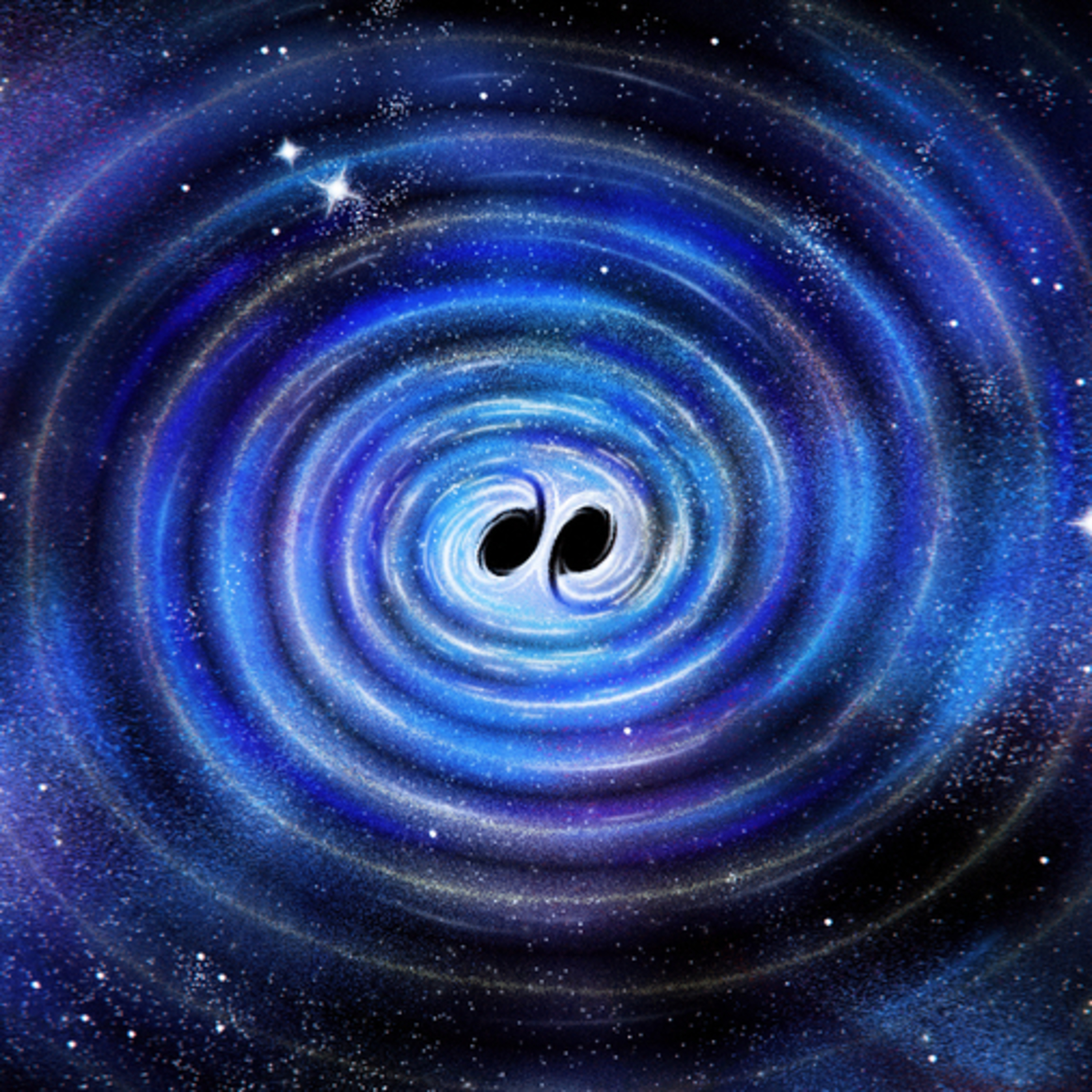 Ripples in Spacetime: Unpacking the GWTC-5.0 Catalog 29.05.2026 21minIn this episode, we dive into the monumental release of the Gravitational-Wave Transient Catalog version 5.0 (GWTC-5.0) and the open data from the second part of the fourth observing run (O4b) by the LIGO, Virgo, and KAGRA observatories. We explore how these massive, international detectors have expanded our view of the gravitational-wave universe and what the newest data tells us about the cosmic collisions of black holes and neutron stars.Key Talking PointsA Growing Cosmic Census: The GWTC-5.0 update adds 161 new compact binary coalescence candidates, bringing the catalog's total to nearly 400 probable transient events.Record-Breaking Detections: We discuss GW250114_082203, the loudest gravitational-wave event ever recorded, boasting an unprecedented network signal-to-noise ratio of 76.9. We also highlight GW240615_113620, which is the most precisely localized gravitational-wave source to date.Unveiling Black Hole Populations: Discover the latest population properties of merging black holes, including intriguing evidence for subpopulations of rapidly spinning black holes that suggest the occurrence of "hierarchical mergers" in dense stellar environments. The Science of Noise and Data Quality: A behind-the-scenes look at how scientists calibrate the detectors and mitigate instrumental noise (like "glitches") to provide pristine, analysis-ready data to the global scientific community. References & Further ReadingThis episode is based on the suite of papers detailing the GWTC-5.0 release and the O4b open data from the LIGO Scientific Collaboration, the Virgo Collaboration, and the KAGRA Collaboration: Open Data from LIGO, Virgo, and KAGRA through the Second Part of the Fourth Observing Run (Abac et al., 2026).GWTC-5.0: An Introduction to Version 5.0 of the Gravitational-Wave Transient Catalog (Abac et al., 2026).GWTC-5.0: Observations from the Second Part of the Fourth LIGO-Virgo-KAGRA Observing Run and Updates to the Gravitational-Wave Transient Catalog (Abac et al., 2026).GWTC-5.0: Population Properties of Merging Compact Binaries (Abac et al., 2026).Acknowledements: Podcast prepared with Google/NotebookLM. Illustration credits: Maggie Chiang for Simons Foundation
 -
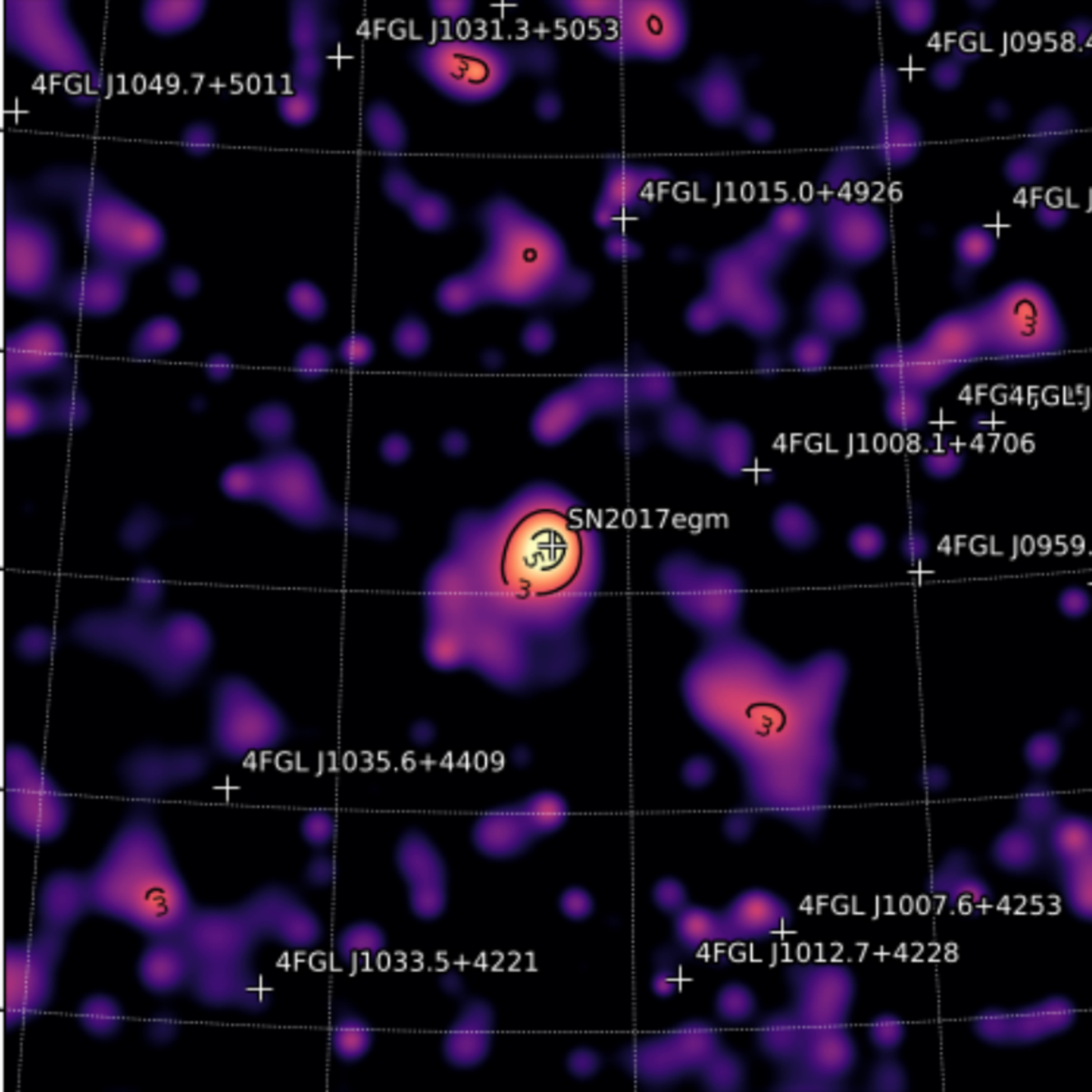 SN 2017egm : Fermi-LAT's Breakthrough Gamma-Ray Detection 22.05.2026 23minIn today’s episode, we dive into the mystery of superluminous supernovae (SLSNe)—rare, extreme astronomical events that shine 10 to 100 times brighter than standard core-collapse supernovae. For years, astrophysicists have debated what powers these brilliant explosions, with the two leading theories being interaction with surrounding circumstellar medium (CSM) or energy injected by a "central engine," such as a rapidly spinning, highly magnetized neutron star known as a magnetar. We discuss a recent breakthrough using 16 years of data from the Fermi Large Area Telescope (LAT). Researchers conducted a systematic search of nearby SLSNe and found significant giga-electronvolt (GeV) gamma-ray emission coming from one specific target: SN 2017egm. We explore why this delayed gamma-ray signal—appearing between 50 and 160 days after the initial explosion—strongly points to a magnetar driving the event. We also break down why the competing CSM interaction model falls short in explaining the timing and the ratio of gamma-ray to optical luminosity observed in this supernova. Finally, we look ahead at what future observatories, like the Cherenkov Telescope Array Observatory (CTAO), might reveal about these colossal cosmic engines. Key Takeaways:What superluminous supernovae are and why their massive energy output requires exceptional power sources.The significance of SN 2017egm yielding the first confirmed gamma-ray signature for this class of transients.How the timing and luminosity ratio of the gamma-ray emission strongly favor a central magnetar wind nebula over the CSM interaction model.How future sub-tera-electronvolt observations could open a new window into understanding the core mechanisms of SLSNe.Reference:Acero, F., Acharyya, A., et al. "Gamma-ray signature of superluminous supernovae: Fermi-LAT GeV detection of SN 2017egm and evidence of a central engine." Astronomy & Astrophysics, 709, A229 (2026). DOI: 10.1051/0004-6361/202558547.Acknowledements: Podcast prepared with Google/NotebookLM. Illustration credits: Astronomy & Astrophysics, 709, A229 (2026)
 -
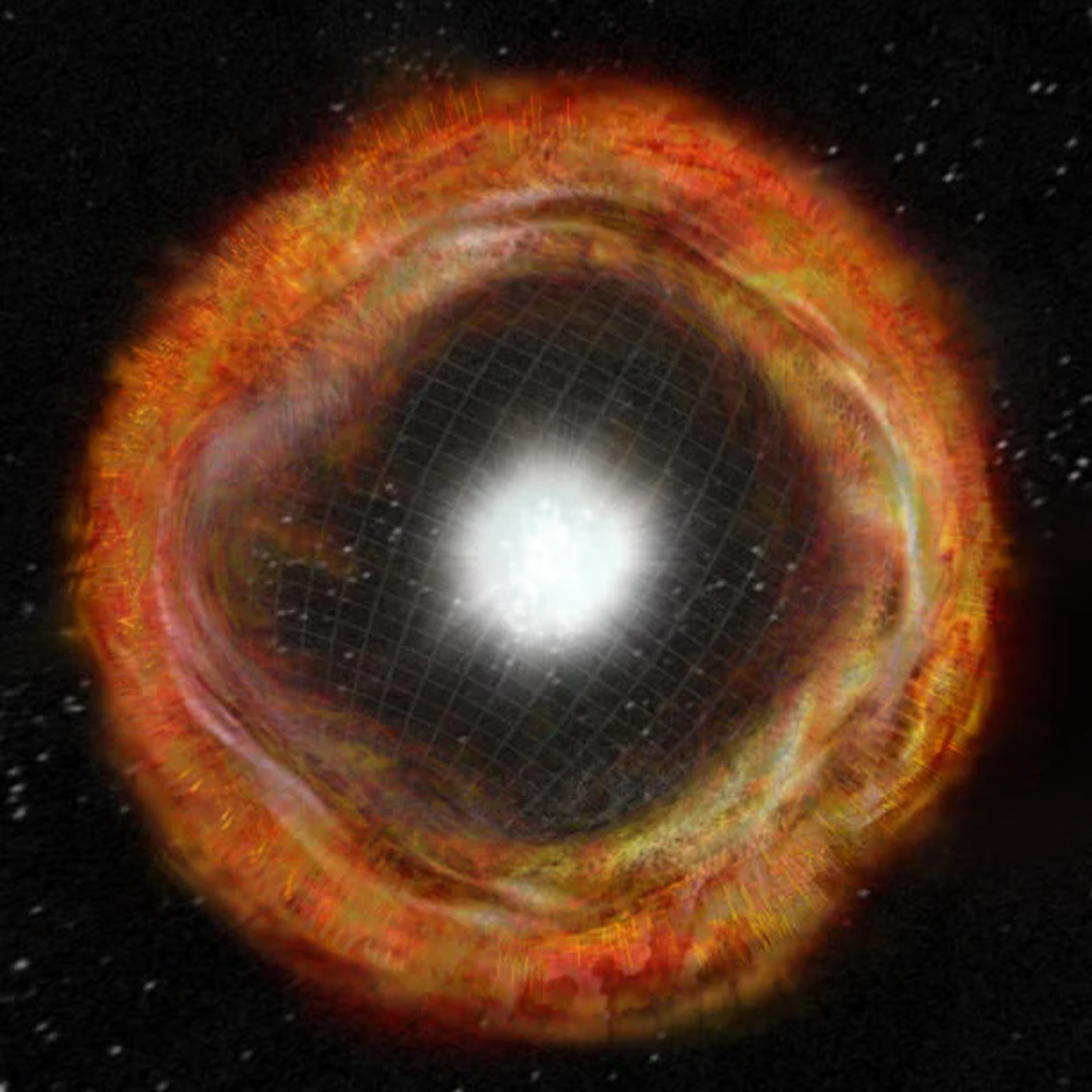 Supernovae on the RISE: Why Dead Stars Wake Up Decades Later 20.05.2026 17minIn this episode, we explore the fascinating phenomenon of core-collapse supernovae that refuse to fade away quietly. Years, or even decades, after their initial explosion, some of these stellar deaths experience a surprising "late-time radio rebrightening". We dive into how astronomers are using these delayed radio signals as a time machine to study the final centuries of a massive star's life. Key Highlights:The 18-Year Echo: We discuss the incredible discovery by the RISE (Rebrightening in Interacting Supernova Emission) collaboration, which detected radio emission from the Type II supernova SN 2007it a full 18 years after it exploded. Smashing into the Past: Why do these dead stars light up again? We break down how the expanding supernova shockwave eventually slams into a dense shell of circumstellar material (CSM) that the star shed long before it died. For SN 2007it, this shell is estimated to be around 3 solar masses.A Broader Look at Stellar Mass Loss: Drawing on a comprehensive study of 16 Type IIn and II-L supernovae using the Very Large Array (VLA), we explore how long-lasting radio emissions—sometimes persisting for 20 years post-explosion—reveal that these stars sustained extreme mass loss for hundreds or thousands of years before core collapse. Blurring the Lines: We look at how this late-time radio data proves that different supernova classifications (like IIn and II-L) actually exist on a continuum, separated mainly by the density and timing of their pre-explosion mass loss.Articles Discussed in this Episode:Acero, F., et al. (The RISE Collaboration). (2026). SN 2007it on the RISE - a radio detection of an interacting supernova 18 years post-explosion.Kilpatrick, C. D., et al. (2026). Probing the Mass-loss Histories of Type IIn and II-L Supernovae with Late-time Radio Observations.Acknowledements: Podcast prepared with Google/NotebookLM. Illustration credits: NRAO
 -
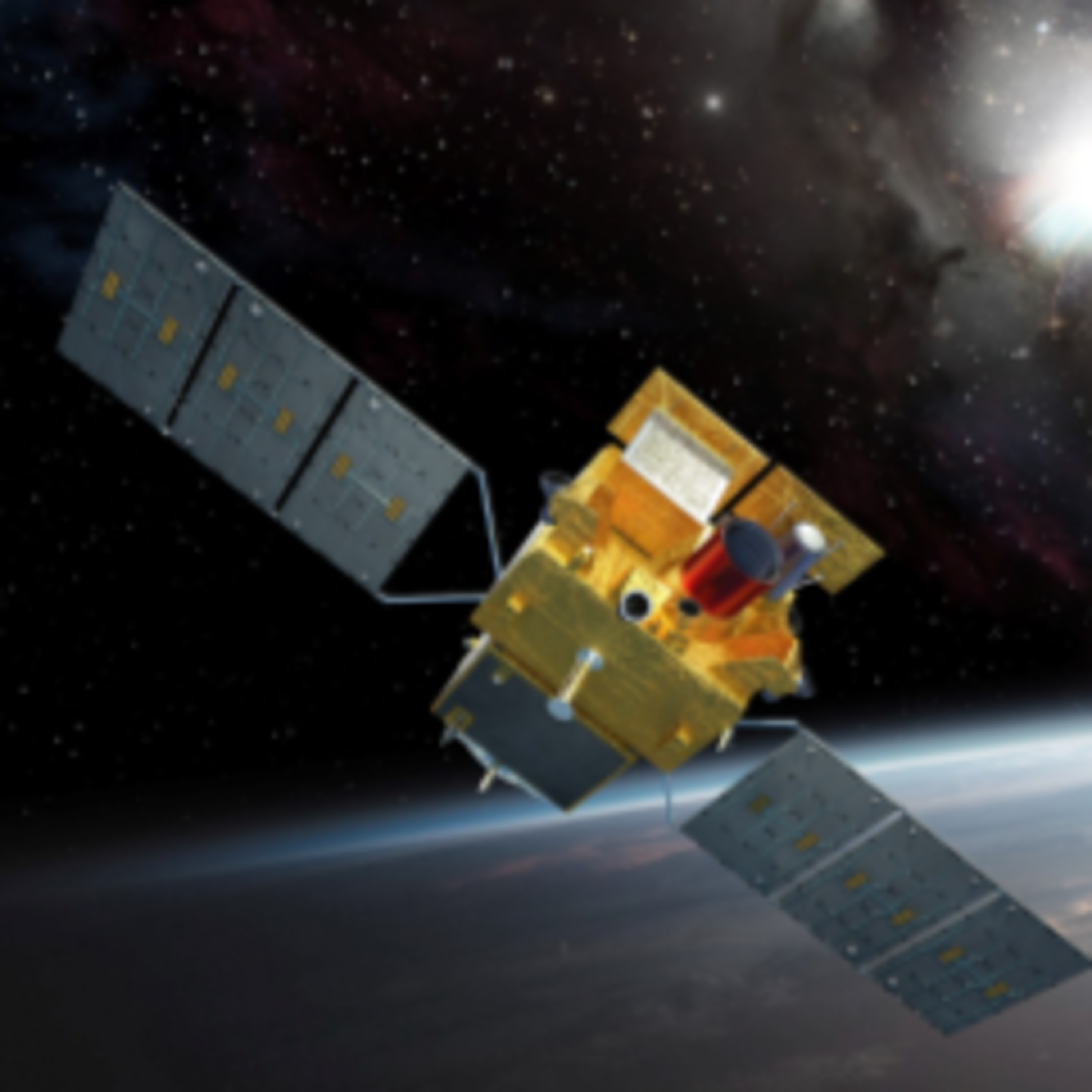 The SVOM Satellite: A New Era in Multi-Messenger Astronomy 29.04.2026 24minIn this episode, we dive into the fascinating world of gamma-ray bursts (GRBs) and high-energy transients through the lens of the SVOM (Space-based Multi-band Variable Object Monitor) mission. Launched in June 2024, this Sino-French satellite uses a powerful suite of instruments to detect, localize, and study some of the universe's most extreme events, such as dying massive stars and colliding neutron stars. We explore three of its core instruments: the ECLAIRs trigger camera, the Gamma-Ray Monitor (GRM), and the Visible Telescope (VT). Discover how these tools work together in near real-time to capture everything from high-redshift GRBs in the early universe to optical afterglows and thermonuclear X-ray bursts. Key Topics Covered:The SVOM Mission: An overview of the satellite, which operates in a 625 km low-Earth orbit, and its primary goal to study GRBs and support multi-messenger astrophysics (like gravitational wave follow-ups).ECLAIRs Trigger Camera: A look at the 4–150 keV wide-field coded mask camera that serves as SVOM's autonomous trigger. When ECLAIRs detects a transient, it can prompt the satellite to automatically slew, or rotate, to point its narrow-field telescopes directly at the burst. Gamma-Ray Monitor (GRM): SVOM’s high-energy sentinel covering an energy range of 15 keV up to 5 MeV. We discuss how its large sensitive area helps measure the spectral and temporal properties of bursts, achieving a detection rate of over 100 GRBs per year.Visible Telescope (VT): A deep dive into SVOM's 44-cm aperture optical/near-infrared telescope. Learn how the VT achieved an impressive ~85% detection rate for GRBs observed within the first 10 minutes, and how its deep sensitivity helped identify the mission's highest-redshift burst to date, GRB 250314A, from when the universe was in its infancy (redshift 7.3).References & Further Reading:1. The Gamma-Ray Monitor onboard the SVOM satellite by Jian-Chao Sun, Yong-Wei Dong, Jiang He, et al.2. SVOM/VT: Instrument Overview, Science Objectives, and First-Year Performance by Yu-Lei Qiu, Li-Ping Xin, Jin-Song Deng, et al.3. ECLAIRs: the SVOM high-energy transient trigger camera by O. Godet, J.-L. Atteia, S. Schanne, et al.Acknowledements: Podcast prepared with Google/NotebookLM. Illustration credits: SVOM, CNRS
Līdzīgi podkasti


Populārs valstī
Šis podkasts parādās arī šo valstu podkastu topos.
