
Our Long Walk
Johan Fourie and Jonathan Schoots
0
A podcast series focusing on South Africa's past, present and future. Hosts Johan Fourie, an economic historian, and Jonathan Schoots, a historical sociologist, interview social science scholars about compelling questions relating to South Africa and the African continent. The conversations translate academic research into actionable policy recommendations for the present day.
Epizodes
-
 Why didn't slavery wither away? with historian Warren Whatley 06.05.2026 52minIf an enslaved person would pay above market price for their own freedom, why didn't the market produce abolition? How did a European trade good become a continent-wide arms race? Did Africa's underdevelopment and Europe's rise have the same cause? In this episode of Our Long Walk, Johan Fourie and Jonathan Schoots speak with Warren Whatley, a Professor Emeritus of Economics at the University of Michigan and a leading scholar of the economic history of Africa and African Americans. His new book, Slavery, Freedom and Development: How Africa Became the Mirror Image of Europe (Cambridge University Press), examines why the two sides of the Atlantic moved in opposite directions over six centuries.This podcast is produced with the help of Voice Note Productions. Our producer is Vasti Calitz with editing done by Andri Burnett. Kelsey Lemon provided helpful research assistance. For more information about the episode and to subscribe to Johan's newsletter, visit ourlongwalk.com.
 -
 Can A.I. speak Igbo? with computer scientist Chinasa T. Okolo 15.04.2026 57minImagine you're a Nigerian law student studying for the bar. You open ChatGPT. It can tell you, confidently, the capital of Arizona. It cannot tell you how a Lagos magistrate is likely to rule. About 52 per cent of the open internet is in English. Four or five other languages split most of the rest. Igbo is not on that list. Neither is Yoruba, Swahili, Amharic, or Ewe.So whose questions does the model know how to answer, and whose does it fumble? Who decided what "general" intelligence means, and why does it keep speaking English?In this episode of Our Long Walk, Johan Fourie and Jonathan Schoots speak with Chinasa T. Okolo, founder of TechnoCultura, an AI and emerging technologies policy specialist at the United Nations, and a contributor to the World Bank's forthcoming World Development Report. She finished her PhD in computer science at Cornell, studying how non-expert users actually engage with AI. Her attention sits where the frontier labs do not look: the global majority.Find Chinasa’s writing here.This podcast is produced with the help of Voice Note Productions. Our producer is Vasti Calitz with editing done by Andri Burnett. Kelsey Lemon provided helpful research assistance. For more information about the episode and to subscribe to Johan's newsletter, visit ourlongwalk.com.
 -
 BONUS: Live interview with Tyler Cowen 23.03.2026 42minIn this bonus episode of Our Long Walk, host Johan Fourie welcomes Tyler Cowen for a live interview recorded on 13 March at Stellenbosch University, in front of an audience of students and faculty. Tyler Cowen holds the Holbert Harris Chair of Economics at George Mason University, where he chairs and directs the Mercatus Center; he is the author of more than 20 books, co-founder of the blog Marginal Revolution and its companion online platform Marginal Revolution University, host of the podcast Conversations with Tyler, and founder of Emergent Ventures, a fellowship and grant program for social entrepreneurs. The conversation opens with what South Africa can learn from Adam Smith on the 250th anniversary of The Wealth of Nations (from cutting red tape to start a business, to adopting a steady-growth "Denmark model" rather than chasing China-style booms), moves through Tyler's case that South Africa is safer and more culturally vibrant than international headlines suggest, and then turns to the role of AI in universities, the future of coding jobs, progress studies as a curriculum, how economists communicate ideas to the public, the social value of wine and declining alcohol consumption, and how Tyler now spots talent by asking candidates about their last few AI prompts rather than their open browser tabs.For more information about the episode and to subscribe to Johan’s newsletter, visit ourlongwalk.com.
 -
 When does marriage stop making economic sense? with Alessandra Voena 18.03.2026 49minWhy have economists spent so long studying firms and markets while largely ignoring the family? Who really holds power inside a household, and what gives them that power? Is the decline of marriage a sign of social breakdown, or a quiet demand for something better? Can a centuries-old practice like bride price survive massive shifts in the economy that created it?In this episode, Johan Fourie and Jonathan Schoots speak with Alessandra Voena, Professor of Economics at Stanford University, about power inside the household, and why it matters far beyond the home. Her work shows that bargaining power is shaped not only by income, but by institutions – inheritance, divorce law, property rights, and the social norms that determine whether women can exercise real choice.Some of Alessandra’s relevant work:Bride Price and Female Education How are gender norms perceived? Age of Marriage, Weather Shocks, and the Direction of Marriage PaymentsThis podcast is produced with the help of Voice Note Productions. Our producer is Vasti Calitz with editing done by Andri Burnett. Kelsey Lemon provided helpful research assistance. For more information about the episode and to subscribe to Johan's newsletter, visit ourlongwalk.com.
 -
Why do we find it so hard to care about the rights of other people? with economist William Easterly 25.02.2026 45minCan the language of "helping" be used to justify conquest? And when development raises incomes but removes agency, has anything actually improved?In this episode of Our Long Walk, Johan Fourie and Jonathan Schoots speak with Bill Easterly, Professor Emeritus of Economics at New York University. Bill has spent much of his career challenging the idea that development is primarily a technical problem with a technical solution. His new book, Violent Saviors, traces a recurring pattern through history: how the promise of progress and prosperity has repeatedly been used to justify outsiders taking control over other societies — and why that logic still shows up in modern debates.Some of Bill's work mentioned:Violent Saviors This podcast is produced with the help of Voice Note Productions. Our producer is Vasti Calitz with editing done by Andri Burnett. Kelsey Lemon provided helpful research assistance.For more information about the episode and to subscribe to Johan's newsletter, visit ourlongwalk.com.
-
 Are we suffering from a crisis of imagination? with sociologist Xolela Mancgu 04.02.2026 48minWhat are we missing when we divide history into the binary of ‘tradition’ and ‘modernity’? How is biography different when we imagine a person’s story from within the structures they find themselves in? What is the crisis of imagination facing South African leadership?In this episode, Johan Fourie and Jonathan Schoots speak with sociologist and historian Xolela Mangcu, Interim Director of Africana Studies at George Washington University. Xolela is the author of a major biography of Steve Biko and is currently writing a new biography of Nelson Mandela, due in late 2026. Some of Xolela’s mentioned work:About President RamaphosaTransition magazine "Biko, a Life" This podcast is produced with the help of Voice Note Productions. Our producer is Vasti Calitz with editing done by Andri Burnett. Kelsey Lemon provided helpful research assistance. For more information about the episode and to subscribe to Johan’s newsletter, visit ourlongwalk.com.
 -
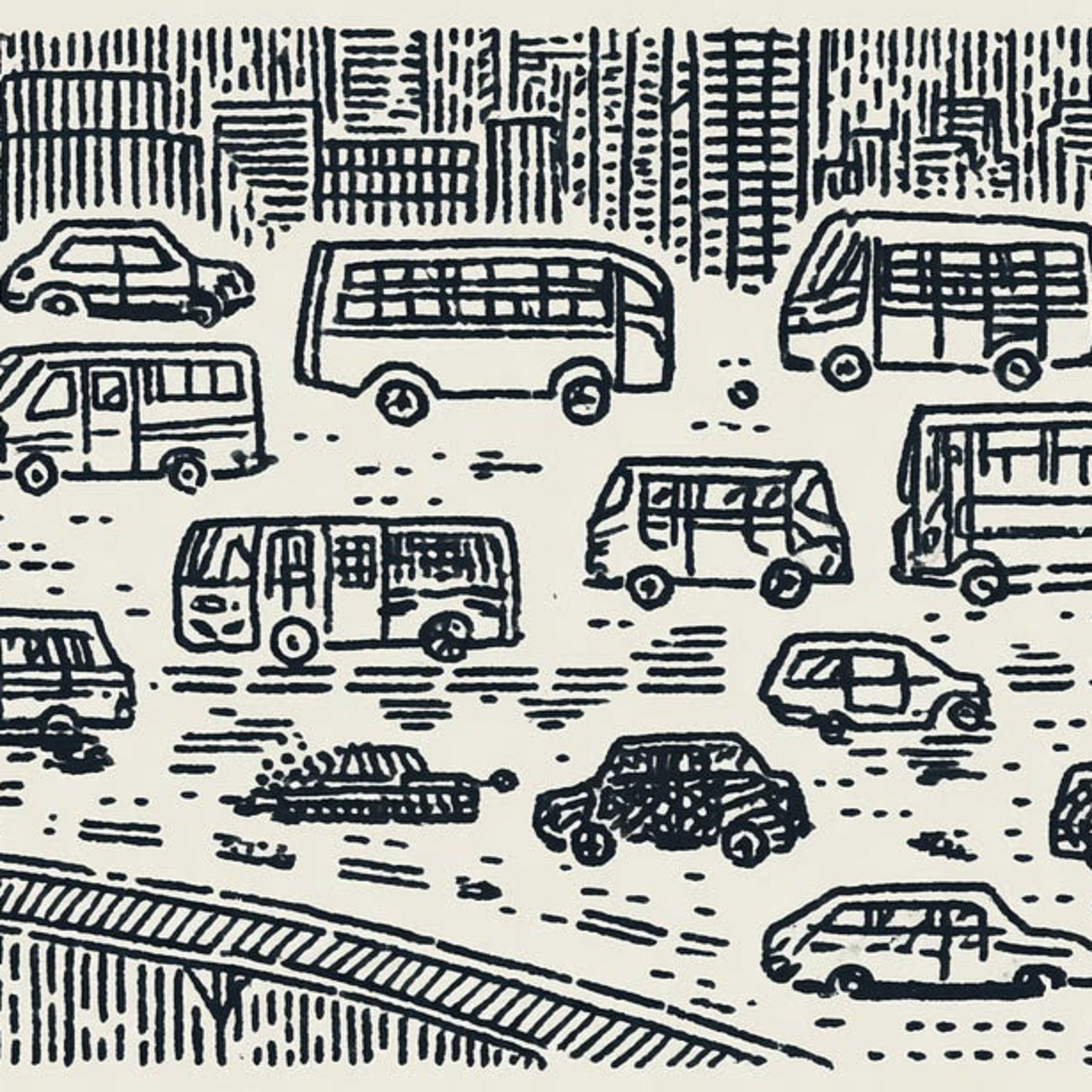 Who is more capitalist than Elon? with strategy expert Christopher Eaglin 10.12.2025 48minWhy do our strategy theories fail when confronted with the realities of one of Africa’s most essential informal businesses – minibus taxis? Can a drop in interest rates reduce speeding and crashes? How is the government free-riding on the work (and risk) of taxi entrepreneurs?In this episode of the Our Long Walk podcast, Johan Fourie and Jonathan Schoots speak with Christopher Eaglin, assistant professor in the strategy area at Duke University’s Fuqua School of Business. Before academia he worked with non-profits, large firms and, crucially, South Africa’s least understood industry: minibus taxis. Some of Chris’s mentioned work:The Need for Speed: The Impact of Capital Constraints on Strategic MisconductThis podcast is produced with the help of Voice Note Productions. Our producer is Vasti Calitz with editing done by Andri Burnett. Kelsey Lemon provided helpful research assistance. For more information about the episode and to subscribe to Johan’s newsletter, visit ourlongwalk.com.
 -
 What do Africa’s old currencies say about our modern world? with historian Karin Pallaver 19.11.2025 49minWhat advantages did cowrie shells and beads have over coins in Africa? Is mobile money a revolution, or just the latest chapter in Africa's long history of monetary innovation?In this episode, Johan Fourie and Jonathan Schoots speak to historian Karin Pallaver about the long history of money in Africa. Karin works at the intersection of economic history, anthropology and archaeology, tracing how shells, beads, metal and paper – and now pixels – have carried value and power across the continent.Karin Pallaver is Associate Professor of African History at the University of Bologna. She previously worked as a researcher in the Coins and Medals Department at the British Museum in London. This podcast is produced with the help of Voice Note Productions. Our producer is Vasti Calitz with editing done by Andri Burnett. Kelsey Lemon provided helpful research assistance. For more information about the episode and to subscribe to Johan’s newsletter, visit ourlongwalk.com.
 -
 What lives inside of 'don't know'? with demographer Jenny Trinitapoli 29.10.2025 52minWhat can we learn from uncertainty? How can using beans help with measuring uncertainty? And are we really living in unusually uncertain times?In this episode of the Our Long Walk podcast, my co-host Johan Fourie and Jonathan Schoots speak with Jenny Trinitapoli, Professor of Sociology at the University of Chicago. Since 2008 she has led Tsogolo la Thanzi (TLT), a landmark longitudinal study of young adults in Balaka, southern Malawi, following the same respondents for more than a decade as they navigate relationships, sex and childbearing amid a severe AIDS epidemic.Demographers love tidy bins; cross-national datasets demand them. Yet some domains are genuinely uncertain. Early in Jenny’s Malawi work, Likert-scale questions about HIV risk generated high rates of ‘don’t know’ and outright refusals. Rather than throw those away, the TLT team designed questions to measure uncertainty.Some of Jenny’s mentioned work:An Epidemic of UncertaintyThe Flexibility of Fertility Preferences in a Context of UncertaintyThis podcast is produced with the help of Voice Note Productions. Our producer is Vasti Calitz with editing done by Andri Burnett. Kelsey Lemon provided helpful research assistance. For more information about the episode and to subscribe to Johan’s newsletter, visit ourlongwalk.com.
 -
 What returns when talent leaves? with economist Catia Batista 08.10.2025 45minWhy does mobile money reduce agricultural investment in rural areas—and what does this reveal about migration as a development tool? Is high-skilled emigration bad for countries, or can brain drain become brain gain?In this episode of the Our Long Walk podcast, Johan Fourie and Jonathan Schoots speak with Cátia Batista, Professor of Economics at Nova School of Business and Economics and founder of the NOVAFRICA Research Centre. Trained at the University of Chicago, Batista runs field and lab‑in‑the‑field experiments on migration, remittances, financial inclusion and technology adoption, with projects stretching from Cape Verde and Mozambique to Kenya.Some of Catia’s mentioned work: Brain drain or brain gain? (in Science) Mobile moneyIrregular migrationThis podcast is produced with the help of Voice Note Productions. Our producer is Vasti Calitz with editing done by Andri Burnett. Kelsey Lemon provided helpful research assistance. For more information about the episode and to subscribe to Johan’s newsletter, visit ourlongwalk.com.
 -
 What can Africa teach us about God? with economist Paul Seabright 17.09.2025 56minWhat is the difference between magic and religion – and why does it matter for economics? In this episode of the Our Long Walk podcast, Johan Fourie and Jonathan Schoots speak with Paul Seabright, Professor of Economics at the Toulouse School of Economics and one of the most original voices on how humans cooperate. For nearly two centuries economists forgot that religious organisations were businesses as much as anything else, but in his new book, The Divine Economy: How Religions Compete for Wealth, Power and People, Seabright invites us to look beyond doctrine, at the activities and exchanges that keep the show on the road.This podcast is produced with the help of Voice Note Productions. Our producer is Vasti Calitz with editing done by Andri Burnett. Kelsey Lemon provided helpful research assistance. For more information about the episode and to subscribe to Johan’s newsletter, visit ourlongwalk.com.
 -
 Africa, who are you? with philosopher Olúfẹ́mi Táíwò 27.08.2025 54minWhat does a serious defence of modernity look like? In this episode of the Our Long Walk podcast, Johan Fourie and Jonathan Schoots speak with Olúfẹ́mi Táíwò, philosopher of African political thought at Cornell University, about Táíwò argument that modernity is not a cultural label, nor a Western badge to be worn or discarded, but a set of commitments that any society can domesticate and make its own: individual dignity, the centrality of reason, and an open horizon of progress. Some of Femi’s mentioned work:Africa Must Be Modern: https://iupress.org/9780253012753/africa-must-be-modern/Against Decolonisation. Taking African Agency Seriously: https://www.hurstpublishers.com/book/against-decolonisation/How Colonialism Preempted Modernity in Africa: https://iupress.org/9780253221308/how-colonialism-preempted-modernity-in-africa/This podcast is produced with the help of Voice Note Productions. Our producer is Vasti Calitz with editing done by Andri Burnett. Kelsey Lemon provided helpful research assistance. For more information about the episode and to subscribe to Johan’s newsletter, visit ourlongwalk.com. The podcast is also available on: Spotify: https://open.spotify.com/show/4VEH9dz... Apple Podcasts: https://podcasts.apple.com/za/podcast...
 -
 Is imperial history overdue a comeback? with historian Tony Hopkins 06.08.2025 48minIn a rapidly changing world marked by trade wars, shifting alliances, and resurgent nationalism, what can history teach us about the future of globalisation? Is America’s retreat from global leadership inevitable, and what might Britain’s past decline reveal about the potential paths ahead?In the first episode of Season 2 of Our Long Walk, Jonathan Schoots and Johan Fourie talk to Tony Hopkins, Emeritus Smuts Professor of Commonwealth History at Cambridge University, about gentlemanly capitalism, globalisation, and the rise and fall of empires, among other topics. Some of Tony’s work:The Land Where Nothing Works: How Britain Lost the Plot (2024)Capitalism in the Colonies: African Merchants in Lagos, 1851–1931 (2024)American Empire: A Global History (2018)This podcast is produced with the help of Voice Note Productions. Our producer is Vasti Calitz with editing done by Andri Burnett. Kelsey Lemon provided helpful research assistance. For more information about the episode and to subscribe to Johan’s newsletter, visit ourlongwalk.com.
 -
 Where did the rain begin to beat us? with co-hosts Johan and Jonathan 14.05.2025 36minThere’s an Igbo saying, quoted by Chinua Achebe, that goes like this: ‘A man who does not know where the rain began to beat him cannot say where he dried his body.’ It’s a fitting way to end Season 1 of the Our Long Walk podcast, a season shaped by the question: what can Africa’s history teach us about its present, and its possible futures?In the final episode of this season, hosts Johan Fourie and Jonathan Schoots take a moment to reflect on the season. They talk about long arcs and short turns. About the origins of states, of elite contestation, of trade, urbanisation, industrialisation. About the weight of colonial legacies and the promise of post-colonial reinvention. From 100,000 years of human prehistory to today’s aid policies and trade wars, this season’s guests have shown us how deeply the past shapes the terrain on which African societies move.The Our Long Walk podcast will be back in August with Season 2: new guests, new questions, same stubborn curiosity. But we would love your help shaping it. Send your suggestions, ideas, or complaints to [email protected]. Subscribe to Johan's newsletter here.This podcast is produced with the help of Voice Note Productions. Our producer is Vasti Calitz with editing done by Andri Burnett. Kelsey Lemon provided helpful research assistance.
 -
 What did Mandela leave behind? with historian Jacob Dlamini 23.04.2025 46minWhat if history is not only what we are told, but also what we choose to remember? What if the stories of apartheid are not just tales of villainy and victimhood, but of complexity, contradiction and human agency? And what if loving a country – its landscapes, its memories – requires that we also confront its darkest truths?In this final interview of the first season of Our Long Walk, Jonathan Schoots and Johan Fourie sit down with Jacob Dlamini, Associate Professor of History at Princeton University, field guide, journalist, and one of South Africa’s most original historical thinkers Dlamini’s idea of critical love runs through the episode. Loving the Kruger, loving South Africa, while refusing to romanticise or forget. To hold on to splendour without letting go of truth. To honour beauty without denying complicity. That is the work of history.Some of Jacob’s mentioned work:AskariSafari NationThe Terrorist AlbumDying for FreedomThis podcast is produced with the help of Voice Note Productions. Our producer is Vasti Calitz with editing done by Andri Burnett. Kelsey Lemon provided helpful research assistance. For more information about the episode and to subscribe to Johan’s newsletter, visit ourlongwalk.com.To send in questions or comments, send a voice note to [email protected].
 -
 Can war be creative? with historian Richard Reid 02.04.2025 48minHow should we understand the era before Africa’s colonisation? Was it a period of stagnation or one of profound innovation and change? Why has the ‘Scramble for Africa’ dominated historical narratives, often overshadowing Africa’s own dynamic histories? Can warfare be understood not only as destructive but also as a creative and even culturally significant force?In this episode of the Our Long Walk podcast, Jonathan Schoots and Johan Fourie explore these critical questions with Richard Reid, Professor of African History at Oxford University and author of the recently published book, The African Revolution: A History of the Long Nineteenth Century.Some of Richard’s mentioned work:Inaugural SOAS lecture Warfare in African History This podcast is produced with the help of Voice Note Productions. Our producer is Vasti Calitz with editing done by Andri Burnett. Kelsey Lemon provided helpful research assistance. For more information about the episode and to subscribe to Johan’s newsletter, visit ourlongwalk.com.
 -
 What if borders were never meant to last? with economist Elias Papaioannou 12.03.2025 55minWhat determines opportunity in Africa? Does religion shape upward mobility? How do artificial borders, landmines, and weak states constrain economic development? And why has Africa largely resisted the global rise of populism?In this episode of the Our Long Walk podcast, Jonathan Schoots and Johan Fourie sit down with Elias Papaioannou, academic director of the Wheeler Institute for Business and Development and professor of economics at the London Business School. Elias is a leading researcher in international finance, political economy and economic history – especially of Africa. His work blends rich historical datasets with cutting-edge econometrics to reveal how institutions, geography, and social structures shape long-run development.Some of Elias’s mentioned work:Religion and educational mobility in AfricaThe political economy of populismThe long-run effects of the scramble for AfricaLandmines and spatial developmentThis podcast is produced with the help of Voice Note Productions. Our producer is Vasti Calitz with editing done by Andri Burnett. Kelsey Lemon provided helpful research assistance. For more information about the episode and to subscribe to Johan’s newsletter, visit ourlongwalk.com.
 -
 Why did we stop roaming? with economist Ola Olsson 19.02.2025 50minHow far back should economic history go? Most textbooks start with agriculture, trade, and the emergence of states. But what if we looked further – beyond written records, beyond cities, beyond even the first farms? What if the deepest economic lessons come not from the past few thousand years, but from the hundreds of thousands before them? For most of history, when things got bad, people ran. But with farming came rulers, taxation, and the first states – and suddenly, leaving wasn’t so easy. As Ola Olsson puts it, understanding why we stopped roaming is key to making sense of the world today.In this episode of the Our Long Walk podcast, Johan Fourie and Jonathan Schoots interview Ola Olsson, professor of economics at the University of Gothenburg and author of Paleoeconomics: Climate Change and Economic Development in Prehistory. Ola’s mentioned work:Floods, droughts, and environmental circumscription in early state development: the case of ancient EgyptFiscal capacity in “post”-conflict states: Evidence from trade on Congo river This podcast is produced with the help of Voice Note Productions. Our producer is Vasti Calitz with editing done by Andri Burnett. Kelsey Lemon provided helpful research assistance. For more information about the episode and to subscribe to Johan’s newsletter, visit ourlongwalk.com. The full playlist of all Our Long Walk podcast songs is available here.
 -
Can herding shape morals? with economist Nathan Nunn 29.01.2025 50minWhat shapes the decisions we make each day, from the seemingly trivial to the transformative? Why do trust, honour or zero-sum thinking persist in some societies but not others? How does a legacy of past events influence not just institutions but the very beliefs we carry and pass on? These questions form the heart of cultural economics, a field that reminds us why culture – often dismissed as too abstract – is central to understanding the world. In this episode of Our Long Walk, Johan Fourie and Jonathan Schoots interview Nathan Nunn, professor at the Vancouver School of Economics and a leading thinker on cultural economics and economic history. Nathan's mentioned work: Transhumant Pastoralism, Climate Change, and Conflict in Africa Zero-Sum Thinking and the Roots of U.S. Political Divides The Slave Trade and the Origins of Mistrust in Africa The Long-term Effects of Africa's Slave Trades This podcast is produced with the help of Voice Note Productions. Our producer is Vasti Calitz with editing done by Andri Burnett. Kelsey Lemon provided helpful research assistance. For more information about the episode and to subscribe to Johan’s newsletter, visit ourlongwalk.com.
-
 How to build an African city? with sociologist Benjamin Bradlow 08.01.2025 48minWhat makes a city thrive in the Global South? Why do some cities build stronger connections between their citizens, social movements, and governments while others remain fragmented? Can the lessons from São Paulo help South Africa’s struggling urban centres? And what can a sociologist teach us about the future of African cities as urbanization accelerates? In this episode of Our Long Walk, Johan Fourie and Jonathan Schoots speak with Benjamin Bradlow, assistant professor of sociology and international affairs at Princeton University. Ben’s work explores the complex relationships between urban governance, inequality, and democracy, with a comparative focus on São Paulo and Johannesburg. His latest book, Urban Power: Democracy and Inequality in São Paulo and Johannesburg, offers a powerful lens on how cities can transform – or fail to. You can find the Suno-generated song inspired by Benjamin's work here, as well as the playlist of the songs featured on other episodes. Subscribe to Johan's newsletter here. This podcast is produced with the help of Voice Note Productions. Our producer is Vasti Calitz with editing done by Andri Burnett. Kelsey Lemon provided helpful research assistance.
Līdzīgi podkasti


Populārs valstī
Šis podkasts parādās arī šo valstu podkastu topos.
