
Anabolic Analysis
Coach Kolt
0
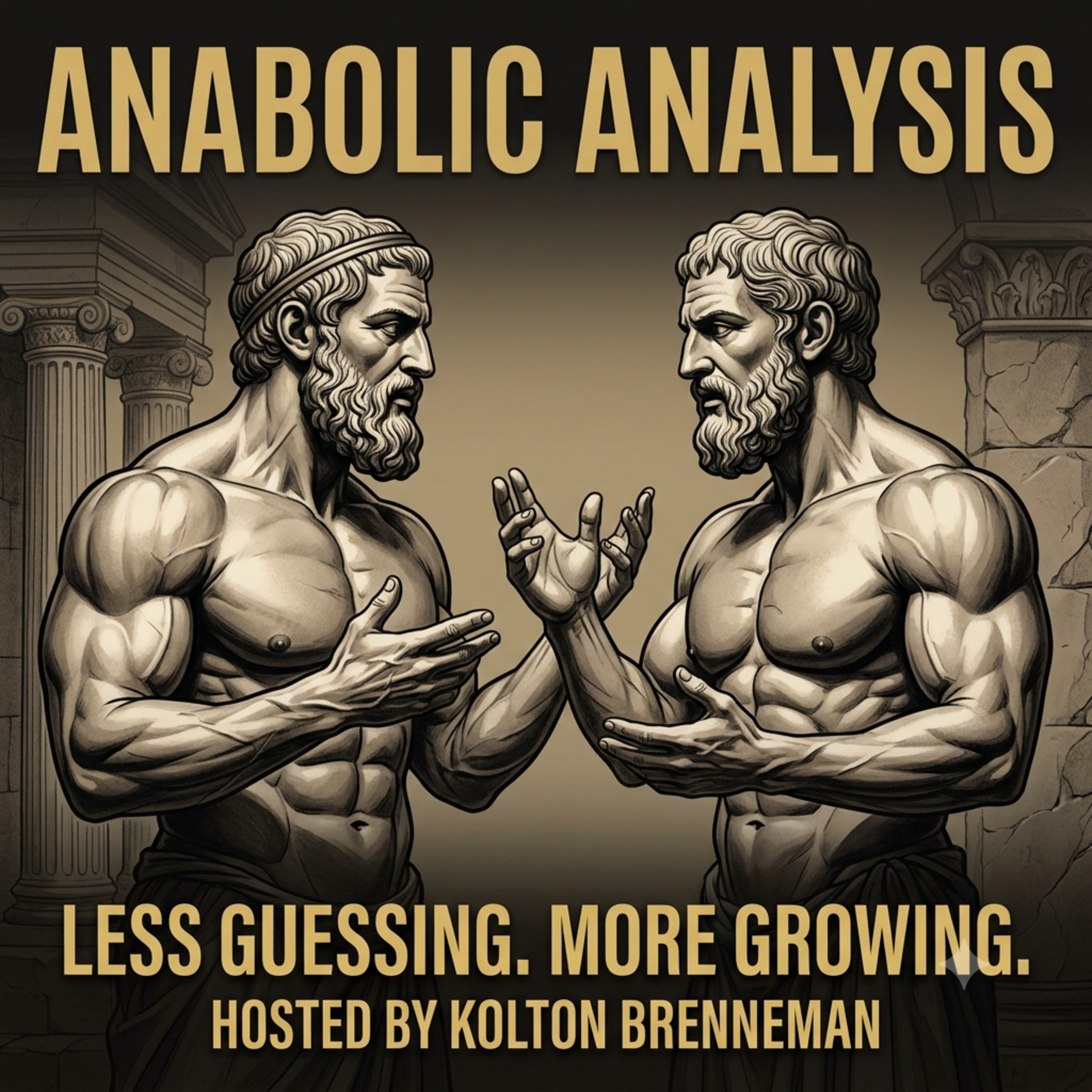
Anabolic Analysis is a fitness podcast hosted by Kolton Brenneman that bridges evidence-based research with practical application. Each episode features interviews with experts on training, nutrition, muscle growth, and performance. The show aims to debunk myths, challenge assumptions, and provide actionable advice for listeners. It emphasizes a no-nonsense approach to help you grow effectively.
Epizodes
-
 The Biggest Mistakes Holding Back Your Progress, According to a Pro Bodybuilder Ep. 6 - Tyler Fluitt 13.09.2026 1h 6minIn this episode of Anabolic Analysis, I sit down with IFBB Pro and coach Tyler Fluitt to break down what actually separates people who make long-term progress from those who stay stuck. We cover the biggest mistakes beginners, intermediates, and advanced lifters make, why overcomplicating training can slow you down, and how effort, consistency, and adherence drive most results.We also dive into dieting, reverse dieting, meal plans vs. macros, why people regain weight after successful diets, how to diagnose stalled progress, and why the “perfect” plan is useless if you cannot follow it. Tyler also shares lessons from competing, the mindset required to become an IFBB Pro, why off-seasons matter just as much as prep, and how coaching can save years of trial and error. Topics covered:Biggest mistakes beginners and intermediates makeWhy lifters overcomplicate trainingEffort vs. optimizationWhy progress stallsMeal plans vs. tracking macrosReverse dieting and preventing weight regainWhy adherence matters more than constantly changing the planHow coaching can accelerate progressBodybuilding prep vs. lifestyle dietingWhy the off-season matters so muchThe mindset required to become an IFBB ProHow to build your best physique over the next five yearsOur Links:Coach Kolt: https://linktr.ee/kolt45fitnessTyler Fluitt / Level Up Physiques: levelupphysiques.net/bio00:00 - Introduction00:24 - Tyler’s background and coaching experience02:04 - Biggest mistakes beginners make03:07 - Why beginners overcomplicate training04:46 - Why optimization becomes a trap06:19 - Mastering the fundamentals07:53 - Effort first, refinement later08:56 - Biggest mistakes intermediate lifters make10:21 - Staying open-minded without chasing every trend11:03 - Why progress slowing causes people to quit12:31 - Falling in love with the process15:34 - Lessons from coaching hundreds of people17:40 - How personal biases hold lifters back18:28 - When hiring a coach becomes valuable19:14 - Diet fads and the fundamentals of nutrition20:33 - Bulking too aggressively21:24 - Reverse dieting after a fat loss phase23:51 - Why your diet has to become a lifestyle24:58 - Recovering from off-plan meals25:25 - Treating fitness like saving money27:45 - Genetics, comparison, and assuming others have it easier30:25 - Coaching31:47 - Why progress stalls34:26 - You need good data to diagnose a plateau35:36 - Why you probably need better adherence, not a new plan36:45 - When coaches need to change the plan39:44 - Meal plans vs. tracking macros41:33 - Why meal plans can reduce tracking errors42:46 - Meal plans for beginners43:43 - Tyler’s hybrid meal-plan approach45:03 - How competitor diets differ48:19 - The mindset required for bodybuilding prep50:28 - Why the off-season is still part of prep52:20 - How Tyler changed his off-seasons54:06 - Acting like a pro before becoming one55:00 - Why competitive bodybuilding is uncomfortable57:57 - Best advice for the next five years58:08 - Commit to five years and invest in yourself1:01:20 - Why experienced coaches still hire coaches1:02:13 - Buying someone else’s mistakes1:05:10 - Coaching as the fast pass1:05:21 - Where to find Tyler
 -
Why Your Fat Loss Stalled: Calorie Deficits, Refeeds, & Plateaus Ep. 5 - Dr. Tony Boutagy 06.09.2026 52minIn this episode of Anabolic Analysis, I sit down with Dr. Tony Boutagy, a sports scientist and strength coach with 30+ years of experience and over 70,000 coaching sessions. We break down what actually drives fat loss, why calorie deficits stall, and how to adjust your diet without immediately slashing calories or adding more cardio.We also dive into diet breaks and refeeds, low-carb vs. high-carb dieting, hidden calories, intra-workout carbs, fat loss supplements, GLP-1 medications, blood work, supplementation, scale weight fluctuations, and how training should change during a calorie deficit. Tony explains why harder training can sometimes make fat loss more difficult, when to increase activity instead of cutting food, and how to build a physique you can maintain for decades.Topics covered:Why fat loss plateaus happenThe hidden calories that erase your deficitDiet breaks, refeeds, and nonlinear dietingCan you diet fewer days and lose the same amount of fat?Low-carb vs. high-carb diets for fat lossCarbohydrates, glycogen, and muscle retentionOrange juice and intra-workout carbohydratesCarbohydrate and caffeine mouth rinsingHow low dietary fat can realistically goWhen low-carb diets actually make senseUsing blood work to guide supplementationOmega-3s, magnesium, vitamin D, and multivitaminsWhy most fat loss supplements do very littleFat burning vs. actual fat lossFasted cardio and calorie compensationFiber and resistant starch for appetite controlSemaglutide, tirzepatide, and retatrutideWho should consider GLP-1 medications?Why scale weight fluctuates so muchHow to stop obsessing over daily weigh-insWhen to cut calories vs. increase steps or cardioHow training should change during a calorie deficitWhy Zone 1 and Zone 2 cardio are useful for fat lossHow to build your best physique over the next five yearsOur Links:Coach Kolt: linktr.ee/kolt45fitnessDr. Tony Boutagy: linktr.ee/tonyboutagy00:00 - Introduction00:23 - Tony’s background and 30+ years of coaching01:05 - The worst fat loss advice that refuses to die01:49 - Why people are still afraid of carbs03:02 - Best intra-workout carb sources05:11 - Carb mouth rinsing and performance06:32 - How to diagnose a fat loss plateau07:45 - Hidden calories that erase your deficit09:50 - Cheat meals, free meals, and off-plan meals10:12 - Diet breaks and refeeds12:18 - Dieting 21 fewer days with the same fat loss13:15 - Refeeds and metabolic adaptation18:09 - Why low-carb diets may respond differently to refeeds19:23 - Low-carb vs. low-fat dieting22:22 - When low-carb diets make sense24:39 - Omega-3s and blood testing25:46 - Why blood work should guide supplements26:51 - Supplements Tony commonly recommends30:03 - Saffron and curcumin32:02 - Do fat loss supplements actually work?33:19 - Fat burning vs. fat loss34:05 - Fasted cardio and resistant starch36:33 - GLP-1 medications for fat loss37:40 - Retatrutide and potential health effects39:43 - Who should use GLP-1 medications?40:26 - How to stop obsessing over the scale43:56 - Water moves fast, fat moves slow46:40 - Why harder workouts can backfire during a diet47:40 - Cut calories or increase cardio?49:23 - Building your best physique over five years50:07 - Why lifters should stop ignoring cardio51:29 - Where to find Dr. Tony Boutagy
-
Supplements, Surpluses & Carbs: What the Research Really Says Ep. 4 -Scientific Snitch 30.08.2026 1h 16minIn this episode of Anabolic Analysis, I sit down with Ella, aka Scientific Snitch. We break down how to actually interpret research without getting misled by abstracts, weak correlations, poor study design, or overconfident meta-analyses. From there, we dive into some of the biggest debates in evidence-based nutrition, including calorie surpluses, carbohydrate intake, intra-workout carbs, electrolytes, resistant starch, supplements, dietary fat, protein quality, and training intensity.We also discuss why more supplements are not always better, how blood work can help guide supplementation, underrated foods for dieting, and why training hard may matter far more than obsessing over small nutritional details.The biggest mistakes people make when interpreting researchWhy methods and statistics matter more than the abstractHow to judge correlations, sample sizes, and meta-analysesWhether a calorie surplus is actually necessary for muscle growthWhy carbohydrate research is still surprisingly limitedPre-workout and intra-workout carbohydrate timingGlucose, fructose, and carbohydrate mouth rinsingWhen electrolytes are actually usefulProblems with the modern supplement industryHeavy metals, peptides, and poorly regulated supplementsWhich supplements may actually be worth takingWhy blood work should guide supplementationAsian-market foods that make dieting easierResistant starch and cooking, cooling, and reheating carbsUnderrated high-protein foods for dietingPlant vs. animal protein for hypertrophyHow low can dietary fat realistically go?Omega-3s, omega-6s, and testosteroneWhy training intensity may matter more than almost everything elseOur Links:Coach Kolt: https://linktr.ee/kolt45fitnessScientific Snitch (Ella): https://linktr.ee/scientificsnitch00:00 - Do you actually need a calorie surplus?00:17 - Introduction00:42 - Ella’s research background01:46 - Common mistakes when interpreting research03:05 - Why understanding statistics matters05:09 - The problem with blindly trusting meta-analyses07:29 - How to judge the quality of a study10:14 - Is a calorie surplus necessary for muscle growth?11:50 - What nutrition research desperately needs13:30 - Fasted vs. fed resistance training14:22 - Are intra-workout carbs worth using?16:39 - Carbohydrate mouth rinsing and CNS fatigue19:10 - Glucose vs. fructose intra-workout22:13 - Ella’s intra-workout setup22:28 - Do you need electrolytes during training?26:03 - Supplements that are overhyped27:41 - Peptides, contamination, and third-party testing28:49 - Supplements Ella actually uses29:39 - Increasing vitamin D in mushrooms30:57 - Why Asian markets are a dieting cheat code32:10 - Kelp noodles, shirataki noodles, and bok choy34:47 - Resistant starch explained37:31 - How cooling and reheating rice changes resistant starch39:27 - Underrated diet foods40:10 - Why pork tenderloin is so underrated42:13 - Plant vs. animal protein44:07 - Iron intake and supplementation46:08 - Why blindly supplementing can backfire48:00 - Vitamin A, liver, and fat-soluble vitamins51:30 - Which supplements are actually worth taking?52:18 - Creatine dosing and cognitive benefits54:09 - Vitamin D and magnesium56:39 - Omega-3s and fish oil57:55 - Do low-fat diets lower testosterone?01:01:23 - Calories, dietary fat, and testosterone01:04:06 - How low should fat intake go?01:07:01 - How to build your best physique over five years01:09:50 - Why training intensity is underrated01:10:58 - Training to failure and reps in reserve01:13:39 - What Ella is currently experimenting with01:14:25 - Cardio before lifting01:15:20 - Where to find Ella
-
 Ep. 3: Building The Perfect Program - Volume, Frequency & Exercise Selection - Scientifically Jacked 23.08.2026 1h 22minIn this episode of Anabolic Analysis, I sit down with Jackson, aka Scientifically Jacked, to break down the variables that actually drive hypertrophy and where the science-based lifting community may be overcomplicating things.We discuss training frequency, volume, intensity, exercise selection, biomechanics, lengthened training, neuromechanical matching, full-body training, exercise order, injury risk, and why copying the programs of elite bodybuilders rarely makes sense for the average lifter.We also get into the limitations of using mechanisms to dictate training, why individual anatomy matters when choosing exercises, whether you need a calorie surplus to build muscle, and why simply staying consistent for five years will put you ahead of almost everyone.Topics CoveredHow much volume you actually need to build muscleWhy frequency may matter more than adding more setsBuilding an effective program from scratchWhether traps and rear delts need direct isolationHow to choose the best exercises for your anatomyStability, resistance profiles, and exercise selectionNeuromechanical matching vs. length-tension relationshipsLengthened partials vs. full-range trainingExercise order, injury risk, and long-term progressionOur Links:Coach Kolt: https://linktr.ee/kolt45fitnessScientifically Jacked (Jackson): https://linktr.ee/ScientificallyJackedTimestamps00:00 - Introduction01:19 - Jackson’s current full-body training split03:16 - Do different muscles need different frequencies?04:53 - Frequency, intensity, and volume for hypertrophy06:38 - Why one hard set can be incredibly effective08:07 - How little training can you get away with?09:55 - Genetics, steroids, and unrealistic expectations13:20 - Why steroids cause so much muscle growth16:48 - Building a beginner hypertrophy program19:40 - Do you need to isolate traps and rear delts?22:23 - Individualizing training around your physique24:55 - Why you shouldn’t copy a bodybuilder’s program27:28 - How to choose the best exercise for a muscle32:10 - Why machines don’t fit everyone34:53 - The problem with “best” and “worst” exercises37:29 - A practical framework for exercise selection39:29 - Do resistance profiles actually matter?40:35 - Is neuromechanical matching dead?46:12 - Length-tension relationships and exercise selection49:59 - Why long-muscle-length training may work53:55 - Lengthened partials vs. full range of motion58:10 - Strict form, cheat reps, and tracking progression01:02:25 - Should compounds or isolations come first?01:08:11 - When anecdotes are actually useful01:11:13 - What Jackson has changed his mind about01:13:03 - Do you need to bulk to build muscle?01:15:15 - Jackson’s hottest take01:17:49 - How to build your best physique over five years
 -
 Ep. 2: Protein, Calorie Surpluses, & How to Maximize Gains - Alan Aragon 15.08.2026 1h 20minIn this episode of Anabolic Analysis, I sit down with author of the ISSN position stand on dieting, and pioneer of the evidence-based fitness movement, Alan Aragon to break down some of the biggest debates in training and sports nutrition.We discuss Alan's current training, training to failure versus leaving reps in reserve, how many carbs and fats you need for hypertrophy, and why the commonly cited 1.6 g/kg protein target probably is not the ceiling for maximizing muscle growth.We also dive deep into the calorie surplus debate. Do you actually need to bulk to maximize muscle growth? If so, how large should the surplus be, and can you minimize fat gain while still maximizing progress?Finally, Alan shares several things he has changed his mind about, his best advice for building your physique over the next five years, and what he is currently experimenting with in his own training.Topics CoveredTraining to failure vs. reps in reserveHow many carbs you need for hypertrophyMinimum dietary fat intakeWhy 1.6 g/kg of protein may not maximize gainsProtein vs. carbs for additional caloriesLimitations of hypertrophy researchWhether you need a calorie surplus to maximize muscle growthHow large a muscle-building surplus should beRealistic rates of natural muscle growthAlan's thoughts on rep ranges, drop sets, and cluster setsOur Links:Coach Kolt: https://linktr.ee/kolt45fitnessAlan Aragon: AlanAragon.comFitAdvancement.comTimestamps00:00 - Is 1.6 g/kg of protein enough?00:35 - Who is Alan Aragon?03:18 - Alan's current training06:50 - Training to failure10:22 - How accurate is RIR?20:33 - Carbs for maximizing hypertrophy24:49 - How much fat do you need?30:49 - The protein ceiling debate32:04 - Benefits above 1.6 g/kg36:09 - DEXA, glycogen, and lean mass40:18 - Problems with hypertrophy research45:26 - Protein vs. carbs46:15 - Is 1 g/lb the better protein target?48:26 - What Alan has changed his mind about49:45 - The real hypertrophy rep range55:36 - Alan's best advice for building muscle57:05 - Drop sets and cluster sets59:27 - Do you need a calorie surplus?1:02:03 - Small vs. large surpluses1:05:37 - Hard gainers and larger surpluses1:08:31 - Who can gain muscle without bulking?1:09:48 - How big should your surplus be?1:13:55 - How long does muscle growth take?1:19:28 - Where to find Alan
 -
 Ep. 1: Why You Don’t Need a Huge Surplus to Build Muscle - King Deltoids 09.08.2026 55minIn this episode, Kolt speaks with King Deltoids, aka Braden, an exercise science student and bodybuilding content creator, about what actually matters in contest prep, muscle gain, and physique development. They cover high protein dieting in a steep deficit, whether you can build muscle while cutting, and the long running debate over needing a surplus to maximize hypertrophy. Along the way, they also dig into fatigue, failure, body fat levels, and why so much fitness advice breaks down once people try to apply it outside the lab.Key topicsBraden’s current prep setupHow he structures full body trainingProtein intake during a deficitFat intake stays at a minimumWhy higher protein may matter more in harder deficitsProtein is harder to store as fatCan you maximize hypertrophy in a deficit?The surplus debateHow body fat level changes the recommendationWhy a huge bulk is usually unnecessaryWhy body composition claims often get exaggeratedTraining failure, fatigue, and the brainBest advice for physique progressSocial Media Links:Coach Kolt: https://linktr.ee/kolt45fitnessBraedon (King Deltoids): https://www.instagram.com/king_deltoids/Timestamps00:00 - Guest introduction and what King Deltoids studies and posts about01:12 - Why full body every other day is working in a hard contest-prep deficit02:28 - Prep timeline and how Braden sets calories on training and rest days03:31 - Protein targets in the cut and why he aims around 1 gram per pound04:11 - Why fats stay around 40 grams and the hormone-related minimum05:22 - Research on protein retention in trained lifters during deficits07:39 - Why enhanced lifters and natural lifters cannot use the same nutrition logic09:12 - Why severe deficits create a different physiological problem than normal cuts10:13 - Satiety, thermic effect of food, and why protein is not always magically more filling12:24 - Why protein is inefficient to store as fat13:46 - High-protein overfeeding studies and what they suggest mechanistically15:17 - Practical protein advice for naturals in a deficit17:32 - Setting up the bulking and maintenance debate19:00 - Why “main gaining” is mostly a body-fat management question21:09 - Where recomp stops being realistic for different individuals22:51 - Why population-level body-fat data and BMI create confusion25:11 - Why gaining body fat is not the same thing as maximizing muscle gain26:52 - Can you maximize hypertrophy in a deficit?28:35 - Why lean body mass loss in studies does not always mean contractile tissue loss29:43 - Practical deficit ranges for people who want to gain muscle while cutting32:40 - Why higher body fat lets you use a bigger deficit without losing growth potential34:28 - When the goal shifts from recomposition to faster fat loss35:55 - Why surplus arguments often confuse fat gain with muscle gain39:30 - New hypertrophy meta-analysis and what diminishing returns look like over time43:54 - Why very large surpluses are usually unnecessary46:23 - Time-restricted eating in a surplus and what happened to body weight50:14 - Why more calories did not automatically mean more muscle55:49 - Hormone changes, IGF-1, and why small fluctuations do not prove much59:41 - What Braden has changed his mind about over time63:02 - His hottest take on failure and why he thinks the brain is the limiter68:19 - Best advice for building a physique over the next five years71:32 - What Braden is currently experimenting with in training and dieting
Līdzīgi podkasti


Populārs valstī
Šis podkasts parādās arī šo valstu podkastu topos.
