
How India's Economy Works
The Core
0
Join journalist Puja Mehra as she breaks down one story to give you all the context you need to understand how it fits into the larger picture of India's economy.
Епизоди
-
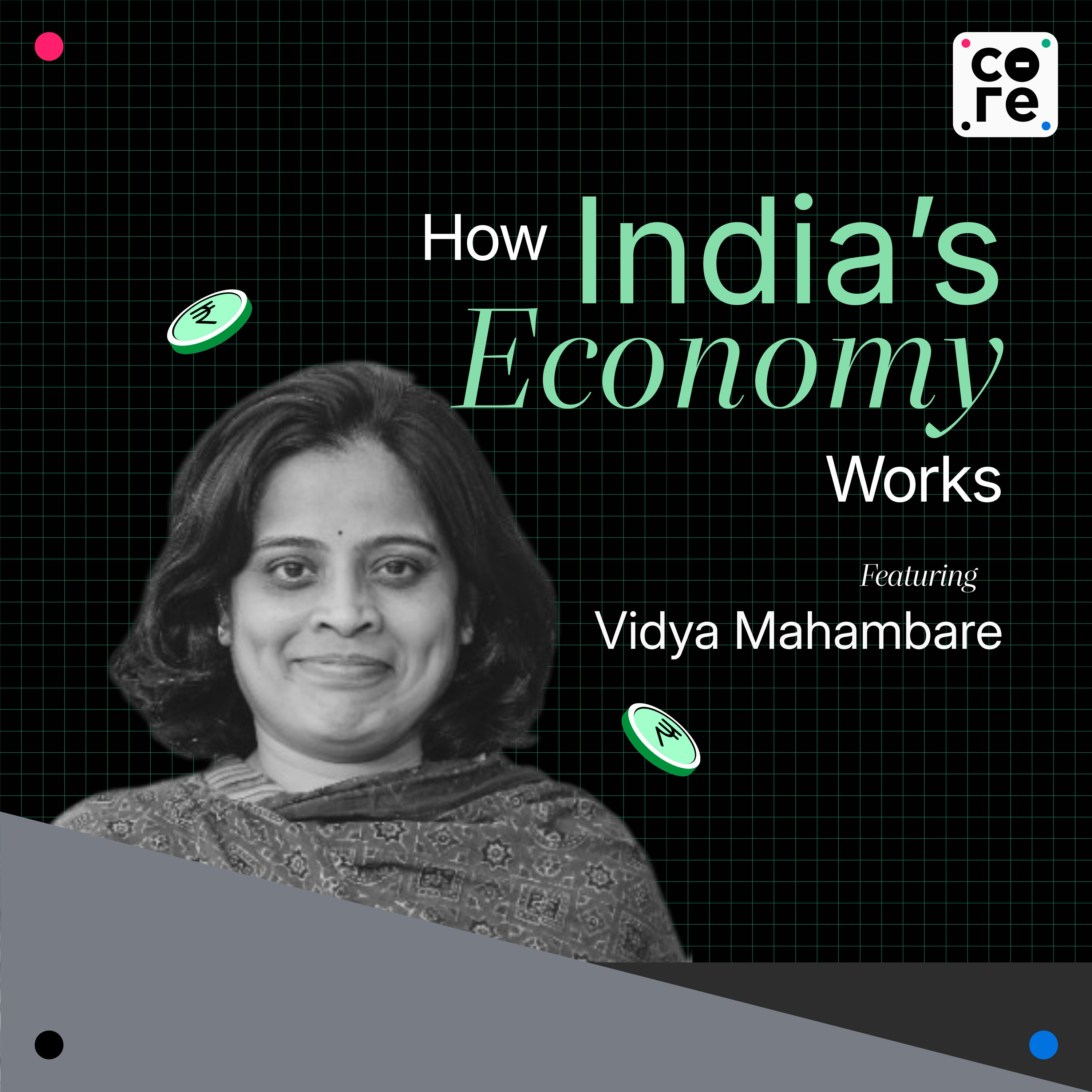 India Needs Cheaper Capital. Indian Households Could Hold the Key 30.09.2026 29минIndia’s households save a substantial share of their income, but much of that saving goes into physical assets such as gold and real estate rather than financial instruments. Why does this matter for the economy? And what does the composition of household savings have to do with investment, borrowing costs and economic growth?In this episode of How India’s Economy Works, journalist and author Puja Mehra speaks with economist Vidya Mahambare, Union Bank Chair Professor of Economics and Director (Research and Fellow Programme In Management) at the Great Lakes Institute of Management in Chennai about India’s household savings and why financial savings are particularly important. They discuss why households save heavily in physical assets, the role of gold and housing, rising household financial liabilities, and why financial savings have increased but remain relatively small compared with physical savings.They also examine whether tax policy creates different incentives for physical and financial savings, and discuss possible ways to encourage households to shift more of their savings into financial instruments without simply asking them to save more overall. Tune in for insights on India’s savings patterns, financial savings, household investment, borrowing costs and the policy changes that could reshape how Indians save.CHAPTERS(00:00) Introduction to Household Savings(01:00) Domestic Savings and Investment Needs(05:35) Financial Savings Lower Borrowing Costs(07:16) Comparing Global Household Savings Rates(09:35) Reasons for Physical Asset Dominance(12:47) Rising Liabilities and Net Savings(14:02) Distortions in Real Estate Taxation(17:46) Ending Taxes on Financial Reshuffling(21:44) Rebalancing Incentives Across Asset Classes(24:20) Offsetting Fiscal Revenue via Agriculture(27:12) Shifting Savings Composition Over VolumeFor more of our coverage check out thecore.inFollow us on:Twitter | Instagram | Linkedin | Youtube
 -
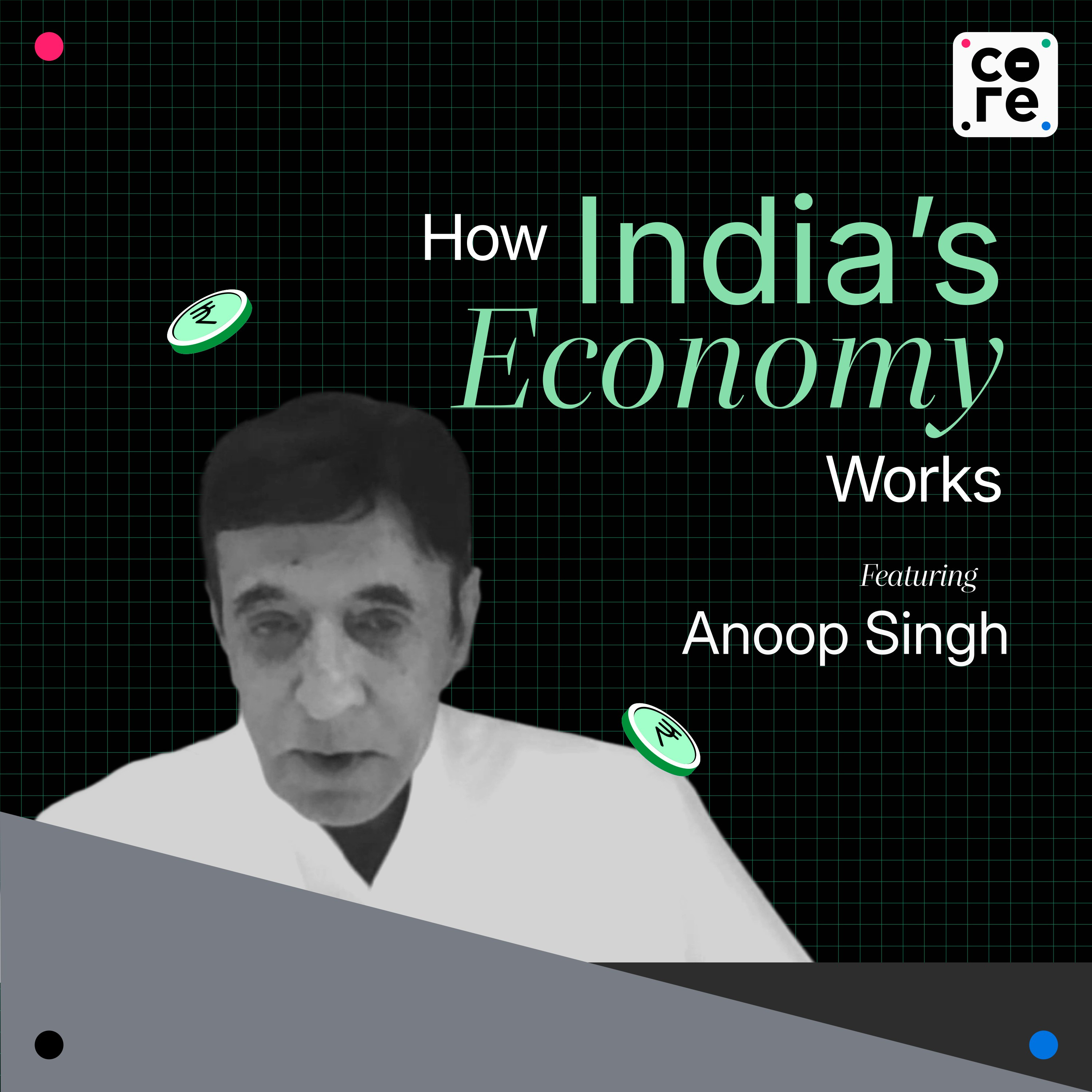 Global Bond Markets Are Shifting. What It Means for India 23.09.2026 35минThe episode examines how rising government borrowing, persistent inflation, changing bond investors and huge AI-related investment needs are reshaping global bond markets. In this episode of How India’s Economy Works, Puja Mehra speaks with Dr. Anoop Singh, economist and Former Director of the IMF. Singh explains why the US Treasury market matters far beyond the United States, why central banks have less control over long-term borrowing costs than many assume, and how the world is entering what he describes as a “new fiscal era” marked by greater fiscal dominance.The conversation also looks at the implications for India. Singh discusses India’s high public debt and fiscal deficit, the importance of maintaining fiscal and central-bank credibility, and why the key question is not simply how much the government can borrow today, but whether that borrowing will generate enough productive investment and growth to service the debt in the future. He also examines India’s definition of capital expenditure, the need for greater spending on research and development and innovation, and the importance of building stronger fiscal buffers.Tune in for insights on the global bond-market shift, fiscal dominance, rising borrowing costs, India’s public finances, and why fiscal credibility is increasingly tied to economic growth.CHAPTERS(00:00) Introduction to Global Bond Markets(00:35) Liquidity Buybacks and Currency Interventions(02:58) The Federal Reserve Rate Decision(06:15) Entering the Fiscal Dominance Era(12:18) Political Barriers to Budget Adjustments(16:56) Fiscal Credibility Linked with Growth(22:27) Global Spillovers on Indian Debt(24:02) Redefining Quality in Capital Expenditure(27:27) Persistent Global Inflation and Buffers(32:29) Sustainability of State Fiscal DeficitsFor more of our coverage check out thecore.inFollow us on:Twitter | Instagram | Linkedin | Youtube
 -
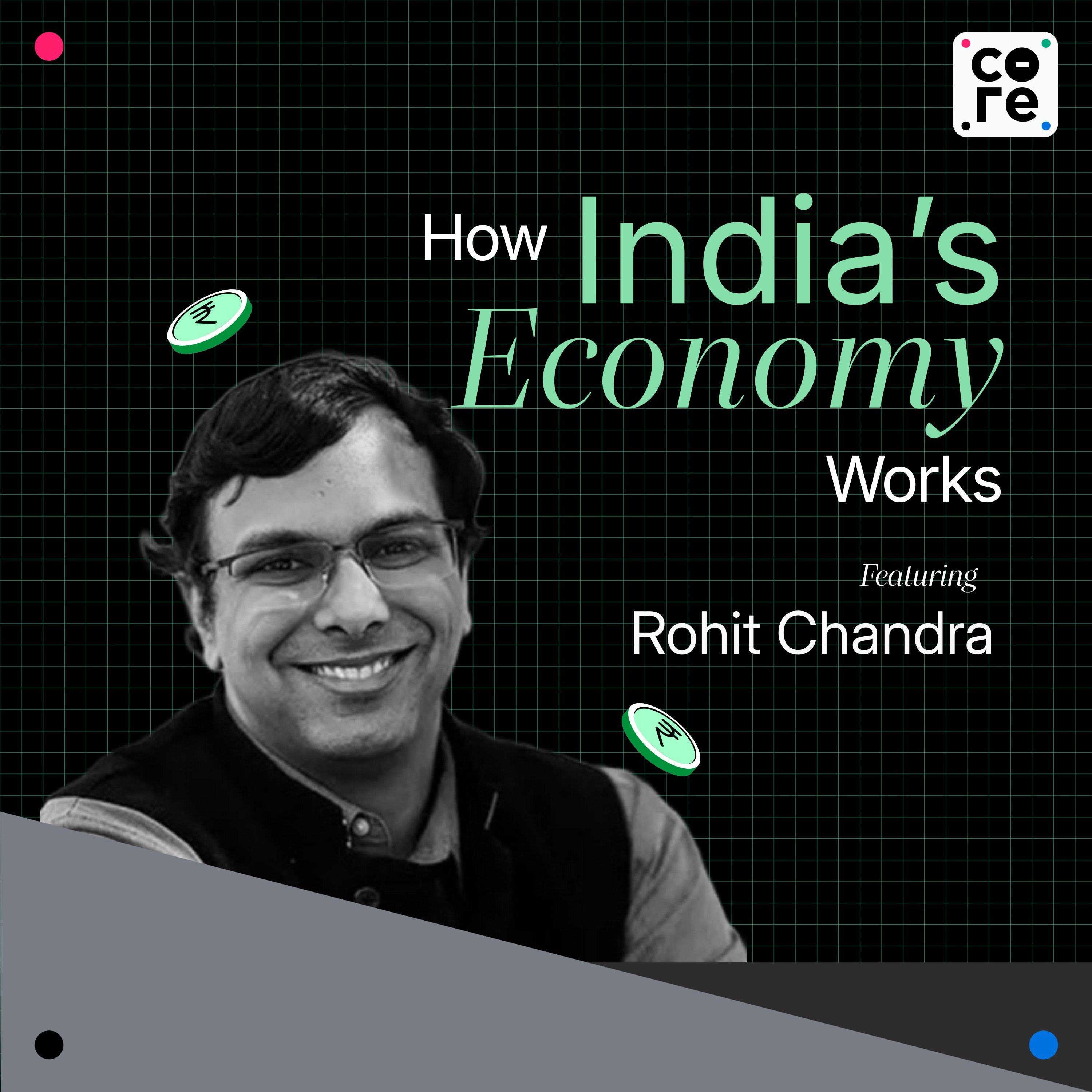 What the Iran Conflict has Revealed about India's Energy Security 16.09.2026 38минIn this episode of How India’s Economy Works, Puja Mehra speaks with political scientist and economic historian Rohit Chandra, Assistant Professor at the School of Public Policy of IIT, Delhi. They talk about what those crises taught India, how the country’s energy system has changed, and what the latest Iran conflict and Strait of Hormuz disruption reveal about India’s continuing vulnerabilities.Chandra explains why India was better placed to absorb the latest shock than it was in the 1970s, thanks to greater electrification, domestic refining capacity and crude storage. But he argues that the human and economic costs have been underestimated, particularly for poorer households, migrant workers and small businesses. He also discusses India’s dependence on imported energy, the delayed response to LPG shortages, the need for greater strategic petroleum reserves, and why energy efficiency must focus more on industry than households.The conversation also looks ahead at what India needs to do differently: give public-sector energy companies greater autonomy, allow them to invest and experiment across a changing energy economy, make energy-sector contracts more transparent, and create a more predictable policy environment for investors. Chandra argues that crises often push governments towards ad hoc, statist interventions — making clear rules and predictability essential for long-term energy security.Tune in for insights on India’s oil shock, energy security, strategic petroleum reserves, LPG shortages, energy efficiency, PSU autonomy and the policy lessons from past crises.CHAPTERS(00:00) Introduction to India's Oil Vulnerability(01:01) History of Indian Energy Shocks(08:27) Hidden Costs of Recent Disruptions(15:12) Strategic Petroleum Reserves and Preparedness(18:56) Industrial Efficiency and PSU Autonomy(24:42) Global Oil Markets and Supply(29:54) Big-Picture Energy Sector Reforms(32:15) Transparency in Energy Market Contracting(35:48) Predictability and Future Investment PoliciesFor more of our coverage check out thecore.inFollow us on:Twitter | Instagram | Linkedin | Youtube
 -
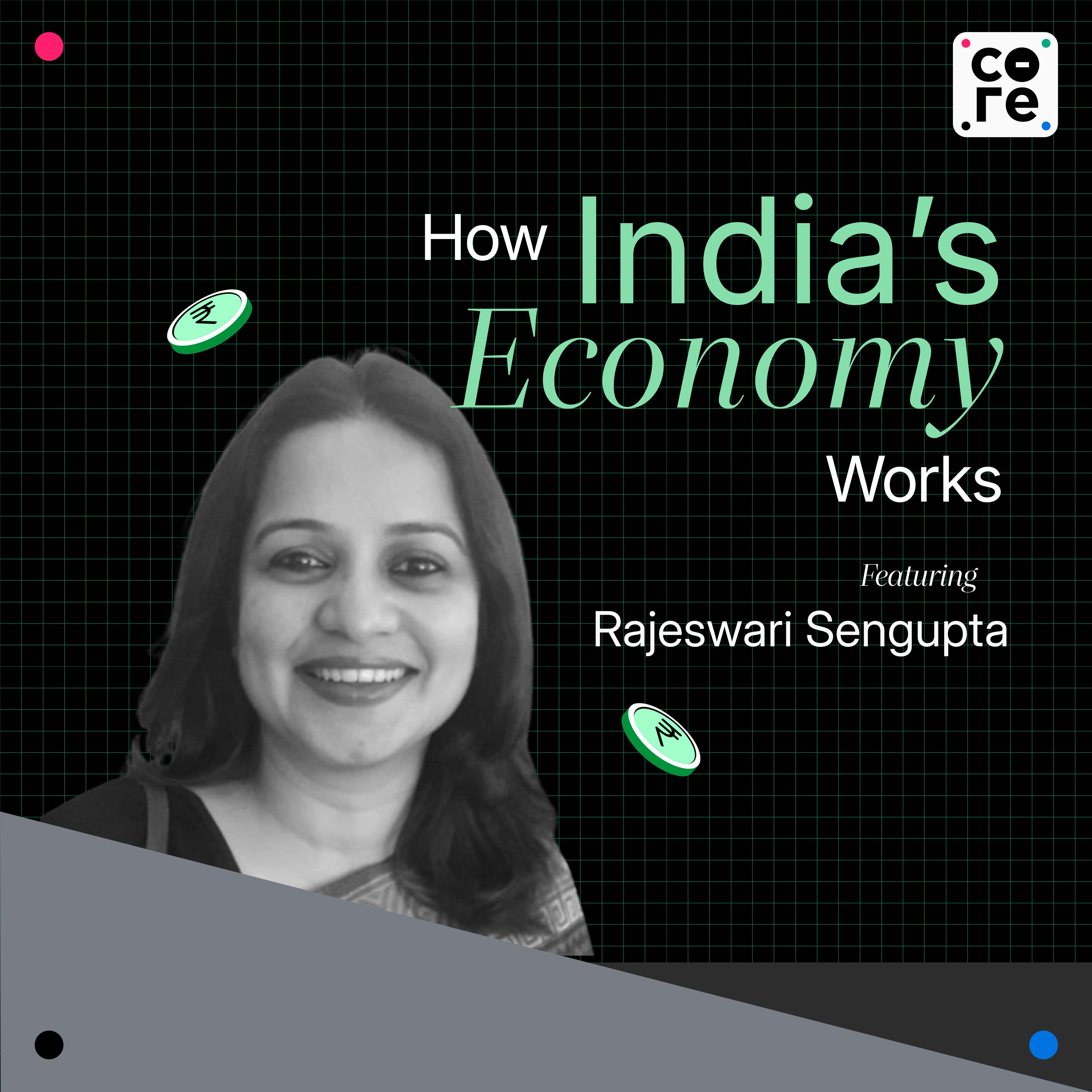 India’s 7.8% Growth Has an Unanswered Question 09.09.2026 57минIndia’s latest GDP numbers show the economy growing at 7.8%, but how much confidence should we place in that figure? In this episode of How India’s Economy Works, Puja Mehra speaks with economist Rajeswari Sengupta about the complexities of measuring India’s GDP, the latest base-year revision and the methodological changes behind the new estimates.Sengupta explains why India’s large informal economy, limited data, rapid structural change and the absence of comprehensive income data make GDP estimation particularly challenging. She also breaks down the shift from single deflation to double deflation, the use of producer price indices, and why the statistical office’s lack of detailed sources-and-methods documentation has raised concerns. The conversation also examines the use of GST data and surveys of the informal sector, the credibility of the new GDP series, and the unusual spending boom implied by the latest quarterly numbers despite a sharp rise in import prices. Sengupta argues that the debate should be about transparency and statistical methodology—not politics. Tune in for insights on India’s GDP measurement, the new base-year revision, double deflation, data transparency, and the puzzle surrounding the 7.8% growth figure.CHAPTERS(00:00) Introduction to Indian GDP Estimation(01:19) Challenges in Indian GDP Measurement(09:47) Uncaptured Services and Gig Economy(15:19) Controversies of Past Base Revisions(21:42) Single Versus Double Deflation Explained(26:04) Shift from WPI to PPI Deflation(32:43) Missing Methodology and Sources Document(35:10) Doubts Around Quarterly GDP Numbers(40:01) Mismatched Identifiers in GST Data(46:12) Political Pressures on Statistical Agencies(52:48) The Terms of Trade Shock PuzzleFor more of our coverage check out thecore.inFollow us on:Twitter | Instagram | Linkedin | Youtube
 -
 India’s Self-Inflicted Outflows: How Policy Makers Are Driving Away Foreign Investors 02.09.2026 39минIn this episode of How India’s Economy Works, Puja Mehra speaks with Ananth Narayan, Economist and Former Whole Time Member, SEBI about the growing interconnections between India’s interest-rate, equity and currency markets—and the unintended consequences of intervening in each of them separately.Narayan argues that the RBI’s aggressive intervention in the bond market, including record purchases of government bonds, has kept interest rates artificially low and weakened the appeal of fixed-income assets for domestic savers. This, he says, has pushed more savings into equities and overseas assets, contributed to stretched equity valuations, and made it harder for foreign capital to flow into India. At the same time, lower interest-rate differentials have created incentives for hedgers and speculators to buy dollars, adding pressure on the rupee.The conversation explores the idea of an “impossible trinity” in a more interconnected financial system, why RBI intervention in one market can create problems in another, and whether India needs to allow markets to function more freely. Narayan also discusses tax reforms for fixed income, greater freedom for Indians to invest overseas, and why policymakers need to take a holistic view of financial markets.Tune in for insights on RBI intervention, interest rates, the rupee, capital flows, equity valuations and what India needs for more sustainable capital formation.CHAPTERS(00:00) Introduction to the Impossible Trilemma(01:19) Interconnected Markets and Bond Interventions(04:57) Low Rates Distort Credit Markets(12:15) Discretionary Savings Flood Equity Markets(15:47) Domestic Overvaluation Deters Foreign Capital(24:49) Interest Differentials Drive Dollar Outflows(28:51) Subsidized Swaps and Forex Interventions(31:54) Reforming Fixed Income Tax Parity(36:18) Allowing Freer Overseas Investment LimitsFor more of our coverage check out thecore.inFollow us on:Twitter | Instagram | Linkedin | Youtube
 -
 The Unintended Consequences Of India's Rural Homes Subsidy 19.08.2026 27минIndia has spent heavily on housing schemes, but are we building homes in the places where people actually need them? In this episode of How India’s Economy Works, Puja Mehra speaks to economist Dr. Vidya Mahambare, Union Bank Chair Professor of Economics and Director (Research and Fellow Programme In Management) at the Great Lakes Institute of Management in Chennai, about why India’s housing policy needs to be rethought as part of a broader strategy for employment and economic growth. Mahambare argues that homes need to be built closer to where jobs are being created, particularly in urban and semi-urban areas, rather than simply subsidising home ownership in rural areas.The conversation also explores how housing can influence migration, manufacturing, regional development and women’s participation in the workforce. From industrial housing for large-scale manufacturing to safe working-women’s hostels, childcare located near schools and better public transport, Mahambare explains why housing is best understood as labour-market infrastructure, rather than simply a welfare measure.Tune in for insights on India’s employment challenge, the housing-jobs mismatch, women’s workforce participation, migration, manufacturing and the policy changes needed to make India’s cities more productive.CHAPTERS(00:00) Introduction to Housing Policy(00:54) Pradhan Mantri Awas Yojana Issues(02:37) Subsidizing Rental Housing Instead(05:37) Job Creation Precedes Housing Need(09:33) Government Role in Industrial Housing(12:16) Working Women Hostels and Mobility(17:43) Beyond Housing for Economic Growth(19:49) Enabling Conditions for Married Women(24:49) Pilot Programs for Effective PolicyFor more of our coverage check out thecore.inFollow us on:Twitter | Instagram | Linkedin | Youtube
 -
 Why India's GDP Growth Isn't Resulting in Prosperity 05.08.2026 33минIndia has been one of the world's fastest-growing major economies for years. Yet for millions of Indians, rising GDP has not translated into rising household prosperity, better jobs, or greater economic security.In this episode of How India's Economy Works, Puja Mehra speaks with economist Professor Partha Chatterjee, Dean of Academics and Professor of Economics at Shiv Nadar University, about the structural reasons behind this disconnect. They explore why India's "missing middle"—the absence of enough productive, mid-sized firms and middle-income jobs—has become one of the country's biggest economic challenges. The conversation examines why firms struggle to scale, how policy incentives often encourage businesses to stay small, and why investment in education, health, finance, land, and judicial reforms is just as important as building physical infrastructure.The discussion also covers innovation, productivity, labour market opportunities for women, industrial policy, self-reliance, global supply chains, and why creating an ecosystem where firms can grow may be far more important than simply backing a handful of national champions.Tune in for insights on why sustained economic growth alone cannot deliver widespread prosperity—and what India must do to ensure that growth creates better jobs, stronger businesses, and rising living standards for millions.CHAPTERS(00:00) Introduction(01:21) Why Growth Misses Household Prosperity(03:31) Missing Middle-Sized Productive Firms(06:05) Policy Cliffs and Educational Deficit(09:30) Resource Misallocation and Skill Mismatch(12:20) Why Unproductive Firms Survive(14:29) Impact of Creeping Tariff Protection(16:43) Political Economy and Interest Groups(18:16) Beyond Physical Infrastructure and Credit(20:56) Risks and Barriers to Innovation(23:46) Building Slopes and Supporting Ecosystems(28:10) Rethinking Self-Reliance and National ChampionsFor more of our coverage check out thecore.inFollow us on:Twitter | Instagram | Linkedin | Youtube
 -
 India’s Engineering Crisis 22.07.2026 35минIn this episode of How India's Economy Works, Puja Mehra speaks with Electrical Engineer Sudhir Gera, Director of Operations at IEC Electric Power Ltd, who has spent over three decades in the industry and has worked closely with engineering colleges, regulators, and policymakers. He explains why India's challenge is not a shortage of engineering graduates but a shortage of industry-ready skills. From outdated curricula and weak industry-academia collaboration to the dominance of IT jobs and the neglect of hands-on manufacturing training, Gera argues that the country's engineering education system is no longer aligned with the needs of modern industry.He also proposes an ambitious "linking school" model that would connect engineering colleges, local industries, and students—much like teaching hospitals do for medical education—to bridge the gap between classrooms and shop floors. The discussion also explores how AI is reshaping engineering careers, why manufacturing deserves renewed attention, and what reforms are needed if India is to become a global manufacturing powerhouse.Tune in for insights on why India's employability crisis is really a skills crisis, how engineering education can be reimagined for manufacturing, and what it will take to build the workforce India's industrial future demands.CHAPTERS(00:00) Introduction to the Interview(00:56) Background of Sudhir Gera(01:28) Defining the Employability Crisis(04:47) Role of MSME Margins(07:41) Need for Training Infrastructure(09:07) Assembly Versus True Manufacturing(11:06) Stigma Around Vocational Skills(14:04) Introducing the Linking School(18:16) Sourcing Industry Experts Faculty(21:12) Value of Practical Knowledge(26:01) Geopolitics and Manufacturing Needs(30:45) Bringing Action to IndustryFor more of our coverage check out thecore.inFollow us on:Twitter | Instagram | Linkedin | Youtube
 -
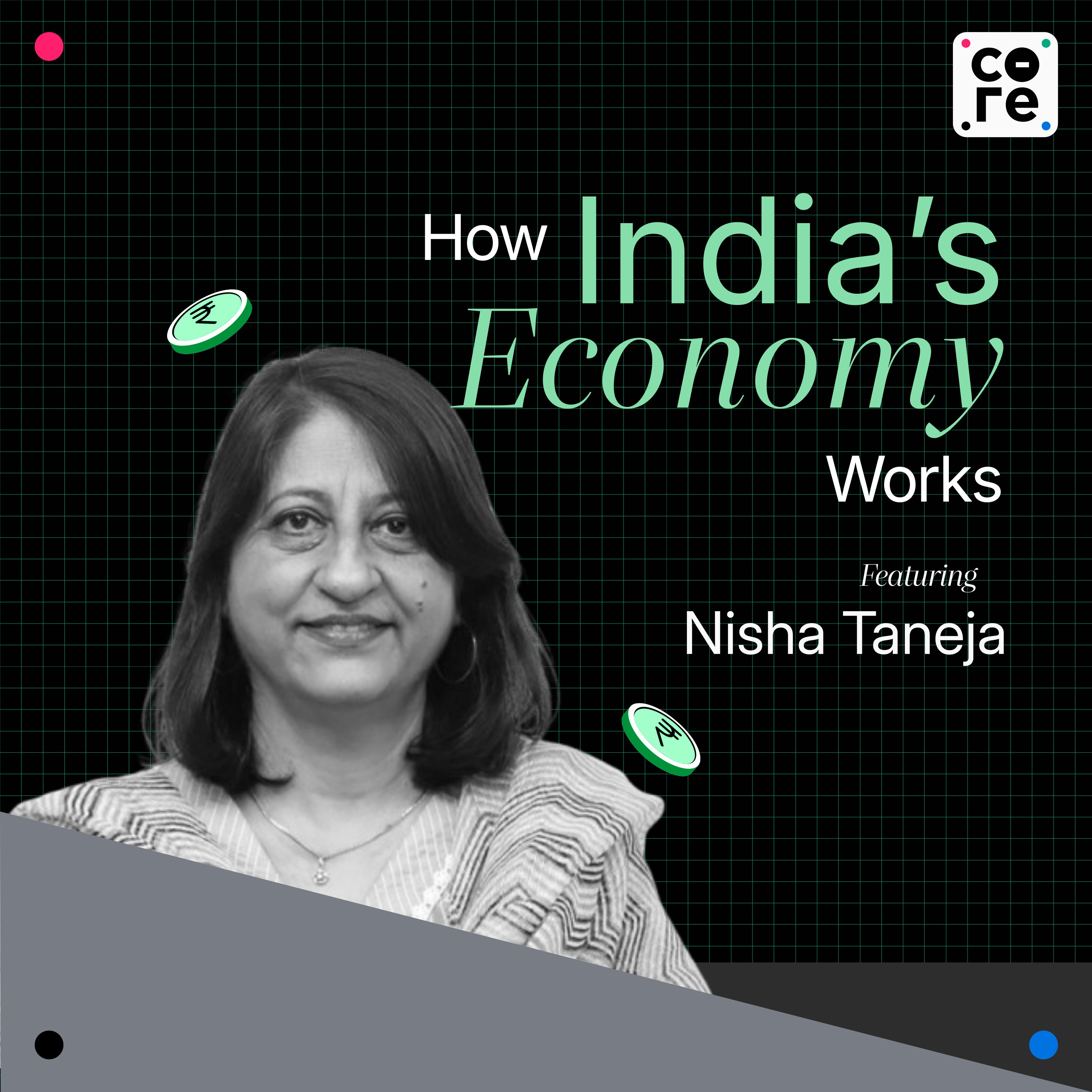 How India's exports to the US jumped in the tumultuous year of Trump Tariffs 08.07.2026 17минIn this episode of How India's Economy Works, host Puja Mehra speaks with trade economist Dr. Nisha Taneja, Professor at Indian Council for Research on International Economic Relations (ICRIER). They unpack what the latest export data really reveals. Why did some sectors thrive while others—diamonds, pharmaceuticals, petroleum products and jewellery—registered sharp declines? Why did exports to China unexpectedly surge? And what does this tell us about India's overdependence on the US market?The conversation also examines whether India's recent free trade agreements can genuinely help exporters, why earlier FTAs failed to deliver the expected gains, and how non-tariff barriers, product standards and local market knowledge matter as much as tariff cuts. Dr. Taneja explains why the tariff shock has become a catalyst for a new export diversification strategy, prompting the government to launch an ambitious export promotion mission aimed at helping Indian firms enter new markets.Tune in for insights on how Trump's tariffs reshaped India's export strategy, why diversification has become an economic necessity, and what India must do to build a more resilient export ecosystem.CHAPTERS(00:00) Introduction(00:14) Why US Tariffs Didn't Hurt Exports(03:27) Which Indian Sectors Lost Most(05:31) China's Surprising Demand For Indian Goods(06:52) How Exporters Found New Markets(08:21) Can Free Trade Agreements Help?(10:53) Lessons From Trump's Tariffs(11:32) India's New Export Diversification Strategy(14:17) Can Textile Exports Recover?(14:57) Finding Markets Beyond America(16:20) A Turning Point For India's ExportsFor more of our coverage check out thecore.inSubscribe to our NewsletterFollow us on:Twitter | Instagram | Linkedin | Youtube
 -
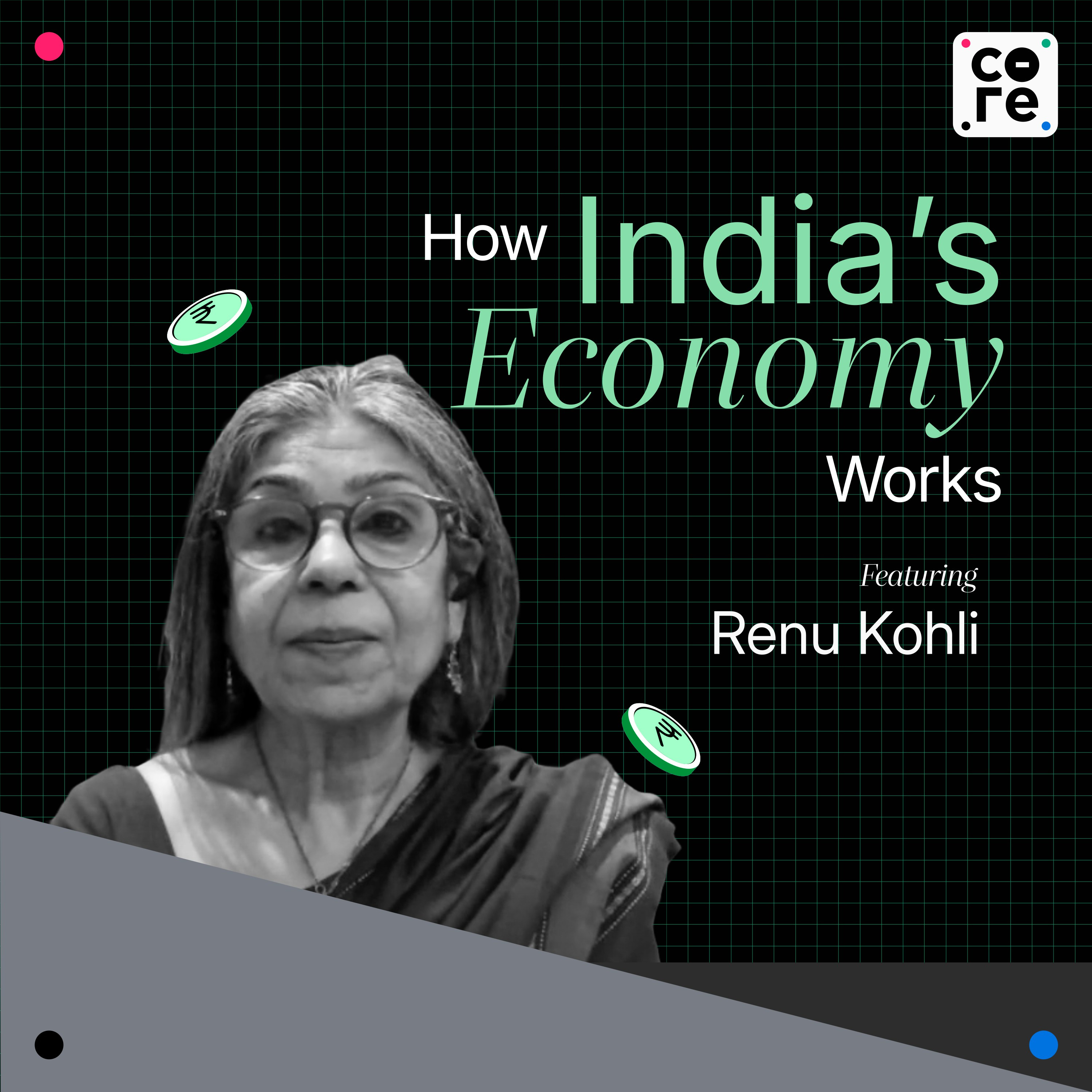 India's Forex Reserves Aren't the Safety Net You Think 17.06.2026 33минIn this episode of How India's Economy Works, host Puja Mehra speaks with economist Renu Kohli, formerly at the Reserve Bank of India and the IMF and currently senior fellow at the Centre for Social and Economic Progress (CSEP). They talk about the recent depreciation of the rupee and why this episode may be different from previous currency shocks. Despite India's large foreign exchange reserves, the rupee has faced sustained pressure. Why?Renu Kohli argues that the deeper issue lies not in India's trade balance but in the drying up of foreign capital inflows. She explains the difference between reserves earned through exports and what she calls "borrowed reserves", examines the decline in foreign direct investment, and discusses whether policymakers underestimated the structural nature of these pressures.The conversation also explores the RBI's exchange-rate management strategy, the limits of using reserves to defend a currency, the impact of global capital flows, and why short-term measures can only buy time. Looking ahead, she outlines the reforms India may need if it wants to attract and retain long-term foreign investment in an increasingly competitive global environment.What does the rupee's recent weakness tell us about India's place in the global economy? And what must change to ensure that external vulnerabilities do not become a lasting feature of India's growth story?Tune in for insights on the rupee, foreign capital, forex reserves, and the structural challenges shaping India's economic future.CHAPTERS(00:00) Introduction(01:04) Why Forex Reserves Didn't Prevent Rupee Weakness(04:25) How the Current Shock Differs from 2013(08:55) The Hidden Problem: Drying Foreign Capital(13:33) Is This India's Most Serious External Vulnerability Since 1991?(16:14) Did the RBI Misread the Nature of the Pressure?(19:24) Should the Rupee Have Been Allowed to Fall Earlier?(22:54) RBI's Short-Term Measures and Their Limits(26:20) Can Policymakers Count on Global Capital Returning?(29:29) Why India Is Struggling to Attract Foreign Investment(32:19) What India Must Do to Secure Long-Term Capital InflowsFor more of our coverage check out thecore.inFollow us on:Twitter | Instagram | Linkedin | Youtube
 -
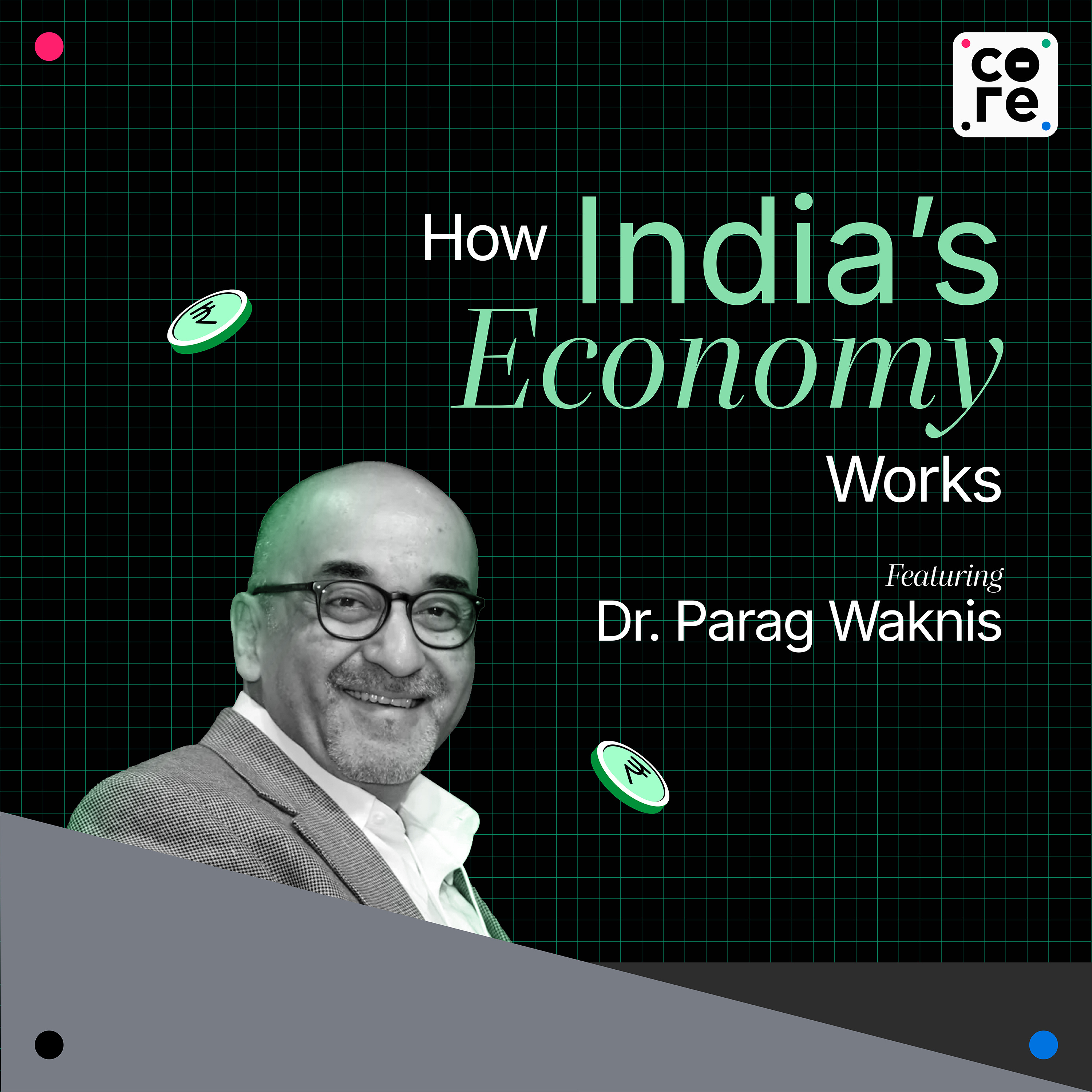 What the RBI's role in the economy and its Relationship with Government is 10.06.2026 38минIn this episode of How India’s Economy Works, host Puja Mehra speaks with economist and Professor of Economics at SRM University, Dr. Parag Waknis to unpack one of the most important yet least understood documents in Indian policymaking, the RBI’s accounts. They explore how the RBI manages government debt, why it holds government securities on its balance sheet, and how these operations influence GDP, liquidity, interest rates and inflation.The conversation examines the evolution from direct deficit financing to the current system of primary dealers, the significance of foreign exchange reserves, and the RBI’s use of tools such as open market operations and Operation Twist. Dr. Waknis also explains the relationship between government borrowing and central bank profits, and discusses whether these dynamics affect the RBI’s policy independence.Tune in for insights into the institution at the heart of India’s monetary and financial system.CHAPTERS(00:00) Introduction(00:14) Why the RBI Balance Sheet Matters(03:54) Why Government Bond Auctions Fail(06:15) How RBI Invests Forex Reserves(08:28) Operation Twist and Borrowing Costs(11:21) Why RBI Doesn't Fund Government Directly(14:33) Currency Notes, Coins and Sovereignty(16:35) What the Latest Balance Sheet Shows(19:00) Government Borrowing and RBI Surplus(21:27) Rising Government Debt on RBI Books(24:18) Is India’s Bond Market Distorted?(25:44) RBI Independence and Balance Sheet Risks(27:47) Understanding the Monetary Policy Corridor(32:54) Rules Versus Discretion in Monetary Policy(34:49) RBI’s Conflicting Institutional Roles(36:36) Why US Debt Markets Differ(37:48) Key Takeaways on RBI OperationsFor more of our coverage check out thecore.inSubscribe to our NewsletterFollow us on:Twitter |Instagram |Facebook |Linkedin |Youtube
 -
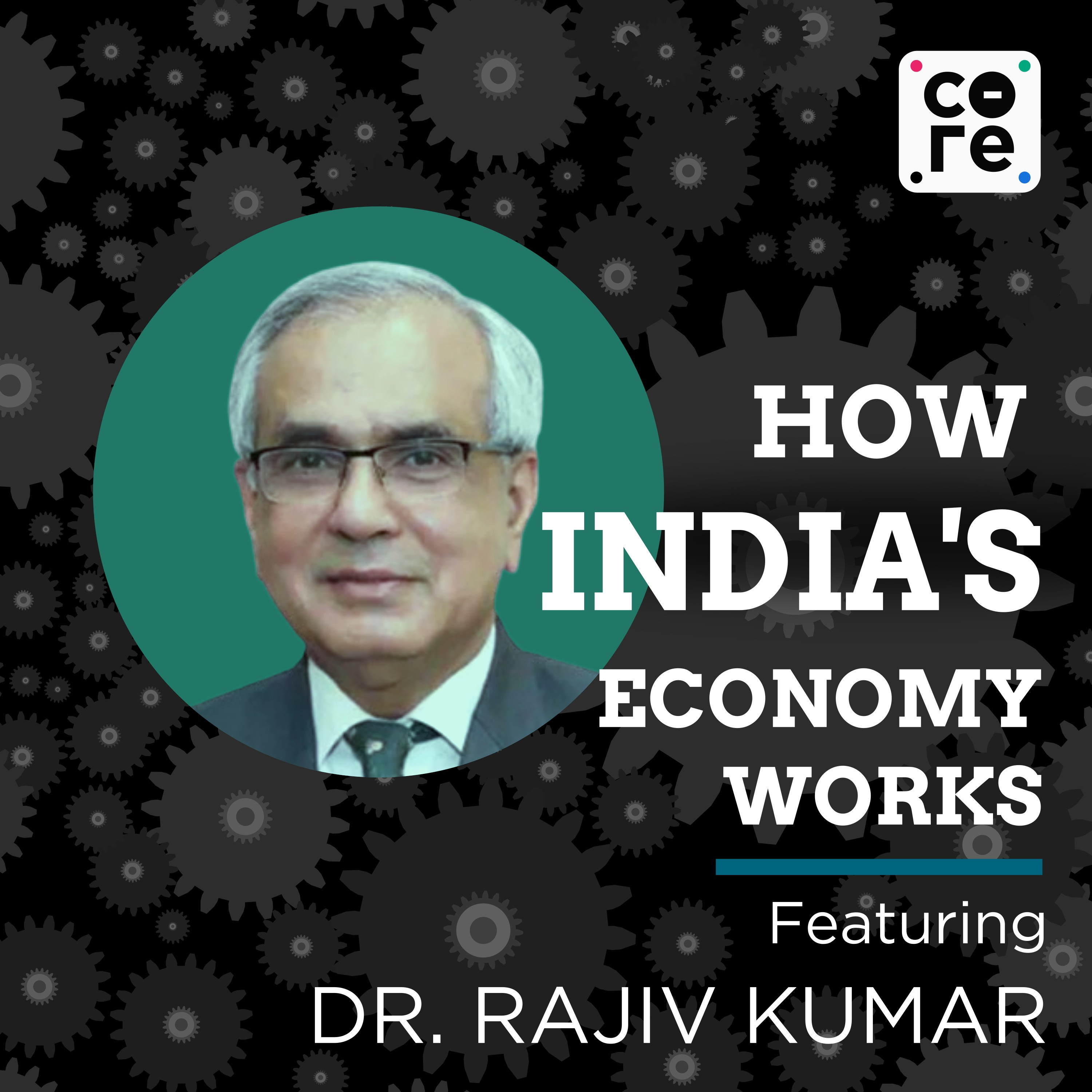 India's Manufacturing is Broken. There's Only One Way to Fix It, says Rajiv Kumar 27.05.2026 29минIn this episode of How India's Economy Works, journalist and author Puja Mehra speaks with economist and former NITI Aayog Vice Chairman Rajiv Kumar about why India’s manufacturing sector continues to underperform despite decades of policy attention and repeated attempts to boost industrial growth.India has long aspired to become a global manufacturing hub, yet manufacturing’s share in GDP has stagnated and labour-intensive sectors such as apparel, leather and food processing have struggled to expand. Drawing on Dr. Kumar’s recent writing and policy experience, the conversation explores why India has failed to build an export-oriented manufacturing economy, why scale and competitiveness remain elusive, and whether the country has become too dependent on the idea of a large domestic market.They discuss the limitations of production-linked incentives, the persistence of protectionist thinking, and why Indian industry has often preferred domestic shelter over global competition. The episode also examines the contrasting experiences of China, Bangladesh and Vietnam, the role of state governments in export promotion, the challenges facing SMEs, and why labour-intensive manufacturing remains crucial for absorbing surplus workers from agriculture.The discussion raises larger questions about employment, industrial strategy and India’s long-term growth model. Can manufacturing still become a major engine of jobs and exports? What would it take for India to double its share in global trade? And are policymakers, industry and states aligned enough to make that happen?Tune in for insights on why India’s manufacturing ambitions continue to fall short — and what it will take to build a more competitive, export-driven economy.CHAPTERS(00:00) Introduction(00:20) Manufacturing Slowdown(01:01) Export-Led Growth(02:53) India’s Market Myth(03:57) Competing With China(08:37) Rewarding Exporters(11:51) Bangladesh Garment Success(12:25) Why Factories Leave India(15:13) Jobs And Textiles(16:52) Manufacturing Wake-Up Call(18:14) Employment Concerns(21:02) Supporting Smaller Firms(21:39) Lessons From China(23:58) Rethinking PLI(25:51) Bureaucracy And Industry(26:31) Breaking Policy SilosFor more of our coverage check out thecore.inSubscribe to our NewsletterFollow us on:Twitter |Instagram |Facebook |Linkedin |Youtube
 -
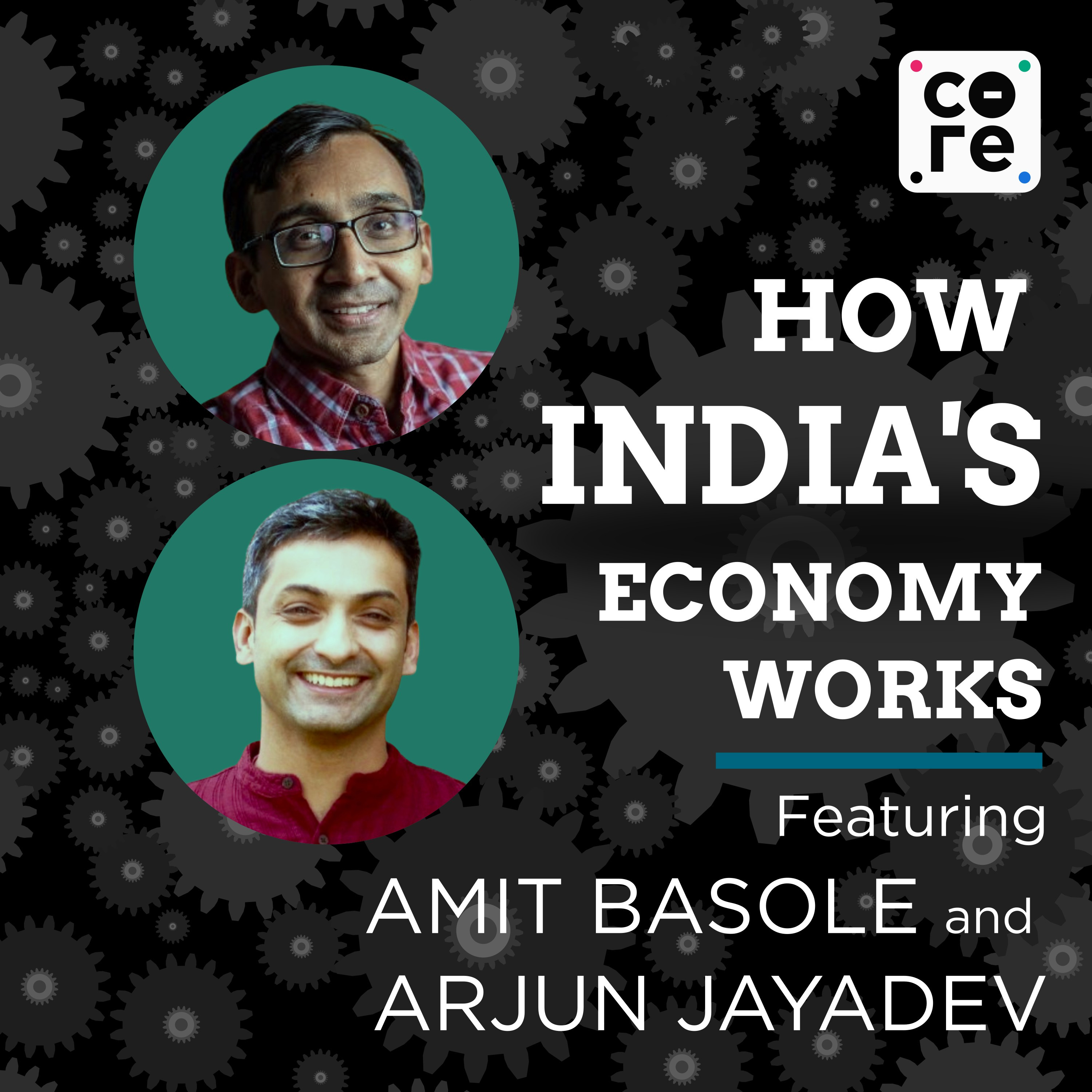 The Productivity Slowdown Bedevilling India’s Growth Story 13.05.2026 30минIn this episode of How India’s Economy Works, journalist and author Puja Mehra speaks with economists Arjun Jayadev and Amit Basole, authors of the CSIE working paper India's Labour Productivity Puzzle, about a troubling trend beneath India’s headline growth numbers: a sharp slowdown in labour productivity since 2017.India remains one of the world’s fastest-growing major economies, employment levels have risen, and female labour force participation has increased. Yet, according to their latest research, workers today are producing far less than they would have if earlier productivity trends had continued. The conversation explores why this matters for wages, living standards, investment, and the broader health of the economy.They discuss the rise of surplus labour, the difference between employment and productive jobs, and why much of the recent increase in work — especially for women — may reflect economic distress rather than opportunity. The episode also examines weak private investment, manufacturing stagnation, structural transformation, the limits of formalisation, and whether policies like infrastructure spending, digitalisation, and production-linked incentives are truly improving productivity.The discussion raises a deeper question: can India sustain high growth if output per worker remains stagnant? Tune in for insights on why India’s growth story may be masking a deeper productivity crisis — and what it means for jobs, wages, and the future of the economyCHAPTERS(00:00) Introduction(01:23) India’s Labour Productivity Slowdown Since 2017(05:05) Why India’s Productivity Crisis Stands Out Globally(09:32) How Growth Can Rise Despite Stagnant Productivity(10:58) Surplus Labour and the Rise of Low-Quality Employment(14:02) The Manufacturing Productivity Puzzle(15:08) Low Wages, Weak Productivity, and Employer Incentives(17:24) The Link Between Productivity and Wages(18:35) Women’s Employment and Economic Distress(20:40) The “Intensification of Dualism” in India’s Economy(21:45) Formalisation Versus Informal Labour Expansion(22:14) PLI Schemes, Policy Dynamism, and Missing Counterfactuals(25:30) Cash Transfers and Structural Transformation(27:00) Why Digitalisation Does Not Automatically Improve Productivity(28:55) Conclusion and Final ThoughtsFor more of our coverage check out thecore.inSubscribe to our NewsletterFollow us on:Twitter |Instagram |Facebook |Linkedin |Youtube
 -
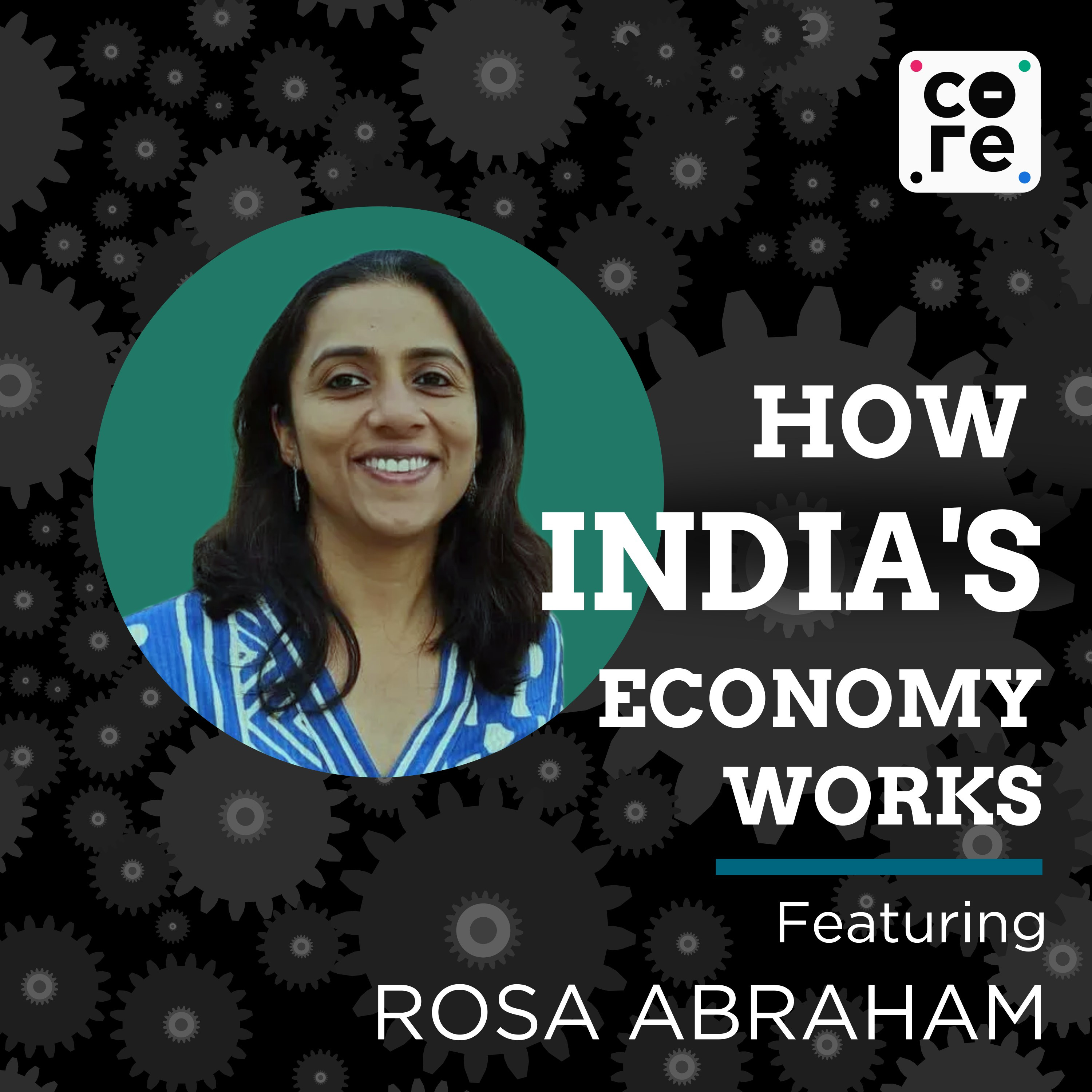 When Growth Doesn’t Reach Workers — The Hidden Stress in India’s Labour Market 29.04.2026 28минIn this episode, journalist and author Puja Mehra speaks with Rosa Abraham, economist and one of the authors of the State of Working India 2026 report, about the growing stress in India’s labour market, highlighted by recent worker protests in Noida. They discuss why even formal sector jobs are no longer guaranteeing wage growth, with real earnings stagnating—and in some cases declining—over the past decade.Abraham explains how this is not a cyclical slowdown but a deeper structural issue, driven by weak productivity, misallocation of capital, and the absence of a strong small and mid-sized enterprise base (crucial sector that invests in workers). They also examine why higher education is failing to translate into better jobs, leaving many young graduates unemployed or underemployed.Are current policies missing the bigger picture? What does this mean for India’s demographic dividend?Tune in for a sharp look at why economic growth isn’t reaching workers—and the risks of ignoring it.CHAPTERS(00:00) Introduction(00:14) Worker Protests in Noida(01:20) Stagnant Wages in India(02:30) Falling Graduate Salaries(04:27) What Low Wage Growth Reflects(07:39) Why Minimum Wages Aren’t Enforced(08:31) Youth Unemployment Explained(12:01) India’s Demographic Dividend at Risk(15:00) Demand vs Supply Side Problem(18:16) Is It a Mindset Problem?(20:28) Role of Public vs Private Sector(22:09) Fixing the Jobs Ecosystem(23:58) Risks of Inaction(27:06) No Easy SolutionsFor more of our coverage check out thecore.inSubscribe to our NewsletterFollow us on:Twitter |Instagram |Facebook |Linkedin |Youtube
 -
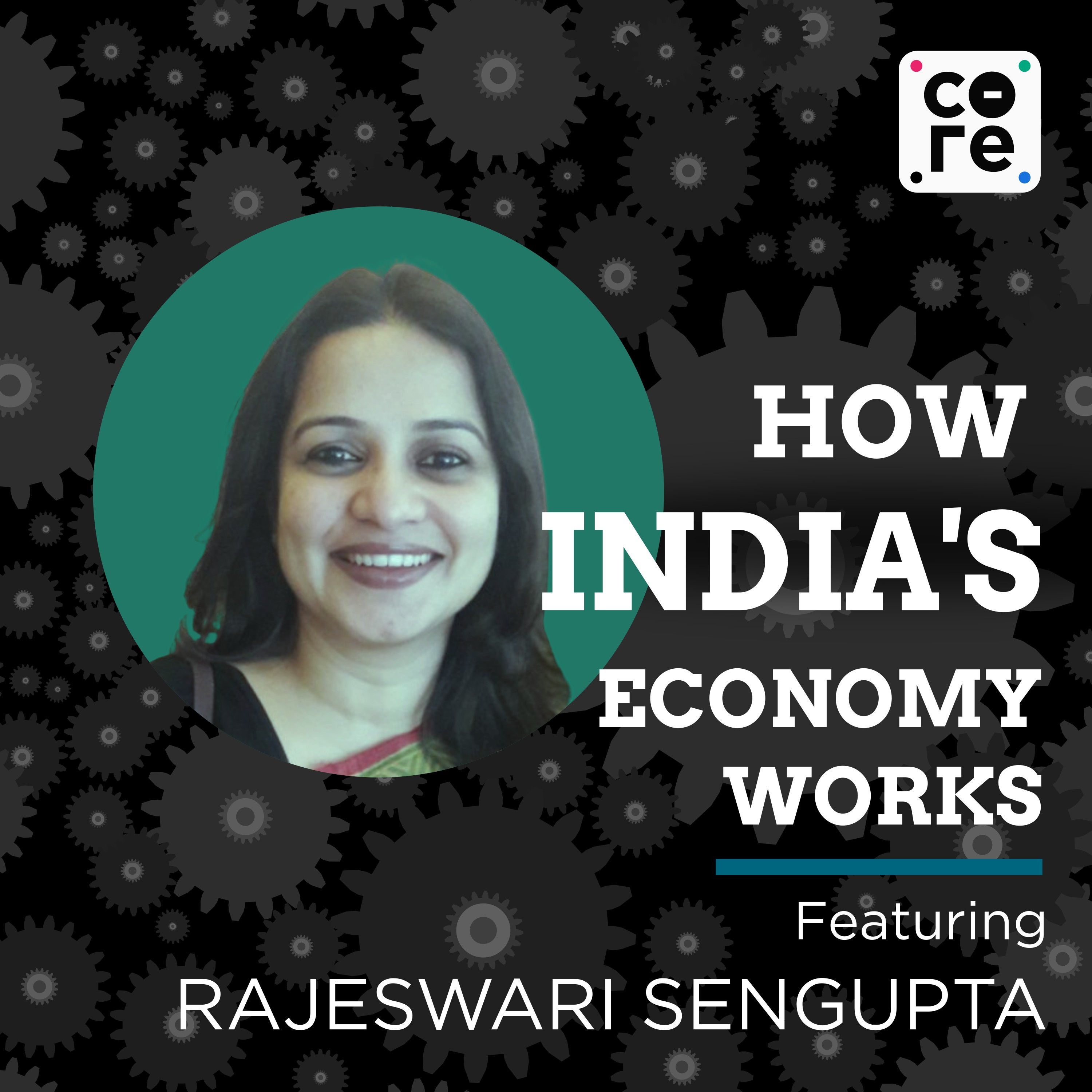 The RBI’s Losing Battle for the Rupee 15.04.2026 36минIn this episode, journalist and author Puja Mehra speaks with Rajeswari Sengupta, Economist and Associate Professor at Indira Gandhi Institute of Development Research (IGIDR), about the recent volatility in the rupee and the Reserve Bank of India’s response to it. They discuss how global shocks—from the West Asia conflict to sustained capital outflows—have exposed deeper structural vulnerabilities in India’s external sector.Sengupta explains how the rupee’s weakness is not just cyclical but rooted in fundamentals, including rising import dependence, especially on energy, and weakening foreign capital inflows. Against this backdrop, they examine the RBI’s increasingly aggressive intervention to stabilise the currency.But are these measures addressing volatility, or attempting to influence the level of the exchange rate itself? What does this mean for the rupee’s role as a market-driven price, and for India’s ambitions of greater financial openness?Tune in for insights into the tensions between currency management and market forces, and what it means for the future of India’s exchange rate framework.CHAPTERS(00:00) Pressures on the Rupee(01:09) West Asia War Impact(02:30) Energy Import Dependencies(04:32) Sustained Capital Outflows(06:14) Financing Current Account Deficit(08:03) RBI’s Intervention Methods(10:14) Offshore Arbitrage and Banks(11:58) Unprecedented Regulatory Measures(13:16) Impact on Indian Banks(15:42) Risks of Policy Flip-Flops(16:59) Cost of Hedging Exposure(21:20) Value of Market Speculation(26:38) Rupee as Shock Absorber(31:07) Recommendations for Future PolicyFor more of our coverage check out thecore.inSubscribe to our NewsletterFollow us on:Twitter |Instagram |Facebook |Linkedin |Youtube
 -
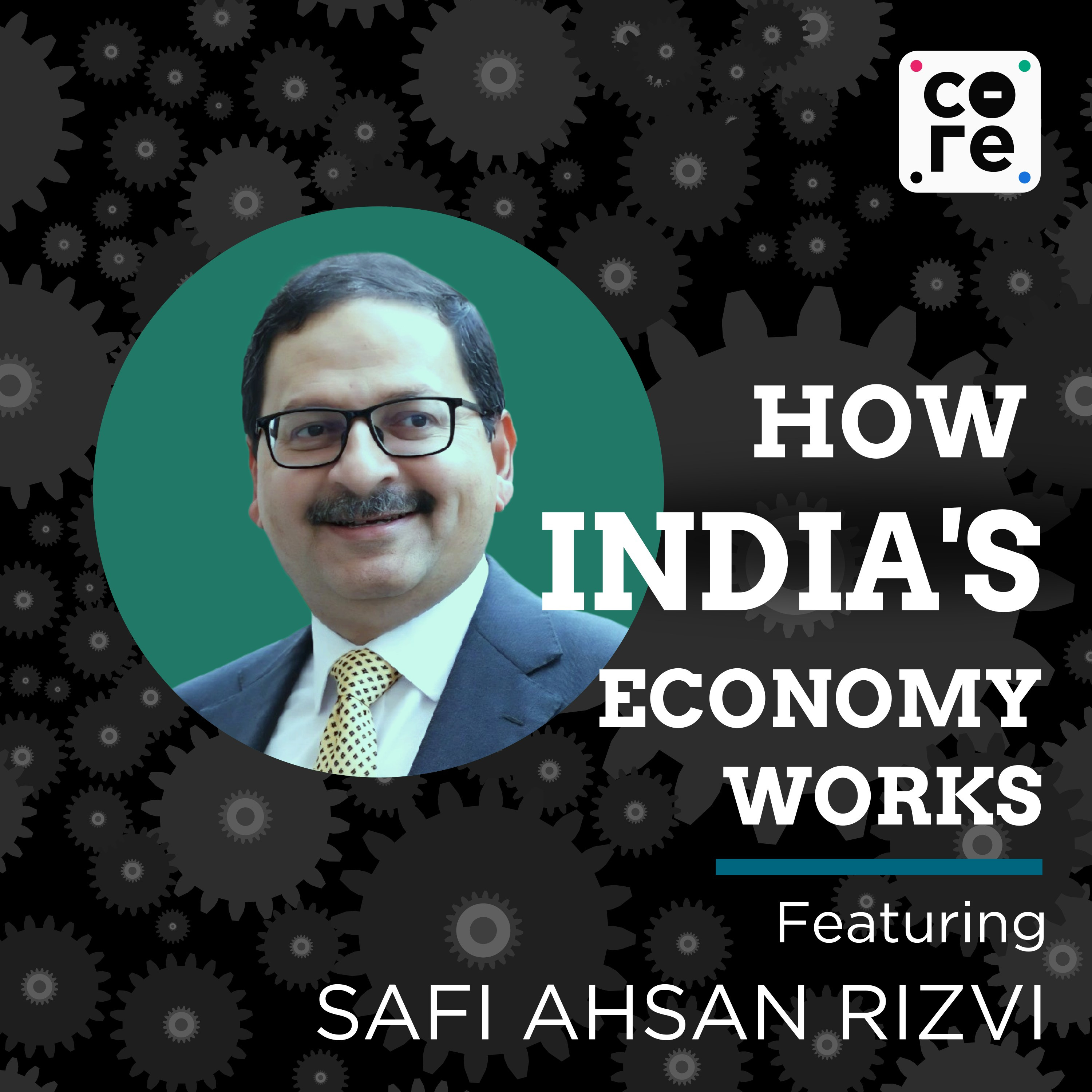 Why the Iran Conflict will Last Longer than Generally Expected 01.04.2026 34минIn this episode, journalist and author Puja Mehra speaks with Safi Rizvi, National Security Expert, Risk Analyst, Former top Intelligence Officer and Former IPS officer, about how the ongoing conflict involving Iran, the United States and its allies is reshaping the foundations of the global economic and geopolitical order. They discuss how the post-Cold War system—built on multilateral institutions, bilateral diplomacy and a broadly rules-based framework—is now giving way to a more fragmented, power-driven world.Rizvi explains how the erosion of multilateralism and the breakdown of negotiation channels are altering the way conflicts unfold, making them longer, less predictable and more economically disruptive. He also examines how recent wars—from Ukraine to West Asia—are exposing gaps in military strategy, accelerating shifts in defence technologies, and strengthening the global military-industrial complex.They explore how the centre of gravity in energy markets has shifted from the West to Asia, and why disruptions around critical chokepoints like the Strait of Hormuz now pose far greater risks for countries like India, China, Japan and South Korea.What does this mean for energy security, global trade flows and the ability of emerging economies to navigate prolonged geopolitical instability?Tune in for insights into how this conflict could reshape markets, energy dynamics and the global balance of power.CHAPTERS(00:00) Introduction (01:05) Rise of De-multilateralization (04:12) AI Targeting and Failures (06:01) Military Intelligence Gap Concerns (07:10) Attritive vs Attritable Munitions (08:20) Global Energy Buyer Shifts (10:45) Ground War Damage Risks (12:40) Breakdown of Negotiation Trust (14:20) Oil and Gas Predictions (16:44) Conditions for Peace Deals (18:25) Proposed Buyer OPEC Plus (19:58) India’s Measured Peace Call (22:25) Strait of Hormuz Miscalculations (23:01) Leveraging Financial Trade Power (25:02) Trump’s Aggressive Defensive Strategy (27:25) Future Republican Leadership Shifts (28:30) Market Adjustments and Tariffs (30:08) Iranian Resilience and Nationalism For more of our coverage check out thecore.inSubscribe to our NewsletterFollow us on:Twitter |Instagram |Facebook |Linkedin |Youtube
 -
 How Global Conflicts are Rewiring the World’s Financial Architecture and India in this new world 11.03.2026 37минIn this episode, journalist and author Puja Mehra speaks with Hemant Mishr, Co-Founder and Group CIO of SCUBE Capital, and former Managing Director & Head- Financial Markets, South East Asia, SCCG at Standard Chartered Bank. They talk about how rising geopolitical tensions—from the Iran conflict to great-power rivalry—are beginning to reshape the foundations of the global financial system. They discuss how the post-1970s financial architecture was built on three pillars: globalization, a rules-based order backed by the United States, and relative geopolitical consensus.Mishr explains how that system evolved around the oil shocks of the 1970s and the emergence of the petrodollar, which helped anchor the dominance of the US dollar and the recycling of global capital through American markets. But today, shifting power balances, the expanding use of financial sanctions, and growing geopolitical fragmentation are testing that framework.What does this mean for the future of the dollar, global capital flows, and emerging economies like India?Tune in for insights into how geopolitics is reshaping the world’s financial architecture.SHOW NOTES(00:00) Introduction (00:52) Pillars of Financial Architecture (02:18) Rise of the Petrodollar (03:25) Shift to Petrodollar 2.0 (04:06) Three Scenarios for Finance (06:05) India’s Role as Swing State (07:25) Economic Impact of Oil Prices (09:37) Risks to Rupee and Remittances (11:02) Managing Complex Geopolitical Ties (12:59) Timelines for Market Recovery (16:17) Resilience of India’s Growth (18:31) Investing in Indian Markets (20:41) Lessons from China’s Model (22:49) Managing Exchange Rate Volatility (24:45) Deepening Local Credit Markets (26:23) China’s Strategic Currency Policy (29:57) Attracting Global Institutional Capital (32:21) Developing International Financial Hubs (34:24) Technology and Data SecurityFor more of our coverage check out thecore.inSubscribe to our NewsletterFollow us on:Twitter |Instagram |Facebook |Linkedin |Youtube
 -
 The Legal Setback to Trump's Tariffs is an Advantage for India. This Is How 04.03.2026 20минIn this episode, journalist Puja Mehra speaks with economist Dr. Shekhar Aiyar about the recent US Supreme Court ruling that struck down the use of the International Emergency Economic Powers Act (IEEPA) as the legal basis for President Trump’s sweeping tariffs. As Washington recalibrates its trade strategy, Aiyar argues that the judgment is more than a legal setback — it reshapes the balance of power in ongoing trade negotiations, including those with India.They discuss what this means for the current 15% global tariff, the earlier 50% duties imposed on Indian imports, and whether companies can realistically expect refunds. The episode also examines how the timing of the ruling intersects with India–US trade deal negotiations, and why India’s bargaining position may have improved significantly.They also talk about the broader geopolitical implications of the decision — from the use of tariffs as strategic leverage to the erosion of the World Trade Organization’s dispute settlement system. As global trade becomes more fragmented, Aiyar makes the case for diversification, institutional reform, and a more assertive Indian role in shaping the next phase of multilateral trade rules. Tune in for insights on the reshaping of India’s trade strategy.SHOW NOTES(00:00) Introduction (00:20) US Supreme Court Ruling on Trump Tariffs (02:47) Impact on Indian Exports and Alternative Trade Instruments (04:39) Prospects for Tariff Refunds for Indian Exporters (06:30) Status of India-US Trade Deal Negotiations (10:13) Limits of Executive Power in Setting High Tariff Rates (11:10) Duration and Renewal of Section 122 Tariffs (12:32) Recommendations for Indian Trade Negotiators (14:55) Geopolitical Implications and Trade Diversification (17:18) WTO Ministerial and Reforming Dispute ResolutionFor more of our coverage check out thecore.inSubscribe to our NewsletterFollow us on:Twitter |Instagram |Facebook |Linkedin |Youtube
 -
 India’s Climate Governance Gap 18.02.2026 24минIn this episode, journalist Puja Mehra speaks with Economist Dr. Anoop Singh about the gap between India’s ambitious climate commitments and the institutional framework required to deliver them. As India moves closer to its 2030 targets, Singh argues that the real challenge lies not in announcing goals but in building the legal and fiscal architecture to implement them.Drawing on international experience and recent developments — including the Supreme Court’s landmark ruling recognising the constitutional right to be free from the adverse effects of climate change — Singh explains why India remains one of the few major economies without a comprehensive national climate law. They discuss how fragmented, sector-specific policies have led to uneven implementation, why coordination between the Centre and states remains weak, and how climate finance cannot be mobilised or monitored effectively without clear institutional structures and climate budget tagging.The conversation also examines state-level innovations in places like Kerala, Tamil Nadu, Odisha and Assam, and asks whether these “islands of excellence” can evolve into a coherent national framework. Tune in for a closer look at the structural reforms needed to move India from fragmented efforts to a unified climate strategy.SHOW NOTES(00:00) Introduction(01:05) India’s Current Climate Change Targets(02:11) Supreme Court’s Landmark Climate Ruling(04:13) Why India Lacks National Laws(06:04) Improving Cooperation Between Indian States(07:45) Reviewing Current National Climate Institutions(09:15) Securing International Climate Finance Needs(11:39) How States Spend Climate Funds(13:12) Global Models for Climate Accountability(16:12) Closing the Macroeconomic Data Gap(18:04) Success Stories From Indian States(20:59) Parliament's Role in New Legislation(22:45) Building a National Climate Consensus(23:53) Final ThoughtsRegister for India Finance and Innovation Forum 2026https://tinyurl.com/IFIFCOREFor more of our coverage check out thecore.inSubscribe to our NewsletterFollow us on:Twitter |Instagram |Facebook |Linkedin |Youtube
 -
 Coal Still Powers Much Of India’s Industry. Why Does It Remain A Troubled Sector? 04.02.2026 37минIn this episode, journalist Puja Mehra speaks with Subhomoy Bhattacharjee, Journalist and Contributing Editor at Business Standard, about the paradox at the heart of India’s coal economy—why the country is sitting on large coal stocks even as it continues to import coal for power generation. They discuss how India’s transition from coal shortages to apparent surplus masks deeper structural problems in production, transportation, pricing, and quality.Drawing on recent data and policy decisions, Bhattacharjee explains why domestically mined coal often fails to reach power plants economically, how high rail freight costs and geographic mismatches distort supply, and why many plants prefer imported coal despite higher headline prices. The conversation also examines the opening up of coal mining to private players, the weakening of Coal India’s monopoly, and the push towards market-driven coal pricing through proposed coal exchanges.The discussion concludes by looking ahead to India’s energy future, assessing whether coal consumption has peaked, how rising electricity demand from data centres and the AI economy could reshape power needs, and why coal is likely to remain central to India’s power mix for years to come. Tune in for insights on what India’s coal surplus reveals about infrastructure bottlenecks, market design, and energy policy.CHAPTERS(00:00) Introduction to India’s Coal Economy(02:00) The Coal Surplus Puzzle(04:00) Why Coal Isn’t Reaching Plants(06:30) Transport Costs and Rail Bottlenecks(09:00) Imported Coal vs Domestic Coal(11:30) Why Plants Aren’t Near Mines(14:00) Pollution and Poor Plant Location(16:30) Private Miners and Rising Production(18:30) Can Coal India Adapt(21:00) Coal India’s Financial Health(23:30) Employees and Market Transition(26:00) Coal Pricing and Linkages(28:00) Has India’s Coal Use Peaked(30:30) AI, Data Centres and Power Demand(33:00) Global Coal Demand Outlook(35:30) Nuclear Power and the FutureRegister for India Finance and Innovation Forum 2026https://tinyurl.com/IFIFCOREFor more of our coverage check out thecore.inSubscribe to our NewsletterFollow us on:Twitter |Instagram |Facebook |Linkedin |Youtube
Слични подкасти


Популарен во
Овој подкаст се појавува и на подкаст-листите на овие земји.

