
To the Righthouse
Global Campus of Human Rights
0
Much as a Lighthouse warns of dangers and guides travellers towards safety, our Righthouse alerts to risks for human rights and points towards secure protection. Like the Lighthouse of literary fame, our Righthouse symbolises the difference between what is desirable and what is real, with multiple points of views in between, the longing for something both enlightening and difficult to reach: a destination, stability, a solution.
Епизоди
-
 S5.5 - Empowering through remembrance 21.05.2026 43минWe conclude the series with a powerful episode on memorialization in Bosnia and Herzegovina.The conversation explores how memorialization itself becomes a form of justice — preserving victims’ humanity, amplifying survivors’ voices, resisting genocide denial, and sustaining collective memory when legal justice remains incomplete.It reflects on how remembrance can serve as both healing and resistance, ensuring that truth endures even where accountability falls short.🎧 A closing reflection on memory, dignity, and the enduring pursuit of justice.
 -
 S5.4 - Demanding justice 21.05.2026 47минThis episode explores how survivors and activists in Ireland are confronting institutional abuse through memorialization, legal action, education, and movement lawyering.By preserving truth, demanding accountability, and challenging state denial of human rights violations, survivors are transforming remembrance into resistance and advocacy into lasting change.The conversation highlights the power of collective action in the ongoing strugglefor justice, recognition, and human dignity.A compelling discussion on memory, accountability, and the fight against silence.
 -
 S5.3 - Transforming experiences 21.05.2026 30минThis episode highlights how the Mukwege Foundation and its survivor-led Red Lineinitiative are advancing a holistic, rights-based response to conflict-relatedsexual violence.By combining legal accountability, prevention, and survivor-centered support, theinitiative works to restore dignity, empower survivors, and strengthen pathwaysto justice that go beyond the courtroom.The conversation explores how survivor leadership is reshaping advocacy,challenging impunity, and building more inclusive systems of care and justice.A powerful discussion on dignity, resilience, and survivor-led change.
 -
 S5.2 - Connecting voices 21.05.2026 19минThe series continues with a powerful episode exploring the Quipu Project and its workamplifying the voices of Peruvian women affected by forced sterilizations.Through storytelling and listening, personal testimonies become acts of resistance — transforming individual experiences into collective memory, recognition, and a wider struggle for justice and dignity beyond victimhood.This episode reflects on the power of survivors reclaiming their narratives and challenging silence through community, memory, and advocacy.A moving conversation on voice, memory, and the fight for justice.
 -
 S5.1 - Solidarity networks 21.05.2026 37минWhat happens when surviving enforced disappearance becomes the spark for a global fight for justice?In the first episode of this series, Thomas Unger sits down with Ram Bhandari to explore how Ram’s experience of enforced disappearance in Nepal transformed into a lifelong commitment to human rights activism.From survivor-led solidarity networks to the growing crisis of impunity and shrinking civic space worldwide, this conversation shines a light on the urgent need for collective, victim-centered pathways to justice — and the work of Inovas in making them possible.A powerful conversation on resilience, solidarity, and the fight for accountability.
 -
 S.4.5-More-than-human rights: the music of nature and the nature of music 18.03.2026 38минThis episode of Sounds of Justice, the fourth series in the Global Campus “To the Righthouse” podcast programme, explores how listening to the sounds of the more-than-human world – from forests to fungi, from whales to waterways – can help us reimagine our relationship to the earth we inhabit. It looks at the role of music in Indigenous and Afro-descendant understandings of ecology and struggles for environmental justice, including in Latin America and Haiti.* Rebecca Dirksenis Laura Boulton Associate Professor of Ethnomusicology at Indiana University and co-founder and current director of the Diverse Environmentalisms Research Team (DERT). Working in and around Haiti, Dirksen’s research priorities encompass sacred ecologies, environmental justice, and politically engaged music. She is the author of After the Dance, the Drums Are Heavy: Carnival, Politics, and Musical Engagement in Haiti (2020) and co-editor of Performing Environmentalisms: Expressive Culture and Ecological Change (2021). * César Rodríguez-Garavitois Professor of Law and Chair of the Center for Human Rights and Global Justice at NYU School of Law. He is the founding director of the Earth Rights Research & Action (TERRA) Clinic, the More-Than-Human Rights (MOTH) Program and the Climate Law Accelerator. An Earth rights and human rights scholar and a field lawyer, he focuses on climate change, international environmental law, Indigenous peoples’ rights and more-than-human rights.
 -
 s.4.4-Instruments of abuse: weaponizing music in human rights violations 18.03.2026 37минThis episode of the fourth series in the Global Campus “To the Righthouse” podcast programme explores how music has been used as an instrument of human rights abuse in different contexts, from torture and ill-treatment in US detention centers in Guantánamo to forced assimilation of Uyghurs in the Xinjiang Region in China. It also reveals how music can restore humanity and identity in the face of brutality and erasure.* Mansoor Adayfi-441is a Yemeni writer, activist, and former Guantánamo Bay detainee, imprisoned for nearly 15 years without charge. Since his release, he has become a committed advocate for human rights, highlighting the experiences of former detainees and the global consequences of the War on Terror. He is the author of Don’t Forget Us Here and the recently released Letter from Guantánamo. As the Guantánamo Project Coordinator at CAGE International, Mansoor co founded the Guantánamo Survivors Fund (GSF). * Rachel Harrisis Professor of Ethnomusicology at SOAS, University of London. She has published extensively on music and religious practice in Central Asia, and the politics of ethnicity and heritage in China. Her latest book is Soundscapes of Uyghur Islam (Indiana University Press). Her current project, “Maqām Beyond Nation” (2023-2028) explores maqām-based music-making across Asia, connecting histories of mobility and exchange with contemporary flows of people and culture.* Manfred Nowakis Professor of International Human Rights Law at the University of Vienna and Secretary General of the Global Campus of Human Rights. Among many expert functions, he was UN Special Rapporteur on Torture (2004-2010).
 -
 S.4.3-Soundscapes of resilience in India and Palestine 18.03.2026 42минThis episode of Sounds of Justice highlights two contexts where music has long voiced struggles for justice and human rights.From‘rebellious music gatherings’ spearheading the anti-caste movement in India to Palestinian songs of loss and resilience amid the rubble in Gaza, sonic strategies of resistance are helping to reclaim dignity, foster solidarity and spur accountability.* Rasika Ajotikaris an ethnomusicologist and singer based in Germany. Her research on anti-caste musical spheres in modern western India examines how music and sound operate as tools of emancipatory politics, underscoring musical labour,resistance, and state repression in the Indian caste society. As a singer, she continues collaborations with anti-caste artists and is also developing projects exploring improvisation, form, and the politics of sound. * Christina Hazbounis a writer, artist-researcher and practitioner in the spheres of text, sound, radio and music. Her chapter “Sonic Strategies in The Palestinian Struggle” appears in “BODIES OF SOUND: Becoming a Feminist Ear”. Her publications are scattered in the digital sphere, including Transcript Verlag, Bloomsbury (forthcoming) and she is regularly radio-active on Stegi Radio. She is the UK project manager of Keychange under PRS Foundation, a global movement aiming to increase gender diversity within the music industry.
 -
 S.4.2- Music and liberation politics in the African diaspora 18.03.2026 30минMusic has been central to how people of African descent – in the United States and across the diaspora – have imagined and demanded justice . From Paul Robeson and Nina Simone to the present, this episode of Sounds of Justice listens in on iconic anthems that have carried, shaped and mobilized movements for Black lives.* Shana L. Redmondis a multimodal writer-creator and scholar. She is the author of Anthem: Social Movements and the Sound of Solidarity in the African Diaspora (NYU Press, 2014) and the award-winning Everything Man: The Form and Function of Paul Robeson (Duke UP, 2020). A Guggenheim Fellow and Grammy nominee, she is professor of English and Comparative Literature and Director of the Center for the Study of Ethnicity & Race at Columbia University in the City of New York.
 -
 S.4.1 -Music and human rights: amplifying the resonances 18.03.2026 46минThe first episode of Sounds of Justice teases out the different dimensions of the relationship between music and human rights. The four guests, all co-editors of the Routledge Companion, explore what the language of music and the values of human rights have in common; and how music’s capacity to connect us to our common humanity while attuning us to difference can power ongoing struggles for justice.About the hostIgnacio Saiz is a human rights advocate and independent advisor to international organizations. He previously led the Center for Economic and Social Rights and held senior positions at Amnesty International. A lifelong passion for music has led him to explore how its power can be harnessed to advance human rights, including as creator and host of Sounds of Justice.* Julian Fiferis former Executive Director of Musicians for Human Rights. As cellist and founder of the Orpheus Chamber Orchestra, he conceived a method of orchestral music-making using democratic principles and collective leadership. The artistic outcomes have been documented by Deutsche Grammophon on 55 Orpheus recordings.* Angela Impeyis Emerita Professor of Ethnomusicology at SOAS, University of London and co-editor of the Routledge SOAS Studies in Music series. She has published widely on music and social justice in Africa, including the award-winning Song Walking: Women, Music, and Environmental Justice in an African Borderland.* Manfred Nowakis Professor of International Human Rights Law at the University of Vienna and Secretary General of the Global Campus of Human Rights, a network of some 100 universities in all world regions, based in Venice.* George Ulrichis Academic Director of the Global Campus of Human Rights (Venice, Italy). His research interests relate to the philosophy of human rights, global justice, and human rights and development cooperation.
 -
 S3.8 - Reimagining governance 29.07.2024 42минPolitics and human rights or politics through human rights? We conclude this series with a conversation with Anja Mihr* focusing on the difference between ‘politics and human rights’ on the one hand and ‘politics through human rights’ on the other. Join us as she discusses with Graham Finlay the following questions: How can we safeguard democracy, freedom and human rights from threats? What role can re-imagined politics play in young democracies? What leverage, if any, can new ideas of politics have in authoritarian states? *Anja Mihr is a political scientist, academic supervisor of the Master of Arts and Human Rights and Sustainability in Central Asia, and founder and Programme Director of the Centre on Governance through human rights at the Berlin Governance Platform.
 -
 S3.7 - Reimagining actors 22.07.2024 41минOn the relevance of meaningful participation of stakeholders in politics One way to reimagine politics is to go through re-imagining the actual involvement of different actors. We talked about this with Gauri Van Gulik* who shared her insights with George Ulrich. Here are some of the questions you can expect to hear in the episode: How can we create spaces and resources in our communities for meaningful participation in politics? How can change makers define the political agenda and reshape the political space in a more humane, inclusive way? How to overcome polarisation in politics? How to re-engage youth in politics? * Gauri Van Gulik is the co-Founder and Chair of Multitudes Foundation and has been human rights researcher and advocate in organisations such as Amnesty International and Human Rights Watch. Gauri is also an alumna of the European Master's Degree in Human Rights and Democratisation, from which she graduated in 2006.
 -
 S3.6 - Reimaging power 15.07.2024 41минAbout the interplay between geopolitics and human rights Current geopolitical tensions play a very relevant role in politics, but what is the role of human rights there? To answer some of the questions surrounding this highly debated issue, we invited Karim Bitar* and covered some additional points: What role do or should human rights play in current geopolitical tensions? How can political change movements in the Global South address the inefficacy of international organizations and global governance mechanisms? Is there any space for inclusivity, cultural sensitivity, and awareness of power dynamics into conflict resolution strategies? *Karim Emile Bitar is Associate Professor of International Relations at Lebanon's Université Saint-Joseph (USJ) and Associate Fellow at the Geneva Center for Security Policy (GCSP). He was Director of the GC Arab Master in Democracy and Human Rights from 2018 to 2023.
 -
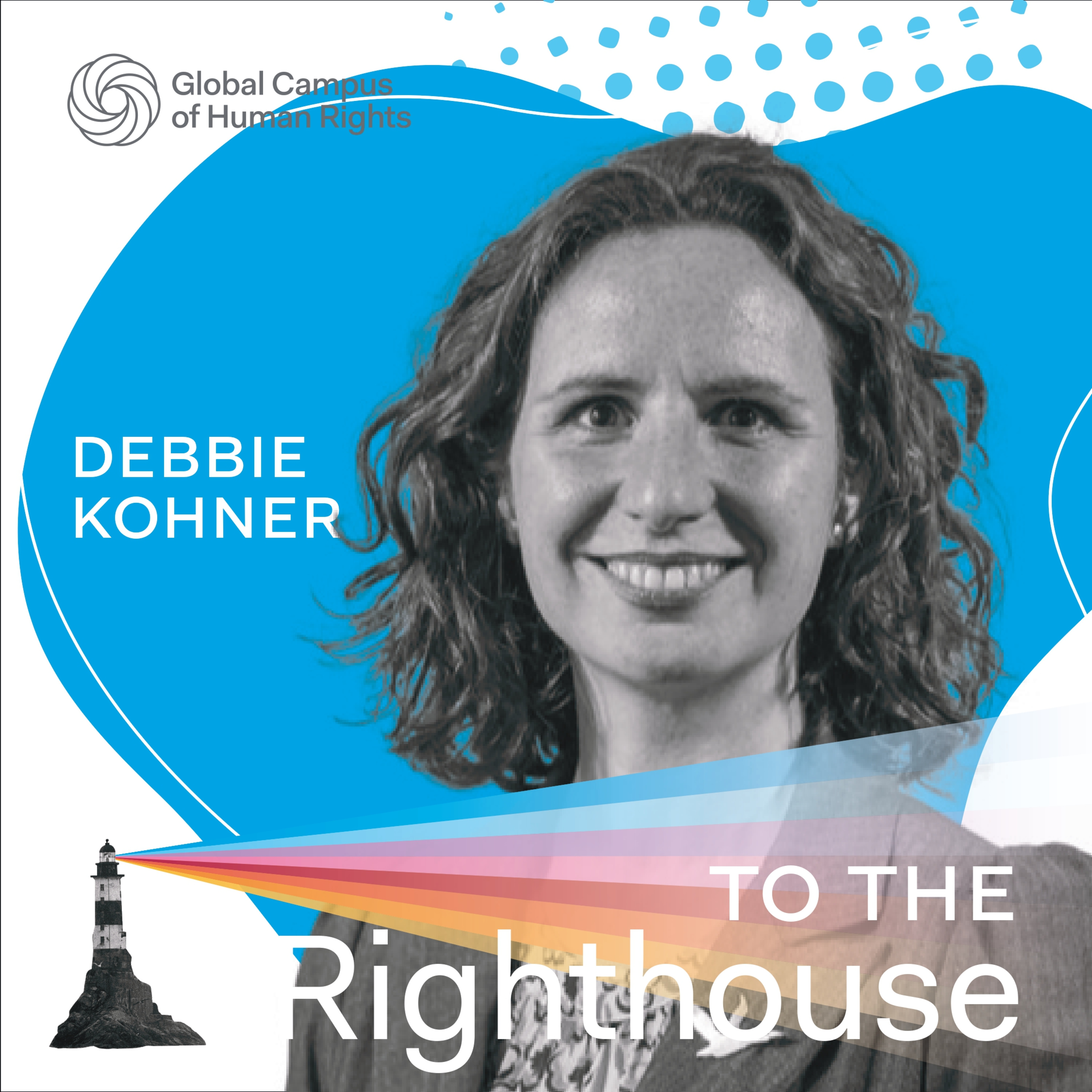 S3.5 - Reimagining influence 08.07.2024 31минHow can National Human Rights Institutions (NHRI) impact on politics? We continue the series with a conversation about spheres of influence in politics. We do this together with Debbie Kohner* who talks about NHRI and their monitoring role in enabling rights-based politics. Some of the questions we asked: How can human rights monitoring influence new ways of thinking and doing politics? Are NHRIs inevitably politicised? How can NHRIs help reverse practices that negatively affect the space and activities of civil society organisations and human rights defenders? * Debbie Kohner has been Secretary General of the European Network of National Human Rights Institutions since 2013.
 -
 S3.4 - Reimagining spaces 01.07.2024 28минThe importance of making room for rights-based politics In this episode, recorded during the FRA FORUM in Vienna, we focus on practicing human rights-based politics in institutional structures and spaces. Morten Kjaerum* brings in his professional and personal perspective to respond to the following questions: what space is there for human rights in politics? Are there new or regenerated ideas that can drive more rights-based politics? *Morten Kjaerum was Director of the Raoul Wallenberg Institute of Human Rights and Humanitarian Law (RWI) in Sweden from 2015 to 2024. Before joining RWI, he was the Director of the EU Agency for Fundamental Rights in Vienna from 2008 to 2015.
 -
 S3.3 - Reimagining values 24.06.2024 28минWhat about culture as politics? Our guest in this episode is Alexandra Xanthaki*, UN Special Rapporteur on Cultural Rights. Based on her work and a series of reports that she has released, we asked her: What role is there for culture and cultural rights in reimagining politics? Is culture politics? How can we safeguard the dignity and human rights of minorities and ‘under-represented’ groups in politics? * Alexandra Xanthaki is Professor of Laws at Brunel University London and UN Special Rapporteur in the field of Cultural Rights since 2021.
 -
 S3.2 - Reimagining leadership 17.06.2024 22минOn why leadership needs a long-term and rights-based view One cannot talk about politics without discussing the characteristics of leadership. We asked Mary Robinson* her thoughts about a new approach suggested by her and The Elders: long-view leadership. Tune in to listen to her answers to the following questions: How are planetary crises transforming current politics? What instruments do world leaders need to re-shape international politics? What are the features of rights-based leadership in politics? How can international and regional organisations contribute to re-imagining politics? * Mary Robinson is founding member of The Elders and Honorary President of the Global Campus of Human Rights. Among her past roles, she was President of Ireland (1990-1997) and former UN Commissioner for Human Rights (1997-2002).
 -
 S3.1 - Reimagining politics through human rights 10.06.2024 36минIntroducing the theme of the series Our co-hosts Graham Finlay and George Ulrich engage in a conversation that looks at why this is the time to re-imagine politics and why it is important to do so through the lens of human rights. Listen on as they engage with the following questions: are human rights political? Is politics based on human rights? Should it be? How can human rights shape a renewed or re-imagined politics? * George Ulrich is the Academic Director of the Global Campus of Human Rights. Among his main research interests are the history and philosophy of human rights, human rights diplomacy, human rights and development cooperation, health and human rights. Full bio here.
 -
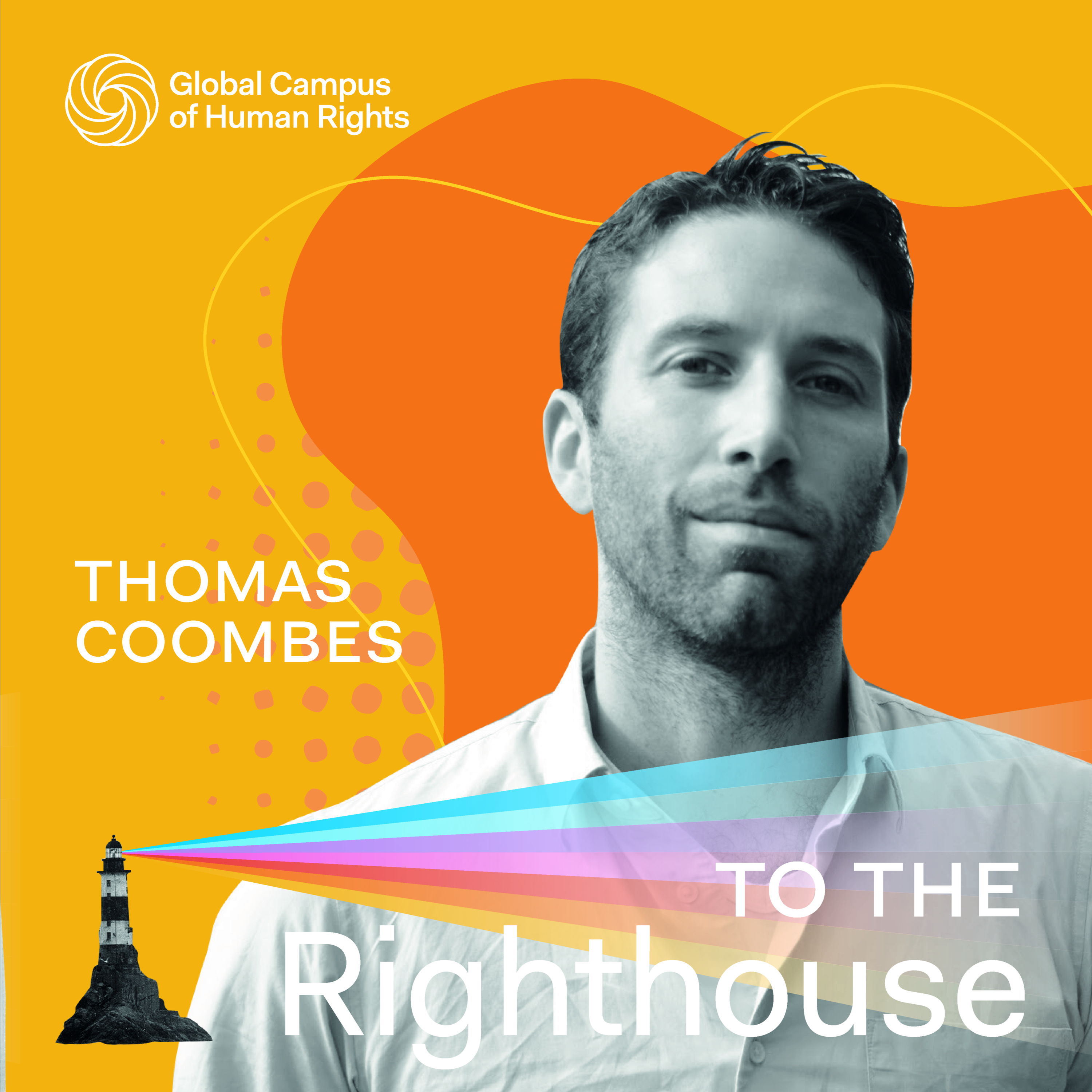 S2.5 - To hope for the future 03.07.2023 32минA picture of the world we want to see In conversation with Thomas Coombes We conclude the series with a conversation about embracing hope. As a final reflection, we want to hope for the future and draw a picture of the world we want to see. We do this together with Thomas Coombes* who talks about why it helps to focus more on the human in order to achieve change and what a checklist of hope-based human rights communication would look like. * Thomas Coombes is a global communications strategist who developed hope-based communications to help the human rights and other progressive movements develop new narratives for social change. He has spent 15 years working in political communications for Amnesty International, Transparency International, the European Commission and global PR firm Hill & Knowlton. Thomas is an Alumnus of GC Europe. Take your hope-based pledge here.
 -
 S2.4 - To hope for the broken 26.06.2023 29минThe importance of hopefulness in creating justice In conversation with Marina Shupac In this episode, we focus on practicing hope and on good examples of aspiration, solidarity and resilience as opposed to negative feelings of suffering. Marina Shupac* brings in her professional and personal perspective to respond to the following questions: in what ways is hope a key for the empowerment of rights-holders? How can it be appreciated as a driver for change? How can it make the broken stronger? * Marina Shupac is an award-winning journalist, documentary filmmaker and human rights practitioner from Moldova. Her film Last Chance for Justice was commissioned by the BBC World News and won, among other honours, the One World Media Awards. Marina was also awarded the Senior Minority Fellowship with the UN OHCHR and the Sakharov Fellowship with the EU Parliament. With an ethnic minority background, Marina is passionate about stories that diminish divisions between “us” and “them” and create solidarity among people. She is an Alumna of GC Caucasus.
Слични подкасти


Популарен во
Овој подкаст се појавува и на подкаст-листите на овие земји.
