
EP Edge Journal Watch
Niraj Sharma MD FACC FHRS
0
EP Edge Journal Watch is a bi-weekly podcast hosted by Dr. Niraj Sharma that distills high-impact cardiovascular and electrophysiology research into clear, clinically meaningful insights. Each episode goes beyond headlines and abstracts to uncover what new studies mean for patient care and decision-making. The podcast focuses on evidence-based practice, precision electrophysiology, and a forward-thinking approach to interpreting data in real-world clinical settings. It is designed for electrophysiologists, cardiologists, researchers, trainees, and allied health professionals who want to stay ahead of the curve.
Епизоди
-
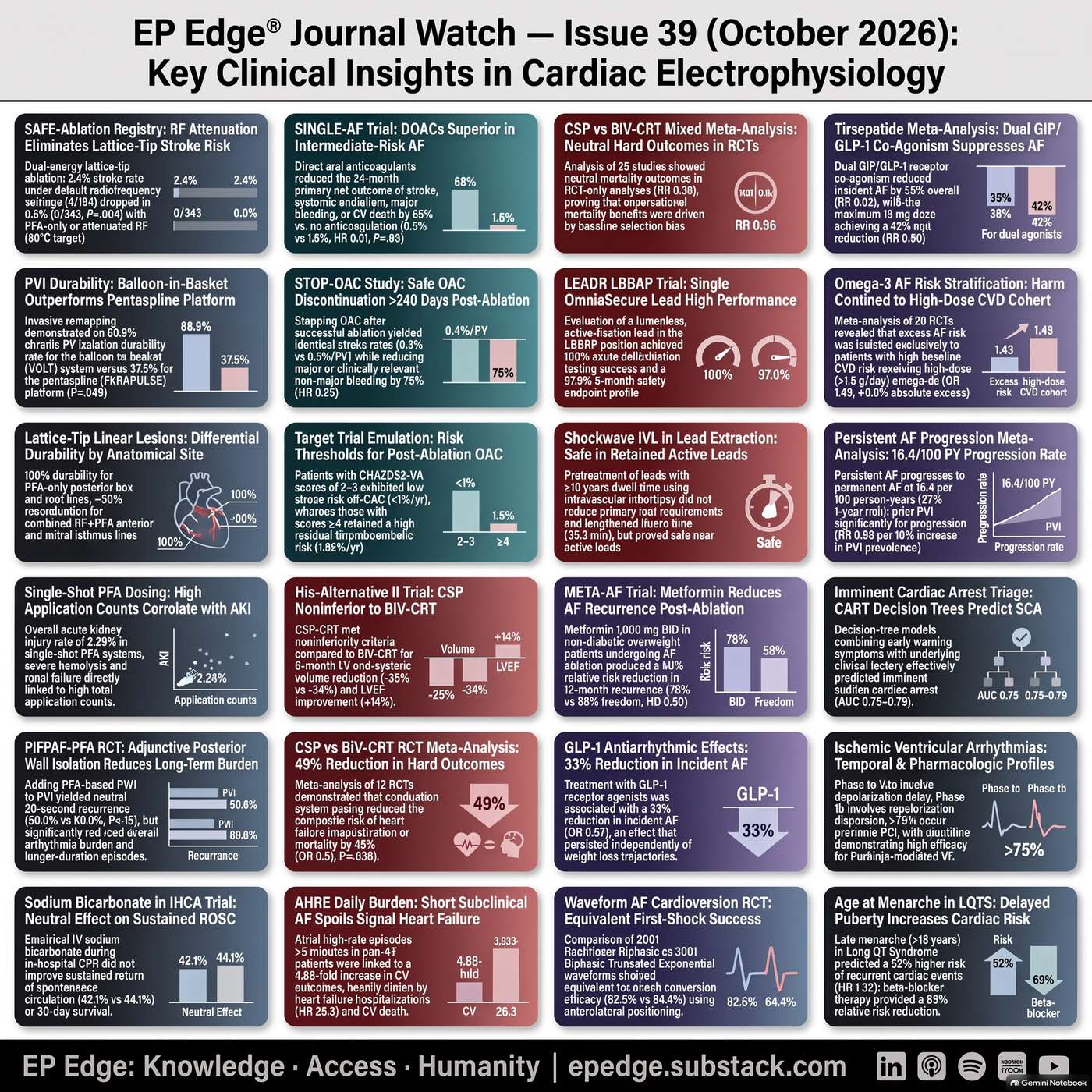 EP Edge® Journal Watch 39 | October 2026: PIFPAF-PFA, Ablation Durability and Left Bundle Area ICD Leads 05.10.2026 24минShould we add posterior wall isolation during pulsed field ablation for persistent atrial fibrillation? How durable are pulmonary vein isolation and additional atrial lines? Can a defibrillation lead placed in the left bundle branch area provide reliable early performance while simplifying device therapy?Join Dr. Sharma for EP Edge® Journal Watch Issue 39, October 2026. We examine four papers in depth: PIFPAF-PFA, pulmonary vein isolation durability across pulsed field systems, invasive remapping of atrial lesion sets with a dual-energy lattice-tip catheter, and the LEADR LBBAP defibrillation lead study. We then give brief takeaways from twenty additional articles spanning AF ablation safety, conduction system pacing and cardiac resynchronization therapy, anticoagulation, metabolic therapies, AF progression and burden, cardioversion, cardiac arrest, ventricular arrhythmias, congenital long QT syndrome, and lead extraction.Our aim is to connect clinically relevant findings with the methods and uncertainty behind them. We distinguish acute procedural success from chronic durability, electrical surrogates from patient outcomes, and randomized evidence from selected observational comparisons. We explain effect estimates, denominators, confidence intervals, and why a nonsignificant result does not establish equivalence. Accompanying editorials and the pacing viewpoint are integrated into the relevant discussions rather than counted as additional articles.The newsletter contains detailed analyses of all 24 articles. The episode concentrates its extended analysis on the four featured papers below; the other twenty receive concise spoken takeaways. Article numbers retain the revised newsletter numbering, and entries follow newsletter order within each coverage section.FOUR PAPERS COVERED IN DEPTH1. Pulmonary Vein Isolation Using Pulsed Field Ablation With vs Without Posterior Wall Isolation in Patients With Symptomatic Persistent Atrial Fibrillation: The PIFPAF-PFA Randomized Clinical TrialRoten L, Maurhofer J, Krisai P, et al. | JAMA | August 2026Roten and colleagues ask whether empirical posterior wall isolation adds benefit to PFA-based PVI at first ablation for symptomatic persistent AF. In 206 randomized patients with continuous implantable-monitor surveillance, one-year Kaplan-Meier atrial tachyarrhythmia recurrence estimates were 50.6% with posterior wall isolation versus 60.6% with PVI alone. The primary result did not establish superiority: rate ratio 0.75, 95% CI 0.51–1.09, P=.13.Mean arrhythmia burden was 6.9% versus 11.0%, and episodes lasting at least one day occurred in 10 versus 25 patients. These secondary signals require confirmation because multiple comparisons were not corrected, and most secondary endpoints were nonsignificant. Repeat intervention, drug use, and quality-of-life comparisons did not establish an advantage. We integrate Kistler and Chieng’s editorial on empirical anatomical ablation versus targeting demonstrated substrate, while avoiding cross-trial claims of superiority. Routine additional posterior wall isolation remains unproven in this setting; limited power also prevents a conclusion of equivalence.DOI: 10.1001/jama.2026.175982. Durability of pulmonary vein isolation: Does the pulsed field ablation system matter?Kakarla S, Iwakawa H, Ariyaratnam JP, et al. | Heart Rhythm | October 2026Kakarla and colleagues compare pentaspline and balloon-in-basket PFA in a retrospective two-center cohort of 132 index procedures. Clinical recurrence was 10.5% versus 19.6% (P=.12), and 34 propensity-matched clinical pairs had six versus seven recurrences. The notable durability signal came from only 17 selected patients returning for repeat ablation: reconnection affected 9/32 versus 1/35 veins, and all veins remained isolated in 3/8 versus 8/9 patients.We examine why these findings cannot establish platform superiority. Matching of the clinical cohort did not randomize or make the separate redo sample representative. Veins within patients are correlated, monitoring intensity differed, and posterior wall treatment was uneven. Acute isolation, selected invasive remapping, and clinical recurrence answer different questions. The study supports prospective comparison with systematic remapping and standardized surveillance, while emphasizing mapping of the actual recurrence mechanism at redo.DOI: 10.1016/j.hrthm.2026.05.0185. Durability of atrial linear lesion sets using a dual-energy lattice-tip catheter: Data from invasive remappingNies M, Benesch Vidal ML, My I, et al. | Heart Rhythm | October 2026Nies and colleagues investigate whether acute atrial block persists after ablation with a dual-energy lattice-tip catheter. Only 39 of 252 treated patients underwent remapping, for recurrence or planned appendage occlusion. The 71 remapped lesion sets comprised 18 pulmonary vein encirclements and 53 additional lines. Durable block was present in 54/71 sets; separately, 31/36 individual veins remained isolated.Roof lines, posterior boxes, and cavotricuspid lines remained blocked in 6/6, 10/10, and 7/7 cases, respectively. Anterior and mitral lines were durable in only 9/17 and 7/13. Small denominators, different remapping intervals, mixed energy strategies, and selected patients preclude controlled comparisons of energy or lesion location. We discuss the clinical consequences of gaps and macroreentry, the need to confirm bidirectional block when a line is indicated, and why visual continuity or promising remapping proportions do not establish better clinical outcomes.DOI: 10.1016/j.hrthm.2026.05.0049. Safety and performance of a novel defibrillation lead for left bundle branch area placement: Primary results of the LEADR LBBAP clinical trialVijayaraman P, Liu X, Denman R, et al. | Heart Rhythm | October 2026 issueVijayaraman and colleagues report early safety and performance of a novel ICD lead designed for left bundle branch area placement. This prospective single-arm study enrolled 323 patients; implantation succeeded in 293/307 attempts. All 162 patients completing protocol defibrillation testing met the acute efficacy endpoint, exceeding a historical performance benchmark. Mean follow-up was only 2.6 months. Pacing thresholds were low and stable, while five major lead-related complications required revision; estimated freedom from major lead-related complications was 97.9% at three months.We distinguish implantation, testing, pacing, sensing, and complication denominators. Successful protocol testing does not guarantee future spontaneous-arrhythmia termination or chronic lead integrity. Approximately half received an additional LV lead, and left bundle area placement did not uniformly confirm conduction system capture. The study therefore does not establish that this lead alone replaces conventional CRT. Manufacturer sponsorship, incomplete testing, and short follow-up reinforce the need for independent long-term data on defibrillation, capture, sensing, mechanical reliability, and extraction. The October 2026 issue follows the paper’s 2025 online publication.DOI: 10.1016/j.hrthm.2025.10.028TWENTY ADDITIONAL ARTICLES WITH BRIEF PODCAST TAKEAWAYS3. Dosing of single-shot pulsed field ablation systems: A systematic review of efficacy and safety balanceBax IN, Bolhuis RE, van der Graaf M, ...
 -
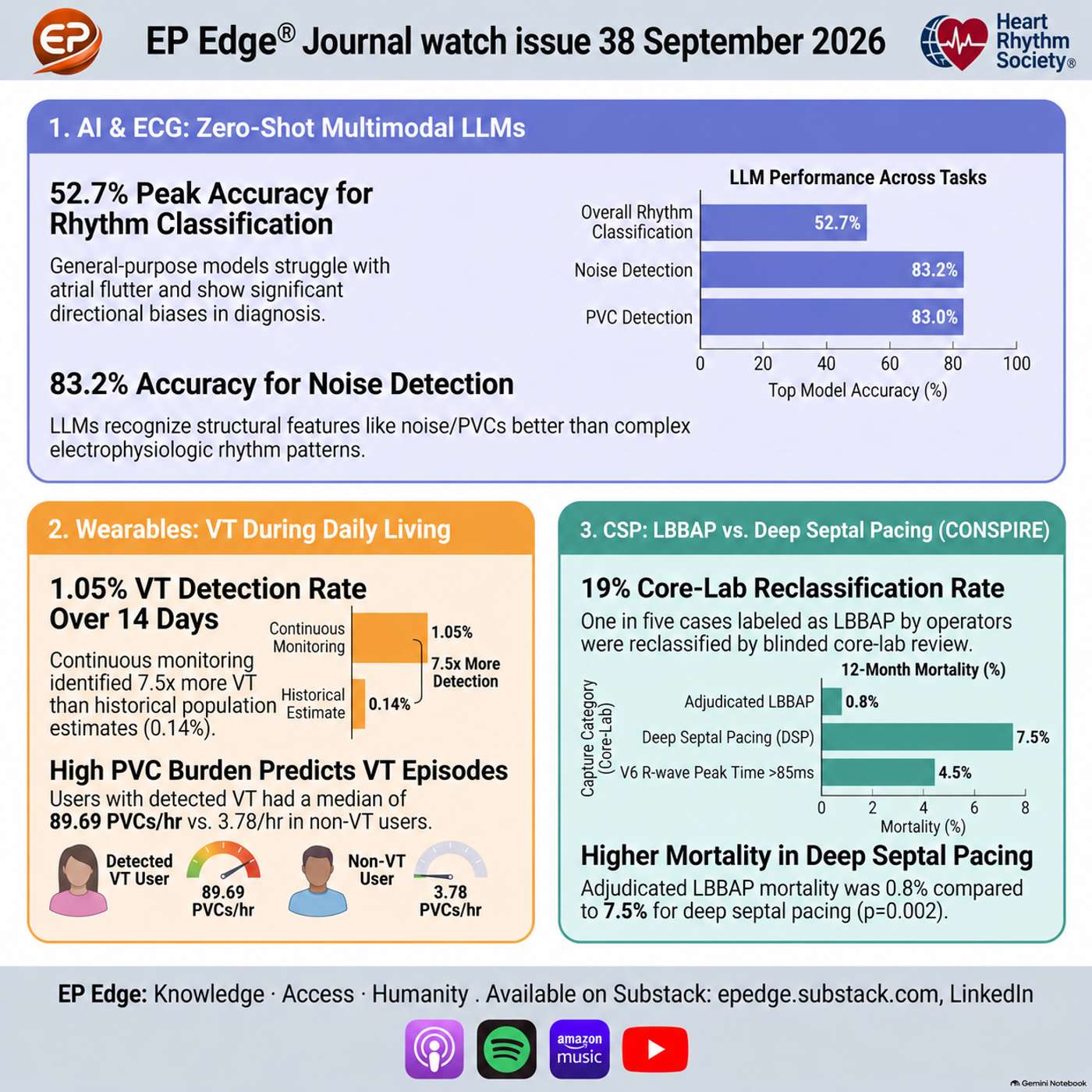 EP Edge® Journal Watch Issue 38 September 2026 with Heart Rhythm Society at HRX: AI ECG Interpretation, Wearable-Detected Ventricular Tachycardia, and LBBAP vs Deep Septal Pacing 28.09.2026 15минIn this special EP Edge® Journal Watch Issue 38, recorded at HRX, with the Heart Rhythm Society Live 2026 in Atlanta, Dr. Niraj Sharma is joined by Dr. Michael Lloyd, Professor of Medicine at Emory University, for a focused discussion of three provocative studies with direct implications for contemporary cardiac electrophysiology.First, they examine the emerging role of large language models and artificial intelligence in ECG interpretation. How accurately can off-the-shelf, zero-shot LLMs interpret electrocardiograms, and are currently available general-purpose AI models ready to participate in clinical ECG analysis?The discussion then turns to ventricular tachycardia detected during everyday life by wearable devices. New data suggest that VT may be detected far more frequently in individuals using wearable monitoring than traditional estimates would suggest. Drs. Sharma and Lloyd discuss what these findings may mean for electrophysiologists increasingly confronted with rhythm data generated outside the clinic.Finally, the episode explores the continuing evolution of conduction system pacing, with new data comparing left bundle branch area pacing (LBBAP) and deep septal pacing (DSP). The conversation examines differences in clinical outcomes, the reported mortality signal associated with deep septal pacing, and an important practical problem for the field: inconsistent agreement about what actually constitutes successful LBBAP versus deep septal pacing.Recorded from HRX Live 2026, this episode goes beyond the abstracts to examine what the findings mean clinically, where the uncertainties remain, and how they may influence electrophysiology practice.Topics discussed include:Artificial intelligence and zero-shot LLMs for ECG interpretationAccuracy and limitations of AI-assisted electrocardiogram analysisWearable cardiac monitoring and real-world ventricular tachycardia detectionVentricular arrhythmias detected outside traditional clinical monitoringLeft bundle branch area pacing (LBBAP)Deep septal pacing (DSP)Conduction system pacing definitions and adjudicationMortality and clinical outcomes with physiologic pacing strategiesEmerging research and innovation from HRX Live 2026EP Edge® Journal Watch provides clinically focused analysis of important new research in cardiac electrophysiology, emphasizing not simply what a study found, but how the evidence should be interpreted and what it may mean for clinical practice.Hosted by Dr. Niraj SharmaSpecial HRX discussion with Dr. Michael Lloyd, MD, FACC, FHRS
 -
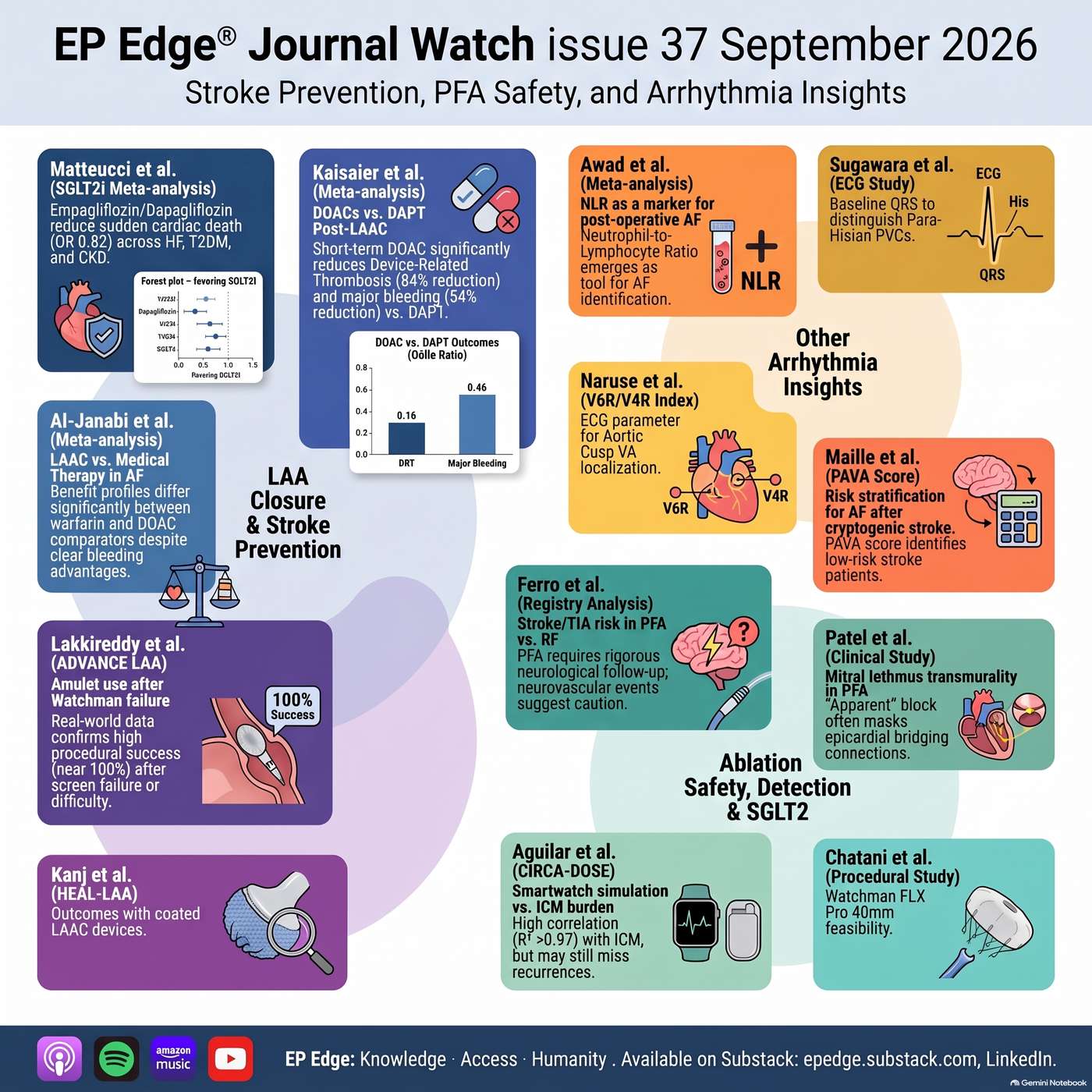 EP Edge® Journal Watch 37: LAAO vs DOACs, PFA Stroke Risk, Wearable AF Monitoring, PVC Localization, and SGLT2 Sudden Death 21.09.2026 33минIn EP Edge® Journal Watch Issue 37, September 2026, Dr. Sharma reviews 13 important studies in cardiac electrophysiology, with a focus on what the data actually mean for clinical practice. This episode goes beyond abstracts and headline results to examine why each study was performed, the clinical question investigators were trying to answer, the methodology used, the statistics behind the major findings, important limitations, and what the results may mean for electrophysiologists going forward.This episode begins with a major theme in contemporary atrial fibrillation care: left atrial appendage occlusion and stroke prevention.First, we examine the mechanistic study “Left Atrial Appendage Thrombosis in Patients With Atrial Fibrillation” from Ji Zhou and colleagues. Histologic examination of surgically removed appendages from LAAOS III participants identified microscopic thrombi in the trabecular crypts, raising important questions about persistent local thrombogenicity despite anticoagulation and providing biological context for why mechanical left atrial appendage exclusion may provide additional protection in selected patients.We then turn to two important meta-analyses comparing left atrial appendage occlusion with medical therapy. The contemporary randomized evidence suggests that LAAO may substantially reduce nonprocedural bleeding, but the possibility of a modest increase in ischemic stroke remains unresolved. The discussion focuses on why LAAO should be viewed as a trade-off between procedural risk, long-term bleeding exposure, and stroke protection rather than simply as an equivalent replacement for direct oral anticoagulation.The episode then examines the ADVANCE LAA study, led by Dhanunjaya Lakkireddy, evaluating Amulet implantation in patients who failed Watchman anatomical screening. Despite more challenging left atrial appendage anatomy, Amulet implantation remained highly successful, reinforcing an important practical concept: failure of one device geometry does not necessarily mean failure of the LAAO strategy.Next, we review randomized evidence comparing direct oral anticoagulants versus dual antiplatelet therapy after left atrial appendage closure. The pooled data showed markedly lower device-related thrombus with DOAC-based therapy and, perhaps surprisingly, less major and minor bleeding than with DAPT. The clinical question is no longer simply whether anticoagulation can be stopped, but what antithrombotic strategy provides the safest bridge through the early device-healing period.The second major theme is pulsed field ablation safety and lesion durability.A major Circulation study led by Enrico Ferro compared neurological outcomes after pulsed field ablation and radiofrequency ablation. Although absolute stroke and TIA rates remained low, PFA was associated with a higher 30-day neurovascular event rate in this observational registry. Dr. Sharma discusses the difference between relative and absolute risk, why propensity adjustment cannot eliminate residual confounding, and why rapid adoption of PFA makes rigorous post-market safety surveillance essential.We then examine “Transmurality and Autonomic Effects of Pulsed Field Ablation on the Mitral Isthmus” by Apoor Patel and colleagues. Using direct vein of Marshall recordings, investigators demonstrated that apparent endocardial mitral isthmus block frequently concealed persistent epicardial conduction. PFA alone achieved complete block in fewer than half of patients, while vein of Marshall ethanol infusion substantially increased block rates. The study also demonstrated that PFA generally spared local parasympathetic innervation, whereas ethanol infusion produced denervation. The findings raise important questions about how we define lesion completeness in the PFA era.The episode then moves to atrial fibrillation detection and prediction.The PAVA score, developed by Baptiste Maille and colleagues, attempts to identify patients at lower likelihood of AF detection after cryptogenic stroke using premature atrial contractions, age, significant valvular disease, and left atrial enlargement. The score performed well in internal validation but less strongly in external validation, highlighting why prediction models should be judged by more than their best AUC.We also discuss the study “Wearable smartwatches for atrial fibrillation detection and burden estimation after ablation: comparison with continuous monitoring.” Using continuous implantable cardiac monitor data from CIRCA-DOSE, investigators simulated Apple Watch and Fitbit AF-detection algorithms. Smartwatch strategies detected substantially more recurrence than conventional short Holter monitoring, while wearable-estimated AF burden correlated closely with continuous monitoring. The episode examines the critical distinction between correlation and agreement, and why simulation is not the same as prospective real-world validation.Another study evaluates the neutrophil-to-lymphocyte ratio as a predictor of postoperative atrial fibrillation after cardiac surgery. Elevated NLR was associated with postoperative AF, supporting an inflammatory component to arrhythmogenesis, but its standalone diagnostic performance was only moderate. This provides a useful example of why a statistically significant biomarker association does not automatically translate into a clinically useful prediction test.Two practical ventricular arrhythmia studies then return the discussion to the 12-lead ECG.Masafumi Sugawara and colleagues demonstrate that comparing the PVC QRS axis with the patient’s baseline sinus-rhythm axis may help distinguish true para-Hisian PVCs from RVOT and LVOT mimics. Rather than interpreting the ectopic beat in isolation, the study suggests that the patient’s baseline electrical orientation should become part of PVC localization.Yoshihisa Naruse and colleagues introduce the V6R/V4R index, a simple ECG parameter designed to distinguish aortic cusp ventricular arrhythmias from non-cusp LVOT origins. The index may help determine where mapping should begin, although the paper contains inconsistencies in the reported diagnostic performance that deserve careful interpretation.Finally, the episode explores whether SGLT2 inhibitors may reduce sudden cardiac death.Andrea Matteucci and colleagues pooled adjudicated randomized evidence involving empagliflozin and dapagliflozin across nearly 59,000 participants. SGLT2 inhibition was associated with approximately an 18 percent reduction in the odds of sudden cardiac death, with consistent results across the included trials. The key unanswered question is mechanism. Does this reflect a direct antiarrhythmic effect, or is sudden death reduced indirectly through improvements in heart failure, myocardial energetics, fibrosis, renal function, and overall cardiovascular stability?Throughout the episode, Dr. Sharma focuses on the difference between statistical significance and clinical significance, association versus prediction, relative versus absolute risk, and the practical implications of these studies for electrophysiology practice.Topics include: atrial fibrillation, left atrial appendage occlusion, Watchman, Amulet, DOACs, DAPT, device-related thrombus, pulsed field ablation, PFA safety, stroke after AF ablation, mitral isthmus ablation, vein of Marshall ethanol infusion, wearable AF monitoring, Apple Watch, implantable loop recorders, cryptogenic stroke, PAVA score, postoperative atrial fibrillati...
 -
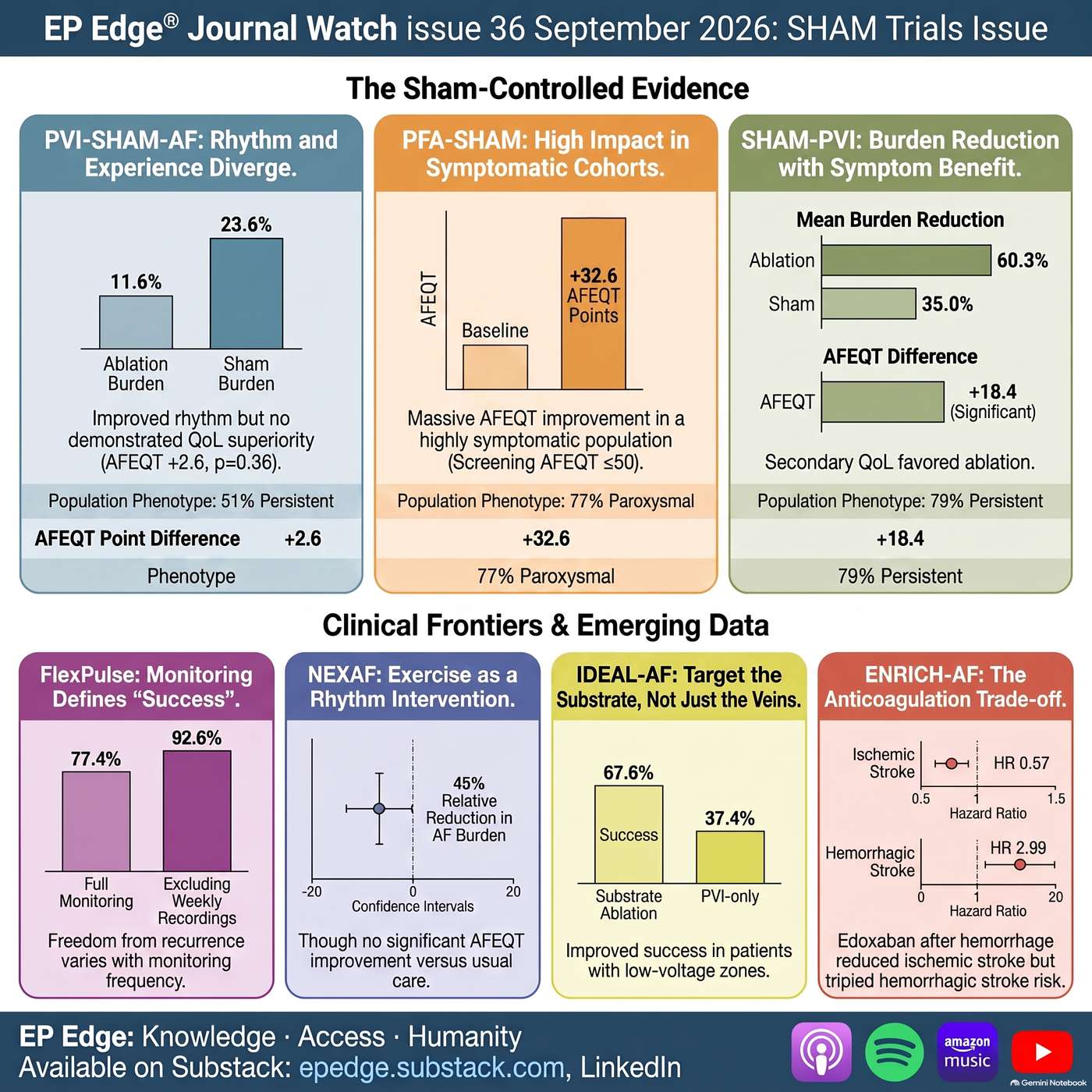 EP Edge® Journal Watch 36: ESC 2026, AF Ablation and Sham Trials | PVI-SHAM-AF, PFA-SHAM, SHAM-PVI, FlexPulse, NEXAF, IDEAL-AF, ENRICH-AF 14.09.2026 31минWhat defines successful atrial fibrillation ablation: fewer recurrences, lower AF burden, better quality of life, or all three? In this ESC Congress 2026 special issue of EP Edge Journal Watch, Dr. Sharma examines evidence from Munich, Germany, August 28–31, 2026, alongside previously covered sham-controlled trials to explore what meaningful patient benefit should look like.PVI-SHAM-AF leads the discussion. Rolf Wachter and colleagues found lower sampled atrial fibrillation burden after catheter ablation, but no demonstrated superiority over sham on the primary Atrial Fibrillation Effect on Quality-of-Life (AFEQT) endpoint. We examine the primary result, the favorable sensitivity analysis, and why failure to demonstrate superiority does not establish equivalence.PFA-SHAM and SHAM-PVI provide the earlier evidence. These trials demonstrated additional patient-reported benefit with pulsed field ablation and cryoballoon pulmonary vein isolation, respectively. Their differing populations, endpoint priorities, and monitoring methods help frame the comparison, without implying that one ablation technology is superior to another.Our In Depth synthesis examines baseline symptom severity, possible ceiling effects, recruitment, cardioversion, antiarrhythmic management, beta blockers, and continuous versus intermittent rhythm monitoring. These are potential contributors to the discordant findings, not established explanations. Drawing on Andrea Natale’s review, the Marrouche–Glotzer editorial, and Dulai’s SHAM-PVI substudy, we distinguish rhythm recurrence from residual burden, symptoms, functional improvement, and treatment burden. What should count as clinical success, and which definitions still need prospective validation?FlexPulse follows with 12-month results for focal dual-energy radiofrequency and pulsed field ablation. We review 74.6% composite effectiveness, safety, redo-mapping findings, and the substantial effect of monitoring intensity on apparent success. Single-arm results and retrospective lesion-quality associations are not comparative proof.NEXAF examines structured exercise in AF care. A supervised-to-home exercise program reduced continuously monitored AF burden by 45% relative to usual care, but did not demonstrate superiority on the quality-of-life co-primary endpoint.IDEAL-AF evaluates individualized low-voltage substrate ablation in selected patients with persistent AF. We discuss improved rhythm outcomes beyond pulmonary vein isolation, patient selection, verified electrical endpoints, and the accompanying Kistler–Chieng editorial. The findings do not justify routine additional lesions in every patient.ENRICH-AF closes with edoxaban after intracranial hemorrhage. Fewer ischemic strokes were accompanied by more hemorrhagic strokes and major bleeding, without demonstrated superiority on the primary stroke or systemic embolism endpoint.NEXAF and ENRICH-AF are discussed as congress-results reports, not full results manuscripts. Designed for electrophysiologists, cardiologists, trainees, researchers, and cardiovascular care teams, this episode connects trial interpretation with patient counseling, medication review, and shared decision-making.Explore the complete newsletter, infographics, and references, and follow EP Edge Journal Watch for weekly electrophysiology analysis.
 -
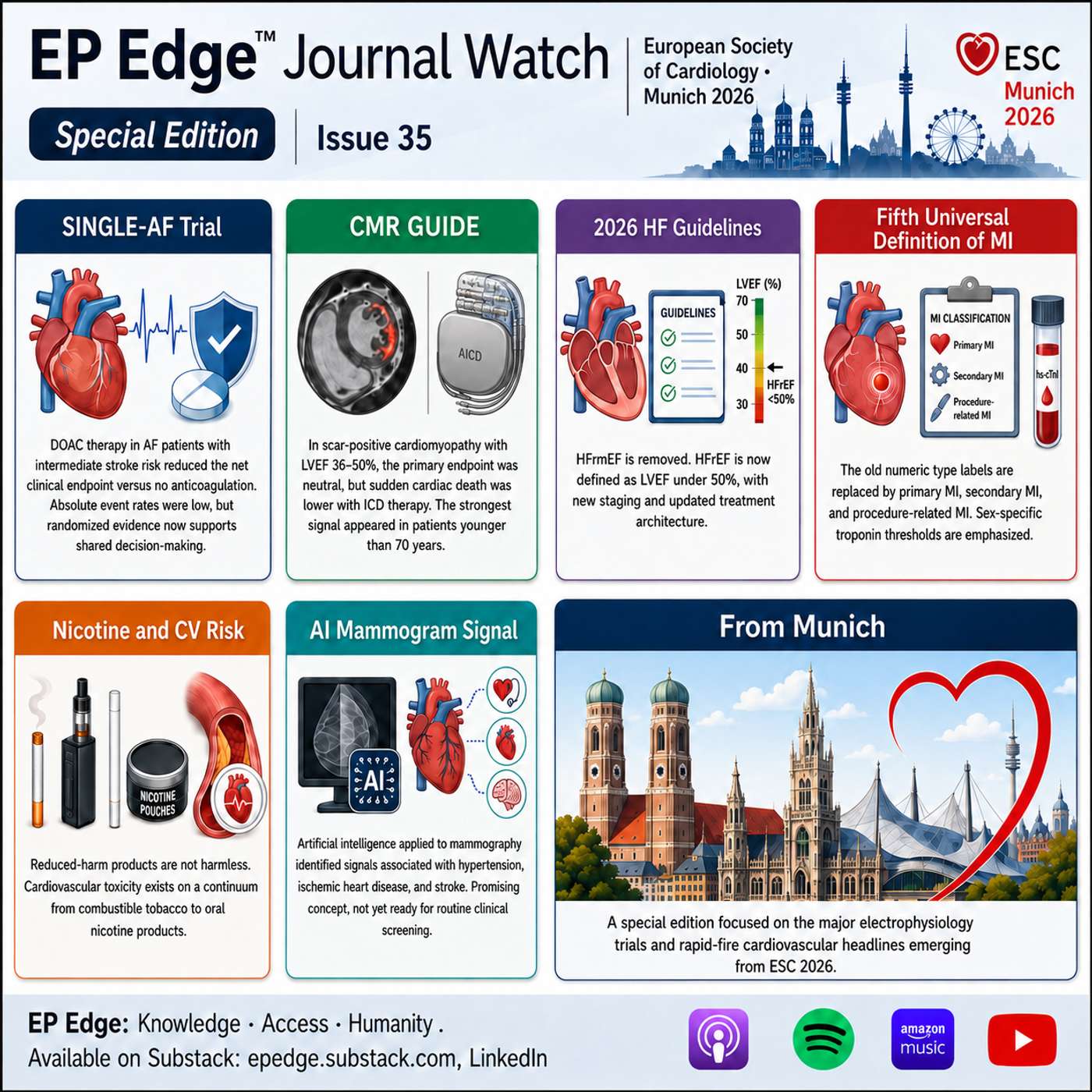 EP Edge® Journal Watch Issue 35: ESC 2026 Munich Special Edition | SINGLE-AF, CMR GUIDE, New HF Guidelines & Fifth Universal Definition of MI 07.09.2026 21минIn this special edition of EP Edge® Journal Watch, Dr. Sharma reviews the major breaking cardiovascular and electrophysiology science presented at the European Society of Cardiology Congress 2026 in Munich.The episode begins with two important electrophysiology trials that challenge familiar clinical thresholds.First is SINGLE-AF, led by Daehoon Kim and colleagues and published in the New England Journal of Medicine in August 2026. The trial provides the first randomized evidence evaluating direct oral anticoagulation versus no anticoagulation in patients with atrial fibrillation at intermediate stroke risk. Dr. Sharma explains why this population has remained a clinical gray zone, how the trial was designed, what the 69% relative reduction in the primary net clinical endpoint actually means, why the absolute event rate remains important, and whether these findings should change anticoagulation decisions in everyday AF practice.Next is CMR GUIDE, led by Joseph B. Selvanayagam and colleagues and published in JAMA in August 2026. This provocative randomized trial tested whether myocardial scar identified by late gadolinium enhancement cardiac MRI could help identify patients with LVEF 36% to 50% who may benefit from a primary-prevention ICD. Although the primary endpoint was neutral, the reduction in sudden cardiac death and the striking signal among patients younger than 70 years raise a much larger question for electrophysiologists: Is LVEF alone still an adequate way to determine sudden cardiac death risk and ICD candidacy?The episode then moves into a rapid review of additional major developments from ESC 2026.The 2026 ESC Heart Failure Guidelines, led by Lars Køber, Marianna Adamo and colleagues and published in the European Heart Journal, eliminate the traditional HFmrEF category, redefine HFrEF as LVEF below 50%, introduce a Stage A through D heart failure framework, and reorganize therapy into foundational, additional, and guideline-directed interventional treatment. Dr. Sharma discusses why this major change in heart failure classification does not automatically change ICD or CRT indications, but may influence how future device therapy is studied.The Fifth Universal Definition of Myocardial Infarction, led by Nicholas Mills, L. Kristin Newby, Sarah Zaman and colleagues, introduces a simpler pathophysiologic classification of primary MI, secondary MI, and procedure-related MI. Of particular relevance to electrophysiology, the new framework may help clarify how elevated troponin should be interpreted in patients with rapid atrial fibrillation and other tachyarrhythmias, separating true ischemic myocardial infarction from acute myocardial injury.Also discussed is the major Nature Reviews Cardiology review led by Thomas Münzel and colleagues examining nicotine and cardiovascular disease. The review places combustible cigarettes, heated tobacco products, e-cigarettes, and oral nicotine products along a continuum of cardiovascular harm and emphasizes that reduced exposure to combustion does not make nicotine-containing products cardiovascularly neutral.Finally, Dr. Sharma examines an innovative study presented by Viana Copeland and colleagues using artificial intelligence to analyze nearly 100,000 mammograms for cardiovascular signals associated with hypertension, ischemic heart disease, and stroke. The concept raises the intriguing possibility that imaging obtained for one clinical purpose may ultimately provide useful information about entirely different disease phenotypes.Throughout the episode, the emphasis is not simply on reporting trial results. Dr. Sharma explains why each study was needed, how it was designed, what the statistics actually mean, what the limitations are, and how the findings may influence clinical electrophysiology practice.Topics include: ESC Congress 2026 Munich SINGLE-AF trial atrial fibrillation and anticoagulation CHA₂DS₂-VA and intermediate stroke risk DOAC therapy CMR GUIDE trial cardiac MRI and late gadolinium enhancement myocardial scar and sudden cardiac death primary-prevention ICD therapy LVEF greater than 35% 2026 ESC Heart Failure Guidelines HFrEF and HFpEF Fifth Universal Definition of Myocardial Infarction Type 2 MI and tachyarrhythmias nicotine and cardiovascular disease vaping and cardiovascular risk artificial intelligence in cardiovascular imaging AI mammography and cardiovascular screening cardiac electrophysiology sudden cardiac death risk stratification For the full statistical analysis, references, figures, and graphics, read EP Edge® Journal Watch on LinkedIn and Substack at epedge.substack.com.Questions, suggestions, or concerns: [email protected].
 -
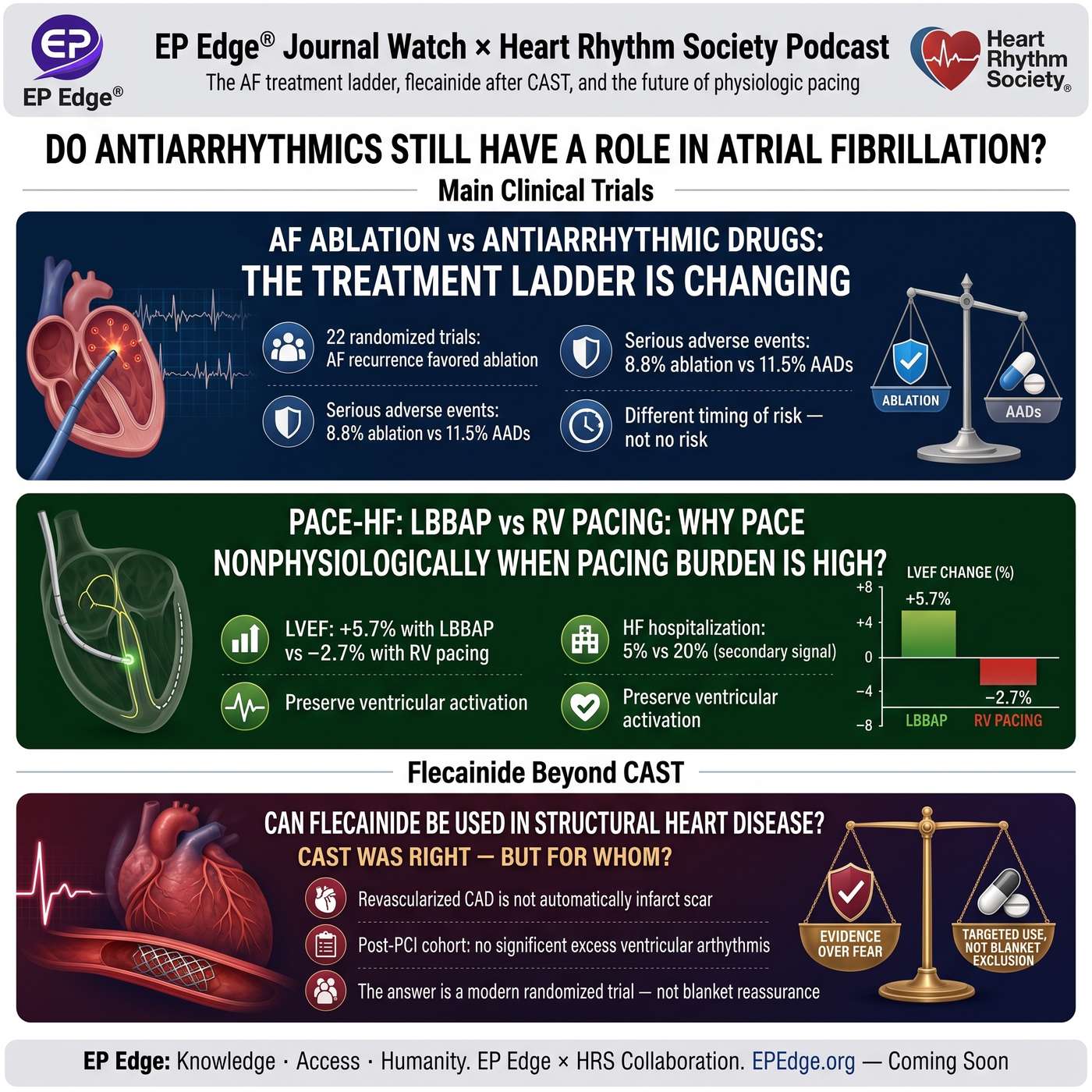 EP Edge® × HRS: Rethinking the Defaults: AFib Ablation vs Antiarrhythmics, Flecainide Beyond CAST, and Physiologic Pacing 31.08.2026 37минIn this EP Edge and Heart Rhythm Society collaborative podcast, Dr. Niraj Sharma and Dr. Mike Lloyd examine new evidence challenging several long-standing assumptions in cardiac electrophysiology: when to choose catheter ablation over antiarrhythmic drug therapy for atrial fibrillation, whether left bundle branch area pacing should replace conventional right ventricular pacing in patients who require substantial ventricular pacing, and how broadly the lessons of CAST should continue to restrict flecainide and other Class Ic antiarrhythmic drugs.The atrial fibrillation discussion brings together two complementary 2026 Heart Rhythm meta-analyses. Demy L. Idema and colleagues evaluated antiarrhythmic drugs versus catheter ablation for rhythm control across randomized controlled trials, focusing on AF recurrence, hospitalization, mortality, and treatment-related complications. Marwan Shawki and colleagues examined the safety of catheter ablation versus antiarrhythmic drugs across 24 randomized trials involving 6,665 participants. Together, the studies raise an important contemporary question: as ablation becomes more effective and procedural safety improves, does antiarrhythmic drug therapy still deserve an automatic position ahead of ablation in the AF treatment pathway?The discussion then turns to physiologic pacing and the PACE-HF trial by Jenish P. Shroff and colleagues, published in the European Heart Journal. In this prospective randomized trial, left bundle branch area pacing was compared with conventional right ventricular pacing in patients with preserved or mildly reduced left ventricular ejection fraction who were expected to require substantial ventricular pacing. The trial provides randomized evidence on ventricular function, pacing burden, heart failure hospitalization, and the potential consequences of chronic nonphysiologic right ventricular activation.Finally, the podcast revisits flecainide more than three decades after the Cardiac Arrhythmia Suppression Trial (CAST). The discussion incorporates the systematic review by Li and colleagues in Heart Rhythm examining how CAST reshaped flecainide research and clinical use, together with the nationwide cohort study by T.-C. Huang and colleagues in Heart Rhythm evaluating Class Ic antiarrhythmic therapy after PCI in patients with new-onset atrial fibrillation. The central question is not whether CAST was correct in the post-myocardial-infarction population it studied, but whether its findings have been extrapolated too broadly to contemporary patients with stable or revascularized coronary disease, preserved ventricular function, and atrial rather than ventricular arrhythmias.Across atrial fibrillation ablation, conduction-system pacing, and Class Ic antiarrhythmic therapy, the episode asks a common question: when new evidence challenges an established electrophysiology default, when is the evidence strong enough to change everyday practice?Studies DiscussedIdema DL, et al. Antiarrhythmic drugs vs catheter ablation as rhythm control for atrial fibrillation: A systematic review and meta-analysis of randomized controlled trials. Heart Rhythm. 2026;23:1465-1475.Shawki M, et al. Safety of catheter ablation compared with antiarrhythmic drugs for atrial fibrillation: A systematic review and meta-analysis of randomized trials. Heart Rhythm. 2026;23:1453-1464.Shroff JP, et al. Left bundle branch area pacing vs right ventricular pacing in preserved or mildly reduced ejection fraction: the PACE-HF trial. European Heart Journal. 2026;47:3298-3300.Li et al. Flecainide use before and after the Cardiac Arrhythmia Suppression Trial: A systematic review. Heart Rhythm. 2026.Huang TC, et al. Class Ic antiarrhythmic therapy after PCI in new-onset atrial fibrillation: Safety and clinical outcomes from a nationwide cohort. Heart Rhythm. 2026;23:e1372-e1382.
 -
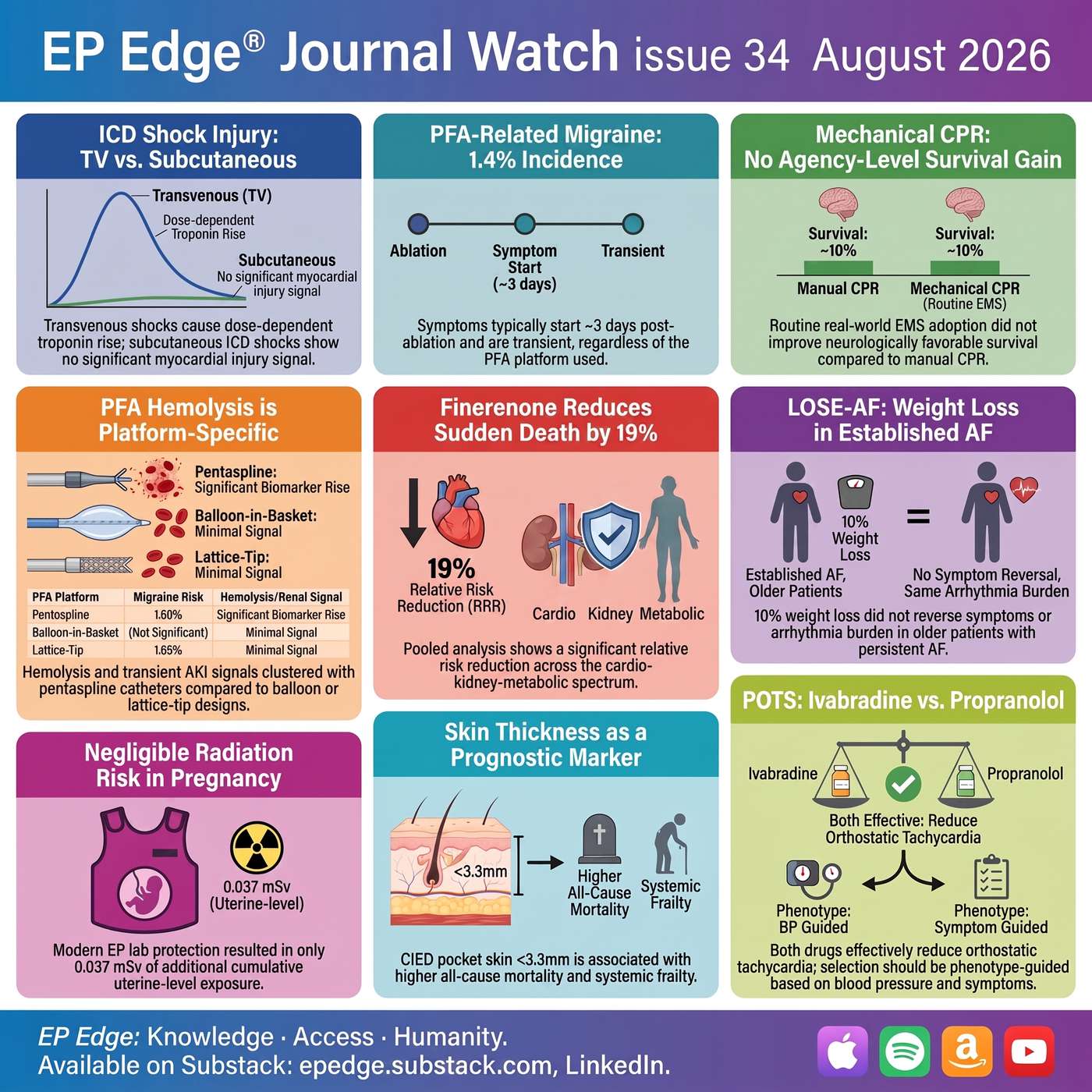 EP Edge® Journal Watch Issue 34 August 2026: ICD Shocks, Troponin, PFA Safety, LOSE-AF Weight Loss and POTS, Radiation Expose in the EP Lab 24.08.2026 27минWhat can nine carefully selected studies teach us about the changing practice of cardiac electrophysiology?In EP Edge® Journal Watch Issue 34, August 2026, Dr. Sharma provides a clinically focused review of emerging evidence across atrial fibrillation, pulsed field ablation, implantable cardiac devices, sudden death prevention, resuscitation, occupational radiation safety, and postural orthostatic tachycardia syndrome.This episode examines whether transvenous and subcutaneous ICD shocks produce different patterns of myocardial injury; the incidence and clinical meaning of migraine following pulsed field ablation; whether routine mechanical CPR improves meaningful survival after out-of-hospital cardiac arrest; and why hemolysis and renal effects may differ among PFA platforms and workflows.Dr. Sharma also explores the FINE-HEART analysis of finerenone and sudden death, the LOSE-AF randomized trial of weight loss in older patients with persistent atrial fibrillation, occupational radiation exposure during pregnancy, the prognostic significance of skin thickness over cardiac implantable electronic devices, and a randomized crossover comparison of ivabradine and propranolol for POTS.Rather than simply reciting percentages and P values, the discussion explains why each study was undertaken, how it was designed, what its principal statistical findings mean, where uncertainty remains, and how the results might—or might not—affect clinical practice. Each analysis concludes with the EP Edge take: a practical interpretation for physicians, trainees, nurses, allied professionals, and others caring for patients with heart-rhythm disorders.The episode also previews the early September 2026 arrival of EPEdge.org and the EP Edge app. Built around Knowledge · Access · Humanity, the new platform will bring together EP Edge Analytics, EP Edge Academy, CME and MOC opportunities, EP Edge Rx, practical clinical resources, and the complete EP Edge newsletter archive.And don’t miss next week’s must-listen collaborative issue with the Heart Rhythm Society.READ AND SUBSCRIBEEP Edge Journal Watch on LinkedIn:https://lnkd.in/e-Wa4diCEP Edge Newsletter on LinkedIn:https://lnkd.in/ep3NdZUzEP Edge on Substack:https://epedge.substack.comEPEdge.org—launching in early September 2026:https://epedge.org
 -
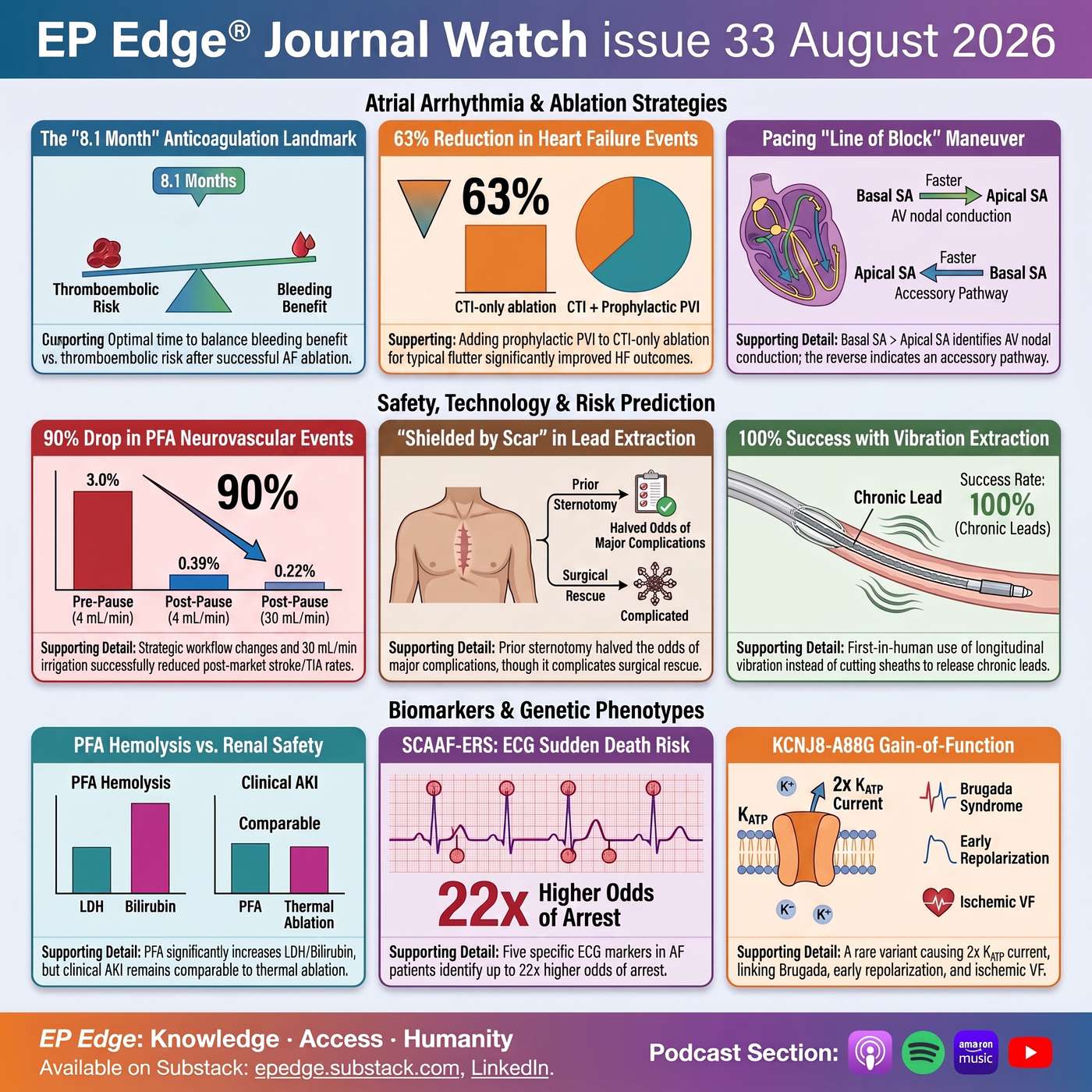 EP Edge® Journal Watch Issue 33, August 2026: Anticoagulation After AF Ablation, PFA Safety, Lead Extraction and Sudden Death Risk 17.08.2026 27минHow long should anticoagulation continue after an apparently successful atrial fibrillation ablation? Should prophylactic pulmonary vein isolation be added during typical atrial flutter ablation in patients with heart failure? What do emerging data reveal about neurologic events, hemolysis, and renal safety with pulsed-field ablation?In EP Edge® Journal Watch Issue 33, August 2026, Dr. Sharma provides a clinically focused and thought-provoking review of nine important cardiac electrophysiology studies published in Heart Rhythm and JACC: Clinical Electrophysiology.This episode examines: The proposed 8.1-month timing for oral anticoagulant discontinuation after successful AF ablation Prophylactic pulmonary vein isolation in patients with typical atrial flutter and heart failure Lesion delivery, irrigation rates, and neurovascular events with pulsed-field ablation PFA-associated hemolysis, acute kidney injury, and platform-specific renal safety Transvenous lead extraction outcomes in patients with prior sternotomy First-in-human vibration-based lead extraction The line-of-block pacing maneuver for distinguishing AV nodal from accessory pathway conduction The SCAAF-ERS electrocardiographic score for sudden cardiac arrest risk in atrial fibrillation A gain-of-function KCNJ8 variant linked with inherited and acquired J-wave syndromes Rather than simply listing study results, Dr. Sharma explains why each investigation was needed, what clinical uncertainty it attempted to resolve, how the methodology affects interpretation, and what the principal statistics mean in practical terms. Each paper concludes with the EP Edge Take, including the potential implications for current practice, the limitations that should temper interpretation, and the questions that future research must answer.The episode also includes updates on the EP Edge® app, the new epedge.org website, and the upcoming EP Edge® Journal Watch collaboration with the Heart Rhythm Society.Full references, study graphics, and the complete written analysis are available through the EP Edge® Journal Watch newsletter on LinkedIn and on Substack at epedge.substack.com.Questions, suggestions, or concerns can be sent to [email protected].
 -
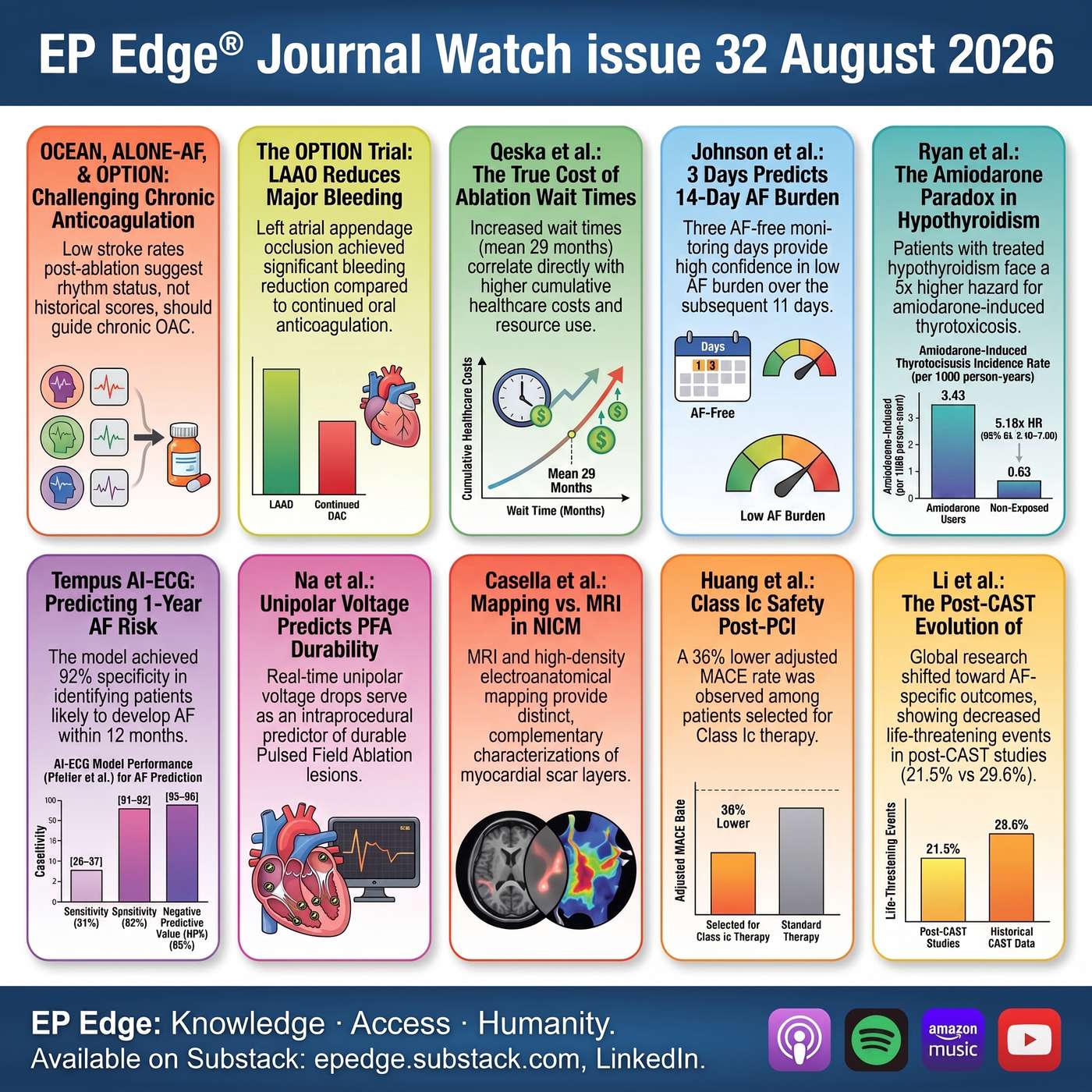 EP Edge® Journal Watch Issue 32 August 2026: AF Ablation Anticoagulation, Flecainide After CAST, AI-ECG & PFA Mapping 10.08.2026 24минCan anticoagulation be safely discontinued after successful atrial fibrillation ablation? Is the traditional prohibition against flecainide in structural heart disease too broad or does CAST remain an essential warning? And can AI-enabled ECGs, unipolar voltage mapping, and cardiac MRI improve how we detect AF and characterize arrhythmic substrate?In EP Edge® Journal Watch Issue 32, Dr. Niraj Sharma examines important electrophysiology research published in Heart Rhythm and JACC: Clinical Electrophysiology, translating the methodology, statistical findings, limitations, and clinical implications into practical insights for electrophysiologists and cardiovascular clinicians.Topics include:Discontinuing oral anticoagulation after AF ablationThe clinical and economic consequences of delayed AF ablationEstimating AF burden after several AF-free monitoring daysMulticenter validation of an AI-enabled ECG model for predicting AFUnipolar voltage mapping and lesion durability after pulsed field ablationHigh-density electroanatomic mapping versus cardiac MRI in nonischemic cardiomyopathyHow CAST changed the direction of flecainide researchClass Ic antiarrhythmic therapy after PCIReconsidering flecainide in selected structural heart disease phenotypesAmiodarone-associated thyrotoxicosis in patients with pre-existing hypothyroidismThe episode separates statistical association from causal evidence and asks what these findings should and should not change in current practice. It also outlines the prospective trials needed to determine whether anticoagulation withdrawal, AI-guided AF screening, voltage-guided PFA, and phenotype-based flecainide prescribing can improve clinically meaningful outcomes.Dr. Sharma also previews the next collaborative EP Edge® Journal Watch issue with the Heart Rhythm Society, the forthcoming EP Edge® app, and the new epedge.org platform—bringing podcasts, newsletters, EP Edge Rx, EP Edge Academy, and additional clinical and patient-focused resources into one accessible ecosystem.References, graphics, and the complete written analysis are available through EP Edge® Journal Watch on LinkedIn and Substack:https://epedge.substack.comQuestions, suggestions, or concerns: [email protected]
 -
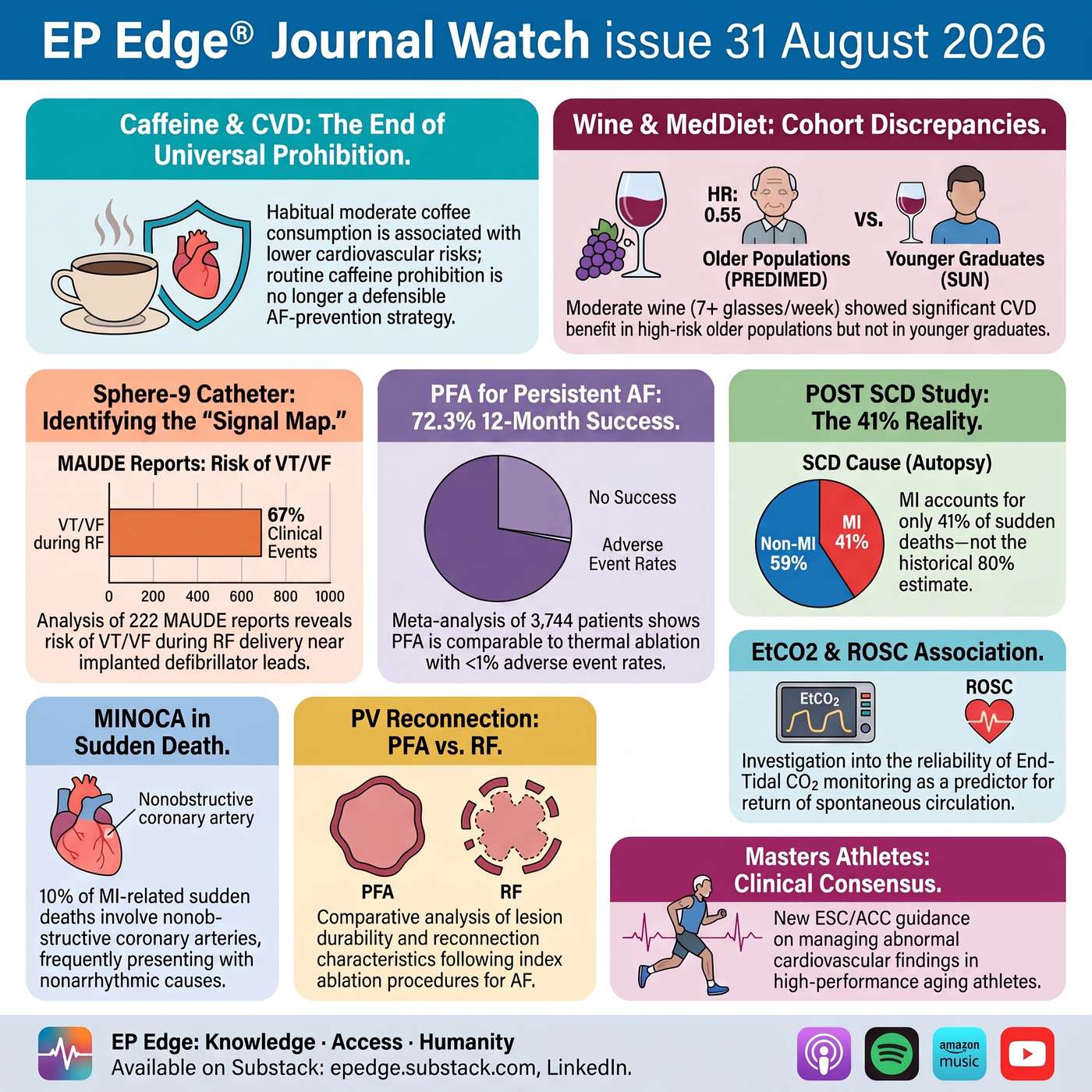 EP Edge® Journal Watch Issue 31, August 2026: Caffeine, Wine, Atrial Fibrillation, Pulsed-Field Ablation and Sudden Cardiac Death 03.08.2026 26минIn EP Edge® Journal Watch Issue 31, August 2026, Dr. Sharma examine new evidence that challenges several familiar assumptions in cardiac electrophysiology.Should patients with atrial fibrillation routinely stop drinking coffee? An American Heart Association scientific statement reviews the cardiovascular effects of caffeine, including randomized evidence showing a 39% lower risk of recurrent AF among habitual coffee drinkers who continued coffee after cardioversion. The discussion separates ordinary coffee consumption from energy drinks and concentrated caffeine while considering premature ventricular contractions, blood pressure, sleep, and individualized patient counseling.The episode also investigates whether wine adds cardiovascular benefit to the Mediterranean diet. The apparent benefit weakened when moderate drinkers were compared with very-light drinkers, demonstrating how the reference group can change the statistical narrative. Importantly, these studies did not evaluate AF outcomes and do not support prescribing wine as cardiovascular therapy.Other studies covered include:• Pulsed-field ablation for persistent AF, with pooled one-year freedom from atrial arrhythmia of 72.3%, but no proven superiority over thermal ablation.• Broad and predominantly left-sided pulmonary vein reconnection patterns during redo procedures after pentaspline pulsed-field ablation.• Real-world Sphere-9 safety reports involving ventricular arrhythmias, implanted-device interactions, stroke, AV block, and other signals, interpreted in the absence of a procedural denominator.• The SMARTBEATS randomized trial of smartphone rhythm monitoring before cardioversion, which prevented approximately one same-day cancellation for every six patients monitored. https://doi.org/10.1001/jamacardio.2026.1269• Autopsy-based sudden cardiac death research showing that myocardial infarction accounted for 41% of confirmed sudden cardiac deaths and highlighting the limitations of ejection fraction alone.• End-tidal carbon dioxide trajectories during out-of-hospital cardiac arrest and why no single value should become a stand-alone termination rule.• Atrial fibrillation, bradycardia, conduction disease, and ventricular ectopy in masters athletes, reinforcing that exceptional fitness does not provide immunity from clinically important arrhythmias.Listen for the study rationale, methodology, clinically meaningful statistics, limitations, and the EP Edge take on how these findings may influence practice.Complete references, graphics, and detailed analysis are available through the LinkedIn newsletter EP Edge® Journal Watch and at epedge.substack.com.
 -
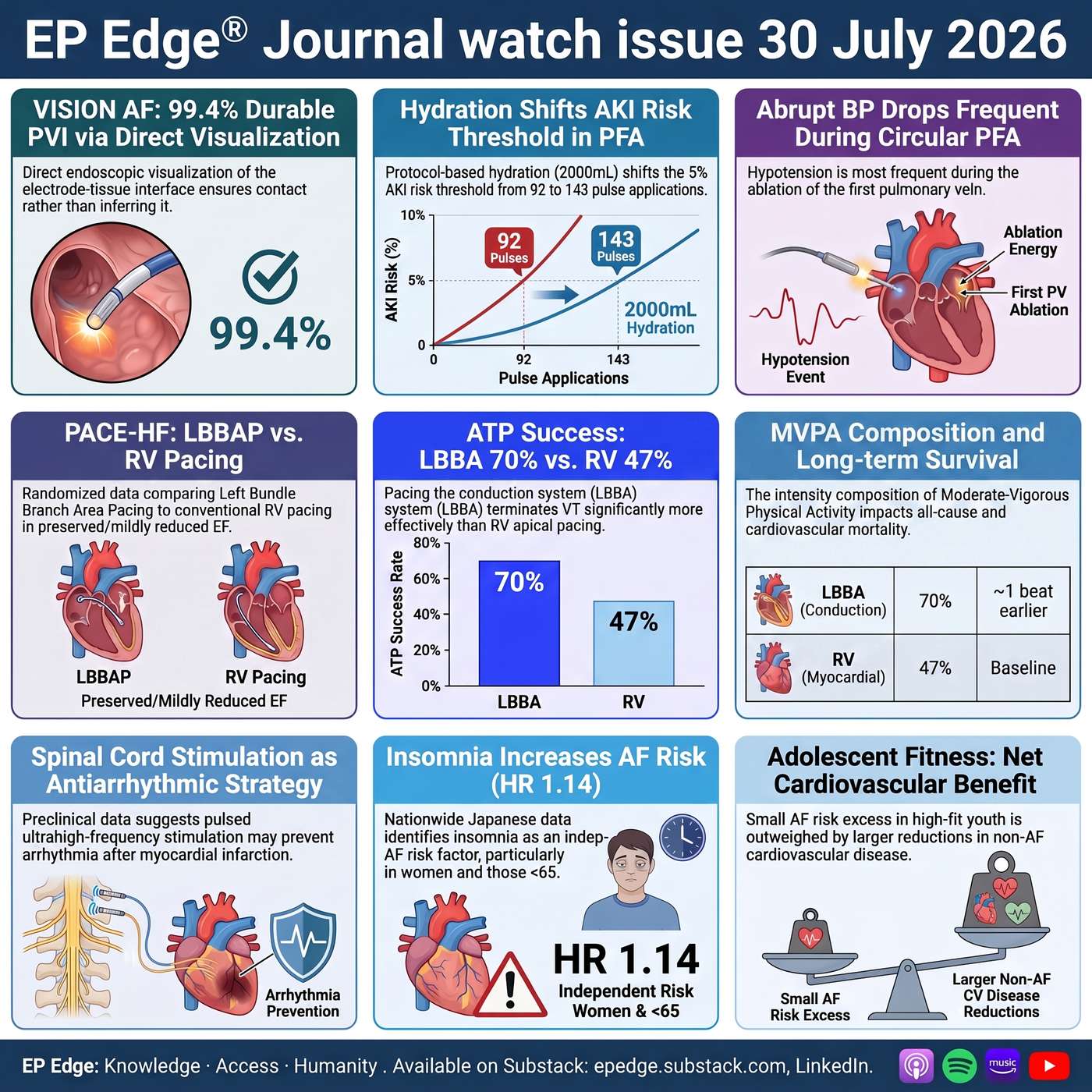 EP Edge® Journal Watch Issue 30: VISION AF, Pulsed Field Ablation Safety, PACE-HF and Conduction System Pacing | July 2026 27.07.2026 23минIn EP Edge® Journal Watch Issue 30, July 2026, we explore the next phase of cardiac electrophysiology, from pulsed field ablation durability and physiologic pacing to neuromodulation, sleep, fitness, and lifetime arrhythmia risk.We begin with the first-in-human VISION AF study, which evaluates an endoscope-enabled pulsed field ablation balloon that allows direct visualization of the electrode-tissue interface. Chronic invasive remapping provides a close look at pulmonary vein isolation durability and raises an important question: could seeing tissue contact become the next major advance in PFA workflow? Two additional studies examine practical PFA safety signals. One evaluates hemolysis-associated acute kidney injury, pulse count, chronic kidney disease, extensive left atrial ablation, and whether protocol-based hydration can reduce renal risk. Another quantifies acute blood pressure drops during circular-array PFA and identifies the first pulmonary vein treatment as the period of greatest hemodynamic vulnerability. The pacing and ventricular arrhythmia section includes: The randomized PACE-HF trial, comparing left bundle branch area pacing with conventional right ventricular pacing A preclinical comparison of left bundle branch area antitachycardia pacing and right ventricular ATP Pulsed ultrahigh-frequency spinal cord stimulation as a potential neuromodulation strategy after myocardial infarction We then move beyond the EP laboratory to examine: Insomnia and incident atrial fibrillation The lifetime cardiovascular tradeoff between high cardiorespiratory fitness and AF risk Whether the balance of moderate and vigorous physical activity influences cardiovascular and overall mortality Each paper is examined through its rationale, methodology, statistical meaning, limitations, and potential clinical consequences.Can direct tissue visualization improve PFA durability? Should PFA pulse count be treated as a biologic dose? Is right ventricular pacing still acceptable when substantial pacing is anticipated? Could the site of antitachycardia pacing determine whether VT terminates? How should clinicians incorporate sleep and exercise into arrhythmia prevention?This episode is intended for electrophysiologists, cardiologists, device specialists, fellows, researchers, and anyone following advances in pulsed field ablation, conduction system pacing, ventricular arrhythmia therapy, and preventive cardiology.Read the companion newsletter and subscribe to EP Edge® Journal Watch at epedge.substack.com.
 -
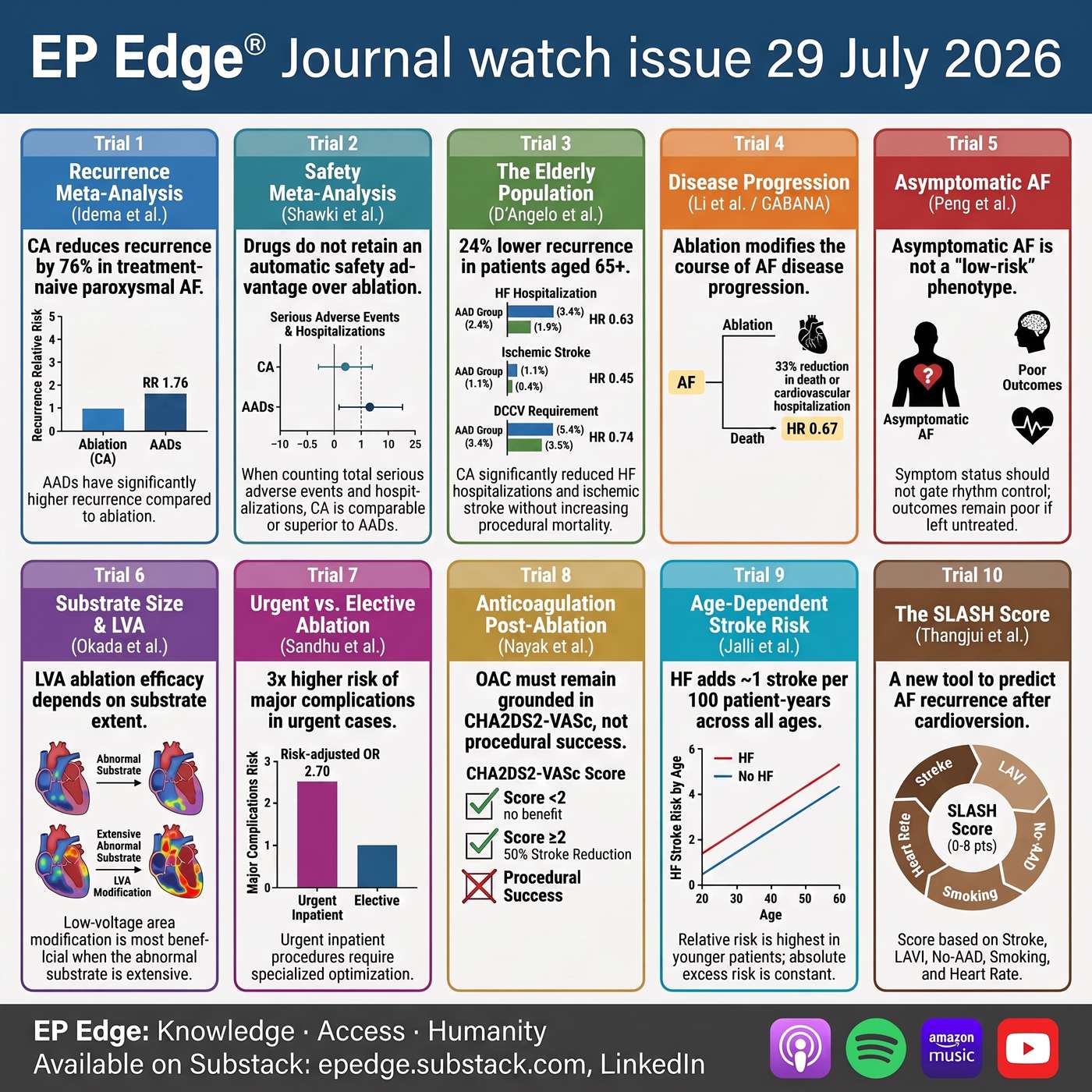 EP Edge® Journal Watch Issue 29: Atrial Fibrillation Ablation vs Antiarrhythmic Drugs, CABANA Progression and Anticoagulation | July 2026 20.07.2026 23минIn EP Edge® Journal Watch Issue 29, July 2026, we examine the evidence reshaping contemporary atrial fibrillation management and the rapidly changing role of catheter ablation.Two major meta-analyses compare catheter ablation with antiarrhythmic drug therapy, addressing rhythm efficacy, serious adverse events, hospitalization, treatment intolerance, and whether medications still deserve an automatic safety advantage. We also review real-world outcomes in older adults after prior antiarrhythmic drug exposure and ask whether another medication or catheter ablation is the more appropriate next step. The episode then explores whether ablation can modify the natural history of AF. A CABANA analysis evaluates progression from paroxysmal to persistent AF, while new registry data challenge the assumption that asymptomatic AF represents a low-risk phenotype. The SUPPRESS-AF analysis examines whether low-voltage area ablation should be guided by the amount of abnormal atrial substrate rather than applied uniformly. We also discuss: Urgent versus elective inpatient AF ablation Oral anticoagulation after apparently successful AF ablation The age-dependent relationship between heart failure and ischemic stroke The SLASH score for predicting AF recurrence after electrical cardioversion Each study is reviewed through its clinical rationale, methodology, statistical interpretation, limitations, and practical implications for electrophysiology practice.Should catheter ablation move earlier in the AF treatment pathway? Should symptom status continue to determine access to rhythm control? When is urgent inpatient ablation justified? Does successful ablation ever eliminate the need for anticoagulation?This episode is designed for cardiac electrophysiologists, cardiologists, fellows, researchers, and clinicians seeking a detailed, clinically relevant review of the latest atrial fibrillation evidence.Read the companion newsletter and subscribe to EP Edge® Journal Watch at epedge.substack.com.
 -
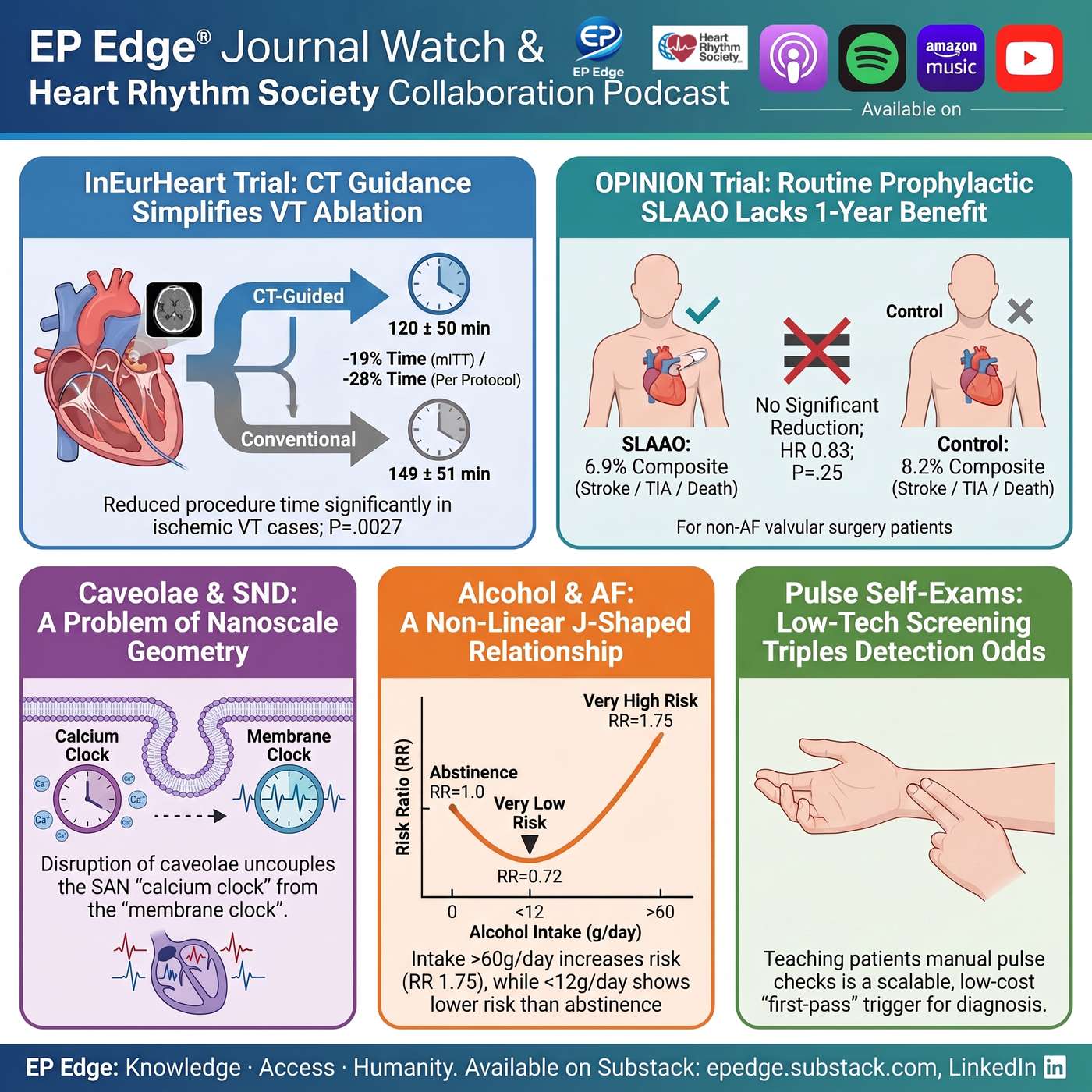 EP Edge × HRS Podcast: CT-Guided VT Ablation & LAA Closure Without AF: InEurHeart and OPINION, Caveolae, Alcohol and AFib, Pulse check and Afib Diagnosis 13.07.2026 29минIn this July 2026 episode of EP Edge Journal Watch, produced in collaboration with the Heart Rhythm Society (HRS), Mike Lloyd and Dr. Niraj Sharma review five studies with direct implications for contemporary cardiac electrophysiology practice.The anchor trials are InEurHeart, a randomized comparison of computed tomography-guided versus conventional catheter ablation for post–myocardial infarction ventricular tachycardia, and OPINION, which evaluates prophylactic surgical left atrial appendage occlusion during valvular heart surgery in patients without known pre-existing atrial fibrillation. Using the workflow gains seen with pulsed field ablation in AF as context, the discussion asks whether preprocedural cardiac CT can make ischemic VT ablation more efficient while preserving the essential role of functional mapping and why future AF risk should not automatically lead to surgical LAA closure.Rapid-fire analyses cover the relationship between alcohol consumption and incident atrial fibrillation, pulse self-examination as a simple strategy to improve AF detection, and emerging mechanistic research on caveolae, pacemaker signaling, sinus node dysfunction, and heart failure.The episode translates randomized trials, meta-analysis, screening research, and translational science into practical implications for the EP lab, clinic, patient counseling, and shared decision-making. Essential listening for electrophysiologists, cardiologists, fellows, advanced practice clinicians, and cardiac rhythm-management teams
 -
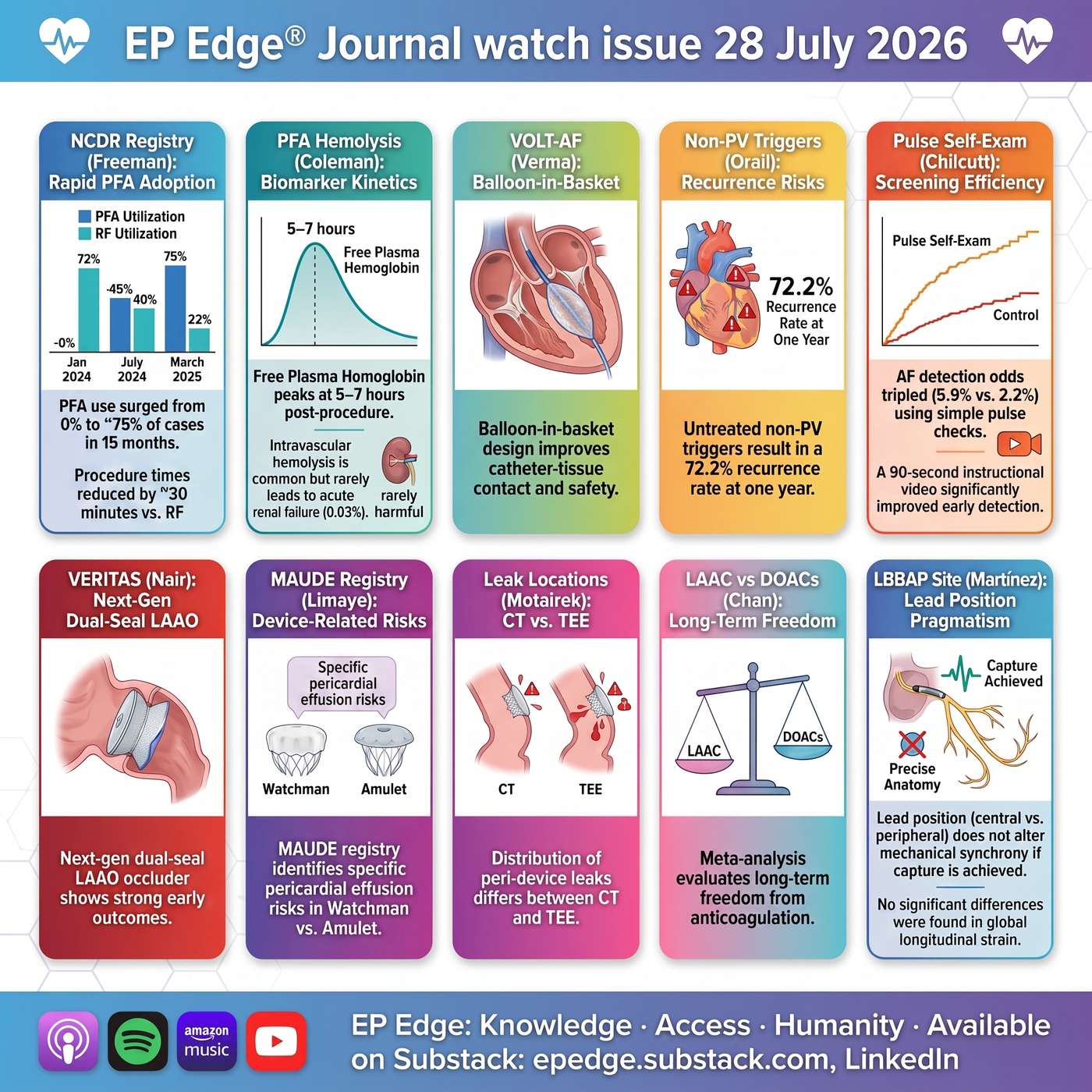 EP Edge® Journal Watch Issue 28, July 2026: Pulsed Field Ablation Goes Mainstream, LAAO vs DOACs, Non-PV Triggers, and LBBAP Lead Position 06.07.2026 33минIn EP Edge® Journal Watch Issue 28, July 2026, Dr. Sharma reviews a major month in cardiac electrophysiology, where new technology is being tested against real-world evidence. This episode covers the rapid commercial adoption of pulsed field ablation, the NCDR AFib Ablation Registry, the VOLT-AF IDE balloon-in-basket PFA study, PFA-related intravascular hemolysis, and the evolving role of non-pulmonary vein triggers in first-time AF ablation.The issue also explores low-cost atrial fibrillation screening with pulse self-exam, next-generation left atrial appendage occlusion with the VERITAS Amulet 360 study, MAUDE registry safety signals for pericardial effusion after Watchman and Amulet, WATCHMAN peridevice leak anatomy by TEE and CT, the randomized evidence comparing LAAC vs DOACs, and whether left bundle branch area pacing lead position matters after conduction system capture.The central question across the issue: how should electrophysiologists match technology to mechanism, anatomy, substrate, and patient phenotype? The newsletter groups the papers into PFA scale and safety, AF beyond the pulmonary veins, LAAO in the evidence era, and conduction system pacing. For full references, graphics, and the written newsletter, visit EP Edge Journal Watch on LinkedIn and Substack.EP Edge® Journal Watch Issue 28 reviews pulsed field ablation, LAAO vs DOACs, non-PV triggers, AF screening, WATCHMAN leaks, Amulet 360, and LBBAP. EP Edge Journal Watch, EP Edge podcast, cardiac electrophysiology, electrophysiology podcast, atrial fibrillation, AF ablation, pulsed field ablation, PFA, left atrial appendage occlusion, LAAO, conduction system pacingTrials NCDR AFib Ablation Registry, PFA commercial release, VOLT-AF IDE, balloon-in-basket PFA, PFA hemolysis, intravascular hemolysis, non-PV triggers, first-time AF ablation, pulse self-exam, AF screening, VERITAS study, Amulet 360, MAUDE registry, Watchman pericardial effusion, Amulet pericardial effusion, WATCHMAN peridevice leak, LAAC vs DOACs, LBBAP lead position, left bundle branch area pacing, myocardial work, Burri Jastrzębski, Tapia MartínezClinical topic keywords: pulmonary vein isolation, PVI, persistent atrial fibrillation, paroxysmal atrial fibrillation, AF recurrence, AF stroke prevention, device-related thrombus, peridevice leak, TEE, cardiac CT, ischemic stroke, bleeding risk, DOAC therapy, physiologic pacing, left bundle branch pacing, electrophysiology research, Heart Rhythm SocietyShow Notes LinksSubstack https://lnkd.in/e6b2ZrbZEP Edge Journal Watch Weekly Newsletter https://lnkd.in/e-Wa4diCEP Edge Newsletter In-Depth Monthly Issues https://lnkd.in/ep3NdZUzEP Edge Podcast Apple: https://lnkd.in/e5KfepBZ Spotify: https://lnkd.in/egb6HzPc Amazon: https://lnkd.in/e2q-xJi6 YouTube: https://lnkd.in/ePSUJCP2
 -
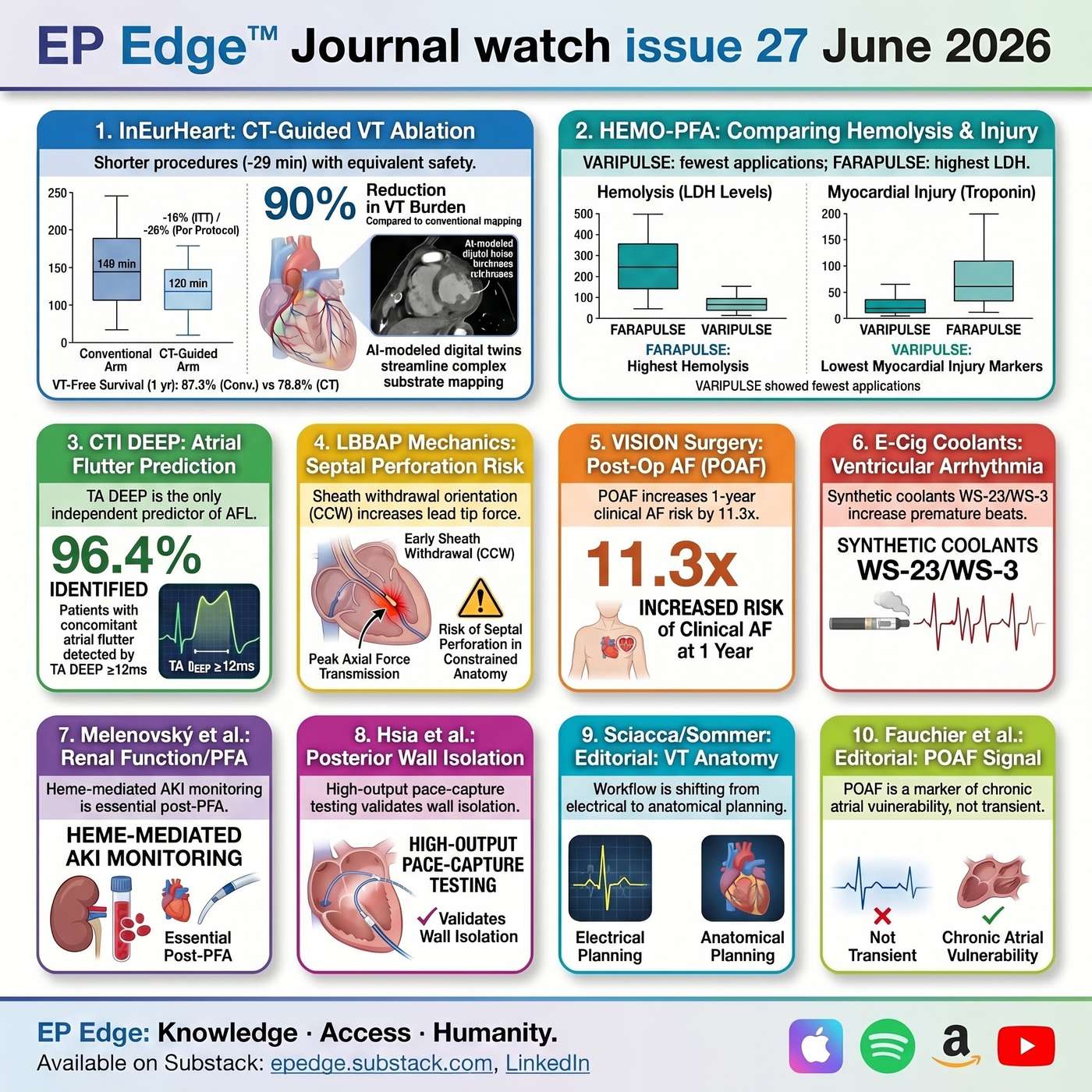 EP Edge® Journal Watch, Issue 27, June 2026: CT-Guided VT Ablation, PFA Safety, Posterior Wall Isolation, and AF Substrate Precision 29.06.2026 48минIn this episode of EP Edge® Journal Watch, Dr. Sharma reviews the June 2026 Issue 27 newsletter, focusing on a central question in modern cardiac electrophysiology: how do we better match mechanism to intervention? This issue explores smarter procedural targeting, safer energy delivery, functional substrate assessment, and the evolving biology of atrial and ventricular arrhythmias.The episode begins with the InEurHeart trial, a randomized study of CT-guided ventricular tachycardia ablation in ischemic cardiomyopathy. Dr. Sharma explains why preprocedural cardiac CT may help identify scar-related VT isthmuses, shorten procedure time, and create a more reproducible workflow, while also discussing why anatomy alone cannot fully replace functional electroanatomic mapping.The discussion then moves to posterior wall isolation in persistent atrial fibrillation, including a study of very high-output pace-capture testing. The key clinical question is whether more aggressive confirmation of posterior wall inexcitability improves outcomes. The results challenge the assumption that more lesions, more energy, and stricter capture endpoints necessarily produce better rhythm control.Next, the episode examines CTI DEEP mapping, or decrement evoked potentials, as a functional electrophysiology marker for atrial flutter susceptibility in patients undergoing AF ablation. Dr. Sharma explains what DEEP is, how it is measured using extrastimulus pacing from the lateral tricuspid annulus and proximal coronary sinus, and why functional conduction delay may be more informative than CTI anatomy alone.The procedural safety conversation continues with a mechanistic study of left bundle branch area pacing showing that sheath withdrawal may be a vulnerable phase for septal perforation. This section highlights why a pacing lead that appears stable after deployment may still be mechanically vulnerable during early sheath withdrawal, especially in constrained right atrial anatomy.The episode then turns to pulsed field ablation safety, reviewing the HEMO-PFA study and a renal biomarker study after PFA. These papers explore hemolysis, myocardial injury, acute kidney injury, application burden, delayed creatinine changes, and why PFA safety should be considered patient-specific, lesion-set-specific, and system-specific rather than generic.In the atrial fibrillation substrate section, Dr. Sharma reviews the VISION Cardiac Surgery cohort on postoperative atrial fibrillation and its association with recurrent clinical AF, mortality, and heterogeneous stroke risk. The episode also reviews a state-of-the-art paper on inflammatory pathways in AF, including cytokines, NLRP3 inflammasome activation, oxidative stress, autonomic imbalance, epicardial adipose tissue, fibrosis, ion-channel remodeling, and why risk-factor modification should be viewed as substrate therapy.The final section covers modifiable exposure risk, including an experimental study of vaping coolants and ventricular arrhythmogenicity, followed by a nuanced discussion of alcohol intake and incident atrial fibrillation. Dr. Sharma emphasizes that the alcohol meta-analysis does not prove alcohol prevents AF; rather, it shows a nonlinear observational association, with very high intake clearly associated with increased AF risk.This episode is designed for electrophysiologists, cardiologists, EP fellows, advanced practice providers, cardiovascular researchers, and clinicians interested in atrial fibrillation, ventricular tachycardia, catheter ablation, pulsed field ablation, physiologic pacing, arrhythmia mechanisms, and evidence-based EP practice.For full references, figures, graphics, and detailed statistical interpretation, visit the EP Edge Journal Watch newsletter on LinkedIn and Substack at epedge.substack.com. Questions, suggestions, or concerns can be sent to [email protected].
 -
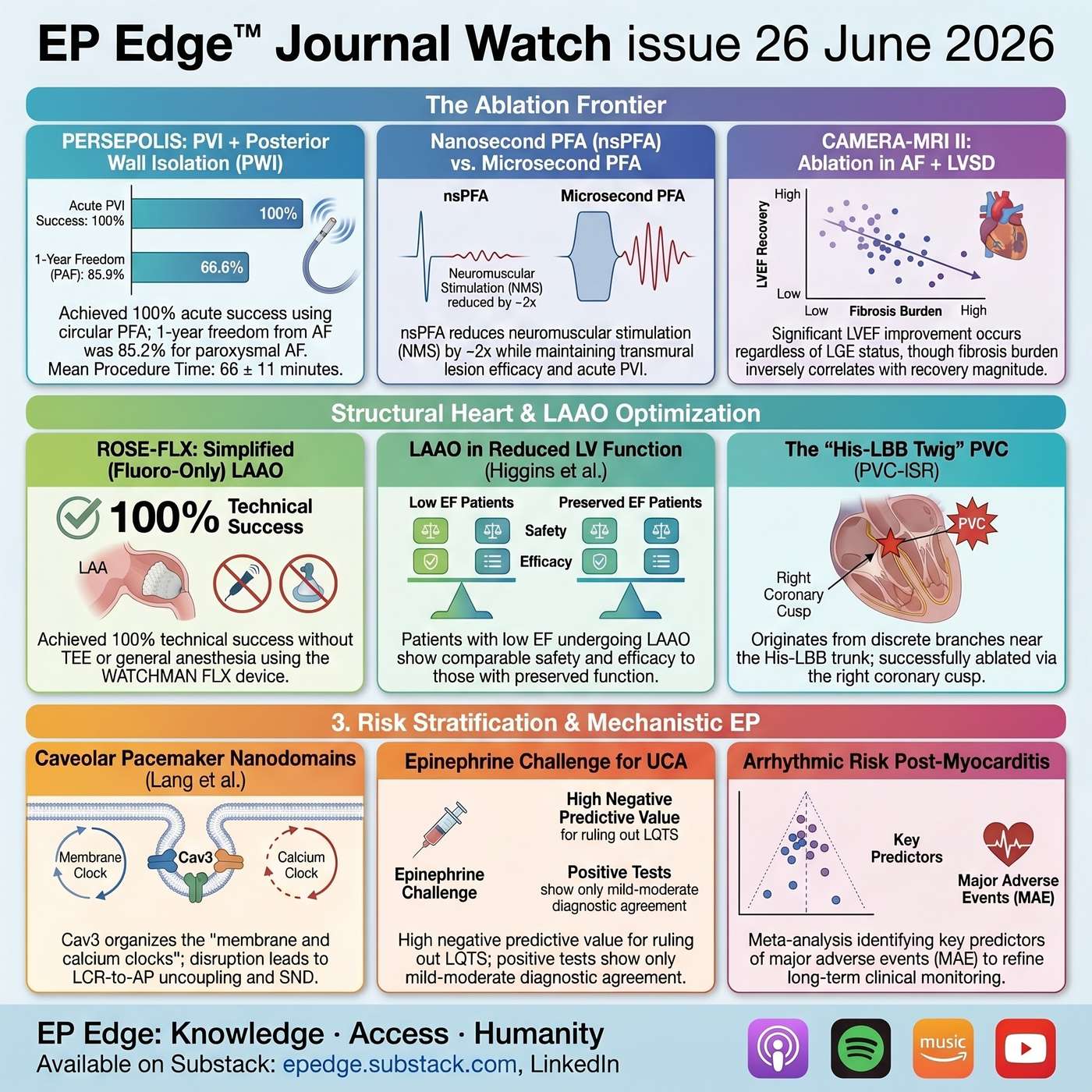 EP Edge Journal Watch Issue 26, June 2026: PFA, LAAO, AF Ablation in Heart Failure, Myocarditis Risk and Sinus Node Biology 22.06.2026 27минIn this episode of EP Edge Journal Watch Issue 26, June 2026, Dr. Sharma reviews high-impact studies shaping contemporary cardiac electrophysiology, with a focus on smarter ablation strategies, safer left atrial appendage closure, post-arrest and post-myocarditis risk stratification, and the cellular biology beneath cardiac rhythm.This episode covers pulsed field ablation beyond pulmonary vein isolation, including PVI plus posterior wall isolation in the PERSEPOLIS trial, and nanosecond pulsed field ablation as a potential strategy to reduce neuromuscular stimulation and improve procedural tolerance. Dr. Sharma also reviews catheter ablation for atrial fibrillation with left ventricular systolic dysfunction, focusing on CAMERA-MRI II and what cardiac MRI fibrosis means for recovery, patient selection, and counseling.The episode then moves into left atrial appendage occlusion, including outcomes in patients with reduced ejection fraction and simplified fluoroscopy-guided LAAO workflows. Additional discussions include epinephrine challenge after unexplained cardiac arrest and familial sudden death, the long-term risk of major arrhythmic events after myocarditis, and mechanistic studies on caveolae, pacemaker nanodomains, sinus node dysfunction, and the His-LBB twig as a source of premature ventricular complexes that can look almost identical to sinus rhythm.Rather than simply summarizing abstracts, this episode explains why each study was done, what clinical gap it was designed to address, how the methodology shaped the results, what the statistics mean in practical terms, and how the findings may influence real-world EP decision-making in the lab, clinic, and patient counseling.For full references, graphics, and the written analysis, read EP Edge Journal Watch on LinkedIn and Substack at epedge.substack.com.KeywordsCardiac electrophysiology, EP Edge, EP Edge Journal Watch, Dr. Sharma, electrophysiology podcast, cardiology podcast, heart rhythm, cardiac arrhythmias, atrial fibrillation, AFib, AF ablation, catheter ablation, pulsed field ablation, PFA, nanosecond PFA, pulmonary vein isolation, PVI, posterior wall isolation, PWI, persistent atrial fibrillation, paroxysmal atrial fibrillation, neuromuscular stimulation, AF ablation sedation, left atrial appendage occlusion, LAAO, left atrial appendage closure, reduced ejection fraction, heart failure, HFrEF, LV systolic dysfunction, cardiac MRI, late gadolinium enhancement, LV fibrosis, CAMERA-MRI II, PERSEPOLIS trial, ROSE-FLX, unexplained cardiac arrest, familial sudden death, epinephrine challenge, long QT syndrome, LQTS, CPVT, myocarditis, arrhythmic risk after myocarditis, ventricular arrhythmias, sudden cardiac death, sinus node dysfunction, caveolae, pacemaker nanodomains, His-Purkinje system, PVC ablation, His-LBB twig, premature ventricular complexes, MedEd, CME, cardiology education
 -
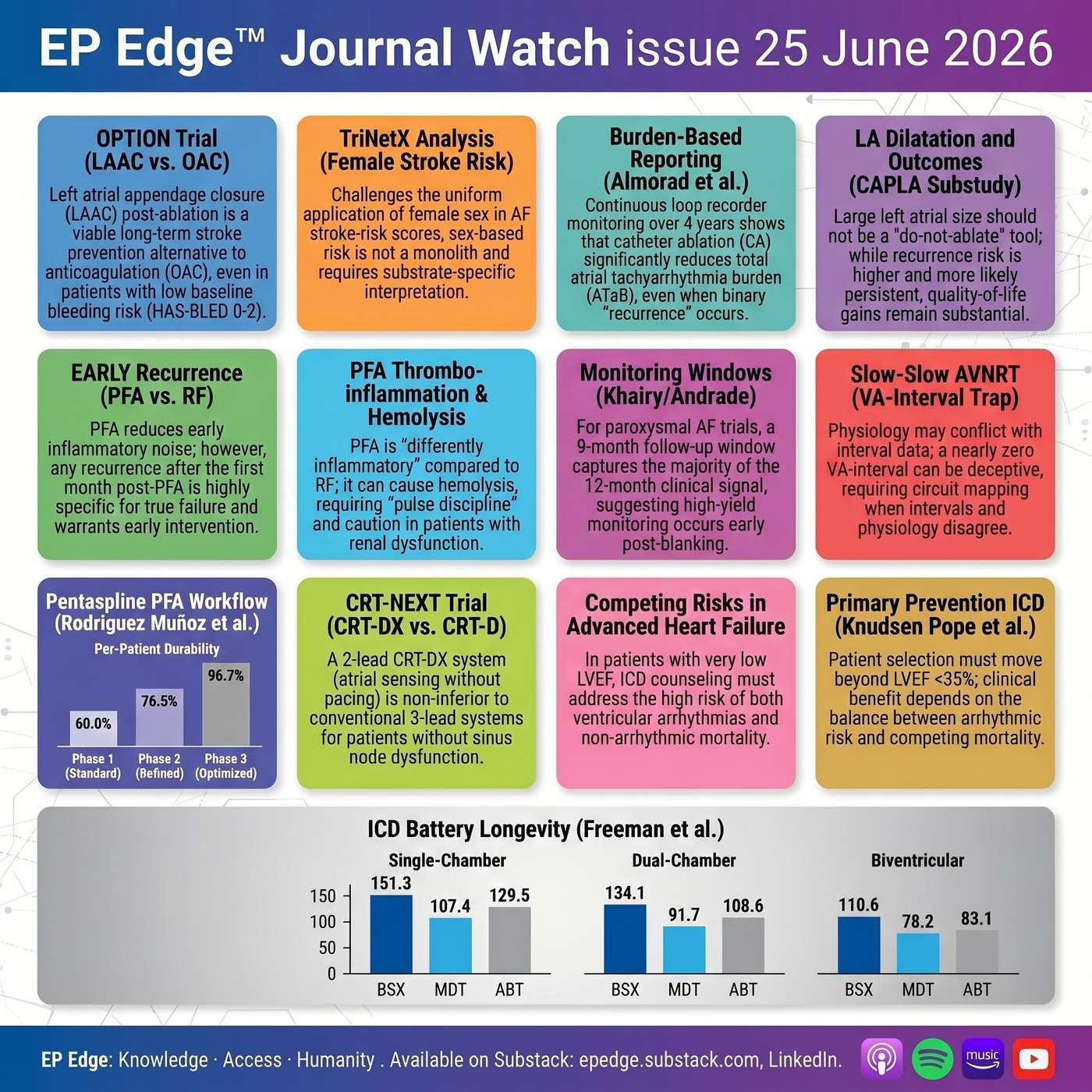 EP Edge Journal Watch Issue 25 June 2026: AF Ablation, Left Atrial Appendage Closure, PFA Workflow, ICD Battery Longevity & Device Tradeoffs 15.06.2026 26минIn EP Edge Journal Watch Issue 25, June 2026, Dr. Sharma reviews the most clinically relevant new studies in cardiac electrophysiology, with a focus on atrial fibrillation, stroke prevention, pulsed field ablation, ICD therapy, CRT strategy, and EP lab decision-making.This episode is built around the theme “Beyond the Binary” — moving past simple endpoints like recurrence versus no recurrence, PFA versus RF, EF below 35%, or lead versus no lead. The data in this issue challenge how electrophysiologists think about ablation success, anticoagulation strategy, left atrial appendage closure, device selection, ICD longevity, and arrhythmia risk.Topics covered include:LAAC after AF ablation and the OPTION bleeding-risk substudy: whether left atrial appendage closure after catheter ablation should be considered beyond traditionally high HAS-BLED patients, and how LAAC compares with long-term oral anticoagulation for bleeding reduction and stroke prevention.Female sex and AF stroke risk: a large TriNetX analysis asking whether female sex is truly a uniform stroke-risk factor in atrial fibrillation or better understood as an age- and comorbidity-dependent risk modifier.PFA versus radiofrequency ablation for early recurrence: why pulsed field ablation may reduce symptomatic early recurrence after pulmonary vein isolation, but why early recurrence after PFA still strongly predicts later atrial arrhythmia recurrence.AF burden after ablation: a 4-year continuous-monitoring study showing why binary recurrence endpoints may underestimate meaningful clinical benefit, and why AF burden reduction may be a more patient-centered ablation outcome.Timing of recurrence after paroxysmal AF ablation — pooled trial data suggesting that most post-ablation recurrences are front-loaded, raising important questions about optimal follow-up duration in AF ablation trials.Left atrial size in persistent AF ablation: CAPLA substudy data showing that left atrial volume index may not predict binary recurrence, but may predict recurrence burden and persistent recurrence phenotype.PFA thrombo-inflammation and hemolysis: a detailed look at systemic biological effects after pentaspline PFA, including hemolysis, nitric oxide reduction, renal safety, inflammation, platelet activation, and practical implications for pulse discipline.Optimized pentaspline PFA workflow: systematic remapping data showing that procedural workflow refinement can dramatically improve PVI durability, suggesting that pulmonary vein reconnection may often be a workflow problem rather than a waveform problem.S-ICD therapy in prior monomorphic VT: registry data exploring whether prior monomorphic ventricular tachycardia should automatically exclude patients from subcutaneous ICD therapy, especially when ablation is part of the strategy.CRT-DX versus conventional CRT-D: a randomized noninferiority trial asking whether selected CRT candidates without sinus node dysfunction truly need a dedicated atrial lead.ICD battery longevity by manufacturer, lead burden, and programming: a major device-management study showing clinically meaningful differences in battery longevity across ICD types and manufacturers, including how lead count, programmed output, and pulse width may affect generator replacement risk and lifetime cost.Competing risk in primary prevention ICD therapy: pooled MADIT and RAID data showing that very low LVEF is associated with both higher VT/VF risk and higher competing mortality, refining how clinicians should discuss ICD benefit in advanced heart failure.The nearly zero VA-interval trap: an EP lab pearl on slow-slow AVNRT with prolonged lower common pathway conduction, and why a near-zero VA interval can mimic typical AVNRT.Listen for a practical, clinically focused discussion of how these studies may influence AF ablation follow-up, LAAC selection, PFA workflow, ICD and CRT device choice, sudden death prevention, and EP lab diagnosis.EP Edge Journal Watch is also available as a LinkedIn newsletter and on Substack at epedge.substack.com. References, graphics, and links to the full newsletter are available there.Questions, suggestions, or concerns: [email protected]: cardiac electrophysiology, EP Edge Journal Watch, atrial fibrillation, AF ablation, pulsed field ablation, PFA, radiofrequency ablation, pulmonary vein isolation, PVI, left atrial appendage closure, LAAC, OPTION trial, WATCHMAN FLX, AF burden, ICD battery longevity, implantable cardioverter defibrillator, S-ICD, CRT-DX, cardiac resynchronization therapy, ventricular tachycardia, sudden cardiac death, AVNRT, Heart Rhythm, electrophysiology podcast, cardiology podcast.
 -
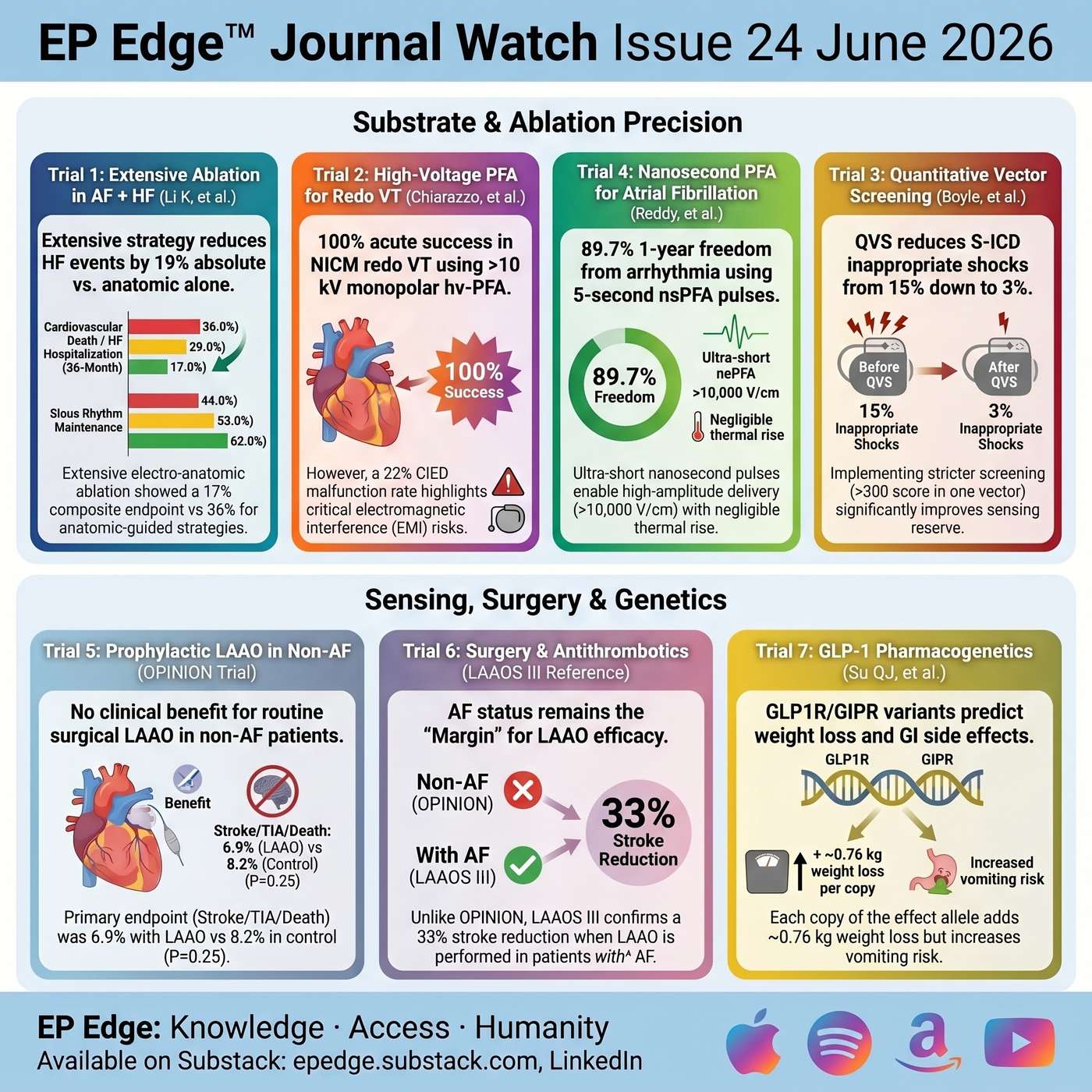 EP Edge Journal Watch Issue 24 June 2026: AF Ablation in Heart Failure, VT Pulsed Field Ablation, Subcutaneous-ICD Shocks, Wearable Expansion, CABG AF, Genetics and GLP-1 Agonists 08.06.2026 26минIn this episode of EP Edge Journal Watch, Dr. Sharma reviews major electrophysiology and cardiology studies from Issue 24: Substrate, Sensing, Wearables, Surgery, and the Precision Turn. The central theme is precision EP: selecting the right patient, targeting the right substrate, interpreting the right signal, choosing the right antithrombotic strategy, and designing the right follow-up plan. This episode begins with a randomized trial of persistent atrial fibrillation ablation in patients with heart failure, comparing anatomic-guided ablation, electrogram-guided ablation, and an extensive electrogram-anatomic strategy. The discussion focuses on why pulmonary vein isolation alone may be insufficient in selected patients with persistent AF, atrial myopathy, and heart failure, and how meaningful AF burden reduction may translate into fewer heart-failure hospitalizations and better functional outcomes.Next, Dr. Sharma reviews early experience with high-voltage pulsed field ablation for redo ventricular tachycardia in nonischemic cardiomyopathy. This paper highlights the promise of deeper lesion formation for intramural VT substrate, while also emphasizing major operational challenges, including electromagnetic interference with ICDs, CRT-Ds, and electroanatomic mapping systems.The device EP section covers quantitative vector screening for subcutaneous ICD implantation. Instead of asking only whether an S-ICD vector “passes,” this study asks whether the patient has enough sensing reserve to reduce inappropriate shocks over time. The episode explains how stronger pre-implant vector selection may reduce inappropriate shocks, but also exclude some patients from S-ICD candidacy.The wearable technology discussion reviews a European Heart Journal state-of-the-art paper on smartwatch ECGs, PPG alerts, step counts, heart-failure monitoring, cuffless blood pressure, and AI-enabled cardiovascular data interpretation. Dr. Sharma separates actionable wearable ECG data from screening alerts that require confirmation, longitudinal trends that need context, and consumer metrics that should not drive major treatment decisions without clinical validation.The surgical EP section reviews the OPINION trial, which tested prophylactic surgical left atrial appendage occlusion in patients undergoing valvular surgery without known atrial fibrillation. The episode explains why routine appendage closure in non-AF surgical patients did not significantly reduce ischemic stroke, TIA, or cardiovascular death at one year, and why future AF risk should not be confused with established appendage-mediated thromboembolism.The antithrombotic section focuses on the ESC/EACTS clinical consensus statement on antithrombotic therapy after CABG, with special attention to postoperative AF, established AF, oral anticoagulation timing, DOACs versus VKAs, aspirin, DAPT, graft patency, bleeding risk, and avoidance of routine triple therapy. The key practical message: postoperative AF should not be ignored, but every brief episode should not automatically become lifelong anticoagulation.Finally, the EP Edge Off-track segment examines genetic predictors of GLP-1 receptor agonist weight loss and gastrointestinal side effects, including tirzepatide. Although not an EP trial, this topic matters because obesity, diabetes, sleep apnea, HFpEF, atrial remodeling, AF progression, and ablation durability are all part of the same cardiometabolic substrate.This episode is designed for electrophysiologists, cardiologists, fellows, advanced practice clinicians, researchers, and anyone following modern arrhythmia care, AF ablation, VT ablation, device therapy, wearable monitoring, cardiac surgery, anticoagulation, and cardiometabolic risk modification.Keywords: electrophysiology, atrial fibrillation, AF ablation, persistent AF, heart failure, VT ablation, pulsed field ablation, nonischemic cardiomyopathy, subcutaneous ICD, inappropriate shocks, wearable ECG, smartwatch AF detection, left atrial appendage occlusion, OPINION trial, CABG, postoperative AF, anticoagulation, DOAC, antiplatelet therapy, GLP-1, tirzepatide, EP Edge Journal Watch.
 -
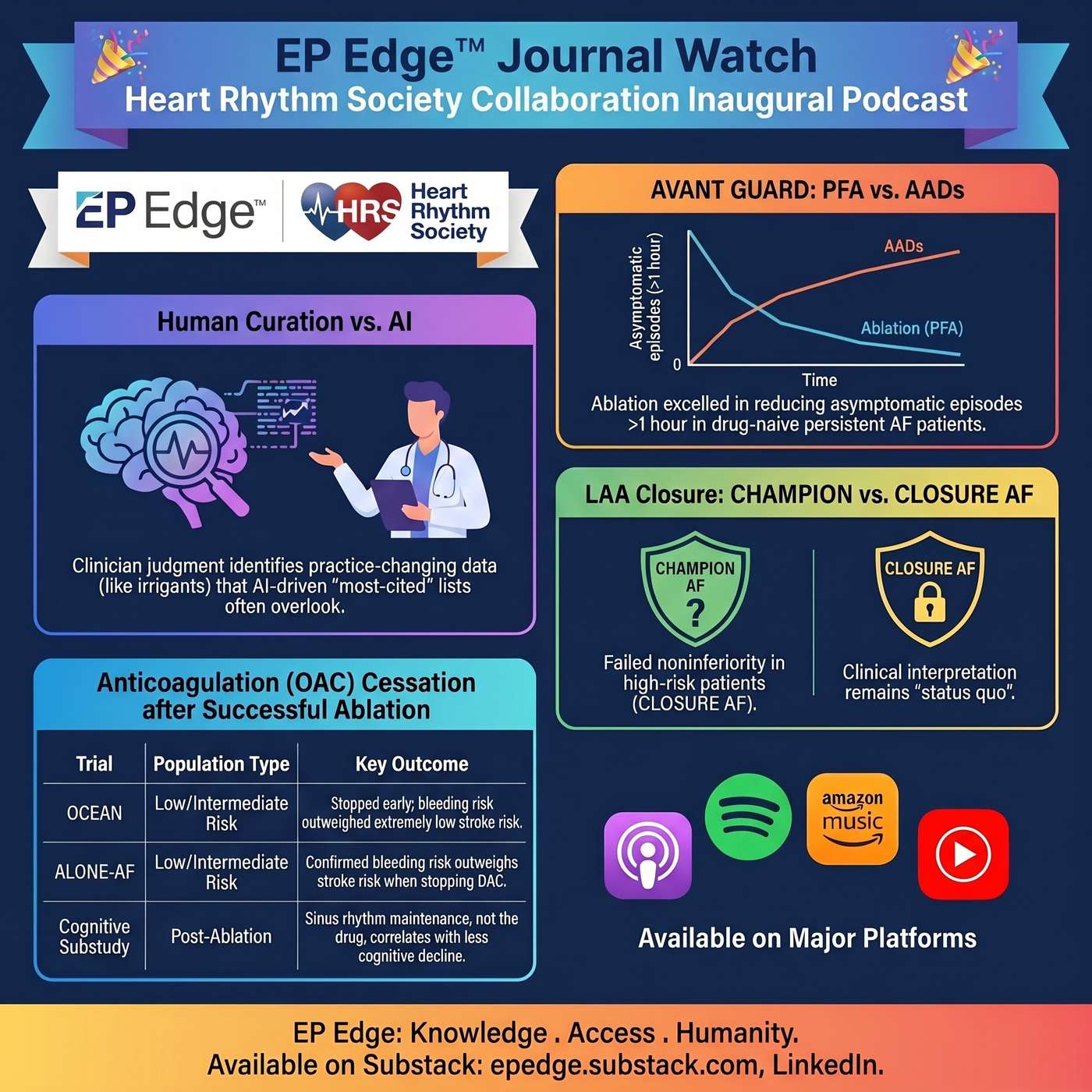 Inaugural EP EdgeTM Journal Watch with Heart Rhythm Society: AVANT GUARD, LAA Closure, OCEAN, and the ALONE-AF Cognitive Substudy 01.06.2026 19минThe inaugural EP Edge Journal Watch and Heart Rhythm Society collaboration is here.In this first episode, Dr. Michael Lloyd from the Heart Rhythm Society Digital Education Committee joins Dr. Niraj Sharma, creator of EP Edge, to launch a new monthly format focused on the most clinically relevant literature in cardiac electrophysiology.This is not a routine article summary. It is a practical, physician-led discussion of the studies that matter in the EP lab, in clinic, and at the bedside.Electrophysiology literature is moving quickly. Important trials now appear across major journals, late-breaking sessions, society meetings, and digital platforms. Algorithms can identify highly cited papers. Search tools can rank articles. But clinical relevance still requires judgment. EP Edge Journal Watch was created to help close that gap.The goal is simple: identify the papers that deserve attention, place them in clinical context, and ask what they mean for real patients.In this inaugural episode, Dr. Lloyd and Dr. Sharma begin with AVANT GUARD, a major trial evaluating first-line pulsed field ablation in patients with persistent atrial fibrillation. The discussion goes beyond the headline. They examine patient selection, drug-naive persistent AF, procedural safety, the stroke signal, modified enrollment criteria, anticoagulation requirements, endpoint design, and the difference between symptom reduction and true AF burden reduction.The episode then turns to one of the most active areas in atrial fibrillation care: left atrial appendage closure. Dr. Lloyd and Dr. Sharma discuss CLOSURE AF and CHAMPION AF, two trials that asked similar questions but studied very different patient populations. The discussion focuses on stroke risk, bleeding risk, frailty, procedural complications, endpoint construction, and how these trials should influence shared decision-making. The key clinical question is direct: should left atrial appendage closure be offered broadly as an alternative to anticoagulation, or should it remain focused on patients with a clear problem taking long-term oral anticoagulation?The final section focuses on anticoagulation after apparently successful AF ablation. Dr. Lloyd and Dr. Sharma discuss OCEAN and ALONE-AF, with attention to stroke risk, bleeding risk, patient selection, rhythm monitoring, and the limits of intermittent surveillance. For selected low-risk patients without recurrent atrial arrhythmia, stopping anticoagulation may be reasonable. But the decision is not automatic. It depends on the patient, the risk profile, the quality of rhythm follow-up, and the shared decision-making conversation.The episode also highlights the ALONE-AF cognitive substudy, one of the most interesting parts of the discussion. This substudy moves the conversation beyond stroke and bleeding. It asks whether stopping oral anticoagulation after successful AF ablation affects cognitive function. The key point is nuanced. In selected patients without recurrent atrial arrhythmia, stopping anticoagulation did not appear to produce a cognitive penalty. But the more provocative signal may be rhythm itself. Patients who maintained sinus rhythm appeared to have better cognitive trajectories than those with recurrence.That raises an important clinical question for the field: after AF ablation, is the long-term cognitive story less about the anticoagulant and more about durable rhythm control?This first episode sets the tone for the EP Edge Journal Watch and HRS collaboration. The format is concise, practical, and clinically grounded. It is built for busy electrophysiologists, cardiologists, fellows, advanced practice providers, and clinicians who care for patients with atrial fibrillation.The purpose is not just to summarize trials. It is to interpret them.Which patients were studied?Which endpoints matter?Which findings should change a clinic conversation?Which results should make us pause before changing practice?That is the mission of EP Edge Journal Watch with HRS.
 -
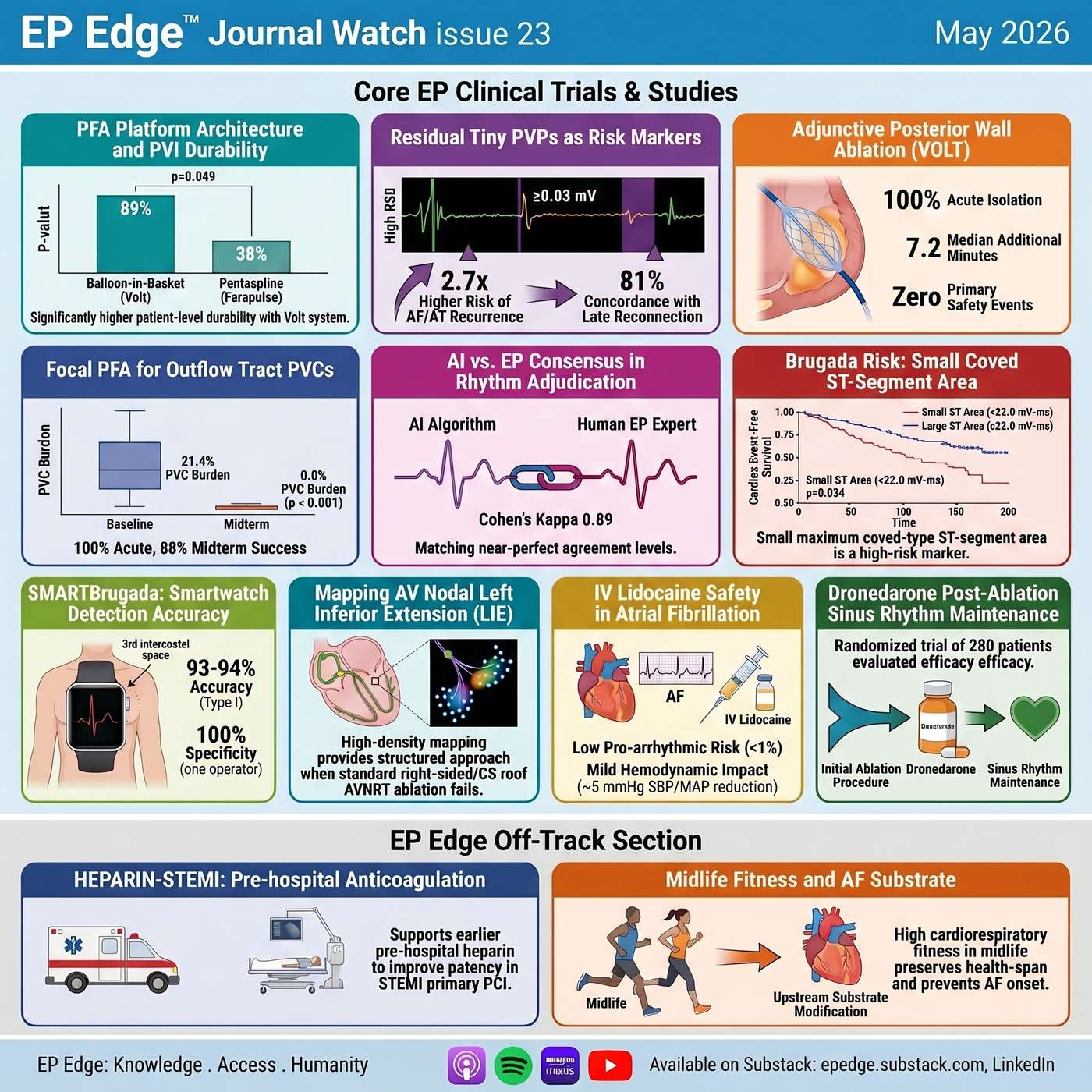 EP Edge™ Journal Watch Issue 23 May 2026: PFA Durability, Posterior Wall Ablation, Outflow Tract PVCs, and Fitness as Substrate Modification 25.05.2026 29минIn EP Edge™ Journal Watch Issue 23, May 2026, Dr. Sharma reviews the latest high-impact electrophysiology and cardiology literature with a new focused format: four deep-dive studies and a rapid-fire review of the remaining trials.This episode explores whether pulsed field ablation platform design affects pulmonary vein isolation durability, how balloon-in-basket PFA may change posterior wall ablation, and whether focal PFA is ready for outflow tract PVC ablation. The episode also includes an EP-Edge™ Off-track deep dive on midlife cardiorespiratory fitness and healthy aging, highlighting fitness as upstream cardiovascular substrate modification.Rapid-fire discussions cover residual tiny pulmonary vein potentials after PFA, dronedarone versus amiodarone after AF ablation, AI versus electrophysiologist rhythm adjudication, quantitative Brugada risk stratification, smartwatch detection of Type I Brugada pattern, AV nodal left inferior extension mapping, IV lidocaine safety in AF patients treated for ventricular arrhythmias, and HEPARIN-STEMI.Topics include atrial fibrillation ablation, pulsed field ablation, posterior wall isolation, pulmonary vein durability, PVC ablation, Brugada syndrome, wearable ECG, artificial intelligence in electrophysiology, ventricular arrhythmias, STEMI systems of care, and cardiorespiratory fitness.Full references, graphics, and detailed trial analysis are available in the EP-Edge™ Journal Watch LinkedIn newsletter and on Substack at epedge.substack.com.


