
The Early Habsburgs
History of the Germans
0
A narrative history podcast exploring the rise and fall of the Habsburg dynasty, from Rudolf of Habsburg's election in 1273 to the election of Charles V in 1519. It looks beyond Maximilian I to the family's earlier struggles, including the murder of King Albert and the dynasty's difficult recovery. The show is part of the broader History of the Germans podcast, which traces German history from the Early Middle Ages to reunification in 1991.
Епизоди
-
 The Fall and Rise of the House of Habsburg - Trailer 14.08.2025 6мин"Let others wage war: you, happy Austria, marry’. Is that really it? Did this family acquire an empire where the sun never sets through just luck and longevity?That is what we will try to find out in this season where we follow the family from the murder of king Abrecht I in 1308 to the election of emperor Charles V in 1519.For most of that period the Habsburgs had been languishing in the wilderness. They experienced defeats, divisions and humiliations, were even expelled from their duchy of Austria just before they rose meteorically to world leadership under Maximilian and Charles V. Something must have happened in this period that forged them into the most successful European dynasty. As they say in the music industry, every overnight success was years in the making”.That is why this season is called “The Fall and Rise of the House of Habsburg” and is dedicated to the question, what made the Habsburgs so special.
 -
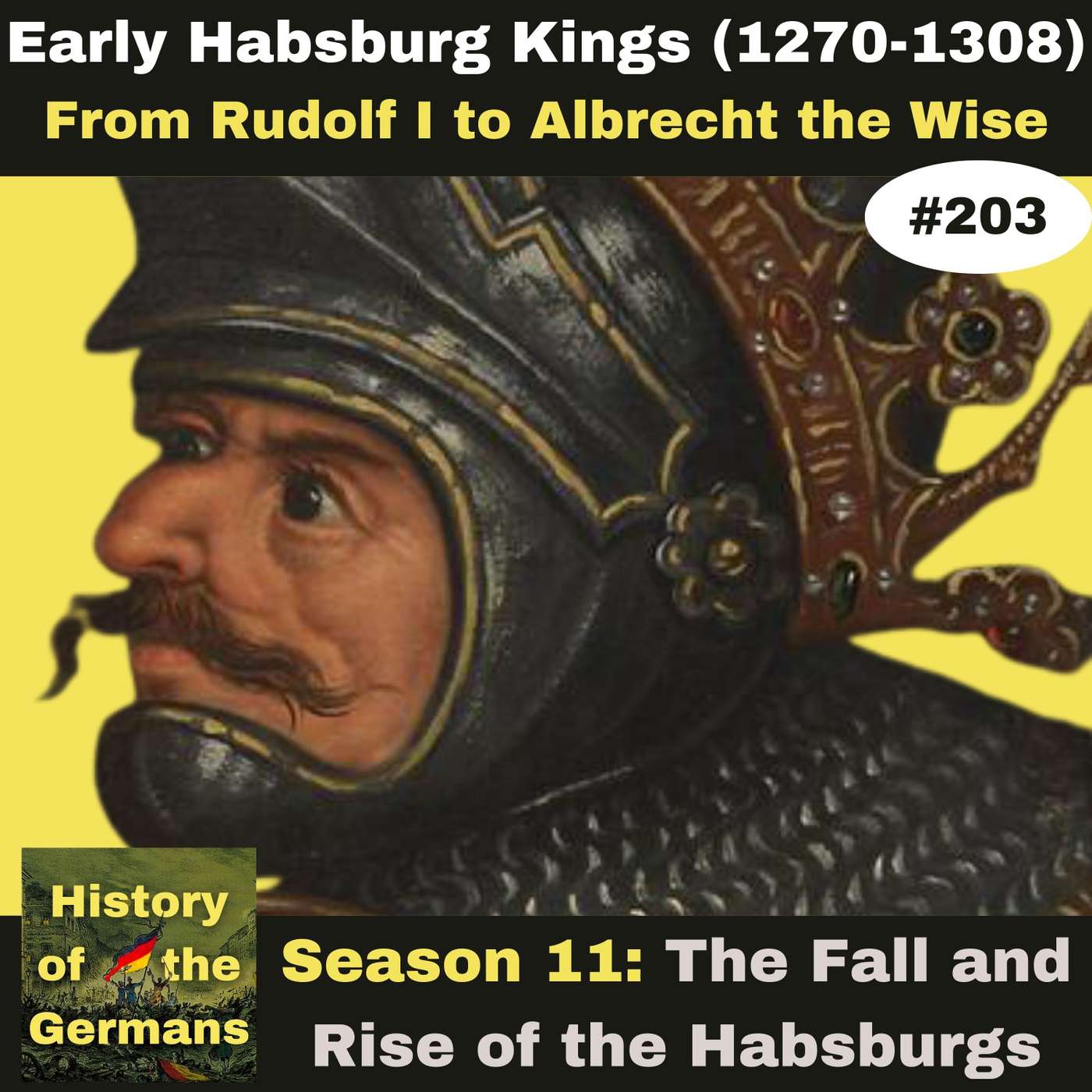 Ep. 203: Early Habsburgs – From Rudolf I to Albrecht the Wise 21.08.2025 25минThe Habsburg dynasty, originating from Radobot’s castle in 11th-century Switzerland, rose from obscurity to European prominence. In 1273 Rudolf of Habsburg was elected King of the Romans. Far from the later myth of a poor, humble count, Rudolf was wealthy, shrewd, and ruthless. He expanded his family’s holdings through inheritance, war, and diplomacy, eventually securing Austria and Styria after defeating Ottokar II of Bohemia—an acquisition that became the dynasty’s heartland.Rudolf’s hopes to found a hereditary imperial dynasty failed, and his son Albrecht I was murdered in 1308. For decades, the Habsburgs teetered on decline. Friedrich “the Handsome” briefly contended for the throne but left little mark. His brother Albrecht II “the Wise” revived the family, gaining Carinthia and Carniola in 1335 and shifting focus to Austria. Near extinction due to lack of heirs, the dynasty was saved when Albrecht’s wife Joan miraculously bore sons, including Rudolf IV, who would secure the Habsburg future.The music for the show is Flute Sonata in E-flat major, H.545 by Carl Phillip Emmanuel Bach (or some claim it as BWV 1031 Johann Sebastian Bach) performed and arranged by Michel Rondeau under Common Creative Licence 3.0.As always:Homepage with maps, photos, transcripts and blog: www.historyofthegermans.comIf you wish to support the show go to: Support • History of the Germans PodcastFor do it yourself merchandise go to: Merchandise • History of the Germans PodcastFacebook: @HOTGPod Threads: @history_of_the_germans_podcastBluesky: @hotgpod.bsky.socialInstagram: history_of_the_germansTwitter: @germanshistoryTo make it easier for you to share the podcast, I have created separate playlists for some of the seasons that are set up as individual podcasts. they have the exact same episodes as in the History of the Germans, but they may be a helpful device for those who want to concentrate on only one season.So far I have:The OttoniansSalian Emperors and Investiture ControversyFredrick Barbarossa and Early HohenstaufenFrederick II Stupor MundiSaxony and Eastward ExpansionThe Hanseatic LeagueThe Teutonic KnightsThe Holy Roman Empire 1250-1356The Reformation before the ReformationThe Empire in the 15th centuryThe Fall and Rise of the Habsburgs
 -
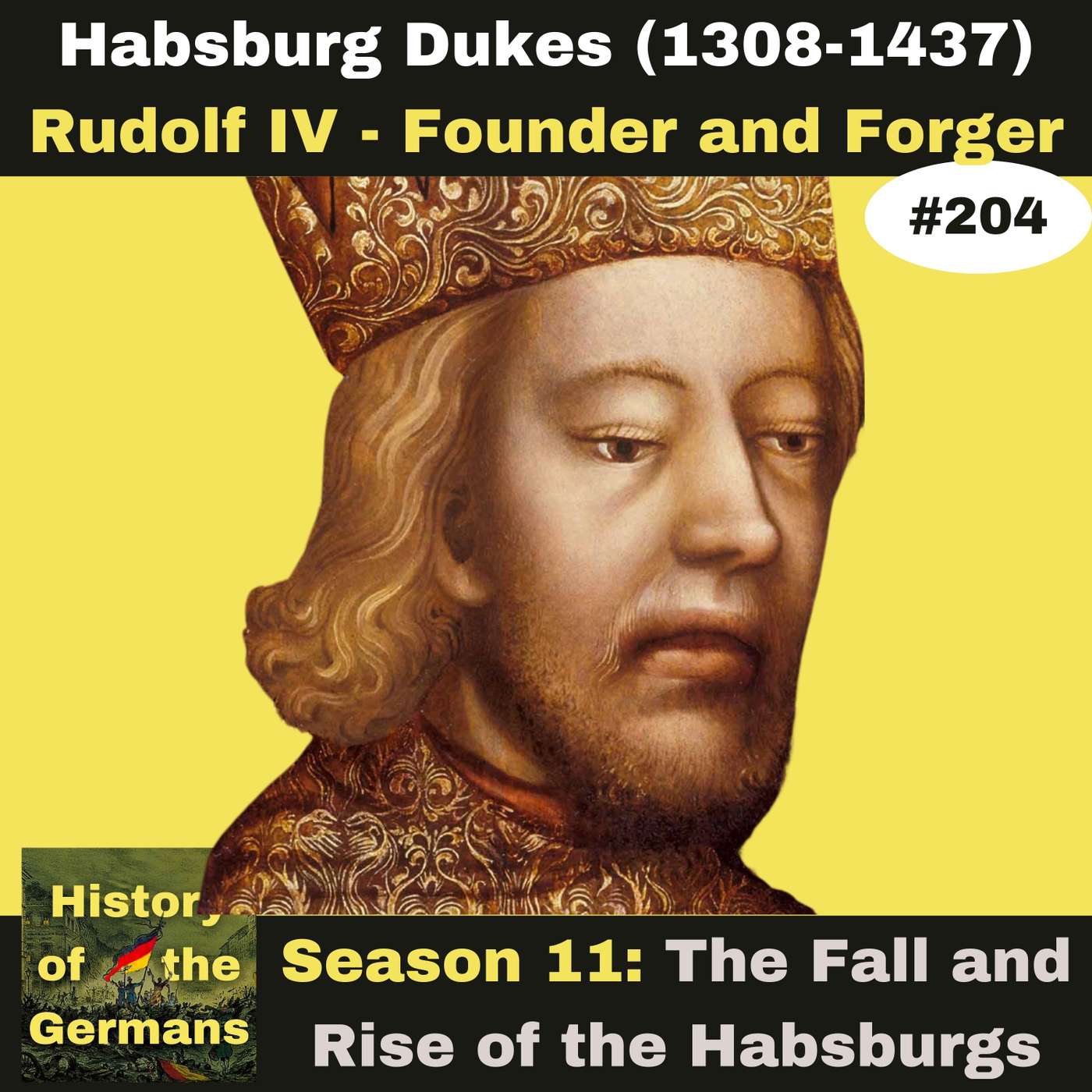 Ep. 204: Habsburg Dukes (1308-1437) – Rudolf IV, Founder and Forger 28.08.2025 32минRudolf IV of Habsburg (1339–1365), son of Albrecht “the Wise,” reigned as Duke of Austria for just seven years but left a lasting mark. Born when the dynasty seemed close to extinction, Rudolf secured Austria’s survival and prestige. Politically, he sought to elevate Vienna by founding the University of Vienna (1365) and beginning construction of St. Stephen’s Cathedral. Though he fulfilled his father's ambition to gain the Tyrol, the family fell behind their rivals, namely the Luxemburgs.Rudolf’s most audacious act was the Privilegium Maius, a set of forged charters claiming ancient Roman emperors had granted Austria near-sovereign status, primogeniture, and the unique title of Archduke. Though denounced by Petrarch as absurd, the documents shaped Habsburg identity for centuries and underpinned later power.By creating myths of divine and heroic origins, Rudolf forged a sense of Habsburg exceptionalism. Though dying young without heirs, he truly was “the Founder.”The music for the show is Flute Sonata in E-flat major, H.545 by Carl Phillip Emmanuel Bach (or some claim it as BWV 1031 Johann Sebastian Bach) performed and arranged by Michel Rondeau under Common Creative Licence 3.0.As always:Homepage with maps, photos, transcripts and blog: www.historyofthegermans.comIf you wish to support the show go to: Support • History of the Germans PodcastFor do it yourself merchandise go to: Merchandise • History of the Germans PodcastFacebook: @HOTGPod Threads: @history_of_the_germans_podcastBluesky: @hotgpod.bsky.socialInstagram: history_of_the_germansTwitter: @germanshistoryTo make it easier for you to share the podcast, I have created separate playlists for some of the seasons that are set up as individual podcasts. they have the exact same episodes as in the History of the Germans, but they may be a helpful device for those who want to concentrate on only one season.So far I have:The OttoniansSalian Emperors and Investiture ControversyFredrick Barbarossa and Early HohenstaufenFrederick II Stupor MundiSaxony and Eastward ExpansionThe Hanseatic LeagueThe Teutonic KnightsThe Holy Roman Empire 1250-1356The Reformation before the ReformationThe Empire in the 15th centuryThe Fall and Rise of the Habsburgs
 -
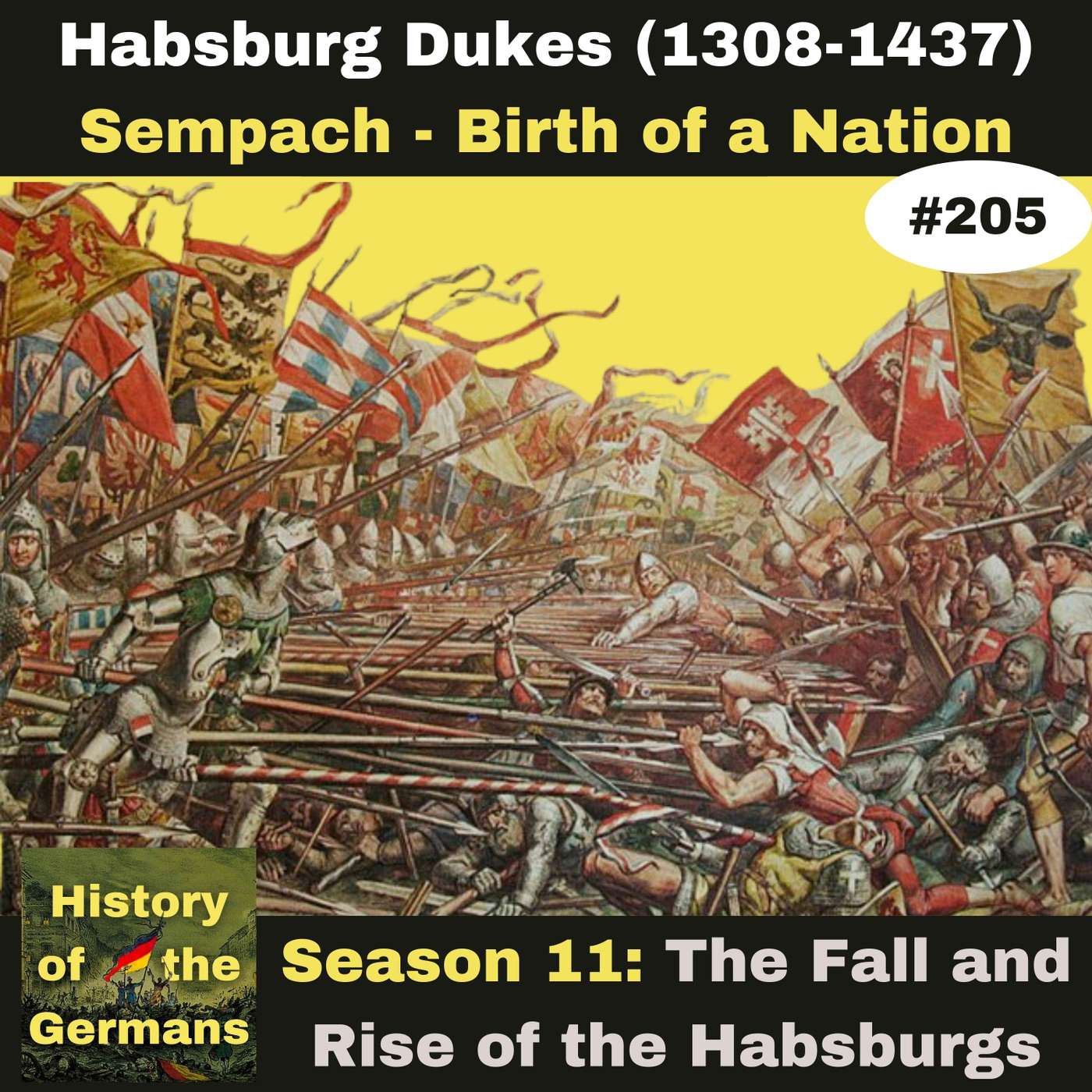 Ep. 205: Habsburg Dukes (1308-1437) – Sempach, Birth of a Nation 04.09.2025 38минOn July 9th, 1386 in a field near the Sempach lake., the armies of archduke Leopold of Austria line up against the forces of the city of Lucerne and the men of Uri, Schwyz and NidwaldenMuch of what hads been told about this batte, the backstory of the Swiss Confederation and the objectives of the Habsburgs have been drenched in myth. Myths that are in the main debunked. That being said, the story is still dramatic and hugely important.The music for the show is Flute Sonata in E-flat major, H.545 by Carl Phillip Emmanuel Bach (or some claim it as BWV 1031 Johann Sebastian Bach) performed and arranged by Michel Rondeau under Common Creative Licence 3.0.As always:Homepage with maps, photos, transcripts and blog: www.historyofthegermans.comIf you wish to support the show go to: Support • History of the Germans PodcastFor do it yourself merchandise go to: Merchandise • History of the Germans PodcastFacebook: @HOTGPod Threads: @history_of_the_germans_podcastBluesky: @hotgpod.bsky.socialInstagram: history_of_the_germansTwitter: @germanshistoryTo make it easier for you to share the podcast, I have created separate playlists for some of the seasons that are set up as individual podcasts. they have the exact same episodes as in the History of the Germans, but they may be a helpful device for those who want to concentrate on only one season.So far I have:The OttoniansSalian Emperors and Investiture ControversyFredrick Barbarossa and Early HohenstaufenFrederick II Stupor MundiSaxony and Eastward ExpansionThe Hanseatic LeagueThe Teutonic KnightsThe Holy Roman Empire 1250-1356The Reformation before the ReformationThe Empire in the 15th centuryThe Fall and Rise of the Habsburgs
 -
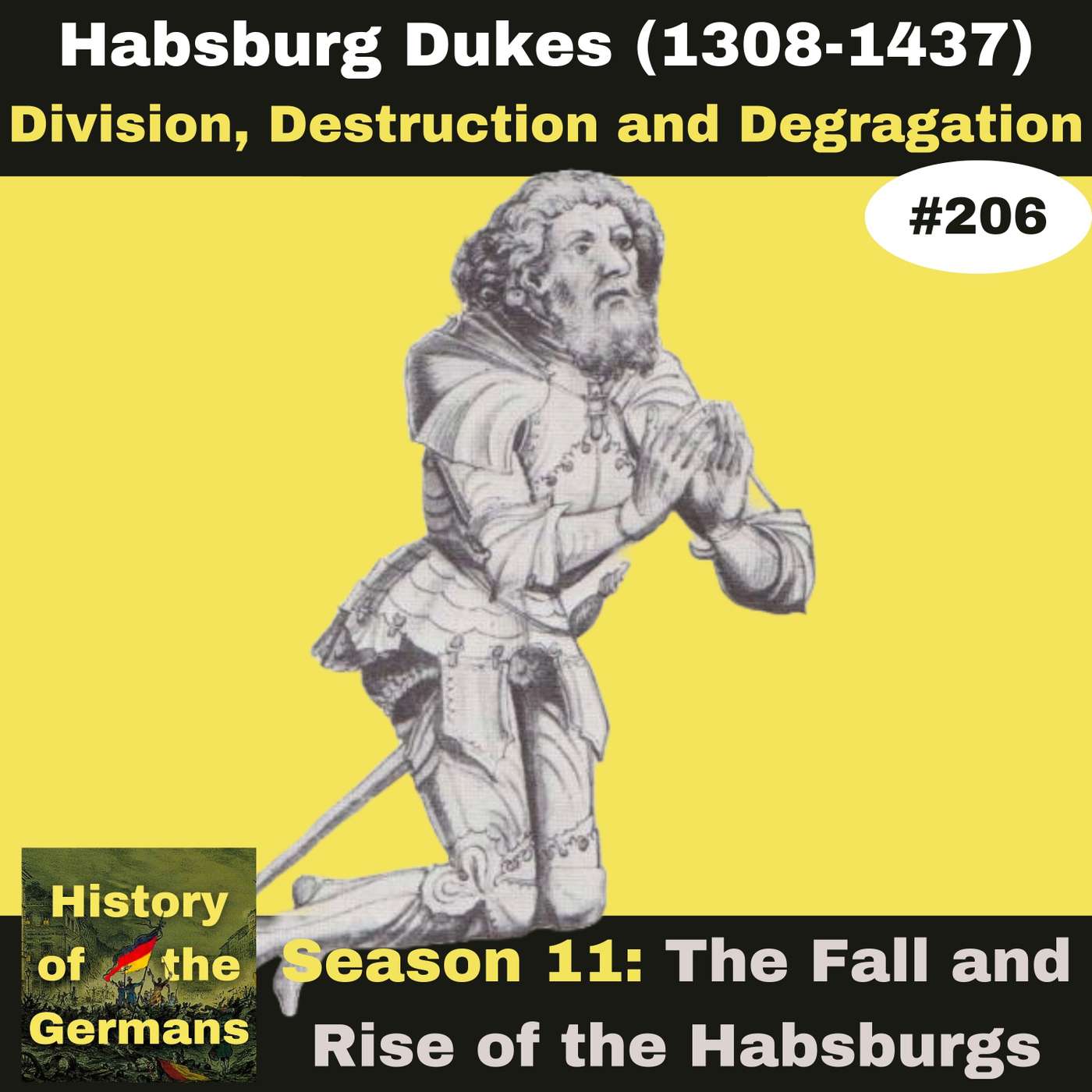 Ep. 206: Habsburg Dukes (1308-1437)– Division, Destruction and Degradation 11.09.2025 34минSuccess for a princely family in the Late Middle Ages has a lot to do with reproductive luck. Not having any offspring, in particular no male offspring is a bit of a knockout. But having too many sons that could be a major issue too.And in 1386 the Habsburgs struggled with exactly that problem. Their territory was already divided between an Albertine and a Leopoldine line. But then Leopold had four sons, bringing the number of archdukes of Austria to six, which is five too many.In this episode we will discuss how they managed to muck it up quite bad, in fact so bad, one of their number had to fall to his knees before the emperor, not once, not twice, but three times…Albertiner- Albrecht III (1349-1395)o Albrecht IV (1377-1404)§ Albrecht V (II) (1397-1439)· Ladislaus Postumus (1440-1457)Leopoldiner- Leopold III (1351-1386)o Wilhelm (1370-1406)o Leopold IV (1371-1411)o Ernst der Eiserne (1377-1424)§ Friedrich V (III) (1415-1494)§ Albrecht VI (1418-1463)o Friedrich IV (1382-1439)§ Siegismund der Munzreiche (1427-1496)The music for the show is Flute Sonata in E-flat major, H.545 by Carl Phillip Emmanuel Bach (or some claim it as BWV 1031 Johann Sebastian Bach) performed and arranged by Michel Rondeau under Common Creative Licence 3.0.As always:Homepage with maps, photos, transcripts and blog: www.historyofthegermans.comIf you wish to support the show go to: Support • History of the Germans PodcastFor do it yourself merchandise go to: Merchandise • History of the Germans PodcastFacebook: @HOTGPod Threads: @history_of_the_germans_podcastBluesky: @hotgpod.bsky.socialInstagram: history_of_the_germansTwitter: @germanshistoryTo make it easier for you to share the podcast, I have created separate playlists for some of the seasons that are set up as individual podcasts. they have the exact same episodes as in the History of the Germans, but they may be a helpful device for those who want to concentrate on only one season.So far I have:The OttoniansSalian Emperors and Investiture ControversyFredrick Barbarossa and Early HohenstaufenFrederick II Stupor MundiSaxony and Eastward ExpansionThe Hanseatic LeagueThe Teutonic KnightsThe Holy Roman Empire 1250-1356The Reformation before the ReformationThe Empire in the 15th centuryThe Fall and Rise of the Habsburgs
 -
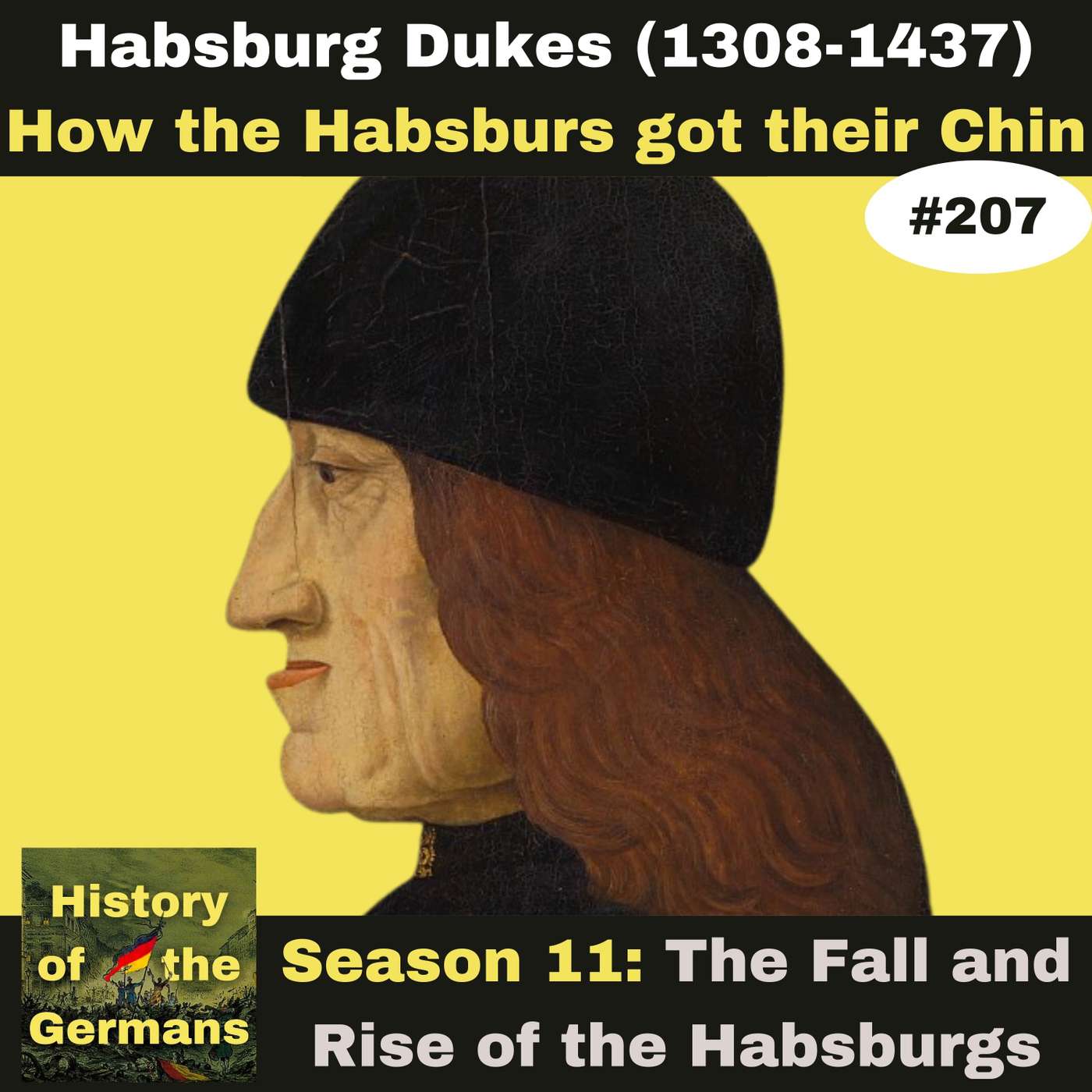 Ep.207: Habsburg Dukes (1308-1437) - How the Habsburgs got their Chin 18.09.2025 33мин“The Habsburgs ruled half of Europe with a chin that entered the room five minutes before they did,” is one of those witticisms that made the 19th century so amusing. But by then the Habsburg jaw had long receded.It had its heyday in the 16th and 17th century when people in Spain called out to the future emperor Charles V: “Your majesty, shut your mouth! The flies of this country are very insolent.” And when they looked at his later descendant, king Charles II who was probably the worst affected, they said, he was “more Habsburg than human”.But where is the Habsburg Jaw from? The view repeated again and again in history books is that it came from Cymburga of Masovia, the wife of duke Ernst the Iron, but was she really responsible? Or was it something quite different that caused that deformation, and what has it to do with the prostration of duke Friedrich IV before emperor Sigismund in 1415?That is what we are looking at in this episode.The music for the show is Flute Sonata in E-flat major, H.545 by Carl Phillip Emmanuel Bach (or some claim it as BWV 1031 Johann Sebastian Bach) performed and arranged by Michel Rondeau under Common Creative Licence 3.0.As always:Homepage with maps, photos, transcripts and blog: www.historyofthegermans.comIf you wish to support the show go to: Support • History of the Germans PodcastFor do it yourself merchandise go to: Merchandise • History of the Germans PodcastFacebook: @HOTGPod Threads: @history_of_the_germans_podcastBluesky: @hotgpod.bsky.socialInstagram: history_of_the_germansTwitter: @germanshistoryTo make it easier for you to share the podcast, I have created separate playlists for some of the seasons that are set up as individual podcasts. they have the exact same episodes as in the History of the Germans, but they may be a helpful device for those who want to concentrate on only one season.So far I have:The OttoniansSalian Emperors and Investiture ControversyFredrick Barbarossa and Early HohenstaufenFrederick II Stupor MundiSaxony and Eastward ExpansionThe Hanseatic LeagueThe Teutonic KnightsThe Holy Roman Empire 1250-1356The Reformation before the ReformationThe Empire in the 15th centuryThe Fall and Rise of the Habsburgs
 -
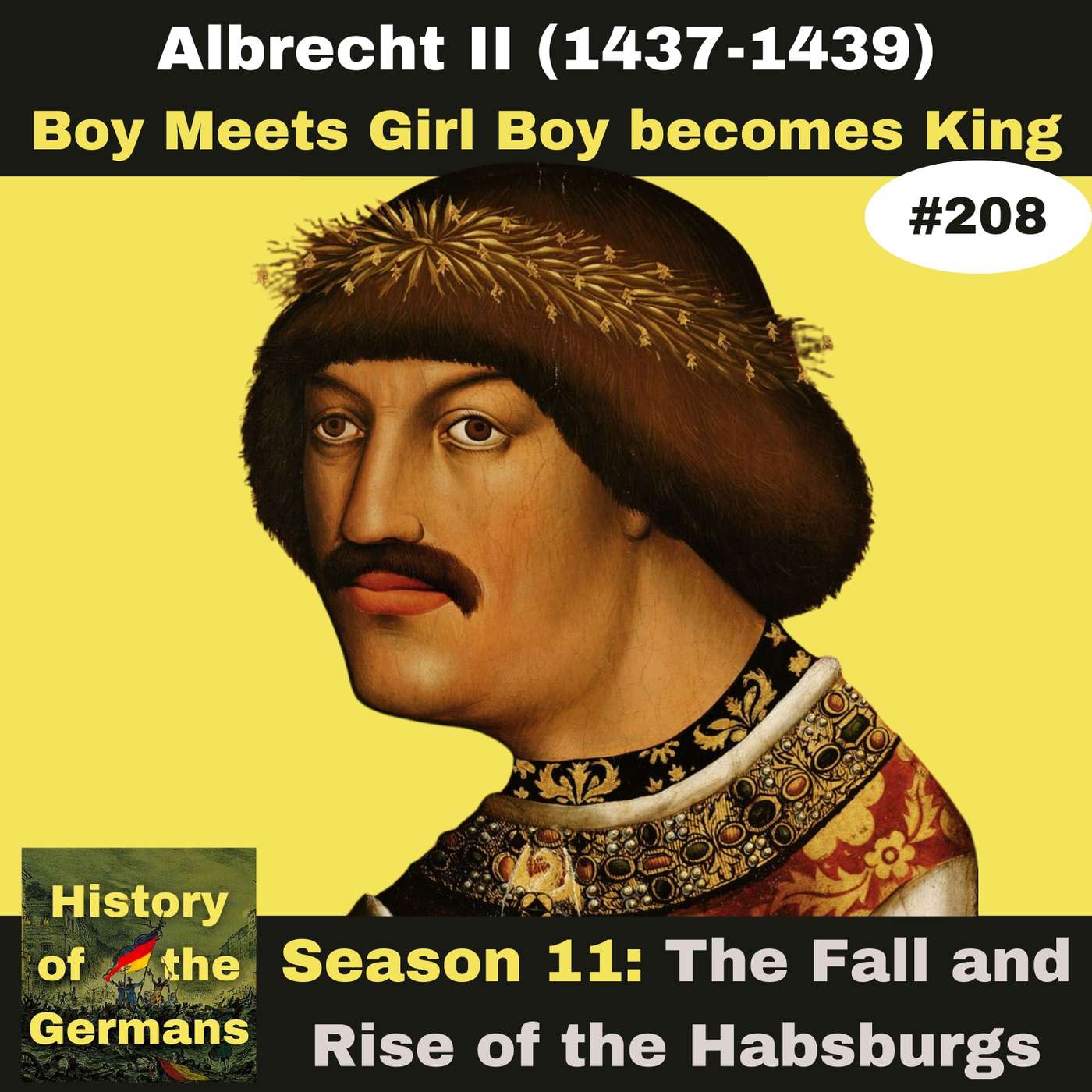 Ep. 208: Albrecht II (1438-1439) - Boy Meets Princess, Boy Becomes King 25.09.2025 38минLast week we saw the family slowly climbing out of the hole that Friedrich IV of the Tyrol had dug them. But despite all these consolidation efforts, the family was still in the second league of European princely families.Then, just 25 years after Ernst the Iron married down into minor Polish royalty, his first cousin once removed, Albrecht V became King of Hungary, King of the Romans and King of Bohemia, all in one single year, 1438.How was that possible? Here is friend of the podcast, Eneas Silvio Piccolomini summarizing events: quoteAlbrecht grew up and married Elizabeth, daughter of King Sigismund. She was a very beautiful woman, who lived with him most virtuously. After the Bohemians had turned to heresy and terrorised all their neighbours with wars, he alone, with great strength, protected Moravia and Austria, and the damage he inflicted upon the Bohemians was not less than the damage he took from them. He was always in arms and, like the Bohemians, used waggon formations in battle. Making his soldiers undergo hard military training, Albrecht was the only one of all their neighbours whom the Bohemians feared, having been often defeated by him and put to flight.When his father-in-law Sigismund died, the Hungarians soon called him to the kingship, and the Bohemians followed suit. Thus, in a very short time, he gained two large kingdoms. In the meantime, the electors of the Empire, having heard about Sigismund’s death, elected Albrecht as King of the Romans and sent their decree to him in Vienna.” End quoteBish bash bosh – that is it, end of episode. Thanks for coming.OK, maybe we have to go with Skipper from the Penguins of Madagascar and demand: Kowalski- AnalysisThe music for the show is Flute Sonata in E-flat major, H.545 by Carl Phillip Emmanuel Bach (or some claim it as BWV 1031 Johann Sebastian Bach) performed and arranged by Michel Rondeau under Common Creative Licence 3.0.As always:Homepage with maps, photos, transcripts and blog: www.historyofthegermans.comIf you wish to support the show go to: Support • History of the Germans PodcastFor do it yourself merchandise go to: Merchandise • History of the Germans PodcastFacebook: @HOTGPod Threads: @history_of_the_germans_podcastBluesky: @hotgpod.bsky.socialInstagram: history_of_the_germansTwitter: @germanshistoryTo make it easier for you to share the podcast, I have created separate playlists for some of the seasons that are set up as individual podcasts. they have the exact same episodes as in the History of the Germans, but they may be a helpful device for those who want to concentrate on only one season.So far I have:The OttoniansSalian Emperors and Investiture ControversyFredrick Barbarossa and Early HohenstaufenFrederick II Stupor MundiSaxony and Eastward ExpansionThe Hanseatic LeagueThe Teutonic KnightsThe Holy Roman Empire 1250-1356The Reformation before the ReformationThe Empire in the 15th centuryThe Fall and Rise of the Habsburgs
 -
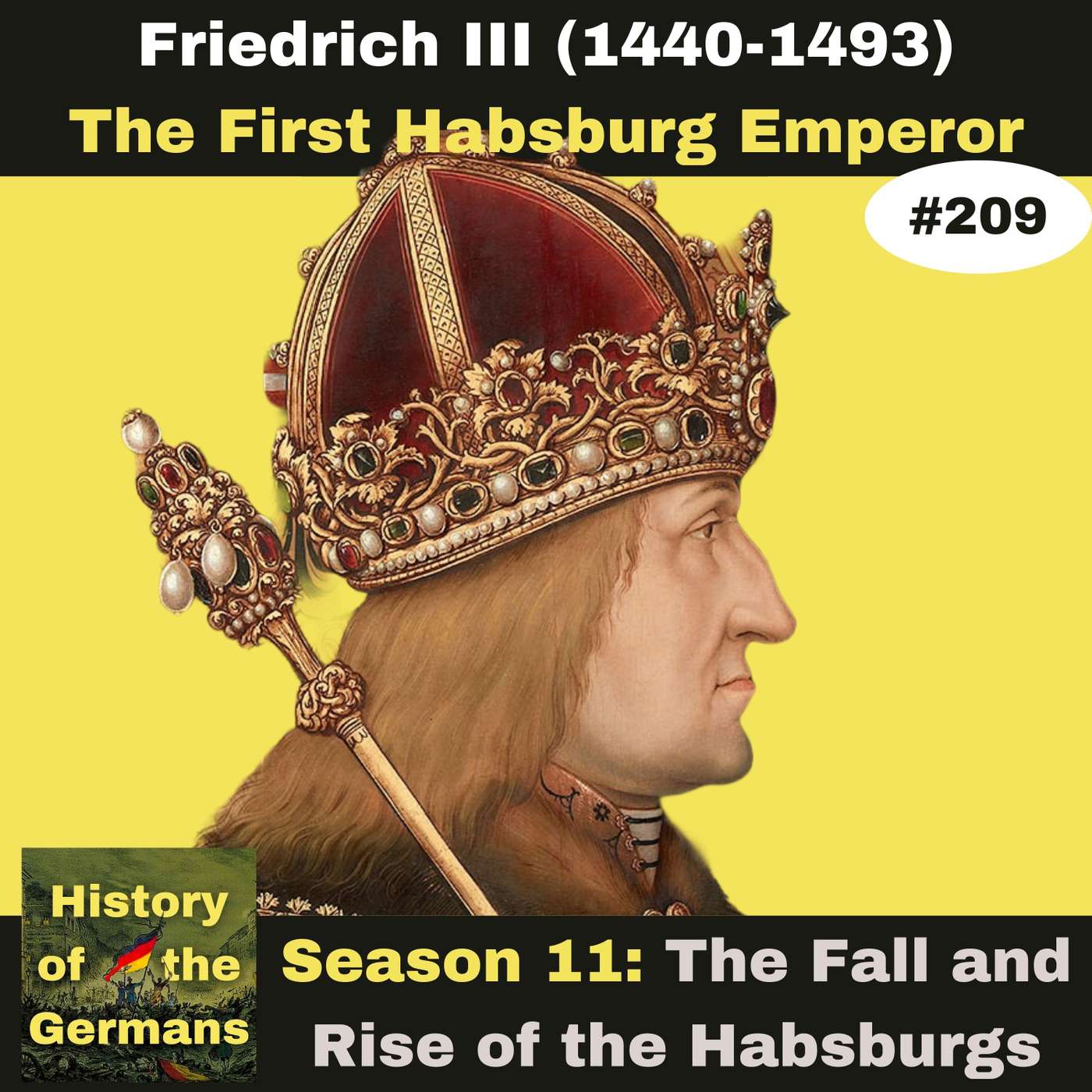 Ep. 209: Friedrich III (1440-1493) - The First Habsburg Emperor 02.10.2025 41минToday we – and the Habsburgs – stride back on to the grand stage of European politics. Not with a titan of history or monarch whose long and fruitful reign resonates across the centuries, but with Friedrich III, better known as the Reichserzschlafmütze - the imperial arch sleepy head, Or perhaps more fittingly the imperial arch dawdler.He ruled from 1440 to 1493, a total of 53 years - the longest reign of any Holy (or unholy) Roman Emperors (bar Constantine VIII). And yet, is also the most derided of reigns. In 1878 the Historian Georg Voigt sneered: “He was not remotely capable of handling such far-reaching politics, leaving Bohemia to its own devices, the Hungarian throne dispute to the helpless queen dowager, Austria to the arrogant dynasts, and the mercenary and robber bands.” “His light, simple hair, his long face with little movement, and his sedate gait betrayed a sluggish, deliberate nature, to which any enthusiasm, indeed any excitement, was alien. His love of peace has been endlessly mocked, but it was based on a completely dull sense of manhood and honour. No prince was so easily consoled by such insolent and repeated insults.” End quote.Modern historians are kinder, praising his thorough education and dogged determination to preserve what was left of the majesty of the Holy Roman Emperors. But even they can’t avoid calling him flabby, underhand and happy to sell out his friends and allies.Not exactly the kind of guy one wants to spend three or four episodes with. But this is history, not Hollywood. The nice guys do not usually win by yanking hard on the levers of destiny. More often than not tenacious men of low cunning, who weasel their way through, are the ones who are bringing the results.And results he did get. At the end of his reign, the empire had changed profoundly. The open constitution of the Middle Ages had given way to a denser and more structured organization.Why and how Friedrich III – despite all his many shortcomings - got to move the needle of German history is what we will look at over the next few weeks.The music for the show is Flute Sonata in E-flat major, H.545 by Carl Phillip Emmanuel Bach (or some claim it as BWV 1031 Johann Sebastian Bach) performed and arranged by Michel Rondeau under Common Creative Licence 3.0.As always:Homepage with maps, photos, transcripts and blog: www.historyofthegermans.comIf you wish to support the show go to: Support • History of the Germans PodcastFor do it yourself merchandise go to: Merchandise • History of the Germans PodcastFacebook: @HOTGPod Threads: @history_of_the_germans_podcastBluesky: @hotgpod.bsky.socialInstagram: history_of_the_germansTwitter: @germanshistoryTo make it easier for you to share the podcast, I have created separate playlists for some of the seasons that are set up as individual podcasts. they have the exact same episodes as in the History of the Germans, but they may be a helpful device for those who want to concentrate on only one season.So far I have:The OttoniansSalian Emperors and Investiture ControversyFredrick Barbarossa and Early HohenstaufenFrederick II Stupor MundiSaxony and Eastward ExpansionThe Hanseatic LeagueThe Teutonic KnightsThe Holy Roman Empire 1250-1356The Reformation before the ReformationThe Empire in the 15th centuryThe Fall and Rise of the Habsburgs
 -
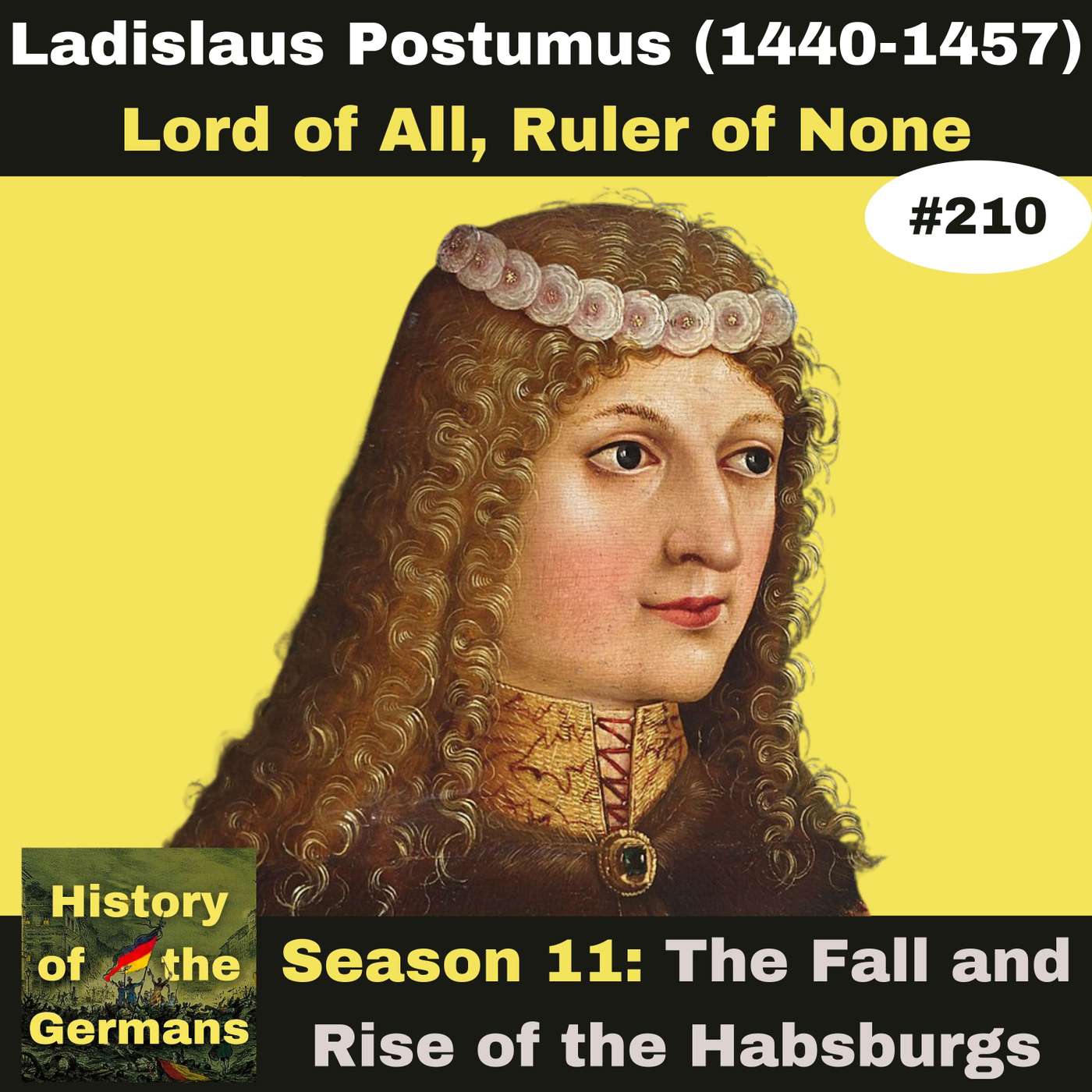 Ep. 210: Ladislaus Postumus (1440-1457) - Lord of all, Ruler of No One 16.10.2025 36минOur journey today will take us away from the emperor Friedrich III who will spend most of the episode holed up in his castle at Wiener Neustadt, fretting and gardening.Instead we look at the dramatic life of his younger cousin, Ladislaus Postumus, king of Hungary, king of Bohemia and Archduke of Austria. This will take us back to Prague and its complex religious politics, to Vienna where the people fall for the alluring promises of a populist and to Hungary where one of the greatest generals of the age squares up against Mehmet II, the conqueror of Constantinople.The music for the show is Flute Sonata in E-flat major, H.545 by Carl Phillip Emmanuel Bach (or some claim it as BWV 1031 Johann Sebastian Bach) performed and arranged by Michel Rondeau under Common Creative Licence 3.0.As always:Homepage with maps, photos, transcripts and blog: www.historyofthegermans.comIf you wish to support the show go to: Support • History of the Germans PodcastFor do it yourself merchandise go to: Merchandise • History of the Germans PodcastFacebook: @HOTGPod Threads: @history_of_the_germans_podcastBluesky: @hotgpod.bsky.socialInstagram: history_of_the_germansTwitter: @germanshistoryTo make it easier for you to share the podcast, I have created separate playlists for some of the seasons that are set up as individual podcasts. they have the exact same episodes as in the History of the Germans, but they may be a helpful device for those who want to concentrate on only one season.So far I have:The OttoniansSalian Emperors and Investiture ControversyFredrick Barbarossa and Early HohenstaufenFrederick II Stupor MundiSaxony and Eastward ExpansionThe Hanseatic LeagueThe Teutonic KnightsThe Holy Roman Empire 1250-1356The Reformation before the ReformationThe Empire in the 15th centuryThe Fall and Rise of the Habsburgs
 -
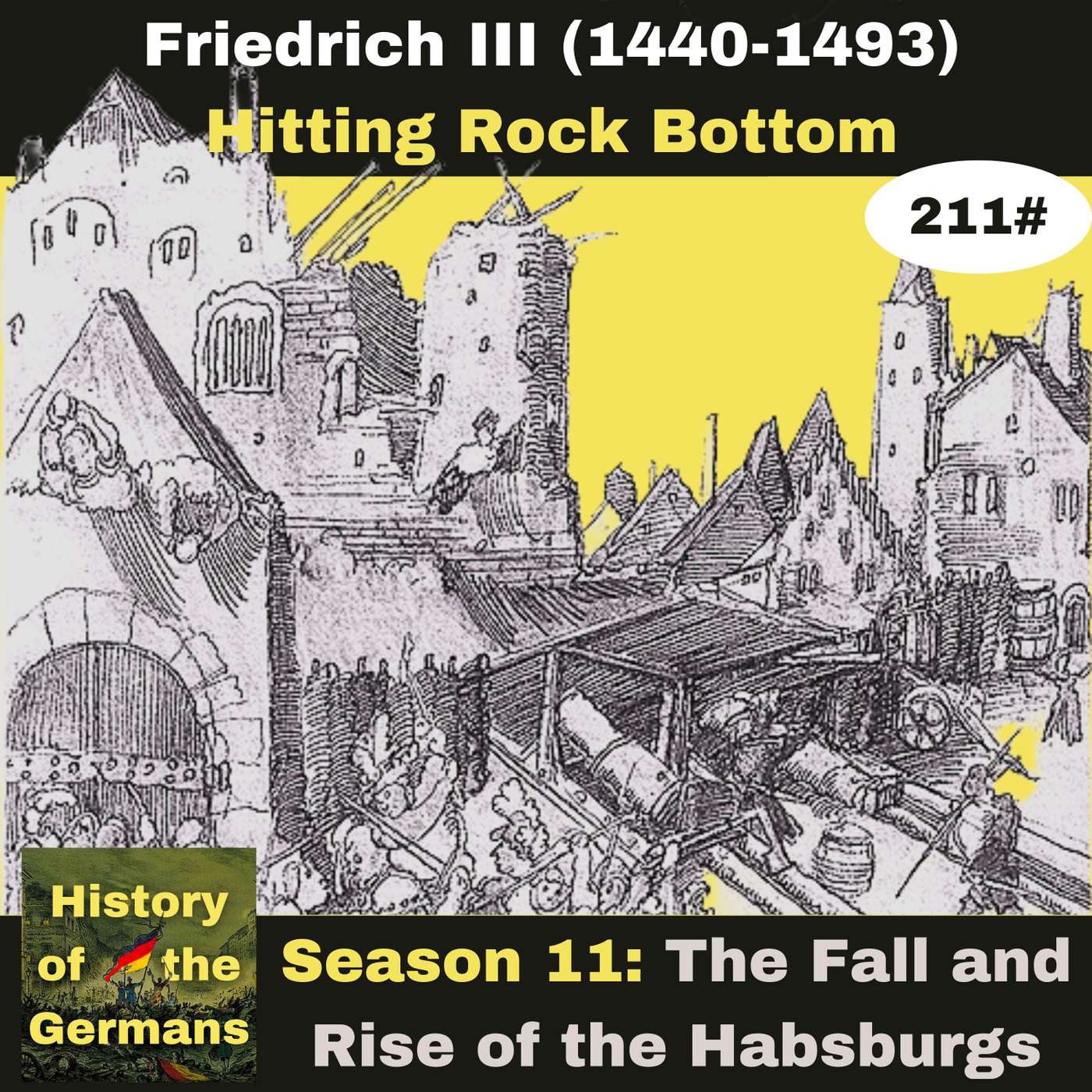 Ep. 211: Friedrich III (1440-1493) – Hitting Rock Bottom 23.10.2025 36минIt is November 1462 and the emperor Friedrich III and his young family are huddling together in the cellars of the Hofburg. The citizens of Vienna are shooting cannonballs into the 13th century castle, the walls are crumbling and any moment now the angry crowds may break in. Outside, supporting the insurrection stood his own brother, calling on him to give up.Two crowns he has already lost and a third is about to be knocked off his head as the imperial princes had ganged up on him. Friedrich III was a man who firmly believed in ancient laws and traditions and was profoundly ill suited for a world where, as Picciolomini wrote in the last sentence of his history of the emperor Friedrich III quote: “We are of the opinion that empires are won by weapons, not by legal means!”Friedrich III and with him the Habsburgs hit rock bottom, but how and why exactly he ended up there, and w hat that tells us about the profound changes during this period of history is what we are going to explore in this episode.The music for the show is Flute Sonata in E-flat major, H.545 by Carl Phillip Emmanuel Bach (or some claim it as BWV 1031 Johann Sebastian Bach) performed and arranged by Michel Rondeau under Common Creative Licence 3.0.As always:Homepage with maps, photos, transcripts and blog: www.historyofthegermans.comIf you wish to support the show go to: Support • History of the Germans PodcastFor do it yourself merchandise go to: Merchandise • History of the Germans PodcastFacebook: @HOTGPod Threads: @history_of_the_germans_podcastBluesky: @hotgpod.bsky.socialInstagram: history_of_the_germansTwitter: @germanshistoryTo make it easier for you to share the podcast, I have created separate playlists for some of the seasons that are set up as individual podcasts. they have the exact same episodes as in the History of the Germans, but they may be a helpful device for those who want to concentrate on only one season.So far I have:The OttoniansSalian Emperors and Investiture ControversyFredrick Barbarossa and Early HohenstaufenFrederick II Stupor MundiSaxony and Eastward ExpansionThe Hanseatic LeagueThe Teutonic KnightsThe Holy Roman Empire 1250-1356The Reformation before the ReformationThe Empire in the 15th centuryThe Fall and Rise of the Habsburgs
 -
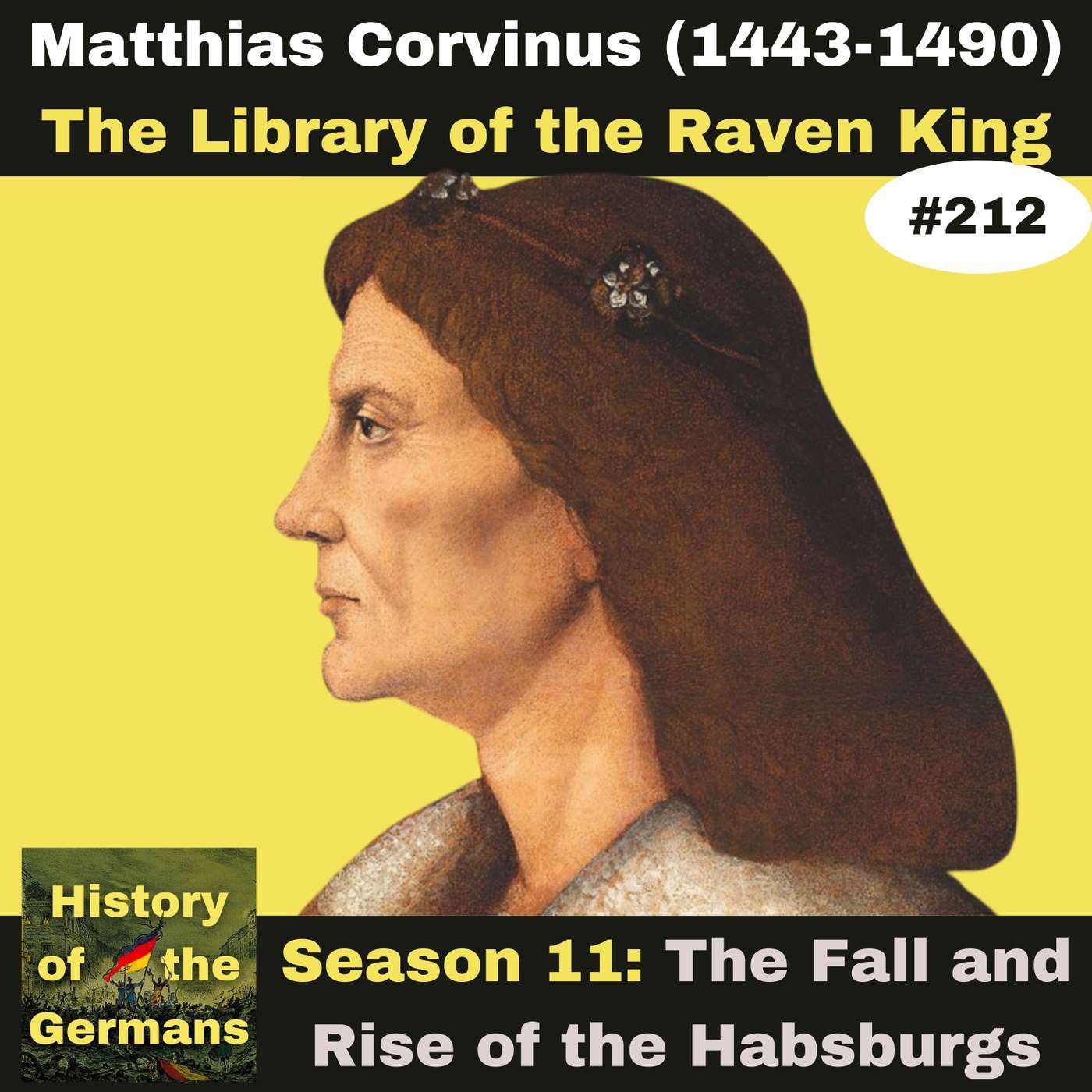 Ep. 212: Matthias Corvinus (1443-1490) – The Library of the Raven King 30.10.2025 40минToday we will talk a lot about Matthias Corvinus, the legendary renaissance king of Hungary whose library outshone that of the Medici in Florence and whose standing army was one of the greatest – and most expensive - military forces in 15th century Europe.Why are we talking about a Hungarian ruler in a series about the Habsburgs? Trust me, there is a good reason beyond it being a fascinating life story.The music for the show is Flute Sonata in E-flat major, H.545 by Carl Phillip Emmanuel Bach (or some claim it as BWV 1031 Johann Sebastian Bach) performed and arranged by Michel Rondeau under Common Creative Licence 3.0.As always:Homepage with maps, photos, transcripts and blog: www.historyofthegermans.comIf you wish to support the show go to: Support • History of the Germans PodcastFor do it yourself merchandise go to: Merchandise • History of the Germans PodcastFacebook: @HOTGPod Threads: @history_of_the_germans_podcastBluesky: @hotgpod.bsky.socialInstagram: history_of_the_germansTwitter: @germanshistoryTo make it easier for you to share the podcast, I have created separate playlists for some of the seasons that are set up as individual podcasts. they have the exact same episodes as in the History of the Germans, but they may be a helpful device for those who want to concentrate on only one season.So far I have:The OttoniansSalian Emperors and Investiture ControversyFredrick Barbarossa and Early HohenstaufenFrederick II Stupor MundiSaxony and Eastward ExpansionThe Hanseatic LeagueThe Teutonic KnightsThe Holy Roman Empire 1250-1356The Reformation before the ReformationThe Empire in the 15th centuryThe Fall and Rise of the Habsburgs
 -
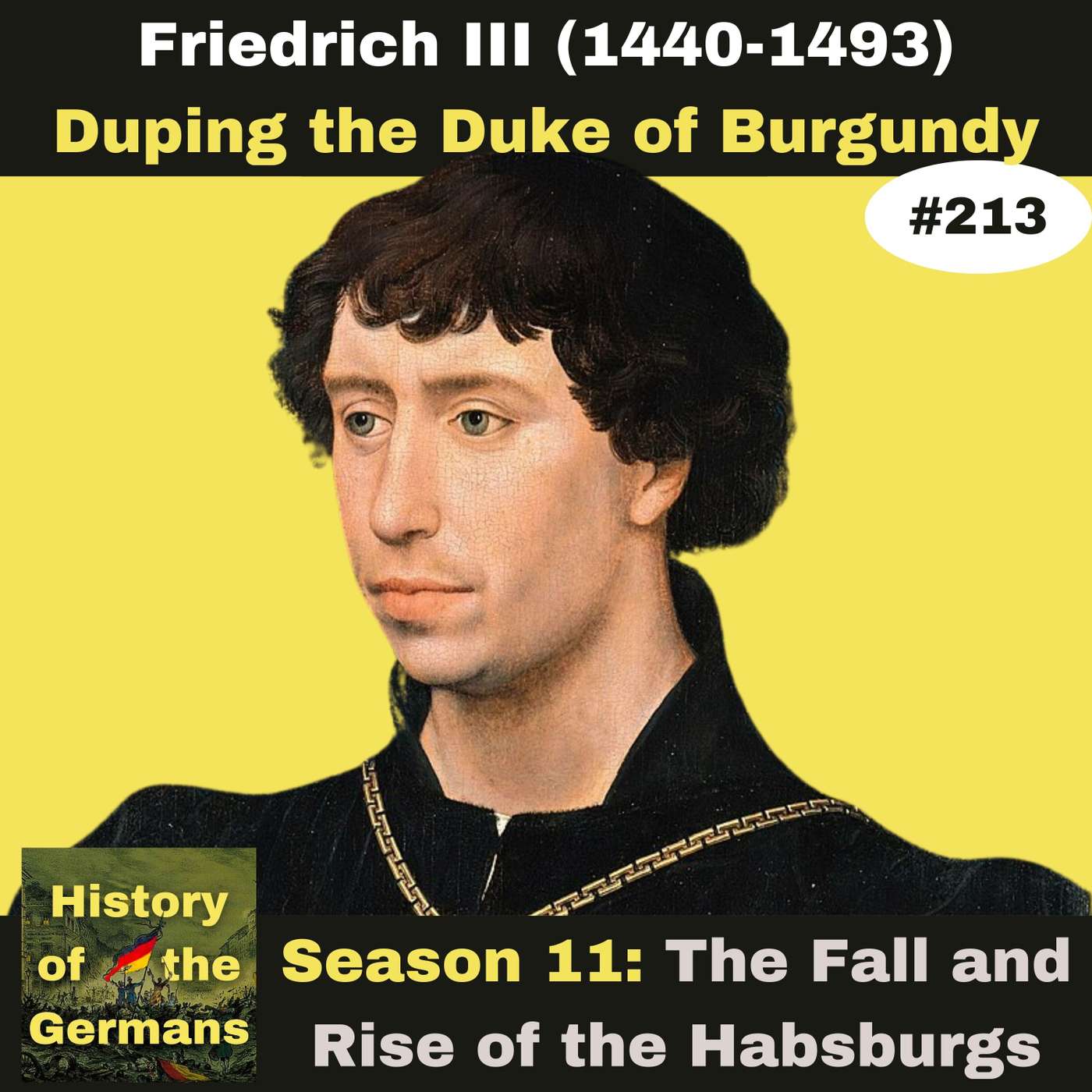 Ep. 213: Friedrich III (1440-1493) – Duping the Duke of Burgundy 06.11.2025 34минHow long can an emperor not be an emperor. The official record stands at 25 years, that is how long Friedrich III had stayed out of the core areas of the Holy Roman Empire. That meant 25 ears of Imperial Diets without the presence of an Emperor, 25 years of stasis on the challenges of the time, the reform of the empire and the defense against the Ottoman expansion.But sometime in the late 1460s the apathic emperor Friedrich III, dubbed the Imperial Arch Sleepy head awakes and does what he had never done before, something. And that something turned into a lot of things, some related toimperial reform, but the most significant something for European history was a marriage, well, an engagement for now, followed by a flight down the river Mosel away from the intended father of the bride.Yes, it is that famous marriage, just not in the way you may have thought it happened.The music for the show is Flute Sonata in E-flat major, H.545 by Carl Phillip Emmanuel Bach (or some claim it as BWV 1031 Johann Sebastian Bach) performed and arranged by Michel Rondeau under Common Creative Licence 3.0.As always:Homepage with maps, photos, transcripts and blog: www.historyofthegermans.comIf you wish to support the show go to: Support • History of the Germans PodcastFor do it yourself merchandise go to: Merchandise • History of the Germans PodcastFacebook: @HOTGPod Threads: @history_of_the_germans_podcastBluesky: @hotgpod.bsky.socialInstagram: history_of_the_germansTwitter: @germanshistoryTo make it easier for you to share the podcast, I have created separate playlists for some of the seasons that are set up as individual podcasts. they have the exact same episodes as in the History of the Germans, but they may be a helpful device for those who want to concentrate on only one season.So far I have:The OttoniansSalian Emperors and Investiture ControversyFredrick Barbarossa and Early HohenstaufenFrederick II Stupor MundiSaxony and Eastward ExpansionThe Hanseatic LeagueThe Teutonic KnightsThe Holy Roman Empire 1250-1356The Reformation before the ReformationThe Empire in the 15th centuryThe Fall and Rise of the Habsburgs
 -
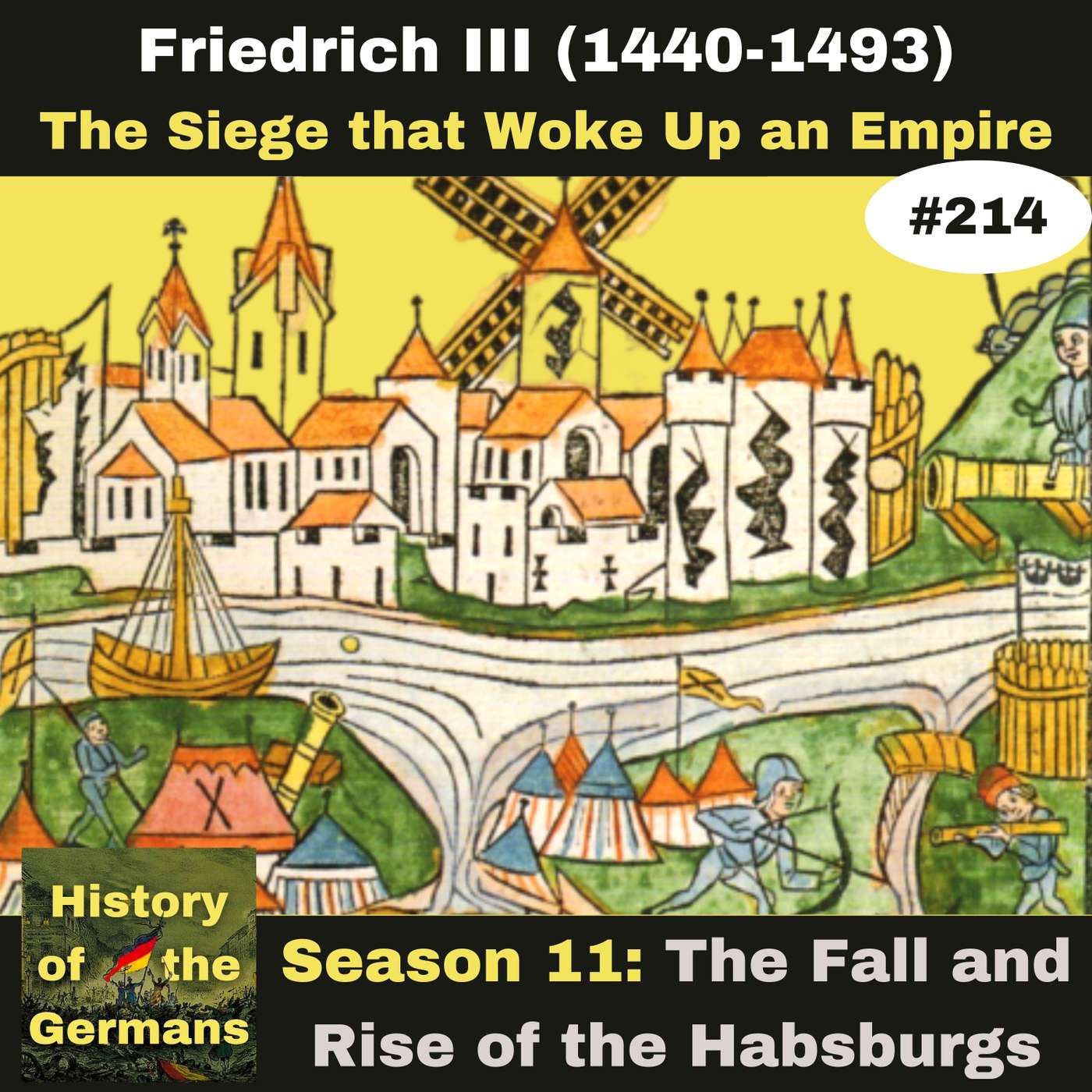 Ep. 214: Friedrich III (1440-1493) - The Siege that Woke up an Empire 13.11.2025 39минThe venerable city of Neuss between Cologne and Düsseldorf was founded in 16 BC as a Roman army camp, making it one of the oldest in Germany. Its history is marked by the usual mix of feuds with its archepiscopal overlord and the establishment of a trading and pilgrimage hub.Despite its Roman remains, the impressive church of St. Quirinius, and proximity to where I grew up, Neuss may never have appeared on the History of the Germans Podcast, had it not sustained a 10 month long siege in 1474/1475.A siege, even a brutal and prolonged one is not sufficiently unusual to be included in the show. But this one merits almost a whole episode. Tales of the heroic defense of a small town on the Rhine against an overbearing foe intent on wiping out their way of life, coalesced the empire in a way it had not come together since the days of Frederick Barbarossa.A watershed was crossed, under the leadership of an emperor who was more surprised than anyone to be put at the head of the resistance.And that is not all, in this episode we will also cover the very first trial for war crimes ever that took place in another small town in the same year 1474.
 -
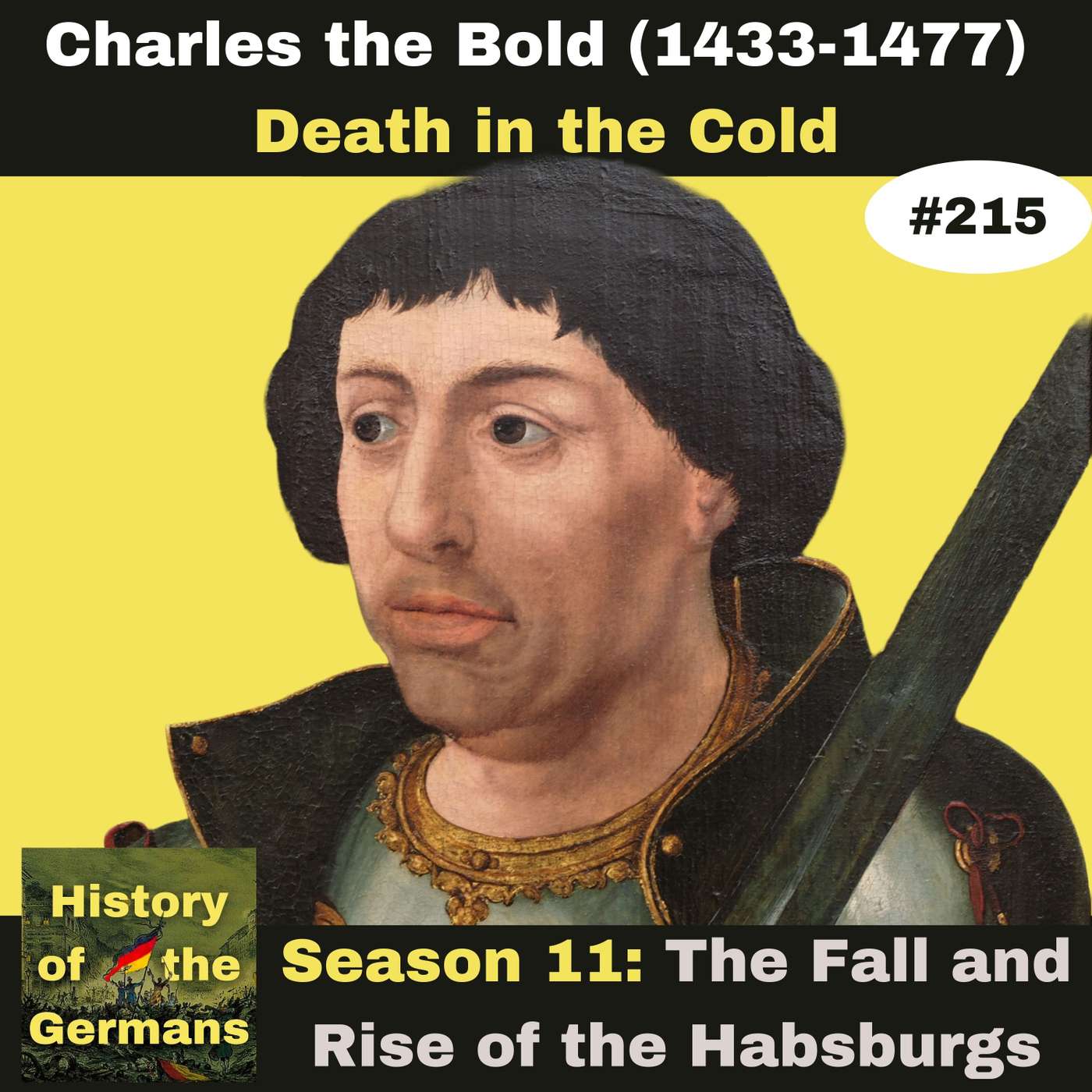 Ep. 215: Charles the Bold (1433-1477) - Death in the Cold 20.11.2025 40минThe rise of the Habsburgs to world domination pivots on one crucial moment, the marriage of Maximilian of Habsburg to Mary of Burgundy, the daughter of Charles the Bold, last of the Grand Dukes of the West.The usual story is that young Maximilian one day walked down the aisle of some splendid cathedral and was handed the richest principality in Europe on an jewel-encrusted golden platter by the father of the bride. All he then had to do was lie down and think of the Habsburg-Burgundian empire.That is not quite what happened. When Maximilian arrived in Ghent in August 1477, his father-in-law lay dead in a ditch in Lorraine and large sways of ducal authority and income had gone. Within less than 3 years, 1474 to 1477 Charles the Bold had frittered away the mythical wealth of the Burgundian dukes. And not just that.These years between 1474 and 1477 helped turn the medieval empire into the Holy Roman Empire of the German Nation. So please allow me to do this episode, even though very, very few of the protagonists or parties to the conflicts are Germans in the modern sense.
 -
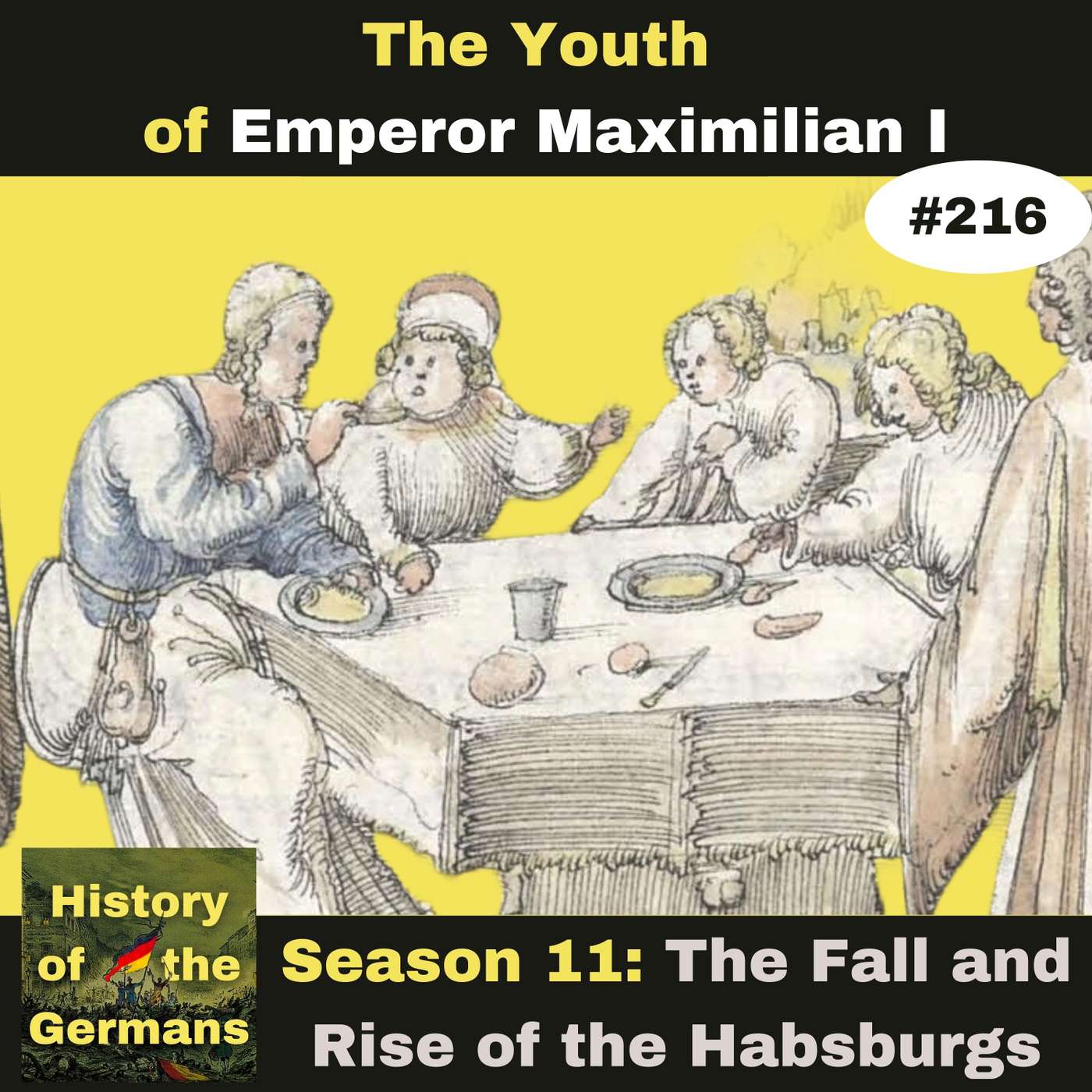 Ep. 216: Maximilian I (1493-1519) - The Youth of an Emperor 27.11.2025 32минWhat is it like to grow up the son of the emperor? For most of the rulers of the Holy Roman Empire we have covered so far, no idea. There are scarce reports about the way the princes grew up, safe for tales like the emperor Ludwig the Bavarian being kidnapped by his pet monkey. But now, as the Late Middle Ages make way for the Renaissance, we can see the boy who would be king at play, being fed by his nursemaid and pretending to be a knight at a tournament.And even better, this emperor is Maximilian, the last Knight, one of the most iconic rulers of his time. Come along as we descend into the delights and terrors of his epic childhood, complete with mythmaking in drawings and woodcuts.The music for the show is Flute Sonata in E-flat major, H.545 by Carl Phillip Emmanuel Bach (or some claim it as BWV 1031 Johann Sebastian Bach) performed and arranged by Michel Rondeau under Common Creative Licence 3.0.As always:Homepage with maps, photos, transcripts and blog: www.historyofthegermans.comIf you wish to support the show go to: Support • History of the Germans PodcastFor do it yourself merchandise go to: Merchandise • History of the Germans PodcastFacebook: @HOTGPod Threads: @history_of_the_germans_podcastBluesky: @hotgpod.bsky.socialInstagram: history_of_the_germansTwitter: @germanshistoryTo make it easier for you to share the podcast, I have created separate playlists for some of the seasons that are set up as individual podcasts. they have the exact same episodes as in the History of the Germans, but they may be a helpful device for those who want to concentrate on only one season.So far I have:The OttoniansSalian Emperors and Investiture ControversyFredrick Barbarossa and Early HohenstaufenFrederick II Stupor MundiSaxony and Eastward ExpansionThe Hanseatic LeagueThe Teutonic KnightsThe Holy Roman Empire 1250-1356The Reformation before the ReformationThe Empire in the 15th centuryThe Fall and Rise of the Habsburgs
 -
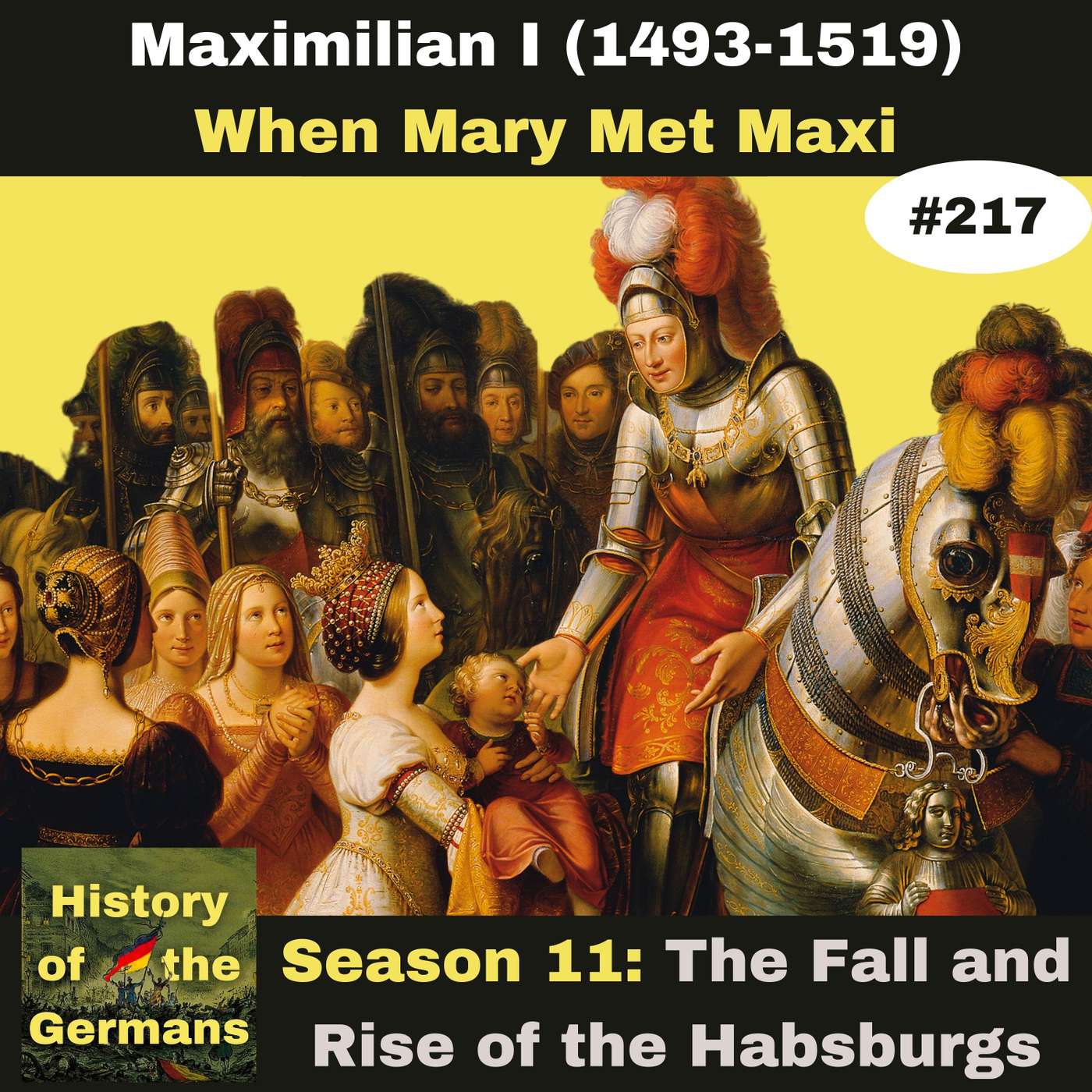 Ep. 217: Maximilian I (1493-1519) – When Mary Met Maxi 04.12.2025 39минHow often have you heard this phrase “Let others wage war; you, happy Austria, marry". It goes back to a whole string of marriages, first Maximilian of Habsburg married the heiress of the duchy of Burgundy, then his son married the heiress of Spain and finally his grandson married the heiress of Hungary and Bohemia. And bish bash bosh, an empire is created in the horizontal.That is nice and neat but not exactly true. Sure the marriages happened, but not in the way at least I have been told. There was a lot more drama and a lot more agency than you think. For a whole six months Maximilian, the Last Knight in his shining armour, left Marie of Burgundy to fend off invasions, revolutions and conspiracies on her own. She was imprisoned, her ministers were hanged and she was told marriage to a 7-year old hunchback was her only wayout. How she managed through that and found herself in the very first truly passionate marriage we have heard about in the History of the Germans Podcast, well, that is what we are talking about today.The music for the show is Flute Sonata in E-flat major, H.545 by Carl Phillip Emmanuel Bach (or some claim it as BWV 1031 Johann Sebastian Bach) performed and arranged by Michel Rondeau under Common Creative Licence 3.0.As always:Homepage with maps, photos, transcripts and blog: www.historyofthegermans.comIf you wish to support the show go to: Support • History of the Germans PodcastFor do it yourself merchandise go to: Merchandise • History of the Germans PodcastFacebook: @HOTGPod Threads: @history_of_the_germans_podcastBluesky: @hotgpod.bsky.socialInstagram: history_of_the_germansTwitter: @germanshistoryTo make it easier for you to share the podcast, I have created separate playlists for some of the seasons that are set up as individual podcasts. they have the exact same episodes as in the History of the Germans, but they may be a helpful device for those who want to concentrate on only one season.So far I have:The OttoniansSalian Emperors and Investiture ControversyFredrick Barbarossa and Early HohenstaufenFrederick II Stupor MundiSaxony and Eastward ExpansionThe Hanseatic LeagueThe Teutonic KnightsThe Holy Roman Empire 1250-1356The Reformation before the ReformationThe Empire in the 15th centuryThe Fall and Rise of the Habsburgs
 -
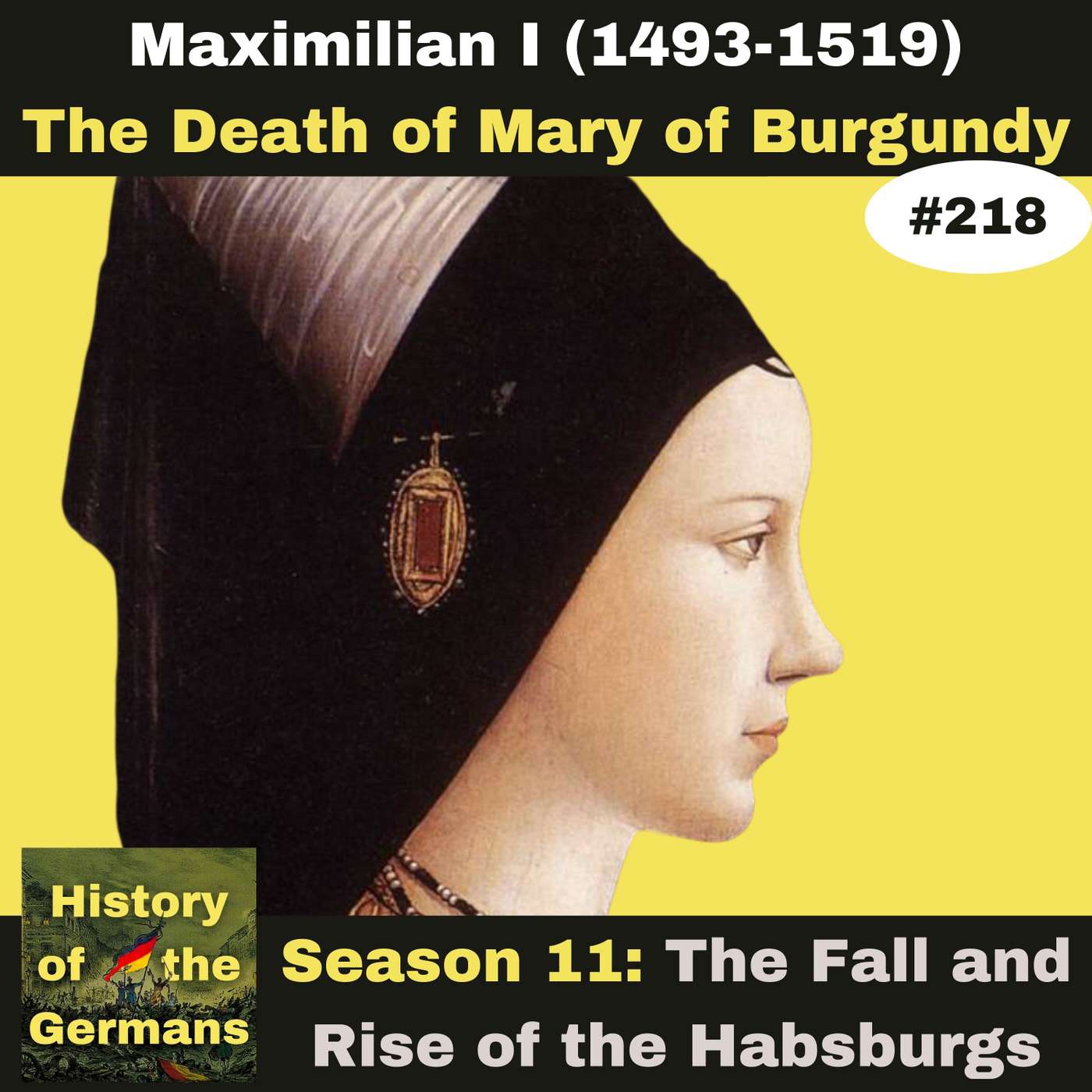 Ep. 218: Maximilian I (1493-1519) – The Death of Mary of Burgundy 11.12.2025 40минBy 1477 the rules of war that had been enshrined in the laws of chivalry are gone. The contest between the French and the Habsburgs over the inheritance of the Grand Dukes of the West gives us a foretaste of the things to come.This war isn’t just fought between the opposing armies lining up for the decisive battle, but include wholesale starving out of the population, funding local uprisings and using propaganda and bribery to incite rebellions on the enemy’s homefront.No one in 15th century Northern Europe is better at this new game than the industrious spider, king Louis XI of France. But a plucky 18-year old Austrian duke who had arrived in Ghent with not much more than the clothes on his back, abundant energy and a budding military genius gave him a run for his huge amounts of money, until tragedy struck.Lots of deception, drama and devastation today….The music for the show is Flute Sonata in E-flat major, H.545 by Carl Phillip Emmanuel Bach (or some claim it as BWV 1031 Johann Sebastian Bach) performed and arranged by Michel Rondeau under Common Creative Licence 3.0.As always:Homepage with maps, photos, transcripts and blog: www.historyofthegermans.comIf you wish to support the show go to: Support • History of the Germans PodcastFor do it yourself merchandise go to: Merchandise • History of the Germans PodcastFacebook: @HOTGPod Threads: @history_of_the_germans_podcastBluesky: @hotgpod.bsky.socialInstagram: history_of_the_germansTwitter: @germanshistoryTo make it easier for you to share the podcast, I have created separate playlists for some of the seasons that are set up as individual podcasts. they have the exact same episodes as in the History of the Germans, but they may be a helpful device for those who want to concentrate on only one season.So far I have:The OttoniansSalian Emperors and Investiture ControversyFredrick Barbarossa and Early HohenstaufenFrederick II Stupor MundiSaxony and Eastward ExpansionThe Hanseatic LeagueThe Teutonic KnightsThe Holy Roman Empire 1250-1356The Reformation before the ReformationThe Empire in the 15th centuryThe Fall and Rise of the Habsburgs
 -
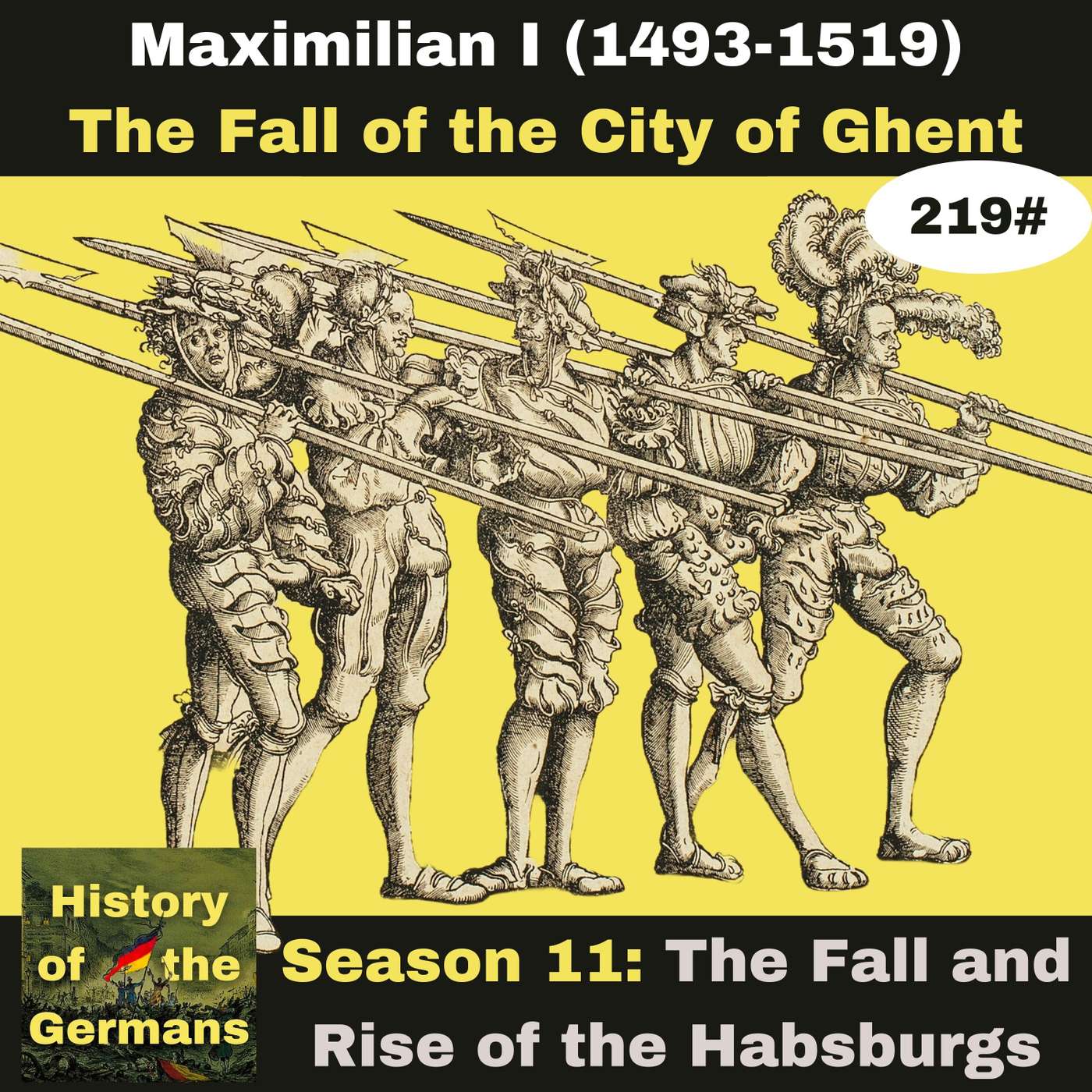 Ep.219: Maximilian I (1493-1519) – The Fall of Ghent 18.12.2025 39минThe words High and Late Middle Ages conjures up images of fog rising up over a field where knights in shining armor are trading blows with double handed swords, mighty bishops overseeing the construction of monumental cathedrals and peasants toiling on the land as serfs.The reason we see it that way goes back to the chivalric literature that celebrated the aristocratic lifestyle where tournaments and poetry mattered more than the humdrum world of business.But let’s just take a look back at the High Middle Ages, the time of Richard the Lionheart, Saint Louis and Frederick Barbarossa. Who controlled access to the great endeavor of the time, the conquest of the Holy Land? Who re-opened up the connections to the wider world, from Novgorod to India and China? Who were the most ferocious fighters who neither expected norgranted any quarter? Who had all the money?These were the great cities of Italy, of Flanders, of Picardie and Provence and of the Holy Roman Empire. Verona under the Della Scala in the 14th century generated tax revenues twice as high as those of England, Venice capacity was sixty percent of what France could generate. And these cities fielded armies that, as we know, defeated the Holy Roman Emperors, even the most capable ones like Barbarossa and Frederick II time and time again. Their absolute dedication to fight to the end was evidenced by their extremely heavy and slow war carts, the Carroccios and by the bravery of the Flemish Militia at the Battle of the Golden Spurs. And the first European since Roman times to make to India and China wasn’t a Knight errant, but a Venetian merchant, nor were the vast lands on the Eastern side of the continent linked up by military force. The crusades, the grand project of the age was as much a venetian mercantile adventure as a religious pilgrimage, culminating in the sack of Constantinople in 1204.What happened? Where did all these city states go? And why?That is what we are going to discuss today, when we look at the showdown between Maximilian of Habsburg, widower of the last duchess of Burgundy and father of Philip, the universally recognised heir of the Low Countries and the Flemish cities, and specifically its largest, the city of Ghent.The music for the show is Flute Sonata in E-flat major, H.545 by Carl Phillip Emmanuel Bach (or some claim it as BWV 1031 Johann Sebastian Bach) performed and arranged by Michel Rondeau under Common Creative Licence 3.0.As always:Homepage with maps, photos, transcripts and blog: www.historyofthegermans.comIf you wish to support the show go to: Support • History of the Germans PodcastFor do it yourself merchandise go to: Merchandise • History of the Germans PodcastFacebook: @HOTGPod Threads: @history_of_the_germans_podcastBluesky: @hotgpod.bsky.socialInstagram: history_of_the_germansTwitter: @germanshistoryTo make it easier for you to share the podcast, I have created separate playlists for some of the seasons that are set up as individual podcasts. they have the exact same episodes as in the History of the Germans, but they may be a helpful device for those who want to concentrate on only one season.So far I have:The OttoniansSalian Emperors and Investiture ControversyFredrick Barbarossa and Early HohenstaufenFrederick II Stupor MundiSaxony and Eastward ExpansionThe Hanseatic LeagueThe Teutonic KnightsThe Holy Roman Empire 1250-1356The Reformation before the ReformationThe Empire in the 15th centuryThe Fall and Rise of the Habsburgs
 -
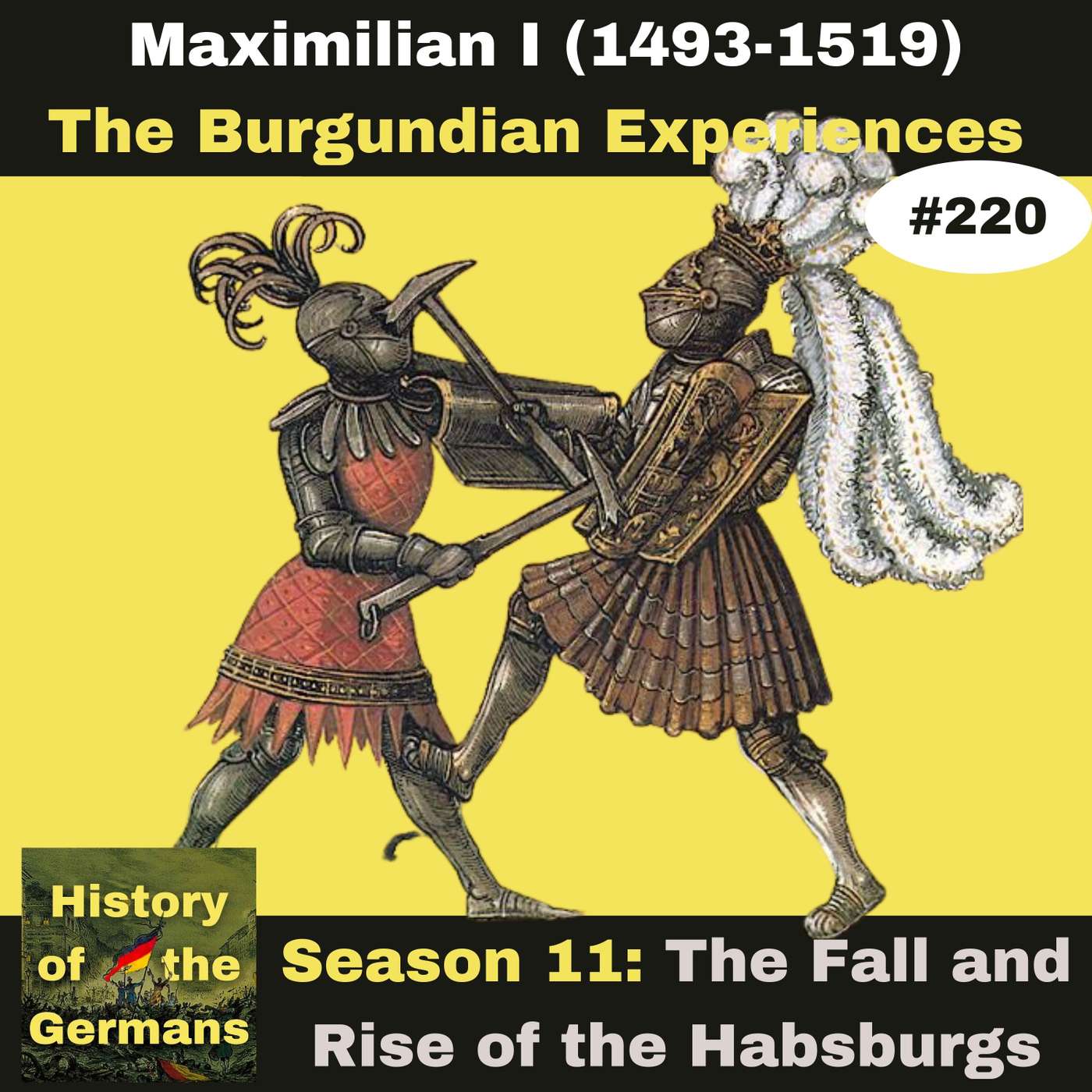 Ep. 220: Maximilian I (1493-1519) - The Burgundian Experience(s) 08.01.2026 41минIn this episode the 15-year long war over the Burgundian succession will come to its end. You may have thought it was done last time, but no. The revolutionary spirit of the Flemish cities is not yet broken and their most audacious move is still to come. And this time they are not going up against an archduke and regent, but against a newly elected king of the Romans.Maximilian of Habsburg’s experience in Burgundy swung between moments of utter delight and happiness and depths of death, destruction and despair. It shaped this young duke who arrived aged 18 full of dreams of chivalry and left, aged 31 an battle hardened general with a clear view of where he wanted to take the empire. Get ready for the ultimate roller coaster.The music for the show is Flute Sonata in E-flat major, H.545 by Carl Phillip Emmanuel Bach (or some claim it as BWV 1031 Johann Sebastian Bach) performed and arranged by Michel Rondeau under Common Creative Licence 3.0.As always:Homepage with maps, photos, transcripts and blog: www.historyofthegermans.comIf you wish to support the show go to: Support • History of the Germans PodcastFor do it yourself merchandise go to: Merchandise • History of the Germans PodcastFacebook: @HOTGPod Threads: @history_of_the_germans_podcastBluesky: @hotgpod.bsky.socialInstagram: history_of_the_germansTwitter: @germanshistoryTo make it easier for you to share the podcast, I have created separate playlists for some of the seasons that are set up as individual podcasts. they have the exact same episodes as in the History of the Germans, but they may be a helpful device for those who want to concentrate on only one season.So far I have:The OttoniansSalian Emperors and Investiture ControversyFredrick Barbarossa and Early HohenstaufenFrederick II Stupor MundiSaxony and Eastward ExpansionThe Hanseatic LeagueThe Teutonic KnightsThe Holy Roman Empire 1250-1356The Reformation before the ReformationThe Empire in the 15th centuryThe Fall and Rise of the Habsburgs
 -
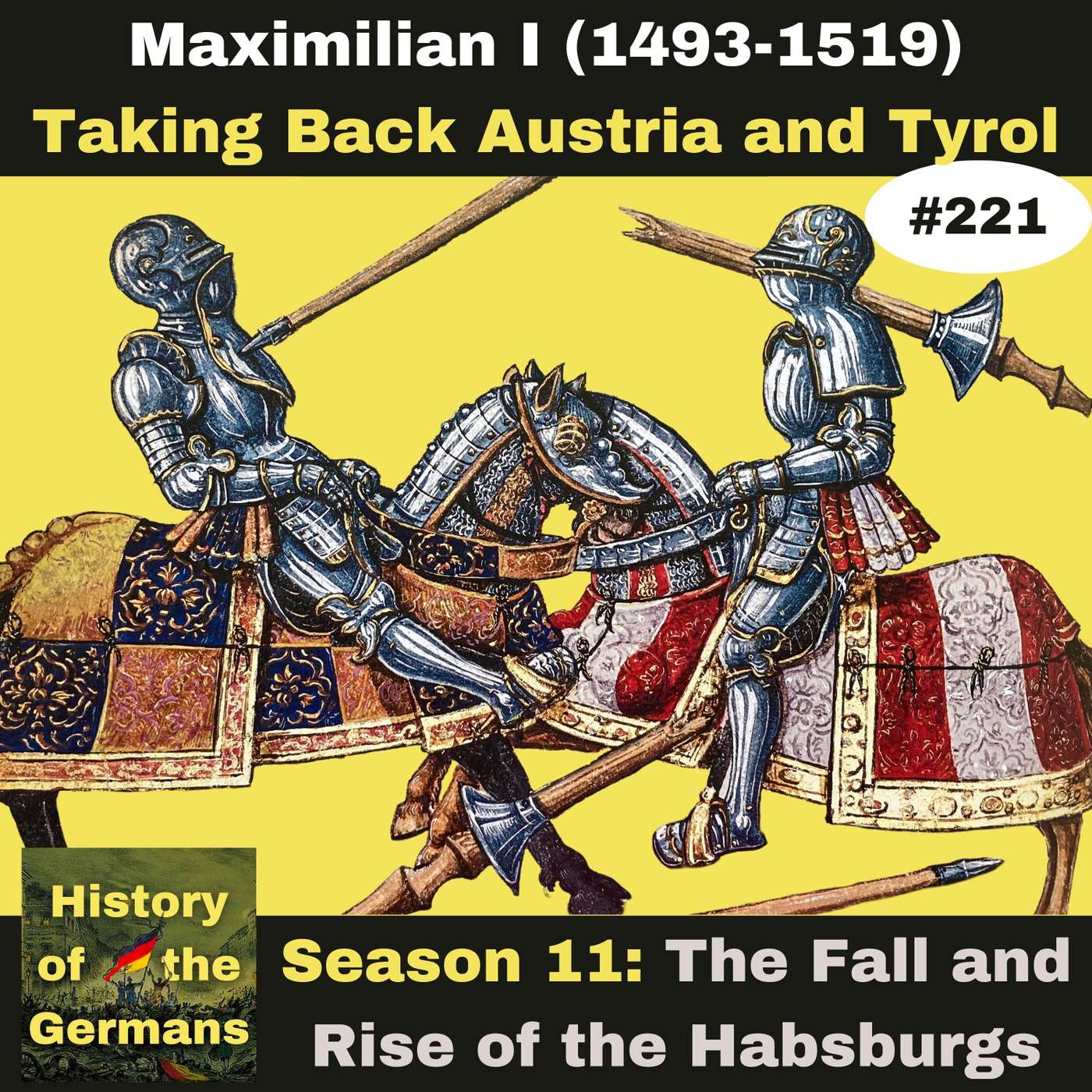 Ep. 221: Maximilian I (1493-1519) – Taking Back Austria and Tyrol 15.01.2026 37минAfter 13 years of fighting in the Low Countries, Maximilian, the newly elected king of the Roman, returns home to a rammed full inbox. There is his cousin, the dissolute count Sigismund of Tyrol who is about to sell out the family fortune to the dukes of Bavaria. The king of Hungary is still occupying Vienna – and there is a new heiress out on the market, Anne of Brittanny.Some of the issues he tackles together with his now seriously elderly father, the emperor Friedrich III, others are very much his own tasks. In the process Friedrich creates a structurally new political entity, the Swabian League, Maximilian builds a relationship with Jakob Fugger, the money man who will grease the cogs of the Habsburg empire, and once again they fight, one battle after another.And despite tremendous success, this period from 1489 to 1493, ends with some epic humiliation, not in war, but in love. “No man on earth has ever been disgraced as I have been at the hands of the French” is how he summarised it.Come along and watch as the plot thickens.The music for the show is Flute Sonata in E-flat major, H.545 by Carl Phillip Emmanuel Bach (or some claim it as BWV 1031 Johann Sebastian Bach) performed and arranged by Michel Rondeau under Common Creative Licence 3.0.As always:Homepage with maps, photos, transcripts and blog: www.historyofthegermans.comIf you wish to support the show go to: Support • History of the Germans PodcastFor do it yourself merchandise go to: Merchandise • History of the Germans PodcastFacebook: @HOTGPod Threads: @history_of_the_germans_podcastBluesky: @hotgpod.bsky.socialInstagram: history_of_the_germansTwitter: @germanshistoryTo make it easier for you to share the podcast, I have created separate playlists for some of the seasons that are set up as individual podcasts. they have the exact same episodes as in the History of the Germans, but they may be a helpful device for those who want to concentrate on only one season.So far I have:The OttoniansSalian Emperors and Investiture ControversyFredrick Barbarossa and Early HohenstaufenFrederick II Stupor MundiSaxony and Eastward ExpansionThe Hanseatic LeagueThe Teutonic KnightsThe Holy Roman Empire 1250-1356The Reformation before the ReformationThe Empire in the 15th centuryThe Fall and Rise of the Habsburgs
Слични подкасти


Популарен во
Овој подкаст се појавува и на подкаст-листите на овие земји.

