
Philosophy Overdose
Philosophy Overdose
0
Philosophy Overdose is a collection of public and academic philosophy lectures and interviews, focusing mainly on analytic philosophy with occasional continental philosophy. The channel seeks out thought-provoking material that is often rare and features famous philosophers, sometimes offering translations from German and French. It is entirely non-commercial and intended for educational purposes, aiming to spread good philosophy content. Topics span epistemology, ethics, metaphysics, philosophy of mind, and many other branches of philosophy.
Епизоди
-
 David Papineau on Consciousness 06.10.2026 30минDavid Papineau discusses consciousness from a materialist perspective and why dualist intuitions won't go away in an interview with Joe Gelonesi in an episode of the Philosopher's Zone, an ABC Radio National program from 2015. For more information and additional episodes of the Philosopher's Zone, go to: https://www.abc.net.au/radionational/programs/philosopherszone #philosophy #philosophyofmind #consciousness #metaphysics #materialism Learn more about your ad choices. Visit megaphone.fm/adchoices
 -
 1 The "Representational" Theory of Knowledge - Reid's Critique of Hume (Dan Robinson) 06.10.2026 1ч 7минProfessor Dan Robinson gives the first in a series of 8 lectures on Thomas Reid's critique of David Hume at Oxford in 2014. Hume defends the thesis according to which “ALL THE PERCEPTIONS OF THE HUMAN MIND RESOLVE THEMSELVES INTO…IMPRESSIONS AND IDEAS”. Accordingly, “We may prosecute this enquiry to what length we please; where we shall always find, that every idea which we examine is copied from a similar impression”.Uploaded 19-06-21Under “David Hume”, the Stanford Encyclopedia of Philosophy begins with, “The most important philosopher ever to write in English”. His most formidable contemporary critic was the fellow Scot, Thomas Reid, the major architect of so-called Scottish Common Sense Philosophy. The most significant features of Hume’s work, as understood by Reid, are the representive theory of perception, the nature of causation and causal concepts, the nature of personal identity and the foundations of morality. Each of these topics is presented in a pair of lectures, the first summarizing Hume’s position and the second Reid’s critique of that position.All Lectures: https://www.youtube.com/playlist?list=PLhP9EhPApKE9nki7CXFPi7PMOi5W2g2-q#philosophy #davidhume #epistemology #perception #empiricism #skepticism #philosophyofmind #historyofphilosophy Learn more about your ad choices. Visit megaphone.fm/adchoices Learn more about your ad choices. Visit megaphone.fm/adchoices
 -
 Marx and Morality (Minerva) 06.10.2026 40минMorality is often considered to be ahistorical. In this episode of the Minerva podcast, the focus is on Marx, who, following Hegel, disagrees with this conception of morality. The guest is David Marjoribanks. His research focuses on the theories of ideology and the implications for morality in Marx and post-Marxism. He argues that ethical norms are not transcendent, but are already there, embodied within our social practice. Critique, he thinks, is the holding to account of practice to its professed ideals.Joshi Gottlieb discusses Marx and Morality with David Marjoribanks. Note, this is a re-upload. It comes from an episode of the Minerva Podcast a few years back and I thought it was quite good. For more information and additional episodes, go to: http://www.minerva-podcast.com #philosophy #hegel #marx #ethics #historyofphilosophy #marxism Learn more about your ad choices. Visit megaphone.fm/adchoices
 -
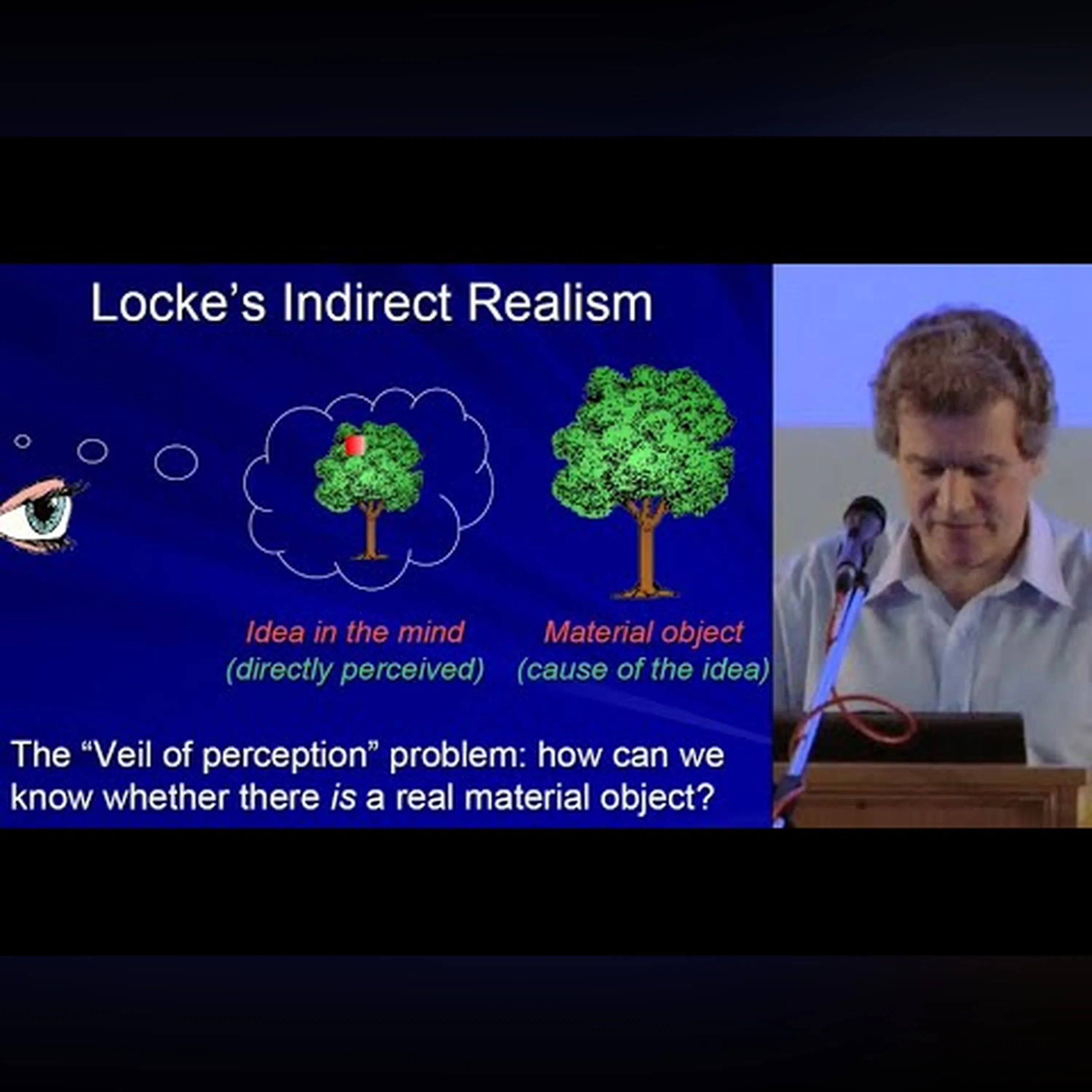 Perception, Abstraction and Idealism - General Philosophy (Peter Millican) 06.10.2026 58минIn this lecture on General Philosophy, Professor Peter Millican discusses the problem of perception, the distinction between primary and secondary qualities, resemblance, abstraction, and idealism. This comes from a 2010 series on General Philosophy. The slides have been added.This series of lectures was delivered by Peter Millican to first-year philosophy students at the University of Oxford. The lectures comprise of the 8-week General Philosophy course, delivered to first year undergraduates. These lectures aim to provide a thorough introduction to many philosophical topics and to get students and others interested in thinking about key areas of philosophy. Taking a chronological view of the history of philosophy, each lecture is split into 3 or 4 sections which outline a particular philosophical problem and how different philosophers have attempted to resolve the issue. Individuals interested in the 'big' questions about life such as how we perceive the world, who we are in the world and whether we are free to act will find this series informative, comprehensive and accessible.More lectures on General Philosophy: https://www.youtube.com/playlist?list=PLhP9EhPApKE_xo2wvkm6qPZrUlAiRNHXbSource: https://podcasts.ox.ac.uk/series/general-philosophy00:00 Intro to Primary & Secondary Qualities 01:04 The Mechanisms of Perception 02:41 What are Objects Like? 04:20 Locke & Corpuscularianism 07:47 Pains, Colours, & Shapes 09:24 A Problematic Text 11:03 In Objects, or Just In the Mind? 14:29 Why Resemblance? 16:01 Can an Idea Resemble an Object? 18:41 Structural Resemblance? 21:44 Solidity 23:42 Hume’s Criticism 25:11 Empiricism & Understanding 26:23 The Attack on Abstraction 29:25 The Case for Idealism 30:26 “Something I Know Not What” 35:16 Locke’s Indirect Realism 36:13 An Unacceptable Interpretation 38:30 Sense Data 39:08 How To Prove the Causal Link? 40:50 Phenomenalism 43:20 Direct Realism 45:59 Is a Lockean View Defensible? 48:29 Explanatory Realism #philosophy #epistemology #perception #skepticism #philosophyofmind #historyofphilosophy Learn more about your ad choices. Visit megaphone.fm/adchoices
 -
 What is an Emotion? 06.10.2026 55минJesse Prinz and Jerome Neu discuss and debate the nature of emotions. This comes from an episode of Odyssey on WBEZ Chicago from quite a few years back (early 2000s) with host Gretchen Helfrich. Read more about emotion: https://plato.stanford.edu/entries/emotion/#philosophy #psychology #emotions #williamjames #spinoza #debate Learn more about your ad choices. Visit megaphone.fm/adchoices
 -
 7 Hume’s “Sentimentalist” Theory of Morals - Reid's Critique of Hume (Dan Robinson) 06.10.2026 57минProfessor Dan Robinson gives the seventh in a series of 8 lectures on Thomas Reid's critique of David Hume at Oxford in 2014. In his Enquiry Concerning the Principles of Morals [1751], Hume states: “The final sentence, it is probable, which pronounces characters and actions amiable or odious, praise-worthy or blameable; that which stamps on them the mark of honour or infamy, approbation or censure; that which renders morality an active principle and constitutes virtue our happiness, and vice our misery; it is probable, I say, that this final sentence depends on some internal sense or feeling, which nature has made universal in the whole species”. The ruling motives are shaped by considerations of utility. “The rage and violence of public war; what is it but a suspension of justice among the warring parties, who perceive, that this virtue is now no longer of any USE or advantage to them? The laws of war, which then succeed to those of equity and justice, are rules calculated for the ADVANTAGE and UTILITY…”Under “David Hume”, the Stanford Encyclopedia of Philosophy begins with, “The most important philosopher ever to write in English”. His most formidable contemporary critic was the fellow Scot, Thomas Reid, the major architect of so-called Scottish Common Sense Philosophy. The most significant features of Hume’s work, as understood by Reid, are the representive theory of perception, the nature of causation and causal concepts, the nature of personal identity and the foundations of morality. Each of these topics is presented in a pair of lectures, the first summarizing Hume’s position and the second Reid’s critique of that position.All Lectures: https://www.youtube.com/playlist?list=PLhP9EhPApKE9nki7CXFPi7PMOi5W2g2-q#philosophy #davidhume #ethics #moralphilosophy #historyofphilosophy Learn more about your ad choices. Visit megaphone.fm/adchoices
 -
 The Thought of Philippa Foot 06.10.2026 1ч 25минAlex Voorhoeve and Sarah Broadie discuss the work of the renowned philosopher Philippa Foot at the LSE back in 2013. They discuss her work on the following philosophical issues. Is morality objective? Why should one be moral? And may we kill one to save others? 00:00 Life & Philosophical Style 15:05 Moral Subjectivism 26:05 Why Be Moral? 38:40 The Trolley Problem 50:45 Discussion #philosophy #ethics #metaethics #moralphilosophy Learn more about your ad choices. Visit megaphone.fm/adchoices
 -
 2 Romanticism - First Attack on Enlightenment (Isaiah Berlin 1965) 06.10.2026 1ч 4минIsaiah Berlin gives the 2nd lecture in a series of 6 on Romanticism and its roots.All 6 lectures: https://www.youtube.com/playlist?list=PLhP9EhPApKE_9uxkmfSIt2JJK6oKbXmd-For Berlin, the Romantics set in motion a vast, unparalleled revolution in humanity’s view of itself. They destroyed the traditional notions of objective truth and validity in ethics with incalculable, all-pervasive results. As he said of the Romantics elsewhere: “The world has never been the same since, and our politics and morals have been deeply transformed by them. Certainly this has been the most radical, and indeed dramatic, not to say terrifying, change in men’s outlook in modern times.”In these brilliant lectures Berlin surveys the myriad attempts to define Romanticism, distills its essence, traces its developments from its first stirrings to its apotheosis, and shows how its lasting legacy permeates our own outlook. Combining the freshness and immediacy of the spoken word with Berlin’s inimitable eloquence and wit, the lectures range over a cast of the greatest thinkers and artists of the eighteenth and nineteenth centuries, including Kant, Rousseau, Diderot, Schiller, Schlegel, Novalis, Goethe, Blake, Byron, and Beethoven. Berlin argues that the ideas and attitudes held by these and other figures helped to shape twentieth-century nationalism, existentialism, democracy, totalitarianism, and our ideas about heroic individuals, individual self-fulfillment, and the exalted place of art. This is the record of an intellectual bravura performance–of one of the century’s most influential philosophers dissecting and assessing a movement that changed the course of history. These Mellon lectures were delivered in Washington in 1965.00:00 Program for the Lectures01:07 Enlightenment Tradition22:44 Montesquieu & Relativism26:42 David Hume & Skepticism32:07 Germans & Sour Grapes44:32 Hamann & Counter-Enlightenment#Philosophy #Romanticism #IsaiahBerlin Learn more about your ad choices. Visit megaphone.fm/adchoices
 -
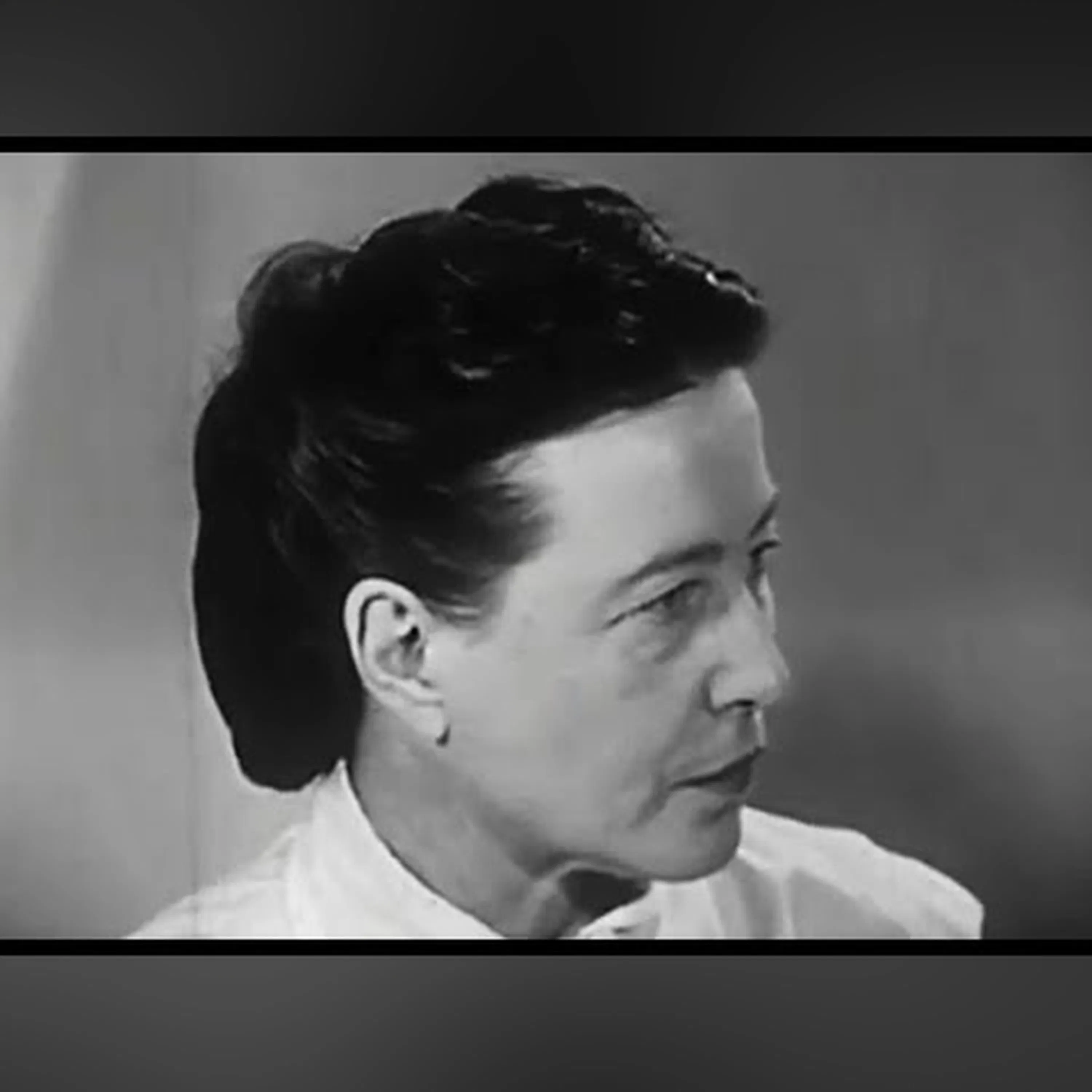 Simone de Beauvoir on Existentialism and God (1959) 05.10.2026 9минA version of a video from the old channel. This comes from a 1959 interview with Wilfrid Lemoyne from Radio-Canada. The translation is my mine. More Short Clips: https://www.youtube.com/playlist?list=PLhP9EhPApKE8v8UVlc7JuuNHwvhkaOvzcExistentialists take human existence and the human condition to be a fundamental issue. They tend to be radical individualists who privilege our lived experience and choice. They focus on themes such as: freedom, authenticity, the individual, meaning, anxiety, alienation, death, dread, the absurd, contingency, and nihilism. They often are also suspicious of any fixed, pre-determined human nature, objective/universal values, and abstract philosophical systems. Some of the most important existentialist thinkers (or at least thinkers associated with existentialism) include Jean-Paul Sartre, Martin Heidegger, Søren Kierkegaard, Simone de Beauvoir, Friedrich Nietzsche, Dostoyevsky, Albert Camus, and Karl Jaspers. (My Description)#philosophy #existentialism #sartre Learn more about your ad choices. Visit megaphone.fm/adchoices
 -
 Ernest Nagel on the Philosophy of Science (1954) 05.10.2026 1ч 1минAudio recording of a 1954 lecture given by Professor Ernest Nagel on the philosophy of science at the Cooper Union Forum. #philosophy #philosophyofscience #epistemology #science Learn more about your ad choices. Visit megaphone.fm/adchoices
 -
 4 Varieties of Philosophical Skepticism - Kantian Skepticism 05.10.2026 1ч 40минIn this fourth lecture, James Conant continues to discuss and contrast Cartesian skepticism with Kantian skepticism, but particularly focuses on Kantian issues of perception and knowledge, and continues to discuss such via the work of C. I. Lewis. Unfortunately the audio isn't that good in this session.In this series of lectures on varieties of philosophical skepticism, James Conant distinguishes between two forms of philosophical skepticism: Cartesian skepticism and Kantian skepticism. He discusses their general structure and shows how they're related. This sheds light on issues in various different areas, including within the philosophy of perception, philosophy of mind, and philosophy of language. Some of the philosophers discussed throughout this course include Wittgenstein, Sellars, Hilary Putnam, Kripke, C.I. Lewis, John McDowell, and Stanley Cavell.This series of lectures was given in 2005 at the Department of Philosophy at the University of Bergen, Norway. Note, the audio has been slightly edited and improved.“The pure concept and the content of the given are mutually independent; neither limits the other." C.I. Lewis"If there be no datum given to the mind, then knowledge must be contentless and arbitrary; there would be nothing which it must be true to. And if there be no interpretation or construction which the mind itself imposes, then thought is rendered superfluous, the possibility of error becomes inexplicable, and the distinction of true and false is in danger of becoming meaningless." C.I. LewisAll lectures: https://www.youtube.com/playlist?list=PLhP9EhPApKE8muoMpX8qQ-14zKnYPc5VI#philosophy #epistemology #kant #skepticism #historyofphilosophy Learn more about your ad choices. Visit megaphone.fm/adchoices
 -
 Honderich vs Penrose on Consciousness (1999) 05.10.2026 6минTed Honderich pushes Sir Roger Penrose about his view about consciousness and whether it involves a relation of identity, presenting something of a dilemma in the process. These clips come from a 1999 exchange on consciousness in an episode of the In Our Time podcast with Melvyn Brαgg. For more information and full episodes of In Our Time, go to: https://www.bbc.co.uk/programmes/b006qykl #philosophy #philosophyofmind #consciousness #metaphysics #materialism Learn more about your ad choices. Visit megaphone.fm/adchoices
 -
 Foundations of Liberal Equality 1 - Ronald Dworkin (1988) 05.10.2026 1ч 29минAudio recording of a lecture by Ronald M. Dworkin as part of his 1988 Tanner lectures on human values at Stanford University on the foundations of liberalism. This was the first of his Tanner lectures. Note, this is a re-upload. 00:00 Lecture 1:04:07 Q&A #philosophy #politicalphilosophy #ethics #politicaltheory #liberalism #moralphilosophy Learn more about your ad choices. Visit megaphone.fm/adchoices
 -
 Hilary Putnam on Negative Theology (1997) 05.10.2026 57минAudio recording of a lecture by Hilary Putnam at Calvin College back in 1997. He discusses negative theology and some of its paradoxes, as well as the famous Jewish philosopher Maimonides. Uploaded 31-08-24#philosophy #maimonides #philosophyofreligion #epistemology #historyofphilosophy Learn more about your ad choices. Visit megaphone.fm/adchoices Learn more about your ad choices. Visit megaphone.fm/adchoices
 -
 The Continuum of Personhood 05.10.2026 10минA clip of Max Charlesworth's ABC Boyer Lecture in 1989 on Life, Death, Genes & Ethics.#philosophy #ethics #moralphilosophy Learn more about your ad choices. Visit megaphone.fm/adchoices
 -
 God and Morality - General Philosophy (2018 Peter Millican) 05.10.2026 1чIn this lecture on General Philosophy, Professor Peter Millican discusses God and morality. Among other things, he discusses the hypothesis of God, the fine-tuning argument from design, the Euthyphro dilemma, divine command theory, and the problem of evil. This comes from a 2018 series on General Philosophy.This series of 8 lectures on General Philosophy was delivered to first year Oxford University undergraduates in Michaelmas term 2018. The lectures cover six main topics: Knowledge and Scepticism, Induction, Mind and Body, Personal Identity, Free Will, God and Evil. But they set these topics within a much broader context, encompassing humanity’s history of discovery about the natural world (both in physics and biology), and our place within it (linked to issues of both evolution and morality). Main themes of the lectures are: (1) Introduction and views of the cosmos from Genesis to Descartes; (2) Humanity’s place in the scientific picture of the world; (3) Scepticism and the problem of induction; (4) More on induction and facing up to scepticism; (5) The mind and personal identity; (6) Identity, self-interest, morality, and free will; (7) Free will, causality, explanation, and moral responsibility; (8) God and morality.More lectures on General Philosophy: https://www.youtube.com/playlist?list=PLhP9EhPApKE_xo2wvkm6qPZrUlAiRNHXbSource: https://podcasts.ox.ac.uk/series/general-philosophy-2018#philosophy #theism #atheism #moralphilosophy #ethics #philosophyofreligion Learn more about your ad choices. Visit megaphone.fm/adchoices
 -
 Metaphilosophy and Russell vs Wittgenstein on Judgment 05.10.2026 47минAfter a brief discussion of the nature of philosophy and the origins of analytic philosophy, Fraser MacBride discusses Bertrand Russell and Ludwig Wittgenstein on the nature of relations and the structure of judgment or belief, how our thought relates to external objects in the world. Among the topics discussed include metaphilosophy and the history of analytic philosophy, F. H. Bradley's infamous regress argument against the reality of relations, Russell's correspondence theory of truth and various accounts of judgment, including his famous multiple relation theory."The question of relations is one of the most important that arise in philosophy, as most other issues turn on it: monism and pluralism; the question of whether anything is wholly true except the whole of truth, or wholly real except the whole of reality; idealism and realism, in some of their forms; perhaps the very existence of philosophy as a subject distinct from science and possessing a method of its own.” Bertrand Russell#Philosophy #Wittgenstein #BertrandRussell Learn more about your ad choices. Visit megaphone.fm/adchoices
 -
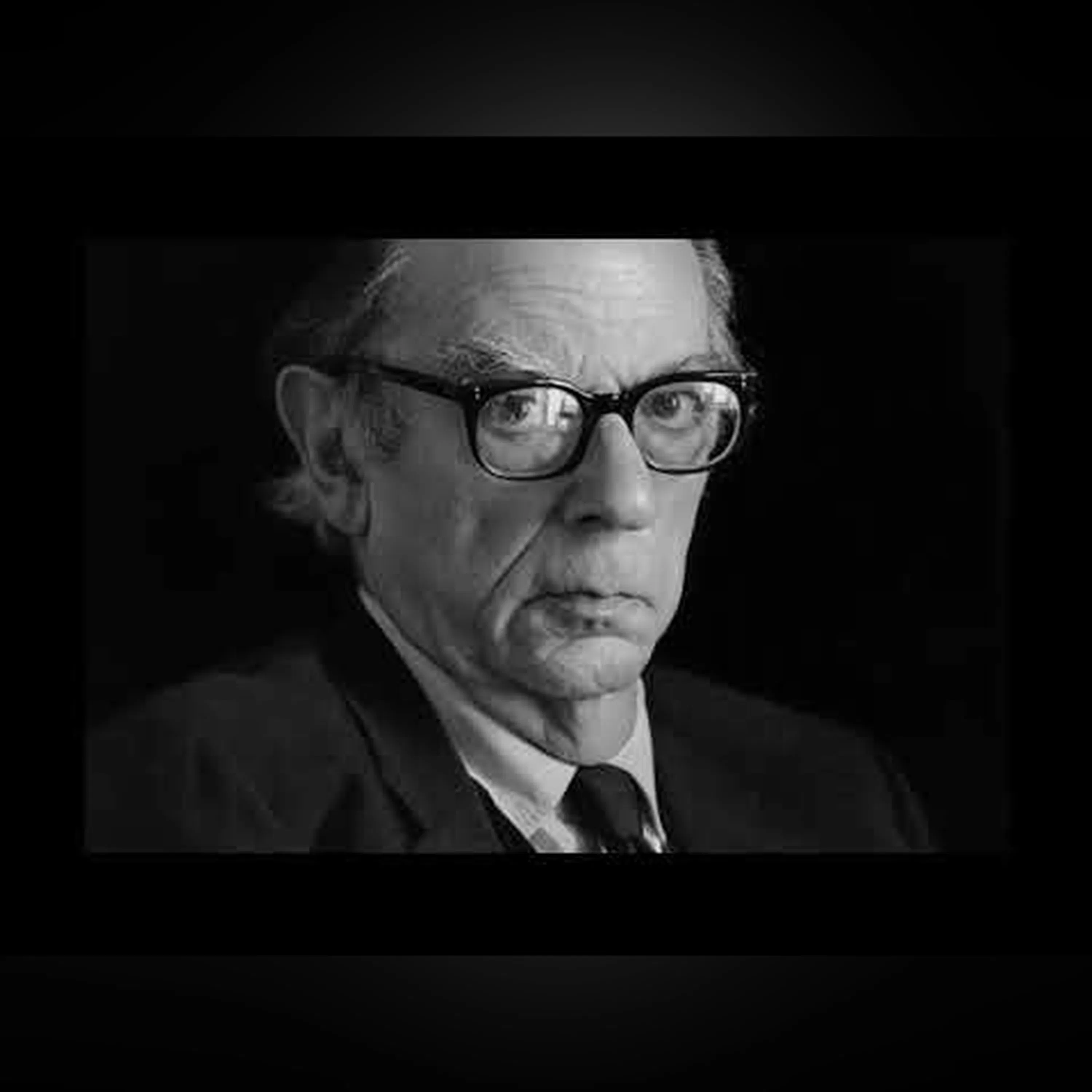 3 The True Fathers of Romanticism (Isaiah Berlin 1965) 05.10.2026 59минIsaiah Berlin gives the 3rd lecture in a series of 6 on Romanticism and its roots.All 6 lectures: https://www.youtube.com/playlist?list=PLhP9EhPApKE_9uxkmfSIt2JJK6oKbXmd-For Berlin, the Romantics set in motion a vast, unparalleled revolution in humanity’s view of itself. They destroyed the traditional notions of objective truth and validity in ethics with incalculable, all-pervasive results. As he said of the Romantics elsewhere: “The world has never been the same since, and our politics and morals have been deeply transformed by them. Certainly this has been the most radical, and indeed dramatic, not to say terrifying, change in men’s outlook in modern times.”In these brilliant lectures Berlin surveys the myriad attempts to define Romanticism, distills its essence, traces its developments from its first stirrings to its apotheosis, and shows how its lasting legacy permeates our own outlook. Combining the freshness and immediacy of the spoken word with Berlin’s inimitable eloquence and wit, the lectures range over a cast of the greatest thinkers and artists of the eighteenth and nineteenth centuries, including Kant, Rousseau, Diderot, Schiller, Schlegel, Novalis, Goethe, Blake, Byron, and Beethoven. Berlin argues that the ideas and attitudes held by these and other figures helped to shape twentieth-century nationalism, existentialism, democracy, totalitarianism, and our ideas about heroic individuals, individual self-fulfillment, and the exalted place of art. This is the record of an intellectual bravura performance–of one of the century’s most influential philosophers dissecting and assessing a movement that changed the course of history. These Mellon lectures were delivered in Washington in 1965.00:00 Hamann & Others29:10 Herder#Philosophy #Romanticism #IsaiahBerlin Learn more about your ad choices. Visit megaphone.fm/adchoices
 -
 Foundations of Liberal Equality 2 - Ronald Dworkin (1988) 05.10.2026 1ч 45минAudio recording of a lecture by Ronald M. Dworkin as part of his 1988 Tanner lectures on human values at Stanford University on the foundations of liberalism. This was the second of his Tanner lectures. Note, this is a re-upload. 00:00 Lecture 1:07:14 Q&A #philosophy #ethics #politicalphilosophy #moralphilosophy #politicaltheory #liberalism Learn more about your ad choices. Visit megaphone.fm/adchoices
 -
 Isaiah Berlin Interview on Value Pluralism and Liberalism (1997) 05.10.2026 48минClips of Göran Rosenberg interviewing Isaiah Berlin in 1997, a few months before Berlin's death. More Isaiah Berlin: https://www.youtube.com/playlist?list=PLhP9EhPApKE-z227nn_-_PKw5lGfojOcgIsaiah Berlin's lectures on Romanticism: https://www.youtube.com/playlist?list=PLhP9EhPApKE_9uxkmfSIt2JJK6oKbXmd-00:00 Value Pluralism 12:38 Liberalism 24:13 Negative vs Positive Freedom 30:10 Nationalism 34:19 Tolerance & Meaning #Romanticism #IsaiahBerlin #Liberalism Learn more about your ad choices. Visit megaphone.fm/adchoices
Слични подкасти


Популарен во
Овој подкаст се појавува и на подкаст-листите на овие земји.
