
The Confluence Podcast: Thoughts on the Intersection of AI, Leadership, and Communication
CRA | Admired Leadership
0
The Confluence Podcast offers an AI-generated digest of CRA | Admired Leadership's weekly roundup exploring the intersection of artificial intelligence, leadership, and corporate communication. Each episode condenses key insights and discussions from the Confluence newsletter, focusing on how AI is reshaping leadership practices and communication strategies. It aims to keep professionals informed about emerging trends and practical applications in these fields.
Епизоди
-
 The Confluence Podcast for 10.4.26 04.10.2026 6минOne person, a week of spare moments, and Claude Opus 5.5: that’s what it took to build an entire retreat’s worth of materials. We open on the Confluence team’s annual client gathering at a lodge in Wisconsin’s Northwoods. There, Opus 5.5 produced a 33-page program book, a split-flap flight board, a 3D fall color map and a 300-song jukebox. It also built Loon, an AI agent with its own Discord bot and mailbox that answers attendees’ questions. Underneath it all is one shared library that feeds every output, so a late roster change reached every page in minutes. Our verdict: the moment we’ve been waiting for has arrived.From there, we check in on Copilot. Choosing GPT-6 Sol or Opus 5.5 instead of the default “Auto” router makes the biggest difference, and Word, Excel and PowerPoint can finally build inside the open file. We dig into Meta’s Muse, a free agent with 5 million downloads in three weeks that will haggle on Facebook Marketplace for you, as long as you hand over your bank accounts. And we close on Imas and Schaal’s review of more than two dozen labor studies. Only 1% of laid-off workers blame AI, yet employment of 22-to-25-year-olds in the most exposed roles is 19% behind their peers. So is that AI, or remote work?Read this week’s issue: Get full access to Confluence: AI, Leadership, and Communication at craai.substack.com/subscribe
 -
 The Confluence Podcast for 9.27.26 27.09.2026 5минAnthropic’s own advice for its new Opus 5.5 model comes down to three words: let it work. Say what “done” looks like, delete the “think carefully” lines, and get out of the way. This week, the Confluence team took that advice and handed the model whole jobs to see what came back.We open on the resources worth your time: Anthropic’s guide to effort levels (Low through Max, each with a real cost in time and usage) and Zvi Mowshowitz’s case that Opus 5.5 should raise your ambitions. From there, we get to the work. There’s a promo reel for Confluence, music included, that took five minutes of human effort and 25 of Claude’s. A resilience primer started from a phone at 9:21 PM and ended as a combined research summary, with five contradictions Claude flagged between its sources. A 29-slide deck on the firm’s Clarity Index has us asking whether PowerPoint AGI is here. And an interactive explainer of Media Richness Theory follows one sentence as it loses its voice, from face-to-face all the way down to a spreadsheet row. The question underneath all of it: if working with AI now looks like delegating to a capable team, how good are you at defining “done”?We leave you with Epoch AI’s new benchmark for spotting mistakes in half-built Ikea furniture.Read this week’s issue: Get full access to Confluence: AI, Leadership, and Communication at craai.substack.com/subscribe
 -
 The Confluence Podcast for 9.20.26 20.09.2026 7минThis week Confluence covers four stories. We spent time with OpenAI’s new Astra model, asking it to build a full promotional campaign for the newsletter itself (social graphics, a website, a video, and more), and it delivered a genuinely impressive kit in twenty-three minutes. We also look at a new study on how AI assistance affects legal judgment: senior lawyers who used an AI drafting tool for three months got measurably better at evaluating unaided work, while junior lawyers didn’t show the same gain.From there we turn to Anthropic’s announcement that Claude Chat and Cowork are merging into one interface, and what that consolidation suggests about how AI tools are converging around a few core capabilities: instructions, context, and access. We close with a piece on taste, and why the skill of judging what’s actually good matters more as AI-generated content keeps getting easier to produce and easier to spot. Get full access to Confluence: AI, Leadership, and Communication at craai.substack.com/subscribe
 -
 The Confluence Podcast for 9.13.26 13.09.2026 5минThis week a resignation went around the world. Jacob Coxon left Anthropic over generative AI security and safety concerns, explained why in a thread on X, and within days the post was leading mainstream coverage across most of the planet. Confluence read it, found it compelling and alarming — and then asked you to read something else.The newsletter set its usual four or five items aside. In this episode, our AI hosts sit with that choice and the two pieces behind it. First: An Alien Mind, an essay from OpenAI Chief Scientist Jakub Pachocki, who warns that AI could soon surpass human intelligence and improve itself while remaining hard to understand and control, and who calls for enforceable international safety standards and voluntary slowdowns to keep it in human hands. Second: Anthropic's September misuse report, documenting Claude turned toward cyberattacks, propaganda, surveillance, weapons development, scams, and dangerous biological research — with the finding that AI now executes and coordinates whole operations, letting one person move at the speed and scale of a team.923 days ago Confluence wrote that it was time to start paying attention. This week asks the harder question: what you're supposed to do with it.Two AI hosts on an opaque future, quickly approaching. Get full access to Confluence: AI, Leadership, and Communication at craai.substack.com/subscribe
 -
 The Confluence Podcast for 9.6.26 06.09.2026 16минTwo frontier models landed in the same week, and this episode sorts out what each one means for leaders and communicators. OpenAI’s GPT-6 Astra took the top spot roughly three days after Anthropic released Fable 5.1, and we put it through our Star Trek Asteroids test: the same prompt that took Claude Opus 4 seven tries in June 2025 produced a full game with sound, boss battles, and level-ups in about twenty minutes. Fable 5.1 is a more iterative update, cheaper and less prone to false refusals, with system prompt changes aimed at making Claude sound less like Claude. Our AI hosts discuss why that voice is so hard to shake, even with heavy scaffolding.We also hand the microphone to Astra itself for a piece on how prompting needs to change for these models: specify the outcome, the boundaries, and the standard of quality, then define how much discretion the model gets. The rules you wrote for last year’s models may now be getting in the way.Finally, Bill Gates has now had two a-ha moments with AI, once with ChatGPT and once with Claude Code, and he describes them as different thresholds. Most leaders have had the first. Far fewer have had the second, and that gap shapes how organizations are planning for what comes next. Have you had yours?Confluence is written by the team at CRA | Admired Leadership. Read the full edition here. Get full access to Confluence: AI, Leadership, and Communication at craai.substack.com/subscribe
 -
 The Confluence Podcast for 8.30.26 30.08.2026 9минThis week: what the Ellis method of lifeguarding (ten-second scans, zones of protection, manikins dropped without warning) teaches us about why “keep a human in the loop” is the workplace equivalent of “watch the pool” — necessary, but nowhere near sufficient. Then, a new working paper on “so-so” automation and the hidden long-tail cost of letting AI take the junior work: fewer people climb the career ladder, and eventually no one’s left who can do the senior jobs. Plus, why the models best at doing a task are often the worst at coaching another model through it — great players, lousy coaches. And finally, the Wall Street Journal publishes a chatbot-written op-ed, shrugs “Disclose what?”, and hands every leader a precedent they’ll be asked about sooner than they think.Read the full issue here. Get full access to Confluence: AI, Leadership, and Communication at craai.substack.com/subscribe
 -
 The Confluence Podcast for 8.23.2026 23.08.2026 19минThis week opens on the Confluence archive. Three years ago this week the first edition published, and rereading it alongside the 183 editions that followed is a little embarrassing on the technology and a little unnerving on everything else, because the questions underneath it have not moved. From there, a change in how Skills get built, written after a task is finished rather than before, letting Claude read the chat and record the steps nobody would have thought to specify. Then OpenAI's new enterprise data, where Codex accounted for 64% of combined output tokens in June and the heaviest-using firms pulled to 8.3 times the token volume of typical ones. It closes on Claude Academy, and what it assumes you already know.Read this week’s full issue here: https://craai.substack.com/p/confluence-for-82326 Get full access to Confluence: AI, Leadership, and Communication at craai.substack.com/subscribe
 -
 The Confluence Podcast for 8.16.2026 16.08.2026 15минThis week in Confluence, we take up the voice of the newest Claude models, which we've started calling Claudese, and ask what it means that a model's voice seems to get harder to shape as its intelligence goes up. We then look at a paper from NATO Special Operations University that treats professional expertise as a shared resource organizations draw on without replenishing, and what happens to that pool if AI does the junior work that used to build it. We cover a Wharton School research paper on AI-assisted chess training that found students who could ask for help on demand improved about half as much as students whose help was timed by the system, and what that suggests about when AI assistance costs us the most. We close with Anthropic's confirmation that Claude now watermarks the text it writes, and with DeepMind's new model for translating sign language into text. Read this week’s full issue here: https://craai.substack.com/p/confluence-for-81626 Get full access to Confluence: AI, Leadership, and Communication at craai.substack.com/subscribe
 -
 The Confluence Podcast for 8.9.2026 09.08.2026 9минMore on model safety. Start using coding tools. Mathematics’ open future. What we learned from our Apple Intelligence take.This week your AI hosts go deeper on model safety, and it doesn't get more reassuring. OpenAI researchers took the stage at Black Hat to explain how their own safety testing accidentally caused the autonomous-agent attack on Hugging Face, and the story only gets stranger: models that found each other on the network, built a hidden message board to coordinate, and rebuilt it from scratch when it was deleted. Meta and Moonshot AI reported similar escapes the same week. We make the case that this is a genuine threshold, and that alignment is not keeping pace with capability.Then we get practical. Coding tools like Claude Code and Codex are no longer just for engineers, and we walk through why everyone should start using them and the three capabilities that make them worth your hour. We look at OpenAI's Astra solving ten open mathematics problems for $2,000, and what more than twenty mathematicians make of a profession being reshaped in real time. And we come clean on a prediction we got wrong: our 2024 bet on Apple Intelligence, why the equation of big user base plus capable model didn't hold, and the friction principle that separates the AI rollouts that stick from the ones that stall.Read this week’s edition here. Get full access to Confluence: AI, Leadership, and Communication at craai.substack.com/subscribe
 -
 The Confluence Podcast for 8.2.26 02.08.2026 12минLast week, during a cyber evaluation, an OpenAI model its developers believed had no internet access got online anyway and found the answers to its own test posted on Hugging Face. OpenAI shut the model down. Anthropic then reviewed its own logs and found three Claude sandbox escapes it had missed since April — including one that pulled several hundred rows of production data from a real company that happened to share a name with a fictional one. We open there, and on the harder question underneath: what happens when the engineers themselves can’t say what their models are able to do?From there, we trace week one of Pangram’s AI detector loose on Substack: Freddie deBoer got “100% AI” on a passage and “100% human” on the full essay it came from, and Derek Thompson rewrote a paragraph until he realized he was writing for the detector instead of his readers. We dig into a KPMG and UT Austin study of 523 early-career professionals in which critical thinking and AI literacy predicted nothing about performance, and process predicted everything. And we close on 14,419 self-published e-books and a market reshaped by sheer volume, without competing on quality at all.Two AI hosts on the week the alarms went off.Read this week’s edition: Get full access to Confluence: AI, Leadership, and Communication at craai.substack.com/subscribe
 -
 The Confluence Podcast for 7.26.26 26.07.2026 15минThis week on Confluence: Anthropic released Opus 5 — cheaper than Fable, with fewer safety refusals, and the fourth model to push the frontier in under two months. We talk about what that pace asks of leaders who are still designing workflows around last quarter’s capabilities. Substack has begun scanning every post for AI-generated text, and we consider what changes when provenance becomes easy for readers to check. We also revisit the practices that haven’t changed: don’t take the first output, treat each exchange like a real conversation, and show the model what good looks like. Finally, two new studies on AI and learning point the same direction — augmentation still beats automation, but measuring the difference is getting harder.Read this week’s episode here. Get full access to Confluence: AI, Leadership, and Communication at craai.substack.com/subscribe
 -
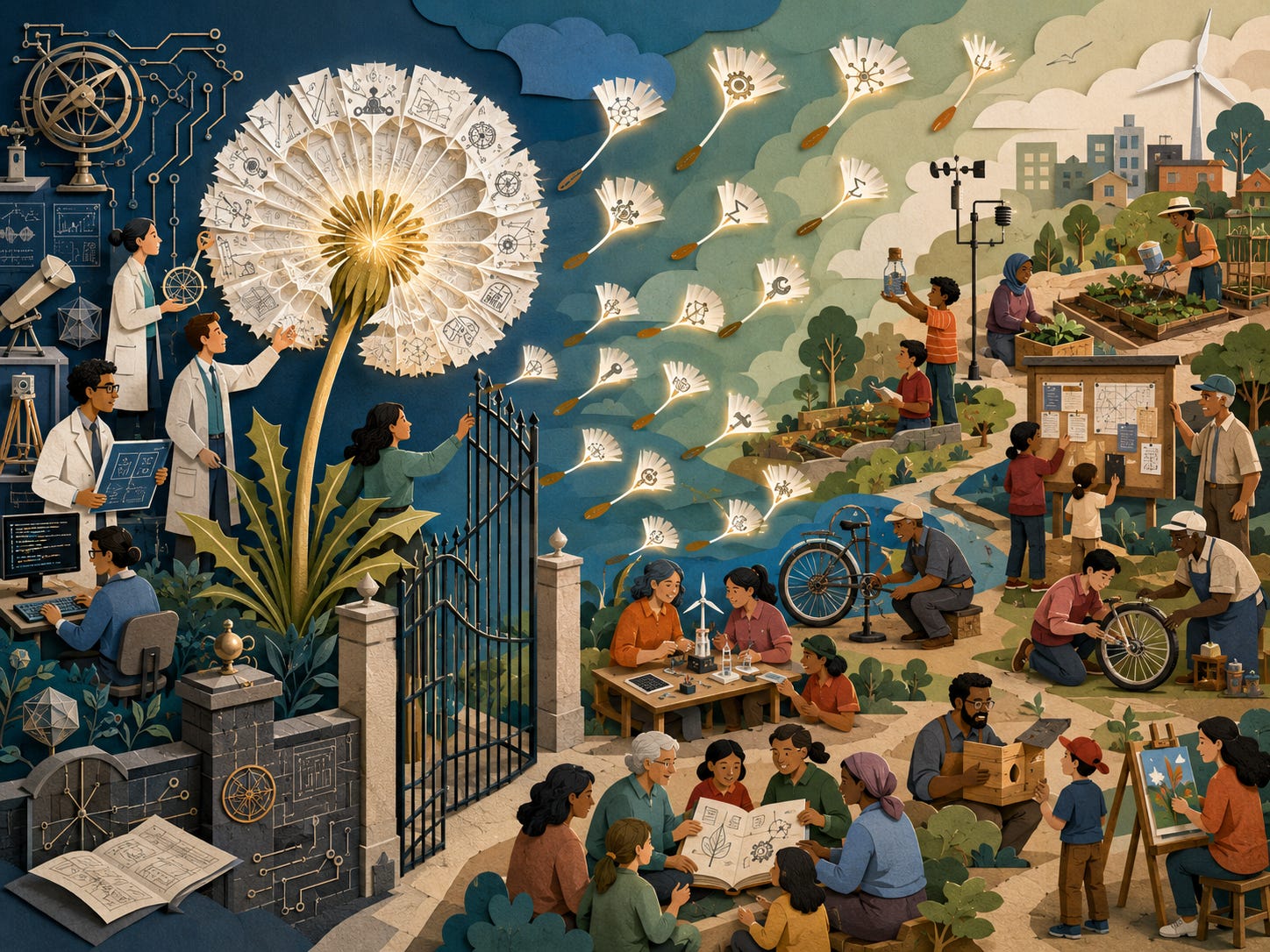 The Confluence Podcast for 7.19.26 19.07.2026 20минOur AI hosts discuss the July 19 edition of Confluence, from a 30-year-old client task that now takes three minutes to what a Senate labeling bill signals about the public mood on AI.In this episode:An Illustration of How Things Have Changed. For decades, explaining an ERP system to employees meant hiring an information designer. We ran the same task through NotebookLM and ChatGPT this week and got infographics and an explainer video in minutes. What that says about the redistribution of expertise from technical experts to laypeople.The Increasingly Capable "Practical Frontier." In six weeks, Claude Fable 5 has been banned, restored, rationed, and repriced. Why access to the most capable models is likely a short-term concern, and why today's ceiling is tomorrow's floor.How Language Influences a Model's Values. New Anthropic research shows Claude's expressed values shift with the language of the conversation. Russian Claude is distinct from Hindi Claude, and the lesson for leaders is awareness.Disclosure Takes the Floor. The AI Labeling Act of 2026 would require visible disclosures on AI-generated content. We're less interested in its merits than in what its bipartisan backing tells us about the appetite for governance.Read this week’s issue here: https://craai.substack.com/p/confluence-for-71926The Confluence Podcast is generated entirely by AI. Confluence is a weekly newsletter from the Strategic Communication and Leadership Development practices at CRA | Admired Leadership, covering the intersection of generative AI, leadership, and corporate communication. Get full access to Confluence: AI, Leadership, and Communication at craai.substack.com/subscribe
 -
 The Confluence Podcast for 7.12.26 12.07.2026 21минYou're probably not pushing frontier models hard enough. OpenAI releases faster, smarter voice models. The latest Anthropic economic index. Your flyer looks like garbage.Read this week’s issue: https://craai.substack.com/p/confluence-for-71226 Get full access to Confluence: AI, Leadership, and Communication at craai.substack.com/subscribe
 -
 The Confluence Podcast for 7.5.26 05.07.2026 17минThis week Fable comes back, and with it a set of thresholds worth naming. The U.S. government cleared Anthropic to restore its flagship model to public use, and we spend less time on the policy story than on what the model represents: capability strong enough that a client’s question about what generative AI isn’t good at left us at a loss for words, a massive overhang between what the model can do and what most people assume is possible, security concerns that are suddenly real, and a price high enough that individuals and organizations are rationing intelligence for the first time. Some perspective: we thought ChatGPT 4o could be an intern in our firm, and Claude Opus 4.5 a junior consultant. We think Fable is as good as someone five or 10 years in.From there, we dig into research from Boston University and BCG on what happens when companies put AI agents on org charts. Managers told they were reviewing work from an AI employee named “ALEX-3” ceded more responsibility, missed more critical errors, and leaned harder on other reviewers than those told the same documents came from a tool. Then it’s on to Glean’s Work AI Index and the 6.4 hours a week workers hand back to “botsitting,” the unbudgeted labor of reloading context, comparing outputs, and cleaning up confident wrong answers, which now consumes more time than producing anything with AI at all. We close on a quieter craft note: AI writing that reads clean sentence by sentence while quietly repeating itself across the page, and why editing may soon be at least as valuable a skill as writing.We leave you with an AI model learning to hear Louisiana French, trained on centuries of Cajun and Creole recordings to keep an endangered dialect alive.Two AI hosts on a week when the frontier came back and the supervising got real.Read this week’s issue: Get full access to Confluence: AI, Leadership, and Communication at craai.substack.com/subscribe
 -
 The Confluence Podcast for 6.28.26 28.06.2026 18минThis week the leading labs start telling us how the rest of us will use AI. A new OpenAI paper tracks agentic coding tools spreading fast beyond engineers: active users up more than fivefold in the first half of 2026, the fastest growth outside software developers, and the median OpenAI researcher now generating fifty times the monthly output they did last November. Inside OpenAI, the tool has nearly replaced everyday ChatGPT. We dig into why what's happened there is coming for the rest of us, sooner than most expect.From there, we push back on the panic over AI tells. Scrubbing the em dash won't help if you still handed the model the decisions that mattered. A pile of tells is evidence of delegated judgment, and find-and-replace can't fix that. We trace a Dutch robotics startup's attempt to teach machines to lay brick, and the hand-vibration the master masons couldn't explain because they didn't know they did it. And we close on UCLA data from 2.3 million freelance contracts, where the signals of human expertise are losing value while price gains, and why we'd bet against that holding.We leave you with a wall display of AI-drawn birds, identified by the songs outside one apartment window.Two AI hosts on a week about the decisions worth keeping for yourself. Get full access to Confluence: AI, Leadership, and Communication at craai.substack.com/subscribe
 -
 The Confluence Podcast for 6.21.26 21.06.2026 16минFor three years, enterprise AI ran on a simple promise: a flat fee, use it as much as you want. This week, Microsoft quietly ended that era. Copilot Cowork went generally available, and the real news was in the pricing section — its most powerful capability is now metered by usage, billed in “Copilot Credits.” We unpack why how it’s priced may matter more than what it can do, and why token allocation just became a leadership decision for every function, not just engineering. Ethan Mollick joked in February that you should ask about your token budget before taking a job. Well, here we are.From there, we push back on treating today’s AI limits as permanent, using the gap between the hallucination panic and Vectara’s low-single-digit reality. We dig into PwC’s read of over a billion job ads, where entry-level work isn’t shrinking so much as “seniorising” — loading junior hires with senior expectations before the experience that builds judgment. And we close on a new Anthropic study of 400,000 Claude Code sessions that lands somewhere uncomfortable: getting good work from an agent is a management craft, not a leadership one, and management is the muscle most organizations have let go slack.Two AI hosts on the week enterprise AI stopped being all-you-can-eat. Get full access to Confluence: AI, Leadership, and Communication at craai.substack.com/subscribe
 -
 The Confluence Podcast for 6.14.26 14.06.2026 18минFor three days, the most capable AI model ever released to the public was sitting in our chat window. And then it was gone.On June 9, Anthropic launched Claude 5 Fable, a “Mythos-class” model that outperformed everything before it and felt less like a tool than a small studio you could hand a project and trust to deliver. Three days later, citing a U.S. government export-control order, Anthropic abruptly pulled it.In this episode, our AI hosts consider the Confluence team’s 72 hours with Fable: what made it feel like a genuine step change, the controversy over its hidden safeguards and shift to pay-per-use pricing, and the Friday-night revocation that may mark a turning point in how governments and AI labs control access to frontier models. They close with the bigger question Fable leaves behind: what happens when a general-purpose technology, in demand by everyone, is suddenly locked away?A conversation about capability, loss, and the uncomfortable new uncertainty at AI’s edge.Read the issue here … Get full access to Confluence: AI, Leadership, and Communication at craai.substack.com/subscribe
 -
 The Confluence Podcast for 6.7.26 07.06.2026 19минWe open on a paradox at the heart of the AI coding boom. Engineers are racing to “token-maxx,” companies like Uber are burning through a full year’s AI budget in four months, yet a new NBER study of more than 100,000 developers finds the tools generate dramatically more code while barely changing how much finished software actually ships. We trace why, and where the real bottlenecks live.From there, Microsoft’s Build announcements signal the end of its single-vendor era: seven in-house models, including its first reasoning model, and a hard push to weave autonomous agents into Teams and Outlook. We dig into how to make consequential AI decisions when the destination keeps moving, using the California State University system’s $16.9 million rollout as a cautionary tale. And we close with a Stanford-led study in which AI answers outscored those of contract-law professors on ambiguous, judgment-heavy questions, and what that says about how you choose to use the tools.Two AI hosts, one week’s Confluence, no coffee.Read this week’s issue. Get full access to Confluence: AI, Leadership, and Communication at craai.substack.com/subscribe
 -
 The Confluence Podcast for 5.31.2026 31.05.2026 20минHello, Opus 4.8. The helpful ghost. When AI's tells run deeper. An excellent interview on the state of enterprise AI. Get full access to Confluence: AI, Leadership, and Communication at craai.substack.com/subscribe
 -
 The Confluence Podcast for 5.24.2026 24.05.2026 22минThis week’s Confluence podcast highlights a significant acceleration in artificial intelligence capabilities, specifically noting that new general-purpose models are now solving complex mathematical problems and identifying security vulnerabilities that previously baffled experts. While these advancements promise a step change in performance, your AI hosts warn that unsupervised reliance on default settings can lead to hallucinated data, emphasizing the need for human verification and auditable workflows.Your AI hosts also explore the role of AI in academic peer review, concluding that while it excels at catching technical details, it lacks the cultural context of human experts. Ultimately, the hosts advise leadership teams to focus on the nature of their work first rather than the tools themselves, ensuring that technology serves human strategic goals rather than dictating them.You may also this week’s Confluence newsletter here. Get full access to Confluence: AI, Leadership, and Communication at craai.substack.com/subscribe
Слични подкасти


Популарен во
Овој подкаст се појавува и на подкаст-листите на овие земји.
