
The Immunology in Africa Podcast
Wealth Okete
0
The Immunology in Africa Podcast, hosted by Wealth Okete, explores the intersection of immunology and Africa. It features the stories, science, and perspectives of African immunology researchers, covering their paths into the field, the questions that drive their work, and the impact they hope to have on the continent. The show celebrates Africa-led science and aims to foster public engagement with the scientific community while countering misinformation. It also seeks to connect next-generation scientists with role models.
Епизоди
-
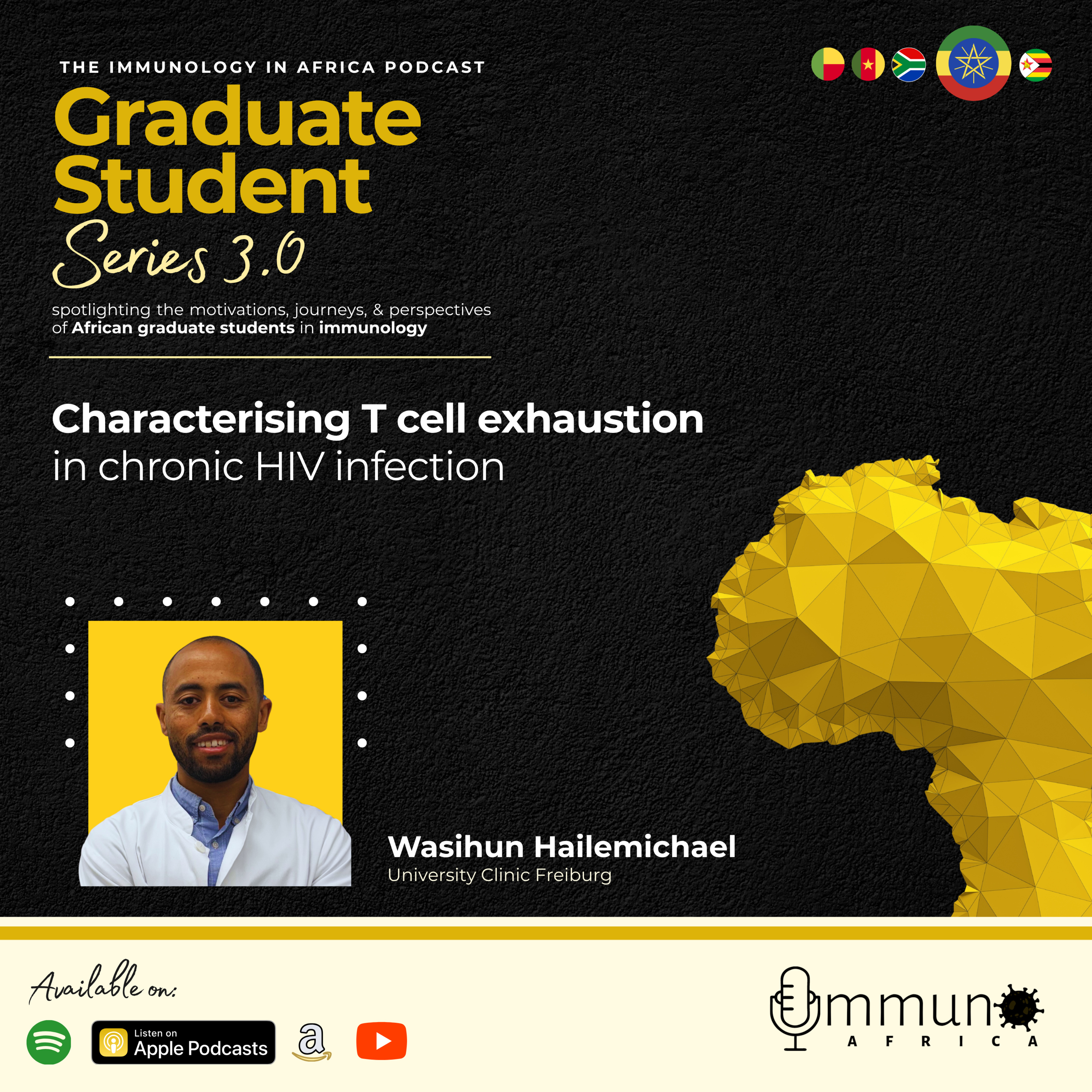 Characterising T Cell Exhaustion in Chronic HIV Infection - GSS 3.0 (4/5) - Wasihun Hailemichael 20.09.2026 46минImmunoAfrica's Graduate Student Series offers emerging and aspiring immunologists the opportunity to connect with, learn from, and be inspired by some of the most talented immunology graduate students from Africa.For its third edition, this year, we feature 5 PhD students representing 5 African countries, namely Zimbabwe, South Africa, Benin, Cameroon, and Ethiopia. Our guests share their unique stories, perspectives, and contributions to the field of immunology, particularly within the African context.--Hosted by Wealth Okete, The Immunology in Africa Podcast explores narratives at the nexus of immunology & Africa. We ask professors, postdocs, PhD students, and everyone in between to tell us about their journey into immunology, the questions driving their current work, and the impact they hope to make on the continent.To support our efforts towards amplifying African stories of immunology, you can buy us coffee or nominate a guest. --Wasihun Hailemichael is an Immunologist and PhD researcher at University Clinic Freiburg, Germany, studying the heterogeneity of CD8⁺ T cell exhaustion in chronic viral infections, with a particular focus on HIV. His research aims to deepen understanding of the mechanisms underlyingCD8⁺ T cell exhaustion and disease-specific features to explore potential therapeutic opportunities.Previously, he served as a Lecturer of Immunology at Debre Tabor University, Ethiopia, gaining experience in teaching,mentoring, and research. During his Master's studies, he contributed to a collaborative project on Visceral Leishmaniasis–HIV co-infection with the Institute of Tropical Medicine in Antwerp, Belgium. He received the 19th Tore Godal Award for Young Investigators (2021) from the Armauer Hansen Research Institute (AHRI) for this thesis research on T cell dysfunction.Beyond the lab, Wasihun is passionate about communicating science and strengthening immunology research in Africa through collaboration, mentorship, and public engagement.This episode centres his work on T cell immunity in people living with HIV from his PhD research.Timestamps: 00:00 - intro, about guest01:30 - career background; early journey into immunology06:40 - PhD research overview: CD8+ T cell exhaustion in HIV infection12:34 - unravelling CD8+ T cell exhaustion heterogeneity16:19 - factors shaping T cell exhaustion: antiretroviral therapy, CMV infection21:00 - lab techniques used to address research question and generate data 25:14 - future implication of findings: immune checkpoint inhibitors and other future innovations29:15 - is T cell exhaustion seen in every person living with HIV?30:27 - experience as a graduate student: culture shocks, unwinding34:45 - role within the IUIS and other immunological scientists39:34 - fun task: favourite immune cell, pitching findings to a potential funder43:02 - plans post-PhD45:32 - outro
 -
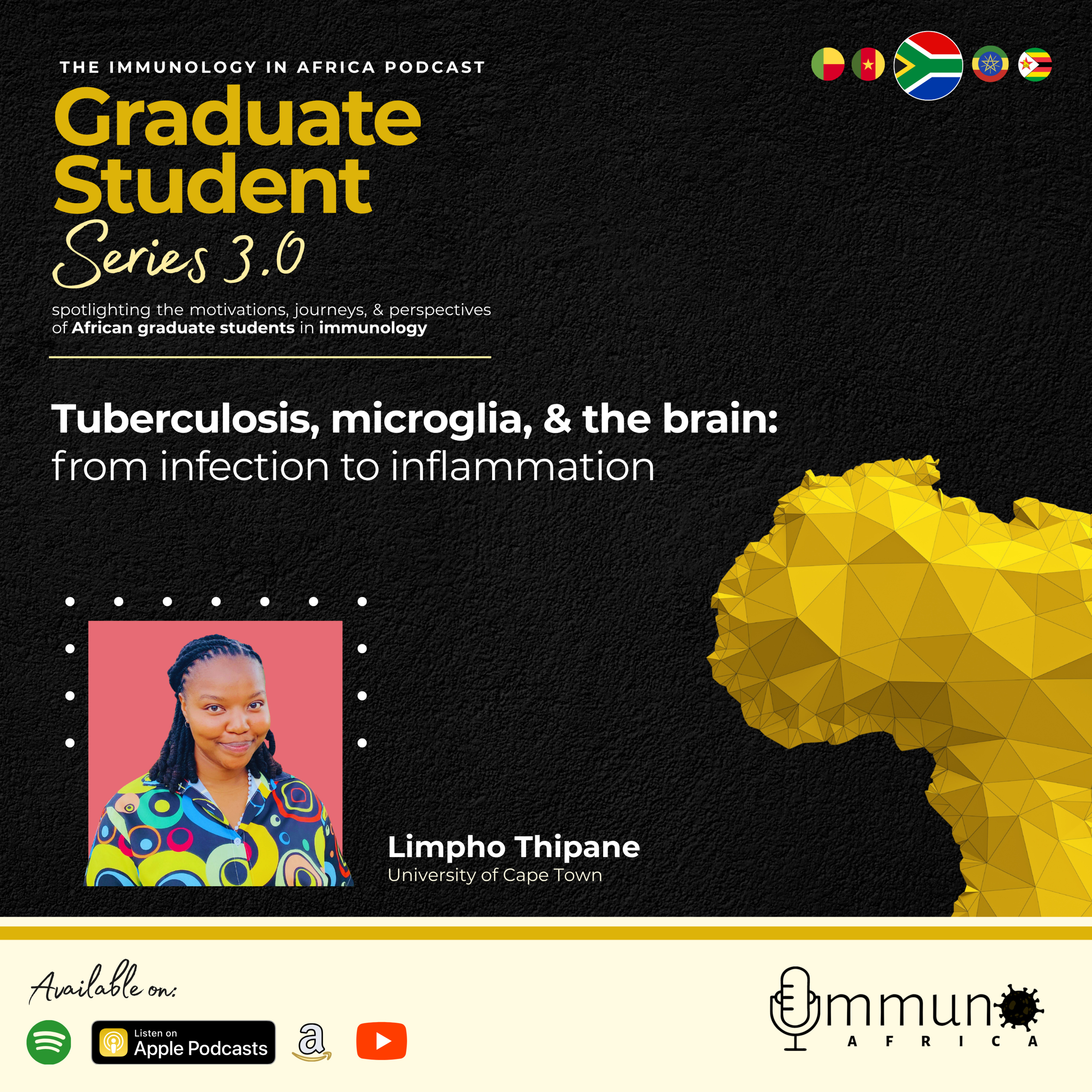 Tuberculosis, Microglia, and the Brain: From Infection to Inflammation - GSS 3.0 (3/5) - Limpho Thipane 09.08.2026 34минImmunoAfrica's Graduate Student Series offers emerging and aspiring immunologists the opportunity to connect with, learn from, and be inspired by some of the most talented immunology graduate students from Africa.For its third edition, this year, we feature 5 PhD students representing 5 African countries, namely Zimbabwe, South Africa, Benin, Cameroon, and Ethiopia. Our guests share their unique stories, perspectives, and contributions to the field of immunology, particularly within the African context.--Hosted by Wealth Okete, The Immunology in Africa Podcast explores narratives at the nexus of immunology & Africa. We ask professors, postdocs, PhD students, and everyone in between to tell us about their journey into immunology, the questions driving their current work, and the impact they hope to make on the continent.To support our efforts towards amplifying African stories of immunology, you can buy us coffee or nominate a guest. --Limpho Thipane is a PhD student at the University of Cape Town and an emerging tuberculosis researcher whose work spans immunology, infectious diseases, and neuroscience. Her Master’s research, titled “Regulators of neuroimmune functions in the manifestation of central nervous system tuberculosis in the absence of microglia”, investigated how microglial depletion influences immune responses, pathogen control, and neuroinflammation in central nervous system tuberculosis (CNS-TB).Her academic journey has included extensive work in tuberculosis, particularly CNS-TB, with a particular interest in understanding host–pathogen interactions and the role of immune cells, such as microglia and alveolar macrophages, in disease progression and control. Her ongoing PhD research expounds on this area of work with a focus on the non-psychoactive, cannabidiol.Limpho spends her spare time discussing science with and mentoring high school students, and leads science engagement projects for Eh!woza and the African Research Society.In this episode, she discusses her fascinating journey to becoming a brain TB scientist, findings from her research, and her ongoing commitment to disseminating science, engaging communities, and mentoring the next generation.Timestamps: 00:00 - intro, about guest01:26 - career background, early journey into immunology and neuroscience05:13 - conducting tuberculosis and neuro-immunology research; mitigating TB inflammation by depleting microglial cells13:09 - more on brain TB: how it differs from lung TB, heterogeneity, etc.15:34 - ongoing PhD research on the role of cannabidiol in the management of brain TB inflammation17:18 - time management, discipline, and extracurricular interests19:30 - communicating science effectively23:52 - volunteering in science communication, community engagement and mentorship programmes29:19 - experiencing mistakes and learning curves32:52 - reverse spell "MICROGLIA"33:45 - closing remarks34:22 - outro
 -
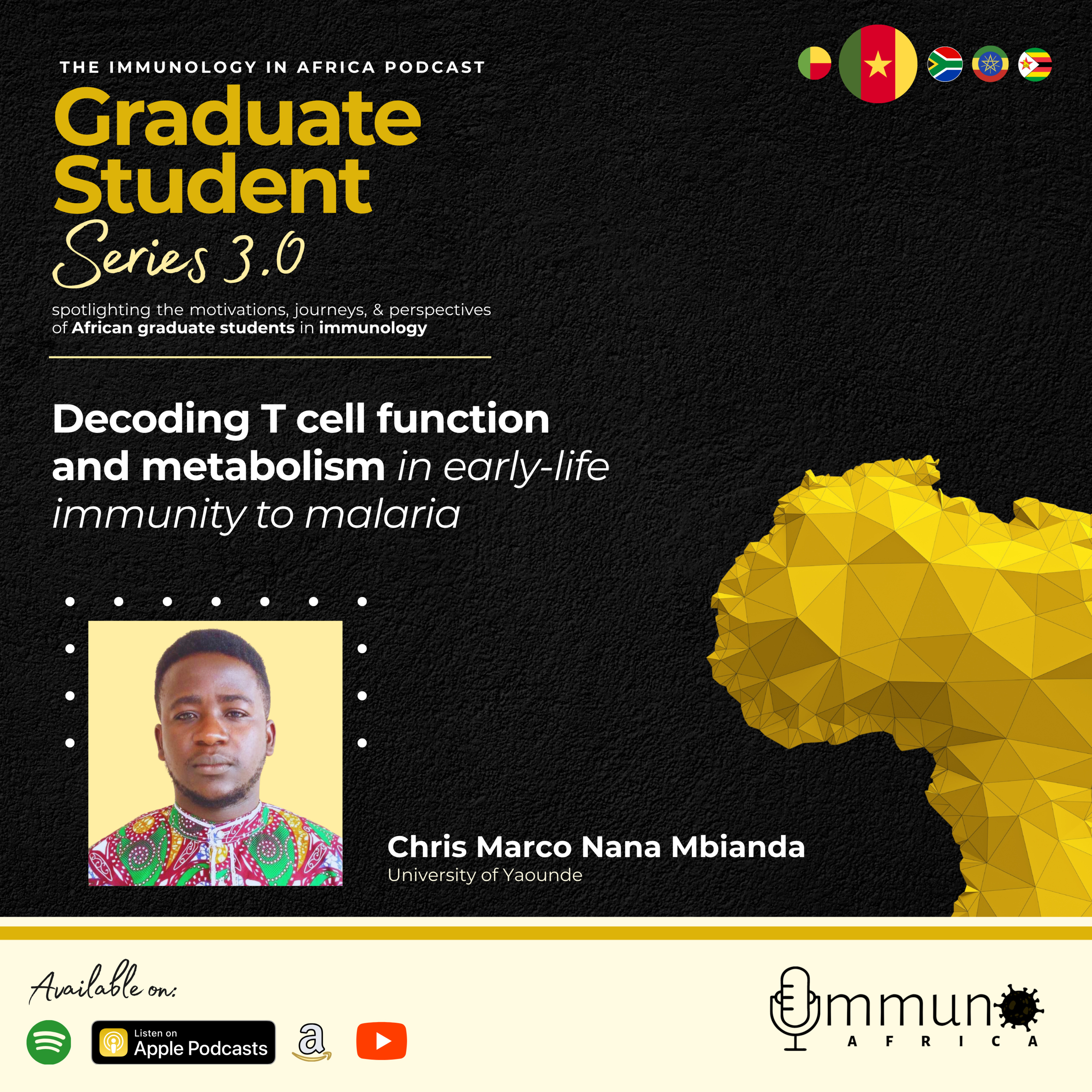 Decoding T Cell Function and Metabolism in Early-life Immunity to Malaria - GSS 3.0 (2/5) - Chris Mbianda 27.06.2026 39минImmunoAfrica's Graduate Student Series offers emerging and aspiring immunologists the opportunity to connect with, learn from, and be inspired by some of the most talented immunology graduate students from Africa.For its third edition, this year, we feature 5 PhD students representing 5 African countries, namely Zimbabwe, South Africa, Benin, Cameroon, and Ethiopia. Our guests share their unique stories, perspectives, and contributions to the field of immunology, particularly within the African context.--Hosted by Wealth Okete, The Immunology in Africa Podcast explores narratives at the nexus of immunology & Africa. We ask professors, postdocs, PhD students, and everyone in between to tell us about their journey into immunology, the questions driving their current work, and the impact they hope to make on the continent.To support our efforts towards amplifying African stories of immunology, you can buy us coffee or nominate a guest. --Chris Marco Nana Mbianda is a passionate immunologist and doctoral graduate of the University of Yaoundé in Cameroon. His research on pregnant women and neonates explores how immune responses to placental malaria can be harnessed for immunotherapeutic strategies. He investigates key immunological and metabolic pathways that could be targeted to improve protection to infection in newborns.Beyond the laboratory, he is dedicated to mentoring young scientists and promoting inclusive, accessible science through teaching and public engagement. Chris is a recipient of numerous awards including the prestigious Eiffel Excellence Scholarship from the French Ministry for Europe and Foreign Affairs.This episode explores findings from his PhD research around the function and metabolism of gamma-delta T cells, an unconventional T cell class and the immuno-protective role they could play in neonates.Timestamps: 00:00 - intro, about guest01:29 - career background, early journey into immunology and the integration of metabolism in PhD research04:24 - PhD research: gamma-delta T cells and their roles in placental malaria06:35 - more on PhD research; maternal-infant immune crosstalk, gamma-delta T cells, and placental malaria10:54 - key findings and implications for infant immunity to malaria17:15 - improving the levels / function of gamma-delta T cells: challenges and prospects19:00 - T cell metabolism and its role in malaria immunity23:25 - moving from in vitro experiments to animal models24:30 - the interplay of infection, immunity, and diet in resource-limited settings26:10 - maternal nutrition, colostrum, and immunity to infections in neonates28:19 - surmounting challenges of being a French-speaking scientist34:24 - an immunology-themed acronym for PLACENTAL38:45 - outro
 -
 (Video) A Cure for HIV: Dissecting Africa's First HIV-cure Trial - Prof. Thumbi Ndung'u 15.06.2026 1ч 3минHosted by Wealth Okete, The Immunology in Africa Podcast explores narratives at the nexus of immunology & Africa. We ask professors, postdocs, PhD students, and everyone in between to tell us about their journey into immunology, the questions driving their current work, and the impact they hope to make on the continent.To support our efforts towards amplifying African stories of immunology, you can buy us coffee or nominate a guest. --Thumbi Ndung’u is a faculty member at the Africa Health Research Institute (AHRI) in Durban, South Africa; Professor and Victor Daitz Chair in HIV/TB Research at the HIV Pathogenesis Programme, University of KwaZulu-Natal; Programme Director for the Sub-Saharan African Network for TB/HIV Research Excellence (SANTHE); Professor of Infectious Diseases at University College London, UK; Associate Member of the Ragon Institute; Adjunct Professor of Immunology and Infectious Diseases at Harvard T.H. Chan School of Public Health; and Provost's Visiting Professor of HIV Virology and Immunology at Imperial College London, UK. He is the recipient of several awards for scientific excellence and leadership contributions, including the South African Medical Research Council Gold Scientific Achievement Award, the Leadership Award in Public Health Practice from the Harvard T. H. Chan School of Public Health, and the KT Jeang Retrovirology Prize in recognition of outstanding work on HIV. He has also received grant funding from the Bill and Melinda Gates Foundation, the Wellcome Trust, the Science for Africa Foundation, the Howard Hughes Medical Institute, the South African National Research Foundation, the National Institutes of Health, and others. His research focuses on understanding interactions between HIV and the immune system and how these may be harnessed and translated for HIV prevention or cure. --In this episode, he talks about his journey with HIV and immunology that has spanned at least three decades and birthed several groundbreaking contributions, the most recent being Africa’s first HIV cure trial for women living with the virus.
 -
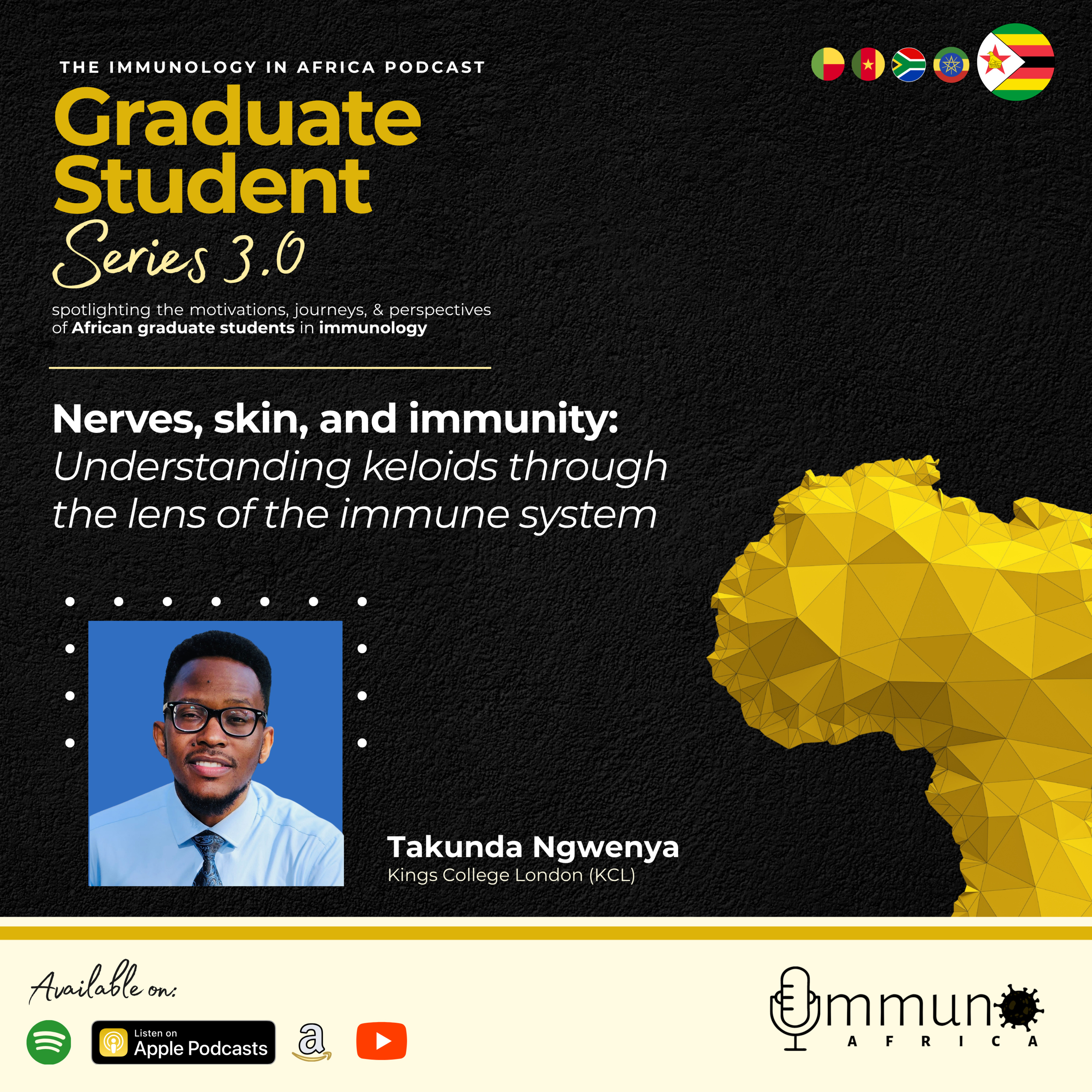 Nerves, Skin, and Immunity: Understanding Keloids through the Lens of the Immune System - GSS 3.0 (1/5) - Takunda Ngwenya 09.06.2026 50минImmunoAfrica's Graduate Student Series offers emerging and aspiring immunologists the opportunity to connect with, learn from, and be inspired by some of the most talented immunology graduate students from Africa.For its third edition, this year, we feature 5 PhD students representing 5 African countries, namely Zimbabwe, South Africa, Benin, Cameroon, and Ethiopia. Our guests share their unique stories, perspectives, and contributions to the field of immunology, particularly within the African context.--Hosted by Wealth Okete, The Immunology in Africa Podcast explores narratives at the nexus of immunology & Africa. We ask professors, postdocs, PhD students, and everyone in between to tell us about their journey into immunology, the questions driving their current work, and the impact they hope to make on the continent.To support our efforts towards amplifying African stories of immunology, you can buy us coffee or nominate a guest. --Takunda Lameck Ngwenya is a PhD researcher in Neuroscience and Immunology at King’s College London, United Kingdom, where he explores how the immune system and nervous system interact in chronic skin conditions like keloid scars. Originally from Zimbabwe, Takunda holds a distinction-graded MSc in Medicine (Chemical Biology) from the University of Cape Town, South Africa, where he worked on a project that aimed to develop novel recombinant immunodiagnostic & -therapeutics for Triple Negative Breast Cancer. He has a multidisciplinary background spanning immunology, molecular biology, and translational medicine. Takunda is also an advocate for research that addresses underrepresented health issues in global communities.Timestamps: 00:00 - intro, about guest01:27 - career background, early journey into immunology06:08 - navigating the steep learning-growth curve09:42 - findings from master's research project on cancer immunotherapy17:23 - updates on PhD research (pain, itch, and immune responses in keloids)23:28 - are there models or cell lines for studying keloids?28:15 - potential future applications/implications of findings29:36 - can keloids be cured solely via surgical resection?31:15 - keloids vs cancers32:12 - strengthening immunological research and development in Africa (funding, collaboration, opportunities, and the role of AI)45:08 - fun tasks (2 truths and 1 lie; a difficult term in the field)49:56 - outro
 -
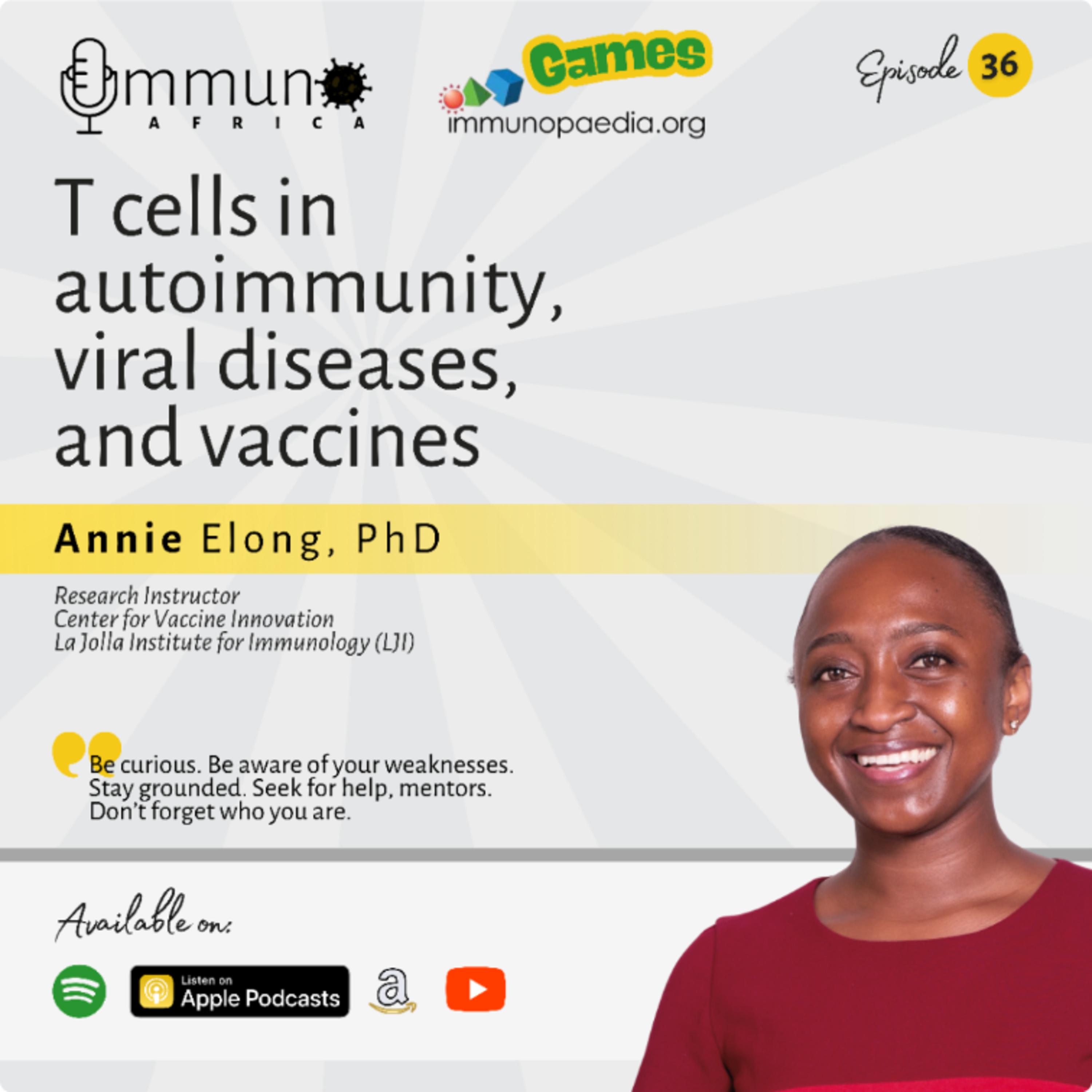 T Cells in Autoimmunity, Viral Diseases, and Vaccines - Annie Elong 18.03.2026 52минHosted by Wealth Okete, The Immunology in Africa Podcast explores narratives at the nexus of immunology & Africa. We ask professors, postdocs, PhD students, and everyone in between to tell us about their journey into immunology, the questions driving their current work, and the impact they hope to make on the continent.To support our efforts towards amplifying African stories of immunology, you can buy us coffee or nominate a guest. --Annie Elong is a Research Instructor in the Center for Vaccine Innovation at the La Jolla Institute for Immunology. Elong received her Ph.D. in Immunology investigating the role of autoreactive T and B cells in patients with Multiple Sclerosis (MS), an autoimmune disease affecting the Central Nervous System (CNS). Her research focus has since broadened, to human infectious diseases and mouse models in the group of Dr. Sujan Shresta at La Jolla. She has led key projects aimed at understanding the adaptive immune response to infection with flaviviruses, particularly dengue and Zika, contributing towards the development of efficient vaccines. During the pandemic, Elong investigated the role of pre-existing immunity to human common cold coronaviruses and the interplay between antibody and T cell responses in shaping the outcome of SARS-CoV-2 infection. In this episode, Elong talks about her journey through and contributions to the field, which has crisscrossed T cells, antibodies, autoimmunity and vaccines. In addition, she discusses the critical roles pan vaccines could play in the fight against viral diseases and shares part of her ongoing plans to elucidate how T cells mediate neuropathologies associated with viral infections.--To participate in our Quizzes, visit our social media platforms via the links below.- ImmunoAfrica: linktr.ee/immuno.africa- Immunopaedia: immunopaedia.org.za-- Timestamps:00:00 – podcast intro00:47 – guest intro01:50 – overview of career journey, getting into immunology and infectious diseases research04:32 – PhD research (T cells and multiple sclerosis): findings, implications11:00 – navigating the switch from autoimmunity to viral immunology and vaccines13:27 – ImmunoAfrica x Immunopaedia quiz interlude14:16 – navigating switches: why every scientist has the recipe for surviving career/research switches18:30 – postdoctoral research (Dengue and Zika viruses: T cells, antibodies, and pan-vaccines): findings, implications30:26 – more on pan-vaccines; immunology x global health crosstalk45:10 – what's next?47:51 – closing remarks: why you need a mentor52:20 – outro
 -
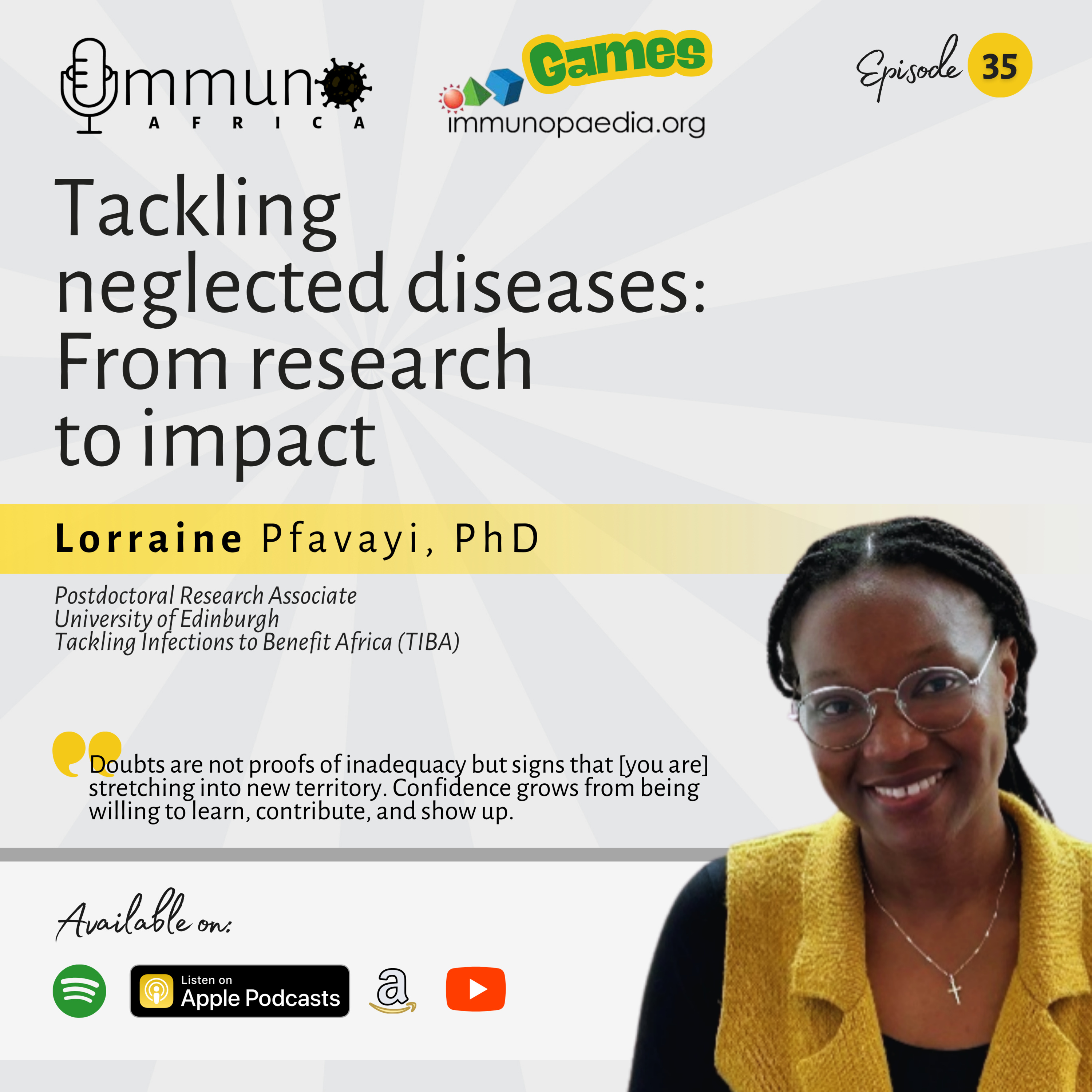 Tackling Neglected Diseases: From Research to Impact - Lorraine Pfavayi 08.02.2026 47минHosted by Wealth Okete, The Immunology in Africa Podcast explores narratives at the nexus of immunology & Africa. We ask professors, postdocs, PhD students, and everyone in between to tell us about their journey into immunology, the questions driving their current work, and the impact they hope to make on the continent.To support our efforts towards amplifying African stories of immunology, you can buy us coffee or nominate a guest. --Dr. Lorraine Pfavayi is a Postdoctoral Research Associate at the University of Edinburgh and a TIBA Postdoctoral Fellow. She holds a DPhil in Clinical Medicine from the University of Oxford, where she investigated fungal allergic diseases in regions co-endemic with parasitic infections. Her current research focuses on developing point-of-care diagnostic tools for schistosomiasis, a neglected tropical disease commonly linked with fresh water snails. She is also involved in the Affected Voices programme, which promotes the inclusion of people with lived experience of neglected tropical diseases (NTDs) in health policy and service delivery. Her work is driven by a commitment to integrating basic science with global health policy to deliver equitable, context-relevant solutions for vulnerable communities.In this episode, Pfavayi discusses the need for context-relevant approaches to addressing the burden of neglected tropical diseases (NTDs) in Africa and highlights how her ongoing work centers local contexts, community persepctives, and African-led approaches in the development of solutions for NTDs.--To participate in our Quizzes, visit our social media platforms via the links below.- ImmunoAfrica: linktr.ee/immuno.africa- Immunopaedia: immunopaedia.org.za-- Timestamps:00:00 – podcast intro01:05 – guest intro01:50 – overview of career journey, getting into NTDs research03:40 – what are NTDs? why NTDs?06:52 – key contributions towards NTDs research; factoring in under-5 for schistosomiasis management14:16 – ImmunoAfrica x Immunopaedia quiz interlude15:07 – involving local communities in the entire project pipeline of research studies16:17 – PhD research: fungal allergies in NTDs-endemic communities26:21 – post-doctoral research project: towards tailoring NTDs innovations and interventions for infants and young children; local communities36:30 – highlights of findings43:40 – the role of mentors in her career development 44:45 – final remarks: dealing with imposter syndrome46:32 – outro
 -
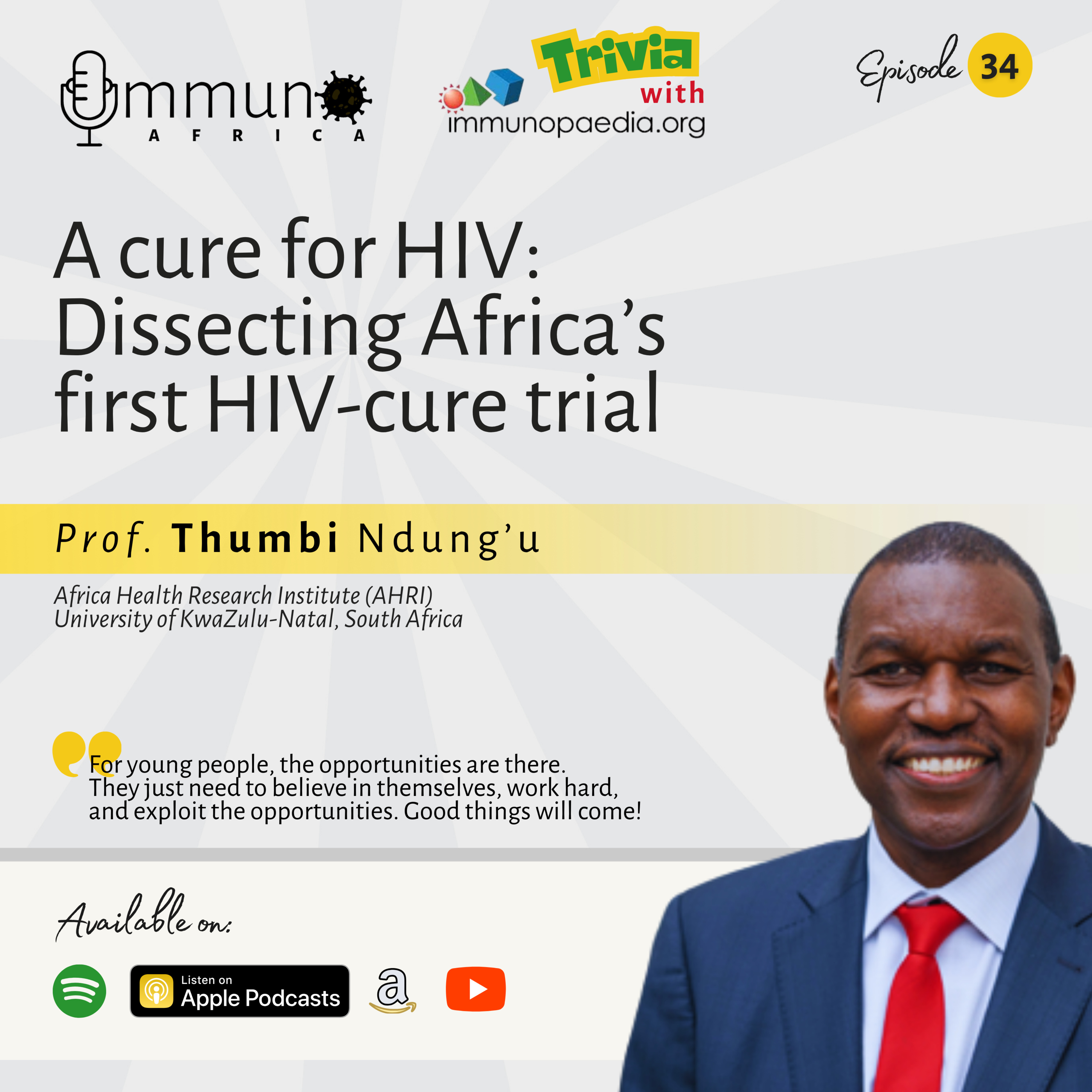 A Cure for HIV: Dissecting Africa's First HIV-cure Trial - Prof. Thumbi Ndung'u 15.09.2025 58минHosted by Wealth Okete, The Immunology in Africa Podcast explores narratives at the nexus of immunology & Africa. We ask professors, postdocs, PhD students, and everyone in between to tell us about their journey into immunology, the questions driving their current work, and the impact they hope to make on the continent.To support our efforts towards amplifying African stories of immunology, you can buy us coffee or nominate a guest. --Thumbi Ndung’u is a faculty member at the Africa Health Research Institute (AHRI) in Durban, South Africa; Professor and Victor Daitz Chair in HIV/TB Research at the HIV Pathogenesis Programme, University of KwaZulu-Natal; Programme Director for the Sub-Saharan African Network for TB/HIV Research Excellence (SANTHE); Professor of Infectious Diseases at University College London, UK; Associate Member of the Ragon Institute; Adjunct Professor of Immunology and Infectious Diseases at Harvard T.H. Chan School of Public Health; and Provost's Visiting Professor of HIV Virology and Immunology at Imperial College London, UK. He is the recipient of several awards for scientific excellence and leadership contributions, including the South African Medical Research Council Gold Scientific Achievement Award, the Leadership Award in Public Health Practice from the Harvard T. H. Chan School of Public Health, and the KT Jeang Retrovirology Prize in recognition of outstanding work on HIV. He has also received grant funding from the Bill and Melinda Gates Foundation, the Wellcome Trust, the Science for Africa Foundation, the Howard Hughes Medical Institute, the South African National Research Foundation, the National Institutes of Health, and others. His research focuses on understanding interactions between HIV and the immune system and how these may be harnessed and translated for HIV prevention or cure. --In this episode, he talks about his journey with HIV and immunology that has spanned at least three decades and birthed several groundbreaking contributions, the most recent being Africa’s first HIV cure trial for women living with the virus.--To participate in our Trivia questions, visit our social media platforms via the links below.- ImmunoAfrica: linktr.ee/immuno.africa- Immunopaedia: immunopaedia.org.za-- Timestamps:00:00 – podcast intro01:05 – guest intro02:00 – starting out, maximising opportunities: from a coffee farm to veterinary school05:19 – getting into immunology research07:16 – ImmunoAfrica x Immunopaedia quiz interlude I 08:40 – making a mark in immunology, from Nairobi to Harvard | isolating subtype C strain of HIV12:15 – misconceptions and big questions in HIV research17:30 – research and contributions leading up to the HIV Cure Project21:04 – convincing people living with HIV to stay off medications (antiretroviral therapy, ART) for trial23:51 – integrating socioeconomic empowerment into biomedical research | The FRESH project25:45 – designing, conducting the HIV Cure trial | more on The FRESH project31:50 – major findings from, next steps for the HIV Cure trial39:40 – why only women were recruited for the cure trial41:33 – adverse outcomes in participants43:40 – ImmunoAfrica x Immunopaedia quiz interlude II45:00 – coming up with new ideas46:52 – visibility for scientists and its role in strengthening local R&D53:32 – experience with mentorship: paying it forward 56:55 – final remarks 57:42 - outro
 -
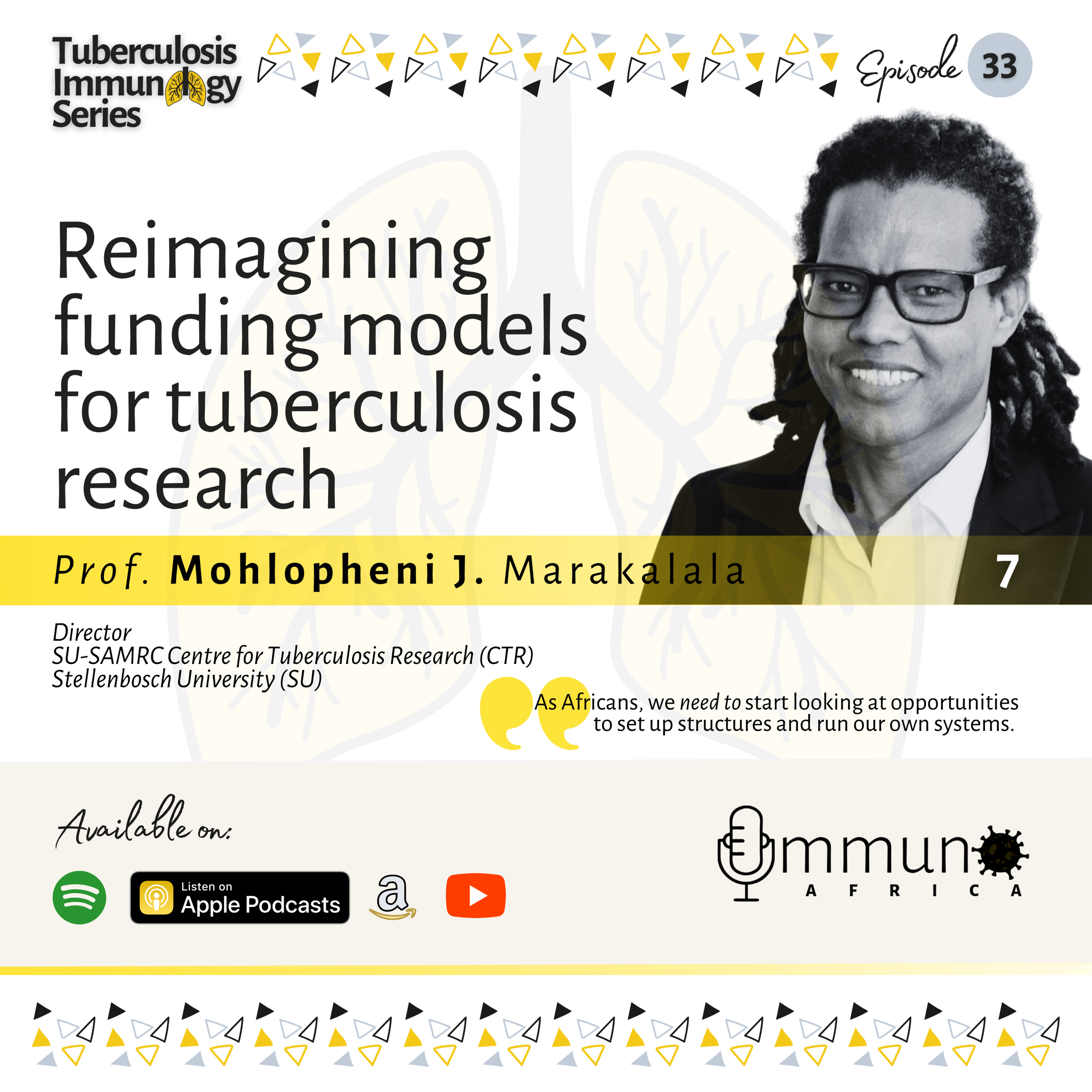 TB Immunology Series: Reimagining Funding Models for Tuberculosis Research - Prof. Mohlopheni J. Marakalala 11.08.2025 43минHosted by Wealth Okete, The Immunology in Africa Podcast explores narratives at the nexus of immunology & Africa. We ask professors, postdocs, PhD students, and everyone in between to tell us about their journey into immunology, the questions driving their current work, and the impact they hope to make on the continent.To support our efforts towards amplifying African stories of immunology, you can buy us coffee or nominate a guest. --Launching in April 2025, our special TB Immunology series and first-ever disease-focused series dives deep into the science, challenges, and success stories behind the fight to end tuberculosis.We’re joined by leading scientists whose work in TB prevention, diagnosis, treatment, and vaccine development is shaping the current landscape of the disease in Africa and globally.Whether you're actively involved in TB research or simply curious about the field, this experience promises to be both eye-opening and engaging.The seventh and final episode in the series features Professor Mohlopheni Jackson Marakalala who is currently the Director of the South African Medical Research Council (SAMRC) Centre for Tuberculosis Research at Stellenbosch University (SU), South Africa.Marakalala completed his PhD in Chemical Pathology at the University of Cape Town (2008), receiving the Bronte Stewart Research Prize for the most meritorious PhD thesis. He then completed a total of 8 year postdoctoral training; 4 years in the Institute of Infectious Disease and Molecular Medicine (IDM) at UCT and 4 years in Immunology and Infectious Diseases at Harvard TH Chan School of Public Health. Between 2016 and 2019, he was a Senior Lecturer at UCT and a Visiting Scientist at Harvard. From 2019 until his recent appointment as the Unit Director of the SAMRC Centre for TB Research, he has been a Wellcome Trust International Fellow and Faculty member at Africa Health Research Institute (AHRI) and an Associate Professor at University College London (UCL). His laboratory’s primary interest is on infectious diseases, particularly immunopathogenesis of Tuberculosis, with an aim of developing host-directed therapies targeting mediators of lung damage. His other interests are in understanding strategies utilized by mycobacteria to survive various arms of the immune system. Work in his lab has been funded by grants from SA Medical Research Council, Wellcome Trust and Bill and Melinda Gates Foundation. Personal achievements include recognition as a ‘Rising Star’ at the 2019 Grand Challenges meeting, NRF Emerging Researcher Excellence Award (2018), SA Medical Research Council Scientific Merit award (Silver medal) (2016); UCT 2016 College of Fellows Young Researcher Award; and the Next Einstein Forum (2016) Fellowship. In this episode, he talks about how we may rethink funding for TB research in light of recent cuts which have dealt the field a heavy blow. In addition, he shares some of the plans and perspectives he brings to his recent role as Director of the SAMRC Centre for Tuberculosis Research.Timestamps:00:00 - intro01:35 - journey to current role and work in TB03:42 - qualities and factors that have shaped his career06:21 - contributions to TB research; training younger scientists12:14 - funding cuts and impact on his ongoing work15:29 - does external funding limit what aspects of TB research can be studied in Africa?20:49 - what alternative funding models do we start exploring to support local TB research?26:32 - the role of scientists and scientific councils29:40 - will Africa have the market to foster bio-entrepreneurship?33:44 - plans and perspectives for current role - Director of the SAMRC-SU Centre for Tuberculosis Research40:05 - closing remarks; future of TB in Africa42:40 - Outro
 -
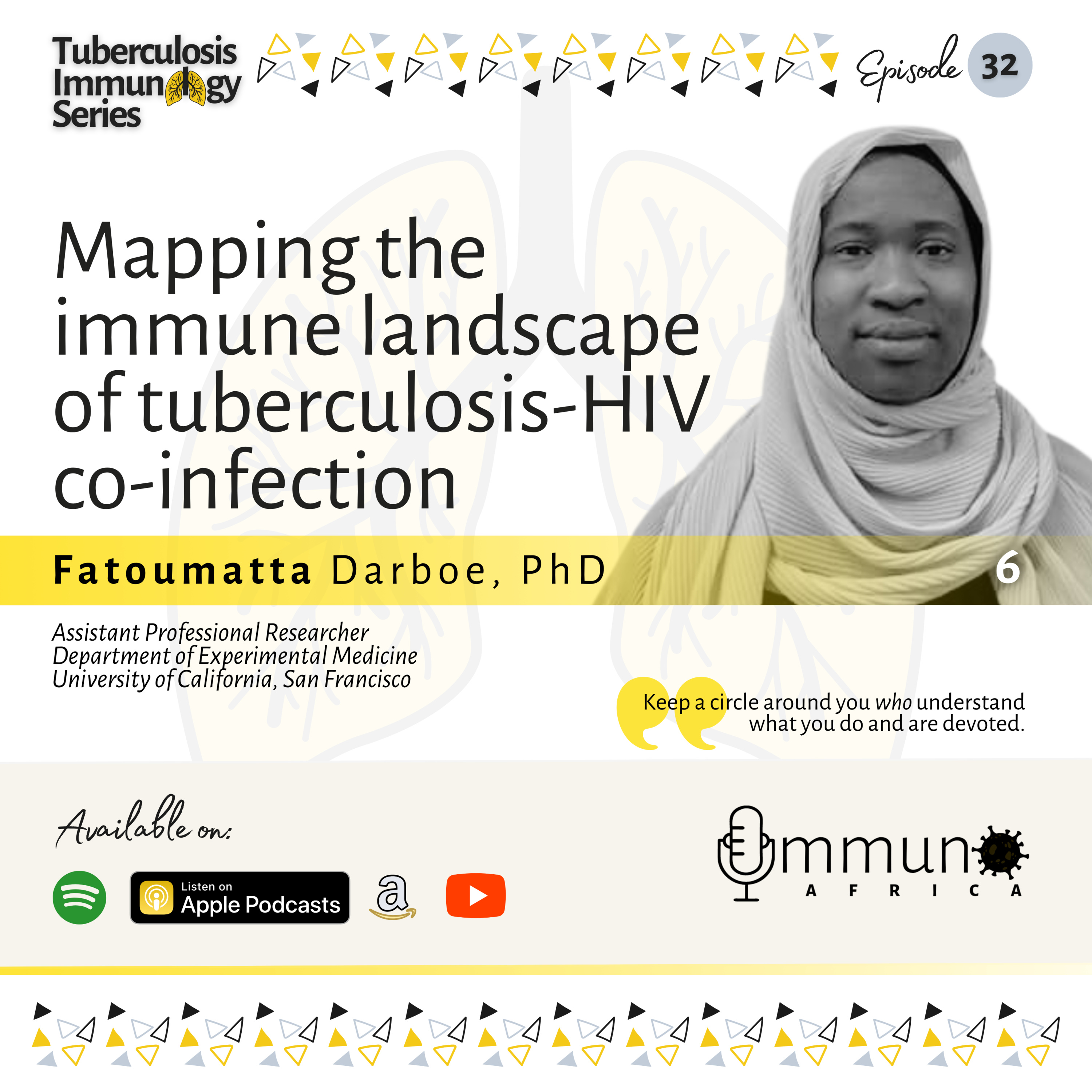 TB Immunology Series: Mapping the Immune Landscape of Tuberculosis-HIV Co-infection - Fatoumatta Darboe 04.08.2025 39минHosted by Wealth Okete, The Immunology in Africa Podcast explores narratives at the nexus of immunology & Africa. We ask professors, postdocs, PhD students, and everyone in between to tell us about their journey into immunology, the questions driving their current work, and the impact they hope to make on the continent.To support our efforts towards amplifying African stories of immunology, you can buy us coffee or nominate a guest. --Launching in April 2025, our special TB Immunology series and first-ever disease-focused series dives deep into the science, challenges, and success stories behind the fight to end tuberculosis.We’re joined by leading scientists whose work in TB prevention, diagnosis, treatment, and vaccine development is shaping the current landscape of the disease in Africa and globally.Whether you're actively involved in TB research or simply curious about the field, this experience promises to be both eye-opening and engaging.The sixth and penultimate episode in the series features Fatoumatta Darboe. Originally from The Gambia, Fatoumatta currently works as an Assistant Professional Researcher at the University of California, San Francisco in the United States. Darboe ventured into TB research during her master's programme at the Medical Research Council Unit The Gambia (MRCG) at London School of Hygiene and Tropical Medicine (LSHTM), where she also completed a postdoctoral training.For her PhD at the South African Tuberculosis Vaccine Initiative (SATVI), she sought to define TB correlates of disease risk in several South African cohorts of individuals co-infected with Mycobacterium tuberculosis (Mtb) and Human Immunodeficiency Virus (HIV). This work resulted in the validation and publication of an 11-gene biomarker (Darboe11), which predicted and diagnosed TB disease, and predicted treatment responses in several TB/HIV co-infected cohorts. In this episode, she takes us on her long-standing relationship with TB, including how her interest in TB-HIV coinfection developed. She shares updates on ongoing projects exploring a fascinating pathway implicated in TB and HIV and immunogenic antibodies for TB.Additionally, she talks about what fuels her advocacy for female education and representation in leadership, and why it's important to audit one's "circle" according to their goals.Timestamps:00:00 - intro01:17 - early journey, getting into TB research06:46 - navigating growth with minimal supervision10:20 - journey to SATVI; PhD research highlights14:07 - current projects14:48 - TB-HIV co-infection; TB risk in PLWH 17:45 - understanding the kynurenine-tryptophan (KT) pathway in HIV/TB19:00 - is the KT pathway relevant in TB aside from HIV?21:13 - potential application of findings23:40 - using bacteriophage to unravel TB antibody responses28:33 - which TB strains are targeted in antibody response study?29:56 - challenges, barriers, and sacrifices38:00 - closing remarks38:58 - Outro
 -
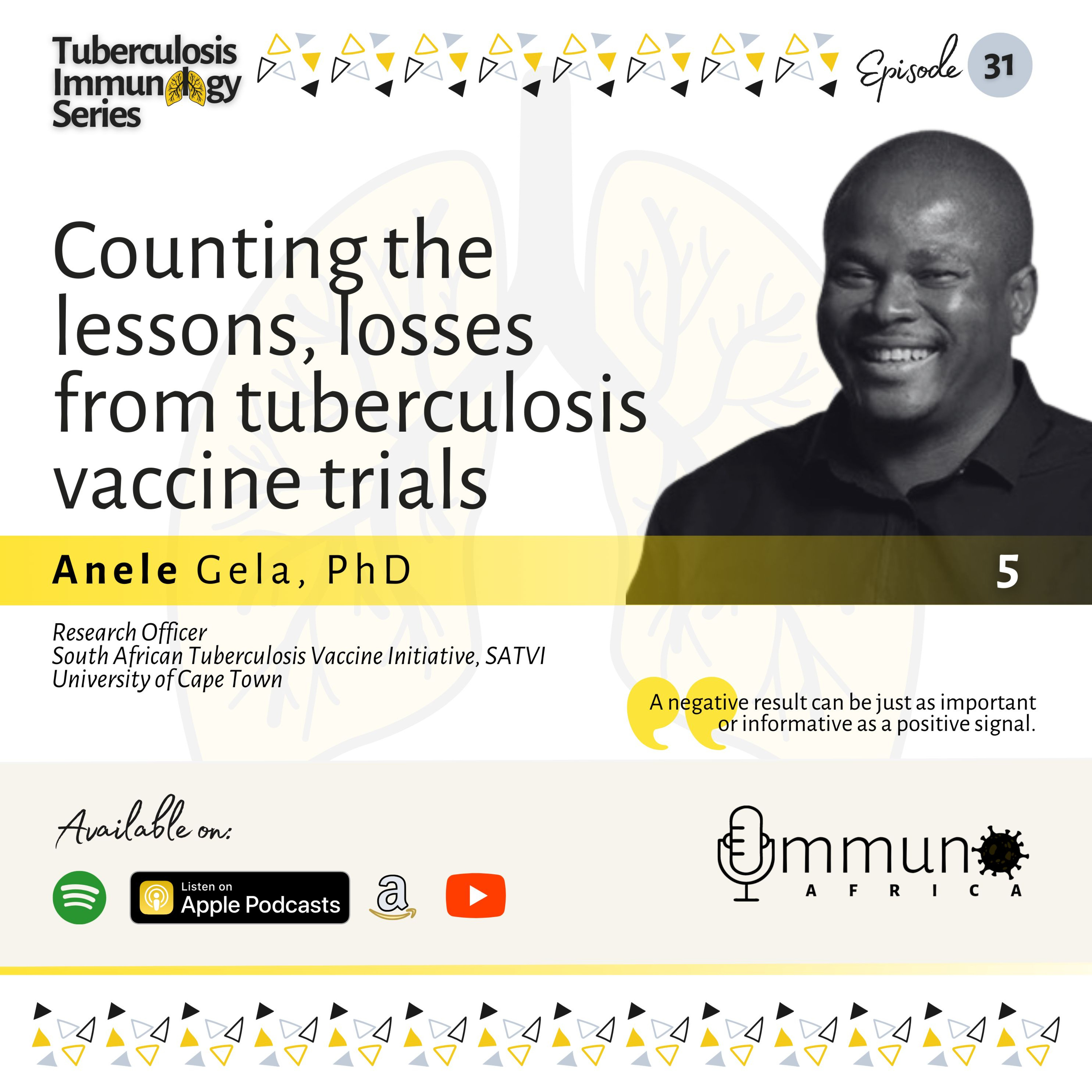 TB Immunology Series: Counting the Lessons, Losses from Tuberculosis Vaccine Trials - Anele Gela 09.07.2025 42минHosted by Wealth Okete, The Immunology in Africa Podcast explores narratives at the nexus of immunology & Africa. We ask professors, postdocs, PhD students, and everyone in between to tell us about their journey into immunology, the questions driving their current work, and the impact they hope to make on the continent.To support our efforts towards amplifying African stories of immunology, you can buy us coffee or nominate a guest. --Launching in April 2025, our special TB Immunology series and first-ever disease-focused series dives deep into the science, challenges, and success stories behind the fight to end tuberculosis.We’re joined by leading scientists whose work in TB prevention, diagnosis, treatment, and vaccine development is shaping the current landscape of the disease in Africa and globally.Whether you're actively involved in TB research or simply curious about the field, this experience promises to be both eye-opening and engaging.The fifth episode in the series features Anele Gela, a Research Officer at the South African Tuberculosis Vaccine Initiative, University of Cape Town, where he studies host determinants of protective immunity against Mycobacterium tuberculosis (Mtb). Anele first ventured into TB research during his postdoctoral fellowship at SATVI. He completed his PhD degree in Lund University, Sweden, studying asthma, and previously worked with coronaviruses. During his post-doctoral training, he was actively involved in several projects aimed at addressing the role of donor-unrestricted T (DURT) cells in TB immunity and vaccination. In his current role as a research officer, he provides scientific and operational oversight of immunological and laboratory aspects of TB vaccine projects. One such project is the H56:IC31 TB vaccine trial, which was conducted at multiple sites in South Africa and Tanzania. In this episode, we talk about his journey into studying vaccine immune responses for TB, why vaccines matter, and the need for stronger public engagement in the field. Timestamps:00:00 - intro01:40 - why vaccines are important; different vaccine types 06:11 - career journey; from coronaviruses to TB 12:20 - PhD research and key findings14:15 - key TB-related projects19:40 - how clinical trials run; projects and findings25:33 - more findings, lessons from trials28:09 - on TB revaccination and BCG effectiveness31:33 - challenges with getting a TB vaccine 36:44 - public engagement in TB vaccine clinical trials38:26 - engaging with public and private agencies to attract investment in biomedical research and development42:15 - Outro
 -
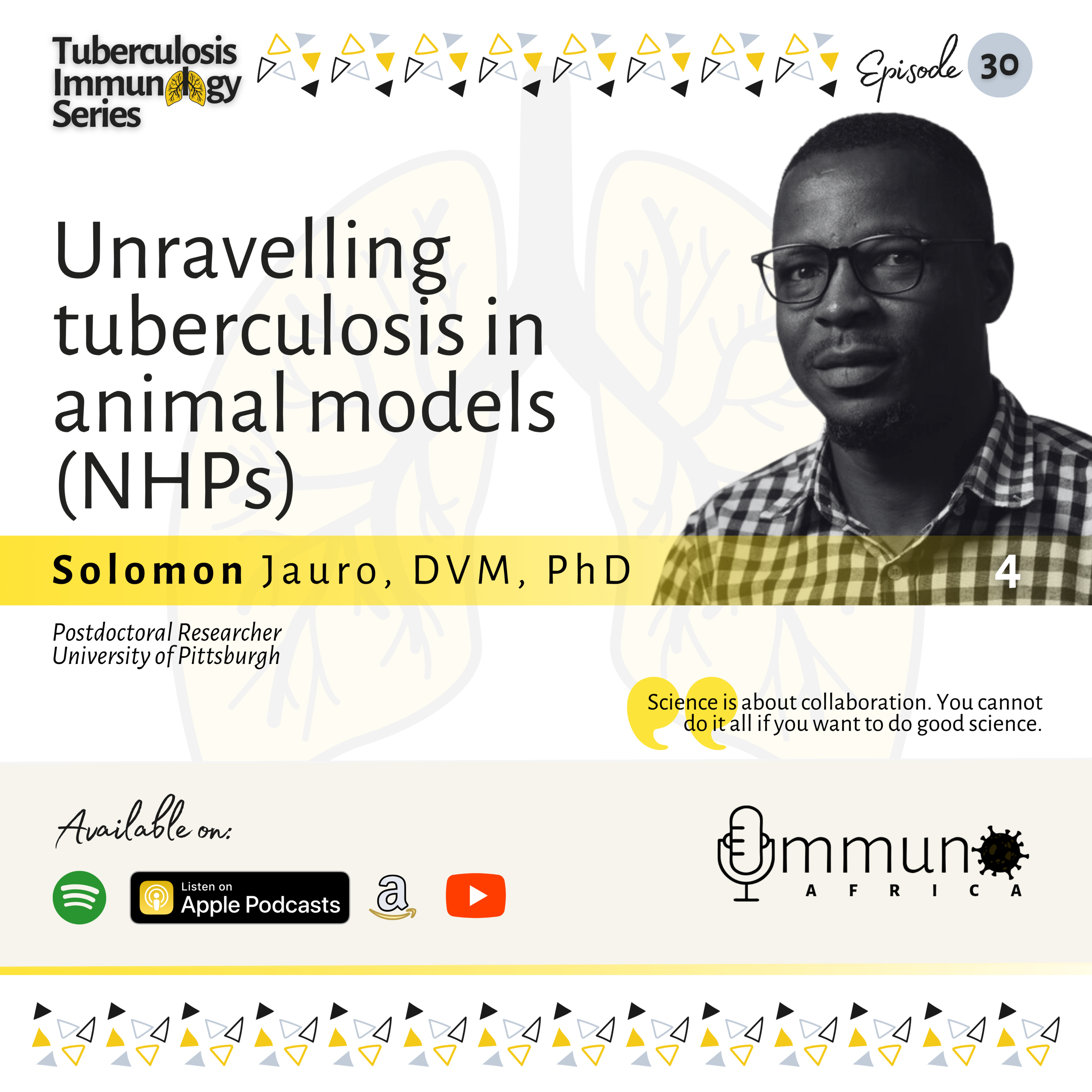 TB Immunology Series: Unravelling Tuberculosis in Animal Models (Non-Human Primates) - Solomon Jauro 18.06.2025 41минHosted by Wealth Okete, The Immunology in Africa Podcast explores narratives at the nexus of immunology & Africa. We ask professors, postdocs, PhD students, and everyone in between to tell us about their journey into immunology, the questions driving their current work, and the impact they hope to make on the continent.To support our efforts towards amplifying African stories of immunology, you can buy us coffee or nominate a guest. --Launching in April 2025, our special TB Immunology series and first-ever disease-focused series dives deep into the science, challenges, and success stories behind the fight to end tuberculosis.We’re joined by leading scientists whose work in TB prevention, diagnosis, treatment, and vaccine development is shaping the current landscape of the disease in Africa and globally.Whether you're actively involved in TB research or simply curious about the field, this experience promises to be both eye-opening and engaging.The fourth episode in the series features Solomon Jauro, a veterinarian and postdoctoral researcher at the University of Pittsburgh, where he studies tuberculosis in non-human primates (macaque models). Solomon trained as a veterinarian and obtained his master's degree at the University of Maiduguri, Nigeria, before proceeding to the University of Pretoria, South Africa, for his PhD.Unlike previous guests, Solomon's work on TB only took off during his postdoctoral fellowship, as his earlier work had focused on antimicrobial resistance and anthrax vaccine immune responses. In this episode, he talks about how his research on macaques co-infected with TB and simian immunodeficiency virus, SIV (a HIV-like virus) could shape current understanding of human TB-HIV coinfection, in the context BCG vaccine-induced immune responses.In addition to sharing what it'd take for his findings to be translated into humans, he also reflected on why African institutions should create structures that foster collaboration, particularly among young scientists.Timestamps:00:00 - Intro01:13 - MSc/PhD project; getting into TB02:03 - More on PhD project: anthrax vaccines05:25 - Macaques as 'ideal' models for understanding human TB08:51 - TB-SIV co-infection in macaques10:32 - Evaluating TB/HIV immune responses from intravenous vs intradermal BCG administration I16:33 - BCG'osis in humans18:09 - Evaluating TB/HIV immune responses from intravenous vs intradermal BCG administration II21:48 - SIV viral load and BCG-induced TB protection29:24 - Attenuated BCG for juvenile macaques32:08 - Translating findings from macaque models to human patients32:56 - Does BCG'osis associate with vaccination routes?36:00 - If not TB, then what?38:00 - Closing remarks: how African institutions can foster collaboration among scientists41:20 - Outro
 -
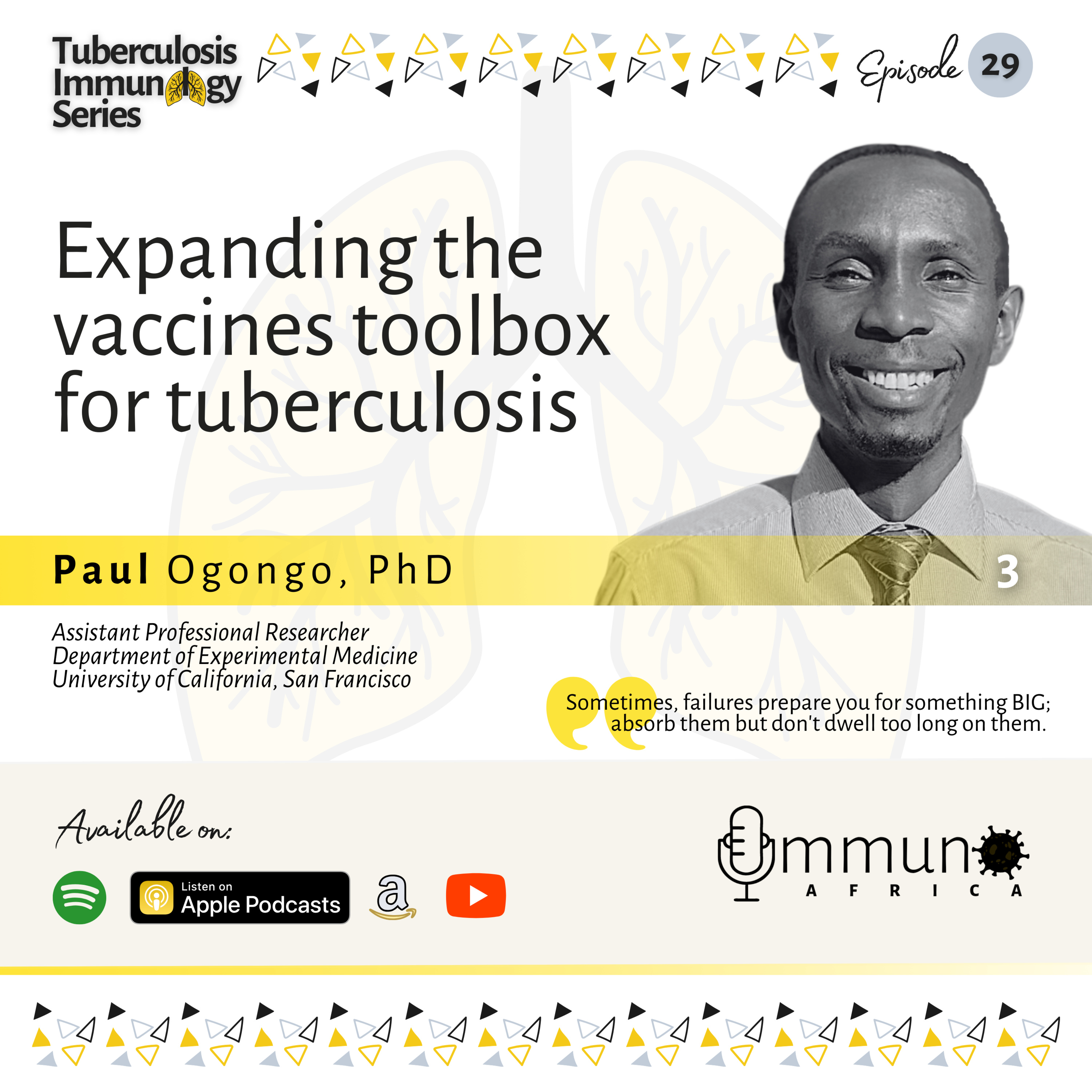 TB Immunology Series: Expanding the Vaccines Toolbox for Tuberculosis - Paul Ogongo 31.05.2025 47минHosted by Wealth Okete, The Immunology in Africa Podcast explores narratives at the nexus of immunology & Africa. We ask professors, postdocs, PhD students, and everyone in between to tell us about their journey into immunology, the questions driving their current work, and the impact they hope to make on the continent.To support our efforts towards amplifying African stories of immunology, you can buy us coffee or nominate a guest. --Launching in April 2025, our special TB Immunology series and first-ever disease-focused series dives deep into the science, challenges, and success stories behind the fight to end tuberculosis.We’re joined by leading scientists whose work in TB prevention, diagnosis, treatment, and vaccine development is shaping the current landscape of the disease in Africa and globally.Whether you're actively involved in TB research or simply curious about the field, this experience promises to be both eye-opening and engaging.The third episode in the series features Paul Ogongo, an assistant professional researcher and former postdoctoral fellow at the University of California, San Francisco. Originally from Kenya, Paul trained in his home country and South Africa before moving to UCSF for a postdoctoral position. His work has mostly explored T cell responses to TB, highlighting the roles of an important immune cell regulator, IL-17, in the control or progression of the disease. At UCSF, Paul's investigation of T cell-associated immune responses to TB seeks to unravel distinct antigens that could improve future vaccine design against TB. Till date, BCG remains the only approved vaccine against TB; although several other potential candidates are in clinical trials.In this episode, Paul shares key highlights from his work on TB antigens and the promise they hold for design of vaccines that could prevent TB disease progression. He also reflects on some of his experiences with failure and the key advances he anticipates in TB immunology over the next decade. Timestamps:00:00 - Intro01:39 - Unravelling the TB spectrum (active TB vs. subclinical TB; TB exposure vs. TB control)08:02 - On why 'latent TB' isn't truly 'latent'09:15 - Investigating active TB (PhD research project and findings)16:09 - Studying TB at the lungs vs in blood20:09 - Evaluating T cell responses to rare variable antigens (findings and implications)32:04 - TB in diabetic individuals36:22 - Dealing with failure 41:49 - Closing remarks: TB immunology over the coming decade46:43 - Outro
 -
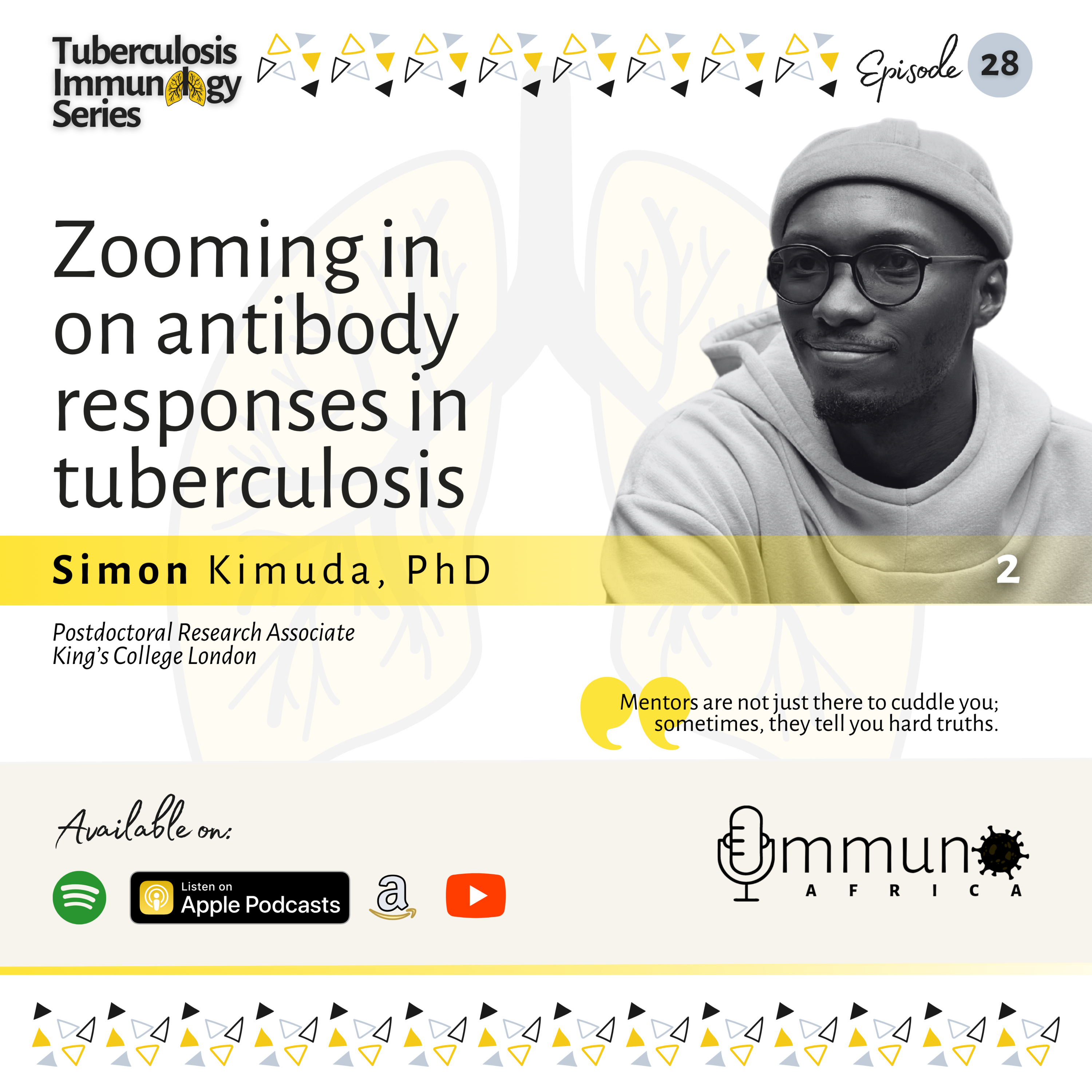 TB Immunology Series: Zooming in on Antibody Responses in Tuberculosis - Simon Kimuda 14.05.2025 46минHosted by Wealth Okete, The Immunology in Africa Podcast explores narratives at the nexus of immunology & Africa. We ask professors, postdocs, PhD students, and everyone in between to tell us about their journey into immunology, the questions driving their current work, and the impact they hope to make on the continent.To support our efforts towards amplifying African stories of immunology, you can buy us coffee or nominate a guest. --Launching in April 2025, our special TB Immunology series and first-ever disease-focused series dives deep into the science, challenges, and success stories behind the fight to end tuberculosis.We’re joined by leading scientists whose work in TB prevention, diagnosis, treatment, and vaccine development is shaping the current landscape of the disease in Africa and globally.Whether you're actively involved in TB research or simply curious about the field, this experience promises to be both eye-opening and engaging.The second episode in the series features Simon Kimuda, a postdoctoral researcher in the Doores Lab at Kings College London. His work has largely focused on understanding antibody responses to tuberculosis, an area of research which remains underexplored in the field.Simon leverages techniques in immunology and molecular biology to understand immune correlates of protection and inform the design of novel vaccines against respiratory conditions such as tuberculosis and hantavirus infections. Outside of research, he actively contributes to mentorship and career development initiatives, enabling access to career growth opportunities for young scientists.This episode explores Simon's journey in TB immunology, particularly antibodies, which has spanned more than a decade and earned him a Crick African Network Fellowship. Simon also talks about why we should pay more attention to TB stigma and embrace new paradigms to understanding TB.Timestamps:00:00 - Intro01:29 - Earliest steps in science and immunology 04:15 - Working with TB09:30 - Heterologous (non-TB) antibody responses in people with active TB15:02 - More on TB antibody responses | affinity and avidity17:10 - Antibody responses in TB vaccines: BCG and future vaccines 23:45 - Crick African Network Fellowship | TB growth inhibition; antibody responses to TB surface sugars31:11 - Linking current postdoctoral research on hantaviruses and interest in TB36:50 - What's next, if funding was not a limitation39:55 - What current TB paradigms need to change in Africa44:45 - Closing remarks | The importance of mentorship46:27 - Outro
 -
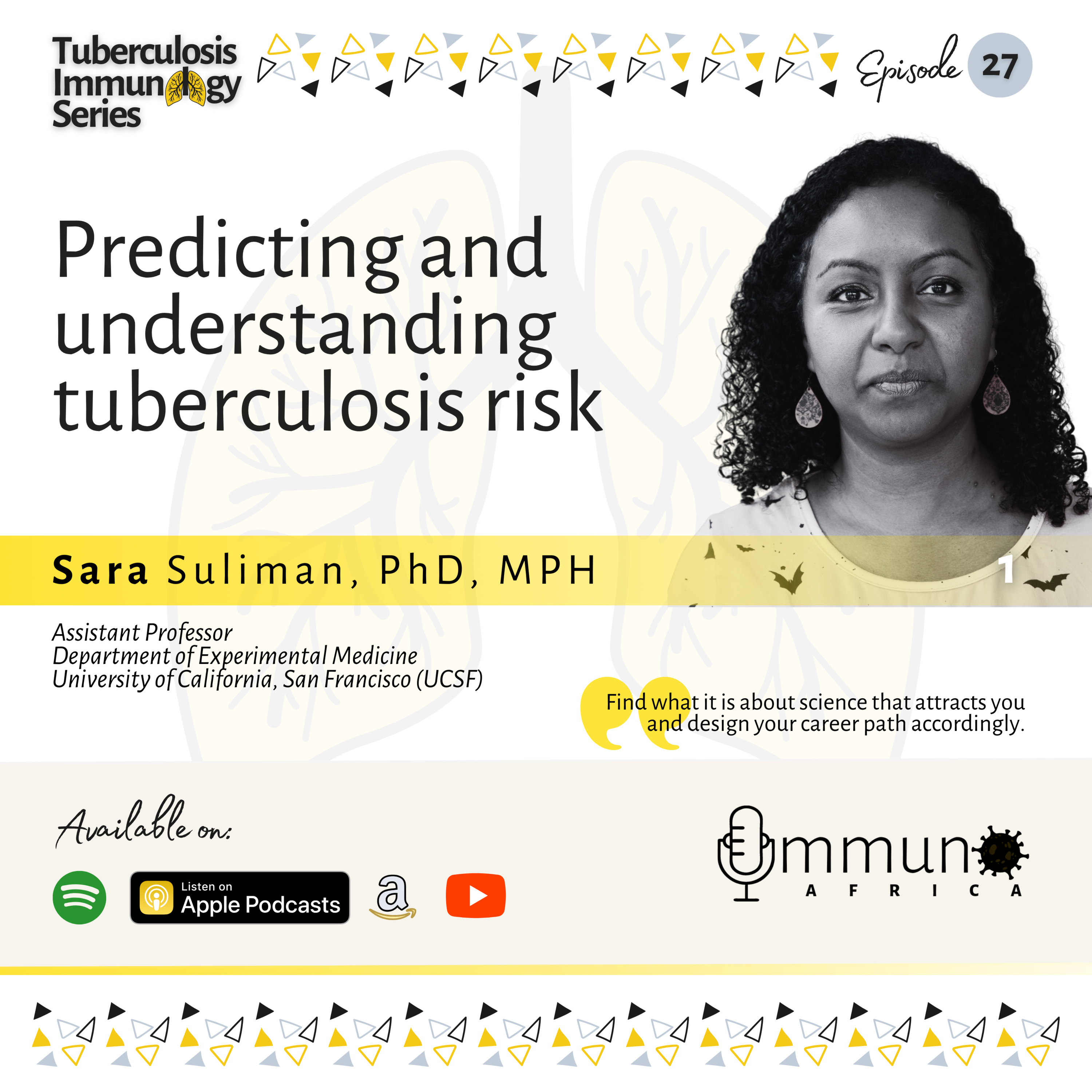 TB Immunology Series: Predicting and Understanding Tuberculosis Risk - Sara Suliman 30.04.2025 53минHosted by Wealth Okete, The Immunology in Africa Podcast explores narratives at the nexus of immunology & Africa. We ask professors, postdocs, PhD students, and everyone in between to tell us about their journey into immunology, the questions driving their current work, and the impact they hope to make on the continent.To support our efforts towards amplifying African stories of immunology, you can buy us coffee or nominate a guest. --Launching in April 2025, our special TB Immunology series and first-ever disease-focused series dives deep into the science, challenges, and success stories behind the fight to end tuberculosis.We’re joined by leading scientists whose work in TB prevention, diagnosis, treatment, and vaccine development is shaping the current landscape of the disease in Africa and globally.Whether you're actively involved in TB research or simply curious about the field, this experience promises to be both eye-opening and engaging.The first episode in the series features Sara Suliman, an assistant professor in the Division of Experimental Medicine at the University of California, San Francisco, Zuckerberg San Francisco General Hospital. Her lab focuses on identifying host mechanisms underlying TB risk and pathogenesis. An immunologist by training, Suliman is interested in understanding the immunological determinants of TB risk, progression, and treatment response and developing predictive biomarkers for the disease.This episode explores Suliman's TB work, most of which began during her post-doctoral training at the South African Tuberculosis Vaccine Initiative, University of Cape Town. In addition, Suliman talks about how she blends hypothesis-driven and exploratory research in her science and why she finds the former 'more intellectually stimulating'.Timestamps:00:00 - Intro02:26 - Earliest steps in TB immunology04:30 - Overview of initial TB immunology projects exploring vaccines and biomarkers07:48 - Transitioning from cancer to infectious disease immunology12:47 - Genetic biomarkers for TB progressors and non-progressors19:06 - More on 'the biomarker study'24:55 - TB heterogeneity29:09 - Hypothesis-driven vs. exploratory science32:38 - The impact of viral co-infections, such as COVID-19, on TB36:41 - What do TB scientists disagree on? 42:34 - Lab culture, mentorship, and collaboration46:30 - On being 'scooped'48:23 - The future of TB in Africa51:23 - Closing remarks53:05 - Outro
 -
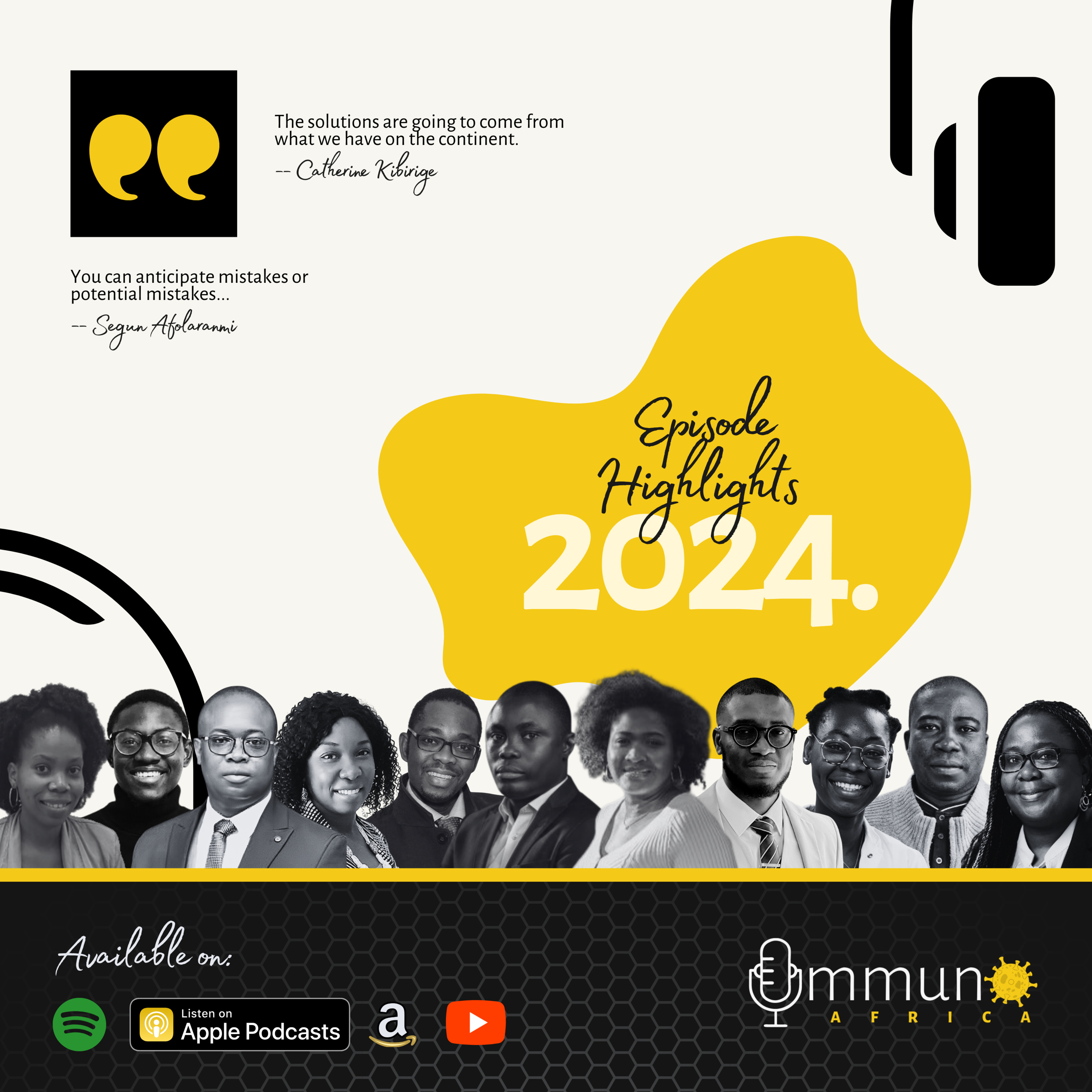 Highlights & Key Insights - 2024 19.03.2025 14минThis 'bonus' episode celebrates our growth over the past 2+ years and revisits insightful moments from past episodes published in 2024.If any of these highlights interest you, feel free to check out the full episode for a more enriching experience.---Hosted by Wealth Okete, The Immunology in Africa Podcast explores narratives at the nexus of immunology & Africa. We ask professors, postdocs, PhD students, and everyone in between to tell us about their journey into immunology, the questions driving their current work, and the impact they hope to make on the continent.To support our efforts towards amplifying African stories of immunology, you can buy us coffee or nominate a guest. ---Timestamps:00:00 - Intro01:04 - Segun Afolaranmi | "Optimising Natural Killer Cells against Cancers"01:14 - Oghenebrume Wariri | "Improving Access to Vaccines in Children"02:46 - Ousmane Traore | "Combating Malaria through Vaccines"03:14 - Samuel Essien-Baidoo | "Vaginal Microbiota and Cervical Cancer Risk in Women"04:12 - Rebecca Chukwuanukwu | "Immunity and Infection in Different Contexts"05:07 - Ane Ogbe | "T Cells Subsets in the Induction of Optimal Antibody Responses"05:42 - Catherine Kibirige | "Improving HIV Diagnosis through the HIVQuant Project"06:19 - Deo-Gracias P. Seyigbena Berry | "Could Vitamin D Protect Foetuses from a Deadly Parasite?"06:51 - Vania Maphossa | "Bridging the Gap: Immune Responses in the African Context"07:38 - Gatien Lokossou | "Immunity in Pregnant Women and Infants"08:12 - Samuel Essien-Baidoo | "Vaginal Microbiota and Cervical Cancer Risk in Women"10:10 - Ane Ogbe | "T Cells Subsets in the Induction of Optimal Antibody Responses"11:34 - Catherine Kibirige | "Improving HIV Diagnosis through the HIVQuant Project"12:08 - Segun Afolaranmi | "Optimising Natural Killer Cells against Cancers"13:15 - Onyeka Chukwudozie | "Outsmarting the Lassa Virus through a Multi-target Vaccine"13:53 - Ane Ogbe | "T Cells Subsets in the Induction of Optimal Antibody Responses"14:18 - Outro
 -
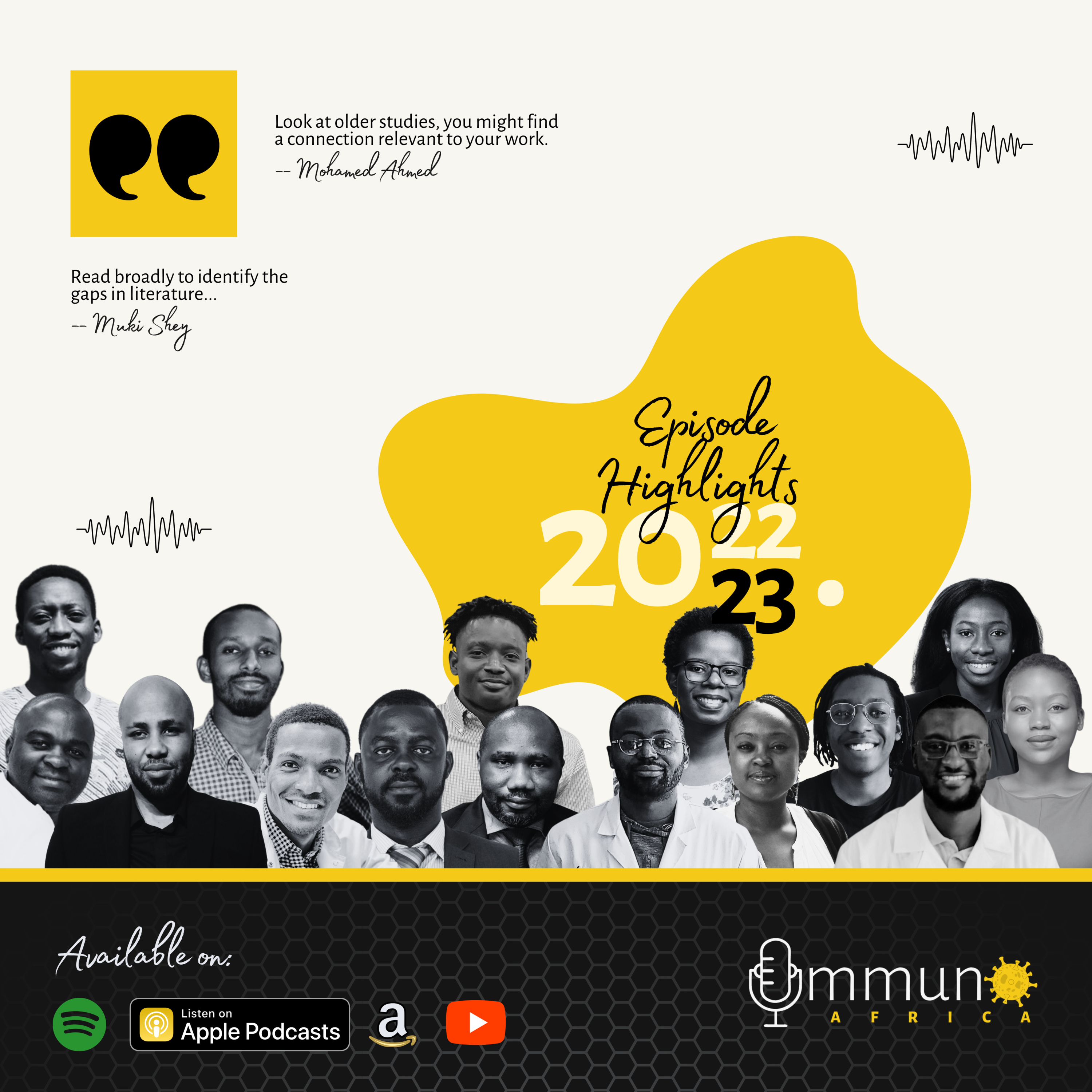 Highlights & Key Insights - 2022, 2023 05.03.2025 16минThis 'bonus' episode celebrates our growth over the past 2+ years and revisits insightful moments from past episodes published between 2022 and 2023.If any of these highlights interest you, feel free to check out the full episode for a more enriching experience.---Hosted by Wealth Okete, The Immunology in Africa Podcast explores narratives at the nexus of immunology & Africa. We ask professors, postdocs, PhD students, and everyone in between to tell us about their journey into immunology, the questions driving their current work, and the impact they hope to make on the continent.To support our efforts towards amplifying African stories of immunology, you can buy us coffee or nominate a guest. ---Timestamps:00:00 - Intro01:15 - Testimony Olumade | "Immunology in Africa: Telling Our Stories"01:36 - Marah Grace Chibwana | "Improving Health Outcomes in Inflammatory Diseases: From COVID-19 to Rheumatoid Arthritis"01:57 - Abena Amoah | "Understanding Variations in Vaccine Responses: What It Means for Africa"02:50 - Sonwabile Dzanibe | "Untieing a Gordian Knot: Mother-to-Infant HIV Exposure"04:01 - Raquel Matavele Chissumba | "Surmounting Hurdles: Charting a Course through the Immune System for Africa"05:17 - Mohamed Ahmed | "Rethinking Tuberculosis: Why Enhancing Immune Responses in Tuberculosis Might be Detrimental"06:01 - Fabien Prodjinotho | "Understanding Neurocysticercosis: How Tapeworm Cysts Thwart & Trigger Epilepsy"06:34 - Dimie Ogoina | "Immunology Talks to Public Health: Africa in Focus"07:15 - Raquel Matavele Chissumba | "Surmounting Hurdles: Charting a Course through the Immune System for Africa"08:03 - Mohamed Ahmed | "Rethinking Tuberculosis: Why Enhancing Immune Responses in Tuberculosis Might be Detrimental"08:58 - Muki Shey | "Carving a Niche: From Malaria to Tuberculosis & MAIT Cells"09:44 - Sonwabile Dzanibe | "Untieing a Gordian Knot: Mother-to-Infant HIV Exposure"10:27 - Dimie Ogoina | "Immunology Talks to Public Health: Africa in Focus"10:50 - Tatenda Murangi | "Decoding the Link between Alpha-Gal Allergy and Parasitic Infections"11:50 - Doudou Georges Niang | "Targeting Galectin-3 in Aggressive Breast Cancers: Implications for African Women"12:14 - Ubong Ekperikpe | "How Obesity Triggers Kidney Diseases: The Role of the Immune System"12:53 - Abena Amoah | "Understanding Variations in Vaccine Responses: What It Means for Africa"13:23 - Chinedu Ugwu | "Unravelling Viral Diseases: How the Immune System Responds to the Lassa Fever Virus"13:47 - Kumba Seddu | "How Sex Differences and Cytokines Shape Immune Responses"14:46 - Marah Grace Chibwana | "Improving Health Outcomes in Inflammatory Diseases: From COVID-19 to Rheumatoid Arthritis"15:30 - Richard Adeleke | "Tackling Viral Diseases through Vaccines: From SARS to Influenza"15:52 - Outro
 -
 Optimising Natural Killer Cells against Cancers - GSS 2.0 (4/4) - Segun Afolaranmi 02.12.2024 49минImmunoAfrica's Graduate Student Series offers emerging and aspiring immunologists the opportunity to connect with, learn from, and be inspired by some of the most talented immunology graduate students from Africa. For its second edition, this year, we peek into the fascinating work and busy lives of 4 graduate students (Vania, Onyeka, Deo-Gracias, and Segun), representing 3 African countries: Benin, Mozambique, and Nigeria. Our fourth and last guest is Segun Afolaranmi. Segun trained as a medical doctor at the University of Ibadan, Nigeria, and went on to complete his intern year of clinical practice. He developed a keen interest in cancer research and immunology towards the end of medical school, after noticing the grossly limited treatment options available to cancer patients in Nigeria. The desire to develop effective anticancer therapies that'd fit this context led him to study for a master's in Integrated Immunology at the University of Oxford, as a Clarendon Scholar. Shortly after his master's, he joined the de la Roche lab at Cancer Research UK, Cambridge Institute, in January 2022 to pursue his PhD in Cancer Immunology, with funding from the Gates Cambridge Trust. His PhD research seeks to make immune cells better cancer fighters by modifying an important developmental pathway. Alongside his scientific interests, Segun is passionate about expanding training opportunities for young scientists in Africa and working with others to accelerate access to cancer therapeutics on the continent. He is a co-founder of The Ganglion Initiative (TGI). This episode explores his journey to becoming fascinated with cancers and immunology, highlights what makes natural killer (NK) cells special to him, and curates his perspectives on local support for scientific research and development in Africa. Female Intro/Outro Voice-over: Ruth Ogboye Timestamps:00:00 - intro, about guest02:56 - career background, early journey into immunology05:19 - varied experience and exposures shape research interests08:19 - how interest in cancer immunology developed11:15 - updates on PhD research (making immune cells better cancer fighters) 16:37 - about natural killer (NK) cells 20:48 - cancers he's interested in tackling 22:38 - on collaborations (in cancer research; in Africa) 25:54 - local support for research and development in Africa 30:44 - PhD experience (time management, core values, lab skills and mistakes, etc.)39:38 - about The Ganglion Initiative43:36 - next steps post-PhD45:31 - fun tasks (which scientists in your field of study inspire you; transform CANCER into an immunology acronym)49:00 - outro
 -
 Could Vitamin D Protect Foetuses from a Deadly Parasite? GSS 2.0 (3/4) - Seyigbena P. Deo-Gracias Berry 18.11.2024 56минImmunoAfrica's Graduate Student Series offers emerging and aspiring immunologists the opportunity to connect with, learn from, and be inspired by some of the most talented immunology graduate students from Africa. For its second edition, this year, we peek into the fascinating work and busy lives of 4 graduate students (Vania, Onyeka, Deo-Gracias, and Segun), representing 3 African countries: Benin, Mozambique, and Nigeria. Our third guest is Seyigbena P. Deo-Gracias Berry. Deo-Gracias is a PhD student at the Technical University of Munich (TUM), Germany, where she researches interactions between mothers and foetuses, in the context of immune function and tropical diseases. For her PhD project, she is trying to understand how infection with parasitic worms, particularly schistosoma found in fresh water snails, modulates vitamin D levels and immune function during pregnancy. Prior to joining TUM, she studied for master's in Cell Biology and Immunology at the University of Abomey-Calavi in Benin, exploring malaria infection, also in the context of pregnancy. In this episode, Deo-Gracias discusses her research on vitamin D and schistosomiasis, highlighting some of its implications for women and infants in regions endemic to the parasitic disease. She also talks about her love for the vitamin D-enriching African sun and reminisces about some of the mistakes that have punctuated her journey and how she's managed to navigate and learn from them. Female Intro/Outro Voice-over: Ruth Ogboye. Timestamps: 00:00 – intro 01:25 – early career journey, entry into immunology 07:10 – MSc project (how malaria infection during pregnancy shapes infant immunity) 11:15 – PhD project (vitamin D vs schistosomiasis infection in mother-foetus pairs) – findings and potential implications [14:52-17:27] – about schistosomiasis [18:52-22:32] – vitamin D and immune modulation 31:46 – missing Africa, finding balance, and time management 38:44 – useful skills 41:34 – dealing with mistakes 49:57 – core values and how they inform her work-life 53:27 – fun task (what’s your favourite immune cell and why?) 55:32 – outro
 -
 Outsmarting the Lassa Virus through a Multi-target Vaccine - GSS 2.0 (2/4) - Onyeka Chukwudozie 04.11.2024 47минImmunoAfrica's Graduate Student Series offers emerging and aspiring immunologists the opportunity to connect with, learn from, and be inspired by some of the most talented immunology graduate students from Africa. For its second edition, this year, we peek into the fascinating work and busy lives of 4 graduate students (Vania, Onyeka, Deo-Gracias, and Segun), representing 3 African countries: Benin, Mozambique, and Nigeria. Our second guest is Onyeka Chukwudozie. Onyeka Chukwudozie is a virologist, immunologist, and structural biologist from Nigeria, with a bachelor's degree in Cell Biology and Genetics from the University of Lagos. Currently a PhD candidate at the University of California, San Diego, and a member of the Erica Ollmann Saphire Lab at the La Jolla Institute for Immunology, his research targets the notorious Lassa virus which has caused multiple outbreaks in West Africa for decades. He is leading research on the largest study to discover antibodies against the virus in Nigeria. Onyeka has received both the Curci and Merkin fellowships, collaborating with institutions such as IAVI, to advance studies on the Lassa virus vaccine. In this episode, Onyeka talks about his self-initiated journey to becoming fascinated with the field of immunology. He also shares updates on his current research to tease out antibody immune responses to the Lassa virus and develop a vaccine against its different lineages in Nigeria. Learn more about his work on ResearchGate. Female Intro/Outro Voice-over: Ruth Ogboye Timestamps: 00:00 - intro, about guest 02:45 - why immunology / how did you get into immunology 05:36 - about PhD research project (scope, implications, applications, etc.) 14:00 - how multidisciplinary expertise informs research 19:28 - PhD experience (time management and unwinding, mentoring and supporting junior and aspiring scientists, etc.) 27:07 - useful skills for graduate school success 32:07 - core values and principles 37:33 - next steps post-PhD 40:25 - fun task (transform ONYEKA into an immunology acronym; how many journal articles do you read in a day?) 45:16 - closing remarks 47:20 - outro
Слични подкасти


Популарен во
Овој подкаст се појавува и на подкаст-листите на овие земји.
