
The Wird
Hasnat Ali & Tamim Sookoor
0
The Wird is a conversation series about how faith and daily practice shape lasting success. Hosts Hasnat Ali and Tamim Sookoor speak with people from many walks of life—surgeons, scholars, filmmakers, artists, teachers, and builders—about the invisible routines beneath visible achievements. Each episode follows three parts: the journey, the practice, and the future. The show explores spiritual sustenance, personal discipline, and concrete ways forward for the Muslim community.
Епизоди
-
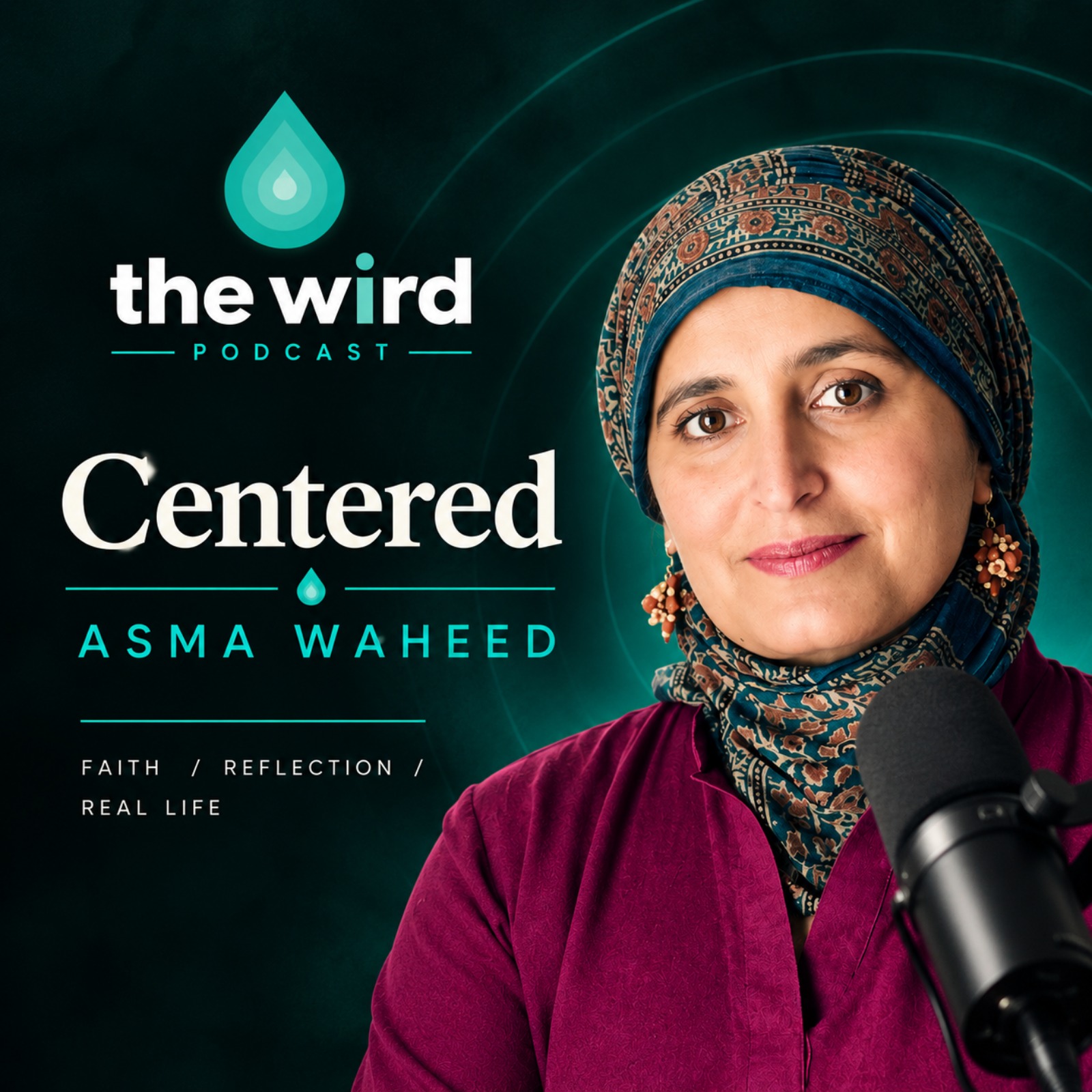 Centered - Asma Waheed 02.10.2026 1ч 6минHey! I'd love to hear your thoughts, send me a voice note.Asma Waheed tried to go to art school three times.The first time, at fourteen, her father talked her out of it. He told her that if he sent her to art school, he would lose her, so she studied home economics instead and carried on like that for years. The second time, at West Virginia University, she was one semester in when she became pregnant with her first child and had to withdraw. The third time, a master's at Hood College, she made it three weeks before learning she was pregnant with her fourth. Five years went by.This is a conversation about what she did with the waiting.Asma is a multidisciplinary artist from Ellicott City, Maryland, working in clay, metal, fiber, wood and mirrors, with an MFA from the Mount Royal School of Art at MICA. She came to the United States from a small town outside Faisalabad, too nervous at first to answer the telephone in English. She learned the language in a year, raised four children, and found her way back to the studio one class at a time.She came to clay in 2011, the year her mother died, through a workshop called Healing Through Clay. The first time she touched it, she describes a state of khushu: her brain quiet, nothing else in the room. She has worked with it ever since, and she calls it her fifth child.Much of this episode is her reading her own faith through the material. Centering a ball of clay on the wheel, which took her a year to learn, as the foundation underneath everything built on top of it. Firing as the trial that either breaks you or makes you stronger. Compression as the squeeze that strengthens. Unfired clay, which can be rehydrated and reclaimed, against fired clay, which is changed forever. And clay as a record: it remembers how it was handled, down to the fingerprints of whoever shaped it.She closes on the dua (prayer) she has made for years: Ya Allah, don't let me waste me.Follow her work on Instagram: @asmawaheedart and website: https://asmawaheed.com/CHAPTERS00:00 Intro00:42 A typical day, and a week that repeats02:12 Growing up in Jaranwala03:07 The aunts, the munji, and what got passed down06:35 Wanting art school at fourteen07:23 "If I send you to art school, I'll lose you"08:45 Home economics in Lahore, and the hostel at fifteen12:30 Marriage, and the flight to America13:29 Learning English, and being afraid of the phone14:51 Starting art at West Virginia University15:26 One semester in, and switching to education18:24 Morgantown21:02 Chopping onions24:06 Inside the 9 to 329:27 Why clay29:42 Losing her mother31:35 A class called Healing Through Clay33:16 "I am Allah's artwork"36:04 Centering on the wheel38:51 Firing, breaking, and reclaiming42:46 The clay remembers48:12 Petrichor52:20 Niyyah, and why it has to be renewed55:48 Hood College, a fourth child, and five years58:34 The pandemic, and "you asked for pebbles"1:02:22 "Don't let me waste me"1:04:27 The three nests1:05:50 Where to find her workMan laysa lahu wird, laysa lahu wārid.
 -
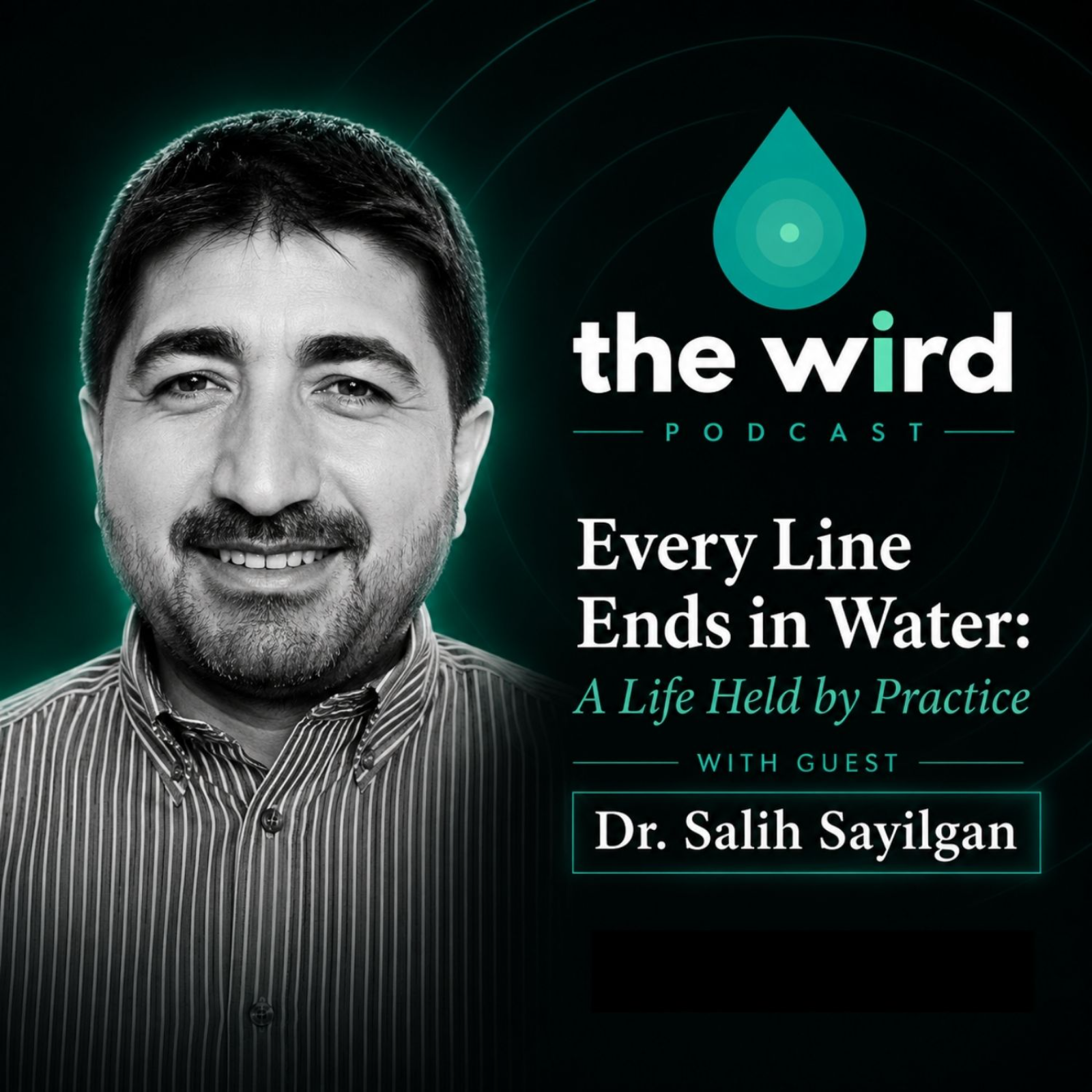 Every Line Ends in Water: A Life Held by Practice - Dr. Salih Sayilgan 01.09.2026 58минHey! I'd love to hear your thoughts, send me a voice note.Dr. Sayılgan's day starts before most people's. Fajr (morning prayer), then writing while his mind is fresh, then coffee, then ten pages of Quran, three hadiths, a few pages of the Risale-i Nur, and some lines of poetry. He calls it the thing that sets up the day.He grew up herding cows in a village in eastern Turkey, named by a Naqshbandi shaykh who came to visit when he was born. He went to boarding school in Konya, the city of Rumi. Then Istanbul, Estonia, a Christian seminary in Virginia, and eventually a Jesuit university in Washington, where he teaches a course called The Problem of God.He teaches that course because of a question he has spent a decade on: why is there suffering? In 2022 the question stopped being academic. His daughter Maryam was killed in a car accident weeks before her fourth birthday, while he was finishing a book on evil and suffering in Islam. He will tell you plainly that he has no answer. What he has is taslim, submission, and a practice that did not stop.We talk about Bediüzzaman Said Nursi, who wrote his life's work in exile and in prison, sometimes on matchboxes, and produced hope out of it. About what jihad actually means, and why Nursi called for the jihad of the pen. About why he says there is no word in any language for a parent who has lost a child. And about an Ottoman poem in which every single line ends with the word for water, and the water is the Prophet ﷺ.Man laysa lahu wird, laysa lahu wārid.CHAPTERS00:00 Introduction01:05 Ten pages, three hadiths, and a few lines of poetry03:19 Why he reads Nursi every day05:58 A village in eastern Turkey06:51 Boarding school in Konya, the city of Rumi07:44 Named by a shaykh09:47 Istanbul, Estonia, and a Christian seminary11:33 Why he chose religion13:37 Said Nursi: writing on matchboxes in prison15:59 Weakness as a starting point19:31 What jihad actually means21:35 The jihad of the pen24:14 Islam in America: visibility and reaction26:36 Why a cemetery matters31:19 Studying Christianity33:05 The Problem of God35:26 Maryam38:05 No word for a parent who lost a child40:09 Taslim: the call from the hospital42:30 A community that isn't afraid of death46:56 Following the Prophet ﷺ49:35 Imam Suyuti's treatise on losing a child51:39 "The Prophet is the one who raised me"53:43 Layla, Majnun, and seeing through another's eyes57:16 Every line ends in water
 -
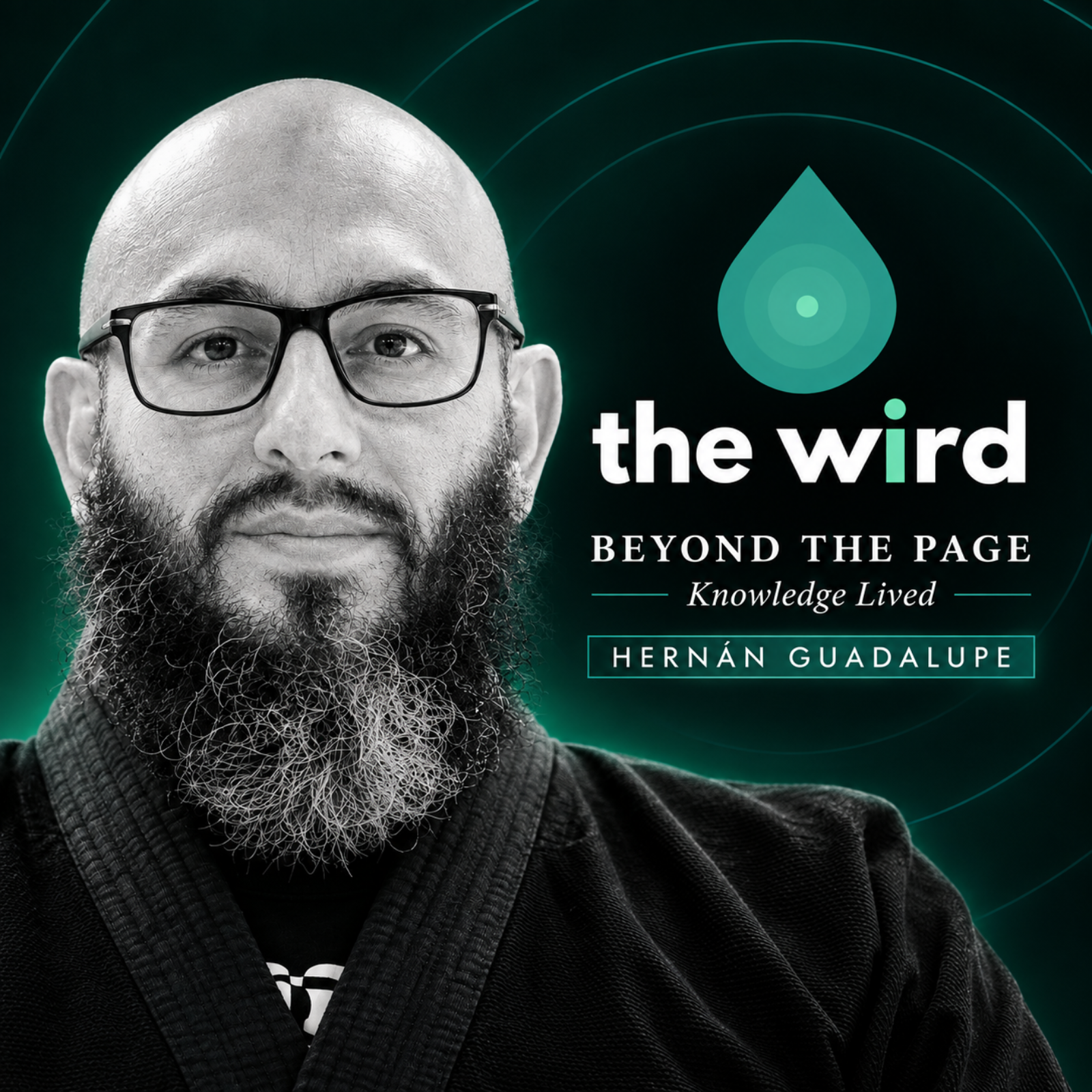 Beyond the Page: Knowledge Lived — Professor Hernán Guadalupe 17.08.2026 56минHey! I'd love to hear your thoughts, send me a voice note.Hernán Guadalupe became Muslim on the morning of September 11th, 2001, in a dorm room, minutes after the towers came down across the water. That's the part people know about him. This conversation is about the twenty-five years since.He's an engineer who'll tell you he isn't a technical person; what he actually does is find what people are capable of and get them there. He runs a Brazilian jiu-jitsu school. He co-founded Hablamos Islam, building Islamic resources in Spanish. He went to Egypt intending to study at al-Azhar and came home before he started.What makes this episode unusual is that he doesn't present a practice that worked. He describes a plateau; a stretch where he did the minimum and told himself it was enough, and only in the last two or three years has he started climbing back. Through dhikr. Through a set of prayer beads he'd avoided on principle. Through al-Ghazali, at an age when it finally landed.An imam told him something that undid him: that he'd learned a little knowledge, but he was actually living it.Chapters00:00 What the wird is 01:59 How he defines success 04:40 Ecuador, Jersey City, and his parents' definition 07:52 The zeal of a new convert 10:33 His father's question: "Why now?" 13:13 Why he waited, and what changed that morning 16:26 Altar boy: faith and logic in conflict 20:11 Losing a community 22:51 "I didn't convert for a community" 25:00 Starting Hablamos Islam 28:45 Latino Muslims since the 1930s 30:53 You don't have to change your name 33:01 An imam from Ecuador, and a turning-point Ramadan 36:46 Egypt: what he learned without the language 40:31 Dar Al-Salam, and finding jiu-jitsu 44:16 Roll Star, and a father crying on the phone 46:56 "Whatever you're meant to make, you're gonna make" 49:05 Hitting a plateau 50:41 Dhikr, and the beads he avoided 52:49 The sky looks different now 54:26 Al-Ghazali cleaning the floors
 -
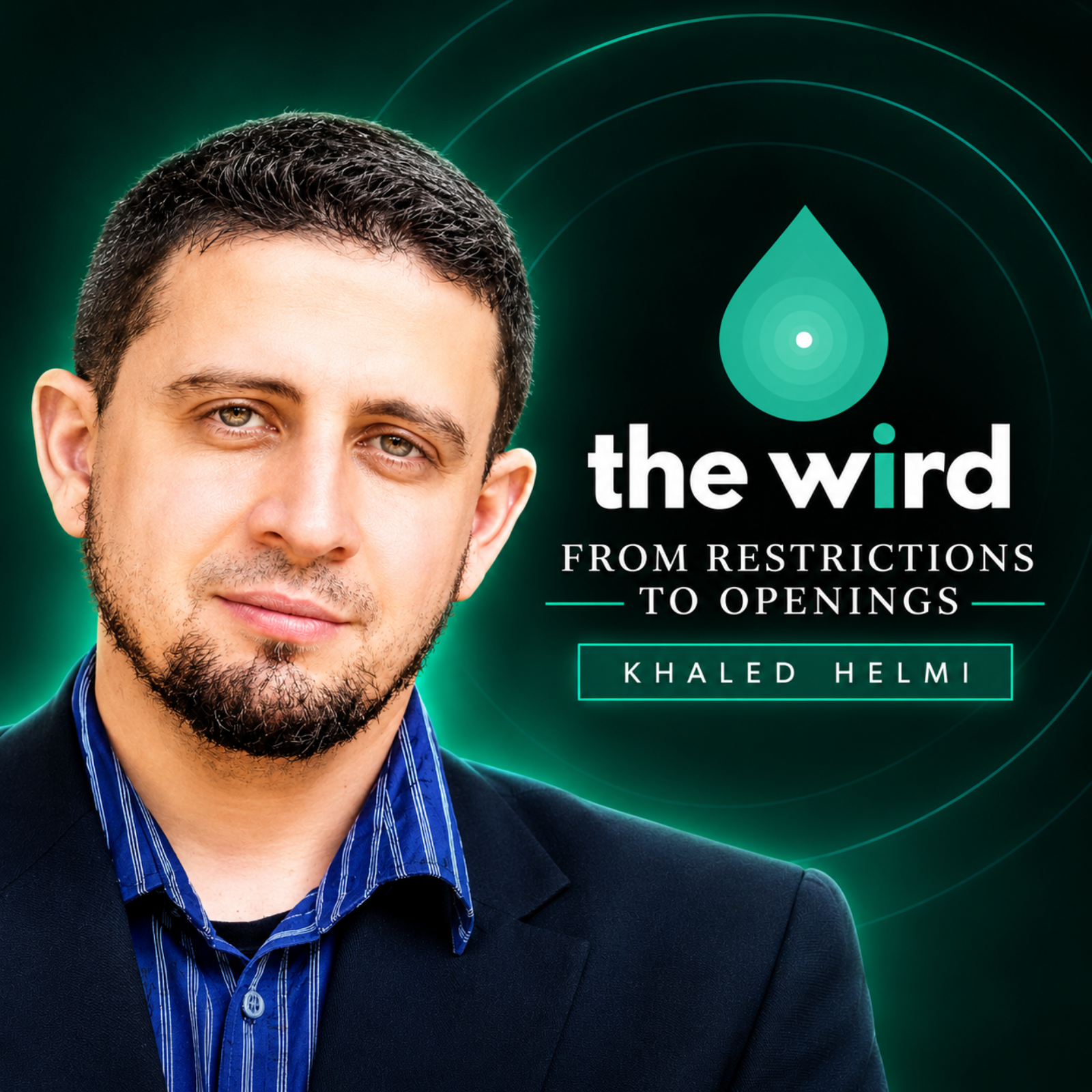 From Restrictions to Openings - Khaled Helmi 03.08.2026 46минHey! I'd love to hear your thoughts, send me a voice note.Khalid Helmi spent 23 years in Tech at the Social Security Administration. Finance was the thing he actually loved, but every path into it ran through something he wasn't comfortable with. So he kept narrowing: out of most stocks, into gold, into real estate, and eventually into a corner of the energy market almost nobody knows exists.What he found is that the narrowing was the opening. "That restriction on myself made me open up my mind to other opportunities."In 2025 he took a one-time federal resignation offer, walked away from a stable job in his mid-forties, and went full-time on Date Palm Resources.But the part we came for is smaller. Every morning: a short du'a, and about five minutes of Quran. He's clear that he can't tell you what it's produced; only that he trusts it has.We talk about:— Monopoly money, muscle men, and what childhood play predicts— Tripling his mother's IRA in the dot-com bubble, then losing all of it— Why he left traditional finance before he ever entered it— Mineral rights: how owning what's under the ground pays you when someone drills— Cold-calling a stranger from a decade-old newspaper article, and where that call led— The first year of losses, and the one deal that turned it— Taking the leap at 45, against nearly everyone's advice— Five minutes of Quran, and calendar reminders for du'a he doesn't want to forget— Success measured against a Galaga high score— Why Allah's generosity means you don't have to knock down anyone else's towerMan laysa lahu wird, laysa lahu wārid.
 -
 What is the wird? 01.08.2026Hey! I'd love to hear your thoughts, send me a voice note.The Wird IntroWhoever has no 'wird' has no 'waarid'... مَنْ لَيْسَ لَهُ وِرْدٌ لَيْسَ لَهُ وَارِد
Слични подкасти


Популарен во
Овој подкаст се појавува и на подкаст-листите на овие земји.
