
The President’s Inbox
Council on Foreign Relations
0
A rising China. War in Europe. A warming planet. The United States faces a complex and rapidly changing world. With more than four million downloads, The President’s Inbox goes beyond the headlines as host James M. Lindsay speaks with leading experts about how the United States should respond to global challenges and opportunities that are shaping the future.
Episod
-
 Trump Rolls Out the Red Carpet for Xi 23.09.2026 41minThis episode unpacks Xi Jinping’s high-stakes Washington visit, discussions of “constructive stability,” and tensions over Taiwan, AI, and Iran. Host: James M. Lindsay, Mary and David Boies Distinguished Senior Fellow in U.S. Foreign Policy, CFR Guests: Julian Gewirtz, Senior Research Scholar, Columbia University’s School of International and Public Affairs Bonny Lin, Director of the China Power Project and Senior Adviser at the Center for Strategic and International Studies (CSIS) We Discuss: Why Xi Jinping has chosen this moment for his first visit to Washington in a decade, and what his concept of “constructive strategic stability” would actually require of both sides. What President Trump’s plan to personally greet Xi at Joint Base Andrews signals about Washington’s current view of the relationship. Whether hosting a lavish state visit forty days before the midterms is a political risk for Trump and his party. How Beijing aims to lock in a truce on its own terms, from Taiwan arms sales to the pace of diplomacy. Whether a pending $14 billion arms package and stalled presidential transits are eroding Taiwan’s confidence in U.S. support. What a U.S.-China AI dialogue can and can’t deliver, and why Dario Amodei’s call to “pace the frontier” lands differently in Beijing. How China’s purchases of Iranian oil are shaping Iran’s resilience, and whether Washington’s threats against Chinese banks are credible. What Xi’s recent diplomatic tour—and his skipping the UN General Assembly—reveals about the world order Beijing is building. Mentioned on the Episode: Dario Amodei, “We Must Pace the Frontier,” darioamodei.com Julian Gewirtz, “Is Trump Really Giving Xi a State Visit 40 Days Before the Midterms?” Paper Tiger “Taiwan Relations Act (H.R. 2479),” U.S. Congress For an episode transcript and show notes, visit The President’s Inbox at: https://www.cfr.org/podcasts/presidents-inbox/trump-rolls-out-the-red-carpet-for-xi Opinions expressed on The President’s Inbox are solely those of the host or guests, not of CFR, which takes no institutional positions on matters of policy.
 -
 Elbows Up: How Canada Is Fighting Trump’s Tariffs 16.09.2026 39minThis episode unpacks the deepening U.S.-Canada trade war, the collapse of a potential deal to end it, and whether decades of economic integration are rupturing. Host: James M. Lindsay, Mary and David Boies Distinguished Senior Fellow in U.S. Foreign Policy, CFR Guest: Rohinton Medhora, Professor of Practice at McGill University and Distinguished Fellow at the Center for International Governance and Innovation (CIGI) We Discuss: Whether the latest U.S. tariffs mark a genuine “rupture” in the U.S.-Canada relationship or just another rough patch in a partnership that goes back more than a century. How a nine-year arc—from the NAFTA renegotiation to USMCA—led to today’s standoff, and why Ottawa sees the U.S. national security rationale for steel and aluminum tariffs as a betrayal. How a mid-August deal collapsed, and what Canadian negotiators mean by the “ghost in the room.” Why Prime Minister Mark Carney chose to retaliate “elbows up” rather than follow Mexican President Claudia Sheinbaum’s more conciliatory approach. How Canada’s “messy and noisy” federation—from Doug Ford’s Ontario to Alberta’s secessionist stirrings and Quebec’s election—shapes Ottawa’s room to maneuver. Whether energy exports are the “elephant in the room,” and how far Canada could go in using them as leverage. How Ottawa is courting U.S. governors, senators, and public opinion in states that depend on cross-border trade. What the unresolved fight over digital technology means for where the U.S.-Canada relationship heads next. Mentioned on the Episode: Ronald Reagan, “Radio Address to the Nation on Free and Fair Trade,” Ronald Reagan Presidential Library For an episode transcript and show notes, visit The President’s Inbox at: https://www.cfr.org/podcasts/presidents-inbox/elbows-up-how-canada-is-fighting-trumps-tariffs Opinions expressed on The President’s Inbox are solely those of the host or guests, not of CFR, which takes no institutional positions on matters of policy.
 -
 What the U.S. Got Wrong in the War on Terrorism 09.09.2026 35minThis episode unpacks how the September 11 attacks reshaped the U.S. approach to global threats and internal security. Host: James M. Lindsay, Mary and David Boies Distinguished Senior Fellow in U.S. Foreign Policy, CFR Guest: Walter Russell Mead, Ravenel B. Curry III Distinguished Fellow in Strategy and Statesmanship, Hudson Institute We Discuss: Why the September 11 attacks were such a pivotal moment in the history of U.S. foreign policy, and how they are understood by those who lived through them in comparison to younger Americans. How the attacks shattered a post-Cold War sense in the United States that “history had ended,” with the world moving inevitably toward greater freedom and prosperity. Whether the "Global War on Terrorism" reflected the idiosyncrasies of the Bush administration, or something more fundamental about how the United States responds to attacks. How the Bush response to 9/11 compares to Franklin D. Roosevelt's response to Pearl Harbor. Why the United States found it so hard to leave Afghanistan and Iraq, and how mission creep turned those military campaigns into open-ended nation-building projects. How "liberal fundamentalism" shaped an overconfident belief that American values could be easily applied to other, complicated societies. Why Americans tend to treat foreign policy as a solvable problem rather than a set of chronic issues to be managed. The fate of the Jeffersonian impulse in American foreign policy, and what lessons Mead hopes 2028 presidential candidates will take from the legacy of September 11. Mentioned on the Episode: Walter Russell Mead, Special Providence: American Foreign Policy and How It Changed the World, Knopf Walter Russell Mead, Power, Terror, Peace, and War: America’s Grand Strategy in a World at Risk, Knopf Aleksandr Solzhenitsyn, The Gulag Archipelago, Harper & Row Walter Russell Mead, “The Return of Geopolitics: The Revenge of the Revisionist Powers,” Foreign Affairs George F. Kennan (“X”), “The Sources of Soviet Conduct,” Foreign Affairs “The National Security Strategy of the United States of America (September 2002),” The White House For an episode transcript and show notes, visit The President’s Inbox at: https://www.cfr.org/podcasts/presidents-inbox/what-the-us-got-wrong-in-the-war-on-terror Opinions expressed on The President’s Inbox are solely those of the host or guests, not of CFR, which takes no institutional positions on matters of policy.
 -
 The CIA Director’s Not-So-Secret Trip to Moscow 02.09.2026 31minThis episode unpacks the potential purposes and implications of CIA Director John Ratcliffe’s recent surprise trip to Moscow. Host: James M. Lindsay, Mary and David Boies Distinguished Senior Fellow in U.S. Foreign Policy, CFR Guest: Stephen Sestanovich, George F. Kennan Senior Fellow for Russian and Eurasian Studies, CFR We Discuss: What is actually known about CIA Director John Ratcliffe's unannounced trip to Moscow, and how the visit became public. Whether Ratcliffe's conspicuous arrival by military aircraft across the Latvian border suggests the publicity was deliberate rather than a failed attempt at secrecy. Competing explanations for the visit's purpose, from warning Russia against escalation to sending a message on Iran. How unusual it is for a CIA director to make such a trip, and how it compares to Bill Burns's 2021 visit to Moscow. How the intended audiences for the visit may include not just the Kremlin but also Russian and European elites, as well as the U.S. Congress as it weighs a new Russia sanctions bill. Whether the trip is part of an effort to relieve domestic political pressure on Donald Trump, who faces demands to get tough on Russia. How the Trump administration has struggled to reconcile firmness toward Russia with openness to diplomacy, including ambiguity surrounding the Alaska summit and a proposed tripartite summit. Mentioned on the Episode: Vladimir Putin, with Nataliya Gevorkyan, Natalya Timakova, and Andrei Kolesnikov, First Person: An Astonishingly Frank Self-Portrait by Russia’s President Vladimir Putin, PublicAffairs Barak Ravid, “CIA Director Ratcliffe Floated Trump-Putin-Zelensky Summit During Moscow Visit, Sources Say,” Axios “Sanctioning Russia Act of 2025 (S.1241),” U.S. Congress For an episode transcript and show notes, visit The President’s Inbox at: https://www.cfr.org/podcasts/presidents-inbox/the-cia-directors-not-so-secret-trip-to-moscow Opinions expressed on The President’s Inbox are solely those of the host or guests, not of CFR, which takes no institutional positions on matters of policy.
 -
 Six Months of War With Iran, With Steven Cook 26.08.2026 34minThis episode unpacks the current state of the U.S.-Iran conflict, broader dynamics in the Middle East, and the shifting U.S. role in the region. Host: James M. Lindsay, Mary and David Boies Distinguished Senior Fellow in U.S. Foreign Policy, CFR Guest: Steven A. Cook, Eni Enrico Mattei Senior Fellow for Middle East and Africa Studies, CFR We Discuss: Who, if anyone, is winning the six-month war with Iran, and how freedom of navigation through the Strait of Hormuz, Iran's ability to menace its neighbors, and its incentives to pursue a nuclear weapon have all evolved. Why the extent of the damage to Iran's nuclear program remains unknown, and why Tehran now has every incentive to dash toward weaponization. How the war's decapitation strikes produced leadership change rather than genuine regime change, leading to a situation in which the Islamic Revolutionary Guard Corps and the hardest of Iran’s hardliners now call the shots in Tehran. Whether the supposed split between Iranian "moderates" and "hardliners" is real or a Western construct that makes the regime more intelligible. What President Donald Trump's "economic D-Day" is meant to achieve, and why it remains uncertain that economic isolation will lead to regime collapse. Whether U.S. bluster carries real costs, and how doubts about U.S. credibility have pushed Gulf partners to look elsewhere for their security. What the Mecca Joint Defense Agreement between Saudi Arabia, Pakistan, and Turkey actually signals, and whether it represents an alternative to an American-sponsored regional order rather than a true Article 5-style pact. Why the United Arab Emirates was left out of the Mecca agreement, and what the rift between Abu Dhabi and Riyadh reveals about fractures within the Gulf. Where the region is headed as the U.S.-led Middle East order comes to an end, and whether a diminished U.S. role and greater regional agency is a good thing. Mentioned on the Episode: Steven A. Cook, The End of Ambition: America’s Past, Present, and Future in the Middle East, Oxford University Press Steven A. Cook, “The U.S.-Led Middle East Order Is Over. The Mecca Agreement Proves It.,” Council on Foreign Relations Steven A. Cook, “After Iran, It’s Time for the United States to Leave the Middle East,” Foreign Policy Marc Lynch, “The End of the American Middle East: Iran and the Last Gasp of a Failed Order,” Foreign Affairs Robert Kagan, “Iran Unleashed,” The Atlantic For an episode transcript and show notes, visit The President’s Inbox at: https://www.cfr.org/podcasts/presidents-inbox/six-months-of-war-with-iran Opinions expressed on The President’s Inbox are solely those of the host or guests, not of CFR, which takes no institutional positions on matters of policy.
 -
 Washington’s Missile Shortage, With Michael Horowitz 19.08.2026 33minThis episode unpacks reporting that U.S. munitions stockpiles are dangerously low and lays out the consequences of the shortage both for Washington’s ongoing war with Iran, and for its deterrence of adversaries. Host: James M. Lindsay, Mary and David Boies Distinguished Senior Fellow in U.S. Foreign Policy, CFR Guest: Michael C. Horowitz, Senior Fellow for Technology and Innovation and Director of the Defense and National Security Program, CFR We Discuss: Whether news reports of a serious depletion of U.S. high-tech weapons stocks are accurate, and how far inventories have been drawn down. The distinction between defensive interceptors, such as Patriot and THAAD, and offensive standoff weapons, such as Tomahawks and ATACMS, and how long each takes to produce. How the roots of the munitions crisis trace back to decisions in the 1990s—including the "Last Supper" defense industry consolidation—that prioritized quality over quantity. Why President Donald Trump's argument that the shortage stems from Biden-era weapons transfers to Ukraine misses deeper structural causes. How chokepoints—from Chinese rare-earth dominance to consolidated tier-two and tier-three suppliers—make ramping up production slow and costly. Why the Pentagon has been slow to shift its acquisition strategy despite nearly a decade of warnings about renewed great power competition, and how "not invented here" attitudes compound the problem. Whether budget austerity would spur innovation or choke it, and how "precise mass" could revitalize U.S. capabilities within a two-year window. How much the current drawdown threatens deterrence at a moment when the United States is left without an aircraft carrier in the Western Pacific. Mentioned on the Episode: Rush Doshi, Erin D. Dumbacher, William Henagan, Michael C. Horowitz, and Samuel Lazarus, “Out of Ammo: A Two-Year Sprint to Rebuild the American Arsenal and Deter China,” Council on Foreign Relations “One Big Beautiful Bill Act (H.R.1),” U.S. Congress Michael C. Horowitz, “Battles of Precise Mass: Technology Is Remaking War—and America Must Adapt,” Foreign Affairs Erin D. Dumbacher, Michael C. Horowitz, and Lauren Kahn, “Will Trump’s ‘Big Beautiful’ Defense Spending Last?” Council on Foreign Relations For an episode transcript and show notes, visit The President’s Inbox at: https://www.cfr.org/podcasts/presidents-inbox/washingtons-missile-shortage Opinions expressed on The President’s Inbox are solely those of the host or guests, not of CFR, which takes no institutional positions on matters of policy.
 -
 Maximum Pressure on Cuba, With Will Freeman 22.07.2026 33minThis episode unpacks how the Trump administration's maximum pressure campaign is accelerating Cuba's economic collapse and what a firsthand trip to the country reveals about life amidst the crisis. Host: James M. Lindsay, Mary and David Boies Distinguished Senior Fellow in U.S. Foreign Policy, CFR Guest: Will Freeman, Fellow for Latin America Studies, CFR We Discuss: What the Trump administration is ultimately seeking to accomplish with its Cuba policy. How secondary sanctions differ from the existing trade embargo. What life on the ground in Cuba looks like today, with a mass economic crisis including widespread malnutrition and near-total electricity blackouts. Whether ordinary Cubans blame the United States or their own government for the crisis. Whether Cuba's government is attempting to pivot toward a China-style state capitalist system. What Grupo de Administración Empresarial S.A. (GAESA) is, why it controls so much of Cuba's economy, and who actually benefits from it. Whether the Trump administration's pressure is targeting GAESA directly. Why a Venezuela-style external coup or regime collapse is harder to engineer in Cuba. Mentioned on the Episode: "Cuba's 176 Market-Liberalization Measures," NBC News, June 20, 2026 "July 11, 2021 Protests in Cuba," WOLA, July 2022 "Miami Herald Investigation: GAESA's Secret Dollar Reserves," Miami Herald, August 6, 2025 For an episode transcript and show notes, visit The President’s Inbox at: https://www.cfr.org/podcasts/presidents-inbox/maximum-pressure-on-cuba Opinions expressed on The President’s Inbox are solely those of the host or guests, not of CFR, which takes no institutional positions on matters of policy.
 -
 U.S.-India Relations Under Stress, With Sadanand Dhume 15.07.2026 34minU.S.-India relations have struggled despite U.S. President Donald Trump and Indian Prime Minister Narendra Modi’s close personal relationship. This episode unpacks why tariffs, security concerns, and a détente with China has reframed the importance of the relationship, and what it could take to put it back on track. Host: James M. Lindsay, Mary and David Boies Distinguished Senior Fellow in U.S. Foreign Policy, CFR Guest: Sadanand Dhume, Senior Fellow for India, Pakistan, and South Asia, CFR We Discuss: Why U.S.-India relations have been uncertain since mid-2025 after having slowly strengthened over many years. How the second Trump administration’s early actions and India’s multipolar diplomacy forced substantive confrontations thatTrump and Modi’s personal relationship could not overcome. Why U.S.-India trade negotiations stalled and the Trump administration imposed tariffs, despite India repeatedly offering concessions. How the May 2025 India-Pakistan conflict and Trump’s claim of forcing a ceasefire put Modi in a domestic political bind. How Pakistan’s prominent role in brokering the U.S.-Iran ceasefire has amplified Indian anxieties about a U.S.-Pakistan thaw. Why Trump’s talk of a Group of Two with China undermines its strategic desire to strengthen India as a counterweight to Chinese power. What the state of the Quad—an informal security dialogue among the United States, Australia, India, and Japan—and the United States’ de-emphasis of the Indo-Pacific framework reveal about U.S. strategy in Asia. How Modi is normalizing ties with China and whether there is a limit to normalization given the Himalayan border dispute and China’s efforts to constrain India’s growth. How India’s dependence on Russian arms has fallen over time, and why India is increasingly skeptical that Russia can act independently of China. Why Modi has resisted domestic political pressure to challenge Trump, and what that restraint reveals about India’s calculation of its long-term national interest. Where the greatest opportunity lies to rebuild the U.S.-India relationship, and why tech cooperation and Silicon Valley represent the most natural and promising place to start. Mentioned in the Episode: “How People in 24 Countries View India,” Pew Research Center Mathew George, Katarina Djokic, Zain Hussain, Pieter D. Wezeman, and Siemon T. Wezeman, “Trends In International Arms Transfers, 2024,” Stockholm International Peace Research Institute For an episode transcript and show notes, visit The President’s Inbox at https://www.cfr.org/podcasts/presidents-inbox Opinions expressed on The President’s Inbox are solely those of the host or guests, not of CFR, which takes no institutional positions on matters of policy.
 -
 The Myth of the AI Race, With Alvin Wang Graylin 08.07.2026 38minThis episode unpacks U.S. and Chinese AI strategies, regulation approaches, and the future implications for society and security. Host: James M. Lindsay, Mary and David Boies Distinguished Senior Fellow in U.S. Foreign Policy, CFR Guest: Alvin Wang Graylin, Senior Fellow for Technology, Asia Society; Digital Fellow, Stanford Institute for Human-Centered Artificial Intelligence; Professor of AI/Tech Policy, University of Washington We Discuss: Whether the framing of an AI "race" with China is accurate or helpful, and why it may be producing costly policy distortions. The concept of AGI (artificial general intelligence) and the thesis that underpins U.S. policy. China's focus on broad industrial adoption over frontier model development. How U.S. export controls and visa restrictions spurred the innovations behind DeepSeek. Why China turned down the offer to purchase NVIDIA H200 chips. Why Beijing regulates AI more extensively than either the United States or Europe. The Trump-Xi discussions on AI safety guardrails and the shared interest in preventing non-state bad actors from weaponizing AI. The economic bubble risk posed by rapidly rising data center costs. Mentioned on the Episode: China's "AI Plus" Initiative, State Council of China, August 2025 China's New Generation Artificial Intelligence Development Plan, State Council of China, 2017 For an episode transcript and show notes, visit The President’s Inbox at: https://www.cfr.org/podcasts/presidents-inbox/the-myth-of-the-ai-race Opinions expressed on The President’s Inbox are solely those of the host or guests, not of CFR, which takes no institutional positions on matters of policy.
 -
 Lessons From 250 Years of U.S. Foreign Policy, With Robert Kagan 01.07.2026 34minThis episode unpacks the history of 250 years of U.S. foreign policy and examines patterns of the United States’ engagement with the world. Host: James M. Lindsay, Mary and David Boies Distinguished Senior Fellow in U.S. Foreign Policy, CFR Guest: Robert Kagan, Senior Fellow, Brookings Institution; Author, Dangerous Nation: America’s Place in the World From Its Earliest Days to the Dawn of the Twentieth Century and The Ghost at the Feast: America and Collapse of World Order, 1900-1941 We Discuss: Why Robert Kagan argues that Americans misunderstand their own history and have long been a “dangerous nation” rather than an insular one. How American foreign policy debates have always been entangled with domestic politics, and what the polarized fights of the founding era reveal about the true norm of American political life. Which forces have consistently pulled the United States outward, producing an oscillation between intervention and retrenchment. Why the era of American imperialism following the Spanish-American War, including the humanitarian motives behind U.S. intervention in Cuba, is among the most misunderstood chapters of U.S. history Why Americans tend to enter wars with enthusiasm only to sour on them afterward. Whether the United States is forgetting the lessons of the postwar order. What the 250th anniversary of the Declaration of Independence should teach Americans about the fragility of liberal democracy. Mentioned on the Episode: Robert Kagan, Dangerous Nation: America’s Place in the World From Its Earliest Days to the Dawn of the Twentieth Century, Knopf Robert Kagan, The Ghost at the Feast: America and the Collapse of World Order, 1900–1941, Knopf Robert Kagan, The Jungle Grows Back: America and Our Imperiled World, Knopf Walter Lippmann, U.S. Foreign Policy: Shield of the Republic, Little, Brown Norman Angell, The Great Illusion, G.P. Putnam’s Sons Francis Fukuyama, The End of History and the Last Man, Free Press James A. Field Jr., “American Imperialism: The Worst Chapter in Almost Any Book,” American Historical Review “Declaration of Independence,” National Archives George Washington, “Farewell Address,” 1796 For an episode transcript and show notes, visit The President’s Inbox at: https://www.cfr.org/podcasts/presidents-inbox/lessons-from-250-years-of-us-foreign-policy Opinions expressed on The President’s Inbox are solely those of the host or guests, not of CFR, which takes no institutional positions on matters of policy.
 -
 Women in Power, With Linda Robinson 24.06.2026 35minThis episode unpacks the unique challenges faced by women leaders, their contributions to democracy, and the critical lessons they offer in the fight against authoritarianism. Enter the CFR book giveaway by July 8, 2026, for the chance to win one of ten free copies of Women in Power by Linda Robinson. You can read the terms and conditions of the offer here. Host: James M. Lindsay, Mary and David Boies Distinguished Senior Fellow in U.S. Foreign Policy, CFR Guest: Linda Robinson, Senior Fellow for Women and Foreign Policy, CFR; Author, Women in Power: Fighting for Democracy in an Age of Authoritarianism We Discuss: Why women's political representation has stalled at roughly 27 percent in the world's legislatures. How right-wing authoritarianism and the normalization of violent misogyny have combined to create ferocious headwinds for women in politics. Whether women govern differently from men, and what the research reveals about their attentiveness to health, education, welfare, and climate issues. Why rolling back women's rights is central to authoritarian and right-wing movements, and why playing the "misogyny card" proves so effective, even among women voters. Why some of the most prominent nationalist movements—in Italy, France, and Germany—are led by women, and how right-leaning figures like Giorgia Meloni complicate the picture. How authoritarian governments use hybrid warfare and gendered disinformation against women leaders, including Chinese campaigns against Taiwan's Tsai Ing-wen and Russian campaigns against Moldova's Maia Sandu. Which common themes emerge among successful women leaders. Which policy reforms could strengthen both democracy and women's political participation. Mentioned on the Episode: Linda Robinson, Women in Power: Fighting for Democracy in an Age of Authoritarianism, Columbia University Press Sanna Marin, Hope in Action: A Memoir About the Courage to Lead, Scribner “Freedom in the World 2026: The Growing Shadow of Autocracy,” Freedom House “Expanding Representation: Reinventing Congress for the 21st Century,” American Academy of Arts and Sciences “TAKE IT DOWN Act (S.146),” U.S. Congress “The Digital Services Act,” European Commission “First Five,” HBO Max For an episode transcript and show notes, visit The President’s Inbox at: https://www.cfr.org/podcasts/presidents-inbox/women-in-power Opinions expressed on The President’s Inbox are solely those of the host or guests, not of CFR, which takes no institutional positions on matters of policy.
 -
 Ukraine Turns the Tide, With Liana Fix 17.06.2026 35minThis episode unpacks whether Ukraine has turned the tide against Russia on the battlefield and assesses the new security relationship between Ukraine and Europe. Host: James M. Lindsay, Mary and David Boies Distinguished Senior Fellow in U.S. Foreign Policy, CFR Guest: Liana Fix, Senior Fellow for Europe, CFR We Discuss: The state of the battlefield in Ukraine after four and a half years of war. How Ukraine’s drone strategy has evolved from frontline attacks to strikes deep inside Russia. Why Russia has failed to achieve its goals on the battlefield and at the negotiating table. Growing frustration among the Russian elite and what it signals about Putin's position. What U.S. intelligence sharing still provides Ukraine and why direct military aid has effectively ended. How European countries have filled the military support gap left by the United States. Whether European support for Ukraine is politically sustainable. What escalation options Putin has left. Mentioned on the Episode: Jack Watling, "Ukraine Turns the Tide," Foreign Affairs Sauli Niinistö, "Safer Together: Strengthening Europe's Civilian and Military Preparedness and Readiness," European Commission For an episode transcript and show notes, visit The President’s Inbox at: https://www.cfr.org/podcasts/presidents-inbox/ukraine-turns-the-tide Opinions expressed on The President’s Inbox are solely those of the host or guests, not of CFR, which takes no institutional positions on matters of policy.
 -
 America’s Ebola Preparedness, With Thomas Bollyky 10.06.2026 36minThis episode unpacks how a major Ebola outbreak in Central Africa exposed critical gaps in global health surveillance and assesses U.S. preparedness for future biological threats. Host: James M. Lindsay, Mary and David Boies Distinguished Senior Fellow in U.S. Foreign Policy, CFR Guest: Thomas J. Bollyky, Bloomberg Chair in Global Health; Senior Fellow for International Economics, Law, and Development; and Director of the Global Health Program We Discuss: The current state of the Ebola outbreak in the DRC and Uganda, and why the case count was already high by the time authorities reported it. Why governments are often slow to report cases during outbreaks, and what delayed reporting may have cost in this instance. Why the WHO has discouraged trade and travel restrictions. How the U.S. withdrawal from the WHO is shaping a more limited response. Whether China is stepping in to fill the global health leadership gap left by U.S. institutional withdrawal. What the politicization of mRNA vaccine technology means for the U.S. ability to respond to future outbreaks that require rapid vaccine deployment. How artificial intelligence creates opportunities to accelerate global health responses, but also introduces new risks like engineered pathogens. Mentioned on the Episode: CDC Health Alert: Ebola Disease Outbreak in the DRC and Uganda, May 19, 2026 WHO Disease Outbreak News: Ebola caused by Bundibugyo Virus, DRC and Uganda, May 21, 2026 WHO Declaration of Public Health Emergency of International Concern, May 17, 2026 Bollyky et al., "Assessing COVID-19 pandemic policies and behaviours and their economic and educational trade-offs across US states from Jan 1, 2020, to July 31, 2022: an observational analysis," The Lancet CDC Mobilizes International Response Following Ebola Disease Outbreak, May 18, 2026 For an episode transcript and show notes, visit The President’s Inbox at: https://www.cfr.org/podcasts/presidents-inbox/americas-ebola-preparedness Opinions expressed on The President’s Inbox are solely those of the host or guests, not of CFR, which takes no institutional positions on matters of policy.
 -
 America at 250: The Marshall Plan, With Benn Steil 03.06.2026 40minThis episode unpacks how the Marshall Plan transformed postwar Western Europe and why security, allied cooperation, and forward thinking were the real keys to its enduring success. To mark the 250th anniversary of the U.S. declaration of independence, CFR is dedicating a yearlong series of articles, videos, podcasts, events, and special projects that will reflect on two and a half centuries of U.S. foreign policy. Featuring bipartisan voices and expert contributors, the series explores the evolution of America’s role in the world and the strategic challenges that lie ahead. Host: James M. Lindsay, Mary and David Boies Distinguished Senior Fellow in U.S. Foreign Policy, CFR Guest: Benn Steil, Senior Fellow and Director of International Economics, CFR We Discuss: How the British Empire’s rapid collapse in early 1947 forced the United States to assume responsibility for Western European security. What George Marshall’s six weeks of negotiations in Moscow revealed about Soviet intentions in Germany and Western Europe. How Marshall deliberately crafted the plan’s offer to include the Soviet Union while ensuring Soviet leader Joseph Stalin would reject it. How Congress, controlled by Republicans, was persuaded to support a massive foreign aid program from a Democratic administration. Whether the Marshall Plan's $13 billion actually explains Western Europe’s economic recovery in the late 1940s. What role NATO played in making the Marshall Plan work, and why the French and British insisted on security guarantees before cooperating. Why security has to precede economic reconstruction—and what Afghanistan and Iraq reveal about ignoring that lesson. What Senator Henry Cabot Lodge Jr.’s 1947 prediction about sustained alliances tells us about the stakes of U.S. foreign policy today. Mentioned on the Episode: The 10 Best and Worst Decisions in U.S. Foreign Policy, Council on Foreign Relations Benn Steil, The Marshall Plan: Dawn of the Cold War George Kennan’s Long Telegram, February 22, 1946 “Sinews of Peace (‘Iron Curtain’ Speech).” at Westminster College, Fulton, Missouri, March 5, 1946. Harry Truman, “The Truman Doctrine,” Address to Congress, March 12, 1947 George C. Marshall, Commencement Address at Harvard University June 5, 1947 For an episode transcript and show notes, visit The President’s Inbox at: https://www.cfr.org/podcasts/presidents-inbox/america-at-250-the-marshall-plan Opinions expressed on The President’s Inbox are solely those of the host or guests, not of CFR, which takes no institutional positions on matters of policy.
 -
 Why the U.S. Needs an Africa Strategy, With Michelle Gavin 27.05.2026 35minThis episode unpacks how Africa's demographic surge, critical mineral wealth, and expanding security threats are reshaping its relevance to U.S. foreign policy in the twenty-first century. Host: James M. Lindsay, Mary and David Boies Distinguished Senior Fellow in U.S. Foreign Policy, CFR Guest: Michelle Gavin, Ralph Bunche Senior Fellow for Africa Policy Studies, CFR We Discuss: Why U.S. policy has historically treated engagement with Africa as an option rather than a strategic priority. How Africa's demographic growth is reshaping its position in the global order. Why maritime chokepoints around Africa are increasingly critical to global commerce. How other powers, including China, Turkey, and the Gulf states, are outpacing the United States in building African partnerships. What Africa's critical mineral resources mean for the green transition and for African domestic politics. How the United States can balance working with political elites while remaining relevant to broader African publics. What the diminished U.S. response to the current Ebola outbreak reveals about American policy choices. Why job creation should be the organizing principle for any coherent U.S. strategy toward the continent. Mentioned on the Episode: Michelle Gavin, "The New African Power Map," cfr.org Michelle Gavin, The Age of Change: How Urban Youth Are Transforming African Politics For an episode transcript and show notes, visit The President’s Inbox at: https://www.cfr.org/podcasts/presidents-inbox/why-the-us-needs-an-africa-strategy Opinions expressed on The President’s Inbox are solely those of the host or guests, not of CFR, which takes no institutional positions on matters of policy.
 -
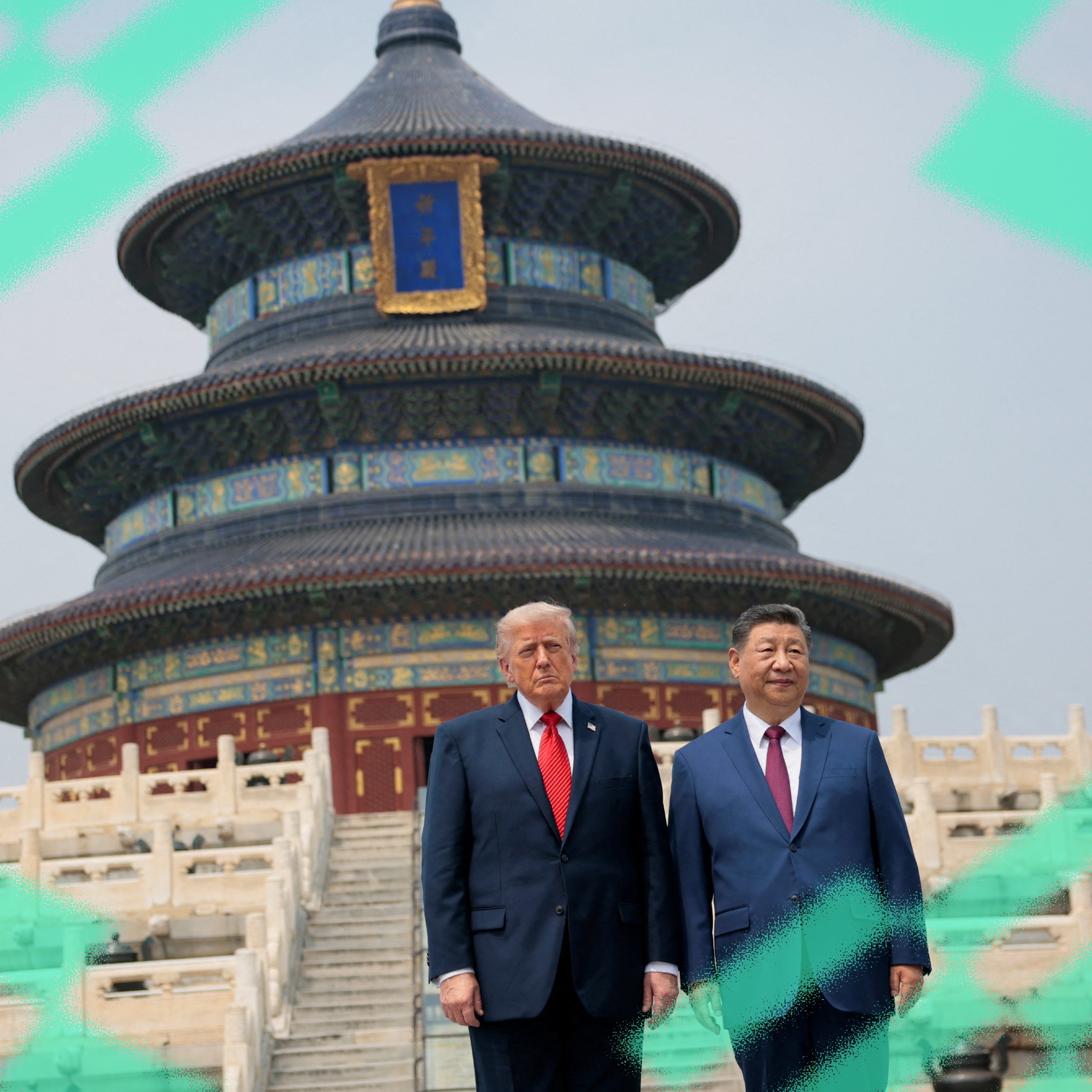 What Trump and Xi Didn't Settle in Beijing, With Nicholas Burns 20.05.2026 35minThis episode unpacks the key discussion points from the U.S.-China summit, including Taiwan, the Iran war, AI regulation, and the future of U.S.-China relations. Host: James M. Lindsay, Mary and David Boies Distinguished Senior Fellow in U.S. Foreign Policy, CFR Guest: Nicholas Burns, Roy and Barbara Goodman Family Professor of the Practice of Diplomacy and International Relations, Harvard University Kennedy School of Government; Former U.S. Ambassador to the People’s Republic of China (2021–2025) We Discuss: Whether the Trump-Xi summit in Beijing represented a genuine diplomatic breakthrough or merely a cooling of tensions without resolving underlying conflicts. What the dueling U.S. and Chinese post-summit statements reveal about each country's divergent priorities and negotiating strategies. How significant the summit's economic deliverables—agricultural sales commitments, Boeing aircraft sales, and a potential tariff truce—actually are. How Xi Jinping's early and deliberate warning about Taiwan set the tone for the summit, and what his decision to leak that statement mid-meeting signals about Chinese tactics. Whether President Trump's equivocation about U.S. arms sales to Taiwan and the One China policy constitutes a major strategic mistake and what it means for American credibility with allies in the Indo-Pacific. What the presence of Putin in Beijing immediately after Trump's visit reveals about Chinese strategic alignments. Why an emerging U.S.-China dialogue on artificial intelligence regulation could prove to be the most consequential and underappreciated outcome of the Beijing summit. What concrete benchmarks—from tariff agreements to arms sales to Chinese follow-through on commitments—will determine whether this summit actually put U.S.-China relations on a more stable footing. Mentioned on the Episode: "Joint Statement Following Discussions with Leaders of the People's Republic of China (Shanghai Communiqué)" U.S. Department of State, Office of the Historian "President Reagan's Six Assurances to Taiwan" Congressional Research Service "Readout of President Joe Biden's Meeting with President Xi Jinping of the People's Republic of China" The White House "Taiwan Relations Act" Pub. L. 96–8, enacted April 10, 1979 "United States-China Joint Communiqué on United States Arms Sales to Taiwan" Ronald Reagan Presidential Library "U.S.-PRC Joint Communiqué (1979)" U.S. Department of State, Office of the Historian For an episode transcript and show notes, visit The President’s Inbox at: https://www.cfr.org/podcasts/presidents-inbox/what-trump-and-xi-didnt-settle-in-beijing Opinions expressed on The President’s Inbox are solely those of the host or guests, not of CFR, which takes no institutional positions on matters of policy.
 -
 Trump and Xi in Beijing, With Rush Doshi 13.05.2026 37minThis episode unpacks President Donald Trump’s upcoming summit with Chinese President Xi Jinping in Beijing, the first by a sitting U.S. President in nearly a decade, as the United States and China work through a tense period of détente. Host: James M. Lindsay, Mary and David Boies Distinguished Senior Fellow in U.S. Foreign Policy, CFR Guest: Rush Doshi, C.V. Starr Senior Fellow for Asia Studies and Director of the China Strategy Initiative We Discuss: Whether the Trump-Xi summit will represent continuity or a new phase in the U.S.-China relationship. How China assesses the military and economic balance of power with the United States. What last year's trade war revealed and how it produced the current period of managed competition. As Rush Doshi puts it: “I don’t think there’s going to be a large structural breakthrough.” What deliverables the Trump administration is seeking from the summit, and why negotiations are focused on process mechanisms and stability. How China has responded to the U.S.-Iran war and why it has stayed on the sidelines despite having clear strategic interests. Why China welcomes U.S. entanglement in foreign conflicts but fears their effects on global trade and resource access. Why China is more exposed than the United States freedom of navigation threats and naval chokepoints. Why President Biden never traveled to Beijing, and how China is framing Trump's visit. Why American CEOs are joining Trump's trip, and what role they play in the summit. Whether the U.S. and China will negotiate agreements on artificial intelligence and its role in great power competition. How China has treated seemingly mutually-beneficial crisis communication channels as negotiation ploys in return for U.S. concessions. Whether Taiwan will be on the agenda, what concessions China is seeking, and how U.S. policy shifts could affect internal Taiwanese politics on unification. How a so-called Board of Trade and other bilateral mechanisms could formalize a lasting state of managed trade between the two countries Mentioned on the Episode: “President Xi Jinping Speaks with U.S. President Donald J. Trump on the Phone” Chinese Ministry of Foreign Affairs Evelyn Cheng, “Trump is taking more than a dozen U.S. executives to China. Jensen Huang isn’t one of them,” CNBC For an episode transcript and show notes, visit The President’s Inbox at: https://www.cfr.org/podcasts/presidents-inbox/trump-and-xi-in-beijing-with-rush-doshi Opinions expressed on The President’s Inbox are solely those of the host or guests, not of CFR, which takes no institutional positions on matters of policy.
 -
 The Spillover: Are Prediction Markets Forecasting Tools or Virtual Casinos? 06.05.2026 47minPrediction markets have grown into a multibillion-dollar industry. This episode asks whether they are powerful forecasting tools or gambling platforms in disguise—and what their rise means for how risk and information are priced. Hosts: Rebecca Patterson, Senior Fellow, Council on Foreign Relations (CFR) Sebastian Mallaby, Paul A. Volcker Senior Fellow for International Economics, Council on Foreign Relations (CFR) Guest: Christy Goldsmith Romero, Former Commissioner, Commodity Futures Trading Commission (CFTC) We discuss: How prediction markets are turning the world into a “casino” where you can bet on almost anything, from elections and geopolitics to sports and niche events. The evolution of prediction markets from academic tools to mainstream platforms shaping finance, politics, and culture. Why these markets sometimes outperform polls, where they fall short, and how they blur the line between forecasting and entertainment-driven gambling. As Rebecca Patterson asks: “Are these markets actually useful, or are they just gambling dressed up as forecasting?” The legal gray areas that are allowing prediction markets to expand so quickly and the growing risk of manipulation and insider bets. An anecdote from France, where someone allegedly tampered with a weather sensor to manipulate the outcome of a prediction market bet. How governments and regulators are struggling to keep up. Whether these markets truly reflect the “wisdom of crowds” or just loud, well-funded players. Mentioned on the Episode: Anthony M. Diercks, Jared Dean Katz, and Jonathan H. Wright, “Kalshi and the Rise of Macro Markets,” Federal Reserve Board “The Future of Financial Services Regulation: A Conversation with CFTC Commissioner Christy Goldsmith Romero,” Brookings Institution Adam Hoffer and Jacob Macumber-Rosin, “Expanded Sports Betting Legalization Would Generate Billions in Tax Revenue,” Tax Foundation Andy Serwer, “Charles Schwab CEO Explains Why Investing Works—and Gambling Doesn’t,” Barron's Want to keep up with The Spillover? Sign up to receive an email alert when new episodes are released. The Spillover is a production of the Council on Foreign Relations. The opinions expressed on the show are solely those of the hosts and guests, not of the Council, which takes no institutional positions on matters of policy.
 -
 How to Build an American Foreign Policy, With Michael Mandelbaum 29.04.2026 32minThis episode unpacks three enduring pillars that have defined U.S. foreign policy from the nation’s founding to today: ideology, economic statecraft, and democratic accountability. Host: James M. Lindsay, Mary and David Boies Distinguished Senior Fellow in U.S. Foreign Policy, CFR Guest: Michael Mandelbaum, Professor Emeritus of American Foreign Policy at the Johns Hopkins School of Advanced International Studies; Author, The American Way of Foreign Policy: Ideology, Economics, Democracy We Discuss: Whether the United States can be said to have a coherent foreign policy "personality". How geographic and geopolitical advantages have historically enabled a more ideological U.S. foreign policy than most countries can afford. Whether ideology in U.S. foreign policy represents genuine conviction or merely a veneer for self-interest. What the post-Cold War era reveals as the "golden age of foreign policy of ideas”. What drives the persistent American tendency toward economic statecraft, sanctions, and “mirror imaging”. How public opinion, interest groups, political parties, and elections influence foreign policy decisionmaking. Whether President Trump's foreign policy fits within—or represents a departure from—the three enduring American traditions in U.S. foreign policy. Mentioned on the Episode: The American Way of Foreign Policy: Ideology, Economics, Democracy by Michael Mandelbaum (Oxford University Press, 2025) Embargo Act of 1807 George W. Bush, Second Inaugural Address, January 20, 2005 Vice President JD Vance, Remarks at the Munich Security Conference, February 14, 2025 Secretary of State Marco Rubio, Remarks at the Munich Security Conference, February 14, 2026 For an episode transcript and show notes, visit The President’s Inbox at: https://www.cfr.org/podcasts/presidents-inbox/how-to-build-an-american-foreign-policy Opinions expressed on The President’s Inbox are solely those of the host or guests, not of CFR, which takes no institutional positions on matters of policy.
 -
 America at 250: The Spanish-American War, With H.W. Brands 22.04.2026 38minThis episode unpacks the causes, key events, and consequences of the Spanish-American War, highlighting how it shaped U.S. foreign policy into the modern era. To mark the 250th anniversary of the U.S. declaration of independence, CFR is dedicating a year-long series of articles, videos, podcasts, events, and special projects that will reflect on two and a half centuries of U.S. foreign policy. Featuring bipartisan voices and expert contributors, the series explores the evolution of America’s role in the world and the strategic challenges that lie ahead. Host: James M. Lindsay, Mary and David Boies Distinguished Senior Fellow in U.S. Foreign Policy, CFR Guest: H.W. Brands, Jack S. Blanton Sr. Chair in History, The University of Texas at Austin We Discuss: What drove the United States toward assertive foreign policy in the 1890s. Who the "jingoes" were and how American leaders pushed for American power abroad. Whether access to China drove American interest in Spain's Pacific empire. Why the USS Maine explosion changed the political calculus for entering a war with Spain. What the Teller Amendment accomplished and what its drafters failed to anticipate. Whether the annexation of the Philippines was ultimately the least-bad option for the Filipino people. What the Spanish-American War's legacy reveals about how the United States became—and chose to remain—a global power. Mentioned on the Episode: Monroe Doctrine, December 2, 1823 McKinley's First Inaugural Address, March 4, 1897 Theodore Roosevelt, Naval War College Address, June 2, 1897 The Teller Amendment, April 19, 1898 For an episode transcript and show notes, visit The President’s Inbox at: https://www.cfr.org/podcasts/presidents-inbox/america-at-250-the-spanish-american-war Opinions expressed on The President’s Inbox are solely those of the host or guests, not of CFR, which takes no institutional positions on matters of policy.
Podcast serupa


Popular di
Podcast ini turut muncul dalam senarai podcast negara-negara ini.


