
State of Play
Tommy Geoco
0
State of Play features conversations with designers, founders, and builders behind some of the best work in their fields. Host Tommy Geoco explores the creative processes and stories of these professionals. The podcast offers insights into design, entrepreneurship, and building successful projects.
Episod
-
 How to Use AI Without Losing Your Craft: George Hastings 24.08.2026 41minGeorge Hastings is the solo founder of Unicorn Studio, the no-code tool that turned WebGL and shaders into something designers can touch and play with. But my favorite thing about George is that he built it alone, with no VC money, after years at IDEO and AREA17.This conversation goes deep into deterministic chisels vs stochastic AI design and his advice to designers who want to build their own tools.Get the UX Tools Newsletter (written by me)Join 100,000+ designers for weekly insights on creative software and the people shaping it: https://uxtools.coCHAPTERS:0:00 — Cold open and intro1:39 — The blank page and building your own inspiration4:48 — Making things vs building products6:15 — Falling in love with code: AREA17, CodePen, and the browser8:12 — Open canvas tools and the tension with code9:06 — Reverse engineering the happy accident11:02 — Knowing when it's done12:12 — A tool or a way of thinking?13:46 — The chisel vs stochastic design16:50 — Building at 90% agentic: you're the boss, check the work18:37 — Why AI struggles with shaders20:24 — An agent inside the walled garden21:35 — Charging money and the long closed beta22:37 — The pixel game, Khroma, and getting the building bug25:47 — Solo, no VC: "I'm really just trying to be an artist"26:58 — Advice for designer-builders: solve a sexy problem28:03 — Selling the workflow, not the outputs30:15 — Soul, special sauce, and letting the shaders go32:47 — OpenClaw, MCP, and agents using your tool37:19 — The controlled agent rollout38:22 — Orchestrators and mourning the old workflow40:51 — Outro: go play with itLINKS:Unicorn Studio: https://unicorn.studioGeorge Hastings on X: https://x.com/soulegitFOLLOW ME:Newsletter: https://uxtools.coX / Twitter: https://x.com/designertomLinkedIn: https://linkedin.com/in/tommygeoco
 -
 AI Creative Direction Is Here: Jamey Gannon 02.06.2026 56minJamey Gannon is a creative director and Maven instructor teaching designers how to control AI like a creative director.She's running brand sprints, directing image models, and building her own tools while she does it.This conversation covers whether you can actually teach AI taste, the inputs most designers miss when evaluating AI tools, why she took an "AI sabbatical" to get good, and the five-principle framework she uses to direct image models.Want to become an AI Creative Director? Get 10% off Jamey's next cohort with promo code TOMMY here: https://bit.ly/4tJ9nF7Get the UX Tools Newsletter (written by me)Join 100,000+ designers for weekly insights on creative software and the people shaping it: https://uxtools.coCHAPTERS:0:00 — Cold open: AI is not magic0:20 — The rise of AI creative directors1:42 — Can AI learn taste?4:30 — What most people miss about prompting7:58 — Brand sprints, speed, and taste13:01 — How AI fits into real client work15:37 — A mood-board tool built with AI22:00 — Jamey's daily creative stack27:21 — How she found time to learn AI31:08 — The one-click AI myth38:39 — Visibility, distribution, and getting chosen42:00 — The split between brand and product designers46:04 — Pricing AI-assisted creative work49:08 — The AI Creative Director framework56:01 — Why being remembered mattersLINKS:Maven (AI Creative Director course): https://bit.ly/4tJ9nF7FOLLOW ME:X / Twitter: https://x.com/designertomLinkedIn: https://linkedin.com/in/tommygeoco
 -
 He Designs Channels Like He Grows Plants: Kevin Espiritu 18.05.2026 56minKevin Espiritu runs Epic Gardening, one of the clearest examples of a creator-led media business that became much more than content: YouTube, commerce, products, books, and Botanical Interests.This conversation covers why Silicon Valley is suddenly fascinated by new media, what Kevin learned from the old SEO and affiliate-marketing era, why creators over-optimize the wrong things, how Epic Gardening thinks about products, IP, TV viewership, brand deals, channel strategy, and what it actually takes to build media that lasts.Get the UX Tools Newsletter (written by me)Join 100,000+ designers for weekly insights on creative software and the people shaping it: https://uxtools.coCHAPTERS:0:00 Media is soil0:27 Why new media week starts with Kevin1:38 Silicon Valley discovers creators3:26 From SEO hacks to durable media7:03 True outliers are one-of-one10:19 Why creators get platform-stuck12:33 Products, IP, and real media businesses17:25 Brand deals without draining trust21:03 YouTube is becoming TV23:22 Format experiments and channel strategy30:31 Packaging before production35:07 Scaling beyond the founder40:03 Tommy's media company, live consult45:30 Broad vs niche audiences50:02 Raising money and the next creator companies56:06 Cultural campfiresLINKS:Epic Gardening: https://www.epicgardening.comBotanical Interests: https://www.botanicalinterests.comKevin Espiritu on X: https://x.com/KevinEspirituFOLLOW ME:X / Twitter: https://x.com/designertomIG: https://instagram.com/itsdesignertomLinkedIn: https://linkedin.com/in/tommygeoco
 -
 Design Tools Are Going Headless: Tom Krcha 12.05.2026 39minTom Krcha founded Pencil.dev after years inside the design tooling cycle, from Flash evangelism to creating Adobe XD, which gives him a rare view of where AI design tools are actually heading.This conversation covers why agents are best at the first 80%, why designers still need the last 20%, what a headless design tool means, how Pencil is building for swarms of AI designers, and why taste comes from still putting your hands in the work.Get the UX Tools Newsletter (written by me)Join 100,000+ designers for weekly insights on creative software and the people shaping it: https://uxtools.coCHAPTERS:0:00 Headless agents inside design tools0:31 Why design tools are splitting1:36 Tom’s path from Flash to Pencil5:13 Stochastic vs deterministic design6:16 Why designers still need the chisel9:18 How Pencil started inside Cursor10:19 Designer as orchestrator and final authority12:05 Canvas, tweaker, and headless agents14:16 What “headless design tool” means15:52 Context as the portable briefcase17:09 — Pencil as an agent-first canvas20:53 Building tools that build tools24:52 Why users create 50-artboard files26:26 Agent specialization and subagents27:35 Why vibe coding feels like Flash29:38 Can agents create happy accidents?31:17 The canvas as a crime scene32:28 Does AI make you a better author?35:06 What designers do with 60 agents36:38 Pencil’s roadmap and the future of iteration38:22 Taste comes from participationLINKS:Pencil.dev: https://pencil.devTom Krcha on X: https://x.com/tomkrchaFOLLOW ME:X / Twitter: https://x.com/tommygeocoLinkedIn: https://linkedin.com/in/tommygeoco
 -
 AI Made Junior Designers Better Than Most Seniors: Hannah Ahn 05.05.2026 39minHannah Ahn is designing healthcare in the exact moment AI is making it easier than ever to take control of our health.She leads design and marketing at Superpower, a health startup building an AI layer across bloodwork, labs, genomics, and medical records. Before that, she came up through product management at Canva, which makes her a useful kind of design leader right now: practical, visual, brand-sensitive, and allergic to treating velocity like the whole job.We talk about designing trust around health data, why Superpower rolled out Claude Code to the design team in January, how she hires for team composition, and why the most underrated signal in a designer right now is still love of the game.Join 100k+ designers reading my newsletter:: https://uxtools.coCome party with me at Config 2026 (June 25): https://luma.com/usxsrlu1CHAPTERS:00:00 Designing trust when AI touches your health03:06 PM to designer was the practical path06:41 How Superpower runs a five-person design team10:34 Hiring for composition, not clones13:55 Love of the game beats credentials16:46 Rolling Claude Code out in January21:47 When velocity starts producing slop24:41 The 1% that makes people trust you33:23 The junior ladder is breaking36:31 Designers as architects, not prompt operatorsLINKS:Superpower: https://superpower.comHannah on LinkedIn: https://www.linkedin.com/in/ahnhannah/FOLLOW ME:X / Twitter: https://x.com/designertomIG: https://instagram.com/itsdesignertomLinkedIn: https://linkedin.com/in/tommygeoco
 -
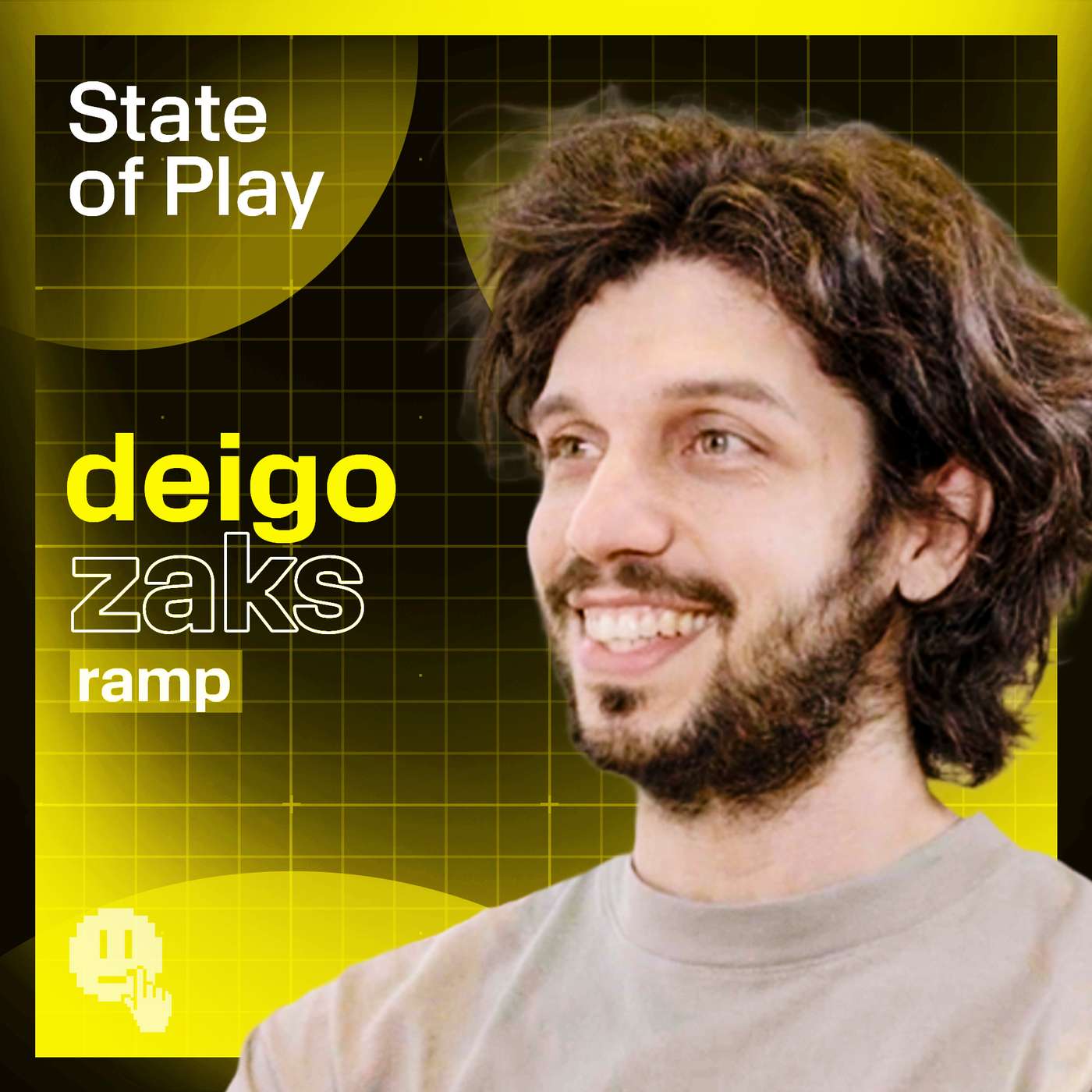 This is Design At The Most AI-Installed Company: Diego Zaks 28.04.2026 1j 1minDiego Zaks runs design at Ramp, the most AI-installed company in the world. Not kidding, Anthropic showed up at their office because they were using Claude Code more than Anthropic was.We talk about how Ramp got there, how design changes when everyone is a builder, what AI fluency means inside their company, and what he thinks design becomes five years from here.Join 100k+ designers reading my newsletter:: https://uxtools.coCome party with me at Config 2026 (June 25): https://luma.com/usxsrlu1CHAPTERS:00:00 The AI-Installed Company03:50 The Slack Engineer Who Wasn't Human10:16 The 4 Levels of AI Fluency13:27 Make Everyone a Designer22:17 How Ramp Hit 99.5% Installed28:54 Anthropic Flew to the Office31:47 Glass: Why Build Your Own AI49:30 What Design Becomes in 5 YearsLINKS:Ramp: https://ramp.comRamp is hiring: https://ramp.com/careersRamp Builders blog (engineering): https://builders.ramp.comRamp Labs on X: https://x.com/RampLabsDiego on X: https://x.com/diegozaksFOLLOW ME:X / Twitter: https://x.com/designertomIG: https://instagram.com/itsdesignertomLinkedIn: https://linkedin.com/in/tommygeoco
 -
 Amelia Wattenberger: Designing The Next Flow State 20.04.2026 45minAmelia Wattenberger spent eight years as a front-end developer before the title on her business card turned into "designer" — she's been at GitHub, now she's building Intent.This conversation covers why developers are mourning their old flow state, the eras of AI coding tools from Copilot to CLI to the app era, why the spec is becoming the new source of truth, and what Amelia means when she says the work is shifting from implementation to intention.Get the UX Tools Newsletter (written by me)Join 100,000+ designers for weekly insights on creative software and the people shaping it: https://uxtools.coCHAPTERS:0:00 — The moment the IDE stopped making sense2:16 — The ladder of abstraction, and a career moving up and down it7:35 — Where the abstraction stops: you can't automate eating ice cream10:29 — Developers are mourning their flow state16:02 — Eras of AI coding tools: Copilot → CLI → the app22:43 — Living specs vs. static PRDs29:38 — Inside Intent: workspaces as desks you pick up and put down39:02 — Plan, implement, review — and where the medium goes next42:46 — Advice for people too employed to pathfind44:33 — Outro: where purpose lives when agents do the restLINKS:Intent: https://www.augmentcode.com/product/intentAmelia Wattenberger on X: https://x.com/WattenbergerAmelia's Musings: https://wattenberger.com/FOLLOW ME:X / Twitter: https://x.com/designertomIG: https://instagram.com/itsdesignertomLinkedIn: https://linkedin.com/in/tommygeoco
 -
 Nad Chishtie: Lovable's Design System For Agents 15.04.2026 50minNad Chishtie is the Head of Design at Lovable — the company at the center of the AI coding explosion. He nearly got fired before his first day for emailing his CEO a thesis on why Lovable should be a web browser.Now he's redesigning what design teams look like when everyone in the company can build software. We talked about why half of Lovable's design system is now written for agents instead of people, what happened when they went full "agent maxing" for two weeks (and why background agents failed), and there's this moment where he explains who actually ends up owning vibe coding when it lands inside a big company — and it's not who you'd expect.Get the UX Tools Newsletter (written by me)Join 100,000+ designers for weekly insights on creative software and the people shaping it: https://uxtools.coCHAPTERS:0:00 — Almost fired before day one1:20 — Falling into design by accident2:39 — The call that changed his career4:45 — Why generalists felt broken in traditional orgs5:08 — The "gumption" trait for AI-native work6:54 — Housekeeping vs cannibalizing yourself8:23 — End-to-end ownership when everyone can build10:54 — Spiking fast and killing darlings faster13:06 — People who couldn't prototype before now can15:05 — How Lovable's org actually works19:44 — When enterprise came knocking22:45 — Hackathons and making room for throwaway work25:15 — The email that almost got him fired (full story)28:09 — Apple blocking mobile vibe coding apps30:27 — Half our design system is written for agents31:34 — Agent maxing: background agents failed, linters won33:53 — Eating their own SaaS stack37:15 — Who actually owns vibe coding in the enterprise42:43 — What Lovable looks for when hiring designers43:28 — Why every designer should be a founder right now46:54 — Territory Studio uses Lovable for sci-fi UIs48:16 — Thesis: everything will be interoperableABOUT TOMMY GEOCOI spent 15+ years in tech and design. Former military. Father of five. Now building Internet Enjoyers, a weird little media + product studio rediscovering soul in creative tech.ABOUT STATE OF PLAYHost Tommy Geoco discovers what fuels the internet's most interesting designers and builders.LINKS:Lovable: https://lovable.devFollow Nad: https://x.com/nadonomyFOLLOW ME:X / Twitter: https://x.com/designertomInstagram: https://instagram.com/itsdesignertomLinkedIn: https://linkedin.com/in/tommygeoco
 -
 Basement Studio: They Used Wine to Build a Website. Here's How. 08.04.2026 34minFacundo Santana and José Rago run Basement Studio - 35 people in Argentina, working with Vercel, Mr. Beast, and Kid Super. They poured actual wine on a surface to get a WebGL texture right. That detail tells you everything about how this shop operates.This conversation covers how they protect quality as they scale, the R&D lab that spun out BasHub and XMP, why they open-source everything, how 30 people pile into a single Slack channel before anything ships, and why Basement Ventures is quietly becoming a real VC fund.Get the UX Tools Newsletter (written by me)Join 100,000+ designers for weekly insights on creative software and the people shaping it: https://uxtools.coCHAPTERS:0:00 — They used actual wine to build a website0:24 — Who is Basement Studio?1:36 — From a Buenos Aires apartment to 35 people5:17 — The Kid Super World project7:19 — "Would you show it to your mom?"9:49 — Working with Vercel on Geist and v013:20 — How 30 people review work in one Slack channel16:05 — Open source: BasHub, XMP, and giving back18:06 — The lab that becomes real products21:32 — How AI is changing creative studios24:49 — Basement Ventures: from studio to microfund28:43 — Investing in the tools you actually use31:14 — Building a studio that outlasts its foundersLINKS:Basement Studio: https://basement.studioFacundo on X: https://x.com/falanfantanaJosé on X: https://x.com/ragojoseWatch on YouTube: https://youtu.be/nv7M79lMEnUFOLLOW ME:Newsletter: https://uxtools.coX / Twitter: https://x.com/tommygeocoLinkedIn: https://linkedin.com/in/tommygeoco
 -
 Ben Blumenrose: He Sees How 50+ Design Teams Use AI. Most Are Doing It Wrong. 04.04.2026 45minBen Blumenrose runs Designer Fund, which means he doesn't just see one team figure out AI, he sees how 50+ design teams across the portfolio are absorbing it. This conversation covers what happens when the floor rises, what AI fluency actually looks like inside companies, why the AI ops role is emerging earlier than anyone expected, and how Ben is thinking about keeping his own kids away from the tools — for now.Get the UX Tools Newsletter (written by me)Join 100,000+ designers for weekly insights on creative software and the people shaping it: https://uxtools.coCHAPTERS:1:05 — Process flexibility and conflicting signals2:27 — What Designer Fund's portfolio is actually doing with AI5:34 — Enterprise adoption: Carvana vs eBay6:40 — The AI ops role emerging at hire #49:59 — AI Imagineer and redesigning how designers work12:12 — Junior designers vs early career talent16:09 — AI native vs AI fluency21:05 — The 19% slower problem and the factory floor22:12 — The T-shaped designer gets wider and deeper25:21 — Evaluating AI fluency in hiring28:25 — Where the tools are now vs nine months ago30:06 — The floor is high but the ceiling still matters31:29 — Moral panic and the value of exceptional designers33:27 — Does the designer-founder thesis still hold?35:28 — VC path in a world where one person = a team37:13 — Phantom competency: extraordinary person or extraordinary tools?40:24 — Keeping kids away from AI and the Tin Can phone45:14 — Closing: the bar is moving sidewaysLINKS:Designer Fund: https://designerfund.comBen Blumenrose on X: https://x.com/benblumenroseFOLLOW ME:Newsletter: https://uxtools.coX / Twitter: https://x.com/tommygeocoLinkedIn: https://linkedin.com/in/tommygeoco
 -
 Josh Puckett: Design Has Never Been More in Demand. So Why Can't Juniors Get Hired? 30.03.2026 40minJosh Puckett went goblin mode for four weeks to ship Interface Craft — a course where you pick a library card, sign your name on it, and insert it into a web interface that unlocks everything behind it.He's been designing for close to 20 years. Dropbox. Wealthfront. He's mentored and placed hundreds of designers through Upper Study. He invests into early-stage tools companies through Combine VC.We talk phantom competency, uncommon care, why a chef who cooks one new dish a week should probably find a different career, and whether "AI native" is a real skill or just the new "mobile designer."Get the UX Tools Newsletter (written by me)Join 100,000+ designers for weekly insights on creative software and the people shaping it: https://uxtools.coCHAPTERS:00:00 - "You have to demonstrate high slope"00:14 - Who is Josh Puckett01:53 - Coming out of the Interface Craft launch04:03 - Goblin mode & going dark to build04:45 - The Wealthfront chapter: 4-person design team05:49 - Has design actually changed?08:22 - Phantom competency & AI as apprenticeship09:34 - LLMs as tutors: where they help, where they miss11:20 - What are you telling designers right now?12:32 - Uncommon effort vs. uncommon taste16:19 - Discovery has changed: social as a portfolio19:18 - "AI native" is just the new "mobile designer"21:50 - High slope: what it looks like24:10 - The playground pattern25:47 - What to do with the anxiety29:31 - Uncommon care: just give a shit31:44 - Shot selection: where to invest your time35:31 - What multi-perspective gives you37:30 - Product design is not art38:42 - Why designers are the least happy with AI39:52 - One post away from changing your lifeABOUT STATE OF PLAYHost Tommy Geoco discovers what fuels the internet's most interesting designers and builders.LINKS:Interface Craft: https://interfacecraft.dev/Upper Study: https://upperstudy.comFollow Josh: https://x.com/joshpuckettFOLLOW ME:X / Twitter: https://x.com/designertomInstagram: https://instagram.com/itsdesignertomLinkedIn: https://linkedin.com/in/tommygeoco
 -
 Jenny Wen: She Went From FigJam to Anthropic. This Is the New Era of UX. 24.03.2026 50minJenny Wen led design on FigJam, one of the most playful tools to hit design in a decade. Now she's at Anthropic designing Claude. Not just the model, but the product that millions use daily. What I didn't expect: she sees these as the same problem. Both hide serious technical complexity behind simple, obvious interfaces. We talked about why designers are shipping production code now, why "UX designer" as a role feels outdated, and this framework she keeps coming back to: automate toil, augment creativity.Get the UX Tools Newsletter (written by me)Join 100,000+ designers for weekly insights on creative software and the people shaping it:https://uxtools.coCHAPTERS:00:00 - From FigJam to Claude: same design problem, higher stakes04:52 - How much model complexity should users actually see?09:05 - Prototypes over docs in AI product development16:04 - Why long-term design vision is harder in AI labs21:27 - The canvas-tool category Jenny is watching26:30 - Is chat UI over? (Jenny says no)33:40 - From print magazine dreams to product design42:03 - Will I ever recreate that FigJam magic?47:51 - Is "UX designer" becoming outdated?49:22 - Taste vs execution: the distinction more designers needLINKS:Claude: https://claude.aiJenny Wen: https://x.com/jenny_wenFOLLOW ME:X / Twitter: https://x.com/designertomInstagram: https://instagram.com/itsdesignertomLinkedIn: https://linkedin.com/in/tommygeoco
 -
 Steve Ruiz: He Turned Down Adobe. Then He Shelved His Own Product. 16.03.2026 38minSteve Ruiz was about to start at Adobe. Bags packed. Job accepted. Start date: Monday.Then he looked at what was happening with his side project — an open-source canvas tool he'd been building — and 200,000 people were using it every month. Hundreds of sponsors had put up 00,000. Two major companies wanted to build on it. He called Adobe and said he wasn't coming.That project became TLDraw.Steve's background isn't in software — it's in fine art. He has a masters in it. He spent thousands of hours studying ink on paper — how it moves, how it bleeds, how it dries. And when he later wrote the algorithms for digital ink, he had this deep physical knowledge that most engineers just don't have.We talk about why he killed his own SaaS product to focus on the SDK, why he thinks craft only matters when you're building for high-agency users, and his surprisingly simple answer to the question every open-source founder faces — how do you actually make money?Get the UX Tools NewsletterJoin 100,000+ designers for weekly insights on creative software and the people shaping it: https://uxtools.coCHAPTERS:00:00 - Cold open01:30 - Art school to open source04:32 - 10,000 hours of unmotivated work06:08 - Finding ideas without external validation08:22 - The content-first experimentation loop11:30 - Why software is easier than art14:42 - Most software experiences haven't been discovered yet17:10 - Prototyping obsession and the infinite canvas17:47 - 200,000 users before you could even log in19:14 - Make Real: the first vibe code tool21:13 - Optimize for the points of contact23:51 - Killing the SaaS to ship the SDK29:19 - The open source money problem30:03 - "Just charge for it" — beating React Flow32:12 - When craft actually matters (high-agency users)35:57 - What's most fulfilling about building TLDrawABOUT TOMMY GEOCOI spent 15+ years in tech and design. Former military. Father of five. Now building a weird little media + product studio rediscovering soul in creative tech.ABOUT STATE OF PLAYA narrative podcast about building things that matter told through deep conversations with designers and builders.LINKS:UX Tools Newsletter: https://uxtools.coTLDraw: https://tldraw.comFollow Steve: https://x.com/steveruizokFOLLOW ME:YouTube: https://youtube.com/@designertomInstagram: https://instagram.com/itsdesignertomX / Twitter: https://x.com/designertomLinkedIn: https://linkedin.com/in/tommygeoco
 -
 Ben Fryc: He Quit Freelancing After Doubling His Salary. 09.03.2026 44minBen Fryc doubled his freelance salary in a year. Then his wife told him, on vacation in San Francisco, that he was working too hard. He quit freelancing and never went back.Ben taught himself Cinema 4D during COVID and started designing a physical keyboard in Figma. Now he's a household name in motion design, works at Framer, and takes on all manner of passion projects.We get into the experimentation crash loop of learning 3D tools, why he treats passion projects like hobbies, and what he tells the young creative who wants to do it all.Get our newsletter: https://uxtools.coCHAPTERS00:00 — Intro01:45 — Comic books, GeoCities, and why Ben wanted to make video games04:40 — Five years at Mango Languages and the 3D pivot during COVID07:20 — "You don't need to know everything about a tool"09:26 — The Polygon Runway course and finding your people12:51 — The Knob: fantastical devices that probably can't exist15:33 — Commerce vs. passion and treating creativity like a hobby17:59 — Photoshop muscle memory and tools that refuse to die19:47 — Storyboarding as the bridge between static and motion21:36 — What motion tools still hide behind right-clicks24:28 — From Figma mockups to firmware in C29:45 — Moments of delight: what makes motion design captivating34:20 — The Play-Doh people nobody liked35:25 — Where AI actually helps creative work37:32 — Advice for the young creative who wants to do it all40:38 — "I doubled my salary freelancing. Then my wife said stop."43:53 — OutroLINKSBen Fryc — https://x.com/benfrycFramer — https://framer.comFOLLOW METwitter/X — https://x.com/designertomLinkedIn — https://linkedin.com/in/tommygeocoNewsletter — https://uxtools.co
 -
 Andy Allen: Why He Takes 3 Years to Build Apps. 02.03.2026 37minAndy Allen raised 5 million, built a hardware-software company, had a decent exit, and then walked away from all of it. Most founders would double down and scale. Andy did the opposite. He started Not Boring Software — fully bootstrapped, no investors, making apps that feel like nothing else on your phone. What Andy is doing isn't just different, it's proof that there's another path most designers don't even know exists. You don't have to raise money, scale fast or break things. You can just make something beautiful with a point of view where people can feel you in the work.A refreshing conversation for those tired of the ambient noise lately.Get the UX Tools Newsletter (written by me)Join 100,000+ designers for weekly insights on creative software and the people shaping it: https://uxtools.coCHAPTERS:00:00 - Walking away from 5 million02:27 - Camera app becomes biggest launch yet04:04 - Why speed is overrated for quality work07:25 - Fully bootstrapped vs VC funding pressure09:17 - Physical prototypes and 3D printing process13:09 - Avoiding AI hype, focusing on interface innovation15:45 - Game design principles in everyday apps18:36 - The "kid in the cockpit" design philosophy20:49 - Creative recovery and exploration process22:49 - Leaving VC startup world for sustainable business25:19 - Defining "enough" as a company and creator28:44 - Being a beacon for other designers32:11 - What's missing in design storytelling36:51 - Hands in the clay vs management rolesLINKS:Not Boring Software: https://notbor.ingAndy Allen: https://x.com/asallenNot Boring Camera App (iOS): https://apps.apple.com/us/app/not-boring-camera/id6737783441FOLLOW ME:X / Twitter: https://x.com/designertomInstagram: https://instagram.com/itsdesignertomLinkedIn: https://linkedin.com/in/tommygeoco
 -
 Stephen Haney: He Canceled Figma 4 Months Ago. Here's What He Built Instead. 23.02.2026 46minStephen Haney has been quietly building design tools for years. Now he's betting that the canvas wants to talk to your agents.Paper just shipped MCP support. I've been playing with it. It's wild.We talked about why he thinks the future stack is just three tools, why his team canceled Figma four months ago, and what happens when your production site becomes your source of truth for design.Get the UX Tools Newsletter (written by me)Join 100,000+ designers for weekly insights on creative software and the people shaping it: https://uxtools.coCHAPTERS:00:00 - Everything changed in nine months03:57 - Where the puck is going05:08 - Figma's walled garden problem06:18 - Agent + Code Review + Canvas11:42 - Did agents kill collaboration?15:18 - They canceled Figma 4 months ago17:27 - What MCP actually means21:03 - Live demo: production → canvas → codeLINKS:Paper: https://paper.designStephen: https://x.com/stephenhaneyFOLLOW ME:X / Twitter: https://x.com/designertomInstagram: / itsdesignertomLinkedIn: / tommygeoco
 -
 Weber Wong: One Person Should Have the Creative Power of Pixar. 16.02.2026 47minWeber Wong was supposed to be a venture capitalist. Then he realized he wouldn't back himself, so he quit, moved to New York, and got a job at a coffee shop.Now he's building Flora, one of the most uniquely-positioned AI tools for creative teams.We talked about why node-based tools have such a bad reputation (and how Flora's fixing it), what "anti-slop" actually means when you're building AI creative tools, and the moment Pentagram reached out and he realized he'd accidentally built something useful.Get the UX Tools Newsletter (written by me)Join 100,000+ designers for weekly insights on creative software and the people shaping it: https://uxtools.coCHAPTERS:00:00 - "They've been cooking"02:11 - From VC to coffee shop to Flora05:37 - The pain cave vs. Plato's cave08:38 - Poetry as the entry point11:34 - First time using an LLM13:26 - "The world's most powerful creative operating system"16:21 - Commerce vs. art — does it have to be at odds?19:12 - A Berkeley professor and Cat's Cradle20:25 - Fine-tuning GPT-2 on his own poetry25:42 - Why node-based?28:50 - The iceberg: low barrier, high ceiling32:56 - What "anti-slop" actually means40:48 - When Pentagram reached out44:51 - Advice for the next generation of creativesLINKS:Flora: https://flora.aiWeber Wong: https://x.com/weberwongwongFOLLOW ME:X / Twitter: https://x.com/designertomInstagram: https://instagram.com/itsdesignertomLinkedIn: https://linkedin.com/in/tommygeoco
 -
 Pietro Schirano: He Solved Figma-to-Code. It Went Viral Overnight. 09.02.2026 56minPietro Schirano built one of the first AI search engines before Perplexity existed. He created Cloud Engineer, an open source tool with 11,000+ GitHub stars that got him hired at Anthropic. Now he's building @magicpathai (check it out at https://magicpath.ai). We talked about their Figma Connect feature that went viral last week, why he thinks vibe coding is "fast food" (and when you need slow food instead), and there's this moment where he describes two AI plugins combining to do something he never programmed — and how it changed how he thinks about what these models can do.Get the UX Tools Newsletter (written by me)Join 100,000+ designers for weekly insights on creative software and the people shaping it: https://uxtools.coCHAPTERS:00:00 - "This thing seems like it understands"02:03 - Designer to engineer pipeline02:29 - The urge to create05:17 - Before Designer GPT08:35 - The moment two plugins combined on their own10:40 - "I shipped four apps in 14 days"11:52 - Bell Labs reached out about Cloud Engineer13:41 - Will everyone build their own software?18:41 - Where prototyping fits now20:01 - How enterprise teams use MagicPath24:51 - Vibe coding is fast food. This is slow food.27:13 - Figma Connect and the viral reception30:49 - What makes a good canvas editor35:05 - Live demo: Figma to working code39:48 - Extracting design systems automatically50:32 - "You're living in the future"52:47 - Advice for overwhelmed designers55:09 - "If we remove the love people have for their work, we fail"ABOUT TOMMY GEOCOI spent 15+ years in tech and design. Former military. Father of five. Now building Internet Enjoyers, a weird little media + product studio rediscovering soul in creative tech.ABOUT STATE OF PLAYHost Tommy Geoco discovers what fuels the internet's most interesting designers and builders.LINKS:UX Tools Newsletter: https://uxtools.coMagicPath: https://magicpath.aiFollow Pietro: https://x.com/skiranoFOLLOW ME:X / Twitter: https://x.com/designertomInstagram: https://instagram.com/itsdesignertomLinkedIn: https://linkedin.com/in/tommygeoco
 -
 Sara Vienna: Metalab's "Kind Not Nice" Rule Changed How She Gives Feedback. 02.02.2026 56minSara Vienna is the Chief Design Officer at Metalab. Slack, Uber, Coinbase... the list of products that came out of that shop is GOAT'd.We talked about how they actually ship that work, their Tarantino process, why measuring velocity is "absolute bullshit," and a culture rule called "kind not nice" that changed how I think about feedback.Get the UX Tools Newsletter (written by me)Join 100,000+ designers for weekly insights on creative software and the people shaping it: https://uxtools.coCHAPTERS:00:00 - "Designers are at a huge advantage"01:58 - Learning Photoshop because tobacco companies lost a lawsuit04:54 - "I was a really shitty designer first"08:45 - Speed vs quality: earning space for the work you're proud of12:05 - How MetaLab ships consistently15:21 - The Tarantino process explained17:16 - Building a culture of candid feedback19:45 - "Kind not nice"20:26 - Making space for play26:45 - Burnout and what actually helps30:05 - How MetaLab uses AI35:07 - Designers marry the head and the heart38:47 - Team structures: smaller but mightier41:59 - T-shaped designers and specialists44:34 - Why leaders need to stay in the work48:00 - Advice for first-time design leadersABOUT TOMMY GEOCOI spent 15+ years in tech and design. Former military. Father of five. Now building Internet Enjoyers, a weird little media + product studio rediscovering soul in creative tech.ABOUT STATE OF PLAYHost Tommy Geoco discovers what fuels the internet's most interesting designers and builders.LINKS:UX Tools Newsletter: https://uxtools.coFollow Sara Vienna: https://www.linkedin.com/in/saravienna/MetaLab: https://metalab.comFOLLOW ME:X / Twitter: https://x.com/designertomInstagram: https://instagram.com/itsdesignertomLinkedIn: https://linkedin.com/in/tommygeoco
 -
 Lee Black: He Makes Figma Do Things It Wasn't Designed For. 26.01.2026 54minLee Black has been designing for 25 years. He made those Figma pills with goldfish swimming inside. He also ran an app company that nearly broke him.We talked about chasing money that never made him happy, why his tool stack hasn't really changed in a decade, and what happens when you master your tools so deeply that the rules start to bend.Get the UX Tools Newsletter (written by me)Join 100,000+ designers for weekly insights on creative software and the people shaping it: https://uxtools.coCHAPTERS:00:00 - "It's not about learning everything"01:59 - Taking apart toys to understand how they work04:35 - Speed vs. quality07:19 - Music came first09:29 - His tool stack (it's simpler than you think)11:03 - "It hasn't really changed that much"12:44 - ChatGPT as an ideas buddy14:40 - How Midlife Engineering was born16:10 - What "polish" means to him18:17 - The Matrix scene that started the pills20:36 - "I want to put a fucking goldfish in there"21:09 - Designing with restraint23:27 - Dieter Rams as jazz, not gospel26:03 - Protecting taste when you scale31:05 - The app company that broke him48:16 - Advice for designers struggling right now51:57 - If nothing mattered, what would you work on?ABOUT TOMMY GEOCOI spent 15+ years in tech and design. Former military. Father of five. Now building Internet Enjoyers, a weird little media + product studio rediscovering soul in creative tech.ABOUT STATE OF PLAYHost Tommy Geoco discovers what fuels the internet's most interesting designers and builders.LINKS:UX Tools Newsletter: https://uxtools.coFollow Lee Black: https://x.com/mrblackstudio1042 Studio: https://1042.studioMidlife Engineering: https://midlife.engineeringFOLLOW ME:X / Twitter: https://x.com/designertomInstagram: https://instagram.com/itsdesignertomLinkedIn: https://linkedin.com/in/tommygeoco
Podcast serupa


Popular di
Podcast ini turut muncul dalam senarai podcast negara-negara ini.

