
Faith Speaks, Love Gives Podcast
Marlo Barge
0
Faith Speaks, Love Gives Podcast is a faith-based Christian podcast hosted by Marlo Barge. It aims to encourage, strengthen, and uplift listeners who want to live out their faith in real life. Each episode explores topics such as faith, love, healing, forgiveness, purpose, obedience, and practical Christian living. The podcast offers real-world encouragement rooted in God's love for believers, new Christians, and those searching for hope.
Episod
-
 Quiet Fire in a Loud World: Faith, Truth, and Presence When Culture Is Out of Control 26.09.2026 18minWhat happens when culture trains your heart to react before you pray?In this episode of the Faith Speaks, Love Gives Podcast, Marlo Barge explores how outrage, misinformation, distraction, loneliness, and division can disciple our hearts if we are not rooted in Christ. The answer is not matching the noise or hiding in isolated cynicism. It is cultivating a quiet fire—faith that remains steady, speaks truth, stays present, and chooses practical love.In this conversation:• How instant outrage can be mistaken for spiritual passion (James 1:19)• The difference between influence and validation (Galatians 1:10)• Why abiding in Christ matters more than striving (John 15:5)• How to practice conviction without contempt in a polarized culture (Ephesians 6:12)• Why faith-filled speech must become practical love (1 John 3:18)Marlo closes with the 24-hour Quiet Fire Challenge:Take a 24-hour break from the feed or news source that most consistently triggers outrage, envy, or anxiety.Before reacting, take three slow breaths and pray: “Lord, help me speak truth in love before I react.”Make one proactive move toward someone you have been distant from or frustrated with.Faith declares truth. Love takes action. Keep your fire lit and your life pointed back to Jesus Christ.This episode includes AI-generated audio created with NotebookLM and is reviewed and prepared by the Faith Speaks, Love Gives Podcast team.
 -
 When Being Strong Becomes a Trap 15.09.2026 20minWhat happens when strength becomes a disguise for isolation?In this episode of Faith Speaks, Love Gives, Marlo Barge explores the difference between healthy solitude and the kind of isolation that slowly cuts us off from healing, wise counsel, and community. Pain, disappointment, rejection, and the pressure to appear strong can teach us to withdraw—but withdrawal is not always protection, and being guarded is not the same as being healed.This conversation invites honest prayer, attention to the Holy Spirit, and a clearer understanding of biblical community. Accountability, wise boundaries, and trustworthy relationships are not signs of weakness. They are ways love helps us walk in truth without surrendering discernment.We look at:• How loneliness and spiritual fatigue can hide behind “I’m fine”• The difference between solitude that restores and isolation that signals withdrawal• Why honest words create room for prayer, healing, and faithful action• How to reconnect without pretending trust is instantly restored• Why mature community includes both love and healthy boundariesYour next step: identify one safe, mature person or Christ-centered community to re-engage with this week. Send the message, make the call, or take one faithful step toward honest connection.You do not have to perform strength in front of Jesus. Bring Him the truth, listen for the Holy Spirit’s guidance, and let Him lead you back toward wise connection. Faith speaks—and love gives through action.Follow Faith Speaks, Love Gives for practical, Christ-centered conversations about faith, healing, relationships, obedience, and everyday life.Topics: Christian living, faith, loneliness, community, accountability, healthy boundaries, prayer, spiritual growth, healing
 -
 Stop Covering Your Check Engine Light 15.09.2026 16minWhat if the warning signs in your life are not proof that you are failing—but an invitation to pay attention?In this episode of Faith Speaks, Love Gives, Marlo Barge uses the image of a vehicle’s check-engine light to explore the signals we often cover up: emotional exhaustion, fear, resentment, isolation, strained relationships, and the pressure to keep saying, “I’m fine.” Ignoring a warning does not make the underlying issue disappear. In the same way, spiritual strength is not pretending nothing is wrong; it is bringing the truth into God’s presence.This conversation invites you to slow down, practice honest prayer, listen for the Holy Spirit’s guidance, and seek wise, trustworthy support. We look at the difference between shame and conviction, avoidance and faithful action, and surface-level positivity and real hope. The goal is not panic or self-condemnation. It is discernment: noticing what your heart is revealing and allowing Jesus to lead you toward healing, wisdom, and renewed obedience.In this episode, we explore:• Why warning signs deserve attention instead of concealment• How pressure can reveal what we are carrying• Why honest words can become a doorway to healing• How wise community and boundaries support spiritual growth• What one faithful next step can look like todayReflection question: What warning light have I been covering instead of bringing honestly to God?Your next step: name one concern in prayer, write it down without editing it, and share it with one mature, trustworthy person who can help you respond with truth and love.You do not have to perform strength while you are hurting. Bring the dashboard to Jesus. He is not intimidated by what the warning light reveals.Follow Faith Speaks, Love Gives for practical, Christ-centered conversations about faith, love, healing, and everyday obedience.Topics: Christian living, faith, emotional health, spiritual growth, prayer, healing, relationships, discernment, accountability
 -
 Why We Treat People Like Rental Cars 03.09.2026 18minFAITH SPEAKS, LOVE GIVESHave we started treating people like rental cars—using relationships when they are convenient, returning them when they become difficult, and moving on without taking responsibility for the impact we leave behind?In this episode of Faith Speaks, Love Gives, we take an honest look at transactional relationships and the ways convenience can replace commitment. People are not disposable. Every person carries dignity, history, wounds, hopes, and a need to be treated with care.This conversation is an invitation to examine how we show up in relationships, communicate with honesty, practice healthy boundaries, and choose a deeper form of love—one marked by truth, patience, responsibility, compassion, and action.IN THIS EPISODE, WE EXPLORE• How convenience can quietly replace commitment• Why people should never be treated as disposable or useful only for what they provide• The difference between healthy boundaries and abandoning people when relationships become difficult• What faithful love looks like when honesty, patience, sacrifice, and accountability are required• How self-examination can help us become more intentional in the way we love and relate to othersA QUESTION TO CARRY WITH YOUWhere might I be consuming connection without contributing to it—and what would it look like to love with greater truth, care, and responsibility?KEY TAKEAWAYLove is not measured only by how someone makes us feel when things are easy. It is revealed by how we treat their humanity when relationship requires truth, patience, sacrifice, and care.If this episode spoke to you, share it with someone who may need the reminder that real love honors people—it does not use them. Follow Faith Speaks, Love Gives for more conversations about faith, love, healing, and the choices that shape our relationships.Topics: Faith, love, relationships, commitment, emotional responsibility, boundaries, healing, personal growth, Christian encouragement
 -
 Turning Rejection Into an Unshakable Foundation 24.08.2026 28minRejection can wound your confidence, distort your identity, and make you question whether you are truly worthy of love, acceptance, or purpose. But rejection does not have to become the foundation of your life. When surrendered to God, even painful rejection can become the ground upon which stronger faith, deeper wisdom, and an unshakable identity are built.In this episode of the Faith Speaks, Love Gives Podcast, Marlo Barge explores how rejection—whether it comes from family, relationships, friendships, business, or missed opportunities—can either imprison you in bitterness or prepare you for something greater.Sometimes the door that closed was not evidence that you lacked value. It may have been God’s protection, redirection, or preparation. People may misunderstand you, overlook you, or walk away from you, but their decision does not cancel what God has placed inside you.This episode challenges listeners to stop allowing rejection to determine their worth. Your identity cannot be securely built upon human approval because people’s feelings, opinions, and loyalties can change. A lasting foundation must be built upon God’s love, His truth, and the purpose He has placed upon your life.You will be encouraged to:• Separate your identity from other people’s acceptance • Stop repeatedly reopening wounds that God is trying to heal • Examine what rejection may be teaching you • Release bitterness without denying what happened • Recognize when a closed door is divine protection • Build confidence upon God rather than public approval • Transform painful experiences into wisdom, compassion, and purposeRejection may have been part of your story, but it does not have to become your permanent address. What once made you feel unwanted can become the experience that teaches you to stand firmly in faith. What tried to break you can help build you.You are not disqualified because someone failed to recognize your value. You are not forgotten because a relationship ended. You are not defeated because an opportunity disappeared. God can use the very experience that shook you to establish a foundation that cannot easily be moved.Listen, reflect, and remember: rejection is an event—not your identity. Let God heal the wound, strengthen your foundation, and prepare you for the doors, relationships, and assignments that truly belong in your life.Faith speaks. Love gives. And healing builds a foundation that rejection can no longer destroy.
 -
 How Your Words Reveal Hidden Foundations 24.08.2026 34minWhat comes out of your mouth often reveals what has been developing within your heart. Our words expose the beliefs, fears, wounds, expectations, and spiritual foundations operating beneath the surface.In this episode of Faith Speaks Love Gives, Marlo Barge explores the spiritual power of speech and the connection between our words and the condition of our hearts. It is easy to speak positively when everything is going well, but pressure has a way of revealing what we truly believe. When life becomes difficult, do our words reflect faith in God—or fear, bitterness, doubt, and defeat?Jesus taught that the mouth speaks from the abundance of the heart. That means our conversations are more than casual expressions. They can serve as spiritual indicators, helping us recognize areas that still need healing, renewal, discipline, and stronger biblical foundations.This episode challenges listeners to examine the language they use concerning themselves, their families, their finances, their health, their relationships, and their future. Constantly repeating negative outcomes can strengthen hopelessness, while words rooted in Scripture can build faith, restore perspective, and bring life into difficult situations.This is not about pretending that pain does not exist or using positive words to avoid reality. Biblical faith acknowledges the facts while continuing to trust that God is greater than the circumstances. Mature faith speaks honestly—but it refuses to make fear, frustration, or temporary hardship its permanent confession.In This EpisodeHow your words reveal the condition of your heartWhy pressure exposes hidden spiritual foundationsThe difference between speaking honestly and speaking defeatHow repeated language can reinforce fear or strengthen faithWhy healing the heart can transform the conversationThe importance of replacing destructive words with biblical truthHow faith-filled speech should lead to loving, obedient actionScriptures to Reflect OnLuke 6:45 — The mouth speaks from what fills the heart.Proverbs 18:21 — Death and life are in the power of the tongue.Matthew 12:36–37 — Our words carry spiritual significance and accountability.Romans 12:2 — Transformation begins through the renewing of the mind.James 3:5–10 — The tongue may be small, but it has tremendous influence.Personal ReflectionPay attention to your words this week—especially when you feel disappointed, pressured, rejected, or afraid. Ask yourself:What foundation are my words revealing?Invite God to expose and heal anything beneath the surface that does not agree with His truth. Replace words of defeat with words of faith, wisdom, gratitude, hope, and love.Your words should not merely sound spiritual. They should reflect a heart being transformed by God and a life willing to put faith into action.Faith speaks. Love gives. And a strong spiritual foundation will eventually reveal itself through both.Follow the Faith Speaks Love Gives Podcast for more conversations about biblical faith, spiritual growth, purpose, love, and living out what we believe.#FaithSpeaksLoveGives #PowerOfWords #BiblicalFaith #ChristianPodcast #FaithInAction #RenewYourMind #SpiritualGrowth #SpeakLife #KingdomLiving
 -
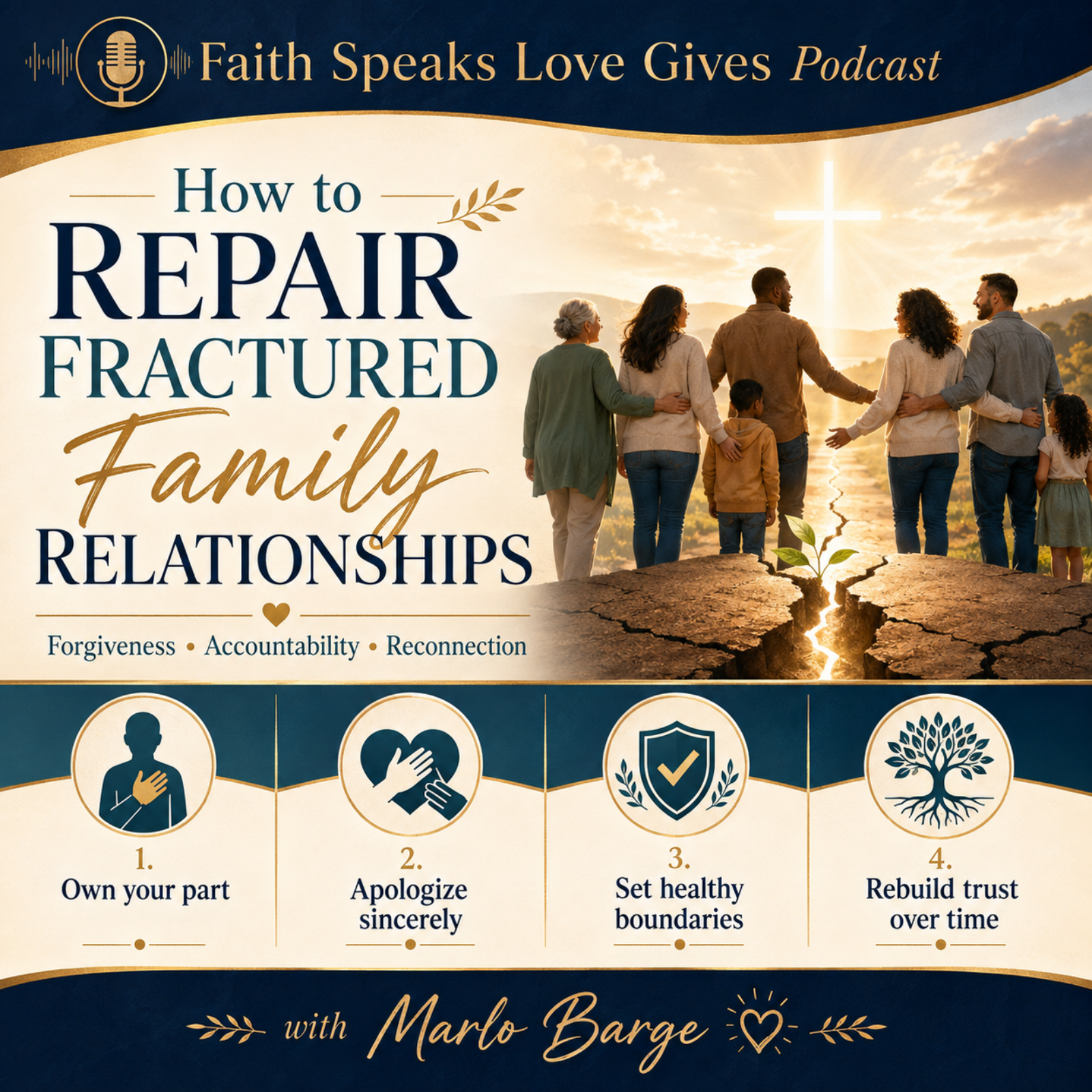 How to Repair Fractured Family Relationships 19.08.2026 20minFamily relationships can become fractured through misunderstandings, hurtful words, broken trust, pride, resentment, and years of silence. In this episode of the Faith Speaks Love Gives Podcast, Marlo Barge discusses what it takes to begin the healing process.Repairing a relationship does not mean pretending the hurt never happened. It requires honest reflection, personal accountability, sincere apologies, forgiveness, healthy boundaries, and a willingness to listen without immediately becoming defensive.Forgiveness can begin with one person, but reconciliation requires effort from everyone involved. Trust may not return after one conversation—it must be rebuilt through patience, consistency, respect, and changed behavior.The goal is not to win an old argument. The goal is to determine whether something healthier can be built moving forward. Sometimes healing begins with one simple step: making the call, sending the message, offering the apology, or letting a family member know that they are loved.Key TakeawaysExamine your own contribution to the conflict.Apologize sincerely without excuses or blame.Listen to understand, not merely to respond.Recognize that forgiveness and reconciliation are different.Use healthy boundaries when necessary.Rebuild trust through consistent actions.Do not allow future generations to inherit unresolved family divisions.Think about one fractured family relationship in your life. What healthy and sincere step can you take toward peace?Subscribe to the Faith Speaks Love Gives Podcast and share this episode with someone who may need encouragement.
 -
 Staying Grounded in a Polarized, Divided Country 19.08.2026 22minLife doesn't feel steady right now — not for you, not for anyone you know. This episode is for the beginner believer trying to hold onto faith while the world outside (and sometimes inside the church) feels like it's coming apart.Faith Speaks, Love Gives is built on one simple truth from Marlo Barge's book, Faith That Speaks, Love That Gives: real faith always does two things at once. It speaks truth out loud, and it gives itself away in love. One without the other falls apart — and that's the lens for everything in tonight's episode.Tonight we go straight into what beginner Christians are actually wrestling with in America right now:The loneliness so many of us carry even while surrounded by people — and why community has to be pursued, not just attendedHonest doubt, and why "Lord, I believe; help thou mine unbelief" might be the truest prayer in the BibleComparison culture and the quiet toll social media takes on your identity and your walk with GodAnxiety and mental health — and why prayer and getting real help were never in competition with each otherFinancial stress, and what biblical prosperity actually looks like versus the world's version of "enough"Staying grounded — and kind — in a country that feels split down the middleEvery topic is grounded in Scripture, real talk, and one practical step you can actually take this week. No shame, no pretending the hard stuff isn't hard — just honest faith for people who are still figuring it out.If you're new here, new to your faith, or coming back to it after time away: this one's for you.Rooted in the teaching of Faith That Speaks, Love That Gives (Books 1 & 2) by Marlo Barge, available now on Amazon.Faith speaks. Love gives. Let's get into it.Let me know if you want it shorter, punchier, or tweaked for tone before you drop it tonight.
 -
 Spoken Faith Versus Tangible Deeds: When Faith Becomes Action 25.07.2026 18minIn this episode of the Faith Speaks, Love Gives Podcast, host Marlo Barge explores the difference between simply talking about faith and living it out through practical action.Prayer, Scripture, and words of encouragement are powerful, but biblical faith should also become visible through compassion, generosity, service, and obedience. Many people are silently facing job loss, financial hardship, grief, illness, loneliness, family struggles, and uncertainty. They need our prayers, but sometimes God may also be calling us to become part of the answer.Sometimes faith says, “I’m praying for you.”Other times, faith says:“I brought you something to eat.”“I found a job opportunity for you.”“I gave you a ride.”“I helped you complete the application.”“I came to sit with you.”“I used what God placed in my hands to help.”We are not saved by good works. Salvation is a gift of grace through faith in Jesus Christ. However, genuine faith produces fruit. Our actions do not earn salvation, but they demonstrate that our faith is alive and changing how we live.In This Episode:• The difference between spoken faith and active faith • Why prayer should lead to obedience when we are able to help • How faith, grace, and good works fit together • Why real love may require sacrifice and inconvenience • How small acts of kindness can become answers to prayer • Why our private actions should match our public declarations of faithKey Scriptures:James 2:15–17 1 John 3:18 Ephesians 2:8–10 Matthew 5:16This Week’s Challenge:Ask one person:“How can I support you right now?”Then listen and take one practical step to help.Send the message. Share the resource. Make the introduction. Prepare the meal. Offer transportation. Visit the person. Pray with them—and continue supporting them after the prayer is over.Faith speaks. Love gives.When faith and love work together, people do not simply hear about the goodness of God—they experience it.Faith Speaks, Love Gives Podcast Hosted by Marlo BargeHelping everyday believers live out real faith, real love, and real obedience in today’s world.
 -
 Biblical Prosperity Versus the Babylonian System 20.07.2026 19minWhat does it truly mean to prosper according to the Bible?In this episode of the Faith Speaks, Love Gives Podcast, Marlo Barge examines the difference between biblical prosperity and the worldly system of wealth, status, power, and self-glorification represented by Babylon.God is not against His people building businesses, earning income, owning property, creating opportunities, or leaving an inheritance. The danger begins when money becomes our master, success becomes our identity, and people become tools for personal advancement.Biblical prosperity is much greater than material wealth. It includes peace, wisdom, strong character, healthy relationships, spiritual maturity, responsible stewardship, and the ability to serve others with what God has placed in our hands.The Babylonian system says:Build your own name.Trust in wealth and influence.Measure your worth by possessions and status.Compromise your values to get ahead.Use people to accomplish your ambitions.Accumulate without accountability.Glorify yourself instead of God.Biblical prosperity says:Seek God’s Kingdom first.Work with integrity and diligence.Treat people fairly.Manage resources responsibly.Remain generous and content.Remember that God is the source.Use increase to bless your family, community, and the work of the Kingdom.Money itself is not evil. Scripture warns us about the love of money and the pride that can develop when we begin believing our success came entirely through our own strength.God may bless the work of our hands, but He also cares about the condition of our hearts, the methods we use, and the way we treat people along the journey.In this episode, we discuss:The biblical meaning of prosperity.Why prosperity should not be reduced to money.How Babylon represents a corrupt spiritual and economic system.The difference between ownership and stewardship.Why God examines how wealth is created and used.The danger of building success through exploitation.How contentment protects us from greed.Why integrity must grow alongside influence.How believers can build without bowing to Babylon.This episode challenges us to ask:Am I building to glorify God or to prove my importance?Would I compromise my values for a larger opportunity?Have I connected my identity to money, titles, possessions, or recognition?Am I treating people with dignity as I pursue my goals?Am I managing what God has already given me responsibly?God does not simply want to give us more. He wants to make us trustworthy.He wants our character to carry our calling, our integrity to support our influence, and our generosity to grow alongside our resources.Build. Work. Create. Plan. Invest. Grow.But do it with clean hands, a surrendered heart, and the understanding that everything ultimately belongs to God.Scriptures ReferencedGenesis 11:1–9 Deuteronomy 8:18 Proverbs 10:22Matthew 6:24, 331 Timothy 6:6–10James 5:1–6Revelation 18.Listen, reflect, and share this episode with someone seeking to build a prosperous life without sacrificing faith, integrity, or purpose.Faith Speaks, Love Gives Podcast Hosted by Marlo BargeHelping everyday believers live out real faith, real love, and real obedience in today’s world.
 -
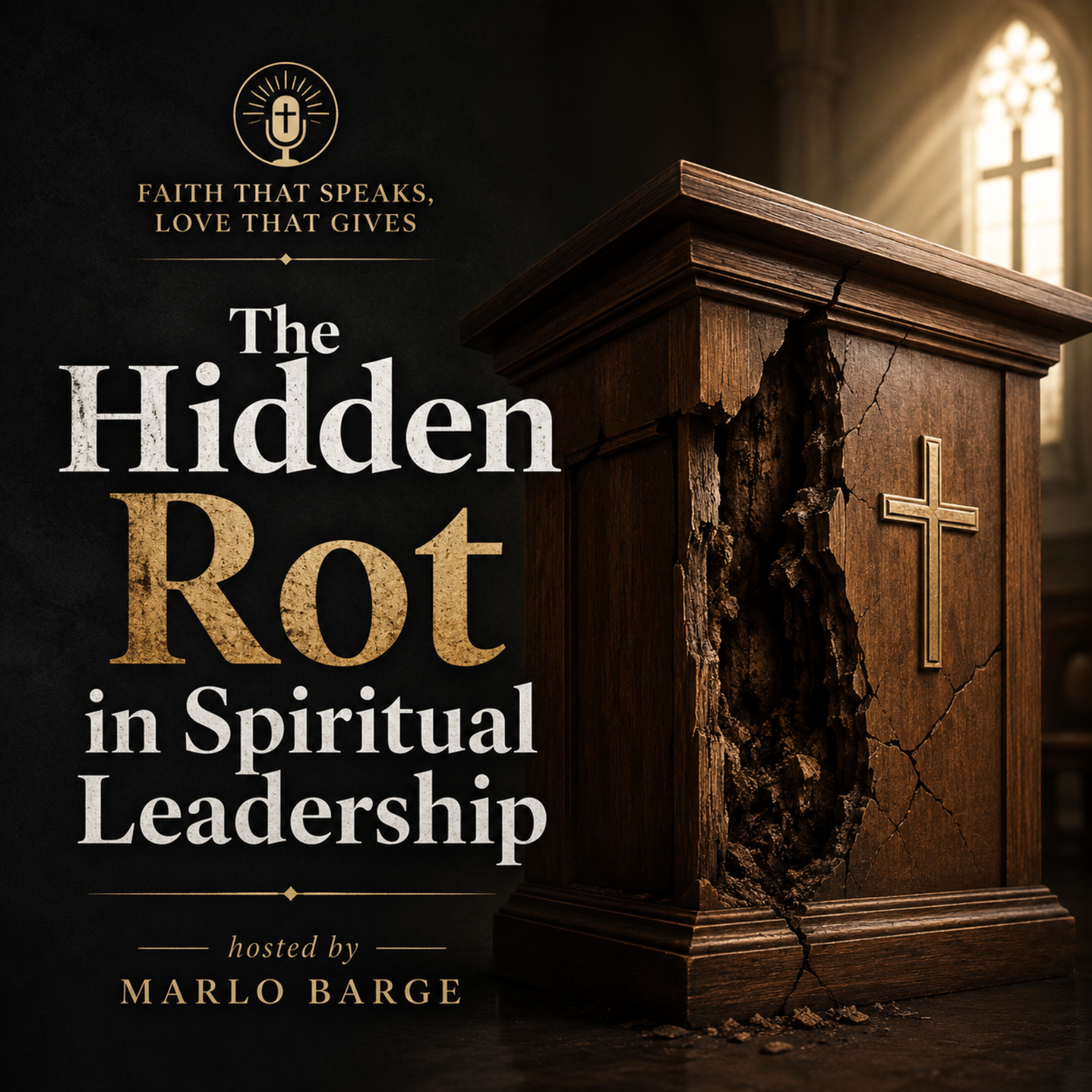 The Hidden Rot in Spiritual Leadership 17.07.2026 22minA spiritual leader can look strong, sound faithful and maintain a polished public image while privately becoming hollow. Like a freshly painted support beam hiding rotted wood, visible success cannot compensate for hidden character decay. Eventually, pressure reveals what appearance has concealed.This episode examines an important question: Does honestly acknowledging an internal struggle weaken spiritual authority, or does performing perfection create the greater danger?Jesus taught that “out of the abundance of the heart the mouth speaks” (Matthew 12:34). Our words often reveal what has been developing inside us. Anger, pride, exhaustion, resentment, dishonesty and hopelessness do not disappear simply because a leader knows how to speak spiritually in public.However, honesty does not mean broadcasting every private wound to the people we are called to serve. Mature leadership requires bounded honesty. Some struggles belong first in the private workshop of accountability—with God, a trusted mentor, counselor, pastor, spouse or mature friend who can pray, confront, guide and help rebuild the damaged structure.There is a difference between genuine vulnerability and emotional dumping. Leaders should not make their followers responsible for carrying the weight of their healing. Private accountability should often come before public disclosure. This protects the congregation, family, team or community while also preventing leaders from hiding behind the words, “I’m good.”The episode also distinguishes honest lament from hopeless speech. Honest lament says, “I am hurting, but I am still turning toward God.” Hopeless speech declares that healing is impossible and spreads despair. Faith does not deny pain; it brings pain into the light without surrendering hope.Real repentance is demonstrated through responsibility. A sincere apology does not say, “I’m sorry you felt hurt,” or demand that the wounded person understand the pressure the leader was under. It says:“What I did was wrong.”“I hurt you.”“I take responsibility.”“I am sorry.”Explanation must never replace ownership.First John 3:18 reminds us to love “in deed and in truth.” Sometimes love looks like practical help. Sometimes it looks like correction. Sometimes it requires a necessary boundary. Healthy boundaries are not the opposite of love; they can protect people from manipulation, dependency, burnout and misplaced responsibility.The true measure of spiritual leadership is not a title, platform, following or public performance. It is private integrity, truthful speech, responsible repentance, disciplined accountability and a life that consistently points people back to Jesus Christ.Questions for ReflectionWhere might polished language be covering hidden decay?Who has permission to challenge you privately?Are your apologies taking responsibility or protecting your image?Does your honesty produce healing and hope—or place your burden on others?What needs to be repaired privately before you return to the platform?Faith must speak truth. Love must act responsibly. And leadership must be strong enough to confront what is hidden before pressure exposes it.Read the companion LinkedIn article:The Hidden Rot in Spiritual Leadership: The Foundation We Must Fixhttps://www.linkedin.com/pulse/hidden-rot-spiritual-leadership-foundation-fix-africa-qhjucFaith That Speaks, Love That Gives Podcast Hosted by Marlo Barge
 -
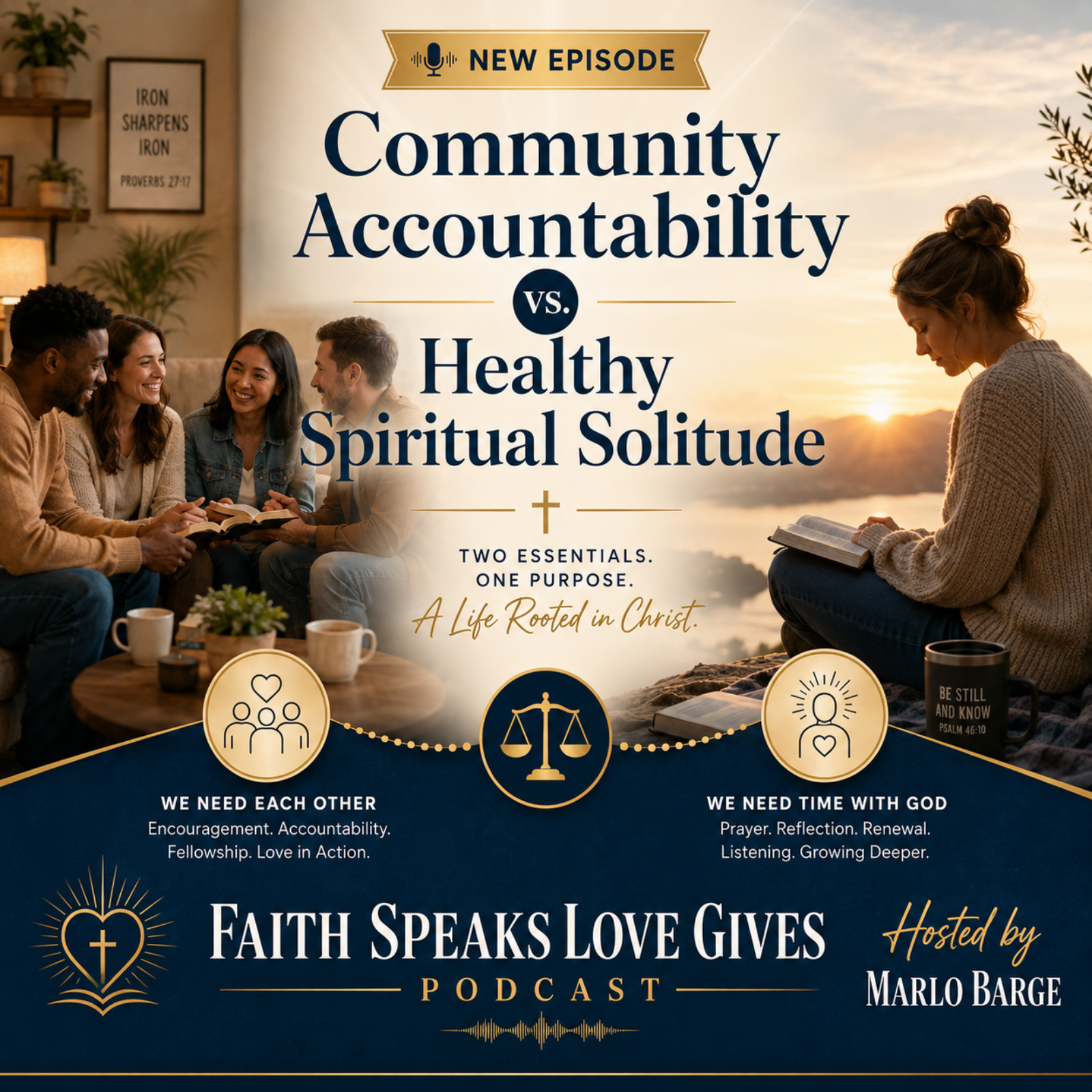 Community Accountability vs. Healthy Spiritual Solitude 13.07.2026 19minFaith Speaks Love Gives Podcast Hosted by Marlo BargeEvery believer needs time alone with God. Quiet prayer, reflection, Scripture, and rest can renew the mind and strengthen the spirit. Jesus Himself stepped away from the crowds to pray.But healthy spiritual solitude is not the same as unhealthy isolation.Healthy solitude says, “I need time with God so I can hear clearly, heal, and return stronger.”Isolation says, “I do not need anyone. Nobody understands me. I can handle everything by myself.”One brings clarity and renewal. The other can lead to secrecy, discouragement, pride, bitterness, and spiritual vulnerability.In this episode, Marlo Barge explores why believers need both personal time with God and trustworthy spiritual community. God speaks through prayer and Scripture, but He also uses pastors, mentors, friends, family members, and fellow believers to encourage us, correct us, and help us see what we may be missing.Healthy accountability is not control, manipulation, public embarrassment, forced vulnerability, or spiritual intimidation. It is built on trust, prayer, truth, humility, confidentiality, and genuine concern.A trustworthy accountability partner may ask:How are you really doing?Are your current choices moving you closer to Christ?Are you staying faithful to what God called you to do?Are you avoiding something that needs to be addressed?Do you need prayer, encouragement, correction, or support?Community becomes unhealthy when people use spiritual authority to dominate others. Solitude becomes unhealthy when it is used to avoid responsibility, correction, difficult conversations, or meaningful relationships.The answer is not choosing community over solitude—or solitude over community. The answer is learning how to practice both in a healthy, Christ-centered way.Spend time alone with God, but do not disappear from everyone who genuinely loves you.Protect your peace, but do not build walls so high that nobody can reach you.Use discernment, but do not let past hurt convince you that every Christian relationship will fail.Key ScripturesLuke 5:16 Hebrews 10:24–25 Ecclesiastes 4:9–10 Galatians 6:1–2 Proverbs 27:17Reflection QuestionAre you practicing healthy spiritual solitude, or have you slowly become isolated?Healthy solitude strengthens your relationship with God.Healthy accountability strengthens your walk with God.We need both.
 -
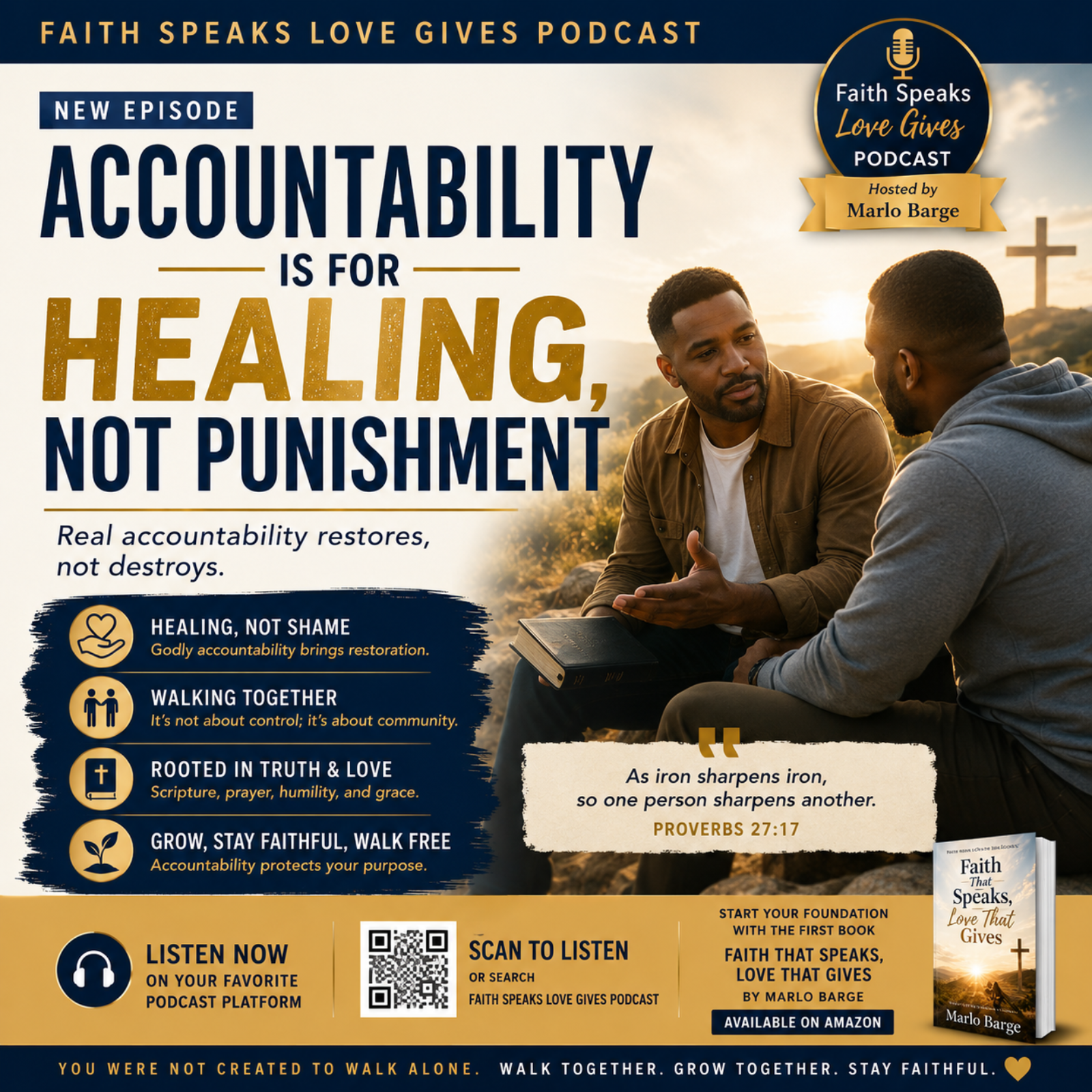 Accountability Is for Healing, Not Punishment 09.07.2026 39min🎙️ New Episode: Accountability Is for Healing, Not PunishmentIn this episode of the Faith Speaks Love Gives Podcast, hosted by Marlo Barge, we talk about a truth many believers need to hear: godly accountability is not designed to shame you, punish you, control you, or make you feel small. It is designed to help you heal, grow, mature, and stay faithful to Christ.Many people avoid accountability because they have seen it misused. They have experienced correction without compassion, leadership without love, or discipline without grace. But real biblical accountability does not destroy people. It restores them. It helps us come out of isolation, walk in truth, face what needs to be healed, and become stronger in our faith.Accountability is not about someone standing over you. It is about someone walking with you. It is not about exposing you for embarrassment. It is about helping you become whole. When accountability is rooted in love, prayer, humility, and Scripture, it becomes a tool for healing, not punishment.This episode is for anyone who has ever been hurt by correction, misunderstood accountability, or felt afraid to let people close enough to help them grow. Godly accountability does not cancel your calling. It helps protect it.📖 To build a strong foundation in this message, you can also purchase the first book in the series here: https://www.amazon.com/dp/B0H22NNWP6Stay encouraged. Keep growing. Keep healing. And remember: you were not created to walk alone.#FaithSpeaksLoveGives #MarloBarge #ChristianPodcast #FaithThatSpeaksLoveThatGives #Accountability #HealingNotPunishment #ChristianGrowth #BiblicalCommunity #SpiritualGrowth #FaithAndLove
 -
 Character Forged in the Hidden Workshop 06.07.2026 23minFaith Speaks, Love Gives Podcast Hosted by Marlo BargeSome of the most important work God performs in our lives happens where nobody else can see it.In this episode, “Character Forged in the Hidden Workshop,” we explore the quiet seasons of preparation—the private struggles, repeated lessons, delayed answers, and everyday acts of obedience that shape who we are becoming.The hidden workshop may feel lonely, uncomfortable, or unproductive, but it is not wasted time. It is often the place where faith becomes stronger, motives become purer, and character develops the strength necessary to carry the responsibility connected to our calling.Before there is public recognition, there is usually private preparation. Before God expands our influence, He often works on our integrity, patience, humility, discipline, and ability to remain faithful without applause.In This EpisodeYou will be encouraged to understand that:Hidden seasons are seasons of preparation, not punishment.Character is developed through consistent choices when nobody is watching.Pressure can reveal the areas God is still strengthening.Delays do not mean God has forgotten you.Private faithfulness prepares you for public responsibility.Your identity must be rooted in God rather than recognition, titles, or approval.The process is preparing you to carry what you have been praying for.God is not only concerned about where you are going. He is also concerned about who you will become when you arrive.Do not rush through the hidden workshop. Allow God to strengthen your foundation, correct what needs correction, heal what needs healing, and prepare your heart for the next season.Reflection QuestionsWhat is God developing in you during this season?Are you remaining faithful even when your work is not being noticed?What habits, attitudes, or distractions must you release so your character can grow?The hidden work matters. The private decisions matter. The process matters.You are not being overlooked. You are being prepared.Continue the JourneyDiscover more faith-centered encouragement in the book:Faith That Speaks, Love That GivesAvailable on Amazon: https://www.amazon.com/dp/B0H4897G4SListen, reflect, and share this episode with someone who may be walking through a hidden season.Remember: what God develops privately will eventually become visible through the life you live publicly.#FaithSpeaksLoveGives #ChristianPodcast #FaithJourney #CharacterDevelopment #SpiritualGrowth #TrustTheProcess #GodsTiming #Purpose #PrivatePreparation #Faithfulness
 -
 Stop Building Your Identity on Sand 05.07.2026 21minStop Building Your Identity on SandWhat happens when the things you have allowed to define you suddenly begin to shift?Titles can change. Money can come and go. Relationships can rise and fall. People’s opinions can change overnight. Success can fade, and painful seasons can challenge everything you thought you knew about yourself.In this meaningful episode of the Faith Speaks, Love Gives Podcast, Marlo Barge shares an important reminder: if your identity is built on temporary things, life will always feel unstable when storms come.Jesus taught that the wise person builds their house on the rock. The storms still came, the winds still blew, and the rain still fell — but the house stood because it had the right foundation.That same truth applies to our lives.If your identity is built on appearance, approval, status, career, relationships, finances, or even past pain, then your sense of self can crumble when those things are shaken. But when your identity is rooted in God, His truth, and His purpose, you can remain steady even in difficult times.This episode is a heartfelt encouragement to stop building on sand and start building on the solid foundation of God’s Word.In This Episode, You’ll Be Encouraged To:Examine what has been shaping your identityLet go of false labels and unstable foundationsStop depending on outside validation for your worthUnderstand how storms reveal what your life is built uponRebuild your confidence on God’s truth, love, and purposeStrengthen your walk with faith that remains firm under pressureYou are not just your past. You are not just your struggles. You are not what people said about you. You are who God says you are.Featured ScriptureMatthew 7:24–27Continue the JourneyFaith That Speaks, Love That Gives Amazon Book Link: https://www.amazon.com/dp/B0H4897G4SPodcastFaith Speaks, Love Gives Podcast Hosted by Marlo BargeMay this episode encourage you to build your life on what lasts, trust God more deeply, and remember that a strong foundation in Christ will carry you through every storm.
 -
 Can Your Words Steer Your Faith? 01.07.2026 20minThis episode, “Can Your Words Steer Your Faith?”, is a reminder that the words we speak can influence the direction of our thoughts, decisions, relationships, and spiritual walk. Just as a small rudder can steer a large ship, our words can help guide our lives toward faith—or pull us toward fear, doubt, and discouragement.This message is dedicated to everyone who is learning to speak life in the middle of difficult circumstances. You may not always be able to control what happens around you, but you can become more intentional about what you allow to come out of your mouth.Ask yourself: Are my words strengthening my faith or feeding my fear? Am I speaking healing, hope, truth, and love—or repeating the pain and negativity surrounding me?Let your words agree with God’s promises. Speak with wisdom. Speak with compassion. Speak with faith. Your voice has the power to encourage someone, restore hope, and help steer your own heart in a better direction.Thank you for listening to the Faith Speaks, Love Gives Podcast. May this episode inspire you to use your words to build, heal, encourage, and give life.“Death and life are in the power of the tongue.” — Proverbs 18:21
 -
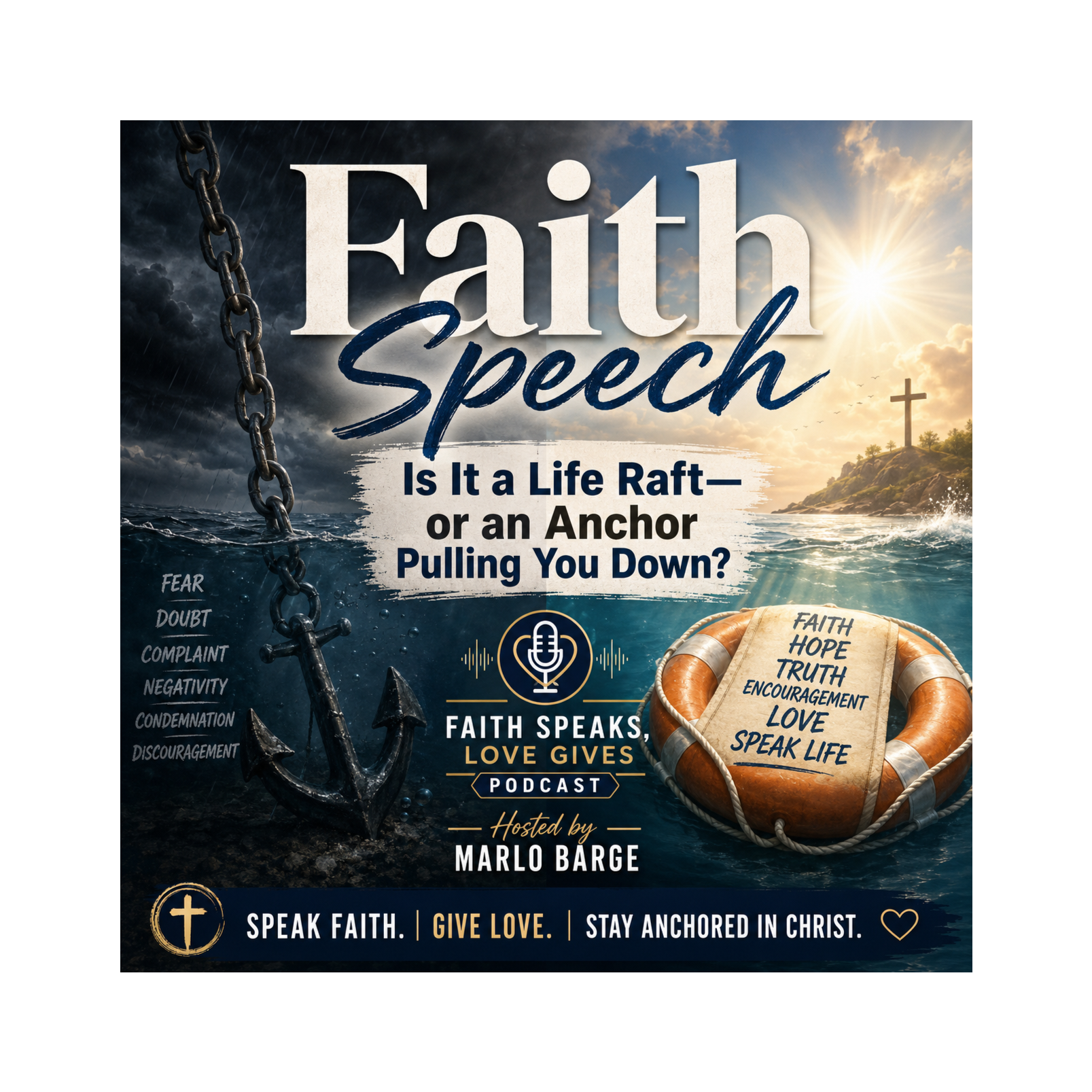 Faith Speech: Is It a Life Raft—or an Anchor Pulling You Down? 28.06.2026 21minFaith Speaks, Love Gives Podcast Hosted by Marlo BargeYour words can become a life raft that keeps you spiritually afloat—or an anchor that pulls you deeper into fear, discouragement, and defeat.In this episode, Marlo Barge explores the power of faith-filled speech during life’s most difficult moments. Faith does not require us to ignore pain, deny reality, or pretend that serious problems do not exist. True faith allows us to acknowledge the facts without allowing those facts to become the final word over our lives.The question is not only, “What are you going through?” The deeper question is, “What are you saying while you are going through it?”The words we repeatedly speak can strengthen our endurance—or reinforce fear and hopelessness. We may not control the storm around us, but we can control the language we use while standing in it.In this episode:• The difference between honesty and hopeless speech • Why faith-filled words are not the same as denial • How negative declarations can deepen discouragement • Why temporary seasons should not receive permanent labels • How speech can affect our attitude, decisions, and endurance • Guarding what we say about ourselves and others • How to acknowledge pain while remaining connected to hope • Why faith must be practiced before the pressure arrives • How our words can support us spiritually during hardshipScripture FocusProverbs 18:21 teaches that death and life are in the power of the tongue.James 3 reminds us that something as small as the tongue can influence the direction of an entire life.Mark 11:23 shows the relationship between belief, faith, and what we speak.These Scriptures do not teach us to ignore reality. They teach us to bring our words into agreement with faith, truth, wisdom, and love.You can describe the storm without declaring that it will destroy you.You can admit that you are hurting without saying that you will never heal.You can acknowledge that you are struggling without declaring that your life is over.Faith-filled speech may sound like:“This is difficult, but God is still with me.”“I do not understand everything, but I have not lost hope.”“I may be hurting today, but I will continue taking the next faithful step.”“The facts are real, but they do not have the authority to become my final identity.”Your words should not become another weight attached to your life. They should keep your heart connected to hope, truth, God’s promises, and the strength to keep moving.Reflection QuestionsWhat negative statement have you repeatedly made about yourself or your future?Are your words helping you move forward or keeping you emotionally trapped?Can you speak honestly about your circumstances without surrendering hope?What truth from God’s Word needs to replace the language of fear?What faith-filled sentence can you begin speaking today?Closing PrayerFather, help me become intentional about the words I speak. Teach me to be honest without becoming hopeless, realistic without becoming faithless, and truthful without allowing fear to control my language. When life becomes heavy, let my words keep me connected to Your promises, wisdom, and presence. Give me the discipline to speak life, encouragement, truth, and love over myself and others. In Jesus’ name, amen.Final TakeawayYour speech may not change your circumstances immediately, but it can change how you stand within them. Do not let your words become an anchor that pulls you beneath the pressure. Let faith-filled speech become a life raft—keeping you connected to hope until you reach the other side.
 -
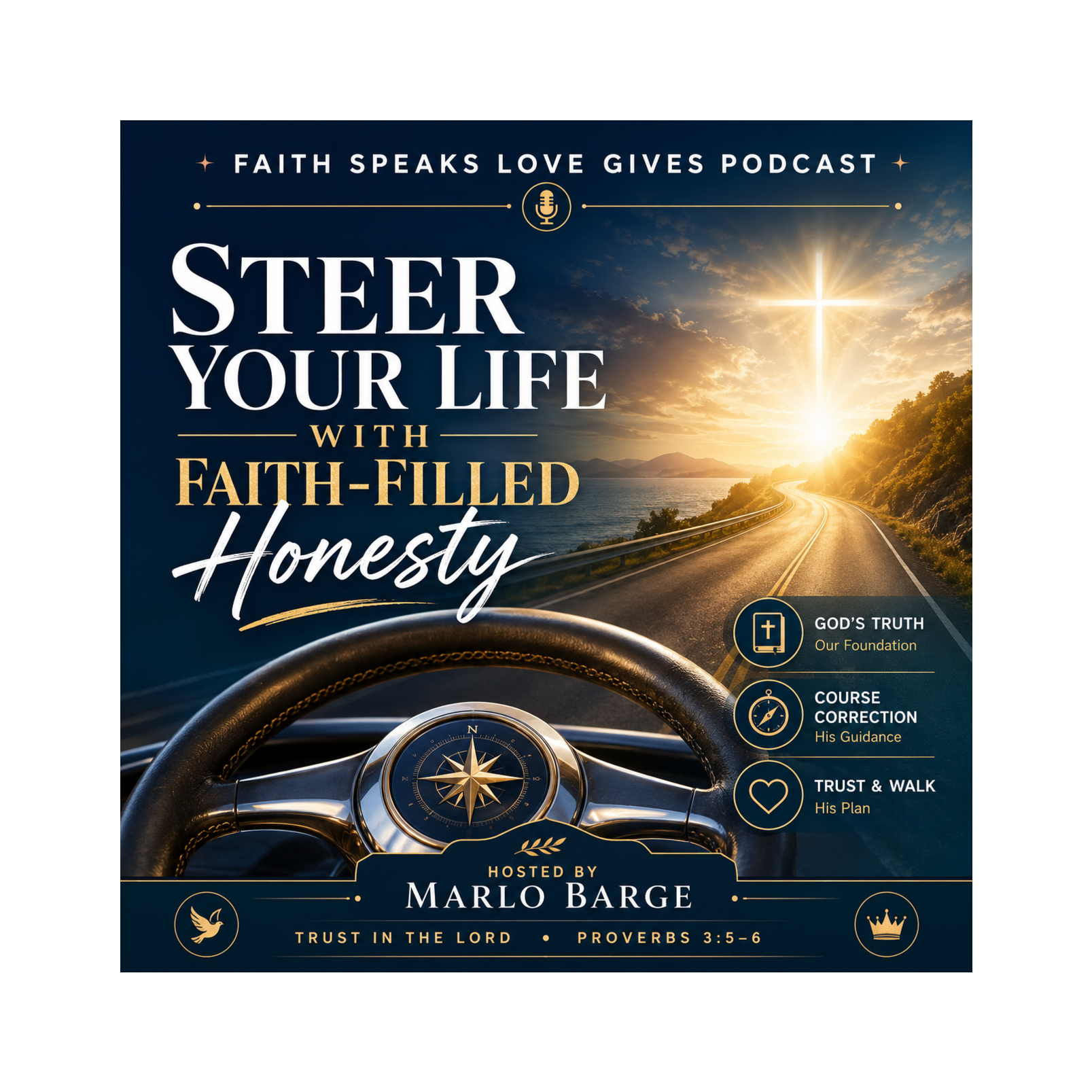 Steer Your Life with Faith-Filled Honesty 24.06.2026 41minFaith does not require you to pretend that everything is fine. Real faith gives you the courage to face the truth about your life while continuing to believe that God can guide, correct, heal, and restore you.In this episode, Marlo Barge explores the importance of faith-filled honesty—being truthful about your pain, mistakes, habits, relationships, and present circumstances without allowing those realities to determine your final destination.Your life is constantly being steered by something. Your thoughts, words, emotions, relationships, and daily decisions are all moving you in a particular direction. When you invite God into the truth of where you are, He can begin showing you where you need to go.Faith-filled honesty is not hopeless confession, negative thinking, or living in denial. It is the willingness to say, “This is where I am right now, but with God’s help, this is not where I have to remain.”In This EpisodeThe difference between genuine faith and pretendingWhy acknowledging a problem is not the same as surrendering to itHow your thoughts, words, and choices steer the direction of your lifeThe importance of being honest with God and yourselfRecognizing when pride, fear, pain, or disappointment is influencing your decisionsAccepting correction without falling into shame or condemnationSpeaking truth with faith, wisdom, and loveMaking small course corrections before they become major consequencesTrusting God to direct your path when you cannot see the entire journeyScripture Focus“Trust in the Lord with all your heart and lean not on your own understanding; in all your ways submit to Him, and He will make your paths straight.” — Proverbs 3:5–6Additional Scriptures for reflection:Psalm 139:23–24Proverbs 4:25–27John 8:32Ephesians 4:15James 1:5Key TakeawayFaith does not ask you to deny the truth. Faith gives you the courage to face the truth with God.You can acknowledge that something hurts and still believe in healing. You can admit that you made a mistake and still believe in restoration. You can recognize that you are traveling in the wrong direction and still allow God to help you turn around.Honesty reveals where you are. Faith reminds you that God can lead you somewhere better.Reflection QuestionsWhat has been steering my thoughts, words, and decisions lately?Is there an area of my life where I have been avoiding the truth, making excuses, or pretending everything is okay?What is one honest, faith-filled course correction God may be asking me to make?Closing PrayerLord, search my heart and show me the truth about the direction of my life. Give me the courage to be honest without becoming discouraged. Help me recognize the thoughts, habits, relationships, and decisions that are moving me away from Your will. Correct my path, renew my mind, and teach me to speak truth with faith and love. Steer my life according to Your wisdom and purpose. In Jesus’ name, amen.About the PodcastThe Faith Speaks Love Gives Podcast, hosted by Marlo Barge, helps everyday believers live out real faith, real love, and real obedience in today’s world.Speak faith. Give love. Walk humbly. Obey fully. Let Christ be seen.
 -
 Faith Versus the Finality of Facts 22.06.2026 20minWhat do you do when the facts in front of you seem final—but your faith says God is still working?In this episode of Faith That Speaks, Love That Gives, host Marlo Barge explores the tension between acknowledging reality and refusing to let present circumstances have the last word.Faith is not denial. It does not pretend that pain, delay, sickness, rejection, financial pressure, family conflict, or disappointment are imaginary. Facts tell us what is happening right now. But they do not always reveal what God can still do next.A diagnosis may be a fact. A closed door may be a fact. A setback, loss, mistake, or difficult season may be a fact. Yet the believer is not called to treat those facts as greater than God’s power, wisdom, timing, and purpose.This message reminds us that biblical faith can look directly at a difficult situation and still declare, “God is not finished.” We can be honest without becoming hopeless, realistic without surrendering to fear, and patient without quitting.In This EpisodeYou’ll be encouraged to:• Understand the difference between facts and finality • Face reality without allowing fear to control your response • Trust God when the evidence appears to contradict the promise • Stop treating a temporary season as a permanent identity • Bring your thoughts, words, and actions into agreement with faith • Combine prayer with wisdom, patience, obedience, and action • Remember that delay does not automatically mean denial • Refuse to let disappointment have the final wordFaith Does Not Ignore FactsFaith does not require us to lie about what hurts or act as though problems do not exist.You can say, “This is difficult,” while still believing God will strengthen you.You can say, “I do not know what comes next,” while still trusting the One who does.You can acknowledge a medical, financial, relational, or emotional reality without making it your permanent identity.Facts describe the present condition. Faith places that condition in the hands of God.The Danger of Calling Something FinalOne of the enemy’s strongest weapons is convincing us that what we see today is all we will ever see.A difficult chapter begins to feel like the entire story. A failure becomes an identity. A delay becomes proof that the promise will never come. Rejection becomes evidence that we are unworthy.But the God of Scripture repeatedly enters situations that appear finished and reveals that He is still able to redeem, restore, redirect, heal, strengthen, and bring new life.The tomb looked final—until resurrection.Key TakeawayFaith does not deny the facts. Faith denies the facts the authority to become God.What you are facing may be real, but it does not have to be the final word over your life.Keep praying. Keep obeying. Keep growing. Keep seeking wise help. Keep taking the next faithful step.God is not limited to what you can currently see.Who This Episode Is ForThis episode is for anyone facing:• A discouraging diagnosis or prolonged healing journey • Financial pressure or a closed opportunity • Family conflict, rejection, grief, or disappointment • A delayed promise or unanswered prayer • Fear that the current situation will never change • The temptation to quit because the evidence looks finalReflection QuestionWhat fact have you allowed to become a final verdict—and what would it look like to place it back into God’s hands?About the PodcastFaith That Speaks, Love That Gives offers practical, Christ-centered encouragement for believers learning to speak faith, live with obedience, love others well, and trust God through every season.Hosted by Marlo Barge
 -
 Power of Faith-Filled Words 22.06.2026 2minDo your private words match the faith you express publicly?In this short but powerful episode of Faith That Speaks, Love That Gives, host Marlo Barge examines the spiritual weight of the words we speak over ourselves, our children, our marriages, and our homes.Scripture teaches that the mouth speaks from the abundance of the heart. Our words are not harmless—they reveal what is taking root within us and help determine the direction of our lives. Like a small rudder guiding a large ship, the tongue can steer a family toward faith, wisdom, healing, and hope—or toward fear, defeat, and discouragement.This message challenges listeners to recognize the difference between honestly acknowledging a problem and partnering with defeat. Saying, “My child is struggling, and I am praying for wisdom,” does not deny reality. It brings that reality under the authority of faith.The goal is not to pretend that pain, pressure, or difficulty does not exist. The goal is to replace automatic defeat-filled statements with Scripture-based truth and speak in a way that agrees with God.In This EpisodeYou’ll be encouraged to:• Examine whether your daily speech matches your faith • Understand how words shape the atmosphere of a home • Speak over your children with faith rather than defeat • Acknowledge challenges without surrendering to hopelessness • Replace negative declarations with biblical truth • Recognize God as your strength when you feel weak • Practice greater discipline over complaints and harmful speech • Track the words you resist, the words you choose, and the Scriptures you useReplacing Defeat With TruthInstead of saying, “I cannot handle this,” remember that God is your refuge and strength—Psalm 46:1.Instead of declaring, “My family will never change,” stand on the decision to serve the Lord—Joshua 24:15.Instead of saying, “I have no wisdom,” ask God, who gives wisdom generously—James 1:5.Faith-filled speech is not fake positivity. It is the decision to place God’s truth above fear, frustration, and temporary circumstances.The Seven-Day Faith Speech FastThis episode introduces a simple seven-day practice: refuse to feed complaint, defeat, destructive self-talk, or words that tear others down.Each day, pay attention to:Resisted Words: What negative or harmful words did you stop yourself from speaking?Chosen Words: What faith-filled words did you intentionally speak instead?Scripture Used: What biblical truth helped guide your response?This fast is not about becoming silent. It is about surrendering your tongue to God and allowing revelation to create room for repentance and transformation.Key TakeawayYour words can build or break, bless or wound, strengthen faith or strengthen fear.You may not feel strong, but God is your strength. You may not see the answer yet, but you can still choose speech that reflects trust in Him.The goal is not to become fake-positive.The goal is to become faithful.Reflection QuestionWhat speech do you need to fast from most today?About the PodcastFaith That Speaks, Love That Gives is hosted by Marlo Barge and offers practical, faith-centered encouragement for living with greater purpose, discipline, love, and spiritual confidence.Keywords: faith-filled words, Christian encouragement, power of the tongue, biblical speech, faith over fear, family faith, Scripture-based truth, Christian podcast, Marlo Barge
Podcast serupa


Popular di
Podcast ini turut muncul dalam senarai podcast negara-negara ini.
