
Stay Current in Pediatric Surgery
StayCurrent: Pediatric Surgery
0
This podcast provides ongoing mentoring and education for physicians through GlobalCastMD's network. It aims to deliver entertaining, interactive education on pediatric surgery topics. The content is designed for healthcare professionals regardless of location. The podcast is dedicated to the rapid advancement of care everywhere.
Episod
-
 Fetoscopic Endoluminal Tracheal Occlusion (FETO) Procedure: Step-by-Step Guide 17.09.2026 4minLearn the procedural aspects of Fetoscopic Endoluminal Tracheal Occlusion (FETO) with Beth Rymeski, DO, a Pediatric Surgeon from Cincinnati Children's. This video details the steps of using a fetoscope to insert and inflate a balloon in the fetal trachea, a technique designed to prevent pulmonary hypoplasia in congenital diaphragmatic hernia (CDH) babies by promoting lung expansion. Witness real-life intraoperative footage demonstrating navigation challenges and balloon placement strategies during this complex fetal intervention.
 -
 Severe Congenital Diaphragmatic Hernia (CDH) Case: FETO Management & Unexpected Findings with Dr. Beth Rymeski 17.09.2026 3minThis video presents a complex case of severe Congenital Diaphragmatic Hernia (CDH) managed with Fetal Endoscopic Tracheal Occlusion (FETO). Dr. Beth Rymeski from Cincinnati Children's discusses the prenatal diagnosis, the FETO procedure, and the challenging postnatal course. The case highlights unexpected congenital anomalies found at birth despite extensive prenatal imaging and the limitations of current diagnostic and interventional approaches.
 -
 FETO for Late-Diagnosed Severe Congenital Diaphragmatic Hernia (CDH) at Cincinnati Children's with Dr. Beth Rymeski 17.09.2026 4minThis video presents a detailed case study of a 24-year-old mother with a late diagnosis of severe congenital diaphragmatic hernia (CDH) at 28 weeks of gestation. Pediatric Surgeon Dr. Beth Rymeski from Cincinnati Children's Hospital highlights the successful application of Fetal Endoluminal Tracheal Occlusion (FETO) to promote fetal lung development. The presentation covers the diagnostic findings, FETO procedure, maternal and neonatal course, and the significant increase in fetal lung volume achieved, demonstrating a positive outcome for a critically ill infant.
 -
 Advancements in Pediatric Intestinal Failure: Innovative Therapies and Improved Outcomes 11.08.2026 17minExplore the latest advancements in pediatric intestinal failure, including innovative therapies and improved patient outcomes. Dr. Stephanie Bachi de Castro Oliveira and Dr. Paul W. Wales discuss intestinal rehabilitation, challenges like chronic inflammation and liver disease, and the crucial role of multidisciplinary teams. They also highlight groundbreaking nutritional strategies and novel peptide therapies that are transforming care.This podcast episode features Dr. Stephanie Bachi de Castro Oliveira and Dr. Paul W. Wales from Cincinnati Children's, discussing advancements in pediatric intestinal failure. They define intestinal failure as a reduction in functional intestinal mass requiring parenteral support for an extended period, primarily caused by short bowel syndrome. The conversation highlights a shift in focus from survival to managing long-term complications like neurocognitive outcomes and caregiver burnout. Intestinal rehabilitation programs are key to optimizing intestinal function and adaptation, with multidisciplinary teams improving survival and reducing transplant rates. They delve into the spectrum of liver disease associated with intestinal failure, risk factors like prematurity and infections, and the critical management of parenteral nutrition. The doctors provide a history of lipid emulsions, explaining how traditional soybean-based lipids can cause liver dysfunction and the benefits of newer omega-3 balanced options. They also discuss innovative central line lock solutions like KiteLock and the transformative impact of GLP-2 analogs such as Teduglutide and Apraglutide on reducing TPN dependence and promoting bowel lengthening. The ultimate goal is to avoid transplantation and lifelong immunosuppression through integrated, specialized care.
 -
 Update Course Rewind 2025: Nerve Monitoring - Diaphragm Pacing for Respiratory Failure 11.08.2026 1minDr. P. Ben Ham III discusses diaphragm pacing as an intervention for children with respiratory failure, aiming to help them wean off mechanical ventilation. The video covers indications such as central hypoventilation, spinal cord injury, ALS, and metabolic disorders like Pompe's disease. It explains the mechanism of phrenic nerve and diaphragm muscle stimulation, and differentiates between various device types.
 -
 Update Course Rewind 2025: Neck Pathologies - The Diagnostic Challenge 31.07.2026 3minThis video, featuring Dr. Douglas von Allmen from Cincinnati Children's Hospital, explores the differential diagnosis and management of cystic neck masses in pediatric patients, specifically ranulas and lymphatic malformations. It presents a clinical case that highlights diagnostic challenges and discusses various treatment approaches, including surgical excision, sclerotherapy, and emerging medical therapies. The role of genetic testing in guiding treatment for lymphatic malformations is also covered.
 -
 Update Course Rewind 2025: Updates in Necrotizing Enterocolitis (NEC) Management 31.07.2026 11minNarrated by Lizzy Lee, PA-C & Maggie Koenig, FNP-BC, this podcast, a rewind from the 2025 Pediatric Surgery Update Course, delves into crucial updates in Necrotizing Enterocolitis (NEC) management. Leading pediatric surgeons Drs. Augusto Zani, Simon Eaton, & Dan Ostlie discuss diagnostic challenges, highlighting the superior sensitivity of ultrasound over X-rays for early detection of surgical NEC indicators. The panel also debates various surgical interventions, including primary anastomosis versus ostomy, and examines emerging evidence on optimizing recovery outcomes for neonates with NEC.
 -
 Update Course Rewind 2025: The Recurrent TEF Problem 24.07.2026 2minThis video, featuring experts from Cincinnati Children's, discusses the challenging management of recurrent tracheoesophageal fistula (TEF) years after initial repair. Dr. Douglas von Allmen presents a clinical scenario and highlights the risk of recurrent laryngeal nerve (RLN) injury during re-repair. The episode emphasizes a transtracheal approach to improve surgical exposure and minimize potential harm to the RLN, thereby reducing long-term voice and aspiration issues.
 -
 Update Course Rewind 2025: Sacral Nerve Stimulation for Refractory Pediatric Fecal Incontinence 24.07.2026 2minThis video, featuring Dr. P. Ben Ham III, discusses sacral nerve stimulation (SNS) as a treatment option for children with severe fecal incontinence and constipation refractory to conventional medical therapies. It presents a clinical scenario of a 13-year-old male and reviews the technique, efficacy, and potential complications of SNS in pediatric patients. The discussion highlights improved continence rates and important considerations regarding its current FDA approval status for children.
 -
 Updated Course Rewind 2025: Branchial Cleft Cyst Management: Endoscopic vs. Open Surgical Approaches 24.07.2026 2minThis video, featuring Dr. Douglas von Allmen from Cincinnati Children's Hospital, explores the management of branchial cleft cysts. It discusses a clinical scenario of a child with a painless neck swelling and delves into the congenital nature of these cysts. The video highlights the comparison between endoscopic cauterization and open surgical excision, emphasizing the benefits of the endoscopic approach in reducing morbidity and avoiding recurrent laryngeal nerve injury for specific cyst types.
 -
 Update Course Rewind 2025: Nerve Monitoring in Pediatric Thyroid Surgery 24.07.2026 6minThis video recaps key highlights from the 13th Annual Pediatric Surgery Update Course, focusing on nerve monitoring in pediatric thyroid surgery. Dr. Ben Ham discuss clinical scenarios, the utility of TI-RADS in children, and the role of intraoperative nerve monitoring (IONM) in preventing recurrent laryngeal nerve injury. The discussion covers current guidelines, surgeon expertise, and advancements in monitoring devices for pediatric patients.
 -
 Inside a FETO Procedure: Fetoscopic Balloon Tracheal Occlusion with Dr. Beth Rymeski 13.07.2026 4minThis video, presented by Dr. Beth Rymeski of Cincinnati Children's Hospital, details the procedural aspects of Fetal Endoluminal Tracheal Occlusion (FETO). It explains how a fetoscope is used to insert a balloon into the fetal trachea to temporarily block fluid, facilitating lung expansion and preventing pulmonary hypoplasia in CDH babies. The presentation includes real-life video footage, demonstrating critical navigation techniques through fetal anatomy and careful balloon placement.
 -
 Update Course Rewind 2025: New Technologies for Central Line Management 13.07.2026 3minThis video explores innovative technologies for central line management, focusing on solutions for blocked superior vena cava (SVC). Dr. Nathan Fagan discusses the MeritMedical Surfacer system for image-guided SVC recanalization via a femoral approach. The presentation also delves into the potential of 4D intracardiac echo catheters for radiation-free recanalization and reviews transhepatic and translumbar access as last-resort options when traditional venous access is lost.
 -
 Update Course Rewind 2025: Updates in Central Line Management 29.06.2026 3minDr. Nathan Fagan, a Pediatric Interventional Radiologist from Akron Children's Hospital, presents a clinical scenario on central line management from the 13th Annual Pediatric Surgery Update Course. He discusses diagnosing and managing a malfunctioning subclavian dual-lumen port, highlighting how proper access assessment can prevent unnecessary port removal. The video also covers interventional radiology techniques like sharp recanalization of the Superior Vena Cava (SVC) to restore vascular access for complex patients.
 -
 Update Course Rewind 2025: Robotics in Pediatric Surgery: Which indications benefit the most? 23.06.2026 4minThis video series recaps highlights from the 13th Annual Pediatric Surgery Update Course. Dr. Juan Gurria discusses the pros and cons of robotic surgery in pediatric patients, comparing it to laparoscopic surgery, and exploring its future. The discussion covers surgical proficiency, cost-effectiveness, and various indications for robotic interventions in children.For more information on Dr. Juan Gurria at Cincinnati Children's, click here: https://www.cincinnatichildrens.org/bio/g/juan-pablo-gurria
 -
 Vertebral Body Tethering (VBT) for Pediatric Scoliosis: A Comprehensive Guide 15.06.2026 5minThis video, featuring experts from Cincinnati Children's and Akron Children's, provides an in-depth look at Vertebral Body Tethering (VBT) for pediatric scoliosis. It covers clinical scenarios, highlighting VBT's advantages as a minimally invasive, non-fusion alternative to standard spinal fusion. The discussion includes precise timing for the procedure, current indications for patient selection, detailed surgical techniques for thoracic and lumbar approaches, and post-operative outcomes, emphasizing improved recovery times for young athletes.Vertebral Body Tethering (VBT) is an FDA-approved, minimally invasive, non-fusion surgical treatment for growing patients with idiopathic scoliosis. It aims to correct spinal curvature and modulate growth while preserving disc motion, offering benefits like earlier return to sports compared to spinal fusion. Optimal timing for VBT is critical, performed on skeletally immature patients near their peak growth velocity (typically ages 8-15) to avoid overcorrection or tether failure. Indications include moderately severe (40-60 degree) and flexible curves. The surgical approach varies by spinal segment, utilizing thoracoscopic techniques for upper vertebrae and open approaches for lumbar segments, with careful neuro-monitoring. While early outcomes data showed a learning curve with some revision rates, improved patient selection and increased experience are now yielding more successful results. VBT represents a significant shift towards guided growth modulation in pediatric scoliosis.
 -
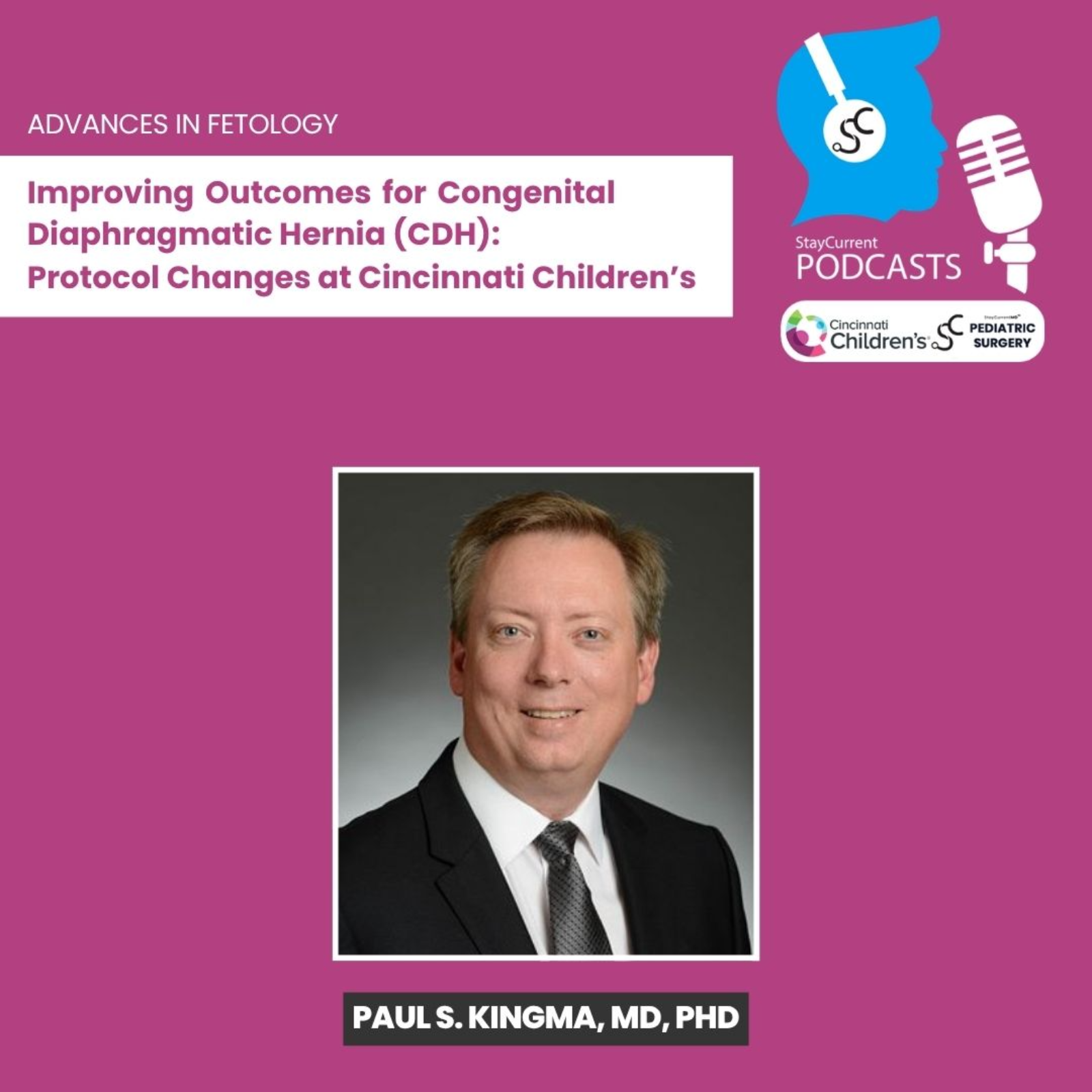 Improving Outcomes for Congenital Diaphragmatic Hernia (CDH): Protocol Changes at CCHMC 09.06.2026 5minDiscover how Cincinnati Children's Hospital implemented protocol changes to significantly improve outcomes for babies with Congenital Diaphragmatic Hernia (CDH). This video details updates in ventilator management, ECMO utilization, blood pressure support, nutrition, and sedation protocols, leading to increased survival rates and reduced mechanical ventilation time. Learn about the evidence-based adjustments that have enhanced care for these complex pediatric patients.For more information on the Fetal Care Center, click here: https://www.cincinnatichildrens.org/service/f/fetal-care
 -
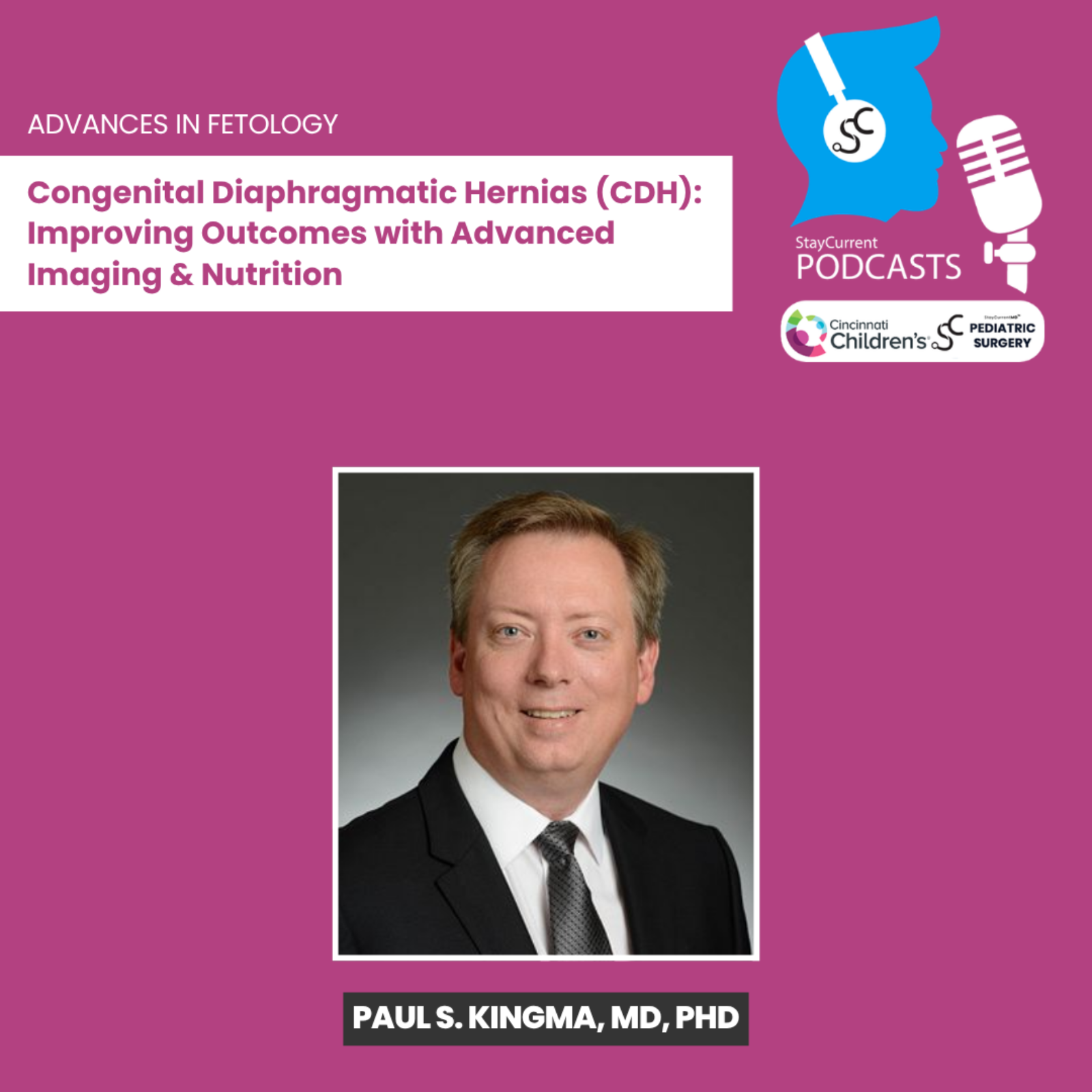 Congenital Diaphragmatic Hernias (CDH): Improving Outcomes with Advanced Imaging & Nutrition 09.06.2026 5minThis video provides a comprehensive overview of Congenital Diaphragmatic Hernias (CDH), a significant birth defect. Dr. Paul Kingma from Cincinnati Children's discusses the incidence, prenatal assessment, and key factors influencing prognosis. The presentation highlights novel research using postnatal MRI, including Ultrashort Echo Time (UTE) MRI, to evaluate lung growth and vascular development, underscoring the critical role of nutrition and weight gain in improving respiratory outcomes for affected infants.For more information on the Fetal Care Center at CCHMC, click here: https://www.cincinnatichildrens.org/service/f/fetal-care
 -
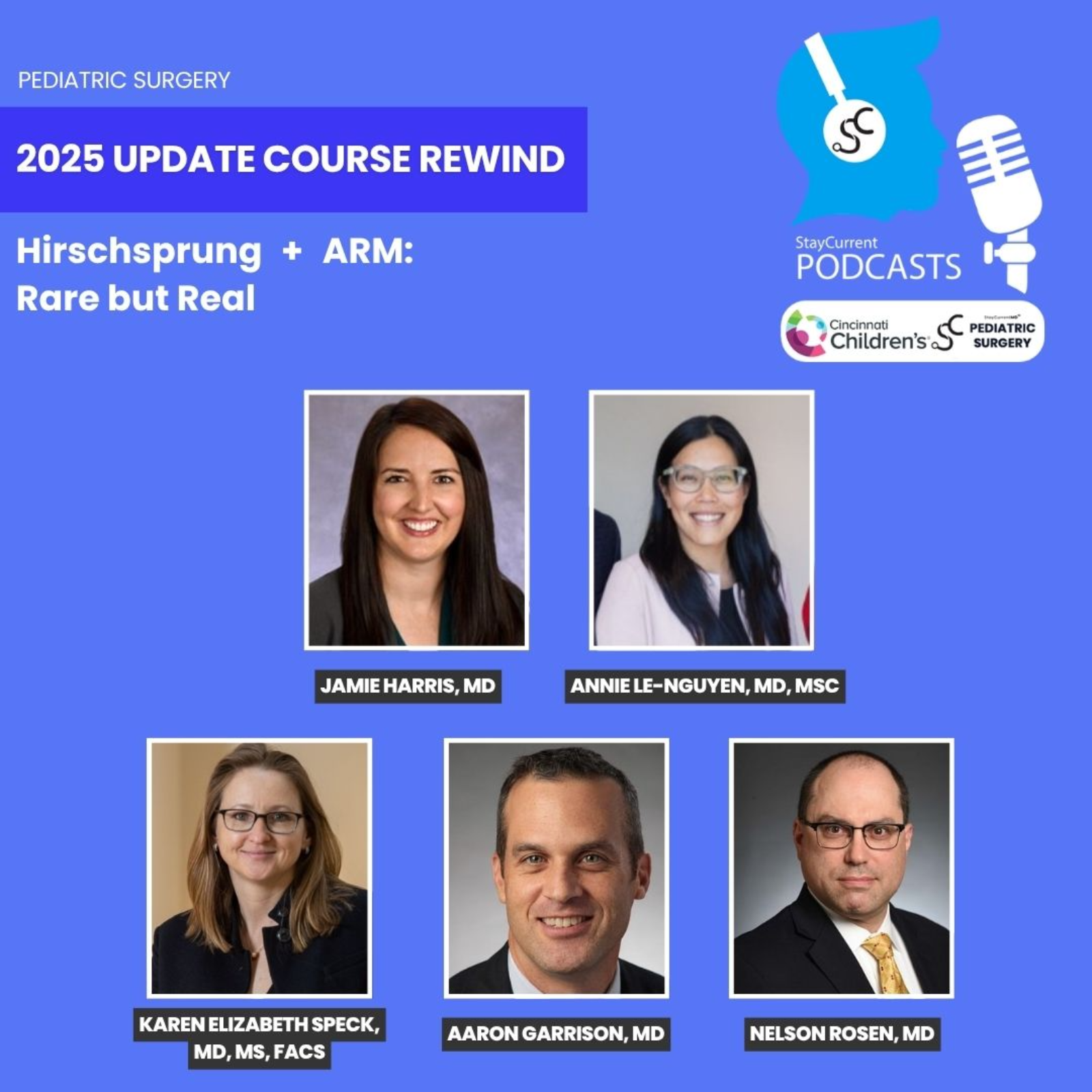 Video #6 - Hirschsprung & ARM... Rare but Real 09.06.2026 1minThis video, part of the GlobalCastMD series featuring Cincinnati Children's, recaps key highlights from the 13th Annual Pediatric Surgery Update Course. Dr. Jill Knepprath and Dr. Aaron Garrison discuss important updates in colorectal surgery, focusing on Hirschsprung's Disease (HD) and Anorectal Malformation (ARM). The presentation highlights the incidence of these combined conditions, particularly in patients with Trisomy 21, and provides diagnostic considerations for complex cases.For more information on the Colorectal team at CCHMC, visit here: https://cincinnatichildrens.pulse.ly/264pcddqqh
 -
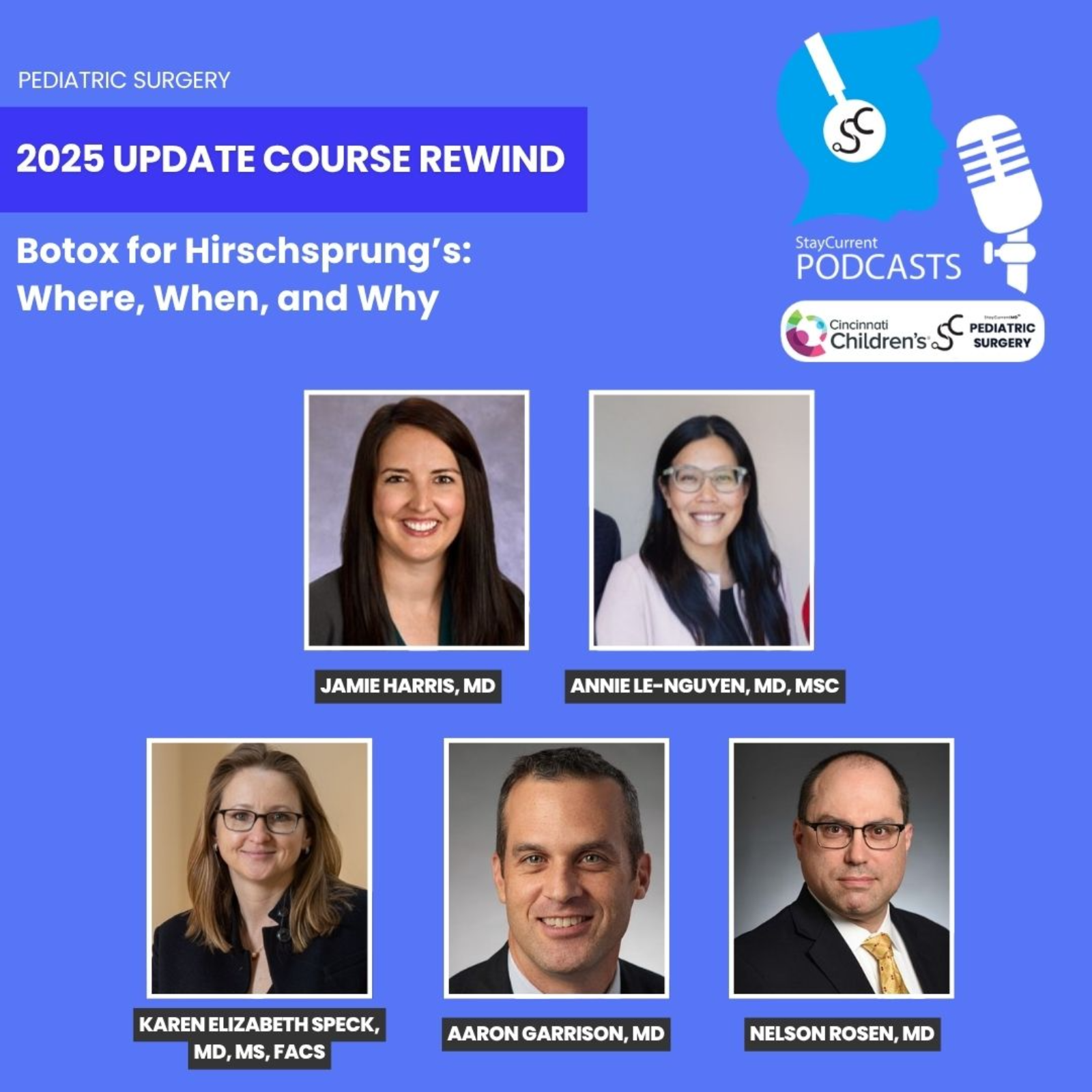 Update Course Rewind 2025: Botox for Hirschsprung’s: Where, When, and Why 19.05.2026 1minThis video from GlobalCast MD, featuring Cincinnati Children's, recaps key insights from the 13th Annual Pediatric Surgery Update Course on the use of Botox in Hirschsprung's Disease. It discusses current practices, poll results among pediatric surgeons regarding intrasphincteric botox injection during pull-through procedures, and findings from studies on its efficacy in reducing enterocolitis risk. Experts also delve into the challenges of dosing and the role of ultrasound guidance in these injections.For more information on the Colorectal team at CCHMC, visit here: https://cincinnatichildrens.pulse.ly/264pcddqqh
Podcast serupa


Popular di
Podcast ini turut muncul dalam senarai podcast negara-negara ini.


