
Drone Radio Show
Randy Goers
0
The Drone Radio Show is a weekly podcast about drones and the people who use them for business, fun, and research. Guests share how they are using drones to make a positive impact, build a business, and provide insights for listeners to advance their own drone interests.
Episod
-
 What Happens When GPS Disappears? - Matt McCrann, U.S. CEO of SPARC AI 28.07.2026 25minMatt McCrann is U.S. CEO of SPARC AI. SPARC AI develops software that enables precision navigation and target acquisition for drones and autonomous systems operating in GPS-denied environments. Its flagship platform, Overwatch, is a software-only, hardware-agnostic solution that transforms the sensors already onboard a drone into a resilient positioning system—without requiring additional hardware. The platform also supports detection, tracking, and multi-drone coordination, providing operators with greater situational awareness in contested environments. Matt leads SPARC AI's expansion across the United States, overseeing commercial strategy, customer engagement, and adoption of the company's positioning technology. Before joining SPARC AI, he built DroneShield's U.S. business from the ground up as CEO of its American subsidiary. Earlier in his career, Matt served in the United States Navy as an Intelligence Operator and Analyst and as a member of the NSA's Cryptologic Direct Support Element, supporting national security and operational missions. Whether it's electronic warfare, jamming, spoofing, or simply operating where satellite signals can't reach, today's drones face a growing challenge: how do they continue to navigate accurately and complete the mission? In this edition of the Drone Radio Show, Matt talks about the growing challenge of GPS-denied operations, how SPARC AI's Overwatch platform helps autonomous systems navigate without relying solely on GPS, what the company is learning from deployments in Ukraine, and why resilient positioning is becoming an essential capability for the next generation of drones.
 -
 How PyroDelta Is Turning Waste Heat into Drone Power: Michael Abdelmaseh, Head Engineer at PyroDelta Energy 21.07.2026 29minMichael Abdelmaseh is Head Engineer at PyroDelta Energy. Pyrodelta has spent nearly a decade cracking a problem that stumped the entire thermoelectric industry. The company's patented Capillary Casting process produces solid-state thermoelectric generators that convert waste heat into clean, stable electricity across applications spanning AI data centers, combustion engines, agriculture, and unmanned aerial vehicles. In February 2026, PyroDelta launched a Florida-based manufacturing facility producing custom-designed, defect-free thermoelectric crystals, directly addressing North American supply chain vulnerabilities from China. Most notably for the drone world, PyroDelta has entered the DARPA Lift Challenge — scheduled for August 2–9, 2026 at Wright-Patterson Air Force Base in Ohio competing for a share of $6.5 million in prize money. Michael has led the engineering team that designed PyroDelta's heavy-lift drone from the ground up. For nearly a decade, Michael and his team have been developing a breakthrough thermoelectric technology that converts waste heat from combustion engines into usable electrical power. In this episode of the Drone Radio Show, Michael talks about the engineering behind PyroDelta's patented Capillary Casting process, why the company believes waste heat is one of the most overlooked energy sources in aviation, what it takes to compete in one of DARPA's most demanding drone competitions, and where this technology could lead beyond drones.
 -
 Can America Rebuild the Drone Stack? - Mike Horton, CEO of HYFIX 14.07.2026 32minMike Horton is CEO and co-founder of HYFIX, a Santa Clara company developing U.S.-made positioning, navigation, communications, and computing technology for autonomous systems. The company's H1P platform integrates flight control, positioning, communications, and onboard compute into a single architecture. HYFIX is also working on resilient navigation technologies designed for environments where traditional GPS may be jammed, spoofed, or unavailable. Mike is a veteran technology entrepreneur with decades of experience in navigation, sensors, and autonomous systems. At HYFIX, he and his team are working to address one of the biggest challenges facing the U.S. drone industry: how to replace a fragmented collection of foreign-made components with secure, integrated technology designed and manufactured for American autonomous systems. In this episode of the Drone Radio Show, Mike and I talk about why the U.S. is restricting foreign drone technology before domestic alternatives are fully ready, how fragmented drone systems create security and supply chain risks, and why integrated, U.S.-made systems could be critical to the future of autonomy.
 -
 Next Level Integration of Drones into Public Safety: Ryan Bracken, Versaterm 30.06.2026 39minRyan Bracken is Head of Product and Security at Versaterm. Versaterm is a leading provider of public safety software that helps police, fire, EMS, and emergency communications agencies manage every stage of incident response. Its integrated platform combines computer-aided dispatch, records management, mobile data, real-time intelligence, and analytics to improve operational efficiency and situational awareness. Through its integration of DroneSense, Versaterm extending that platform to include drones, enabling agencies to dispatch, monitor, and manage them alongside traditional public safety resources. At Versaterm, Ryan leads the strategic vision and product development for the company's integrated public safety drone platform. He brings a unique blend of operational insight and technical expertise shaped by nearly twelve years as an FBI Special Agent specializing in counterterrorism, cyber, and aviation operations. Prior to his time at the FBI, Bracken served as an Aerospace Engineer for the U.S. Air Force. He maintains his FAA Commercial/Instrument and Part 107 Remote Pilot certificates. In this episode of the Drone Radio Show, Ryan explains how Versaterm's acquisition of DroneSense is helping agencies move beyond standalone drone programs by integrating drones directly into cad and dispatch workflows. We discuss what successful drone programs have in common, how agencies can build sustainable operations while working within budget constraints, the cybersecurity challenges of connected drone systems, and how departments can measure the effectiveness of Drone as First Responder programs. Ryan also shares his perspective on where future public safety drone programs are headed and what agencies should be doing today to prepare for the next generation of drone-enabled emergency response.
 -
 Who Builds the Sky? Why Economic Partnerships — Not Tech Companies — May Hold the Key to Unlocking Advanced Air Mobility: Lavera Alexander, Monterey Bay Economic Partnership 23.06.2026 39minLavera Alexander is Chief Growth Officer at the Monterey Bay Economic Partnership (MPED). MBEP is a cross-sector nonprofit that convenes business, government, education, and community leaders to drive economic growth across the tri-county Monterey Bay region, and it sits at the heart of what may be the highest concentration of advanced air mobility companies anywhere in the United States. For years, much of the conversation around drones and advanced air mobility has focused on the aircraft themselves—better batteries, new sensors, autonomy, and the promise of electric air taxis and drone delivery. But as the technology matures, it's becoming clear that building the aircraft may be the easy part. Building the infrastructure and the operational ecosystem needed to support them may be the bigger challenge. Lavera is leading a $7.45 million state-funded initiative that aims to connect four Central Coast airports into one of the nation's first multi-airport advanced air mobility networks. The project is designed to help answer some of the key questions facing the industry today: How do we integrate drones and future air mobility systems into existing airport operations? What infrastructure will be needed? How do communities benefit? And what role can regions play in helping shape the future of aviation? Lavera is an experienced executive with more than two decades of leadership in cross-sector collaboration, and she's now steering one of the most ambitious AAM infrastructure projects in the country. In this episode, we'll talk about how a regional economic partnership found itself at the center of the drone industry, why infrastructure has become one of the biggest challenges facing advanced air mobility, and what this ambitious project could mean for the future movement of goods, services, and people.
 -
 The Future of Security: How Titan Protection Is Scaling Drone Operations: Ryan Smith, CEO and Founder 16.06.2026 28minRyan Smith id Founder and CEO of Titan Protection and Consulting. Titan Protection is a premier security services provider and pioneer in autonomous drone security systems. The company was founded in 2008 to prove that physical security services could be both more effective and affordable. Today, Titan Protection employs over 600 people, and protects hundreds of companies across the Midwest with operations extending nationwide. Titan developed one of the first successful remote pilot drone security programs and became the first security company authorized by the FAA to fly drones out of visual view. An instrument-rated pilot and certified Defensive Tactics Instructor, Ryan's real-world experience shaped his philosophy that effective security requires both advanced technology and highly-trained personnel. His innovative "blended approach" to security – combining human expertise with emerging technologies – has resulted in significant improvements in security effectiveness while reducing operational costs for numerous enterprises across various sectors. Under his leadership, Titan has become one of the pioneers in using drones for remote security operations and recently received FAA approval for one-to-many drone operations, allowing a single operator to supervise multiple aircraft across multiple locations. In this episode of the Drone Radio Show, Ryan talks about Titan Protection's approach to security, what makes the company different in a rapidly growing market, and how drones are evolving from specialized tools into native components of modern security operations. We'll also discuss the lessons Titan has learned while scaling its drone programs, the impact of one-to-many operations, real-world examples of autonomous security missions, and how Ryan sees these technologies changing the security industry in the years ahead.
 -
 Building a Vertically Integrated Drone Ecosystem: Linda Montgomery and Phil Franklin, Zenatech 09.06.2026 26minLinda Montgomery is Vice-President of Corporate Development, and Phil Franklin is Vice-President of Business Development for North and South America both at Zenatech. Zenatech is rapidly expanding its footprint across the drone industry through manufacturing, software development, drone as a service, operations, and strategic acquisitions. The company develops autonomous drone platforms for surveying, inspections, logistics, inventory management, and emerging defense applications while integrating AI software and data analytics into a unified ecosystem. At Zantec, Linda leads global strategy across investor relations, partnerships, marketing, and growth initiatives. Linda has over 20 years of experience, including senior marketing and business development roles with KPMG, IBM, and Telesat, as well as leadership in scaling more than 100 new ventures, product lines, and international market entries. She has also guided investor relations strategies for six IPOs and multiple public and venture-funded companies, advancing best practices in transparency, valuation growth, and market visibility. Phil spearheads the company's strategic expansion across North and South America, with a primary focus on driving sales growth and establishing ZenaTech's operational and manufacturing hub in Arizona. With over 25 years of experience in sales leadership and business operations, Phil plays a pivotal role in executing ZenaTech's "Drone as a Service" (DaaS) strategy. He is instrumental in building the company's pipeline for the ZenaDrone 1000 and IQ series drones, overseeing relationships with commercial, industrial, and government partners. His recent work includes leading initiatives to acquire flight training facilities to create a centralized pilot deployment hub and expanding the company's footprint in key sectors, such as logistics. In this episode of the Drone Radio show, Linda and Phil discuss Zenatech's approach to vertical integration, the company's growing drone as a service business, the role of autonomy and data in next generation drone operations, and its expansion into defense and counter UAS technologies.
 -
 Smart Materials and the Rise of Ornithopters: Dr. Onur Bilgen, Rutgers University 20.05.2026 32minDr. Onur Bilgen is Associate Professor in the Department of Mechanical and Aerospace Engineering at Rutgers University. Dr. Bilgen conducts research in the design of advanced drone systems, including fixed-wing and rotary-wing aircraft, hybrid drone systems, and bioinspired ornithopters — flapping wing drones modeled after the flight of birds and insects. His work also explores the use of smart materials and innovative aerospace system designs. Onur has led NASA University Student Research Challenge projects, including the development of a Multi-Mode Hybrid Unmanned Delivery System. He also teaches a graduate course at Rutgers called Drones: Fundamentals and Applications and has helped expand drone education and testing capabilities through initiatives like the Rutgers Drone Playground and the Buehler Drone Lab's VICON Motion Tracking System. In this episode, we'll talk about the future of flapping wing drones, the role of smart materials in next-generation aircraft design, and how bioinspired engineering could influence the next wave of unmanned aviation innovation.
 -
 Inside the Future of Drones: Policy, Security, and What XPONENTIAL 2026 Reveals – with Michael Robbins, AUVSI 21.04.2026 30minMichael Robbins is President and CEO of Association for Uncrewed Vehicle Systems International or AUVSI, the world's largest trade association for uncrewed systems, robotics, and autonomous technologies. Representing both commercial and defense sectors, AUVSI plays a critical role in connecting industry, influencing policy, and helping define how these technologies are deployed at scale. Michael brings deep experience across government, aviation, and advocacy. He previously served as Chief Advocacy Officer at AUVSI, co-founded the consulting firm Intrepid, and held leadership roles at the Air Line Pilots Association, where he led aviation safety, security, and government affairs. He also spent a decade on Capitol Hill as Chief of Staff to Congressman John Dingell, and continues to serve as an Officer in the United States Navy Reserve. In this episode of the Drone Radio Show, Michael talks about the real forces shaping the uncrewed systems industry, from supply chain security and regulatory bottlenecks to the growing influence of defense priorities, and what it all means for the future of autonomy. We'll also take a closer look at XPONENTIAL 2026 and why it remains a key signal for where the industry is heading. Xponential 2026 will be held in Detroit on May 11 - May 14.
 -
 Persistent Flight in the Stratosphere - Justin Selfridge, Phd. and CEO of Devorto 09.04.2026 35minJustin Selfridge, PhD, is Founder and CEO of Devorto Corporation. Devorto is developing a breakthrough high-altitude platform called the Tethered Uni-Rotor Network, or TURN—a completely new aircraft architecture designed to combine the vertical lift and loitering capability of a helicopter with the aerodynamic efficiency of an airplane, enabling long-duration, solar-powered flight in the stratosphere. At Devorto, leads the development of this next-generation persistent drone technology. Backed by both private investment and government support from organizations like NASA, the U.S. Air Force, and the U.S. Space Force, Justin and his team are working to redefine how we think about high-altitude operations, with the potential to disrupt both satellite and traditional aerial platform markets. In this episode of the Drone Radio Show, Justin talks about why the stratosphere is such a critical domain for future aviation systems, how the TURN platform works and what makes it different from anything we've seen before, and the real-world applications and impact this technology could have across commercial and defense sectors.
 -
 Uncrewed Systems in the Arctic: Security, Surveillance, and NATO's Growing Role - Federico Borsari, CEPA 03.03.2026 39minFederico Borsari is a Non-Resident Fellow with the Transatlantic Defense and Security Program at the Center for European Policy Analysis, or CEPA for short. The Center for European Policy Analysis is a nonprofit, nonpartisan public policy institution headquartered in Washington, DC, with hubs in London and Brussels. The organization focuses on strengthening the transatlantic alliance through research, analysis, and programs. CEPA provides insight on trends affecting democracy, security, and defense to government officials and agencies, helps transatlantic businesses navigate changing strategic landscapes, and builds networks of future leaders committed to transatlantic cooperation. At CEPA, Federico focuses on issues at the intersection of technology and international security, with particular emphasis on unmanned systems and autonomy. His work also covers NATO and transatlantic defense and security. He has authored several analyses and publications on the use and security implications of unmanned aerial systems by both state and non-state actors, and recently co-authored the first-ever report on drone warfare and its implications for NATO. Federico previously served as a Pan-European Fellow and later a Visiting Fellow with the European Council on Foreign Relations, and until October 2021 he worked as an analyst and project officer at the International Institute for International Political Studies in Milan, where he also helped organize the last three editions of the Mediterranean Dialogues Conference. He holds a BA in History from the University of Modena and an MA in International Relations and Strategic Studies from the University of Bologna. He also earned a second MA in Middle Eastern Studies from the Catholic University in Milan, and conducted fieldwork in Iraqi Kurdistan for a research project on the institutionalization and depoliticization of the Peshmarga. Federico is a frequent commentator on defense and drone technology in national and international media, and he regularly participates in conferences on defense technology and the use of drones. In this episode of the Drone Radio Show, Federico talks about how uncrewed systems are being used in the Arctic, and the challenges and opportunities they present for security, monitoring, and protecting critical infrastructure in this increasingly strategic region.
 -
 Protecting Stadiums in the Age of Drone Incursions: Melissa Swisher, CRO at SkySafe 17.02.2026 33minMelissa Swisher is Chief Revenue Officer at SkySafe, a company delivering the intelligence organizations need to detect, analyze, and act in today's increasingly complex airspace environment. SkySafe specializes in airspace intelligence — providing real-time drone detection, analytics, and forensic capabilities that help organizations determine whether a drone is authorized, where it originated, how it's flying, and in some cases, who is operating it. The company works with state agencies, public safety organizations, and major event operators to bring greater visibility and accountability to the skies above critical infrastructure and large public gatherings. As Chief Revenue Officer, Melissa leads SkySafe's strategic partnerships and revenue growth initiatives, helping expand the company's footprint across government and commercial markets. She brings extensive C-level experience, having played key roles in two successful IPOs — SuccessFactors and Castlight Health — as well as multiple strategic acquisitions. Prior to SkySafe, she co-founded Socrates.ai, which was recently acquired by Simpplr. Known for building high-performing teams and driving customer-focused growth, Melissa combines operational expertise with a deep understanding of scaling emerging technologies. In this episode of the Drone Radio Show, Melissa discusses the evolution of airspace intelligence, the biggest gaps in current drone defense systems, what new legislation means for local law enforcement, and how organizations are preparing for large-scale global events in an era of rapidly expanding drone activity.
 -
 Making Autonomous Cargo Work at Real-World Scale: Charles Acknin, CEO Skyways 04.02.2026 33minCharles Acknin is Co-Founder and CEO of Skyways. Skyways is building unmanned aircraft systems designed to revolutionize autonomous cargo transportation. Unlike many competitors still in development, Skyways' aircraft are operational today — carrying meaningful payloads over significant distances for both military and commercial customers. Based in Austin, Skyways is now shifting toward mass production of its autonomous aircraft, building confidence through real-world cargo missions that could ultimately enable future passenger applications. At Skyways, Charles leads the company's strategic vision and oversees operations, product development, and growth initiatives in autonomous aviation. Prior to Skyways, Charles co-founded and served as CEO of Elixir Labs. Before that, he was a Senior Software Engineer at Google, where he worked on the company's search engine for nearly five years and spent a year advancing Google's mission of universal accessibility. Earlier in his career, Charles held engineering roles at Oracle, Cosworld-Asia in Shanghai, and Amadeus. He also participated in Google Summer of Code, contributing to the open-source version control system Subversion. Charles holds a Master of Science in Software Engineering from Oxford Brookes University and a Master of Science in Computer Science from SUPINFO. In this episode of the Drone Radio Show, Charles shares how Skyways is turning autonomous cargo drones from experimental technology into dependable, scalable logistics systems.
 -
 Securing the Skies: Detecting and Responding to Drone Threats - Logan Harris, CEO Spotter Global 08.01.2026 41minLogan Harris is CEO, President, and Founder of Spotter Global—a company specializing in compact radar and drone detection technologies. Spotter Global imagines, designs, manufactures, and coordinates the software development of compact surveillance radars, Remote Drone ID, NetworkedIO command and control, and its Integrated Management Center. The company was originally founded to meet the needs of U.S. Special Forces, who required a very small, wide-area radar to protect small units conducting Village Stability Operations in Iraq and Afghanistan. From that need, the first Compact Surveillance Radar—the M600—was developed to protect warfighters operating in austere environments. In 2013, the attack on the Metcalf substation in California highlighted the need to detect threats far beyond the fence line. In response, Spotter introduced its first Compact Security Radar, the C40. Since then, the company has expanded its commercial off-the-shelf offerings to include 17 radar models covering areas from one acre to more than 380 acres, serving markets well beyond critical infrastructure—and far beyond North America. Logan is widely recognized as the inventor of the compact surveillance radar category. With deep expertise in RF engineering and digital signal processing, he launched SpotterRF in 2009 to help prevent harm to critical infrastructure and protect warfighters. Previously, Logan served as CTO at Wavetronix and as CTO and co-founder of ImSAR, the creator of NanoSAR. His engineering background also includes roles at IBM, TRW, Sensar Larson Davis, and Vantage. Logan holds both Bachelor's and Master's degrees in Electrical Engineering from Brigham Young University. Known for his innovation and leadership, he has positioned Spotter Global as a trusted radar provider across government and commercial sectors. In this episode of the Drone Radio Show, Logan talks about the growing reality of drone threats, how Spotter Global is using advanced detection and Remote ID technology to protect critical infrastructure and large public events, and what the future of airspace security looks like as agencies, regulations, and technologies continue to evolve.
 -
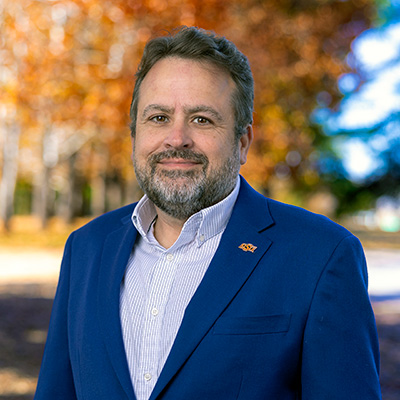 Defending the Skies: Oklahoma State University's Mission to Counter Emerging Drone Threats: Dr. Jamey Jacobs, Exe Director of OAIRE 25.11.2025 34minDr. Jamey Jacob is Executive Director of the Oklahoma Aerospace Institute for Research and Education and the Williams Chair in Energy Technology at Oklahoma State University. Under his leadership, OSU launched the Counter-UAS Center of Excellence, now the nation's central hub for coordinated research, development, testing and evaluation of counter-drone systems. Working closely with the Joint Force CUAS University at Fort Sill, the center assesses vendor technologies, establishes performance standards and accelerates next-generation defenses—all while addressing the growing national shortage of highly trained engineers in this mission-critical domain. With unique testing environments and deep alignment with military needs, OSU plays a pivotal role in strengthening national security and maintaining U.S. leadership in UAS innovation. Beyond directing the Center, Dr. Jacob is a Regents Professor of Aerospace Engineering and a nationally recognized leader in emerging aerospace systems, securing nearly $50 million in research funding from federal agencies and industry partners. He has testified before Congress on the critical need for sustained investment in drone research and advanced air mobility, and he leads major initiatives including the EDA-funded LaunchPad and UAS Flight Corridor, NASA's WINDMAP weather program, OSU's work within the Tulsa Hub for Ethical and Trustworthy Autonomy, and the NIST initiative developing certification standards for next-generation aircraft. A native Oklahoman, he holds degrees from the University of Oklahoma and UC Berkeley, and is an FAA Part 107 pilot with roughly 500 flight hours. In this episode of the Drone Radio Show, Dr. Jacob talks about OSU's efforts to advance the nation's counter-UAS capabilities; what Ukraine's drone innovations reveal about the future of warfare, and how OSU's research in atmospheric science, public safety, and wildlife applications is shaping the next generation of drone operations.
 -
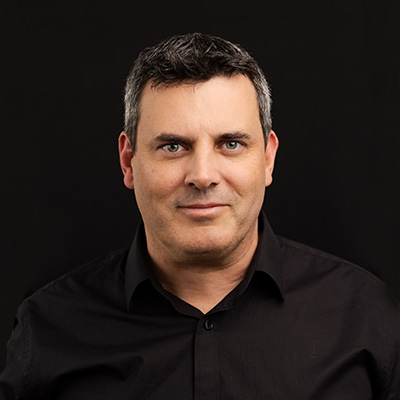 Building a Decentralized Drone Imagery Network: Bill Lakeland, CEO Spexi 11.11.2025 27minBill Lakeland is CEO of Spexi, the world's largest decentralized drone imagery network. Spexi provides a scalable, sustainable, and cost-efficient alternative to traditional Earth imaging methods, with its network of drone pilots delivering detailed, near-real-time imagery to support disaster preparedness, smart city planning, AI model training, and gaming applications. The network has mapped over 3.5M acres in 200+ cities across the world. Bill has over 20 years of experience in geospatial imagery, having led and exited as both a Co-Owner and Vice President of two aerial imagery firms. Before launching Spexi, he spent two decades in traditional aerial mapping, operating fixed-wing aircraft with high-resolution cameras to capture imagery for municipalities and insurers. In this episode of the Drone Radio Show, Bill talks about Spexi's network of drone pilots and the company's efforts to provide high-resolution imagery of urban areas.
 -
 10 Years of the Drone Radio Show: A Look Back, A Flight Forward: Randy Goers, Host and Creator 29.07.2025 12minIn this special anniversary episode of the Drone Radio Show podcast, I reflect on a decade of conversations that have helped shape and document the evolution of the drone industry. Since 2015, the Drone Radio Show has featured 446 interviews with the pioneers, innovators, regulators, and changemakers redefining what drones can do. I revisit the major themes that emerged—from commercial adoption and regulatory milestones to lifesaving missions, educational advances, and the rise of autonomous systems. More than just a retrospective, this episode is a heartfelt thank-you to the guests, listeners, and global drone community who've made the show a trusted voice in the UAS world. Whether you're a longtime fan or new to the podcast, join me in celebrating ten years of insight, impact, and imagination—and get ready for what's next.
 -
 Target Acquired: Autonomy, AI, and the Future of Combat: Bryan Bockman, CEO AimLock 15.07.2025 33minBryan Bockmon is CEO of AimLock—a company pushing the boundaries of defense autonomy with real-world solutions that enhance mission effectiveness and save lives. Founded in 2013, AimLock is a U.S.-based developer of advanced autonomous targeting and engagement systems for defense applications. Their Core Targeting Modules—or CTMs—are designed to deliver decision-accelerating autonomy across a wide range of mission sets, including Counter-UAS, Force Protection, Direct Action, and more. With a fully networked, modular open systems approach, or MOSA for short, AimLock's technology integrates with everything from small arms to unmanned systems, aircraft, and maritime platforms. Bryan brings more than two decades of experience in R&D, engineering, and leadership across autonomy and weapons systems. At AimLock, he leads strategic initiatives and product development with a focus on scalable battlefield autonomy. He's a strong advocate for integrating autonomy into defense operations and is especially passionate about how small businesses are helping redefine the future of warfare—particularly in the wake of the global War on Terror. Under his leadership, AimLock is setting new standards for modular design and rapid field deployment. In this episode of the Drone Radio Show, Bryan shares insights on AimLock's innovations—including the role of Core Targeting Modules, how MOSA is transforming defense integration, and what the future holds for autonomy in the combat space. We'll also explore how AimLock supports platforms across air, ground, and maritime domains—and how lessons from real-world conflicts like Ukraine are influencing system design and deployment.
 -
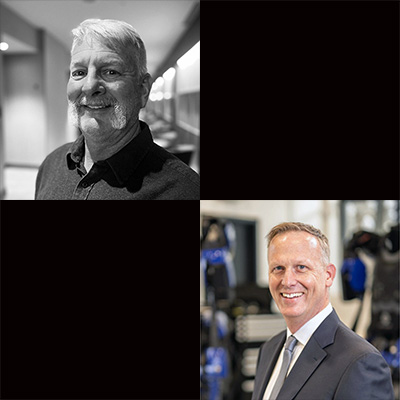 From Battlefield to Business: The Rise of Collaborative Autonomous Drones: Geoff Hitchcock, Red Cat Holdings and Matt Vogt, Palladyne AI. 01.07.2025 41minGeoff Hitchcock ia Chief Revenue Officer at Red Cat Holdings, and Matt Vogt ia Chief Revenue Officer at Palladyne AI. Red Cat is a cutting-edge drone technology company delivering advanced hardware and integrated software solutions for military, government, and commercial applications. Palladyne AI develops next-generation artificial intelligence software that brings autonomy and smart collaboration to robotic platforms in defense and commercial sectors. The two companies recently announced a significant testing milestone in their ongoing collaboration—the completion of an autonomous, cross-platform collaborative flight involving three diverse heterogeneous drones. The system enabled real-time, distributed detection and tracking of multiple dynamic and static ground objects—including humans and vehicles—in different regions of interest, providing a single operator with comprehensive situational awareness. The two companies previously announced a successful two-drone flight operation in January 2025, and Palladyne AI announced a single-drone testing scenario in December 2024 to autonomously identify, prioritize, and track terrestrial targets. The results represents significant progress in enabling multi-drone interoperability and autonomous collaboration for the defense sector. Geoff is a 22-year veteran of USAF Special Operations with deep experience in intelligence, surveillance, and reconnaissance. He's led operations and business development at top drone companies, including AeroVironment and Vantage Robotics, and now drives Red Cat's growth as Chief Revenue Officer. Matt began his career as a U.S. Marine Corps AV-8B Harrier attack pilot and later served as a Special Operations Forward Air Controller. After a decade leading business development at AeroVironment, he now oversees all revenue activities at Palladyne AI, focusing on AI-driven autonomy solutions for defense and commercial use. In this episode of the Drone Radio Show, Matt and Geoff share how Red Cat and Palladyne AI's partnership is unlocking true autonomous multi-drone collaboration, what this breakthrough means for modern military operations, and how they plan to scale the technology for larger swarms and real-world commercial applications.
 -
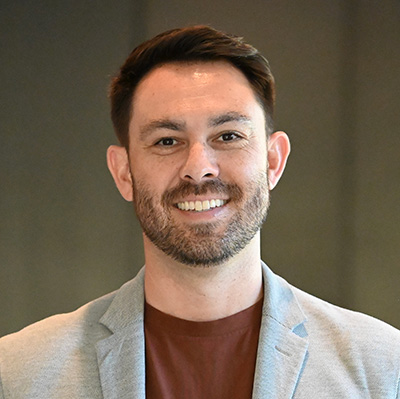 Flock Safety and the Future of DFRTechnology: Brett Kanda, Flock Safety 17.06.2025 35minBrett Kanda is Director of Drone as First Responder Sales at Flock Safety. Flock Safety is a leading safety technology platform that helps communities thrive by taking a proactive approach to crime prevention and public security. Flock's end-to-end suite of hardware and software connects cities, law enforcement agencies, businesses, schools, and neighborhoods into a nationwide public-private safety network. Today, Flock is trusted by over 5,000 communities, 4,500 law enforcement agencies, and 1,000 businesses to deliver real-time intelligence—while maintaining the highest standards of privacy, data integrity, and responsible innovation. At Flock, Brett leads the DFR Specialist team, focusing on reducing emergency response times and improving community safety. Before Flock acquired Aerodome, Brett was the company's first employee and served as Senior Vice President of Business Development, where he spearheaded go-to-market efforts for their NextGen DFR platform. With more than a decade of experience in the unmanned aerial systems (UAS) industry, Brett has deep expertise in UAS technology, regulatory frameworks, and market strategy. His previous roles include key positions at BRINC, FLIR Systems, and the Nevada Institute for Autonomous Systems, where he helped grow drone businesses and expand their customer reach. He also co-founded two drone startups focused on delivering actionable insights through UAS technology. Before entering the drone industry, Brett was a professional golfer and a collegiate standout at UNLV, where he was a two-time Academic All-American and team captain. In this episode of the Drone Radio Show, Brett shares insights on Flock Safety's innovative Drone as First Responder program and how this cutting-edge technology is helping local law enforcement agencies enhance public safety and fight crime more effectively.
Podcast serupa


Popular di
Podcast ini turut muncul dalam senarai podcast negara-negara ini.
