
PT Pintcast - Physical Therapy
Jimmy McKay, PT, DPT | Physical Therapy Podcast
0
PT Pintcast is a physical therapy podcast that features conversations with physical therapists, clinic owners, educators, and leaders in the field. Hosted by Jimmy McKay, PT, DPT, the show combines real talk, big ideas, and practical insight on clinical care, business, and culture. It explores where physical therapy is headed next, with a style that blends a TED Talk and a radio show.
Episod
-
 Understand What Game You’re Playing: Barnes & Noble, AI and the Future of PT 02.10.2026 54minWhat does Barnes & Noble have to do with the future of physical therapy?More than you might think.Barnes & Noble couldn't compete with Amazon by simply offering more books. So the company changed what a bookstore could be: experience, discovery, community, events, gifts, toys, coffee, and local relevance.That launches Jimmy McKay, Tony Meritato, and Dave Kittle into a much bigger PT Breakfast Club conversation:What game is physical therapy actually playing?The guys explore what PT clinics might learn from businesses forced to adapt, including whether clinics need revenue beyond traditional reimbursement, why “selling” remains such an uncomfortable word in physical therapy, and why simply making more people aware of PT may not solve the profession’s problems.Then things get bigger.What exactly will a physical therapist be ten years from now?Tony makes the case that AI and digital healthcare could absorb much of the simpler end of physical therapy. Dave pushes back on how quickly the profession's identity and title will change. Jimmy questions whether our current professional labels, licenses, and marketing strategies help clinicians compete or sometimes constrain them.The conversation also explores the distinction between PT as a license and DPT as a degree, digital versus human care, AI-assisted clinicians, healthcare consumer behavior, and whether the future belongs not to AI or humans, but to humans who learn how to use AI well.And underneath all of it is one question:What game are you actually playing?KEY THEMES• Barnes & Noble as a model for adapting instead of competing head-on• Experience, community and alternative revenue• Cash-pay physical therapy• Why PTs struggle with the idea of selling• Marketing through repetition and useful communication• Whether physical therapy really has an awareness problem• The future value of the PT license• PT versus DPT• Digital physical therapy and AI• Hinge Health and Sword Health• Human clinicians handling increasingly complex cases• AI as a clinical tool rather than a replacement• Cory Doctorow’s “reverse centaur” concept• Understanding the business you're actually inFEATURED VOICESJimmy McKayTony MeritatoDave KittleWATCH TONY:https://www.youtube.com/c/MedicareBillingWATCH DAVE:https://www.youtube.com/@thedavekittleshow/featuredFOLLOW PT PINTCAST:Apple Podcasts:https://podcasts.apple.com/us/podcast/pt-pintcast-physical-therapy/id1000443325Spotify:https://open.spotify.com/show/3LmMUT64yrUc2iGo9EmafcYouTube:https://www.youtube.com/@PTPintcastInstagram:https://www.instagram.com/ptpintcastLinkedIn:https://www.linkedin.com/in/jimmy-mckay-pt-dpt-a4207659/Website:https://www.ptpintcast.com/X:https://x.com/PTPintcast
 -
 Stop Overthinking Content. Start Getting Reps. 28.09.2026 1j 1minYou probably don’t need another camera.You probably don’t need a better microphone.And you definitely don’t need to wait until your content is perfect.You need reps.On this episode of PT Breakfast Club, Jimmy McKay, Tony Maritato and Dave Kittle launch the Content Dojo, a 28-day experiment designed to help physical therapists stop overthinking content and actually start creating it.The guys break down why consistency beats perfection, how Tony turns simple ideas into massive engagement, why Dave finally stopped outsourcing the process, and how clinicians can turn everyday conversations with patients into useful content.They also dig into the real barriers nobody talks about: fear of posting, lack of time, annoying workflows, tiny audiences, slow early results and the temptation to spend money solving a problem that may actually require practice.The challenge uses a martial-arts belt system so everyone can participate. Your goal might be one post a week. Tony’s might be 20 pieces a day. The point isn’t matching somebody else’s volume.The point is moving up one belt.Because the people who get good at content aren’t necessarily the people with the best equipment.They’re the people who keep hitting record.
 -
 Stop Waiting for Perfect 18.09.2026 56minWhat if the biggest thing holding your clinic back isn’t a lack of ideas?It’s waiting until the idea feels safe.Jimmy McKay, Tony Maritato and Dave Kittle bounce from Airbnb cereal to physical therapy marketing, hiring, recruiting, content creation and virtual assistants in an episode that keeps arriving at the same conclusion:Take the shot. Learn. Adjust.Dave breaks down the five levels of customer awareness and why most clinic marketing tries to move people from attention directly to a purchase before earning enough trust.Jimmy takes a painfully traditional physical therapy job posting and attacks it through a Ryan Reynolds-style lens: stop trying to appeal to everybody and start making the RIGHT person lean in.That leads to an even harder problem: how do you recruit a certified hand therapist to Alaska?Then Tony finds a fascinating social-media example involving an 88-year-old aspiring basketball player and asks whether physical therapy clinics are missing an enormous content opportunity by making themselves the hero instead of their patients.The conversation also covers:• Marketing to different levels of awareness• Attention → Trust → Action• Why six to twelve exposures may matter more than one great ad• Recruiting for difficult PT positions• Using social media instead of relying entirely on Indeed• Making geography part of the recruiting pitch• Patient-led storytelling• Building recurring content series• Creating content buckets that reduce mental load• Why expertise starts to look automatic• Delegating lead follow-up and scheduling• Using offshore virtual assistants• Testing inexpensive solutions before scaling them• Why imperfect action beats analysis paralysisPT Breakfast Club is hosted by Jimmy McKay, Tony Maritato and Dave Kittle.Follow Tony Maritato on YouTube at Total Therapy Solution.Find Dave Kittle at ConciergePainRelief.com and on YouTube at The Dave Kittle Show.Follow Jimmy McKay and PT Pintcast wherever you listen to podcasts and across social media.This conversation is for entertainment and discussion only, not medical, legal, billing or business advice.
 -
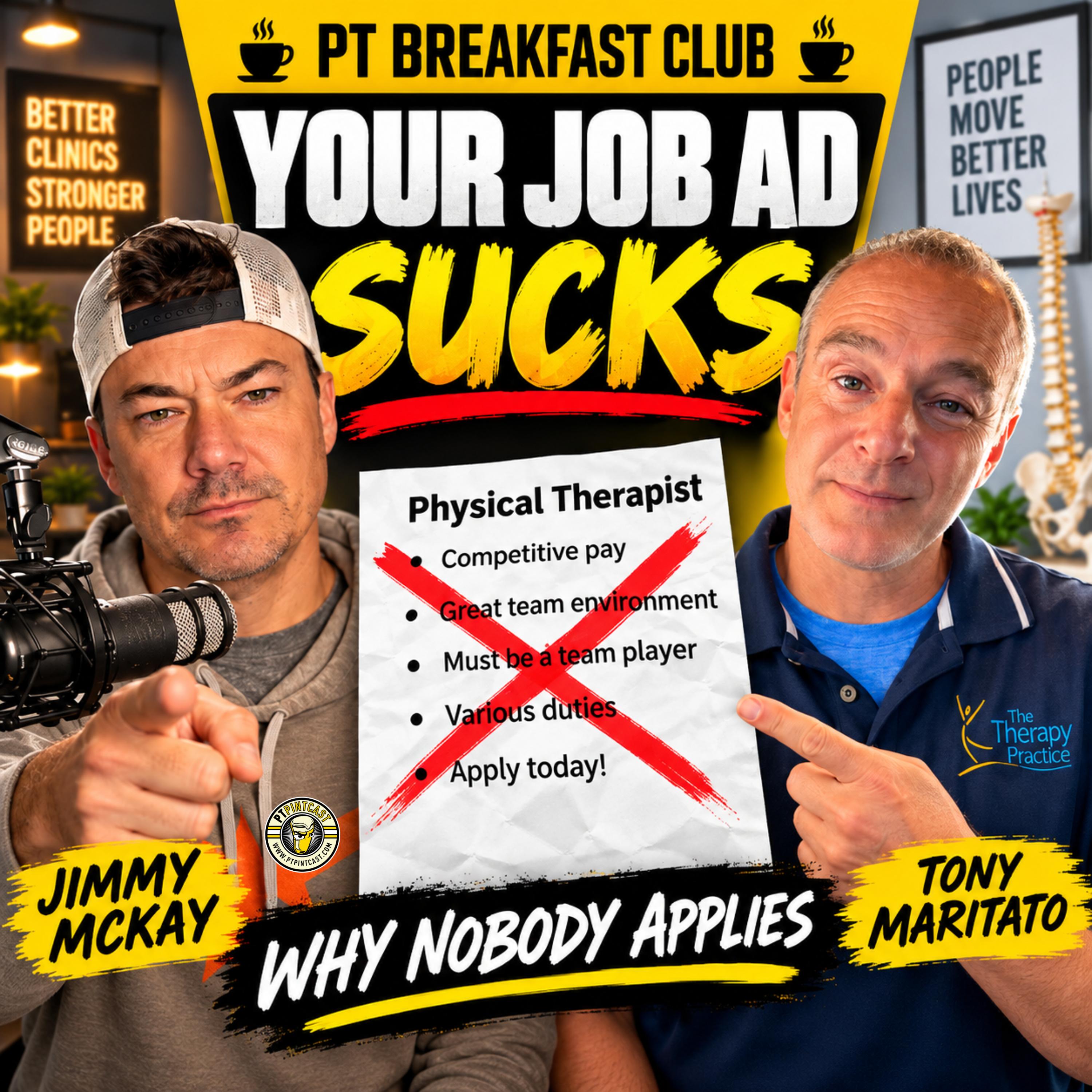 Your PT Job Ad Is Probably Selling the Wrong Thing 16.09.2026 46minWhat if the goal of your next physical therapy job ad wasn’t to attract more people?What if it was to repel almost everyone except the few clinicians who would actually love working for you?Jimmy McKay and Tony Maritato dig into recruiting, advertising, AI and psychology after Tony asks a fascinating question:What would advertising legend David Ogilvy want to know before writing a job ad for a physical therapist?That question produces a 12-part framework clinic owners can use to evaluate their own recruiting.The conversation starts with the basics: Who exactly are you trying to hire? What does the employment model look like? How much control does the therapist have over their schedule? What does compensation actually look like?Then it gets more interesting.Jimmy and Tony argue that employers should explain not only what clinicians GET to do, but also what they DON'T have to do.Scheduling.Insurance verification.Marketing.Faxing plans of care.Administrative work.Whatever creates friction in that particular clinic.They also make the case for showing candidates the imperfect parts of the job instead of hiding them.The goal isn’t hundreds of applicants.The goal is a handful of people who understand the offer and think:“That sounds exactly like me.”The episode also explores how Josh Funk and Rehab 2 Perform use media as a recruiting tool, why simply spending more money on traditional job boards may not fix a hiring problem, and why short-form video could be an underused recruiting strategy in physical therapy.Later, the conversation expands into communication and content creation.How do you take one useful idea and package it as video, audio, images and text?Why do some pieces of content explode on one platform and disappear on another?And why do healthcare professionals spend years creating valuable information only to publish it as an unreadable screenshot?Finally, Jimmy and Tony tackle another uncomfortable idea: information has become incredibly cheap.People often aren’t paying coaches, consultants, courses or even clinicians purely for information.They may be paying for guidance, accountability, confidence and someone to help them take the next step.That leads to Jimmy’s warning about a $9,000 YouTube growth course and Tony’s story about spending roughly $33,000 on business education years ago.The episode closes with perhaps the simplest idea of the entire conversation:Before adding another form, another question, another feature or another step…Ask what you can remove.KEY TAKEAWAYS:• Recruit a specific person, not “everybody”• Transparency filters candidates instead of scaring them away• Explain the negatives before applicants discover them themselves• Sell what clinicians DON’T have to do• Make the next step conversational instead of bureaucratic• Great recruiting media can show what working somewhere feels like• One idea can become multiple kinds of media• Information and implementation are different products• Better experiences often come from subtractionFEATURED:Tony MaritatoTony on YouTube:https://www.youtube.com/c/MedicareBillingFOLLOW PT PINTCAST:Apple Podcasts:https://podcasts.apple.com/us/podcast/pt-pintcast-physical-therapy/id1000443325Spotify:https://open.spotify.com/show/3LmMUT64yrUc2iGo9EmafcYouTube:https://www.youtube.com/@PTPintcastLinkedIn:https://www.linkedin.com/in/jimmy-mckay-pt-dpt-a4207659/Instagram:https://www.instagram.com/ptpintcastWebsite:https://www.ptpintcast.com/Twitter/X:https://x.com/PTPintcast
 -
 Your Practice Sale Starts Years Before You Sell 14.09.2026 34minYour Practice Sale Starts Years Before You SellMost physical therapy practice owners think about selling their business when they’re ready to sell.Paul Martin thinks that’s already too late.Paul is a physical therapist, founder of Martin Healthcare Advisors, and former clinic owner who helped grow a three-clinic operation into 21 locations.After decades working with PT practice owners, he says one mistake appears again and again:Owners treat selling their practice like an event.It isn’t.It’s a process.And according to Paul, the owners who begin preparing several years before a transaction have far more opportunities to improve the company, reduce risk and increase its potential value.Jimmy and Paul unpack what buyers actually look for when evaluating a PT business.In This EpisodeThey discuss:Why buyers care about cash flowWhat EBITDA means in a PT practiceWhy historical success alone doesn’t determine valueThe importance of demonstrating future growthHow financial preparation affects a transactionWhy leadership alignment mattersThe operational KPIs buyers examineCharge capture and proper codingProductivity versus complianceSchedule managementPT/PTA team modelsThe danger of a practice depending entirely on its ownerPaul’s “30-day test”Why larger practices often command higher multiplesHow Paul went from three clinics to 21Why systems and processes allow businesses to scaleThe difference between an owner’s perceived valuation and actual valuationWhy Paul believes PT continues to provide extraordinary healthcare valueOne Question Every Owner Should AskImagine telling your staff:“I’m leaving tomorrow. I’ll be gone for 30 days, and you cannot contact me.”What happens?If the clinic falls apart, Paul argues that you may not own a transferable business yet.You may own a job.Paul MartinFounder, Martin Healthcare AdvisorsWebsite: https://www.martinhealthcareadvisors.com/LinkedIn: https://www.linkedin.com/in/paulmartinsview/YouTube: https://www.youtube.com/@martinhealthcareadvisorsBook MentionedBuilt to SellJohn Warrillow
 -
 PTs Are Overthinking Everything 11.09.2026 35minAre physical therapists spending too much time optimizing things that barely matter?Jimmy McKay and Tony Maritato start with the growing backlash against AI-generated content and quickly uncover a much bigger question: Are we arguing about the tool, the output, or just something we don't like?That same tendency shows up everywhere in physical therapy.We obsess over perfect exercise form.We debate tiny biomechanical details.We search for the perfect posting time.We chase follower counts.We optimize before we've done enough reps to have anything worth optimizing.Tony shares how his thinking around exercise prescription changed with experience, including why an imperfect row may still be an entirely useful row.Then the conversation takes a sharp turn into a fascinating idea for the PT workforce:Could physical therapists eventually negotiate something resembling NIL deals?Instead of compensation being limited to salary and clinical productivity, what happens when a clinician's audience, reputation, content, expertise and ability to attract attention create measurable value for an employer?Jimmy and Tony explore what that could mean for:• PT recruitment• clinician compensation• DPT and PTA programs• personal branding• recruiters acting more like talent agents• incentive-based compensation• employee-generated contentThey also break down an overlooked social media problem: more followers aren't automatically better.If the people following you don't care about what you actually create, a bigger audience can become a community of lukewarm people instead of the audience you actually need.Finally, Tony unveils a 28-day content challenge built around an aggressive idea: create at scale, build the system first and let repetition do the heavy lifting.Because eventually, the exciting part isn't the secret.The boring part is.Jimmy's closing thought:“The results that you're not getting are hiding in work that you're not doing.”PT Breakfast Club features conversations about physical therapy, private practice, careers, business, technology, marketing and the future of the profession.Follow:Tony Maritato — Total Therapy Solution on YouTubeDave Kittle — The Dave Kittle Show / conciergepainrelief.comJimmy McKay — PT Pintcast / PT Podcasts
 -
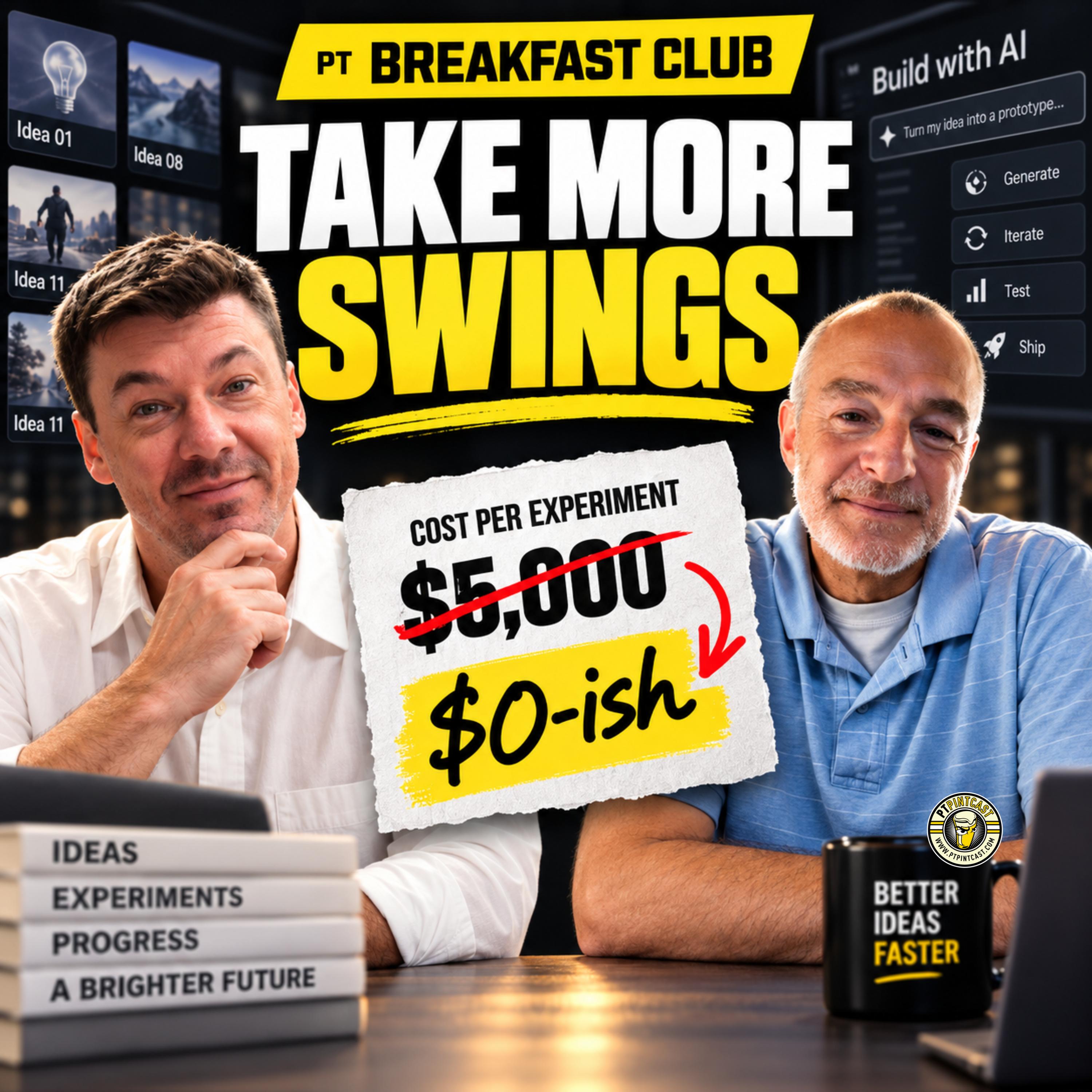 The Cost of Swinging the Bat Is Almost Zero 09.09.2026 56minAI has made experimentation cheap. So why are we still acting like every idea costs $5,000?On this episode of PT Breakfast Club, Jimmy McKay and Tony Maritato start with the debate over AI in education and end up somewhere much bigger: what happens to physical therapy when the cost of learning, creating, testing, building, and iterating drops dramatically?Tony walks through using AI to build a new website, generate social content, create viral knee-replacement imagery, analyze information, and explore business ideas that would have required significantly more time or money only a few years ago. Jimmy connects that to a familiar media principle:Attention → Trust → Action.The goal isn't simply to “make content.” It's to understand whose attention you're earning, why they should keep giving it to you, and what eventually happens because of that trust. The guys also dig into some surprisingly practical opportunities around PT.Key themesAI as a learning tool Instead of assuming AI eliminates thinking, what if educators taught students how to question outputs, find blind spots, compare perspectives, and apply information? The economics of experimentation If creating a website, image, script, campaign, or prototype costs a fraction of what it once did, the number of experiments businesses can run should increase dramatically. Identity beats generic content Tony explains why his knee-replacement tattoo images exploded online, while Jimmy breaks down how the same idea can translate into PT specialties, dogs, sneakers, ice cream, and other identity-driven concepts. Attention isn't the end goal Attention earns an opportunity to build trust. Trust eventually creates action, whether that means a patient choosing your clinic, someone listening to your podcast, buying something, or simply remembering you. Your customers are already giving you market research Google Reviews can reveal repeated language, beloved employees, missing services, hidden strengths, and opportunities that businesses may never mention in their own marketing. Does Facebook still work for PT clinics? Yes, if Facebook solves the problem you're actually trying to solve. The tool matters less than understanding the audience, objective, and platform. Three PT-adjacent business ideasTony also pitches several businesses hiding in plain sight:1. A transparent rehab reimbursement database Take publicly available hospital and insurance pricing information and make it understandable and usable for PT, OT, and SLP professionals.2. A physical therapy discount membership network A DentalPlans-style model where consumers pay for access to transparent discounted rates at participating clinics.3. A healthcare buyer's agent Think real estate buyer's agent, but for healthcare: someone helping patients understand pricing, benefits, providers, options, and complex healthcare decisions. The conversation closes with a deceptively simple question:When AI gives you access to expertise, comparison, analysis, and second opinions almost instantly, are you irresponsible for using it?Or are you irresponsible for refusing to learn how?
 -
 Why PT Clinics Feel Broken: Hiring, Efficiency and the Race to the Bottom 04.09.2026 51minWhy do physical therapy clinics feel broken even when everyone seems to be working harder?On this episode of PT Breakfast Club, Jimmy McKay, Tony Maritato, and Dave Kittle dig into physical therapist hiring, clinician recruitment, clinic marketing, reimbursement, RTM, AI-driven efficiency, and the economics of running a PT practice.The conversation starts with a simple hiring problem: most clinics are competing for the same physical therapists using the same job boards, the same bonuses, and the same messaging. If every clinic is fishing in the same pond, is doing more of the same actually a strategy?Then the conversation turns to marketing, attention, trust, and why a local pancake shop may understand brand building better than most healthcare organizations.Finally, the guys explore a bigger question for physical therapy: when technology makes care more efficient and less expensive to deliver, who actually captures that value? The clinician? The clinic? The patient? Or the payer?Topics include:• Physical therapist hiring and recruitment• PT clinic staffing challenges• Physical therapy job marketing• Clinician retention and hiring strategy• RTM and remote therapeutic monitoring• CMS and physical therapy reimbursement• AI and healthcare efficiency• Private practice physical therapy• PT clinic marketing• The economics of physical therapy practiceThe big takeaway: you may not need more applicants, more marketing, or more of the same strategy. You may need to play a different game.
 -
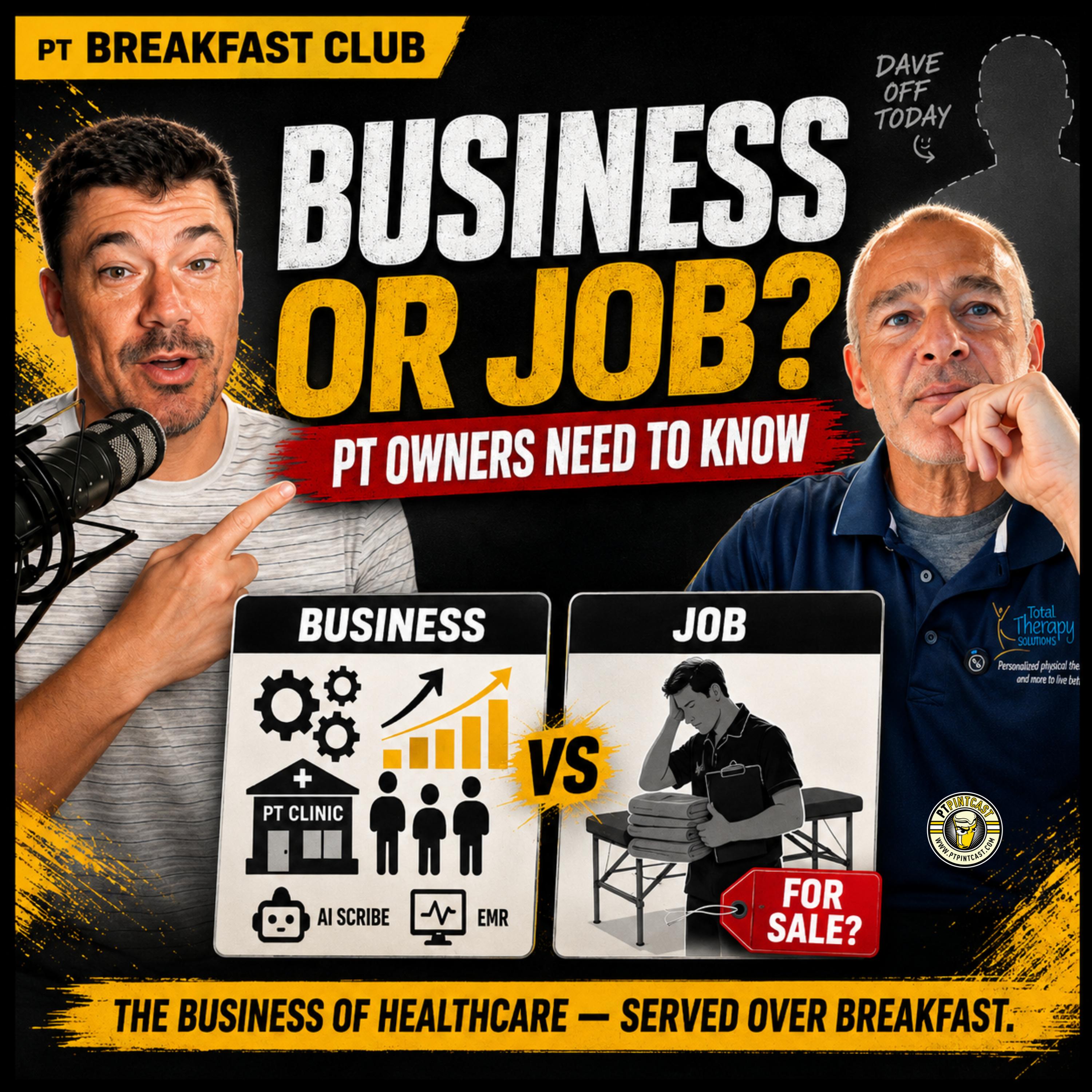 Do you own a business or just a job? 01.09.2026 45minShould physical therapists be the only people who own physical therapy clinics?In this episode of PT Breakfast Club, Jimmy McKay and Tony Maritato dig into the business of healthcare, AI documentation, EMR adoption, and what happens when a clinic is built entirely around one clinician.Dave Kittle has the day off, but Jimmy previews part of his upcoming APTA Florida keynote, including a speed round of PTs doing things differently: cowboy PT, snow sports PT, dance PT, and other examples meant to make clinicians ask, “What’s my twist?”Then Tony brings up a bigger business question: should PT clinics be owned only by PTs? The conversation challenges the anti-business sentiment that shows up in healthcare. PTs understand patient care, but business people understand business. A strong healthcare business needs both.Jimmy and Tony also talk about AI scribes, Luna Physical Therapy, Hinge Health, Sword, EMRs, power users, clinical education, and why the tool itself is not enough. Adoption depends on whether clinicians actually like the tool, trust it, and know how to use it inside real patient care.The episode closes with a solopreneur clinic question: can you sell your business if the business is really you?Jimmy and Tony break down the difference between buying a job and buying a business, why a customer list may have value but may not transfer, and how a solo clinician could build more valuable assets by teaching their method, creating systems, bringing in an apprentice, or turning their proprietary approach into a product.The takeaway: understand what business you are actually in before you try to scale it, sell it, or protect it.
 -
 State Boards Are Coming for PT Packages 27.08.2026 58minCan cash-pay physical therapy clinics sell packages?In this episode of PT Breakfast Club, Tony Maritato, Dave Kittle, and Jimmy McKay react to recent discussion around state PT boards in North Carolina and Texas questioning whether cash-based, self-pay, or direct-pay physical therapy clinics can sell discounted treatment packages or collect payment for services that have not yet been delivered.The crew breaks down the tension between consumer protection and business reality. Are these rules protecting patients, or are they limiting access, punishing business innovation, and forcing clinics into awkward workarounds?Jimmy clarifies the difference between APTA chapters and state boards, while Tony and Dave talk through what this could mean for practice owners, patients, cash flow, refunds, accountability, retainers, memberships, and episode-of-care models.Then the episode shifts into a six-pack referral draft: who should PT clinics build relationships with besides the obvious physician offices?The picks include personal injury attorneys, youth sports coaches, private-pay nursing companies, gym owners and group fitness communities, wheelchair and medical equipment companies, and massage therapists. The crew closes by coming back to physicians with a better approach: stop leading with your credentials and start removing problems from their day.The takeaway: whether you are selling cash-pay care or building referral relationships, the real work is understanding incentives, trust, risk, and the person on the other side of the transaction.
 -
 Your One-Star Review Is Content 26.08.2026 51minWhat if your one-star review is not a disaster?What if it is actually one of the clearest ways to show people what your clinic stands for?In this episode of PT Breakfast Club, Jimmy McKay, Dave Kittle, and Tony Maritato talk about content, clinic storytelling, virtual assistants, outsourcing, moonlighting, AI, and referral relationships.Jimmy and Dave start by talking about why PT Breakfast Club seems to be connecting with people: it is loose, unscripted, opinionated, and willing to say the parts that usually get sanded off professional healthcare conversations.Then Dave shares why he made a video about a one-star Google review for Concierge Pain Relief. Instead of hiding the bad review or trying to delete it, he used it to explain how the practice works, why the model is different, and what type of patient may or may not be the right fit.Jimmy breaks down the difference between telling a story and storytelling, then shares how he borrowed Dave’s idea for a wedding DJ marketing carousel built around fake one-star reviews from people whose weddings were too much fun.The conversation then shifts into operations. Dave explains his experiment with virtual assistants in Costa Rica who are helping handle phone calls, lead follow-up, scheduling, EMR entry, and front desk workflows. The challenge is not just answering the phone. It is teaching the system: geography, home visit scheduling, Google Maps, commute buffers, conversion rates, and all the tiny decisions that live inside a clinic owner’s head.From there, the crew gets into AI, employee identity, outsourcing, moonlighting, no-solicitation agreements, and whether therapists should be allowed to work elsewhere while employed full-time.The episode closes with a setup for Thursday: a referral-source draft board. Who are the people in your neighborhood that PT clinics should build relationships with besides the obvious physician offices?
 -
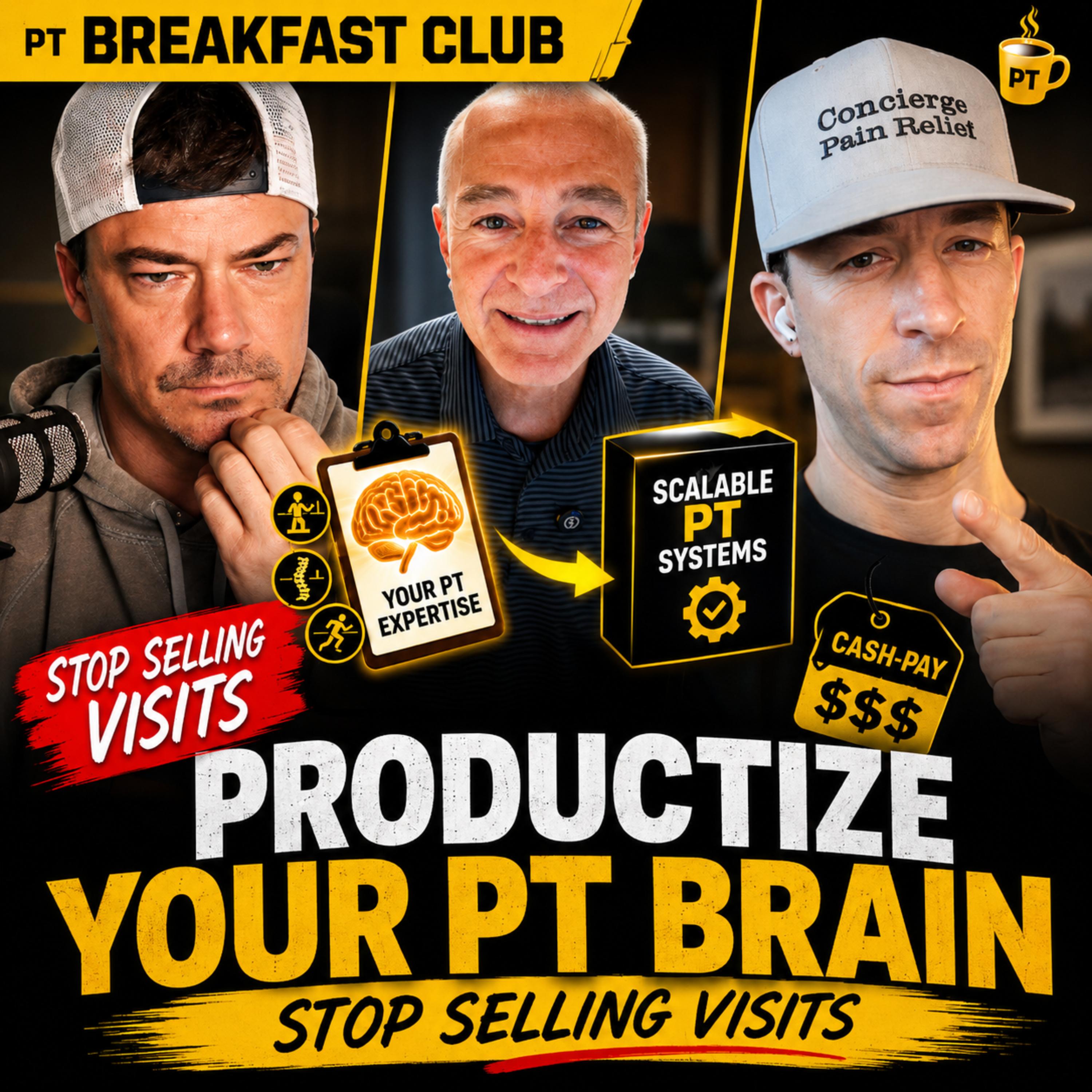 Can Cash Pay PT Actually Scale? 24.08.2026 54minWhat if the future of physical therapy is not just more visits, more units, and more productivity pressure?In this episode of PT Breakfast Club, Tony Maritato, Dave Kittle, and Jimmy McKay start with a productivity benchmark chart comparing outpatient private practice, corporate clinics, cash-based care, hospital outpatient, sports med, and high-volume clinics.That opens up a bigger discussion about what productivity really means in PT. Is 25 visits a day automatically bad? Is one-on-one cash pay automatically better? Or does it all depend on the patient, the payer, the legal model, and the business you are actually building?From there, the conversation turns to whether cash-pay physical therapy can scale. Dave points to Onward and similar performance-based models. Tony pushes back by asking whether that solves a population-level problem or simply serves a smaller group of people who already want the service.Then the crew explores a bigger business idea: can PTs productize their expertise?Jiffy Knee created a branded surgical approach. McKenzie became a global system. Total Motion Release built a recognizable method. So why don’t more physical therapists turn their clinical expertise into branded, licensable programs that other clinics can buy, use, and market?The final stretch gets spicy: Tony’s “best personal trainer vs worst physical therapist” post sparks a debate about education, professional identity, licenses, and whether PTs overestimate the protective power of the degree.The takeaway: knowledge is not proprietary. Value comes from the result, the system, the delivery, and whether people actually want what you are offering.
 -
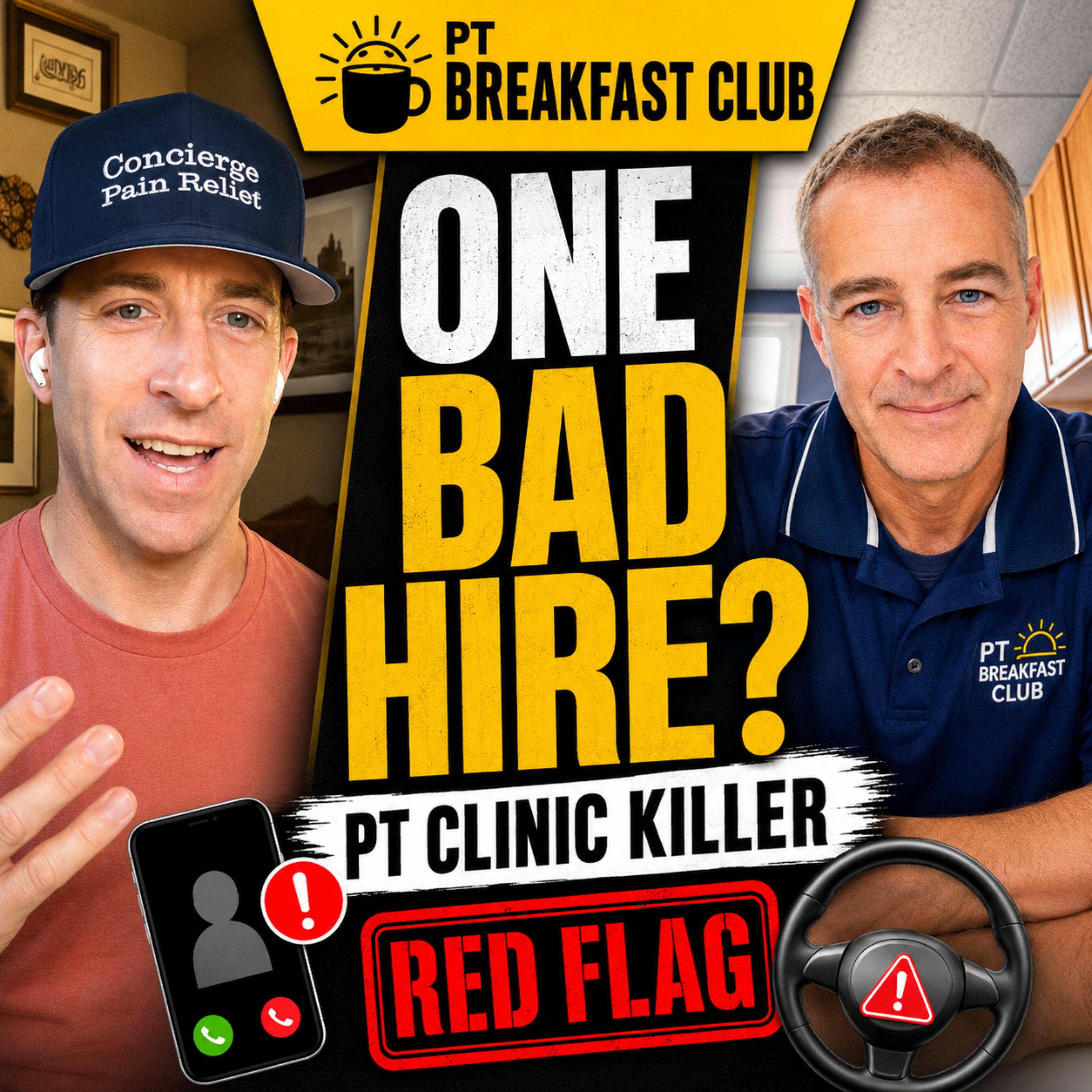 The Therapist Who Took the Interview While Driving 23.08.2026 59minWhat matters more in a physical therapy hire: clinical skill, reliability, values, or fit?In this episode of PT Breakfast Club, Dave Kittle and Tony Maritato talk through the uncomfortable parts of hiring that rarely make it into job descriptions.Tony starts with a question every clinic owner eventually faces: what do you do with someone who is great with patients, but unreliable? Dave shares his interview process, including phone screens, Zoom calls, in-person skills assessments, reference checks, and the small behavioral details that can reveal whether a candidate is actually serious.The conversation centers on one memorable example: a candidate who took a scheduled interview call while driving. For Dave, that was the end of the road. Not because the person was evil, but because the moment revealed something about attention, preparation, and how seriously they treated the opportunity.Tony and Dave also explore whether employers should clearly spell out expectations or leave some things unsaid to see what a candidate does naturally. They talk about new grads versus experienced hires, hiring for core values, ambition alignment, long-term fit, and why one person can either elevate a clinic or quietly disrupt everything.Then the episode turns toward outpatient ortho and the future of physical therapy. Dave brings up a LinkedIn post from an orthopedic surgeon who says he prescribes less formal PT than he did 10 years ago. Tony responds with a bigger question: what if some routine outpatient ortho care is not the best use of insurance dollars?That leads to a spicy conversation about joint replacements, bundled payments, home exercise programs, AI, cash pay, private practice, premium models, scalable healthcare, Equinox, Planet Fitness, and where PT might be headed next.This episode features Dave Kittle and Tony Maritato.
 -
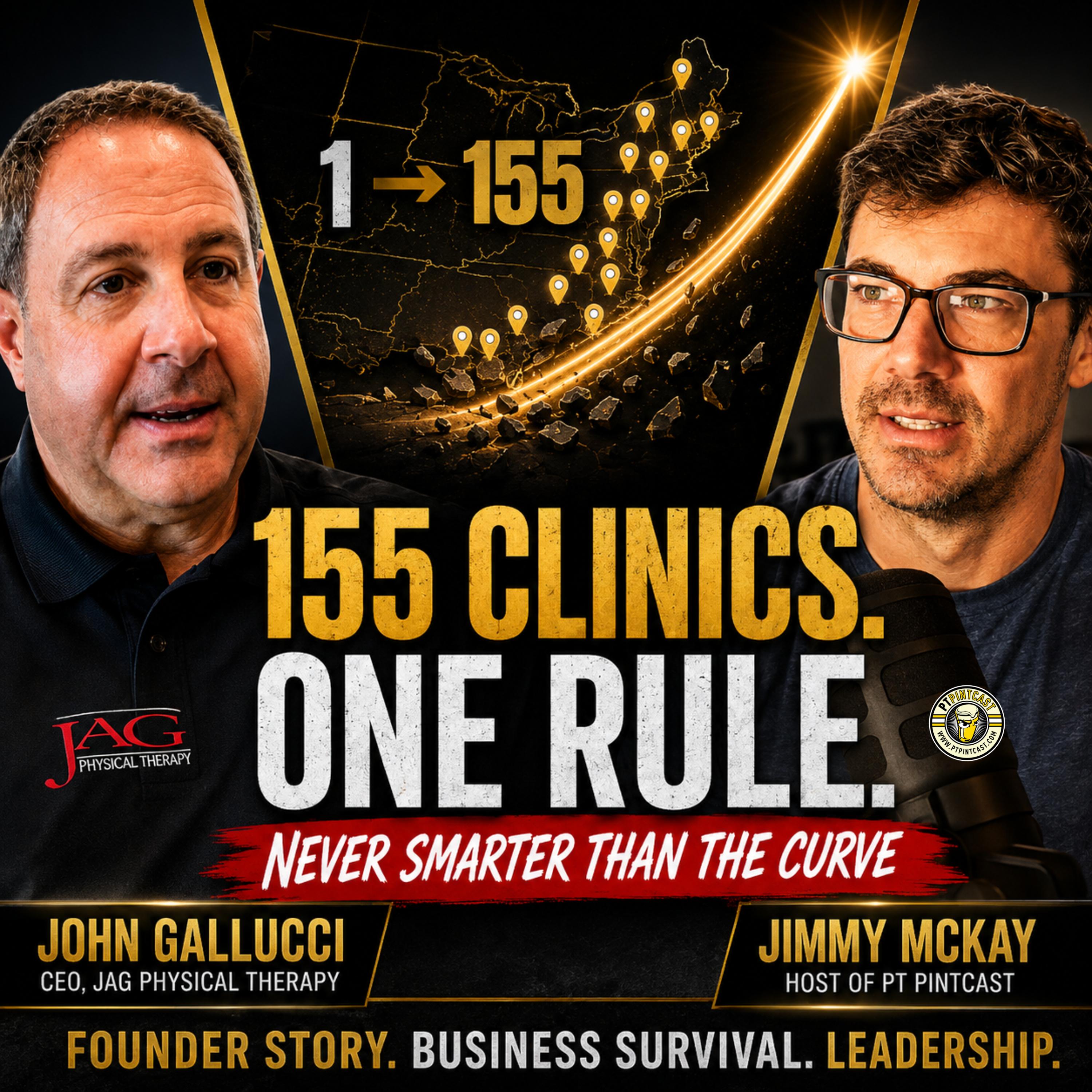 John Gallucci: You’re Never Smarter Than the Curve 21.08.2026 29minJohn Gallucci, CEO of JAG Physical Therapy, joins PT Pintcast for a conversation about business, failure, community, mentorship, branding, and building a physical therapy company that lasts.John traces his story back to Brooklyn, Staten Island, and his family’s surgical supply business. When consolidation took away his father’s hospital contracts, the family lost the business and the home John grew up in. That experience became one of his defining lessons: you are never smarter than the curve. Understand it, adapt to it, and do not assume history will protect you.He also shares how he found physical therapy at 13, how mentors shaped his career, and how JAG Physical Therapy grew from one clinic into 155 community-based clinics. For John, the number matters less than the model: every clinic has to be ingrained in its own community.The episode also covers The JAG Method, his books on soccer and baseball injury prevention, why the company name came from his initials, how opening the second clinic was driven by not wanting to lose a great clinician, and what a one-on-one conversation with Gene Simmons taught him about branding, audience, marketing, and entrepreneurship.John’s parting shot is simple: never take no for an answer. If you want it, go get it. If you get knocked down, get back up. You only go through once.Jag Physical TherapyJohn Gallucci Jr.
 -
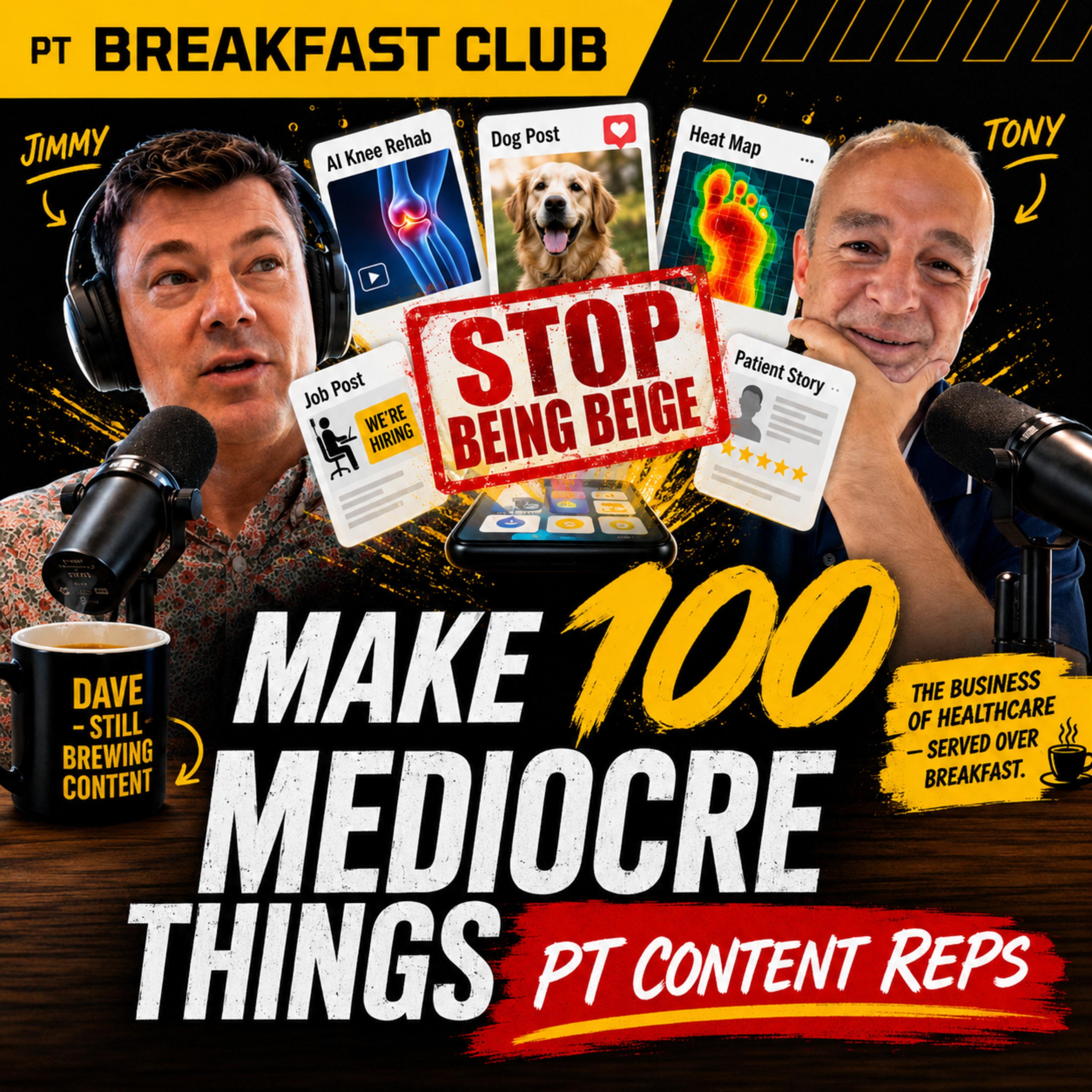 Make 100 Mediocre Things! 21.08.2026 57minYour clinic is already full of content. You just may not be noticing it.In this episode of PT Breakfast Club, Tony Maritato and Jimmy McKay dig into what is actually working in physical therapy content right now.Jimmy shares what he is learning from LinkedIn, including why heat maps, rankings, dogs, sneakers, and “PT but make it…” posts perform well. The reason is not magic. People engage when they can identify with something, argue with it, correct it, or add themselves to the story.Tony shares what is working on Facebook, including AI-generated knee replacement images, real patient photos, simple text prompts, and posts that invite patients to talk about their own experience. Some of the highest-performing posts are not polished videos. They are simple, direct, and built for conversation.That leads to a bigger point: media should be social. Clinics do not need to produce perfect videos. They need to tell real stories, ask better questions, and get more reps.The conversation then turns to hiring. Jimmy explains why most PT job posts sound exactly the same: competitive salary, fast-paced environment, great culture, mentorship, and all the beige phrases that say almost nothing. If every job post sounds the same, the clinic pays a sameness tax.Tony pushes the conversation into access and rationing care. If patients cannot get into PT for weeks or months, referral sources may eventually stop referring. Same-day or next-day access may be a differentiator, but it also changes the business model, staffing model, and documentation burden.The episode wraps with charting beer, call-in show energy, TikTok rage bait, viral injury stories, and the reminder that content creation works like physical therapy: one perfect rep does not change much. The reps do.
 -
 The Apple Pie Lesson for PT Clinics 19.08.2026 57minIs physical therapy school still worth it?In this episode of PT Breakfast Club, Jimmy McKay joins from the APTA Connecticut golf fundraiser at Lyman Orchards, where every round comes with a free apple pie. That becomes the first business lesson of the morning: people remember what is worth remarking on.Tony Maritato, Dave Kittle, and Jimmy use that idea to talk about what makes a clinic memorable, why healthcare defaults to being bland, and how practices can show their value instead of just saying they are different.Then the crew tackles the bigger question: is becoming a physical therapist still worth it?Jimmy says it depends. Dave says yes, if you choose the right school, manage debt, and understand the opportunities available. Tony says the degree is an asset, but only if you use it in today’s world instead of trying to practice like it is 2002.The conversation also covers Dave’s new video strategy in New York City, recording patient care with consent, using anonymized patient stories, AI in PT education, and how future DPT students should be using AI as a study partner.Then Dave shares a $652 refrigerator repair story that turns into a surprisingly useful PT business lesson about urgency, diagnostic fees, same-day service, customer education, and selling access to expertise.The takeaway: physical therapy is still worth it, but the old story is dead. The opportunity is still there for people willing to be modern, visible, creative, and clear about the value they provide.
 -
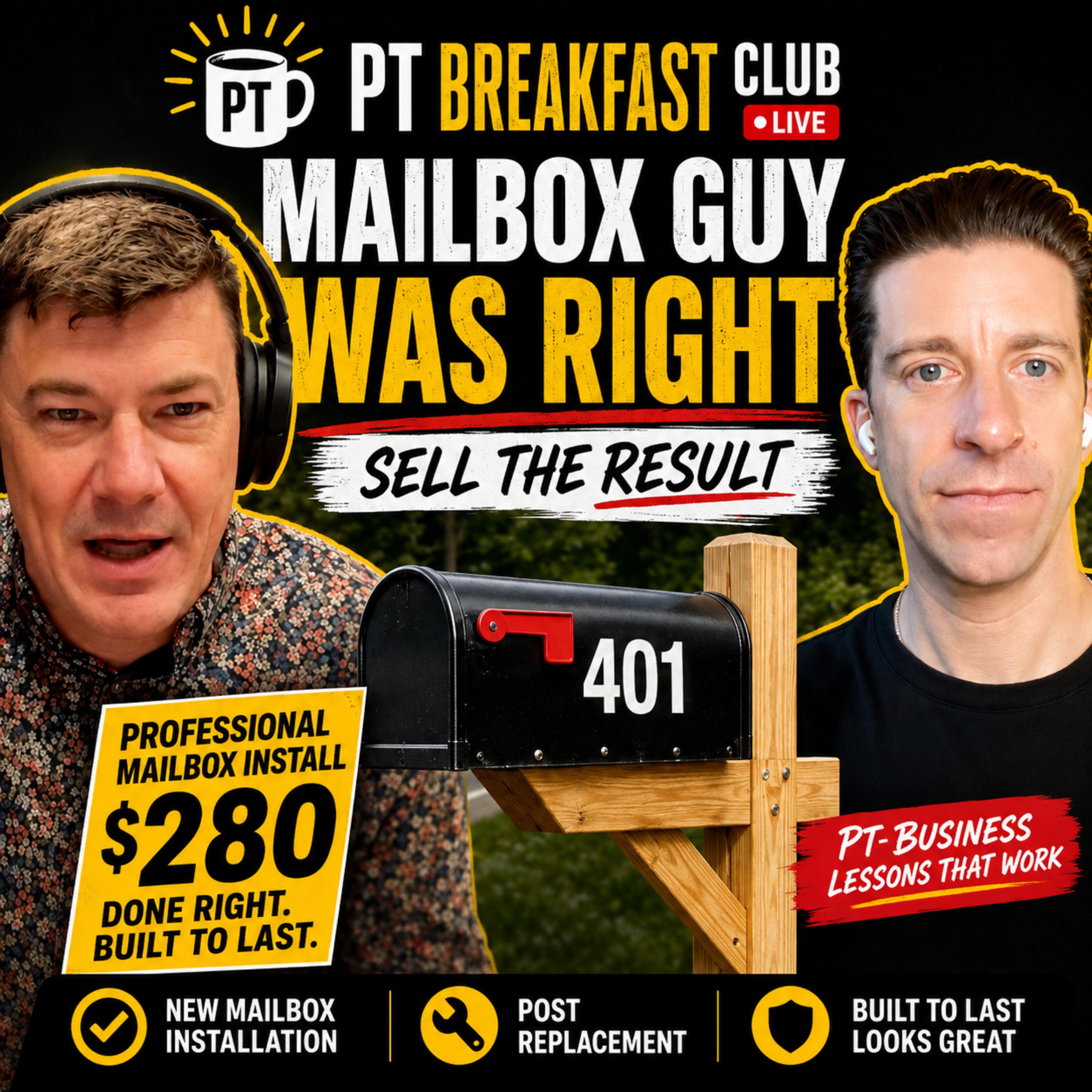 Payment, Reimbursement, and Grandpa the Mailbox Guy 17.08.2026 1j 1minThis episode of PT Breakfast Club starts with Jimmy McKay reporting from Prompt HQ after a trip to Portland for APTA’s Payment Summit and House of Delegates.Jimmy explains how he got in trouble for live tweeting the House of Delegates, why he likes the word “payment” more than “reimbursement,” and what it felt like watching the profession debate policy language in real time.Dave Kittle pushes hard on the bigger question: has payment advocacy actually moved the needle for physical therapy? If insurance companies and Medicare are not meaningfully increasing payment, should more PTs stop waiting and build direct-to-consumer cash-pay offers?Tony Maritato adds the counterpoint: maybe some advocacy success is measured by slowing the decline, not producing giant wins.Then the show turns into a business strategy clinic thanks to Grandpa the Mailbox Guy.For $320, he solves the whole mailbox problem. No hourly rate. No overexplaining. No “here are the 17 steps.” Just a clear result at a clear price.The crew applies that lesson to PT, including grab bar installation, home safety consults, cash-pay evaluations, AI content ideas, therapist recruiting, viral video formats, and what practices should do when a clinician calls out sick.The takeaway: keep it stunningly simple. The customer does not want your process. They want the problem solved.
 -
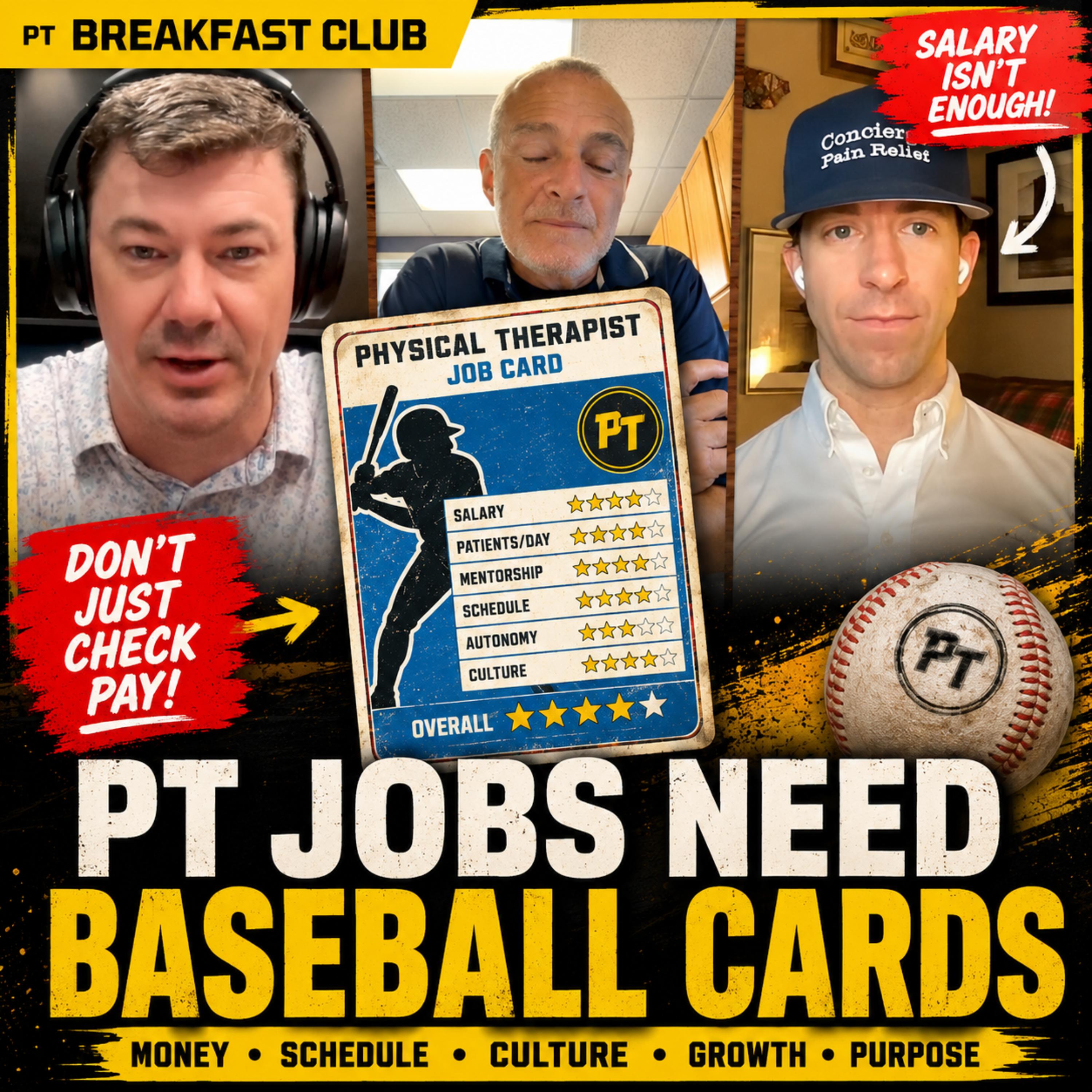 What’s Your Clinic’s Zip Line? 16.08.2026 52minWhat does Sophie Cunningham have to do with physical therapy?More than you might think.In this episode of PT Breakfast Club, Tony Maritato, Dave Kittle, and Jimmy McKay start with WNBA attention, athlete branding, Tom Brady publicity stunts, and the uncomfortable truth that the biggest money often comes from what surrounds the game, not the game itself.Then the crew brings that back to PT.If a physical therapist wants wealth, freedom, or leverage, maybe patient care is not the whole vehicle. Maybe the opportunity is media, ownership, products, digital offers, real estate, consulting, or something built around the clinical identity.Jimmy shares a “show and tell” prompt for clinic owners: what is one thing in your clinic you are irrationally proud of? A coffee setup, a mural, a workflow, a teammate, a clinic dog, a zip line. The stuff clinics usually bury may actually be the thing patients remember.From there, the conversation turns to job posts, salary expectations, retention, recruiting, and why PT jobs need their own baseball cards. Salary matters, but it is only the floor. The real question is what the job actually feels like once you are inside it.The back half gets into Hormozi-style premium offers, virtual assistants, Meta ads, Facebook revenue, insurance documentation mistakes, Google review mining with AI, and Jimmy’s scooter ride to Prompt HQ.That becomes the final metaphor: the golden mile problem. AI can give information, but people still need help turning information into action, context, accountability, and progress.The takeaway: AI may remove the visits that never needed to be visits. But complex care, human judgment, and the last mile of implementation are still incredibly valuable.
 -
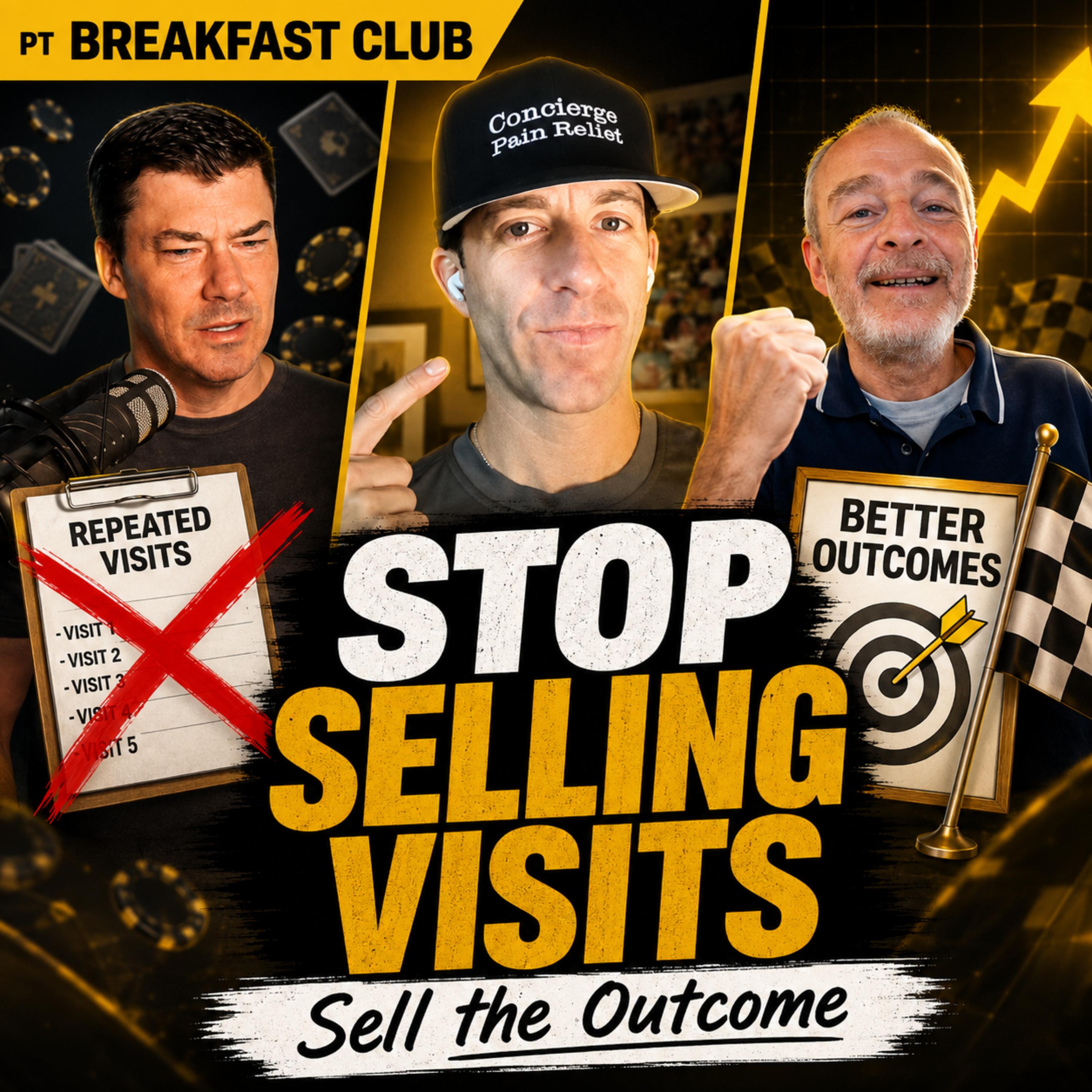 The Business Model Behind the Care 13.08.2026 57minWhat if physical therapy is not bad at care, but bad at naming, packaging, and selling the thing patients actually want?In this episode of PT Breakfast Club, Jimmy McKay, Tony Maritato, and Dave Kittle start with Dave’s poker night in New York City and end up in a much bigger conversation about relationship-building, recruiting, cash-pay offers, performance training, AI, and why clinics may need to stop selling visits.The crew talks about how poker night, PT pub nights, student events, and live experiences can create better connections between clinicians, students, employers, and practice owners. Instead of another stale job fair, what if recruiting looked more like a room people actually wanted to be in?Then Tony raises the bigger identity question: should everything delivered by a physical therapist be called physical therapy? Or should clinics start naming the service more clearly, like performance training delivered by a physical therapist?Dave breaks down a real cash-pay experiment at Concierge Pain Relief, including a paid evaluation, a value stack, and a results-based plan of care instead of selling visit by visit. That sparks a deeper discussion about why selling transformation is harder than selling a commodity, why clinicians struggle with large dollar amounts, and how repetition, call recording, AI feedback, and coaching can make value communication stronger.The episode closes with AI’s future role in patient decision-making. Patients may increasingly use their own AI tools to evaluate offers, compare options, and decide whether a package makes sense.The final takeaway: clarity beats complexity, and clear beats clever every time.
 -
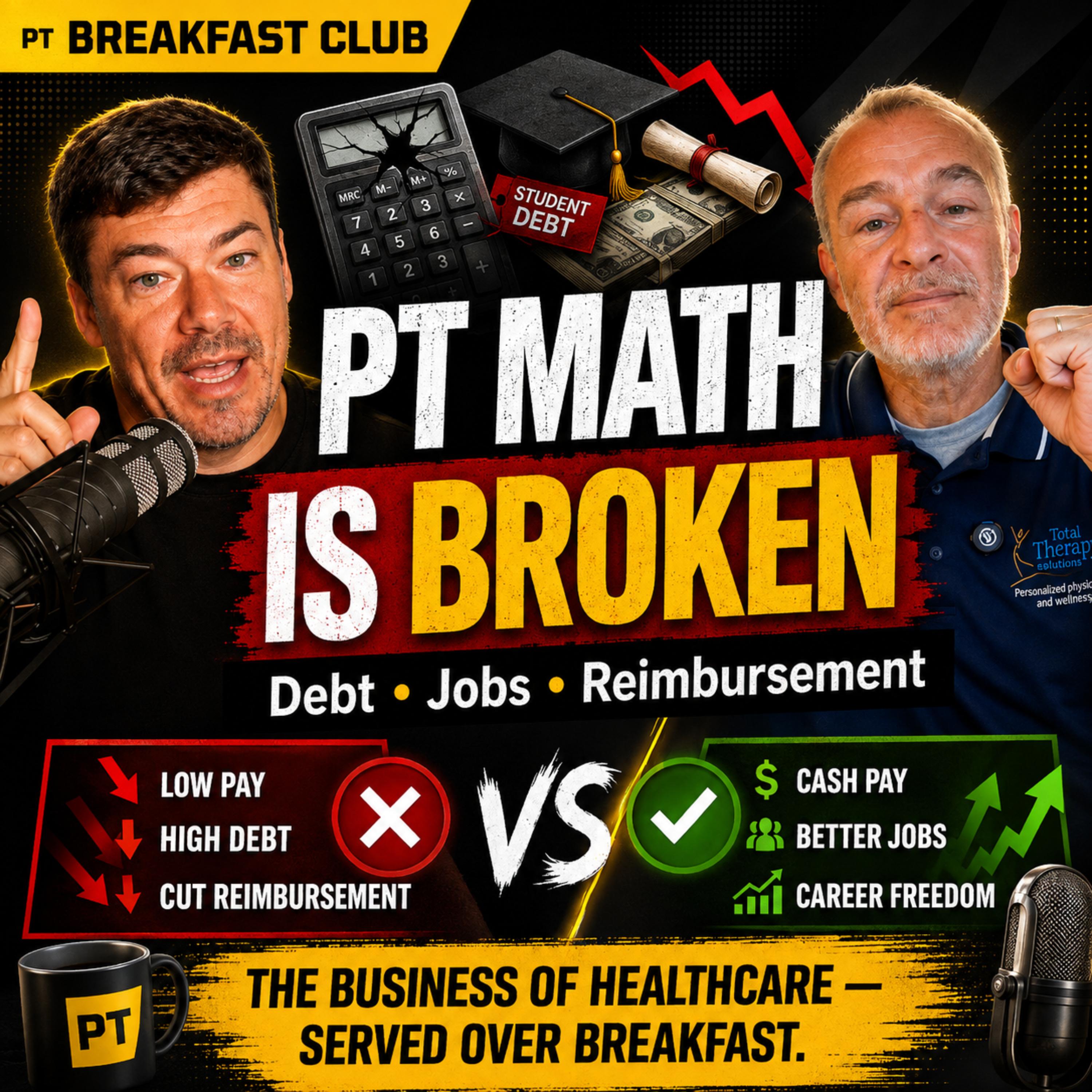 The PT Profession Has a Math Problem 12.08.2026 1j 1minPhysical therapy has always told students some version of the same story:Work hard. Get the degree. Help people. There will be a job waiting.But what happens when the math starts to break?In this episode of PT Breakfast Club, Jimmy McKay and Tony Maritato start with a post from Richard Severin about the financial viability of the physical therapy profession. The conversation quickly moves into PT school ROI, student debt, academic program pressure, and whether the next generation of students is more willing to ask the uncomfortable question:Is this still worth it?Tony argues that the profession may be facing a bigger identity problem than it wants to admit. If a patient’s desired outcome is less pain and better function, PT is only one possible delivery model. AI, tech-enabled MSK platforms, personal trainers, hospital systems, cash-pay clinics, PTAs, techs, and other professions may all compete to deliver parts of what PT has traditionally owned.Jimmy pushes the business angle: if you own a private practice, you are not just in the physical therapy business. You are in the marketing business, the patient attraction business, the hiring business, the customer experience business, and the human resources business.The second half of the episode turns into a practical marketing lab. Jimmy and Tony critique a listener’s marketing pitch about targeting new families moving into a clinic’s area, then break down why so much AI-generated healthcare marketing feels cheap, loud, and generic. They use classic advertising examples like Rolls-Royce, Grey Poupon, Holiday Inn, and Volkswagen to show how better strategy leads to better creative.The episode closes with Prompt’s Career Connection program and the idea that maybe some clinicians do not need to leave physical therapy. Maybe they just need to leave the wrong job.Key IdeasPT has a financial viability problem, not just a morale problem.Students who really run the numbers may never enter the profession.“I just want to help people” is not enough if the career cannot support a life.The profession may need to separate outcomes from identity.Outpatient ortho under insurance may not be the future of private practice.If PT cannot scale the outcome, someone else will.Private practice owners are not only in the PT business.Marketing is not decoration. It is how the market understands your value.AI-generated design still requires strategy, taste, and iteration.Career matching may work better when it is human, specific, and trust-based.
Podcast serupa


Popular di
Podcast ini turut muncul dalam senarai podcast negara-negara ini.

