
The Unplugged Life: Screen Addiction, Digital Detox & Conscious Parenting
Sandal Shukla
0
The Unplugged Life offers practical, science-based advice for adults, parents, and families who want to reduce screen time and overcome digital addiction. Each episode covers topics like smartphone dependency, social media overuse, dopamine detox, and mindful technology use. The show also explores conscious parenting strategies for raising children with a balanced relationship with screens. New episodes are released every Tuesday and Thursday.
Episod
-
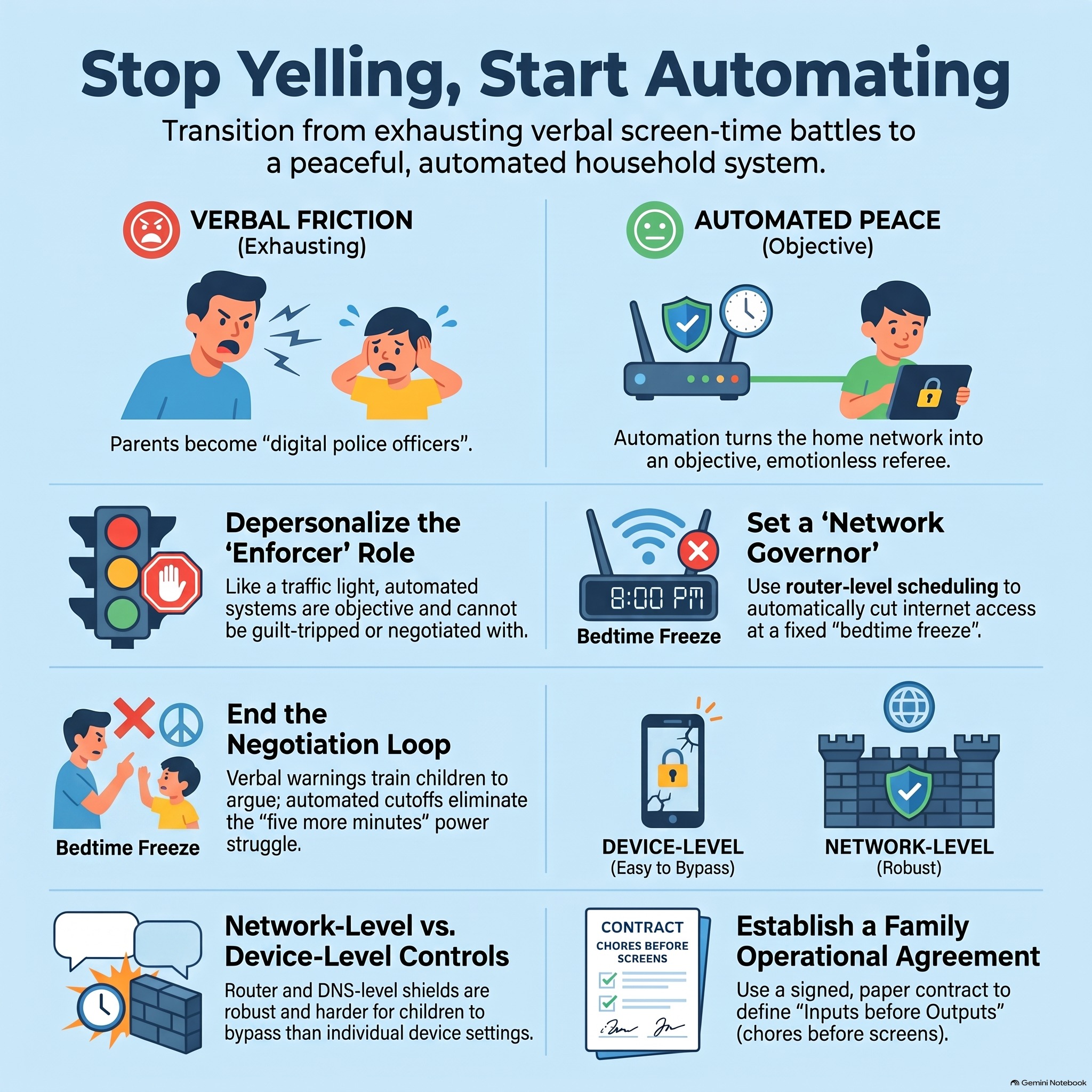 Stop Yelling Over Screen Time: The Automated System That Ends Daily Fights 25.09.2026 40minHey! I'd love to hear your thoughts, send me a voice note.How many times this week have you found yourself nagging, bargaining, negotiating, or yelling just to get your kids to turn off a screen?When screen limits rely entirely on emotional willpower and verbal reminders, daily conflict is inevitable. You become the exhausted police officer, your child becomes the resistant fugitive, and your evenings devolve into a predictable cycle of parent guilt and emotional weariness.In Episode 39 of The Unplugged Life, we bring process engineering principles into the family home. Learn why verbal rules fail against automated software, how to depersonalize tech boundaries by turning the home network into an objective referee, and how to configure an automated "Network-Level Governor" using schedule profiles, router toggles, and zero-negotiation digital contracts.⏱️ EPISODE TIMESTAMPS: 0:00 - The Exhausting Daily Trial: Why Yelling Degrades Family Peace 1:20 - The Willpower Fallacy: Verbal Rules vs. Automated Systems 2:45 - The Hostage Negotiation Loop: Why "Five More Minutes" Wins 4:10 - The Engineering Mindset: Depersonalizing the Enforcer 5:40 - The Household Network Governor: Setting Up Hardware Boundaries 7:15 - Software vs. Router-Level Controls: Why DNS-Level Filtering Wins 8:45 - The Family Operational Agreement (Clear Inputs, Predictable Outputs) 10:10 - The 24-Hour Experiment: The Automated Curfew Pilot 11:25 - Final Thoughts & Preview of Episode 40⚙️ THE AUTOMATED HOUSEHOLD CHECKLIST:Depersonalize the boundary: Let hardware-level automations enforce shutoffs so parents aren't the villains.Route at the DNS level: Use parental controls at the home router or mesh network rather than device-by-device hacks.Establish fixed time blocks: Create predictable internet shutdown windows (e.g., 8:00 PM to 6:30 AM).Zero emotional bargaining: Never negotiate screen extensions during active emotional dysregulation.
 -
 The Pocket Slot Machine: How to Explain Social Media Algorithms to Kids 24.09.2026 48minHey! I'd love to hear your thoughts, send me a voice note.How do you convince a child or teen that their favorite app isn't an innocent video feed, but an engineered psychological trap?Telling adolescents to "stop wasting time on social media" almost always backfires as out-of-touch moral policing. But when you reframe the discussion from parental rules to industrial behavioral engineering—revealing how tech platforms use the exact mechanics of Las Vegas slot machines—you trigger their natural desire for personal autonomy and independence against corporate manipulation.In Episode 38 of The Unplugged Life, we break down the mechanics of the "Pocket Slot Machine." Discover the psychology of B.F. Skinner's Intermittent Variable Rewards, why the "pull-to-refresh" motion mimics a one-armed bandit, and a practical conversational framework to teach your children digital literacy so they realize they aren't playing the app—they are being played.⏱️ TIMESTAMPS 0:00 - The Nagging Trap: Why Lecturing Teens Always Backfires 1:20 - The "Pocket Slot Machine" Analogy That Actually Works 2:45 - The Psychology of B.F. Skinner’s Variable Rewards 4:15 - Pull-to-Refresh & The Infinite Scroll: Engineered Frictionlessness 5:45 - The Metric Mirage: Weaponizing Likes and Red Hearts 7:15 - Flipping the Script: Weaponizing Teenage Rebelliousness Against Big Tech 8:40 - The 3 Questions to Ask Kids After a Scrolling Session 10:05 - The 24-Hour Experiment: The "Casino Auditor" Family Challenge 11:15 - Final Thoughts & Preview of Episode 39 🎰 THE CASINO AUDIT CONVERSATION PROTOCOL: 1. Strip the guilt: Stop blaming willpower; highlight algorithmic engineering. 2. Teach the "Variable Reward": Explain why unpredictable payoffs keep human thumbs swiping. 3. Call out interface tricks: Show how pulling down to refresh uses the same tactile feedback as a casino lever. 4. Foster critical defiance: Frame stepping away as an act of personal autonomy and rebellion.👥 CONNECT WITH THE UNPLUGGED LIFE: • Subscribe for weekly data-driven frameworks to protect childhood in an algorithmic world. • Drop a comment: How do your kids react when you explain how algorithms work?
 -
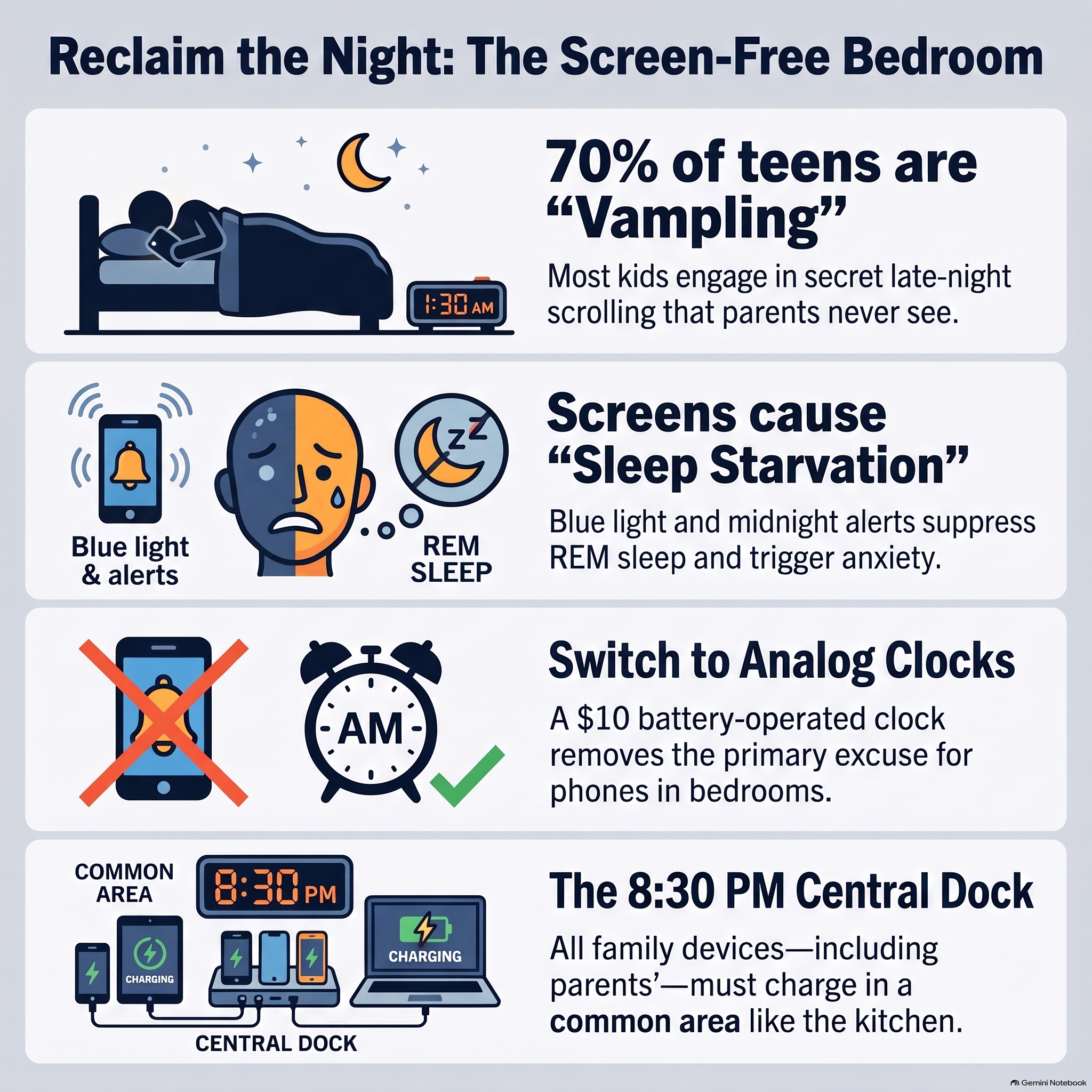 No Phones in the Bedroom: The #1 Rule to Fix Sleep and Protect Kids 23.09.2026 43minHey! I'd love to hear your thoughts, send me a voice note."It's fine, I just use it as my alarm clock."It is the most common, seemingly harmless excuse used by teenagers and adults alike [3, 4]. But allowing internet-connected screens into a child's bedroom overnight is the single most destructive compromise in modern digital parenting.When a device crosses the bedroom threshold, the room ceases to be a restorative sleep sanctuary [3]. Instead, it becomes an unmonitored portal to 2 AM group chat drama, stealth gaming, and algorithmic feeds—a phenomenon pediatricians call "vamping" [2, 3]. The biological cost isn't just groggy mornings; it directly triggers chronic sleep fragmentation, elevated anxiety, and systemic emotional dysregulation.In Episode 37 of The Unplugged Life, we evaluate the spatial architecture of the home [3, 7]. Learn why bedroom doors cannot stop algorithmic intrusions, the physiological mechanics of nighttime sleep disruption, and an engineering-grade 4-step framework to establish a non-negotiable "Central Family Dock" that removes devices from every bedroom in your home without nightly friction. ⏱️ CHAPTER TIMESTAMPS: 0:00 - The "Alarm Clock" Lie: How Devices Infiltrate the Bedroom 1:20 - The Architecture of Sanctuary (Spatial Conditioning) 2:45 - What is "Vamping"? The Hidden 2 AM Digital Life of Kids 4:15 - The Neurological Cost: Sleep Fragmentation & REM Suppression 5:40 - The Parental Illusion of Trust vs. Developmental Reality 7:05 - The $10 Solution: The Return of the Analog Alarm Clock 8:25 - The Central Family Charging Dock (Setup & Location) 9:45 - The Parent Leading Principle: The Master Bedroom Rule 10:50 - The 24-Hour Experiment: The Bedroom Tech Eviction 11:55 - Final Thoughts & Actionable Takeaways 🛏️ THE BEDROOM SANCTUARY PROTOCOL: 1. Buy a $10 analog alarm clock: Eliminate the phone's primary operational justification. 2. Establish the Central Dock: Relocate all chargers to a neutral common area (kitchen or hallway). 3. The 8:30 PM Power-Down Curfew: All handheld screens dock 60–90 minutes before lights out. 4. Lead by example: Parents must remove their own smartphones from nightstands permanently.👥 CONNECT & SUBSCRIBE: • Subscribe for weekly data-driven frameworks to protect childhood in an algorithmic world.
 -
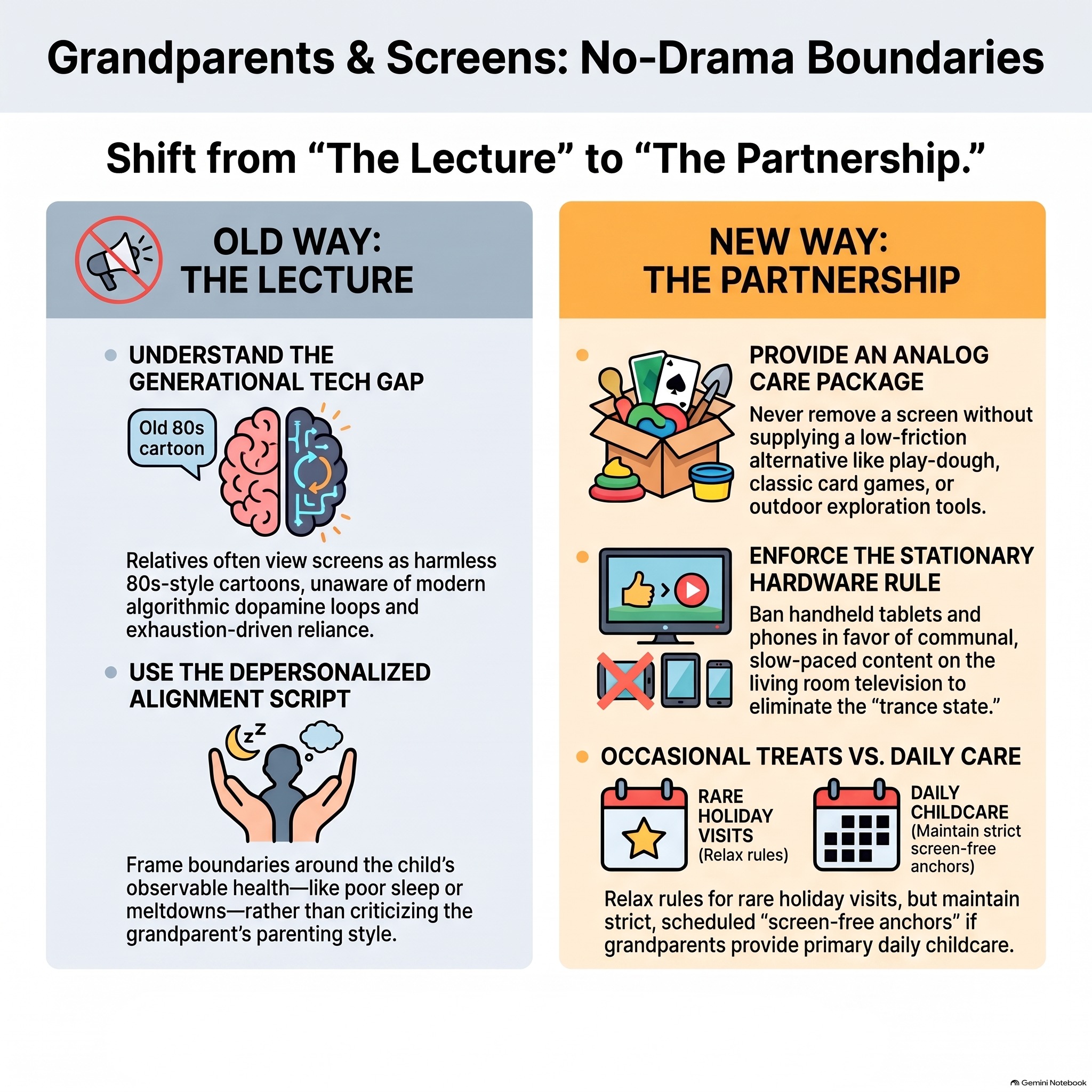 How to Stop Grandparents Giving Kids Screens (Without Family Drama) 22.09.2026 43minHey! I'd love to hear your thoughts, send me a voice note.You spend weeks establishing screen-free evenings, slow-paced media diets, and healthy dopamine baselines. Then your children visit their grandparents or relatives for a single weekend—and come home overstimulated, exhausted, and demanding unrestricted tablet access.Navigating tech boundaries with grandparents and extended family is one of the most delicate relational challenges of modern parenting. When grandparents hand your child a phone or turn on the television all day, it rarely comes from malicious defiance—it stems from generational gaps, a desire to provide comfort, or simple exhaustion. But how do you enforce your household values without offending the people who love your kids most?In Episode 36 of The Unplugged Life, we unpack the relational dynamics of the "Grandparent Tech Gap." Discover why lecturing extended family triggers defensiveness, how to communicate boundaries using engineering-style clarity without judgment, and how to pack the "Analog Care Package"—a proven, low-friction toolkit that makes tech-free grandparenting effortless, fun, and drama-free. ⏱️ EPISODE TIMESTAMPS 00:00 - The Post-Weekend Screen Hangover: Relatives vs. Rules 01:20 - Diagnosing Intent: Love, Generational Gaps, and Exhaustion 02:45 - The Fatal Flaw: Moralizing Instead of Operationalizing 04:15 - The "Script" That Eliminates Defensiveness 05:45 - The Analog Care Package (Empowering Relatives with Tools) 07:20 - Preserving the "Special Occasion" Exception (When to Let It Go) 08:45 - Managing the Overnight Stay & Regular Childcare Dilemma 10:05 - The 24-Hour Experiment: The Boundary Alignment Call 11:15 - Final Thoughts & Preview of Episode 37 👵 THE FAMILY TECH BOUNDARY BLUEPRINT: 1. Depersonalize the rule: Anchor boundaries in sleep and behavior metrics, not personal judgment.2. Provide the alternative: Never remove the screen without providing the physical activity.3. Establish hard health lines: Bedtime routines and zero screens during meals remain non-negotiable.4. Pick your battles: Differentiate between a daily babysitter and an occasional holiday treat.📚 RECOMMENDED READING FOR THIS EPISODE: • "Reset Your Child's Brain" by Dr. Victoria L. Dunckley — Understanding screen-induced sensory overload, mood disruption, and dopamine resetting.• "The Anxious Generation" by Jonathan Haidt — Examining the shift from play-based to phone-based childhoods and restoring real-world family engagement.• "Boundaries" by Dr. Henry Cloud & Dr. John Townsend — A practical guide on setting healthy relational limits with parents and in-laws without guilt.• "Digital Minimalism" by Cal Newport — A framework for intentional tech choices and establishing offline household rituals.👥 CONNECT WITH THE UNPLUGGED LIFE: • Subscribe for weekly data-driven frameworks to protect childhood in an algorithmic world. • Community Question: What is your biggest challenge with screen boundaries when visiting extended family?
 -
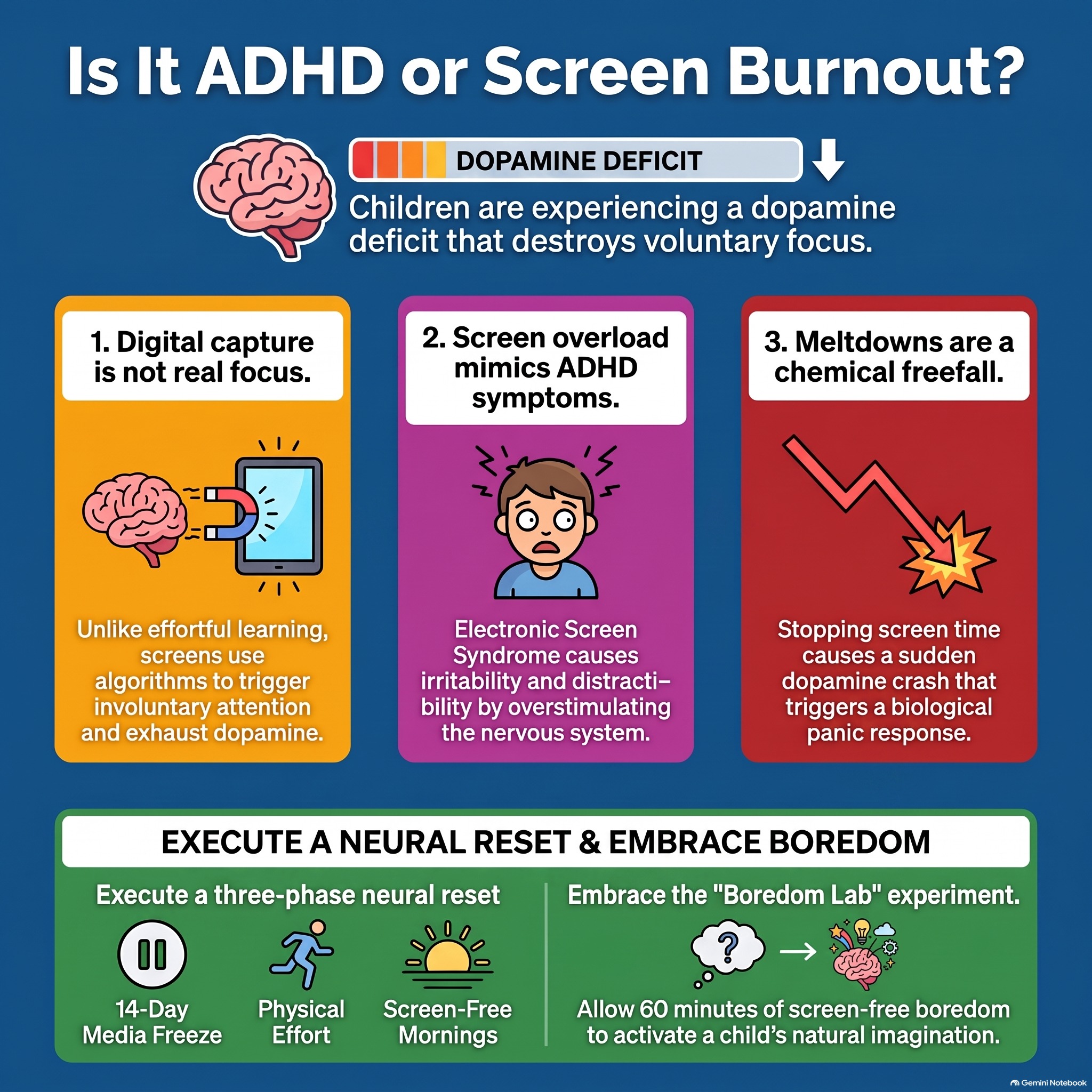 The Dopamine Deficit: Screen-Induced ADHD & Focus Burnout in Kids 21.09.2026 53minHey! I'd love to hear your thoughts, send me a voice note.Why are pediatric waiting rooms overflowing with parents seeking evaluations for sudden-onset ADHD, sensory processing disorders, and behavioral defiance? Before a child's brain has fully mapped its dopamine pathways, constant exposure to high-velocity short-form algorithms, multi-reward video games, and continuous streaming creates a chronic state of neurochemical exhaustion. Pediatric integrative psychiatrist Dr. Victoria Dunckley calls this "Electronic Screen Syndrome": a hyper-aroused, dopamine-depleted nervous system that precisely mimics the clinical diagnostic criteria of attention deficit disorders.In Episode 35 of The Unplugged Life, we evaluate the neurobiology of pediatric dopamine exhaustion. Discover why hyper-stimulating digital media down-regulates baseline dopamine receptors, the critical difference between genetic neurodivergence and screen-induced focus burnout, and an engineering-grade 3-phase "Neural Recalibration Protocol" to restore calm focus, emotional stability, and baseline attention in your home.⏱️ EPISODE TIMESTAMPS 0:00 - The Classroom Paradox: Laser Focus on Screens, Zero Focus on Life 1:25 - The Baseline Dopamine Trap: How Algorithms Reset Child Neurochemistry 2:50 - Electronic Screen Syndrome (ESS): The Clinical Overlap with ADHD 4:20 - The "Sensory Satiation" Deficit: Why Slow Tasks Feel Painful 5:50 - The Biology of the Post-Screen Meltdown (Dopamine Freefall) 7:20 - Phase 1 of Recalibration: The 14-Day Fast-Pacing Media Freeze 8:45 - Phase 2: High-Effort Physical Dopamine Substitution 10:05 - Phase 3: The Low-Dopamine Morning & Evening Buffers 11:15 - The 24-Hour Experiment: The 60-Minute "Boredom Lab" 12:20 - Final Thoughts & Preview of Episode 36 🧠 THE NEURAL RECALIBRATION CHECKLIST: 1. Eliminate rapid-cut media: Remove video content with scene changes faster than 4 seconds. 2. Differentiate ESS from ADHD: Evaluate attentional capacity during low-stimulation, outdoor physical tasks. 3. Protect the morning wake-up: Ensure zero digital inputs for the first 90 minutes after waking. 4. Normalize constructive boredom: Allow children to experience low-dopamine states to stimulate natural imagination. 👥 CONNECT WITH THE UNPLUGGED LIFE: • Subscribe for weekly data-driven frameworks to protect childhood in an algorithmic world. • Drop a comment: Have you noticed attention issues in your child after heavy screen sessions?
 -
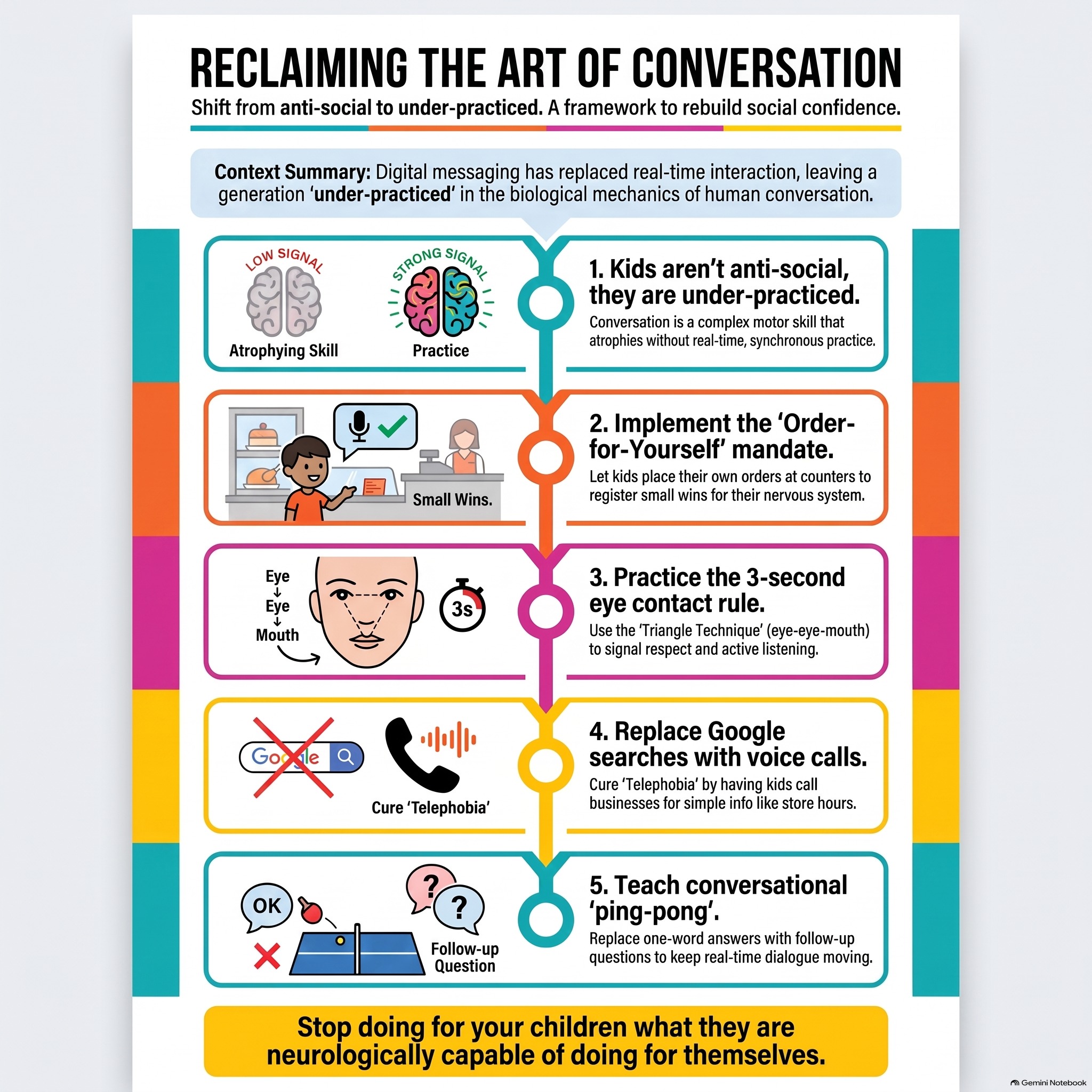 Raising Confident, Social Kids in a Screen-Obsessed World 20.09.2026 40minHey! I'd love to hear your thoughts, send me a voice note.Why does ordering food at a restaurant counter or making a two-minute phone call trigger a full-blown anxiety attack for modern kids? As asynchronous digital messaging replaces face-to-face interaction, an entire generation is losing the biological art of human conversation. Without regular practice interpreting micro-expressions, vocal inflections, and conversational pauses, children grow up terrified of real-time friction. We aren't raising anti-social kids—we are raising under-practiced kids.In Episode 34 of The Unplugged Life, we deconstruct the decline of interpersonal competence in the smartphone age. Learn why text messaging strips out the neurobiological feedback loops needed for empathy, how "telephobia" develops, and an engineering-grade 4-step framework to coach children of all ages in basic conversational fluency, eye contact, and social confidence without forcing uncomfortable performance. ⏱️ EPISODE TIMESTAMPS: 00:00 - The Counter Panic: Why Kids Can't Order Their Own Food 01:20 - Asynchronous Safety vs. Real-Time Reality 02:45 - The Neurological Cost: Micro-Expressions & Vocal Prosody 04:15 - The Rise of "Telephobia" (Why Calling Feels Dangerous) 05:40 - The Conversational Scaffolding Framework (Ages 6 to 16) 07:05 - Stage 1: The "Order-for-Yourself" Challenge 08:20 - Stage 2: The Three-Second Eye-Contact Calibration 09:35 - Stage 3: The Live Voice Call Mandate 10:40 - The 24-Hour Experiment: The Saturday Counter Quest 11:45 - Final Thoughts & Preview of Episode 35 🗣️ THE SOCIAL CONFIDENCE REBUILD PROTOCOL: 1. Ban ordering on behalf of kids: Let them place their own order and pay the cashier directly. 2. Replace text logistics with phone calls: Have teens dial local businesses for store hours or reservations. 3. The 3-second eye contact rule: Practice warm, relaxed eye contact using the Triangle Technique during daily errands. 4. Practice conversational "Catch": Teach the ping-pong dynamic of asking follow-up questions instead of single-word answers.👥 CONNECT & COMMUNITY: • Subscribe for weekly data-driven frameworks to protect childhood in an algorithmic age. • Join the conversation below: Does your child feel nervous making a basic phone call?
 -
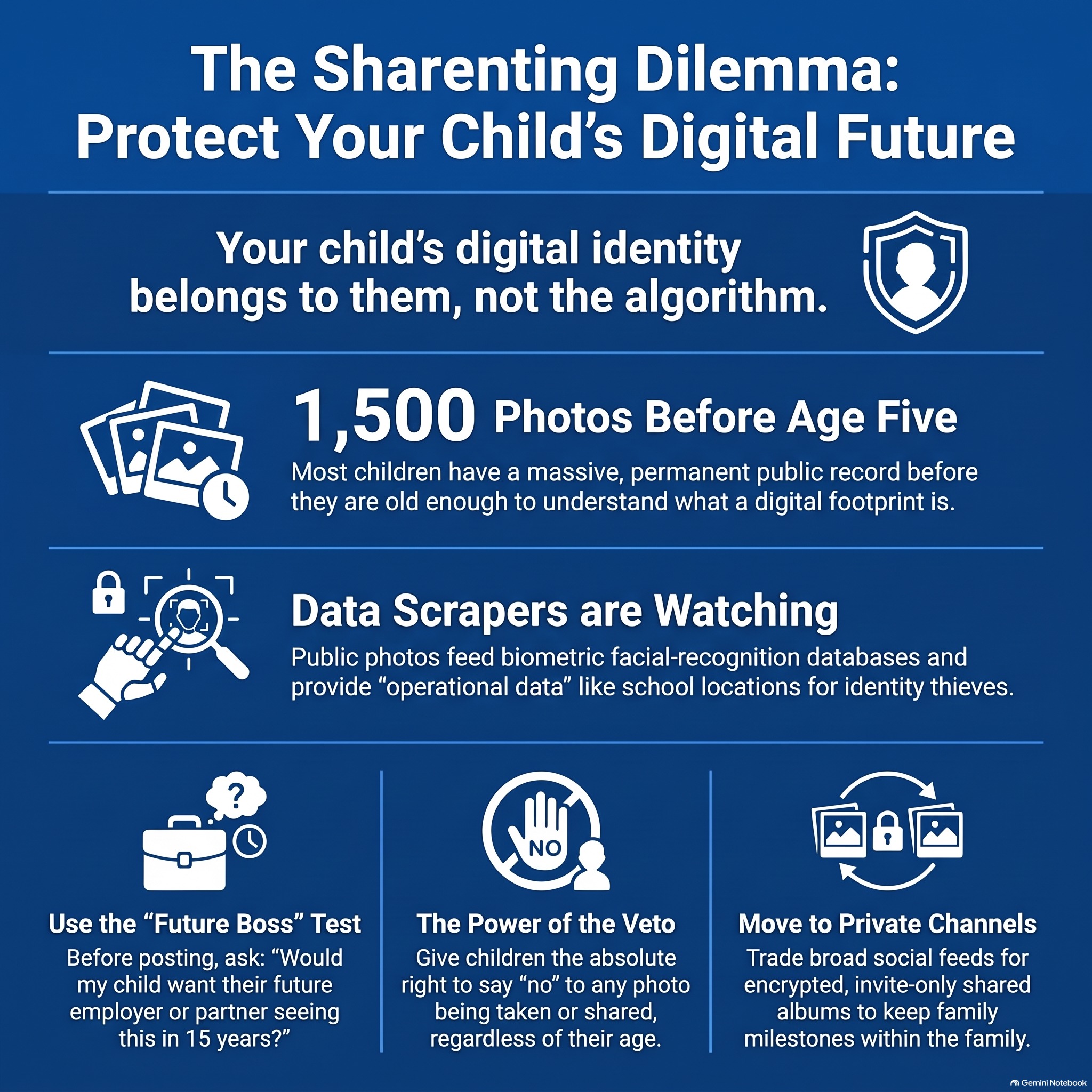 Digital Consent & Sharenting: How to Protect Your Child's Online Footprint 19.09.2026 38minHey! I'd love to hear your thoughts, send me a voice note.Before the average child turns five years old, parents upload nearly 1,500 photos and videos of them to public and semi-public platforms. While shared out of parental pride, this creates a permanent public record long before children can understand what a digital footprint even means.In Episode 33 of The Unplugged Life, we unpack the hidden legal, social, and psychological stakes of modern "sharenting". Discover how unvetted digital footprints compromise future autonomy, the growing security risks surrounding facial recognition and biometric data harvesting, and a practical 4-question family gatekeeper framework to implement digital consent before you tap "Post".⏱️ EPISODE TIMESTAMPS: 0:00 - The 1,500-Photo Footprint: A Generation Born Without Privacy 1:20 - The Two Sides of "Sharenting": Pride vs. Exploitation 2:40 - The Permanent Record: Identity Harvesting & Biometric Scrapers 4:15 - The Psychological Toll: Growing Up as a Public Performance 5:50 - The Asymmetry of Power: Parents as Digital Gatekeepers 7:15 - What is "Digital Consent" for a 6-Year-Old? 8:35 - The 4-Question Family Gatekeeper Framework 10:05 - The 24-Hour Experiment: The Digital Footprint Audit & Family Pact 11:15 - Final Thoughts & Closing Insights 🛡️ THE DIGITAL CONSENT CHECKLIST: 1. The Headline Test: Would you want your worst childhood meltdown broadcast publicly today? 2. Strip the Geotags: Remove identifiable school uniforms, house numbers, or routine physical locations. 3. The Veto Rule: Give children of all ages the power to say "no" to taking or posting a photo. 4. Move to Private Channels: Use encrypted, invite-only shared albums for family. 📚 RECOMMENDED READING: • "Sharenting: How Parents Are Violating Children's Privacy and What to Do About It" by Stacey Steinberg • "The Anxious Generation: How the Great Rewiring of Childhood Is Causing an Epidemic of Mental Illness" by Jonathan Haidt • "Reclaiming Conversation: The Power of Talk in a Digital Age" by Sherry Turkle 👥 CONNECT & RESOURCES: • Subscribe for weekly frameworks on navigating family life in an algorithmic world. • Connect on LinkedIn for systems design and family cognitive frameworks. • Join the conversation: Do you ask your children for permission before posting their photos online ?
 -
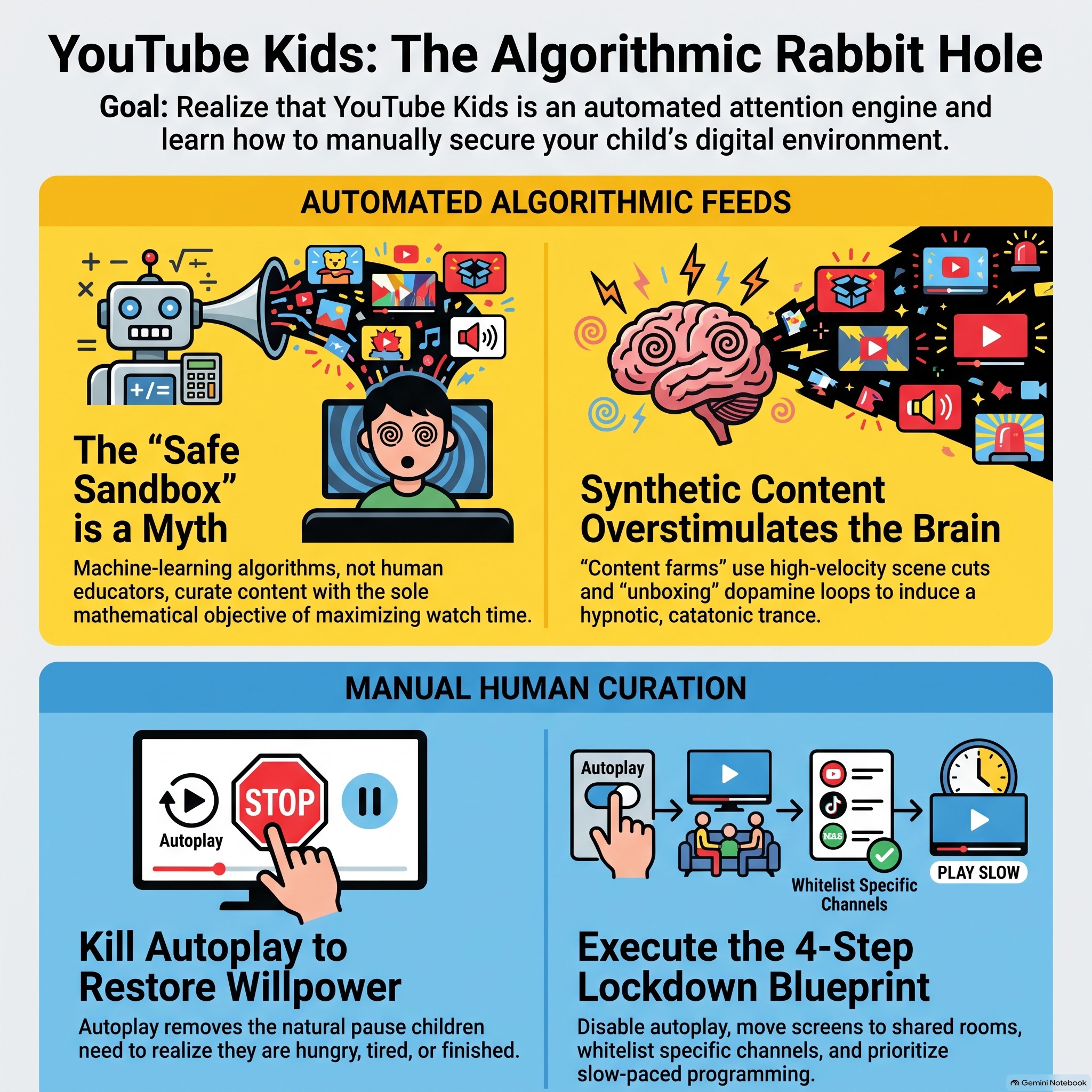 Is YouTube Kids Safe? The Autoplay Algorithm & "Elsagate" Brain Rot 18.09.2026 36minHey! I'd love to hear your thoughts, send me a voice note.You opened the app assuming the word "Kids" meant a curated, safe digital sandbox. But twenty minutes later, your toddler is in a catatonic trance watching hyper-stimulating, algorithmically generated nonsense.Many parents view YouTube Kids as an educational babysitter. In reality, it is an unregulated algorithmic distribution engine optimized for raw watch time, automated ad impressions, and relentless sensory flooding. From "Elsagate" knockoffs and hyper-fast scene cuts to toy unboxing videos that induce artificial consumer cravings, the platform is engineered to keep uncritical young minds pinned to the screen via the "infinite autoplay loop".In Episode 32 of The Unplugged Life, we investigate the mechanics behind children’s automated video feeds. Learn why an uncritical developing brain cannot process the psychological trick of "autoplay," the cognitive fallout of synthetic content farms, and an engineering-grade 4-step framework to lock down your household's media consumption so you control what enters your child’s imagination.⏱️ EPISODE TIMESTAMPS:0:00 – The Trance State: What Did Your Toddler Just Watch?1:25 – The Illusion of the "Kids" Sandbox2:45 – The Mechanical Trap: Why "Autoplay" Destroys Willpower4:15 – Content Farms & Elsagate: The Machine-Generated Absurdity5:45 – Toy Unboxing & Algorithmic Dopamine (The Consumer Trap)7:15 – The Neurological Cost: Overstimulation & Cognitive Fragmentation8:40 – The 4-Step Media Lockdown Blueprint10:10 – The 24-Hour Experiment: The TV Curation Switch11:20 – Final Thoughts & Preview of Episode 33🔒 THE CHILD-SAFE MEDIA FILTER BLUEPRINT:Kill Autoplay Permanently: Toggle off automated next-video playback across all household accounts.Ban the Personal Screen: Migrate children's video viewing exclusively to a shared, stationary living room television.Switch from Algorithmic Feeds to "Approved Content Only": Whitelist explicit channels rather than trusting automated discovery.Curate Slow-Paced Media: Enforce programming with scene cuts lasting longer than 5 seconds (e.g., classic animation, nature documentaries).👥 CONNECT WITH THE UNPLUGGED LIFE: • Subscribe for weekly data-driven frameworks to protect childhood in an algorithmic world. • Join the Conversation: Have you ever caught your child watching bizarre, surreal videos on YouTube Kids? Leave a comment or review below!
 -
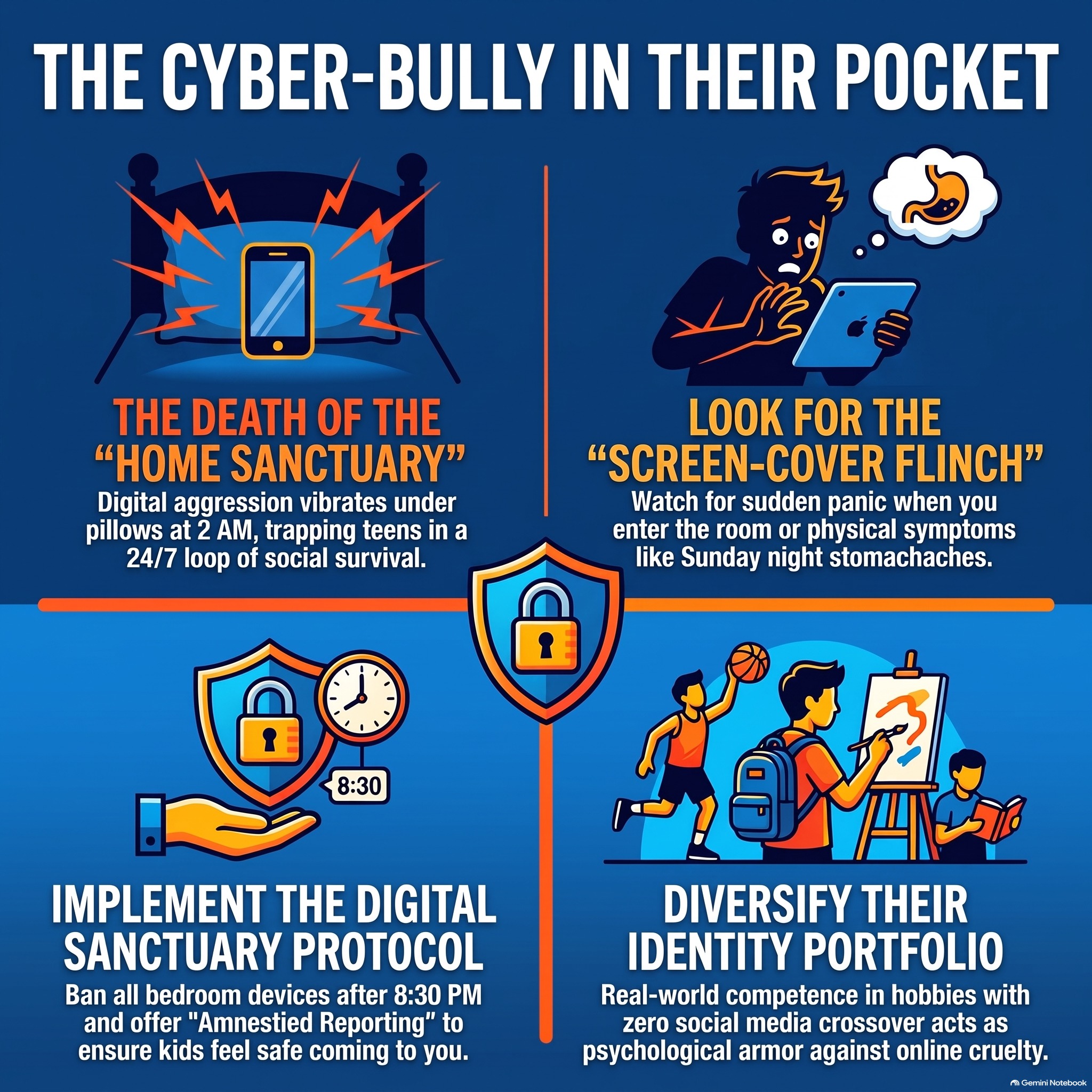 Cyberbullying in Their Pocket: How 24/7 Group Chats Are Trapping Teens 17.09.2026 50minHey! I'd love to hear your thoughts, send me a voice note.When we were kids, bullying ended at 3:00 PM when the school bell rang. Today, it follows children through their front door, sits down at their dinner table, and slips directly under their pillows at 2 AM.Modern relational aggression has evolved from hallway confrontations into relentless, 24/7 digital assaults. Between disappearing Snapchat messages, toxic group chats, anonymous school poll apps, and deliberate digital exclusion, adolescents are constantly swimming in high-stakes social surveillance [2, 3]. When a child's bedroom is no longer a psychological sanctuary, their nervous system lives in a permanent state of fight-or-flight.In Episode 31 of The Unplugged Life, we deconstruct the architecture of digital bullying. Learn why online relational aggression hits girls and boys with different neurological intensities, the critical warning signs that your teen is being targeted online, and an engineering-grade "Digital Sanctuary Blueprint" that guarantees your home remains an impenetrable safe haven from online cruelty.⏱️ TIMESTAMPS: 0:00 - The Bell No Longer Saves Them (The 3:00 PM Shift) 1:20 - The Illusion of "Harmless Banter": Relational Aggression Defined 2:45 - The Architectural Trap: Disappearing Messages & Group Chat Exclusion 4:15 - The Bedroom Breach: Why 2 AM Notifications Cause Clinical Despair 5:45 - Behavioral Warning Signs: How to Spot a Digitally Targeted Child 7:15 - What NOT to Do: The Fatal Mistake of the Immediate Phone Confiscation 8:40 - The Digital Sanctuary Blueprint (3 Core Household Defenses) 10:10 - The 24-Hour Experiment: The "No-Retaliation" Family Open Door 11:20 - Final Thoughts & Preview of Episode 32 🛡️ THE DIGITAL SANCTUARY PROTOCOL: 1. Bedroom Device Curfew: Zero internet-connected screens in the bedroom after 8:30 PM. 2. The Amnestied Reporting Rule: Never punish a child for coming forward with toxic online interactions. 3. Screenshot Documentation: Preserve forensic evidence of harassment before confronting administrators. 4. Curate an Offline Identity: Ensure at least two major extracurricular pursuits that feature zero social media crossover.👥 CONNECT WITH THE UNPLUGGED LIFE: • Subscribe for weekly data-driven frameworks to protect childhood in an algorithmic age.
 -
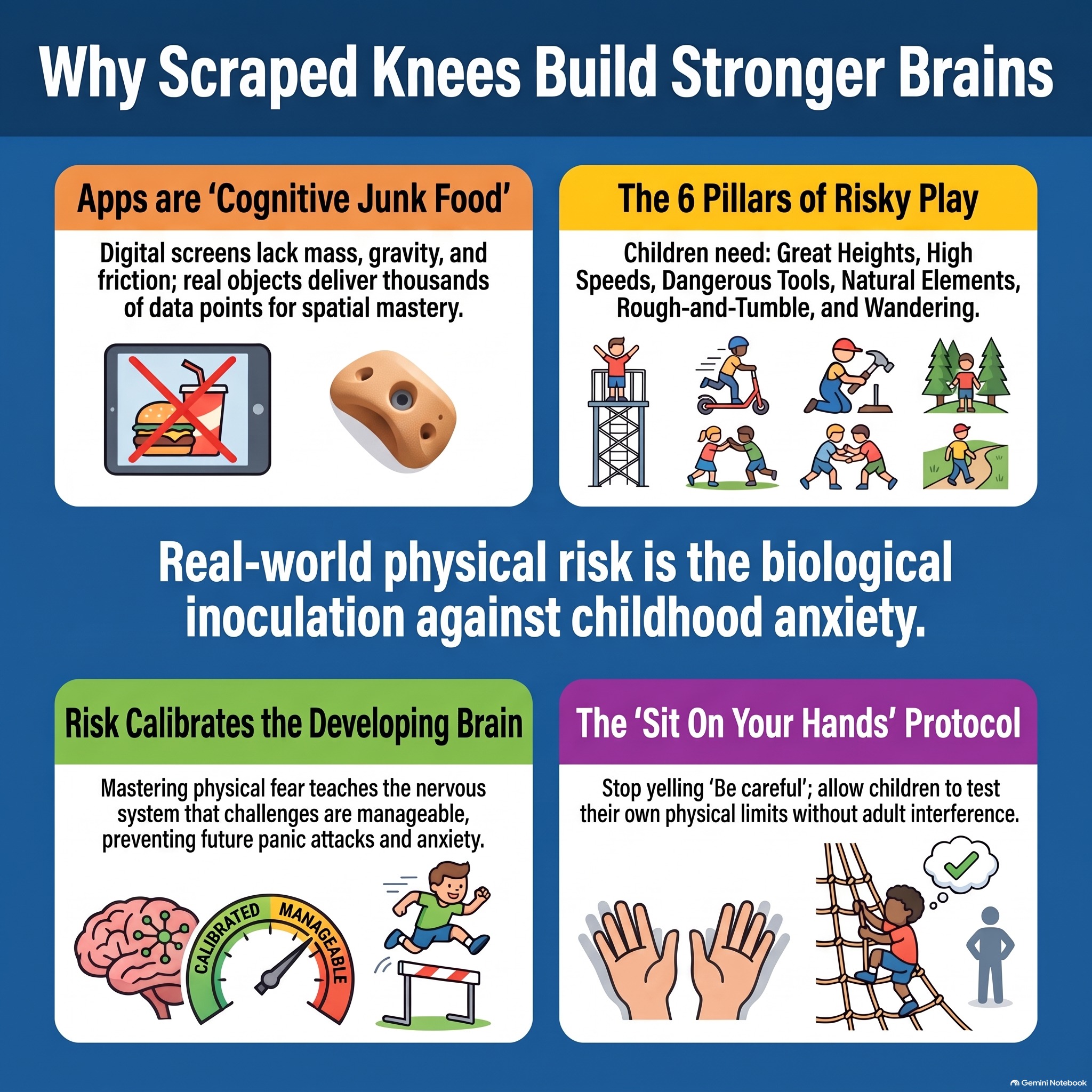 Why "Risky Play" Beats Educational Apps: The Science of Child Resilience 16.09.2026 42minHey! I'd love to hear your thoughts, send me a voice note.Are "educational" apps actually educating our children, or are they simply sanitizing the essential physical struggle of childhood? Modern parenting culture has traded scraped knees, tree climbing, and mud for sanitized touchscreen games and gamified learning apps under the banner of safety and cognitive advancement [2]. Yet, developmental psychology reveals a startling truth: when you eliminate physical risk, three-dimensional spatial navigation, and tactile resistance from a child's play, you starve their developing vestibular and proprioceptive systems—increasing childhood anxiety and stunting physical resilience.In Episode 30 of The Unplugged Life, we evaluate the neurobiology of play [2]. Learn the six core categories of "Risky Play," why two-dimensional pixels can never stimulate spatial mastery or emotional risk assessment, and an engineering-grade framework to let your children take calculated physical risks outdoors so they grow into emotionally sturdy, confident adults.⏱️ EPISODE TIMESTAMPS 0:00 - The Sanitized Playground: Why Scraped Knees Disappeared 1:20 - The Illusion of the "Educational App" 2:45 - The Two Hidden Senses: Vestibular & Proprioceptive Systems 4:20 - What is "Risky Play"? (The Ellen Sandseter 6-Category Model) 6:00 - How Screen Play Amplifies Childhood Anxiety 7:35 - Rebalancing the Ratio: Green Time vs. Screen Time 8:55 - The Parent's "Sit on Your Hands" Protocol 10:15 - The 24-Hour Experiment: The Outdoor Risk Challenge 11:20 - Final Thoughts & Preview of Episode 31 🌲 THE 6 FORMS OF BENEFICIAL RISKY PLAY: 1. Great heights: Climbing trees, boulders, or high structures to master fear. 2. Rapid speeds: Sledding, swinging, biking, or running down hills. 3. Dangerous tools: Using whittling knives, hammers, or scissors under guidance. 4. Dangerous elements: Interacting with water, fire, or rough terrain safely. 5. Rough-and-tumble: Wrestling, tumbling, and play fighting to learn physical boundaries. 6. Disappearing/Lost: Exploring hideouts and wandering just out of immediate adult gaze.👥 CONNECT WITH THE UNPLUGGED LIFE: • Subscribe for weekly data-driven frameworks to protect childhood in the digital age. • Drop a comment below: What was your favorite "risky" outdoor activity when you were a kid?
 -
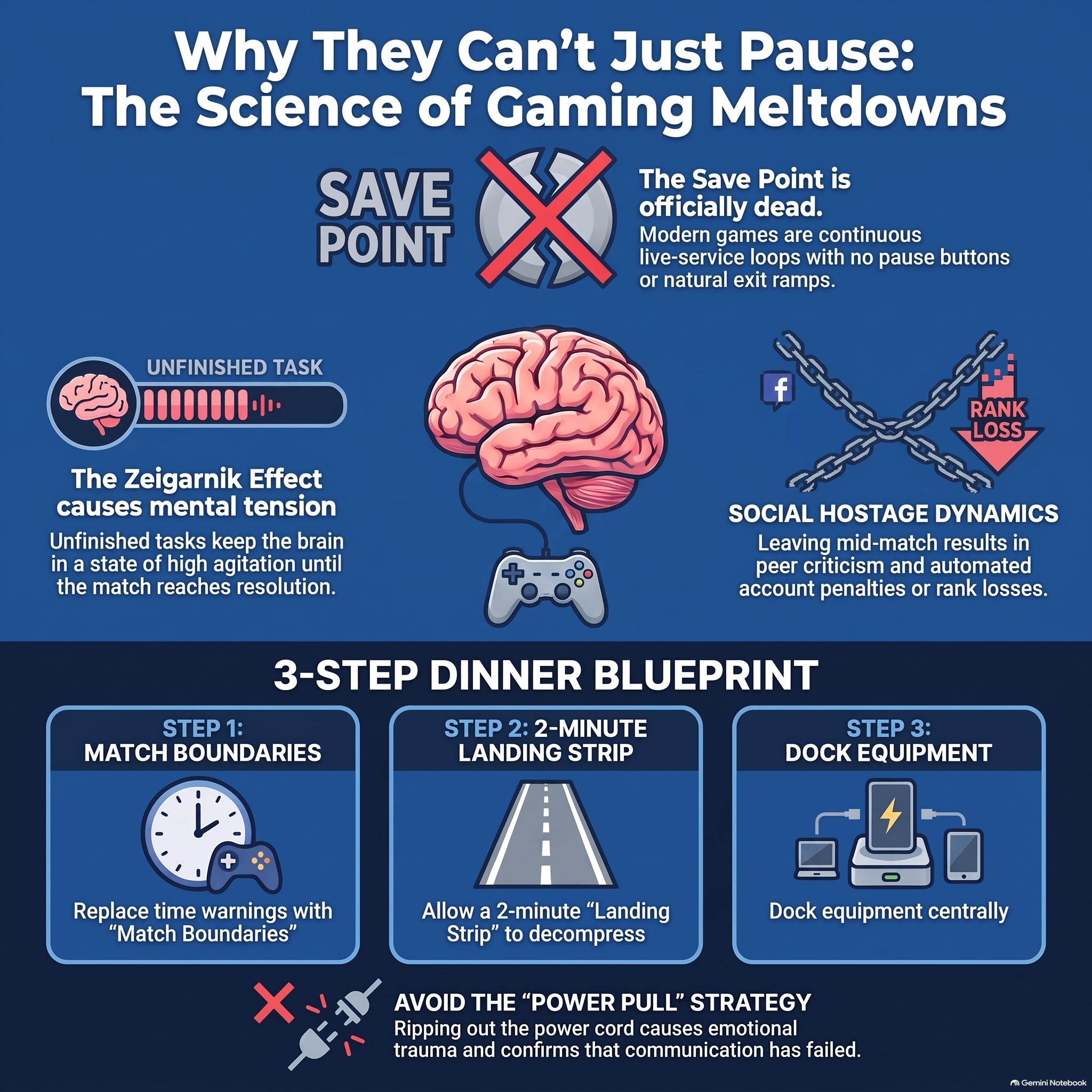 Why Kids Can't Stop Gaming: How Compulsion Loops Trap Children 15.09.2026 46minHey! I'd love to hear your thoughts, send me a voice note."I can't pause it, I'm in a live match! Just five more minutes!" If this sentence triggers an immediate spike in your evening blood pressure, you are not alone. For millions of households, the dinner table call has become an exhausting battleground of screaming matches, confiscated controllers, and tearful meltdowns. But before you label your child as deliberately rebellious, you must understand the psychological architecture operating on the other side of that screen. In Episode 29 of The Unplugged Life, we deconstruct the hidden mechanics of modern multiplayer video games. From the extinction of the traditional "Save Point" to the deliberate psychological deployment of the Zeigarnik Effect and "near-miss" mechanics, discover why a child's developing brain finds it biologically agonising to disengage mid-loop. More importantly, learn an engineering-grade 3-step transition protocol that eliminates dinner table hostility without resorting to pulling the power plug. ⏱️ TIMESTAMPS 0:00 - The Dinner Table Standoff: Why Yelling Fails 1:15 - The Death of the "Save Point" (The Structural Shift in Gaming) 2:45 - The Zeigarnik Effect: Why Unfinished Tasks Cause Biological Agitation 4:15 - The "Near-Miss" Compulsion Loop: Engineered Frictionless Re-entry 5:50 - Social Hostage Dynamics: Ranked Penalties and Squad Pressure 7:15 - The Danger of the "Power Pull" (Why Ripping the Plug Causes Trauma) 8:35 - The 3-Step Dinner Transition Blueprint 10:05 - The 24-Hour Experiment: The Match-Boundary Shift 11:15 - Final Thoughts & Preview of Episode 30🎮 THE GAMING TRANSITION ACTION PROTOCOL: 1. Replace time warnings ("Dinner in 10 minutes") with operational match boundaries ("This is your final match of the night"). 2. Build a 2-minute "Landing Strip" buffer after the console powers down to let adrenaline clear before conversation starts. 3. Ban in-room mobile gaming during meals: controllers and devices rest in a central kitchen dock. 4. Establish clear consequences in advance: quitting a designated final match late forfeits tomorrow's gaming window. 👥 CONNECT WITH THE UNPLUGGED LIFE: • Subscribe for data-backed frameworks to reclaim family connection from tech loops. • Drop a comment below: What specific video game causes the most friction during dinner in your home?
 -
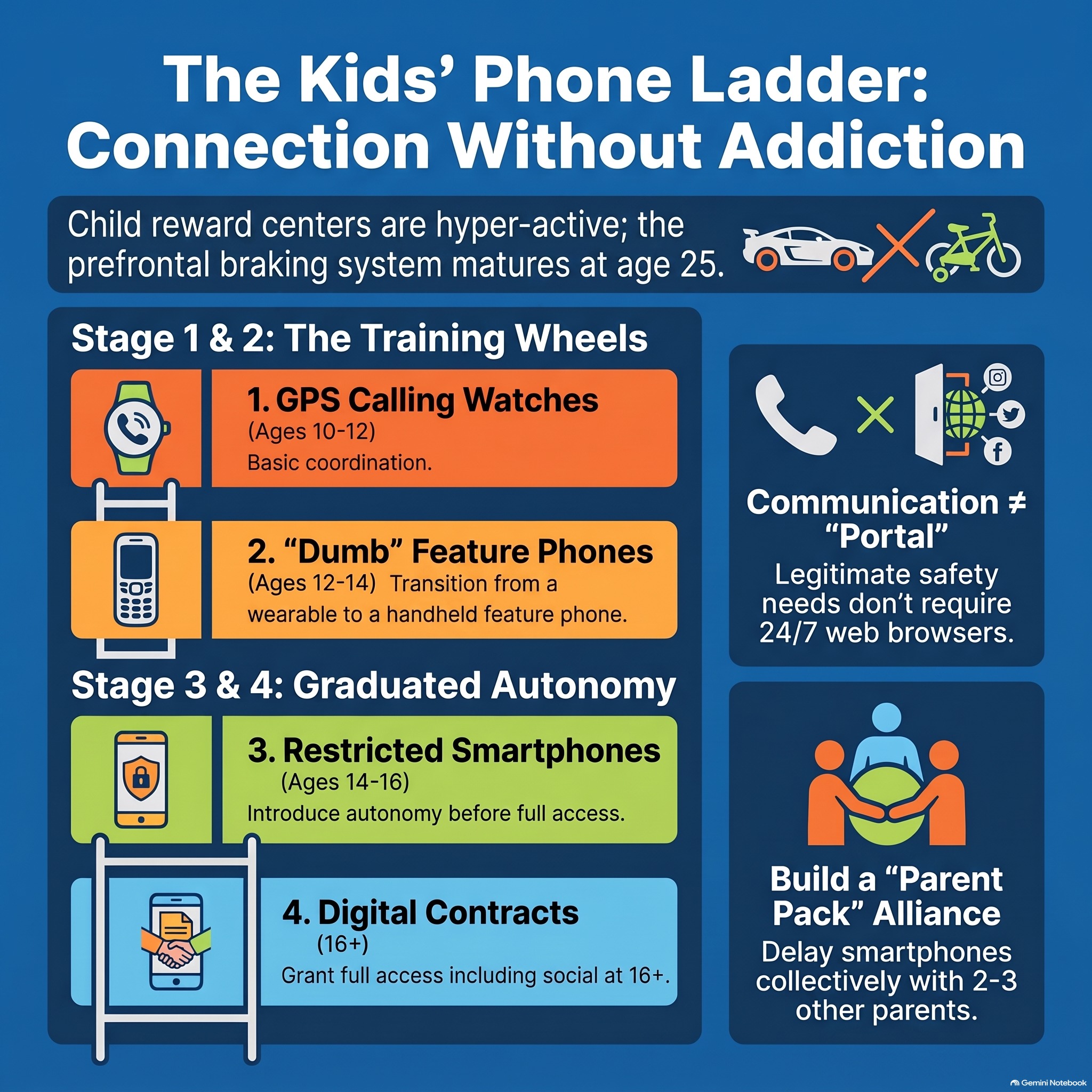 When Should Kids Get a Phone? The Safe Age & Stepped-Access System 14.09.2026 36minHey! I'd love to hear your thoughts, send me a voice note."Everyone in my class has one, why can't I?"It is the single most common, guilt-inducing question parents face the moment their child enters middle school. Handing an 11- or 12-year-old an unrestricted, internet-connected smartphone isn't merely giving them a communication device—it is handing them an unmonitored portal to social media algorithms, adult content, peer comparison, and 24/7 social dynamics before their executive function has even begun to mature.In Episode 28 of The Unplugged Life, we dismantle the anxiety surrounding your child's first smartphone. We analyze the neurodevelopmental case for delaying connected smartphones until at least age 14 or 16, dismantle the fear of "social isolation," and present an engineering-grade "Stepped-Access System". Learn how to satisfy legitimate logistical safety needs without handing over the keys to the entire open internet.⏱️ TIMESTAMPS0:00 - The "Everyone Has One" Crisis1:25 - The Frontal Lobe Gap: Why Kids Can't Self-Regulate2:50 - What Are We Actually Handing Them? (Communication vs. Portal)4:20 - The "Wait Until 8th" Movement & Collective Action5:50 - The Stepped-Access Framework: 4 Stages from Age 10 to 186:40 - Stage 1: The Dumb Smartwatch / GPS Tracker7:30 - Stage 2: The Brick Phone / Calling-Only Device8:25 - Stage 3: The Restricted Smartphone (No Browser / No App Store)9:30 - Stage 4: Full Autonomy with Digital Contracts10:35 - The 24-Hour Experiment: The Parent Alliance Pact11:45 - Final Thoughts & Preview of Episode 29📱 THE STEPPED-ACCESS PHONE BLUEPRINT:Ages 10–12: GPS Calling Watches (Communication + Location; zero feeds, zero games).Ages 12–14: Basic Feature / "Dumb" Phones (Calls, SMS group chats; zero internet browser).Ages 14–16: Locked-down Smartphone (Maps, Music, School tools; social media strictly banned).Ages 16+: Graduated social media access tethered to real-world behavioral accountability.👥 CONNECT WITH THE UNPLUGGED LIFE:Subscribe for data-driven frameworks to protect childhood in an algorithmic world.
 -
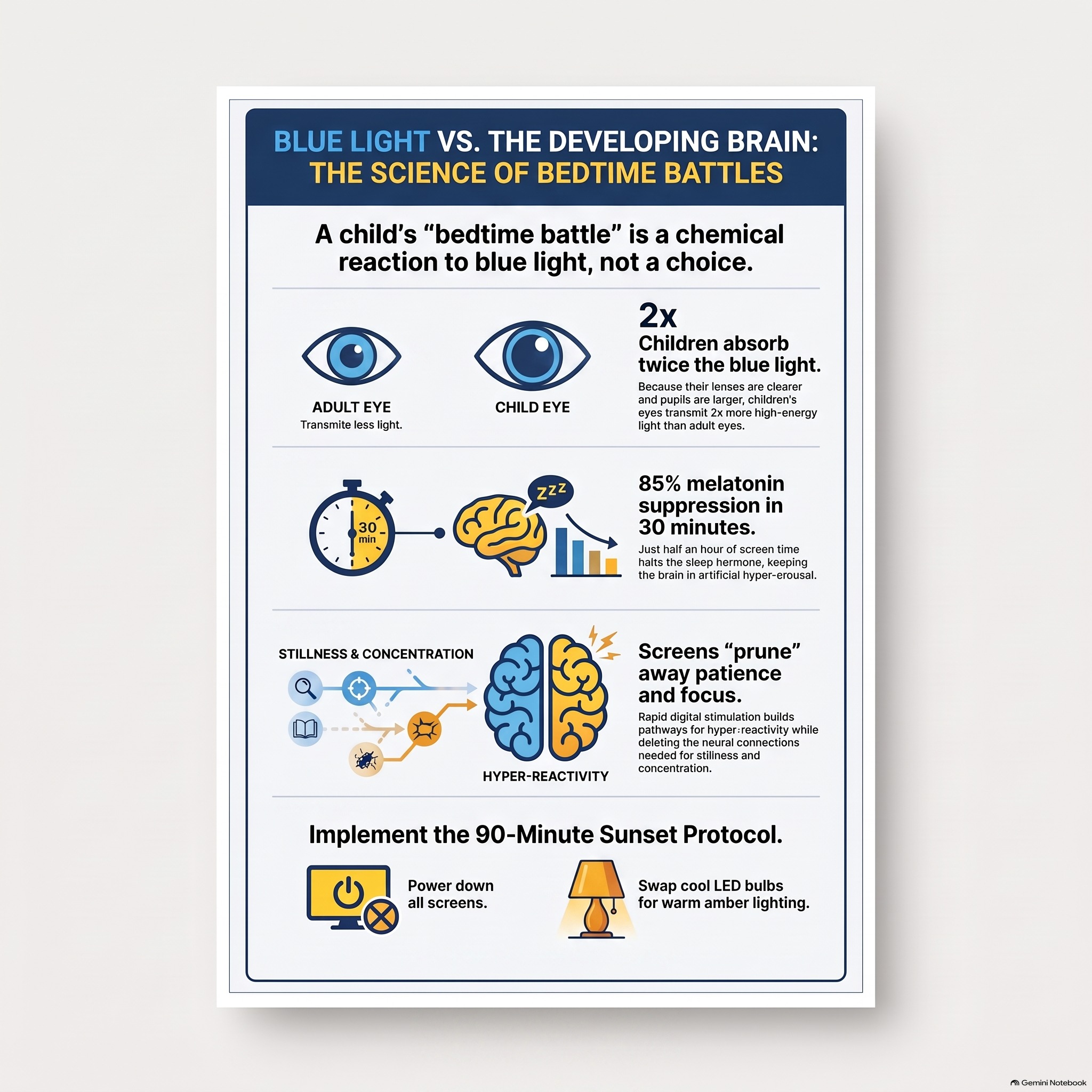 Blue Light & Child Brain Development: What Screen Exposure Actually Does 13.09.2026 40minHey! I'd love to hear your thoughts, send me a voice note.Why does turning off your child's tablet at bedtime consistently trigger an explosive meltdown?It isn't just behavioral defiance—it is a physiological collision between neurochemistry and circadian biology. Children's eyes feature larger pupils and clearer crystalline lenses than adults, allowing up to twice as much high-energy blue light to strike their retinas. When that blue-spectrum wavelength hits their photoreceptors, it halts melatonin synthesis by over 85%, surges cortisol, and disrupts the delicate architecture of the prefrontal cortex during its most critical developmental window.In Episode 27 of The Unplugged Life, we unpack the peer-reviewed neuroscience of developing brains under screen exposure. Learn the biological mechanisms of synaptic pruning, why screen-induced sleep loss mimics symptoms of ADHD, and how to implement the Sunset Protocol—a simple, engineering-grade lighting and device routine that protects your child's developing brain and restores calm bedtimes.Episode Timestamps 0:00 - The 8 PM Meltdown (Why Bedtime Tech Battles Are Biological)1:20 - The Pediatric Eye: Why Children Absorb Twice the Blue Light2:45 - The Prefrontal Cortex Under Construction (Ages 0 to 7)4:15 - Synaptic Pruning: The "Use It or Lose It" Neurological Rule5:45 - Sleep Fragmentation & The ADHD Diagnostic Overlap7:15 - The Sunset Protocol: Step-by-Step Household Light Architecture8:45 - What About Blue Light Glasses and "Night Shift" Mode?9:55 - The 24-Hour Experiment: The 90-Minute Analog Sunset Challenge11:05 - Final Thoughts & Preview of Episode 28
 -
 The iPad Kid Crisis: Why 5-Year-Olds Can't Hold Scissors 12.09.2026 33minHey! I'd love to hear your thoughts, send me a voice note.Classroom teachers, pediatricians, and occupational therapists are sounding the alarm: early childhood development has hit a critical turning point over the last decade. Kindergarten educators report five-year-olds walking into classrooms unable to hold safety scissors, grip pencils, or stack wooden blocks due to underdeveloped fine motor skills from swiping frictionless glass. Meanwhile, elementary teachers face rooms of children experiencing explosive tantrums when asked to sit through an eight-minute story. The "iPad Kid" is not an internet punchline—it is a documented neurodevelopmental crisis. In Episode 26 of The Unplugged Life (Series 2: The Safe Childhood), host examines front-line developmental data and offers a practical, low-friction roadmap for parents. In this episode, you will discover: • The Fine Motor Gap: How swiping glass bypasses muscle resistance and bilateral coordination. • The Emotional Regulation Collapse: Why using tablets as "digital pacifiers" prevents self-soothing. • Scene Velocity & Sensory Flooding: How 1.5-second fast cuts recalibrate focus and make real life feel boring. • The 3-Step Low-Friction Tablet Taper: An engineering approach to phase out screens without home warfare. • The 24-Hour Restaurant Challenge: A simple kit to reclaim family mealtimes. 🧸 THE SAFE CHILDHOOD AUDIT: 1. Physical Baseline: Prioritize clay, scissors, coloring, and blocks for hand strength. 2. Emotional Baseline: Allow tantrums and boredom to play out naturally without screen substitution. 3. Media Velocity: Eliminate hyper-stimulating cartoons with scene cuts under 4 seconds. 4. Boundary Protocol: Keep transitional zones (car rides, restaurants, family meals) strictly screen-free. ⏱️ EPISODE TIMESTAMPS: 0:00 - The Kindergarten Alarm: What Teachers Are Seeing Right Now 1:25 - Welcome to Series 2:00 The Safe Childhood 2:40 - The Motor Skill Deficit: Glass Swiping vs. Physical Resistance 4:15 - The Emotional Regulation Gap: Why Tablets Eliminate Resilience 6:00 - Fast Cuts and Sensory Flooding: How Early Media Rewires Focus 7:45 - The "Digital Pacifier" Trap (Empathy for Stressed Parents) 9:10 - The 3-Step Low-Friction Tablet Taper Protocol 10:35 - The 24-Hour Experiment: The Restaurant Survival Challenge 11:45 - Series 2 Roadmap & Preview of Episode 27 👥 CONNECT & SUBSCRIBE: • Subscribe to The Unplugged Life for weekly data-driven frameworks to protect childhood in a digital age. • Question for listeners: What behavioral changes have you noticed in kids who use tablets daily ?
 -
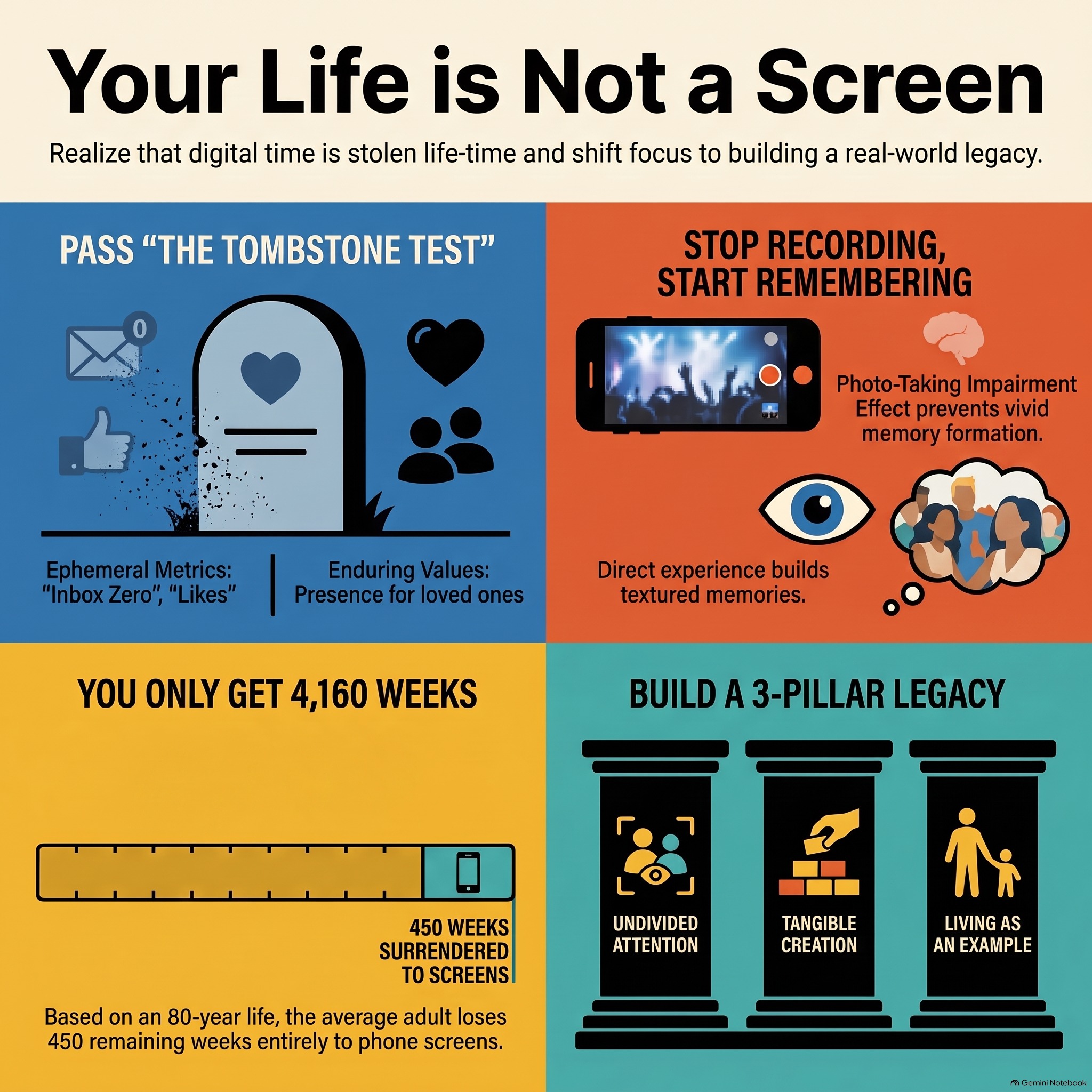 What Will You Be Remembered For? How to Escape the Trap of Living Online 11.09.2026 38minHey! I'd love to hear your thoughts, send me a voice note.Nobody ever reached the end of their life, looked around at their loved ones, and whispered: "I wish I spent more time scrolling." Yet, if an outside observer evaluated your life purely by how you allocate your waking hours, what would they conclude mattered most to you? For millions of adults, the brutal mathematical reality is that our primary life activity has become staring into a glass rectangle. We document moments instead of experiencing them, optimize for algorithmic validation, and let real life quietly pass by in the background. In this milestone 25th episode of The Unplugged Life—the grand finale of our Adult Digital Reset Series—we confront the ultimate philosophical wake-up call: your finite mortality. Discover the cognitive science of memory formation, why constant documentation destroys real-world recall, the "Tombstone Test" for everyday decisions, and an engineering-grade framework to build an enduring legacy rooted in presence, action, and human connection. 🕊️ THE LEGACY AUDIT CHECKLIST: 1. The Tombstone Test: If it doesn't matter on your final day, don't give it your best hours today. 2. Put the camera down: Engage your senses directly so your brain forms deep, durable memories. 3. Track your "Life in Weeks": Treat each seven-day block as an unrecoverable non-renewable asset. 4. Shift from spectator to architect: Create relationships and physical projects that outlive your apps. Episode Timestamps:Ensure these are formatted with space-dash-space (as below) so major RSS directories and YouTube can automatically parse them into interactive chapters:0:00 - The Uncomfortable Audit: Where Did Your Life Go?1:20 - The Finale of the Adult Digital Reset Series2:35 - The Tombstone Test: The Illusion of Digital Achievements4:10 - The "Photo-Taking Impairment Effect" (Living vs. Performing)5:50 - The Life In Weeks Framework: Staring at Your Finite Canvas7:25 - The 3 Pillars of an Enduring Real-World Legacy8:55 - How to Re-Enter the World as an "Unplugged" Human10:15 - The 24-Hour Experiment: The Eulogy Exercise11:30 - Series 1 Recap & What’s Next in Series 2 (The Safe Childhood)👥 CONNECT WITH THE UNPLUGGED LIFE: • Subscribe for data-backed frameworks to reclaim your focus, family, and life from tech. • Drop a comment below: What is one real-world memory from this year that had nothing to do with a screen?
 -
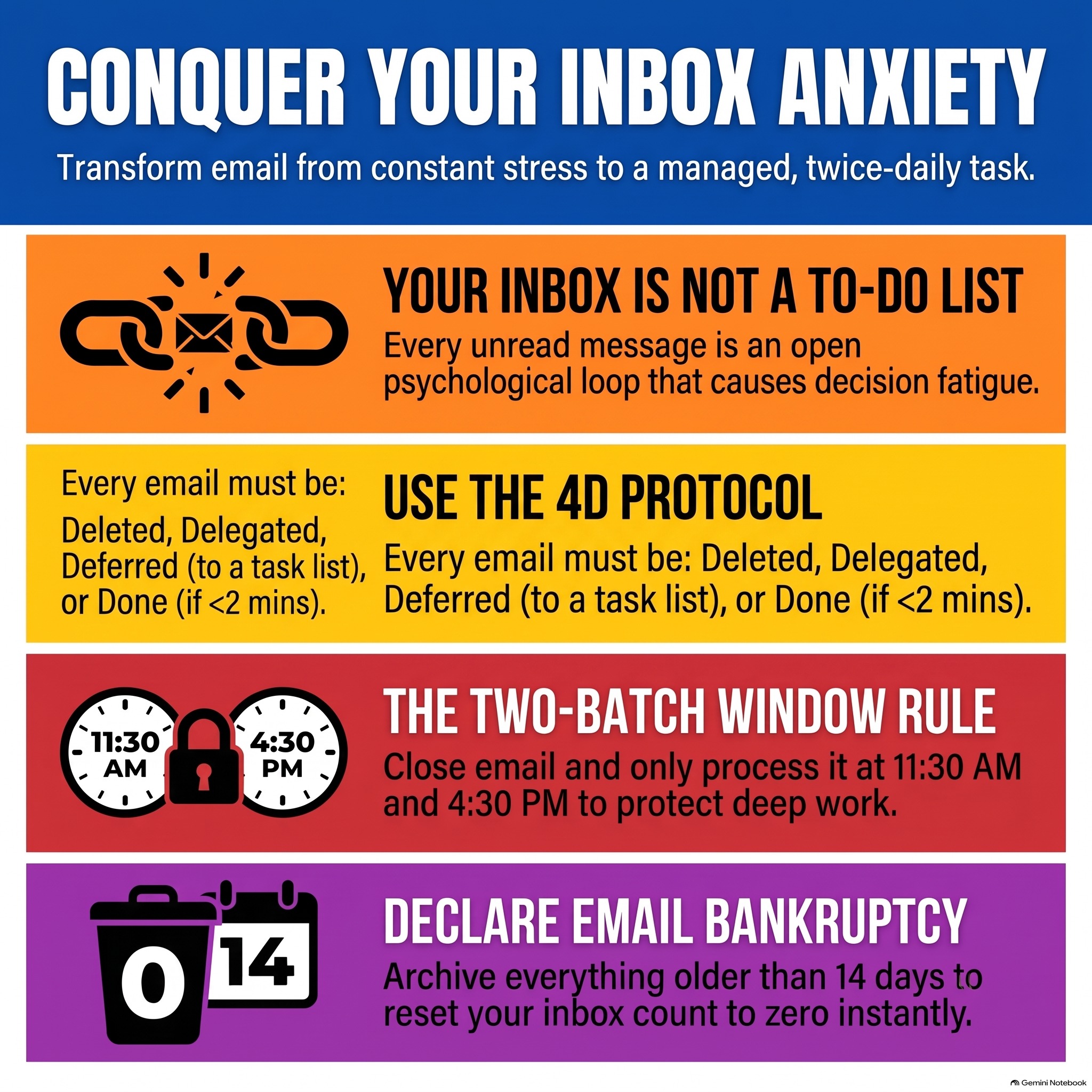 Stop Email Anxiety: The 4D System to Reach Inbox Zero Forever 10.09.2026 49minHey! I'd love to hear your thoughts, send me a voice note.Do you feel an involuntary spike of anxiety every time you see a bold unread message or that dreaded red badge with '4,821' emails on your phone?Most knowledge workers and busy adults don't check email to accomplish work; they check email compulsively as an anxiety management ritual. We treat our inboxes like real-time communication systems, allowing anyone with an email address to dictate our priorities, derail our mornings, and fracture our mental focus.In Episode 24 of The Unplugged Life, we deconstruct the psychology of email dread and unread communication debt. Learn why treating an inbox as a to-do list guarantees permanent mental fatigue, the engineering-grade '4D Protocol' to process hundreds of emails in under 30 minutes, and how to establish hard boundaries around asynchronous communication so you can do your real life's work uninterrupted.What You'll Learn in This Episode:The Red Badge of Anxiety: Why unread messages drain your energyThe Core Lie: Why treating email as a real-time chat room fractures your focusThe 4D Inbox Processing Protocol: Your objective sorting system (Delete, Delegate, Defer, Do)The Two-Batch Window Rule: How to kill the constant check habitThe Nuclear Option: How to safely declare email bankruptcy and wipe the slate clean"Episode Timestamps :0:00 - The Red Badge of Anxiety: Why Unread Messages Drain Your Energy1:15 - The Core Lie: Email as a Real-Time Chat System2:40 - The Psychological Trap of the "Public To-Do List"4:10 - The 4D Protocol: Delete, Delegate, Defer, Do6:00 - The "Two Batch Windows" Rule (Killing the Constant Check)7:30 - Establishing Asynchronous Expectations with Clients & Teams8:55 - The Nuclear Option: Declaring Email Bankruptcy Safely10:10 - The 24-Hour Experiment: The 48-Hour Unread Sweep11:15 - Final Thoughts & Preview of Episode 25Subscribe: Sign up for weekly data-driven frameworks to reclaim cognitive clarity from modern tech.Join the Conversation: Drop a comment below: What is your current unread email count right now?
 -
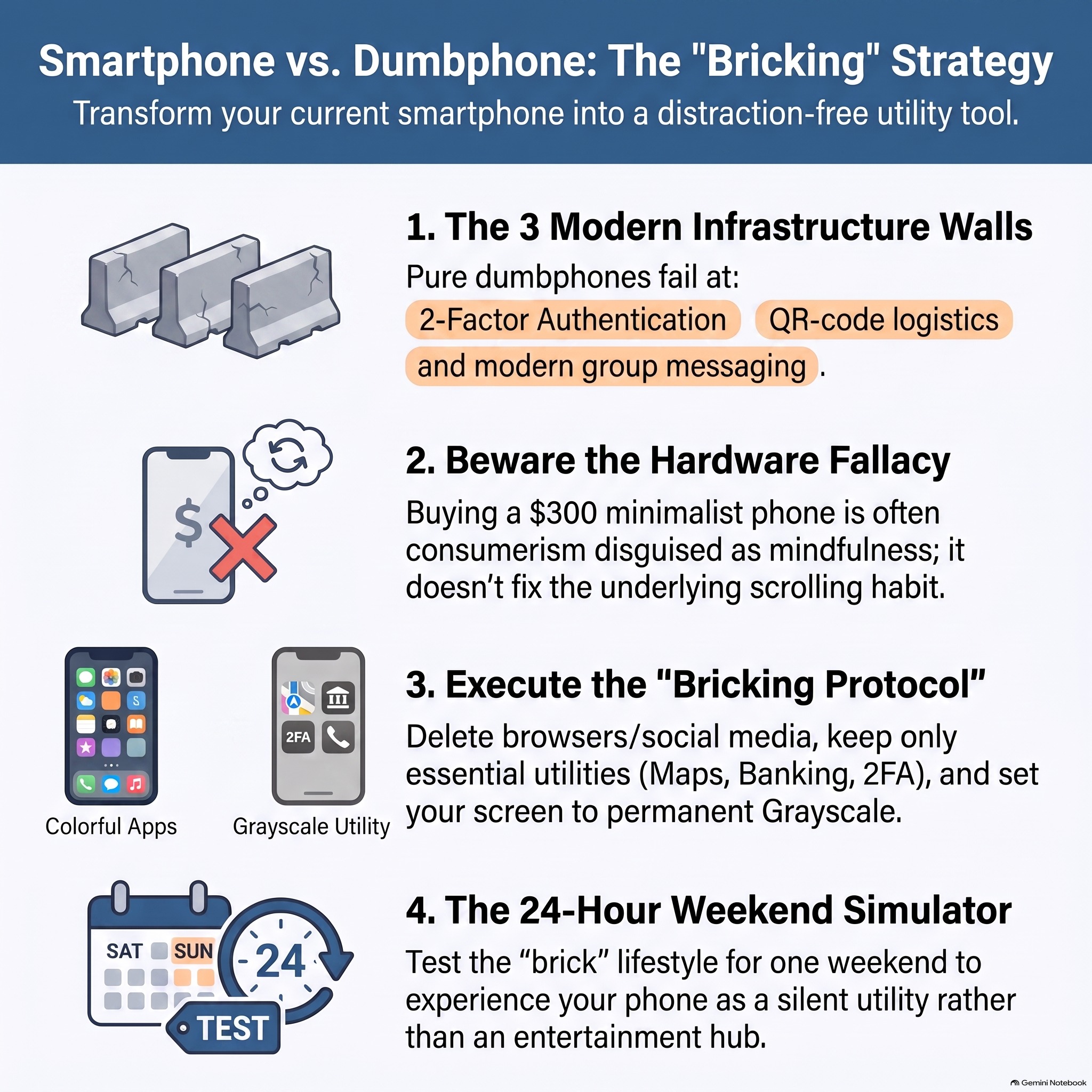 Should You Switch to a Dumbphone? An Honest Review of Minimalist Tech 09.09.2026 46minHey! I'd love to hear your thoughts, send me a voice note.Could you actually survive modern life with a phone that only calls, texts, and has no internet browser? The "Dumbphone" movement has exploded as exhausted smartphone users search for an escape hatch from algorithmic feeds, constant notifications, and infinite scrolling. Devices like the Light Phone, Punkt, and nostalgic flip phones promise absolute peace of mind. But what happens when you actually try to navigate a modern city, board a flight with a digital boarding pass, or authenticate a work login using two-factor SMS? In Episode 23 of The Unplugged Life, we deliver an honest, engineering-grade audit of the "dumbphone lifestyle." Discover the hidden operational roadblocks nobody warns you about, why buying another gadget rarely fixes an undisciplined habit, and how to use the "Bricking Protocol" to convert the smartphone currently in your pocket into a zero-distraction minimalist phone without spending a single dollar. ⏱️ TIMESTAMPS 0:00 - The Nostalgic Trap: Why We Want to Throw Our Phones Away 1:10 - The Rise of the Minimalist Device (Light Phone, Punkt, Flip Phones) 2:30 - The 3 Hidden Friction Points of Living With a Dumbphone 4:15 - Point 1: Two-Factor Authentication & Modern Workplace Security 5:25 - Point 2: The Navigation & Public Transit Gap 6:30 - Point 3: The Group Chat Isolation (iMessage/WhatsApp Friction) 7:45 - The "Hardware Fallacy": Why Buying a Dumbphone Doesn't Fix Compulsion 8:55 - The Bricking Protocol: How to Turn Your Current Smartphone "Dumb" 10:15 - The 24-Hour Experiment: The Weekend Dumbphone Simulator 11:20 - Final Thoughts & Preview of Episode 24 🛠️ THE SMARTPHONE "BRICKING" PROTOCOL: 1. Delete all browsers (Safari/Chrome) or lock them with Screen Time passwords. 2. Remove all social media, news, and streaming video apps entirely. 3. Keep utility-only tools: Maps, WhatsApp/SMS, Banking, Rideshare, Camera. 4. Set display to permanent Grayscale with all notification badges turned off. 👥 CONNECT WITH THE UNPLUGGED LIFE: • Subscribe for weekly frameworks to master digital habits and cognitive focus. • Drop a comment below: Have you ever considered ditching your smartphone for a flip phone?
 -
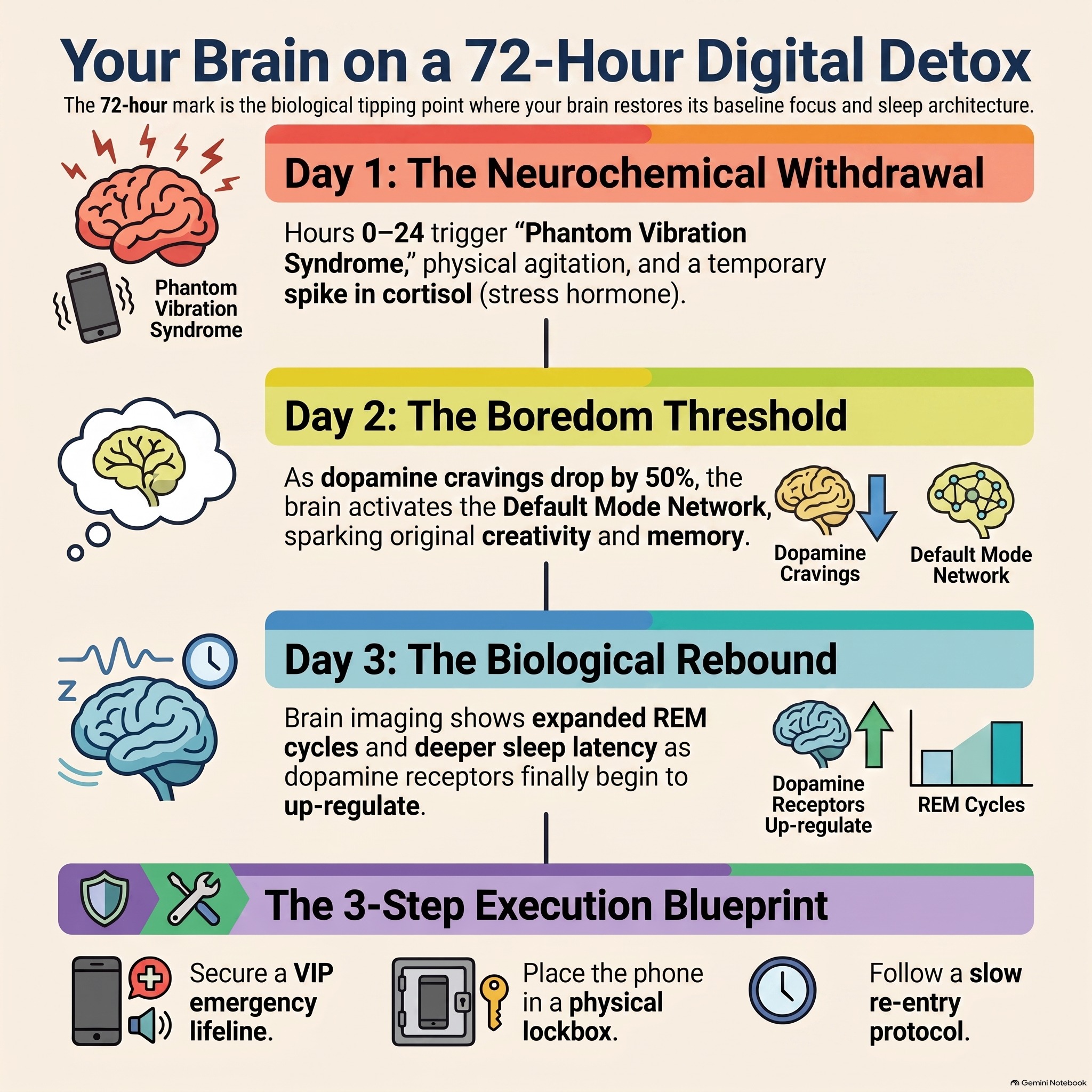 72 Hours Without a Phone: What Happens to Your Brain 08.09.2026 41minHey! I'd love to hear your thoughts, send me a voice note.What actually happens inside your skull when you cut off digital stimulation for 72 consecutive hours? Most people imagine a digital detox as a serene weekend of sitting in nature with a cup of tea. The clinical reality is much messier: the first 24 hours trigger physical agitation, phantom vibrations, and genuine neurochemical withdrawal. But by hour 48, your baseline dopamine receptors start to recalibrate—leading to dramatic surges in working memory, deep sleep, and sustained focus. In Episode 22 of The Unplugged Life, we map out the exact hour-by-hour biological timeline of a 3-Day Digital Detox. Learn how your nervous system transitions from the initial "dopamine crash" to neurochemical equilibrium, the science behind lowered salivary cortisol levels, and an engineering-grade protocol to execute your own 72-hour reset without derailing your career or personal emergencies. ⏱️ TIMESTAMPS 0:00 - The Phantom Buzz: The Raw Reality of Day One 1:15 - Why Willpower Alone Feels Like Physical Agitation 2:30 - Hours 0 to 24: The Dopamine Deficit & Cortisol Spike 4:10 - Hours 24 to 48: The Fog Lifts & Boredom Emerges 5:45 - Hours 48 to 72: Deep Sleep Architecture & Sensory Clarity 7:15 - The Biochemical Markers: Cortisol, REM Sleep, and Prefrontal Blood Flow 8:30 - The Low-Risk 72-Hour Execution Blueprint (Emergency Contacts & Auto-Responders) 9:40 - The 24-Hour Experiment: The 6-Hour Micro-Detox 10:45 - Final Thoughts & Preview of Episode 23🧪 THE 72-HOUR DETOX MILESTONES: • Hour 12: Peak phantom vibration syndrome; mild physical restlessness. • Hour 36: Dopamine receptors begin up-regulating; cravings drop by 50%. • Hour 60: Significant expansion of REM cycles and deeper sleep latency. • Hour 72: Restoration of linear attention; real-world colors and conversations feel richer. 👥 CONNECT WITH THE UNPLUGGED LIFE: • Subscribe for weekly data-driven frameworks to reclaim your mind from tech. • Connect with Raghvendra (CEng PMP) on LinkedIn for deep work frameworks & cognitive engineering. • Drop a comment below: Have you ever gone 24 full hours without checking a screen? ``` [2]
 -
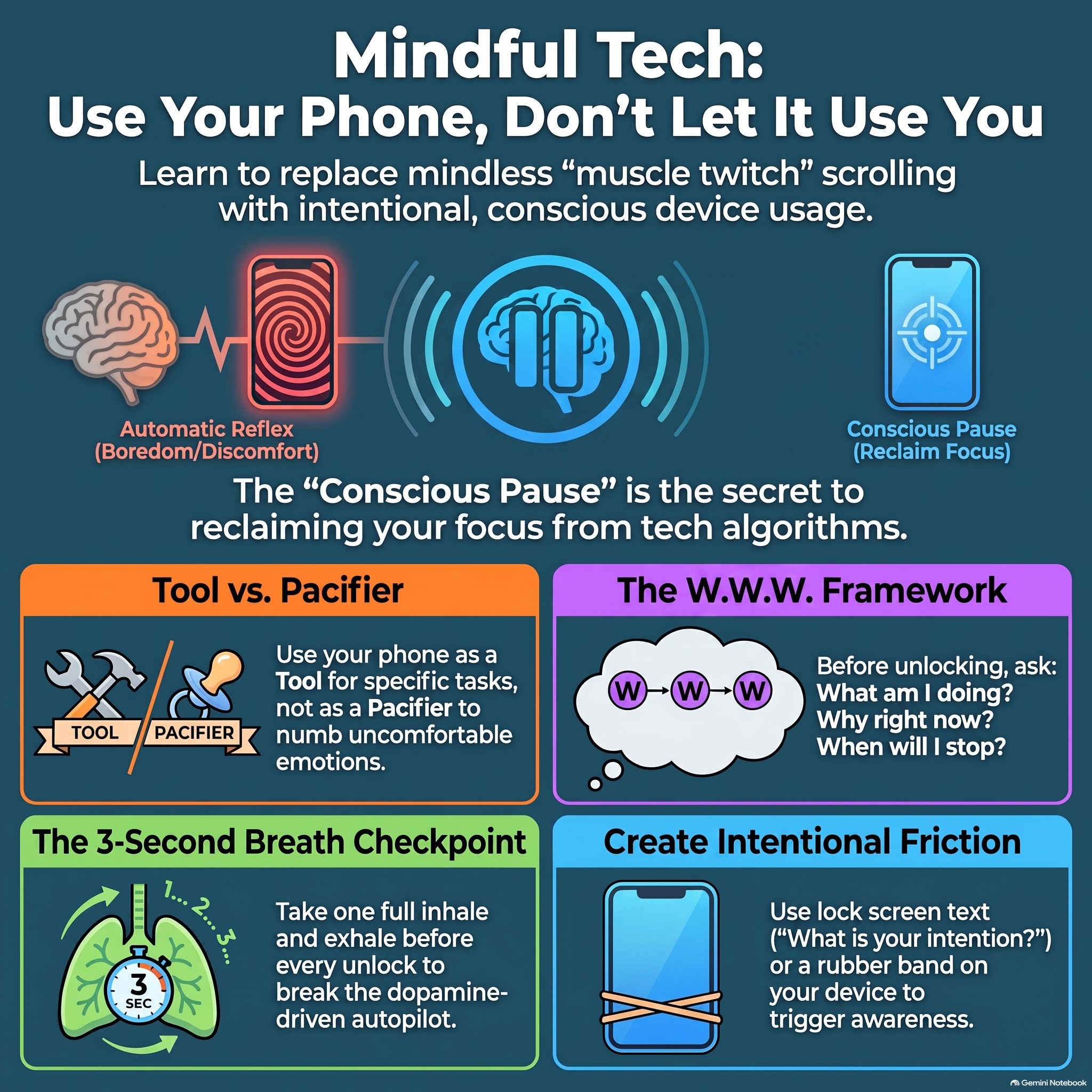 Mindful Phone Habits: How to Use Tech Without It Using You 07.09.2026 40minHey! I'd love to hear your thoughts, send me a voice note.How many times today did you unlock your phone without having any conscious idea why you did it? For most of us, picking up our phone isn't a deliberate decision; it’s an automatic muscle twitch triggered by micro-moments of friction, awkwardness, or brief pauses in our day. We don't use our devices—our subconscious impulses use us. In Episode 21 of The Unplugged Life, we explore the balance between modern connectivity and cognitive awareness: Mindful Tech. Discover why passive consumption numbs our internal awareness, how to insert intentional friction before unlocking your phone, and a 3-second breathing checkpoint that permanently interrupts mindless thumb scrolling. ⏱️ EPISODE TIMESTAMPS 0:00 - The Unconscious Unlock: The Muscle Twitch of Modern Life 1:20 - Conscious Tool vs. Passive Pacifier 2:45 - The Trigger-Action Gap: Where Free Will Disappears 4:15 - The W.W.W. Framework Before Unlocking 6:00 - The Lock Screen Speed Bump (Creating Micro-Friction) 7:35 - The 3-Second Breath Checkpoint 9:00 - The 24-Hour Experiment: The Conscious Unlock Challenge 10:10 - Final Thoughts & Preview of Episode 22 🧘 THE MINDFUL PHONE PROTOCOL: 1. What: What specific task am I opening this phone to perform? 2. Why: Why am I doing it right now (boredom, avoidance, or real necessity)? 3. When: When will I close this screen and put it face-down? 4. Take one full breath before unlocking to ensure intention precedes action. 👥 CONNECT WITH THE UNPLUGGED LIFE: • Subscribe for weekly data-driven frameworks to reclaim your focus from tech. • Drop a comment below: What was the real reason for your last phone unlock?
 -
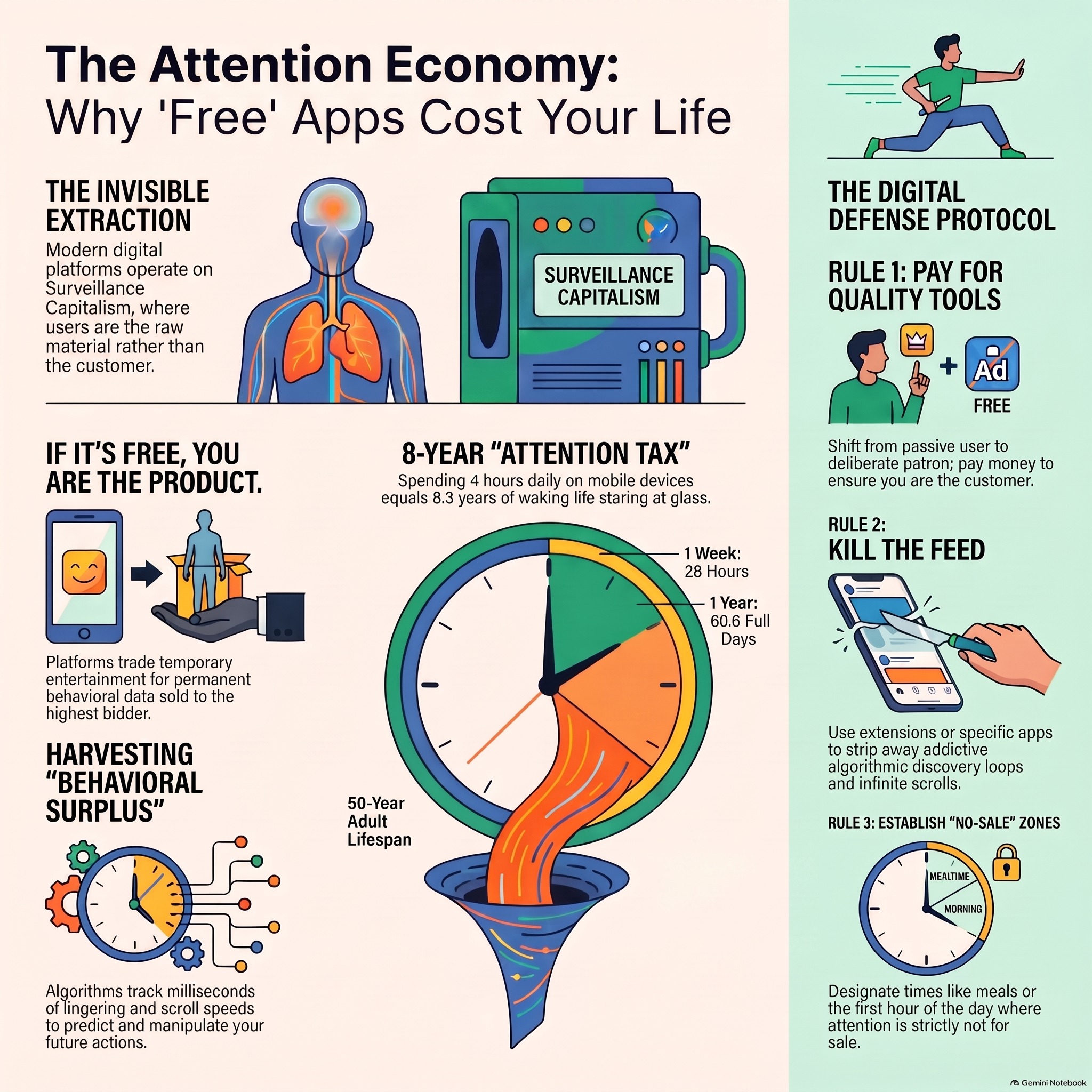 The Attention Economy Exposed: Why Free Apps Cost Your Life 06.09.2026 47minHey! I'd love to hear your thoughts, send me a voice note.If you aren't paying for the product, you ARE the product. We celebrate modern digital platforms because they don't cost a single dollar to download. Yet, the companies behind them rank among the most valuable corporate empires in human history. How does an app make billions of dollars by giving away its software for free? In this milestone 20th episode of The Unplugged Life, we pull back the curtain on the economic engine driving modern society: The Attention Economy. We examine the transition from traditional commerce to "Surveillance Capitalism," unpack how your behavioral surplus is packaged and sold to the highest bidder, and reveal the hidden cost of "free" tech on your cognitive sovereignty. Most importantly, you will learn the mental shift required to stop being the harvest and start treating your attention like your most valuable non-renewable asset. ⏱️ TIMESTAMPS 0:00 - The Trillion-Dollar Question: How Free Apps Make Billions 1:15 - The Fundamental Shift: From Products to Human Behavior 2:45 - What Is "Surveillance Capitalism"? 4:20 - The Architecture of the Harvest: Clicks, Pauses, and Pupil Dilation 6:00 - The True Currency: Calculating Your "Attention Tax" 7:40 - Reclaiming Sovereignty: The 3 Rules of Digital Defense 9:10 - The 24-Hour Experiment: The Conscious Value Audit 10:20 - Final Thoughts & Closing Reflections 📊 THE ATTENTION ECONOMY BALANCE SHEET: 1. "Free" platforms trade temporary entertainment for permanent behavioural data. 2. Every uncalculated notification is an uninvited bid on your future actions. 3. Your finite focus is a non-renewable natural resource—treat it like gold, not waste. 4. Shift from passive user to deliberate patron: pay for quality tools with money, not attention. 👥 CONNECT WITH THE UNPLUGGED LIFE: • Subscribe for weekly data-driven frameworks to dismantle tech addiction. • Drop a comment below: What app do you think has extracted the most time from your life?
Podcast serupa


Popular di
Podcast ini turut muncul dalam senarai podcast negara-negara ini.
