
Monumental Movement Podcast
monumentalmovement
0
This podcast explores music as a cultural force and historical thread, moving beyond simple entertainment. Each episode delves into avant-garde composition, underground movements, and experimental genres such as electronica, post-industrial textures, ambient minimalism, folk mutations, and noise-based practices. The show traces the historical context, aesthetic frameworks, and technological shifts behind these works, making them accessible to producers, sound artists, researchers, and curious listeners. It offers a globally-minded journey through the edges of contemporary sound.
Episod
-
 Why Angine De Poitrine Makes Small Details Feel Huge: The Architecture of Minimal Impact 28.09.2026 29minThis episode explores the artistic philosophy and technical presentation of the musical project Angine de Poitrine. One source highlights how the group achieves perceptual scale by focusing on minimalist shifts and tiny rhythmic variations rather than sheer volume. By utilizing extreme contrast and repetitive patterns, the music forces the listener to notice micro-changes that would otherwise seem insignificant. Additionally, the text offers guidance on the Quebecois pronunciation of the band's name and suggests a narrative-driven approach to discussing their work. Ultimately, the sources emphasize that complexity arises from the precise interaction of a few elements rather than an abundance of sound.
 -
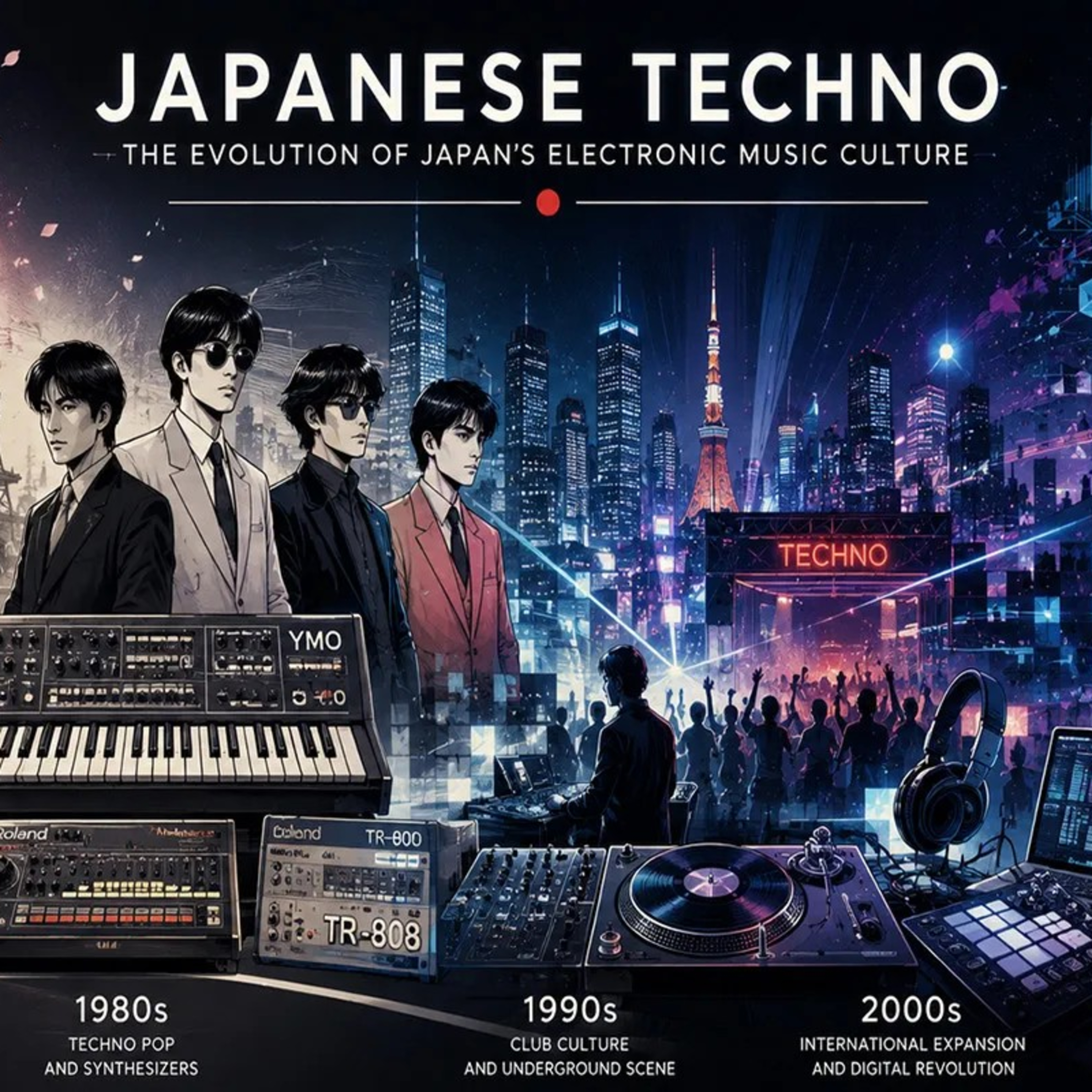 Japanese Techno: A History of Innovation and Global Influence 27.09.2026 21minThis episode provides a comprehensive historical analysis of Japanese techno, tracing its evolution from mid-century experimental music to a global cultural force. It highlights how Yellow Magic Orchestra bridged the gap between avant-garde electronics and popular culture, setting the stage for the country's unique club scene in the 1990s. The text emphasizes that Japan's contribution extends beyond performance to the technological innovation of hardware giants like Roland and Yamaha, which provided the tools for electronic music worldwide. As the narrative moves into the digital age, it explores the shift toward minimalism, laptop-based live sets, and a recent resurgence in analog hardware. Ultimately, the author argues that Japanese electronic music is defined by a distinct aesthetic of precision and a seamless integration of art, technology, and urban culture. This evolution has transformed Japan from a consumer of foreign trends into a central pillar of the global electronic music landscape.【Related Column】 Japanese Techno ― 日本が築いた電子音楽文化の軌跡と世界への影響https://monumental-movement.jp/column-japanese-techno/
 -
 Evolution of Human Beatbox: Global History and Japanese Masters 27.09.2026 20minThis episode provides a comprehensive overview of human beatboxing, tracing its evolution from 1980s hip-hop origins to its current status as a sophisticated global musical genre. The source details how the culture transitioned into a competitive discipline through major tournaments like the Grand Beatbox Battle, which standardized technical evaluation and fostered diverse international styles. It highlights specific regional characteristics, noting France's acoustic power, the United Kingdom’s rhythmic precision, and the innovative technological integration prevalent in Japan. Key Japanese performers such as SO-SO, RUSY, and Kohey are analyzed to illustrate modern advancements in loopstation composition and complex sound design. Ultimately, the text illustrates that beatboxing has moved beyond simple vocal imitation to become a multi-faceted art form blending live performance with digital production.【Related Column】Human Beatbox World history and Japanese players - Technological evolution, tournament culture, trends in each countryhttps://monumental-movement.jp/en/column-human-beat-box/
 -
 High Fade: Scotland’s Street-Born Funk Rock Revolution 27.09.2026 20minThis episode highlights High Fade, a dynamic three-piece funk-rock band originating from Edinburgh, Scotland. It chronicles their rise from local street performers to international sensations, driven by their exceptional musical proficiency and strategic use of social media. By blending classic funk rhythms with the raw energy of rock and soul, the group has successfully revitalized the genre for a modern audience. The source emphasizes that their success serves as a new model for independent artists, prioritizing authentic live performance over traditional record label backing. Ultimately, High Fade is presented as a bridge between musical tradition and the digital age, proving the enduring power of a tight, physical groove.【Related Column】How did High Fade use street performing to grow globally?https://monumental-movement.jp/en/column-high-fade/
 -
 Why Angine De Poitrine Is Hard To Put On In The Background: Sound That Demands Attention 27.09.2026 25minThis episode explores the unique compositional nature of the musical project Angine de Poitrine, focusing on why its sound resists being used as passive background noise. Unlike modern streaming tracks designed to blend into the environment, this music utilizes frequent rhythmic shifts and unexpected structural changes that constantly pull a listener's attention back to the sound. These interruptions challenge the contemporary habit of passive consumption, instead fostering a more active and interactive relationship between the audience and the art. Additionally, the texts provide technical guidance on the Québécois pronunciation of the name and offer creative notes on prioritizing narrative over dialogue in related media. Ultimately, the material suggests that while some music is built to disappear, this work is specifically crafted to demand focus and be noticed.
 -
 Youth Music: The Lifelong Compass of Social Identity 26.09.2026 20minThis episode explores how the musical genres individuals listen to during their youth act as a lasting compass for their adult lives. Drawing on psychological and sociological data, the text explains that the music embraced during adolescence and early adulthood significantly shapes personality traits, career paths, and political engagement. For instance, fans of subcultural or experimental music often gravitate toward creative professions, while pop music listeners may develop stronger social cohesion. The research highlights that these early cultural experiences do not strictly dictate one’s destiny but rather establish foundational values and social patterns. Ultimately, the source illustrates that the sounds of our youth remain embedded in our decision-making processes and social identities long after the music stops.【Related Column】Does the genre of music you listen to in your youth influence your later life and social behavior?https://monumental-movement.jp/en/column-sociology-youth-culture-generation/
 -
 The History and Evolution of Vaportrap and Cloud Rap 26.09.2026 19minThis episode provides a comprehensive chronological analysis of Cloud Rap and Vaportrap, tracing their evolution from early internet mixtape culture to the modern era. It highlights how pioneers like Lil B and Clams Casino established a foundation of ambient textures and reverberated vocals that later merged with the consumerist aesthetics of Vaporwave. The text explores the intersection of these styles with Lo-Fi HipHop and the rise of the emo-rap movement led by figures such as Lil Peep. By examining the technical elements of spatial processing and trap-based rhythms, the author illustrates how these genres prioritize online aesthetics over physical geography. Ultimately, the article suggests that the future of this musical lineage will be shaped by international accessibility and the integration of generative AI in production.【Related Column】History and development of Vaportrap/Cloud Raphttps://monumental-movement.jp/en/column-vaportrap-cloud-rap/
 -
 Why Guru Guru Made Krautrock So Strange: The Unpredictable Sound of Krautrock 26.09.2026 36minThis episode profiles the influential German band Guru Guru, exploring their origins in the late 1960s underground scene of Heidelberg. Emerging from a blend of free jazz and experimental improvisation, the group challenged traditional song structures by incorporating distorted guitars, erratic rhythms, and a unique sense of absurdist humor. Led by drummer Mani Neumeier, the band became a cornerstone of the Krautrock movement, though they consistently resisted being confined to a single musical genre. Their discography, beginning with the landmark album UFO, illustrates a decades-long commitment to pushing the boundaries of psychedelic and heavy rock. Ultimately, the source highlights how Guru Guru remains significant today by treating music as an evolving, unpredictable physical experience rather than a static recording.【Related Column】Guru Guru:ドイツ・クラウトロックの奇妙で重く予測不能なサウンドhttps://monumental-movement.jp/column-guru-guru/
 -
 Why Angine De Poitrine Feels Handmade: The Audible Anatomy of Handmade Music 26.09.2026 39minThis episode explores the creative philosophy behind the musical project Angine de Poitrine, emphasizing why their work feels distinctly handmade despite modern technological trends. Rather than relying on automated algorithms or artificial perfection, the music highlights the visible physical process and deliberate human decisions involved in performance. This human element is not defined by technical flaws, but rather by the audible coordination and intentional transitions that a listener can perceive. The texts also provide phonetic guidance for the name's Québécois pronunciation and offer narrative strategies for discussing the group's artistic identity. Ultimately, the material suggests that in an era of instant AI production, music that bears the traces of manual labor and practiced skill gains a unique and significant value.
 -
 Wolf Eyes and the Evolution of Detroit Noise 25.09.2026 20minThis episode details the history and artistic philosophy of Wolf Eyes, a pioneering experimental noise group that emerged from the underground culture of Detroit. The source explains how the band utilized a DIY approach to redefine noise as a sophisticated form of contemporary music, blending elements of industrial, free jazz, and electronic improvisation. It highlights significant milestones, such as their contract with the Sub Pop label and the release of their influential album Burned Mind, which brought their abrasive sound to a wider global audience. Beyond their discography, the text emphasizes the group's focus on live performance as a site of constant creation where sound is treated as a raw, evolving material. Ultimately, the article portrays Wolf Eyes as a central force in modern music history that successfully bridged the gap between underground noise and broader experimental art.【Related Column】https://monumental-movement.jp/en/column-wolf-eyes/
 -
 Why Foyer Des Arts Made German Pop So Weird 25.09.2026 33minThis episode provides a detailed retrospective of Foyer Des Arts, a German duo consisting of Max Goldt and Gerd Pasemann who emerged from the West Berlin new wave scene. The text explores how they blended catchy pop melodies with eccentric, literary lyrics to challenge the conventions of the 1980s music market. It tracks their evolution from their 1978 meeting through their mainstream success with the hit "Wissenswertes über Erlangen" and their subsequent move toward independent labels. A significant portion of the narrative focuses on their John Peel Session, a recording once thought lost but rediscovered and released decades later. Ultimately, the article argues that the band’s legacy persists because their unique perspective on the mundane remains conceptually modern. Through a career marked by long hiatuses and a shift toward Goldt's literary career, the duo maintained a style that was approachable yet intentionally strange.【Related Column】Foyer Des Arts:ドイツ・ポップの常識を少しだけ狂わせた二人https://monumental-movement.jp/column-foyer-des-arts/
 -
 Why Azymuth Still Sounds Like the Future 25.09.2026 42minThis episode explores the extensive history of Azymuth, a pioneering Brazilian musical trio that seamlessly blended samba, jazz, funk, and electronic music into a signature "Samba Doido" groove. Spanning over fifty years from their 1960s origins in Rio de Janeiro to their 2025 release Marca Passo, the narrative details how their sound was defined by a minimalist three-man lineup that expanded the roles of keyboards, bass, and drums. The source highlights key milestones, such as the global success of the 1979 hit "Jazz Carnival" and their later rediscovery by club culture and modern DJs through the Far Out Recordings label. Despite the passing of original members José Roberto Bertrami and Ivan Conti, the group’s legacy persists through their innovative use of synthesizers and a rhythmic flexibility that bridges the gap between traditional Brazilian heritage and futuristic sounds. Ultimately, the text illustrates how Azymuth’s music remains timeless by constantly evolving through new collaborations while maintaining its foundational core of improvisational freedom and deep physical groove.【Related Column】Azymuth — ブラジル音楽を未来へ運んだ三人のグルーヴhttps://monumental-movement.jp/column-azymuth/
 -
 Why Angine de Poitrine Doesn't Need A Chorus 25.09.2026 34minThis episode examines the unique songwriting philosophy of the band Angine de Poitrine, specifically focusing on how they bypass conventional pop structures. Rather than relying on a traditional chorus to act as a listener’s landmark, the group utilizes recurring rhythms, shifting textures, and instrumental motifs to build familiarity. This approach suggests that musical recognition is rooted in the brain's ability to predict patterns rather than the presence of a specific verse-chorus formula. The excerpts also provide linguistic guidance on the Québécois pronunciation of the band's name and touch upon narrative techniques used in audio production. Ultimately, the sources argue that music remains memorable and accessible as long as it offers the audience meaningful elements to rediscover.
 -
 Poetry and Sound Art: The Evolution of Voice and Space 24.09.2026 21minThis episode examines the historical and aesthetic convergence of spoken poetry and sound art from the twentieth century to the present. It describes how vocal performance transitioned from oral tradition to printed text and finally into an era of experimental sound manipulation. By utilizing technological innovations like magnetic tape and digital algorithms, artists have transformed the human voice into a malleable instrument that blurs the line between meaning and acoustics. The text further explores how these hybrid works occupy physical and radio spaces to create immersive experiences for the listener. Ultimately, the overview highlights how the synergy between language and sonic texture continues to redefine the boundaries of contemporary art.【Related Column】Poetry reading and sound art: A history of expression where voice, space, and time intersecthttps://monumental-movement.jp/en/column-poetry-soundart/
 -
 The Aesthetics of Imperfection: Why We Love Broken Things 24.09.2026 48minThis episode explores why human beings find beauty and value in imperfection, ranging from physical decay to technical glitches. It argues that while flawless objects are easy to process, broken or incomplete things engage our imagination by leaving room for interpretation and emotional connection. Across fields like music, photography, architecture, and fashion, imperfections such as noise, grain, and wear serve as visible markers of history, time, and human touch. The text suggests that in an age of digital perfection, we intentionally seek out "lo-fi" or weathered aesthetics to recapture a sense of authenticity and storytelling. Ultimately, these flaws are not mere defects but meaningful signals that distinguish the living and unique from the mass-produced.【Related Column】なぜ人は壊れたものに惹かれるのかhttps://monumental-movement.jp/column-why-humans-love-broken-things2/
 -
 Why Angine de Poitrine Sounds Like A Song You Already Know 24.09.2026 29minThis episode examines the musical group Angine de Poitrine, focusing on how their sound balances familiar patterns with unpredictable experimentation. By utilizing human pattern recognition, the band creates music that feels recognizable through its rhythmic structures and repetition, even when the melodies are unconventional. This creates a psychological tension where the listener’s expectations are constantly challenged by sudden changes in texture and pitch. The sources also provide technical guidance on the Québécois pronunciation of the band's name and suggest a narrative-driven approach to discussing their work. Ultimately, the material highlights that the band's appeal lies in the fundamental human experience of detecting relationships within complex sounds.
 -
 Why Nostalgia Became the Sound of the Digital Age 23.09.2026 23minThis episode explores how nostalgia has transitioned from a private sentiment to the defining aesthetic of the digital music era. The author argues that the internet acts as a massive cultural archive, allowing users to experience the past as a "current" timeline and fostering a phenomenon known as media nostalgia. This trend is exemplified by genres like Vaporwave and Lo-fi hip hop, which repurpose retro sounds and visuals to provide comfort in an increasingly fast-paced technical world. Ultimately, the text suggests that because digital platforms preserve every cultural fragment, modern music exists in a state of "endless memory" where the boundaries between different eras have permanently blurred. This shift represents a retro-future movement where looking backward becomes a primary method for navigating and imagining the future.【Related Column】Why has nostalgia become a major emotion in music?https://monumental-movement.jp/en/column-why-nostalgia-became-the-sound-of-the-internet/
 -
 The Value of Slowness in a High-Speed Digital World 23.09.2026 44minThis episode explores the renaissance of "slow culture" within a modern society characterized by extreme digital acceleration. As technology makes information and services nearly instantaneous, people are increasingly seeking out low-density experiences such as ambient music, vinyl records, and long-form podcasts to reclaim their attention. This shift is not a simple rejection of progress but a strategic use of technology to choose a pace that honors human experience over mere efficiency. The author argues that in an era of infinite, fast-paced content, the act of slowing down has transformed from a necessity of the past into a modern luxury and a vital cultural choice. Ultimately, the source suggests that Fast and Slow cultures will coexist, with intentional slowness serving as a tool for individuals to protect their time and mental well-being.【Related Column】Why Everything Is Becoming Slower — なぜ、すべてが遅くなっているのかhttps://monumental-movement.jp/column-why-everything-is-slower/
 -
 Angine de Poitrine and the Architecture of Musical Time 23.09.2026 35minThis episode explores the experimental musicality of the group Angine de Poitrine, focusing specifically on how their compositions alter a listener's perception of time. Unlike traditional songs that rely on predictable structures, this music uses high information density and shifting rhythms to replace standard clock time with a subjective experience based on events and memory. The sources explain that by removing familiar landmarks like steady drum pulses, the band forces the audience to measure duration through active attention and sensory changes. Additionally, the documents provide technical guidance on the Québécois pronunciation of the band's name and suggest a narrative-driven approach to discussing their work. Ultimately, the material highlights how complex art can transform a few minutes of audio into a profound psychological journey that exists outside of linear time.
 -
 The Evolution of Game Music as Youth Mainstream Culture 22.09.2026 21minThis episode examines the evolution of video game music from a secondary background element into a dominant cultural mainstream for younger generations. It traces this development through various eras, starting with the strong melodies necessitated by 8-bit hardware limitations and expanding into the grand orchestral compositions of the CD-ROM age. The text highlights how online communities and streaming platforms transformed game soundtracks into versatile assets for remixes, memes, and lifestyle-oriented playlists. Modern titles now achieve global influence through massive esports events and live concerts, solidifying music's role as a core component of digital entertainment. Ultimately, the article argues that game music provides a uniquely deep emotional connection for Z-generation listeners because it is inextricably linked to their personal interactive experiences.【Related Column】The moment when game music becomes mainstream among young peoplehttps://monumental-movement.jp/en/column-game-music-youth-culture/
Podcast serupa


Popular di
Podcast ini turut muncul dalam senarai podcast negara-negara ini.
