
Elixir Mentor
Jacob Luetzow
0
The Elixir Mentor Podcast is a show dedicated to the Elixir programming language, featuring interviews with community members and discussions on innovative projects, libraries, and best practices. It aims to provide insights and inspiration for developers at any stage of their Elixir journey.
Afleveringen
-
 Adam Gusky on Getting Recommended by AI 24.09.2026 1u 29minAdam Gusky, solo founder of Blawgy, on how businesses get recommended by ChatGPT and other AI tools, and what technical founders get wrong about marketing. Adam went from a college wrestling meme page and 30 side projects to quitting his job, selling Blawgy as a hand-built service, watching it churn, and rebuilding it into a product agencies now run for their clients.We get into SEO vs AEO, whether a post every day still works, and why most people will buy software instead of vibe coding it. I share how customers are finding Killswitch through AI answers, the Grok Bot team behind its marketing, and the partner program I'm building with attorneys and financial advisors.00:00 - Introduction02:19 - A college meme page and 30 side projects04:05 - What Blawgy does04:51 - Is SEO dead? SEO vs AEO and GEO07:18 - How long before it works10:34 - FoodBuddy and the menu item calorie play12:21 - Agent readiness and llms.txt15:23 - Customers finding Killswitch through AI18:35 - Quitting the job to build Blawgy22:12 - From hand-built service to real product24:26 - Guardrails and multi-pass quality checks26:17 - The Blawgy pixel and refreshing old posts33:30 - Why people buy software instead of vibe coding it38:37 - Handoff plans for solo founders45:23 - Blawgy's stack, AI coding tools, and Tmux54:06 - Marketing Killswitch with Grok Bots56:31 - CAPTCHAs, bots, and AI slop on social58:48 - A partner program for attorneys and advisors1:01:09 - Local cold outreach that gets replies1:03:02 - Why Blawgy sells to agencies1:09:50 - Tiered pricing and finding agencies with Apollo1:13:23 - SEO agencies, backlinks, and a cold email experiment1:16:34 - Is a post every day overkill?1:19:08 - Building an AI podcast producer1:27:42 - Where to find AdamResources Mentioned:- Blawgy: https://blawgy.com/?utm_source=elixir-mentor- MyFoodBuddy: https://apps.apple.com/us/app/myfoodbuddy/id6505124191?utm_source=elixir-mentor- Is It Agent Ready: https://isitagentready.com/?utm_source=elixir-mentor- Killswitch: https://killswitch.app/?utm_source=elixir-mentorConnect with Adam:- X/Twitter: https://x.com/adamc0dez?utm_source=elixir-mentor- Blawgy on X: https://x.com/blawgyseo?utm_source=elixir-mentorSponsors:- BEAMOps: https://beamops.co.uk/?utm_source=elixir-mentor- Paraxial.io: https://paraxial.io/?utm_source=elixir-mentor- Jido: https://agentjido.xyz/discord?utm_source=elixir-mentorSUPPORT ELIXIR MENTOR- Elixir Mentor: https://elixirmentor.com/?utm_source=elixir-mentor#ElixirLang #MyElixirStatus #ElixirMentor
 -
 Brice Ayres on Fractional Engineering 18.09.2026 1u 44minBrice Ayres, founder of Axio Intelligence, on fractional engineering and what changes when one senior engineer can run a team of AI agents. Brice went from the Army and a 3.7 million follower Facebook cause to finding Elixir at Topgolf, leading engineering orgs, and going out on his own.We get into managing agents like an engineering org, whether you still need to read every line, and why Ash keeps LLMs on the rails. I share how a team of Grok Bots handles marketing, support, and QA for Killswitch, and we close with Brice's playbook for cutting cloud costs.00:00 - Introduction02:51 - Web dev class, the Army, and a viral nonprofit08:38 - Finding Elixir at Topgolf13:00 - What is fractional engineering?16:10 - Vibe coding and why engineers still matter24:03 - Think like an engineering manager26:32 - Reviewing AI code, Ash, and established patterns29:55 - Offmic, a live AI podcast producer35:18 - Running agents like an engineering org40:51 - Read-only agents in prod and self-healing infra42:05 - A Polymarket bot with agent consensus47:06 - Marketing Killswitch with Grok Bots52:06 - Lighthouse scores and agentic browsing56:13 - Getting found by LLMs59:27 - Order with Surf: agentic food ordering1:02:48 - Agent QA and local testing with K3s and Floci1:05:40 - Data labeling, synthetic data, and edge AI1:08:55 - Nerves, Peridio, and Avocado OS1:11:47 - Bot traffic, analytics, and self-hosting1:16:00 - Hardware stories and real-world edge cases1:26:24 - When engineers ship faster than you can plan1:29:10 - Monoliths, Postgres scaling, and ETS1:36:40 - Where to find Brice1:37:44 - Cutting cloud costs: logging and AZ trafficResources Mentioned:- Axio Intelligence: https://axiointelligence.com/?utm_source=elixir-mentor- Grok Bot: https://x.ai/news/introducing-grok-bot?utm_source=elixir-mentor- Killswitch: https://killswitch.app/?utm_source=elixir-mentorConnect with Brice:- X/Twitter: https://x.com/briceayres?utm_source=elixir-mentor- LinkedIn: https://www.linkedin.com/in/briceayres/?utm_source=elixir-mentorSponsors:- BEAMOps: https://beamops.co.uk/?utm_source=elixir-mentor- Paraxial.io: https://paraxial.io/?utm_source=elixir-mentor- Jido: https://agentjido.xyz/discord?utm_source=elixir-mentorSUPPORT ELIXIR MENTOR- Elixir Mentor: https://elixirmentor.com/?utm_source=elixir-mentor#ElixirLang #MyElixirStatus #ElixirMentor
 -
 Zach Daniel on Ash and Ash AI 12.07.2025 2u 2minIn this episode of the Elixir Mentor Podcast, I sit down with Zach Daniel, the brilliant creator of Ash Framework, for a fascinating discussion about the intersection of AI and application development. We dive deep into LLM workflows, explore the revolutionary usage rules system, and get an exclusive look at Ash AI - the comprehensive toolkit that's changing how we integrate AI capabilities into Elixir applications.Zach shares his insights on effective LLM usage patterns, from vibe coding workflows to production-ready AI integrations. We explore the groundbreaking usage rules system that allows library authors to provide LLM-specific guidance, making AI assistance dramatically more effective for framework users. The conversation covers Ash AI's powerful features including automated chatbot generation, prompt-backed actions, and seamless tool integration that lets you build AI-enabled applications with minimal effort.Our discussion also touches on the challenges of scaling open source communities, the future of solo entrepreneurship in the AI era, and how tools like Deep Wiki are creating surprisingly accurate AI-generated documentation. Zach provides valuable perspective on managing large open source projects while maintaining code quality and community engagement.This episode offers essential insights for developers interested in leveraging AI tools effectively, understanding modern framework design, and building robust applications with Elixir and Ash. Whether you're exploring AI integration or looking to understand cutting-edge development workflows, this conversation provides practical wisdom and forward-thinking perspectives.Resources Mentioned:- Ash Framework: https://ash-hq.org/- Ash Framework Book: https://pragprog.com/titles/ldash/ash-framework/- Usage Rules: https://hexdocs.pm/usage_rules/- Deep Wiki: https://deepwiki.org/Connect with Zach:- LinkedIn: https://www.linkedin.com/in/zachdaniel/- Substack: https://www.zachdaniel.dev/- GitHub: https://github.com/zachdanielSUPPORT ELIXIR MENTOR- Elixir Mentor: https://elixirmentor.com
 -
 Brian Cardarella on Elixir Adoption 07.06.2025 3u 2minIn this comprehensive episode of the Elixir Mentor Podcast, I sit down with Brian Cardarella, CEO of DockYard, to tackle one of the most critical topics facing our community: Elixir adoption. We dive deep into the challenges and opportunities that shape how developers and companies discover and embrace Elixir.Brian shares his extensive experience from the consulting world, discussing everything from the changing conference landscape and social media fragmentation to the existential questions around AI's impact on programming languages. We explore why traditional adoption pathways have shifted, the role of LLMs in shaping developer choices, and practical strategies for convincing teams to adopt Elixir in both startup and enterprise environments.Our conversation covers the technical barriers newcomers face with OTP, the importance of community building, and the economic realities affecting the entire tech industry. Brian provides candid insights about running a consultancy during market downturns, the influence of private equity, and why Elixir's "makes hard things easy" philosophy sometimes struggles with the "easy things" developers expect.We also tackle community-submitted questions about migration strategies, tooling gaps, type systems, and the future of Live View Native. This episode offers both tactical advice for developers and strategic insights for technical leaders considering Elixir adoption.Resources Mentioned:- Elixir Outreach Stipend Program: https://elixir-lang.org/blog/2025/06/02/elixir-outreach-stipend-for-speakers/- Conference opportunities list by Dave Erensson:https://www.codosaur.us/speaking/cfps-ending-soonConnect with Brian:- X/Twitter: https://x.com/bcardarella/- DockYard: https://dockyard.com/SUPPORT ELIXIR MENTOR- Elixir Mentor: https://elixirmentor.com
 -
 Elliott Clark on Simplifying Cloud Infrastructure 17.05.2025 1u 37minIn this episode of the Elixir Mentor Podcast, I talk with Elliott Clark, former engineer at both Facebook and Microsoft, who now runs Batteries Included. Elliott shares his rich background from working on the .NET team at Microsoft and infrastructure and developer efficiency at Facebook to creating a platform that simplifies cloud deployment for developers of all sizes.Elliott explains how his experience at tech giants shaped his vision for Batteries Included, particularly the pain points he observed while at Facebook's developer efficiency team where he saw firsthand how complex configurations led to outages. He discusses why he chose Elixir and LiveView for his platform, highlighting how the unified language environment allows backend developers to build cohesive UIs without the traditional frontend/backend divide.We explore how Batteries Included automates complex infrastructure tasks like setting up Kubernetes, Postgres databases, Redis, and monitoring tools with just a few clicks. Elliott also shares insights on their "Robin Hood" business model—keeping the platform free for smaller developers while charging larger enterprises, a philosophy informed by his time with open-source projects at multiple companies.Our conversation dives into technical territory with discussions on managing large Elixir codebases (approaching 300,000 lines of code), challenges of umbrella projects, and the testing philosophies that help maintain quality. Elliott brings valuable perspectives from his work on large-scale systems at Facebook and Microsoft, offering insights on preventing regressions and building resilient infrastructure.Whether you're interested in Elixir, deployment infrastructure, or the challenges of building developer tools, this episode offers valuable insights from someone who has worked at both tech giants and startups. Elliott's practical approach to solving deployment pain points demonstrates how developers can build tools that truly make a difference in the development workflow.Resources Mentioned:- Batteries Included: https://batteriesincl.com- GitHub: https://github.com/batteries-includedSUPPORT ELIXIR MENTOR- Elixir Mentor: https://elixirmentor.com
 -
 Daniel Bergholz on Windsurf and Claude for Elixir 29.03.2025 1u 38minIn this episode of the Elixir Mentor Podcast, I chat with returning guest Daniel Bergholz about leveraging AI tools like Windsurf and Claude to dramatically improve Elixir development workflows. Daniel shares his journey from skepticism to becoming a power user, demonstrating how these tools can help developers build faster without compromising quality.Daniel walks us through his practical approach to incorporating AI into both professional development work and side projects. He explains how to effectively use features like rules files, web documentation integration, and memory systems to get the best results when generating Elixir code. The conversation covers important nuances about how different programming languages perform with AI tools, with Daniel noting that while JavaScript/TypeScript might get near-perfect results, Elixir requires more guidance but still provides excellent value.The discussion takes a critical look at the "Vibe coding" trend (generating code without understanding it) and offers a more responsible alternative that we call the "sniper approach" - using AI with precision and knowledge. We explore how AI tools are changing developer roles, potentially transitioning programmers from pure coders to more holistic product engineers who can focus on customer needs while leveraging AI for implementation.Whether you're an Elixir enthusiast curious about productivity tools or a developer interested in responsible AI usage, this episode provides practical insights on balancing automation with craftsmanship. Daniel's experience demonstrates that AI can be a powerful assistant when used thoughtfully, helping developers produce higher quality work in less time.Resources Mentioned:- Windsurf:https://www.windsurf.io/- Cursor:https://cursor.sh/- Claude:https://claude.ai/Connect with Daniel:- Workflow Blog:https://dev.to/danielbergholz/my-ai-powered-workflow-for-writing-elixir-and-phoenix-with-windsurf-4k8m- Website:https://bergdaniel.com.br/SUPPORT ELIXIR MENTOR- Elixir Mentor:https://elixirmentor.com
 -
 Sean Moriarity on Machine Learning in Elixir 16.06.2024 1u 13minIn this episode of the Elixir Mentor Podcast, your go-to source for all things Elixir, we are thrilled to welcome Sean Moriarity, the author of "Genetic Algorithms in Elixir: Solve Problems using Evolution" and "Machine Learning in Elixir: Learning to Learn with Nx and Axon"! 📚🧠 Sean will share his expertise in applying machine learning techniques within the Elixir ecosystem. We'll explore how genetic algorithms can be utilized to solve complex problems and optimize solutions. 🌿🦾 Sean will also discuss machine learning with Elixir, explaining how libraries like Nx and Axon enable developers to build intelligent systems that can learn and adapt. 📊🎓 Throughout the episode, we'll cover practical examples, best practices, and real-world applications of machine learning in Elixir. Sean will provide valuable knowledge on the benefits and challenges of implementing these techniques and share his experiences in writing his books. 📖✨ With a passion for artificial intelligence, evolutionary algorithms, mathematics, and functional programming, Sean brings a wealth of knowledge to the table. 🤖🧮 Whether you're a seasoned Elixir developer looking to expand your skill set or a machine learning enthusiast curious about Elixir's potential, this episode is packed with valuable insights and inspiration. 💡🔥 Join us as we uncover the exciting possibilities at the intersection of Elixir and machine learning with Sean Moriarity! 🎙️🧪 #ElixirMentor #MachineLearning #GeneticAlgorithms #Nx #Axon #SeanMoriarity #BEAM #FunctionalProgramming Connect with Sean: X: Follow Sean on X (Twitter) Website: Visit Sean's Website SUPPORT ELIXIR MENTOR 🌐 My website: Visit Elixir Mentor Website 🎙 Check out my podcast: Listen to Hired Gun Apps Podcast 🆘 NEED HELP?? Join our Discord Server 🔗 All my Links: Connect with Jacob on Linktree Join this channel to get access to perks: YouTube Channel Membership
 -
 Alex Koutmos on Elixir Patterns 27.04.2024 1u 10minIn this episode of the Elixir Mentor Podcast, your go-to source for All Things Elixir, I'm thrilled to welcome Alex Koutmos, a talented software engineer and author of the highly anticipated book "Elixir Patterns." 🌟💻📚 By day, Alex writes production code in Elixir, JavaScript, and Vue, while also leveraging his DevOps skills with Kubernetes, Docker, Prometheus, Grafana, and ELK. 👨💻💪 We'll dive into Alex's new book, "Elixir Patterns," which provides developers with a powerful toolbox of patterns that leverage the unique characteristics of the Erlang virtual machine (BEAM) to solve everyday problems in a simple yet scalable way. 📚🔍🚀 Alex will share his insights on how to effectively utilize the tools provided by Erlang and the BEAM, as well as how to apply functional programming principles to achieve clear and concise solutions. 💡 We'll explore the book's comprehensive coverage of topics, from the Erlang and Elixir standard libraries to advanced GenServer recipes, supervisors, and initialization patterns. 📖🧩 Join us for an informative discussion with Alex Koutmos, as we uncover the secrets to mastering Elixir, harnessing the power of the BEAM, and building robust, scalable applications using proven design patterns. 💪📈 This episode is a must-listen for Elixir developers looking to expand their knowledge, streamline their development process, and create high-performance applications. 🌟🔧🚀 #ElixirMentor #AlexKoutmos #ElixirPatterns #BEAM #FunctionalProgramming #GenServer #Supervisors #ScalableApps Connect with Alex: Twitter: Follow Alex on Twitter Website: Visit Alex's Website SUPPORT ELIXIR MENTOR 🌐 My website: Visit Elixir Mentor Website 🎙 Check out my podcast: Listen to Hired Gun Apps Podcast 🆘 NEED HELP?? Join our Discord Server 🔗 All my Links: Connect with Jacob on Linktree Join this channel to get access to perks: YouTube Channel Membership
 -
 Roman Kotov on Creative Tech Solutions 24.02.2024 56minIn this episode of the Elixir Mentor Podcast, your go-to source for All Things Elixir, I sit down with Roman Kotov, a trailblazer in custom smart home solutions. We'll unravel the story behind Exshome, Roman's platform that's redefining the boundaries of smart homes by enabling enthusiasts to create their personalized setups. From using old USB webcams and Raspberry Pis to crafting unique CCTV solutions, we'll explore how Exshome empowers you to bring your unused gadgets back to life. Our discussion will cover: The challenges of traditional smart home systems The technical foundations of Exshome, including its use of Elixir and LiveView What the future holds for smart home enthusiasts looking to break free from off-the-shelf limitations Roman's other innovative projects, showcasing his contributions to the tech community Whether you're a smart home hobbyist, an Elixir developer, or just love tech innovation, this session is packed with insights you won't want to miss. Gear up for an engaging chat that will inspire you to think differently about smart home technology. Catch you there! #ElixirMentor #SmartHome #Exshome #Elixir #LiveView #TechInnovation #HomeAutomation #DIYTech #SoftwareDevelopment #ProgrammingCommunity Connect with Roman: X: Follow Roman on X (Twitter) Website: Visit Roman's Website Github: Explore Exshome on GitHub SUPPORT ELIXIR MENTOR 🌐 My website: Visit Elixir Mentor Website 🎙 Check out my podcast: Listen to Hired Gun Apps Podcast 🆘 NEED HELP?? Join our Discord Server 🔗 All my Links: Connect with Jacob on Linktree Join this channel to get access to perks: YouTube Channel Membership
 -
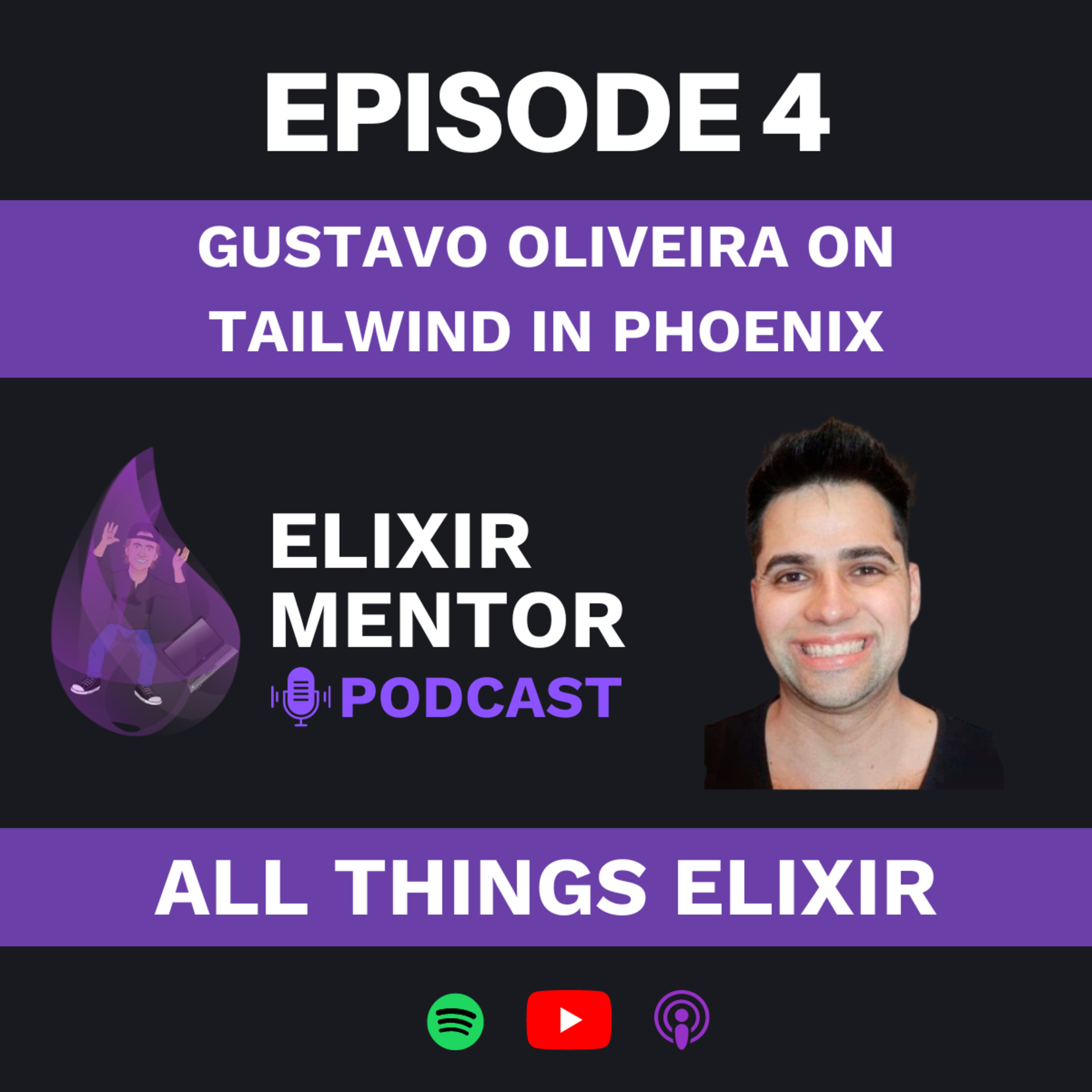 Gustavo Oliveira on Tailwind in Phoenix 17.02.2024 47minIn this episode of the Elixir Mentor Podcast, your go-to source for All Things Elixir, I sit down with Gustavo Oliveira, an Elixir tutorial pro. In this session, we'll explore the integration of Tailwind CSS with Phoenix 1.7 and how Phoenix now includes Tailwind by default, making web development more streamlined. We'll dive into the advantages, key features, and impact on your projects, highlighting the ease and efficiency of building web applications with Phoenix and Tailwind. This show is packed with insights, from the utility-first approach of Tailwind to the real-time capabilities of LiveView. Whether you're an experienced Elixir developer or passionate about web development, this is a must-watch. Get ready for a concise and informative discussion that will enhance your web development skills. Don't miss it! #ElixirLang #LiveView #ElixirMentor #TechTalk #SoftwareDevelopment #ElixirProgramming #DeveloperCommunity #CareerDevelopment #TechJobs #ElixirCourse #OpenSource #projectdevelopment #css #tailwind Useful Resources: Theo's Tailwind tips Tailwind cheatsheet Tailwind CSS IntelliSense Emmet Connect with Gustavo: YouTube: Gustavo's YouTube Channel ELXPRO: Visit ELXPRO Website SUPPORT ELIXIR MENTOR 🌐 My website: Visit Elixir Mentor Website 🎙 Check out my podcast: Listen to Hired Gun Apps Podcast 🆘 NEED HELP?? Join our Discord Server 🔗 All my Links: Connect with Jacob on Linktree Join this channel to get access to perks: YouTube Channel Membership
 -
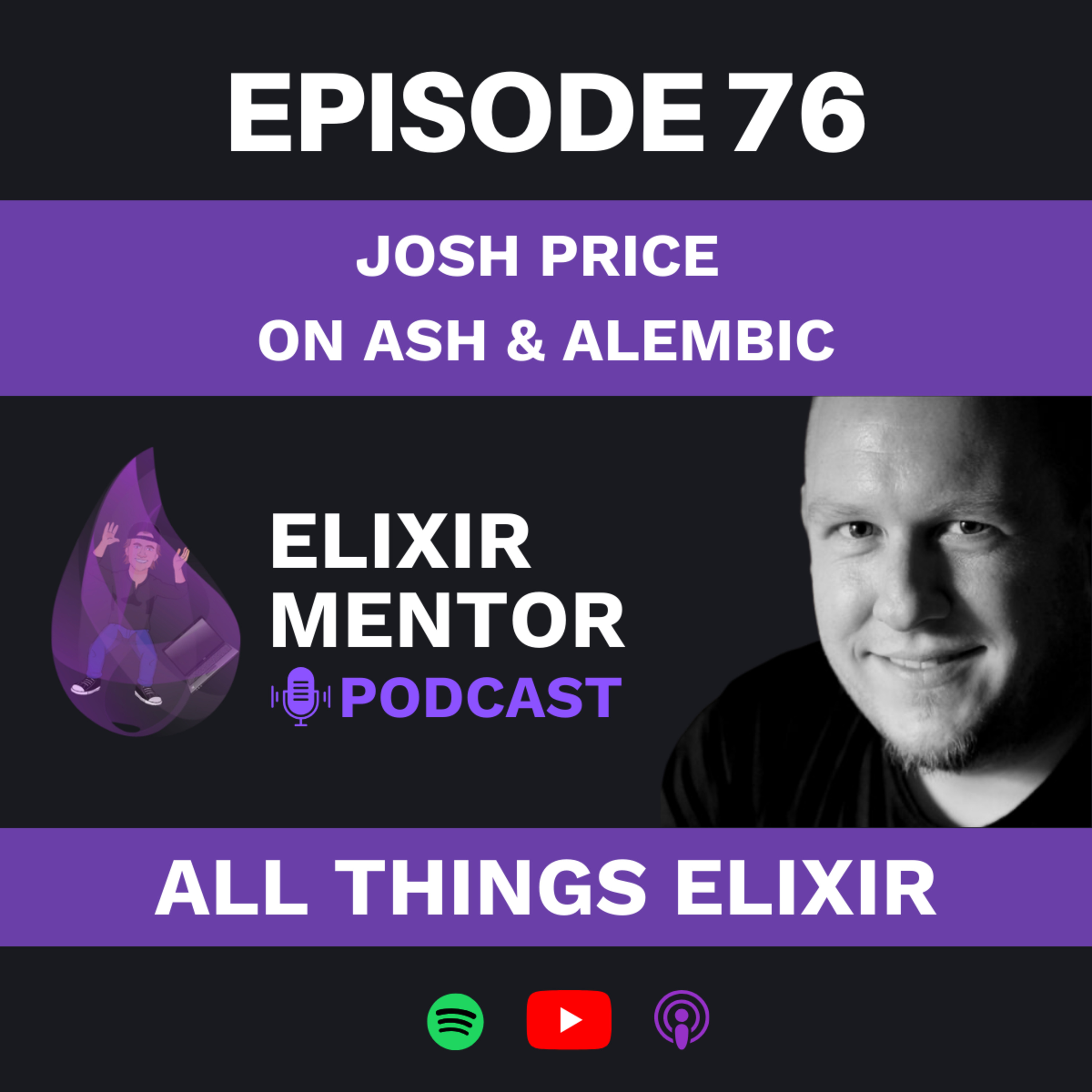 Josh Price on Ash & Alembic 11.03.2026 1u 54minJosh Price, founder & CTO of Alembic and one of the core forces behind Ash Framework, joins me for a wide-ranging conversation that starts with the origin story of Alembic, winds through the history of GraphQL and Ash, and lands on Clarity — his new interactive introspection and visualization tool for understanding your Ash codebase. Josh has been writing Elixir for over ten years and building Alembic for nine, which gives him a rare perspective on how the ecosystem has matured and where it's headed in an agentic world.We trace how Josh's frustration with real-time data at a gaming company pointed him toward Elixir and Erlang, how that led to an obsession with GraphQL domain modeling, and how that obsession eventually collided with Ash — which turned out to solve exactly the problems he'd been hacking around for years. We talk about what Ash actually is beyond an API generator, why auto-generated migrations are criminally underrated, and why the developers who resist Ash most are often the ones in the middle of the experience curve. Josh also shares the inside story of how slowing Zack Daniel down was actually the best thing that ever happened to the Ash ecosystem.A big chunk of the conversation covers the AI moment we're in right now — Claude Code workflow tips (including the /insights command and how to keep session history beyond 30 days), why CLIs are beating MCPs for LLM tool use, Claude Code skills and usage rules for progressive disclosure, and how Clarity grew from Ash's built-in introspection into something far more interesting: an in-memory Erlang digraph knowledge graph of your entire Elixir application. Josh also shares his take on multi-model databases, the disappearance of the UI, and why the only limits left for software engineers are taste, judgment, and imagination.Resources mentioned in this episode:- Alembic: https://alembic.com.au- Clarity (Hex): https://hex.pm/packages/clarity- Ash Framework: https://ash-hq.org- Ash Framework book: https://pragprog.com/titles/ldash/ash-framework/- Killswitch: https://killswitch.appConnect with Josh:- Website: https://alembic.com.au- X/Twitter: https://x.com/joshprice- LinkedIn: https://www.linkedin.com/in/joshcpriceSponsors:- Paraxial.io: https://paraxial.io- Jido: https://agentjido.xyz/discordSUPPORT ELIXIR MENTOR- Elixir Mentor: https://elixirmentor.com
 -
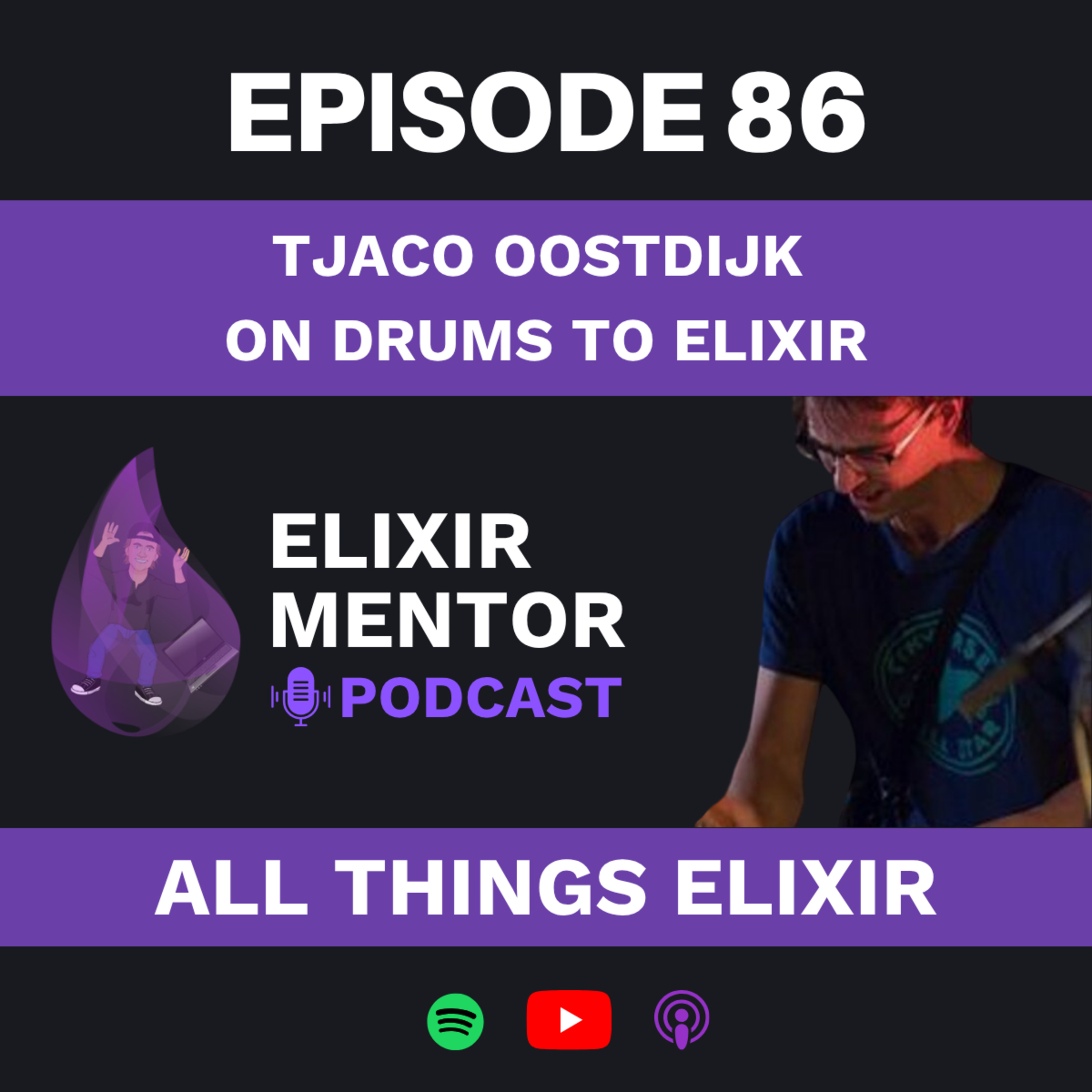 Tjaco Oostdijk on Drums to Elixir 07.06.2026 1u 31minIn this episode of the Elixir Mentor Podcast, I talk with Tjaco Oostdijk, a drummer turned Elixir developer now working at DPG Media, one of the largest media companies in the Netherlands. Tjaco played drums professionally from the age of seven and has taught for 22 years, before landing in software through a music distribution company writing Ruby and eventually moving to Elixir nearly a decade ago.We get into what it takes to keep Elixir running inside a large enterprise. DPG adopted Elixir after a high-traffic Ruby service fell over at scale, and Tjaco describes the reality of working in a locked-down environment standardized on Kotlin, using Copilot with Anthropic models while waiting for Claude Code to be approved. He also talks about the colleagues who stay skeptical of AI tooling and why that skepticism can be healthy.The heart of the conversation is muziekles.app, the application Tjaco built for Dutch music teachers to run their entire teaching practice, from year-long scheduling and student accounts to homework and assignments. He explains why he deliberately keeps payments out of the product, how he thinks about onboarding teachers, and the build process using Phoenix, Ash, Claude Code, and Tidewave. We also compare notes on shipping side projects fast, multi-tenancy in Ash, and the differences between hardware and software work.If you are building with Elixir inside a company that hasn't standardized on it, or shipping a side project with AI tooling, this conversation is full of practical, hard-won lessons from someone doing both at once.Connect with Tjaco:- Website:https://drumusician.com- X / Twitter:https://x.com/drumusician- GitHub:https://github.com/drumusician- LinkedIn:https://www.linkedin.com/in/tjaco-oostdijkResources Mentioned:- muziekles.app:https://muziekles.app- Tidewave:https://tidewave.ai- Vocablo:https://vocabloapp.com- Kabisa:https://kabisa.nlSponsors:- BEAMOps:https://beamops.co.uk- Paraxial.io:https://paraxial.ioSUPPORT ELIXIR MENTOR- Elixir Mentor:https://elixirmentor.com
 -
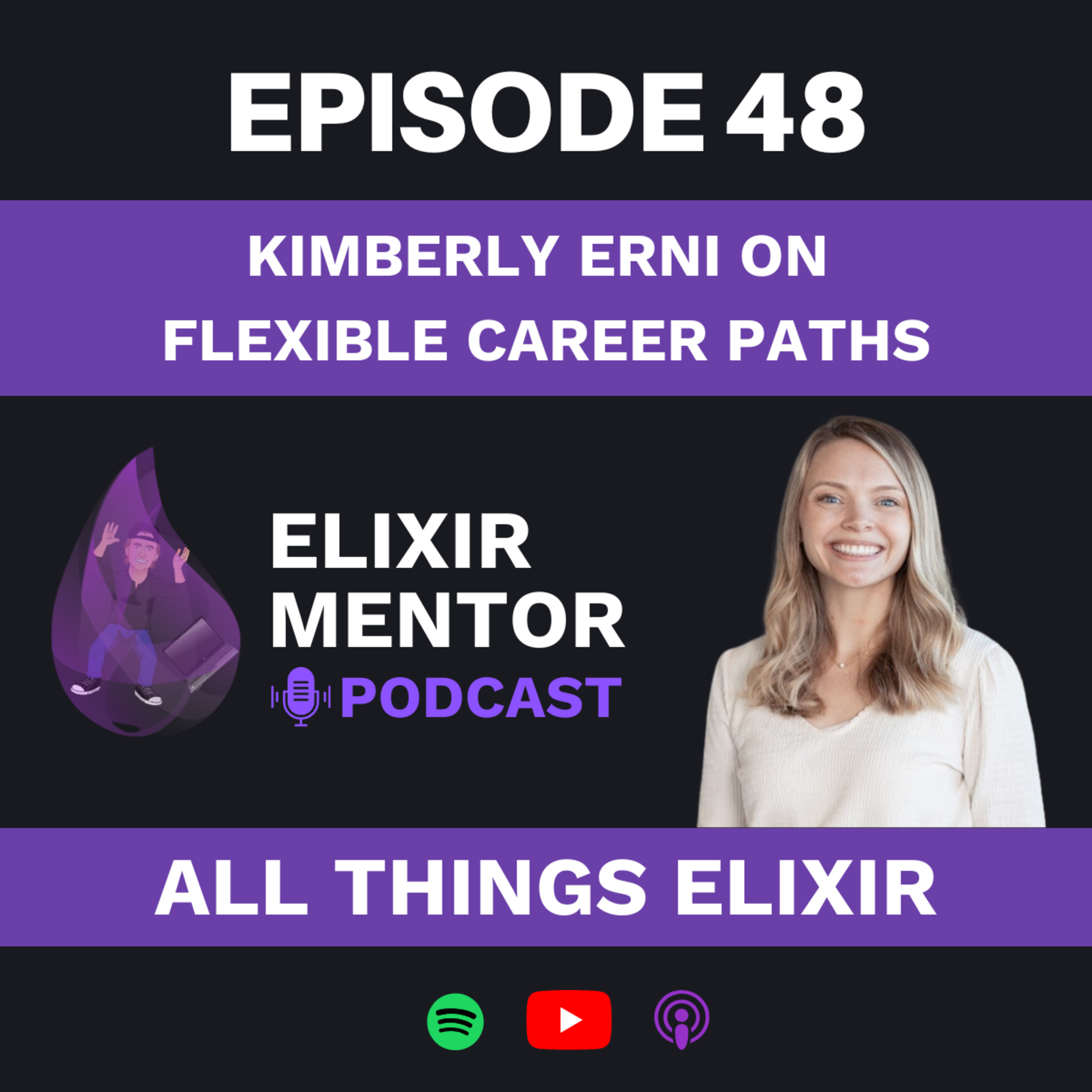 Kimberly Erni on Flexible Career Paths 10.05.2025 1u 31minIn this episode of the Elixir Mentor Podcast, I chat with Kimberly Erni, a software developer who has found balance through contract-based work. We explore the often-overlooked topic of burnout in the tech industry, where "grind culture" is normalized but comes with significant personal costs.Kimberly shares her personal journey, including how taking a break from full-time work helped her overcome infertility struggles. We discuss the challenges of working in startups with constantly shifting priorities, unrealistic deadlines, and the pressure to always be "on." Both of us open up about our own experiences with burnout and the importance of creating boundaries, especially in remote work environments.The conversation covers practical advice for developers considering alternative career paths, including how to transition to contract work, the benefits of building products incrementally, and choosing technologies that maximize productivity while minimizing maintenance overhead. Kimberly also discusses her plans to develop a crochet pattern app, which leads to an insightful discussion about building sustainable side businesses.This episode provides valuable perspective for anyone feeling overwhelmed in their tech career or looking to create a more flexible work arrangement that accommodates personal priorities. Whether you're dealing with burnout, considering contract work, or building your own product, Kimberly's story offers both inspiration and practical guidance.Resources Mentioned:- Healthy Gamer video on burnout: https://youtu.be/XW-02QiiHDM?si=d7LeRrHTJjrpPsnPConnect with Kimberly:- LinkedIn: https://www.linkedin.com/in/kimberly-erni/SUPPORT ELIXIR MENTOR- Elixir Mentor: https://elixirmentor.com
 -
 Leandro Pereira on MDEx 14.03.2026 1u 35minLeandro Pereira is back on the Elixir Mentor Podcast — this time to dive deep into MDEx, his Rust-powered Markdown library for Elixir. MDEx is built on the Comrak Rust crate, runs 31x faster, and uses 3,500x less memory than existing Elixir alternatives. We also get into Lumis, his standalone syntax highlighting engine powered by tree-sitter and Neovim themes.Leandro walks through why he chose a Rust NIF over a pure Elixir implementation, what it took to ship Lumis as its own project, and the surprisingly hard technical challenge at the heart of MDEx: streaming Markdown for AI applications. We discuss how MDEx handles incomplete Markdown fragments in real time, what the upcoming Components feature unlocks for Phoenix/LiveView developers, and how the HEEx parser integration works under the hood.We also cover the human side of maintaining two solo open source projects: how Leandro prioritizes, uses AI to chip away at the backlog, and thinks about monetization. The conversation goes deeper into how the AI era has changed Markdown's role in the ecosystem, the pitfalls of vibe coding, and what it really takes to get an open source project noticed — including the uncomfortable truth that marketing matters more than most developers want to admit.The episode closes with a wide-ranging conversation on developer growth — the Dunning-Krueger curve, making the mental shift from OOP to functional programming, and why Elixir feels easier once it finally clicks. A great listen for anyone building libraries, wrestling with Rust NIFs, or navigating open source in the Elixir ecosystem.Resources Mentioned:- MDEx: https://mdelixir.dev- MDEx on Hex: https://hex.pm/packages/mdex- Lumis: https://lumis.sh- Lumis on Hex: https://hex.pm/packages/lumisConnect with Leandro:- X/Twitter: https://x.com/leandrocesquini- GitHub: https://github.com/leandrocp/mdexSPONSORS- Paraxial.io: https://paraxial.io- Jido (Elixir AI Collective Discord): https://agentjido.xyz/discordSUPPORT ELIXIR MENTOR- Elixir Mentor: https://elixirmentor.com
 -
 Enrique Leigh on Prende 24.01.2026 1u 31minIn this episode of the Elixir Mentor Podcast, I chat with Enrique Leigh, founder of Prende Café in Chile. We explore how he built a specialty coffee subscription business using Phoenix LiveView, his journey from marketing and ad tech to becoming an Elixir developer, and why he chose custom e-commerce over platforms like Shopify.Enrique shares the WordPress crash during a Chile vs Brazil match that sparked his interest in Elixir, and how building his own coffee business became the perfect way to finally learn the language. We discuss UX principles from "Don't Make Me Think," marketing frameworks like Jobs to Be Done, and the counterintuitive lesson that adding more checkout steps can actually increase conversions. He also explains the specialty coffee value chain, from sourcing beans in Brazil to roasting and running a physical café alongside the e-commerce platform.Our conversation covers practical entrepreneurship topics including MVP philosophy, building subscription and coupon systems with Mercado Pago, using Oban for job scheduling, and content marketing strategies that work. Enrique shares insights on balancing Iron Man training with running a family business, productivity techniques from the Flow Research Collective, and the evolving landscape of ad tech after GDPR. We also discuss his future goals of learning Nerves to build IoT coffee machines and the growing Elixir community in Chile.The episode wraps up with advice for aspiring entrepreneurs: just launch it. Enrique emphasizes that the cost of inaction is often greater than the cost of action, and with tools like LLMs that work remarkably well with Elixir, there's never been a better time to build your own products.Resources Mentioned:- Don't Make Me Think: https://sensible.com/dont-make-me-think/- Oban: https://getoban.pro/- Jido: https://agentjido.xyz/discordConnect with Enrique:- Website: https://www.prendecafe.cl- X/Twitter: https://x.com/EnriqueLeigh- LinkedIn: https://www.linkedin.com/in/enriqueleigh/Sponsors:- Paraxial.io: https://paraxial.io- Jido: https://agentjido.xyz/discordSUPPORT ELIXIR MENTOR- Elixir Mentor: https://elixirmentor.com
 -
 Nathan Hessler on ExMex & engineering culture 22.11.2025 1u 33minIn this episode of the Elixir Mentor Podcast, I chat with Nathan Hessler, an Elixir developer and organizer of the ExMex conference in Austin. Nathan shares his experience launching a successful regional conference just two weeks prior, offering invaluable insights for anyone considering organizing their own tech event.We explore the intricate logistics of conference planning, from choosing the perfect venue to managing sponsorships and hidden costs. Nathan reveals why he opted for a single-track format at Capital Factory, how he approached speaker selection to promote new voices in the community, and the creative process behind ExMex's clever Texas-themed naming convention.Our conversation shifts to Nathan's decade of experience in engineering leadership, where he shares wisdom on building healthy engineering cultures. We discuss the critical soft skills needed for technical management, strategies for creating trust and respect within teams, and how to foster environments where constructive debate thrives. Nathan emphasizes that the best engineering teams aren't built on shared hobbies but on mutual respect and the ability to engage in productive disagreement.The episode concludes with practical advice for aspiring conference organizers, including the importance of talking to other organizers, loving your speakers, and celebrating the unique character of your location. Nathan also reveals plans for RBQ, his upcoming Ruby conference scheduled for March 2025, continuing his mission to strengthen the Austin tech community through meaningful in-person connections.Resources Mentioned:- ExMex Conference: https://exmexconf.com/- RBQ Conference: Upcoming Ruby conference in Austin (March 2025)- Capital Factory: Conference venue in AustinConnect with Nathan:- LinkedIn: https://www.linkedin.com/in/nathanhessler/- Website: https://hesslerconsulting.com/- ExMex: https://exmexconf.com/SUPPORT ELIXIR MENTOR- Elixir Mentor: https://elixirmentor.com/?utm_source=elixir-mentor- Discord: https://elixirmentor.com/discord
 -
 Dave Lucia on Building TV Labs 14.02.2026 1u 29minIn this episode of the Elixir Mentor Podcast, I chat with Dave Lucia, CTO and Co-Founder of TV Labs. Dave returns to the podcast to talk about building an AI-powered smart TV testing platform that lets media companies test streaming apps on hundreds of real physical devices through the cloud — all built primarily in Elixir.Dave walks through the founding of TV Labs, from meeting his co-founder at Bloomberg over a decade ago to building an MVP with WebRTC during the pandemic. He covers the technical challenges of managing a massive device lab — procurement, warm-up processes, security isolation, session management, and keeping hundreds of TVs, Rokus, Fire TVs, and Apple TVs healthy and available for enterprise clients. The platform uses a custom KQL query engine for real-time device matching and a licensing system built on Elixir GenServers sharded across the cluster.We get into Dave's 10-year history with Elixir in production, starting at Bloomberg and carrying through to TV Labs. He explains why Elixir was the right fit for orchestrating physical devices at scale, from its standard library minimizing dependencies to building Apple device communication libraries and even a Lua 5.3 interpreter directly in Elixir. Dave also shares how TV Labs uses OpenTelemetry for observability and runs multi-region infrastructure with session recording capabilities.The conversation shifts to AI, where Dave describes using Claude and other LLMs to accelerate development, automate operations like vendor management and support emails, and build AI agents for QA testing. We wrap up with a candid discussion on whether AI will replace developers and how these tools are fundamentally changing what's possible for small teams.Connect with Dave:- Website: https://davelucia.com- X/Twitter: https://x.com/davydog187- LinkedIn: https://www.linkedin.com/in/david-lucia-a395441b/Sponsors:- BEAMOps: https://beamops.co.uk- Paraxial.io: https://paraxial.io- Jido: https://agentjido.xyz/discordSUPPORT ELIXIR MENTOR- Elixir Mentor: https://elixirmentor.com
 -
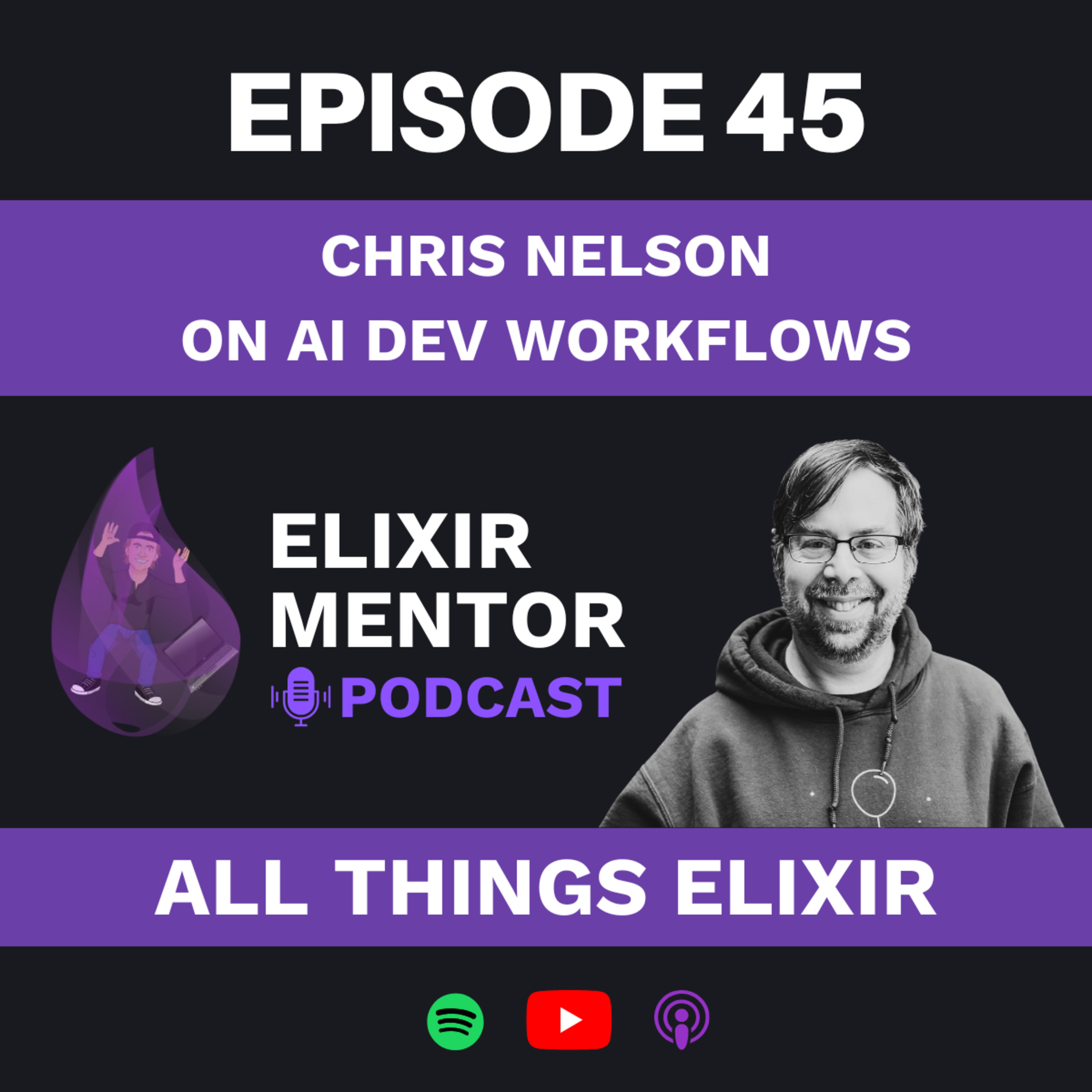 Chris Nelson on AI Dev Workflows 05.04.2025 1u 32minIn this episode of the Elixir Mentor Podcast, I chat with Chris Nelson, co-founder and principal engineer at Launch Scout, about leveraging AI tools for Elixir development and how these technologies are transforming developer workflows. Chris brings over a decade of Elixir experience to the conversation, sharing valuable insights on how consultancies can integrate AI to dramatically increase productivity.Chris discusses the inflection point where AI tools became truly valuable for production work, highlighting how features like Claude AI and Cursor's agent mode with test-driven capabilities transformed his team's approach to development. We explore the unpredictable nature of large language models, structured approaches to AI-assisted coding, and how Launch Scout measured a 4x productivity increase on a real client project using these tools effectively. The conversation includes practical examples of how experienced developers can guide AI to create robust, production-ready code while maintaining critical thinking skills.Our discussion extends to Web Assembly components and Chris's work on the WASM library, which enables Elixir developers to securely run code written in various languages within their applications. Chris explains how WASM leverages OTP supervision for resilient system design and opens up new possibilities for customizable platforms. We also explore the advantages of Elixir and LiveView for rapid application development, comparing it to microservices approaches and reflecting on the remarkable stability of Elixir applications in production.Whether you're curious about integrating AI into your development workflow or exploring the cutting edge of Elixir's ecosystem, this conversation offers practical insights and real-world experiences from years of professional Elixir development at scale.Resources Mentioned:- Launch Scout:https://launchscout.com/- Cursor:https://cursor.sh/- Claude AI:https://anthropic.com/claude- WASMEx:https://github.com/tessi/wasmex- LiveState:https://hexdocs.pm/live_state/readme.htmlConnect with Chris:- X:https://x.com/superchris- LinkedIn:https://www.linkedin.com/in/chris-nelson-038875/- Website:https://launchscout.com/- GitHub:https://github.com/superchrisSUPPORT ELIXIR MENTOR- Elixir Mentor:https://elixirmentor.com
 -
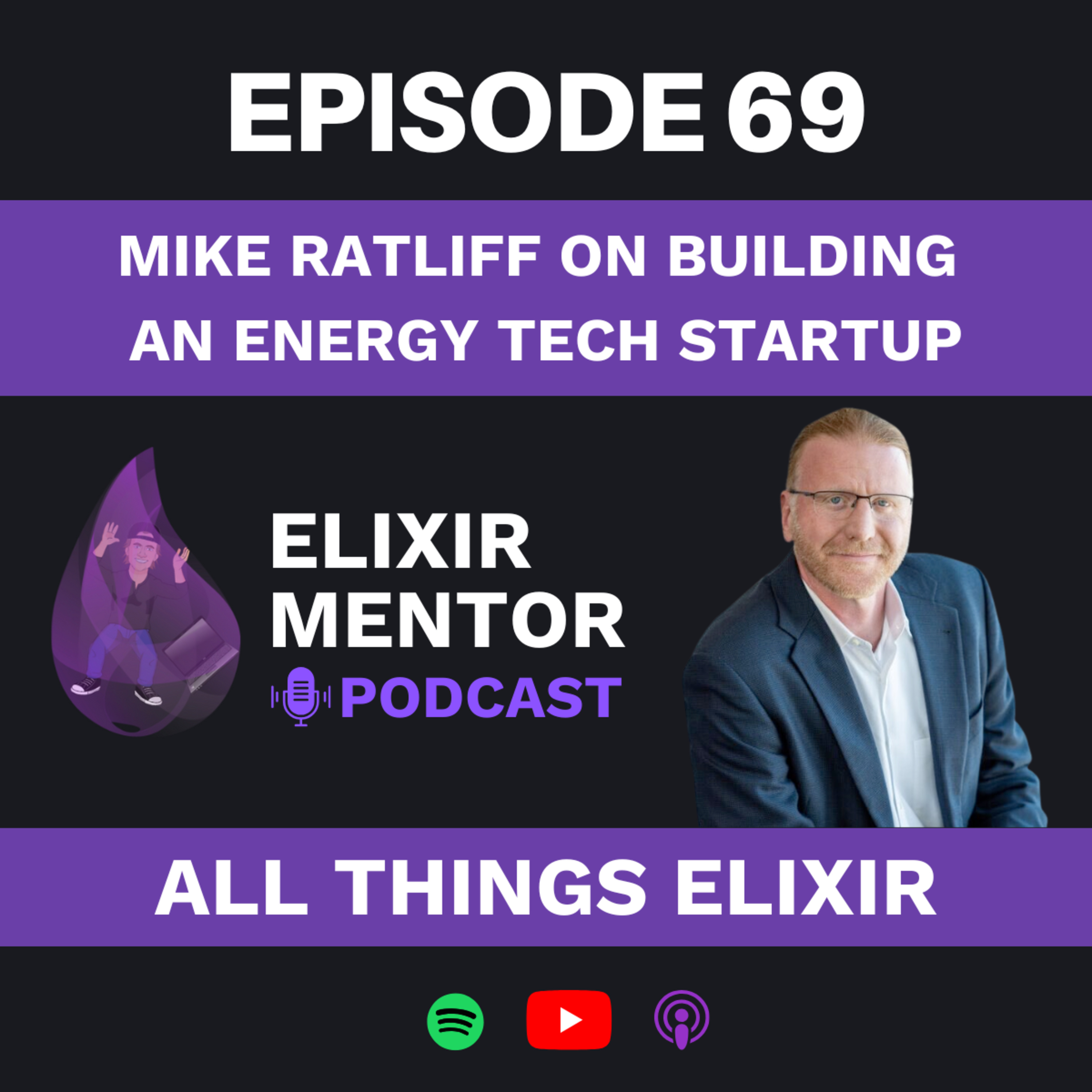 Mike Ratliff on Building an Energy Tech Startup 17.01.2026 1u 35minIn this episode of the Elixir Mentor Podcast, I chat with Mike Ratliff, a 30-year tech veteran and CTO currently building an energy tech startup. Mike shares his path from Ruby threading nightmares to leading 20-engineer Elixir teams, and how discovering the BEAM transformed his approach to building 24/7 grid systems.We dig into the technical challenges of power grid software, including distributed energy resource management, solar intermittency, and why utilities remain cautious about new technology. Mike explains how his current startup is tackling transmission interconnection problems using Elixir, and his plans to incorporate AI agents through the Jido framework.The conversation shifts to how AI is reshaping development teams and startup economics. Mike makes a compelling case for small, elite teams over large engineering organizations, sharing his philosophy on profit per headcount and why he believes we'll see one-person unicorn companies emerge. We discuss rethinking technical interviews for the LLM era, the Ash framework in production, and why great engineers become even greater with AI tools.Mike wraps up with hard-won startup wisdom: build painkillers not vitamins, learn to tell stories that move people, and understand that nobody buys on facts alone. Whether you're building energy infrastructure or SaaS products, this conversation offers practical perspective on scaling with small teams.Connect with Mike:- LinkedIn: https://www.linkedin.com/in/mike-ratliff-3096571/Sponsors:- Paraxial.io: https://paraxial.io- Jido Discord: https://agentjido.xyz/discordSUPPORT ELIXIR MENTOR- Elixir Mentor: https://elixirmentor.com/?utm_source=elixir-mentor
 -
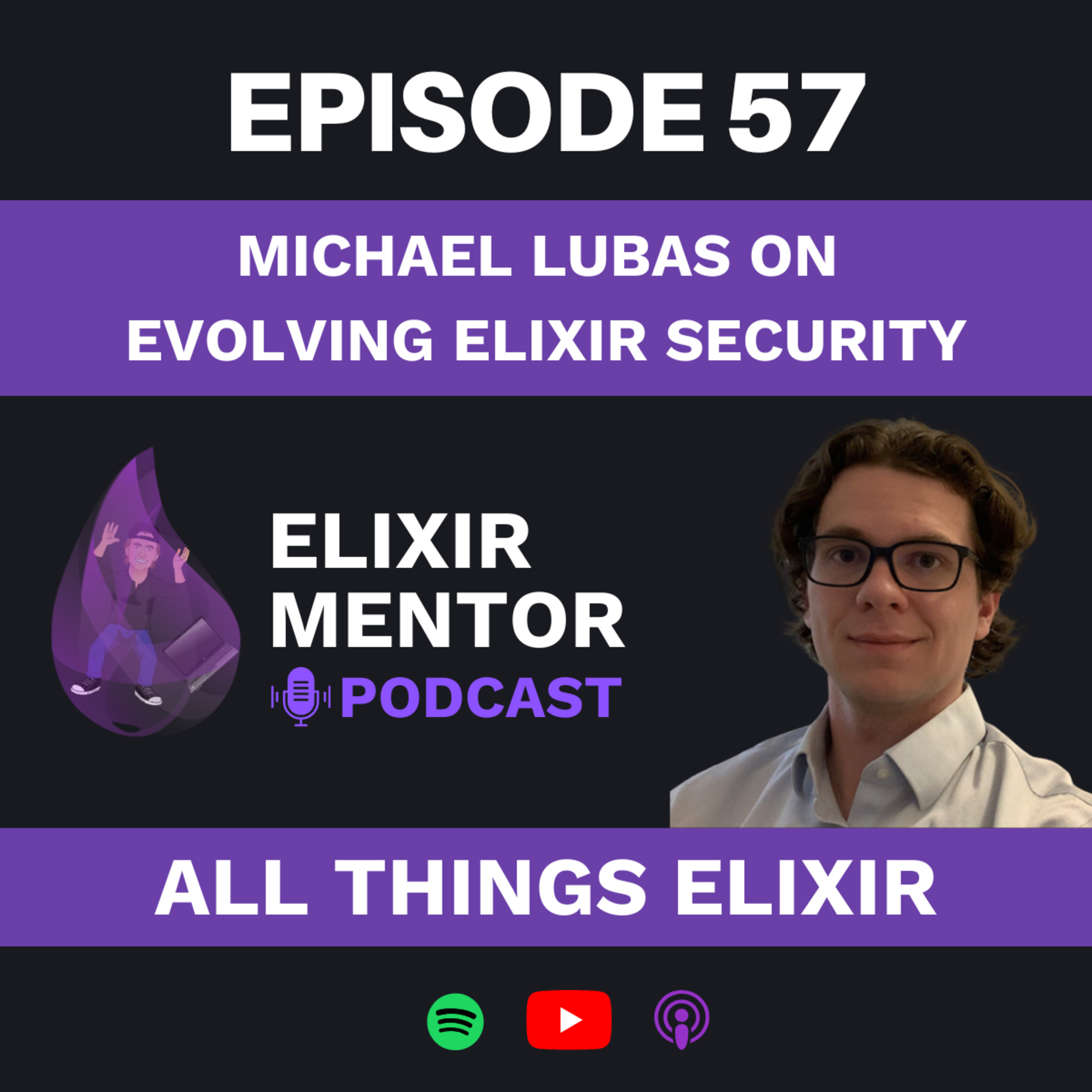 Michael Lubas on Evolving Elixir Security 18.09.2025 1u 25minIn this episode of the Elixir Mentor Podcast, I welcome back Michael Lubas, founder of Paraxial.io, where he's building comprehensive security tooling specifically designed for the Elixir ecosystem. We explore how AI-generated code is impacting application security and why traditional scanning tools aren't catching critical vulnerabilities.Michael shares his experience with the most common security mistakes in Elixir projects, including binary deserialization exploits that can lead to remote code execution. We discuss how Phoenix 1.8's improved security documentation helps developers, the rise of organized ransomware attacks, and why security scanning is more crucial than ever with AI-assisted development becoming mainstream.Our conversation covers the challenges of enterprise security tooling, the differences between Rails and Elixir security patterns, and how Paraxial 3.0 is addressing the unique needs of Elixir developers. Michael explains why most enterprise security tools fail developers and how Paraxial takes a developer-first approach to vulnerability detection and remediation.We also discuss the future of AI in software development, identity verification challenges in an age of deepfakes, and the evolving hiring landscape for developers. This conversation provides essential context for anyone building production Elixir applications or concerned about security in the age of AI-generated code.Resources Mentioned:- Paraxial.io Security Platform: https://paraxial.io/- Phoenix Security Documentation: https://hexdocs.pm/phoenix/security.htmlConnect with Michael Lubas:- X/Twitter: https://x.com/paraxialio- LinkedIn: https://www.linkedin.com/in/michaellubas/SUPPORT ELIXIR MENTOR- Elixir Mentor: https://elixirmentor.com
Vergelijkbare podcasts


Populair in
Deze podcast verschijnt ook in de podcastlijsten van deze landen.
