
Women & ADHD
Katy Weber
0
A late diagnosis turned her world upside down. Join Katy Weber each week as she interviews other women who discovered they have ADHD and are finally feeling like they understand who they are and how to best lean into their strengths, both professionally and personally. This neurodivergence isn’t just for hyperactive little boys anymore!
Afleveringen
-
 Greer Jones: The relief (and complexity) of an adult diagnosis 05.10.2026 51minEpisode 218 with Greer Jones.Greer is the creator of The Unfinished Idea, a community that supports mamas raising neurodivergent kids. After her son, husband, and later herself were diagnosed, she walked through a dark season of overwhelm, burnout, and isolation. Over time, she discovered people and rhythms that supported her neurodivergent brain, rebuilt her family’s routines, and found the lights that guided her out — community, real stories, and small wins that gave her hope again. Today, she uses her voice, lived experience, and practical tools to help overwhelmed neurodivergent moms feel understood, equipped, and confident in the lives they’re building.In our conversation, Greer shares what it was like to pursue an adult diagnosis in the UK, advocate for her neurodivergent son, and make sense of the ways ADHD has shaped her life. We talk about the relief of finally having an explanation, the grief and self-compassion that can come with looking back, and why ADHD in women doesn’t always look like hyperactivity on the outside.We explore what meaningful connection can look like when life is messy, schedules are unpredictable, and nobody has all the answers. And finally, we talk about the Beautifully Wired Summit — a free, three-day online event hosted by Greer, bringing together over 20 experts to share practical, real-life strategies for raising neurodivergent kids. From navigating meltdowns and school advocacy to creating doable daily routines, it’s packed with neuro-affirming tools that actually work. The summit takes place October 5th through 7th, and you can grab your free ticket right now by heading to womenandadhd.com/summit. I’ve also placed that link right at the top of the show notes for you. Key topics:How Greer’s son’s diagnoses helped her recognize her own ADHDWhat Greer’s UK diagnosis process was likeWhy ADHD in women may not match familiar stereotypesThe relief—and complexity—of receiving a diagnosis as an adultAdvocating for a neurodivergent child in the school systemRacing thoughts, emotional intensity, and decision fatigueHow The Unfinished Idea grew into a podcast, business, and communityCreating flexible, vulnerable connection for neurodivergent momsThe Beautifully Wired Summit and its focus on ADHD and autism in girls and womenWebsite: theunfinishedidea.comInstagram: @theunfinishedideaLinks & Resources:Greer’s podcast: Neurodivergent Conversations- - - - - Episode edited by E Podcast Productions- - - - -Women & ADHD coaching: www.womenandadhd.com/coaching- - - - -Work 1-on-1 with Katy: www.womenandadhd.com/katy- - - - -Order the “Hey, it’s ADHD!” course: www.womenandadhd.com/adhdcourse- - - - -Did you love this episode? Click here to pledge a one-time donation to the podcast!- - - - -If you are a woman who was diagnosed with ADHD and you’d like to apply to be a guest on this podcast, visit womenandadhd.com/podcastguest.Instagram: @womenandadhdpodcastTiktok: @womenandadhdpodcastTwitter: @womenandadhdFacebook: @womenandadhdAdvertising Inquiries: https://redcircle.com/brandsPrivacy & Opt-Out: https://redcircle.com/privacy
 -
 Unmasking Our Health: Hypermobility & hypermobile Ehlers-Danlos syndrome (hEDS), Part 2 21.09.2026 1u 3minEpisode 217 with Katy Weber & Kalin JohnsonWelcome back to our new series, “Unmasking Our Health,” in which host Katy Weber teams up with medical expert Dr. Kalin Johnson, PharmD, to look beyond the neurodivergent brain and explore what it means to live in a neurodivergent body. After years of interviewing late‑diagnosed women and seeing the same patterns — chronic pain, fatigue, autoimmune issues, hormonal chaos, gut problems, “mystery” symptoms — Katy created the Unmasking Our Health series to explore the bigger questions behind neurodivergence: What if ADHD isn’t just about our brains, but about our whole bodies — and how and why is the medical system missing the full picture?In Part 2 of a 2-part series, we continue the conversation on hypermobility, hypermobile Ehlers-Danlos Syndrome, and the often misunderstood symptoms that can show up alongside ADHD and autism. This episode focuses on the signs people miss, why those symptoms happen, and what kinds of support may help rather than hurt.Kalin explains the connective tissue and autonomic nervous system connections behind bruising, fatigue, digestive issues, migraines, dizziness, pelvic floor problems, and joint pain, while Katy shares personal examples of how these patterns have shown up in her own life.In this episode, we cover:A recap of Part 1, including hypermobility, hypermobile EDS, the Beighton score, and the connection with neurodivergenceWhy bruising, slow wound healing, nosebleeds, and fragile blood vessels can occurProprioception, balance, spatial awareness, and why “clumsiness” may be more than distractionFear of falling and the increased risk of pain or injury in hypermobile bodiesConstant bracing, muscle guarding, and why hypermobile people may feel exhausted even while restingDigestive symptoms, including constipation, bloating, slow motility, and dysmotilityMigraines, neck tension, craniocervical instability, POTS, and blood-flow regulationDizziness upon standing, fluid pooling, low blood volume, electrolytes, and compressionPelvic floor issues, urinary symptoms, incomplete emptying, and prolapseSkin texture, softness, stretchiness, and translucencyWhy aggressive stretching and yoga can sometimes worsen instability and painStrength training, swimming, pacing, and learning to stop before end rangeEstrogen, perimenopause, muscle building, and hypermobility symptomsCollagen, creatine, and what supplements can and cannot doExercise intolerance, internalized beliefs about laziness, and body shameFinding healthcare providers who are knowledgeable, curious, and willing to listenNote: Nothing in this episode constitutes medical advice. Always consult with your physician and pharmacist before starting, stopping, or changing any medication.Kalin’s website: kalinjohnson.comInstagram: @kalinpharmdLinks & Resources:The Beighton Scoring SystemHypermobility Screening ToolGrowing Up with Ehlers-Danlos Syndrome: 27 Telltale SignsChronic Pain PartnersHave a topic you want Katy and Kalin to cover? Contact us- - - - - Episode edited by E Podcast Productions- - - - -Women & ADHD coaching: www.womenandadhd.com/coaching- - - - -Work 1-on-1 with Katy: www.womenandadhd.com/katy- - - - -Order the “Hey, it’s ADHD!” course: www.womenandadhd.com/adhdcourse- - - - -Did you love this episode? Click here to pledge a one-time donation to the podcast!- - - - -If you are a woman who was diagnosed with ADHD and you’d like to apply to be a guest on this podcast, visit womenandadhd.com/podcastguest.Instagram: @womenandadhdpodcastTiktok: @womenandadhdpodcastTwitter: @womenandadhdFacebook: @womenandadhdAdvertising Inquiries: https://redcircle.com/brandsPrivacy & Opt-Out: https://redcircle.com/privacy
 -
 Elizabeth Ahmann & Micah Saviet: How clinicians and coaches can help ADHD clients flourish 07.09.2026 59minEpisode 216 with Elizabeth Ahmann & Micah SavietElizabeth Ahmann, ScD, RN, PCC, NBC-HWC is an ADHD and health and wellness coach, professor, researcher, and Micah Saviet, LCSW-C, NBC-HWC is a trauma-informed, neurodiversity-affirming clinician.Their book, Flourishing with Adult ADHD, offers a research-informed, strengths-based, and trauma-informed framework for supporting adults with ADHD beyond symptom management. Grounded in neuroscience, psychology, public health, and wellness research, the book challenges deficit-based models and provides practical, affirming guidance for professionals supporting adults with ADHD.Rather than focusing solely on coping strategies, this book centers flourishing — supporting adults with ADHD in developing self-trust, self-compassion, emotional regulation, clarity, and lives aligned with their values.We talk about how coaching and therapy can work together, why Liz and Micah originally wrote the book for clinicians but found it resonated with adults with ADHD, and their hopes for the future of ADHD care, from better training to broader acceptance.Key topics:Micah shares that he was diagnosed with ADHD at age 11 and describes how his hyperactivity was noticeable early on.Liz explains that she has not been diagnosed with ADHD, but family experience, especially with her husband, led her into ADHD coaching.The conversation reframes ADHD as a difference in attention and regulation, not simply a deficit.Micah and Liz explain that their book grew out of research on ADHD coaching and focus groups with experienced coaches.Shame comes up repeatedly as one of the biggest barriers to growth, self-understanding, and flourishing for adults with ADHD.They emphasize that many therapists and coaches still lack meaningful training in ADHD, especially adult ADHD, masking, and neurodivergence.The episode draws a clear distinction between a deficit-based medical model and a client-centered, strengths-based approach.They discuss how coaching and therapy can complement each other rather than compete, especially when grief, trauma, and executive functioning challenges overlap.Validation, self-compassion, psychoeducation, and mindfulness are presented as foundational tools for helping clients move away from self-criticism.The conversation also addresses diagnosis, stigma, trauma, education trauma, and the social conditions that can make ADHD feel more impairing than it is in isolation.Website: https://www.pathways-ahead.com/ ; https://www.adulttraumaandadhdsolutions.comInstagram: @adulttrauma_adhdsolutionsLinkedIn: https://www.linkedin.com/in/micah-saviet/ ; https://www.linkedin.com/in/lizahmann/Links & Resources:Flourishing with Adult ADHD: The Evidence-Based Guide to Well-Being for Therapists, Coaches & ClientsKristin Neff’s self-compassion resources- - - - - Episode edited by E Podcast Productions- - - - -Women & ADHD coaching: www.womenandadhd.com/coaching- - - - -Work 1-on-1 with Katy: www.womenandadhd.com/katy- - - - -Order the “Hey, it’s ADHD!” course: www.womenandadhd.com/adhdcourse- - - - -Did you love this episode? Click here to pledge a one-time donation to the podcast!- - - - -If you are a woman who was diagnosed with ADHD and you’d like to apply to be a guest on this podcast, visit womenandadhd.com/podcastguest.Instagram: @womenandadhdpodcastTiktok: @womenandadhdpodcastTwitter: @womenandadhdFacebook: @womenandadhdAdvertising Inquiries: https://redcircle.com/brandsPrivacy & Opt-Out: https://redcircle.com/privacy
 -
 Unmasking Our Health: Hypermobility & hypermobile Ehlers-Danlos syndrome (hEDS), Part 1 17.08.2026 58minEpisode 215 with Katy Weber & Kalin JohnsonWelcome back to our new series, “Unmasking Our Health,” in which host Katy Weber teams up with medical expert Dr. Kalin Johnson, PharmD, to look beyond the neurodivergent brain and explore what it means to live in a neurodivergent body. After years of interviewing late‑diagnosed women and seeing the same patterns — chronic pain, fatigue, autoimmune issues, hormonal chaos, gut problems, “mystery” symptoms — Katy created the Unmasking Our Health series to explore the bigger questions behind neurodivergence: What if ADHD isn’t just about our brains, but about our whole bodies — and how and why is the medical system missing the full picture?In part one of a 2-part series, we unpack hypermobile Ehlers-Danlos syndrome (hEDS) and hypermobility, and why these connective tissue conditions so often show up alongside ADHD and autism. This episode focuses on the lived experience, the diagnostic gray areas, and the body-wide symptoms that can look unrelated until you understand the connective tissue thread running through them.We discuss how hypermobility is different from flexibility, why the Beighton score can miss real cases, and why symptoms like bruising, pain, dizziness, brain fog, and poor stamina often get mislabeled as “just clumsiness” or “just anxiety.”In this episode, we cover:The difference between hypermobility spectrum disorder and hypermobile EDS, including the extra diagnostic criteria for hEDS beyond joint laxityKalin explains the difference between flexibility and hypermobility using the rope-versus-bolts analogyThe Beighton score is helpful as a screening tool, but it only checks five joints and can miss people whose hypermobility shows up elsewhere, especially with ageKalin shares her diagnosis story, including years of worsening symptoms, specialist dead ends, and being told it was mental health before the physical pattern was recognizedWe discuss why ADHD and autism appear more often in hypermobile people, with possible shared genetics, connective tissue differences in the brain, autonomic nervous system dysregulation, and altered sensory processingThe connections between hEDS and POTS, orthostatic intolerance, fatigue, GI symptoms, interoception differences, mast cell issues, and inflammationCommon real-life clues like “party tricks,” joint pain in yoga, easy bruising, weak grip, poor stamina, and the feeling of being “a creaky old lady” after sitting too longWhy car rides, standing still, and long periods of upright posture can be especially hard because of blood flow, proprioception, and joint instabilityWhy some people with hEDS need more numbing medication at the dentist, and why urinary leakage, pelvic floor fatigue, and foot pain can all be part of the same connective tissue storyPractical next steps: track symptoms, document family history, protect joints and autonomic function, and look for a provider or physical therapist familiar with hEDSNote: Nothing in this episode constitutes medical advice. Always consult with your physician and pharmacist before starting, stopping, or changing any medication.Kalin’s website: kalinjohnson.comInstagram: @kalinpharmdLinks & Resources:NYT Magazine article: Inflammation Keeps Us Alive. It's Also Making Us Sick.ADDitude Magazine: Bendy Bodies, ADHD Brains: Connecting the DotsThe Beighton Scoring SystemHypermobility Screening ToolGrowing Up with Ehlers-Danlos Syndrome: 27 Telltale SignsHave a topic you want Katy and Kalin to cover? Contact us- - - - - Episode edited by E Podcast Productions- - - - -Women & ADHD coaching: www.womenandadhd.com/coaching- - - - -Work 1-on-1 with Katy: www.womenandadhd.com/katy- - - - -Order the “Hey, it’s ADHD!” course: www.womenandadhd.com/adhdcourse- - - - -Did you love this episode? Click here to pledge a one-time donation to the podcast!- - - - -If you are a woman who was diagnosed with ADHD and you’d like to apply to be a guest on this podcast, visit womenandadhd.com/podcastguest.Instagram: @womenandadhdpodcastTiktok: @womenandadhdpodcastTwitter: @womenandadhdFacebook: @womenandadhdAdvertising Inquiries: https://redcircle.com/brandsPrivacy & Opt-Out: https://redcircle.com/privacy
 -
 Dr. Brady Bradshaw: What parents need to know about Autism & ADHD in girls 03.08.2026 52minEpisode 214 with Dr. Brady BradshawIn this special interview episode, guest host and ADHD Life Coach Lindsey Buchanan sits down with her sister, psychiatrist Dr. Brady Bradshaw, MD, for an honest, evidence-based conversation about ADHD and autism in girls and women. Drawing on both medical expertise and deeply personal experience — Lindsey has her own ADHD diagnosis and is the mother of a daughter with Level 1 autism — this episode covers the symptoms, the overlap, the myths, and the path forward for families navigating neurodivergence.In this episode, we cover:Autism in Girls & Women:Why ADHD in females is so frequently missed or misdiagnosedThe difference between how ADHD presents in boys vs. girls (external vs. internal symptoms)Key signs to look for: busy brain, daydreaming, excessive talking, forgetfulness, losing things, sleep disturbancesThe role of hormonal shifts (puberty, postpartum, perimenopause) in unmasking ADHD symptomsHow high intelligence and anxiety can "protect" ADHD girls from detection — but at a serious costWhat happens when smart girls hit the ceiling — the college transition and why it's a high-risk timeThe connection between undiagnosed ADHD and unhealthy coping mechanisms (vaping, caffeine, energy drinks)Why seeking a diagnosis doesn't automatically mean starting medicationAutism in Girls & Women:The neurodivergence umbrella: understanding where ADHD and autism both fitThe important statistic: the majority of people with autism also have ADHD — but not vice versaUnderstanding Autism Spectrum Disorder Levels 1, 2, and 3 — and why Level 1 (formerly Asperger's) is so easy to missCore diagnostic criteria: deficits in social communication AND insistence on sameness/repetitive behaviorsHow masking works in autistic girls with high intelligenceWhy puberty is another "watershed moment" for autism diagnoses in girlsHow insistence on sameness and rigidity is anxiety-driven — and what it actually feels like for the childThe difference between ADHD rigidity and autism rigidity (and why it matters)Debunking Myths:The science is clear: vaccines do NOT cause autismWhy dietary changes (gluten-free, dairy-free) will not "fix" or cure autismThe role of food sensitivities in autism — and when to actually see a GI doctorWhy the desire to find a "cause" can lead families toward misinformationAfter the Diagnosis — What's Next:Why parent education and parent coaching is the highest-yield first stepHow ABA therapy may not be right for every Level 1 autism child (and what PDA — Pathological Demand Avoidance — means for treatment)The importance of speech therapy, OT, and physical therapy — when applicableWhy understanding a diagnosis is therapeutic in itselfLindsay's personal recommendation: the Mothers Together support group on Marco PoloWebsites: bradybradshawmd.com ; womenandadhd.com/lindseyLinks & Resources:Is This Autism? by Donna Henderson — recommended for understanding autism in girls and Level 1 autismADHD 2.0 by Ned Hallowell & John Ratey — Dr. Bradshaw's top ADHD book recommendation- - - - - Episode edited by E Podcast Productions- - - - -Women & ADHD coaching: www.womenandadhd.com/coaching- - - - -Work 1-on-1 with Katy: www.womenandadhd.com/katy- - - - -Order the “Hey, it’s ADHD!” course: www.womenandadhd.com/adhdcourse- - - - -Did you love this episode? Click here to pledge a one-time donation to the podcast!- - - - -If you are a woman who was diagnosed with ADHD and you’d like to apply to be a guest on this podcast, visit womenandadhd.com/podcastguest.Instagram: @womenandadhdpodcastTiktok: @womenandadhdpodcastTwitter: @womenandadhdFacebook: @womenandadhdAdvertising Inquiries: https://redcircle.com/brandsPrivacy & Opt-Out: https://redcircle.com/privacy
 -
 Unmasking Our Health: GLP-1s & ADHD 20.07.2026 1u 2minEpisode 213 with Katy Weber & Kalin JohnsonIn this first episode of our new series “Unmasking Our Health,” host Katy Weber teams up with cohost Kalin Johnson, PharmD, to explore a side of ADHD in women that isn’t talked about enough: What it’s like to live in a neurodivergent body. After years of interviewing late‑diagnosed women and seeing the same patterns — chronic pain, fatigue, autoimmune issues, hormonal chaos, gut problems, “mystery” symptoms — Katy created the Unmasking Our Health series to explore the bigger questions behind neurodivergence: What if ADHD isn’t just about our brains, but about our whole bodies — and how and why is the medical system missing the full picture?Our first topic for discussion: the explosion of GLP-1 medications (think Ozempic, Wegovy, Mounjaro) and what their surprising, wide-reaching effects are revealing about the deeply intertwined relationship between metabolic health, inflammation, hormones, and ADHD.In this episode, we cover:What is metabolic psychiatry? And why it's expanding how we understand ADHD beyond just dopamine and norepinephrineGLP-1 medications and ADHD — what patients are actually reporting (quieter brain, less emotional reactivity, reduced compulsive behaviors, improved executive functioning)The inflammation connection — how chronic neuroinflammation creates "cognitive drag" and why reducing it may give the ADHD brain more bandwidthThe vagus nerve and GLP-1 receptors — a fascinating look at how the gut communicates with the brain (and why 80% of vagal fibers run from the body to the brain, not the other way around!)Estrogen, perimenopause, and metabolic decline — why women over 50 are going on GLP-1s faster than any other populationDrug interactions (and physiologic interactions) — what to watch for if you're on stimulants, SSRIs, or HRT while starting a GLP-1Food noise, reward-seeking, and binge eating — what GLP-1s are actually doing in the brain's dopamine reward circuits, and what that means for neurodivergent women with disordered eating historiesWhere is all of this going? Kalin shares her genuinely optimistic vision for how GLP-1 research is opening the door to a more holistic, systemic understanding of neurodivergent women's healthNote: Nothing in this episode constitutes medical advice. Always consult with your physician and pharmacist before starting, stopping, or changing any medication.Kalin’s website: kalinjohnson.comInstagram: @kalinpharmdLinks & Resources:Listen to Kalin's first episode: Episode 97 (August 2022)Have a topic you want Katy and Kalin to cover? Contact us- - - - - Episode edited by E Podcast Productions- - - - -Women & ADHD coaching: www.womenandadhd.com/coaching- - - - -Work 1-on-1 with Katy: www.womenandadhd.com/katy- - - - -Order the “Hey, it’s ADHD!” course: www.womenandadhd.com/adhdcourse- - - - -Did you love this episode? Click here to pledge a one-time donation to the podcast!- - - - -If you are a woman who was diagnosed with ADHD and you’d like to apply to be a guest on this podcast, visit womenandadhd.com/podcastguest.Instagram: @womenandadhdpodcastTiktok: @womenandadhdpodcastTwitter: @womenandadhdFacebook: @womenandadhdAdvertising Inquiries: https://redcircle.com/brandsPrivacy & Opt-Out: https://redcircle.com/privacy
 -
 Caroline Maguire: Why do adult friendships feel so hard? 06.07.2026 1u 4minEpisode 212 with Caroline Maguire“All the kids I worked with were like, 'I would love to have a friend.' All the adults were like, 'Something's wrong with me, I don't have friends.' And I was like — no, no, no. Nothing's wrong with you.”Caroline Maguire is an ADHD coach, friendship expert, and author of the new book, “Friendship Skills for Neurodivergent Adults: A Guide for the Anxious, Uniquely Wired, and Easily Distracted.” If you’ve ever felt like you missed the “how to be a friend” manual — or that you can do intense one‑on‑one connection but still don’t feel like you truly belong anywhere — this conversation is for you.We dig into why neurodivergent wiring affects the way we show up in friendships, and what it actually looks like to build connection on our own terms. Caroline offers a deeply neuroaffirming roadmap to adult friendship, with language for patterns many of us have felt but never named, plus practical tools that don’t ask you to mask or be “less” of yourself.Key topics discussed:Caroline’s journey into ADHD coaching and why friendship became her nicheThe difference between connection vs. belonging for neurodivergent adultsKey friendship mindsets: scarcity thinking, all‑or‑nothing, anxious over‑correcting, and the impulsive friendship cycleFortressing: what it is, why we do it, and how it protects and isolates usThe five levels of friendship and how mismatched expectations create painCommunirelating: explaining how your brain works without apologizing for itPractical strategies for structured socializing and automating check‑insWebsite: carolinemaguireauthor.comInstagram: @authorcarolinemLinks & Resources:Friendship Skills for Neurodivergent Adults by Caroline MaguireCaroline’s Youtube channel- - - - - Episode edited by E Podcast Productions- - - - -Women & ADHD coaching: www.womenandadhd.com/coaching- - - - -Work 1-on-1 with Katy: www.womenandadhd.com/katy- - - - -Order the “Hey, it’s ADHD!” course: www.womenandadhd.com/adhdcourse- - - - -Did you love this episode? Click here to pledge a one-time donation to the podcast!- - - - -If you are a woman who was diagnosed with ADHD and you’d like to apply to be a guest on this podcast, visit womenandadhd.com/podcastguest.Instagram: @womenandadhdpodcastTiktok: @womenandadhdpodcastTwitter: @womenandadhdFacebook: @womenandadhdAdvertising Inquiries: https://redcircle.com/brandsPrivacy & Opt-Out: https://redcircle.com/privacy
 -
 Tory Berry & Chele Morony: DBT skills for neurodivergent brains 15.06.2026 1u 3minEpisode 211 with Tory Berry & Chele Morony“People say DBT is for borderline personality disorder. I’m like, what are you talking about? DBT is for everyone. One of the most common refrains that we hear in the group is ‘Where has this been? I needed this in high school!’”This episode combines two of my favorite topics: ADHD coaching and Dialectical Behavior Therapy (DBT)!Tory and Chele are a mother-daughter duo from Southern California who have created something really special in the neurodivergent support space. Tory is the founder of ADHD Works Now, and she is also one of our amazing ADHD coaches at Women & ADHD.Tory was diagnosed with both ADHD and autism in adulthood, and she’s channeled her own lived experience into helping other neurodivergent adults through 1-on-1 coaching and specially adapted DBT groups.Chele is a Licensed Clinical Social Worker with over 35 years of experience. She is also Tory’s business partner, bringing a clinical perspective to their work together.We talk about Tory’s adult diagnosis and how Chele missed her ADHD and autism in childhood, despite her own clinical training.We also talk about the fundamentals of DBT, and how the focus on validation, acceptance, and practical skill development makes it particularly powerful for neurodivergent clients who've spent years asking, “What’s wrong with me?” And Tory & Chele share about their collaborative group approach and how they’re making DBT skills applicable to the neurodivergent experience.Tory & Chele’s DBT groups fill up quickly. The June cohort is already full, but you can sign up at the link below for the next cohort waitlist.Key topics discussed:Tori's journey from adult ADHD/autism diagnosis to becoming an ADHD coachThe missed signs of ADHD in girls and womenHow DBT skills can be adapted for neurodivergent brainsThe importance of validation vs. invalidating environmentsMasking vs. authenticity — when and how to be "legible”The intersection of coaching and therapyRunning neurodivergent-friendly DBT groupsWebsite: adhdworksnow.comLinks & Resources:womenandadhd.com/toryDBT skills group waitlist- - - - - Episode edited by E Podcast Productions- - - - -Women & ADHD coaching: www.womenandadhd.com/coaching- - - - -Work 1-on-1 with Katy: www.womenandadhd.com/katy- - - - -Order the “Hey, it’s ADHD!” course: www.womenandadhd.com/adhdcourse- - - - -Did you love this episode? Click here to pledge a one-time donation to the podcast!- - - - -If you are a woman who was diagnosed with ADHD and you’d like to apply to be a guest on this podcast, visit womenandadhd.com/podcastguest.Instagram: @womenandadhdpodcastTiktok: @womenandadhdpodcastTwitter: @womenandadhdFacebook: @womenandadhdAdvertising Inquiries: https://redcircle.com/brandsPrivacy & Opt-Out: https://redcircle.com/privacy
 -
 Dani Donovan: How to get stuff done when you don’t feel like it 01.06.2026 1u 24minEpisode 210 with Dani Donovan“I either get 30 minutes worth of work done in 8 hours or 8 hours worth of work done in 30 minutes — those are the only two options.”Dani is an ADHD content creator, speaker, and the celebrated author of “The Anti-Planner: How to Get Sh*t Done When You Don't Feel Like It.”Dani became an overnight sensation when a flowchart she drew mapping out her winding, ADHD storytelling style went viral on Twitter. Since then, she has built a massive community by bringing radical vulnerability, humor, and data visualization to the neurodivergent experience. She’s spoken at major companies like Microsoft, Amazon, and Adobe, and she is the founder of The Anti-Boring Project.We dive deep into misconceptions about ADHD, including being told you are “too smart to have ADHD.” Dani shares her story of growing up with teachers who dismissed her mother's ADHD inquiries because she was getting good grades. We also explore the magic behind visual storytelling for ADHD brains, why traditional productivity systems tend to fail us, and how the “Anti-Planner” organizes strategies based on your current emotional resistance — such as feeling stuck, overwhelmed, or unmotivated.Plus, Dani shares some exclusive details about an exciting new app she is prototyping! Key topics discussed:How teachers dismissed her ADHD symptoms because she was "too smart"The therapist who recognized Dani’s ADHD through her communication styleGrowing up questioning authority and fighting unfairnessWhy ADHD brains connect with infographics and memesHow a workplace joke became a career-defining momentFinding people with matching scars and shared experiencesThe Anti-Planner origins: From business field guide to revolutionary productivity systemThe five categories of executive dysfunction (stuck, overwhelmed, unmotivated, disorganized, discouraged)Perfectionism vs. Experimentation: Permission to keep quitting and trying new approachesExclusive preview of Dani’s upcoming ADHD productivity appWebsite: anti-planner.comInstagram: @danidonovanTiktok: @danidonovanLinks & Resources:The Anti-Planner: How to Get Sh*t Done When You Don't Feel Like It- - - - - Episode edited by E Podcast Productions- - - - -Women & ADHD coaching: www.womenandadhd.com/coaching- - - - -Work 1-on-1 with Katy: www.womenandadhd.com/katy- - - - -Order the “Hey, it’s ADHD!” course: www.womenandadhd.com/adhdcourse- - - - -Did you love this episode? Click here to pledge a one-time donation to the podcast!- - - - -If you are a woman who was diagnosed with ADHD and you’d like to apply to be a guest on this podcast, visit womenandadhd.com/podcastguest.Instagram: @womenandadhdpodcastTiktok: @womenandadhdpodcastTwitter: @womenandadhdFacebook: @womenandadhdAdvertising Inquiries: https://redcircle.com/brandsPrivacy & Opt-Out: https://redcircle.com/privacy
 -
 Jenna Free: ADHD, overwhelm, and how to heal your dysregulated nervous system 04.05.2026 55minEpisode 209 with Jenna Free“I think the biggest issue is with the current ADHD narrative. People are confusing ‘fight or flight’ and ADHD; they're putting it in a bundle and calling it ADHD. Then people believe, ‘Well, this is how hard it needs to be.’”Jenna is a therapist living in Calgary, Alberta, who not only specializes in ADHD but also has ADHD herself. Jenna was diagnosed with ADHD at 32 while in grad school with two young children – so yes, she gets the overwhelm. But instead of accepting the standard narrative that ADHD women are just destined to live in a constant state of frantic energy followed by crashes, she started asking a different question: What if the struggle isn't actually inevitable? What if what we're calling "ADHD symptoms" are actually signs of a nervous system stuck in chronic fight-or-flight?In this episode, we'll dive into Jenna's journey, her insights on ADHD regulation, and how she helps others through her ADHD regulation groups and certification program. We also chat about her brand new book, “The Simple Guide to ADHD Regulation: The Secret to Finding Balance, Getting Things Done, and Enjoying Your Life.”Key topics discussed:The difference between ADHD traits and fight-or-flight responsesInternal vs. external regulation strategiesWhy overwhelm is actually a cognitive distortion and sign of dysregulationThe role of belief work in nervous system regulationHow regulation can actually increase productivity and capacityThe power of group work for ADHD healingChallenging the narrative that ADHD struggle is inevitableWebsite: jennafree.comInstagram: @adhdwithjennafreeLinks & Resources:Jenna’s book: The Simple Guide to ADHD Regulation: The Secret to Finding Balance, Getting Things Done, and Enjoying Your LifeJenna’s podcast: ADHD with Jenna FreeDr. Anita Johnston's The Log- - - - - Episode edited by E Podcast ProductionsFind the transcript of this episode at www.womenandadhd.com/transcripts- - - - -Women & ADHD coaching: www.womenandadhd.com/coaching- - - - -Work 1-on-1 with Katy: www.womenandadhd.com/katy- - - - -Order the “Hey, it’s ADHD!” course: www.womenandadhd.com/adhdcourse- - - - -Did you love this episode? Click here to pledge a one-time donation to the podcast!- - - - -If you are a woman who was diagnosed with ADHD and you’d like to apply to be a guest on this podcast, visit womenandadhd.com/podcastguest.Instagram: @womenandadhdpodcastTiktok: @womenandadhdpodcastTwitter: @womenandadhdFacebook: @womenandadhdAdvertising Inquiries: https://redcircle.com/brandsPrivacy & Opt-Out: https://redcircle.com/privacy
 -
 Alex Bellitter: Coaching vs. therapy for ADHD 06.04.2026 50minEpisode 208 with Alex Bellitter“People can feel like, ‘I don’t think this is an internal thing I’m trying to work through. I feel like I’m trying to navigate my environment, and I don’t have the tools, education, and resources to do it.’”Alex is the Senior Manager of Coaching at Shimmer, an ADHD community and coaching platform that’s redefining what support can look like for ADHD brains.Alex does not have ADHD herself, but she’s spent years working with neurodivergent kids, adults, and now leading a team of over 50 ADHD coaches at Shimmer. She brings a background in coaching psychology, clinical psychology, and health and wellness to her work, and she’s passionate about delivering strengths‑based, evidence‑informed support that actually feels good to ADHDers.In this conversation, we talk about:What coaching psychology is and why it’s such a powerful fit for ADHDThe difference between therapy, coaching, and “healing” work, and how they can complement each otherWhy so many of us are misdiagnosed with depression first and how overwhelm, executive dysfunction, and chronic frustration can get mislabeledThe ebb and flow of ADHD symptoms across the lifespan, hormones, menopause, grief, and “temporary neurodivergence”How Shimmer structures its coaching, body doubling, community, and AI tools to be genuinely ADHD‑friendly and shame‑freeThe promises and risks of AI for neurodivergent people — and what “good guardrails” actually look likeIf you’ve ever wondered whether you’re “struggling enough” to count, questioned what’s “normal,” or felt confused about where ADHD ends, and environment, hormones, and capitalism begin … this episode is for you.Website: linkedin.com/in/abellitterInstagram: @shimmer.careLinks & Resources:Shimmer.careEpisode 191 with Christal Wang- - - - - Episode edited by E Podcast ProductionsFind the transcript of this episode at www.womenandadhd.com/transcripts- - - - -Women & ADHD coaching: www.womenandadhd.com/coaching- - - - -Work 1-on-1 with Katy: www.womenandadhd.com/katy- - - - -Order the “Hey, it’s ADHD!” course: www.womenandadhd.com/adhdcourse- - - - -Did you love this episode? Click here to pledge a one-time donation to the podcast!- - - - -If you are a woman who was diagnosed with ADHD and you’d like to apply to be a guest on this podcast, visit womenandadhd.com/podcastguest.Instagram: @womenandadhdpodcastTiktok: @womenandadhdpodcastTwitter: @womenandadhdFacebook: @womenandadhdAdvertising Inquiries: https://redcircle.com/brandsPrivacy & Opt-Out: https://redcircle.com/privacy
 -
 Roberta Dombrowski: Breaking up with burnout 02.03.2026 57minEpisode 207 with Roberta Dombrowski“Work is one of the only socially acceptable forms of addiction. We get rewarded for not having boundaries and for always taking on more and more things.”Roberta is an executive coach and founder of Learn Mindfully, where she helps leaders and teams thrive from the inside out.After rising quickly through leadership roles to become a VP in the tech world at age 29, Roberta realized her success was coming at a cost — she found herself burned out, anxious, and physically affected by the pressure to prove herself constantly. On the outside, she was the high‑performing executive. On the inside, she was white‑knuckling her way through burnout, complex trauma, and the isolation of often being the only woman or person of color in the room.In this conversation, Roberta and I discuss:How her late ADHD diagnosis helped her finally make sense of her childhood and school experienceThe overlap between ADHD, trauma, and burnout, especially for high‑achieving women, mothers, and entrepreneursWhat trauma‑informed leadership actually looks like day‑to‑day (hint: it’s not just more bubble baths)Why work is “one of the only socially acceptable forms of addiction” — and how to step out of that cycleHow to start loosening your grip on control, micromanagement, and over‑functioning without letting everything fall apartIf you’ve ever felt like your “success” is built on overfunctioning, perfectionism, and people-pleasing — and you’re desperate to break up with burnout but not sure how — this episode is definitely for you.Website: learnmindfully.coInstagram: @learn_mindfullyLinks & Resources:In Her Words (Roberta’s podcast)Free resource: Leadership Energy AuditFree resource: Reclamation JournalStrong Ground: The Lessons of Daring Leadership, the Tenacity of Paradox, and the Wisdom of the Human Spirit by Brené BrownTrauma Stewardship: An Everyday Guide to Caring for Self While Caring for Others by Laura van Dernoot Lipsky with Connie Burk- - - - - Episode edited by E Podcast ProductionsFind the transcript of this episode at www.womenandadhd.com/transcripts- - - - -Women & ADHD coaching: www.womenandadhd.com/coaching- - - - -Work 1-on-1 with Katy: www.womenandadhd.com/katy- - - - -Order the “Hey, it’s ADHD!” course: www.womenandadhd.com/adhdcourse- - - - -Did you love this episode? Click here to pledge a one-time donation to the podcast!- - - - -If you are a woman who was diagnosed with ADHD and you’d like to apply to be a guest on this podcast, visit womenandadhd.com/podcastguest.Instagram: @womenandadhdpodcastTiktok: @womenandadhdpodcastTwitter: @womenandadhdFacebook: @womenandadhdAdvertising Inquiries: https://redcircle.com/brandsPrivacy & Opt-Out: https://redcircle.com/privacy
 -
 Madeline Grace Matthews & Karla Pretorius: Finding our neurodivergent voice 02.02.2026 1u 22minEpisode 206 with Madeline Grace Matthews & Karla Pretorius“I'm learning more and more how to be myself.”Madeline is 23, and she was diagnosed with autism and a mild cognitive disability as a child. Originally from the U.S., she currently lives with her missionary family in Thailand. She is also the author of the recent book “Nineteen Letters to Myself: Guided Reflections and Prompts for Hope and Healing from a Neurodivergent Perspective.” Madeline’s book started as a series of letters to her younger self — originally as a coping tool, and eventually as a way to make sense of her neurodivergence, as well as childhood trauma, big emotions, religious faith, and learning to see herself as “different, not less.”Karla is a psychotherapist and PhD candidate who began working with Madeline in 2021 and helped her write and publish the book. In the first half of the episode, the three of us discuss the process of writing the book and the healing power of showing our younger selves kindness and acceptance. In the second half of the episode, I sit down with Karla and hear a little more about her research on women and ADHD and the incredible work she’s doing in the neurodivergent community. Karla, who has ADHD herself, shares how she’s working to bridge academic research with lived experience.If you’re the parent of a neurodivergent teen or if you’ve been diagnosed in adulthood and you’re on a journey of reparenting your inner child, or if you’ve ever felt like you were too much, not enough, or simply misunderstood — this episode is definitely for you.Website: karlapretorius.comInstagram: @therapy.neurodivergentLinks & Resources:Nineteen Letters to Myself: Guided Reflections and Prompts for Hope and Healing from a Neurodivergent Perspective by Madeline Grace Mathews and Karla PretoriusAIMS Global- - - - - Episode edited by E Podcast ProductionsFind the transcript of this episode at www.womenandadhd.com/transcripts- - - - -Women & ADHD coaching: www.womenandadhd.com/coaching- - - - -Work 1-on-1 with Katy: www.womenandadhd.com/katy- - - - -Order the “Hey, it’s ADHD!” course: www.womenandadhd.com/adhdcourse- - - - -Did you love this episode? Click here to pledge a one-time donation to the podcast!- - - - -If you are a woman who was diagnosed with ADHD and you’d like to apply to be a guest on this podcast, visit womenandadhd.com/podcastguest.Instagram: @womenandadhdpodcastTiktok: @womenandadhdpodcastTwitter: @womenandadhdFacebook: @womenandadhdAdvertising Inquiries: https://redcircle.com/brandsPrivacy & Opt-Out: https://redcircle.com/privacy
 -
 Jen Fry: Setting boundaries & saying no 05.01.2026 59minEpisode 205 with Jen Fry.“I like to tell people that I’m not nice. I’m kind, but I’m not nice. I think niceness is weaponized way too much against people.”Jen is an educator, speaker, and author of the book “I Said No: How to Have Boundaries and Backbone While Not Being a Jerk.”Saying no is supposed to be simple — but for so many women with ADHD, it feels loaded with guilt, overthinking, and the fear of disappointing everyone around you.Jen is a former college volleyball coach with a PhD in sports geography, and she now works at the intersection of conflict, culture, and sport, speaking to teams and organizations around the country.We talk about the ADHD tendency to be a people-pleaser, and why Jen proudly says she’s kind, not nice. In this conversation, we talk about ADHD, hyperfocus, time blindness, imposter syndrome, and why so many high-achieving women end up chronically overcommitted, burnt out, and resentful. We also explore what it really takes to say no — not just to other people, but to our own overexcited ADHD brains, our endless ideas, and our impulse to fill every spare moment.If you’ve ever struggled with boundaries, overcommitting, or worrying that saying no makes you “difficult,” this episode is going to hit very close to home. Website: jenfrytalks.comInstagram: @jenfrytalksLinks & Resources:I Said No: How to Have Boundaries and Backbone While Not Being a Jerk by Dr. Jen FryThe Power of Likeability (Forbes)- - - - - Episode edited by E Podcast ProductionsFind the transcript of this episode at www.womenandadhd.com/transcripts- - - - -Women & ADHD coaching: www.womenandadhd.com/coaching- - - - -Work 1-on-1 with Katy: www.womenandadhd.com/katy- - - - -Order the “Hey, it’s ADHD!” course: www.womenandadhd.com/adhdcourse- - - - -Did you love this episode? Click here to pledge a one-time donation to the podcast!- - - - -If you are a woman who was diagnosed with ADHD and you’d like to apply to be a guest on this podcast, visit womenandadhd.com/podcastguest.Instagram: @womenandadhdpodcastTiktok: @womenandadhdpodcastTwitter: @womenandadhdFacebook: @womenandadhdAdvertising Inquiries: https://redcircle.com/brandsPrivacy & Opt-Out: https://redcircle.com/privacy
 -
 Rae Jacobson: The diagnosis boom … and backlash 01.12.2025 58minEpisode 204 with Rae Jacobson.“There is a difference between traits and impairment. If we dilute the idea of ADHD into something that just seems familiar, we risk shutting out the people who really need help.”Rae is a journalist, an ADHD and learning disorders expert, and the Lead of Insight at Understood, where she also hosts the podcast Hyperfocus. Rae has spent over 20 years digging into the stories and science of neurodivergence. She’s a former senior editor at the Child Mind Institute, and her work has appeared in New York Magazine, the Daily Beast, Rolling Stone, Parenting, American Girl, and more.Rae and I talk about her very winding path to an ADHD diagnosis: growing up as the “smart kid who did terribly at school,” getting diagnosed with LD-NOS, dyscalculia, and dysgraphia, and then finally, in her early 20s, realizing she has ADHD. Rae shares the life-changing experience of attending Landmark College — a school specifically for students with ADHD and learning disabilities.We also wrestle with the current ADHD discourse: the difference between relatable traits and true impairment, what happens when “everyone has ADHD,” and why that can both broaden awareness and quietly shut people out of care. We talk about internalized ableism, the ongoing cycles of skepticism (“quit your whining”) and backlash online, and the need for voices that pair lived experience with journalistic fact-checking.And of course, we talk about Hyperfocus, Rae’s podcast at Understood that zeroes in on what fascinates us most about ADHD, mental health, and learning. Website: Understood.orgInstagram: @understoodorgLinks & Resources:The Berkeley Girls with ADHD Longitudinal Study (S. Hinshaw)- - - - - Episode edited by E Podcast ProductionsFind the transcript of this episode at www.womenandadhd.com/transcripts- - - - -Women & ADHD coaching: www.womenandadhd.com/coaching- - - - -Work 1-on-1 with Katy: www.womenandadhd.com/katy- - - - -Order the “Hey, it’s ADHD!” course: www.womenandadhd.com/adhdcourse- - - - -Did you love this episode? Click here to pledge a one-time donation to the podcast!- - - - -If you are a woman who was diagnosed with ADHD and you’d like to apply to be a guest on this podcast, visit womenandadhd.com/podcastguest.Instagram: @womenandadhdpodcastTiktok: @womenandadhdpodcastTwitter: @womenandadhdFacebook: @womenandadhdAdvertising Inquiries: https://redcircle.com/brandsPrivacy & Opt-Out: https://redcircle.com/privacy
 -
 Dr. Anupriya Gogne: ADHD & executive dysfunction in the perinatal period 03.11.2025 1u 1minEpisode 203 with Dr. Anupriya Gonge.“For mothers, the executive functioning demands keep shifting. Just as you find your rhythm, everything changes again.”Dr. Anupriya Gogne is a board-certified addiction psychiatrist who specializes in women’s mental health, She is also the Division Director of Outpatient Psychiatry at Brown University Health in Rhode Island. Over the past eight years, she has worked closely with adult and perinatal women navigating a wide range of psychiatric challenges. After her own late-in-life ADHD diagnosis, Dr. Gogne began to reframe much of what she was seeing in her clinical work — particularly in high-achieving women who had spent years feeling overwhelmed, misunderstood, or misdiagnosed. This personal and professional insight led her to write the book “Neurodevelopmental Disorders in Adult Women: Special Considerations in the Perinatal Period,” which offers a clinical guide for trainees and practitioners and sheds light on the often-overlooked experiences of neurodivergent women and mothers.We discuss how ADHD often presents differently in women, especially during the perinatal period, and how executive dysfunction can be mistaken for laziness, depression, or character flaws. Dr. Gogne shares her own experience of being a high-functioning but chronically exhausted student and professional, and how the diagnosis helped her understand her lifelong struggles with attention, restlessness, and self-criticism. We talk about the gendered ways society responds to executive dysfunction in mothers vs. fathers, the importance of strengths-based and trauma-informed care, and the intersection of ADHD with culture, trauma, and hormonal transitions. Dr. Gogne also shares how cultural norms in India shaped her ability to mask and compensate for her symptoms, and why she believes ADHD is not a disorder, but rather a state of nervous system dysregulation that deserves more compassionate and individualized treatment.In this episode, we discuss:Dr. Gogne’s late ADHD diagnosis and its impact on her clinical workThe need for strengths-based, individualized approaches in perinatal psychiatryHow mothers and fathers experience executive dysfunction differentlyHow trauma and hormonal shifts intersect with executive dysfunctionWebsite: https://www.brownhealth.org/providers/anupriya-gogne-mdLinks & Resources:Neurodevelopmental Disorders in Adult Women: Special Considerations in the Perinatal Period by Dr. Anupriya Gogne(Get 20% off with code: SPRAUT)- - - - - Episode edited by E Podcast ProductionsFind the transcript of this episode at www.womenandadhd.com/transcripts- - - - -Women & ADHD coaching: www.womenandadhd.com/coaching- - - - -Work 1-on-1 with Katy: www.womenandadhd.com/katy- - - - -Order the “Hey, it’s ADHD!” course: www.womenandadhd.com/adhdcourse- - - - -Did you love this episode? Click here to pledge a one-time donation to the podcast!- - - - -If you are a woman who was diagnosed with ADHD and you’d like to apply to be a guest on this podcast, visit womenandadhd.com/podcastguest.Instagram: @womenandadhdpodcastTiktok: @womenandadhdpodcastTwitter: @womenandadhdFacebook: @womenandadhdAdvertising Inquiries: https://redcircle.com/brandsPrivacy & Opt-Out: https://redcircle.com/privacy
 -
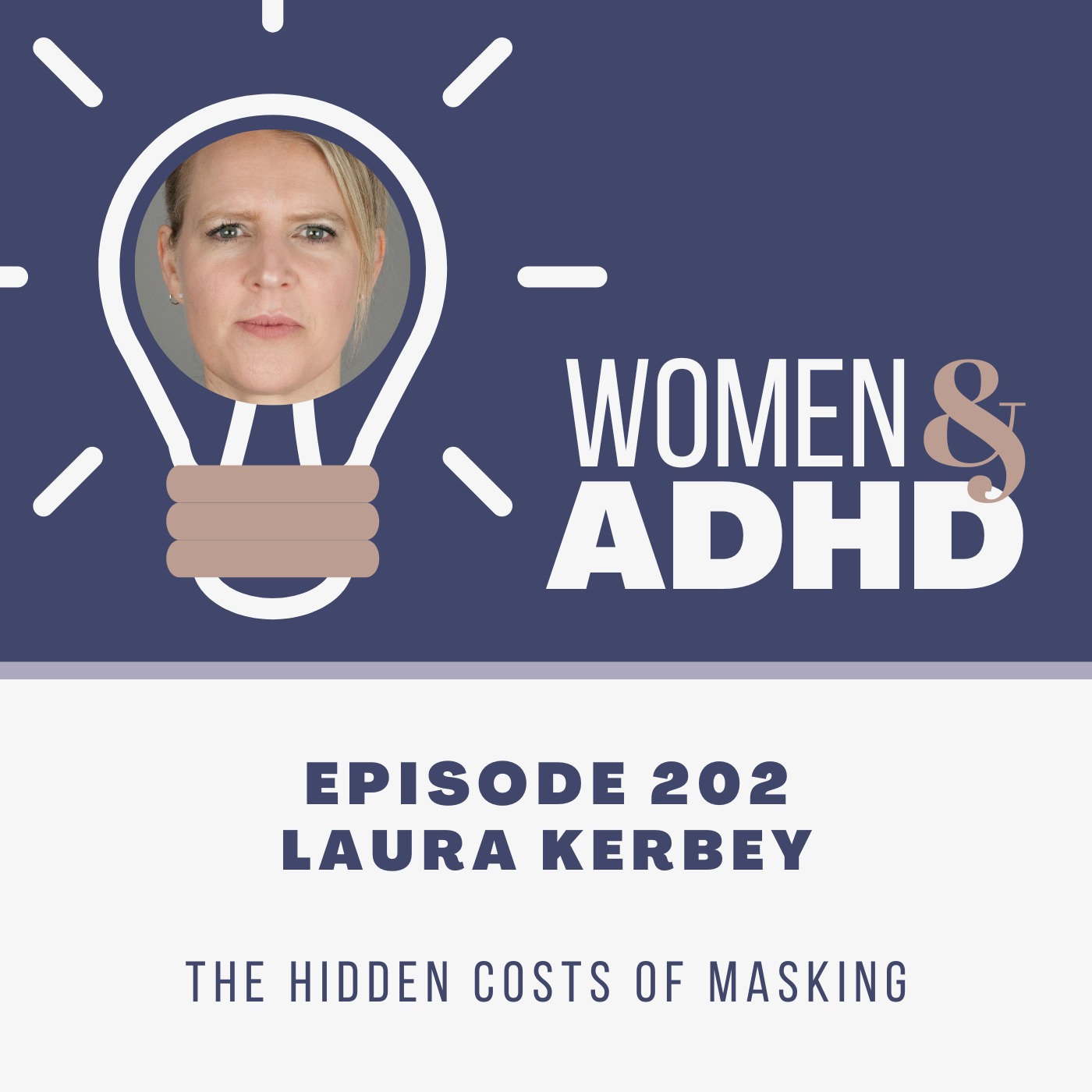 Laura Kerbey: The hidden costs of masking 06.10.2025 1u 2minEpisode 202 with Laura Kerbey.“Masking is bloody exhausting. Then again, not masking is scary because we worry people won’t like us or accept us.”Laura is an educator, consultant, and author who has been working with autistic children and young people for nearly 25 years. Laura is the founder of PAST, which stands for Positive Assessments Support and Training, and co-founder of KITE Therapeutic Learning Services, and she’s known internationally for her expertise in autism, PDA (Persistent Drive for Autonomy), and neurodivergent education.She’s also the author of several books, including the newly released “The Kids’ Simple Guide to PDA” and “The Parents’ and Professionals’ Simple Guide to PDA” as well as The (Slightly Distracted) Woman’s Guide to Living with an Adult ADHD Diagnosis, which was released this past summer. Laura brings both professional expertise and lived experience to her work — she was diagnosed with ADHD in her forties and self-identifies as autistic.In this episode, Laura and I discuss:Laura’s personal journey to her ADHD diagnosis in her forties, and her self-identification as autisticWhy so many women are overlooked or misdiagnosed until adulthoodThe physical and mental impacts of masking and “seeming fine”Strategies for unmasking and advocating for oneselfThe power of reframing ADHD from “deficit” to differenceLaura is also offering a 6-week course in January for late-diagnosed and late-identifying women with ADHD, which is based on her book. For information or to register for the course: https://www.trybooking.com/uk/FFKXWebsite: www.p-ast.co.ukInstagram: @laura_kerbeyFacebook: @LauraKerbeyPastLinks & Resources:The (Slightly Distracted) Woman’s Guide to Living with an Adult ADHD Diagnosis by Laura KerbeyKITE Therapeutic Learning Services- - - - - Episode edited by E Podcast ProductionsFind the transcript of this episode at www.womenandadhd.com/transcripts- - - - -Women & ADHD coaching: www.womenandadhd.com/coaching- - - - -Work 1-on-1 with Katy: www.womenandadhd.com/katy- - - - -Order the “Hey, it’s ADHD!” course: www.womenandadhd.com/adhdcourse- - - - -Did you love this episode? Click here to pledge a one-time donation to the podcast!- - - - -If you are a woman who was diagnosed with ADHD and you’d like to apply to be a guest on this podcast, visit womenandadhd.com/podcastguest.Instagram: @womenandadhdpodcastTiktok: @womenandadhdpodcastTwitter: @womenandadhdFacebook: @womenandadhdAdvertising Inquiries: https://redcircle.com/brandsPrivacy & Opt-Out: https://redcircle.com/privacy
 -
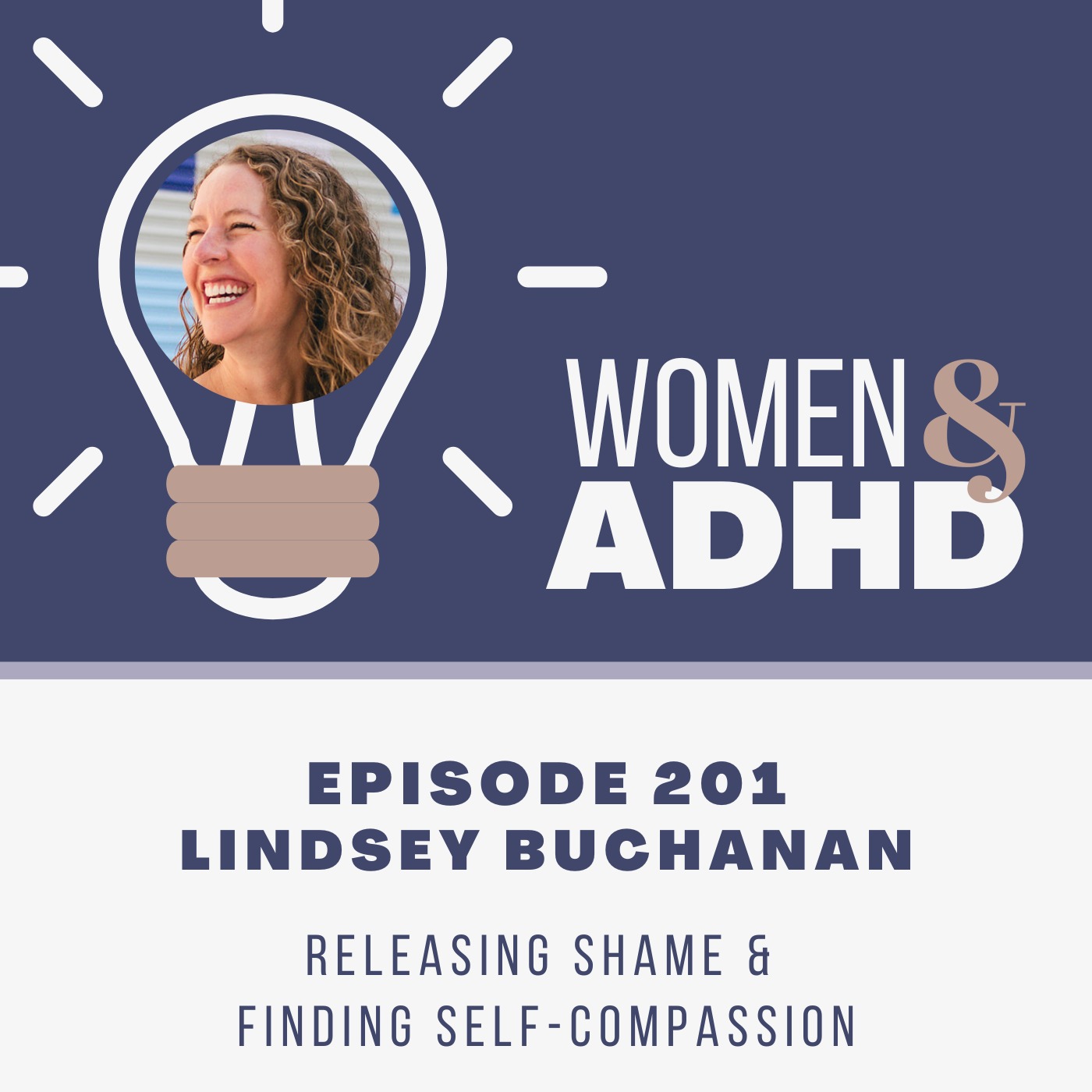 Lindsey Buchanan: Releasing shame and finding self-compassion 01.09.2025 1u 1minEpisode 201 with Lindsey Buchanan.“ADHD doesn’t always feel like you’re the abnormal one — often it just feels like everyone else isn’t cooperating.”Lindsey is an ADHD and executive functioning coach and a member of our Women & ADHD coaching team. We talk about the surprising way she got diagnosed (spoiler: her psychiatrist sister broke it to her), the relief she felt after finally finding her people, and how self-compassion has been a cornerstone of her journey.We also talk about the role of exercise and how vital it is for ADHD brains, we talk about how Lindsey has moved past some of her shame spirals around lateness and organization, and the ways she now made a career out of helping others “unwrap their gifts” through ADHD coaching.In this episode, Lindsey and I discuss:Lindsey’s path to an adult ADHD diagnosis and how it reframed her life storyThe role of family, genetics, and self-advocacy in her journeyNavigating shame, indecision, and societal expectations as a woman with ADHDThe importance of movement, exercise, and honoring your needsHow Lindsey transitioned from the corporate world to ADHD coachingLindsey’s favorite tools and strategies for building self-awareness and self-compassion, including values work and the satisfaction wheelThe power of community, asking for help, and redefining successLindsey’s coaching philosophy: helping clients “unwrap their gifts” and integrate their strengths into daily lifeIf you love this episode and you’d like to hear even more of how Lindsey became an ADHD coach, don’t miss Episode 200 of Women & ADHD, where she shares more of her journey.Website: womenandadhd.com/lindseyLinks & Resources:Episode 200Allow Me to Interrupt: A Psychologist Reveals the Emotional Truth Behind Women's ADHD by Gilly Kahn, PhD- - - - - Episode edited by E Podcast ProductionsFind the transcript of this episode at www.womenandadhd.com/transcripts- - - - -Women & ADHD coaching: www.womenandadhd.com/coaching- - - - -Work 1-on-1 with Katy: www.womenandadhd.com/katy- - - - -Order the “Hey, it’s ADHD!” course: www.womenandadhd.com/adhdcourse- - - - -Did you love this episode? Click here to pledge a one-time donation to the podcast!- - - - -If you are a woman who was diagnosed with ADHD and you’d like to apply to be a guest on this podcast, visit womenandadhd.com/podcastguest.Instagram: @womenandadhdpodcastTiktok: @womenandadhdpodcastTwitter: @womenandadhdFacebook: @womenandadhdAdvertising Inquiries: https://redcircle.com/brandsPrivacy & Opt-Out: https://redcircle.com/privacy
 -
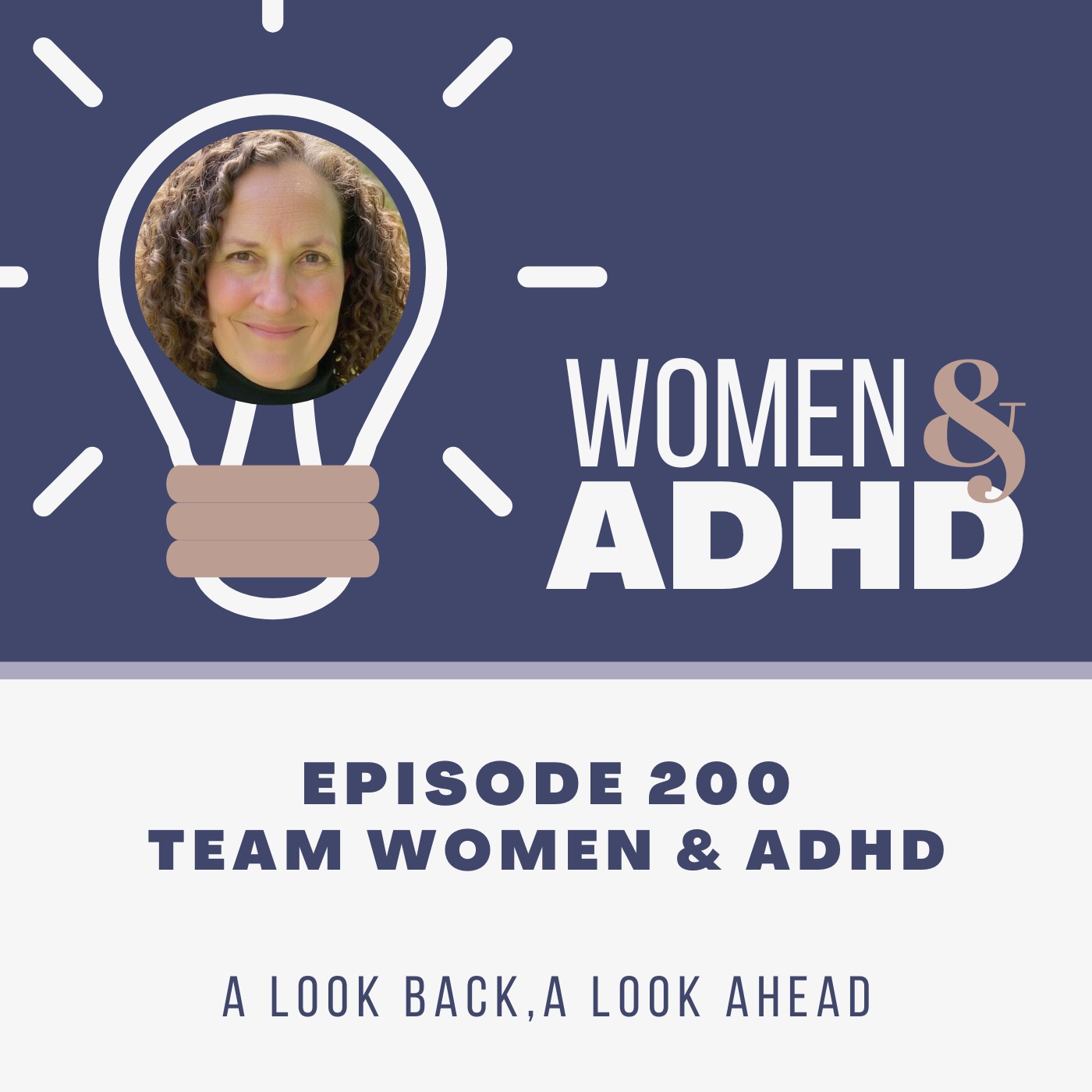 Team Women & ADHD: A look back, a look ahead 07.07.2025 54minEpisode 200 with Katy and Team Women & ADHD.“Before any of us knew we had ADHD, we were all asking the same frustrated question: ‘What’s wrong with me??’”Episode 200! 🎉 In this special milestone episode, I’m taking a moment to reflect on what I’ve learned after nearly five years of hosting this podcast and talking with hundreds of brilliant women and adults socialized as girls with ADHD. I share 10 of the most common themes I’ve observed over the years — from misdiagnosis and executive dysfunction to the healing power of community and the growing recognition that ADHD in women rarely looks the way it’s “supposed to.”Then I’m joined by a few of the incredible coaches who make up Team Women & ADHD — Emily, Taucha, and Lindsey — for a heartfelt and insightful conversation about what brought each of them to this work and why coaching can be so transformational for neurodivergent women.Together, we talk about shame, support, mindset, and what it really means to build a life that works with your brain, not against it.Whether you’ve been here since Episode 1 or this is your first time tuning in — thank you. I’m so glad we’re taking this journey together!Website: womenandadhd.com/coaching- - - - - Episode edited by E Podcast ProductionsFind the transcript of this episode at www.womenandadhd.com/transcripts- - - - -Women & ADHD coaching: www.womenandadhd.com/coaching- - - - -Work 1-on-1 with Katy: www.womenandadhd.com/katy- - - - -Order the “Hey, it’s ADHD!” course: www.womenandadhd.com/adhdcourse- - - - -Did you love this episode? Click here to pledge a one-time donation to the podcast!- - - - -If you are a woman who was diagnosed with ADHD and you’d like to apply to be a guest on this podcast, visit womenandadhd.com/podcastguest.Instagram: @womenandadhdpodcastTiktok: @womenandadhdpodcastTwitter: @womenandadhdFacebook: @womenandadhdAdvertising Inquiries: https://redcircle.com/brandsPrivacy & Opt-Out: https://redcircle.com/privacy
 -
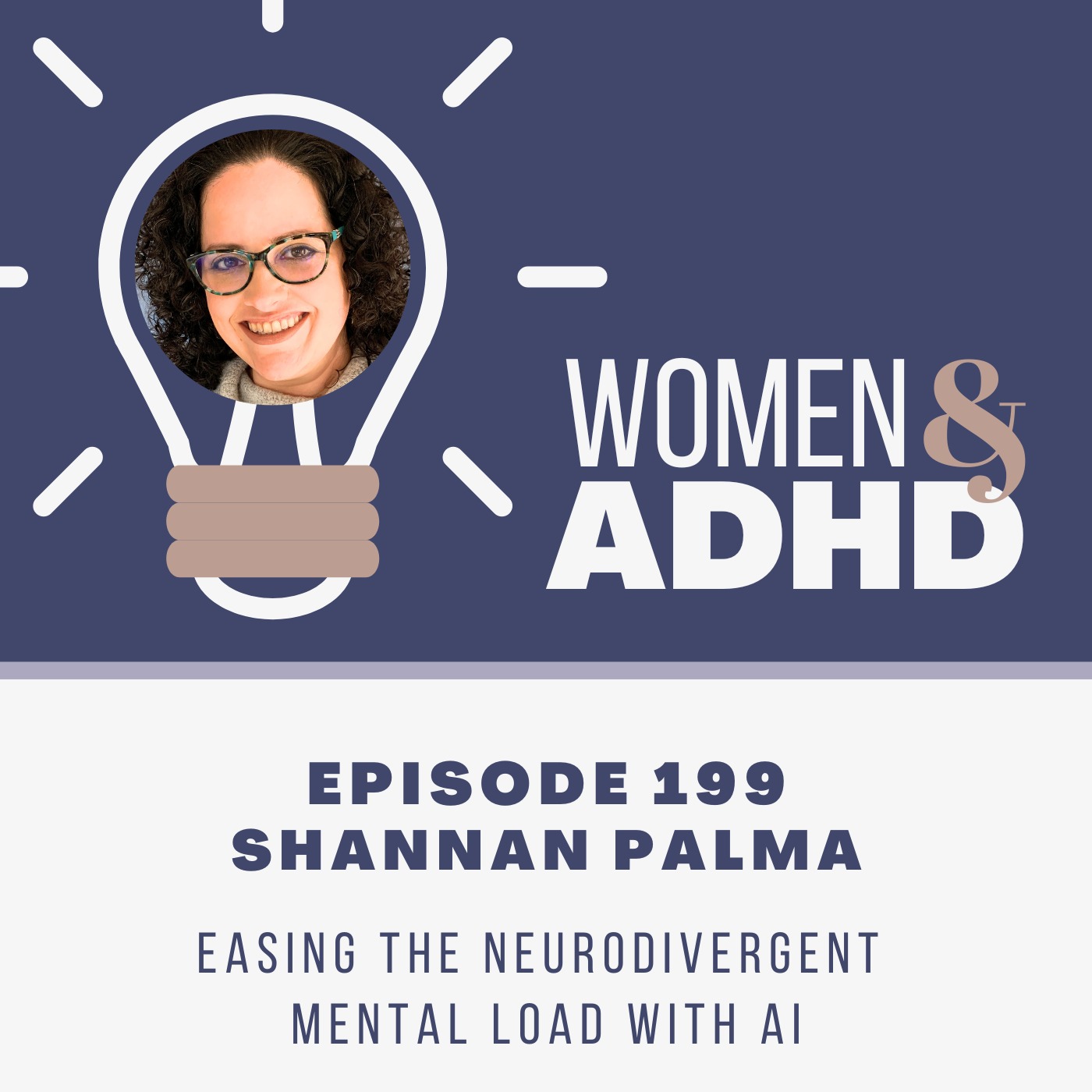 Shannan Palma: Easing neurodivergent mental load with AI 02.06.2025 1u 16minEpisode 199 with Shannan Palma.“Sometimes I know exactly what to do — but I just can’t make my body do it. And then comes the shame spiral, the anger, the anxiety.”Shannan is the founder and CEO of ITI Assistive Technologies and co-leader of the Autistic Self-Reliance Support Network (ASR). Shannan is autistic and has ADHD, and she’s building the kinds of tools she wished had existed when she was struggling most. Prior to her dual diagnosis, Shannan was a professor who left academia due to severe burnout. After her diagnosis, she started looking for resources and support, but soon recognized a huge gap in support for autistic and ADHD adults — especially when it came to executive functioning and decision-making.In this episode, Shannan and I discuss:Shannan’s path from academia to diagnosis and advocacyHer AI-powered decision support app Decide, designed specifically for neurodivergent brains by a team of autistic and ADHD developersHow AI tools can support the mental load of neurodivergent lifeThe concept of “bottom-up” processing in neurodivergent brainsThe urgent need for adult-focused research and how the tojisha-kenkyu method of self-directed research can be used among autistic adults.Website: Autistic Self-Reliance (ASR) ; ITI Assistive TechnologiesLinkedIn: Shannan PalmaLinks & Resources:Decide appVideo: Dr. Shannan Palma: #FlipThePowerDynamic in Autism Research and FundingAnnie Duke’s websiteThe Kiss Quotient by Helen Hoang- - - - - Episode edited by E Podcast ProductionsFind the transcript of this episode at www.womenandadhd.com/transcripts- - - - -Women & ADHD coaching: www.womenandadhd.com/coaching- - - - -Work 1-on-1 with Katy: www.womenandadhd.com/katy- - - - -Order the “Hey, it’s ADHD!” course: www.womenandadhd.com/adhdcourse- - - - -Did you love this episode? Click here to pledge a one-time donation to the podcast!- - - - -If you are a woman who was diagnosed with ADHD and you’d like to apply to be a guest on this podcast, visit womenandadhd.com/podcastguest.Instagram: @womenandadhdpodcastTiktok: @womenandadhdpodcastTwitter: @womenandadhdFacebook: @womenandadhdAdvertising Inquiries: https://redcircle.com/brandsPrivacy & Opt-Out: https://redcircle.com/privacy
Vergelijkbare podcasts


Populair in
Deze podcast verschijnt ook in de podcastlijsten van deze landen.


