
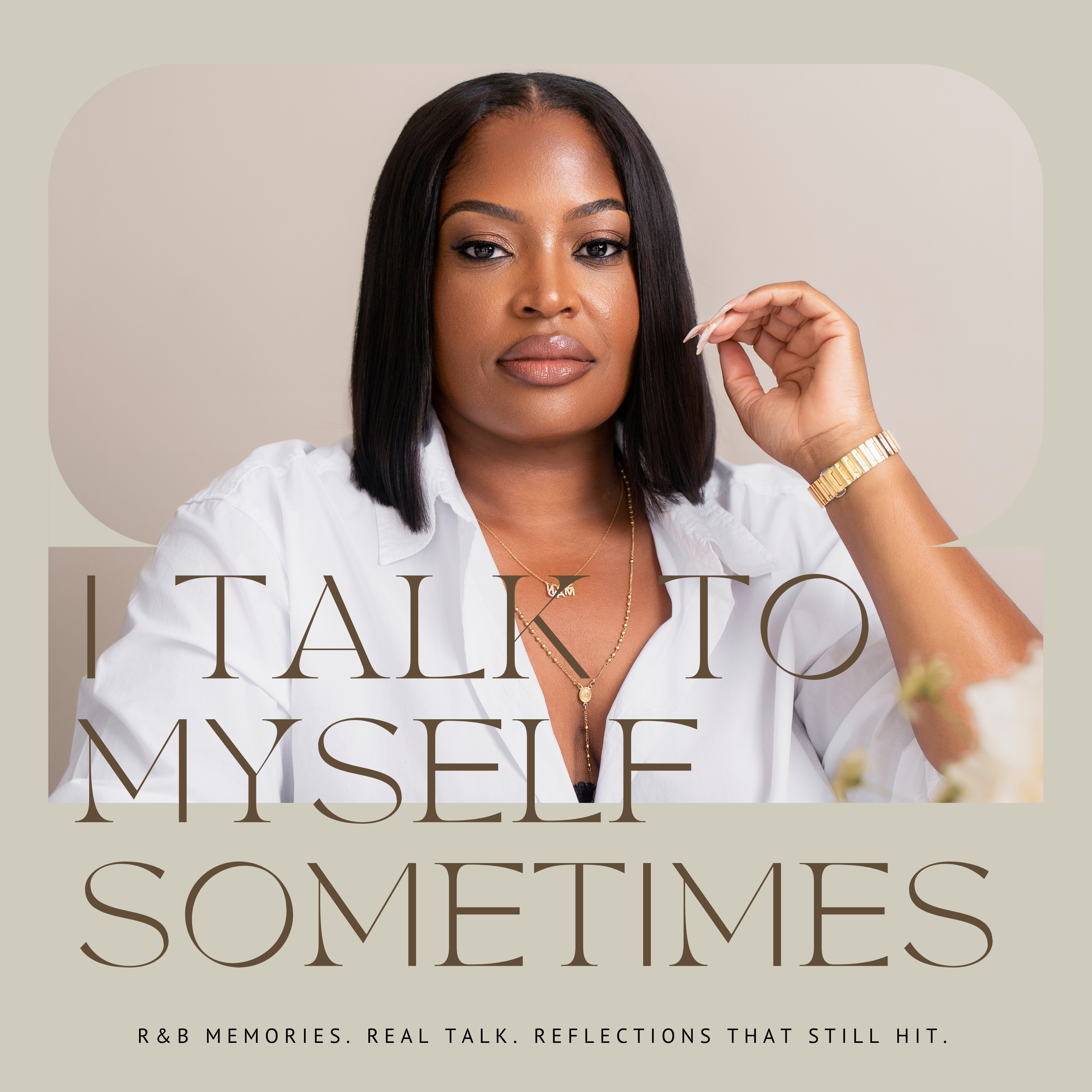
I Talk To Myself Sometimes
Antoinette Arrington
0
I Talk To Myself Sometimes is a podcast where host Antoinette Arrington reflects on her life experiences, using 90s music as a nostalgic backdrop. Each episode revisits songs from that era to explore themes of love, heartbreak, and personal growth. The show offers intimate, unfiltered conversations that encourage listeners to reflect, laugh, and heal. It's designed for those who grew up on 90s R&B and hip-hop and enjoy processing life out loud.
Afleveringen
-
 Next’s “Too Close”: When Your Body Says Yes But Your Mouth Says Maybe 22.04.2026 6minNext’s “Too Close” dropped in 1997, and if you’ve ever been caught between desire and boundaries on a dance floor, you know this song. This playful R&B hit captured the friction between physical arousal and public appropriateness—but it also revealed something deeper about mixed signals, unclear communication, and the difference between naming what you feel and saying what you actually want. In this episode of *I Talk To Myself Sometimes*, Antoinette Arrington explores how this confessional classic shows us why “step back” and “don’t stop” can’t coexist, and what it means to communicate clearly when desire is involved.Through layered introspection, this episode examines:• How we confuse mixed signals with playful flirtation• The importance of aligning your words with your actions when setting boundaries• What happens when we put responsibility for our desire on someone elsePerfect for fans of classic 90s R&B, Next, nostalgic club anthems, honest conversations about desire and boundaries, soulful music analysis, personal growth, and introspective podcasts, this episode shows how revisiting songs from our past can teach us that clarity—not just chemistry—is what makes intimacy work.Listen now and reflect on the playful complexity of Next’s “Too Close.”Have you ever sent mixed signals without realizing it? Drop your reflections in the comments—I want to hear your story.
 -
Heavy D’s “Is It Good to You”: When Asking Becomes the Power Move 14.02.2026 8minHeavy D & The Boyz’s “Is It Good to You” dropped in 1991, and if you’ve ever realized that the best intimacy happens when someone actually cares enough to ask if you’re enjoying it, you know this song. This confident new jack swing classic captured something we don’t talk about enough: that asking “is it good to you” isn’t insecurity—it’s power. In this episode of *I Talk To Myself Sometimes*, Antoinette Arrington explores how this sensual track reveals why communication is the sexiest thing you can do, why assuming kills intimacy, and what it means to finally require someone to care about your pleasure as much as their own.Through direct, self-reflective conversation, this episode examines:• Why asking about pleasure is confidence, not insecurity• How we confuse silence with satisfaction in intimate spaces• The courage it takes to speak up about what you actually needPerfect for fans of classic 90s R&B, Heavy D, new jack swing, honest conversations about intimacy, sexual communication, soulful music analysis, personal growth, and introspective podcasts, this episode challenges you to stop assuming and start asking—both in bed and in life.Listen now and reflect on the confident wisdom of Heavy D’s “Is It Good to You”.When did you learn to speak up about what you needed? Drop your reflections in the comments—I need to hear your story.
-
Donell Jones’s “Where I Wanna Be”: When Leaving Isn’t the Same as Loving 07.02.2026 8minDonell Jones’s “Where I Wanna Be” dropped in 1999, and if you’ve ever been left by someone who said they loved you too much to cheat on you, you know this song. This confessional R&B hit captured something we don’t talk about enough: how self-awareness can be weaponized, how leaving someone “to avoid hurting them worse” is still choosing yourself, and how “I need time” often means “I’m already gone but don’t want to be the bad guy.” In this episode of *I Talk To Myself Sometimes*, Antoinette Arrington explores how this song reveals the difference between honesty and accountability, why confession doesn’t erase harm, and what it means when someone needs time to figure out if they want you.Through direct, unflinching introspection, this episode examines: How we confuse self-awareness with selflessness in relationships The pattern of leaving someone under the guise of doing the right thing What it means when someone’s honesty is just a prettier version of goodbyePerfect for fans of classic 90s R&B, Donell Jones, honest relationship reflections, accountability in love, soulful music analysis, personal growth, and introspective podcasts, this episode challenges you to recognize when “I need space” is really “I want out”—and to stop waiting for someone to choose you.Listen now and reflect on the hard truths of Donell Jones’s “Where I Wanna Be”.
-
Carl Thomas’s “Emotional”: When Vulnerability Sounds Like Strength 31.01.2026 7minCarl Thomas’s “Emotional” dropped in 2000, and if you’ve ever had to walk away from something you still loved because staying was costing you too much, you know this song. This raw R&B ballad captured something rare: a man admitting he’s breaking, feeling everything, and still making the hard choice to leave. In this episode of *I Talk To Myself Sometimes*, Antoinette Arrington explores how this confessional classic reveals the difference between emotional honesty and weakness, why vulnerability in men deserves to be honored not managed, and what it means to choose yourself even when it destroys you.Through layered introspection, this episode examines:• How emotional honesty in men is an act of courage, not fragility• The strength it takes to feel everything and still do what’s necessary• Why we struggle to hold space for male vulnerability even when we say we want itPerfect for fans of classic R&B, Carl Thomas, honest relationship reflections, emotional vulnerability, male sensitivity, soulful music analysis, personal growth, and introspective podcasts, this episode shows how revisiting songs from our past can teach us that being emotional and being strong aren’t opposites.Listen now and reflect on the vulnerable courage of Carl Thomas’s “Emotional”.Have you ever had to choose yourself even though it broke your heart? Drop your reflections in the comments—I want to hear your story.
-
Aaliyah’s “Rock The Boat”: When Desire Sounds Like Trust 24.01.2026 10minAaliyah’s “Rock The Boat” dropped in 2001, and if you’ve ever experienced intimacy where you felt safe enough to ask for exactly what you wanted, you know this song. This sensual R&B classic captured something rare: desire without urgency, pleasure as collaboration, and the kind of trust that allows you to be both vulnerable and direct. In this episode of *I Talk To Myself Sometimes*, Antoinette Arrington explores how this iconic track reveals the difference between performance and presence, why real intimacy requires communication, and what Aaliyah’s confidence teaches us about showing up fully in our bodies.Through layered introspection, this episode examines:• How intimacy becomes deeper when we trust enough to communicate our desires• The difference between urgency and unhurried attention in physical connection• What Aaliyah’s maturity and self-possession in this song reveal about genuine sensualityPerfect for fans of classic R&B, Aaliyah, sensual music reflection, honest conversations about intimacy, soulful music analysis, personal growth, and introspective podcasts, this episode shows how revisiting songs from our past can teach us about trust, presence, and the courage it takes to ask for what we need.Listen now and reflect on the sensual wisdom of Aaliyah’s “Rock The Boat”.Have you ever felt safe enough in intimacy to truly communicate what you wanted? Drop your reflections in the comments—I want to hear your story.
-
Case & Joe’s “Faded Pictures”: When You’re Loved But Never Chosen 17.01.2026 7minCase & Joe’s “Faded Pictures” dropped in 1998, and if you’ve ever loved someone who was still mourning someone else, you know this song. This bittersweet R&B ballad captured the unique heartbreak of being present with someone who’s emotionally absent—watching them flip through old memories, waiting for them to see you, wondering why your love isn’t enough to pull them back. In this episode of *I Talk To Myself Sometimes*, Antoinette Arrington explores how this nostalgic classic reveals the difference between patience and self-erasure, the pain of competing with the past, and what it means to finally walk away from someone who isn’t ready to hold you.Through layered introspection, this episode examines: The loneliness of loving someone who’s still living in yesterday How we confuse waiting with devotion when someone isn’t emotionally available The courage it takes to stop competing with a memory and choose yourselfPerfect for fans of classic 90s R&B, Case & Joe, nostalgic love songs, honest relationship reflections, soulful music analysis, personal growth, and introspective podcasts, this episode shows how revisiting songs from our past can help us understand when to hold on and when to let go.Listen now and reflect on the tender heartbreak of Case & Joe’s “Faded Pictures”.When did you realize you were competing with a memory? Drop your reflections in the comments—I want to hear your story.
-
Boyz II Men’s “Never Go Away”: When Intensity Isn’t the Same as Devotion 10.01.2026 6minBoyz II Men’s “Never Go Away” dropped in 2000, and if you’ve ever been someone’s whole world—or tried to be—you know this song. This tender R&B ballad captured the kind of intensity we thought was devotion: the breathless declarations, the promises of forever, the feeling that love means needing someone so completely you can’t imagine surviving without them. In this episode of *I Talk To Myself Sometimes*, Antoinette Arrington explores how this reflective classic reveals the difference between intensity and sustainability, devotion and dependency, and what it really means when someone’s friends think they’re crazy.Through layered introspection, this episode examines:• How we confused intensity with commitment in our younger relationships• The difference between being captivated by someone and building a life with them• What it means when “never go away” sounds more like pleading than devotionPerfect for fans of classic R&B, Boyz II Men, nostalgic love songs, honest relationship reflections, soulful music analysis, personal growth, and introspective podcasts, this episode shows how revisiting songs from our past can reveal the difference between love that consumes and love that sustains.Listen now and reflect on the complexity of Boyz II Men’s “Never Go Away”.When did you realize the difference between someone wanting you to stay and someone doing the work to make staying feel good? Drop your reflections in the comments—I want to hear your story.
-
Erykah Badu’s “Next Lifetime”: When Right Person, Wrong Time Wasn’t Just an Excuse 21.12.2025 7minErykah Badu’s “Next Lifetime” dropped in 1997, and if you’ve ever felt something real and had to walk away because the timing wasn’t right, you know this song. This wistful neo-soul classic captured the emotional maturity it takes to honor connection without acting on it, the clarity that comes from understanding that wanting someone and being available for them aren’t the same thing, and the wisdom of choosing integrity over impulse. In this episode of *I Talk To Myself Sometimes*, Antoinette Arrington explores how this reflective hit reveals what it means when right person, wrong time isn’t just an excuse, the gift of recognizing that not every connection is meant to be pursued, and the evolved understanding that sometimes love is about respecting what you can’t have.Through layered introspection, this episode examines:• Why right person, wrong time is a truth, not an excuse• The emotional maturity required to honor boundaries in love• How some connections teach us what we’re capable of feeling without being meant to stayPerfect for fans of classic 90s neo-soul, honest reflections on timing and circumstance, soulful music analysis, personal growth, and introspective podcasts, this episode shows how revisiting songs from our past can help us understand the wisdom in walking away from what feels right but isn’t meant to be.Listen now and reflect on the bittersweet clarity of Erykah Badu’s “Next Lifetime”.
-
Jodeci’s “Forever My Lady”: When Wanting Someone Felt Like Knowing Them 08.12.2025 7minJodeci’s “Forever My Lady” dropped in 1991, and if you’ve ever mistaken intensity for permanence, you know this song. This intimate 90s R&B classic captured the kind of desire that feels all-consuming—the pull toward someone so strong it seems like it has to mean forever. In this episode of *I Talk To Myself Sometimes*, Antoinette Arrington explores how this sensual hit reveals the difference between wanting someone and keeping them, the lessons we carry about confusing heat with devotion, and the self-awareness that comes from understanding that intensity doesn’t guarantee staying power.Through layered introspection, this episode examines:• The difference between desire and devotion• How we confuse intensity with permanence• The hard-won lesson that wanting someone doesn’t make them yoursPerfect for fans of classic 90s R&B, honest reflections on desire and relationships, soulful music analysis, personal growth, and introspective podcasts, this episode shows how revisiting songs from our past can help us name the truths we’ve been carrying.Listen now and reflect on the intimate honesty of Jodeci’s “Forever My Lady”.
-
Intro’s “Come Inside”: When Lust Grew Up and Asked for More 06.12.2025 7minIntro’s “Come Inside” dropped in 1993, and if you’ve ever confused intensity with intimacy, you know this song. This intimate 90s R&B classic captured the kind of desire that feels all-consuming… the electric pull of teenage lust versus the complex reality of adult arousal that asks whether good sex equals emotional investment. In this episode of *I Talk To Myself Sometimes*, Antoinette Arrington explores how this sensual hit reveals what happens when we expect sex to communicate care, the confession of confusing someone wanting your body with them wanting you, and the evolved understanding that desire alone can’t carry the weight of real connection.Through layered introspection, this episode examines:• The difference between intensity and emotional investment• Whether it’s wise to expect sex to prove someone’s care• How we confuse arousal with validation and connectionPerfect for fans of classic 90s R&B, honest reflections on desire and intimacy, soulful music analysis, personal growth, and introspective podcasts, this episode shows how revisiting songs from our past can help us untangle intensity from true intimacy.Listen now and reflect on the raw honesty of Intro’s “Come Inside”.
-
Ideal’s “Get Gone”: The Power of Saying Enough 22.11.2025 4minIdeal’s “Get Gone” dropped in 1999, and if you’ve ever reached the point where enough was finally enough, you know this song. This bold 90s R&B hit captured the kind of clarity it takes to walk away without apology—the moment when self-preservation becomes non-negotiable. In this episode of *I Talk To Myself Sometimes*, Antoinette Arrington explores how this liberating classic reveals the power of boundaries, the self-awareness required to stop tolerating what hurts us, and the strength that comes from choosing yourself—even when that choice looks like divorce, separation, or leaving what no longer serves you.Through layered introspection, this episode examines:• The clarity that comes from knowing when to walk away• How boundaries are self-preservation, not punishment• The power of saying enough and actually meaning itPerfect for fans of classic 90s R&B, honest reflections on self-empowerment, soulful music analysis, personal growth, and introspective podcasts, this episode shows how revisiting songs from our past can help us name the strength we’ve been carrying.Listen now and reflect on the unapologetic clarity of Ideal’s “Get Gone”.When did you finally say enough and mean it? Drop your reflections in the comments—I want to hear your story.
-
TLC’s “Red Light Special”: When Chemistry Was Never the Problem 21.11.2025 5minTLC’s “Red Light Special” dropped in 1995, and if you’ve ever been drawn to someone who wasn’t meant to stay, you know this song. This sensual 90s R&B classic captured the kind of chemistry that feels magnetic—the pull toward someone that’s undeniable, even when everything else isn’t quite right. In this episode of *I Talk To Myself Sometimes*, Antoinette Arrington explores how this intimate hit reveals the difference between attraction and compatibility, the self-awareness it takes to remember someone fondly without regret, and the gift of holding space for what was good without needing it to have been forever.Through layered introspection, this episode examines:• The difference between chemistry and compatibility• How we can remember someone fondly without longing for them• The maturity of honoring what felt good without needing it to have lastedPerfect for fans of classic 90s R&B, honest reflections on desire and connection, soulful music analysis, personal growth, and introspective podcasts, this episode shows how revisiting songs from our past can help us name the truths we’ve been carrying about attraction, intimacy, and letting go.Listen now and reflect on the intimate honesty of TLC’s “Red Light Special”.Who’s the person you remember for how they made you feel, even though it wasn’t meant to last? Drop your reflections in the comments—I want to hear your story.
-
Deborah Cox & R.L.‘s “We Can’t Be Friends”: When Honesty Means Letting Go 19.11.2025 5minDeborah Cox and R.L.‘s “We Can’t Be Friends” dropped in 1998, and if you’ve ever had to let someone go—not out of anger, but out of honesty—you know this song. This unflinching 90s R&B duet captures the kind of emotional clarity it takes to admit that some connections can’t exist in the gray area of friendship. In this episode of *I Talk To Myself Sometimes*, Antoinette Arrington explores how this confessional classic reveals the courage it takes to walk away from someone you still care about, the boundaries we set to protect ourselves, and the hard-won wisdom that comes from recognizing when love doesn’t get a second act.Through layered introspection, this episode examines:• The emotional restraint required to let someone go with grace• Why some relationships can’t be downgraded to friendship• The maturity it takes to say “I can’t do this halfway”Perfect for fans of classic 90s R&B, honest reflections on relationships, soulful music analysis, personal growth, and introspective podcasts, this episode shows how revisiting songs from our past can help us name the truths we’ve been carrying.Listen now and reflect on the emotional honesty of Deborah Cox and R.L.‘s “We Can’t Be Friends”.Have you ever had to walk away from someone, not because you stopped caring, but because staying wasn’t honest? Drop your reflections in the comments—I want to hear your story.
-
Monica’s “Why I Love You So Much”: How Teenage Devotion Sounds 20 Years Later 18.11.2025 4minMonica’s “Why I Love You So Much” dropped in 1995, and if you were there, you remember. This tender 90s R&B ballad captured the kind of devotion that felt absolute—unguarded, all-encompassing, innocent. In this episode of *I Talk To Myself Sometimes*, Antoinette Arrington explores how this nostalgic classic reveals the beauty and vulnerability of loving someone before you fully know yourself, the lessons we carry from our first experiences of devotion, and the wisdom that comes from looking back on who we were when we first pressed play.Through layered introspection, this episode examines:- The innocence of all-in, uncomplicated teenage love- How early devotion shapes our understanding of connection- The bittersweet gift of remembering who we were before love got complicatedPerfect for fans of classic 90s R&B, nostalgic reflections, soulful music analysis, personal growth, and introspective podcasts, this episode shows how revisiting songs from our past can reveal the wisdom hidden in our most tender memories.Listen now and reflect on the timeless lessons of Monica’s “Why I Love You So Much”.What did this song teach you about love? Drop your reflections in the comments—I want to hear your version of this story.
-
Dru Hill’s “Tell Me”: Honesty, Desire, and the Performance of Vulnerability 12.11.2025 3minIn this episode of I Talk To Myself Sometimes, we revisit Dru Hill’s debut single “Tell Me” (1996) — a soulful plea that blurs the line between desire and vulnerability. Through a modern lens, this episode unpacks how 90s R&B men often used sensuality as their safest language for expressing emotional need.
-
Tony! Toni! Toné!’s “Anniversary”: Devotion, Discipline, and the Art of Sustained Love 12.11.2025 2minIn this reflective episode of I Talk To Myself Sometimes, we revisit Tony! Toni! Toné!’s timeless classic “Anniversary” (1993) — a slow, soulful celebration of commitment and emotional maturity. Through themes of devotion, intention, and partnership, this episode explores what it truly takes to sustain love beyond infatuation.
-
SWV’s “Rain”: Emotional Intimacy and the Courage to Receive 12.11.2025 2minIn this introspective episode of I Talk To Myself Sometimes, we revisit SWV’s “Rain” (1997) — a slow, soulful classic that redefined emotional vulnerability in 90s R&B. Through themes of trust, openness, and feminine resilience, this reflection explores how love and healing often arrive when we finally stop resisting and allow ourselves to be seen.
-
Faith Evans’ “Soon As I Get Home”: The Weight of Waiting and the Cost of Devotion 12.11.2025 3minIn this reflective episode of I Talk To Myself Sometimes, we revisit Faith Evans’ “Soon As I Get Home” (1995) — a timeless R&B ballad that explores loyalty, longing, and the emotional toll of waiting for reciprocity in love. Through the lens of emotional healing and Black women’s experiences with devotion, this episode unpacks how waiting can transform from tenderness into quiet exhaustion — and what it really means to come home to yourself.
-
Bell Biv DeVoe — “Poison” : The Fear Behind the Swagger 12.11.2025 3minIn this episode of I Talk To Myself Sometimes, we revisit Bell Biv DeVoe’s 1990 hit “Poison” — a masterclass in swagger that masked a deeper cultural unease. Through a reflective lens, we explore how early ’90s R&B turned masculine insecurity into rhythm, redefining attraction, control, and fear in the process.
-
Hi-Five — “I Like the Way (The Kissing Game)” (1990): The First Language of Affection 12.11.2025 3minIn this nostalgic episode of I Talk To Myself Sometimes, we revisit Hi-Five’s 1990 hit “I Like the Way (The Kissing Game)” — a sweet reminder of when love was simple, tender, and uncalculated. Through a reflective lens, we explore how early ‘90s R&B taught a generation of Black youth the language of affection before expectation, and how innocence shaped our understanding of connection.
Vergelijkbare podcasts


Populair in
Deze podcast verschijnt ook in de podcastlijsten van deze landen.
