
Ask Kati Anything
Kati Morton, LMFT
0
Ask Kati Anything is a weekly mental health Q&A podcast hosted by licensed therapist Kati Morton, LMFT. She answers real listener questions about anxiety, depression, trauma, PTSD, eating disorders, OCD, BPD, ADHD, panic attacks, intrusive thoughts, relationships, attachment styles, narcissistic abuse, boundaries, self-esteem, and more. With over 12 years in private practice and a YouTube community of over 1.5 million, Kati brings clinical insight, warmth, and zero judgment to conversations people are often afraid to have. Each episode is based on listener submissions, covering topics from CBT and DBT skills to healing from childhood trauma and deciding when to start therapy.
Afleveringen
-
 Avoidant Personality Disorder: Why You Think You’re Better Off Alone 17.09.2026 1u 4minAre you constantly craving connection but terrified of rejection? Avoidant Personality Disorder (AvPD) goes beyond typical shyness or introversion—it can keep you trapped in a cycle of loneliness and an intense fear of judgment. In this video, we explore the distinct symptoms of AvPD, how it heavily overlaps with social anxiety, and why someone might desperately want friends but actively avoid them. We discuss how this pervasive pattern develops, the role of a negative cognitive bias, and the practical steps and therapies (like CBT and Schema Therapy) that can help you finally build meaningful, lasting relationships. ✨ EPISODE SPONSORS OneSkin: Get 15% off scientifically backed peptide skincare with code KATI at https://oneskin.co/kati Hero Bread: Enjoy 10% off high-protein, high-fiber baked favorites with code KATI at https://hero.co 🎙️ EPISODE CHAPTERS 00:00 What is Avoidant Personality Disorder? 04:08 The DSM-5 diagnostic criteria for AVPD 10:08 What makes AVPD a personality disorder rather than just a preference? 16:50 Social Anxiety vs. Avoidant Personality Disorder 23:56 Avoidant Personality Disorder vs. Avoidant Attachment 27:08 Why we automatically assume people won't like us 32:16 Skipping opportunities and making your world smaller 36:49 The paradox of canceled plans and sudden loneliness 40:18 Where does Avoidant Personality Disorder come from? 46:58 The struggle of needing proof before letting people in 50:15 Is it fear of rejection or a negative cognitive bias? 54:15 Why avoidance feels safe but costs you deep connections 56:12 CBT, Exposure, and Schema Therapy for treating AVPD 1:00:18 Can you fully recover from a personality disorder? 📚 KATI'S BOOKS Why Do I Keep Doing This? https://geni.us/XoyLSQ Traumatized https://geni.us/Bfak0j Are u ok? https://geni.us/sva4iUY 💻 ONLINE THERAPY If you're looking for a therapist, BetterHelp can connect you with a licensed online professional: https://betterhelp.com/katiEnjoy 10% OFF YOUR FIRST MONTH! This is an affiliate link, which means a portion of your signup helps support the podcast at no extra cost to you. 📱 CONNECT WITH KATI Watch on YouTube: https://www.youtube.com/c/katimorton?sub_confirmation=1 Instagram: https://www.instagram.com/katimorton TikTok: https://www.tiktok.com/@katimorton Substack: https://substack.com/@katimorton1 Patreon: https://www.katimorton.com/kati-morton-patreon/ PARTNERSHIPS Nick Freeman | [email protected] Disclaimer: The information provided in this video is for educational and informational purposes only and is not intended as medical or mental health advice. It should not be used to diagnose or treat any health problem or disease. Always consult with a qualified healthcare professional for diagnosis and treatment. Viewing this content does not establish a therapist-client relationship. Learn more about your ad choices. Visit megaphone.fm/adchoices
 -
What Obsessive-Compulsive Disorder Actually Looks Like (OCD) 10.09.2026 1u 6minAre disturbing intrusive thoughts a sign of OCD, or are they just severe anxiety? Licensed therapist Kati Morton explains how Obsessive-Compulsive Disorder is clinically diagnosed, why common expressions like Pure O and taboo obsessions are frequently misdiagnosed, and how to tell the difference between tidy preferences and true compulsions. Learn the neuroscience behind the obsessive-compulsive cycle, why constant reassurance backfires, and how exposure and response prevention (ERP) therapy helps you break the loop. SPONSOR Specialized virtual trauma treatment is available through Rebound. Founded by survivors and psychologists, Rebound provides clinically effective trauma therapy covered by leading insurance plans: https://hellorebound.com/askkatianything PUBLISHED BOOKS Why Do I Keep Doing This? https://geni.us/XoyLSQ Traumatized https://geni.us/Bfak0j Are u ok? https://geni.us/sva4iUY ONLINE THERAPY If you're looking for a therapist, BetterHelp can connect you with a licensed online professional: https://betterhelp.com/kati - Enjoy 10% off your first month!(this is an affiliate link, which means a portion of your signup helps support the podcast at no extra cost to you) SOCIAL X https://twitter.com/KatiMorton TikTok https://www.tiktok.com/@katimorton Instagram https://www.instagram.com/katimorton Substack https://substack.com/@katimorton1 Pinterest https://www.pinterest.com/katimorton1/ Patreon https://www.katimorton.com/kati-morton-patreon/ Facebook https://www.facebook.com/katimorton1/ BUSINESS INQUIRIES Linnea Toney [email protected] DISCLAIMER The information provided in this video is for educational and informational purposes only and is not intended as medical or mental health advice. It should not be used to diagnose or treat any health problem or disease. Always consult with a qualified healthcare professional for diagnosis and treatment. Viewing this content does not establish a therapist-client relationship. #OCD #MentalHealth #AskKatiAnything Learn more about your ad choices. Visit megaphone.fm/adchoices
-
Signs You’re Dealing with the Dark Triad (Psychopath, Narcissist, or Machiavellian?) 03.09.2026 1u 3minWhat is the Dark Triad, and how can you tell if you’re dealing with a narcissist, a psychopath, or someone high in Machiavellianism? In this episode, licensed therapist Kati Morton breaks down the core traits of dark triad personalities, the key differences between them, and the common myths surrounding manipulation and empathy. You'll learn the 6 telltale signs of interacting with someone who has dark traits, what the psychological "D-factor" really means, and whether people with these patterns can truly change. Timestamps 0:00 - Introduction to the Dark Triad 01:02 - Is the Dark Triad a Diagnosis or Framework? 02:13 - Trait Narcissism Explained 04:22 - What is Machiavellianism? Origins & 5 Core Traits 12:42 - Psychopathy vs. Antisocial Personality Disorder (ASPD) 19:15 - Key Differences: Impulse Control & Dark Triad Overlap 23:26 - 6 Signs You’re Interacting With a Dark Personality 35:09 - The "D-Factor": Are We All a Little Manipulative? 42:54 - Myth 1: Are Dark Personalities More Charming & Attractive? 46:53 - Myth 2: Do Psychopaths Make Great CEOs? 49:23 - Myth 3: Is Sadism Part of the Dark Triad? (The Dark Tetrad) 50:58 - Can Psychopaths Feel Empathy? Cognitive vs. Affective Empathy 54:54 - Nature vs. Nurture: Can Dark Traits Change Over Time? 1:01:10 - How to Protect Yourself & Set Boundaries MY BOOKS Why Do I Keep Doing This? Traumatized Are u ok? SOCIAL X https://twitter.com/KatiMorton TikTok https://www.tiktok.com/@katimorton Facebook https://www.facebook.com/katimorton1/ Instagram https://www.instagram.com/katimorton Substack https://substack.com/@katimorton1 Pinterest https://www.pinterest.com/katimorton1/ Patreon https://www.katimorton.com/kati-morton-patreon/ ONLINE THERAPY If you're looking for a therapist, BetterHelp can connect you with a licensed online professional: https://betterhelp.com/kati (enjoy 10% off your first month) This is an affiliate link, which means a portion of your signup helps support the podcast at no extra cost to you. PARTNERSHIPS Nick Freeman | [email protected] Disclaimer: The information provided in this video is for educational and informational purposes only and is not intended as medical or mental health advice. It should not be used to diagnose or treat any health problem or disease. Always consult with a qualified healthcare professional for diagnosis and treatment. Viewing this content does not establish a therapist-client relationship. Ask Kati Anything ep. 330 | Your mental health podcast, with Kati Morton, LMFT Learn more about your ad choices. Visit megaphone.fm/adchoices
-
Dissociation: From Zoning Out to Depersonalization 27.08.2026 1u 5minHave you ever felt completely disconnected from your body, lost hours of time, or wondered why you feel numb when overwhelmed? In this episode, licensed therapist Kati Morton explores dissociation and the full spectrum of dissociative disorders, including depersonalization-derealization (DPDR), dissociative amnesia, and dissociative identity disorder (DID). You'll learn the neuroscience behind why your brain pulls the ripcord to protect you, how to distinguish normal spacing out from trauma responses, and somatic grounding techniques to regulate your nervous system. To see if specialized trauma therapy with Rebound could be the right next step for you, head to https://hellorebound.com/askkatianything where you can check your insurance, book a free call with one of their care specialists, and find out more. Timestamps 00:00 What Is Dissociation? 00:55 Spacing Out vs. Dissociating 02:03 How the DSM Defines Dissociative Disorders 03:11 Dissociative Episodes vs. Diagnosable Disorders 06:03 Why Your Brain Pulls the Ripcord (Nervous System Protection) 10:05 Hypoarousal, the Freeze State & Emotional Dampening 12:28 Depersonalization-Derealization Disorder (DPDR) Criteria 14:53 Reality Testing: DPDR vs. Psychosis 21:02 How Common Is Dissociation? Statistics & Comorbidities 25:25 Dissociative Amnesia vs. Normal Everyday Forgetting 30:42 What Is a Dissociative Fugue? 35:07 Localized, Selective & Generalized Amnesia 36:15 Brain Networks & Memory Suppression Mechanisms 40:02 Dissociative Identity Disorder (DID) Explained 40:40 Parts Work vs. Alters in DID 46:00 Cultural Context & What DID Is Not (DID vs. Schizophrenia) 47:18 The Dissociation Spectrum: Maladaptive Daydreaming to DID 50:07 Childhood Trauma & The Role of Protector Alters 54:37 How to Tell If You're Dissociating or Just Zoning Out 56:00 Somatic Grounding Techniques for Dissociation 58:45 Nervous System Regulation, Qigong & Calming the Amygdala 60:34 Therapy Approaches for DID: System Cooperation vs. Integration SOCIAL X https://twitter.com/KatiMorton YouTube https://www.youtube.com/c/katimorton?sub_confirmation=1 TikTok https://www.tiktok.com/@katimorton Facebook https://www.facebook.com/katimorton1/ Instagram https://www.instagram.com/katimorton Pinterest https://www.pinterest.com/katimorton1/ Patreon https://www.katimorton.com/kati-morton-patreon/ MY BOOKS Why Do I Keep Doing This? https://geni.us/XoyLSQ Traumatized https://geni.us/Bfak0j Are u ok? https://geni.us/sva4iUY ONLINE THERAPY If you're looking for a therapist, BetterHelp can connect you with a licensed online professional: https://betterhelp.com/kati (enjoy 10% off your first month) This is an affiliate link, which means a portion of your signup helps support the podcast at no extra cost to you. PARTNERSHIPS Nick Freeman | [email protected] Disclaimer The information provided in this video is for educational and informational purposes only and is not intended as medical or mental health advice. It should not be used to diagnose or treat any health problem or disease. Always consult with a qualified healthcare professional for diagnosis and treatment. Viewing this content does not establish a therapist-client relationship. Learn more about your ad choices. Visit megaphone.fm/adchoices
-
Do You Have CPTSD? Symptoms, Flashbacks & Treatments 21.08.2026 1u 20minWhat is Complex PTSD (CPTSD), and how does it differ from traditional PTSD or Borderline Personality Disorder (BPD)? In this episode of Ask Kati Anything (Ep. 328), licensed therapist Kati Morton breaks down the ICD-11 diagnostic criteria for Complex PTSD, the impact of chronic emotional abuse and neglect, emotional flashbacks, and practical treatment modalities like TF-CBT, EMDR, and DBT. Thank you to OneSkin for sponsoring today’s episode! Get 15% off OneSkin with the code KATI at https://www.oneskin.co/KATI TIMESTAMPS 00:00 - Introduction to Complex PTSD & ICD-11 Criteria 01:45 - What Makes PTSD "Complex"? (Judith Herman & Prolonged Trauma) 04:08 - Can Chronic Emotional Abuse, Neglect, or Bullying Cause CPTSD? 12:08 - Big "T" vs. Little "t" Traumas & Resilience 15:15 - Core Differences Between PTSD and Complex PTSD 18:54 - Emotional Dysregulation: Hyper-Arousal vs. Hypo-Arousal 23:20 - Why Trauma Triggers Make You Relive the Past 25:40 - Pete Walker’s Concept of Emotional Flashbacks & Dissociation 29:30 - Negative Self-Concept, Shame & Externalizing Trauma 35:48 - How to Heal When There Was "Never a Before" 41:00 - Childhood Trauma vs. Adult CPTSD 43:30 - How Complex PTSD Affects Relationships & Trust 50:20 - Why We Isolate Even When Craving Connection 54:35 - Complex PTSD vs. Borderline Personality Disorder (BPD) 01:03:00 - What If Your Childhood Doesn't Feel "Traumatic"? 01:10:30 - Effective Treatments: Trauma-Focused CBT, EMDR & DBT 01:15:50 - What to Do If Trauma Therapy Isn't Working Instagram: https://www.instagram.com/katimorton Ask Kati Anything ep.328 | Your mental health podcast, with Kati Morton, LMFT MY BOOKS Why Do I Keep Doing This? https://geni.us/XoyLSQ Traumatized https://geni.us/Bfak0j Are u ok? https://geni.us/sva4iUY ONLINE THERAPY If you're looking for a therapist, BetterHelp can connect you with a licensed online professional: https://betterhelp.com/kati (enjoy 10% off your first month) This is an affiliate link, which means a portion of your signup helps support the podcast at no extra cost to you. PARTNERSHIPS Nick Freeman | [email protected] Disclaimer: The information provided in this video is for educational and informational purposes only and is not intended as medical or mental health advice. It should not be used to diagnose or treat any health problem or disease. Always consult with a qualified healthcare professional for diagnosis and treatment. Viewing this content does not establish a therapist-client relationship. Learn more about your ad choices. Visit megaphone.fm/adchoices
-
 How Narcissism Actually Works: Love Bombing, Gaslighting, Flying Monkeys 13.08.2026 57minNarcissism, narcissistic abuse, and NPD get thrown around constantly online, and most of what circulates is wrong. In this episode, licensed marriage and family therapist Kati Morton walks through what narcissistic personality disorder actually is (all nine DSM criteria, and why five or more are required for a diagnosis), the difference between covert and overt narcissism, and the specific behavior patterns that make a relationship abusive: love bombing, gaslighting, trauma bonding, DARVO, flying monkeys, isolation, and intermittent reinforcement. She also covers the gray rock method, the signs you're walking on eggshells in your own home, and how healing from narcissistic abuse actually works. If you've been wondering whether what you experienced counts, or whether the person in your life is a narcissist or simply selfish and hurtful, this one is for you. Timestamps 0:00 Everyone thinks everyone's a narcissist 1:07 What narcissistic personality disorder actually is: five of nine criteria 3:20 Covert vs. overt narcissism 9:22 What narcissistic abuse means 9:48 Love bombing, and how it differs from someone just being kind 13:49 Gaslighting 19:11 No accountability, no apology, no repair 22:19 Monitoring, isolation, and turning you against the people who love you 24:22 Trauma bonding and the abuse cycle 27:25 DARVO 30:45 The gray rock method 34:30 Flying monkeys 36:57 Why they aren't nasty all the time 40:02 Intermittent reinforcement 40:47 Signs you're living in this dynamic 43:50 How healing actually happens 46:27 Reconnecting with the people you lost touch with 49:16 A better question than "what's wrong with me" 53:33 Afraid you'll end up with another narcissist This episode is brought to you by Rebound, offering specialized virtual trauma therapy in all 50 states, founded by survivors and psychologists. Head to https://hellorebound.com/askkatianything to learn more and check your insurance. Using that link is a direct way to support the podcast, so even if you're only curious, take a minute to look. Ask Kati Anything ep. 327 | Your mental health podcast, with Kati Morton, LMFT MY BOOKS Why Do I Keep Doing This? https://geni.us/XoyLSQ Traumatized https://geni.us/Bfak0j Are u ok? https://geni.us/sva4iUY ONLINE THERAPY If you're looking for a therapist, BetterHelp can connect you with a licensed online professional: https://betterhelp.com/kati (enjoy 10% off your first month) This is an affiliate link, which means a portion of your signup helps support the podcast at no extra cost to you. PARTNERSHIPS Nick Freeman | [email protected] Disclaimer The information provided in this video is for educational and informational purposes only and is not intended as medical or mental health advice. It should not be used to diagnose or treat any health problem or disease. Always consult with a qualified healthcare professional for diagnosis and treatment. Viewing this content does not establish a therapist-client relationship. Learn more about your ad choices. Visit megaphone.fm/adchoices
 -
“I ruin every relationship I care about.” - BPD 13.08.2026 1u 11minBorderline Personality Disorder (BPD) is deeply misunderstood, heavily stigmatized, and far more complex than just "being emotional". In this episode of Ask Kati Anything, licensed marriage and family therapist Kati Morton breaks down the official BPD diagnostic criteria from the DSM, explaining how BPD symptoms actually present in real life, therapy offices, and everyday relationships. She explores the underlying fear of abandonment, idealization and devaluation (splitting), identity disturbances, and why BPD so frequently overlaps with PTSD, trauma, and ADHD. Plus, discover actionable evidence-based BPD treatment options like Dialectical Behavior Therapy (DBT), Schema Therapy, and Mentalization-Based Therapy (MBT) to help manage emotional dysregulation, navigate relationship boundaries, and work toward long-term remission. Timestamps 00:00 - Introduction to Borderline Personality Disorder (BPD) 01:00 - Why "Personality Disorder" is a Misleading Term 01:55 - How BPD is Diagnosed: DSM Criteria Overview 02:55 - BPD Symptom 1: Fear of Abandonment & Attachment Styles 04:45 - BPD Symptom 2: Splitting, Idealization & Devaluation 07:25 - BPD Symptom 3: Identity Disturbance & Chronic Emptiness 08:31 - BPD Symptom 4: Impulsivity in Daily Life 12:05 - BPD Symptom 5: Recurrent Suicidal Behavior & Self-Harm 16:05 - BPD Symptom 6: Affective Instability (BPD vs Bipolar Disorder) 18:18 - BPD Symptom 7: Chronic Feelings of Emptiness 19:22 - BPD Symptom 8: Inappropriate, Intense Anger 21:53 - BPD Symptom 9: Stress-Related Paranoia & Dissociation 25:14 - Is it BPD or Just Being Emotional? 26:46 - What Does Having "BPD Traits" Mean? 28:49 - BPD vs. Anxiety, ADHD, and PTSD Overlaps 33:25 - The Deep Link Between Childhood Trauma and BPD 40:21 - Why People with BPD Push Loved Ones Away 41:35 - What is Quiet BPD? 43:33 - Can You Have a Healthy Relationship with BPD? 47:53 - Setting Healthy Boundaries Without Triggering Abandonment 53:05 - Can BPD be Cured? Understanding BPD Remission 56:23 - BPD Treatment: Dialectical Behavior Therapy (DBT) Explained 01:04:33 - Alternative Therapies: MBT, Schema Therapy, & TFP 01:08:30 - The Role of Medication in BPD Treatment YouTube channel: https://www.youtube.com/c/katimorton?sub_confirmation=1 MY BOOKS Why Do I Keep Doing This? https://geni.us/XoyLSQ Traumatized https://geni.us/Bfak0j Are u ok? https://geni.us/sva4iUY ONLINE THERAPY - Enjoy 10% OFF your first month If you're looking for a therapist, BetterHelp can connect you with a licensed online professional: https://betterhelp.com/kati This is an affiliate link, which means a portion of your signup helps support the podcast at no extra cost to you. PARTNERSHIPS Nick Freeman | [email protected] DISCLAIMER The information provided in this podcast is for educational and informational purposes only and is not intended as medical or mental health advice. It should not be used to diagnose or treat any health problem or disease. Always consult with a qualified healthcare professional for diagnosis and treatment. Viewing this content does not establish a therapist-client relationship. #mentalhealth #therapist #borderline Ask Kati Anything ep.326 | Your mental health podcast, with Kati Morton, LMFT Learn more about your ad choices. Visit megaphone.fm/adchoices
-
The term "Borderline Personality Disorder" 06.08.2026 1minLearn more about your ad choices. Visit megaphone.fm/adchoices
-
Taboo Topics & Attachment in Therapy 30.07.2026 1u 5minNavigating attachment dynamics and discussing sensitive, taboo topics in therapy can feel daunting, but understanding how your attachment style influences your mental health is a major step toward healing. In this episode, licensed therapist Kati Morton dives deep into attachment theory, explaining the four primary attachment styles—secure, anxious, avoidant, and disorganized—and how they shape your adult relationships and sessions with your therapist. Kati also addresses how to bring up political differences or uncomfortable topics without fear of judgment, and answers your most pressing community questions. Timestamps 00:00 - Episode Overview 00:46 - Discussing Uncomfortable & Taboo Topics in Therapy 01:59 - Political Polarization, Media Rage-Bait, and Safe Spaces 07:57 - Why Therapists Keep Personal Opinions Private 15:02 - Examples of Kinks, Religion, and Money in Therapy 18:42 - What is Attachment Theory? 20:35 - "What If You Never Tried to Attach to Your Parents?" Thank you to this week's sponsors! REBOUND: visit www.hellorebound.com/askkatianything & check your insurance or get matched with a therapist ONESKIN: Get 15% off OneSkin with the code KATI at www.oneskin.co/KATI 25:48 - The 4 Attachment Styles in Relationships 28:22 - How Attachment Styles Show Up Under Stress 35:35 - Getting Too Attached to Your Therapist 42:11 - Feeling Lost When Your Therapist Goes on Vacation 46:27 - Red Flag: When a Therapist Shares Their Own Personal Drama 53:38 - Rebuttal: Is the Therapeutic Relationship Transactional or Dangerous? 01:00:23 - Healing Your Attachment Blueprint and Final Thoughts Instagram: https://www.instagram.com/katimorton My main YouTube channel: https://www.youtube.com/c/katimorton?sub_confirmation=1 Ask Kati Anything ep. 325 | Your mental health podcast, with Kati Morton, LMFT PUBLISHED BOOKS Why Do I Keep Doing This? https://geni.us/XoyLSQ Traumatized https://geni.us/Bfak0j Are u ok? https://geni.us/sva4iUY ONLINE THERAPY If you're looking for a therapist, BetterHelp can connect you with a licensed online professional: https://betterhelp.com/kati - Enjoy 10% off your first month! (this is an affiliate link, which means a portion of your signup helps support the podcast at no extra cost to you) SOCIAL X https://twitter.com/KatiMorton TikTok https://www.tiktok.com/@katimorton Facebook https://www.facebook.com/katimorton1/ Instagram https://www.instagram.com/katimorton Pinterest https://www.pinterest.com/katimorton1/ Patreon https://www.katimorton.com/kati-morton-patreon/ https://www.youtube.com/@askkatianything https://www.youtube.com/@katimorton PARTNERSHIPS Nick Freeman | [email protected] Disclaimer: The information provided in this video is for educational and informational purposes only and is not intended as medical or mental health advice. It should not be used to diagnose or treat any health problem or disease. Always consult with a qualified healthcare professional for diagnosis and treatment. Viewing this content does not establish a therapist-client relationship. Learn more about your ad choices. Visit megaphone.fm/adchoices
-
Why Your Eating Disorder Is Never Actually About Food 23.07.2026 1u 11minIn this episode of Ask Kati Anything, licensed therapist Kati Morton breaks down why eating disorders are rarely actually about the food or your body. We look at what’s really happening behind the strict rules, rituals, and need for control, and how these behaviors often show up as survival mechanisms to protect us from deeper stress, trauma, and overwhelm. Whether you’re struggling with restrictive eating, binging, purging, orthorexia, or just feel completely exhausted by your relationship with food, this conversation is here to give you clarity, reduce the shame, and help you understand what your brain is actually trying to tell you. REBOUND: visit www.hellorebound.com/askkatianything & check your insurance or get matched with a therapistONESKIN: Get 15% off OneSkin with the code KATI at www.oneskin.co/KATI 00:00 - Why eating disorders aren't actually about food 00:40 - Pica: Eating non-food items & nutrient deficiencies 05:41 - ARFID: Sensory food avoidance without body dysmorphia 11:13 - Rumination Disorder: Regurgitation & unspoken shame 14:13 - Anorexia Nervosa: Energy restriction & body checking 17:16 - Bulimia Nervosa: Binging, purging & compensatory rules 20:59 - Binge Eating Disorder: Rapid eating, guilt & secrecy 23:56 - Orthorexia: When clean eating & rules run your life 30:43 - Why eating disorders are actually survival mechanisms 49:35 - How loved ones can offer support without triggering shame MY BOOKS Why Do I Keep Doing This? https://geni.us/XoyLSQ Traumatized https://geni.us/Bfak0j Are u ok? https://geni.us/sva4iUY ONLINE THERAPY If you're looking for a therapist, BetterHelp can connect you with a licensed online professional: https://betterhelp.com/kati (enjoy 10% off your first month) This is an affiliate link, which means a portion of your signup helps support the podcast at no extra cost to you. PARTNERSHIPS Nick Freeman | [email protected] Disclaimer: The information provided in this video is for educational and informational purposes only and is not intended as medical or mental health advice. It should not be used to diagnose or treat any health problem or disease. Always consult with a qualified healthcare professional for diagnosis and treatment. Viewing this content does not establish a therapist-client relationship. Learn more about your ad choices. Visit megaphone.fm/adchoices
-
Are You Too Attached to Your Therapist? 16.07.2026 56minDo you think about your therapist between sessions? Check their social media? Spiral when they cancel? A licensed therapist explains why attachment to your therapist happens, why it's actually part of the process, and the exact signs that tell you when it's crossed into unhealthy territory. In this episode of Ask Kati Anything, licensed marriage and family therapist Kati Morton breaks down the therapeutic relationship: the single strongest predictor of whether therapy actually works. She answers listener questions about feeling "creepy" for looking up their therapist, why therapy can feel transactional and fake, and what therapists are really noticing about you in session. Then she walks through the attachment ladder, the four stages that explain why your therapist starts to feel like the only person who truly gets you, and closes with a complete checklist of healthy vs. unhealthy therapeutic relationship signs. TIMESTAMPS 0:00 What is the therapeutic relationship? 1:21 The #1 predictor of successful therapy 2:26 Q1: "I'm attached to my therapist and feel like a creep" 5:52 Attachment wounds: why your therapist fills the void 11:54 What your therapist is actually noticing in session 15:20 Q2: "I feel closer to my therapist than anyone in my life" 16:56 The attachment ladder: 4 stages of attaching to your therapist 23:13 Q3: "Therapy feels transactional and the care feels bought" 28:21 Why you need to put the phone down and just think 31:17 Q4: "My therapist rescheduled and I spiraled for days" 32:47 What a therapist's role actually is (and isn't) 35:25 Signs of a HEALTHY therapeutic relationship 42:17 Signs of an UNHEALTHY therapeutic relationship 49:08 Why boundaries in therapy matter so much 53:06 How to make sure therapy works for you THIS EPISODE IS SPONSORED BY REBOUND Rebound offers virtual, evidence-based treatment for PTSD with trauma-specialist therapists, in-network with most major insurance plans in all 50 states. Check your insurance or get matched: Head to https://hellorebound.com/askkatianything to check your insurance or get matched with a therapist. RESEARCH & RESOURCES Psychotherapy and Therapeutic Relationship https://www.ncbi.nlm.nih.gov/books/NBK608012/ Perceived therapist genuineness predicts therapeutic alliance in cognitive behavioural therapy for psychosis https://bpspsychub.onlinelibrary.wiley.com/doi/10.1111/bjc.12059 The Relationship Between Attachment Needs, Earned Secure https://psycnet.apa.org/fulltext/2025-18086-004.html Client and Therapist Attachment Styles and Working Alliance https://onlinelibrary.wiley.com/doi/10.1002/cpp.1944 The experience of closeness and distance in the therapeutic relationship of patients with different attachment classifications https://www.frontiersin.org/journals/psychiatry/articles/10.3389/fpsyt.2023.1029783/full ASK KATI YOUR QUESTION Leave your question in the comments below and it may be answered on an upcoming episode. MY BOOKS & WORKSHOPS https://katimorton.com THERAPY If you're looking for a therapist, BetterHelp can connect you with a licensed online professional: https://betterhelp.com/kati - Enjoy 10% off your first month! (this is an affiliate link, which means a portion of your signup helps support the podcast at no extra cost to you)SOCIALS X https://twitter.com/KatiMorton TikTok https://www.tiktok.com/@katimorton Facebook https://www.facebook.com/katimorton1/ Instagram https://www.instagram.com/katimorton Pinterest https://www.pinterest.com/katimorton1/ Patreon https://www.katimorton.com/kati-morton-patreon/ Main YouTube https://www.youtube.com/c/katimorton?sub_confirmation=1 Apple https://podcasts.apple.com/us/podcast/ask-kati-anything/id1502476673 Spotify https://open.spotify.com/show/7itqbvflj0Q9IUDqOF5NST Instagram https://www.instagram.com/katimorton PARTNERSHIPS Nick Freeman | [email protected] DISCLAIMER The information provided in this video is for educational and informational purposes only and is not intended as medical or mental health advice. It should not be used to diagnose or treat any health problem or disease. Always consult with a qualified healthcare professional for diagnosis and treatment. Viewing this content does not establish a therapist-client relationship. #therapy #mentalhealth #katimorton Ask Kati Anything ep. 323 | Your mental health podcast, with Kati Morton, LMFT Learn more about your ad choices. Visit megaphone.fm/adchoices
-
Why You’re Exhausted Even When "Nothing" is Wrong 07.07.2026 52minDo you sleep enough and live a balanced life on paper, yet still feel completely wiped out by Tuesday? You aren't "bad at adulting"—your nervous system is likely dealing with an invisible, compounded burden. In this episode, we break down the three overlapping systems that drive modern exhaustion: cognitive load from constant decision fatigue, emotional labor from managing the people around us, and threat system exhaustion caused by chronic hyper-vigilance. We also discuss why physical sleep cannot fix cognitive or emotional burnout, how perimenopause/menopause can stack onto these existing stressors, and why our modern "always-on" remote culture is making it harder to disconnect. Learn how to reclaim your energy by setting better boundaries, creating end-of-day rituals, and giving your brain the "boredom" it desperately needs to recover. Mentioned in this episode: • The impact of cognitive load and "context switching" • Why "people pleasing" is a form of exhausting emotional labor • Understanding threat system exhaustion and hyper-vigilance • The role of hormone changes (estrogen, progesterone, and testosterone) in energy levels • Tips for creating effective end-of-day work/life boundaries 3 Key Topics/Chapters: • 04:15: The Reality of Cognitive Load & Decision Fatigue • 10:30: Why Emotional Labor and People Pleasing Drains You • 19:14: Threat System Exhaustion: When Your Body Braces for Danger Support Our Sponsors • BiOptimizers - Heat and summer travel can deplete your body's magnesium, making it harder to recover and relax 👉 Get 15% off your entire order + a FREE travel-size bottle of Digestive Enzymes: https://bioptimizers.com/kati use code: KATI • Rebound - Trauma doesn’t just fade on its own. If you’ve been hitting a wall in your life or relationships, Rebound offers virtual, evidence-based treatment from trauma specialists who are in-network with most major insurance plans. 👉 Check your insurance or get matched with a specialist: http://hellorebound.com/askkatianything PARTNERSHIPS Nick Freeman | [email protected] Disclaimer: This podcast is for educational purposes and is not a substitute for professional therapy or medical advice. Learn more about your ad choices. Visit megaphone.fm/adchoices
-
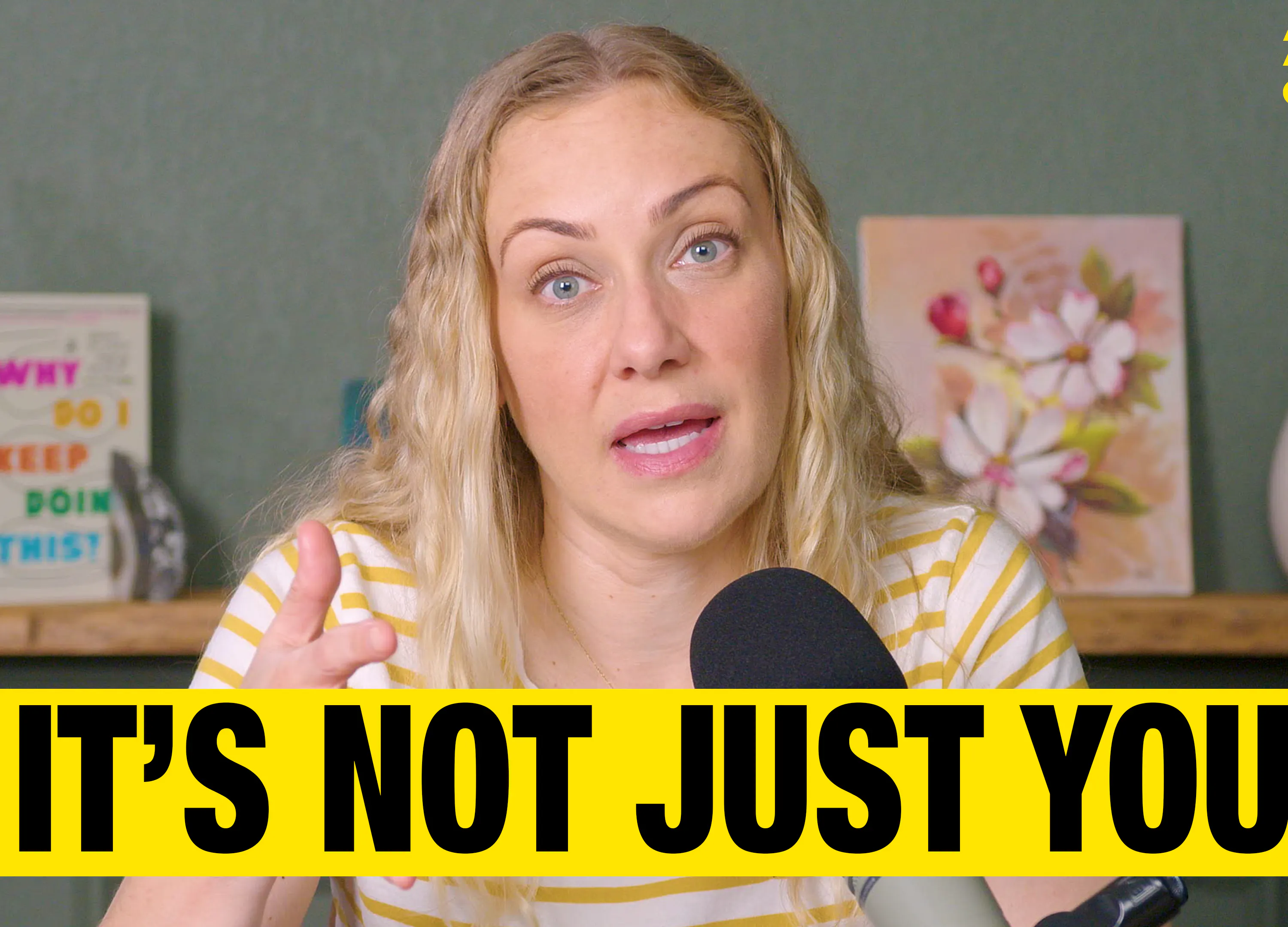 Why Your Attempts to Fix Your Relationships Are Making It Worse 02.07.2026 1u 12minHave you ever felt like you’re trying so hard to communicate, but the harder you try, the more things seem to fall apart? Whether it’s that heavy feeling of being misunderstood, the exhausting cycle of the silent treatment, or the fear that you’re accidentally pushing the people you love away—I want you to know: you aren't broken. Most of us are just running on a communication "blueprint" we didn't choose. In today’s episode, we’re peeling back the layers of why we fall into these traps. We’re talking about: Why "stonewalling" and passive aggression are actually defense mechanisms (not just "bad behavior"). The difference between being "anxious" versus "avoidant" in a conflict. How to use the DEAR MAN technique to finally ask for what you need. Why "repairing" after a fight is actually more important than being perfect. You don't have to be perfect to have a healthy relationship. You just need to be willing to learn a different way. Episode Sponsor: Reddit - Interested in finding a community that you really love and can trust? Download the Reddit app today! Mentioned in this episode: Why Do I Keep Doing This? My Substack Gottman Institute Research on The Four Horsemen Learn more about your ad choices. Visit megaphone.fm/adchoices
 -
The New Science of Depression: Brain Wiring, Inflammation, and Rewiring Your System 25.06.2026 50minWhy does your brain feel like it's working against you when you're depressed? In this episode, licensed marriage and family therapist Kati Morton answers deep viewer questions to unpack what is actively happening in the body and brain during depressive episodes and periods of suicidal ideation. We challenge the traditional "chemical imbalance" framework to look at the modern science of mental health: how different regions of the brain communicate, why your HPA axis can get stuck in a chronic stress response, and the clinical data pointing to systemic inflammation as a primary driver of depressive symptoms. Plus, Kati breaks down the absolute differences between clinical depression, situational sadness, grief, and passive vs. active suicidal thoughts. What We Cover: The DSM-5 Checklist: The 9 diagnostic criteria for Major Depressive Disorder. The Serotonin Myth: Why modern psychiatric research is moving away from looking at single chemical levels. The Inflammation Connection: Active clinical trials utilizing anti-inflammatory pathways to treat mental health. Your Audio Action Plan: How to implement behavioral activation, circadian light exposure protocols, and cognitive tools to stop internal negative loops. Special Thanks to Our Sponsor: Go to hellorebound.com/AskKatiAnything to check your insurance or get matched with a virtual trauma specialist today. Real, evidence-based trauma treatment is within reach. If you are in immediate danger or experiencing a mental health crisis, please call or text 988 (US) or contact the Crisis Text Line by texting HOME to 741741. In the UK, you can reach the Samaritans at 116 123. You do not have to fight this alone. Learn more about your ad choices. Visit megaphone.fm/adchoices
-
Panic Attacks? Why Your Body Thinks You’re Dying 19.06.2026 47minDo you feel like you're spiraling when your heart starts racing? Kati Morton breaks down why your body is misinterpreting normal sensations as a threat and how you can break the loop. In this episode of Ask Katie Anything, licensed marriage and family therapist Kati Morton explores the reality of panic disorder and why it feels so physically life-threatening. We discuss the seven stages of the panic loop, the "suffocation alarm" theory developed by Donald Klein, and why typical advice like "just breathe" can sometimes make anxiety worse. You'll learn specific, science-backed grounding techniques—including the temperature shock method, vagus nerve stimulation, and the "labeling" technique—to help you navigate moments of high intensity. Episode Sponsors BiOptimizers - If you're ready to finally sleep great and feel like yourself again, head to https://bioptimizers.com/kati and use my exclusive code KATI to get 15% off any order. Reddit - Interested in finding a community that you really love and can trust? Download the Reddit app today! Rebound - Offering virtual treatment for PTSD. Rebound is not a general therapy app where trauma is just one checkbox. Their therapists are trauma specialists. Head to https://hellorebound.com/askkatianything to check your insurance or get matched with a therapist Chapters: 00:00 - Introduction: Why Panic Feels Like Dying 00:36 - Defining Panic Disorder: DSM Criteria 04:59 - The Difference Between Panic & Anxiety Attacks 08:05 - Is Your Heart Fluttering Normal? 14:21 - The 7 Stages of the Panic Loop 19:16 - Why Fighting Panic Often Backfires 25:23 - The "Suffocation Alarm" Research 34:12 - Homework: Labeling Your Sensations 38:29 - Grounding Tools: Cold Water & Vagus Nerve 42:17 - Community Success Stories & Tips Learn more about your ad choices. Visit megaphone.fm/adchoices
-
How to Spot Toxic Friendships & Make Adult Friends 11.06.2026 1u 1minWelcome back to another episode of Ask Kati Anything! In this episode, we are testing out our new single-topic format and diving deep into a topic you requested: adult friendships. Are your friendships truly fulfilling, or are you staying in them simply because they are familiar? As we get older, our social dynamics change drastically. Today, we are breaking down the psychological differences between connections that are healthy and those that are just comfortable... because comfortable doesn't always mean healthy. The Red Flags: How to spot an unhealthy friendship, including passive-aggressive digs disguised as "honesty," scorekeeping, loyalty tests, and a total lack of reciprocity. The Green Flags: What a healthy, mutually supportive friendship actually looks like, from conflict resolution and repair to being able to celebrate each other's wins. "Letting Out the Rope": A visualization tool to help you gracefully pull back from one-sided relationships without dramatic confrontation. Making Friends as an Adult: Actionable strategies to beat the loneliness epidemic using proximity, repetition, and the scientific "50-Hour Rule" to turn acquaintances into true friends. The Physical Toll of Ambivalence: Fascinating research from the University of Utah revealing how "ambivalent" friendships (people you have mixed positive and negative feelings about) cause higher cardiovascular stress and blood pressure spikes than consistently negative ones. 00:00 - Introduction: The Reality of Adult Friendships 02:24 - Is Your Friendship Healthy, or Just Comfortable? 05:33 - Spotting the Signs of an Unhealthy Relationship 14:55 - Sponsor Break: Rebound 16:47 - The Green Flags: What True Connection Looks Like 25:59 - When to Stay vs. When to Walk Away 38:15 - Setting Realistic Expectations with Friends 45:55 - Actionable Tips for Making New Friends (The 50-Hour Rule) 54:12 - Psychological Research: How Ambivalent Friends Harm Your Health Today's Sponsor: This episode is brought to you by Rebound, offering virtual, evidence-based trauma treatment with specialized therapists. Rebound is in-network with most major insurance plans across all 50 states. You deserve a therapist who truly understands what you've been through. Go to hellorebound.com/askkatianything to check your insurance and get matched today! Join the Conversation: What resonated with you the most in this episode? Do you have any friendship "green flags" to add? Let me know your thoughts and leave your questions for next week's episode in the comments below! Have a wonderful week, do your homework, and report back! Learn more about your ad choices. Visit megaphone.fm/adchoices
-
Rewriting Your Family Blueprint: Hypervigilance, Weaponized Worry, and Reclaiming Your Energy with Alison Canavan 05.06.2026 1u 36minOn this episode of Ask Kati Anything, licensed marriage and family therapist Kati Morton is joined by globally recognized keynote speaker and wellness expert Alison Canavan. Alison is the creator of the Energy Bank Method, a framework built on the foundational belief that human energy—not time—is our absolute most valuable currency. In this raw and insightful conversation, Alison shares her transformative journey through the high-pressure international modeling industry as a teenager, navigating addiction, recovering from severe burnout, and addressing systemic mental health challenges. Together, Kati and Alison pull back the curtain on generational family gaslighting and look closely at why so many of us grow up treating constant anxiety and hypervigilance as a badge of love. They unpack the toxic trap of learned compliance, look at the overlapping clinical symptoms of anxiety, ADHD, and Rejection Sensitive Dysphoria (RSD), and explain why passive family systems leave adults entirely blind to the process of proper conflict repair. Tune in to discover how to stop playing an active role in your own ongoing suffering, how to shift from default nervous system reactivity into a state of presence, and how to rewrite your emotional blueprint using non-judgmental awareness. Shopping with our sponsors helps support Ask Kati Anything • Rebound - virtual treatment for PTSD. Please visit https://hellorebound.com/askkatianything • Reddit - Download the Reddit app today! More Alison Caravan! https://alisoncanavan.com/ Learn more about your ad choices. Visit megaphone.fm/adchoices
-
Why Over-Giving is Ruining Your Health & Relationships 28.05.2026 55minDo you constantly over-do, over-give, and over-perform to "earn your keep" in your relationships? On this episode of Ask Kati Anything, licensed marriage and family therapist Kati Morton transitions to an all-new, single-topic format to take a deep, evidence-based dive into the world of over-functioning. Through real community stories and personal reflections, Kati maps out the 6-stage cycle that leads from automatic over-giving straight into quiet resentment, eventual blowups, and toxic guilt. But this isn’t just an emotional burden. Kati shares fascinating, decades-spanning clinical research—including the concept of "unmitigated communion," a 7-year study following 1,340 couples, and a chilling 2022 medical study linking "self-silencing" directly to physical cardiovascular risks like carotid plaque. If your body is carrying what your mouth refuses to say, it is time to break the loop. Tune in to get a clear, 4-step actionable framework to practice "deliberate under-functioning," express specific needs, and tolerate the discomfort of choosing growth over chronic exhaustion. Chapters: 00:00 - A New Format for Ask Kati Anything 02:00 - What is Over-Functioning? Community Stories 04:00 - Fawning, People-Pleasing, and the Need to Feel Safe 07:40 - Earning Love: Kati’s Personal Story with Perfectionism 11:50 - The 6 Rungs of the Over-Functioning Cycle 22:02 - Episode sponsor message: BiOptimizers Magnesium Breakthrough - go to https://bioptimizers.com/kati and use code KATI for 15% off your entire order Plus a Free bottle of Masszymes 23:34 - Unmitigated Communion: When the Self Disappears 30:23 - The Relationship Trap: 7-Year Study of 1,340 Couples 35:36 - The Cardiovascular Cost of Self-Silencing 38:27 - Step 1: Identify Your Current Rung 40:34 - Step 2: Deliberate Under-Functioning 45:30 - Step 3: Make a Single, Specific Ask 49:15 - Step 4: Tolerate the Discomfort (Data vs. Danger) 52:43 - Next Week's Preview: Understanding Health Insurance Share this episode with a friend who needs to hear it, leave your questions for next week's topic in the comments, and don't forget to subscribe! Books Why Do I Keep Doing This? https://geni.us/XoyLSQ Traumatized https://geni.us/Bfak0j Are u ok? https://geni.us/sva4iUY ONLINE THERAPY (enjoy 10% off your first month) While I do not currently offer online therapy, BetterHelp can connect you with a licensed, online therapist: https://betterhelp.com/kati PARTNERSHIPS Nick Freeman | [email protected] Disclaimer The information provided in this video is for educational and informational purposes only and is not intended as medical or mental health advice. It should not be used to diagnose or treat any health problem or disease. Always consult with a qualified healthcare professional for diagnosis and treatment. Viewing this content does not establish a therapist-client relationship. Learn more about your ad choices. Visit megaphone.fm/adchoices
-
Food Noise, GLP-1s, and Why You Keep Starting Over with Dr. Rachel Goldman 21.05.2026 1u 6minMost of us know what we should be doing. The harder question is why we can't actually do it. In this episode, Dr. Rachel Goldman joins Kati to talk about food noise, GLP-1s, cognitive behavioral therapy, and the small mindset shifts that change everything. Dr. Rachel is a clinical psychologist, clinical assistant professor of psychiatry at NYU Grossman School of Medicine, and author of the new book When Life Happens. She specializes in cognitive behavioral therapy, stress, and the treatment of eating disorders and obesity, and she runs a private practice in New York City. Today we talk about why your brain defaults to worst-case scenario (it's survival wiring, not a personal flaw), the one-word shift that interrupts all-or-nothing thinking, and the cognitive distortions quietly running your day. Dr. Rachel walks us through what food noise actually is and why some people genuinely don't have it, how GLP-1 medications are changing the conversation around eating disorders and obesity treatment, and what most people misunderstand about both. We get into why the body sends signals that get louder until you finally listen, why "finding balance" is setting you up to fail, and the reframe that finally helped Dr. Rachel stop cancelling on herself. We also go personal: how a clinical psychologist talks to her own kids about mistakes, what's actually in her toolbox when life feels too heavy, and the moment that changed how she thinks about self-care. If you've been doing the work, reading the books, going to therapy, and still feel like you can't get traction, this conversation gives you a place to start that doesn't require overhauling your life. Shopping with our sponsors helps support Ask Kati Anything BiOptimizers Magnesium Breakthrough — Go to bioptimizers.com/kati and use code KATI for 15% off your entire order, plus a FREE bottle of MassZymes Reddit — Download the Reddit app today! Chapters (0:00) Why you keep starting over (1:30) Why she wrote this book (4:18) What a mindset shift looks like (6:00) All-or-nothing thinking (8:30) The one small thing rule (12:02) Worst-case scenario thinking (14:30) The thoughts running your day (16:13) When therapists share personal stuff (18:30) Did training prepare her for motherhood? (24:00) Working in obesity treatment (30:00) GLP-1s and food noise explained (37:20) Dance, eating disorders, the wake-up (42:30) Your body is sending signals (44:30) Managing a book launch and two kids (48:00) The Casey Neistat self-care moment (52:20) Why finding balance fails (55:00) Poker chips and resilience (58:30) What she hopes her kids learn (1:02:30) Dr. Rachel's three tools (1:04:30) Where to find Dr. Rachel Dr. Rachel's book When Life Happens is out now: whenlifehappensbook.comFind Dr. Rachel on Instagram: @drrachelnyc More from Kati YouTube: youtube.com/c/katimorton Instagram: @katimorton Kati's BooksWhy Do I Keep Doing This? geni.us/XoyLSQTraumatized geni.us/Bfak0jAre u ok? geni.us/sva4iUY Learn more about your ad choices. Visit megaphone.fm/adchoices
-
When to leave a relationship, starting therapy with CPTSD, shame spirals, healthy love, inner child work 14.05.2026 50minWhat do you do when your relationship is hard but you can't tell if it's worth saving, or when your trauma history makes your instincts feel unreliable? This week on Ask Kati Anything, licensed therapist Kati Morton, LMFT, answers seven listener questions about the moments when everything feels overwhelming and you can't tell what's the relationship, what's the depression, and what's the trauma talking. Topics in this episode include: when to stay in a relationship versus when to leave, BPD and people pleasing, complex PTSD and attachment wounds, fear of abandonment, codependency, starting therapy when you have bulimia, non-suicidal self-injury, and dissociation, grounding techniques for flashbacks, what healthy love actually looks like, why depression breakthrough symptoms make you feel empty after good experiences, shame spirals and how vulnerability snuffs shame out (Brené Brown's research), rumination, behavioral activation, recovering motivation after emotional burnout, finding yourself again after trauma, inner child work and writing letters to your younger self, and how to respond to unsolicited advice without building resentment. Timestamps: 00:00 Intro 00:56 When to stay vs leave a relationship, attachment, BPD, complex PTSD 12:00 Starting therapy with bulimia, BPD, self-harm, and dissociation 19:00 What healthy love really looks like 25:11 Feeling empty after going out, depression breakthrough symptoms 28:39 Shame spirals, rumination, and Brené Brown on vulnerability 34:25 Lack of motivation after burnout, becoming yourself after trauma 40:56 Inner child work, writing letters to your younger self 45:21 Unsolicited advice and how to respond Submit your question: https://www.youtube.com/@Katimorton/community Follow Kati on Instagram: @katimorton Learn more about your ad choices. Visit megaphone.fm/adchoices
Vergelijkbare podcasts


Populair in
Deze podcast verschijnt ook in de podcastlijsten van deze landen.

